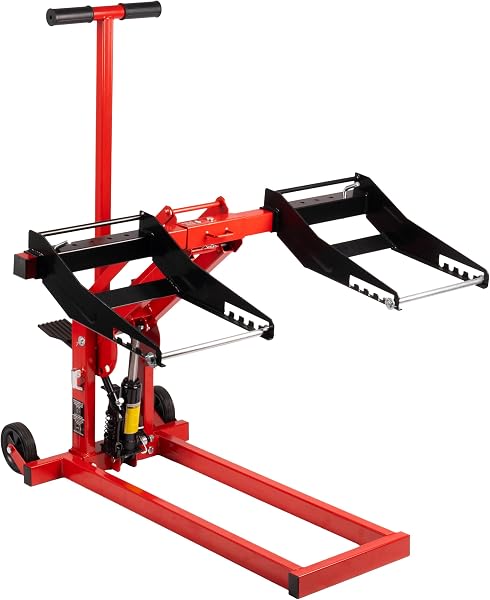
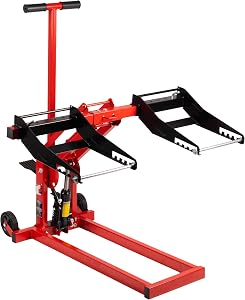
BUNKER INDUST Hydraulic
9.0Editor score19,400 lb capacity
41-inch max lift
0 to 30 degree tilt
Sealed hydraulic cylinder
Find the right atv jacks for 2026. We compare 10 standout options by build quality, useful features, owner feedback, value, and everyday trade-offs.
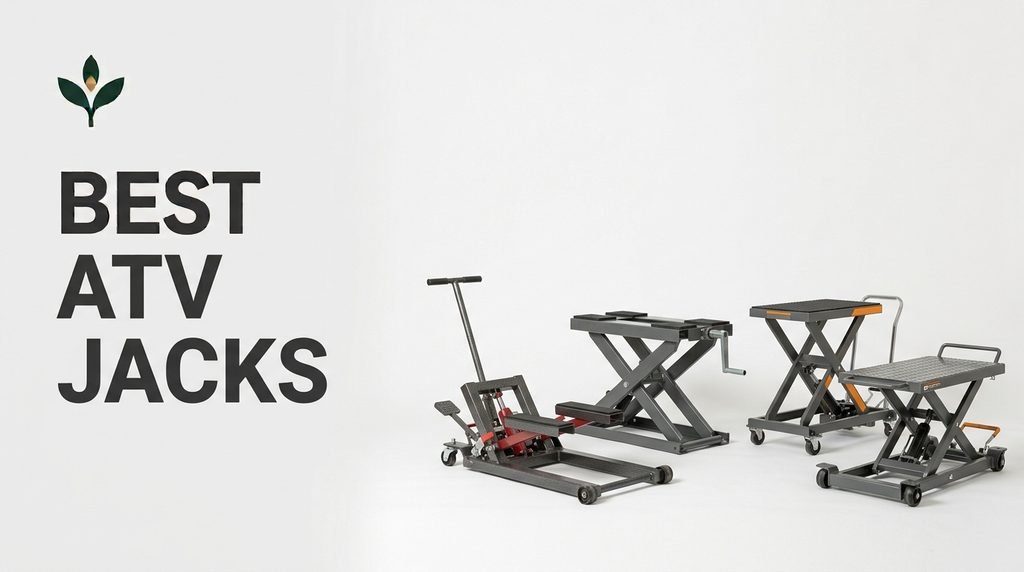
Find the right ATV jack for 2026. We compare 10 standout options across the specs that matter most for powersports maintenance and trail recovery: lifting capacity, height range, base stability on soft ground, safety locks, portability, drill or hydraulic operation, included accessories, and overall durability across repeated garage and field use.
ATV jack options vary widely. Scissor lifts and bottle-style hydraulic jacks suit garage work, while high-lift farm jacks and off-road recovery jacks handle trail emergencies on uneven terrain. Some models double as motorcycle lifts, others are purpose-built for UTVs and 4x4s, and a few are compact enough to carry in a cargo rack.
The reviews below highlight what each jack does best, where it falls short, and which type of rider or mechanic benefits most. Whether you need a stationary garage lift for tire swaps, a portable trail jack for recovery, or a cross-category tool that handles ATVs and dirt bikes alike, the picks below cover the practical choices worth considering.
We compared 10 ATV jacks using the details that genuinely drive a smart purchase: lifting capacity, minimum and maximum height, base footprint for soft or uneven ground, safety lock design, operation style (hydraulic, scissor, high-lift, or drill-driven), included straps and accessories, portability and weight, corrosion resistance, and owner feedback. The notes focus on real-world trade-offs so each pick connects to how riders actually service, repair, and recover ATVs in the garage and on the trail.


Compare key features, scores, and current prices side by side. A shorter feature list means fewer details were available, not necessarily fewer capabilities.



The LEIFIDE jack earns the top editor's spot thanks to its perfect 5.0 rating and purpose-built design for ATV and UTV use. The 3000-pound capacity sits in a sweet spot that covers almost every powersports vehicle without the overkill mass of a 10,000+ pound recovery jack. The wide 6 to 36-inch lifting range handles everything from low-clearance tire swaps to full chassis clearance for suspension or driveline work.
We may earn a commission when you buy through this link, at no additional cost to you.
The high-strength alloy steel construction supports the rated capacity confidently, and the wide reinforced base prevents sinking in mud, gravel, and soft ground. That matters significantly for a jack intended for field use, where perfectly level concrete is rarely available. The field-ready design philosophy carries through to the finish, operation, and included accessories.
The drill-operated lift mechanism is the standout usability feature. By accepting any standard cordless drill, the jack lifts quickly with minimal physical effort compared to manual-only designs. The manual handle is always included as a backup, which addresses the common complaint about drill-dependent tools when batteries die. The roll bar mounting system allows secure attachment to UTVs and ATVs, providing stability during lifting on uneven terrain.
Lifting a UTV in the middle of a trail often means working on uneven, soft, or sloped ground. A roll bar mount transfers lifting force through the vehicle’s existing structural tubing rather than relying on the ground beneath the jack to stay stable. This dramatically reduces the chance of the jack tipping over mid-lift, which is one of the most common and dangerous failure modes in trail recovery.
The main consideration is that the design optimizes for UTV and ATV use rather than general-purpose lifting. If you need a jack that primarily serves cars, trucks, or trailers, a more conventional design may suit you better. For riders who want a dedicated powersports jack that works equally well in the garage and on the trail with drill-powered convenience, this is the strongest overall pick.
Buyers who need a general-purpose jack for cars, trucks, or trailers rather than ATV and UTV work.
We may earn a commission when you buy through this link, at no additional cost to you.
This hydraulic recovery jack is built for riders who tackle serious off-road terrain and need a jack that doubles as a vehicle recovery tool. The 19,400-pound capacity is massive overkill for a typical ATV, but that headroom means the jack handles side-by-sides, 4×4 trucks, and heavy UTVs with trailers attached. The 41-inch maximum height clears full-size truck tires without compromise.
We may earn a commission when you buy through this link, at no additional cost to you.
The 0 to 30-degree tilt range is the standout feature for trail use. Standard bottle jacks require level ground and can tip dangerously on uneven surfaces. This jack adapts to the actual slope of the terrain, keeping the lift column aligned with gravity rather than the ground beneath. When paired with recovery boards that have integrated jack bases, the setup becomes genuinely stable even in mud or soft sand.
The sealed hydraulic cylinder keeps fluid contained regardless of orientation, which matters for a jack that lives in a cargo rack and gets jostled on rough trails. The aluminum alloy and steel construction resists corrosion from mud, salt, and moisture. At 17 pounds with the included carry bag, it is portable enough to bring on every ride without feeling like dead weight.
Lifting a vehicle on uneven ground with a standard bottle jack creates a dangerous side-load on the hydraulic cylinder. The cylinder is designed for vertical compression, not lateral force, and side-loading can cause seal failure or catastrophic bending. A tilt-adaptive jack keeps the cylinder vertical regardless of ground angle, dramatically reducing the risk of failure during trail recovery.
The main consideration is price. At over $250, this costs more than most scissor-style ATV jacks and may be more capability than casual riders need. For serious off-road enthusiasts, overlanders, and anyone who regularly recovers vehicles from difficult terrain, however, the combination of massive capacity, tilt adaptation, and leak-proof design justifies the investment.
Casual riders who only need a basic garage jack for occasional tire changes.
We may earn a commission when you buy through this link, at no additional cost to you.
This foot-pedal hydraulic lift targets ATV owners and motorcycle enthusiasts who want a stationary garage lift that handles both categories. The 1500-pound capacity covers sport quads, utility ATVs, street bikes, cruisers, and adventure touring motorcycles. The foot-pedal operation keeps your hands free to steady the ATV during the critical first few inches of lift, which is a genuine safety advantage over hand-pump designs.
We may earn a commission when you buy through this link, at no additional cost to you.
The lifting range of 4.5 to 15.2 inches provides enough clearance for most undercarriage work, chain maintenance, wheel removal, and fork service. The steel construction resists deformation under heavy loads, and the locking pin firmly secures the height position to prevent hydraulic drift during extended work sessions. The pump itself requires modest effort thanks to the long handle and foot pedal leverage.
The two 13-foot ratchet straps are a thoughtful inclusion. ATVs and motorcycles can shift laterally during maintenance, especially when you apply torque to stubborn bolts or impact tools to fasteners. Securing the vehicle with the straps eliminates that movement and keeps everything stable. The swivel casters make positioning the lift under the vehicle straightforward, and two fixed wheels add directional control during repositioning.
An ATV sitting on a lift without straps is one firm push away from toppling. Always run the included ratchet straps across the frame or through secure attachment points before beginning any work. The straps also prevent the ATV from rolling forward or backward when you lean on it or apply tool pressure, which is a surprisingly common cause of lift accidents.
The main compatibility consideration is the 4.5-inch minimum clearance, which excludes very low-slung sport bikes or ATVs with aggressive skid plates. Full lower fairing motorcycles are also not suitable because the lift deck needs direct frame contact. For most ATVs and standard motorcycles, however, this is a well-equipped lift at a reasonable price.
Owners of very low ATVs with less than 4.5 inches of clearance or motorcycles with full fairings.
We may earn a commission when you buy through this link, at no additional cost to you.
The VIVOHOME lift competes directly with the VEVOR 1500 lb model and offers a similar overall capability set with slightly different design details. The 3-position mechanical safety lock gives you discrete locking points at common working heights, which many users find more intuitive than infinite-position pin systems. Each lock position provides positive engagement that resists hydraulic drift and accidental lowering.
We may earn a commission when you buy through this link, at no additional cost to you.
The alloy steel construction with powder-coated finish resists oil, grease, and rust better than painted finishes, which matters in a working garage where chemical exposure is constant. The non-slip rubber pad protects the ATV or motorcycle frame from scratches while providing enough friction to prevent lateral slipping during work. The included two tie-down straps secure the bike against the inevitable side forces that occur during wrench work.
The 4.5 to 14.8-inch lifting range is nearly identical to competing models and covers the vast majority of ATV and motorcycle service tasks. The smooth-rolling casters make the 59.4-pound lift surprisingly maneuverable, and the detachable handle allows compact storage under a workbench or in a closet when not in use. Assembly takes only a few minutes with basic hand tools.
Hydraulic pressure alone can slowly leak off over hours of use, causing the lift to settle gradually. Mechanical safety locks engage physical steel-on-steel contact that cannot leak or drift. Always engage the mechanical lock immediately after reaching working height, and never rely on hydraulic pressure alone for any task that puts you under or near the elevated vehicle.
At nearly 60 pounds, this is one of the heavier lifts in its class, which could matter if you need to move it between garages or load it into a vehicle. For stationary garage use, the extra mass actually improves stability. The compatibility note about full lower fairings applies here as well, so street bike owners with full fairings should verify fitment or choose a different lift style.
Users who need frequent lift transport between locations due to the 59.4 lb weight.
We may earn a commission when you buy through this link, at no additional cost to you.
The Extreme Max field jack targets ATV and UTV owners who want a versatile lift that handles more than just quad maintenance. The design works equally well for trailer tires, dock leveling, boat lift adjustments, and standard ATV tire changes. The combination of hand crank and cordless drill compatibility gives you flexibility depending on what tools are nearby when you need to lift something.
We may earn a commission when you buy through this link, at no additional cost to you.
The 2500-pound capacity sits between dedicated motorcycle lifts and heavy recovery jacks, making it a practical middle ground for mid-size equipment. The lifting bar travels between 7.5 and 22.5 inches at the lowest foot setting, and between 16.5 and 31.5 inches at the highest setting. The 9-inch adjustable foot adds the vertical reach needed to accommodate various wheelbase heights and trailer tongue positions.
Drill operation is the standout convenience feature. Most jacks require tedious hand cranking that can be exhausting on larger lifts. Dropping in a cordless drill with a socket adapter cuts lifting time dramatically and reduces operator fatigue. The manual handle serves as a reliable backup if the drill battery dies or the drill is not available.
Drill-driven jacks typically accept a standard socket adapter that fits any 1/2-inch or 3/8-inch cordless drill. Set the drill to its lowest speed and highest torque setting for smooth, controlled lifting. Keep one hand on the jack to feel for binding or resistance, and stop immediately if the drill labors. The convenience is real, but it does not replace the attention required for safe lifting.
The 3.7-star rating is the lowest in this comparison and suggests some owners have found the build quality or long-term durability inconsistent. For buyers who want a versatile mid-capacity jack for both ATV and non-ATV applications and are willing to accept some variability, the design concept is sound. For those who prioritize the highest ratings, other picks in this guide may be stronger choices.
Buyers who prioritize the highest customer ratings or need a lift specifically for garage ATV work.
We may earn a commission when you buy through this link, at no additional cost to you.
The VEVOR 48-inch farm jack is the classic high-lift design that has served off-roaders, farmers, and trail recovery crews for decades. The 7000-pound capacity and 40.74-inch maximum height make it capable of lifting UTVs, trucks, tractors, and large ATVs well off the ground for tire swaps, chassis work, and trail recovery. The ratcheting mechanism allows precise control over lift height in small increments.
We may earn a commission when you buy through this link, at no additional cost to you.
The hot-dip galvanized finish and powder spraying provide significantly better corrosion resistance than painted jacks, which matters when the tool lives in a truck bed or trailer exposed to weather. The 750mm long handle provides substantial leverage, allowing most adults to lift the maximum rated load without exceptional effort. The wide base plate helps prevent sinking on soft ground, though a jack base is still recommended for sand or deep mud.
Beyond vertical lifting, this jack doubles as a winch for lateral recovery. By anchoring one end to a solid point and attaching the other to the stuck vehicle, you can pull vehicles out of ruts or ditches without a dedicated winch system. The 20mm ratchet hole engages the lifting lug firmly at each position, and the wrench switch allows controlled lowering with the rubber-sleeved handle preventing hand slippage.
Never leave your face in line with the handle during operation. If the load slips, the handle snaps up or down with enormous force and can cause serious head injury. Always stand to the side, keep the base on firm ground or a dedicated jack base, and understand how to lower the load safely before you ever lift. Watch instructional videos from reputable off-road sources before first use.
High-lift jacks demand respect. The long handle can whip violently if the load slips or the operator loses control, and improper use is a common source of serious injury in the off-road community. For experienced users who understand the technique, this tool is extraordinarily versatile. For beginners, start with a dedicated scissor or hydraulic lift and learn high-lift operation under supervision before relying on it alone.
First-time jack users or buyers who want the safest possible garage lift.
We may earn a commission when you buy through this link, at no additional cost to you.
This lift targets owners of zero-turn lawn mowers, small tractors, and compact ATVs who need an affordable, maneuverable jack for routine maintenance. The 300-pound capacity is the lowest in this comparison and limits suitability to lighter equipment: small sport ATVs, lawn mowers, and compact utility machines. Full-size utility ATVs and UTVs typically exceed this capacity.
We may earn a commission when you buy through this link, at no additional cost to you.
The built-in safety lock engages mechanically to prevent accidental lowering during work, which is a basic but essential feature for any lift. The adjustable lift height accommodates different vehicle types and lift point locations, letting you dial in the setup for the specific equipment you are servicing. The height adjustment is quick and does not require tools.
The non-slip wheels and ergonomic handle make the lift easy to position under equipment and relocate between work areas. The compact overall size takes up less floor space than full-size motorcycle lifts, which matters for crowded garages or small sheds. The heavy-duty construction, while limited to 300 pounds of lifting capacity, holds up to repeated use on lawn and garden equipment.
The lift capacity rating refers to the maximum weight the jack can safely raise, not just support. Dynamic lifting forces during the initial push can briefly exceed the static weight of the equipment, so always choose a lift rated well above the actual weight of what you plan to raise. For an ATV that weighs 600 pounds dry, use a lift rated for at least 1000 pounds.
The 300-pound capacity is the critical limitation. A typical full-size utility ATV weighs 600 to 800 pounds dry, and the lift force required at a single corner lift point can equal or exceed the full vehicle weight depending on geometry. For zero-turn mowers, lawn tractors, and small sport quads, this lift is well-suited. For full-size ATVs, choose one of the 1500 lb or higher-capacity lifts in this guide.
Owners of full-size utility ATVs, UTVs, or any equipment weighing more than 300 pounds.
We may earn a commission when you buy through this link, at no additional cost to you.
The OMT 1100lb scissor jack delivers remarkable value for riders who need a reliable garage lift without spending motorcycle-shop prices. At under $70, it is one of the most affordable quality lifts in this comparison, yet it includes the five-position safety lock and wide deck that significantly more expensive lifts offer. For dirt bike owners, small ATV service, and cruiser maintenance, it covers the essential needs.
We may earn a commission when you buy through this link, at no additional cost to you.
The lifting range of 3.7 to 14.6 inches is tighter than hydraulic lifts but suits most routine tasks including tire removal, chain maintenance, and basic suspension work. The T-handle operates manually, or you can use a 3/8-inch socket and ratchet wrench for faster lifting. The manufacturer specifically recommends manual operation only to extend screw life, so avoid using an impact driver despite its appeal.
The 9.1 by 14.6-inch deck platform is wider than many competing scissor jacks, giving you more contact area with the vehicle frame. The rubber tabletop prevents the jack from marking or scratching the frame while providing enough friction to resist lateral slipping. The five locking holes let you secure the lift at common working heights with positive mechanical engagement that cannot drift.
Scissor lifts work well for ATVs with reasonable ground clearance and standard frame rails. The lift pads contact the frame directly, so verify your ATV has flat sections of frame suitable for the deck surface. ATVs with full skid plates may require positioning the deck in a different location, so check the undercarriage layout before lifting.
The 1100-pound capacity sits below the 1500 lb hydraulic lifts in this guide but still accommodates most dirt bikes, cruisers, and small to mid-size ATVs. The plug welding and double crossbar design ensure the frame holds up to repeated use without the metal fatigue that can plague cheaper scissor lifts. For budget-conscious buyers who want a trustworthy garage lift, this is one of the strongest value picks available.
Owners of large utility ATVs over 1100 pounds or anyone who wants hydraulic foot-pedal operation.
We may earn a commission when you buy through this link, at no additional cost to you.
The VEVOR 1100 lb scissor lift targets riders who want the garage convenience of a scissor jack with the mobility of a four-caster dolly base. Unlike many scissor lifts that sit stationary once positioned, this unit rolls freely in any direction thanks to its four casters, letting you reposition heavy motorcycles short distances without lifting the full weight manually.
We may earn a commission when you buy through this link, at no additional cost to you.
The hand crank operates via a detachable metal handle that raises the deck between 4.7 and 15.4 inches of height. The X-frame central shaft design accommodates different motorcycle and ATV positions, giving you flexibility in how you orient the vehicle on the lift. The 14.6 by 9-inch top platform provides substantial contact area, and the striped rubber pad prevents slipping while protecting the frame.
When work is done, the lift folds to a compact 4.7-inch height for storage under benches or in closets. The powder-coated finish resists oil, grease, and rust that accumulates in working garages, extending the useful life of the lift significantly beyond painted alternatives. The entire unit is designed for repeated daily use in a professional shop or serious home garage.
Fixed scissor lifts require you to position the vehicle precisely before lifting, with no ability to adjust afterward. Caster-equipped lifts let you reposition a loaded vehicle for better access to specific components or to move it out of the way when a job is paused. The trade-off is slightly less stability during use, so always lock the casters when possible and avoid moving the lift when loaded with heavy equipment.
The hand crank design requires more physical effort than hydraulic foot-pedal lifts, which matters for repeated heavy use. The 1100-pound capacity also sits below the 1500 lb hydraulic lifts and limits suitability for the heaviest utility ATVs. For dirt bikes, street bikes, cruisers, and small to mid-size ATVs where you want mobility and storage convenience alongside basic lifting, this unit delivers a well-rounded package.
Users who need hydraulic lifting effort reduction or who service ATVs over 1100 pounds.
We may earn a commission when you buy through this link, at no additional cost to you.
The AGM Manual Off-Road Jack is purpose-built for serious off-road use and represents the premium end of the trail jack category. Unlike repurposed emergency jacks, this unit is engineered from the ground up for repeated trail repairs with ToughThred ACME thread technology that resists wear from debris, moisture, and heavy cycling. The 4.6 star rating reflects strong satisfaction among off-road enthusiasts.
We may earn a commission when you buy through this link, at no additional cost to you.
The design combines 15 inches of lift travel with 14 inches of external height adjustment in a compact 15-pound package. That combination of reach and portability is unusual in off-road jacks, which typically trade one for the other. The modular lifting system accepts compatible AGM attachments, letting the jack adapt to different vehicle lift points, bumpers, differentials, and axle configurations as your rig changes over time.
Operation flexibility is a standout feature. You can run the jack with an impact driver for speed, a cordless drill for controlled lifting, or the hand crank when batteries are dead. That versatility matters in trail scenarios where you might be miles from a charger or working in rain that excludes battery tools. The GroundLoc concave base reduces sinking and sliding on dirt, sand, mud, and soft ground.
Stock emergency jacks included with most ATVs and UTVs are designed for one-time roadside use, not repeated field repairs. The springs, threads, and seals wear quickly under hard use and often fail at the worst possible moment. A purpose-built trail jack costs more upfront but delivers reliable performance across hundreds of lifts over many years of ownership.
The premium price of around $365 is significant, but the engineering quality, modular attachment system, and purpose-built trail design justify the investment for serious off-road enthusiasts, overlanders, and anyone who regularly tackles difficult terrain. The 2000-pound capacity is lower than high-lift jacks but matches the real-world needs of most ATVs and UTVs. For a trail jack that will serve for many years of hard use, this is the top premium pick.
Casual riders who only need a basic garage lift for occasional tire swaps.
We may earn a commission when you buy through this link, at no additional cost to you.
Selecting an ATV jack means matching lifting capacity, height range, and operation style to your vehicle, your typical maintenance tasks, and whether you need garage-only convenience or trail-ready portability. The factors below cover the most important decision points for making a confident purchase.
Lifting capacity is the most important specification because it determines what equipment the jack can safely raise. ATV weights vary dramatically: sport quads often weigh 400 to 600 pounds, utility ATVs typically weigh 600 to 900 pounds, and full-size UTVs can exceed 2000 pounds with cargo and passengers. Check your vehicle’s dry weight in the owner’s manual and add any typical cargo or accessories.
Choose a jack rated at least 50 percent above the actual weight you plan to lift. For a 700-pound utility ATV, use a jack rated for at least 1100 pounds. The extra margin accounts for dynamic forces during the initial push, uneven weight distribution if you lift one corner at a time, and gradual wear that can reduce effective capacity over the life of the jack.
If you own multiple vehicles, size the jack for the heaviest one. A jack rated for your utility ATV will handle your sport quad with ease, but the reverse is not true. For UTV owners, the LEIFIDE 3000 lb or BUNKER INDUST 19,400 lb jacks provide the capacity needed.
ATV jacks come in several distinct styles. Scissor lifts use a crank or hydraulic cylinder to spread an X-frame beneath the vehicle, providing stable support with a wide deck. Hydraulic bottle jacks use a single vertical ram and typically pair with external bases or lift mates for ATV use. High-lift farm jacks use a mechanical ratcheting mechanism for massive vertical reach. Specialty off-road jacks combine compact size with modular attachments for trail use.
The right style depends on where and how you lift. Scissor lifts with foot-pedal hydraulics are the best choice for stationary garage work on bikes and smaller ATVs. High-lift farm jacks excel at vehicle recovery and massive vertical reach but require careful handling. Compact off-road jacks like the AGM or BUNKER INDUST models bridge garage and trail use with portable, versatile designs.
Think about where you will use the jack most often. A dedicated garage lift at $100 to $200 will serve shop work beautifully. A trail jack at $200 to $400 delivers portability and recovery capability. If you need both, consider two jacks rather than one compromise unit.
The minimum height determines whether the jack fits under your ATV’s lowest point, and the maximum height determines how much clearance you have for underbody work. Most hydraulic scissor lifts in this guide offer a minimum of around 4.5 inches and a maximum of 14 to 16 inches, which handles tire removal, chain service, and basic undercarriage work.
For more extensive work including suspension service, driveline repair, or substantial chassis maintenance, you need greater maximum height. The LEIFIDE jack reaches 36 inches, and high-lift farm jacks exceed 40 inches. The trade-off is more complex operation and higher cost. Verify your ATV’s minimum ground clearance at the intended lift point before purchasing any jack.
If you plan only routine maintenance, a 14 to 16-inch maximum is sufficient. For comprehensive mechanical work including suspension and driveline tasks, choose a jack with 20 inches or more of maximum lift height.
Mechanical safety locks are essential for any jack because hydraulic pressure alone can leak off over time, causing the lift to settle unexpectedly. Look for jacks with multiple locking positions and clear visual confirmation that the lock is engaged. Three to five positions is typical for scissor jacks, while hydraulic bottle jacks often use continuous pin-and-hole systems.
Always engage the mechanical lock immediately after reaching the desired working height. Never rely on hydraulic pressure alone when any part of your body is near or beneath the vehicle. For ATVs specifically, use the included tie-down straps or similar restraints to prevent lateral tipping, which is the single most common cause of ATV lift accidents.
Prioritize safety features over marginal cost savings. A lift without reliable mechanical locks is not safe for any serious work, regardless of its hydraulic capacity. The small price premium for quality safety systems is one of the smartest investments in your garage.
The base footprint determines whether the jack remains stable on your working surface. Narrow bases concentrate load onto a small area, which can cause sinking on asphalt, soft soil, or thin concrete. Wide bases distribute the load across more area and resist tipping on uneven ground. For trail use, concave bases like the AGM GroundLoc design dig into dirt and sand for additional grip.
If you plan to use the jack on sand, mud, gravel, or soft soil, pair it with a dedicated jack base plate that further distributes the load. Many trail jacks are designed to work with recovery boards that have integrated jack bases, creating an exceptionally stable platform even in difficult conditions. For garage use on flat concrete, standard bases perform well.
Match the base design to your typical surfaces. Garage mechanics can use any standard base. Off-road enthusiasts and overlanders should prioritize wide, concave, or recovery-board-compatible bases that handle real trail conditions.
Jacks operate through several different mechanisms. Hand cranks require manual rotation and provide fine control but demand physical effort. Hydraulic hand pumps use a lever that you work manually. Foot-pedal hydraulic systems let you lift with your legs while keeping hands free. Drill-operated jacks accept any cordless drill for fast lifting with minimal effort. Impact-driver compatibility adds even more speed for repeated lifts.
Foot-pedal hydraulic designs are generally the easiest for garage work because they free your hands to steady the ATV during the critical first few inches of lift. Drill operation is excellent for jacks you use frequently or that require many turns to reach working height. Manual hand cranks remain reliable backups that never run out of battery.
Choose operation methods based on how often you lift and whether tools are readily available. For occasional garage use, manual operation is perfectly fine. For heavy daily use or trail scenarios where speed matters, invest in drill-compatible or foot-pedal hydraulic designs.
Garage jacks typically weigh 50 to 70 pounds and sit on casters for in-shop mobility but are not practical to transport in a vehicle. Trail jacks weigh 15 to 25 pounds and are designed to live in a cargo rack, truck bed, or storage box. The weight difference reflects the fundamental design priorities of each category.
If you only service ATVs in your garage, portability is a minor concern and extra weight actually improves stability. If you ride remote trails or need to pack a jack for backcountry recovery, every pound matters. Consider whether you need one jack that compromises in both directions or two dedicated jacks for different use cases.
For most riders, a dedicated garage lift plus a compact trail jack provides the best overall capability. The two-jack approach costs more upfront but delivers superior performance in both environments compared to a single compromise unit.
ATV jacks live in demanding environments: oil, degreaser, moisture, mud, and road salt all accelerate corrosion and wear. Look for powder-coated finishes rather than paint, hot-dip galvanized surfaces on trail jacks, and alloy steel construction rather than mild steel. These details matter significantly over multi-year ownership.
Hydraulic jacks with sealed cylinders prevent fluid loss and contamination far better than open-top designs. Welded joints should be clean and uniform, with no visible gaps or burn marks. Rubber lift pads should be firmly attached and show no cracking or deformation. These visible quality indicators correlate well with long-term durability.
Buy from established manufacturers with clear warranty policies rather than the cheapest option available. A quality jack that lasts 10 years delivers better value than a budget jack that fails after 2 years and needs replacement, especially considering the safety implications of jack failure during use.
Before each use, inspect the jack for hydraulic leaks, cracked welds, worn rubber pads, and proper safety lock function. Verify that hydraulic lifts have adequate fluid at the specified grade, which is typically available at auto parts stores. Position the jack on flat, solid ground, and always identify your ATV’s designated lift points before placing the deck or lift pad. ATV frames often have reinforced lift locations marked in the owner’s manual, and lifting elsewhere can bend sheet metal or damage components.
During use, lift the ATV slowly and watch for shifting, binding, or imbalance. Once the vehicle reaches working height, engage the mechanical safety lock before releasing hydraulic pressure or stepping away. Always secure the ATV with tie-down straps or ratchet straps to prevent lateral movement during work, especially when applying torque to stubborn bolts or using impact tools. Never work directly under an ATV supported only by a jack without additional jack stands at reinforced frame points.
After use, lower the ATV completely and clean the jack of mud, oil, and debris that accumulate during operation. For hydraulic jacks, cycle the lift fully a few times with no load to work fluid through the system. For high-lift farm jacks, apply light rust-resistant oil to the lifting bar and ratchet mechanism periodically to prevent corrosion. Store the jack in a dry location, and for battery-dependent accessories like impact drivers or drills used with the jack, keep batteries charged so the tools are ready when needed.
Choose a jack rated at least 50 percent above your ATV's dry weight. A 600-pound sport quad needs at least 900 pounds of capacity, while an 800-pound utility ATV needs at least 1200 pounds. UTVs often exceed 1500 pounds and require higher-capacity jacks like the LEIFIDE 3000 lb or BUNKER INDUST 19,400 lb models. The margin accounts for dynamic lifting forces, uneven weight distribution, and gradual wear over the jack's lifetime.
Yes, many motorcycle lifts in the 1100 to 1500 lb capacity range handle ATVs well as long as your quad fits the deck dimensions and meets the minimum clearance requirement. Check that the deck is wide enough to support the ATV frame rails and that the lifting height clears your lowest skid plates. The 1500 lb hydraulic lifts in this guide are specifically designed for both motorcycle and ATV use.
Scissor jacks with foot-pedal hydraulic systems combine the stability of a wide deck with the ease of hands-free operation, making them the strongest overall choice for garage ATV work. Pure hydraulic bottle jacks typically pair with external bases and work better for trail recovery or vehicle lifting from undercarriage points. Choose based on where you work and what tasks you perform most often.
Yes, always secure your ATV with ratchet straps or tie-downs during any lifting operation. ATVs can shift laterally when you apply torque to bolts, use impact tools, or lean on components, and an unsecured ATV can tip off the lift and cause serious injury or damage. Many quality lifts include straps, but you can purchase them separately if your lift does not include them.
Most garage jacks are designed for flat concrete and may sink or tip on soft ground. For outdoor or trail use, choose a jack with a wide base or a concave GroundLoc design like the AGM Manual Off-Road Jack. You can also pair any jack with a dedicated base plate or recovery board that distributes the load across more area. On sand, mud, or deep soft soil, a base plate is essential regardless of jack design.
Garage jacks prioritize stability, deck size, and lifting ease, typically weighing 50 to 70 pounds and relying on casters for in-shop mobility. Trail jacks prioritize portability and ground adaptation, typically weighing 15 to 25 pounds with features like tilt compensation, sealed cylinders, and compact storage. Each category optimizes for its environment, and most serious riders eventually own one of each rather than compromise with a single tool.
Several jacks in this guide, including the LEIFIDE, Extreme Max, and AGM models, are designed to accept a cordless drill with a socket adapter for faster lifting. This dramatically reduces operator fatigue compared to manual cranking. Use the drill on its lowest speed and highest torque setting for controlled lifting, and always keep the manual handle available as a backup in case the battery dies.
Inspect your jack before every use for leaks, cracked welds, and lock function. Hydraulic jacks typically do not require regular fluid changes under normal use, but check the manual for specific recommendations. For high-lift farm jacks, apply light rust-resistant oil to the lifting bar and ratchet mechanism after each use. Replace any jack that shows significant wear, as a failing jack is a serious safety hazard.
Only if the jack's capacity exceeds the UTV's weight by at least 50 percent. Many UTVs weigh 1500 to 2000 pounds or more, which exceeds the capacity of 1100 to 1500 lb scissor lifts designed for motorcycles and smaller ATVs. The LEIFIDE 3000 lb and BUNKER INDUST 19,400 lb jacks in this guide are suitable for UTV use. Verify your specific UTV's weight before choosing a lift.
No. Jacks of any type are lifting devices, not support devices. Hydraulic pressure can leak, mechanical locks can fail, and operator error can cause sudden lowering. Always transfer the load to properly rated jack stands at reinforced frame points before any part of your body goes under the vehicle. This single discipline prevents the vast majority of serious lift-related injuries.
The LEIFIDE Quick UTV ATV Lift Jack earns the top editor's spot with its perfect 5.0 rating, purpose-built ATV and UTV design, drill-operated lift system, roll bar mounting, and wide 6 to 36-inch height range. The 3000-pound capacity sits in the sweet spot for most powersports vehicles, and the field-ready construction handles both garage work and trail recovery with confidence. For riders who want one jack that does everything well, this is the strongest overall choice.
For buyers with different priorities, the AGM Manual Off-Road Jack delivers premium trail-grade engineering with its ToughThred ACME technology, GroundLoc base, and modular attachment system. The OMT 1100lb Scissor Jack offers remarkable value at under $70 for garage-focused riders. The BUNKER INDUST hydraulic jack provides massive 19,400-pound capacity with tilt adaptation for serious off-road recovery, and the 1500 lb hydraulic lifts from VEVOR and VIVOHOME serve dedicated ATV and motorcycle garages beautifully.
The most important step is matching the jack to your specific vehicles and use cases. A dedicated garage jack handles routine maintenance beautifully. A trail jack delivers portability and recovery capability for backcountry riding. Many serious enthusiasts eventually own both rather than compromise with a single tool. Whatever you choose, prioritize mechanical safety locks, adequate capacity margin above your vehicle weight, and always use proper tie-down straps and jack stands for safe operation. The investment in quality equipment pays dividends in both safety and performance over years of ownership.