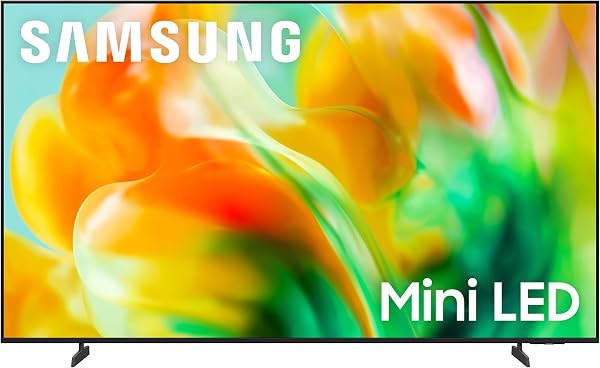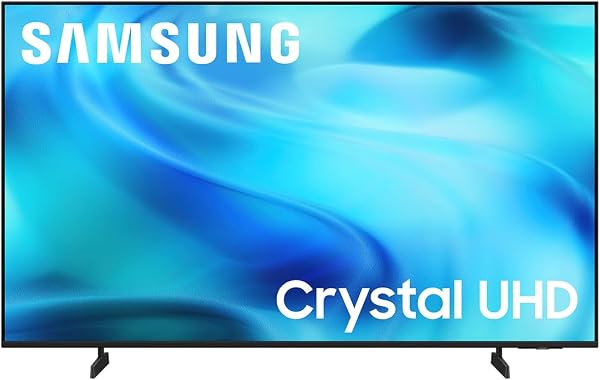
Samsung U8000H Crystal
8.4Editor score85-inch Crystal UHD
Crystal 4K processor
Samsung Tizen OS
60Hz refresh rate
Find the right 85 inch tvs for 2026. We compare 10 standout options by build quality, useful features, owner feedback, value, and everyday trade-offs.
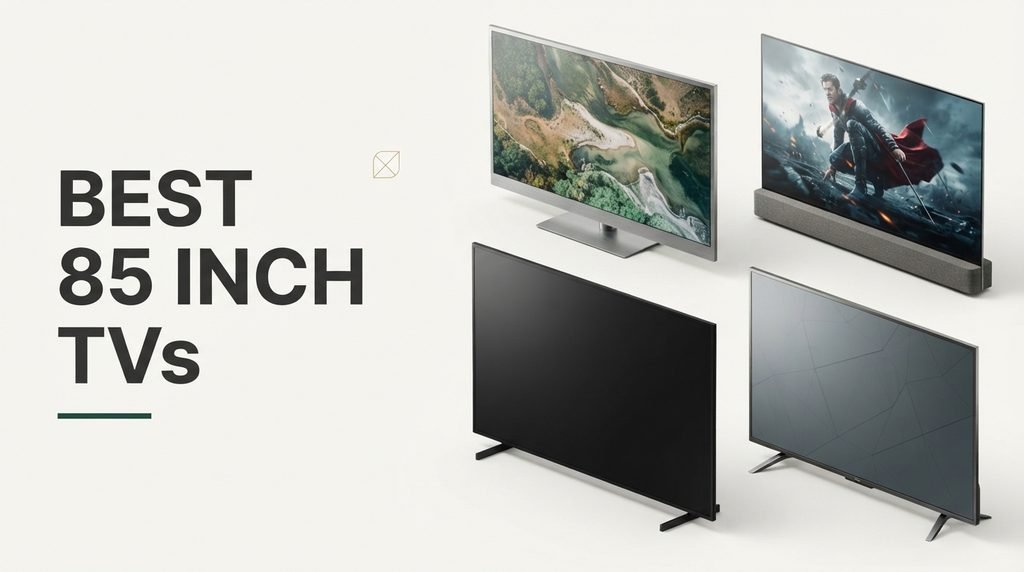
Finding the right 85 inch TVs for 2026 means balancing panel technology, HDR format support, refresh rate, dimming zone count, smart platform, audio quality, and overall value against your room size, lighting conditions, and content preferences. This guide compares 10 standout large-screen models across those practical factors so you can match a television to serious movie nights, big-game sports viewing, console gaming, and genuinely cinematic home entertainment.
At this screen size, panel technology and dimming precision matter more than at smaller sizes. Basic LED backlights can show visible blooming and uneven brightness on large screens, while Mini LED and QD-Mini LED models deliver dramatically better contrast through hundreds or thousands of local dimming zones. Smart platforms range from Google TV and Samsung Tizen to Fire TV and LG webOS, each affecting daily use differently.
Price points span from under eight hundred dollars for entry-level crystal UHD models to over twenty-two hundred dollars for flagship Mini LED TVs with thousands of dimming zones. The right choice depends on viewing distance, how bright your room gets, whether gaming performance matters, and how much you value premium picture features like Dolby Vision, high peak brightness, and reference-grade color accuracy.
We compared 10 large-screen 85-inch TVs using the details that actually help a buyer decide: panel technology and backlight precision, local dimming zone count, native refresh rate, HDR format support, smart platform ecosystem, gaming features like VRR and ALLM, built-in audio quality, HDMI port count, bezel design, owner feedback, and overall value. The notes focus on practical trade-offs so each pick connects to how people actually watch sports, stream movies, play games, and host friends and family around a cinema-scale display at home.


Compare key features, scores, and current prices side by side. A shorter feature list means fewer details were available, not necessarily fewer capabilities.





The TCL T7 earns the highest average owner rating in this guide while offering 144Hz QLED performance at a competitive price. For gaming-focused buyers who want high refresh rate performance and vibrant QLED colors without stepping into Mini LED pricing, this model hits a sweet spot that pure-LED alternatives cannot match while remaining more affordable than Mini LED-equipped options.
We may earn a commission when you buy through this link, at no additional cost to you.
QLED Quantum Dot technology produces rich, vibrant colors covering nearly the entire DCI-P3 color space for noticeably more lifelike images than standard LED panels. The 144Hz panel refresh rate paired with Motion Rate 480 and MEMC Frame Insertion delivers best-in-class motion clarity for action-packed movies, fast-paced video games, and live sports. The TCL AIPQ Pro Processor intelligently optimizes color, contrast, and clarity for 4K HDR content.
HDR PRO+ with Dolby Vision, HDR10+, HDR10, and HLG support covers all current premium content formats. Dolby Atmos audio delivers advanced spatial audio processing for immersive movie and gaming experiences. Four HDMI inputs including one with eARC provide excellent connectivity for gaming consoles, streaming devices, AV receivers, and other components. Voice control works with Alexa, Google Assistant, and Apple HomeKit for broad smart home integration.
QLED refers specifically to the Quantum Dot color enhancement layer, which can be paired with either standard LED backlighting or more advanced Mini LED backlighting. QLED without Mini LED provides excellent color performance at lower cost but lacks the fine-grained dimming control that Mini LED enables. For bright-room viewing or users who prioritize color and gaming performance over cinema-grade contrast, QLED alone can be the smarter value choice.
This is a smart choice for gaming-focused buyers who want 144Hz performance and QLED color enhancement without Mini LED pricing. The FullView 360 Metal Bezel-less Design with width-adjustable feet provides modern aesthetics with practical mounting flexibility. If you want Mini LED contrast performance, step up to the TCL QM64L or QM6K instead.
Movie-focused buyers who prioritize cinema-grade contrast in dark viewing rooms where Mini LED dimming shows its benefits.
We may earn a commission when you buy through this link, at no additional cost to you.
The Samsung U8000H brings the brand's established picture processing and smart platform to a 85-inch screen size at a surprisingly accessible price. For buyers who want a large Samsung display without stepping into Mini LED pricing, this Crystal UHD model delivers brand reliability and polished Tizen OS integration while keeping the budget reasonable. It is best suited for primary viewing in moderately bright rooms where premium contrast features are less critical.
We may earn a commission when you buy through this link, at no additional cost to you.
The Crystal 4K Processor enhances colors and sharpens details for standard 4K viewing, with upscaling that helps lower-resolution content look better on the large panel. Motion Xcelerator technology estimates and adjusts frame transitions in real time for smoother sports and gaming visuals up to 4K at 60Hz. Color Booster processing transforms standard content with more intense reds, blues, and greens for a visually engaging look across different content types.
The Tizen smart platform provides access to over 2,700 free streaming options, including more than 750 subscription-free channels on Samsung TV Plus. This free content library can meaningfully offset streaming subscription costs and provides easy access to news, sports, movies, kids content, and reality TV without extra monthly fees. The platform’s polished interface and quick app launching make daily use feel refined compared to budget-brand alternatives.
Not every large-screen buyer needs Mini LED contrast. For bright living rooms where the TV is primarily used for streaming, broadcast TV, and casual viewing, standard LED backlighting with quality processing delivers an engaging experience at a lower cost. The massive 85-inch screen already provides cinema-like scale, and the processing refinements in Samsung’s Crystal line keep the picture quality respectable without the premium pricing that Mini LED technology requires.
Choose this model when you want Samsung quality and smart platform integration in a large 85-inch display at the lowest possible price. If gaming at higher refresh rates matters or if you watch a lot of HDR movies in a dark room, step up to the Samsung M70H or M80H Mini LED models for noticeably better picture performance.
Serious gamers who need 120Hz or higher refresh rates, or movie enthusiasts who want premium HDR contrast and dimming performance.
We may earn a commission when you buy through this link, at no additional cost to you.
The TCL QM64L earns Editor's Choice honors for delivering genuine QD-Mini LED performance at an under-nine-hundred-dollar price point, which is unprecedented value for an 85-inch display with 500 local dimming zones. For buyers who want serious contrast and HDR performance without stepping into fifteen-hundred-dollar flagship territory, this model fundamentally changes the calculation around large-screen Mini LED ownership.
We may earn a commission when you buy through this link, at no additional cost to you.
The QD-Mini LED backlight with TCL Halo Control Technology combines Mini LED precision with quantum dot color enhancement for the kind of contrast and brightness that premium Mini LED displays are known for. Up to 500 local dimming zones precisely control the backlight to reduce blooming around bright objects, producing deeper blacks and brighter highlights without the burn-in concerns associated with OLED technology. Full HDR format support including Dolby Vision, HDR10+, HDR10, and HLG covers all current content standards.
Native 144Hz refresh rate paired with Motion Rate 480, VRR, ALLM, and Game Accelerator makes this one of the most capable gaming TVs at any price point. The built-in Onkyo 2.1 audio system with 20W subwoofer delivers serious sound without requiring an immediate soundbar purchase, which is especially valuable at this screen size where thin TV speakers typically struggle. Fire TV with Alexa+ provides conversational AI for intuitive voice control and content discovery across streaming services.
Standard LED backlights edge-light the entire panel from the sides, which produces visible light bleed and uneven brightness across large screens. 500 local dimming zones divide the backlight into independently controlled areas that can brighten some parts of the screen while darkening others. The practical result is cinema-like contrast where dark scenes look genuinely dark, bright highlights pop with real impact, and the overall picture feels more three-dimensional than any edge-lit alternative can achieve.
This model is the strongest overall choice for buyers who want flagship-level features at a mid-range price in the 85-inch class. If you want higher dimming zone counts or Google TV smart platform instead of Fire TV, consider the TCL QM7L or QM6K alternatives in this guide.
Buyers who prefer Google TV, Samsung Tizen, or LG webOS over the Fire TV platform with its home-screen advertising.
We may earn a commission when you buy through this link, at no additional cost to you.
The TCL QM6K brings Google TV smart platform integration to TCL's capable QD-Mini LED technology. For buyers who prefer the Google ecosystem over Fire TV, this model delivers essentially equivalent picture performance to the QM64L while swapping in the familiar Google TV interface with its personalized content recommendations across installed streaming apps.
We may earn a commission when you buy through this link, at no additional cost to you.
Picture technology uses the TCL Halo Control System to deliver advanced local dimming that reduces blooming while enhancing shadow detail and bright-scene accuracy. QD-Mini LED combines ultra-precise Mini LED backlighting with Quantum Dot color technology for incredible brightness and over a billion vibrant colors. The complete HDR format support including Dolby Vision, HDR10+, HDR10, and HLG ensures compatibility with all current premium content.
Native 144Hz refresh paired with Motion Rate 480 delivers smooth motion for live sports and action gaming without the blur that lower refresh rates introduce at this screen size. Google TV provides broad app support, Google Assistant voice control, and personalized recommendations across streaming services. Dolby Atmos audio tuned by Onkyo delivers meaningful built-in sound quality, though a soundbar remains a reasonable upgrade for serious home theater setups.
You interact with your TV’s smart platform every single day, so the interface quality and app selection significantly affect long-term satisfaction. Google TV excels at content discovery with recommendations spanning your installed apps, while Fire TV integrates deeply with Amazon services. Users who already live in the Google ecosystem for phones, calendars, and Chromecast benefit from Google TV’s consistent interface and voice control. The decision deserves genuine consideration rather than being treated as a secondary factor behind picture specs.
Choose this model when you want TCL’s refined QD-Mini LED performance with the Google TV ecosystem. If you prefer Fire TV, go with the QM64L instead. If you want more dimming zones and premium audio refinement, step up to the QM7L or QM8L flagship models.
Buyers deeply committed to the Amazon or Samsung ecosystems rather than Google services.
We may earn a commission when you buy through this link, at no additional cost to you.
The Samsung M70H brings Samsung's Mini LED technology to an 85-inch screen at under a thousand dollars, which represents strong value for buyers who want the brand's refined processing with meaningful backlight improvements over basic LED. For households already invested in Samsung's ecosystem through phones, SmartThings devices, and Samsung TV Plus content, this model fits naturally into the familiar interface and controls.
We may earn a commission when you buy through this link, at no additional cost to you.
The Mini LED processor delivers brighter highlights and deeper blacks than conventional LED backlights, while Pure Color Spectrum technology produces one billion true-to-life colors through advanced color processing and Mini LED precision. Supreme Mini LED Dimming provides finer local dimming than standard backlights, improving contrast in mixed bright and dark scenes without the budget-tier blooming that plagues cheaper large TVs.
Motion Xcelerator with DLG 120Hz technology keeps fast motion sharper for console gaming and sports broadcasts, with Soccer Mode optimizing picture settings for live matches through clearer motion and more vibrant greens. Samsung Gaming Hub centralizes cloud gaming services and console inputs in one convenient interface. The Tizen platform includes access to over 2,700 free streaming options plus 750 subscription-free channels on Samsung TV Plus.
Samsung’s Tizen platform offers polished design, deep integration with Samsung mobile devices, and the extensive Samsung TV Plus free content library. However, Tizen notably lacks Dolby Vision support, which affects users whose streaming subscriptions include Dolby Vision content. If you have Netflix, Disney Plus, or Apple TV Plus with Dolby Vision titles you care about, that limitation matters. If HDR10 and HDR10+ cover your needs and Samsung ecosystem integration appeals, Tizen remains an excellent platform choice.
This model is the right pick for Samsung ecosystem buyers who want Mini LED performance without stepping into flagship pricing. If you need Dolby Vision support or 144Hz refresh rate, consider the TCL QM6K or Samsung M80H instead. For bright-room casual viewing without Mini LED needs, the Samsung U8000H saves money while still delivering Samsung quality.
Buyers who need Dolby Vision support for their streaming content or who prefer Google TV or Fire TV platforms.
We may earn a commission when you buy through this link, at no additional cost to you.
The LG NU85 is the lowest-priced 85-inch TV in this guide, making it an attractive entry point for buyers who want to upgrade to a cinema-scale screen without stepping deep into premium pricing. For primary living room use where the TV serves streaming, broadcast content, and casual gaming at a reasonable budget, this model provides LG picture processing and the familiar webOS platform at an aggressive price point.
We may earn a commission when you buy through this link, at no additional cost to you.
The Alpha 7 AI Processor 4K Gen9 powers Nano Detail Enhancer processing that fine-tunes textures, sharpens edges, and enhances contrast scene by scene. AI Super Upscaling intelligently converts lower-resolution content into near-4K clarity, which matters significantly on an 85-inch screen where upscaling quality dramatically affects how streaming and broadcast content look. HDR10 Pro dynamically adjusts brightness for improved detail in both bright and dark scenes.
The webOS 2026 smart platform integrates Google Gemini AI for enhanced recommendations and voice interaction. LG Channels provides over 400 free live channels plus access to 10,000+ movies and shows on demand, offering substantial free content without additional subscription costs. Gaming features include AMD FreeSync Premium and ALLM for improved console and cloud gaming quality, with the LG Game Dashboard and Game Optimizer putting controls at your fingertips.
Not every buyer needs flagship-level picture performance. For bright living rooms where the TV competes with daylight, for casual family viewing of streaming and broadcast content, or for secondary viewing areas like basements and dens, premium Mini LED features deliver less visible benefit than their price tags suggest. An entry-level 85-inch display with quality processing can provide a dramatic viewing upgrade over smaller previous TVs without requiring a premium-tier investment.
Choose this model when the lowest 85-inch pricing matters and standard LED backlighting is acceptable for your room and viewing style. If you want Mini LED contrast performance, consider the TCL QM64L or Samsung M70H for a few hundred dollars more. The lower average owner rating here suggests mixed experiences, so budget-conscious buyers should weigh that against the attractive pricing.
Movie enthusiasts who prioritize contrast and HDR performance, or buyers who want Mini LED backlighting for serious home theater use.
We may earn a commission when you buy through this link, at no additional cost to you.
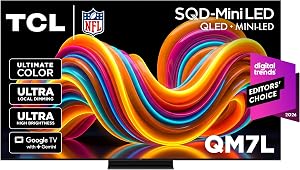
The TCL QM7L steps up to flagship-adjacent performance with up to 2,100 precisely controlled local dimming zones, which produces picture quality that approaches OLED-like contrast without the burn-in concerns or peak brightness limitations of OLED technology. For buyers who watch a lot of movies in dark rooms and want the best possible HDR experience, this dimming precision delivers a transformative upgrade over mid-range Mini LED alternatives.
We may earn a commission when you buy through this link, at no additional cost to you.
The SQD-Mini LED technology integrates the TCL Deep Color System with the Halo Control System for brilliant, pure, and immersive viewing. The Ultra Color Filter uses 5-nanometer particles compared to standard 60-nanometer particles for pixel-perfect color accuracy. The HVA 2.0 Pro Panel adds high contrast and anti-reflective coating for strong performance in both bright and dim rooms. The AIPQ Pro Processor dynamically controls picture clarity, contrast, color, motion, upscaling, and backlighting.
Audio by Bang and Olufsen collaboration delivers refined built-in sound quality that genuinely reduces the pressure to add a soundbar immediately. Optional wireless subwoofers and satellite speakers can expand the system into a complete wireless home theater over time. The TCL Game Pack includes Game Accelerator 288 VRR, Game Bar, and AMD FreeSync Premium Pro for competitive-grade gaming performance. Google Gemini Interactive AI powers smart platform interactions for personalized entertainment discovery.
The jump from 500 dimming zones on the QM64L to 2,100 zones on the QM7L represents a meaningful upgrade in picture precision, but the price difference is substantial. For dedicated home theater rooms with controlled lighting and premium audio systems, the QM7L delivers visible improvements that justify the step up. For bright living rooms with casual viewing habits, the extra zones produce less noticeable benefits that may not justify the additional cost.
This model is the right pick for serious home theater buyers who want flagship-tier picture performance and refined audio at a price below the absolute top of the lineup. For buyers who want the maximum possible dimming zone count and peak brightness, step up to the QM8L. For buyers whose needs are satisfied by standard Mini LED, the QM64L or QM6K cost significantly less.
Casual viewers who do not need flagship dimming performance or buyers constrained to lower budgets.
We may earn a commission when you buy through this link, at no additional cost to you.
The TCL QM8L sits at the top of TCL's 85-inch lineup with specifications that put it in genuinely reference-grade territory. Up to 4,000 or more discrete dimming zones combined with up to 6,000 peak nits of brightness delivers picture performance that rivals or exceeds many professional reference monitors. For buyers who want absolutely the best possible large-screen display and have the audio equipment to match, this flagship model represents the current state of the art.
We may earn a commission when you buy through this link, at no additional cost to you.
The Enhanced Halo Control System integrates every advanced technology in TCL’s current arsenal, including the Super High Energy LED Microchip, Super Condensed Micro Lens, Super Micro-OD Reduced Optical Distance, WHVA 2.0 Ultra Panel, Super Quantum Crystals, Fast Transient Response, and 26-bit Dynamic Dimming. The practical result is stunning halo-free images with contrast and brightness that smaller displays simply cannot approach.
AI-powered features span the complete viewing experience with AI Color for vibrant hues, AI Contrast for dynamic depth, AI Clarity for razor-sharp detail, AI Motion for smooth action, AI Upscaling for lifelike resolution, and AI Sound for crystal-clear audio. Google Gemini Interactive AI handles smart platform interactions. Bang and Olufsen home theater audio with optional wireless subwoofer and satellite speakers can expand into a complete wireless surround system. Wide viewing angles ensure vibrant colors and proper contrast from any seat in a group viewing situation.
Peak brightness measured in nits determines how bright the brightest parts of HDR content can appear on screen. Standard TVs peak at 400 to 800 nits, mid-range HDR TVs reach 1000 to 1500 nits, and premium Mini LED models can hit 2000 to 3000 nits. At 6000 nits, the QM8L delivers brightness that approaches real-world sunlight for HDR highlights, which produces truly stunning HDR performance in both bright and dark viewing environments.
This television is the right pick for buyers who want the absolute best 85-inch picture quality available and have the home theater equipment to reveal those differences. For buyers whose needs are satisfied by near-flagship performance, the QM7L delivers much of the experience at a significantly lower price. Casual viewers rarely benefit enough from flagship specifications to justify the premium.
Buyers whose budgets or viewing conditions do not justify flagship-tier performance, or casual viewers for whom standard Mini LED is already excellent.
We may earn a commission when you buy through this link, at no additional cost to you.
The Samsung M80H steps up from the mid-range M70H with 144Hz Motion Xcelerator performance and the Supersize Picture Enhancer specifically designed for Samsung's largest screens. For Samsung ecosystem buyers who want current-generation gaming features and processing refinements calibrated for large-screen viewing, this model delivers premium Samsung performance at a competitive price for the 85-inch class.
We may earn a commission when you buy through this link, at no additional cost to you.
The Supersize Picture Enhancer addresses a specific challenge: at larger screen sizes, pixels become larger and more visible, which can reduce perceived sharpness and increase noise. This technology works to improve clarity with dramatic contrast and reduced noise specifically on Samsung’s largest panels, making content look sharp and clean rather than magnified and grainy. Mini LED with AI Mode combines compact high-efficiency Mini LEDs with intelligent scene-by-scene processing for improved clarity, color, and contrast.
Pure Spectrum Color delivers one billion true-to-life colors through advanced color technology and Mini LED precision. Motion Xcelerator 144Hz with Variable Refresh Rate matches the display to game frame rates for stutter-free, tear-free gameplay. Auto HDR Remastering intelligently transforms standard SDR content to HDR-like quality with brighter highlights and more vibrant colors. The NQ4 AI Gen2 Processor analyzes and enhances content in real time for sharper images, smoother motion, and more vibrant colors across different content types.
At 85 inches, individual pixels are physically larger than at smaller screen sizes, which affects perceived sharpness and can reveal processing artifacts that smaller TVs hide. Samsung’s Supersize Picture Enhancer specifically addresses these large-screen challenges with processing designed to maintain crisp detail and smooth gradients despite the larger pixel size. This optimization matters because what looks sharp at 55 inches can look soft or grainy at 85 inches without appropriate processing.
This model suits Samsung ecosystem buyers who want flagship Samsung performance in a large screen size with current-generation gaming features. If Dolby Vision support matters for your streaming preferences, consider TCL alternatives like the QM6K or QM7L instead. For Samsung ecosystem buyers who do not need 144Hz gaming performance, the M70H saves money while still delivering Samsung Mini LED performance.
Buyers who need Dolby Vision support or who prefer non-Samsung smart platforms like Google TV or Fire TV.
We may earn a commission when you buy through this link, at no additional cost to you.
The Sony BRAVIA 3 brings Sony's established picture processing and brand reliability to the 85-inch class at a competitive price. For buyers who prefer Sony's color science and want the brand's PlayStation 5 optimizations for console gaming, this model delivers Sony quality in a cinema-scale screen without stepping into flagship Sony BRAVIA pricing that often doubles this cost.
We may earn a commission when you buy through this link, at no additional cost to you.
Triluminos Pro technology displays over a billion accurate colors for vivid, bright, and lifelike picture quality with the color fidelity Sony is known for. The 4K HDR implementation delivers enhanced detail and dynamic range for compatible content. SONY PICTURES CORE app access provides a library of high-bitrate 4K UHD movies with reference-quality picture performance, which is a legitimate benefit for movie enthusiasts who want streaming quality that approaches physical media.
The Google TV smart platform provides broad app support, voice control through Google Assistant, and personalized recommendations across installed streaming services. For PlayStation 5 owners, exclusive features including Auto HDR Tone Mapping and Auto Genre Picture Mode optimize picture settings specifically for PS5 content, delivering a more cohesive gaming experience than generic console support provides. The 15-foot ideal viewing distance suggests this large screen works best in dedicated living rooms with adequate seating distance.
Auto HDR Tone Mapping lets the PS5 automatically calibrate HDR output to match the TV’s capabilities for optimal picture quality without manual setup. Auto Genre Picture Mode switches picture presets based on content type, automatically shifting to game mode for games and movie mode for films. These integrations reduce setup friction and ensure consistent image quality across different PS5 content types, which matters for gamers who regularly switch between gaming and streaming on the same console.
This model is the right pick for Sony brand loyalists and PlayStation 5 owners who want integrated gaming optimizations. For buyers who prioritize Mini LED contrast performance, TCL alternatives in this guide typically deliver more picture features per dollar. The 85-inch BRAVIA 3 represents Sony’s accessible entry point to large-screen premium viewing rather than their flagship picture performance.
Buyers who prioritize Mini LED contrast performance or who want 144Hz refresh rate for competitive gaming.
We may earn a commission when you buy through this link, at no additional cost to you.
Selecting an 85-inch television involves balancing panel technology, HDR support, refresh rate, smart platform, and audio quality against your room conditions, budget, and content preferences. The factors below cover the most important decision points to help you choose a model that genuinely improves your viewing rather than simply adding specifications you will not notice.
An 85-inch display requires appropriate viewing distance to show its benefits without overwhelming your eyes or revealing processing weaknesses. For 4K content, a general guideline suggests viewing distances of about 1 to 1.5 times the screen’s diagonal measurement, which translates to approximately 7 to 11 feet from an 85-inch screen for the most immersive experience. Sitting too close reveals pixel structure and processing artifacts, while sitting too far away wastes the resolution and screen size you paid for.
Room dimensions and furniture layout matter just as much as pure viewing distance. An 85-inch TV requires substantial wall space with proper clearance for ventilation, mounting hardware, and nearby components. Measure your available wall or stand area before committing, and verify that the TV’s dimensions including stand clearance fit your intended location. Natural light sources and glare from windows also significantly affect which panel technology works best for your specific room.
Measure your intended viewing distance and wall space before choosing a size and model. For rooms with viewing distances under 7 feet, consider stepping down to a 75-inch display for better overall viewing comfort.
Panel technology at 85 inches matters more than at smaller sizes because any backlight imperfections become proportionally more visible. Standard LED backlights edge-light the entire panel from the sides, which can produce visible blooming, light bleed, and uneven brightness across large screens. Mini LED technology divides the backlight into hundreds or thousands of local dimming zones that control brightness independently, dramatically improving contrast and reducing blooming.
QD-Mini LED combines Mini LED backlighting with Quantum Dot color enhancement for the best current combination of brightness, contrast, and color performance. Dimming zone count varies significantly between models, from basic Mini LED with a few hundred zones to flagship models with 2,000 to 4,000 zones. More zones generally produce better contrast with less blooming, though processing quality matters as much as raw zone count.
Prioritize Mini LED or QD-Mini LED for dark-room movie viewing and HDR content. For bright-room casual viewing, standard LED with quality processing can still provide a satisfying experience at lower cost.
HDR format support varies significantly between brands and models. All current 85-inch 4K TVs support basic HDR10, but Dolby Vision support is a key differentiator. Dolby Vision uses dynamic metadata to adjust brightness and color scene by scene, which produces visibly better HDR performance than static HDR10 on compatible displays. Many premium movies and streaming shows are mastered in Dolby Vision for optimal picture quality.
Samsung TVs typically support HDR10+ but not Dolby Vision across their lineup, which can affect viewing experience for Netflix, Disney Plus, Apple TV Plus, and other services that use Dolby Vision prominently. TCL, LG, and Sony generally support Dolby Vision, with TCL models supporting both Dolby Vision and HDR10+ for the broadest format compatibility. Verify your most-used streaming services and prioritize matching HDR support.
If your streaming favorites use Dolby Vision, choose a TV that supports it natively. If HDR10 and HDR10+ cover your content, Samsung Tizen models remain excellent options with other benefits.
Native refresh rate affects motion smoothness and gaming performance significantly. Standard televisions run at 60Hz, which is adequate for most streaming and broadcast content but limits gaming to 60 frames per second. Modern 120Hz and 144Hz panels enable smoother motion for both console gaming on PlayStation 5 and Xbox Series X and PC gaming at higher frame rates. For sports viewing, higher refresh rates reduce stutter during rapid camera pans.
Supporting features matter alongside raw refresh rate. Variable Refresh Rate matches the display’s refresh to the game’s frame rate in real time, eliminating screen tearing. Auto Low Latency Mode automatically switches to game-optimized picture settings when a console is detected. HDMI 2.1 bandwidth is required for 4K at 120Hz, so verify port specifications if gaming matters.
Choose 120Hz or 144Hz panels if you game regularly on modern consoles or PCs. For primarily movie and TV viewing without gaming, 60Hz suffices and saves money.
The smart platform determines your daily user experience including app selection, interface design, voice assistant integration, and advertising policies. Google TV offers broad app support and strong content recommendations across installed services. Samsung Tizen provides a polished experience with the Samsung TV Plus free content library but lacks Dolby Vision support. LG webOS integrates Google Gemini AI and provides over 400 free LG Channels. Fire TV integrates deeply with Amazon services but shows more home-screen advertising than competitors.
Match the smart platform to your existing device ecosystem and content preferences. Users with Google services for calendars, Chromecast, and Android phones often prefer Google TV. Samsung mobile device users benefit from Tizen’s SmartThings integration. Apple device users may prefer platforms with strong AirPlay support like Roku, VIZIO, or LG. Advertising prominence varies significantly between platforms, with Fire TV showing the most and some others relatively less.
Prioritize platform choice based on your existing ecosystem and your tolerance for advertising on the home screen. Simpler interfaces work well for most households.
Built-in TV speakers rarely satisfy at 85 inches because the picture scale creates expectations that thin TV speakers simply cannot meet. Most 85-inch displays benefit significantly from adding a soundbar or dedicated audio system to match the visual experience. Some models like the TCL QM64L include built-in subwoofers that noticeably improve bass response, while premium models like the TCL QM7L and QM8L include Bang and Olufsen collaborations for refined built-in audio.
If you plan to add a soundbar, verify the TV includes HDMI 2.1 with eARC support for passing high-quality audio formats like Dolby Atmos and DTS:X to your audio system. Dolby Atmos support in the TV itself matters mainly if you have Atmos-capable speakers to receive the signal. For users not planning external audio, prioritize models with explicit built-in audio quality improvements over models with thin stereo speakers.
Budget for a soundbar when buying an 85-inch TV in most cases. If you prefer built-in audio only, choose a model with explicit audio quality features like built-in subwoofers or premium audio brand collaborations.
HDMI port count and specification determine how many devices you can connect without an external switcher. Most 85-inch TVs include three or four HDMI ports, but port specifications vary. HDMI 2.1 is required for 4K at 120Hz, enhanced audio return channel for Dolby Atmos passthrough, and other modern features. Verify that the TV has enough HDMI 2.1 ports for your highest-bandwidth devices like current-generation game consoles.
Other connectivity worth checking includes Wi-Fi standard, with Wi-Fi 6 providing faster and more reliable streaming than older Wi-Fi 5. Bluetooth support enables wireless headphones and controllers. USB ports support external media playback. Ethernet provides more reliable wired networking than Wi-Fi for streaming 4K content, especially from local network media servers.
Count your HDMI-requiring devices and verify the TV has enough ports with the right specifications. Prioritize models with at least two HDMI 2.1 ports and Wi-Fi 6 for future-proofing.
85-inch TV prices in this guide range from under eight hundred dollars for entry-level models to over twenty-two hundred dollars for flagship Mini LED units with thousands of dimming zones. Higher prices typically reflect more dimming zones, better processing, premium audio, higher refresh rates, and advanced HDR support. Not every buyer benefits equally from premium features at this screen size, so match specifications to your actual use case rather than buying maximum features by default.
Consider long-term value beyond initial purchase price. Established brands typically offer longer firmware support that keeps the TV compatible with evolving HDR standards and streaming service requirements. A well-chosen 85-inch TV should provide 7 to 10 years of satisfying service, so paying for better build quality and brand support can be worthwhile for primary daily use.
Start with the TCL QM64L for an excellent balance of features and value in the 85-inch class. Step up to the QM7L or QM8L only if you have audio equipment that will reveal the differences. For budget-focused buyers, the LG NU85 provides accessible entry-level pricing without major compromises for casual viewing.
During initial setup, allow adequate space for proper ventilation around the TV and plan for the significant weight involved. 85-inch displays typically require at least two people for safe installation whether on a stand or wall mount. If wall mounting, verify your wall structure can support the weight using the TV’s VESA mount specifications and appropriate wall anchors or stud mounting. Position the TV at approximately eye level from your primary viewing position to reduce neck strain during extended watching sessions. Run through the initial picture setup wizard and switch the picture mode to Filmmaker Mode or Movie Mode for most content, which disables aggressive motion smoothing that creates an unnatural soap-opera effect on films.
For daily use, allow the TV a few minutes to warm up before judging picture quality, since Mini LED backlights perform best after brief stabilization. Use automatic brightness features or AI light sensors if available to adapt backlight intensity to room lighting conditions, which protects your eyes and improves perceived contrast. When gaming, verify Game Mode or Auto Low Latency Mode is active to minimize input lag during competitive play. For movies in dark rooms, dimming room lights reveals the full HDR performance that Mini LED technology enables and makes contrast visibly better than viewing with lights on.
To extend the TV’s useful life, avoid displaying static images for extended periods even on LED-backlit panels, since any backlight technology can experience uneven wear over years of use. Dust the screen gently with a soft microfiber cloth, avoiding harsh chemicals or paper towels that can scratch the panel coating. Keep the TV in a well-ventilated location with clearance around the back and sides to prevent heat buildup that shortens component life. Install software updates when they become available, as these often improve picture processing, add features, and fix bugs. If you notice declining picture quality, check settings before assuming hardware issues, since accidental mode changes or motion smoothing adjustments account for many perceived problems. With basic care, a quality 85-inch TV should provide reliable service for many years of regular viewing.
For 4K content on an 85-inch screen, viewing distances between 7 and 11 feet typically provide the most immersive experience without revealing pixel structure or processing artifacts. Closer distances can work for serious movie viewing where immersion matters most, while longer distances suit casual viewing or secondary seating positions. Measure your intended viewing distance before committing to the 85-inch size, since rooms with less than 7 feet of distance may benefit from a smaller 75-inch display.
Mini LED backlighting provides more noticeable benefits at larger screen sizes because any backlight imperfections become proportionally more visible. For bright-room casual viewing, standard LED backlights still deliver satisfying picture quality. For dark-room movie watching, HDR content, or home theater use, Mini LED produces visibly better contrast and reduced blooming. The TCL QM64L delivers genuine Mini LED performance at a price point competitive with standard LED alternatives, making the upgrade accessible.
QLED refers specifically to Quantum Dot color enhancement, which can be paired with standard LED or Mini LED backlighting. QLED alone improves color performance over basic LED. Mini LED backlighting divides the backlight into local dimming zones for better contrast. QD-Mini LED combines both technologies for the best current combination of color and contrast performance. Simple QLED without Mini LED delivers excellent color at lower cost but lacks the fine-grained dimming that Mini LED enables.
Yes, but with important precautions. 85-inch TVs typically weigh 75 to 120 pounds depending on the model, so verify your wall structure can support the weight. Use studs or appropriate wall anchors rated for the full weight plus safety margin. Choose a VESA mount designed for TVs 85 inches or larger. Professional installation is often worth the cost for TVs of this size to ensure safety and prevent damage. Allow adequate clearance around the back for ventilation and cable management.
HDMI 2.1 is required for 4K content at 120Hz or higher refresh rates, which matters most for gaming on PlayStation 5 and Xbox Series X. For primarily movie and TV viewing without gaming, HDMI 2.0 bandwidth is sufficient. Most current 85-inch TVs include at least some HDMI 2.1 ports, but verify specifications if gaming matters for your use. The ARC or eARC port supports passing high-quality audio formats like Dolby Atmos to a connected soundbar.
Dolby Vision support matters based on your streaming service subscriptions and viewing preferences. Netflix, Disney Plus, Apple TV Plus, and Max all use Dolby Vision for their best HDR content. If you subscribe to these services and want their best picture quality, Dolby Vision support is valuable. Samsung TVs typically skip Dolby Vision in favor of HDR10 Plus, which Amazon Prime Video and some others use. TCL, LG, and Sony models in this guide generally support Dolby Vision.
In most cases, yes. Thin TV speakers struggle to produce audio that matches the visual scale of an 85-inch display, with dialogue clarity suffering most. Some models like the TCL QM64L include built-in subwoofers that reduce the urgency of adding external audio, while premium models with Bang and Olufsen collaborations like the TCL QM7L offer better built-in sound. For most buyers, budgeting for even an entry-level soundbar significantly improves the viewing experience.
A quality 85-inch TV from an established brand typically provides reliable service for 7 to 10 years of regular daily use with picture performance remaining stable throughout most of that lifespan. LED backlights have no theoretical burn-in risk like OLED but can experience gradual dimming over many years. Software support duration varies by brand, with established manufacturers typically providing updates for 4 to 6 years after launch. Treating the TV well and installing updates helps maximize useful lifespan.
Standard indoor TVs are not designed for outdoor use even under cover, since humidity, temperature variations, and ambient conditions can damage internal components over time. Dedicated outdoor TVs with weather-sealed enclosures and enhanced brightness exist for patio use, but they typically cost significantly more than indoor equivalents. For occasional outdoor viewing on protected patios, standard TVs may survive if moved indoors during inclement weather and extreme temperatures, but this reduces warranty protection and lifespan.
Shipping is often included or available at low cost from major retailers, but basic doorstep delivery typically requires at least two people to safely bring the TV inside due to the weight and bulk. Professional installation services for wall mounting typically cost 150 to 400 dollars depending on complexity, wall type, and cable concealment. For high-mounted or complex installations, professional service is often worth the cost to ensure safety and prevent damage to both the TV and your walls.
The TCL 85 QM64L earns the strongest overall recommendation by delivering genuine QD-Mini LED performance with 500 dimming zones, native 144Hz refresh rate, built-in Onkyo 2.1 audio with subwoofer, and Fire TV smart platform at an under-nine-hundred-dollar price point. For buyers who want serious large-screen HDR and gaming performance without stepping into flagship pricing, this model fundamentally changes the value calculation for 85-inch Mini LED ownership and represents the strongest combination of features and price in the category.
Several alternatives suit different buyer priorities. The TCL 85 QM8L delivers reference-grade performance with up to 4,000 dimming zones and 6,000 peak nits for buyers who want absolutely the best possible large-screen picture quality. The LG 85 Nano AI NU85 provides the lowest entry price for budget-conscious upgraders who do not need Mini LED features. The TCL 85 T7 delivers the best QLED gaming value with 144Hz performance and the highest average owner rating in this guide. For Samsung ecosystem buyers, the M70H and M80H provide Mini LED performance with Tizen OS integration.
Your best choice depends on viewing distance, room lighting, gaming needs, streaming service preferences, and audio equipment. For primary home theater use with controlled lighting and premium audio, step up to QM7L or QM8L tier performance. For balanced living room use with mixed content, the QM64L or QM6K provides excellent value. For bright-room casual viewing or secondary rooms, entry-level options like the LG NU85 or Samsung U8000H deliver cinema-scale viewing without premium pricing. Whatever you choose, measure your viewing distance and wall space before ordering, plan for professional installation if wall mounting, and budget for at least a basic soundbar to match the visual scale with appropriate audio.