O'Neill Reactor-2 3/2mm
8.8Editor scoreThree two millimeter neoprene
Back zipper entry system
Seamless paddle zone design
Wind resistant chest smoothskin
Find the right wetsuits for 2026. We compare 10 standout options by build quality, useful features, owner feedback, value, and everyday trade-offs.
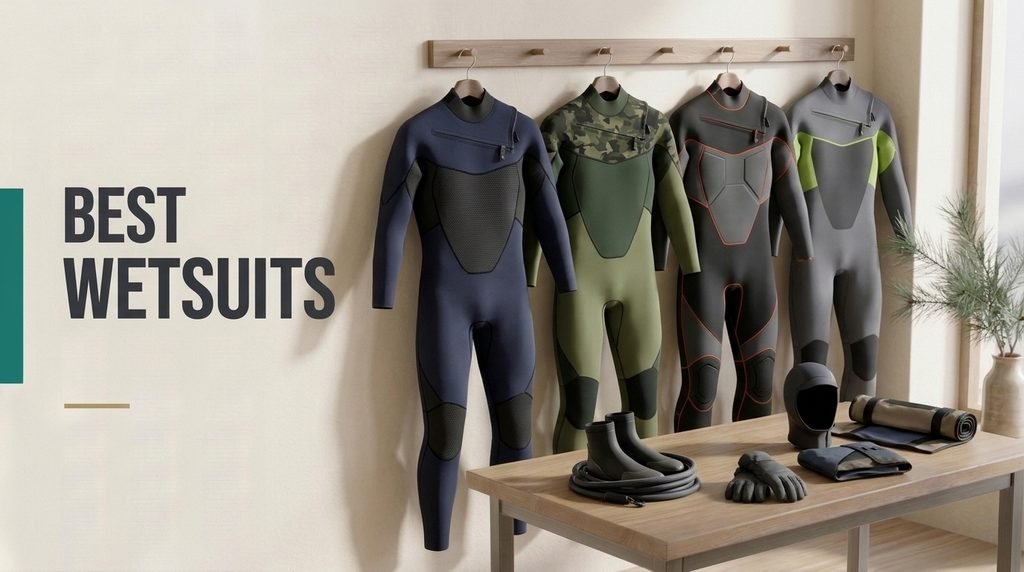
Finding the right wetsuits for 2026 requires balancing reliable thermal insulation against unrestricted paddling flexibility across changing aquatic environments. We compare 10 standout options by analyzing neoprene grade, seam construction, entry zipper styles, thermal linings, knee reinforcement, long-term durability, owner feedback, and practical value. These focused comparisons help you identify the ideal suit for your local waters.
Water temperature dictates suit thickness, ranging from nimble 3/2mm steamers for warm-season surf sessions to dense 5/4mm cold-water barriers built for freezing coastal swells. While thicker rubber retains core warmth, it can increase paddling fatigue if poorly articulated. Understanding how seam stitching and entry closures limit water flushing separates a comfortable session from an uncomfortably frigid paddle.
Fit remains the single most important factor across all designs, as even top-tier neoprene fails when loose air pockets allow cold water to circulate freely. A properly constructed suit contours smoothly against your body like a second skin without restricting your breathing or overhead reach. Prioritizing flexible underarm panels, durable seam taping, and snug wrist seals ensures lasting comfort.
We compared 10 wetsuits using the technical details that directly impact time on the water: thermal neoprene density, internal tape sealing, seam stitch types, entry system resistance to flushing, knee abrasion shielding, and real-world owner experiences. Our assessment focuses on functional trade-offs between paddle flexibility and raw thermal insulation so every recommendation aligns with real ocean temperatures, activity types, and seasonal demands.

Compare key features, scores, and current prices side by side. A shorter feature list means fewer details were available, not necessarily fewer capabilities.


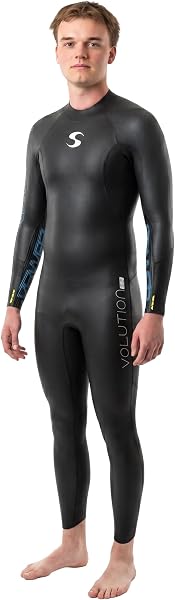
The Synergy Men's Volution 5/2mm Triathlon Wetsuit is designed for open-water swimmers, triathletes, and distance racers who prioritize speed, buoyancy, and minimal drag. Unlike multi-sport suits featuring fabric outer faces, the Volution is wrapped in hydrodynamic silicone-coated SyPrene rubber. This slick skin repels water, allowing you to glide smoothly through open water with reduced surface friction.
We may earn a commission when you buy through this link, at no additional cost to you.
Buoyancy is strategically distributed to promote proper swimming posture: a five-millimeter core panel lifts the hips and thighs into an optimal horizontal alignment, while two-millimeter segments across the arms and back allow unencumbered shoulder rotation. By elevating your lower body in the water column, it conserves valuable leg energy for the cycling and running stages of a triathlon.
The neckline features a specialized, soft, dual-sided smoothskin collar that sits low against the neck, significantly reducing the painful skin chafing that often occurs during rhythmic breathing cycles. An internal, corrosion-resistant YKK zipper features an inverted cord pull, enabling lightning-fast removal in the transition area when every second counts.
Placing five-millimeter buoyant neoprene along the abdomen and thighs automatically corrects your body position in open water, reducing frontal drag and improving swimming efficiency.
Triathletes and dedicated open-water swimmers will find the Volution an exceptional performance-enhancing tool. It provides generous buoyancy, low hydrodynamic drag, and targeted shoulder flexibility, helping you move faster while expending less energy.
Surfers, kayakers, or divers whose activities involve frequent abrasive contact with wax, rough decks, or sharp rocks.
We may earn a commission when you buy through this link, at no additional cost to you.
The O'Neill Reactor-2 3/2mm Fullsuit is tailored for water enthusiasts seeking dependable warmth during late spring, summer, and early autumn water sessions. By pairing three-millimeter panels over the core with two-millimeter segments on the arms and legs, it keeps your vital organs protected while allowing complete freedom of motion through your paddling stroke. This balance makes it an exceptional choice for beginner-to-intermediate surfers, flatwater paddlers, and coastal kayakers venturing out in moderate conditions.
We may earn a commission when you buy through this link, at no additional cost to you.
Performance hinges on its specialized panel layout, highlighted by O’Neill’s seamless paddle zones. By stripping away stitching from underarm stress points, this design prevents the chafing and shoulder fatigue common in traditional entry-level suits. Furthermore, the chest and back integrate wind-resistant smoothskin neoprene, which sheds brisk sea breezes and locks in body heat when you sit on your board between sets.
Daily usability is straightforward thanks to an extended back zipper equipped with a prolonged pull leash. This setup allows quick dressing on breezy shorelines without demanding extreme contortions. While back-zip closures inherently allow marginally more water seepage than horizontal chest configurations during violent wipeouts, the water-resistant inner barrier minimizes direct cold-water contact along your spine.
Removing underarm seams eliminates friction across repetitive paddling cycles, allowing your shoulders to rotate naturally without premature muscular exhaustion or skin irritation.
For coastal adventurers operating in water temperatures of 60 degrees Fahrenheit and higher, the Reactor-2 delivers outstanding utility without demanding a high financial investment. It strikes a functional sweet spot between lightweight flexibility and practical wind chill shielding, establishing itself as a reliable daily performer for multi-sport recreation.
Dedicated winter surfers facing freezing water temperatures below 55 degrees Fahrenheit who require glued, blindstitched, and taped cold-water seams.
We may earn a commission when you buy through this link, at no additional cost to you.
The O'Neill Epic 4/3mm Fullsuit stands as an industry benchmark for dependable cold-water performance without reaching exorbitant price tiers. Designed around four millimeters of insulating rubber throughout the torso and thighs with three millimeters across the extremities, it targets cold coastal environments between 50 and 58 degrees Fahrenheit. Serious surfers, bodyboarders, and coastal divers who need consistent multi-season thermal insulation will find this suit remarkably capable.
We may earn a commission when you buy through this link, at no additional cost to you.
A standout feature of the Epic is its glued and blindstitched seam architecture, which forms an effective barrier against incoming ocean chill. Because the blindstitch needle penetrates only halfway through the neoprene foam before the seam is sealed with waterproof glue, external water cannot seep through stitch perforations. Backing this sealing technology is O’Neill’s FluidFlex Firewall, a dedicated thermal lining inside the chest and spine that traps warm air against your torso.
To withstand regular contact with fiberglass decks and rough seabed surfaces, O’Neill incorporated heavy-duty Krypto Armor knee pads that flex naturally while deflecting abrasive wear. The neck seal employs a double super seal closure that snugs tightly around your collar to prevent flushing during duck dives. Additionally, an integrated key pocket with a sturdy loop ensures essential vehicle access remains secure while you are floating off the coast.
The internal firewall thermal lining actively traps body heat along vital chest and kidney zones, sustaining your endurance during extended exposure to cold water and offshore winds.
The Epic balances durability, heat retention, and flexible mobility with exceptional competence. While back-zip steamers are slightly less flexible across the back than modern chest zips, the Epic minimizes this difference through high-stretch UltraFlex neoprene panels across the shoulders and arms, making it our top all-around selection for cooler waters.
Tropical travelers and warm-water paddlers who would easily overheat in four-millimeter glued-and-blindstitched neoprene.
We may earn a commission when you buy through this link, at no additional cost to you.
This Men's 4/3mm Chest Zip Super Stretch Wetsuit addresses the needs of surfers and ocean swimmers who demand the ergonomic benefits of a front-entry suit without paying premium flagship prices. By eliminating the rigid vertical back zipper entirely, this garment allows the entire back panel to stretch smoothly with every paddle cycle. It provides substantial thermal protection rated for water temperatures down to roughly 51 degrees Fahrenheit.
We may earn a commission when you buy through this link, at no additional cost to you.
The primary performance asset here is the horizontal chest zip closure, which significantly reduces cold-water flushing when you duck dive beneath breaking waves. Combined with glued and blindstitched construction augmented by internal seam tape, this suit limits water exchange to a tiny layer that your body quickly warms. Arm fatigue is minimized during marathon sessions because the high-stretch rubber flexes freely across the deltoids.
Putting on a chest-zip suit involves stepping into the lower body and pulling a snug neck collar over your head, which requires slightly more technique than stepping into a back-zip suit. However, once secured, the flush collar forms a dependable seal against wave penetration. Like many newly manufactured neoprene items, it carries a mild factory scent upon unboxing, but this dissipates quickly after airing outside in shaded ventilation.
Positioning the entry zipper horizontally across the collarbone keeps the spine panel continuous and supple, providing enhanced range of motion and superior seal integrity against head-on wave impact.
Surfers seeking maximum paddle extension and superior flush resistance will appreciate the modern design cues built into this suit. While it represents an unbranded performance option, its combination of 4/3mm foam, seam taping, and unrestricted thoracic movement delivers genuine cold-water capability.
Shoppers with limited shoulder mobility who struggle with the overhead contortions necessary to get into and out of chest-zip neck entry flaps.
We may earn a commission when you buy through this link, at no additional cost to you.
When seasonal water temperatures drop into the low-to-mid 40s Fahrenheit, thinner steamers simply cannot preserve core body heat. This Men's 5mm Full Wetsuit is designed specifically for cold-climate water sports, utilizing a robust 5/4mm thickness profile that offers substantial insulation against water as chilly as 44 degrees Fahrenheit. It serves as an accessible thermal barrier for winter surfing, scuba diving, and cold lake paddling.
We may earn a commission when you buy through this link, at no additional cost to you.
Thermal defense is achieved through dense SuperStretch neoprene backed by glued and blindstitched seam joins. By gluing the rubber cut-outs prior to blindstitching, needle penetrations do not pierce the inner foam surface, preventing cold water from rushing in. In addition, internal circular tape reinforcements are placed over multi-seam junctions to strengthen stress points against tearing when you peel the suit off.
Handling a dense five-millimeter suit requires mindful care, as the thicker cellular neoprene naturally adds buoyancy and slight paddling resistance compared to lighter summer models. A heavy-duty back zipper with a long leash makes getting into the suit manageable even when working with stiff, cold fingers on winter tailgates. The extra rubber density also cushions impacts against rocks and submerged debris.
Internal seam tape discs strategically placed at high-tension intersections prevent delamination and seam blowout when you peel thick rubber off cold ankles and wrists.
For water enthusiasts who refuse to pack away their gear when winter storms arrive, this 5mm steamer delivers the protective thermal cushion necessary for safe cold-water recreation. It offers substantial insulation and reinforced construction for budget-conscious winter explorers.
Warm-water paddlers or high-cadence paddleboard racers who require lightweight, ultra-thin flexibility to avoid overheating.
We may earn a commission when you buy through this link, at no additional cost to you.
The Hevto 3/2mm Neoprene Front Zipper Fullsuit caters to casual watersports participants, snorkelers, and personal watercraft riders who prioritize simple self-entry over specialized cold-water sealing. Featuring a three-millimeter torso with two-millimeter limbs, this suit provides the core warmth and buoyancy needed for recreational swimming, jet skiing, and stand-up paddleboarding in mild water conditions.
We may earn a commission when you buy through this link, at no additional cost to you.
The standout characteristic of this design is its vertical front zipper equipped with an upgraded puller mechanism. Unlike rear zippers that require long lanyards or chest zips that demand agile shoulder contortions, a vertical front closure lets you slide your arms in and pull the zipper upward just like a conventional jacket. This configuration makes it exceptionally popular among boaters and divers who want quick adjustments between outings.
On the water, the tailored cut hugs your torso snugly to minimize loose bagging around your lower back and waistline. In addition to thermal defense, the full-length sleeves shield skin from harsh solar ultraviolet rays, shallow reef abrasions, and accidental jellyfish contact. While comfortable for general recreation, the front zipper track can feel slightly firm against the sternum when lying flat on a surfboard.
A full vertical front zipper gives you complete visual and physical control when dressing, making it effortless to vent excess heat on hot boat decks without removing your suit entirely.
If you are seeking an affordable, straightforward steamer for moderate-temperature waters, the Hevto 3/2mm provides reliable utility. It eliminates the frustration of reaching for back zippers while ensuring sufficient warmth for spring and summer coastal activities.
Prone surfboard paddlers who find vertical front zipper mechanisms uncomfortable against hard board decks during repetitive paddling.
We may earn a commission when you buy through this link, at no additional cost to you.
The Seaskin 3mm Shorty Wetsuit is designed for warm-water recreation, tropical snorkeling trips, and pool-based water aerobics where full-length neoprene would feel restrictive and hot. By trimming away the lower legs and forearms, this shorty focuses pure thermal defense directly over your chest and abdomen. This keeps your vital organs comfortable during prolonged swimming without encumbering your knees and elbows.
We may earn a commission when you buy through this link, at no additional cost to you.
Construction centers around a three-layer composite textile: high-elastic outer nylon, a core three-millimeter insulating neoprene foam layer, and a soft interior fabric lining that rests gently against bare skin. This build locks in core warmth while resisting water absorption, ensuring the suit stays lightweight throughout dynamic pool exercises or shallow reef snorkeling.
A heavy-duty front zipper provides immediate self-sufficiency, enabling you to step into the leg openings and zip up without relying on paddling partners. The trimmed sleeves offer completely free shoulder articulation, making it a favorite for open-water swimmers who dislike the resistive pull of neoprene cuffs across their forearms during freestyle strokes.
A sandwich of resilient nylon and closed-cell neoprene ensures core warmth while resisting surface abrasion from pool edges, snorkel vests, and kayak cockpits.
For tropical vacations, lake recreation, and aquatic fitness classes, the Seaskin Shorty offers reliable, hassle-free insulation. It packs down neatly into travel luggage and dries far faster than full-length suits, making it an excellent companion for warm-weather adventures.
Ocean users facing waters below 65 degrees Fahrenheit or surfers seeking shin and forearm abrasion protection from rocky shorelines.
We may earn a commission when you buy through this link, at no additional cost to you.
This Men's 3mm Full Wetsuit is built as a versatile multi-sport workhorse for enthusiasts who switch between scuba diving, snorkeling, paddleboarding, and coastal kayaking. By implementing a three-millimeter torso section backed by two-millimeter flex segments along the sleeves and calves, it delivers dependable thermal shielding in water temperatures of 55 degrees Fahrenheit and above without feeling overly bulky.
We may earn a commission when you buy through this link, at no additional cost to you.
Durability features prominently across this suit’s layout, highlighted by anti-abrasion knee pads that defend your legs when scrambling over kayak gunwales, rocky boat ramps, or abrasive surfboard traction pads. The front zipper closure utilizes dependable YKK hardware that operates smoothly in saltwater environments, backed by a storm flap designed to limit water entry and protect bare skin.
Protection extends past water temperature regulation thanks to integrated UPF 50+ fabric treatment that shields your entire body from intense solar radiation during midday sessions. Flatlock seam stitching provides smooth, flat transitions across all panel joins, preventing chafing during repetitive paddle motions while keeping the overall garment lightweight and packable.
Tough, flexible knee paneling shields your joints from sharp reef edges, kayak decks, and board traction surfaces without impeding knee flexion.
Recreational water adventurers looking for a single protective suit to handle several outdoor hobbies will appreciate this balanced design. It provides comprehensive thermal protection, UV defense, and sturdy knee shielding at an approachable price.
High-performance surfers navigating cold, windy winter swells where flatlock seams permit too much chilling water permeability.
We may earn a commission when you buy through this link, at no additional cost to you.
The Lansru 5/4mm SCR Wetsuit is designed for water users facing cold, unforgiving marine environments. Built from dense SCR neoprene—a high-grade blend offering greater elasticity and closed-cell thermal retention than common basic SBR rubbers—this suit creates a secure insulating envelope that traps and holds body heat in cold coastal water.
We may earn a commission when you buy through this link, at no additional cost to you.
Anatomical articulation is supported by pairing five-millimeter core body panels with four-millimeter high-elastic CR neoprene around the neck and limb openings. This transition allows unhindered swimming movements while sealing out cold water. Internally, the suit is lined with super-stretchy yarns and skin-friendly patches that prevent seam rash, while OEKO-TEX Standard 100 certification guarantees the fabrics are free of hazardous chemical residues.
A premium front YKK zipper provides smooth, dependable operation, enabling effortless dressing without contorting your arms behind your back. Thickened protective knee pads offer extra insurance against bruising and scuffs when paddling out over rocky shelves or handling gear on dive boats. The suit also acts as a defensive shield against stinging jellyfish and sea lice.
Formulated with an advanced SCR rubber blend, this suit retains higher cellular integrity under pressure than basic entry-level foams, delivering superior thermal stability.
For coastal divers, cold-water paddlers, and ocean swimmers seeking enhanced buoyancy and cold-water insulation, the Lansru 5/4mm provides heavy-duty defense. Its dense foam blend and quality hardware make it a reassuring companion in rough waters.
Surfers prioritizing featherweight flexibility for rapid maneuvers in warm summer surf conditions.
We may earn a commission when you buy through this link, at no additional cost to you.
The O'Neill Hyperfreak 4/3+mm Chest Zip Fullsuit represents the gold standard in modern surfing wetsuit technology. Tailored specifically for core wave riders who refuse to sacrifice paddle mobility for warmth, this steamer features an extra half-millimeter of neoprene across its profile (4/3+mm). This clever engineering delivers the thermal rating of heavier winter suits while maintaining the weightless, supple feel of a much thinner garment.
We may earn a commission when you buy through this link, at no additional cost to you.
Mobility is governed by O’Neill’s proprietary high-stretch neoprene, which extends effortlessly in every direction. Seams are joined through glued and blindstitched construction before being sealed internally with TB3X tape—a featherlight, stretchy tape applied with liquid glue to ensure water cannot penetrate while preserving complete seam elasticity. As a result, shoulder resistance is virtually eliminated during long paddle-outs.
Water management is handled by the front Upper Zip Entry (F.U.Z.E.) system, which employs a free-floating zipper panel that glides over a 360-degree inner barrier. If water manages to bypass the collar during heavy wipeouts, integrated laser-cut drainage holes flush it out before it touches your core. This chest-zip system keeps your spine completely flexible for deep bottom turns and critical maneuvers.
Advanced internal TB3X neoprene tape stretches harmoniously with the outer rubber panels, maintaining complete structural waterproofing without introducing rigid, uncomfortable seam lines.
While it represents a significant financial investment, the Hyperfreak delivers an unmatched surfing experience in water ranging from 48 to 56 degrees Fahrenheit. For surfers who value paddle endurance, lightning-quick reflex agility, and premium materials, this suit has few equals.
Budget-focused casual beachgoers or occasional snorkelers who do not need competition-level stretch and can manage with standard back-zip steamers.
We may earn a commission when you buy through this link, at no additional cost to you.
Selecting the right wetsuit requires balancing thermal protection, paddle flexibility, entry styles, and construction quality against your local water conditions. This comprehensive guide breaks down the essential technical criteria so you can invest with total confidence.
Wetsuit thickness is designated using two or three numbers separated by slashes, such as 3/2mm, 4/3mm, or 5/4mm. The first and highest digit indicates the thickness of the neoprene across your core torso and back, where vital organs require thermal shielding. The secondary digits refer to the thickness of the limbs, shoulders, and underarm panels, where reduced rubber bulk is essential to allow natural joint articulation during paddling.
Choosing the right thickness begins with knowing your local water temperatures. A 3/2mm suit functions well in water between 58 and 68 degrees Fahrenheit, balancing lightweight agility with core warmth. When water temperatures drop into the 50 to 58-degree range, a 4/3mm suit becomes essential to prevent hypothermia. For sub-50-degree sessions, 5mm or thicker neoprene with taped seams is necessary to preserve safe body heat over extended sessions.
Prioritize your personal cold sensitivity and wind conditions when selecting thickness. If you often feel chilly in coastal breezes, moving up to a thicker suit or selecting one with a dedicated wind-blocking smoothskin chest panel will dramatically enhance your comfort.
Seam assembly directly governs how much cold water enters your suit. Basic suits frequently use flatlock stitching, where needles penetrate all the way through overlapping neoprene panels. While durable, flatlock stitching leaves thousands of tiny perforations that allow water to flush freely, making it suitable only for warm water above 62 degrees Fahrenheit.
For colder environments, glued and blindstitched (GBS) seams are essential. In GBS construction, the neoprene cuts are glued edge-to-edge before a curved needle penetrates only halfway through the exterior rubber, leaving the interior surface sealed. Top-tier suits enhance this barrier by applying internal liquid tape or elastic seam tape over the joins, creating an impenetrable waterproof boundary that maintains seam stretch.
Never compromise on seam construction if you plan to venture into water cooler than 58 degrees. Investing in GBS and fully taped seams keeps cold water out, trapping a thin layer against your skin that your body heat warms efficiently.
The entry system influences both how easy the suit is to put on and how well it resists flushing during wipeouts. Back-zip suits feature a long vertical zipper down the spine with a generous pull cord. This configuration provides a wide opening that is simple to step into, making it popular among beginners and paddlers with restricted shoulder flexibility.
Chest-zip (or front-zip) suits use a shorter horizontal zipper across the collarbone with an over-the-head neck flap. Because the back panel remains a continuous sheet of uninterrupted neoprene, chest zips allow greater shoulder stretch and paddle extension. More importantly, horizontal closures seal tightly against wave impact, practically eliminating cold flushes during duck dives.
Choose a back zip if you value effortless self-dressing on breezy shorelines. Choose a chest zip if you prioritize maximum paddling flexibility, a snug fit, and superior flush resistance during dynamic surf sessions.
Not all neoprene foam performs the same. Modern high-grade neoprene utilizes limestone-derived formulations or advanced synthetic rubber blends (such as SCR and CR) that incorporate micro-cell gas chambers for superior insulation and elasticity. Cheaper SBR foams tend to be heavier, stiffer, and more prone to compression over time, leading to premature thermal degradation.
Internal thermal linings provide additional comfort and warmth. Many advanced suits incorporate brushed fleece or quick-drying microfiber weaves across the chest and kidneys. These linings trap warm air next to your skin and wick moisture away between sessions. Externally, smoothskin panels shield your torso from coastal winds, preventing evaporative cooling when you sit upright on your surfboard.
Look for suits that feature smoothskin chest panels and high-stretch limestone-based or SCR rubber if you paddle in windy, chilly coastal zones. These premium materials provide lasting warmth without adding unnecessary bulk.
Even the most expensive, technically advanced wetsuit will fail to keep you warm if it fits poorly. A wetsuit must fit snugly like a second skin, maintaining continuous contact with your body without creating loose folds or air pockets. Any extra space allows cold water to pool, circulate, and rapidly sap your body heat, negating the insulating properties of the neoprene.
Look for suits engineered with minimal, anatomically contoured panels and seamless underarm paddle zones. Eliminating seams across high-friction areas prevents painful chafing and allows your shoulders to rotate naturally. When trying on a new suit, ensure it feels comfortably snug across your chest, lower back, and crotch while allowing you to raise your arms overhead without pulling uncomfortably at your neck.
Check the manufacturer size chart carefully, prioritizing chest and torso length measurements over general body weight. A suit should feel tight when dry, as neoprene stretches slightly once submerged in water.
Long-term wetsuit durability depends on small, intentional construction details. High-wear zones—particularly the knees—require heavy-duty, flexible abrasion pads (such as O’Neill’s Krypto Armor) to resist wear from rough surfboard traction pads, kayak gunwales, and rocky shores. Without proper reinforcement, knee panels can wear thin and tear prematurely.
Hardware quality is equally critical. Premium corrosion-proof YKK marine zippers with reinforced stop blocks resist salt crusting and jam less often. In chest-zip suits, look for integrated drainage holes at the base of the zipper track. These permit water that enters the neck flap to escape immediately rather than pooling uncomfortably inside your suit.
Inspect internal seam junctions for reinforcing tape discs and check that the zipper runs smoothly. Durable hardware and reinforced stress points ensure your suit will withstand seasons of challenging ocean use.
Getting into a snug wetsuit requires careful technique to protect both the seams and the neoprene. Avoid pulling on the rubber with sharp fingernails, which can puncture modern high-stretch smoothskin. Instead, work the ankles and calves into position using the pads of your fingers, pull the suit up to your waist, and then carefully ease your arms into the sleeves before securing the neck seal and zipper closure.
After every session, immediately rinse your wetsuit inside and out with cool, fresh tap water to wash away corrosive salt crystals, sand, and sweat. Never use hot water, as high temperatures degrade the glue bonding your seams and break down the cellular structure of the neoprene. Hang the suit draped over a wide, smooth plastic bar or fold it through a heavy-duty hanger at the waist; standard narrow wire hangers will crease and permanently stretch out the shoulders.
Always dry your wetsuit out of direct sunlight in a well-ventilated, shaded space. Solar ultraviolet rays quickly degrade neoprene, causing it to become brittle and stiff over time. Turn the suit inside out first so the interior lining dries completely, then flip it right-side out to finish. Store your suit flat or gently folded in a temperate room free from ozone-producing electric motors or damp basements.
A new wetsuit should feel very snug, similar to a second skin, without restricting your normal breathing or cutting off circulation at your wrists and ankles. It should cling smoothly against your lower back without sagging or creating hollow air pockets. Keep in mind that neoprene softens and gains roughly ten to fifteen percent additional flexibility once you enter the water.
A 3/2mm suit features three millimeters of neoprene on the torso and two millimeters on the arms and legs, making it lightweight and flexible for water temperatures above 58 degrees Fahrenheit. A 4/3mm suit adds an extra millimeter of thickness across all panels, providing significantly more thermal insulation for cold water between 50 and 58 degrees Fahrenheit. The tradeoff is that the 4/3mm suit adds slight paddling weight and takes longer to dry.
Chest-zip suits feature a continuous, unbroken neoprene panel across your back and spine, eliminating the long vertical zipper where cold water commonly seeps in. The overlapping over-the-head neck flap seals tightly against wave impact, preventing cold flushes when duck diving. Furthermore, the absence of a rigid spine zipper allows the suit to fit more snugly against your back.
While you can swim in a surf wetsuit, dedicated triathlon suits provide distinct advantages. Surf suits feature heavy nylon coatings and reinforced knee pads designed to withstand board abrasion and wax friction. In contrast, triathlon wetsuits utilize hydrodynamic silicone-coated smoothskin rubber for reduced drag and incorporate thinner shoulder panels that permit continuous freestyle stroke rotation without tiring your arms.
Flatlock stitching pierces entirely through both neoprene panels, creating small needle holes that allow water and wind to permeate the suit. Glued and blindstitched (GBS) seams are bonded edge-to-edge with waterproof glue, and the curved stitch penetrates only halfway through the material from the outside. Because the stitch never fully punctures the rubber, GBS seams keep cold water from flushing into the suit.
A noticeable chemical or rubber scent is completely normal for freshly manufactured, factory-sealed neoprene items. Simply hang your wetsuit in a shaded, well-ventilated outdoor area or garage for a day or two to air it out. Rinsing it in fresh, cool water will also accelerate the dissipation of harmless manufacturing odors.
No, you should never wash a wetsuit in a household washing machine or run it through a heated tumble dryer. The mechanical agitation, spinning cycle, and laundry detergents will destroy glued seam tape, weaken the neoprene foam, and ruin the waterproof integrity. Always hand-wash your suit in a tub of cool water using a specialized, gentle wetsuit shampoo when necessary.
Small surface cuts and fingernail tears can be easily repaired at home using specialized black neoprene cement. Clean and thoroughly dry the damaged area, apply a thin coat of cement to both interior cut edges, allow it to become tacky for two to three minutes, and then firmly press the edges together for several minutes. Allow the repair to cure fully for 24 hours before heading back into the water.
With proper care—including thorough freshwater rinsing after every session and storage out of direct sunlight—a quality wetsuit typically lasts two to four seasons of regular use. Heavy users surfing multiple days per week in cold waters may replace their suits every one to two seasons as neoprene gradually loses elasticity and seam tape begins to wear.
Selecting the ideal wetsuit fundamentally comes down to matching your local water temperatures and activity level with the right balance of rubber thickness, seam construction, and entry design. For all-around cold-water performance, the O'Neill Epic 4/3mm remains our Editor's Choice thanks to its dependable glued and blindstitched seams, warm FluidFlex chest firewall, and proven track record across diverse coastal environments.
If you demand elite paddle mobility and premium stretch for high-performance surfing, the O'Neill Hyperfreak 4/3+mm stands out as an exceptional high-tier investment. Conversely, recreational water users heading out into milder late-spring or summer conditions will find excellent value in the O'Neill Reactor-2 3/2mm, which delivers reliable warmth and supple paddle comfort without requiring a large financial outlay.
Before finalizing your purchase, carefully measure your chest, waist, and torso height against the specific size chart for your chosen suit. A proper, second-skin fit is the single most critical factor in staying warm, preventing cold-water flushes, and enjoying every minute of your time on the water.