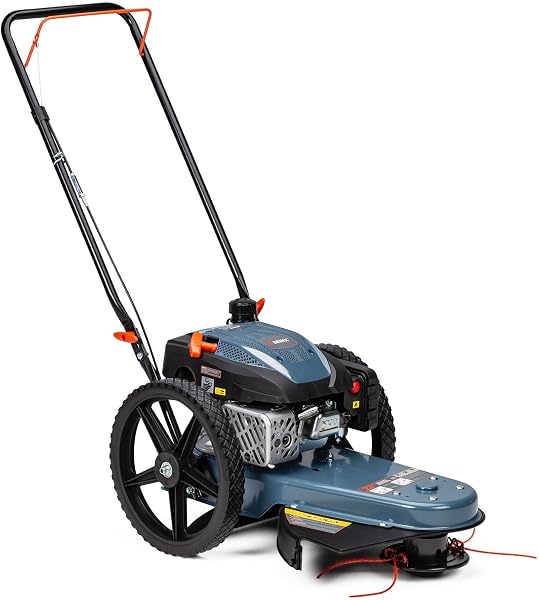
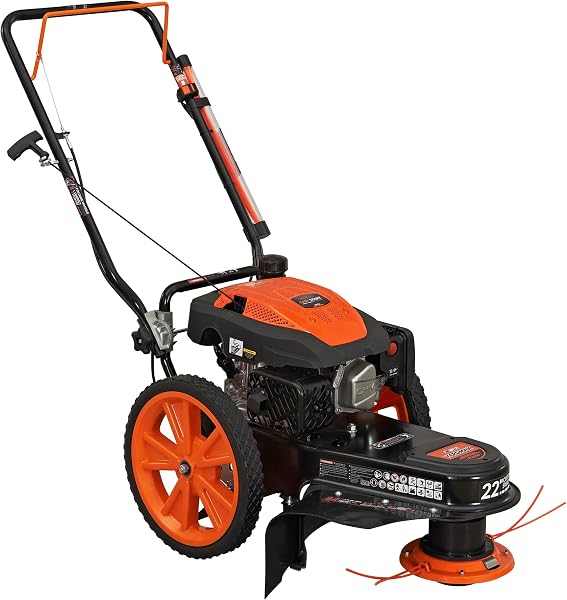
BILT HARD 22-inch
8.4Editor score22-inch cutting path
170cc 4-cycle engine
Self-propelled drive
10-inch flat-free wheels
Find the right walk behind trimmers for 2026. We compare 9 standout options by build quality, useful features, owner feedback, value, and everyday trade-offs.
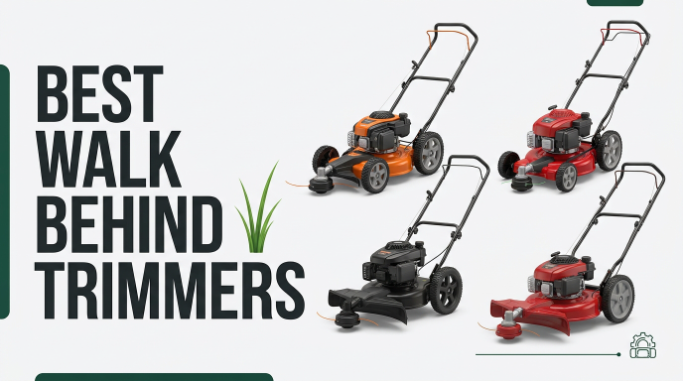
Find the right walk behind trimmers for 2026. We compare 10 standout options across the specs that actually shape results in tall grass and brush, including engine displacement, cutting swath, line diameter, wheel size, height adjustment range, deck construction, ease of storage, and long-term warranty support, so you can match a machine to your property.
The gap between a light-duty handheld trimmer and a wheeled brush cutter is significant. A walk-behind unit powers through dense weeds, saplings, and overgrown fence lines that would burn out a shoulder-strap trimmer in minutes. Choosing well means balancing engine power, maneuverability on rough terrain, and the specific jobs your property demands each season.
This guide walks through 10 popular models with a focus on real usage scenarios, from rural acreage with heavy brush to suburban yards with tricky fence lines and drainage ditches. Each review highlights the practical strengths, meaningful limitations, and buyer profile that a particular walk-behind trimmer or edger actually fits best.
We compared 10 walk behind trimmers using the details that genuinely help a buyer decide: engine displacement and 4-cycle versus battery power, cutting swath width, trimmer line diameter and replacement ease, wheel size and airless design, height adjustment range, deck durability, foldable handle for storage, warranty coverage, and owner feedback. The notes focus on practical trade-offs so each pick connects to how homeowners and property caretakers actually clear brush, tame overgrown fence lines, and handle terrain that handheld trimmers cannot manage.

Compare key features, scores, and current prices side by side. A shorter feature list means fewer details were available, not necessarily fewer capabilities.


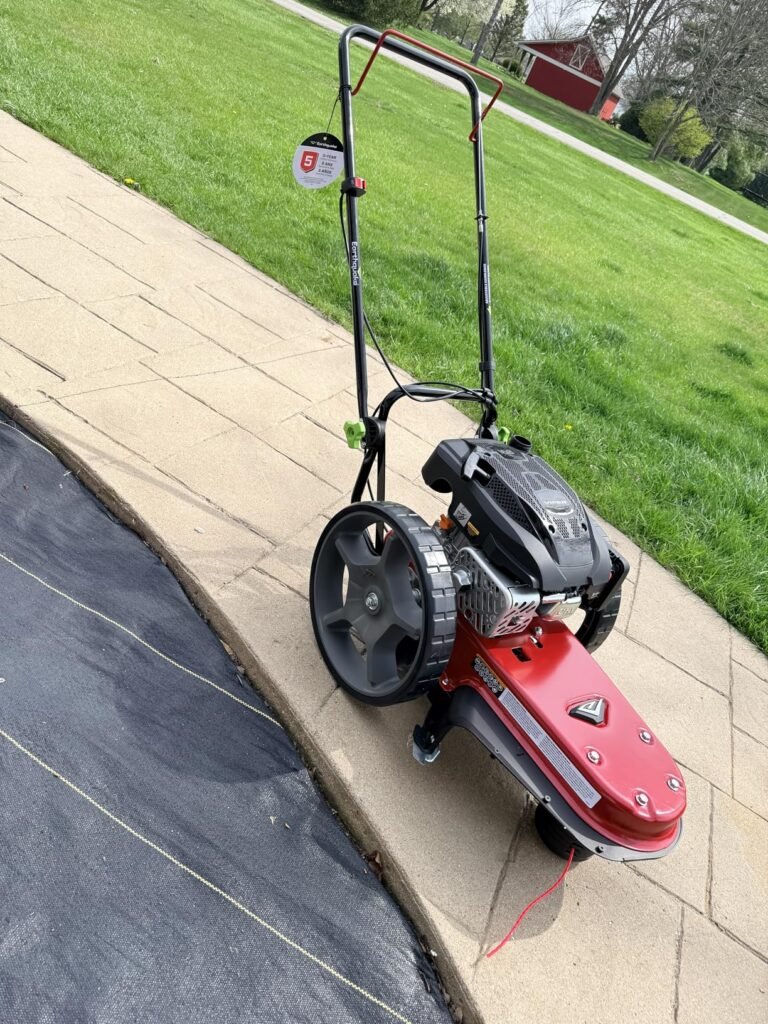
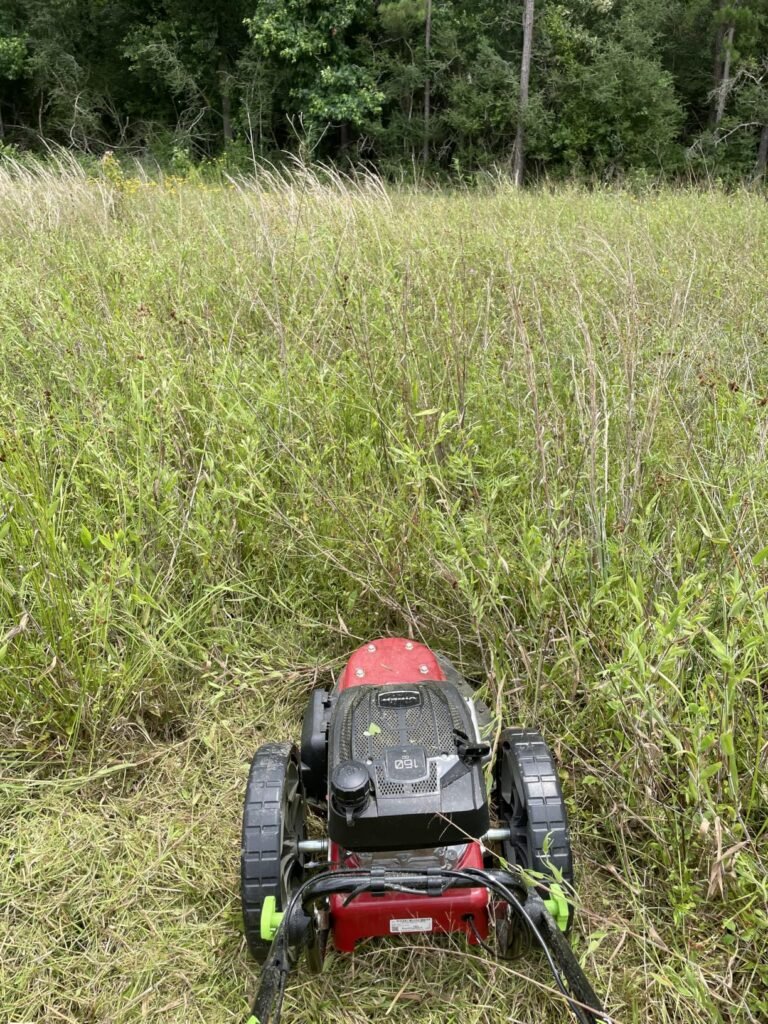
The Earthquake Hurricane earns a second entry in this guide because its combination of refined controls, thoughtful design, and strong warranty support makes it stand out even among competitive walk-behind trimmers. For buyers doing regular brush work rather than occasional cleanup, this model deserves a serious look for the long-term investment case it presents.
We may earn a commission when you buy through this link, at no additional cost to you.
The one-piece extra-long steel deck is a design detail worth calling out. The extended reach lets the cutting head pass under fences and lower tree limbs without banging the deck against obstacles, which is genuinely useful along property boundaries and around orchard trees. An oversized debris deflector directs clippings away from the operator, keeping the cutting line clear and protecting your legs from flying material.
Controls are designed to reduce operator effort throughout a work session. The Grab-N-Go engagement bail lets you stop and restart the cutting head without shutting down the engine, saving pull-start effort every time you need to reposition or clear an obstacle. The adjustable handlebar accommodates different operator heights for better ergonomics, and the fold-down handle collapses the machine into a much smaller storage footprint that fits in a vehicle bed or under a workbench.
A 5-year limited warranty is significantly stronger than the 1 to 3-year coverage typical in this category, and it signals the manufacturer’s confidence in long-term durability. Warranty length shouldn’t be the only decision factor, but on equipment expected to last a decade or more, strong coverage can save meaningful money on repairs and provide reassurance during the ownership experience.
The main trade-offs remain the higher price versus basic 22-inch trimmers and the absence of self-propelled drive for steep terrain. For property owners handling regular clearing on mixed terrain, especially where fences, trees, and obstacles complicate the work, the Hurricane’s refined design and 5-year limited warranty represent a strong long-term value. US-based customer support adds meaningful peace of mind for a machine expected to serve for many seasons.
Owners of steep hilly properties who really need self-propelled drive to reduce fatigue.
We may earn a commission when you buy through this link, at no additional cost to you.
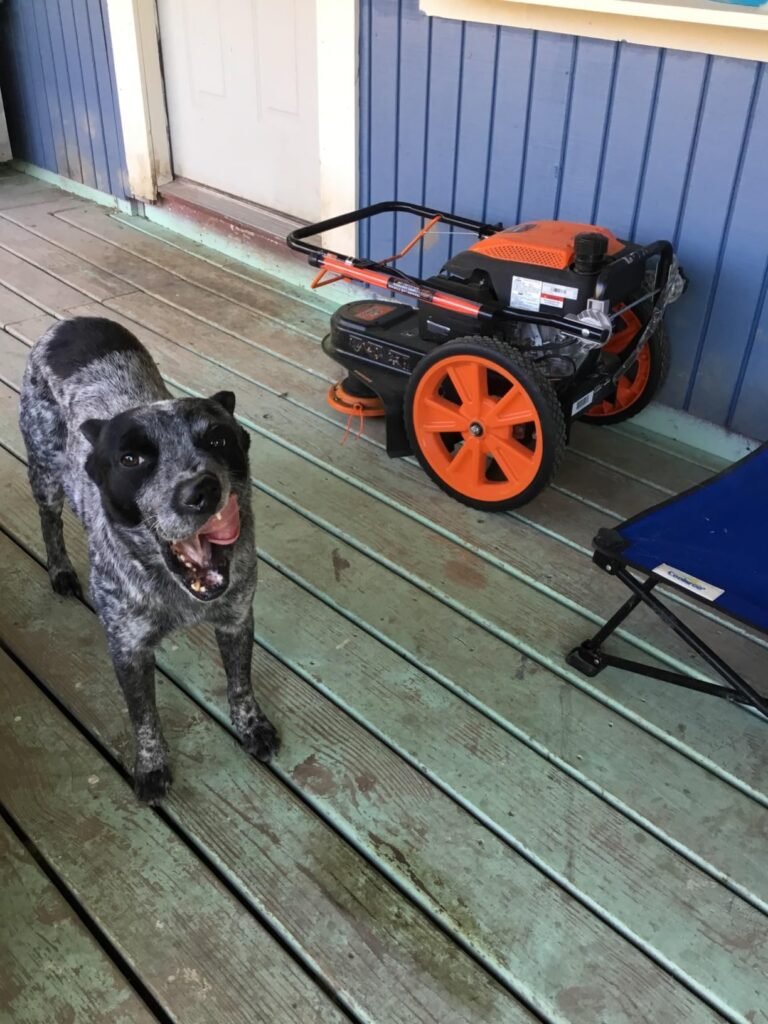
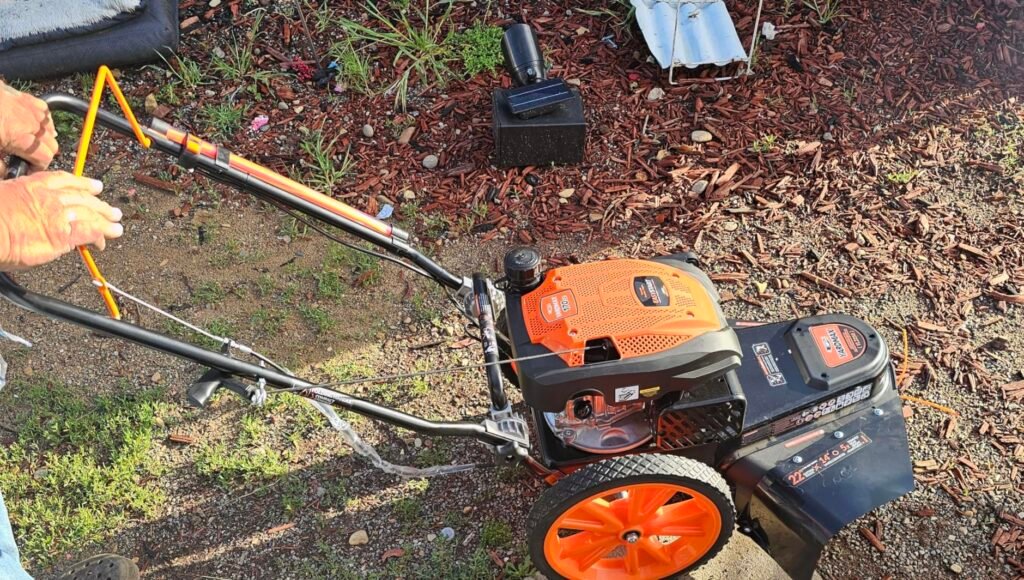
The BILT HARD self-propelled walk-behind trimmer is the pick for property owners tackling slopes, uneven pastures, or larger lots where pushing a heavy brush cutter would quickly become exhausting. The powered drive moves the machine forward at a steady 1.9 mph, letting you focus on guiding it through overgrown areas rather than muscling it uphill.
We may earn a commission when you buy through this link, at no additional cost to you.
The 170cc OHV 4-cycle engine provides ample power for cutting through thick grass, weeds, and light brush without the fuel-mixing hassle of 2-cycle engines. The 22-inch cutting diameter clears meaningful ground per pass, and the durable nylon line handles tougher vegetation than string trimmers spec’d with thinner filament. Manual recoil start is standard, which most users find reliable on properly maintained 4-cycle engines.
Practical usability details help this model earn its price. The 8-position height adjustment covers 1.6 to 3.7 inches, giving you flexibility from a clean lawn trim to knocking down tall weeds. The 10-inch never-flat wheels roll over roots, ruts, and rough spots without the puncture risk of pneumatic tires, and the one-piece steel deck reduces vibration on uneven terrain. The foldable handle simplifies storage in tight garage spaces.
Pushing a 100-plus pound machine up even a modest slope becomes tiring quickly, especially when the deck is bogging down in tall weeds. A powered drive system takes over the forward motion, letting you concentrate on steering and depth control rather than fighting the machine’s weight. On hilly properties, this feature can turn a two-hour ordeal into a manageable session.
The trade-off is weight and complexity. A self-propelled machine is bulkier than a simple push unit, and the drive system adds one more component to maintain over the years. For flat suburban lots, the extra investment may not be necessary. For rural acreage, hills, or long fence lines, the self-propelled drive makes a genuine difference in reducing operator fatigue across a full afternoon of clearing work.
Owners of small, flat lawns who only need occasional trimming and would find the extra weight unnecessary.
We may earn a commission when you buy through this link, at no additional cost to you.
The YARDMAX YL2250 is a strong value pick for homeowners who spend significant time trimming along fences, barn edges, and landscape borders. Its offset head design positions the cutting line ahead of the wheels, letting you run right along a straight edge without repeatedly repositioning the machine or leaving strips of uncut vegetation behind.
We may earn a commission when you buy through this link, at no additional cost to you.
The 170cc gas engine provides plenty of power for typical brush cutter jobs, cleanly handling tall grass, weeds, and thinner woody stems. The 22-inch cutting swath is standard in this class, and the machine is clearly designed to knock out large jobs quickly rather than doing delicate lawn work. Ball-bearing 14-inch wheels reduce rolling resistance and travel easily across uneven terrain.
Practical convenience features round out the design. The tool-free height adjustment offers 5 cutting heights from 1.5 to 3.5 inches, letting you dial in the right level for the vegetation you’re facing. Onboard trimmer line storage with an included cord caddy is a genuinely useful touch, since fumbling for spare line in the middle of a job is a common frustration. The overall build feels aimed at getting practical work done at a competitive price.
An offset cutting head sits forward of the wheel line, letting the trimmer line extend beyond the machine’s footprint. That means you can trim tight to fence posts, along foundations, and around trees without hitting anything with the wheels. For properties with lots of linear edges, this design detail meaningfully reduces the need for separate handheld touch-up work.
The trade-off is that this model lacks some of the premium refinements found on higher-priced units, like an engagement bail or 8-position height adjustment. For buyers who prioritize the essentials of engine power, cutting width, and edge-friendly design at a lower cost, the YARDMAX delivers a well-thought-out package. It suits homeowners who want reliable performance without paying for features they may not use often.
Owners of steep hilly properties who really need self-propelled drive to reduce fatigue.
We may earn a commission when you buy through this link, at no additional cost to you.
The AMERISUN 22-inch walk-behind string trimmer is aimed at buyers who want to step up from a handheld trimmer without committing to a premium-brand price tag. For occasional brush work on smaller acreage or seasonal cleanup jobs, this entry-level model provides the basic capabilities of a wheeled brush cutter at a notably approachable cost.
We may earn a commission when you buy through this link, at no additional cost to you.
The 170cc 4-stroke OHV engine matches the displacement of models costing significantly more, giving it credible power for tackling tall grass, thick weeds, and moderate brush. Forced-air cooling helps the engine handle extended runs on hot days, and the 4-stroke design eliminates the mixing of oil and gas that many buyers dislike about older 2-stroke equipment.
The 22-inch cutting path and 14-inch high wheels are competitive spec sheet numbers, and the offset trimmer head design supports clean work along fences and around trees. Cutting height adjusts from 1.9 to 4.0 inches to handle various grass and weed conditions, and the foldable handle collapses for compact storage in garages, sheds, or trailers between uses.
Not everyone needs a professional-grade brush cutter. If you clear an overgrown area once or twice a year and expect the machine to spend most of its life in the shed, a budget option can be perfectly reasonable. The key is setting realistic expectations about longevity and being willing to accept some rough edges in fit and finish.
The trade-offs are reflected in the lower average customer rating. Entry-level brush cutters sometimes have less refined controls, thinner deck material, or less consistent quality control than premium alternatives. Warranty support and long-term durability are worth researching before purchase. For buyers who need occasional use and prioritize price over premium refinement, this AMERISUN model can make sense as a functional starting point.
Regular users on large properties who need long-term durability and strong warranty backing.
We may earn a commission when you buy through this link, at no additional cost to you.
The PowerSmart 22-inch walk-behind trimmer takes aim at buyers who want a straightforward starting experience without wrestling with a manual choke lever. The 170cc 4-cycle OHV gas engine includes an easy-start ignition system with auto choke, which helps get the machine running with fewer pulls, especially in cool morning conditions when many gas engines are stubborn.

We may earn a commission when you buy through this link, at no additional cost to you.
The 22-inch cutting swath handles the same wide clearing tasks as its competitors, and the machine ships with heavy-duty 0.155-inch trimmer line, which is the thicker end of the spec range for this category. Heavier line is more resistant to breakage in tough brush and stubborn weeds, which reduces how often you need to stop and load new filament during a long clearing session.
The 14-inch wheels and adjustable cutting height from 1.90 to 3.90 inches let this model work through various terrain conditions, including uneven pastures and grown-over ditches. The foldable handle simplifies storage between jobs, and the included accessories, such as a funnel, wrenches, spark plug wrench, and 10 pieces of trimmer line, mean you can get to work right out of the box without a separate parts run.
Thicker 0.155-inch trimmer line handles tougher brush and breaks less often than the 0.080 to 0.095-inch line common on handheld trimmers. The trade-off is that heavier line uses slightly more engine power and cuts a bit less cleanly on soft turf. For brush-cutting work, the heavier gauge is usually the right call.
The trade-off is that this machine sits in the mid-range of features without a standout premium element like anti-wrap heads or self-propel. For buyers who value reliable ignition, thicker included cutting line, and a complete starter accessory package at a moderate price, the PowerSmart makes practical sense. It suits owners of small to medium properties who value dependable startup over premium refinements.
Buyers who need the most premium features like anti-wrap cutting heads or self-propelled drive systems.
We may earn a commission when you buy through this link, at no additional cost to you.
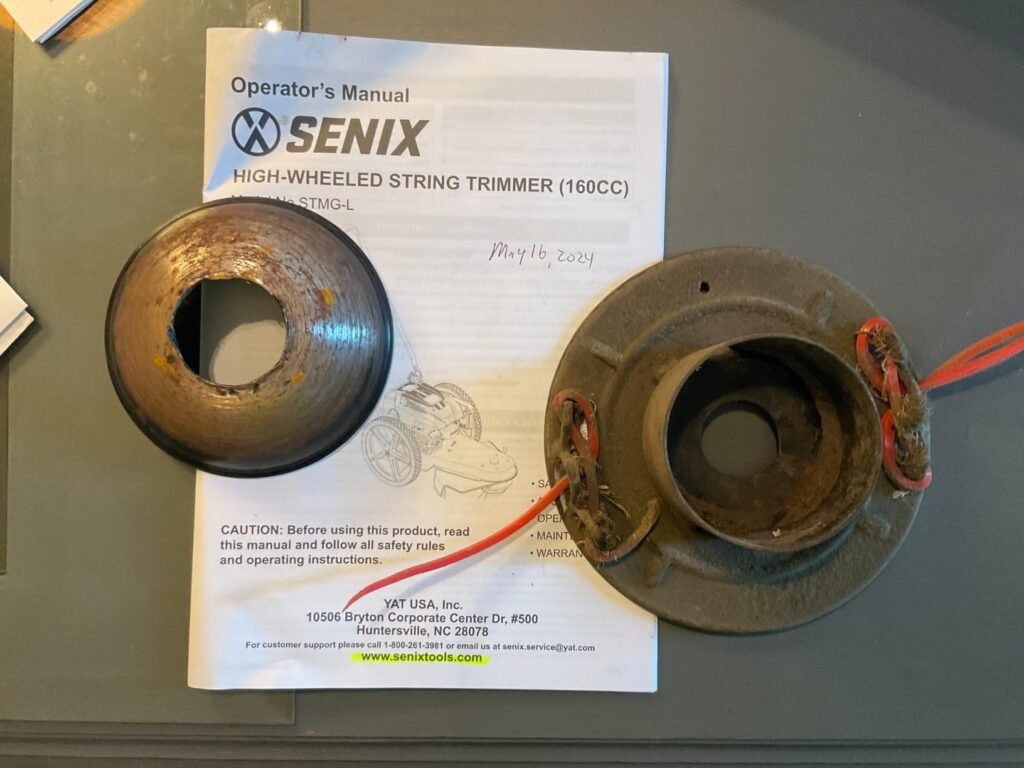
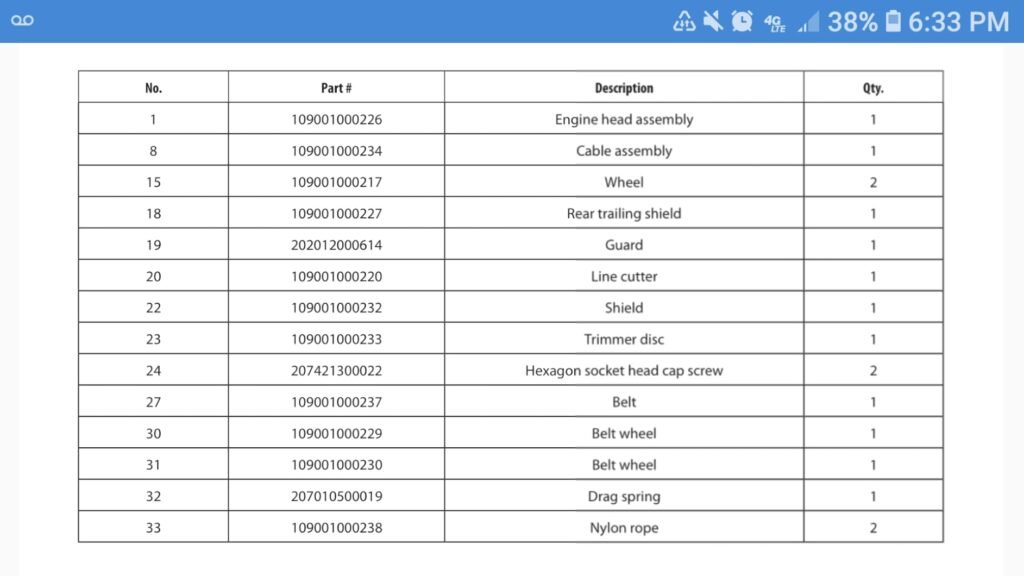
The SENIX STMG-L high-wheel brush cutter targets buyers who value a smoother running engine experience. The 160cc 4-cycle professional series engine is designed for low vibration and low emissions, which helps reduce operator fatigue during extended clearing work and keeps fuel consumption reasonable across a long day.
We may earn a commission when you buy through this link, at no additional cost to you.
The 22-inch cutting swath with 0.155-inch line matches other capable brush cutters in this lineup, and the machine is well suited to tackling heavy weeds and brush across larger yards. The 14-inch durable rubber wheels support strong maneuverability over rough ground, and the steel deck construction provides the rigidity needed to handle the impact of hitting hidden roots or rocks.
The 5-position height adjustment lever covers 1.57 to 3 inches, which is a narrower range than some competitors offer but sufficient for most brush cutting and rough grass work. The ergonomic handle design supports comfort during long sessions, and the fold-down handle makes storage manageable in tight spaces. The included engine oil and 20-inch string trimmer line let you begin operation quickly.
Extended exposure to strong vibration can cause hand and arm fatigue, and over years of use, it may contribute to more serious health issues. Machines designed with dampened mounts and smoother engines are more comfortable during long clearing sessions and generally last longer because vibration also wears on bolts, welds, and internal components.
The trade-offs are the relatively narrow height range and the lower average customer rating, which suggests some variability in quality or user experience. The 3-year limited warranty provides reasonable support, though it falls short of the 5-year coverage from premium competitors. For buyers who prioritize engine smoothness and don’t need the widest possible height adjustment range, the SENIX offers a workable option at a moderate price.
Buyers who need the widest possible cutting height range for varied vegetation types.
We may earn a commission when you buy through this link, at no additional cost to you.
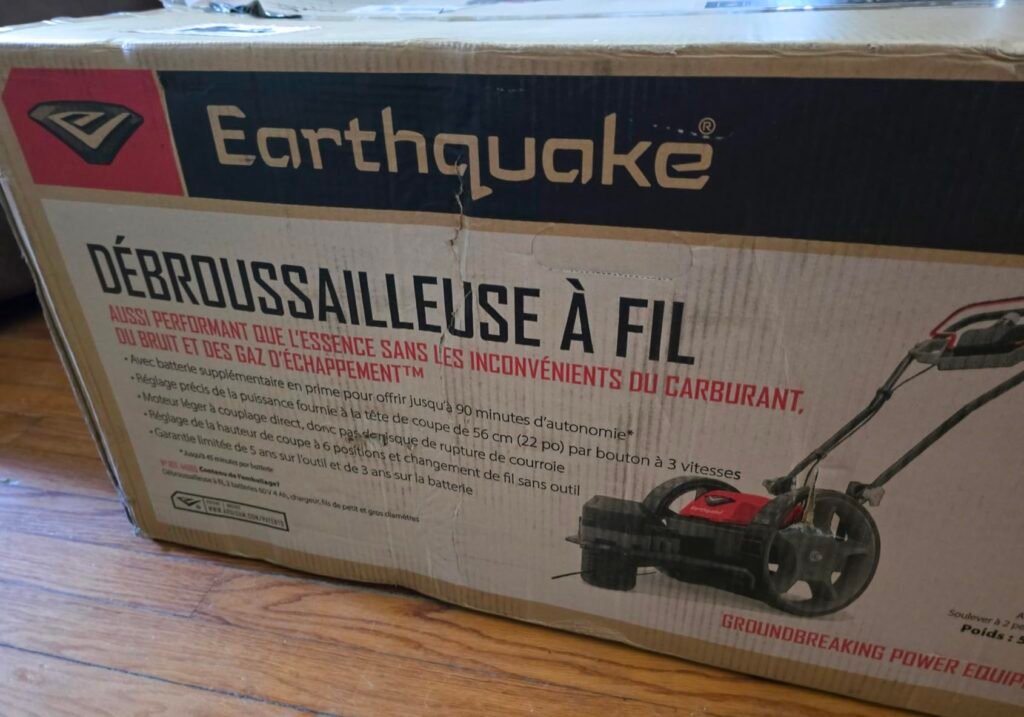
The Earthquake 60V battery-powered walk-behind string mower is a solid choice for buyers who want to avoid the maintenance, noise, and fumes of a gas engine. It ships with two 4Ah batteries that together provide up to 90 minutes of runtime, which covers meaningful clearing work on suburban and small acreage properties without the need for a fuel can.
We may earn a commission when you buy through this link, at no additional cost to you.
A direct-drive brushless motor sits at the core of the design, which reduces long-term maintenance compared to brushed motors and extends battery life by running more efficiently. The 22-inch cutting diameter matches its gas competitors, and the variable cutting speed dial with three settings lets you conserve battery on lighter tasks and step up power for heavier brush.
Practical features include the same innovative cutting head that reduces weed wrap on Earthquake’s Hurricane model, plus tool-less height adjustment from 1.5 to 4 inches. The 14-inch extra-wide airless wheels float over rough terrain, and the machine ships with a cutting line starter pack containing both 0.095-inch and 0.155-inch line for different jobs. Assembly is designed to be straightforward.
Battery power shines for shorter jobs in noise-sensitive settings, like early morning work in a suburban neighborhood or clearing near horses and livestock that spook at loud engines. It also eliminates the smell of gas fumes and the periodic maintenance of spark plugs, air filters, and carburetors. For occasional users, the lower upkeep can more than justify the higher purchase price.
The trade-offs are runtime and upfront cost. Battery power is genuinely convenient for shorter jobs but requires you to plan around charging cycles on all-day clearing work, and the initial investment is higher than comparable gas models. For homeowners with smaller properties who value quiet operation, low maintenance, and the ability to start with the pull of a trigger, this Earthquake battery model is compelling. The 5-year tool warranty and 3-year battery warranty back up the investment.
Property owners with large acreage who need to clear brush for hours at a stretch without stopping to swap batteries.
We may earn a commission when you buy through this link, at no additional cost to you.
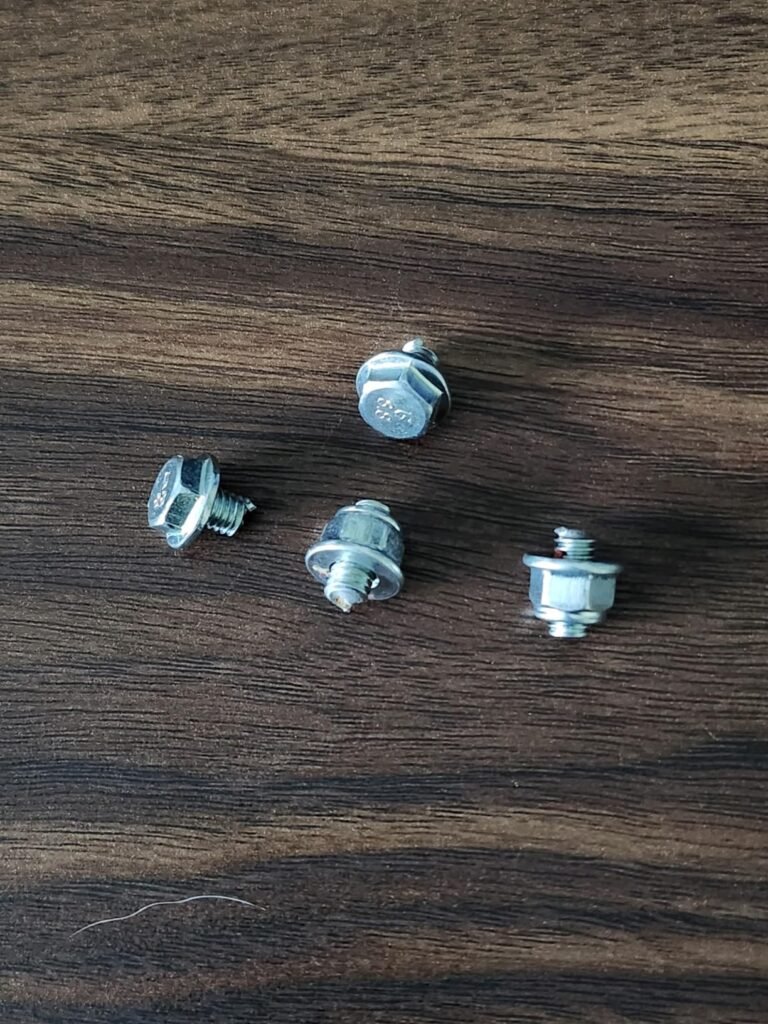
The Earthquake 41273 walk-behind edger fills a different role in this category. Rather than cutting overgrown brush, it creates clean, defined edges along sidewalks, driveways, curbs, and flower beds. For homeowners who take pride in sharp landscape lines, a dedicated edger produces results that string trimmers simply cannot match consistently.
We may earn a commission when you buy through this link, at no additional cost to you.
The 79cc 4-cycle Viper engine provides more power and torque than handheld edgers, which means it cuts through tough sod and root systems without bogging down. Since it’s 4-cycle, there’s no fuel mixing, and the engine starts easily. The multi-position pivoting blade offers 5 cutting angles, tilting up to 20 degrees in either direction for straight cuts along sidewalks or beveled cuts around mulch beds.
Ten edging depths let you dial in the perfect setting for each area. Set it high for a light touch-up on already-defined edges, or go deep up to 2.5 inches to cut through roots and slow down regrowth. The tri-tip cutting blade is made from high-strength steel that lasts longer and produces cleaner lines than traditional bar-style blades, and the 4-wheel stability design keeps the machine tracking straight rather than wobbling like some 3-wheel edgers.
Handheld trimmers can create edges by turning them sideways, but the results are inconsistent and physically demanding to produce. A walk-behind edger uses a rigid blade running at a fixed depth, delivering perfectly straight, uniform cuts every time. For anyone who cares about landscape presentation, the difference in finish quality is dramatic.
The trade-off is that this is purely an edger, not a string trimmer or brush cutter, so it complements rather than replaces the other machines in this list. For homeowners who prioritize a professionally manicured look and don’t mind adding a second dedicated tool to the shed, the Earthquake edger delivers clean results with the same 5-year warranty backing found on the brand’s Hurricane string mower.
Buyers who need brush cutting or string trimming rather than dedicated edging work.
We may earn a commission when you buy through this link, at no additional cost to you.
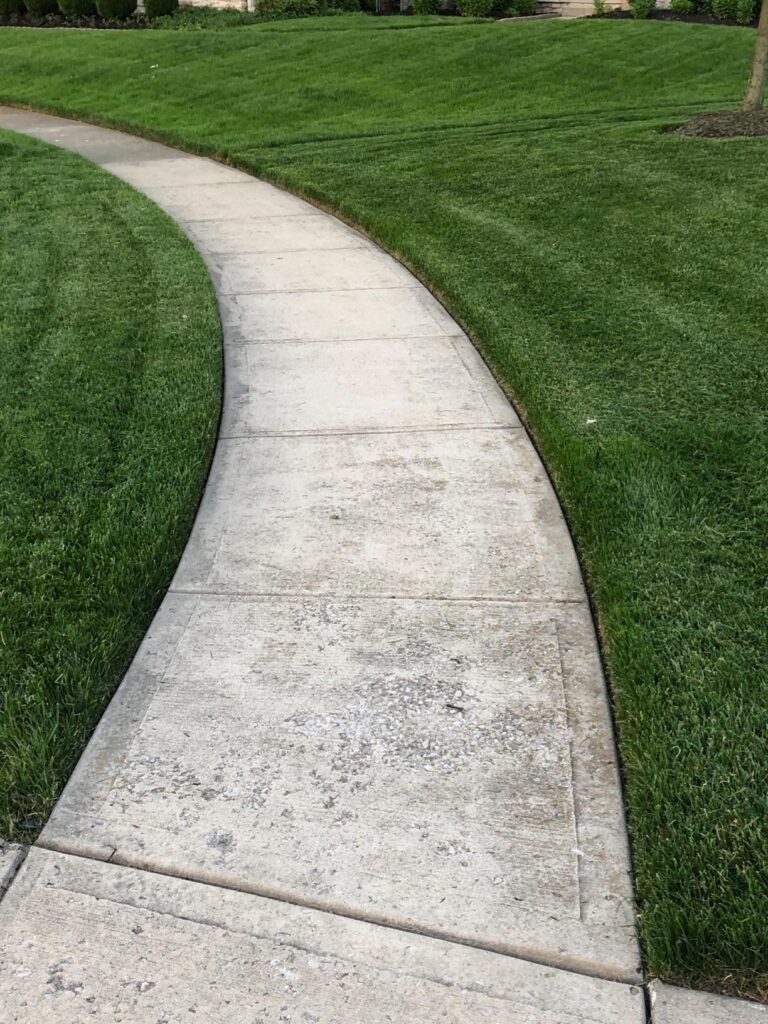
The McLane 9-inch walk-behind lawn edger is the premium, professional-grade option for buyers who take landscape presentation seriously. Built in the USA with a heritage that professional landscapers recognize, this machine focuses entirely on creating precise, consistent edges around driveways, sidewalks, garden beds, and curbs.
We may earn a commission when you buy through this link, at no additional cost to you.
The 5.50 gross torque engine provides steady power for cutting through established edges, and the cutter head uses sealed precision ball bearings on a 2 by 9-inch spring steel blade. Spring steel is more forgiving when the blade hits an obstacle, and precision bearings keep the cutting action smooth and true. The single-lever blade clutch and depth control let you make quick adjustments without stopping the engine.
This edger is designed to ride on most curbs while still delivering a clean cut every time. The blade can be tilted to almost any angle for detailed work, and it trims flat at any height for maintaining sharp definition around planting beds. Wide rubber tires with ball-bearing wheels roll smoothly, and the 4-wheel design provides more stability than 3-wheel alternatives, which is important when creating perfectly straight lines.
Professional-grade equipment typically costs more upfront but lasts longer, holds tolerances better, and delivers more consistent results over years of use. If you plan to use an edger frequently, take pride in landscape presentation, or intend to keep the tool for decades, the extra investment in a machine like the McLane usually pays back in reliability and finish quality.
The trade-off is the premium price. This is a professional-tier tool that costs significantly more than casual homeowner edgers, and for occasional light edging work it may be more machine than needed. For landscape professionals, serious hobbyists, or homeowners with large properties who want the crispest possible landscape presentation over many years, the McLane’s build quality and detailed engineering justify the investment.
Occasional users who only edge a few times per year and don’t need professional-grade construction.
We may earn a commission when you buy through this link, at no additional cost to you.
Choosing the right walk-behind trimmer comes down to matching engine power, cutting design, and physical size to your property, terrain, and the specific vegetation you’re trying to clear. The factors below cover what genuinely matters when making this decision.
Engine displacement, measured in cubic centimeters, roughly indicates how much power a gas engine produces. Most walk-behind trimmers fall in the 150cc to 200cc range, which provides enough torque to spin heavy 0.155-inch trimmer line through dense weeds and brush. A 160cc to 170cc engine is a sweet spot for typical residential and light commercial brush work, delivering good power without excessive fuel consumption.
Nearly all modern walk-behind trimmers use 4-cycle engines rather than the older 2-cycle designs found on many handheld trimmers. The advantages of 4-cycle are significant: no fuel mixing, cleaner emissions, quieter operation, and generally longer engine life. Battery-powered alternatives like the Earthquake 60V model eliminate fuel entirely and reduce maintenance, but they trade unlimited runtime for battery capacity limits.
For most buyers, a 160cc to 170cc 4-cycle gas engine is the right choice. Battery power makes sense for smaller properties or noise-sensitive locations. Skip 2-cycle designs unless you have specific reasons to prefer them.
Cutting swath refers to the width of vegetation the trimmer clears in a single pass. Most walk-behind models offer a 22-inch swath, which is a strong balance between coverage efficiency and maneuverability. Narrower swaths work better in tight spaces but require more passes on open areas, while wider swaths are rare in this category because they become unwieldy to control.
Trimmer line diameter significantly affects both cutting power and durability. Standard 0.095-inch line works fine for light grass and small weeds but breaks quickly against woody stems. Heavier 0.155-inch line is the standard for serious brush work, resisting breakage and cutting through much tougher material. Some machines like the Earthquake Hurricane accept both diameters, letting you match the line to the job.
For most residential brush work, a 22-inch swath with 0.155-inch heavy line covers the widest range of jobs efficiently. Buyers doing very light work may prefer 0.095-inch line for cleaner cuts on softer grass.
Wheel size directly affects how well the trimmer rolls over rough terrain. Larger wheels of 12 to 14 inches or more roll more easily over roots, ruts, rocks, and uneven ground than smaller wheels. Airless or flat-free wheels avoid the risk of punctures from thorns and sharp debris, which is a genuine concern when clearing overgrown areas with hidden hazards.
Ball-bearing wheel construction rolls more freely than plain bushing designs, reducing the effort needed to push the machine. On very hilly or rough properties, self-propelled drive systems like the one on the BILT HARD model take the physical strain out of moving a heavy machine forward. That capability matters more on slopes, less on flat ground.
Match wheel type to terrain. Flat suburban lots work fine with basic 14-inch pneumatic wheels. Rocky or thorny areas call for airless wheels. Hilly properties benefit from self-propelled drive.
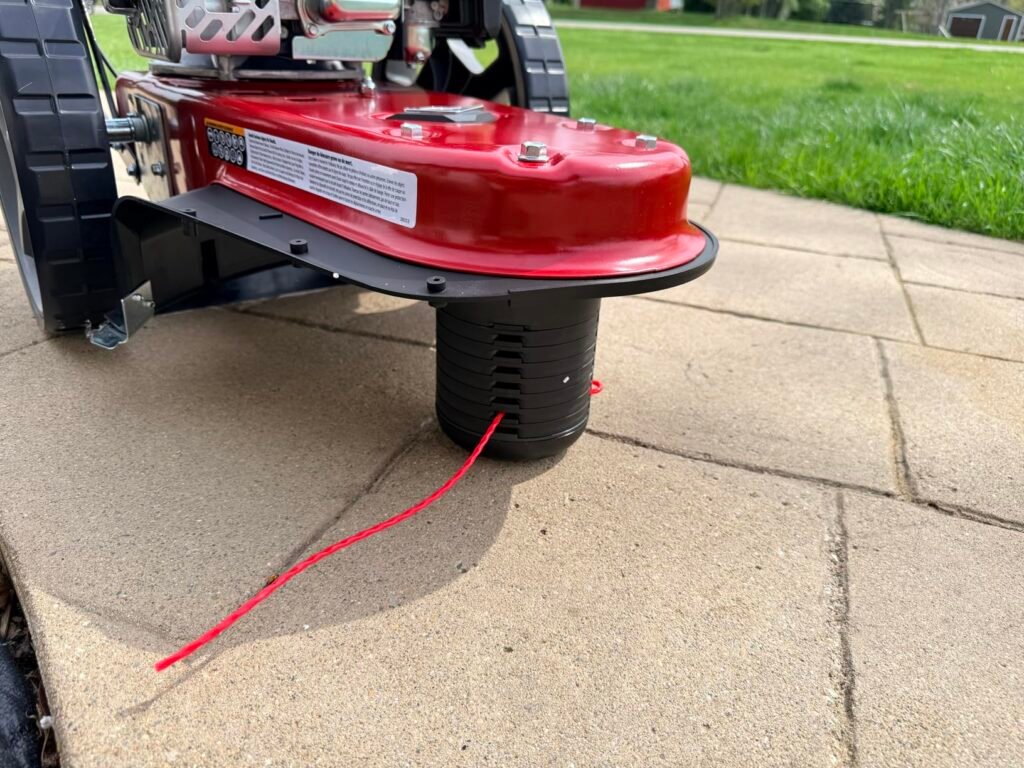
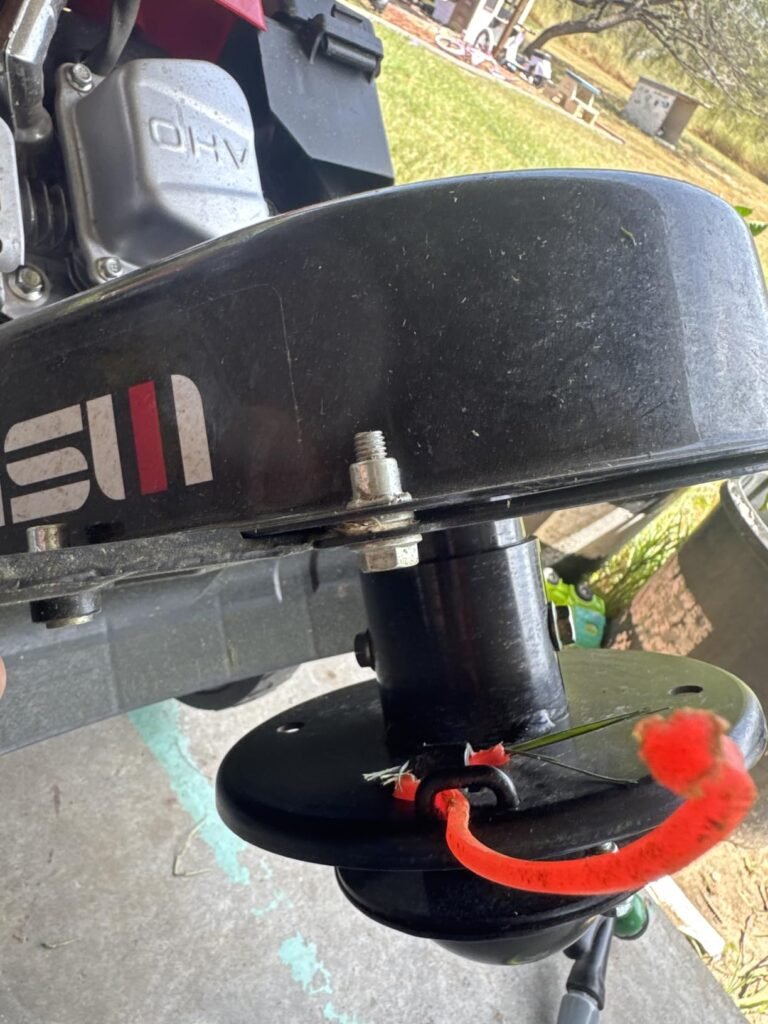
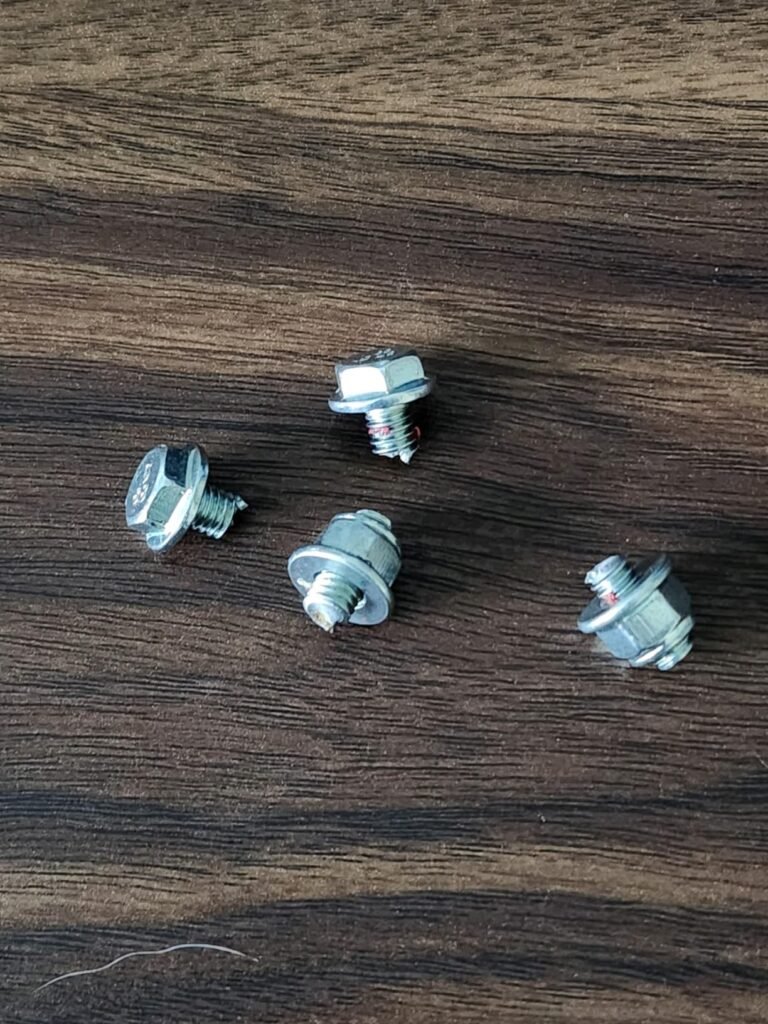
Weed wrap is one of the most frustrating problems with walk-behind trimmers. Standard cutting heads have exposed hubs, bolts, and mounting hardware where long vegetation like vines, tall grass, and blackberry canes wind up tight during cutting. Clearing these wraps requires stopping the machine, kneeling down, and cutting away tangled debris with a knife.
Anti-wrap head designs, such as the Hurricane head on Earthquake models, smooth those surfaces so debris flies off instead of binding. On brush-heavy properties, this feature can save meaningful time across a work session by eliminating repeated stops to clear the head. Line replacement design also matters. Tool-less loading systems that let you swap line quickly on the fly are much more pleasant than heads requiring wrenches and disassembly.
If your property has significant vine growth, tall grass, or heavy brush, an anti-wrap head is worth paying more for. On mostly grassy areas without much wrapping vegetation, standard heads work fine.
Cutting height adjustment lets you match the trimmer to different vegetation types and terrain conditions. A wide range like 1.5 to 4 inches accommodates everything from a clean lawn trim to knocking down tall weeds. Narrower ranges may still work for your specific needs but offer less versatility across seasons.
The number of height positions and how easy they are to adjust also matter. Tool-less adjustment lets you change heights on the fly without hunting for a wrench, which is genuinely useful when moving between different areas of a property. Multi-position designs with 5 to 8 heights provide finer control than 2 or 3-position systems.
Prioritize tool-less adjustment for convenience. A wide height range with at least 4 to 5 positions handles most brush cutting and rough grass work well.
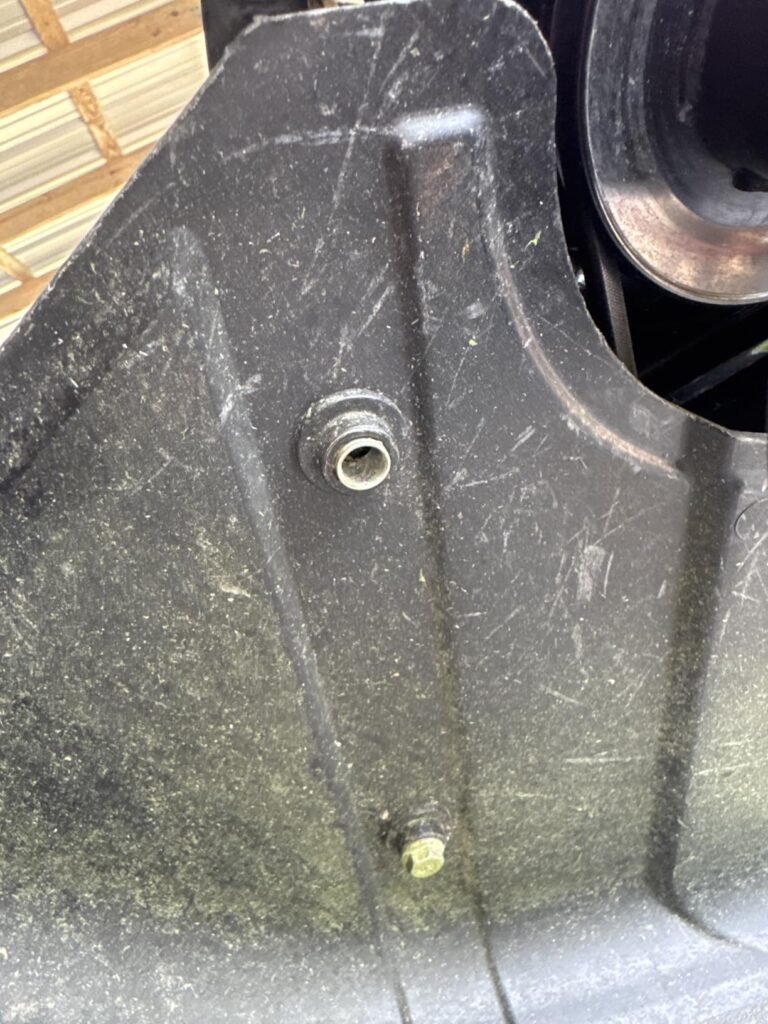
The deck holds all the components together and takes the brunt of impacts from hidden roots, rocks, and stumps during brush work. Heavy-duty one-piece steel decks are the standard for durable machines, providing rigidity and impact resistance that lighter decks lack. A well-built deck also reduces vibration, which contributes to operator comfort during long sessions.
Powder-coated or painted finishes help protect the steel from rust caused by exposure to wet grass, morning dew, and occasional rain. Machines with extra-long deck extensions can reach under fences and low tree limbs without banging into obstacles, which is a small but genuinely useful feature on properties with lots of boundary edges.
Look for one-piece steel deck construction with good finish quality. Machines with reinforced designs and thicker gauge steel typically last longer under regular brush-cutting stress.
A 22-inch brush cutter takes up meaningful garage or shed space, so foldable handles are a genuinely important feature for most buyers. A collapsed machine fits in tight storage areas, slides under workbenches, and fits in vehicle beds for transport between properties. Adjustable handlebars also let you match the machine’s ergonomics to different operators.
Compact storage design is especially important for buyers with limited storage space or those who need to transport the machine to multiple job sites. Some models fold into notably small footprints while others remain fairly bulky even after collapsing. Checking the folded dimensions before purchase helps avoid storage headaches later.
For most buyers, foldable handles are close to essential. Check both the folded dimensions and how easily the folding mechanism operates before deciding.
Warranty length signals manufacturer confidence in long-term durability and provides financial protection if problems develop. Coverage in this category typically ranges from 1 to 5 years. Earthquake’s 5-year limited warranty is class-leading, while entry-level brands often provide only 1 to 2 years of coverage.
The quality of customer support also matters. US-based support tends to be more responsive and easier to reach than overseas call centers, especially when you need parts, service manuals, or troubleshooting help. Brand reputation and dealer networks affect how easy it is to get replacement parts years down the road when common wear items eventually need replacement.
On equipment expected to last a decade or more, prioritize brands with strong warranties and responsive customer support. The extra investment usually pays back in reliability and reduced ownership hassle.
Setup begins with proper fuel and oil for gas models. Add fresh gasoline (typically 87 octane unleaded) to the fuel tank and fill the crankcase with the manufacturer-recommended engine oil grade. Check that the oil level reaches the proper mark before starting the engine for the first time. For battery-powered models, fully charge both batteries before initial use, and confirm all height adjustments and handle positions are set correctly. Always read the operator manual for your specific model before beginning work.
During operation, work at a steady pace that lets the engine maintain full RPM under load. Forcing the machine through vegetation faster than it can cut bogs down the engine and burns through trimmer line quickly. Wear sturdy closed-toe boots, long pants, safety glasses, and hearing protection. Watch for hidden hazards like rocks, metal debris, and buried irrigation lines that can damage the cutting head or throw dangerous projectiles. Clear the work area of pets, children, and bystanders before starting the engine.
Long-term care extends the life of your trimmer significantly. After each use, clean grass and debris from the cutting deck, wheels, and cooling fins to prevent buildup that can cause overheating or corrosion. Change the engine oil, air filter, and spark plug according to the manufacturer’s maintenance schedule, typically once per season for residential use. Store the machine in a dry location with the handle folded to save space. For extended winter storage, drain the fuel tank or add fuel stabilizer to prevent gum and varnish buildup in the carburetor. Battery-powered models should be stored with batteries at around 50 percent charge for best longevity.
A walk-behind string trimmer clears vegetation that's too tough or too dense for handheld trimmers, including tall grass, thick weeds, brush, saplings, and overgrown areas along fence lines, ditches, and property boundaries. It uses heavy trimmer line spun by a powerful engine to cut through material that would burn out a shoulder-strap trimmer. These machines are ideal for rural properties, hobby farms, and larger suburban lots with significant clearing needs.
A lawn mower uses a rigid rotating blade to cut grass at a consistent height, ideal for maintaining a manicured lawn. A walk-behind string trimmer uses flexible cutting line to knock down much taller and tougher vegetation, including weeds, brush, and light saplings that would jam or damage a mower. String trimmers excel at reaching into ditches, under fences, and around obstacles where mowers can't operate safely.
For typical residential and light commercial brush work, a 160cc to 170cc 4-cycle engine provides enough power to handle tall grass, weeds, and light brush. Larger engines up to 200cc offer more power for consistently heavy vegetation but consume more fuel. Smaller engines below 150cc may struggle with dense brush and are usually found on entry-level or specialized models. Match engine size to the toughest vegetation you plan to clear regularly.
Gas engines offer unlimited runtime as long as you have fuel and typically deliver stronger sustained power for heavy brush work. Battery power eliminates fuel mixing and reduces maintenance, produces less noise for noise-sensitive neighborhoods, and starts with the pull of a trigger. Battery models like the Earthquake 60V work well for smaller properties with clearing sessions under 90 minutes. Larger properties or all-day work generally still favor gas power.
The 0.095-inch line is thinner, cuts more cleanly through softer grass and light weeds, and is common on handheld trimmers. The 0.155-inch line is much thicker and more resistant to breakage in tough brush, woody stems, and dense vegetation. For most walk-behind brush cutter work, the heavier 0.155-inch line is the right choice. Some machines like the Earthquake Hurricane accept both diameters, letting you match line to specific jobs.
Self-propelled drive systems, like the one on the BILT HARD model, take the physical effort out of moving a heavy machine forward, which matters significantly on slopes, rough terrain, or large properties. For flat suburban lots or occasional light use, push-only models work fine and cost less. If your property has hills, uneven pastures, or you plan long work sessions, self-propelled drive dramatically reduces operator fatigue.
Weed wrap happens when vines, tall grass, and long stems bind around the exposed hardware of standard cutting heads. Anti-wrap designs like the Hurricane head on Earthquake models smooth those surfaces so debris flies off instead of binding. If you have a standard head, working from the top down on tall vegetation and keeping the machine moving steadily can help reduce wrapping. Clean any accumulation promptly to prevent further binding.
String trimmers can create rough edges by adjusting cutting height low along sidewalks or bed borders, but the results are inconsistent compared to a dedicated edger. Machines like the Earthquake 41273 or McLane 9-inch edger use rigid blades running at fixed depths to produce perfectly straight, uniform edges. If landscape presentation matters to you, a dedicated edger complements rather than replaces a string trimmer.
For gas models, change the engine oil, air filter, and spark plug according to the maintenance schedule, typically once per season for residential use. Clean debris from the cutting deck and cooling fins after each session, and store the machine in a dry location. Use fresh fuel or add stabilizer if the trimmer will sit unused for extended periods. Inspect trimmer line, wheels, and belts periodically for wear. Battery models mainly need occasional cleaning and proper battery storage between uses.
The Earthquake Hurricane walk-behind string mower stands out as the strongest overall choice because it combines a reliable 160cc Viper engine, the anti-wrap Hurricane cutting head, tool-less adjustments, and a class-leading 5-year limited warranty. For most buyers tackling brush, weeds, and overgrown fence lines, its blend of thoughtful design and long-term support delivers the best all-around value in this category.
For buyers with steep or sprawling properties, the BILT HARD self-propelled model reduces fatigue significantly on hills and long clearing sessions. Value-focused shoppers should consider the YARDMAX YL2250, which delivers a capable 170cc engine and offset trimmer head at a lower price. Homeowners prioritizing quiet operation and low maintenance may prefer the Earthquake 60V battery model, and those focused on landscape presentation will benefit from adding a dedicated edger like the Earthquake 41273 or the professional-grade McLane 9-inch.
Your final decision should start with an honest assessment of your property size, terrain, and the vegetation you clear most often. Match engine power to the toughest brush you tackle, choose wheel type based on terrain roughness, and prioritize features like anti-wrap heads or self-propelled drive based on your specific pain points. A well-matched walk-behind trimmer transforms brush work from a dreaded chore into a manageable, even satisfying, part of property maintenance.