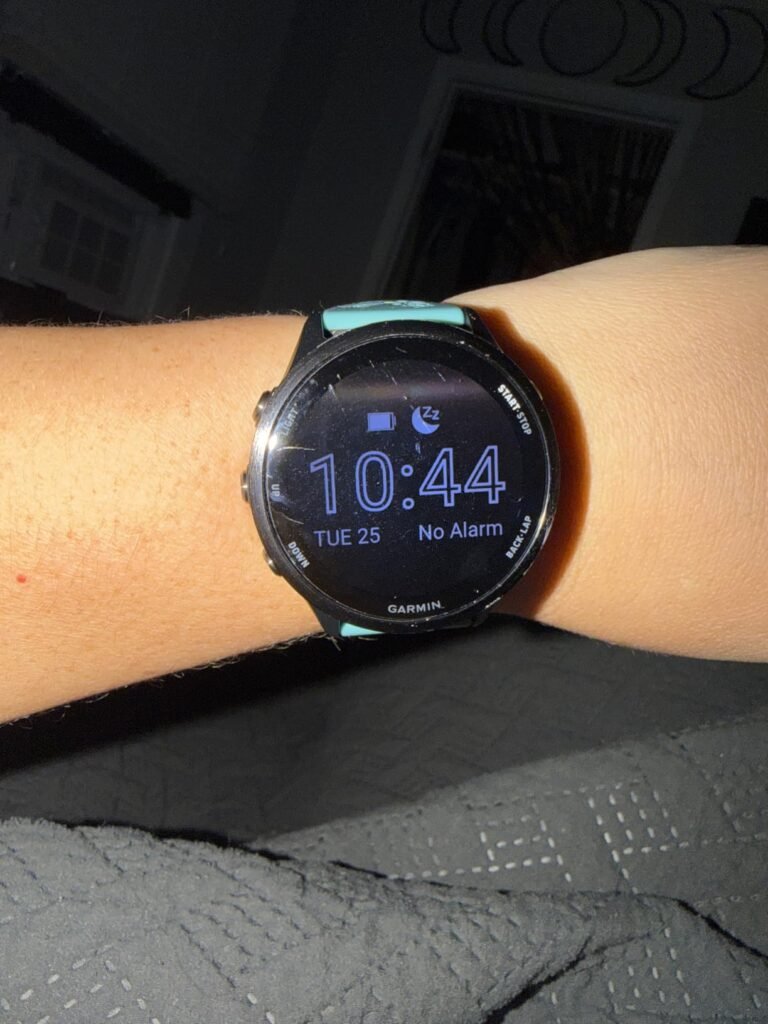
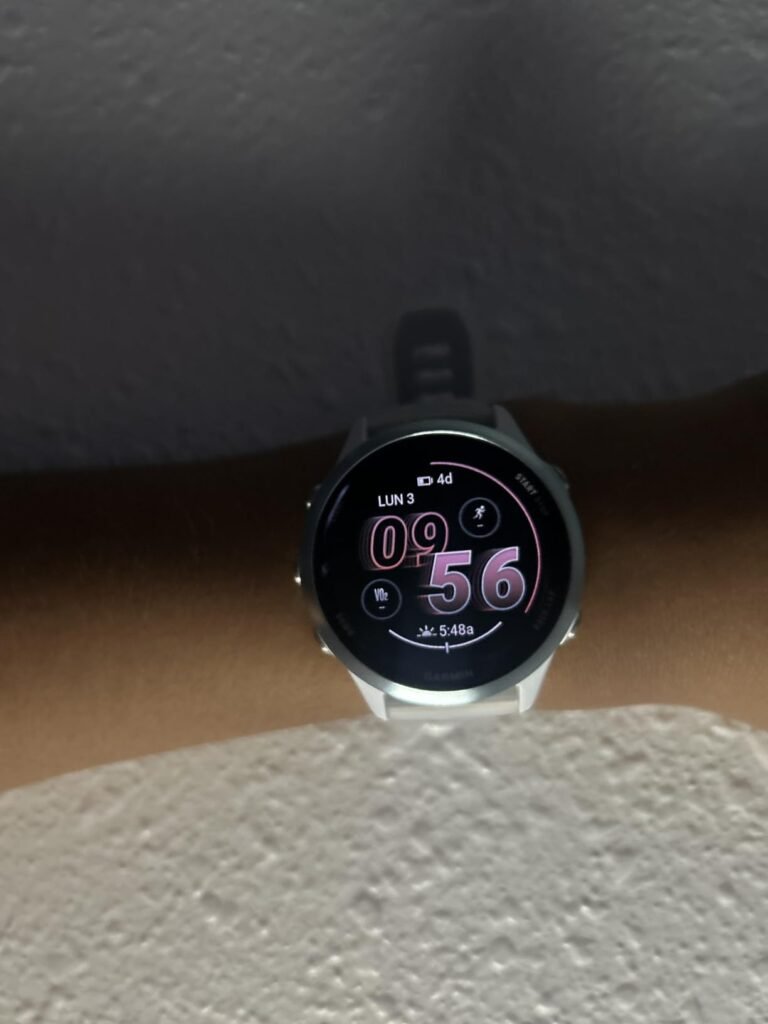
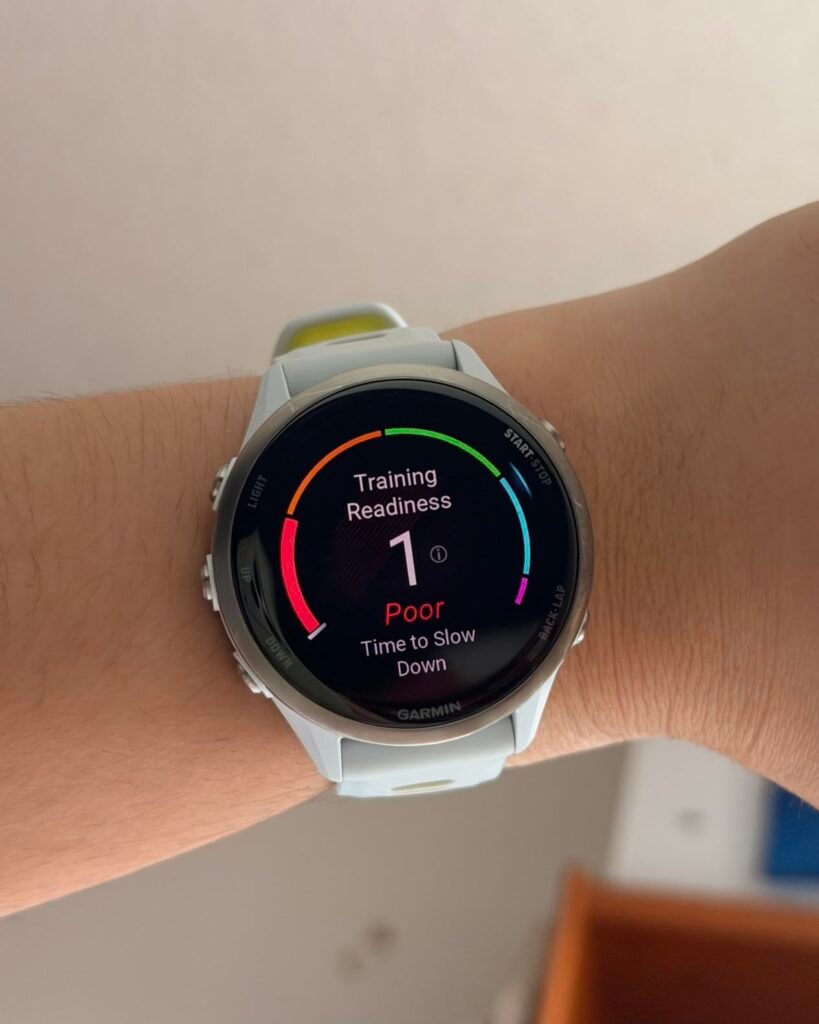
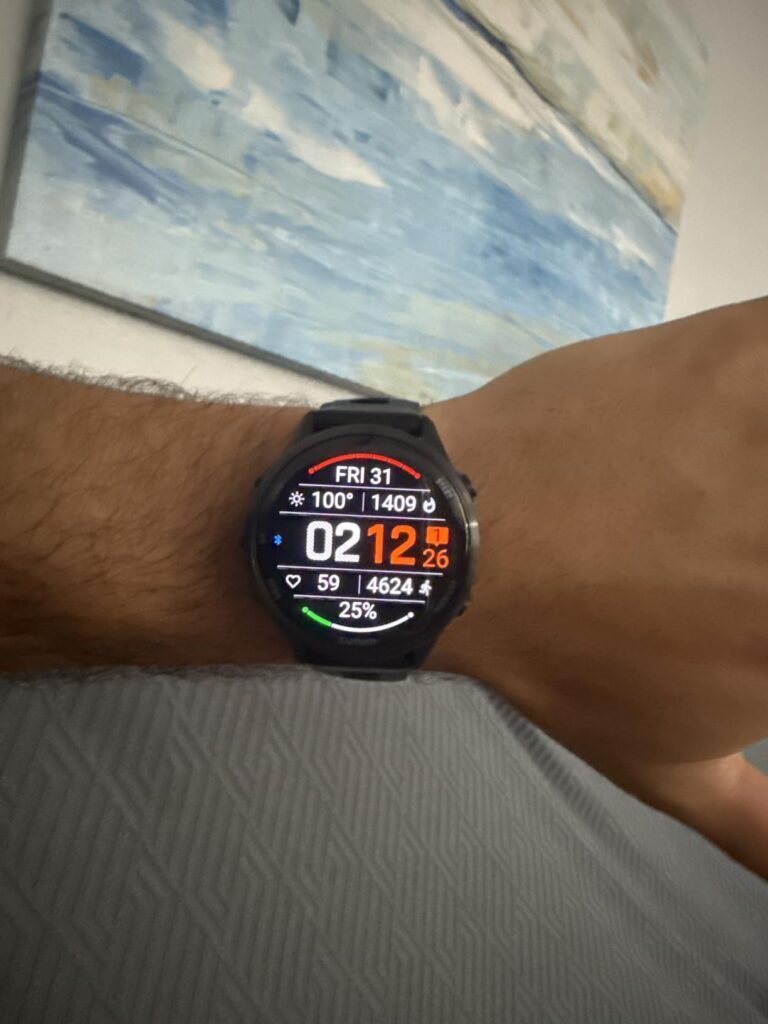
Garmin Forerunner 970
9.2Editor score47mm titanium bezel
15 day battery
Multi-band GPS accuracy
ECG app included
Find the right triathlon watches for 2026. We compare 9 standout options by build quality, useful features, owner feedback, value, and everyday trade-offs.
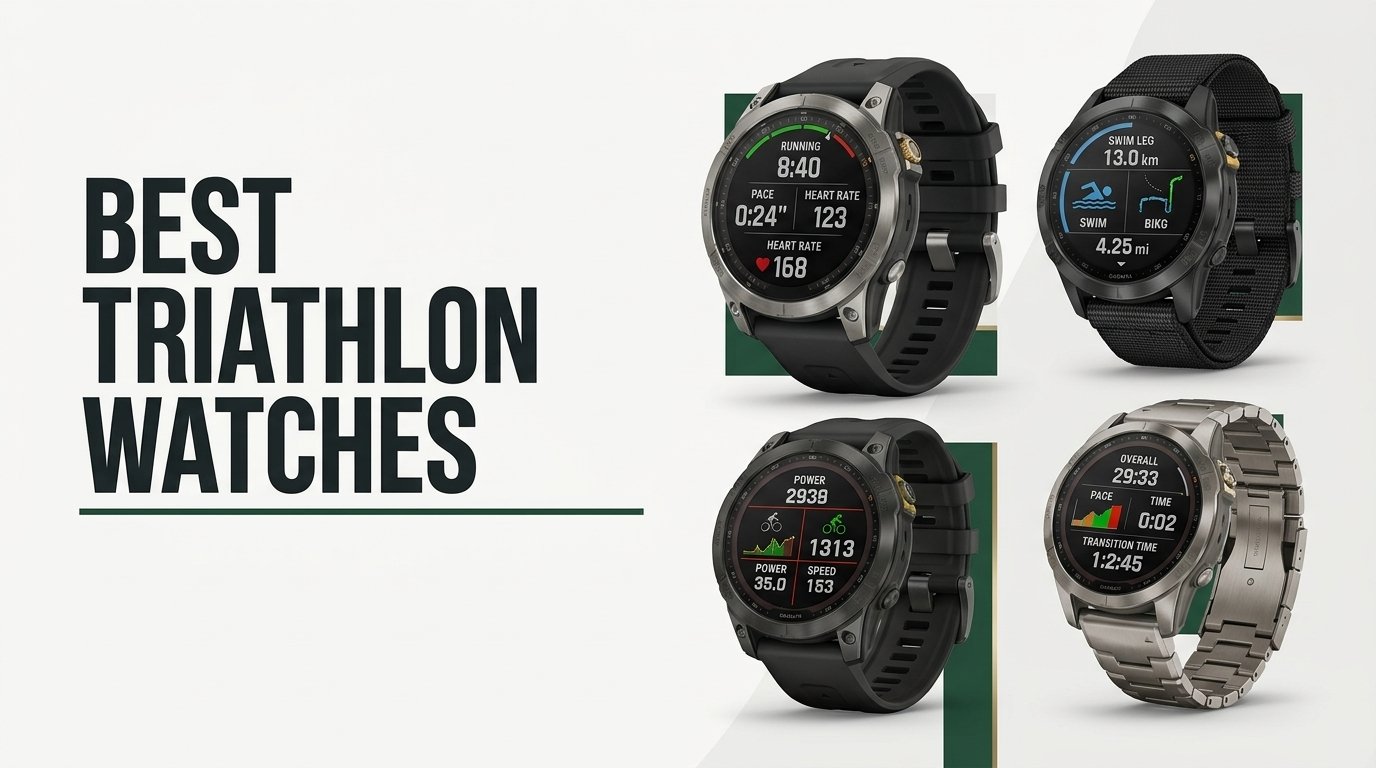
Finding the right triathlon watches in 2026 means balancing multi-sport transition tracking, GPS accuracy, battery life, swim resistance, training readiness, heart rate tracking, and durability. We compare 10 standout options by the factors that matter most for swim-bike-run workouts, brick sessions, race day pacing, and recovery without adding unnecessary complexity.
The biggest differences between triathlon watches come down to battery endurance for longer races, multi-band GPS precision, transition automation, and training analytics. Some models focus on lightweight race-day efficiency with fast transitions, while others prioritize deep training load data, recovery metrics, and mapping for varied course terrain and open-water swims.
Before choosing a model, it helps to weigh practical trade-offs like display readability in water and sun, button versus touchscreen usability during transitions, open-water swim tracking, and charging frequency between heavy training blocks. Matching a watch to your race distance and training volume leads to more reliable data and fewer distractions on race day.
We compared 10 triathlon watches using the details that matter most for swim-bike-run performance: multi-sport and brick tracking, GPS accuracy and satellite support, battery life across modes, water resistance and swim tracking, heart rate and training readiness, transition detection, mapping and navigation, durability, weight and comfort, recovery metrics, and overall value. The notes focus on practical trade-offs so each pick connects to how triathletes actually train, taper, and race across sprint, Olympic, and longer distances.


Compare key features, scores, and current prices side by side. A shorter feature list means fewer details were available, not necessarily fewer capabilities.


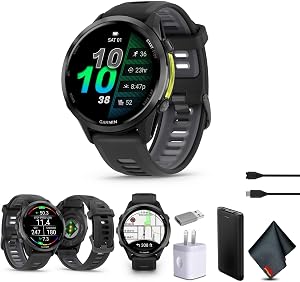


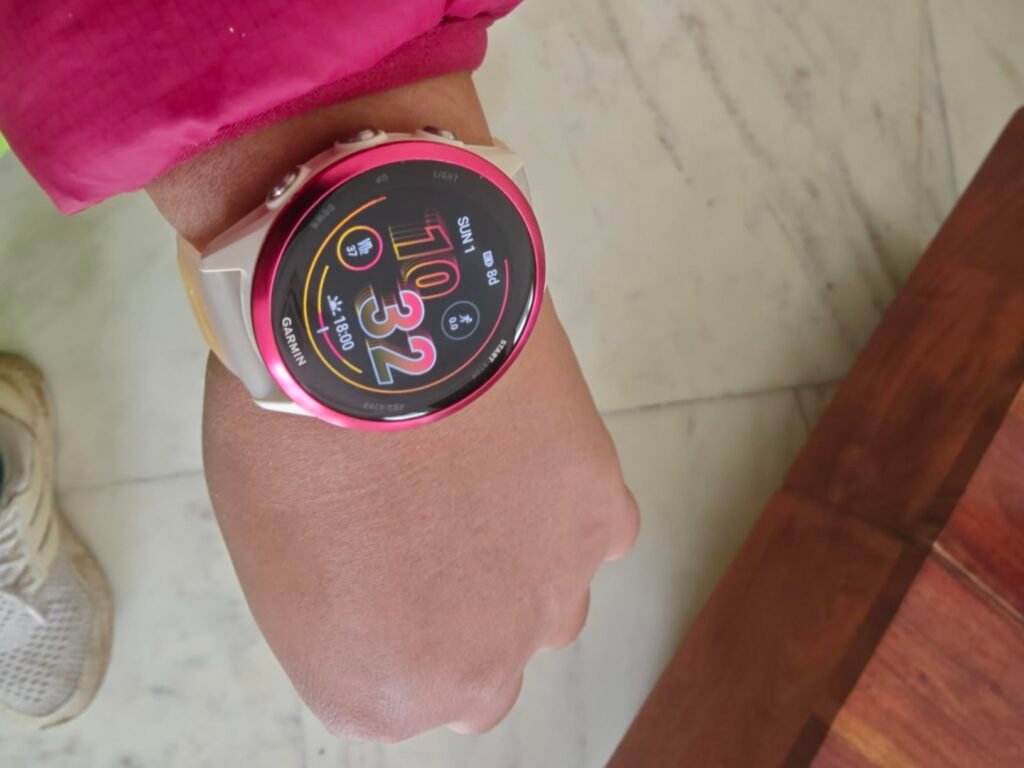
The Garmin Forerunner 570 is a compact triathlon watch ideal for athletes with smaller wrists who still want full swim-bike-run tracking. At 42mm with an aluminum bezel and bright AMOLED display plus button controls, it stays comfortable in wetsuits, aero bars, and during run segments. Up to 10 days in smartwatch mode and 18 hours in GPS mode covers most training weeks for sprint and Olympic triathletes.
We may earn a commission when you buy through this link, at no additional cost to you.
Multisport readiness includes 30-plus activity profiles with triathlon support, personalized daily suggested workouts that adapt to performance and recovery, and Garmin Coach running/triathlon plans. Training readiness, training status, VO2 max, HRV status, morning and evening reports help balance brick workouts across three disciplines while protecting recovery between hard blocks.
Connectivity is a useful training perk with built-in microphone and speaker to make/take phone calls from the wrist when paired to a smartphone, plus voice assistant support for quick text replies. Safety features include incident detection and Assistance with live location to emergency contacts during select outdoor activities. Smart notifications keep race-day logistics manageable without pulling a phone mid-session.
A 42mm case reduces wrist bulk through all three triathlon legs, which many athletes prefer for comfort in aero position and while swimming. Built-in mic/speaker lets athletes handle quick logistics calls before/after sessions without digging for a phone, while readiness reports help time bricks and recovery blocks efficiently for compact training schedules.
The main trade-offs are battery and positioning. At 10-day smartwatch battery it’s the shortest among the higher-end models here and it lacks multi-band GPS, so course tracking in very dense cover relies on standard GNSS. Still, for triathletes wanting a lighter, smaller-form watch with on-wrist calls, solid readiness tracking, and clean multisport profiles, the Forerunner 570 offers excellent value in a compact package for swim-bike-run training.
Ultra-distance triathletes needing maximum GPS battery hours or multi-band precision for remote courses may prefer larger-battery multi-band models over this compact, lighter-battery option.
We may earn a commission when you buy through this link, at no additional cost to you.
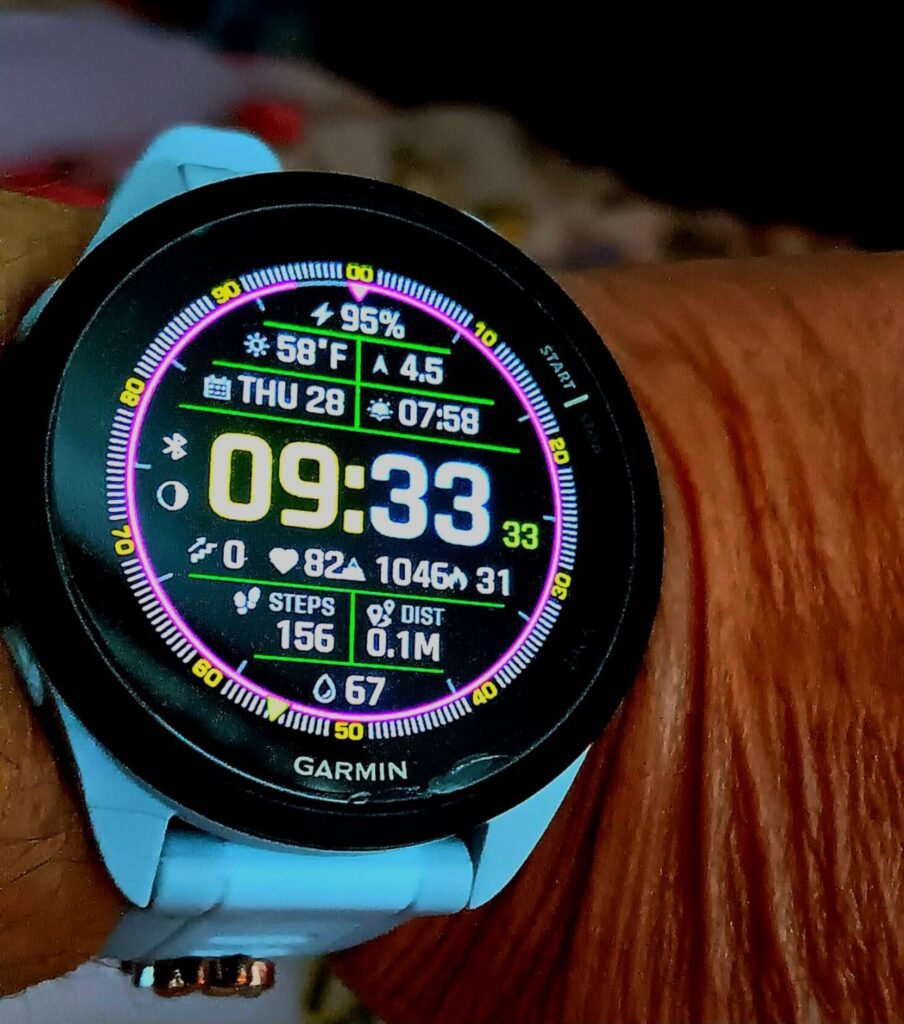
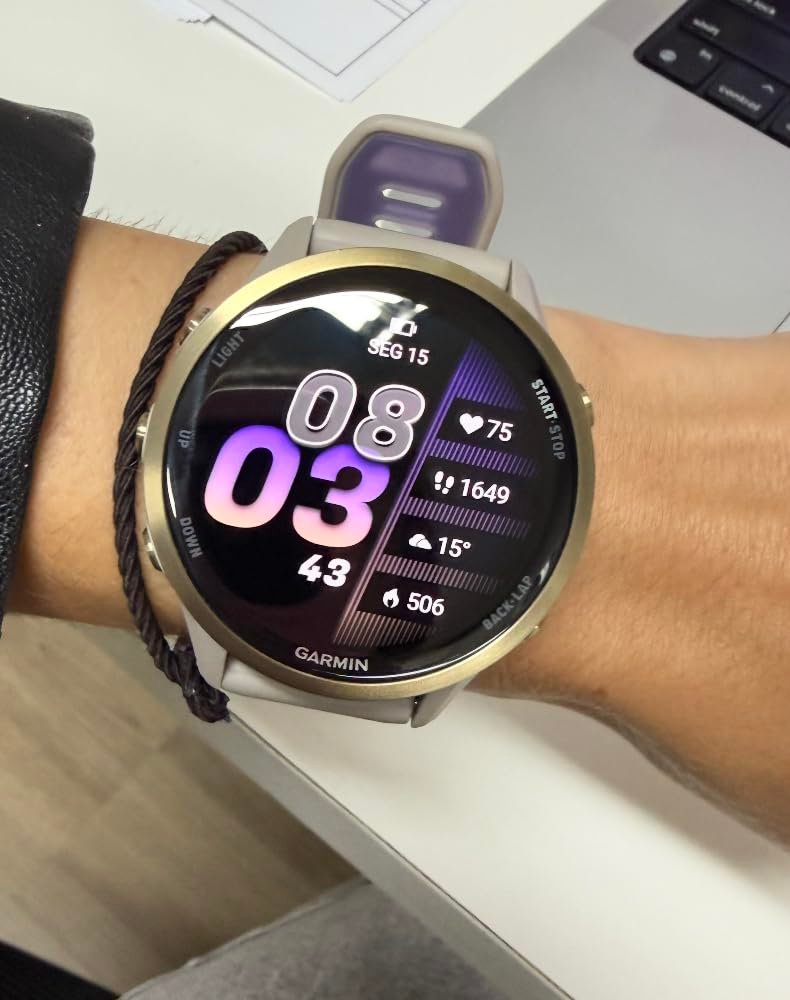
The Garmin Forerunner 970 is built for triathletes who need seamless swim-bike-run transitions without losing training depth. With multisport auto-transition detection, the watch switches disciplines automatically between swim, bike, and run, letting athletes focus on pacing instead of button presses during race-day chaos. Up to 15 days in smartwatch mode and 26 hours in GPS mode provides enough endurance for most training blocks and race days.
We may earn a commission when you buy through this link, at no additional cost to you.
Training analytics are a major strength for triathlon preparation. Running economy, step speed loss, and running tolerance help gauge the true load of run training while factoring in fatigue, which is especially useful for brick sessions and tapering. Training readiness, adaptive Garmin Coach triathlon plans, and recovery time help balance swim, bike, and run volume without overloading between key workouts.
Navigation and visibility add practical race-day value. Full-color built-in maps with multi-band GPS and dynamic round-trip routing help handle unfamiliar courses, while the built-in LED flashlight improves early morning swims, transitions, or night training visibility. The built-in microphone and speaker allow taking calls from the wrist when paired to a smartphone, which can be useful for logistics without pulling a phone mid-training block.
Multi-sport auto-transition removes manual sport changes between swim, bike, and run, reducing missed splits during fast transitions. For triathletes, that automation keeps data clean and lets focus stay on pacing and logistics instead of watch inputs. Combined with brick workout profiles, it keeps training data consistent with real race flow.
The main trade-off is price versus feature depth. The titanium bezel with sapphire lens adds durability for frequent open-water and bike training, but the premium tier is best suited for committed triathletes who regularly train across all three disciplines. For athletes who want automated transitions, course navigation, and advanced load management in one watch, the Forerunner 970 hits a strong balance for Olympic and longer-distance triathlon training.
Budget-focused beginners doing only occasional multisport workouts may not fully utilize the advanced load metrics and routing features to justify the top-tier investment.
We may earn a commission when you buy through this link, at no additional cost to you.
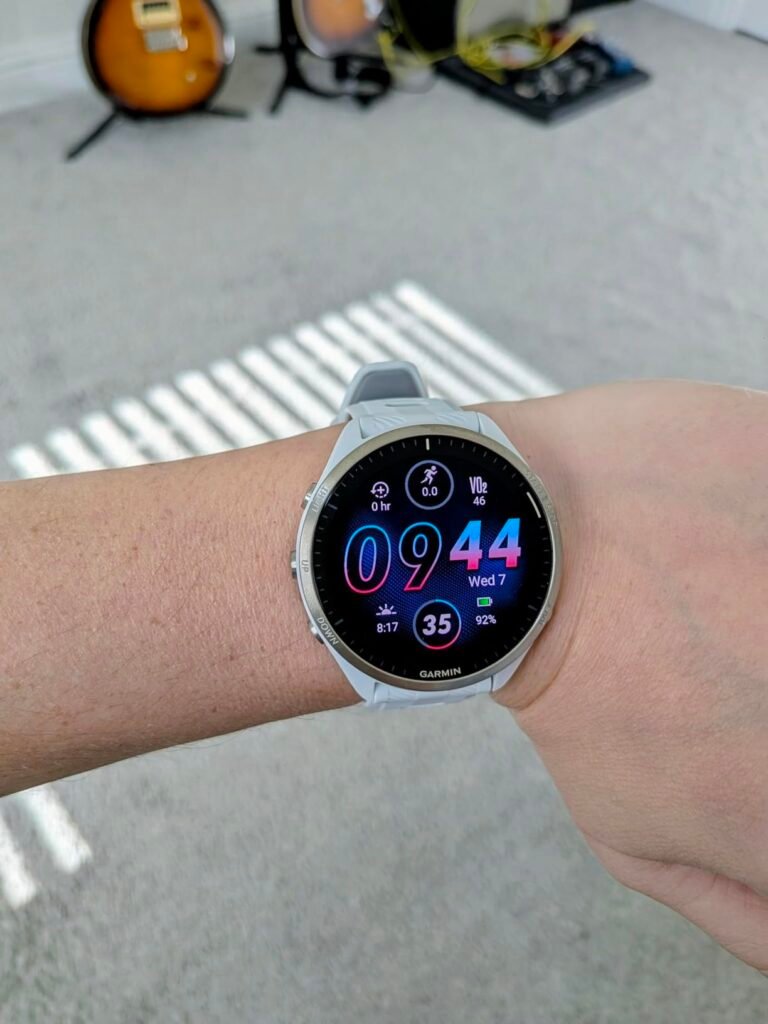
The Garmin Forerunner 965 is built for triathletes who want a lightweight race watch without sacrificing multisport capability. The titanium bezel keeps weight down while the brilliant AMOLED touchscreen with button controls stays easy to use in wet transition areas or with sweaty/gloved hands. With up to 23 days in smartwatch mode and 31 hours in GPS mode, it covers heavy training blocks and race day with solid endurance.
We may earn a commission when you buy through this link, at no additional cost to you.
Multi-sport readiness is strong with built-in triathlon, duathlon, brick workout, and swimrun profiles that can be switched with a button press. Full-color built-in maps and multi-band GNSS with SatIQ help maintain course accuracy in tricky terrain or tree cover while optimizing battery life. Training readiness, training status, morning report, and recovery time help balance swim-bike-run load across taper and peak weeks.
Race strategy tools are practical for triathlon pacing. Personalized daily suggested workouts based on race/course input adapt after every run to match recovery and performance, helping athletes peak at the right time. Wrist-based running dynamics and running power add useful pacing feedback for the run leg of a triathlon without needing extra external sensors in many training scenarios.
Every gram matters over longer triathlons, and a lighter titanium bezel helps reduce wrist fatigue across swim-bike-run. Paired with button controls that work well when wet, transitions stay faster and less error-prone. That efficiency pairs well with multi-band GPS that stays accurate without unnecessarily draining battery on varied courses.
The main trade-offs are a few race-day utility features. It lacks a built-in LED flashlight and onboard speaker/mic compared to the 970, but its lighter build and very strong battery endurance in smartwatch/GPS modes make it excellent for race day and travel-heavy training. For triathletes focused on weight, battery efficiency, and clean multisport tracking, the Forerunner 965 is a strong racing-focused option.
Athletes who rely heavily on a wrist flashlight for early morning open-water or pre-dawn training may prefer the Forerunner 970’s built-in LED flashlight.
We may earn a commission when you buy through this link, at no additional cost to you.
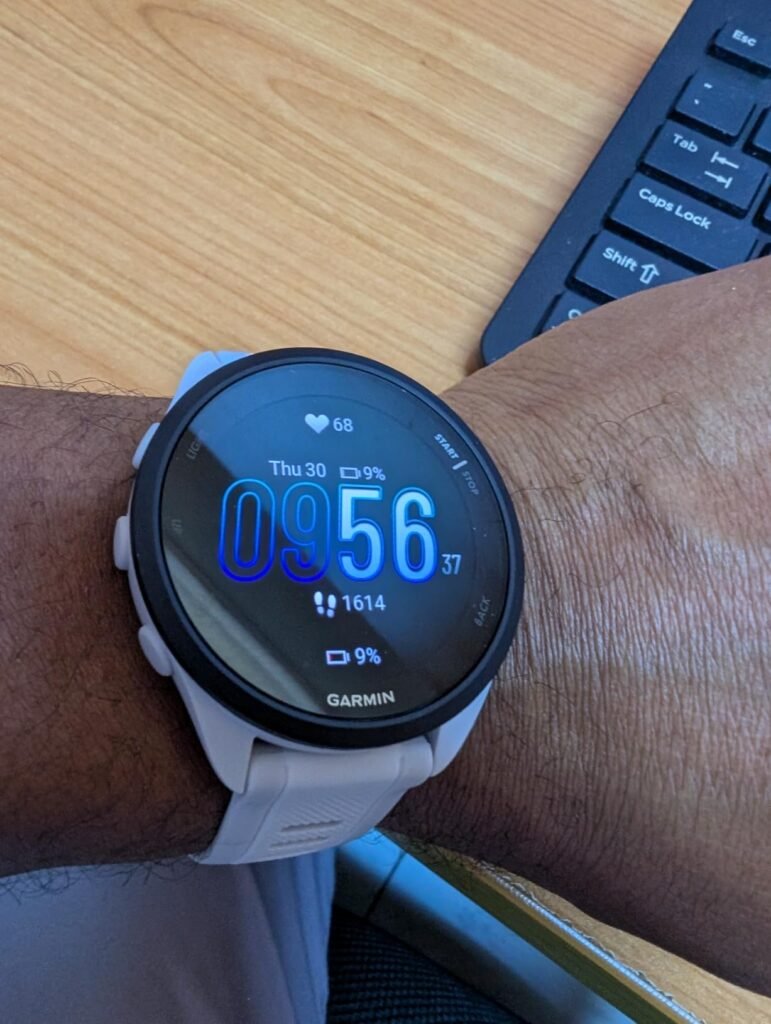
The Garmin Forerunner 165 is a practical entry point for triathletes who want structured training without jumping to flagship pricing. With 25-plus built-in activity profiles and support for varied workouts, it covers swim, bike, and run training well for sprint and Olympic distances. Up to 11 days in smartwatch mode and 19 hours in GPS mode keeps training consistent between charges for most recreational triathlon plans.
We may earn a commission when you buy through this link, at no additional cost to you.
Training guidance makes it easy to build toward race day. Personalized daily suggested workouts adapt based on performance and recovery, while Garmin Coach and race adaptive training plans help structure build weeks and taper. Training effect labels, recovery time, morning report, HRV status, and weather give a clear readiness snapshot to balance brick sessions across three disciplines without overtraining.
Everyday triathlon utility is solid. Built-in GPS for pace/distance, wrist-based heart rate, Garmin Pay contactless payments, and smart notifications cover training logistics and race-day basics. The lightweight 43mm AMOLED with button controls is easy to use in transition zones and stays readable in sun and wet conditions, which is useful for new triathletes learning transitions.
Adaptive daily workouts and recovery time help balance swim-bike-run volume for beginners learning periodization. Instead of guessing between hard brick days and recovery, readiness data guides adjustments week-to-week. That structure helps prevent burnout while building race-specific fitness for sprint and Olympic distances.
The main trade-offs are navigation and precision. It does not include multi-band GPS or full-color onboard topographic maps, so open-water or very technical bike courses rely more on pre-planned routes viewed externally. Still, for first-time triathletes or athletes focused on time-based pacing and structured workouts, the Forerunner 165 delivers strong multisport training value with low complexity.
Experienced triathletes racing technical courses who need full-color onboard maps and multi-band GPS precision will benefit more from higher-tier mapping-focused models.
We may earn a commission when you buy through this link, at no additional cost to you.
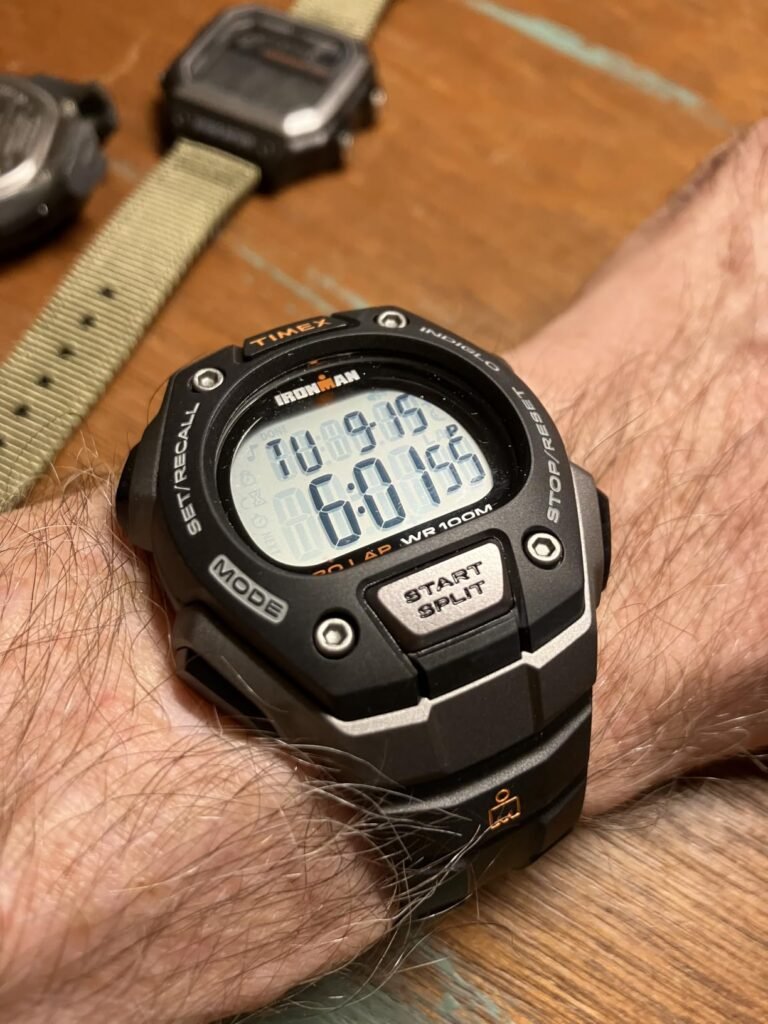
The Timex Ironman Classic 30 is built for triathletes who want simple, reliable transition and split timing without battery drain concerns of full GPS watches. Its 100-meter water resistance covers pool and open-water swims, while the durable resin case stands up to bike racks, gear bags, and rough training conditions. For athletes focused on intervals, T1/T2 splits, or brick timing, its simplicity is a practical advantage.
We may earn a commission when you buy through this link, at no additional cost to you.
Timing utility is straightforward with a digital chronograph designed for lap/split tracking, three customizable alarms, dual time zones, 24-hour military mode, and a full calendar. The INDIGLO backlight keeps splits readable in early morning transitions, low-light pool decks, or overcast race starts. At 38mm and lightweight resin strap, it stays comfortable and unobtrusive through all three legs.
Low complexity means zero satellite acquisition wait time and extremely long operational life between battery changes, which is useful for training camps, backup timing, or athletes who prefer distraction-free racing. It won’t track distance or pace via GPS, but for many pool-based triathlon prep, track workouts, or athletes learning transitions, simple timing keeps focus on effort and technique.
Simple lap/split timing helps triathletes dial in T1/T2 efficiency without navigating menus mid-transition. With no satellite syncing or app syncing delays, button timing is instant and reliable when seconds count. For practice bricks, that simplicity makes it easier to track segment splits and improve transition consistency over time.
The main trade-offs are data depth versus reliability. With no GPS, heart rate, or multisport automation, it’s not a full training load watch. Instead, it fits best as a durable timing tool for race day backups, beginner transition practice, or triathletes who want minimal distraction and maximum durability over complex metrics while still meeting core timing needs for swim-bike-run workouts.
Triathletes who need distance, pace, swim stroke metrics, route tracking, or training readiness data will need a GPS multisport watch instead of a pure digital timer.
We may earn a commission when you buy through this link, at no additional cost to you.
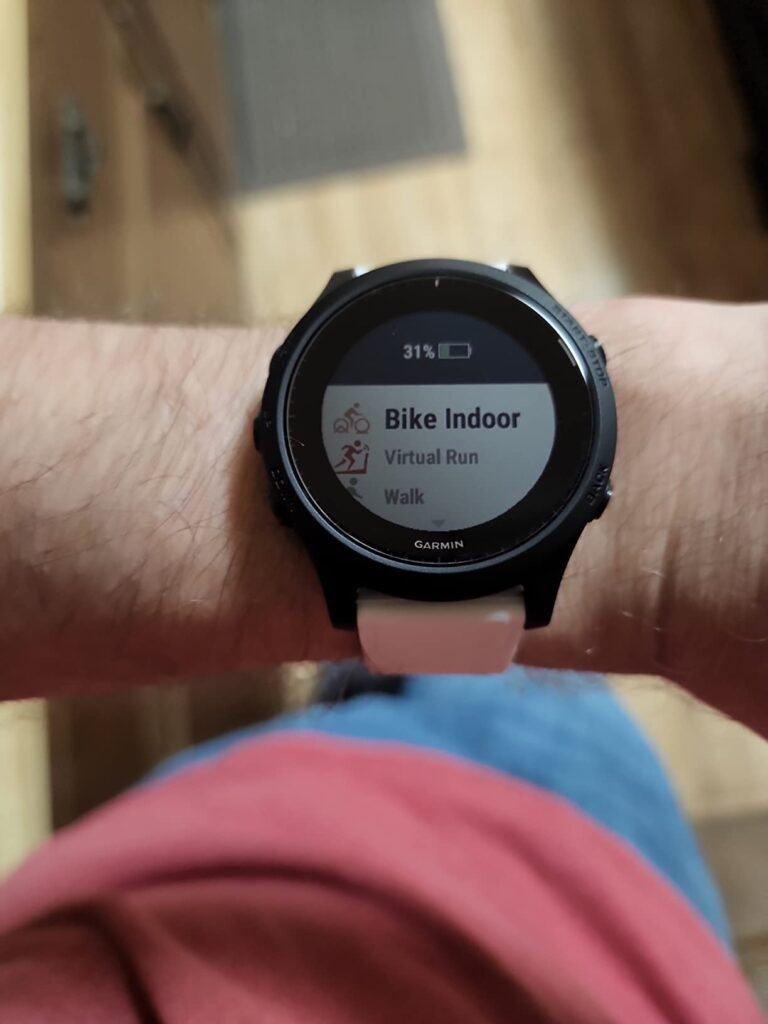
The Garmin Forerunner 945 is a proven triathlon workhorse with full multisport tracking, color onboard maps, and built-in music storage. It handles swim-bike-run profiles cleanly, making brick workouts and race-day transitions easy to track across disciplines. With up to 14 days in smartwatch mode, 10 hours in GPS mode with music, or up to 60 hours in UltraTrac mode, it offers flexible endurance for varied training and race distances.
We may earn a commission when you buy through this link, at no additional cost to you.
Performance monitoring is well-suited for triathlon periodization. VO2 max, training status with heat/altitude adjustments, training load focus, recovery time, and aerobic/anaerobic training effects help balance three-sport volume without overloading key workouts. Garmin Pay, incident detection during select activities, and full-color onboard maps help with training logistics and safety on unfamiliar bike or run routes.
Music support is a useful training feature, letting athletes download playlists from Spotify, Amazon Music, or Deezer for phone-free workouts on long bike rides or solo runs. Wrist-based heart rate, barometer, altimeter, and electronic compass add useful data for hilly triathlon courses and open-water awareness without needing to rely entirely on phone connectivity mid-session.
Color onboard maps help triathletes navigate unfamiliar bike/run courses without phone dependence, while phone-free music keeps motivation high on long solo bricks. Combined with UltraTrac battery mode, that self-sufficiency is useful for endurance training days where carrying a phone is less convenient between swim-bike-run segments.
The main trade-offs are display and satellite tech versus newer models. It uses a non-AMOLED display and lacks multi-band GPS, so battery/visibility trade-offs differ slightly from recent AMOLED flagships. Still, for triathletes wanting reliable multisport tracking, solid mapping, music, and deep training load data at a proven value point, the Forerunner 945 remains a very capable triathlon watch for Olympic and many longer-distance training blocks.
Athletes who want the brightest AMOLED readability in direct sun and multi-band GPS precision for very challenging signal environments may prefer newer AMOLED multi-band models.
We may earn a commission when you buy through this link, at no additional cost to you.
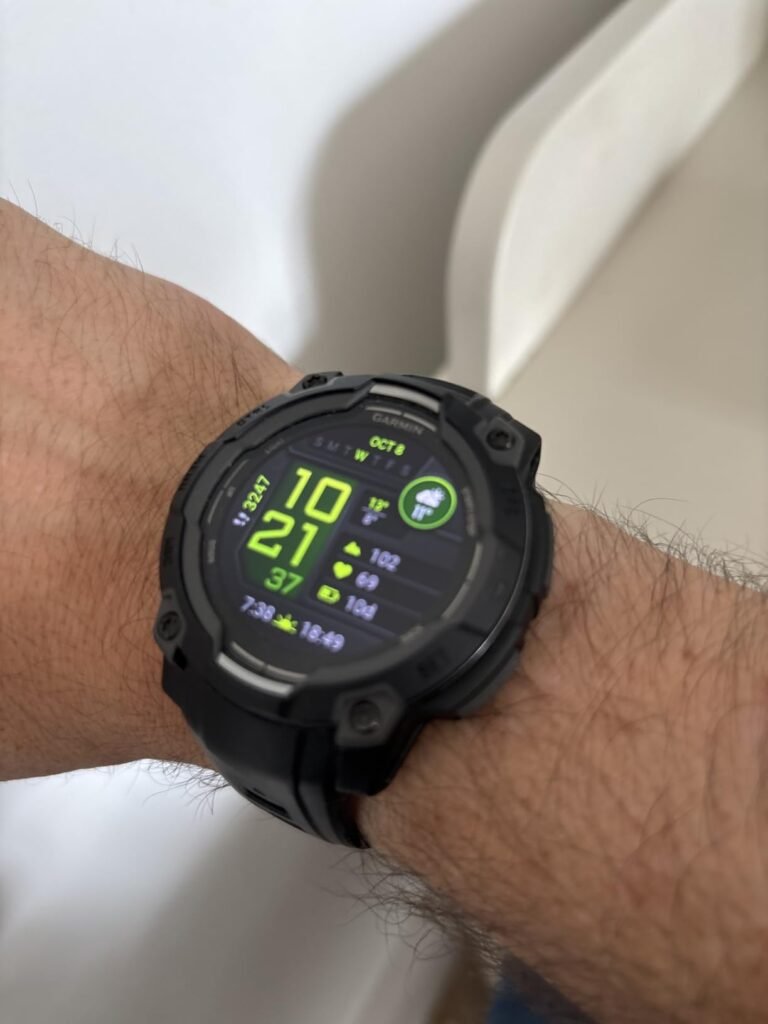
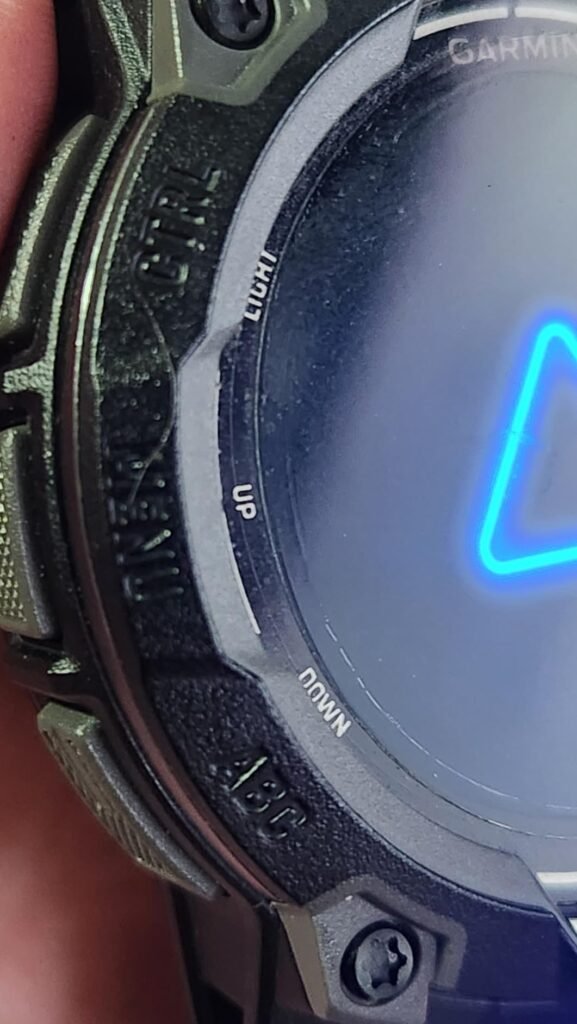
The Garmin Instinct 3 AMOLED is built for triathletes who train in rough conditions and need maximum durability between swim, bike, and run. Its fiber-reinforced polymer case with metal-reinforced bezel stands up to rack bumps, trail runs, and open-water exposure, while the vibrant 1.2-inch AMOLED stays readable in bright sun. Up to 18 days in smartwatch mode provides excellent endurance between charges for high-volume training blocks.
We may earn a commission when you buy through this link, at no additional cost to you.
Navigation and utility are strong for early or late training. Multi-band GPS with SatIQ balances accuracy and battery life across varied terrain, backed by a 3-axis compass and barometric altimeter. The built-in LED flashlight with variable intensities and strobe modes is especially useful for pre-dawn open-water checks, transition setup, or post-work brick sessions when light is limited.
Training readiness covers core triathlon needs with wrist-based heart rate, advanced sleep monitoring, Pulse Ox, and multi-sport activity support to track swim-bike-run sessions. While more utility/rugged-focused than coach-heavy, it covers brick workouts and discipline tracking well for athletes who prioritize reliability and battery longevity over the deepest race-plan automation in some flagships.
Rugged construction paired with 18-day battery life means less worry about charging during heavy training camps or unpredictable weather blocks. Multi-band GPS with SatIQ keeps course tracking reliable on wooded bike routes or hilly trails without draining battery unnecessarily. For athletes training early mornings year-round, the built-in flashlight adds practical safety and transition utility.
The main trade-off is size and coaching depth versus ruggedness. The 45mm build is bulkier than lighter race watches, and its triathlon coaching depth is less expansive than Forerunner flagships. For triathletes who train year-round in variable weather, need serious battery endurance, and value a built-in flashlight for low-light training, the Instinct 3 AMOLED is a highly durable workhorse for consistent multisport mileage.
Weight-conscious racers focused on minimalist race-day watches may prefer a lighter 42–47mm Forerunner model over the more rugged, bulkier Instinct build.
We may earn a commission when you buy through this link, at no additional cost to you.
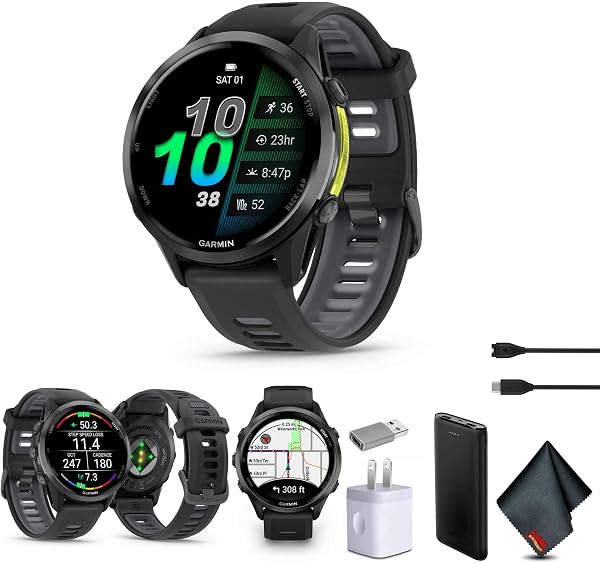
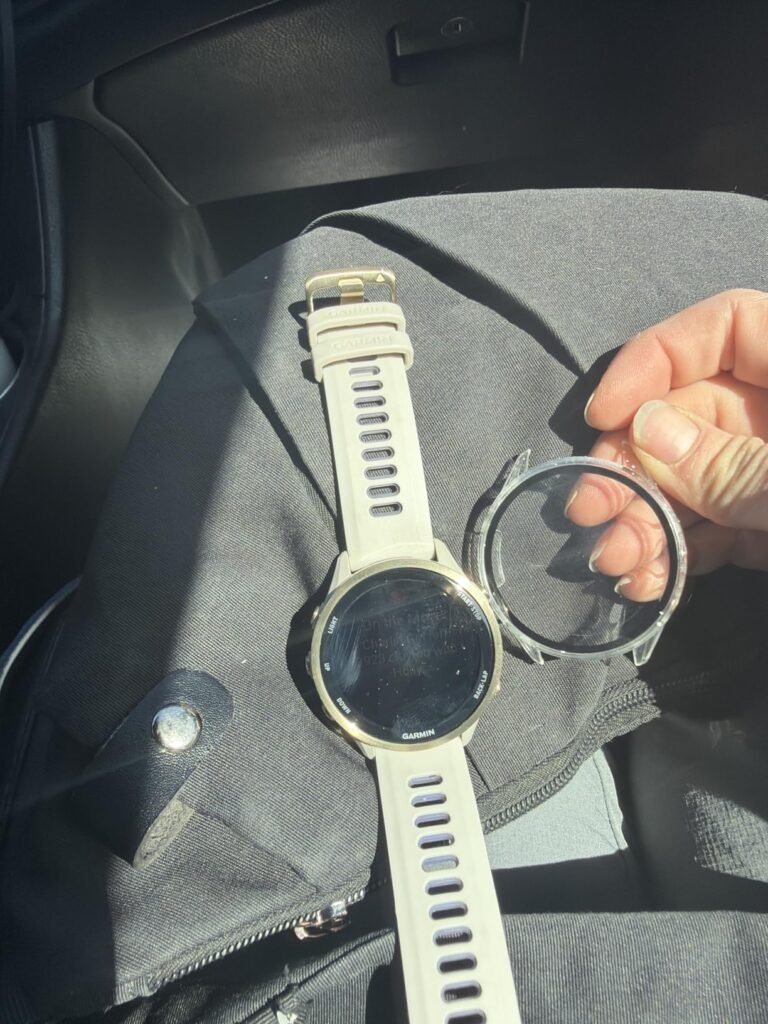
The Forerunner 970 Bundle delivers the same top-tier triathlon capabilities with added accessories for travel and training prep. It carries the full multisport auto-transition, full-color built-in maps with multi-band GPS and dynamic round-trip routing, running economy/tolerance, training readiness, and adaptive triathlon coaching. Up to 15 days in smartwatch mode and 26 hours in GPS mode covers race days and peak training blocks with confidence.
We may earn a commission when you buy through this link, at no additional cost to you.
Triathlon-specific training depth remains a standout. The watch helps balance swim-bike-run load with recovery time, training status, and endurance-focused metrics while the bundle adds practical charging/utility items useful for race travel or training camps. The titanium bezel with sapphire lens holds up well to frequent open-water, pool decks, bike mounts, and transition abuse over a full season.
Navigation and visibility are race-ready with built-in maps, SatIQ battery optimization, and LED flashlight utility for early starts. Built-in mic and speaker allow wrist calls when paired to a smartphone, helping with race-day logistics. The bundle format can be convenient for athletes wanting a ready-to-travel setup without sourcing small accessories separately before a key race or training block.
Having key utility items bundled with a flagship triathlon watch helps streamline race travel prep, especially for athletes juggling gear for three disciplines. The core multisport automation and mapping stay the same, while added accessories reduce last-minute packing needs before taper or destination races. That convenience pairs well with the watch’s auto-transition and course routing for race-day focus.
The main trade-off is value based on need. The bundle adds cost beyond the watch alone, so it’s best for triathletes who want the full flagship feature set plus travel/charging extras in one purchase. For athletes focused purely on the watch, standalone is enough, but for race-season prep or gift readiness this bundle keeps the core triathlon toolset complete for swim-bike-run training and racing.
Athletes who already have charging accessories or want to minimize upfront cost will get better value from the standalone Forerunner 970 instead of the bundled version.
We may earn a commission when you buy through this link, at no additional cost to you.
The Garmin Forerunner 935 Renewed offers proven triathlon multisport tracking at a lower cost of entry for athletes building their first race plan. It covers running, cycling, swimming and multisport profiles with wrist-based heart rate, built-in barometer, altimeter, and electronic compass to handle hilly bike legs and open-water orientation. Weighing 49 grams, it stays light enough for sprint and Olympic distance races.

We may earn a commission when you buy through this link, at no additional cost to you.
Training status monitoring evaluates if you’re undertraining or overdoing it, with additional performance metrics including VO2 max, training load focus, recovery time, and aerobic/anaerobic training effects. These help balance three-sport volume across brick blocks and taper weeks without needing the latest flagship interface. Elevation tracking is useful for course-specific prep on rolling triathlon routes.
Practical multisport utility focuses on the core triathlon needs: reliable GPS tracking, multisport discipline changes, and training load insight without heavy power-draining extras. Its lightweight build and proven platform make it easy to wear through all three legs with minimal distraction. For athletes prioritizing function over the newest display tech, this renewed option keeps essential swim-bike-run data accessible.
The 935 platform has long been trusted for triathlon for its balance of multisport tracking, training load, and lightweight wear. Focusing on core metrics—GPS, HR, elevation, training status—keeps data actionable without menu bloat. For athletes learning periodization across swim-bike-run, that clarity helps build consistent race prep without overspending on newest features.
The main trade-offs are modern features versus value. It lacks AMOLED display, multi-band GPS, onboard full-color maps, music storage in the latest implementations, and newer coaching automation found in current flagships. Still, for budget-conscious triathletes who need solid multisport tracking, elevation/navigation basics, and training status monitoring, the Forerunner 935 Renewed delivers dependable triathlon functionality at a very practical entry point.
Athletes wanting the latest AMOLED readability, multi-band GPS precision, onboard full-color maps, or music storage in a brand-new unit will prefer current-generation Forerunner models over a renewed legacy unit.
We may earn a commission when you buy through this link, at no additional cost to you.
Choosing triathlon watches means prioritizing swim-bike-run functionality over general fitness features. The factors below focus on race-day reliability, transition efficiency, training load balance, and battery endurance to match your race distance and training volume.
The most important feature for triathlon watches is reliable multisport tracking that handles swim, bike, run and transitions cleanly. Manual sport changes work, but automatic multi-sport transition detection removes button presses during fast T1/T2 and keeps splits accurate when seconds count. Look for dedicated triathlon, duathlon, brick workout, and swimrun profiles that match your race formats.
Brick workouts are core to triathlon training, so your watch should log back-to-back bike-run cleanly without forcing manual resets. Clean transition data helps track T1/T2 times over practice and race day, making small efficiency gains measurable across a season. Auto-transition is especially valuable for Olympic and longer races where focus needs to stay on pacing and logistics.
Match transition features to your experience level. New triathletes benefit from simple manual profiles to learn transitions, while experienced racers gain more from automation and clean split recording. Prioritizing accurate discipline splits and easy transition control prevents data gaps and keeps training analysis consistent with real race flow.
Triathlon courses vary from flat roads to wooded trails and open water, so GPS accuracy matters for bike and run distance. Multi-band GNSS (multi-band GPS) improves track stability under tree cover, urban canyons, bridges, or tight turns common in bike courses. Watches with SatIQ help balance accuracy and battery by adjusting GPS mode based on terrain, which is useful for longer training days.
Navigation is key for unfamiliar race or training routes. Full-color onboard maps, turn-by-turn prompts, Up Ahead navigation, and dynamic round-trip routing let you explore new bike/run loops safely without phone dependence. For hilly courses, topographic maps and compass/altimeter/barometer help with elevation pacing and orientation if you stray off course.
Open-water swim tracking needs reliable satellite lock before start and stable tracking in varied conditions. While no wrist GPS is perfect in chop, multi-band and strong GNSS reception help with swim course tracking. Choose mapping/navigation level based on how often you train on unfamiliar routes—if you mostly repeat known loops, basic GPS is enough, if you explore, onboard maps are worth prioritizing.
Battery endurance should match your target race distance and longest training day. For sprint/Olympic, 10–20 hours in GPS mode is usually sufficient, while 70.3/full-distance athletes often benefit from 20–30+ hours in GPS or UltraTrac/max battery modes. Smartwatch-mode battery (days/weeks) matters most for heavy training blocks between charges and taper weeks.
Consider GPS-with-music, multi-band, and always-on AMOLED draw. Multi-band and full-color maps increase power use, while SatIQ, UltraTrac, or max battery GPS modes help stretch endurance for longer courses or training days. Brick workouts back-to-back also add hours, so plan buffer beyond your expected race time for pre-race warmups or course delays.
Balance weight versus battery. Larger batteries add bulk, but race-day efficiency often favors enough endurance without mid-race charging anxiety. For most age-group triathletes, aim for at least 1.5–2x your target race GPS time to cover warm-up, race, and cool-down without stressing battery, adjusting for map/music use.
Triathlon watches must handle pool and open-water swimming reliably. Look for sufficient water resistance, accurate lap counting for pools, open-water distance/route tracking, stroke metrics if useful, and touchscreen/button usability when wet. Button controls tend to be more reliable than touch during swim exits and wet transitions.
Open-water needs good GPS acquisition and stable track. Multi-GNSS helps maintain position in chop or near shore, while drill/workout support helps pool swim sets. Some watches also track SWOLF or stroke type, but core distance, pace, and splits matter most for triathlon swim legs. Durability against chlorine/salt and easy rinse care also extend longevity.
Consider visibility and ease of use mid-swim. A readable display in glare/water and simple buttons help at swim exit for T1. If you race open-water often, prioritize GPS stability and water usability over extra non-swim features. For pool-heavy training, accurate intervals and rest tracking are more valuable than advanced open-water maps alone.
Balancing three sports requires smart load management. Training readiness, HRV status, recovery time, training load focus, training effect, and sleep metrics help prevent overtraining across swim-bike-run blocks. Metrics like running economy, running tolerance, endurance score, or hill score are especially useful for triathletes targeting specific course profiles.
Brick workouts create compounded fatigue, so recovery guidance that accounts for back-to-back disciplines is valuable. Morning/evening reports give a quick readiness check to adjust a planned brick or swap for aerobic recovery. Periodization tools (adaptive training plans, Garmin Coach triathlon plans) help peak for A-races while managing base/build/taper across all three sports.
Focus on actionable metrics you’ll actually use. Trend-based data (HRV, sleep, load over weeks) is more useful than daily single spikes for triathlon tapering. Pick watches that surface a simple readiness decision (go hard vs. recover) to avoid analysis paralysis during busy training weeks with limited recovery windows.
Comfort matters across a multi-hour race. Case size (38–47mm), weight, band material, and wrist clearance for wetsuits/aero bars affect chafing and readability in aero position. Lighter watches help on the run leg, while secure bands stay put during swim entries/exits and hard bike efforts without needing readjustment in T1/T2.
Transition usability favors physical buttons over touch when wet or with cold hands. Quick sport changes, lap splits, and backlight access should be easy with gloves or wet fingers. Screen readability in bright sun and at angle in aero bars saves time glancing at pace/power without breaking form.
Consider your wrist size and race-day gear. Smaller wrists often prefer 38–42mm, while larger prefer 43–47mm for map visibility. Try to balance screen real estate for data fields across three sports versus weight. A watch that stays comfortable and usable with wet hands will save more time in transitions than marginal data field additions.
Useful sensors for triathlon include wrist-based HR, barometer/altimeter/compass, and support for external sensors (power, cadence, HRM, etc.) if you train with a bike power meter. Running power, running dynamics, or elevation awareness help pace hilly run legs. For open-water, compass/altimeter add useful context alongside GPS.
Connectivity features like music storage, phone-free audio, incident detection/Assistance, smart notifications, and contactless pay help on long solo training days. On-wrist mic/speaker is useful for logistics, while safety features add peace of mind on remote bike routes. Only prioritize what you’ll use on training days, not every feature.
Map detail should match your routes. If you race rural or trail-adjacent courses, full-color topo maps and routing are worth it. If you train mostly on known loops or pool-based blocks, streamlined mapping saves battery. Match sensor/connectivity to your actual training load to avoid paying for unused complexity.
Triathlon watches range widely in price. Focus spend on multisport reliability, battery for your race distance, and GPS/maps you actually need. Renewed/proven models can deliver core multisport tracking affordably, while flagships pay off for frequent racers needing automation, coaching depth, and mapping. Consider cost per race season over years of use.
Durability for three-sport abuse matters for longevity: water exposure, bike vibrations, transition drops, and travel. Sapphire lenses, reinforced bezels, and solid button mechanisms hold up better across seasons. Replaceable bands and proven software support also extend usable life, especially with high training hours.
Pick the minimum that covers your A-race distance and weekly volume. Beginners benefit from simple multisport + readiness, intermediate from mapping + auto-transition, advanced from load metrics + endurance scores. Investing in the right tier for your current race goals avoids overbuying while leaving room to grow without replacing immediately.
Set up your triathlon watch with race-day discipline order (swim-bike-run) and transition preferences before key workouts. Practice multisport mode in brick sessions to get comfortable with button presses or auto-transition behavior in wet conditions. Lock in GPS/route before open-water starts when possible, and test battery mode (standard vs. UltraTrac/max battery) against your longest training day to avoid race-day surprises.
After swim sessions, rinse your watch with fresh water (especially after pool chlorine or saltwater open-water) to prevent residue around seals/buttons, then dry fully before charging. Wipe sweat off after bike/run bricks, avoid exposing to high heat for extended periods, and keep charging contacts clean/dry. For models with sapphire/titanium, normal care is enough but avoid harsh abrasives on straps or casing.
For longevity, offload old activities, keep firmware updated for GPS/multisport fixes, and store in a cool dry place between heavy blocks. Don’t leave at 100% on very hot chargers for hours unnecessarily, and inspect bands/seals periodically for wear if training 6–10 sessions/week across three sports. These habits help maintain multisport accuracy and extend usable life across multiple race seasons.
The most important features for triathlon watches are multisport (swim-bike-run) tracking with reliable transitions, accurate GPS, enough battery for your race distance, water resistance for open-water, and training readiness/recovery. Auto-transition, button usability when wet, and clear splits for T1/T2 usually matter more than extra lifestyle features for race-day performance.
For sprint/Olympic distances, aim for at least 12–20 hours in GPS mode. For 70.3 or full Ironman, look for 20–30+ hours in GPS or an UltraTrac/max battery mode. Also consider smartwatch days between charges and add buffer (warm-up, delays). Multi-band, maps, and music increase draw, so test your planned mode in a long brick before race day.
Multi-band GPS is worth it if you train on tree-covered bike routes, urban courses with tall buildings, twisty trails, or race in areas with tricky signal. It improves track accuracy with less battery penalty when paired with SatIQ. For flat, open courses you may not notice a big difference, but for varied terrain it helps keep bike/run distance/splits more reliable.
Onboard full-color maps are useful if you often train on unfamiliar bike/run routes, travel for races, or want turn-by-turn without a phone. For athletes who repeat known loops or mostly pool+local routes, basic GPS is enough. Maps cost battery but add big safety/navigation value for self-supported training and destination races.
AMOLED displays are very readable in bright sun and great for maps/data fields, but they usually draw more power in always-on mode than memory-in-pixel displays. For race day, raise-to-wake or sensible always-on settings help balance readability and battery. Button controls pair well with AMOLED for wet transitions.
Open-water swim GPS is reasonably accurate for distance and basic route, but chop, current, sighting, and wrist entry can create small track drift. Multi-GNSS/multi-band helps stability. Focus on overall distance/trend rather than perfect stroke-by-stroke GPS tracks—most quality multisport watches give usable swim leg distances for training and racing with proper GPS lock before start.
Auto-transition is best for race day and fast bricks to avoid missed splits and button fumbling in T1/T2. Manual is simple and predictable for learning transitions or very chaotic starts. Most experienced triathletes prefer auto-transition for cleaner data, while beginners can learn with manual first before moving to automation.
With regular training (3–6 sessions/week across three sports), a quality triathlon watch typically lasts 3–5 solid years before battery/feature trade-offs push an upgrade. Rinsing after salt/chlorine, avoiding extreme heat charging, and caring for bands/seals extend lifespan. Renewed models can be great value if battery/condition are acceptable.
Smaller 42mm watches are lighter and more comfortable in wetsuits/aero bars, especially for smaller wrists and run-heavy athletes. Larger 47mm gives more map/data screen space and often bigger batteries. Most age-group triathletes prefer 42–45mm for comfort across all three legs, trading a bit of screen for less wrist fatigue on the run.
Not required. Wrist-based running power is useful for pacing the run leg without extra pods, and many watches support external bike power meters/cadence/HRM. For beginners, wrist metrics are plenty. For performance-focused athletes targeting watts/power-based pacing across bike/run, external sensors add precision but increase gear complexity.
The Garmin Forerunner 970 stands out as the strongest overall triathlon watch for its seamless multi-sport auto-transition, advanced training load metrics (running economy/tolerance), full-color maps with multi-band GPS, and practical race-day features like the built-in LED flashlight. It balances race-day efficiency with deep periodization for serious swim-bike-run training across Olympic and longer distances.
For athletes focused on race weight and battery efficiency, the Garmin Forerunner 965 is an excellent racing alternative, while the Forerunner 165 delivers the best value for newcomers building their first triathlon plan. Rugged trainers will appreciate the Instinct 3 AMOLED for durability and flashlight utility, and mapping-focused athletes will find the epix Pro Gen 2 strong for hilly, terrain-varied courses.
The right triathlon watch comes down to matching race distance, training volume, and navigation needs to your budget. Prioritize multisport reliability, battery for your target distance, and usability when wet in transitions first. With that match, any of these watches can deliver consistent, actionable data to help you train smarter and race stronger across swim-bike-run.