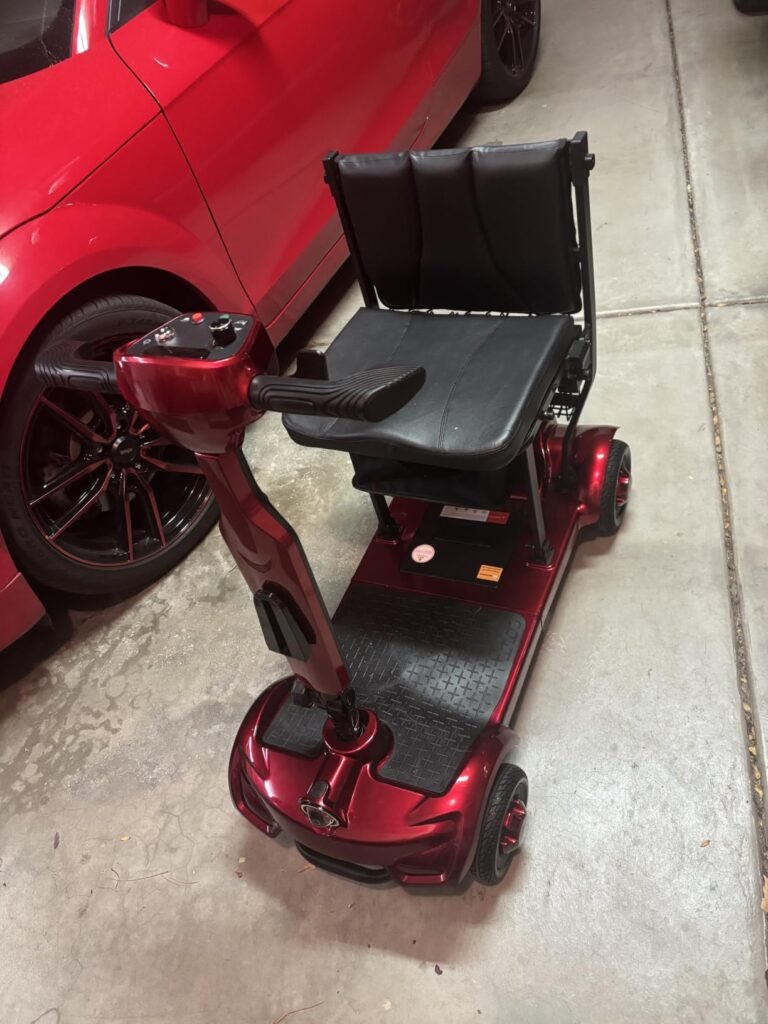
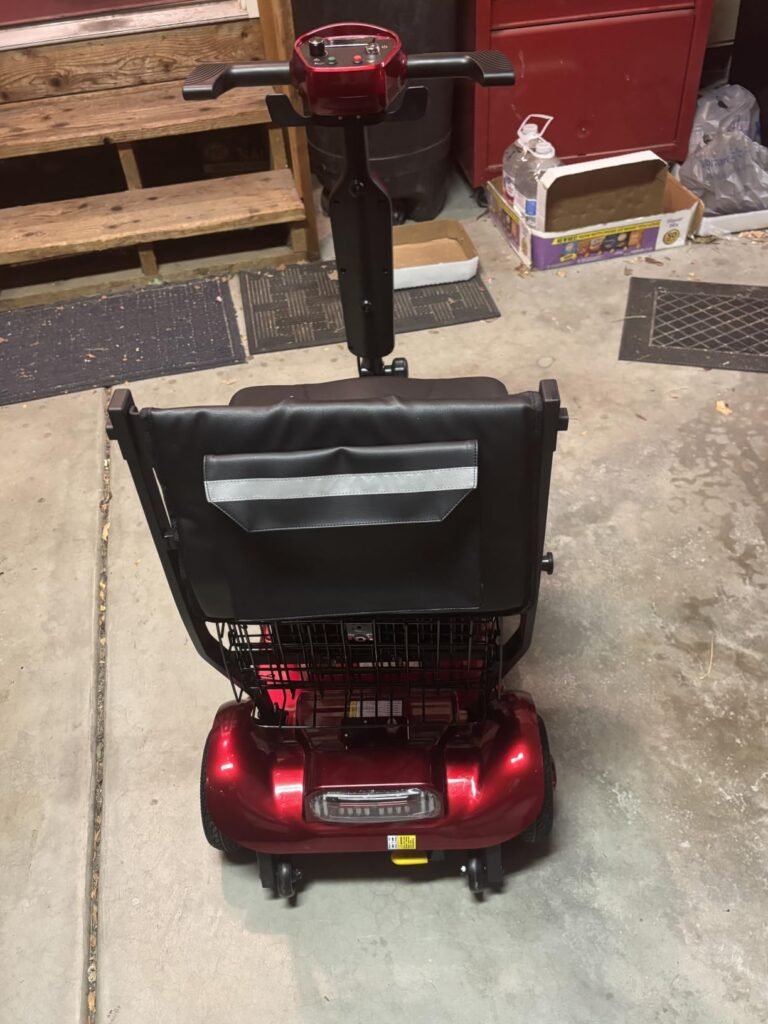
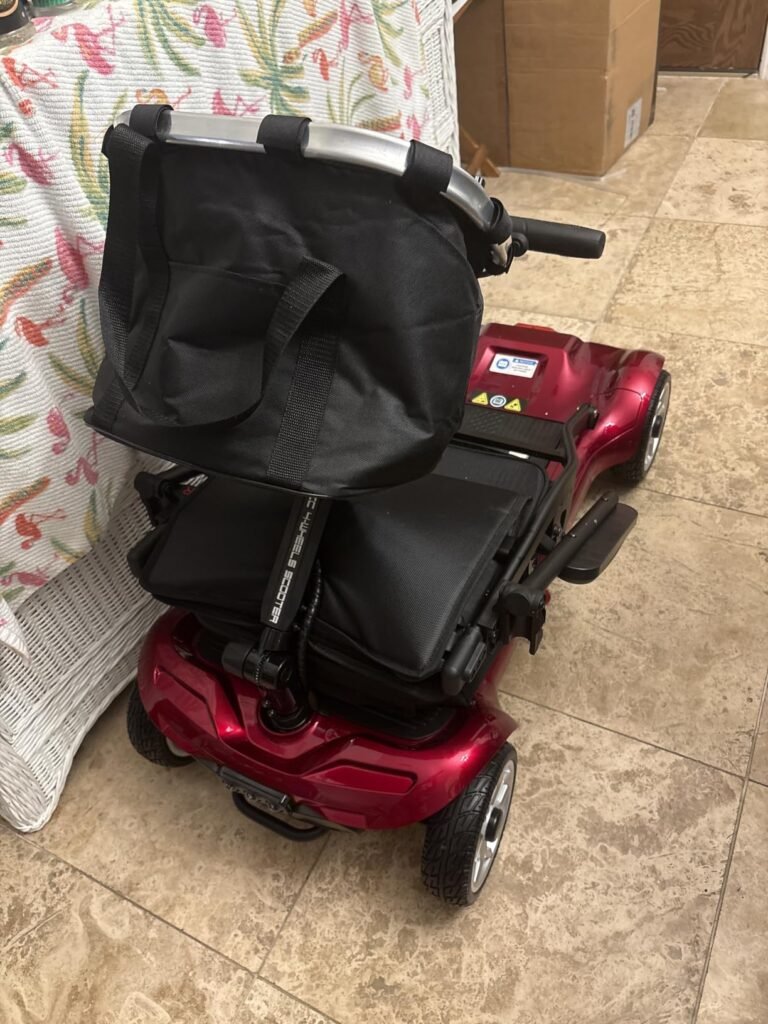
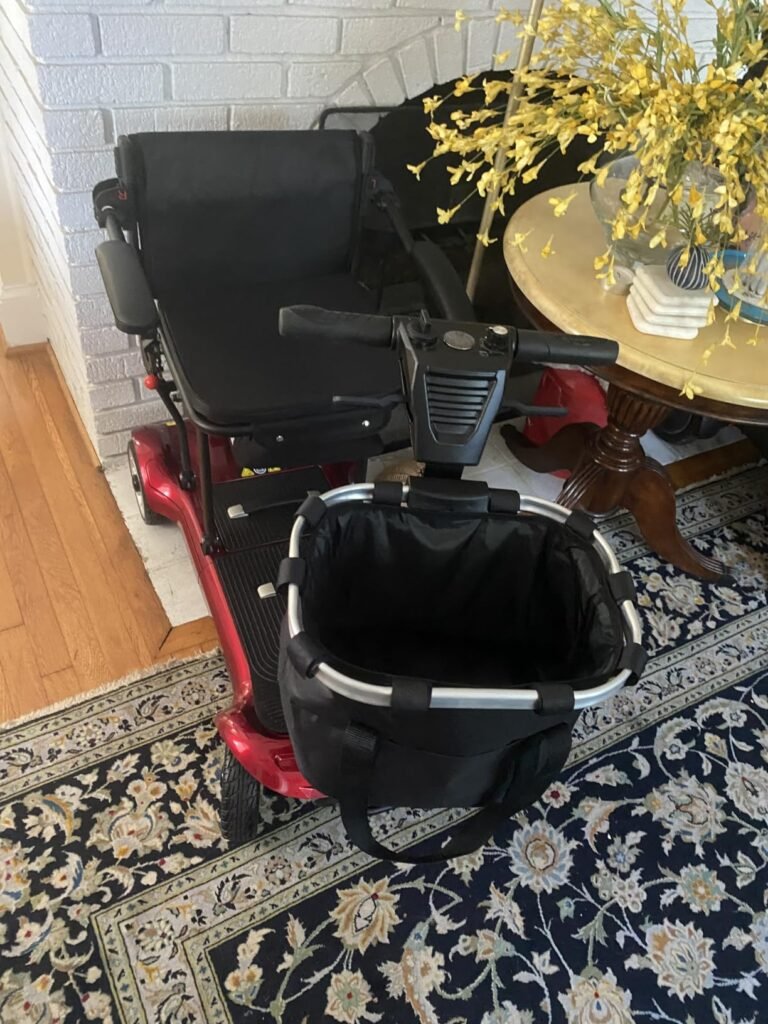
37.5lb Lightweight Scooter
9.4Editor score350W brushless motor
37.5 lbs frame
12 mile range
300 lbs capacity
Compare top travel mobility scooters by weight, range, airline approval, and portability. Find the right folding scooter for your next trip.

Finding a reliable travel mobility scooter means balancing weight, range, and airline compatibility. We compare 9 standout models by frame weight, battery type, folding mechanism, motor power, weight capacity, and real-world portability to help you choose a scooter that actually works on the road.
The biggest differences come down to how each scooter folds, how far it travels per charge, and whether its battery meets airline regulations. Some models disassemble into pieces while others collapse into a single compact unit, and those design choices affect everything from trunk loading to airport navigation.
This guide breaks down each option with clear specs, practical tradeoffs, and honest limitations. Whether you need an ultra-light frame for frequent flying or a longer-range model for cruise excursions, the comparisons below will help you narrow the field quickly.
We compared 9 travel mobility scooters using the details that matter most when you are away from home: frame weight, folded dimensions, battery type and airline approval, motor power, range per charge, weight capacity, braking systems, and overall portability. Each review focuses on practical tradeoffs so you can see how a scooter performs in real travel scenarios like airport terminals, cruise ship decks, and hotel corridors.


Compare key features, scores, and current prices side by side. A shorter feature list means fewer details were available, not necessarily fewer capabilities.


This foldable four-wheel scooter stands out with the highest owner rating in this comparison, and the reasons are easy to spot once you look at the spec sheet. At 41 pounds it sits in the middle of the weight range, but it compensates with a 350W brushless motor, a 300-pound capacity, and the flexibility to run one or two 12Ah lithium batteries depending on how far you plan to go.

We may earn a commission when you buy through this link, at no additional cost to you.
The dual-battery setup is the headline feature here. A single 12Ah pack delivers roughly 12 miles, which covers most shopping trips and neighborhood outings without issue. Slot in the second battery and the range doubles to around 24 miles, making this one of the more versatile options for cruise days or full-day sightseeing where charging opportunities are limited. The 350W motor handles slopes up to 15 degrees, which is steeper than many competing models in this price bracket.
Daily usability gets a boost from the open footboard and four separate storage areas. The front basket, rear basket, under-seat bag, and rear pocket give you plenty of room for groceries, a water bottle, or a small pet carrier. The electromagnetic braking system engages the moment you release the throttle, and the LED headlight plus rear safety light improve visibility in parking garages or dimly lit hotel corridors. The 55-inch turning radius is reasonable for most store aisles and elevator lobbies.
An open footboard removes the enclosed leg compartment found on many traditional scooters, giving riders more freedom to adjust foot placement and making it easier to step on and off from either side. This design also creates space for a small bag or pet carrier between your feet, which is genuinely useful when you are navigating a grocery store or boarding a shuttle. If you have limited knee flexibility or use a leg brace, the extra room can make a noticeable difference in comfort over longer rides.
If you want a single scooter that handles both short errands and longer travel days without compromise, this model offers the most complete package. The main tradeoff is that the dual-battery configuration costs more and adds a few pounds, so buyers who only need 12 miles of range can save money by sticking with the single-battery setup. Either way, the combination of strong motor output, flexible range, and thoughtful storage makes this a compelling first choice.
Riders who primarily travel on unpaved trails or very uneven terrain, since the 7.5-inch solid tires are designed for paved and indoor surfaces.
We may earn a commission when you buy through this link, at no additional cost to you.
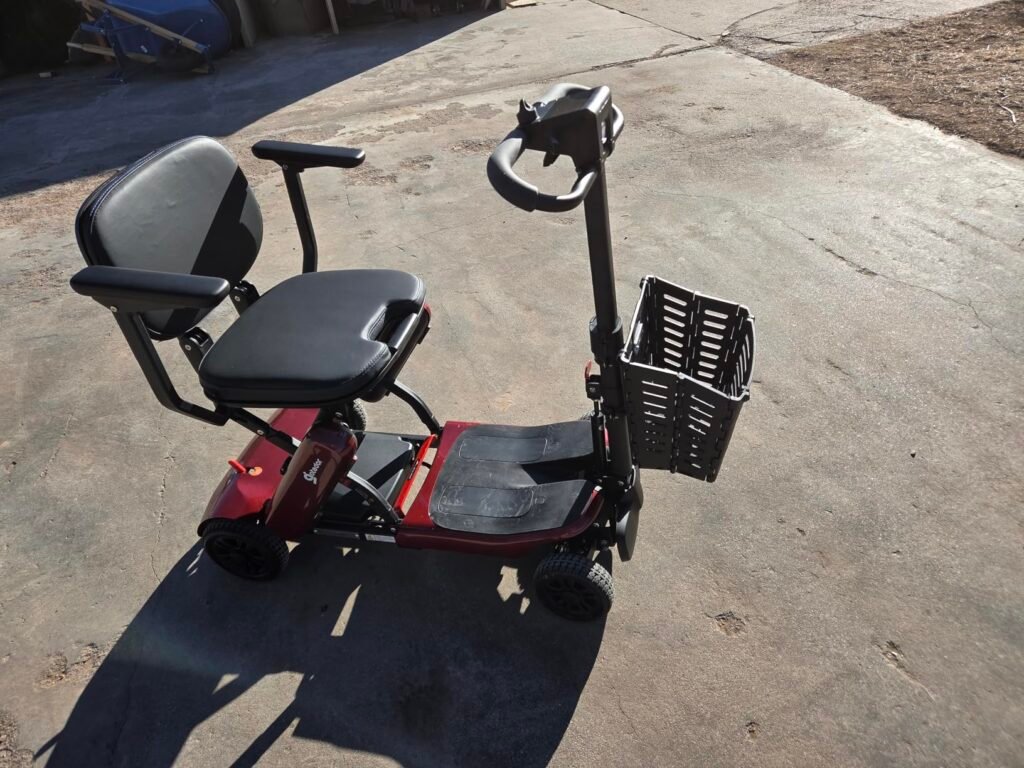
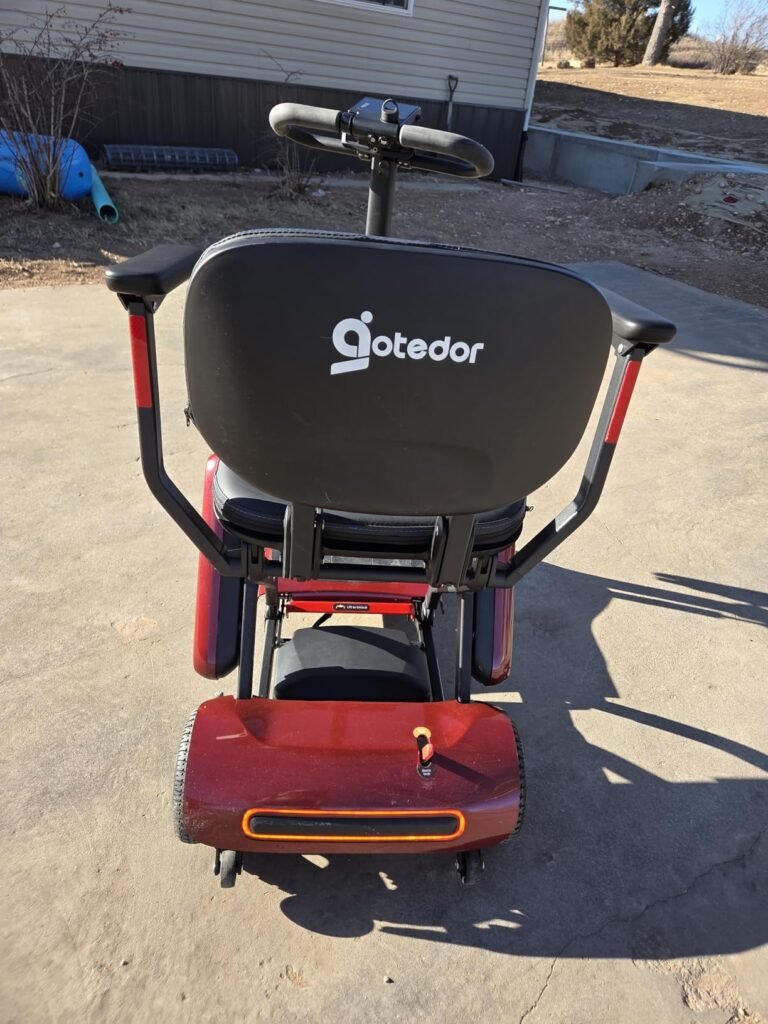
At 37.5 pounds without the battery, this scooter has the lightest frame in the entire comparison, and that matters enormously when you are lifting a scooter into a car trunk or handing it to a gate agent at the airport. The aluminum alloy construction is roughly 48 percent lighter than a comparable steel frame, yet it still supports a 300-pound rider. For travelers who fly or take trains frequently, those saved pounds add up quickly over the course of a trip.

We may earn a commission when you buy through this link, at no additional cost to you.
Performance does not take a back seat to portability. The 350W brushless motor reaches 6 mph and handles 12-degree inclines, which covers most sidewalk ramps and parking garage slopes. The removable 24V 12Ah lithium battery weighs about 4 pounds and is approved for airline and cruise travel. A full charge delivers around 12 miles, and the frame includes a second battery slot so you can add a spare pack later if your needs change.
The controls are straightforward: an LCD panel shows speed and battery level, a speed knob lets you dial in your pace, and a built-in USB port keeps your phone charged during long days out. Three storage areas, including a front compartment, under-seat space, and a rear pocket, handle everyday essentials. The 7.5-inch puncture-proof tires and reinforced four-point support frame keep the ride stable, while flip-up armrests make side transfers easier for riders with limited mobility.
Most airlines follow FAA and IATA guidelines that allow lithium-ion batteries under 160 watt-hours in carry-on luggage. The 24V 12Ah battery on this scooter comes in at roughly 288 watt-hours, which exceeds the standard carry-on limit for a single battery. However, many carriers make exceptions for mobility devices when the battery is properly disconnected and protected. Always contact your airline at least 48 hours before departure to confirm their specific policy and any packaging requirements.
This scooter is an excellent match for anyone who prioritizes low weight above all else. The 12-mile range is adequate for most daily outings, but if you regularly cover more ground in a single day, you will want to budget for a second battery or consider a model with a larger factory pack. At its current price point, the combination of ultra-light construction, strong motor, and airline-ready battery makes it one of the best values in this category.
Riders who need more than 12 miles of range per day and do not want to purchase or carry a second battery.
We may earn a commission when you buy through this link, at no additional cost to you.
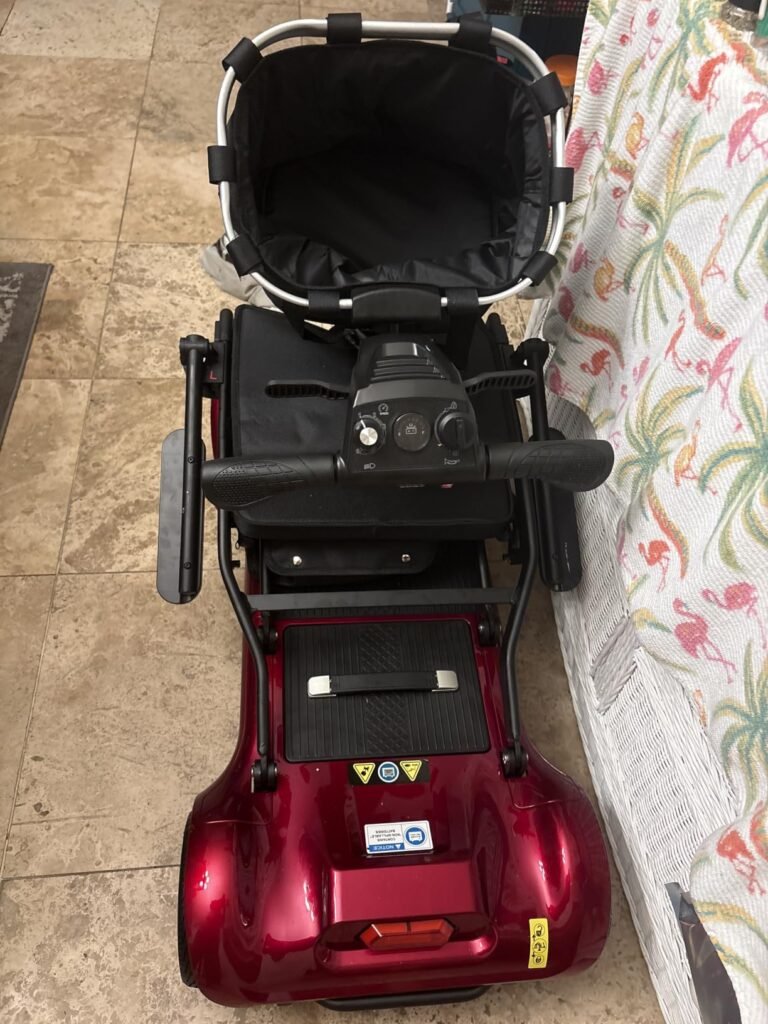
This model occupies a practical middle ground between ultra-light portability and on-road stability. The 43-pound aluminum alloy frame is about 40 percent lighter than steel equivalents, and the folded footprint of 38 by 20 by 13.5 inches fits comfortably in most sedan trunks. What sets it apart from lighter rivals is the 8-inch flat-free tire setup, which absorbs bumps and cracks more effectively than the 7.5-inch wheels found on several competing scooters.
We may earn a commission when you buy through this link, at no additional cost to you.
The 270W brushless motor is modest compared to the 350W units on some other models, but it still manages 12-degree slopes and a top speed of 6.2 mph. The variable speed range from 0 to 6.2 mph gives you fine-grained control in crowded areas like airport terminals or museum galleries where you need to creep along at walking pace. A single charge of the 24V 12Ah removable lithium battery delivers roughly 12.4 miles, and an extra battery slot lets you extend that range with a spare pack.
Comfort and accessibility are well thought out. The wide seat uses a reinforced four-point support system that resists wobbling, and the 270-degree flip-up armrests swing almost completely out of the way for side transfers. The electromagnetic brake responds in about half a second, which is noticeably quicker than many mechanical systems. Anti-tip wheels at the rear and a reinforced front bumper add layers of protection on uneven surfaces and sloped driveways.
Larger tires roll over cracks, threshold strips, and cobblestones more smoothly than smaller ones, reducing the jarring vibrations that can make long rides uncomfortable. The 8-inch flat-free tires on this model strike a good balance between ride comfort and compact folding size. If you expect to encounter a lot of uneven pavement or transition strips between indoor and outdoor surfaces, the extra half-inch of tire diameter compared to 7.5-inch models can make a meaningful difference in day-to-day comfort.
Choose this scooter if stability and ride comfort matter more to you than shaving every last pound off the frame. The slightly lower motor output means it may feel a bit sluggish on steeper hills compared to 350W models, but for flat-to-moderate terrain the difference is minimal. The larger tires and quick-response braking make it a confident choice for riders who value a planted, predictable feel on varied surfaces.
Riders who frequently tackle steep hills above 12 degrees, where the 270W motor may struggle to maintain speed.
We may earn a commission when you buy through this link, at no additional cost to you.
The Rascal Venture takes a different approach to portability than the folding scooters in this lineup. Instead of collapsing into a single unit, it breaks down into five separate pieces, with the heaviest component weighing just 29.5 pounds. That makes each piece manageable for most adults to lift into a car trunk without straining, and it eliminates the need to hoist an entire 40-pound scooter in one motion. This disassembly method is especially practical for caregivers who load and unload the scooter frequently.

We may earn a commission when you buy through this link, at no additional cost to you.
As an FDA Class II medical device, the Venture has been tested to specific safety and performance standards that many consumer-grade scooters do not meet. The 10-mile range and 4 mph top speed are modest by comparison with some newer models, but they are well suited to indoor environments, shopping centers, and short outdoor excursions. The regenerative and electromechanical braking system provides reliable stopping power, and the three-wheel layout delivers a tighter turning radius than four-wheel alternatives.
Comfort adjustments are more extensive than what you will find on most folding travel scooters. The seat height, armrest position, and steering tiller angle are all independently adjustable, making it easier to dial in a natural driving posture for riders of different sizes. The swivel seat rotates to face outward for safer transfers, which is a significant advantage for users who have difficulty stepping over a fixed seat frame. A front basket keeps personal items within easy reach.
Folding scooters collapse into a single unit, which is faster if you are working alone and can lift the full weight. Disassembly-style scooters like the Venture break into smaller, lighter pieces that are easier for one person to handle, but the process takes a bit longer and requires you to keep track of multiple components. If you have a caregiver who helps with loading, the five-piece breakdown is often the more practical option because no single piece exceeds 30 pounds.
This scooter is best suited for riders who spend most of their time indoors or on smooth, flat surfaces and who value easy disassembly over one-piece folding convenience. The shorter range and lower top speed mean it is not ideal for long outdoor excursions, and the three-wheel configuration requires more caution on uneven terrain. If your primary use case involves navigating tight store aisles, doctor’s offices, and cruise ship corridors, the Venture’s compact turning circle and swivel seat make it a practical companion.
Riders who need more than 10 miles of range per charge or who regularly travel on rough, uneven outdoor surfaces.
We may earn a commission when you buy through this link, at no additional cost to you.
Range anxiety is one of the most common complaints among mobility scooter users, and this Aotedor model addresses it directly with a triple-battery configuration that delivers up to 20 miles on a full charge. The three lightweight removable lithium packs swap easily, so you can keep a charged spare ready while the others are in use. For cruise passengers who spend full days exploring port cities or travelers who do not want to plan their day around charging stops, that extra range provides genuine peace of mind.

We may earn a commission when you buy through this link, at no additional cost to you.
The one-second folding mechanism is another standout feature. Unlike scooters that require multiple steps or partial disassembly, this model collapses and opens with a single motion and no tools. The 46-pound frame is heavier than the lightest options in this guide, but the tradeoff buys you a sturdier build and the triple-battery infrastructure. The 16.5-inch wide seat with padded adjustable armrests offers more room than the typical travel scooter, which makes a real difference during multi-hour outings.
Controls are designed for simplicity. A one-touch start button gets you moving, and seven speed levels let you fine-tune your pace from a slow crawl to a brisk outdoor cruise. The clear display shows battery status and speed at a glance. Safety features include a dual braking system that combines electromagnetic braking with over-speed protection, plus a bright front light, horn, and always-on taillights for visibility in low-light conditions.
A 20-mile range gives you roughly double the distance of a standard 10-to-12-mile scooter, which translates to a full day of sightseeing without needing to return to your hotel or cabin to recharge. Keep in mind that real-world range varies with rider weight, terrain, speed, and temperature. Running at top speed on hilly ground in cold weather will drain the batteries faster than a leisurely pace on flat pavement in mild conditions. If you plan to push the full 20 miles, carry the charger as a backup.
This scooter is the right pick if range is your top priority and you are willing to accept a slightly heavier frame and a 275-pound weight limit. The lower capacity means it may not suit larger riders, and the 46-pound weight is at the upper end of what most people can comfortably lift into a trunk alone. If those limitations do not apply to you, the 20-mile range and effortless folding make this one of the most capable travel scooters available.
Riders who weigh more than 275 pounds or who need a scooter light enough to lift into a vehicle unassisted.
We may earn a commission when you buy through this link, at no additional cost to you.
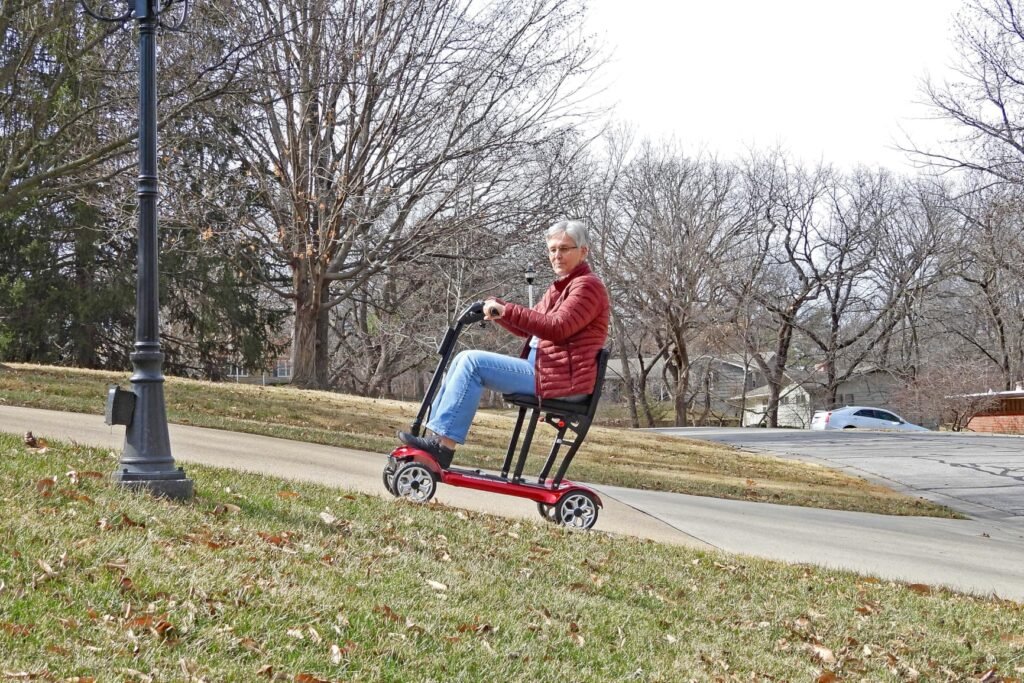
This Aotedor model combines the lightest frame in the comparison with the longest factory range, a pairing that is rare in the travel scooter market. The magnesium alloy main frame weighs just 36 pounds without batteries and accessories, which is noticeably lighter than aluminum equivalents and dramatically lighter than steel. Magnesium also resists corrosion better than many alloys, which is a practical advantage if you travel to coastal destinations or humid climates.
We may earn a commission when you buy through this link, at no additional cost to you.
Two independent 10Ah lithium batteries provide up to 22 miles of total range. One battery powers the scooter while the second sits in a dedicated onboard compartment as a ready backup, so you never need to stop and swap packs mid-ride. The removable battery design also simplifies air and cruise travel, since you can detach the packs and carry them separately to comply with carrier regulations. The tradeoff is a lower top speed of 3.7 mph, which is fine for indoor use and leisurely outdoor cruising but may feel slow on long straightaways.
The folding mechanism is one of the most travel-friendly in this guide. The scooter folds without removing the seat or using tools, and once collapsed it rolls like a piece of luggage so you can pull it with one hand through an airport terminal or hotel lobby. The 14.5-inch wide seat and independently adjustable armrests, which span from 15 to 24 inches without tools, accommodate a wide range of body sizes. The tiller height also adjusts up and down for a comfortable steering position.
Magnesium alloy is roughly 30 percent lighter than aluminum at equivalent strength, which is why this scooter achieves a 36-pound frame weight that would be difficult to match with conventional materials. Magnesium also dampens vibrations more effectively, contributing to a smoother ride on bumpy surfaces. The main downside is cost, as magnesium frames are more expensive to manufacture. If you lift your scooter frequently and every pound matters, the weight savings justify the premium for many buyers.
This is the premium choice for travelers who want maximum range without sacrificing portability. The higher price reflects the magnesium frame and dual-battery system, and the slower top speed means it is better suited to relaxed pacing than brisk outdoor travel. If you value a lightweight, luggage-style form factor and need enough range to last a full day of sightseeing, this model delivers on both fronts more effectively than anything else in this lineup.
Riders who need a top speed above 4 mph or who are shopping on a tight budget.
We may earn a commission when you buy through this link, at no additional cost to you.
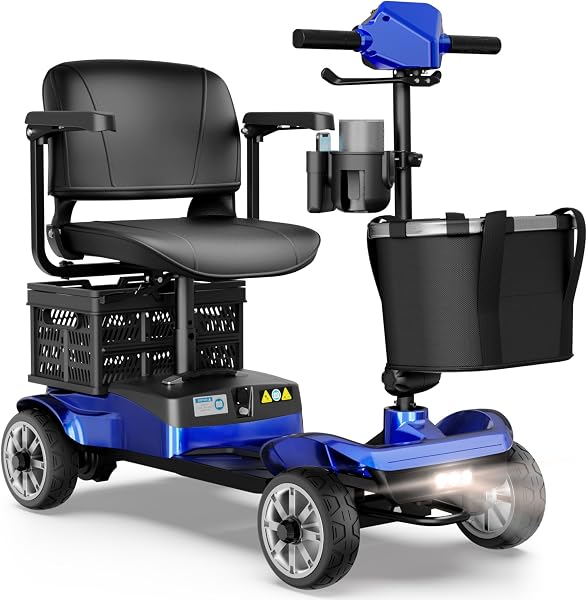
At under $320, this four-wheel scooter costs significantly less than every other model in this guide, yet it still delivers a 330-pound weight capacity and a 15-mile range that outperforms several more expensive options. The 250W motor is quieter and less powerful than the 350W units found on premium models, but it handles 15-degree inclines and a variable speed range from 0 to 4.3 mph, which is adequate for most indoor and paved outdoor environments.

We may earn a commission when you buy through this link, at no additional cost to you.
The detachable battery charges off-board, which is convenient if your scooter is stored in a garage or car trunk and you want to charge the pack indoors. A full charge takes about six hours, which is longer than the three-to-four-hour charge times on some competing models, so you will want to plan your charging schedule accordingly. The 15-mile range is generous for the price and covers most daily errands, shopping trips, and neighborhood rides without requiring a midday top-up.
Practical touches make this scooter feel more thoughtfully designed than its price suggests. Dual removable baskets, a cup holder, and a phone holder cover everyday storage needs, and the updated frame provides 8 inches of additional legroom compared to similar models, which is a welcome feature for taller riders. The 360-degree swivel seat, adjustable height, and flip-up armrests simplify transfers, and the 8-inch puncture-proof tires with anti-tip structure keep the ride stable on uneven pavement.
A higher weight capacity generally indicates a more robust frame and stronger suspension components, which benefits all riders regardless of their actual weight. The 330-pound rating on this model exceeds most competitors in this guide, suggesting a sturdier build that should hold up well over time. If you are close to the 300-pound limit on other scooters, choosing a model with a 330-pound capacity gives you a more comfortable safety margin and may extend the lifespan of the motor and battery.
This is the clear choice for budget-conscious buyers who need a capable travel scooter without spending $600 or more. The main compromises are the longer charge time and the 50-pound heaviest piece when disassembled, which may be difficult for some users to lift alone. If you have a caregiver to help with loading and you can charge overnight, those tradeoffs are easy to accept given the low price and strong weight capacity.
Riders who need to load and unload the scooter independently, since the heaviest disassembled piece weighs 50 pounds.
We may earn a commission when you buy through this link, at no additional cost to you.
The PAISEEC D3 earns its place in this guide with the tightest turning radius in the comparison at just 43 inches, which makes it exceptionally maneuverable in narrow hallways, small elevators, and crowded store aisles. The 39.7-pound aluminum frame is light enough for most adults to lift into a car trunk, and the folded dimensions of 38.8 by 19.7 by 36.2 inches fit in most vehicle cargo areas. The TSA-approved status simplifies airport security, though you should still verify battery policies with your specific airline.

We may earn a commission when you buy through this link, at no additional cost to you.
Two detachable lithium batteries, each weighing about 4 pounds, combine for up to 18.6 miles of range on a full charge. That puts the D3 in the upper tier for travel range, well ahead of the 10-to-12-mile baseline offered by many competitors. The 270W brushless motor reaches 5 mph and provides solid traction on common indoor and outdoor surfaces. The intelligent electromagnetic braking system engages automatically when you release the throttle, and the 8-inch rubber tires offer a comfortable, quiet ride.
Controls are intuitive and accessible. The right thumb lever drives the scooter forward, the left lever engages reverse, and releasing either lever triggers the electronic brake. The control panel displays battery status and speed, and the headlight and horn add safety for low-light conditions. Both the handlebar height and armrest width adjust to accommodate different body sizes, which is a useful feature if the scooter will be shared between users or if your preferred riding position changes throughout the day.
A smaller turning radius means the scooter can complete a U-turn in a narrower space, which is critical in environments like hotel rooms, restaurant aisles, and retail stores where you may need to reverse direction quickly. The 43-inch radius on the D3 is significantly tighter than the 55-inch radius found on some four-wheel models, giving you more confidence in cramped quarters. If your daily routine involves a lot of indoor navigation, prioritize turning radius alongside overall dimensions when comparing scooters.
This model is ideal for riders who spend a lot of time in confined spaces and need a scooter that can pivot quickly without backing up and readjusting. The 265-pound weight capacity is lower than most other options here, so larger riders should look elsewhere. The folded height of 36.2 inches is also taller than some competing models, which may limit storage options in very compact spaces. For everyone else, the combination of tight maneuverability, strong range, and travel-friendly batteries makes the D3 a compelling choice.
Riders who weigh more than 265 pounds or who need a scooter that folds to a very low profile for under-bed storage.
We may earn a commission when you buy through this link, at no additional cost to you.
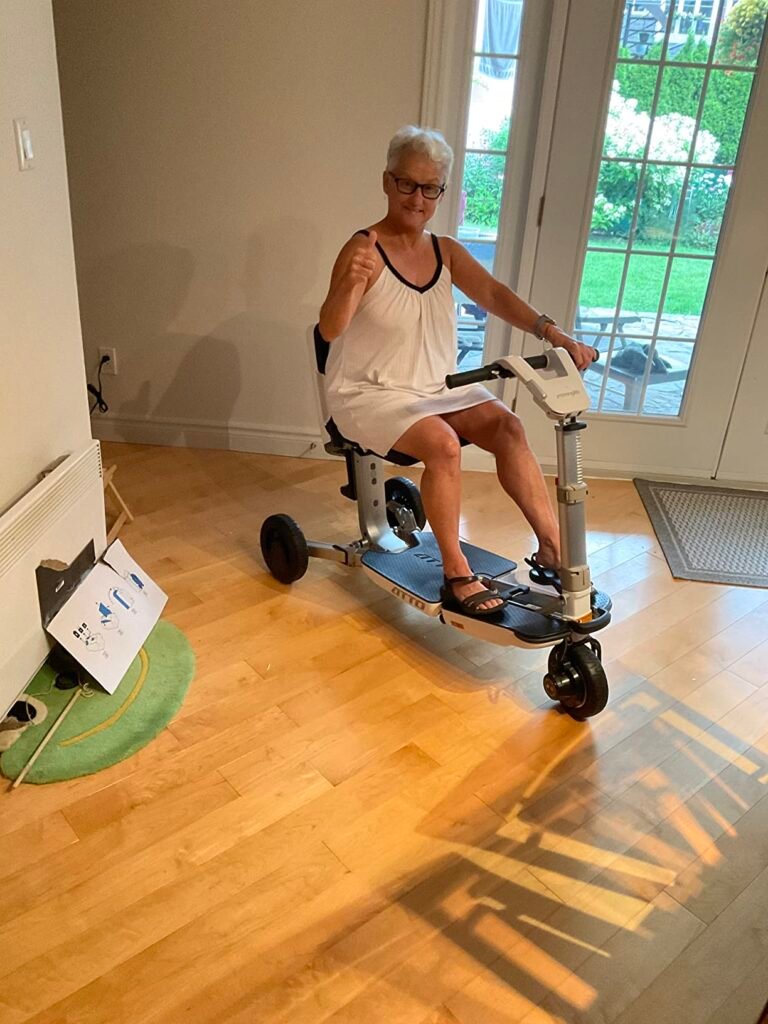
The ATTO by MovingLife occupies a unique niche in the travel scooter market. When folded, it transforms into a piece of trolley luggage that fits in an airplane overhead bin, a claim that no other scooter in this guide can match. The FAA-approved lithium battery and split-frame design mean you can drive up to the gate, fold the scooter in moments, and stow it above your seat without checking it as cargo. For frequent flyers who refuse to rely on airport wheelchair services, this capability is genuinely transformative.

We may earn a commission when you buy through this link, at no additional cost to you.
The full-size riding platform is another differentiator. Despite its compact folded form, the ATTO provides a stable, comfortable ride that feels closer to a standard mobility scooter than a travel model. The lightweight lithium battery powers a full day of typical use, and the trolley mode lets you pull the folded unit behind you like a rolling suitcase through terminals, train stations, and cruise ship corridors. This dual-mode functionality is the core of the ATTO’s design philosophy.
The lower owner rating of 3.7 stars reflects a mix of experiences that potential buyers should consider carefully. Some users report excellent performance and love the overhead-bin convenience, while others cite issues with durability, customer service response times, or the learning curve of the folding mechanism. At a price point above $3,000, expectations are understandably high, and any shortcomings tend to generate stronger negative feedback than they would on a $500 scooter.
Most travel scooters must be gate-checked or checked as cargo, which exposes them to potential damage from baggage handlers and delays at the carousel. The ATTO’s overhead-bin compatibility eliminates both risks, letting you keep your scooter within arm’s reach throughout the flight. This is especially valuable for travelers with connecting flights, tight layovers, or destinations where replacement parts would be difficult to source. The tradeoff is the significantly higher purchase price, which may or may not be justified depending on how often you fly.
The ATTO is a specialized tool for a specific type of traveler: someone who flies frequently, needs a full-size riding experience, and is willing to pay a premium for the overhead-bin convenience. If your travel involves mostly car trips or cruises where checked luggage is less of a concern, the other scooters in this guide offer better value. But if air travel is your primary use case and you want to avoid the hassle of gate-checking a mobility device, the ATTO remains the only option that truly fits in the overhead compartment.
Budget-conscious buyers or those who travel primarily by car and do not need overhead-bin compatibility.
We may earn a commission when you buy through this link, at no additional cost to you.
Selecting a travel mobility scooter involves more than comparing prices. The right choice depends on how you travel, where you will use the scooter, and which physical constraints matter most to you. The factors below cover the most important decision points.
Frame weight is the single most important specification for a travel scooter because it determines whether you or your caregiver can physically load the unit into a vehicle, carry it up a step, or hand it to airline staff. Most travel scooters in this category weigh between 36 and 50 pounds without the battery, and every pound matters when you are lifting the scooter at an awkward angle into a car trunk. Magnesium and aluminum frames are significantly lighter than steel, and the weight difference becomes more noticeable over the course of a multi-day trip with repeated loading and unloading.
Consider your own lifting capacity honestly before choosing a model. A 37-pound scooter may be manageable for a fit adult but challenging for an older caregiver with back problems. If you cannot lift the full weight of the folded scooter, look for models that disassemble into lighter individual pieces, like the Rascal Venture which breaks down into five components with the heaviest at under 30 pounds. Alternatively, some folding models roll like luggage when collapsed, eliminating the need to lift the full weight at all.
As a general guideline, choose the lightest frame you can afford that still meets your range and capacity requirements. The weight savings will pay dividends every time you load, unload, or reposition the scooter during travel.
Lithium-ion batteries have largely replaced lead-acid packs in travel scooters because they weigh 70 to 75 percent less and charge faster. A typical 24V 12Ah lithium battery weighs around 4 to 5 pounds, compared to 15 to 20 pounds for an equivalent lead-acid unit. This weight reduction is critical for air travel, where airline regulations limit the watt-hour rating of lithium batteries that can be carried onboard. Most carriers follow FAA guidelines that restrict spare lithium batteries to 160 watt-hours or less, though mobility device batteries often receive special consideration.
Before booking a flight, contact your airline to confirm their specific battery policy for mobility scooters. Some carriers require the battery to be disconnected and individually protected, while others may ask you to carry the battery in the cabin and check the scooter frame as cargo. Removable batteries make this process much simpler because you can detach the pack without tools and carry it separately. Models with airline-approved or TSA-approved batteries streamline the process, but you should never assume compliance without verifying with your specific carrier.
If you fly more than a few times a year, prioritize a scooter with a removable lithium battery that falls within common airline watt-hour limits. For cruise travel, battery restrictions are generally more relaxed, but it is still wise to confirm with the cruise line before departure.
Manufacturer range estimates are typically based on ideal conditions: a lightweight rider on flat pavement at moderate speed in mild temperatures. In practice, your actual range will be lower if you weigh more, ride at top speed, climb hills, or use the scooter in cold weather. A scooter rated for 12 miles may realistically deliver 8 to 10 miles under demanding conditions, which could leave you stranded if you planned your day around the full rated distance.
Models with dual or triple battery configurations offer a practical solution by extending the total range to 18, 20, or even 24 miles. The tradeoff is additional weight and cost, but for travelers who spend full days exploring without access to charging, the extra range is worth the investment. Some scooters include a second battery slot that lets you add a spare pack later, giving you the flexibility to start with a single battery and upgrade as your needs evolve.
When comparing range figures, apply a 20 to 30 percent discount to the manufacturer’s estimate to account for real-world conditions. If the adjusted range still covers your typical daily distance, the scooter should meet your needs without requiring midday charging.
Travel scooters use two main portability approaches: one-piece folding and multi-piece disassembly. Folding models collapse into a single unit, which is faster and more convenient if you can handle the full weight. Disassembly models break into three to five lighter pieces, which is easier for caregivers or riders with limited upper-body strength. The best choice depends on who will be loading the scooter and how often you need to break it down.
Folded dimensions matter just as much as weight. A scooter that folds to 38 by 20 by 13.5 inches will fit in most sedan trunks and compact SUV cargo areas, while a model that folds to a taller profile may require a larger vehicle. If you plan to store the scooter in a hotel closet, under a cruise ship bed, or in a small apartment, measure the available space before purchasing and compare it to the folded dimensions listed in the specifications.
Test the folding mechanism mentally before buying. Scooters that fold in one or two steps are more practical for daily use than models requiring five or six separate actions. If you will be folding and unfolding the scooter multiple times per day, a simpler mechanism will save time and frustration.
Motor wattage directly affects hill-climbing ability, acceleration, and top speed. Most travel scooters in this category use brushless motors ranging from 250W to 350W. A 350W motor handles steeper inclines and maintains speed more effectively on hills, while a 250W motor is quieter and more energy-efficient but may slow noticeably on grades above 10 degrees. If your travel destinations include hilly cities, steep parking garages, or sloped cruise ship ramps, the extra power of a 350W motor is a worthwhile advantage.
Top speed is less critical for travel scooters than for full-size models. Most travel scooters top out between 3.7 and 6.2 mph, which is a comfortable walking pace. Higher speeds drain the battery faster and can feel unstable on a lightweight frame, so a moderate top speed is often preferable for safety and range efficiency. Variable speed controls that let you dial in your pace are more useful than a single fixed speed, especially in crowded indoor environments.
Match the motor power to your typical terrain. Flat cities and indoor venues do not require a 350W motor, while hilly destinations and outdoor excursions benefit from the extra output. Consider the steepest incline you expect to encounter and choose accordingly.
Weight capacity ranges from 265 to 330 pounds across the scooters in this guide, and it is important to choose a model that comfortably exceeds your actual weight. Operating a scooter near its maximum capacity puts additional strain on the motor, battery, and frame, which can reduce range, slow acceleration, and shorten the lifespan of key components. A 50-pound buffer between your weight and the rated capacity is a reasonable target for long-term reliability.
Seat comfort is equally important for travel use, where you may spend several hours at a time on the scooter. Look for padded seats with at least 14.5 inches of width, adjustable armrests, and a swivel function that makes transfers easier. Flip-up or fold-away armrests allow you to slide on and off from the side, which is much safer than trying to step over a fixed armrest. Some models also offer adjustable seat height and tiller angle for a more customized riding position.
If you are close to the upper end of a scooter’s weight capacity, choose the next model up rather than pushing the limit. The extra margin improves ride quality, preserves battery range, and reduces wear on the frame and suspension.
Electromagnetic braking is the gold standard for travel scooters because it engages automatically the moment you release the throttle, preventing the scooter from rolling backward on inclines. This hands-free stopping action is safer and more intuitive than manual brakes, especially for riders with limited hand strength or reaction time. Most models in this guide include electromagnetic brakes, but response times vary from about 0.5 seconds to slightly longer, and faster response provides more confident control on slopes.
Additional safety features to look for include anti-tip wheels at the rear, reinforced front bumpers, LED headlights, and automatic brake lights. Anti-tip wheels prevent the scooter from tipping backward on steep inclines, while front bumpers protect the frame from low-speed impacts with curbs and door frames. LED lighting is essential if you plan to ride in the evening or in dimly lit indoor spaces like parking garages and cruise ship corridors.
Prioritize electromagnetic braking and anti-tip wheels as non-negotiable safety features. The other additions are helpful but secondary. If a scooter lacks automatic braking, look for a model that includes it, as the safety benefit is significant for everyday use.
Four-wheel scooters offer superior stability on uneven surfaces and outdoor terrain, making them the safer choice for riders who plan to use the scooter on sidewalks, parking lots, and cruise ship decks. Three-wheel scooters provide a tighter turning radius and better maneuverability in confined indoor spaces like store aisles, elevators, and doctor’s offices. The choice between three and four wheels should be based on where you will spend most of your riding time.
Tire size and type also affect ride quality. Larger tires, such as 8-inch models, roll over cracks and threshold strips more smoothly than 7.5-inch wheels. Puncture-proof or flat-free tires eliminate the risk of a flat tire during travel, which is a practical advantage when you are far from home and do not have access to a repair shop. Solid rubber tires are standard on most travel scooters and provide a good balance of durability and comfort on paved surfaces.
If your travel involves a mix of indoor and outdoor use, a four-wheel scooter with 8-inch flat-free tires offers the best all-around performance. If you primarily navigate tight indoor spaces, a three-wheel model with a smaller turning radius may be the more practical choice.
Before your first trip, fully charge the battery and take the scooter on a short test ride around your neighborhood to familiarize yourself with the controls, braking response, and turning radius. Practice folding and unfolding the scooter several times so the process becomes second nature when you are in a busy airport terminal or cruise ship gangway. If your scooter has adjustable seat height, armrest width, or tiller angle, set these to your preferred positions before you leave home and note the settings so you can restore them quickly if someone else adjusts the scooter.
Battery care has a significant impact on long-term performance and range. Store lithium batteries in a cool, dry place and avoid leaving them fully discharged for extended periods, as deep discharge can permanently reduce capacity. If you will not be using the scooter for several weeks, charge the battery to about 60 percent and store it separately from the frame. When traveling by air, disconnect the battery and protect the terminals with tape or a plastic cap to comply with airline safety requirements and prevent accidental short circuits.
Regular maintenance keeps your travel scooter reliable on the road. Wipe down the frame and seat after each use, especially if you have been riding in rain or near saltwater, and inspect the tires for embedded debris or excessive wear. Check that all folding latches and locking pins engage securely before each ride, and tighten any loose bolts or screws periodically. If your scooter has an electromagnetic brake, test the stopping action on a gentle slope to confirm it engages promptly. Keeping the scooter clean and well-maintained will extend its lifespan and ensure dependable performance throughout your travels.
Most airlines accept mobility scooters as assistive devices, but the battery must typically be removed and carried in the cabin if it is a lithium-ion type. FAA regulations generally limit spare lithium batteries to 160 watt-hours, though mobility device batteries may receive exceptions. Always contact your airline at least 48 hours before departure to confirm their specific requirements for battery handling and scooter stowage.
Most travel scooters deliver between 10 and 15 miles per charge under ideal conditions. Models with dual or triple battery configurations can extend that range to 18, 20, or even 24 miles. Real-world range is typically 20 to 30 percent lower than the manufacturer's estimate due to rider weight, terrain, speed, and temperature, so plan your outings accordingly.
The lightest models in this comparison weigh between 36 and 37.5 pounds without the battery, using magnesium or aluminum alloy frames to minimize weight. When the battery is included, the total weight increases by 4 to 10 pounds depending on the battery configuration. If lifting is a concern, look for models that disassemble into lighter individual pieces or fold into a trolley-style form that can be rolled rather than carried.
Travel scooters are designed primarily for paved surfaces, sidewalks, and indoor environments. They handle moderate slopes and smooth outdoor terrain well, but most are not built for gravel paths, grass, or rough trails. If you plan to use the scooter outdoors frequently, choose a model with larger tires and a more powerful motor for better traction and hill-climbing ability.
Charge times range from about 3 to 6 hours depending on the battery capacity and charger output. Most 12Ah lithium batteries charge in 3 to 4 hours, while larger packs or models with lower-output chargers may take up to 6 hours. For travel, it is helpful to charge the battery overnight so it is ready for a full day of use the next morning.
Registration is not typically required for domestic travel within the United States, but airlines and cruise lines may ask you to provide details about the scooter's battery type, watt-hour rating, and dimensions when you book your trip. International travel may involve additional regulations depending on the destination country. Contact your carrier in advance to ensure a smooth boarding process.
Most travel scooters can handle slopes between 10 and 15 degrees, which covers typical sidewalk ramps and parking garage inclines. Models with 350W motors generally perform better on hills than those with 250W or 270W motors. If you expect to encounter steep grades regularly, check the manufacturer's slope rating and choose a model with sufficient motor power to maintain speed without draining the battery excessively.
Three-wheel scooters offer a tighter turning radius and better maneuverability in confined indoor spaces, making them ideal for navigating narrow aisles and small rooms. Four-wheel scooters provide greater stability on uneven surfaces and outdoor terrain, reducing the risk of tipping on slopes or rough pavement. Choose based on where you will spend most of your riding time.
Keep the scooter clean and dry, especially after riding near saltwater or in rain. Charge the battery fully each night and avoid letting it drain completely during the day. Inspect the tires, brakes, and folding mechanisms regularly for signs of wear or looseness. Carry the charger and any essential tools with you so you can address minor issues without needing to find a repair shop in an unfamiliar location.
The Lightweight 4-Wheel Foldable model stands out as the strongest overall choice for most travelers, combining the highest owner rating with a flexible dual-battery range, a capable 350W motor, and thoughtful storage features. Its 41-pound frame strikes a practical balance between portability and stability, and the airline-friendly removable battery simplifies air and cruise travel without requiring a separate checked-luggage process.
For buyers with different priorities, the 37.5lb Ultra-Light Cruiser offers the lightest frame for frequent flyers who count every pound, while the Aotedor 36lb Magnesium model delivers the longest range in a luggage-style package for full-day sightseeing. Budget-conscious shoppers should consider the Budget 4-Wheel Foldable, which provides a 330-pound capacity and 15-mile range at a fraction of the cost of premium models.
The right travel mobility scooter depends on your specific travel patterns, physical needs, and budget. Focus on the factors that will affect your daily experience the most, whether that is frame weight, battery range, folding convenience, or indoor maneuverability. Use the comparisons above to narrow your options, verify airline or cruise line policies before your trip, and choose the model that gives you the most confidence and independence on the road.