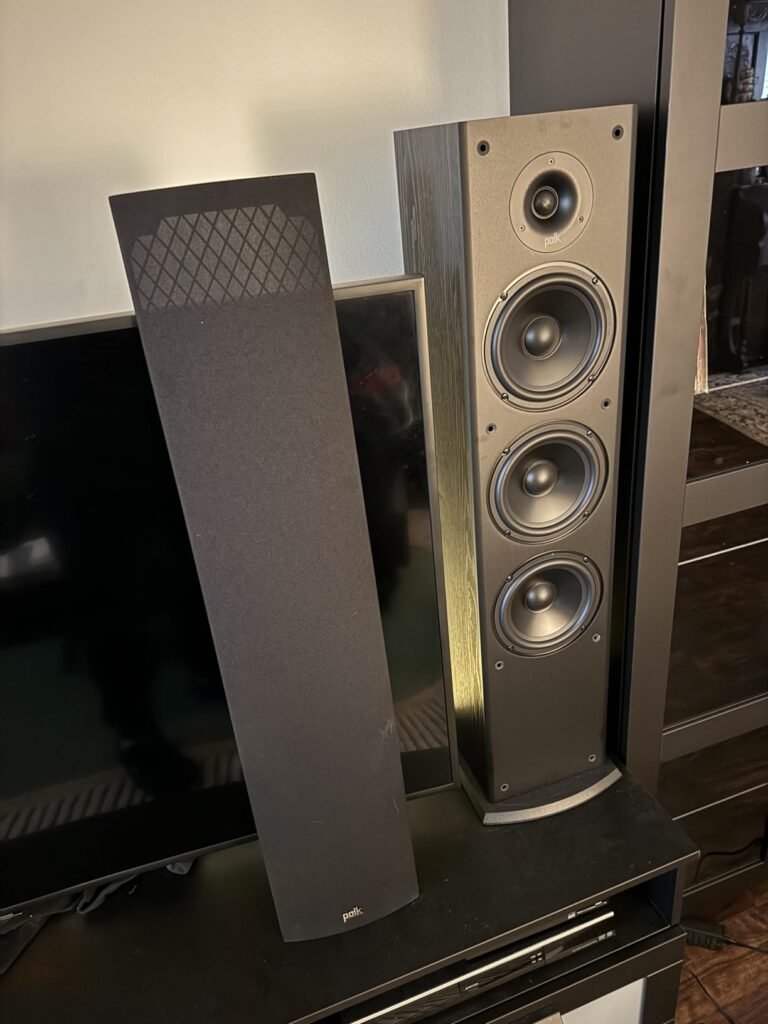
Polk Monitor XT60
9.2Editor score1-inch Terylene tweeter
6.5-inch woofer driver
Dual passive radiators
Dolby Atmos compatible
Find the right tower speakers for 2026. We compare 10 standout options by build quality, useful features, owner feedback, value, and everyday trade-offs.
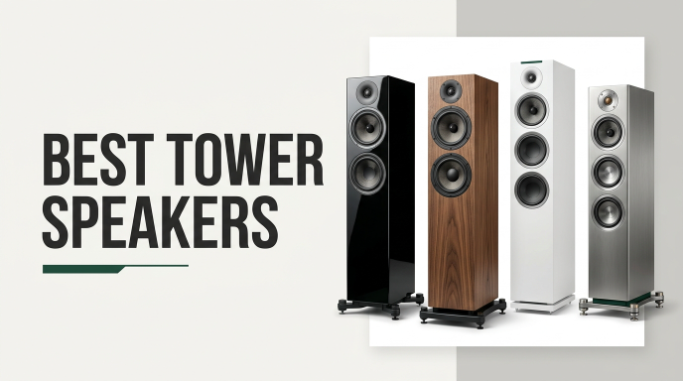
Find the right tower speakers for 2026. We compare 10 standout floorstanding models by the factors that matter most in a serious audio setup: driver configuration, tweeter design, bass extension, power handling, cabinet construction, Dolby Atmos compatibility, connectivity options, and value for home theater and two-channel listening.
Floorstanding speakers vary enormously in sound signature, room-filling capability, and system compatibility. A pair designed for cinematic surround sound may sound very different from a stereo-focused audiophile design, and understanding these differences helps you avoid speakers that fight your listening room, your amplifier, or your actual music preferences.
This guide breaks down each option by driver layout, sensitivity, and real-world use case so you can match a pair to your room size, receiver, and taste. Whether you are building a Dolby Atmos home theater, upgrading a stereo rig, or looking for an all-in-one powered solution, the right towers make a dramatic difference.
We compared 10 tower speakers using the details that actually help a buyer decide: driver count and materials, tweeter technology, woofer size, cabinet construction, sensitivity, impedance, power handling, Dolby Atmos and hi-res audio compatibility, binding post quality, aesthetics, and owner feedback. The notes focus on practical trade-offs so each pick connects to how people actually build home theater systems, listen to stereo music, and match speakers to their receivers and rooms.


Compare key features, scores, and current prices side by side. A shorter feature list means fewer details were available, not necessarily fewer capabilities.


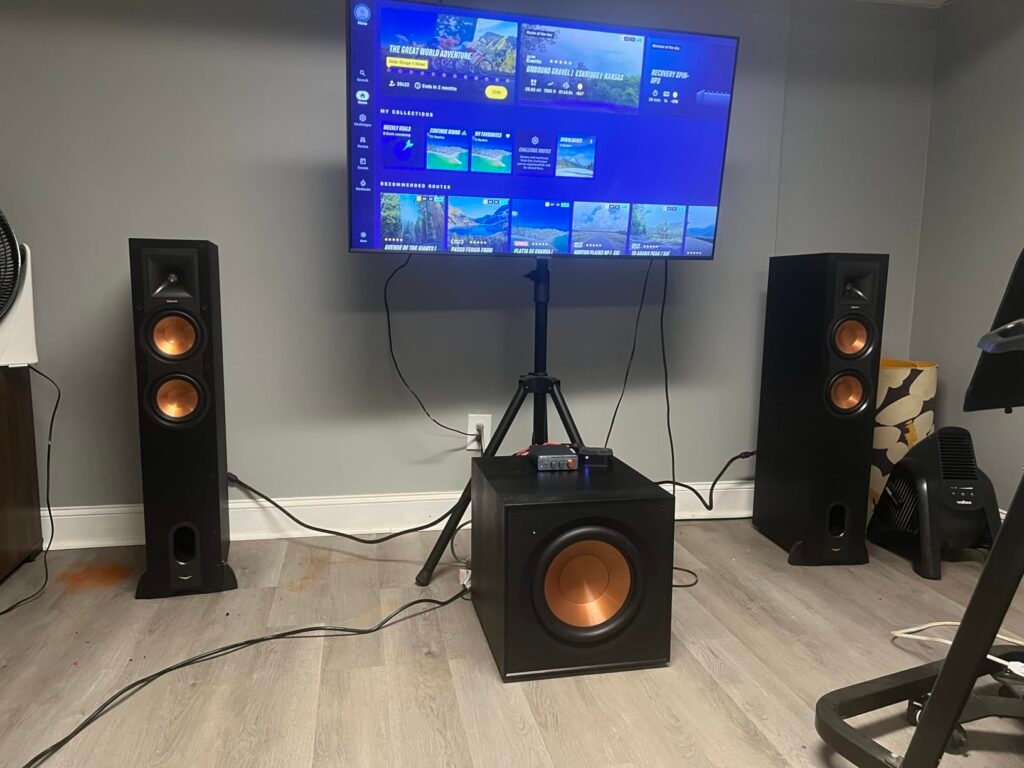
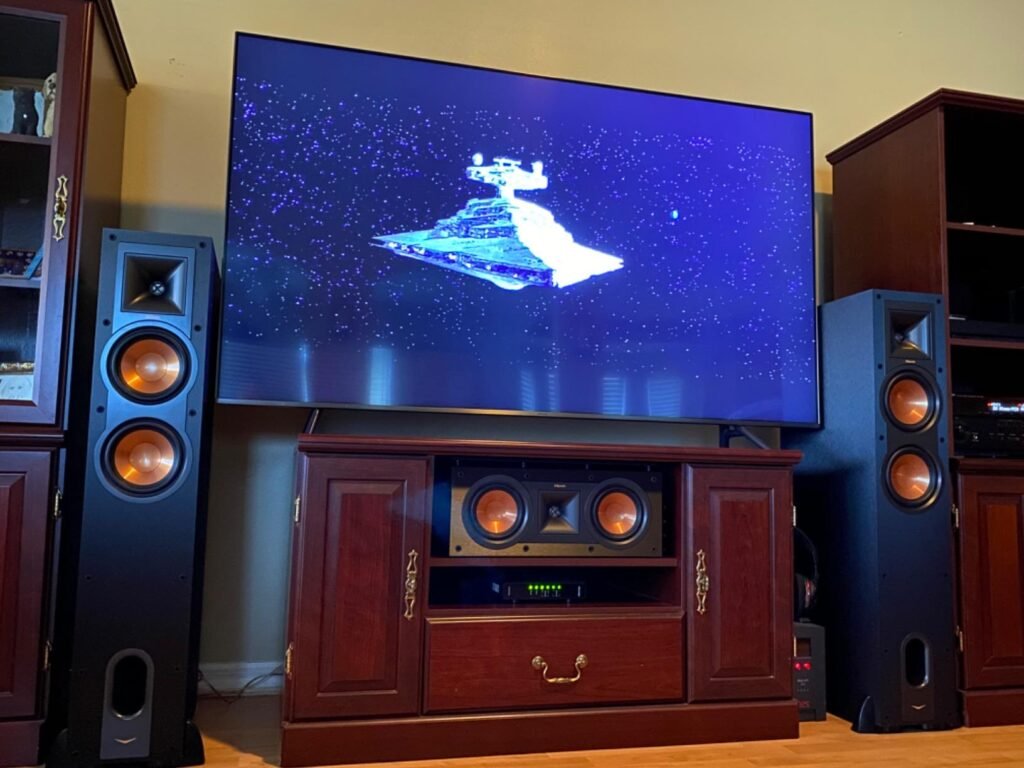
The Klipsch Reference R-26FA is one of the smartest ways to add Dolby Atmos height effects to a home theater without installing ceiling speakers. Each tower includes an integrated upfiring elevation driver that bounces sound off the ceiling to create the sense of overhead effects during Atmos-encoded movies and streaming content. Buying the pair covers your front left and right channels while unlocking immersive 3D audio in a single purchase.
We may earn a commission when you buy through this link, at no additional cost to you.
The signature Klipsch Tractrix horn paired with a 1-inch aluminum diaphragm compression driver delivers the highly detailed, dynamic highs the brand is known for. The 90 by 90 degree horn dispersion helps direct sound toward the listening area rather than scattering it across walls, which improves imaging and dialogue clarity in home theater use. Dual 6.5-inch copper-spun IMG woofers handle midrange and bass with the tonal warmth that makes vocals and instruments feel present.
Power handling of 100 watts continuous and 400 watts peak means these towers work well with mid-range and high-end AV receivers, and the front-firing port makes them more forgiving of wall placement than rear-ported designs. Dual binding posts allow bi-wiring or bi-amping for enthusiasts who want to optimize their signal path, while single-wire setups work with a simple jumper strap.
Upfiring Atmos modules bounce sound off a flat, reflective ceiling to create the illusion of overhead speakers. The effect works best with ceilings between 7.5 and 12 feet high made of standard drywall. Vaulted ceilings, angled surfaces, or acoustic tile ceilings scatter or absorb the reflected sound, reducing the Atmos effect. If your ceiling is not ideal, in-ceiling speakers or ceiling-mounted modules will deliver more consistent overhead performance.
This is the top pick for home theater builders who want proper front channels and integrated Atmos in one purchase. If your ceiling is vaulted, extremely high, or made of sound-absorbing material, the upfiring Atmos effect will be less effective than dedicated in-ceiling speakers.
Buyers with vaulted or acoustically absorbent ceilings that will not reflect upfiring Atmos audio effectively.
We may earn a commission when you buy through this link, at no additional cost to you.
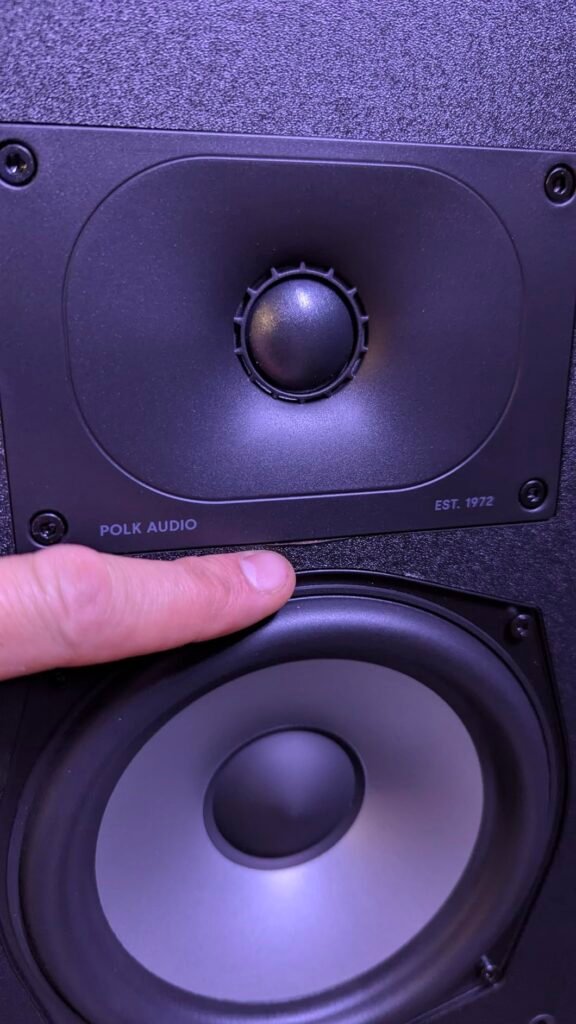
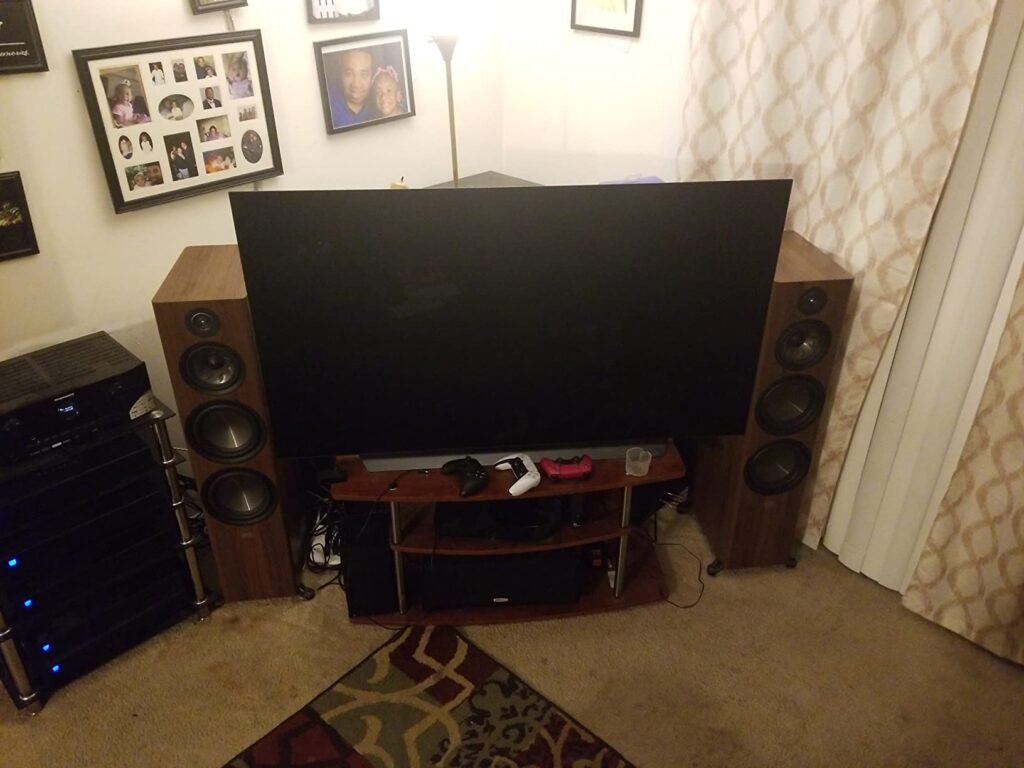
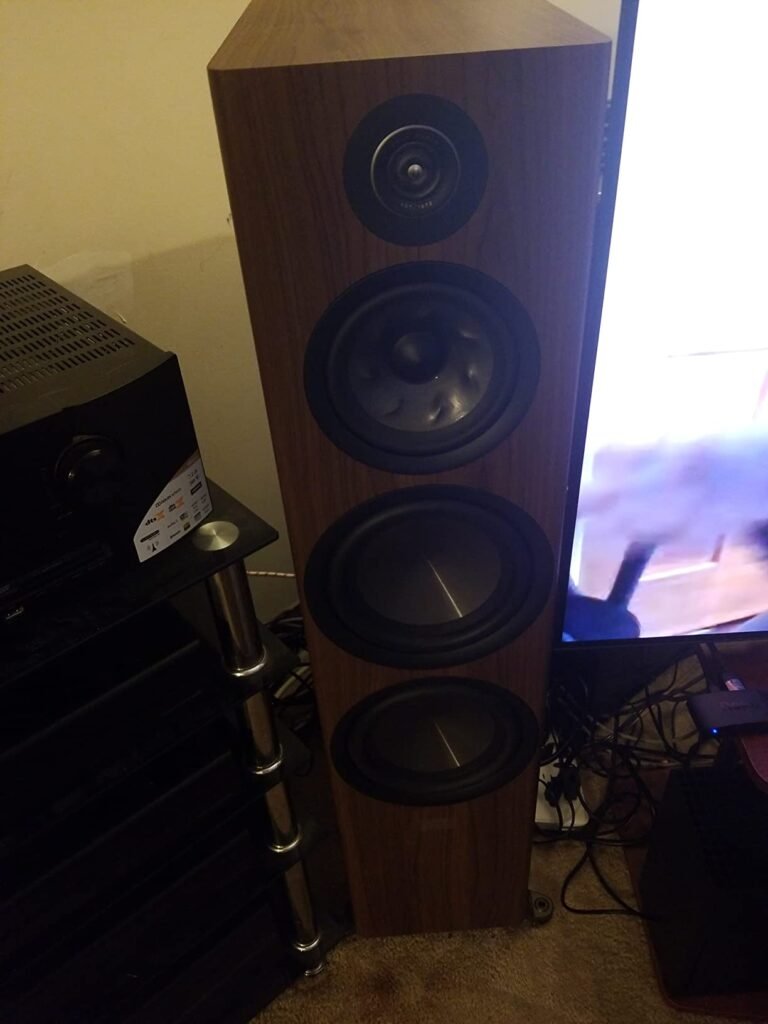
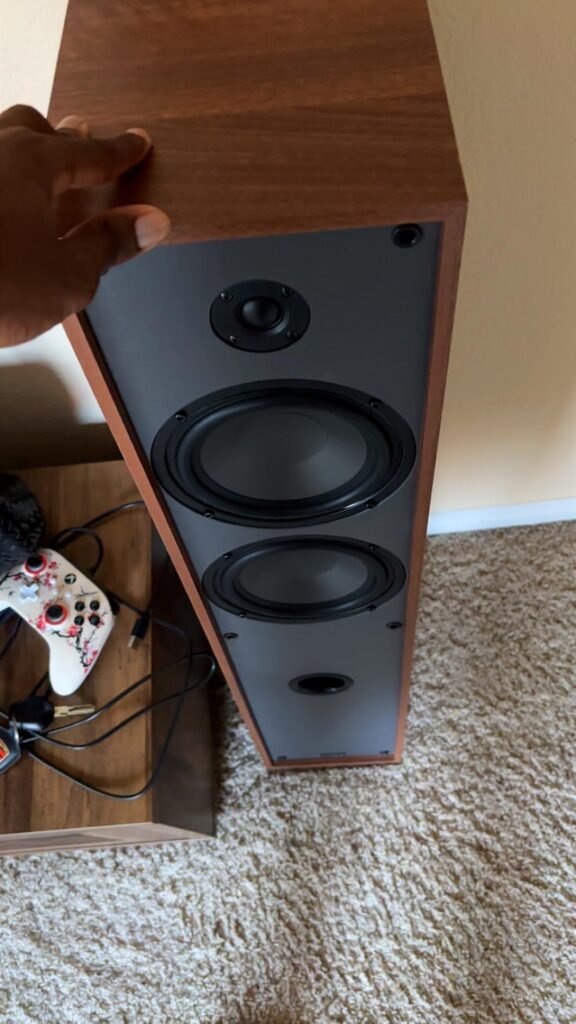
The Polk Monitor XT60 has become a benchmark for affordable home theater towers because it delivers modern features like Dolby Atmos, DTS:X, and Auro 3D compatibility at a price most buyers can justify. Sold as a single speaker, you can buy exactly what you need for your left, right, or surround channels without paying for extras. The 1-inch tweeter and 6.5-inch Dynamically Balanced woofer provide smooth mid-range and clear highs across music and movies.

We may earn a commission when you buy through this link, at no additional cost to you.
The two 6.5-inch passive radiators are the standout feature at this price point. Passive radiators extend low-frequency response without the port noise that can plague ported designs, giving these towers more bass authority than their driver size suggests. This makes them capable of filling small to medium rooms with movie sound effects and music bass lines without an immediate need for a subwoofer, though a dedicated sub will always improve the low end.
Rubber feet designed for both carpet and hardwood floors improve stability and simplify placement in any room. The timbre-matched design across the entire Monitor XT series means adding the MXT30 center channel, MXT20 bookshelf pairs for surrounds, MXT90 height modules, and an MXT12 subwoofer creates a cohesive home theater system where all channels sound like they belong together.
Passive radiators are unpowered cones that vibrate in response to changes in cabinet air pressure, extending bass response without needing a large ported cabinet or an active subwoofer. They work particularly well in small to medium rooms where deep, controlled bass matters more than earth-shaking output. The tradeoff is that passive radiators tend to roll off faster below their tuning frequency than a proper subwoofer, which is why a sub is still recommended for full-range home theater.
This is the smart pick for budget-conscious home theater builders who want a modern, feature-rich tower without stepping up to premium prices. If you need concert-hall volume in a large room or crave audiophile-grade imaging for two-channel music, a step-up model will serve you better.
Buyers with large rooms who need higher output or those seeking a factory-matched pair sold together.
We may earn a commission when you buy through this link, at no additional cost to you.
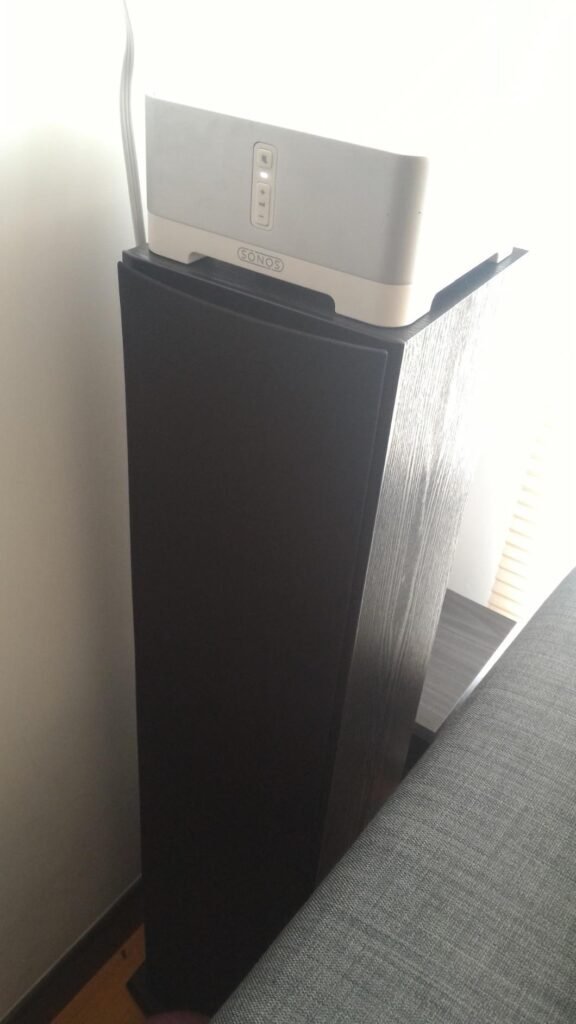
The Polk Audio T50 remains one of the most popular entry-level tower speakers because it strikes a genuinely useful balance between price, sound quality, and simplicity. The T50 delivers a warm, room-filling sound signature that works well for both movies and music without requiring a technical setup process. Just connect the speaker wire to any AV receiver or stereo amplifier and you are ready to listen.
We may earn a commission when you buy through this link, at no additional cost to you.
The 1-inch tweeter combines with a 6.5-inch Dynamic Balance driver and dual 6.5-inch bass radiators to produce a full-range sound with more low-end presence than the driver size alone would suggest. 150 watts of power handling is enough to match most consumer AV receivers, and the balanced midrange keeps dialogue clear and instruments defined during typical listening.
The T50 is designed as the anchor of an easy home theater upgrade path. Adding T15 bookshelf speakers as surrounds, a T30 center channel, a subwoofer, and a modern AV receiver creates a complete 5.1 system without complex tuning or custom calibration. The consistent Polk sound signature across the T series ensures all channels blend seamlessly.
A basic 5.1 home theater includes two front tower or bookshelf speakers, a center channel for dialogue, two surround speakers, and a subwoofer. Match all speakers within the same brand family when possible to ensure consistent tonal character across channels. Add an AV receiver with at least 5.1 channel processing, and you have everything needed to enjoy immersive movie sound at home.
This is the right pick for first-time home theater builders who want reliable, room-filling sound without paying for advanced features they may not need. If you want Dolby Atmos compatibility or higher-resolution audio certification, step up to the Monitor XT60 or Signature Elite ES60 instead.
Buyers who want Dolby Atmos capability or audiophile-grade two-channel music performance.
We may earn a commission when you buy through this link, at no additional cost to you.
The SVS Prime Tower represents a genuine step up into audiophile territory while remaining priced within reach of enthusiasts building serious home audio systems. Sold as a matched pair, these towers use a 3.5-way crossover design with a dedicated 4.5-inch midrange driver mounted in its own sealed compartment, which prevents woofer interference from muddying vocals and midrange instruments.
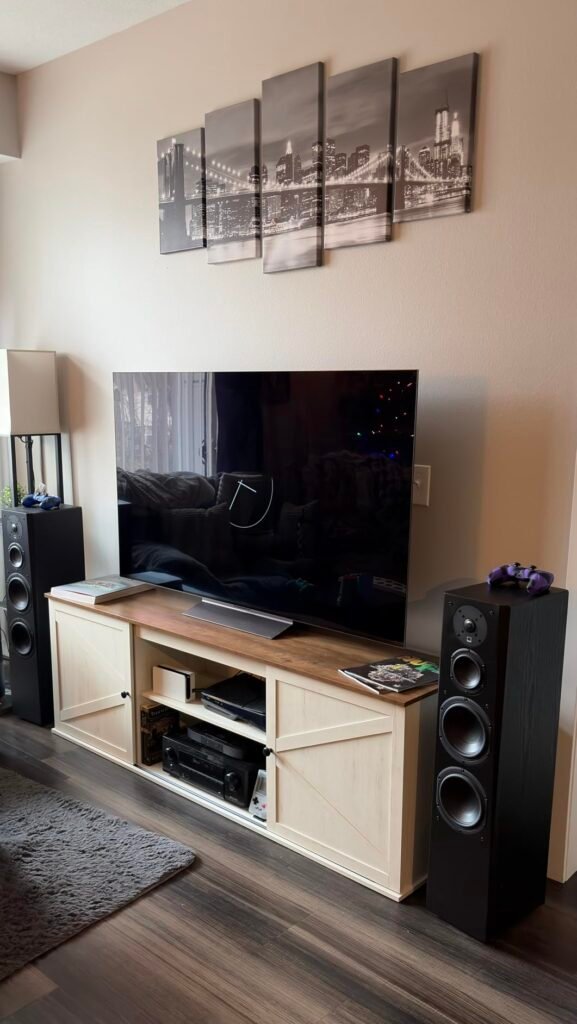
We may earn a commission when you buy through this link, at no additional cost to you.
The isolated midrange chamber is the key to the Prime Tower’s transparency. When midrange drivers share a cabinet with woofers, air pressure changes from bass reproduction can modulate the midrange output, adding coloration to voices and acoustic instruments. Sealing the midrange in its own compartment eliminates this interaction, resulting in the kind of vocal clarity and instrument separation that audiophiles associate with reference-grade equipment.
Dual 6.5-inch woofers deliver deep, articulate bass without needing a subwoofer for most music listening, though a sub is still recommended for full home theater impact. The 1-inch aluminum dome tweeter maintains clarity at high volumes, and the tapered front baffle chamfers reduce edge diffraction for improved soundstage precision. The SoundMatch crossover ensures smooth handoffs between drivers and coherent phase behavior across the frequency range.
SVS built its reputation on delivering high-end audio performance at prices that undercut traditional audiophile brands. The Prime Tower brings features usually found in speakers costing two or three times as much, including the sealed midrange chamber and 3.5-way crossover design. For serious music listeners who want reference-grade sound without spending five figures, this is one of the strongest values in the tower category.
This is the top choice for buyers building a two-channel audiophile system or a high-end home theater where imaging and tonal accuracy matter as much as raw output. If you primarily watch movies at moderate volumes or listen to compressed streaming audio, more affordable towers will serve you nearly as well.
Casual listeners or buyers using low-powered receivers that cannot drive the Prime Tower to its potential.
We may earn a commission when you buy through this link, at no additional cost to you.
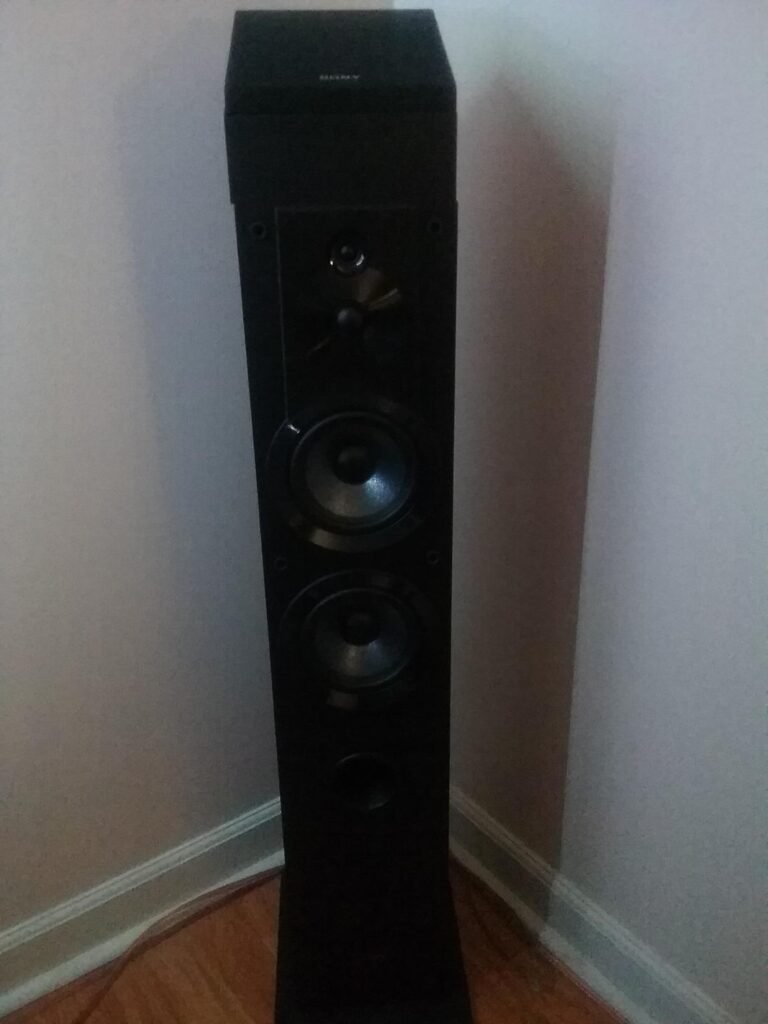
The Sony SS-CS3 offers something few competitors in this price range provide: a dedicated super tweeter that extends frequency response up to 50 kHz for compatibility with high-resolution audio formats. This four-driver, three-way design uses a 1-inch main tweeter alongside the 3/4-inch super tweeter and a pair of woofers, distributing the frequency range across specialized drivers rather than asking a single tweeter or woofer to cover too broad a range.
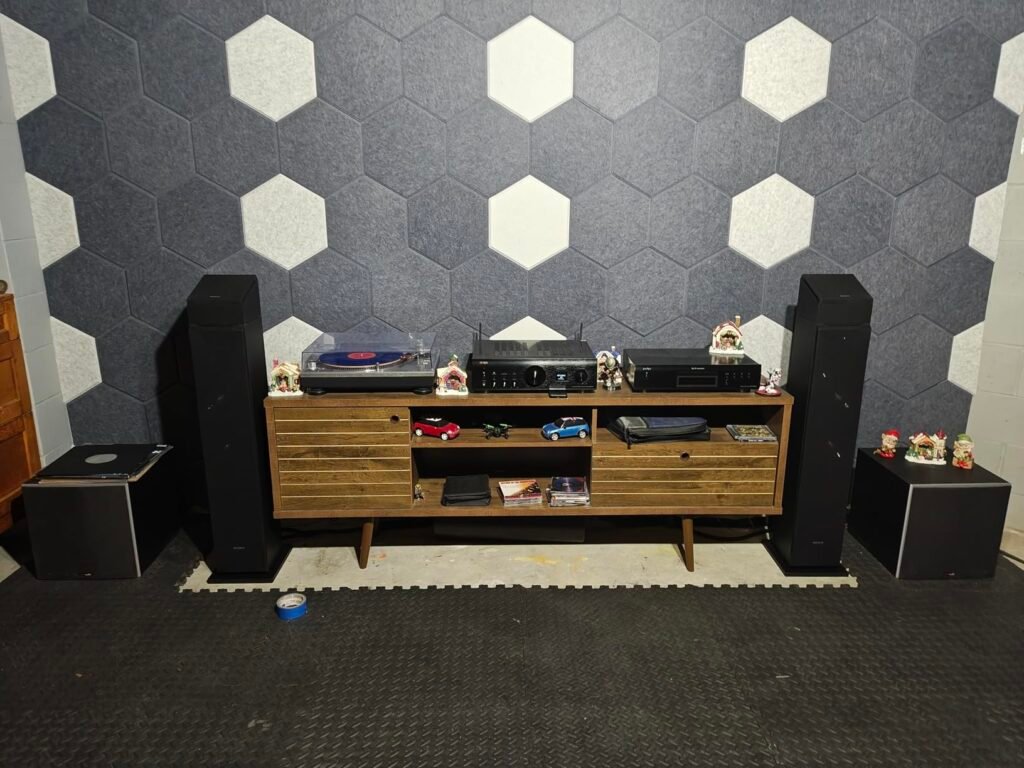
We may earn a commission when you buy through this link, at no additional cost to you.
The extended high-frequency response matters for listeners who play back hi-res audio files from services like Tidal HiFi Plus, Amazon Music HD, or their own FLAC and DSD collections. While human hearing typically tops out around 20 kHz, the harmonic overtones and phase relationships that give hi-res audio its perceived openness extend well beyond that limit, and speakers that reproduce these frequencies more accurately tend to sound more natural on well-recorded material.
145 watts of peak power handling is modest compared to some rivals, so pairing these towers with a receiver rated between 50 and 100 watts per channel at 6 ohms is a good starting point. The 6-ohm impedance is on the lower side, so verify that your receiver supports 6-ohm speakers, which most modern AV receivers do without issue. The strong cabinet design minimizes resonances that would otherwise color the sound.
A super tweeter handles frequencies above the range of a standard tweeter, typically extending output to 30, 40, or even 50 kHz. Some listeners perceive these ultra-high frequencies as improved air, spaciousness, or spatial cue accuracy, particularly on hi-res audio recordings. The benefit is subtle and program-dependent, so audition super tweeter speakers with music you know well to determine whether the effect matters to you.
This is the right choice for buyers who prioritize hi-res audio compatibility and appreciate the extended frequency response of a super tweeter design. If you primarily watch movies or listen to compressed streaming audio, simpler two-way or three-way designs without a super tweeter will serve you just as well.
Buyers who need higher power handling for large rooms or plan to use only streaming services with compressed audio.
We may earn a commission when you buy through this link, at no additional cost to you.
The Rockville TM150B takes an unconventional approach by combining tower speakers, dual 10-inch subwoofers, a built-in amplifier, and multiple input options into a single all-in-one system. This is the pragmatic choice for buyers who want a complete audio setup without shopping for separate amplifiers, subwoofers, or streaming devices. Bluetooth, USB, SD card, and FM radio inputs cover most modern content sources.

We may earn a commission when you buy through this link, at no additional cost to you.
The dual 10-inch subwoofers are the standout feature, delivering the kind of deep bass that would normally require a separate powered sub. Combined with six full-range drivers and two silk dome tweeters across the pair, the system produces 250 watts RMS with 1000 watts peak power for room-filling output. Eight EQ presets plus adjustable bass and treble controls let you tune the sound to your room and content type.
Two 1/4-inch microphone inputs with adjustable volume and echo controls turn these towers into a karaoke system for parties, which is a genuinely useful feature for entertainment-focused buyers. The polished MDF wood finish with chrome accents and glass LCD screen has a more consumer-electronics look than traditional audiophile speakers, which may or may not fit your room aesthetic.
Powered towers include their own amplifiers, eliminating the need for a separate receiver or amp. This simplifies setup and reduces the total number of components in your system. The tradeoff is less flexibility, since you cannot upgrade the amplification independently, and powered speakers typically use less refined amp designs than dedicated separates. For casual and party use, powered towers are a practical shortcut.
This is the right pick for buyers who want a complete standalone audio system for parties, karaoke, or casual listening without building a traditional component system. If you want reference-quality audio, plan to integrate with a receiver, or prefer discreet aesthetics, traditional passive towers will serve you better.
Audiophiles who want to pair their speakers with high-end amplification or need discreet, refined aesthetics.
We may earn a commission when you buy through this link, at no additional cost to you.
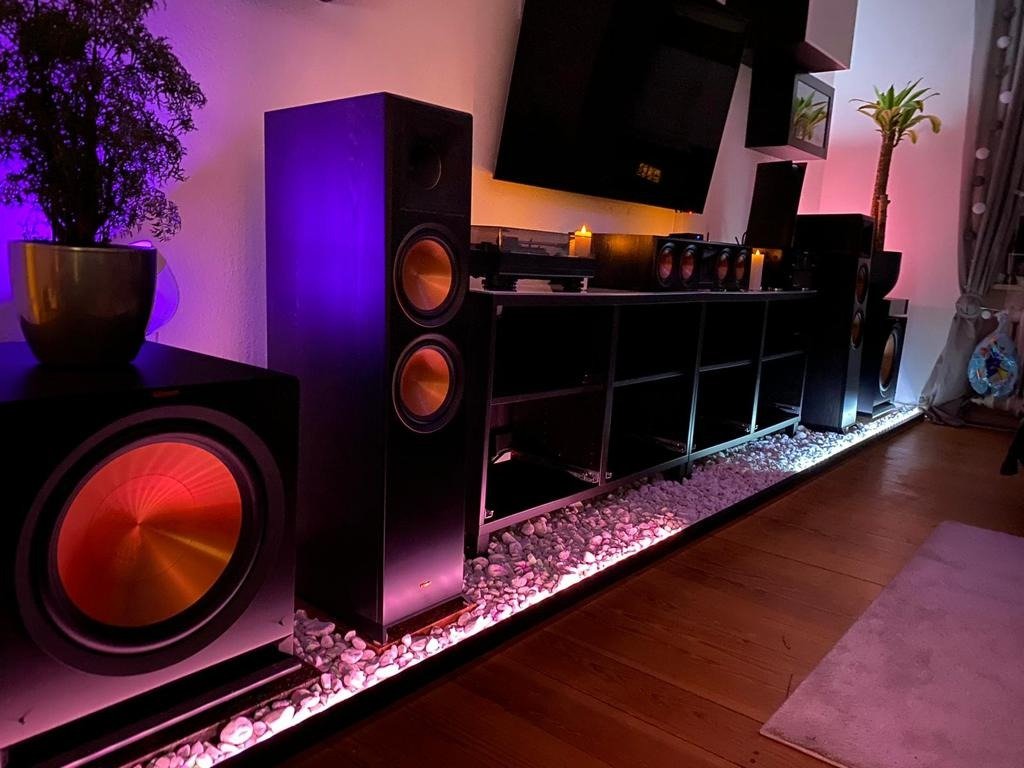
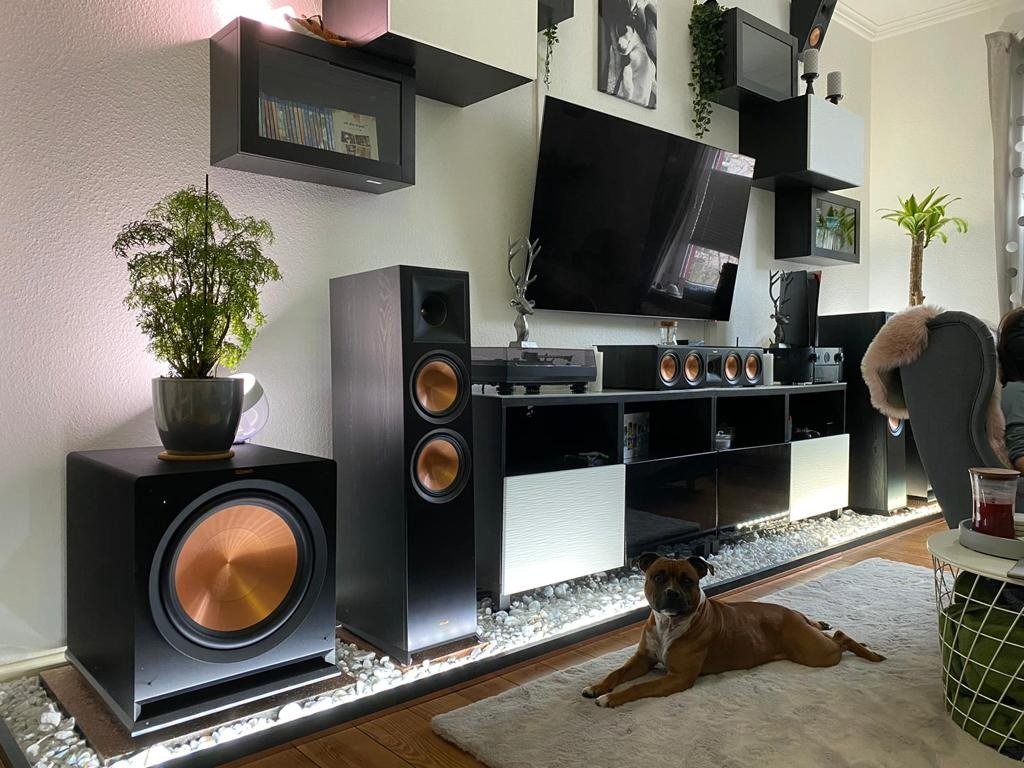
The Klipsch RP-8000F is a Reference Premiere series floorstander designed for large rooms and buyers who want the maximum output that a horn-loaded design can deliver. The 1-inch titanium LTS vented tweeter paired with a hybrid Tractrix horn produces the highly detailed, dynamic high-frequency response Klipsch fans love, while dual 8-inch spun copper Cerametallic woofers move enough air to fill spaces where smaller towers would struggle.
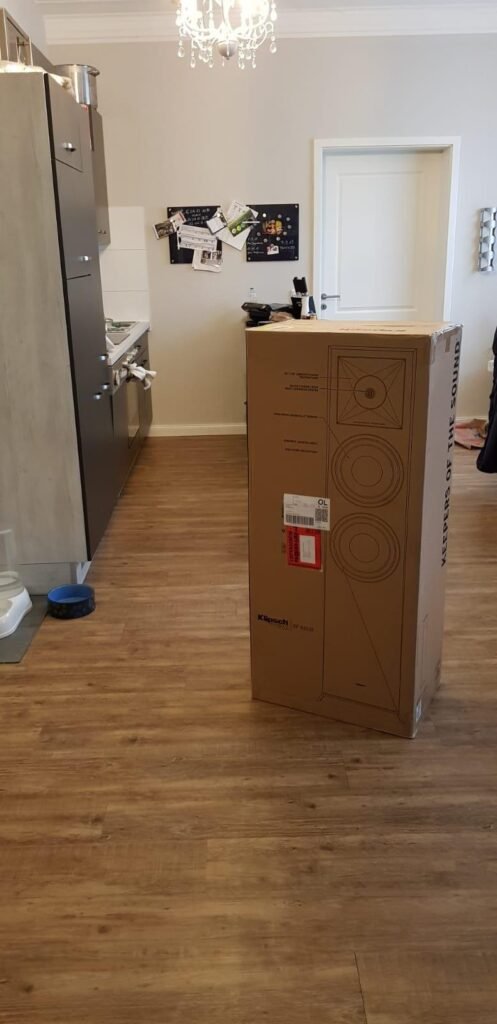
We may earn a commission when you buy through this link, at no additional cost to you.
The Cerametallic woofer material combines ceramic and metallic properties for a stiff, light cone that delivers punchy bass without distortion at high volumes. The rear-firing Tractrix port extends low-frequency response, though this design requires several inches of clearance from rear walls to avoid boomy bass. Sensitivity is typically high across the Klipsch lineup, which means these towers achieve loud volumes with modest amplifier power.
Dual binding posts allow bi-wiring or bi-amping for enthusiasts who want to separate the amplification for the tweeter and woofers, which can reduce intermodulation distortion in high-end systems. The removable magnetic grille lets you display the drivers for a more industrial look or cover them for a cleaner appearance, and the removal-and-attachment is simple without exposed grille pegs.
Speaker sensitivity, measured in decibels at one meter with one watt of input, indicates how loud a speaker will play with a given amount of amplifier power. High-sensitivity designs like Klipsch’s Reference Premiere series achieve reference volume levels with modest amp power, making them a good match for tube amplifiers or lower-powered receivers. Lower-sensitivity speakers require more powerful amplification to reach the same output levels.
This is the top pick for buyers with medium to large rooms who want the dynamic, forward Klipsch sound signature at reasonable volumes. If your room is small, if you cannot provide rear wall clearance, or if you prefer a more laid-back sound presentation, other designs will suit you better.
Buyers with small rooms or those who cannot provide 6 or more inches of rear wall clearance for the rear port.
We may earn a commission when you buy through this link, at no additional cost to you.
The Polk Reserve R700 represents Polk's push into serious audiophile territory with a Pinnacle Ring Radiator tweeter design that departs from the conventional dome tweeter approach. The ring radiator geometry improves high-frequency dispersion and reduces distortion at high output levels, delivering ultra-clear highs with the kind of detail typically associated with much more expensive speakers.
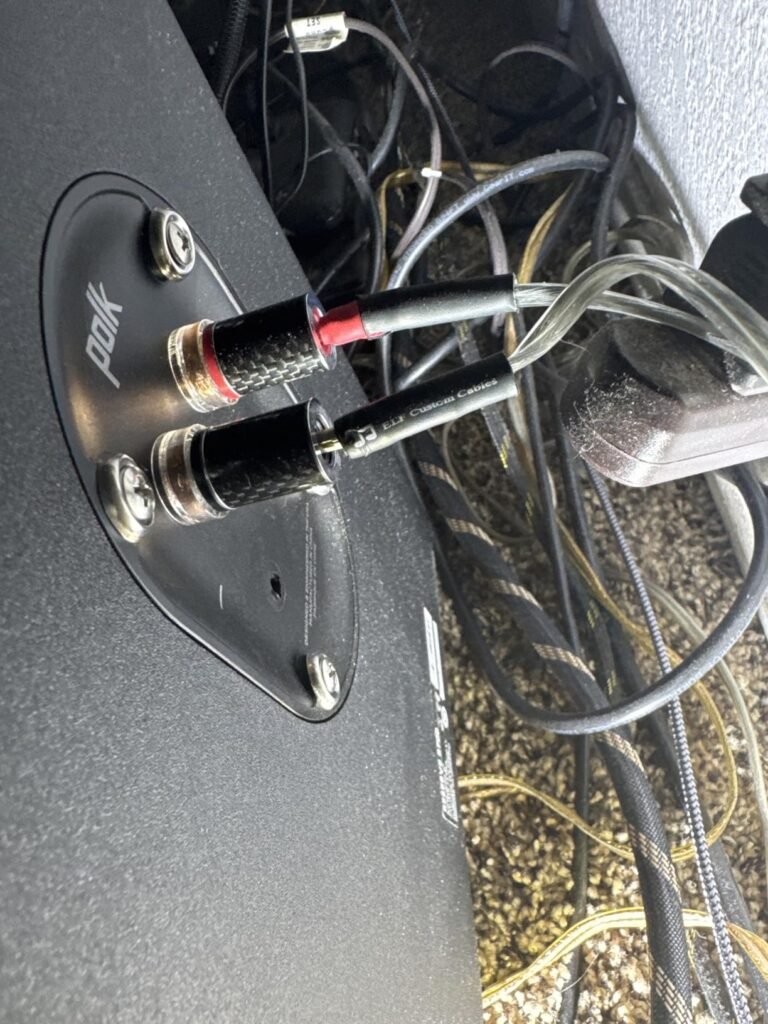
We may earn a commission when you buy through this link, at no additional cost to you.
The dual 6.5-inch Turbine Cone woofers use a molded pattern designed to increase cone rigidity without adding mass, which improves midrange clarity and reduces cone breakup at high volumes. Below them, dual 8-inch long-throw drivers deliver the bass, and the down-firing Power Port 2.0 with X-Port Technology minimizes port noise while producing clean, distortion-free low-frequency output that suits both movies and music.
Hi-Res Audio Certification, Dolby Atmos support, and IMAX Enhanced certification make this tower suitable for the most demanding modern content. Support for lossless formats like DSD, FLAC, WAV, ALAC, and MQA means these speakers can reveal the full quality of audiophile-grade streaming and downloaded music. The cross-braced Reserve series cabinet minimizes internal resonances that would otherwise color the sound.
The cabinet is a critical part of any speaker’s sound, because unbraced cabinets vibrate along with the drivers and add unwanted coloration to the audio. Cross-bracing stiffens the cabinet internally, forcing the drivers to move air rather than the cabinet walls. On premium speakers like the R700, careful bracing translates to tighter bass, cleaner midrange, and better imaging than similarly priced speakers with less attention to cabinet construction.
This is the top pick for premium home theater builders who want a tower that also excels at high-resolution music listening. If your budget is more modest or you do not have a hi-res source or IMAX Enhanced content, the Monitor XT60 or Signature Elite ES60 offers most of the useful features at a lower price.
Buyers on a modest budget or those without a high-quality receiver capable of driving premium speakers to their potential.
We may earn a commission when you buy through this link, at no additional cost to you.
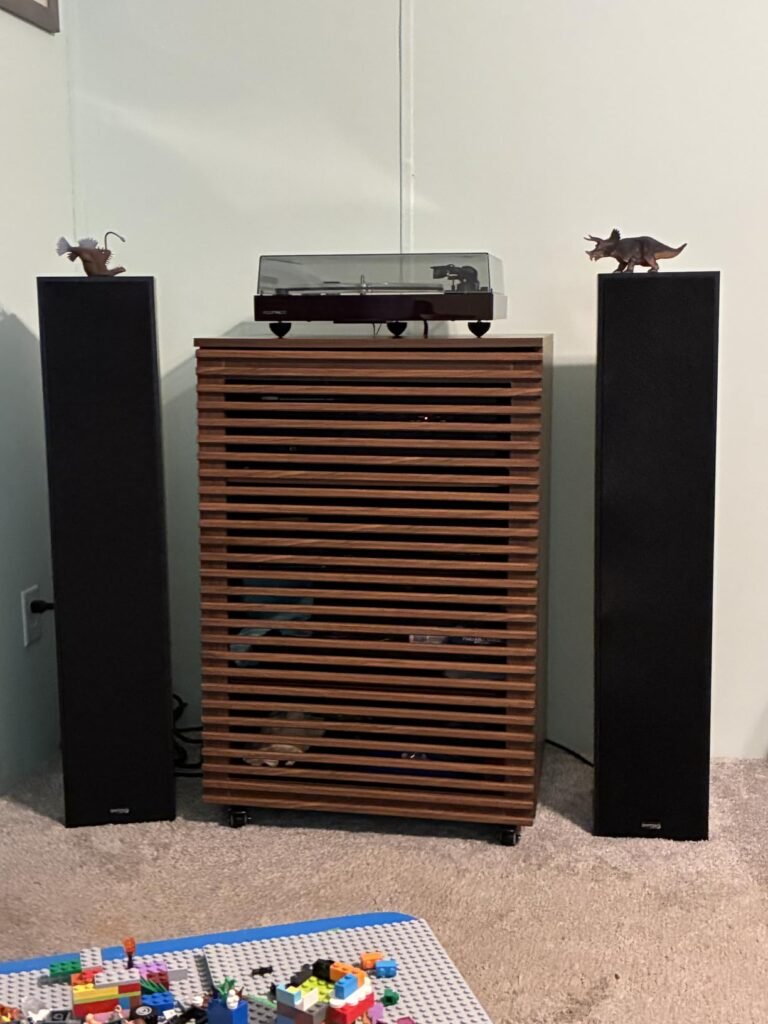
The Dayton Audio Classic T65 delivers an impressive amount of speaker for the money, offering a full 39-inch bass reflex cabinet with dual 6.5-inch woofers and a 1-inch silk dome tweeter sold as a matched pair. Dayton Audio has built a strong reputation among DIY audio enthusiasts and value-focused shoppers by offering solid components without the marketing premium of larger brands.
We may earn a commission when you buy through this link, at no additional cost to you.
The silk dome tweeter is a smart choice at this price point because silk domes tend to sound smoother and less fatiguing than metal domes on extended listening, particularly with modestly powered amplifiers or budget receivers. The tweeter is positioned at ear level thanks to the tall cabinet, which improves imaging and reduces the need to angle the speakers upward toward your listening position.
Dual 6.5-inch custom poly woofers paired with the large bass reflex cabinet generate punchy bass with genuine room-filling capability. The 150-watt power handling handles typical AV receivers without concern, and the gold-plated binding posts support banana plug connections for high-quality speaker cables. Real crossovers distribute the audio signal accurately between the drivers rather than relying on simplistic filtering.
Silk dome tweeters have a naturally smooth, non-fatiguing sound signature that tends to be more forgiving with modest amplification and compressed source material. Metal dome tweeters can sound more detailed at their best, but they can also sound bright or harsh with lesser electronics. For budget systems where you may not have reference-grade amplification, silk tweeters often deliver a more enjoyable listening experience.
This is the smart pick for value-focused buyers who want a proper tower pair without the premium branding costs. If aesthetics are a major factor in your buying decision or if you want to build a matched multi-channel system with a wide range of accessories, larger brands offer more ecosystem options.
Buyers who prioritize premium finishes or want to expand into a matched multi-channel home theater ecosystem.
We may earn a commission when you buy through this link, at no additional cost to you.
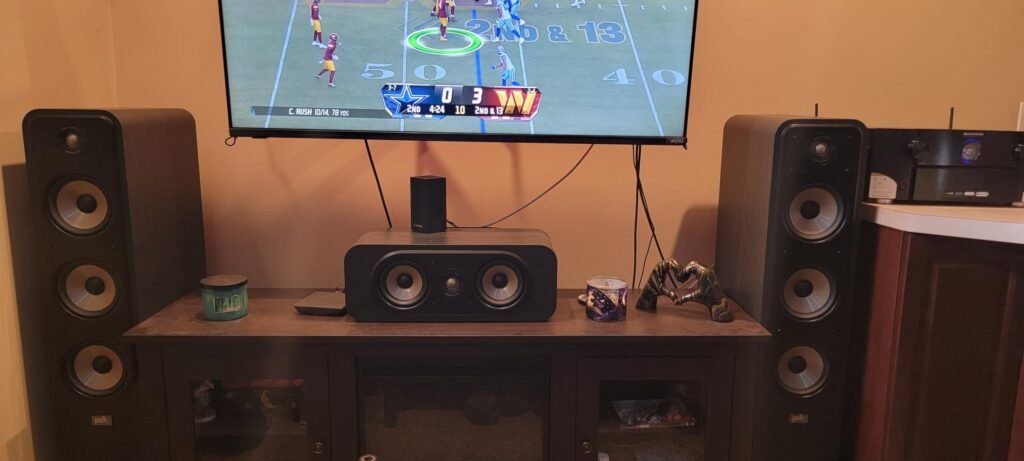
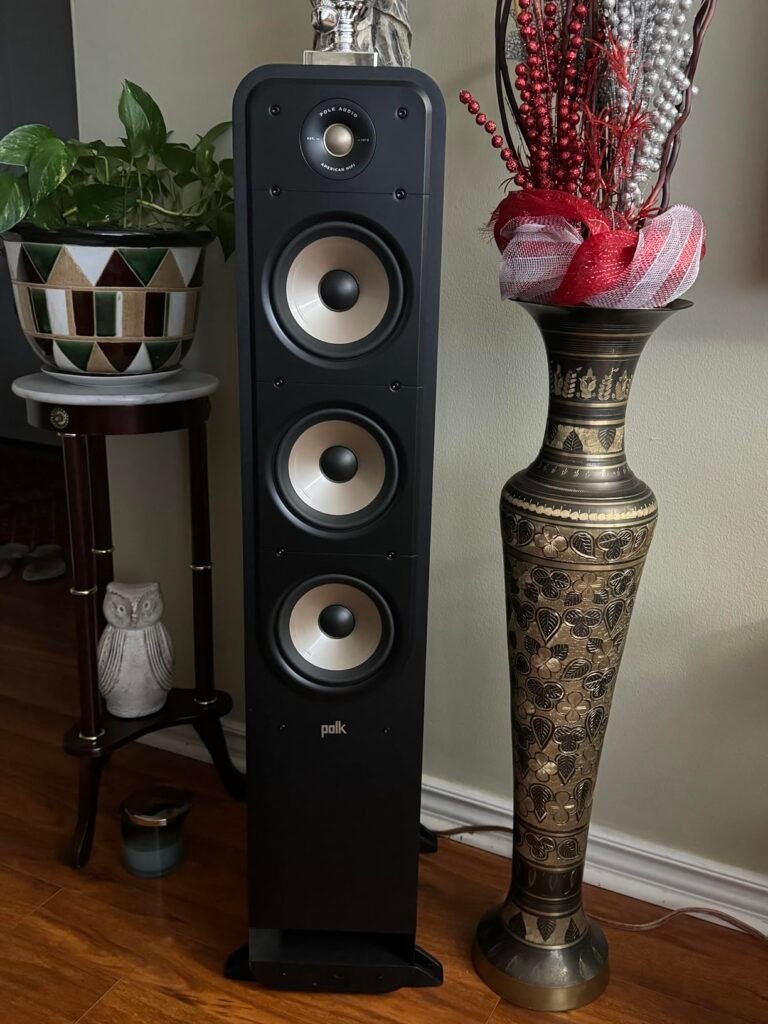
The Polk Signature Elite ES60 packs three 6.5-inch woofers into a slim, elegantly styled cabinet that fits well in modern living rooms where speaker aesthetics matter as much as sound quality. The 2.5-way Cascading Crossover design uses one woofer for midrange duties while the other two focus on bass, delivering full-range sound without needing a subwoofer for casual listening.
We may earn a commission when you buy through this link, at no additional cost to you.
Polk’s Power Port Technology is the standout engineering feature at this price point, delivering claimed 3 dB louder bass than traditional ported speakers while minimizing the port turbulence that causes chuffing noises at high volumes. This translates to cleaner low-frequency reproduction with tighter, more articulate bass than the driver size alone would suggest.
The high-sensitivity design combined with 4- and 8-ohm compatibility makes these towers easy to drive with a wide range of receivers and amplifiers. Dual gold-plated 5-way binding posts ensure a solid, low-loss connection with your chosen speaker cables, and rubber feet designed for both carpet and hard floors provide stable placement in any room. The Signature Elite series is timbre-matched with matching center and surround speakers for cohesive home theater systems.
A 2.5-way design uses multiple woofers where one handles both bass and midrange while additional woofers handle only bass frequencies. This adds low-end output without the complexity of a separate midrange driver, and it works particularly well in slim tower cabinets where a dedicated midrange chamber would not fit. The result is more bass than a true two-way design with cleaner midrange than a full three-way that shares midrange duties across multiple drivers.
This is the right pick for buyers who want modern aesthetics, three-woofer bass output, and easy amp compatibility in a room where the speakers will be visible. If you need horn-loaded dynamics for a large room or want a matched pair sold together, other options in this guide will suit you better.
Buyers who want a matched pair sold together or need the maximum output for very large listening rooms.
We may earn a commission when you buy through this link, at no additional cost to you.
Selecting the right floorstanding speaker depends on your room size, receiver capabilities, listening preferences, and whether you prioritize movies, music, or both. This section covers the key factors that separate a speaker you love from one that fights your system.
Room size dictates how much acoustic output you actually need from your speakers. A small room of 150 square feet or less can be adequately filled by compact tower speakers with 5.25 or 6.5-inch woofers, while medium rooms of 200 to 400 square feet benefit from dual 6.5-inch or 8-inch woofers. Large rooms exceeding 400 square feet typically require dual 8-inch woofers or multiple driver configurations to deliver reference-level output without straining the speakers or the amplifier.
Sensitivity ratings tell you how efficiently a speaker converts amplifier power into acoustic output. High-sensitivity designs like Klipsch’s Reference series achieve reference volume with modest power, which is ideal for smaller receivers or tube amplifiers. Lower-sensitivity speakers need more powerful amplification to reach the same output levels, which is worth considering if you already own a specific receiver or amp.
Match speaker size and sensitivity to your room rather than defaulting to the biggest speakers you can afford. Oversized speakers in small rooms can sound boomy and overwhelming, while undersized speakers in large rooms will strain to fill the space and may distort at volume.
Driver configuration affects how a speaker distributes the frequency range across its various drivers. Two-way designs use a single woofer and tweeter with one crossover point, keeping things simple but asking the woofer to handle both bass and midrange. Three-way designs add a dedicated midrange driver, which typically improves vocal and instrument clarity. Some premium designs like the SVS Prime Tower use isolated midrange chambers to prevent bass interference from affecting the midrange output.
Crossover quality is often overlooked but has an enormous impact on sound quality. A well-designed crossover ensures smooth handoffs between drivers, coherent phase behavior, and accurate frequency response at the crossover points. Premium speakers invest in higher-quality crossover components and more sophisticated designs, which is one reason speakers with similar driver counts can sound remarkably different.
For music-focused systems, prioritize three-way or 2.5-way designs with well-implemented crossovers. For home theater use, two-way designs paired with a subwoofer often deliver excellent results at lower cost.
Tweeter design significantly affects a speaker’s overall sound signature and how it handles vocals, cymbals, and other high-frequency content. Silk dome tweeters produce a smooth, warm high-frequency response that tends to be forgiving of imperfect recordings and modest amplification. Aluminum and titanium dome tweeters deliver more detail and extension but can sound bright or harsh with lesser electronics. Horn-loaded compression drivers like Klipsch’s Tractrix horns provide high sensitivity and dynamic impact but present a very forward, present sound signature.
Ring radiators and specialized designs like Polk’s Pinnacle Ring Radiator combine features from multiple tweeter types to reduce distortion and improve dispersion. Super tweeters extend response above 20 kHz for hi-res audio compatibility, though the audible benefit is subtle and program-dependent. Auditioning speakers with familiar music is the most reliable way to determine which tweeter type matches your preferences.
Choose silk tweeters if you value long-listening comfort and use modest electronics. Choose metal or horn-loaded tweeters if you prioritize detail retrieval and dynamic impact and have quality amplification to match.
Tower speakers vary significantly in how deep and how loud their bass extension reaches. Cabinet volume, woofer size, and port design all contribute to bass performance. Larger woofers move more air and generally produce deeper bass, though a well-designed 6.5-inch driver in a proper cabinet can outperform a poorly designed 8-inch driver. Passive radiators extend bass response without port noise, which is particularly useful in smaller rooms where boomy bass would be a problem.
Port design affects both bass extension and placement flexibility. Front-firing ports like those on the Klipsch R-26FA allow closer placement to rear walls without introducing port turbulence, while rear-firing ports require more clearance behind the speaker but can produce cleaner extension when properly positioned. Down-firing ports on some designs like the Polk Reserve R700 use the floor as a reflector to extend response.
Consider your room and placement constraints when evaluating port design. Rear-ported speakers in tight spaces often benefit from a subwoofer to handle deep bass while the tower handles midrange and upper bass without port coloration.
Speaker impedance affects how much current an amplifier must supply to drive the speaker. Most tower speakers are rated at 6 or 8 ohms nominal impedance, though actual impedance varies with frequency. Higher impedance loads are easier for amplifiers to drive, while lower impedance loads demand more current and can stress underpowered receivers. Check your receiver’s specifications to confirm it supports the speaker impedance you plan to buy, particularly for 4-ohm designs.
Power handling ratings indicate how much amplifier power a speaker can handle safely. Continuous power handling matters more than peak power for real-world use, since sustained high volume can damage speakers rated for only brief peaks. Match your receiver’s continuous power output to the speaker’s continuous power handling for a balanced, reliable system.
For most home theater and music applications, receivers rated between 75 and 150 watts per channel work well with typical tower speakers. Underpowered amplifiers can actually damage speakers through clipping distortion, so err toward more power rather than less within reason.
Building a complete home theater requires more than just the front tower speakers. A cohesive system includes a matched center channel for dialogue, surround speakers for effects, a subwoofer for deep bass, and optional height speakers for Dolby Atmos. When you buy tower speakers as part of a system, staying within one manufacturer’s timbre-matched lineup ensures all channels sound like they belong together during panning effects and multi-channel music.
Dolby Atmos and DTS:X compatibility depends on your receiver, not the tower speakers themselves, but towers with integrated upfiring drivers like the Klipsch R-26FA add height channels without needing separate speakers. If you already have a great pair of towers, height modules that sit on top of your existing speakers can add Atmos capability without replacing the main channels.
Plan your system holistically rather than piecemeal. Buying towers that match a full ecosystem of compatible speakers gives you a clear upgrade path and ensures long-term compatibility as your system grows.
Position your tower speakers thoughtfully to get the best sound from your investment. Place them equidistant from your primary listening position, typically 6 to 10 feet apart with the same distance from your seat, forming an equilateral triangle. Angle them slightly inward toward the listening position for improved imaging, and keep them at least a foot away from side walls to reduce reflections. Rear-ported speakers need 6 to 18 inches of clearance from the back wall to avoid boomy bass, while front-ported designs are more forgiving of tight placement.
Break in your new tower speakers by playing music at moderate volumes for the first 20 to 50 hours of use. The driver suspensions loosen up during this period, which typically results in slightly improved bass response and smoother midrange. During break-in, avoid pushing the speakers to maximum volume, and vary the music between different genres to exercise the full frequency range. After break-in, the speakers will sound their best and remain consistent for many years of use.
Maintain your speakers by keeping them clean and protected from environmental hazards. Dust the cabinet with a soft, dry cloth to prevent buildup, and vacuum the grilles gently to remove trapped particles. Avoid placing speakers in direct sunlight, next to heating vents, or in areas with high humidity, as these conditions can degrade cabinet finishes and drivers over time. Check speaker connections periodically to ensure tight, corrosion-free contact at the binding posts, and use quality speaker wire appropriate for your run length to preserve signal integrity.
Not always, but a subwoofer significantly improves home theater and music performance in most systems. Tower speakers with dual 8-inch woofers can produce deep bass, but a dedicated subwoofer extends response into the lowest octaves that towers physically cannot reach. For music-focused listening at moderate volumes, quality towers alone may be sufficient. For home theater with movie soundtracks, a subwoofer is essentially required to fully experience low-frequency effects.
Most tower speakers work well with AV receivers rated between 75 and 150 watts per channel at their rated impedance. High-sensitivity speakers like Klipsch models require less power than lower-sensitivity designs. Verify that your receiver supports the speaker impedance and has enough channels for your intended setup. A 5.2 or 7.2 channel receiver handles most home theater configurations, while dedicated stereo amplifiers work well for music-only systems.
Buy as a matched pair whenever possible to ensure the two speakers are tonally identical. Some models are sold as singles to allow flexible configurations, particularly for home theater setups where you might buy two towers for front channels and later add matching surrounds. If your model is sold as a single, order both speakers from the same source at the same time to increase the likelihood of matched production batches.
A good starting point is to place towers 6 to 10 feet apart with your listening position forming an equilateral triangle. This means if your speakers are 8 feet apart, you should sit approximately 8 feet from each speaker. Adjust based on room size and listening preference. Wider placement creates a more expansive soundstage, while closer placement improves center imaging for solo listeners.
Tower speakers typically produce more bass and higher output than bookshelf speakers due to their larger cabinet volume and multiple drivers. Bookshelf speakers on stands can rival towers in midrange and treble quality, especially at higher price points, but they usually need a subwoofer for full-range performance. Choose towers for maximum standalone performance and bookshelves for smaller rooms or when placement flexibility matters.
Dolby Atmos is an object-based surround sound format that adds height channels for overhead effects. You need either dedicated ceiling speakers, upfiring modules on top of your existing speakers, or towers with integrated upfiring drivers like the Klipsch R-26FA. Your AV receiver must also support Atmos processing. The effect is most impressive with movies and games that include native Atmos mixes.
Well-maintained quality tower speakers can last 20 years or more with normal use. Drivers may need surround refoaming after 15 to 25 years depending on quality and use conditions. Modern speakers with butyl rubber surrounds and quality components tend to outlast older foam-surround designs. Protect speakers from extreme temperatures, humidity, and physical damage to maximize their lifespan.
You can mix brands, but timbre matching becomes difficult, which can make panning effects and multi-channel music sound inconsistent. Sticking with one manufacturer's matched lineup ensures the center, surrounds, and towers share the same tonal character. If you must mix brands, at least keep the front three speakers (left, center, right) matched, since these carry the most dialogue and directional information.
Bi-wiring uses two separate speaker cables from a single amplifier to feed the tweeter and woofer sections of a speaker independently. It can theoretically reduce intermodulation between drivers, though the audible benefit is debated. If your speakers have dual binding posts and you have spare cable, bi-wiring costs nothing extra to try. Bi-amping, which uses separate amplifier channels for tweeters and woofers, offers more substantial improvements but requires additional amplification.
After 20 to 50 hours of moderate-volume playback, you should notice that the bass sounds slightly deeper and more articulate, the midrange becomes smoother, and the overall sound feels more coherent. The changes are subtle rather than dramatic. Break-in exercises the driver suspensions and settles the speaker components into their final operating state, at which point the sound stabilizes for the long term.
The Klipsch Reference R-26FA stands out as the strongest overall choice for buyers building a modern home theater from scratch. The pair configuration, integrated Dolby Atmos elevation drivers, and Klipsch's signature dynamic sound signature deliver a complete solution that would otherwise require separate front channels and height modules. At its price point, it represents genuinely impressive value for immersive movie sound.
For audiophiles and premium home theater builders, the SVS Prime Tower pair and Polk Reserve R700 offer reference-grade performance with dedicated midrange chambers and advanced tweeter designs. Budget-focused buyers should consider the Polk Monitor XT60 or Dayton Audio T65 pair for excellent value, while buyers wanting a complete all-in-one solution can look at the powered Rockville TM150B for parties and casual listening.
Your best choice ultimately depends on room size, receiver quality, and whether you prioritize movies or music. Match speaker output to your room, choose a tweeter design that suits your listening preferences, and plan your system holistically to ensure timbre-matched surrounds and center channels down the road. The right pair transforms both movie nights and music sessions in ways that no soundbar or bookshelf setup can match.