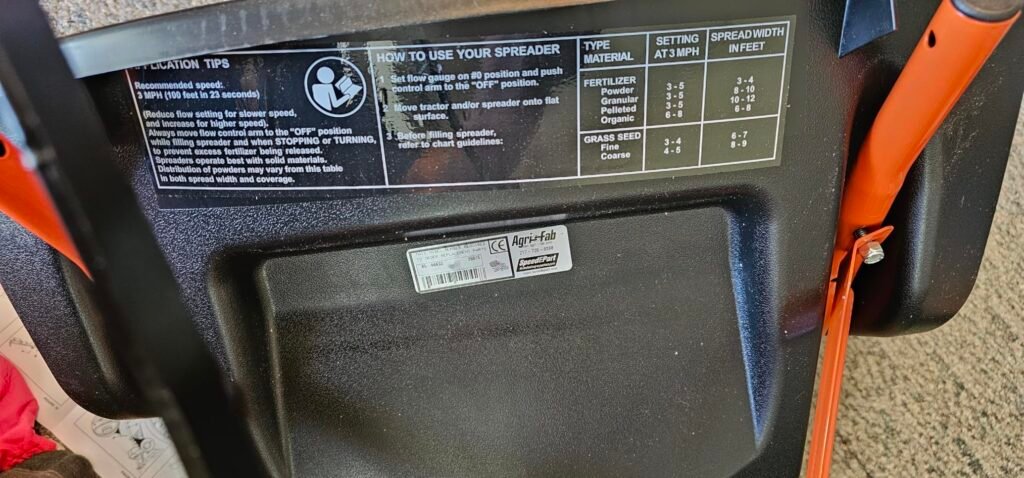
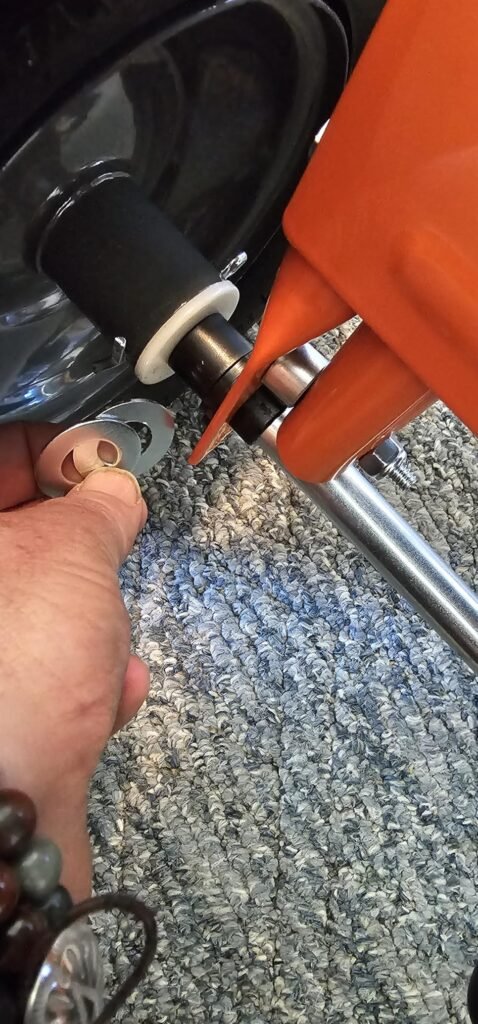
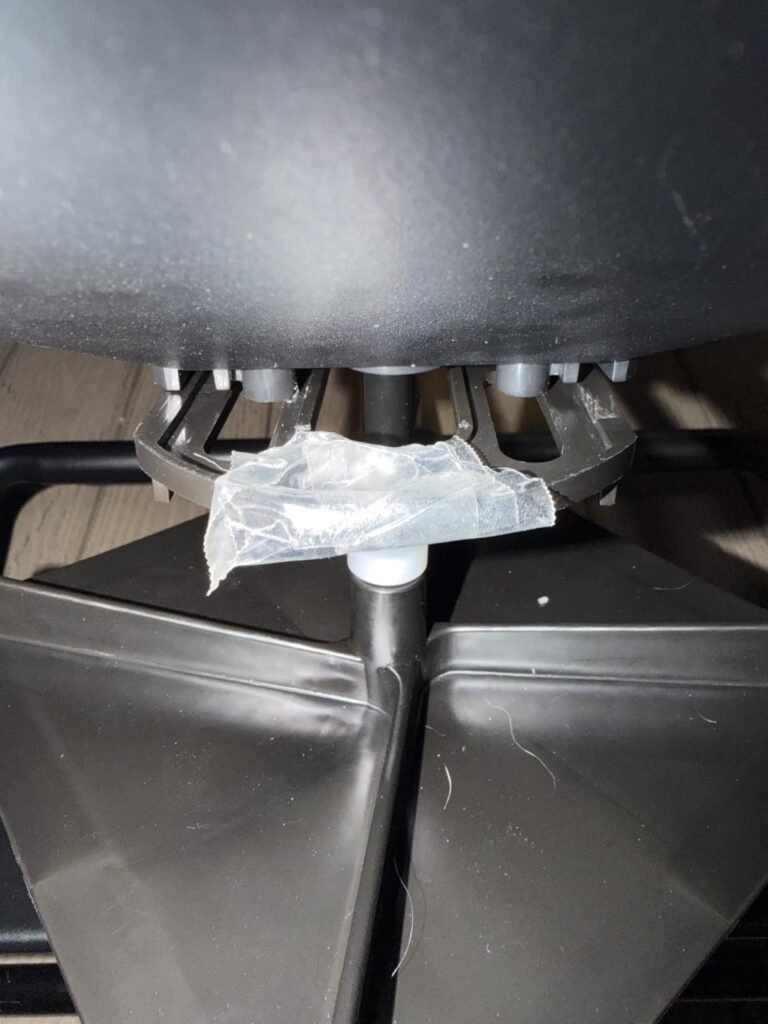
Garvee 130 lb
8.4Editor score130 lb capacity
10 ft spread
10-inch pneumatic tires
Powder-coated steel frame
Find the right tow behind spreaders for 2026. We compare 5 standout options by build quality, useful features, owner feedback, value, and everyday trade-offs.
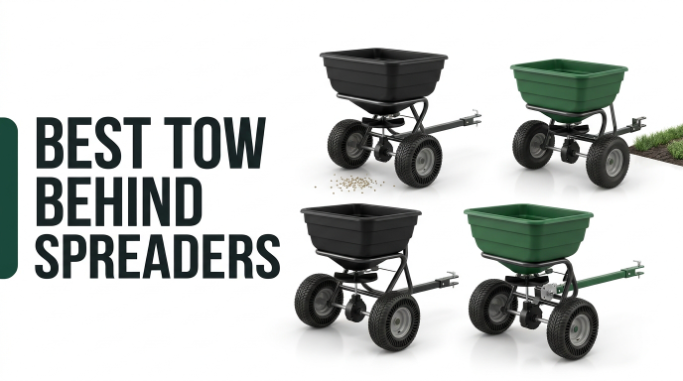
Find the right tow behind spreader for your property in 2026. We compare 5 standout pull-behind models by the factors that matter most for lawn and land care: hopper capacity, spread width, tire traction, hitch compatibility, flow control precision, frame durability, and how each unit handles seed, fertilizer, salt, and ice melt across different terrain.
Tow behind spreaders range from basic broadcast units for suburban lawns to heavy-duty combination aerator-spreaders for larger acreage. The differences in hopper size, spread pattern consistency, and terrain capability directly affect how many passes you need and how evenly your material lands on the ground.
This guide covers budget-friendly 130-pound broadcast models, mid-range units with advanced flow control, and premium combination spreaders that aerate and seed in a single pass. Use the comparison table, reviews, and buying guide below to match a spreader to your property size, towing vehicle, and seasonal application needs.
We compared 5 tow behind spreaders using the details that actually help a buyer decide: hopper capacity, spread width, tire size and type, frame material and corrosion resistance, flow control adjustability, hitch compatibility with common tractors and ATVs, terrain handling, seasonal versatility, assembly complexity, and owner feedback. The notes focus on practical trade-offs so each pick connects to how people actually spread seed, fertilizer, and ice melt across lawns, fields, and driveways throughout the year.

Compare key features, scores, and current prices side by side. A shorter feature list means fewer details were available, not necessarily fewer capabilities.
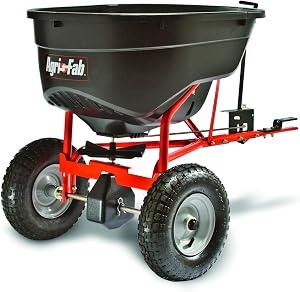


The Agri-Fab 130 lb broadcast spreader is the most established option in this comparison, built by a company with decades of experience in lawn and garden equipment out of Sullivan, Illinois. The 130-pound hopper holds enough material to cover roughly half an acre or 25,000 square feet in a single fill, which significantly reduces the number of stops and reloads during large fertilizing or seeding jobs.

We may earn a commission when you buy through this link, at no additional cost to you.
The 10 to 12-foot spread width is one of the widest in this group, meaning fewer passes across the lawn and more uniform coverage with less risk of striping or missed spots. The enclosed gear house protects the drive mechanism from moisture, debris, and corrosive fertilizer dust, which is one of the most common failure points on cheaper spreaders that leave gears exposed to the elements.
The universal hitch connects to most riding mowers and lawn tractors from brands like Craftsman, Husqvarna, and Cub Cadet without adapters. The 13 by 4-inch pneumatic tires roll smoothly over uneven ground and provide enough flotation to avoid tearing up soft lawns during spring applications. The one-inch steel tubing frame and poly hopper resist corrosion season after season, even when the spreader sits outside between uses.
Fertilizer and salt are highly corrosive materials that eat away at exposed metal components over time. An enclosed gear house seals the drive mechanism away from this chemical exposure and from moisture, grass clippings, and dirt that accumulate during use. Spreaders with open gears tend to develop stiff or seized mechanisms after a few seasons of heavy use, while enclosed designs maintain smooth operation much longer.
This is the strongest all-around pick for homeowners with medium to large lawns who want a reliable, no-nonsense broadcast spreader that handles seed, fertilizer, and ice melt throughout the year. The higher price reflects the build quality and American assembly. If you need a spreader on a tighter budget or want advanced features like auto-stop technology, the Garvee or CHAPIN models offer different trade-offs.
Buyers on a strict budget or those who need a combination aerator-spreder for soil preparation.
We may earn a commission when you buy through this link, at no additional cost to you.
The Garvee tow-behind spreader delivers the same 130-pound hopper capacity as the Agri-Fab at roughly half the price, making it the most compelling value in this comparison. For homeowners who need serious capacity for large lawn projects but don't want to invest in a premium unit, this spreader covers the fundamentals well.

We may earn a commission when you buy through this link, at no additional cost to you.
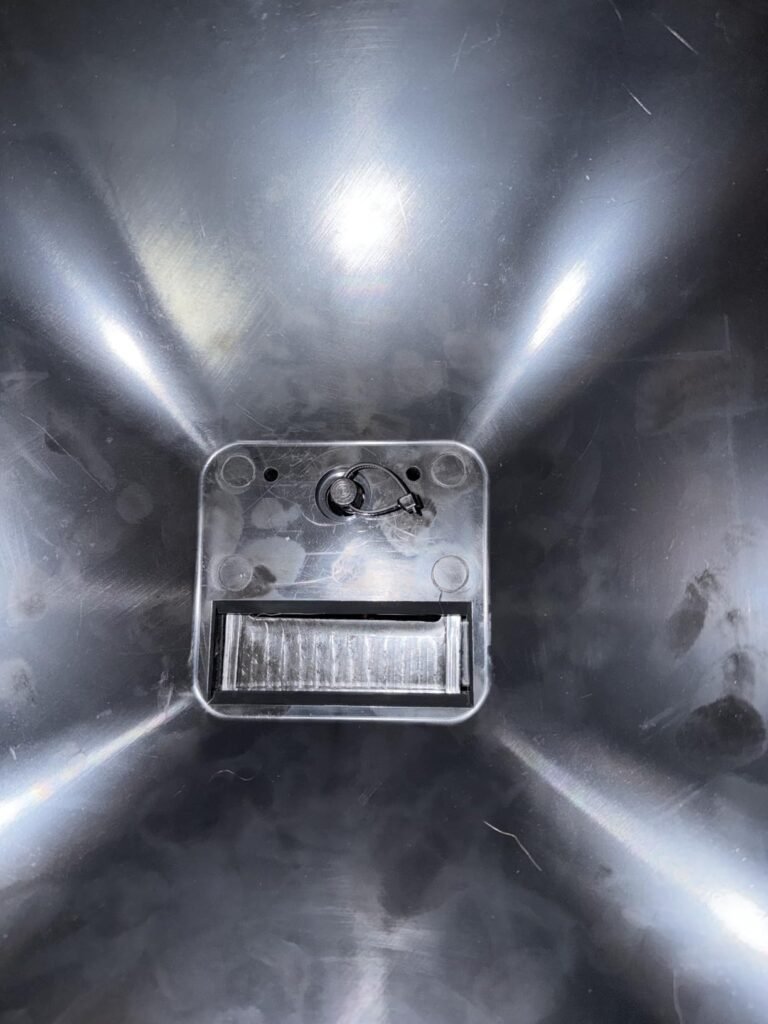
The adjustable flow control handle lets you dial the spread width from zero to 10 feet, which is useful when working near garden beds, driveways, or property lines where overspray would waste material or damage landscaping. The spreader plate delivers consistent distribution across the selected width, and the included sieve helps filter out clumps of fertilizer or ice melt that could clog the discharge opening and create uneven coverage patterns.
The powder-coated steel frame resists corrosion from fertilizer salts and winter road treatments, and the included waterproof cover protects the hopper when the spreader is stored outside between seasons. The 10-inch pneumatic tires handle most lawn terrain adequately, though they are smaller than the 12.5 and 13-inch tires on competing models and may struggle more in deep ruts or very soft ground. The long tow bar connects to lawn tractors, ATVs, and UTVs for flexible towing options.
Clumpy fertilizer and caked ice melt are among the most common causes of uneven spreading and clogged discharge ports. A built-in sieve breaks up or filters out these clumps before they reach the spreader plate, which results in a more uniform application and fewer frustrating stops to clear blockages. It is a small feature that saves real time and material during large applications.
Choose the Garvee if you want full-size 130-pound capacity without the premium price tag and your terrain is relatively flat and well-maintained. The included waterproof cover and sieve are genuine value-adds that competing models often skip. If your property has rough terrain or you want the widest possible spread pattern for faster coverage, the Agri-Fab or AugFir will handle those conditions better.
Properties with very rough or uneven terrain where larger tires provide better flotation and traction.
We may earn a commission when you buy through this link, at no additional cost to you.
The AugFir tow-behind spreader targets buyers who need to cover rough, uneven terrain where smaller-tired spreaders bounce and skip. The 12.5-inch pneumatic tires are among the largest in this comparison, providing better flotation over soft ground, gravel driveways, and snow-covered surfaces during winter ice melt applications.
We may earn a commission when you buy through this link, at no additional cost to you.
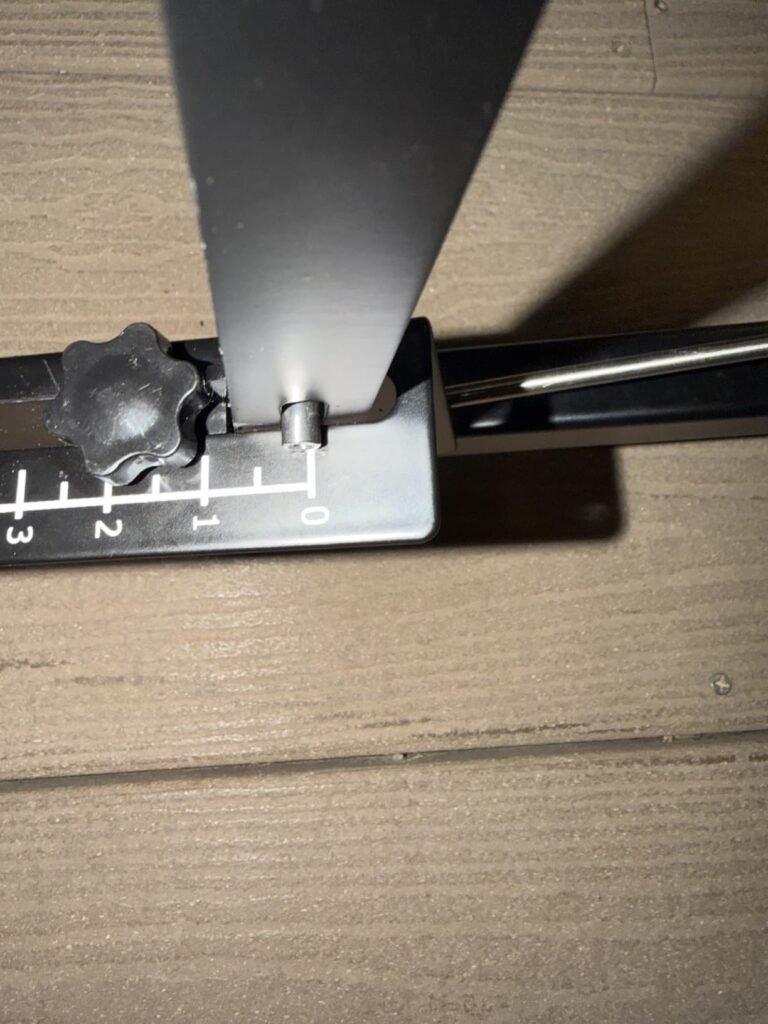
The five adjustable discharge ports work with the trapezoidal hopper design to create a more controlled and even distribution pattern across the full 12-foot spread width. Multiple discharge openings reduce the chance of material funneling through a single point and creating heavy streaks, which is a common complaint with simpler single-port designs. The flow control lever lets you adjust the application rate to match different materials from fine grass seed to coarse ice melt.
A notable convenience feature is the included hitch extender and handle extension rod, which solve a real frustration many tow-behind spreader owners face: reaching the flow control lever from the tractor seat. The extended handle lets you open and close the hopper gate without stretching or stopping, which matters when you are making multiple passes across a large property. The universal hitch fits most lawn tractors, riding mowers, ATVs, and UTVs.
Smaller tires sink into soft ground and bounce over bumps, which causes the spreader plate to speed up and slow down irregularly. This variation translates directly into uneven material distribution, with heavy spots where the wheels bogged down and light spots where they bounced. Larger pneumatic tires roll more smoothly over the same terrain, keeping the spreader plate speed more consistent and the application more uniform.
This spreader is best suited for buyers with uneven or challenging terrain who prioritize tire size and reach-from-seat convenience. The lower owner rating suggests some buyers encountered assembly or quality control issues, so carefully follow the included step-by-step instructions and assembly video. Avoid overfilling the hopper, which the manufacturer specifically warns against, as excess weight can strain the gate mechanism.
Buyers who want the highest owner satisfaction rating or the simplest possible assembly process.
We may earn a commission when you buy through this link, at no additional cost to you.
The CHAPIN TurfPro 8622B is engineered for buyers who prioritize precise material application and minimal waste. The auto-stop technology is the headline feature: when the spreader stops moving, the material flow stops automatically, which prevents the piles of fertilizer or seed that accumulate at turnaround points and gate openings with conventional spreaders. This alone can save a meaningful amount of expensive fertilizer over the course of a season.

We may earn a commission when you buy through this link, at no additional cost to you.
The dual impeller system provides more even distribution than single-impeller designs by splitting the material stream across two spinning discs. Combined with 11 gate settings, this gives fine-grained control over application rates for different materials, from lightweight grass seed to heavier granular fertilizers. The 14-inch wide-tread pneumatic tires are the largest in this comparison, providing excellent traction and stability on farms, fields, and larger properties with uneven ground.
The powder-coated steel frame and enclosed bearings are built for demanding use, and the tow-behind hitch connects to standard ATV, UTV, and lawn tractor hitches. One important limitation is the 3.5 mph maximum operating speed, which means you need to tow slowly for accurate application. This spreader is also not recommended for use with zero-turn mowers, which limits compatibility for some buyers.
Conventional tow-behind spreaders continue dispensing material whenever the gate is open, even when the tractor is stopped at the end of a row or waiting to turn around. This creates concentrated piles that can burn grass and waste product. Auto-stop technology links the material flow to the wheel rotation, so the gate closes the moment the spreader stops moving. Over a full season of applications, this can reduce fertilizer usage by a noticeable percentage.
Choose the CHAPIN TurfPro if precise application rates and material savings are your top priorities, and you are willing to work at slower speeds for better accuracy. The auto-stop feature is genuinely useful for anyone who has dealt with fertilizer burn spots from pile-ups at turnaround points. If you need to spread rock salt, sand, or lime, this model is not compatible with those materials, and a simpler broadcast spreader will serve you better.
Buyers who need to spread rock salt, sand, lime, or pelletized lime, or those who use zero-turn mowers.
We may earn a commission when you buy through this link, at no additional cost to you.
The Brinly combination aerator-spreder is a fundamentally different tool from the other four options in this comparison. Instead of simply broadcasting material across the surface, it aerates the soil with 132 galvanized steel tine tips while simultaneously dropping seed, fertilizer, or lime directly into the freshly opened holes. This two-in-one approach saves significant time during fall overseeding and spring lawn renovation projects.

We may earn a commission when you buy through this link, at no additional cost to you.
The 40-inch working width and 8-inch diameter steel star wheels perforate compacted soil up to 2 inches deep, creating channels for air, water, and nutrients to reach the root zone. The included rigid steel weight tray holds up to 75 pounds of additional weight, which drives the tines deeper into hard or clay-heavy soils where lightweight aerators simply bounce off the surface. The patent-pending 3-D tine design resists bending even in heavily compacted ground.
The 100-pound all-steel hopper is smaller than the 130-pound hoppers on the broadcast-only models, but it is built from steel rather than poly to resist twisting and flexing under the weight of the aeration assembly. The calibrated flow control with an adjustable stop ensures accurate spread patterns, and the transport mode lever raises the 10-inch pneumatic wheels for crossing driveways and sidewalks without damaging the tines or the pavement.
Fall overseeding is the most common scenario where a combo aerator-spreder pays off. The traditional approach requires two separate passes: first with an aerator to open the soil, then with a spreader to broadcast seed. The Brinly does both in one pass, cutting your lawn time roughly in half for this critical seasonal task. For large properties where aeration and seeding each take an hour or more, that time savings adds up quickly.
This is the right choice for homeowners who want to combine aeration and seeding into a single pass and are willing to invest in a more complex, heavier piece of equipment. The 30-minute assembly is straightforward with the included universal hitch pin. If you only need to broadcast fertilizer or ice melt without soil preparation, a simpler broadcast spreader like the Agri-Fab or Garvee will cost less and weigh significantly less to tow and store.
Buyers who only need basic broadcast spreading for fertilizer or ice melt and do not need soil aeration.
We may earn a commission when you buy through this link, at no additional cost to you.
A tow behind spreader is one of the most time-saving tools you can add to your lawn care routine, but the wrong model leads to uneven coverage, wasted material, and frustration with clogged gates and flat tires. Use the factors below to match a spreader to your property size, terrain, towing vehicle, and the specific materials you plan to spread throughout the year.
Hopper capacity determines how much material you can load before needing to stop and refill. Common sizes range from 100 to 130 pounds for residential tow-behind models. A 130-pound hopper typically covers about half an acre of lawn with standard fertilizer rates, while a 100-pound hopper covers slightly less. For properties under one acre, either size works well with one or two refills per application. For larger properties of two acres or more, the larger hopper reduces downtime significantly.
Keep in mind that different materials have very different densities. A hopper full of lightweight grass seed holds far more square footage of coverage than the same hopper full of dense granular fertilizer or heavy ice melt. Check the application rate on your material’s packaging and calculate how many pounds you need per 1,000 square feet to estimate how many refills a given hopper size will require for your property.
For most suburban lawns under one acre, a 130-pound hopper provides the best balance of coverage and manageable weight. For smaller properties or combination units that carry additional aeration hardware, a 100-pound hopper is sufficient and keeps the overall tow weight lower.
Spread width determines how many passes you need to cover your lawn. A 10-foot spread width requires roughly twice as many passes as a 20-foot width on the same property, which doubles your time and increases the chance of overlap errors that cause striping. Most residential tow-behind spreaders offer 10 to 12 feet of spread width, which is a practical range for properties between a quarter acre and two acres.
Wider spread patterns are more efficient but also more susceptible to wind drift, which can carry lightweight seed or fine fertilizer granules off target on breezy days. If you frequently spread in windy conditions, a narrower 8 to 10-foot pattern gives you more control and less waste. Adjustable spread width is a valuable feature because it lets you narrow the pattern near property lines and garden beds while opening it up for wide-open areas.
Match spread width to your property layout. Open rectangular lawns benefit from the widest spread you can get. Properties with many obstacles, tight corners, and narrow strips between beds and fences work better with adjustable or narrower spread patterns.
Tire size and type directly affect how smoothly the spreader rolls and how consistently the spreader plate turns. Pneumatic tires filled with air provide better flotation on soft lawns and absorb bumps more effectively than solid plastic wheels. Common sizes range from 10 inches on budget models to 14 inches on heavy-duty units. Larger tires roll over ruts, roots, and uneven ground more smoothly, keeping the spreader plate speed consistent for even material distribution.
Tire width also matters. Narrow tires sink into soft ground and can tear up wet lawns during spring applications, while wider tires distribute the spreader’s weight over more surface area and leave fewer ruts. If your property includes gravel driveways, rough fields, or snow-covered surfaces for winter ice melt, larger and wider pneumatic tires provide the traction and flotation needed to keep the spreader moving steadily.
For flat, well-maintained lawns, 10-inch pneumatic tires are adequate. For rough terrain, soft ground, or multi-surface use including gravel and snow, prioritize 12.5-inch or 14-inch wide-tread pneumatic tires for smoother operation and less lawn damage.
Flow control determines how precisely you can regulate the amount of material leaving the hopper. Basic spreaders offer a simple open-close gate with a single lever, while more advanced models provide multiple gate settings or adjustable discharge ports that let you fine-tune the application rate for different materials. Grass seed requires a much smaller opening than granular fertilizer, and ice melt needs a wider flow than either.
The CHAPIN TurfPro takes precision further with 11 distinct gate settings and dual impellers that split the material stream for more even distribution. This level of control matters when you are applying expensive specialty fertilizers or pre-emergent herbicides where over-application wastes money and under-application reduces effectiveness. Simpler single-gate designs work fine for general-purpose use but require more guesswork when switching between materials.
If you spread a wide variety of materials throughout the year and want precise application rates, look for multiple gate settings or adjustable discharge ports. If you primarily spread one or two materials at standard rates, a simple flow control lever is sufficient and easier to operate.
Most tow-behind spreaders use a universal hitch pin that connects to the standard clevis or pin hitch found on riding mowers, lawn tractors, ATVs, and UTVs. However, hitch height and clearance vary between vehicles, and some spreaders sit too low or too high for certain tractor models. Check the hitch height of your towing vehicle and compare it to the spreader’s tow bar height before buying.
The length of the tow bar also affects maneuverability. Longer tow bars keep the spreader further behind the tractor, which reduces the risk of material bouncing onto the mower deck but increases the turning radius. Shorter tow bars are more maneuverable in tight spaces but may spray material onto the back of the tractor. Some models like the AugFir include a hitch extender to adjust the distance for different vehicles.
Verify that the spreader’s hitch type matches your vehicle’s hitch receiver. Most residential riding mowers use a simple pin hitch, while ATVs and UTVs may require a ball hitch adapter. Also confirm that your vehicle has enough towing capacity for the fully loaded spreader, which can weigh 200 pounds or more with a full hopper.
Tow-behind spreaders are exposed to some of the most corrosive materials in lawn care, including synthetic fertilizers, road salt, and ice melt. The frame material and finish determine how well the spreader resists this chemical attack over multiple seasons. Powder-coated steel frames provide the best corrosion resistance among common options, while bare steel rusts quickly when exposed to fertilizer salts and moisture.
Poly hoppers resist corrosion better than steel hoppers because plastic does not react with fertilizer chemicals or salt. However, steel hoppers are more rigid and resist flexing under heavy loads, which matters on combination units that carry additional weight from aeration hardware. The gear housing is another critical corrosion point: enclosed gear houses protect the drive mechanism from chemical exposure, while open gears corrode and seize more quickly.
For long-term durability, prioritize powder-coated steel frames, poly hoppers, and enclosed gear houses. If the spreader will be stored outdoors year-round, also look for models that include a waterproof cover or plan to purchase one separately to protect the hopper and mechanism from rain and UV damage.
A good tow-behind spreader should handle the full range of materials you need throughout the year: grass seed in spring, granular fertilizer in summer, herbicide treatments in fall, and salt or ice melt in winter. Not all spreaders are compatible with all materials, and using the wrong material in a spreader not designed for it can damage the mechanism or void the warranty.
The CHAPIN TurfPro, for example, explicitly warns against using rock salt, sand, sand mixes, pelletized lime, and lime powders, which limits its usefulness for winter driveway maintenance and certain soil amendment applications. Broadcast spreaders with simpler mechanisms and larger discharge openings generally handle a wider range of materials, including coarse salt and sand, without clogging or damage.
Before buying, make a list of every material you plan to spread throughout the year and verify that the spreader is compatible with all of them. If you need to spread salt and sand in winter, choose a model without material restrictions rather than a precision unit that limits what you can use.
Before each use, calibrate the flow control setting to match the application rate printed on your material’s packaging. Most fertilizer and seed bags include a spreader setting chart that corresponds to common models, but tow-behind spreaders often require a slightly different setting than push spreaders due to their faster ground speed and wider pattern. Start with a conservative setting, spread a test strip on a driveway or sidewalk where you can see the distribution pattern, and adjust up or down until the coverage looks even and matches the recommended rate.
After every use, empty any remaining material from the hopper and rinse the entire spreader with a garden hose, paying special attention to the gate mechanism, spreader plate, and impeller or discharge ports. Fertilizer and salt residue hardens quickly and can corrode metal parts or clog the gate if left sitting for even a few days. Allow the spreader to dry completely before storing, and apply a light coat of silicone spray to the gate hinge and flow control lever to prevent seizing between uses.
Store the spreader in a dry location out of direct sunlight when possible, and use a waterproof cover if outdoor storage is unavoidable. Check tire pressure on pneumatic tires at the start of each season and inflate to the recommended PSI for optimal flotation and rolling resistance. Inspect the hitch pin and tow bar connections for wear before each use, and tighten any loose bolts on the frame and gear housing to prevent rattling and misalignment during operation.
For properties under one acre, a 130-pound hopper with a 10 to 12-foot spread width handles most applications efficiently with one or two refills. For larger properties of two acres or more, the same hopper size still works but requires more frequent refills. The spread width matters more than hopper size for large properties because wider patterns reduce the number of passes and total application time significantly.
Yes, most tow-behind spreaders connect to ATVs and UTVs using the same universal hitch pin that fits lawn tractors. Verify the hitch height matches your vehicle and that the spreader's tow bar is long enough to clear the rear of the ATV. Some models include hitch extenders for better clearance. Also confirm your ATV has enough towing capacity for the fully loaded spreader weight.
Most tow-behind broadcast spreaders perform best at 2 to 4 mph, which is a slow walking pace. Faster speeds cause the spreader plate to spin too quickly and throw material unevenly, while slower speeds may not generate enough plate rotation for a full-width pattern. The CHAPIN TurfPro specifies a 3.5 mph maximum for optimal accuracy. Maintain a steady, consistent speed throughout each pass for the most uniform coverage.
Not all spreaders handle rock salt and coarse ice melt. Models with precision mechanisms like the CHAPIN TurfPro explicitly prohibit rock salt, sand, and lime because these materials can damage the impellers and gate. Simpler broadcast spreaders with larger discharge openings and fewer moving parts generally handle salt and ice melt without issues. Always check the manufacturer's material compatibility list before spreading anything other than standard fertilizer or seed.
Uneven spreading creates concentrated streaks that burn grass. To prevent this, calibrate the flow control before each application, maintain a steady towing speed, and overlap each pass by about 50 percent of the spread width to compensate for the lighter edges of the broadcast pattern. Avoid stopping with the gate open, as material piles up quickly at standstill. Auto-stop features like those on the CHAPIN TurfPro eliminate this problem entirely.
Yes, all tow-behind spreaders require some assembly out of the box, typically involving attaching the wheels, tow bar, hopper, and flow control mechanism. Assembly time ranges from about 30 minutes for simpler models to an hour or more for complex combination units like the Brinly aerator-spreder. Most models include detailed instructions, and some provide assembly videos. Basic hand tools like wrenches and screwdrivers are usually all that is needed.
Empty all remaining material from the hopper, then rinse the entire spreader thoroughly with a garden hose. Pay special attention to the gate mechanism, spreader plate, and any impellers or discharge ports where fertilizer residue accumulates. Allow the spreader to air dry completely before storing. Avoid using a pressure washer on bearings and gear housings, as high-pressure water can force moisture past seals and cause internal corrosion.
A combination unit like the Brinly is worth the investment if you regularly aerate and overseed your lawn, particularly in fall when both tasks are done within the same week. Combining them into a single pass cuts your lawn time roughly in half and ensures seed drops directly into the aeration holes for better germination. If you only aerate once every few years or hire it out, a standard broadcast spreader is more practical and costs significantly less.
A properly used tow-behind spreader should not damage your lawn. Pneumatic tires with adequate flotation distribute the spreader's weight gently across the turf. Avoid towing across very wet or saturated lawns, as the tires can leave ruts in soft soil. Also avoid sharp turns at high speed, which can tear grass. Using transport mode on combination units when crossing driveways prevents tine damage to both the pavement and the lawn.
The Agri-Fab 130 lb broadcast spreader stands out as the strongest overall choice for most homeowners with medium to large lawns. Its combination of 130-pound capacity, 12-foot spread width, enclosed gear house, and proven American-built construction delivers reliable performance across all four seasons of lawn care, from spring seeding through winter ice melt, with the durability to last many years of regular use.
For buyers with different priorities, the Garvee 130 lb offers the same hopper capacity at roughly half the price with useful extras like a waterproof cover and sieve, the CHAPIN TurfPro provides precision auto-stop technology for buyers who want to minimize fertilizer waste, and the Brinly combination aerator-spreder saves significant time for homeowners who regularly aerate and overseed in a single pass.
Start by identifying your property size, the materials you plan to spread throughout the year, and the terrain conditions your spreader will encounter. Match those needs to a hopper capacity, spread width, and tire size that will handle your specific situation efficiently. Use the buying guide factors above to weigh trade-offs between capacity, precision, terrain capability, and price, and choose the spreader that will make your seasonal lawn care faster and more consistent for years to come.