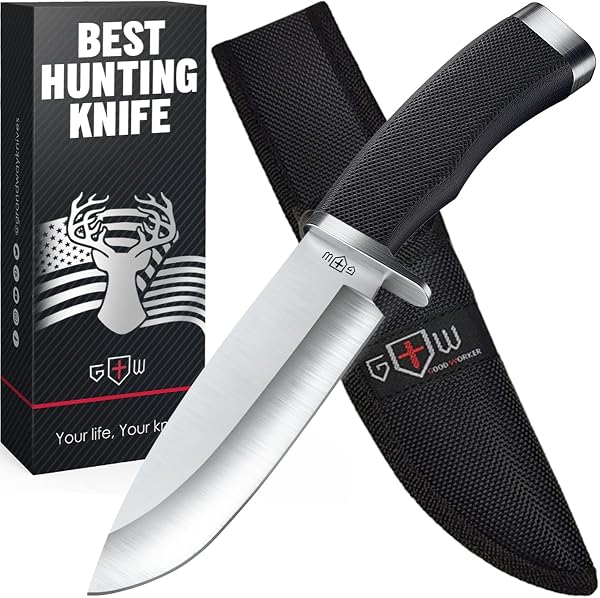
Gerber Ultimate
9.4Editor scoreHalf-serrated drop point
4.8-inch blade length
Textured rubber grip
Integrated ferro rod
Find the right survival knives for 2026. We compare 10 standout options by build quality, useful features, owner feedback, value, and everyday trade-offs.
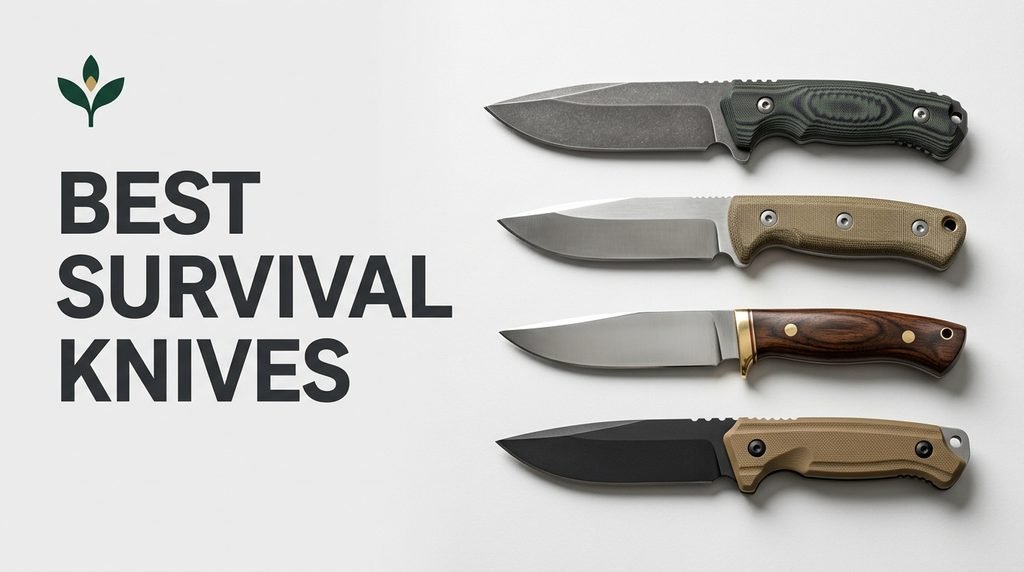
Find the right survival knife for 2026. We compare 10 standout options by the factors that matter most in this category, including blade steel, tang construction, handle grip, sheath quality, edge retention, included fire-starting tools, weight, and real-world field trade-offs.
A reliable survival knife can mean the difference between a manageable situation and a dangerous one. The best options balance durable steel, comfortable ergonomics, and practical carry features without adding unnecessary bulk to your pack.
Whether you need a compact folder for everyday carry or a full-tang fixed blade for heavy bushcraft, this guide breaks down the key differences so you can choose a knife that matches your actual outdoor needs.
We compared 10 survival knives using the details that actually help a buyer decide: blade steel type, tang construction, edge geometry, handle ergonomics, sheath quality, included survival accessories, overall weight, corrosion resistance, owner feedback, and price-to-performance value. The notes focus on practical trade-offs so each pick feels connected to how people actually carry and use a knife in the field for bushcraft, camping, hunting, and emergency preparedness.


Compare key features, scores, and current prices side by side. A shorter feature list means fewer details were available, not necessarily fewer capabilities.




The Gerber Strongarm sits at the top of this list for good reason. It combines full tang 420HC stainless steel with a Cerakote ceramic coating that dramatically improves resistance to abrasion, chemicals, and moisture. This is a knife built for people who need their gear to perform in harsh environments without constant maintenance, whether that means extended backcountry trips, tactical applications, or emergency preparedness kits.
We may earn a commission when you buy through this link, at no additional cost to you.
The 420HC steel is a workhorse material known for its toughness and ease of sharpening. While it may not hold an edge quite as long as premium super steels, it is far easier to resharpen in the field with a basic stone, which is a practical advantage when you are days from a bench grinder. The plain edge profile slices cleanly through a wide range of materials and responds well to stropping and honing.
The multi-mount sheath system is one of the Strongarm’s most versatile features. It supports horizontal belt carry, vertical belt carry, and MOLLE attachment, letting you configure the knife to match your pack setup or tactical rig. The diamond-texture rubberized grip provides excellent traction in rain, mud, and sweat, reducing the chance of the knife twisting in your hand during forceful cuts.
Cerakote is a ceramic-polymer coating originally developed for firearms. When applied to a knife blade, it creates a thin, extremely hard surface layer that resists scratches, chemical exposure, and moisture far better than standard paint or powder coatings. The result is a blade that maintains its appearance and corrosion resistance through years of hard use, even in saltwater or high-humidity environments where bare steel would quickly degrade.
At just under $110, the Strongarm is the most expensive knife in this guide, but the build quality and coating technology justify the investment for buyers who demand long-term reliability. If you want a single fixed blade that can handle everything from camp chores to emergency situations without babying the finish, this is the knife to choose.
Budget-conscious buyers who need an all-in-one kit with fire-starting accessories included may prefer a less expensive option that bundles more gear at a lower price.
We may earn a commission when you buy through this link, at no additional cost to you.
The Gerber Ultimate is designed for people who want a single, self-contained survival tool rather than a collection of separate accessories. The sheath integrates a sharpening stone and a ferrocerium rod, which means you can maintain your edge and start a fire without digging through your pack. For weekend campers and casual hikers who prefer simplicity, that consolidated approach removes a lot of packing guesswork.
We may earn a commission when you buy through this link, at no additional cost to you.
The 4.8-inch drop point blade uses stainless steel with a half-serrated edge. The plain section handles slicing and carving tasks cleanly, while the serrated portion cuts through cordage, webbing, and fibrous material with less effort. A hammer pommel on the butt end gives you a striking surface for light pounding tasks like driving tent stakes or cracking nuts, which is a nice bonus on a knife at this price point.
At 11.02 ounces, the Gerber Ultimate is not the lightest option here, but the weight feels purposeful rather than excessive. The textured rubber grip fills the hand well and resists slipping in rain or sweat. The 10-inch overall length keeps the knife manageable for smaller frames while still providing enough blade for typical camp chores like food prep and kindling processing.
Losing small survival accessories is one of the most common frustrations in the field. By housing the ferro rod and sharpener inside the sheath itself, Gerber reduces the chance that you will arrive at camp only to discover your fire starter is still in your jacket pocket back at the trailhead. The tradeoff is a slightly bulkier sheath profile, but for most recreational users, the convenience outweighs the added size.
This knife makes the most sense for buyers who value convenience and an all-in-one approach over premium steel or ultralight construction. If you want a reliable camp knife that keeps fire-starting and sharpening gear right at your hip, the Gerber Ultimate delivers a practical package at a mid-range price.
Buyers who prioritize premium blade steel or ultralight backpacking setups may find the stainless steel and integrated sheath too heavy and basic for their needs.
We may earn a commission when you buy through this link, at no additional cost to you.
The Mossy Oak 15-inch survival knife offers an unusually long blade at a price that undercuts most competitors by a wide margin. At under sixteen dollars, you get a 10-inch clip point blade, a rubber handle, a nylon sheath, and both a sharpener and fire starter packed in the box. For buyers on a tight budget or those outfitting a backup kit, the value proposition is hard to ignore.
We may earn a commission when you buy through this link, at no additional cost to you.
The blade is made from stainless steel with a black anodized finish and a sawback spine. The saw teeth along the top edge can help notch wood for shelter building or cut through small branches when a saw is not available. The clip point profile gives you a fine tip for piercing and detail tasks, though the sheer length of the blade means you will want to choke up on the handle for precision work.
At 16.8 ounces and 15 inches overall, this is one of the larger and heavier knives in this guide. The rubber handle provides a comfortable, high-friction grip that works well in wet conditions, but the knife’s size makes it better suited for camp tasks and vehicle-based camping than for long-distance hiking where every ounce counts. The nylon sheath includes a belt loop and a snap closure for secure carry.
A knife at this price point will not match the edge retention or fit and finish of options costing four or five times as much. The stainless steel is adequate for casual use and responds well to the included sharpener. If you treat it as a camp tool for processing firewood, cutting rope, and general outdoor chores rather than a precision bushcraft instrument, it will serve you well for the money.
This knife is a strong choice for casual campers, new outdoor enthusiasts, or anyone who wants a large fixed blade without a significant investment. Just be aware that the size makes it less practical for fine carving or everyday carry, and the stainless steel will require more frequent touch-ups than a higher-end carbon steel blade.
Serious bushcraft practitioners or long-distance hikers who need a compact, lightweight knife with premium edge retention will likely outgrow this model quickly.
We may earn a commission when you buy through this link, at no additional cost to you.
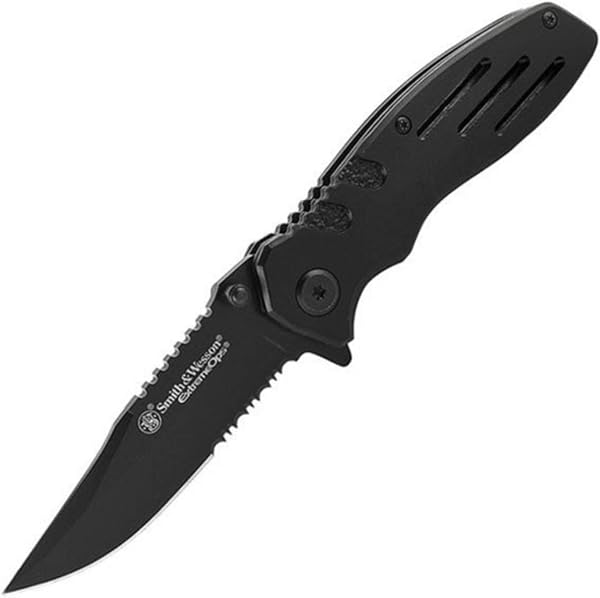
Not every survival situation calls for a large fixed blade strapped to your hip. The Smith & Wesson Extreme Ops SWA24S is a compact folding knife that fits in a pocket and weighs just 3.5 ounces, making it a practical choice for everyday carry or as a lightweight backup blade in a hiking kit. If your outdoor activities lean more toward day hikes and urban preparedness than deep wilderness expeditions, a folder like this may be all you need.
We may earn a commission when you buy through this link, at no additional cost to you.
The 3.1-inch clip point blade uses 7Cr17MoV high carbon stainless steel with a black oxide finish and partial serrations. The serrated section handles cordage and fibrous materials effectively, while the plain edge near the tip manages slicing and opening tasks. The blade deploys quickly via ambidextrous thumb knobs or the finger flipper, and a liner lock keeps it securely open during use.
The aluminum handle keeps weight low while providing a rigid frame. Jimping along the spine adds grip texture for your thumb during controlled cuts. The pocket clip positions the knife for fast one-handed access, which matters in situations where fumbling with a sheath is not ideal. At 7.1 inches open, the knife is large enough for most camp chores but small enough to disappear in a jacket pocket.
Folding knives are often dismissed in survival discussions, but they have a legitimate role. A folder is easier to carry daily, less intimidating in public settings, and sufficient for the majority of cutting tasks most people encounter outdoors. The key limitation is structural: a folding pivot will never match the strength of a full-tang fixed blade under heavy lateral loads. Use a folder for what it does well and pair it with a larger blade if your plans involve serious bushcraft.
Choose this knife if you want a low-profile, lightweight option for light survival tasks, everyday carry, or as a secondary blade alongside a larger fixed blade. It will not replace a full-tang knife for batoning or heavy wood processing, but for cutting cord, preparing food, and general utility, it handles the job reliably at a very accessible price.
Anyone planning heavy batoning, wood splitting, or demanding bushcraft tasks should choose a fixed blade instead, as the folding pivot is not designed for that level of force.
We may earn a commission when you buy through this link, at no additional cost to you.
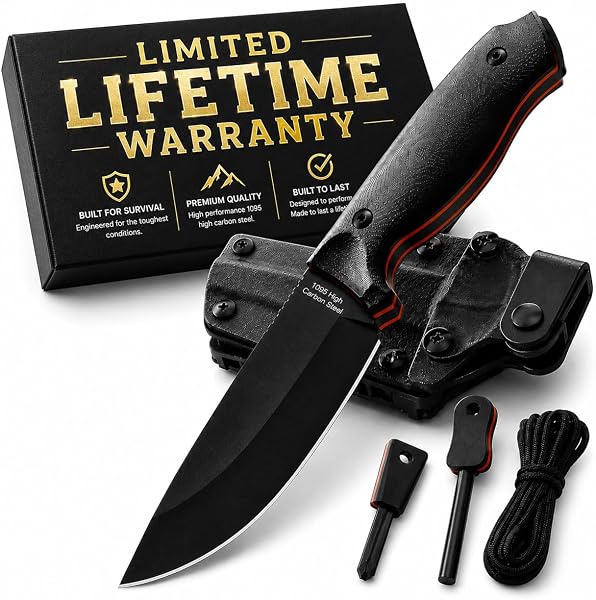
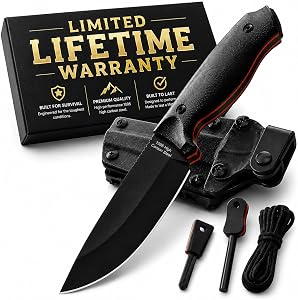
The Bloodline fixed blade from Holtzman's Gorilla Survival targets buyers who want a no-nonsense bushcraft knife built around proven materials. The 1095 high carbon steel blade is a favorite among experienced outdoorspeople because it sharpens easily, holds a working edge through extended use, and can throw sparks from a ferro rod with the right technique. If you spend significant time processing wood and building camp infrastructure, this steel type is a meaningful upgrade over basic stainless options.
We may earn a commission when you buy through this link, at no additional cost to you.
Full tang construction means the blade steel extends through the entire handle, giving the knife the structural integrity needed for batoning, prying, and other high-stress tasks. The G10 handle material is a fiberglass-reinforced laminate that resists moisture, temperature changes, and impact far better than wood or basic rubber. The textured surface provides a confident grip even when your hands are wet or cold.
The included Kydex sheath is a significant step up from the nylon sheaths found on budget knives. Kydex is a rigid thermoplastic that holds its shape, retains the knife securely without snaps or straps, and resists water absorption. The package also includes a ferro rod, scraper, paracord, belt clip, and mounting hardware, giving you a complete fire-starting and carry setup right out of the box.
Unlike stainless steel, 1095 carbon steel will develop surface rust if left wet or stored in humid conditions without protection. Wipe the blade dry after each use and apply a thin coat of mineral oil or a dedicated blade protectant before storage. Over time, the steel may develop a dark patina that actually helps resist further corrosion, but active rust spots should be addressed immediately with fine steel wool and oil.
This knife is best suited for serious outdoor enthusiasts who understand the maintenance requirements of carbon steel and want a tool that performs under demanding conditions. The price is higher than entry-level options, but the combination of 1095 steel, G10, and Kydex puts it in a tier that competes with knives costing significantly more.
Casual users who do not want to maintain their blade regularly should consider a stainless steel option instead, as 1095 carbon steel demands consistent care to prevent corrosion.
We may earn a commission when you buy through this link, at no additional cost to you.
The Smith & Wesson H.R.T. boot knife fills a specific niche as a compact, concealable backup blade. At 9 inches overall with a 4.7-inch double-edged blade, it is designed to ride in a boot sheath, on a belt, or around the neck via the lanyard hole. For buyers who want a secondary knife that stays out of the way until needed, the HRT offers a practical and affordable solution.
We may earn a commission when you buy through this link, at no additional cost to you.
The blade uses 7Cr17MoV high carbon stainless steel, which provides a good balance of edge retention and corrosion resistance for a knife in this price range. The double-edged profile gives you two cutting surfaces, which can be useful for quick slicing tasks where you do not want to reposition the knife. The hand guard between the blade and handle helps prevent your fingers from sliding forward during use.
The rubber-wrapped handle is slim but provides adequate grip for the knife’s intended role. At 7.7 ounces, the HRT is light enough for comfortable all-day carry in a boot or on a lanyard without creating fatigue. The included sheath supports both belt and boot attachment, giving you flexibility in how you carry it depending on your clothing and activity.
Carrying a knife in your boot provides quick access while keeping your hands and belt free, but it also means the knife is exposed to moisture, dirt, and impact from walking. Choose a sheath that retains the knife securely during movement and inspect the blade regularly for signs of corrosion. A boot knife works best as a last-resort backup rather than your primary cutting tool.
This knife works best as a backup or self-defense-oriented blade rather than a primary camp tool. The narrow, double-edged profile is not well suited for batoning wood or processing game, so pair it with a larger fixed blade if your outdoor plans involve significant bushcraft or hunting tasks.
Buyers looking for a primary survival knife for wood processing, shelter building, or food preparation should choose a wider, single-edged fixed blade instead.
We may earn a commission when you buy through this link, at no additional cost to you.
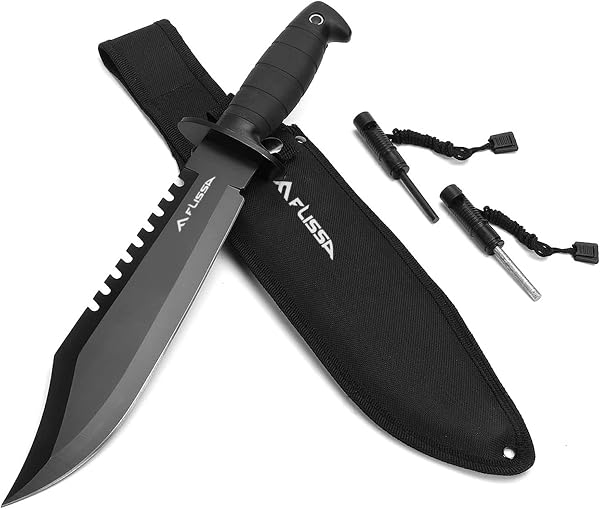
The FLISSA 15-inch tactical bowie knife is a large, aggressive cutting tool designed for buyers who want maximum blade length for heavy camp tasks. The 10-inch clip point blade provides ample cutting surface for processing firewood, clearing brush, and handling game, while the sawback spine adds a secondary cutting option for notching and sawing through small-diameter wood.
We may earn a commission when you buy through this link, at no additional cost to you.
The stainless steel blade features a black anodized finish that reduces glare and adds a layer of corrosion protection. The clip point profile tapers to a fine tip for piercing and detail work, though the overall size of the knife means you will need to choke up on the handle for precision tasks. Edge retention is adequate for casual use, and the included sharpener makes it easy to touch up the blade at camp.
The soft rubber handle provides a comfortable, high-friction grip that absorbs vibration during heavy chopping and batoning. At 16.8 ounces, the knife has enough mass to generate momentum for splitting kindling and light chopping, which is an advantage over lighter knives when you are processing firewood without an axe. The nylon sheath includes a belt hanging system and a snap closure for secure transport.
The sawback teeth along the spine are most effective on green wood and small branches up to about an inch in diameter. Use a pulling motion rather than a pushing motion for cleaner cuts, and avoid using the sawback on hardwoods or dense materials that could dull the teeth quickly. The sawback is a useful supplement to the main edge, not a replacement for a dedicated folding saw.
This knife is a good match for car campers, hunters, and outdoor enthusiasts who want a large, capable blade at a budget-friendly price. The included fire starter and sharpener add practical value, but the size and weight make it less suitable for backpacking or situations where compact carry is a priority.
Backpackers and ultralight hikers who need to minimize pack weight will find this knife too large and heavy for long-distance trail use.
We may earn a commission when you buy through this link, at no additional cost to you.
The Freelander outdoor fixed blade stands out in this guide for its use of D2 tool steel, a material more commonly found on knives costing significantly more. D2 is known for its exceptional edge retention and wear resistance, which means the blade stays sharp longer through extended use in the field. For buyers who want to minimize sharpening sessions during multi-day trips, D2 is a meaningful upgrade over standard stainless steels.
We may earn a commission when you buy through this link, at no additional cost to you.
The 5mm thick full tang spine gives this knife the structural backbone needed for batoning firewood and other high-impact tasks. The blade geometry balances slicing ability with enough thickness to resist chipping under lateral stress. While D2 is sometimes classified as semi-stainless because it contains less chromium than true stainless steels, it offers better corrosion resistance than plain carbon steels like 1095.
The contoured handle features finger grooves and an anti-slip texture that locks the knife into your hand during prolonged use. This ergonomic shaping helps reduce hand fatigue during repetitive tasks like carving tent stakes or processing kindling. The custom-fitted Kydex sheath provides rigid blade protection and fast one-handed access, with a belt attachment that keeps the knife secure during active movement.
D2 steel’s high hardness means it resists abrasion, which is great for edge retention but makes sharpening more demanding. Standard Arkansas stones may struggle to cut D2 effectively. A diamond-coated sharpening rod or a ceramic stone with a fine grit works much better. Take your time and use consistent angles, as rushing the process on hard steel can produce an uneven edge.
At around twenty dollars, the Freelander delivers a steel and construction package that punches well above its price class. The main tradeoff is that D2 requires more effort to sharpen than softer steels, so you will want to carry a diamond stone or ceramic rod rather than a basic whetstone. For buyers who prioritize long edge life and robust construction, this is one of the best values in the guide.
Buyers who prefer easy, quick sharpening with basic tools may find D2 steel frustrating and should consider a softer stainless steel like 420HC instead.
We may earn a commission when you buy through this link, at no additional cost to you.
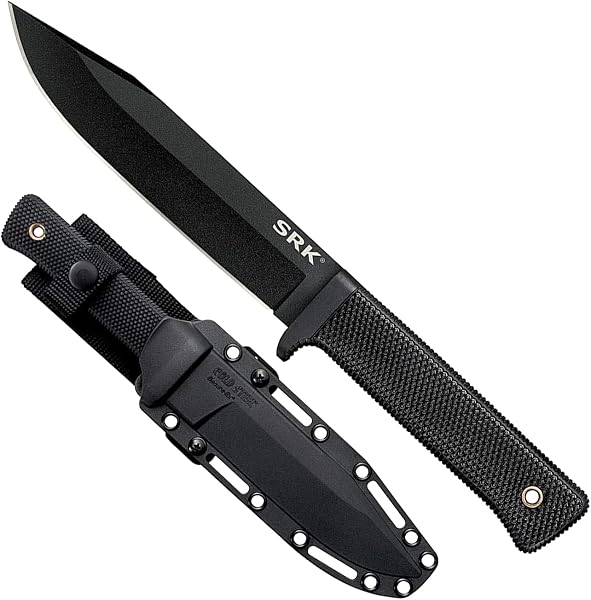
The Cold Steel SRK (Survival Rescue Knife) has earned a reputation among military personnel, law enforcement, and serious survivalists as one of the most dependable fixed blades available. The 6-inch SK-5 high carbon steel blade is exceptionally tough, resisting chipping and deformation under the kind of abuse that would damage lesser steels. If your definition of survival involves extreme conditions and heavy-duty use, the SRK is built for exactly that.
We may earn a commission when you buy through this link, at no additional cost to you.
SK-5 steel is a Japanese high carbon tool steel prized for its impact resistance and ability to hold a working edge through demanding tasks. The 5mm blade thickness adds structural rigidity for batoning, prying, and chopping, while the clip point profile provides a versatile tip for piercing and detail work. The black tuff finish adds a layer of corrosion protection, though it will show wear over time with heavy use.
The Kray-Ex handle is a proprietary thermoplastic elastomer that provides an aggressive, non-slip grip even when soaked in water, blood, or mud. The ergonomic shape fills the hand comfortably and includes a guard to prevent your fingers from sliding onto the blade during thrusting cuts. At 7.9 ounces, the SRK is surprisingly light for a knife with this level of construction, making it practical for extended carry.
SK-5 steel sits in a sweet spot between hardness and toughness that makes it ideal for survival applications. Harder steels may hold an edge slightly longer but can chip under impact, while softer steels resist chipping but dull quickly. SK-5 absorbs shock well, resists deformation, and can be sharpened to a very fine edge with standard tools. This combination of properties is why it remains a top choice for knives designed to endure abuse in the field.
At under forty-seven dollars, the Cold Steel SRK offers a level of build quality and field-proven reliability that rivals knives costing twice as much. The main consideration is maintenance: SK-5 is a carbon steel that will rust if left wet, so regular cleaning and oiling are essential. For buyers who prioritize toughness and proven performance over low-maintenance convenience, the SRK is an outstanding choice.
Buyers who want a low-maintenance stainless steel blade that can be left wet without rusting should look at 420HC or D2 options instead of SK-5 carbon steel.
We may earn a commission when you buy through this link, at no additional cost to you.
The Hunting Knife 148109 is a compact, no-frills fixed blade that delivers solid performance at the lowest price in this guide. At under thirteen dollars, it offers full tang construction, 440C stainless steel, and a Cordura sheath, which is a combination typically found on knives costing two or three times as much. For buyers who want a reliable everyday outdoor knife without overthinking the purchase, this is a practical starting point.
We may earn a commission when you buy through this link, at no additional cost to you.
The 440C stainless steel blade is one of the better stainless options available at this price tier. It offers good corrosion resistance, respectable edge retention, and is relatively easy to sharpen compared to harder tool steels. The 4.45-inch blade length is well suited for food preparation, light carving, and general camp tasks, though it may feel short for heavy batoning or processing large game.
At 8.86 inches overall and just over 7 ounces, this is one of the lightest fixed blades in the guide. The rubber handle provides a comfortable, non-slip grip that works well in wet conditions, and the full tang construction gives the knife more structural integrity than you might expect at this price. The Cordura sheath is lightweight and durable, with a belt loop that keeps the knife accessible during hikes and camp activities.
440C stainless steel contains a higher carbon content than many budget stainless steels, which gives it better edge retention while maintaining the corrosion resistance that makes stainless steel appealing for outdoor use. It sharpens easily with basic stones and responds well to stropping. For a knife at this price, 440C represents a genuine step up from the softer, less durable steels found on many inexpensive fixed blades.
This knife is ideal for casual hikers, weekend campers, and anyone looking for an affordable backup blade that can handle everyday outdoor tasks. The compact size and low weight make it easy to carry on long hikes, and the stainless steel construction means you can worry less about maintenance compared to carbon steel alternatives. Just do not expect it to replace a larger, heavier knife for serious bushcraft work.
Buyers who need a large blade for heavy wood processing, batoning, or shelter building will find the 4.45-inch blade too short for those demanding tasks.
We may earn a commission when you buy through this link, at no additional cost to you.
Selecting a survival knife involves more than picking the sharpest blade on the shelf. The right choice depends on how you plan to use the knife, the environments you will encounter, and the tradeoffs you are willing to accept between weight, durability, and maintenance.
The steel used in a survival knife blade is the single most important factor affecting how well the knife cuts, how long it stays sharp, and how much maintenance it requires. Common survival knife steels fall into two broad categories: carbon steels like 1095 and SK-5, and stainless steels like 420HC, 440C, and D2. Carbon steels are generally tougher and easier to sharpen to a fine edge, but they will rust if left wet or stored in humid conditions without a protective coating of oil. Stainless steels resist corrosion much better, making them lower maintenance, but they can be harder to sharpen in the field and may not hold an edge as long under heavy use.
D2 steel occupies a middle ground between carbon and stainless. It offers excellent edge retention and wear resistance thanks to its high chromium and vanadium content, but it is classified as semi-stainless because it contains slightly less chromium than true stainless steels. D2 blades like the one on the Freelander fixed blade will resist rust better than 1095 but still benefit from occasional oiling. Premium stainless options like 420HC, used in the Gerber Strongarm, balance toughness, corrosion resistance, and ease of sharpening in a package that requires minimal upkeep.
Choose carbon steel if you prioritize toughness and easy field sharpening and are willing to maintain the blade. Choose stainless steel if you want low-maintenance corrosion resistance. Choose D2 if you want maximum edge life and can handle a more demanding sharpening process.
Fixed blade knives are the traditional choice for survival use because they have no moving parts that can fail under stress. A full tang fixed blade, where the steel extends through the entire handle, can withstand batoning, prying, and heavy chopping that would damage a folding knife’s pivot mechanism. Fixed blades are also easier to clean in the field because there are no crevices where moisture and debris can accumulate. The tradeoff is that fixed blades are larger, heavier, and less convenient to carry in everyday settings.
Folding knives like the Smith & Wesson Extreme Ops SWA24S offer significant advantages in portability and discretion. A folder fits in a pocket, weighs a fraction of a fixed blade, and is less likely to cause concern in public spaces. Modern locking mechanisms like liner locks provide reasonable security for light to moderate cutting tasks. However, a folding knife will never match the structural strength of a full tang fixed blade under heavy lateral loads, and the pivot area can trap moisture and debris that accelerate corrosion.
For primary survival use in the wilderness, a fixed blade is the safer and more capable choice. For everyday carry, light trail use, or as a backup to a larger fixed blade, a folding knife provides practical convenience that a fixed blade cannot match.
The tang is the portion of the blade steel that extends into the handle, and its construction has a major impact on the knife’s strength and durability. A full tang knife, where the steel runs the entire length and width of the handle, is the strongest configuration and is the standard for serious survival knives. Full tang construction distributes stress evenly across the entire knife, reducing the risk of the blade separating from the handle during heavy use. The Gerber Strongarm, Bloodline, and Freelander all feature full tang designs.
Partial tang and rat-tail tang constructions, where the steel narrows or shortens inside the handle, reduce weight and manufacturing cost but create a potential failure point under heavy stress. These designs are more common on budget knives and decorative blades. While a partial tang knife may be perfectly adequate for light camp chores and food preparation, it is not the right choice for batoning firewood or prying tasks that place significant lateral force on the blade-handle junction.
If your survival knife will see heavy use including batoning, chopping, or prying, insist on full tang construction. For light-duty tasks and casual camping, a partial tang knife can be acceptable, but understand its limitations before putting it under stress.
Blade length determines what tasks a survival knife can handle effectively. Blades in the 3 to 5 inch range, like the Smith & Wesson Extreme Ops folder or the Hunting Knife 148109, excel at detail work, food preparation, and light carving but struggle with heavy wood processing. Blades in the 5 to 7 inch range, like the Cold Steel SRK and Gerber Strongarm, offer a versatile balance between control and cutting power that suits most survival scenarios. Blades over 8 inches, like the Mossy Oak and FLISSA bowie knives, provide maximum cutting surface for heavy chopping and brush clearing but sacrifice precision and portability.
Blade shape also affects performance. Drop point blades, found on the Gerber Ultimate, offer a strong tip and a versatile cutting edge suitable for most tasks. Clip point blades, like those on the Cold Steel SRK and FLISSA, provide a finer tip for piercing and detail work. Tanto blades prioritize tip strength for piercing hard materials but sacrifice slicing ability. Serrated edges handle cordage and fibrous materials well but are harder to sharpen in the field.
For a general-purpose survival knife, a 5 to 7 inch drop point or clip point blade offers the best balance of versatility and control. Choose a longer blade only if you specifically need heavy chopping capability, and choose a shorter blade if portability and precision are your priorities.
The handle is your connection to the knife, and its material and shape directly affect comfort, control, and safety during extended use. Common survival knife handle materials include rubber, G10, Kray-Ex, Micarta, and aluminum. Rubber handles, found on the Gerber Ultimate and Mossy Oak, provide excellent grip in wet conditions and absorb vibration during heavy cuts, but they can degrade over time with exposure to UV light and chemicals. G10 handles, like the one on the Bloodline, are extremely durable, moisture-resistant, and lightweight, making them a premium choice for demanding environments.
Kray-Ex, used on the Cold Steel SRK, is a proprietary thermoplastic elastomer that combines the grip of rubber with the durability of a harder plastic. It performs exceptionally well in wet, muddy, and cold conditions. Aluminum handles, like the one on the Smith & Wesson folder, keep weight low but can feel slippery when wet unless textured with jimping or grooves. Handle shape matters as much as material: contoured handles with finger grooves reduce fatigue during prolonged use, while simple cylindrical handles may feel less secure during forceful cuts.
Prioritize a handle material that maintains grip in the conditions you expect to encounter most often. If you frequently work in rain or near water, rubber, G10, or Kray-Ex will outperform smooth aluminum or wood. Try to choose a handle shape that fills your hand comfortably and includes a guard or choil to prevent your fingers from sliding onto the blade.
A survival knife is only useful if you can carry it securely and access it quickly when needed. Sheath materials range from basic nylon to rigid Kydex to traditional leather, each with distinct advantages. Nylon sheaths, found on the Mossy Oak and FLISSA, are lightweight, affordable, and flexible, but they can absorb water and may not retain the knife as securely over time. Kydex sheaths, used on the Bloodline and Freelander, are rigid, waterproof, and provide excellent blade retention with a satisfying snap-in fit, but they add weight and can be noisy against other gear.
Carry configuration is equally important. Belt carry is the most common and keeps the knife accessible at your hip. MOLLE-compatible sheaths, like the multi-mount system on the Gerber Strongarm, allow you to attach the knife to a tactical vest or backpack. Boot carry, neck carry, and horizontal belt carry are specialized options that suit specific use cases. The Secure-Ex sheath on the Cold Steel SRK provides heavy-duty protection and retention for tactical and military applications.
Match your sheath choice to your carry preferences and environment. For wet climates and heavy use, Kydex is the most reliable option. For lightweight backpacking, nylon keeps weight down. For tactical or modular setups, look for MOLLE compatibility and multiple carry configurations.
Many survival knives come bundled with accessories like ferro rods, sharpening stones, fire starters, and paracord. The Gerber Ultimate and Mossy Oak both include integrated sharpeners and fire-starting tools, which can simplify your packing list and ensure you have essential survival gear readily available. The Bloodline goes further by including a ferro rod, scraper, paracord, belt clip, and mounting hardware in the box. These bundled accessories add value, especially for beginners who may not yet have a complete survival kit.
However, bundled accessories are often basic in quality compared to standalone tools. A ferro rod included with a budget knife may be smaller and produce fewer sparks than a dedicated fire starter. An integrated sharpener may be adequate for quick touch-ups but insufficient for reprofiling a damaged edge. Experienced outdoorspeople often prefer to select their own fire-starting and sharpening tools based on personal preference and specific needs.
If you are building your first survival kit or want a self-contained solution, a knife with bundled accessories offers convenience and value. If you already own quality fire-starting and sharpening tools, focus your budget on the knife itself and choose a model that prioritizes blade quality and construction over extras.
Weight matters more than many new buyers realize, especially if you plan to carry the knife on long hikes or multi-day backpacking trips. A heavy knife like the 16.8-ounce Mossy Oak or FLISSA may feel manageable at home but becomes a noticeable burden after miles on the trail. Lighter options like the 3.5-ounce Smith & Wesson folder or the 7-ounce Hunting Knife 148109 disappear in your pack and are easy to carry all day without fatigue.
The tradeoff is that lighter knives typically sacrifice blade length, tang thickness, and overall durability. A 7-ounce compact fixed blade will not handle batoning or heavy chopping the way a 10-ounce full tang knife can. The key is to match the knife’s weight to your actual use case. Car campers and vehicle-based adventurers can afford to carry heavier, more capable knives without consequence, while backpackers and thru-hikers benefit from trimming every unnecessary ounce.
Consider your typical carry distance and activity level when evaluating weight. If you hike more than five miles per day with a loaded pack, prioritize knives under 8 ounces. If you primarily camp near your vehicle, weight is less critical and you can focus on capability and durability instead.
Before heading into the field, spend time familiarizing yourself with your knife’s grip, balance, and cutting characteristics. Practice basic cuts like slicing, chopping, and batoning on scrap wood at home so you understand how the blade behaves under different types of force. Learn to use the knife’s spine for striking a ferro rod if your model includes one, and practice deploying and sheathing the knife smoothly with one hand if your sheath design allows it. Building muscle memory at home reduces the risk of accidents when you are tired, cold, or under pressure in the field.
Proper maintenance extends the life of your survival knife and ensures it performs reliably when you need it most. After each use, wipe the blade clean with a dry cloth to remove moisture, sap, and debris. Carbon steel blades should be lightly oiled with mineral oil or a dedicated blade protectant before storage to prevent rust. Stainless steel blades are more forgiving but still benefit from occasional cleaning and drying, especially after exposure to saltwater or acidic foods. Sharpen the blade regularly using a stone or rod that matches your steel type, and avoid letting the edge become so dull that it requires aggressive reprofiling.
Store your survival knife in a dry environment with the blade protected by its sheath or a blade guard. Avoid storing the knife in a leather sheath for extended periods, as leather can trap moisture against the blade and promote corrosion. Kydex and nylon sheaths are safer for long-term storage. If you live in a humid climate, consider adding a silica gel packet to your storage area or applying a heavier coat of protectant to the blade. Periodically inspect the handle, sheath, and any hardware for signs of wear or loosening, and address issues before they compromise the knife’s performance in the field.
There is no single best steel, as the ideal choice depends on your priorities. Carbon steels like 1095 and SK-5 offer excellent toughness and easy sharpening but require regular oiling to prevent rust. Stainless steels like 420HC and 440C resist corrosion and need less maintenance. D2 steel provides outstanding edge retention but is harder to sharpen. Choose based on the conditions you will face and how much maintenance you are willing to perform.
A fixed blade is the stronger and more reliable choice for primary survival use because it has no moving parts that can fail under heavy stress. Full tang fixed blades can handle batoning, prying, and chopping that would damage a folding knife's pivot. However, a folding knife is more portable and practical for everyday carry or as a lightweight backup. Many experienced outdoorspeople carry both a fixed blade for heavy tasks and a folder for convenience.
For most survival applications, a blade between 4 and 7 inches offers the best balance of versatility and control. Blades shorter than 4 inches struggle with wood processing and heavy cutting, while blades longer than 8 inches sacrifice precision and add unnecessary weight for most tasks. Choose a longer blade only if you specifically need heavy chopping capability, and choose a shorter blade if portability is your main concern.
Full tang means the blade steel extends through the entire length and width of the handle, creating a single continuous piece of metal from tip to butt. This construction provides maximum strength and durability, allowing the knife to withstand heavy impacts from batoning and prying without the blade separating from the handle. For serious survival use, full tang construction is strongly recommended over partial tang or rat-tail tang designs.
An integrated fire starter is a convenient feature but not essential. Many survival knives include a ferro rod or fire steel in the sheath, which simplifies your packing list and ensures you always have fire-starting capability at hand. However, dedicated fire starters are often larger and more effective than the small rods bundled with knives. If you already carry a quality fire starter separately, you do not need one built into your knife.
Carbon steel blades require regular cleaning and oiling to prevent rust. Wipe the blade dry after every use and apply a thin coat of mineral oil or a dedicated blade protectant before storage. Avoid leaving the knife wet or in humid conditions for extended periods. Over time, the blade may develop a dark patina that helps resist further corrosion, but active rust spots should be removed immediately with fine steel wool and oil.
Kydex is generally the best sheath material for demanding survival use because it is rigid, waterproof, and provides excellent blade retention. Nylon sheaths are lighter and more affordable but can absorb water and lose retention over time. Leather sheaths offer a classic look and quiet carry but require maintenance and can trap moisture against the blade. Choose Kydex for wet environments and heavy use, nylon for lightweight backpacking, and leather for traditional carry.
Yes, but the practicality depends on the knife's size and your local regulations. Compact fixed blades and folding knives under 4 inches are the most practical for daily carry and are legal in most jurisdictions. Large fixed blades with blades over 6 inches are generally impractical for everyday carry due to their size and weight. Always check your local knife laws regarding blade length, carry method, and restricted locations before carrying a knife daily.
A capable survival knife can be found at almost any price point. Budget options under twenty dollars, like the Mossy Oak or Hunting Knife 148109, provide adequate performance for casual use. Mid-range knives in the forty to eighty dollar range, like the Cold Steel SRK or Bloodline, offer significantly better steel and construction. Premium options above one hundred dollars, like the Gerber Strongarm, add advanced coatings and carry systems. Spend based on how heavily you plan to use the knife and how long you expect it to last.
The Gerber Strongarm earns the top spot in this guide for its combination of full tang 420HC steel, Cerakote coating, and versatile multi-mount sheath system. It is the most expensive option here, but the build quality and long-term durability justify the investment for anyone who needs a knife that performs reliably in harsh conditions without constant maintenance. If you want a single survival knife that can handle everything from camp chores to emergency situations, the Strongarm is the safest bet.
For buyers with different priorities, the Cold Steel SRK offers battle-proven SK-5 toughness at a mid-range price, the Bloodline delivers premium 1095 carbon steel and G10 construction for serious bushcraft, and the Freelander brings D2 edge retention to a surprisingly affordable package. Budget-conscious shoppers will find solid value in the Mossy Oak, FLISSA, and Hunting Knife 148109, all of which provide capable performance at prices under twenty dollars.
The best survival knife is the one that matches your specific needs, environment, and skill level. Consider the steel type, tang construction, blade length, handle comfort, and sheath quality in relation to how you actually plan to use the knife. A well-chosen survival knife will serve you reliably for years, so take the time to evaluate your options carefully rather than defaulting to the cheapest or most expensive choice on the shelf.