Ooni Halo Pro
9.2Editor score7.3 quart capacity
58 speed settings
Rotating bowl design
Four included attachments
Find the right spiral mixers for 2026. We compare 10 standout options by build quality, useful features, owner feedback, value, and everyday trade-offs.
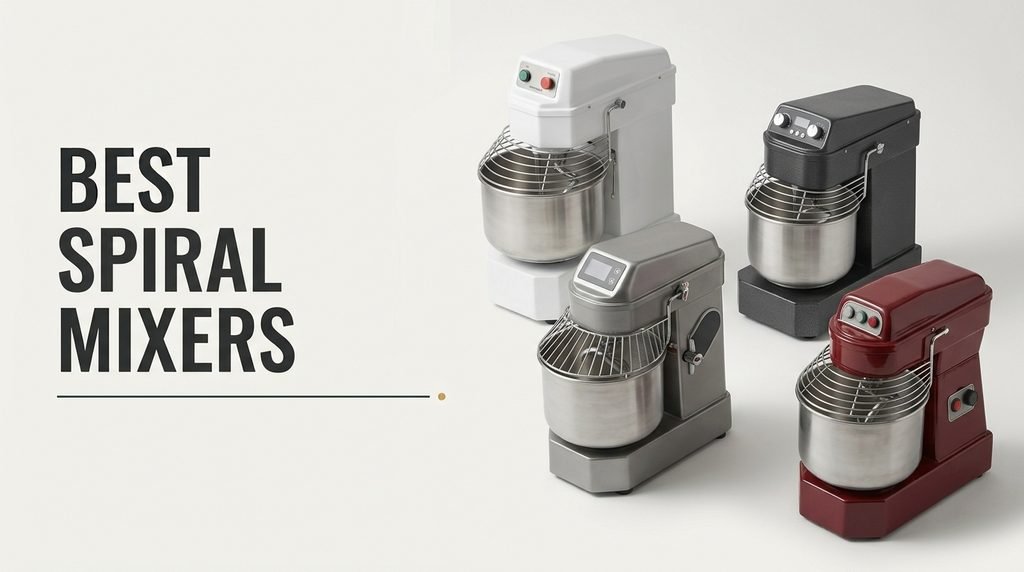
Find the right spiral mixers for 2026. We compare 10 standout options by the factors that matter most for dough preparation, including bowl capacity, motor wattage, dual-rotation systems, speed precision, gluten development performance, safety features, and overall value for home bakers and commercial kitchens alike.
Spiral mixers differ significantly from standard stand mixers because the bowl and hook rotate simultaneously, developing gluten networks more efficiently with less heat buildup. Models range from compact countertop units for weekend pizza dough to massive 50-quart floor machines built for daily bakery production.
Choosing the right machine depends on your typical batch size, dough types, available space, and electrical setup. This guide breaks down the practical differences across the lineup so you can match a mixer to your actual baking volume rather than overpaying for capacity you will never use.
We compared 10 spiral mixers using the details that actually help a buyer decide: bowl capacity, motor wattage, dual-rotation mechanics, speed range, dough output, safety guards, build materials, electrical requirements, and price-to-performance value. The notes focus on practical trade-offs so each pick connects to how home bakers, pizzeria owners, and commercial bakeries actually produce dough at different scales.

Compare key features, scores, and current prices side by side. A shorter feature list means fewer details were available, not necessarily fewer capabilities.




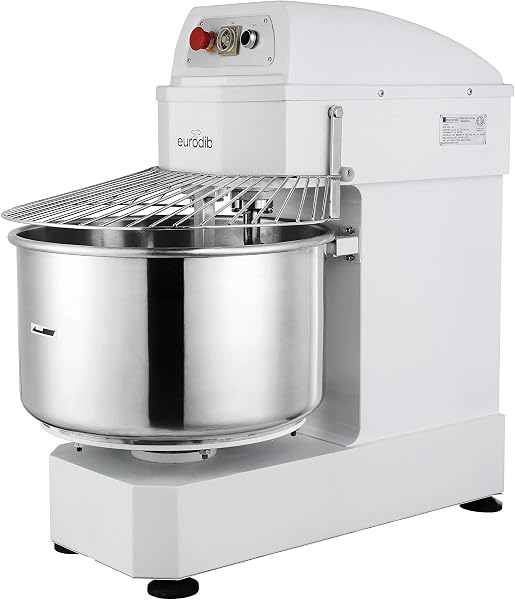
The Eurodib LM50TETL is a full-size commercial spiral mixer built for bakeries, pizzerias, and pastry shops that need to produce large volumes of dough consistently throughout the day. The 50-quart bowl can handle the kind of batch sizes that would overwhelm any countertop mixer, and the specialized spiral hook design promotes efficient gluten development while keeping dough temperatures low, which is critical for maintaining fermentation control in high-volume production.
We may earn a commission when you buy through this link, at no additional cost to you.
The 220V electrical requirement reflects the commercial-grade motor and drive system needed to move heavy dough loads reliably. The heavy-duty construction and durable drive components are engineered for daily use in demanding foodservice environments where the mixer may run for hours at a time. The ETL certification confirms that the machine meets North American safety and performance standards for commercial kitchen equipment.
Safety features include an integrated bowl guard that prevents operator contact with the moving hook and dough mass during operation. The user-friendly controls simplify operation for staff with varying levels of experience, which is important in busy kitchens where multiple people may use the mixer throughout a shift. The overall design prioritizes reliability and consistency over the speed precision that home-focused models emphasize.
When mixing large batches of dough, friction between the hook, bowl, and dough mass generates significant heat. If the dough temperature rises too much during mixing, it can accelerate fermentation prematurely, weaken the gluten structure, and produce inconsistent results across batches. The Eurodib’s spiral hook geometry and controlled rotation speed are designed to minimize this heat buildup, helping you maintain the target dough temperature that your recipes require for proper proofing and baking.
This mixer is the clear choice for established commercial operations that need dependable, high-capacity dough production and are willing to invest in a machine that will last for years under heavy daily use. It is not practical for home kitchens due to the 220V requirement, large physical footprint, and significant cost. If your operation is growing and you are currently maxing out a smaller mixer, the 50-quart Eurodib represents a meaningful production upgrade.
Home bakers, small kitchens without 220V outlets, or any operation that does not regularly produce large-volume dough batches.
We may earn a commission when you buy through this link, at no additional cost to you.
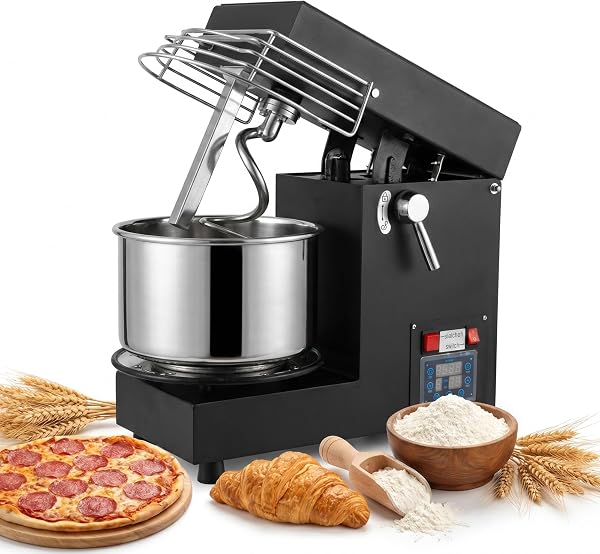
The Ooni Halo Pro brings genuine commercial spiral mixing technology into a countertop footprint, making it the most compelling option for serious home bakers and small-scale pizza makers who want professional-grade dough without investing in a floor model. The defining feature is the simultaneous rotation of the bowl and spiral dough hook, which mimics the action of large bakery mixers and develops gluten networks more evenly than a traditional planetary stand mixer.
We may earn a commission when you buy through this link, at no additional cost to you.
The 58 speed settings spanning from 60 RPM to over 1,000 RPM give you granular control that no other mixer in this lineup approaches. Lower speeds handle initial flour incorporation and gentle folding, while higher speeds develop structure in enriched doughs and whip cream or egg whites when you swap in the geared whisk attachment. The patent-pending removable breaker bar adds a third mixing element that folds the dough back into the spiral hook, improving consistency across the entire batch.
Beyond dough, the included flexible beater and geared whisk attachments expand the Halo Pro into a capable all-purpose stand mixer for cakes, cookies, frosting, and whipped cream. The 7.3-quart bowl handles batches large enough for family gatherings and small events, though it will not keep up with high-volume commercial production. The charcoal grey finish and compact profile also make it a visually appealing countertop appliance rather than an industrial eyesore.
In a traditional planetary mixer, the hook orbits a stationary bowl, which can create uneven gluten development and generate excess friction heat. The Ooni Halo Pro’s rotating bowl and spiral hook work in tandem to stretch and fold the dough more gently and uniformly, producing a stronger, more elastic gluten network. This translates to better oven spring, a more open crumb structure, and a chewier, more satisfying crust in finished bread and pizza.
This mixer is best suited for dedicated home bakers and pizza enthusiasts who want the tangible dough-quality improvement that spiral mixing provides and who value precision speed control for experimenting with different hydration levels and flour types. The main trade-off is price: at roughly $800, the Halo Pro costs significantly more than basic stand mixers, but the dough quality gap is real and measurable for anyone who bakes bread or Neapolitan pizza regularly.
Commercial bakeries or pizzerias that need to produce dozens of dough balls per batch, as the 7.3-quart bowl capacity is designed for home and small-batch use.
We may earn a commission when you buy through this link, at no additional cost to you.
The Garvee 10.5 QT occupies a practical middle ground between compact home mixers and full-size commercial machines, making it a strong fit for small restaurants, pizzerias, and serious home bakers who need to knead up to 11 pounds of dough in a single batch. The 650W copper motor drives both the bowl at 21 RPM and the spiral hook at 129 RPM simultaneously, which increases the contact area between the dough and the hook for more thorough gluten development.
We may earn a commission when you buy through this link, at no additional cost to you.
The dual-rotation chain drive system is the mechanical heart of this mixer. By spinning the bowl and hook at different speeds in the same direction, the machine replicates the folding and stretching action of hand kneading at a much larger scale. This approach is gentler on the dough than a single-rotation system and generates less friction heat, which matters when you are working with temperature-sensitive yeasted doughs that can over-proof if the mixing process raises the internal temperature too much.
Operation is straightforward thanks to simple button and knob controls. The timer dial lets you set mixing durations up to 60 minutes, which is useful for long autolyse or slow-knead cycles. The security shield over the bowl prevents accidental hand contact and triggers an automatic power cutoff if opened during operation, a critical safety feature in busy kitchen environments. The nonslip bottom feet keep the machine stable even during heavy mixing loads.
The Garvee’s bowl spins at 21 RPM while the spiral hook rotates at 129 RPM, creating a differential speed that continuously repositions the dough mass against the hook. This dual-action approach ensures that every part of the dough receives consistent kneading pressure, reducing the risk of under-developed pockets that can occur in fixed-bowl mixers. The result is a more uniform crumb structure and better overall dough consistency across the entire batch.
This mixer makes the most sense for small commercial operations or dedicated home bakers who regularly produce large batches of bread, pizza, or pastry dough and want a reliable dual-rotation machine without the four-figure price tag of premium commercial models. The trade-off is less precise speed control compared to the Ooni Halo Pro and a heavier, more industrial appearance that may not suit every home kitchen aesthetic.
Bakers who need fine-grained speed adjustments for delicate batters or who want a compact countertop appliance for occasional weekend baking.
We may earn a commission when you buy through this link, at no additional cost to you.
The Ooni Halo Core is the smaller sibling of the Halo Pro, designed for bakers who want genuine spiral mixing technology in a more compact and affordable package. The 4.8-quart bowl is optimized for small to medium batches, handling as few as two or as many as ten 12-inch pizza dough balls in a single mix. This range makes it practical for couples, small families, or anyone who bakes a few loaves of bread per week rather than producing in bulk.
We may earn a commission when you buy through this link, at no additional cost to you.
Despite its smaller size, the Halo Core retains the dual-kneading action that defines the Ooni spiral mixing platform. Two high-torque DC motors work together to drive the bowl and hook through longer mixing sessions without overheating or wearing out prematurely. The 20 speed settings provide significantly more control than the 6 to 11 speeds found on most conventional stand mixers, allowing you to dial in the exact RPM for different dough types and stages of gluten development.
The included multifunctional attachments extend the Halo Core beyond bread and pizza dough into cake batters, cookie dough, whipped cream, and meringue. This versatility means the mixer can serve as your primary kitchen stand mixer rather than a single-purpose dough machine, which is an important consideration if counter space is limited and you want to justify the investment across multiple baking tasks.
Many spiral mixers struggle with very small batches because the dough mass is too small to engage properly with the hook and breaker bar. The Halo Core’s 4.8-quart bowl is specifically sized to handle batches as small as two dough balls, which means you can mix a single loaf of sourdough or a couple of personal pizzas without the dough simply spinning around the bowl untouched. This small-batch capability is rare in the spiral mixer category and makes the Core uniquely practical for everyday home use.
This is the right choice for home bakers who want spiral mixing quality in the smallest possible footprint and who typically work with batches of ten pizza balls or fewer. The main limitation is capacity: if you regularly entertain large groups or run a small cottage food business, the 4.8-quart bowl will require multiple batches. The lack of an owner rating at this time also means you are relying on the Ooni brand reputation rather than extensive user feedback.
Bakers who routinely produce large batches exceeding ten dough balls or who need a machine rated for continuous commercial operation.
We may earn a commission when you buy through this link, at no additional cost to you.
This 10.7-quart commercial spiral mixer bridges the gap between countertop home models and full-size floor machines, offering a practical solution for small bakeries, pizza shops, and serious home bakers who need more capacity than a standard stand mixer but do not yet require a 20-quart or larger machine. The pure copper motor drives the spiral hook through a reinforced metal drive system with a cast iron pulley, providing the torque needed for dense artisan doughs.
We may earn a commission when you buy through this link, at no additional cost to you.
The dual-control interface is a standout feature in this price range. You can operate the mixer through either a touchscreen panel or a traditional mechanical knob, giving you flexibility based on your preference and the kitchen environment. The nine speed settings cover the range needed for different dough types, from gentle folding of high-hydration sourdough to more aggressive kneading of stiff bagel or pretzel dough. The 304 stainless steel removable bowl simplifies loading and cleanup.
At 86 pounds, this machine is not going anywhere once you position it, which is both an advantage and a limitation. The heavy cast metal construction provides exceptional stability during mixing, eliminating the walking or vibration that lighter machines can exhibit with heavy dough loads. However, the weight also means you will want to choose its permanent location carefully, as repositioning it later will require significant effort.
Most commercial spiral mixers feature a fixed head that requires you to reach around or under the hook to load ingredients and remove dough. The tilt-head design on this 10.7-quart model swings the entire mixing assembly upward, giving you clear access to the bowl for adding flour, water, and other ingredients without obstruction. This feature significantly speeds up the loading and unloading process, especially when you are working through multiple batches in succession.
This mixer is best for small commercial operations or dedicated home bakers who produce artisan bread and pizza dough in medium batches and want a robust, stable machine with modern control options. The tilt-head design and removable bowl make it more user-friendly than many commercial mixers in this size range. The main consideration is the physical footprint and weight, which demand a sturdy, dedicated workspace.
Bakers who need to move the mixer frequently or who have limited counter space that cannot support an 86-pound machine.
We may earn a commission when you buy through this link, at no additional cost to you.
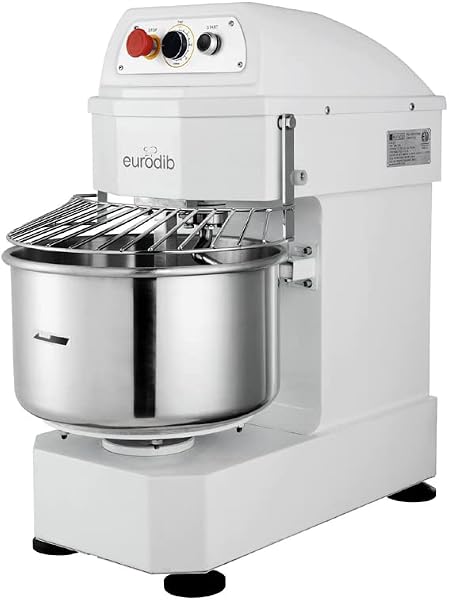
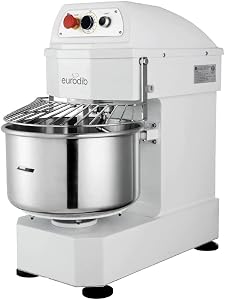
The Eurodib LM20T solves one of the biggest obstacles for small commercial bakeries and pizzerias: the need for a high-capacity spiral mixer that runs on standard 110V electrical service. Most commercial mixers in the 20-quart range require 220V wiring, which means expensive electrical upgrades before you can even plug the machine in. The LM20T eliminates that barrier, making it possible to add serious dough production capacity to any kitchen with a standard outlet.
We may earn a commission when you buy through this link, at no additional cost to you.
The 20-quart bowl handles a wide variety of dough types, from ciabatta and pizza to pie crust and cookie dough, giving you the flexibility to use a single machine across your entire product lineup. The built-in timer allows you to program specific mixing durations for different recipes, which helps maintain consistency across shifts and operators. This programmability is especially valuable in commercial settings where multiple staff members may use the mixer throughout the day.
Safety features include an emergency stop button and a bowl guard switch that prevents the machine from operating when the guard is not properly in place. These are standard requirements for commercial kitchen equipment and help protect staff during busy production periods. The white finish gives the machine a cleaner appearance than many industrial mixers, which can matter in open-kitchen or front-of-house bakery environments.
Upgrading a commercial kitchen to 220V service can cost several hundred to several thousand dollars depending on the building’s existing electrical infrastructure. The Eurodib LM20T’s 110V compatibility means you can plug it into a standard outlet and start producing dough immediately, which is a significant practical advantage for new businesses, rented kitchen spaces, or food trucks where electrical modifications are not feasible or permitted.
This mixer is the right choice for growing bakeries and pizzerias that need 20-quart capacity but cannot accommodate a 220V electrical installation. The trade-off is a slightly lower owner rating compared to the larger Eurodib 50-quart model and a higher price point than some competing 20-quart machines that require 220V. If your electrical setup allows 220V, you may find better value elsewhere, but for 110V-only kitchens, the LM20T fills an important niche.
Operations that already have 220V service and can access more powerful commercial mixers at a lower price point, or home bakers who do not need 20-quart capacity.
We may earn a commission when you buy through this link, at no additional cost to you.
At $310, this 10-liter spiral mixer is the most affordable dual-rotation dough kneader in the comparison, making it an accessible entry point for small food businesses, home-based bakeries, and budget-conscious buyers who want to move beyond a standard stand mixer for dough production. The 750W copper core motor and chain drive system rotate both the spiral rod and the bowl simultaneously, providing the fundamental mechanical advantage that defines spiral mixing.
We may earn a commission when you buy through this link, at no additional cost to you.
The two-speed configuration offers 100 RPM and 200 RPM options, which covers the basic needs of initial ingredient incorporation and active kneading. While this is far less granular than the 58 speeds on the Ooni Halo Pro or the 9 speeds on the 10.7-quart commercial model, it is sufficient for straightforward bread and pizza dough recipes that do not require precise speed transitions during the mixing cycle. The 10-liter stainless steel 201 bowl handles between 2.2 and 11 pounds of dough.
The safety shield over the bowl triggers an automatic power cutoff when opened, which is an essential feature for any commercial or semi-commercial environment. The stainless steel 201 construction resists daily wear and rust, though it is a lower grade than the 304 stainless steel found on more expensive models. The overall build quality reflects the budget price point, and the lower owner rating suggests that some buyers have encountered reliability or performance issues over time.
A 3.3-star rating across a large number of reviews typically signals inconsistent experiences rather than universal failure. Common issues with budget spiral mixers include louder operation, less precise speed control, and shorter component lifespan under heavy daily use. If you plan to run the mixer for multiple hours per day in a commercial setting, investing in a more robust model will likely prove more economical over time. For occasional use of a few batches per week, the budget model may serve adequately.
This mixer is best for buyers on a tight budget who need basic spiral mixing capability for small to medium dough batches and are willing to accept the trade-offs that come with the lowest price in the category. If you are just starting a small baking business or want to experiment with spiral mixing before committing to a more expensive machine, this model provides a low-risk way to evaluate whether the technology improves your dough quality.
High-volume commercial operations that need reliable daily performance, or bakers who require precise speed control for complex dough recipes.
We may earn a commission when you buy through this link, at no additional cost to you.
The OMCAN 47287 is a 21-liter spiral mixer manufactured in Italy, a country with a deep tradition of both bread baking and food equipment engineering. The Italian build quality signals attention to mechanical precision and durability, which matters for a machine that will be subjected to the repetitive stress of kneading dense dough day after day. The 750W motor runs on standard 120V power, making it compatible with most North American commercial kitchens without electrical upgrades.
We may earn a commission when you buy through this link, at no additional cost to you.
The removable bowl is a significant practical advantage in a commercial setting. Rather than scooping dough out of a fixed bowl or tilting the entire machine, you can lift the bowl away from the mixing head and transport it directly to your workbench for dividing and shaping. This speeds up the production workflow and simplifies cleaning between batches, which is important when you are switching between different dough types or allergen-sensitive recipes.
The bowl rotates at 10 RPM while the spiral hook spins at 85 RPM, a ratio that provides gentle but thorough kneading action suitable for a wide range of Italian-style doughs including pizza Napoletana, focaccia, and ciabatta. The 209-pound gross weight ensures rock-solid stability during operation, though it also means the machine will require a dedicated floor location and possibly a dolly or lift for initial placement.
In a busy production environment, the ability to remove the bowl from the mixer eliminates a bottleneck in the dough preparation process. While one batch is proofing on the bench, you can immediately load the clean bowl with the next batch of ingredients and start mixing again. This parallel workflow can significantly increase your hourly dough output compared to a fixed-bowl mixer where you must wait for the bowl to be emptied and cleaned before starting the next batch.
This mixer is best suited for medium-volume pizzerias and bakeries that value European build quality and want the convenience of a removable bowl in a mid-size commercial machine. The lack of an owner rating makes it harder to assess long-term reliability from user feedback, so buyers should consider the OMCAN brand reputation and the Italian manufacturing origin as supporting factors in their decision.
Home bakers or small kitchens that cannot accommodate a 209-pound floor-standing machine or that do not need 21-liter batch capacity.
We may earn a commission when you buy through this link, at no additional cost to you.
The Fleetwood AME25-1 is a heavy-duty spiral mixer designed for high-volume dough production, with a bowl capacity large enough to handle an entire 25-pound bag of flour in a single batch. The 3 HP motor provides the raw torque needed to knead dense, heavy doughs that would stall or overheat smaller machines, and the chain and belt drive system ensures consistent power transmission without the slippage that can occur in purely belt-driven designs.
We may earn a commission when you buy through this link, at no additional cost to you.
The production capacity of 275 pounds per hour makes this machine suitable for busy pizzerias, bagel shops, and bakeries that need to keep a steady supply of dough moving through the production line. The 304 stainless steel bowl features an anti-adherent treatment that helps prevent dough from sticking to the bowl surface, reducing waste and simplifying cleanup between batches. The tin-coated cast iron knife and spiral are built to withstand years of continuous use.
The single-speed operation simplifies the mixing process but limits the machine’s versatility compared to multi-speed models. This is a deliberate design choice for high-volume environments where consistency and simplicity are more important than the ability to fine-tune speed for different dough types. The 20-minute timer ensures that each batch receives the correct mixing duration, and the safety grid stops the machine immediately when lifted to protect operators.
At 275 pounds of dough per hour, the Fleetwood AME25-1 can keep pace with most medium to large pizzeria and bakery operations. When planning your production workflow, factor in the 20-minute mixing cycle and the time needed for loading and unloading each batch. In practice, you can expect roughly two to three complete batches per hour, which translates to 110 to 165 pounds of finished dough depending on your recipe and batch size.
This mixer is best for established commercial operations that produce large volumes of a limited range of dough types and need a reliable, high-capacity workhorse rather than a versatile multi-speed machine. The 220V requirement and 309-pound net weight mean it is strictly a commercial floor machine. If your operation needs to switch frequently between delicate pastry doughs and heavy bread doughs, a multi-speed model will serve you better.
Home bakers, small operations without 220V service, or anyone who needs variable speed control for a diverse range of dough types and recipes.
We may earn a commission when you buy through this link, at no additional cost to you.
The Festool 769031 is not a food mixer but rather a professional-grade spiral stirring paddle designed for mixing construction and finishing materials such as tile cement, floor compounds, plaster, screed, and filling mixtures. It is included in this comparison because it shares the spiral mixing geometry that defines the category, and some buyers searching for spiral mixers may be looking for industrial material mixing rather than dough preparation.
We may earn a commission when you buy through this link, at no additional cost to you.
The dual-spiral helical design creates a thorough mixing action that pulls viscous materials from the bottom of the bucket upward through the center of the paddle, ensuring complete blending without unmixed pockets. This is critical for construction materials where inconsistent mixing can lead to weak spots in tile adhesive, uneven curing in floor leveling compounds, or color variations in plaster and grout.
The paddle mounts to a Festool MX 1200 mixer via the Ergo fix adapter for tool-less attachment, or to any standard M14-threaded mixing drill. The 4.6-star rating reflects strong satisfaction among professional contractors and tradespeople who rely on consistent material mixing for quality installations. The compact size and lightweight design make it easy to transport between job sites.
The dual-spiral design of the Festool 769031 is optimized for highly viscous materials that resist blending. For thinner liquids like paint or stain, a flat-disc or single-spiral paddle would be more appropriate. The helical geometry excels at pulling thick, heavy compounds through the mixing zone, which is why it is the preferred choice for tile thinset, self-leveling underlayment, and ready-mix plasters that require thorough, lump-free blending.
This product is exclusively for construction and industrial material mixing and should never be used for food preparation. If you are a contractor or DIY renovator looking for a reliable spiral stirrer for cement, plaster, or flooring compounds, the Festool paddle delivers professional results with a trusted brand name. For any food-related mixing needs, choose one of the other nine options in this guide.
Anyone looking for a food-grade dough mixer, as this product is designed exclusively for construction materials and is not safe for food contact.
We may earn a commission when you buy through this link, at no additional cost to you.
Selecting a spiral mixer involves matching the machine’s capacity, power, and features to your specific baking volume, dough types, and workspace constraints. The following factors cover the most important decision points that separate a satisfying purchase from an expensive mistake.
Bowl capacity is the single most important specification when choosing a spiral mixer, and it should be driven by your typical batch size rather than your aspirational production goals. A bowl that is too large for your usual dough quantity will fail to engage the dough properly with the spiral hook, resulting in uneven mixing and underdeveloped gluten. Conversely, a bowl that is too small forces you to split batches, doubling your mixing time and introducing inconsistency between batches.
As a practical guideline, most spiral mixers perform best when the bowl is filled to between 25 and 75 percent of its rated capacity. A 10-quart mixer, for example, will handle roughly 2.5 to 7.5 quarts of finished dough effectively. Home bakers making a few loaves of bread or a batch of pizza dough per week will find 4 to 8 quarts sufficient, while small pizzerias and bakeries typically need 10 to 20 quarts. High-volume commercial operations should look at 20-quart and larger models that can process a full bag of flour in a single cycle.
Before purchasing, calculate your typical dough weight per batch and compare it to the mixer’s rated capacity. Remember that dough expands during mixing, so a bowl that seems large enough for your flour weight may be too small once the dough develops and increases in volume.
Motor wattage and horsepower determine how effectively a spiral mixer can handle dense, heavy doughs without stalling or overheating. Home-focused models like the Ooni Halo series use efficient DC motors in the 200 to 400 watt range, which is sufficient for batches of a few pounds. Commercial machines step up to 650W, 750W, or even 3 HP motors to move 20 to 55 pounds of dough through the kneading cycle without strain.
The drive system that connects the motor to the bowl and hook is equally important. Chain drive systems provide positive engagement and resist slippage under heavy loads, making them the preferred choice for commercial machines. Belt drive systems are quieter and less expensive but can slip when the dough becomes very stiff. Some premium models combine both chain and belt elements to balance reliability with noise reduction. Copper core motors dissipate heat more effectively than aluminum alternatives, which extends motor life during long mixing sessions.
Match the motor power to your heaviest dough type. If you primarily make high-hydration pizza dough or soft enriched breads, a moderate motor will suffice. If you regularly knead stiff bagel dough, pretzel dough, or low-hydration sourdough, prioritize a higher-wattage motor with a robust chain drive to avoid premature wear.
Speed control ranges from simple two-speed configurations on budget commercial models to the 58-speed precision of the Ooni Halo Pro. More speed settings give you finer control over the mixing process, allowing you to start slowly for flour incorporation, accelerate for gluten development, and reduce speed for final folding and ingredient additions. This level of control is particularly valuable for bakers who work with a wide variety of dough types and hydration levels.
For most straightforward bread and pizza recipes, two or three speeds are genuinely sufficient: a low speed for initial mixing and a medium speed for kneading. The additional speeds on premium models become most useful when you are experimenting with complex recipes, working with delicate enriched doughs that can tear at high speeds, or using the mixer for non-dough tasks like whipping cream or beating cake batter. If your recipe repertoire is narrow and well-established, a simpler speed configuration will serve you just as well at a lower cost.
Consider whether you need variable speed control for your specific baking style. Artisan bakers who adjust mixing protocols based on flour type, ambient temperature, and hydration levels will benefit from more speed options. High-volume production bakeries that run the same recipes all day may prefer the simplicity and reliability of a fixed-speed or two-speed machine.
The defining characteristic of a true spiral mixer is the simultaneous rotation of both the bowl and the spiral hook, which creates a differential speed that continuously repositions the dough against the hook for even kneading. This dual-rotation action develops gluten more uniformly and generates less friction heat than a fixed-bowl planetary mixer, resulting in better dough structure and more consistent fermentation. Models like the Garvee 10.5 QT and the 10L 750W mixer use chain-driven dual rotation to achieve this effect.
Fixed-bowl designs, where only the hook rotates, are simpler and less expensive but sacrifice some of the mixing efficiency that makes spiral mixers valuable. In a fixed-bowl configuration, the dough mass tends to ride up the hook and may not receive consistent kneading pressure throughout the batch. For small home batches, this difference may be negligible, but for larger commercial batches where consistency is critical, dual rotation is a meaningful advantage.
If dough quality and consistency are your primary concerns, prioritize a dual-rotation model. If you are on a tight budget and mainly mix small batches where the dough mass is small enough to engage fully with the hook even in a fixed bowl, a simpler design may be acceptable.
Safety features are non-negotiable in any commercial kitchen and highly recommended for home use as well. The most important safety element is a bowl guard or security shield that prevents hands from reaching the spinning hook during operation. Many models include an automatic shutoff that cuts power when the guard is opened, which is a critical protection in busy environments where distractions are common. Emergency stop buttons provide an additional layer of protection for commercial operators.
Build quality affects both safety and longevity. Heavy cast metal construction with stainless steel food-contact surfaces resists corrosion, withstands the repetitive stress of daily kneading, and provides the mass needed to keep the machine stable during operation. Budget models with lighter construction may vibrate or walk across the counter during heavy mixing, which is both a safety hazard and a performance issue. Look for food-grade 304 stainless steel bowls and hooks, nonslip feet or floor mounting options, and robust drive components that are rated for continuous commercial use.
Do not compromise on safety features to save money. A machine without a proper bowl guard or auto-shutoff is a liability in any environment where multiple people may use it. The additional cost of safety-equipped models is minimal compared to the potential consequences of an accident.
Electrical compatibility is a practical constraint that many buyers overlook until they try to plug in their new mixer. Most home-oriented spiral mixers and smaller commercial models up to about 20 quarts operate on standard 110V or 120V household current, which means you can use them with any standard outlet. Larger commercial machines like the Eurodib 50 Qt and the Fleetwood AME25-1 require 220V service, which may necessitate an electrical upgrade that adds significant cost and complexity to your purchase.
Before ordering any spiral mixer, verify the voltage requirement and compare it to your available electrical service. In a commercial kitchen, check with your electrician or building manager to confirm that the appropriate outlet is available near your intended mixer location. For home use, virtually all countertop models will work with standard outlets, but it is still worth checking the amperage draw to ensure you will not trip a circuit breaker when the motor is under heavy load.
If your kitchen lacks 220V service and upgrading is not feasible, focus on 110V models like the Eurodib LM20T 20-quart, which offers commercial capacity on standard power. If you already have 220V available, you will have access to more powerful machines at potentially lower price points.
Start by adding your liquid ingredients to the bowl first, followed by the flour and dry ingredients on top. This layering helps prevent dry flour from caking at the bottom of the bowl and ensures more even hydration from the start of the mixing cycle. Begin at the lowest speed to incorporate the flour gradually, then increase to your target kneading speed once the dough has come together into a cohesive mass. Avoid adding all the water at once for high-hydration doughs; instead, reserve a small portion and add it gradually as the gluten develops.
Monitor the dough temperature during mixing, especially with larger batches and longer kneading times. Friction from the hook and bowl generates heat, and dough that exceeds 78 to 80 degrees Fahrenheit may begin fermenting prematurely, which affects flavor and texture. If your dough is running warm, use colder water in your recipe or reduce the mixing speed to minimize friction. Many professional bakers measure the dough temperature at the end of mixing and adjust their water temperature on the next batch to hit their target.
Clean the bowl, hook, and breaker bar immediately after each use to prevent dough from drying and hardening on the surfaces. Most stainless steel components can be washed with warm soapy water and a non-abrasive brush. Avoid using harsh chemicals or steel wool on food-contact surfaces, as these can damage the finish and create spots where bacteria can accumulate. Wipe down the mixer body with a damp cloth and check the drive system and safety guards periodically for wear or loose connections.
A spiral mixer uses a rotating bowl and a spiral-shaped hook that work together to knead dough gently and evenly, generating less heat and developing gluten more uniformly. A planetary stand mixer uses a hook that orbits around a stationary bowl, which can create uneven mixing and more friction heat. Spiral mixers are specifically designed for dough, while planetary mixers are more versatile for general baking tasks.
Capacity varies widely by model. Compact home spiral mixers handle 2 to 10 pounds of dough per batch, mid-size commercial models handle 10 to 25 pounds, and large floor machines can process 50 pounds or more. Always check the manufacturer's rated capacity and aim to fill the bowl between 25 and 75 percent for optimal mixing performance.
Not necessarily. Many commercial spiral mixers in the 10 to 20 quart range operate on standard 110V or 120V power. Larger machines with 50-quart or bigger bowls typically require 220V service due to their higher-wattage motors. Always verify the voltage requirement before purchasing and confirm that your kitchen has the appropriate electrical service available.
Spiral mixers are actually the preferred mixer type for pizza dough in professional pizzerias because the gentle dual-rotation action develops the elastic gluten network that gives pizza crust its characteristic chew and structure without overheating the dough. Models like the Ooni Halo Pro and the OMCAN 21L are specifically designed with pizza dough in mind.
Mixing times vary by recipe and dough type, but most bread and pizza doughs require 8 to 15 minutes of active kneading in a spiral mixer. Start with 2 to 3 minutes at low speed for ingredient incorporation, then increase to medium speed for 6 to 12 minutes of gluten development. The dough is ready when it passes the windowpane test, stretching thin enough to let light through without tearing.
Most spiral mixers are straightforward to clean if you address them immediately after use. Removable bowls and hooks can be washed with warm soapy water, and many components are dishwasher safe. Fixed-bowl models require more manual cleaning around the hook and bowl interior. The key is to clean before dough dries and hardens on the surfaces, which makes the task significantly more difficult.
Some spiral mixers like the Ooni Halo Pro and Halo Core include additional attachments such as a flexible beater and geared whisk that allow them to handle cake batters, cookie dough, whipped cream, and frosting. Pure commercial spiral mixers designed exclusively for bread and pizza dough typically lack these attachments and are not well suited for lighter mixing tasks.
Noise levels vary by model and motor type. Home-oriented models with DC motors tend to be quieter and suitable for residential kitchens. Commercial machines with larger AC motors and chain drive systems produce more noise, which is generally acceptable in a commercial kitchen but may be disruptive in an open-plan home. If noise is a concern, look for models with DC motors and belt drive components.
Regular maintenance includes cleaning all food-contact surfaces after each use, checking the drive belt or chain tension periodically, lubricating moving parts according to the manufacturer's schedule, and inspecting safety guards and shutoff switches for proper operation. Commercial machines used daily may need professional servicing once or twice a year to maintain peak performance and extend the machine's lifespan.
The Ooni Halo Pro stands out as the strongest overall choice for most buyers who want genuine spiral mixing technology in a home-friendly package. Its 58 speed settings, rotating bowl, and versatile attachment system deliver professional-grade dough quality with the precision and convenience that serious home bakers and small-scale pizza makers need. The investment is significant, but the improvement in dough structure and consistency is tangible.
For commercial operations, the right choice depends on your production volume and electrical setup. The Garvee 10.5 QT and the 10.7 Qt commercial mixer offer capable mid-range performance for small bakeries and pizzerias, while the Eurodib 50 Qt and Fleetwood AME25-1 serve high-volume operations that need to process full bags of flour in a single batch. The Eurodib 20 Qt LM20T fills the important niche of commercial capacity on standard 110V power.
Start by defining your typical batch size, dough types, and available workspace, then match those requirements to the capacity and features that matter most. A well-chosen spiral mixer will improve your dough quality, streamline your production workflow, and last for years of reliable service. Any of the options in this guide can deliver meaningful results when matched to the right baking context.