Goldblatt 8-Inch Knife
9.4Editor score8-inch serrated blade
Stainless steel construction
Long-tang ergonomic handle
Nylon sheath included
Find the right sod cutters for 2026. We compare 10 standout options by build quality, useful features, owner feedback, value, and everyday trade-offs.

Find the right sod cutters for 2026. We compare 10 standout options by the factors that matter most for turf work, including blade material and serration pattern, handle ergonomics, cutting width, overall length, rust resistance, sheath quality, and how each tool performs across common lawn tasks like edging beds, trimming around sprinkler heads, and repairing damaged turf patches.
Sod cutting tools range from compact folding knives that fit in a pocket to long-handled edgers and plug extractors designed for standing use. Blade styles vary between fine-tooth serrations for clean turf cuts and aggressive wave teeth for tougher materials, and the right choice depends on whether you need precision around irrigation hardware or brute force through compacted soil and root systems.
Budget options start under fifteen dollars for basic stainless steel knives, while professional-grade sprinkler trimmers and plug tools reach into the eighty-dollar range. Prioritizing blade steel quality, handle comfort for extended use, and the specific cutting task you face most often will help you avoid buying a tool that looks right but underperforms in your actual yard conditions.
We compared 10 sod cutters using the details that actually help a buyer decide: blade length and serration style, steel grade and corrosion resistance, handle ergonomics and grip material, overall tool length for standing versus kneeling use, included sheath or storage, versatility across turf and landscaping tasks, owner feedback, and price-to-durability ratio. The notes focus on practical trade-offs so each pick connects to how homeowners and contractors actually cut, trim, and repair sod in real yard conditions.


Compare key features, scores, and current prices side by side. A shorter feature list means fewer details were available, not necessarily fewer capabilities.



This yellow-handled sod knife carries the highest owner rating in this guide at 4.8 stars, which is notable given its sub-ten-dollar price point. For buyers who prioritize user satisfaction signals and want a long double-edged blade for lawn repair without a significant investment, this model presents a compelling combination of positive feedback and affordability.
We may earn a commission when you buy through this link, at no additional cost to you.
The 11.14-inch alloy steel blade provides substantial cutting length for working through thick sod layers and dense root systems. The double-edged design offers cutting versatility for different tasks, allowing you to use the edge that best suits the material and cut type you are working with. The stainless steel construction provides baseline corrosion resistance for outdoor use in damp soil conditions.
The easy-carry design and lightweight construction make this knife convenient to bring along on routine yard maintenance rounds. At this price point, it serves well as a secondary or backup knife that lives in a tool bag or truck cab for impromptu turf repairs. The bright yellow handle color also makes it easier to spot in tall grass if you set it down during a project.
A high star rating on a budget product can indicate genuine satisfaction among buyers whose expectations match the price point. However, it is worth considering the total number of reviews and the specific use cases mentioned. A knife that earns high marks from occasional homeowners doing light repairs may not perform as well under daily professional use. Match the rating context to your own expected usage frequency and intensity.
This knife is a smart choice for budget-conscious buyers who value high owner ratings and want a capable 11-inch blade for general lawn repair tasks. If you need a more specialized tool for irrigation trimming or professional-grade construction, the Keyfit Tools or Kenyon options offer more targeted designs.
Professional landscapers who need a contractor-grade blade with verified steel specifications and heavy-duty handle construction.
We may earn a commission when you buy through this link, at no additional cost to you.
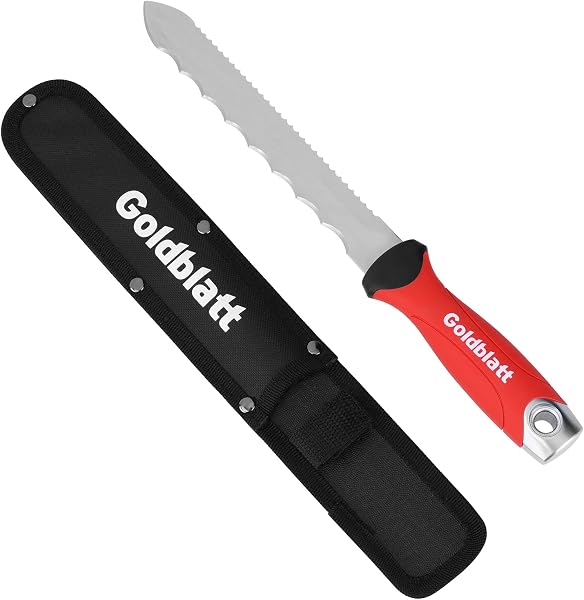
The Goldblatt 8-inch knife is originally designed for cutting rockwool and fiberglass insulation, but its double-sided serrated blade translates well to sod and turf work. For contractors and DIYers who already handle insulation projects and want one knife that crosses over into landscaping tasks, this tool eliminates the need to carry a separate sod blade. The aggressive wave teeth on one side slice through thick turf and root mats efficiently.
We may earn a commission when you buy through this link, at no additional cost to you.
The 7-7/8 inch stainless steel blade features two distinct tooth patterns, with one side optimized for aggressive cutting and the other for smoother, cleaner slices. This versatility means you can tackle rough sod removal on one edge and switch to finer trimming around garden beds on the other without changing tools. The polished finish resists corrosion from soil moisture and morning dew, which matters for a tool that spends most of its life outdoors.
The full long-tang construction runs the blade steel through the entire handle for added strength, preventing the wobble that cheaper partial-tang knives develop over time. The non-slip PP and TPR soft-grip handle reduces hand fatigue during extended cutting sessions, which is a genuine advantage when you are edging long property lines or cutting out large sections of damaged turf. The included heavy-duty nylon sheath protects the blade during storage and transport.
Different sod conditions call for different cutting approaches. Thick, established turf with dense root systems benefits from aggressive wave teeth that grab and tear through material quickly, while freshly laid sod or delicate edging work requires finer serrations that produce cleaner lines without tearing. A dual-serrated blade lets you handle both situations with a single tool, which saves time on jobs where conditions vary across the yard.
Choose this knife if you want a durable dual-purpose cutting tool that handles both insulation and sod work reliably. If your primary need is precision trimming around sprinkler heads or you want a longer blade for deep turf cuts, the Keyfit Tools or 11-inch options in this guide may serve you better.
Users who need a long-handled standing tool for edging large areas or a dedicated sprinkler head trimmer with a circular cutting pattern.
We may earn a commission when you buy through this link, at no additional cost to you.
This folding sod knife is the most compact option in this guide, designed for quick touch-up work rather than large-scale turf removal. For homeowners who keep a tool in their back pocket during routine yard maintenance and need to trim a stray patch of grass or cut around a valve box on the fly, the folding design means the blade stays protected and accessible without a separate sheath.
We may earn a commission when you buy through this link, at no additional cost to you.
The 4-3/4 inch stainless steel serrated blade is short but effective for precision tasks like trimming sod around sprinkler heads, cutting small patches for repair, and cleaning up edges along walkways. The folding lock mechanism keeps the blade securely open during use and safely closed during storage, which is an important safety feature for a tool that lives in a pocket or glove box.
The slip-resistant grip provides adequate control for the lighter cutting tasks this knife is designed for, though the compact handle size means it is less comfortable for extended heavy-duty use compared to full-size fixed-blade knives. The lightweight construction makes it easy to carry on a tool belt or in a landscaping bag without adding noticeable bulk.
Fixed-blade knives are stronger and better for heavy cutting, but they require a sheath and take up more space on a tool belt. A folding knife sacrifices some blade length and rigidity for the convenience of safe pocket carry and instant deployment. For quick fixes like trimming overgrown grass around a sprinkler head or cutting a small patch of damaged turf, the folding design is faster to access and easier to store between uses.
This knife is ideal for homeowners and maintenance workers who need a quick-access cutting tool for minor turf repairs and trimming tasks. If you need to cut large sections of sod or work through thick root systems, a longer fixed-blade knife or a long-handled edger will be more effective and comfortable.
Large-scale sod removal, deep turf cutting, or any task requiring significant blade length and leverage.
We may earn a commission when you buy through this link, at no additional cost to you.
The Keyfit Tools SOD Knife earns Editor's Choice for its specific design around one of the most common and frustrating sod cutting tasks: trimming turf around sprinkler heads, valve boxes, and concrete donuts. For landscaping professionals and serious homeowners who maintain irrigation systems, this knife addresses a real daily need that generic utility knives handle poorly.
We may earn a commission when you buy through this link, at no additional cost to you.
The 8-inch 304 stainless steel blade features razor-sharp serrations that cut cleanly through established sod and root systems without tearing. The 304 grade steel is a step above standard stainless, offering better corrosion resistance against the moisture and soil acids that degrade cheaper blades over time. At 13 inches overall length, the knife provides enough reach to work around sprinkler heads and into valve box openings without your knuckles dragging in the dirt.
Beyond sprinkler work, this knife handles new sod installation around landscape beds, dog spot repairs, and general turf edging with equal competence. The black nylon weave sheath protects the blade between uses and clips to a belt for easy access during landscaping rounds. The handle provides a secure grip even when wet, which matters when you are working with irrigation systems that tend to spray unexpectedly.
Not all stainless steel is equal. 304 grade stainless contains higher chromium and nickel content than cheaper 400-series alternatives, which gives it significantly better resistance to rust and pitting from prolonged exposure to wet soil, fertilizer chemicals, and irrigation water. For a sod knife that will be buried in damp turf regularly, 304 stainless extends the blade’s useful life and keeps the cutting edge sharper longer between sharpening sessions.
This is the right choice for anyone who regularly trims sod around irrigation hardware or installs new turf around existing landscape features. If you only need occasional light trimming and want to spend less, the budget garden knives in this guide will handle basic tasks adequately.
Buyers who only need a basic knife for occasional light trimming and do not want to pay the contractor-grade premium.
We may earn a commission when you buy through this link, at no additional cost to you.
This 11.14-inch knife offers one of the longest blades in this guide at a price under twelve dollars, making it an attractive option for buyers who want maximum cutting reach without a premium investment. The double-sided blade design assigns different serration patterns to each edge, with one side built for aggressive slicing through tough materials and the other optimized for cleaner cuts through sod and foam.
We may earn a commission when you buy through this link, at no additional cost to you.
The rust-resistant stainless steel construction holds up well against the moisture inherent in lawn work, and the longer blade provides better leverage when cutting through thick turf and dense root systems compared to shorter 8-inch alternatives. The extra blade length also helps when slicing through deeper soil layers during sod removal or when cutting around larger landscape features like tree rings and garden bed borders.
The ergonomic handle features a non-slip rubber coating that maintains grip even when your hands are wet from morning dew or irrigation spray. The included heavy-duty nylon sheath with snap fastener keeps the blade secure during transport and storage, which is a practical safety feature for a tool with an 11-inch cutting edge. The lightweight construction makes it easy to carry alongside other landscaping tools.
Longer blades provide more cutting surface and better leverage when working through thick sod layers. An 11-inch blade can penetrate deeper into the soil profile in a single stroke than a 4 or 8-inch alternative, which reduces the number of passes needed to free a section of turf. For removing large patches of damaged sod or cutting new strips for transplanting, the extra length translates directly into faster work and less hand fatigue.
Choose this knife if you want a long blade for deep turf cuts and versatile material handling at a budget-friendly price. If brand reputation and specialized irrigation trimming matter more, the Keyfit Tools knife offers a more targeted design for sprinkler work.
Users who need a compact pocket knife for quick touch-ups or a specialized sprinkler head trimmer with a circular cutting pattern.
We may earn a commission when you buy through this link, at no additional cost to you.
The Colwelt Sod Plugger is a fundamentally different tool from the knives in this guide, designed specifically for extracting and transplanting square plugs of grass rather than cutting linear strips of sod. For homeowners establishing a new lawn from plugs of warm-season grasses like Zoysia, Bermuda, St. Augustine, or Centipede, this tool automates the most labor-intensive part of the process.
We may earn a commission when you buy through this link, at no additional cost to you.
The 3-by-3 inch square cutting head matches the size of typical commercial grass plugs, and the square shape captures more of the root system than round plug tools, which can improve transplant survival rates. The sharp serrated bottom edge cuts through soil and roots with a step-and-wiggle motion, while the two anti-slip steel pedals provide the leverage needed to penetrate compacted ground. The thickened carbon steel construction with anti-rust coating handles repeated soil contact without significant corrosion.
The standout feature is the built-in foot ejector that releases the soil plug with a single step, eliminating the need to bend over and dig the plug out by hand. At 36 inches tall, the long handle lets you work from a standing position, which dramatically reduces back strain compared to kneeling with a trowel or hand plugger. The soft non-slip grip on the handle adds comfort during extended planting sessions.
Square plug tools capture more root mass than round designs of similar dimensions because the corners extend further into the soil profile. This extra root coverage can improve transplant success rates, especially in warm-season grasses that spread through stolons and rhizomes. The tradeoff is that square plugs require more precise alignment when planting into prepared holes, whereas round plugs drop in more easily regardless of orientation.
This tool is the right choice if your primary task is planting or transplanting grass plugs across a large area. The lower owner rating suggests mixed experiences, possibly related to soil type compatibility or assembly. If you need a general-purpose sod cutting knife rather than a specialized plugger, choose one of the blade-style tools in this guide instead.
General sod cutting, edging, or sprinkler trimming tasks that require a blade-style knife or edger.
We may earn a commission when you buy through this link, at no additional cost to you.
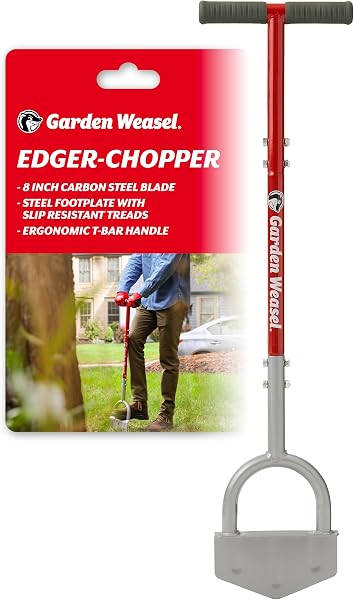
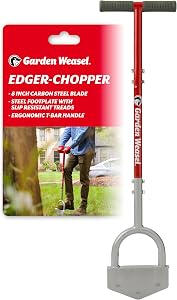
The Garden Weasel Edger Chopper is a long-handled standing tool designed for creating crisp borders along flower beds, driveways, sidewalks, and patios. For homeowners who want professional-looking lawn edges without kneeling or using a gas-powered edger, this manual tool provides a practical middle ground that produces clean results with moderate physical effort.
We may earn a commission when you buy through this link, at no additional cost to you.
The tempered 8-inch carbon steel blade slices through sod, compacted soil, and small roots with a step-and-press motion that uses your body weight for leverage rather than arm strength. The extra-wide slip-resistant footplate provides a stable platform for applying downward pressure, which is essential when cutting through established turf along concrete edges where the root systems are densest. The 38-inch assembled length keeps your back upright during use.
The ergonomic T-handle provides comfortable two-handed control for steering the blade along curved bed lines and straight sidewalk edges. The rust-resistant carbon steel frame holds up well to regular outdoor use, though carbon steel blades do require occasional wiping and drying to prevent surface rust more than stainless alternatives would. The tool ships in multiple pieces for compact delivery and assembles quickly with basic hand tools.
Gas and electric edgers cut faster and require less physical effort, but they are louder, heavier, more expensive, and require fuel or charging. A manual step edger like the Garden Weasel is quieter, lighter, requires no power source, and gives you more precise control over cutting depth and angle. For homeowners with moderate-sized yards who edge a few times per season, the manual approach provides excellent results without the maintenance overhead of powered equipment.
Choose this edger if your primary need is creating and maintaining clean borders along hardscapes and garden beds from a standing position. If you need a hand knife for detailed trimming around sprinkler heads or small repair patches, pair this with one of the blade-style tools in this guide for a complete sod cutting setup.
Fine detail trimming around irrigation hardware or large-scale sod removal projects that require a powered cutter.
We may earn a commission when you buy through this link, at no additional cost to you.
At under four dollars, this 11-inch garden knife is the least expensive option in this guide by a wide margin, yet it still delivers an 11-inch double-sided stainless steel blade with a nylon sheath. For buyers who need a basic sod cutting knife for occasional lawn repairs and do not want to invest heavily in a tool they will use a few times per year, this price point is hard to argue with.
We may earn a commission when you buy through this link, at no additional cost to you.
The dual-sided blade features fine density serrations on one edge for precise trimming and sharp wave teeth on the other for faster cutting through thicker turf. The 16.5-inch overall length provides good reach for working around sprinkler heads and into landscape beds. The one-piece molding construction adds durability by eliminating the weak point where blade and handle join on cheaper riveted designs.
The ABS handle is ergonomically shaped to fit the palm and provides adequate grip for typical lawn tasks, though it lacks the rubber overmolding found on more expensive options. The included nylon sheath protects the blade during storage and prevents accidental cuts when reaching into a tool bag. At 0.06 inches thick, the blade is thinner than premium options, which means it may flex more when cutting through very dense root systems.
Not every sod cutting task requires a premium tool. If you are repairing a few dog spots, trimming around a couple of sprinkler heads, or cutting a small section of turf for a garden bed expansion, a budget knife handles these jobs adequately. The money saved can go toward higher-quality tools for tasks you perform more frequently. Just be aware that thinner blades may need more frequent sharpening and are more prone to bending under heavy lateral pressure.
This knife is the right pick for budget-conscious buyers who want a full-size sod cutting blade for occasional use. If you plan to use the knife daily or need it to withstand heavy professional use, investing in a thicker-bladed contractor-grade option like the Keyfit Tools knife will pay off in longevity.
Professional landscapers or heavy daily use where blade thickness and handle durability are critical for long-term performance.
We may earn a commission when you buy through this link, at no additional cost to you.
The Kenyon 4-inch Sprinkler Head Trimmer is a specialized professional tool designed for one specific task: cutting clean circles of sod around irrigation sprinkler heads. For landscaping companies and irrigation technicians who service dozens of sprinkler heads per week, this purpose-built design is dramatically faster and more consistent than trying to trim circles by hand with a knife.
We may earn a commission when you buy through this link, at no additional cost to you.
The 4-inch cutting diameter matches the standard clearance needed around most pop-up sprinkler heads, producing uniform circles that look professional and allow proper head operation without turf interference. The step plate at the base provides the leverage needed to push the cutting edge through established sod and compacted soil with body weight rather than arm strength. The 5/8-inch powder-coated structural steel shaft resists bending even under heavy downward pressure.
The 33-inch welded handle keeps you working from an upright position, which reduces back strain during repetitive trimming across large irrigation zones. The ergonomic T-handle provides comfortable two-handed control for precise positioning over each sprinkler head. The powder-coated finish resists rust from constant soil and water contact, which is essential for a tool that spends its working life buried in wet turf.
Overgrown grass around sprinkler heads blocks spray patterns, reduces coverage uniformity, and can damage the head mechanism over time. A circular trimmer produces a consistent clearance zone that allows full head rotation and proper water distribution. Hand-trimming with a knife can achieve similar results but takes significantly longer and produces less uniform circles, especially when you are working through dozens of heads in a single maintenance session.
This tool is the right investment for irrigation professionals and serious homeowners with extensive sprinkler systems who need to trim around heads regularly. If you only have a few sprinkler heads to maintain, a hand knife like the Keyfit Tools option handles the same task at a fraction of the cost, just with more effort per head.
General sod cutting, edging, or lawn repair tasks that require a blade-style knife rather than a circular cutting tool.
We may earn a commission when you buy through this link, at no additional cost to you.
The Kenyon 3.5-inch Sprinkler Head Trimmer shares the same robust construction as the 4-inch model but with a smaller cutting diameter suited for compact sprinkler heads and tighter clearance requirements. For irrigation systems using smaller pop-up heads or rotary nozzles that need less surrounding clearance, this tighter cut produces a neater appearance while still allowing full head operation.
We may earn a commission when you buy through this link, at no additional cost to you.
The 3.5-inch cutting circle removes less turf per cut, which means less bare soil visible around each head and a more manicured overall appearance. This matters for high-visibility commercial properties and residential lawns where aesthetic detail is a priority. The step plate and 5/8-inch powder-coated steel shaft provide the same leverage and durability as the larger model, handling compacted soil and dense root systems without bending.
The 33-inch welded handle and ergonomic T-handle keep the user in a comfortable standing position during repetitive trimming work. The slightly higher owner rating compared to the 4-inch version suggests strong satisfaction among users who chose this size for their specific sprinkler configurations. The professional-grade construction justifies the premium price for buyers who use the tool frequently.
Different sprinkler head types require different clearance diameters. Standard pop-up spray heads typically need 3 to 4 inches of clearance, while larger rotary heads and impact sprinklers may need 4 inches or more. Measure the heads in your system before choosing a trimmer size. A trimmer that is too small will not provide adequate clearance, while one that is too large removes more turf than necessary and creates visible bare patches.
Choose this model if your sprinkler heads are compact and you want the tightest possible clearance cut for a manicured appearance. If your heads are larger or you need more clearance for proper spray distribution, the 4-inch Kenyon model is the better match.
Larger rotary sprinkler heads that need more than 3.5 inches of clearance, or general-purpose sod cutting tasks.
We may earn a commission when you buy through this link, at no additional cost to you.
Selecting a sod cutter depends on the specific turf tasks you face most often, the scale of your projects, and how frequently you will use the tool. The factors below cover the most important decision points to help you choose a tool that actually makes your lawn work easier rather than adding frustration.
Blade length directly determines how deep and how wide each cutting stroke can reach. Short blades in the 4 to 5 inch range work well for precision trimming around sprinkler heads, valve boxes, and tight landscape features where control matters more than cutting volume. Longer blades in the 8 to 11 inch range provide better leverage for cutting through thick sod layers and removing larger sections of turf for repair or transplanting.
Consider the depth of your sod and root system when choosing blade length. Established lawns with deep root systems in clay soil require longer blades that can penetrate the full root zone in fewer strokes. Newly laid sod or thin turf over sandy soil can be managed with shorter blades. A blade that is too short for your soil conditions will require multiple passes and significantly more effort to achieve clean cuts.
Choose an 8 to 11 inch blade for general sod cutting and removal tasks. Choose a 4 to 5 inch blade for precision trimming around irrigation hardware and landscape features. If you need both capabilities, a mid-range 8 inch knife paired with a dedicated sprinkler trimmer covers most situations.
The steel grade of your sod cutter blade affects sharpness retention, corrosion resistance, and overall durability. 304 stainless steel, found in the Keyfit Tools knife, offers the best corrosion resistance for tools that spend extended time in wet soil and contact with fertilizer chemicals. Standard stainless steel provides adequate rust protection for occasional use but may develop surface pitting over years of heavy exposure. Carbon steel blades, like those on the Garden Weasel edger, hold a sharper edge longer but require more diligent cleaning and drying to prevent rust.
Blade thickness also matters for durability. Thicker blades resist bending when cutting through dense root systems and compacted soil, while thinner blades flex more easily but cut with less resistance in lighter soils. The 0.06 inch blade on the budget garden knife is adequate for light trimming but may bend under heavy lateral pressure in tough conditions.
Prioritize 304 stainless steel if you work in wet conditions frequently or use the tool near irrigation systems. Standard stainless is fine for occasional dry-weather use. Carbon steel is best for edging tools where sharpness retention matters more than corrosion resistance.
Serration style affects how the blade interacts with different turf types and soil conditions. Fine, closely spaced serrations produce cleaner cuts through thin sod and are better for precision edging work where a smooth cut line matters. Aggressive wave teeth grab and tear through thick, established turf more quickly but leave rougher edges that may need cleanup. Dual-serrated blades like the Goldblatt and 11-inch garden knife offer both patterns on opposite edges, providing versatility without carrying two tools.
Double-edged blades with different serration patterns on each side are particularly useful for mixed-use situations where you alternate between rough sod removal and fine trimming within the same project. Single-edge designs are simpler and easier to sharpen but limit your cutting options in the field.
Choose dual-serrated blades if your work involves varied conditions across the same yard. Choose fine serrations for precision edging and aggressive wave teeth for heavy sod removal. A double-edged blade is the most versatile single-tool solution for general use.
Handle comfort becomes critical when you are cutting sod for extended periods. Short hand knives with rubber-overmolded grips reduce hand fatigue and maintain control when your hands are wet from soil moisture or irrigation spray. ABS plastic handles are lighter and cheaper but can become slippery when wet and may cause blisters during prolonged use. Full-tang construction, where the blade steel extends through the entire handle, provides the strongest connection and prevents the blade from loosening over time.
Long-handled tools like the Garden Weasel edger and Kenyon sprinkler trimmers eliminate kneeling entirely by letting you work from a standing position. The T-handle design on these tools provides two-handed leverage for driving the blade through compacted soil with body weight rather than arm strength. For anyone with back or knee issues, a standing tool can make the difference between completing a project and abandoning it halfway through.
Choose rubber-overmolded handles for hand knives if you plan extended cutting sessions. Choose long-handled standing tools if you have back or knee concerns or need to trim many sprinkler heads in a single session. Avoid bare plastic handles for wet-weather use.
Sod cutters fall into several distinct categories, each optimized for different tasks. Hand knives with serrated blades handle general turf cutting, edging, and repair work. Folding knives provide pocket-portable convenience for quick touch-ups. Long-handled edgers create clean borders along hardscapes from a standing position. Sprinkler head trimmers cut precise circles around irrigation hardware. Sod pluggers extract and transplant grass plugs for lawn establishment.
Matching the tool type to your primary task is more important than buying the most expensive or feature-rich option. A premium sprinkler trimmer is wasted if your main need is edging along a driveway, and a hand knife is inefficient for planting hundreds of grass plugs. Identify your most frequent sod cutting task and choose the tool category that addresses it directly.
Start with a versatile hand knife for general use, then add specialized tools as specific needs arise. A hand knife plus a standing edger covers most homeowner needs. Add a sprinkler trimmer if you maintain an extensive irrigation system.
A quality sheath protects the blade edge from damage during storage and prevents accidental cuts when reaching into a tool bag. Nylon sheaths with snap fasteners, like those included with the Keyfit Tools and 11-inch garden knives, provide secure retention and resist moisture better than leather alternatives. Fixed-blade knives without sheaths are a safety hazard during transport and storage, so verify sheath inclusion before purchasing.
Folding knives eliminate the need for a separate sheath by enclosing the blade within the handle when not in use. This makes them the most portable option for carrying on a tool belt, in a pocket, or in a vehicle glove compartment. The tradeoff is reduced blade length and strength compared to fixed-blade alternatives.
Prioritize included sheaths for fixed-blade knives. Choose folding designs if portability and safe pocket carry are your top priorities. For long-handled tools, consider storage space in your garage or shed since these do not fit in standard tool bags.
Sod cutter prices in this guide range from under four dollars for basic garden knives to over eighty dollars for professional sprinkler trimmers. The price difference typically reflects blade steel quality, handle construction, tool specialization, and brand reputation. Budget knives under fifteen dollars handle occasional homeowner tasks adequately but may need more frequent replacement or sharpening under heavy use.
Professional-grade tools from brands like Kenyon and Keyfit cost more upfront but typically last significantly longer under daily use conditions. The 304 stainless steel blade and full-tang construction of a contractor-grade knife may cost three to five times more than a budget alternative but can outlast it by a factor of ten or more in professional settings.
Choose budget knives for occasional homeowner use and light repairs. Invest in professional-grade tools if you use the cutter weekly or daily. The break-even point for most users is around one to two seasons of regular use, after which the cheaper tool typically needs replacement.
Before cutting sod, water the area lightly the day before to soften the soil and root zone, which reduces cutting effort and produces cleaner edges. Mark your cutting lines with spray paint or string for straight borders, and clear the area of rocks, sticks, and debris that could damage the blade. For hand knives, use a firm grip and pull the serrated edge toward you in smooth strokes rather than pushing forward, which provides better control and reduces the risk of the blade slipping. For long-handled edgers and sprinkler trimmers, position the blade over the cutting line and press down with your foot on the step plate, using your body weight to drive the blade through the turf.
After each use, clean the blade thoroughly with water and a stiff brush to remove soil, grass clippings, and root fragments that can trap moisture against the steel and accelerate corrosion. Dry the blade completely with a rag before storing it in its sheath or hanging it in a dry location. For carbon steel blades, apply a light coat of oil after cleaning to prevent surface rust. Inspect the serrations periodically for dull spots or damage, and use a round file or sharpening stone to restore the edge when cutting performance declines.
Store sod cutters in a dry, covered location away from direct rain and sprinkler overspray. Keep hand knives in their sheaths to protect the blade edge and prevent accidental cuts. Long-handled tools should be hung vertically or stored horizontally on a rack to prevent the shaft from warping over time. Check handle connections and fasteners at the start of each season to ensure everything is tight and secure before putting the tool back into regular service. With proper cleaning and storage, a quality sod cutter should provide reliable performance for many seasons of lawn maintenance.
A hand knife with a serrated blade like the Keyfit Tools SOD Knife works well for trimming around individual sprinkler heads with precision. For larger irrigation systems with many heads, a dedicated circular sprinkler trimmer like the Kenyon models cuts uniform circles much faster from a standing position. The right choice depends on how many heads you need to maintain and how often.
Hand knives can handle short edging runs and tight corners, but they require kneeling and significant effort for long straight lines. A long-handled step edger like the Garden Weasel is much more efficient for edging along hardscapes because it lets you work standing up and uses body weight for leverage. For extensive edging projects, the standing tool will save considerable time and physical strain.
Clean the blade after every use to remove soil and organic debris, then dry it completely before storage. Sharpen the serrations with a round file or tapered sharpening stone when cutting performance declines, typically once or twice per season for moderate use. Apply a light oil coating to carbon steel blades to prevent rust. Store the knife in its sheath in a dry location to protect the edge.
A sod cutter knife slices through turf in linear cuts for edging, trimming, and removing sections of sod. A sod plugger extracts circular or square plugs of grass and soil for transplanting or planting new grass plugs. They serve fundamentally different purposes: knives cut and trim, while pluggers extract and transplant. Most lawn maintenance requires a knife, while pluggers are specialized tools for lawn establishment and repair.
Stainless steel resists rust and corrosion better, making it the better choice for tools that will be exposed to wet soil and irrigation water frequently. Carbon steel holds a sharper edge longer and is easier to sharpen, but requires more diligent cleaning and drying to prevent rust. For most homeowners, stainless steel is the lower-maintenance choice. For professionals who sharpen regularly, carbon steel offers superior cutting performance.
For most lawn grasses, cutting 1 to 2 inches deep captures the root zone and allows clean removal without excessive soil disturbance. Warm-season grasses like Bermuda and Zoysia may have deeper root systems that require 2 to 3 inches of cutting depth. Cut too shallow and the sod tears unevenly. Cut too deep and you remove excessive topsoil that will need to be replaced before replanting.
Yes, many insulation knives with serrated stainless steel blades work well for sod cutting because the serration patterns designed for fibrous insulation materials also grip and cut through turf and root systems effectively. The Goldblatt 8-inch knife in this guide is a good example of a dual-purpose tool that handles both insulation and sod work. Just ensure the blade is stainless steel for corrosion resistance in outdoor conditions.
A quality stainless steel sod knife used for moderate homeowner tasks should last five or more years with proper cleaning and occasional sharpening. Budget knives with thinner blades may need replacement every one to two seasons under regular use. Professional-grade knives used daily may last three to five years before the blade becomes too worn to sharpen effectively. Replace the knife when the blade no longer holds an edge or shows significant corrosion pitting.
Measure the diameter of your sprinkler heads and the clearance needed for proper spray distribution. Most standard pop-up spray heads need 3 to 4 inches of clearance, while larger rotary heads may need 4 inches or more. The Kenyon 3.5-inch trimmer suits compact heads, while the 4-inch model handles standard and larger heads. Choosing the right size ensures adequate clearance without removing more turf than necessary.
The Keyfit Tools SOD Knife earns the strongest overall recommendation for its combination of 304 stainless steel construction, contractor-grade build quality, and specific design for the most common sod cutting tasks including trimming around sprinkler heads, valve boxes, and landscape beds. The 8-inch serrated blade and 13-inch overall length provide the right balance of precision and reach for both professional landscapers and serious homeowners who maintain their own irrigation systems and turf.
Several alternatives suit different buyer priorities. The 11-Inch Garden Knife at under four dollars offers remarkable value for occasional users who need a full-size blade without a significant investment. The Kenyon sprinkler trimmers provide the fastest and most consistent results for dedicated irrigation maintenance. The Garden Weasel Edger handles long border edging runs from a standing position without the noise and maintenance of powered equipment. The Colwelt Sod Plugger serves the specialized niche of grass plug transplanting for lawn establishment.
Your best choice depends on your primary sod cutting task, how often you perform it, and your physical comfort preferences. For general-purpose turf work, start with a quality hand knife in the 8 to 11 inch range with stainless steel construction. Add a standing edger for border work and a sprinkler trimmer for irrigation maintenance as your needs grow. Whatever you choose, clean and dry the blade after each use to maximize its lifespan, and sharpen the serrations at the first sign of declining cutting performance.