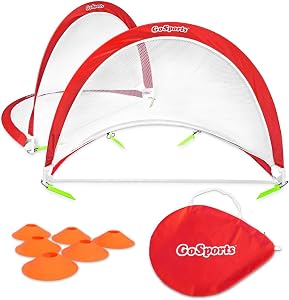
Kids Pop-Up Set
9.0Editor score6×4 ft pop-up
450D Oxford cloth
Fiberglass 10mm poles
Includes ball cones
Find the right soccer goals for 2026. We compare 10 standout options by build quality, useful features, owner feedback, value, and everyday trade-offs.
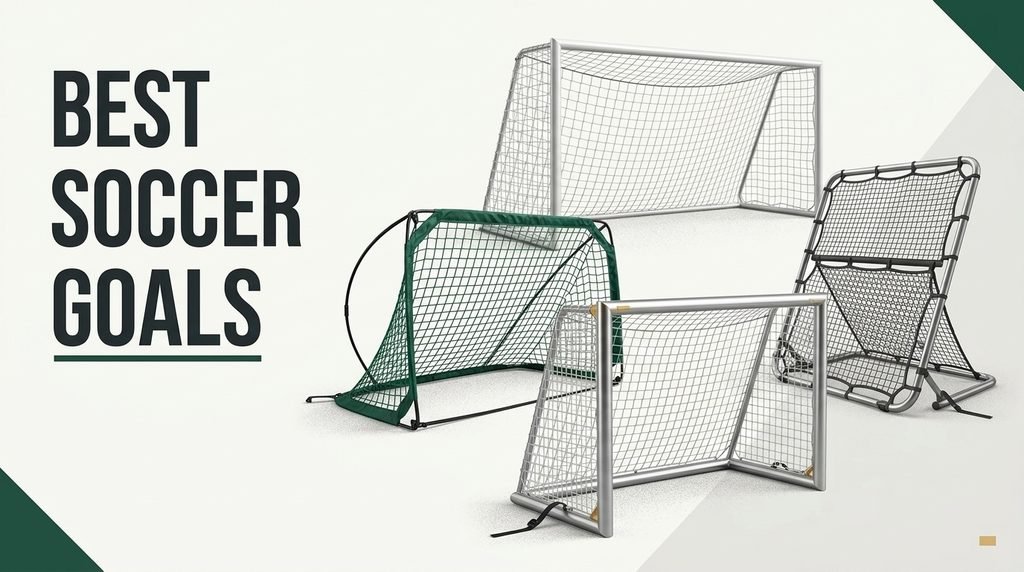
Choosing a backyard soccer goal in 2026 comes down to more than picking a size. We compare 10 standout options by frame material, dimensions, net durability, setup time, portability, included training accessories, weather resistance, and how well each holds up to repeated shots from casual play or structured practice sessions.
The right pick depends heavily on who will use it. A pop-up net for a five-year-old is a very different purchase than a regulation-size steel goal for a competitive teenager. Frame material, anchoring hardware, and net quality all shape whether a goal survives one season or many years.
This guide breaks each goal down by realistic use case, from tiny pop-up nets for garden kickabouts to full 12-by-6 steel frames built for tournament-style shooting drills. Use the comparisons below to match a goal to your available space, player age, and the intensity of play you expect.
We compared 10 soccer goals using the details that actually matter in a backyard purchase: frame material and diameter, goal dimensions, net gauge and weave, anchoring system, assembly time, weather resistance, portability, included training extras like target sheets and cones, and long-term durability under repeated shots. The notes focus on practical trade-offs so each recommendation connects to how families, coaches, and solo players actually set up, store, and use goals across seasons.


Compare key features, scores, and current prices side by side. A shorter feature list means fewer details were available, not necessarily fewer capabilities.



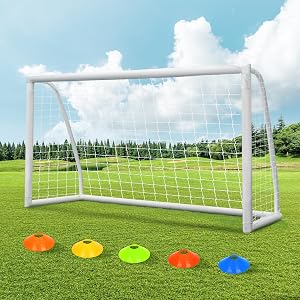
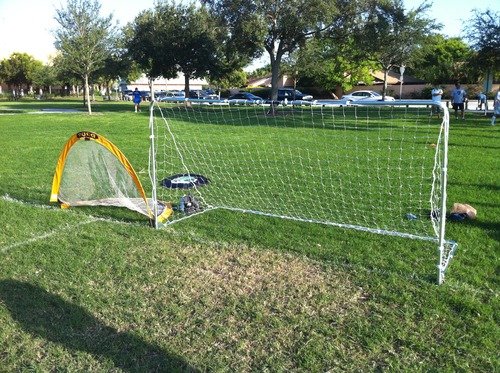
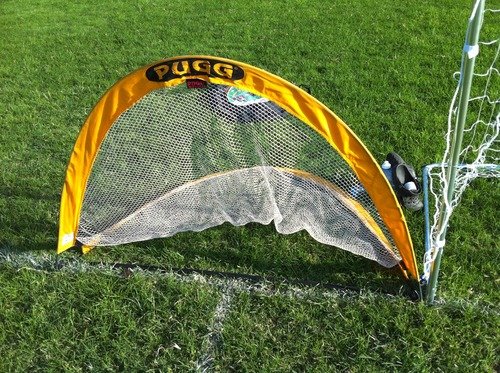
PUGG has been the reference point for pop-up soccer goals for years, and this set explains why it maintains one of the highest ratings in the category. The frame is built from a single piece of spring steel, which is substantially more durable than the flexible fiberglass poles used in cheaper pop-ups. That steel frame also holds shape better after repeated collapse-and-deploy cycles.

We may earn a commission when you buy through this link, at no additional cost to you.
Setup and takedown are genuinely fast thanks to a quick twist that collapses the goal into a flat oval about an inch thick. The set includes two goals, ground pegs, a spare parts kit, and a carry bag with a shoulder strap, making it easy to grab the whole kit and head to a park, beach, or backyard on short notice. The knitted poly net and premium denier nylon sleeve resist wear better than budget alternatives.
One of the underrated strengths of PUGG goals is versatility across surfaces. The integrated pegs work on grass, sand, and turf, which matters for coaches or families who use the goals in varied environments. Youth soccer programs often gravitate toward PUGG for exactly this reason, since the same set can serve backyard practice one day and beach games the next.
Fiberglass poles in budget pop-ups tend to lose their spring after many collapse cycles, eventually snapping at stress points. A single-piece spring steel frame handles hundreds or thousands of deployment cycles without fatigue, which is why professional coaches trust PUGG for regular use. If you plan to set up and take down the goal frequently, the frame material genuinely matters for long-term value.
The main consideration is size. Like most pop-up goals, PUGG’s frames are smaller than regulation, which limits their usefulness for older players working on full-goal drills. For coaches running small-sided training, families with mixed-age players, or anyone who values a portable set-of-two format from a trusted brand, PUGG remains a benchmark choice.
Players who need a regulation-size goal for realistic goalkeeper practice at the youth or adult level.
We may earn a commission when you buy through this link, at no additional cost to you.
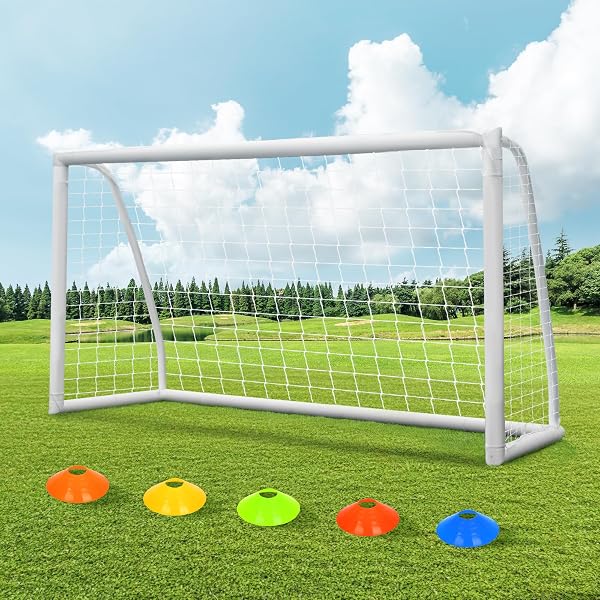
This set delivers almost everything a family needs to turn a backyard into a mini pitch. Two 6-by-4 foot goals, a shooting target, a size 3 ball with pump, 10 cones, and stakes come packed in a carrying bag, making it a natural pick for parents introducing children to the sport without hunting down accessories separately.

We may earn a commission when you buy through this link, at no additional cost to you.
The frame uses 10mm fiberglass poles wrapped in 450D Oxford cloth, with a three-layer dacron net and an inner bungee cord that keeps tension consistent. That combination is flexible enough to absorb the impact of a size 3 or size 4 ball at kid-level pace, and the L-shaped metal joints add rigidity where the poles meet. For casual games and skill-building drills, it holds shape well.
The detachable target sheet is one of the more useful extras in this price range. It splits the goal mouth into five scoring zones, which gives kids a concrete way to practice placement rather than just blasting the ball anywhere. Ten cones also open the door to dribbling courses, passing lanes, and simple footwork drills that keep training varied.
Having two goals opens the door to actual small-sided matches rather than one-directional shooting. Kids can play two-versus-two or three-versus-three, which teaches spacing, defense, and passing rather than just shooting drills. For siblings or neighborhood groups, that difference keeps play interesting far longer than a single goal setup.
The main tradeoff is that this is a youth-oriented setup, not a competition goal. Adults or older teens hitting full-power shots will likely bend or stress the fiberglass poles over time. Parents with children in the roughly 3 to 12 age range looking for an all-in-one gift or backyard training kit will find it hits the mark.
Adult players or serious teen athletes who need a rigid frame that can absorb repeated high-velocity shots.
We may earn a commission when you buy through this link, at no additional cost to you.
Franklin's Quick-Setup goal targets families and clubs that want a genuine 12-by-6 regulation frame without dealing with wrenches or hardware kits. The snap-together pole system and self-stick net straps make the initial assembly noticeably faster than many competing steel goals, which matters when you want to spend an afternoon playing instead of building.

We may earn a commission when you buy through this link, at no additional cost to you.
Structurally, the galvanized steel frame is the star. It resists rust when left outside through wet weather and holds up to repeated shots without bending at the joints. The included nylon net is UV-treated to survive months of sun exposure, and the four steel ground stakes provide a solid anchor on grass so the goal does not drift or tip during heavy play.
Because it hits official youth and adult tournament dimensions, this goal is genuinely useful for skill development. Goalkeepers can practice covering a full-size frame, shooters can work on hitting corners that mirror real match conditions, and coaches can run team drills that translate directly to game situations. Franklin’s decades-long track record in backyard sports gear also adds a level of trust that lesser-known brands lack.
Practicing on a full-size goal changes how players develop. Shooters learn realistic angles and target areas, and goalkeepers build muscle memory for covering the true dimensions they face in matches. Youth players who train exclusively on small goals often struggle when they step up to regulation frames in games. If your child plays organized soccer, the transition is much smoother with a full-size goal at home.
The tradeoff is footprint. A 12-by-6 goal needs a genuinely open yard or field to make sense, and the steel construction, while durable, is heavier to break down and haul than a lightweight pop-up. If your player is training seriously and you have the space, this is one of the strongest value picks in the regulation category.
Families with limited yard space or younger children who only need a small goal for casual play.
We may earn a commission when you buy through this link, at no additional cost to you.
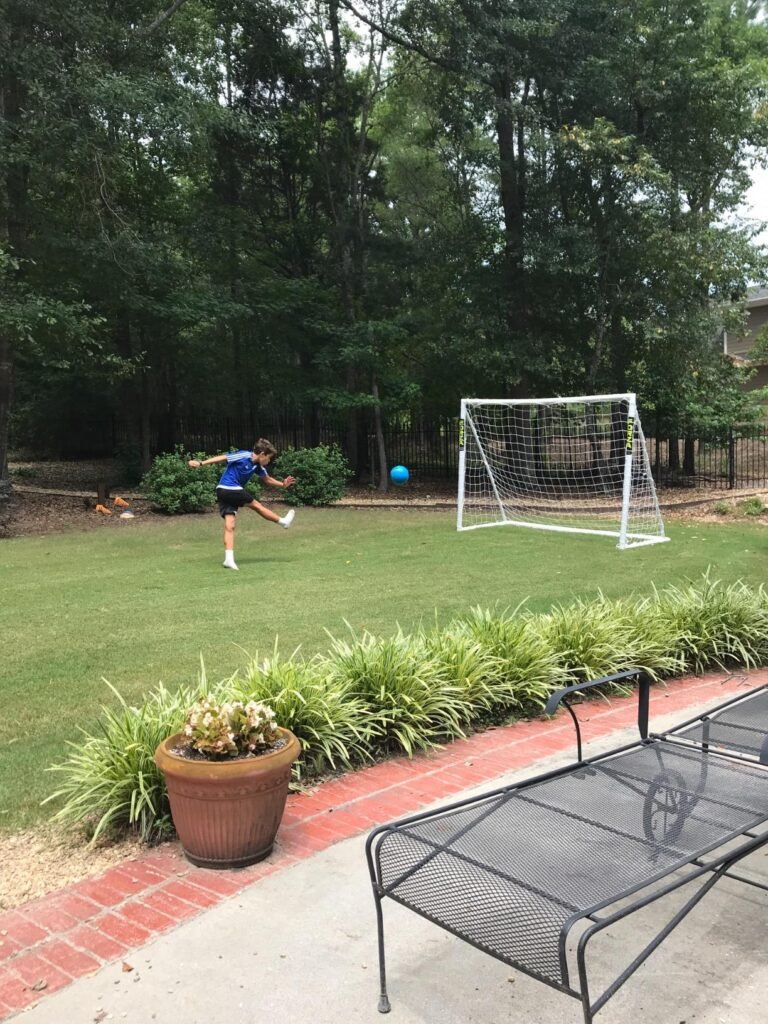
FORZA has built a reputation among backyard soccer buyers for goals that feel more purpose-built than the generic options crowding the market. This 8-by-6 model targets youth players and families that want something noticeably sturdier than a flexible pop-up but do not need the footprint of a full 12-by-6 regulation frame.
We may earn a commission when you buy through this link, at no additional cost to you.
The uPVC construction and locking joint system produce a frame that holds its shape under repeated shots. Combined with the 2mm braided HDPE net, which is UV stabilized to resist rot and fading, this goal is designed to stay outside through changing weather without needing to be broken down between uses. That convenience alone justifies the price for many buyers.
Assembly is genuinely quick thanks to the locking connectors. Once built, the frame is stable enough for serious shooting drills, and the size works well for players roughly in the 8 to 16 range or families running small-sided adult games. FORZA also offers accessories like a target sheet and carry bag separately, which lets you tailor the setup to your specific training needs.
uPVC, or unplasticized PVC, is denser and more rigid than standard PVC tubing used in cheaper goals. It resists warping in heat, staying straight through years of outdoor use, and holds joints more securely under stress. Buyers who have watched a discount PVC goal sag or crack after one summer will appreciate the difference.
The main considerations are cost and modularity. Extras like the target sheet and carry bag are not bundled, so a fully kitted setup adds to the base price. For buyers who prioritize a rigid, weather-resistant frame in a practical mid-size format, this remains one of the more respected options in the category.
Buyers on a tight budget or families who only need a very casual goal for younger children.
We may earn a commission when you buy through this link, at no additional cost to you.
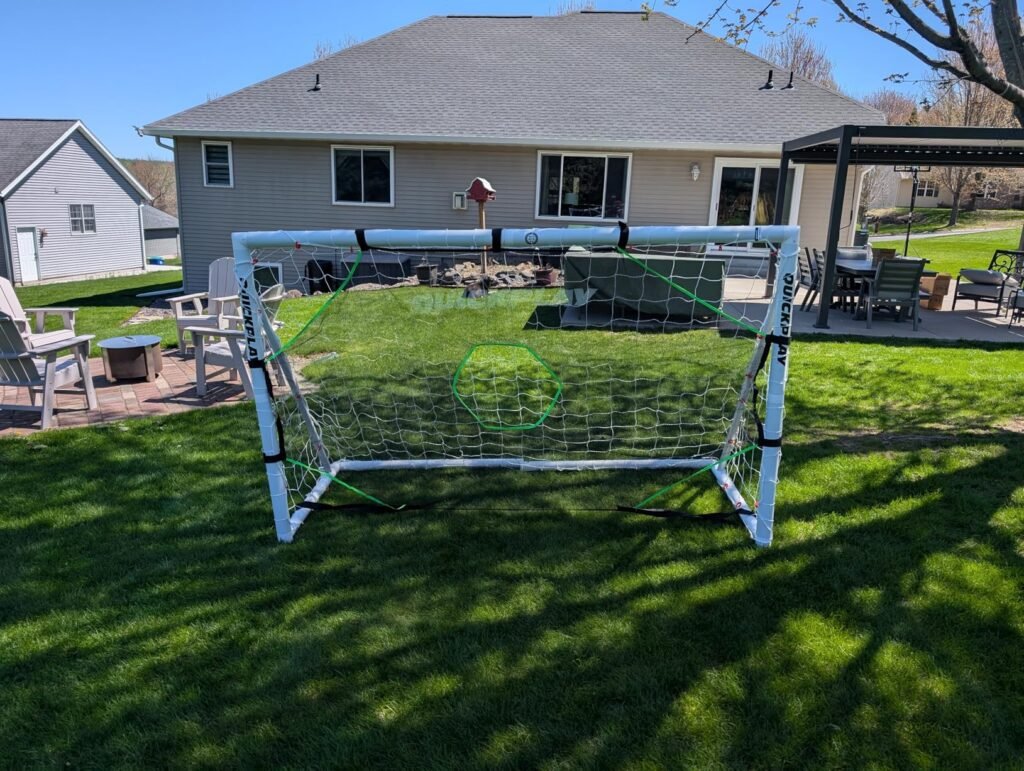
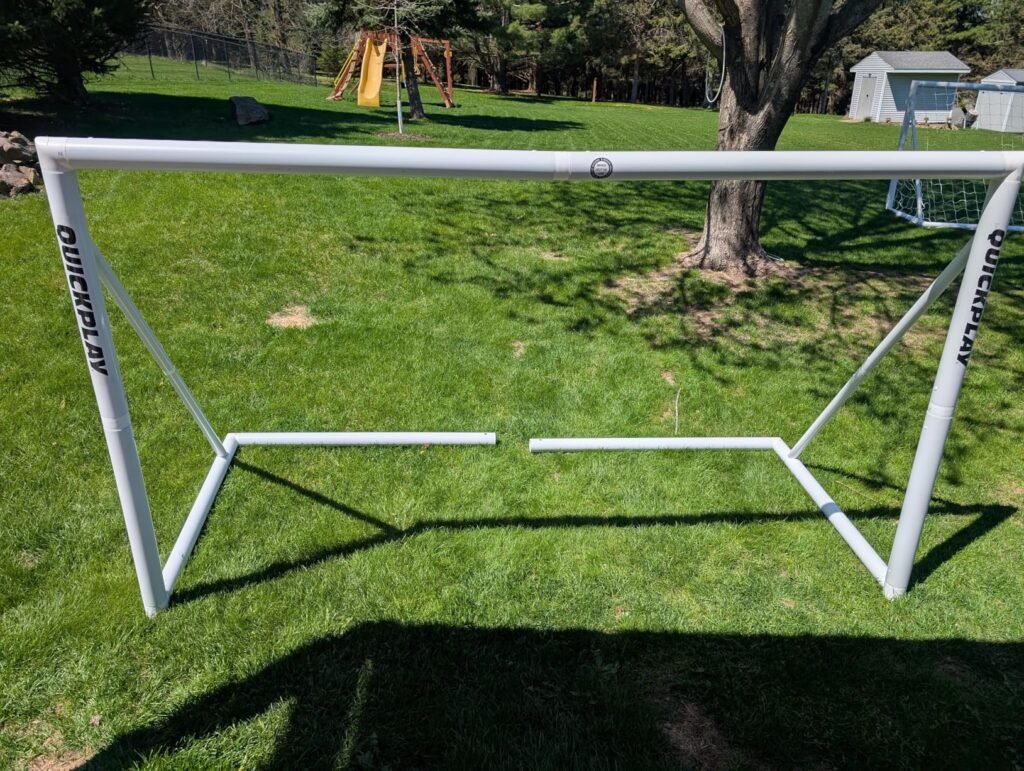
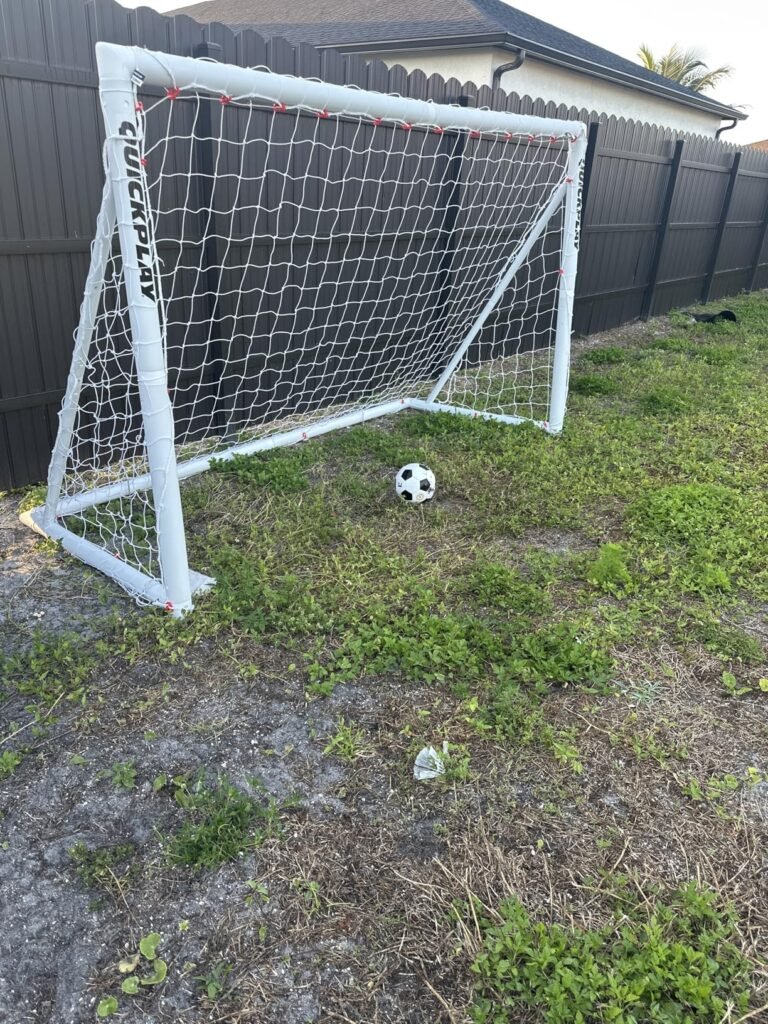
The Q-Fold from QuickPlay solves a specific problem: what to do with a soccer goal when you need your yard back for something else. Its folding design collapses flat against a wall or fence, and the frame can be reassembled in about 30 seconds once the initial build is done. For families sharing space with a lawn, pool, or garden, that flexibility genuinely changes how often the goal gets used.
We may earn a commission when you buy through this link, at no additional cost to you.
The 68mm uPVC frame is thick enough to feel stable during shooting practice, and the patented flexi-joint system is engineered specifically to reduce stress on the diagonal support poles, which tend to be the failure point on cheaper poly goals. The anti-sag crossbar keeps the top rail straight over time, which matters both aesthetically and for how the net drapes during play.
Everything needed for setup ships in the box, including ground pegs and QuickPlay’s easy-on net clips. Those clips are a small but meaningful upgrade over standard hook systems, letting you attach or detach the net without fumbling. The all-weather construction means the goal can live outside through rain, sun, and mild winter conditions without noticeable degradation.
A goal that lives permanently in the middle of a small yard often gets in the way of mowing, gardening, or other activities, which leads families to break it down and eventually stop reassembling it. A folding design that collapses against a fence removes that friction. When the goal is easy to put away and quick to bring back out, it actually gets used far more often.
The tradeoff is that while the folding action is fast, this is not a rigid steel competition frame. Hard, sustained shots from adult players may push it around more than a fixed steel goal would. For families that value flexibility and storage above absolute rigidity, the Q-Fold is one of the smartest designs in the backyard category.
Serious adult players who need a fully rigid tournament-style frame for high-intensity shooting.
We may earn a commission when you buy through this link, at no additional cost to you.
ORIENGEAR's 8-by-6 goal targets the sweet spot for backyard training, offering enough size for meaningful goalkeeper practice without demanding a huge lawn. The snap-button PVC connectors are designed so one adult can assemble the entire frame in about 10 minutes without any tools, which lowers the barrier to actually getting the goal set up.

We may earn a commission when you buy through this link, at no additional cost to you.
The 68mm PVC tubes with 1.8mm wall thickness form a reasonably steady frame for shooting drills and small-sided games. Eight U-shaped ground stakes are included, which is more anchoring hardware than many competitors provide, and the 10-by-10 cm PE mesh net is sized appropriately to catch shots without letting balls slip through the weave.
Training discs and a carry bag round out the package, making this a practical portable choice for families who move between a backyard, park, and school field. The discs work as drill markers for footwork, dribbling lanes, or shooting spots, and the carry bag keeps everything organized between sessions. Multiple size options let buyers scale up or down based on player age and available space.
A soccer goal that shifts during play is frustrating and potentially unsafe. The number and quality of ground stakes directly impacts how firmly the goal stays planted, especially on softer grass or in windy conditions. Eight stakes represent a real advantage over the four typically included with competing goals, providing extra security across the base of the frame.
The main limitation is that a PVC frame will never match the rigidity of powder-coated steel. Hard shots may cause slight flex, and long-term durability depends on how carefully the goal is broken down and stored. For families that want a solid mid-size training goal with strong anchoring and useful accessories at a reasonable price, this delivers a well-rounded package.
Buyers seeking a tournament-grade steel frame or those who need instant pop-up convenience.
We may earn a commission when you buy through this link, at no additional cost to you.
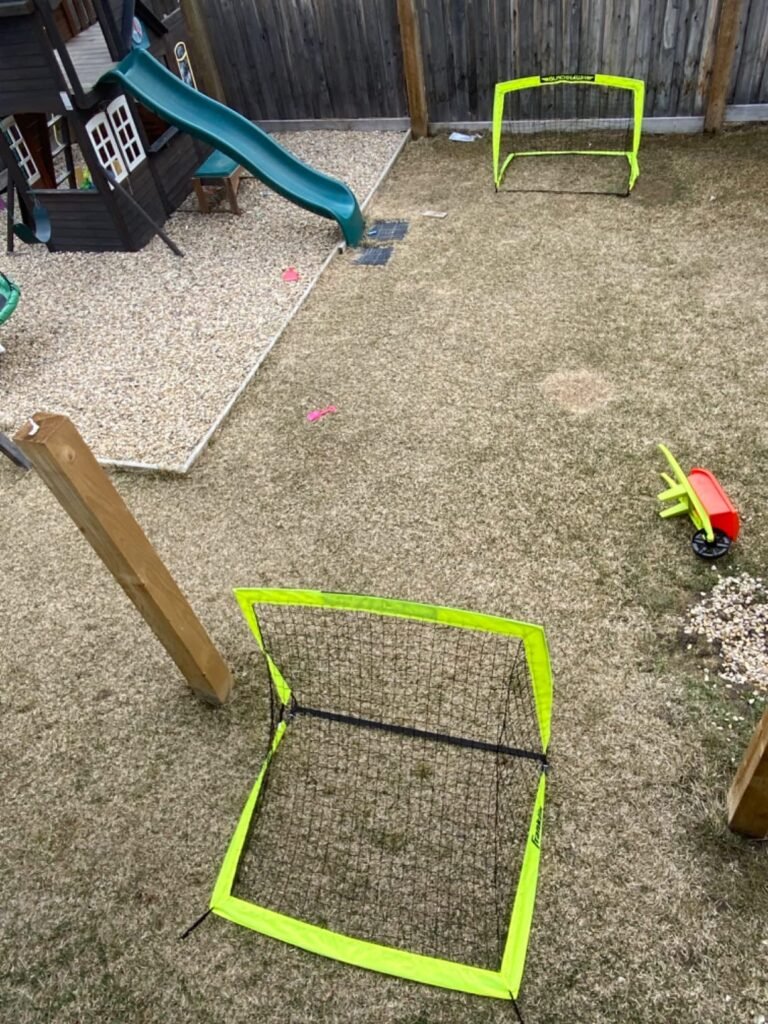
The Franklin Blackhawk fills the entry-level slot for buyers who want a legitimate pop-up soccer goal without spending much. At the 4-by-3 foot size, it works well for young kids learning basic ball control, indoor games in a basement or garage, or short-sided practice in a small yard. Franklin's decades in backyard sports gear give the design a level of polish that no-name pop-ups often lack.
We may earn a commission when you buy through this link, at no additional cost to you.
The fiberglass frame folds flat for storage and transport, making this one of the easiest goals in the comparison to move between locations. The all-weather net can handle both outdoor and indoor use, and the included ground stakes secure the goal against wind and moderate shots. It is not built for tournament conditions, but it does exactly what an affordable pop-up should.
Multiple size and color options let buyers match the goal to their specific needs. A parent buying for a five-year-old will want the smaller version, while an older child practicing shooting accuracy may prefer a larger size in the Blackhawk lineup. The color choices also help distinguish teams during backyard scrimmages, which is a small but useful touch for family play.
A 4-by-3 foot target is smaller than any regulation goal, but that constraint can be valuable for shooting practice. Players forced to hit a smaller target develop better accuracy and shot placement than those who spray shots into a huge net. Some coaches even use small goals as intentional training constraints, so do not dismiss the smaller size as purely a kids-only option.
The main tradeoff is size. At 4-by-3, this is genuinely a small goal, best suited for young players or as a supplementary target for shooting drills. Older kids and adults will outgrow it quickly. For families needing a cheap, portable, pop-up option for young children or indoor play, the Blackhawk is hard to beat on value.
Older players who need a regulation-size goal for realistic goalkeeper or shooting practice.
We may earn a commission when you buy through this link, at no additional cost to you.
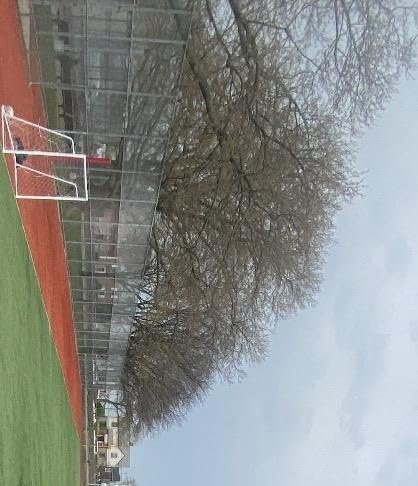
This steel goal targets buyers who want a genuinely heavy-duty frame with training extras included. The 2-inch diameter powder-coated galvanized steel posts create a rigid structure that stands up to hard shots without flexing, and the three size options let you match the goal to your yard and your player's age. Reinforced corner posts add durability where the frame takes the most stress.
We may earn a commission when you buy through this link, at no additional cost to you.
The complete accessory package sets this goal apart from basic steel options. Two nets, a shooting target, six training cones, eight ground stakes, and 30 reusable ties come in the box, meaning you can start structured practice sessions immediately without additional purchases. The corrosion-resistant dip galvanizing beneath the powder coating also protects the frame during extended outdoor storage.
The included target net turns the goal into a shooting practice station with defined scoring zones. Players can work on hitting specific corners, which develops precision far more effectively than shooting into an empty net. The training cones open up drills for dribbling patterns, agility work, and small-sided game structure, making this a legitimate all-in-one training setup for a household.
Galvanizing dips the steel in a zinc coating that resists rust, and the powder coat adds a second protective layer that also gives the frame a cleaner finish. This combination is genuinely important for goals that live outside year-round, since rust from ordinary steel eventually compromises the joints and welds. Powder-coated galvanized frames often outlast basic steel by several seasons.
The tradeoffs are assembly time and space requirements. Steel goals take longer to build than pop-ups, and the 12-by-6 configuration in particular needs a real yard or field. For serious players who want a complete training kit with a rigid steel frame and useful practice accessories, this delivers strong value backed by a 90-day component warranty.
Buyers who need a portable goal for frequent transport or those with limited yard space for larger sizes.
We may earn a commission when you buy through this link, at no additional cost to you.
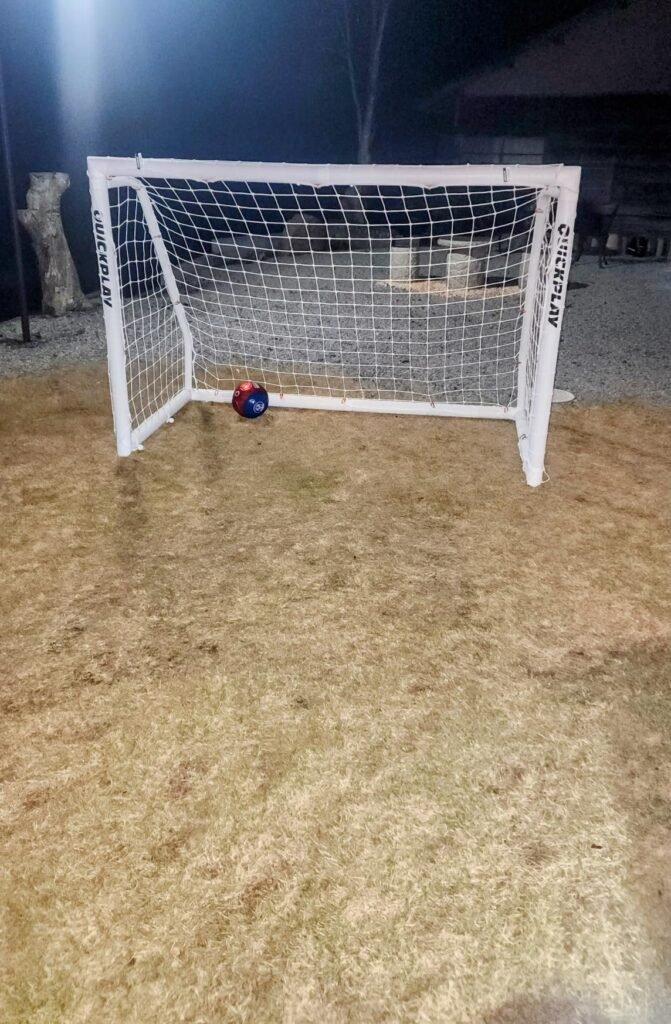
The Q-Fold Match sits at the top of QuickPlay's folding lineup and represents one of the strongest all-around picks for buyers who want both premium construction and practical storage. The 70mm uPVC frame is heavier and more rigid than the standard Q-Fold, and the authentic box-shaped roof gives it the visual and structural feel of a genuine match goal.
We may earn a commission when you buy through this link, at no additional cost to you.
Setup follows the same 30-second folding logic as the smaller Q-Fold, but the frame’s added weight and rigidity make it feel much more substantial during play. The patented flexi-joint system reduces stress at the diagonal support points, which is historically where uPVC goals fail. Combined with locking joints throughout the frame, this goal holds shape through repeated hard shots.
The 2mm UV-treated HDPE net resists tearing and fading, and QuickPlay’s easy-on net clips make attachment fast when setting up or replacing the net. Everything needed ships in the box, including ground pegs and instructions. The initial 15-minute assembly is a one-time investment, after which the goal folds flat against a wall in seconds for space-saving storage.
Match-standard construction typically means the goal is built to withstand consistent full-power shots without frame flex or joint failure, and its dimensions and shape mirror those used in organized play. That authenticity matters for serious training because players develop accurate spatial awareness of the goal mouth, which translates directly to game performance in ways smaller or flimsier goals cannot replicate.
The main considerations are price and quantity. This is a single goal at a premium price point, so buyers wanting two for small-sided games will need to purchase separately. For a serious player, coach, or family that values match-standard construction, weatherproof durability, and folding convenience in one package, this is one of the most complete options on the market.
Buyers seeking the lowest-cost option or those who need a set of two goals for small-sided matches.
We may earn a commission when you buy through this link, at no additional cost to you.
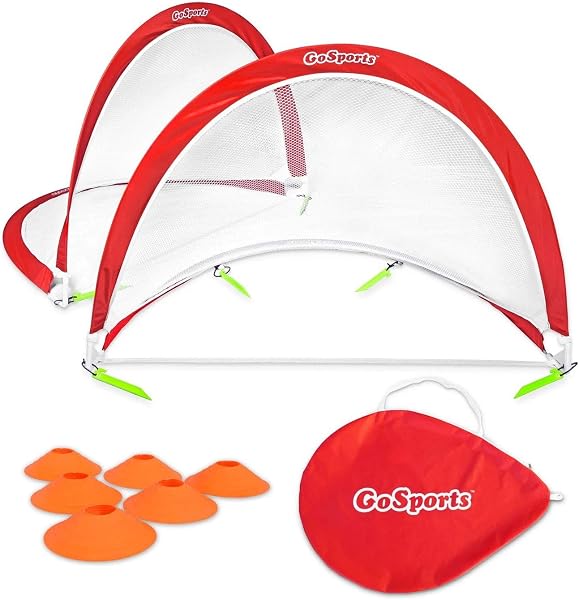
The GoSports pop-up set earns its high rating by nailing the fundamentals of a casual backyard soccer kit. Two 4-foot foldable goals, six cones, both plastic and metal stakes, and a carrying case ship together, giving buyers everything needed for pickup games or basic training with no assembly required. The collapsible design deploys in seconds and packs back down just as fast.

We may earn a commission when you buy through this link, at no additional cost to you.
For families or coaches who value spontaneity, this format is hard to beat. When kids want to play, you pull the goals out of the case, unfold them, drop the stakes, and start immediately. That immediacy translates directly into more time on the field and less setup friction, which is often the difference between a goal that gets used weekly and one that sits in the garage.
The inclusion of both plastic and metal stakes is a thoughtful detail, since it allows anchoring on different grass types and firmness levels. Six agility cones round out the kit for dribbling drills, footwork courses, and small-sided game boundaries. GoSports also offers this design in 2.5-foot and 6-foot variants, letting buyers match the size to their players.
The biggest predictor of whether a soccer goal actually gets used is how easy it is to deploy. A rigid steel goal that requires 30 minutes of assembly often ends up unused, while a pop-up that unfolds in seconds sees play almost every day. For young kids especially, being able to grab a goal, run outside, and play immediately transforms how often soccer becomes part of the daily routine.
The main tradeoffs are size and rigidity. At 4 feet wide, these goals are meant for casual play and youth training, not adult tournament conditions. Hard shots from strong players will push the frames around and eventually stress the poles. For families with younger children, coaches running small-sided drills, or anyone wanting a truly grab-and-go soccer setup, this package is one of the most practical options available.
Serious adult players or teens working on full-power shooting who need a rigid, regulation-size frame.
We may earn a commission when you buy through this link, at no additional cost to you.
Buying a backyard soccer goal is a balancing act between size, durability, portability, and price. The right choice depends on who will use it, how often it will be set up and taken down, and what kind of yard or field you have available. This guide walks through the factors that make the biggest difference in real-world use.
Soccer goals in this comparison range from tiny 2.5-foot pop-ups up to full 12-by-6 regulation frames. Size determines almost everything about how a goal is used. A 4-foot pop-up is ideal for toddlers and young children learning basic ball control, while a 6-by-4 or 8-by-6 goal fits older kids doing serious training. Regulation 12-by-6 goals match tournament dimensions and are best for serious teen and adult players who want realistic practice.
Bigger is not automatically better. A regulation goal in a small yard becomes an obstacle, and young children can find full-size goals discouraging because they cannot cover them as goalkeepers or hit the corners effectively. Matching the goal size to both your available space and your player’s age produces the best long-term satisfaction with the purchase.
Measure your yard before buying, and factor in run-up space for shooters and safe distance behind the goal. If unsure, err on the smaller side rather than buying a goal you cannot fit.
Frame materials fall into four broad categories: fiberglass poles for pop-ups, standard PVC, higher-grade uPVC, and galvanized steel. Fiberglass is flexible and lightweight but eventually fatigues after many setup cycles. Standard PVC is cheap but can warp in heat and crack in cold. uPVC is a denser, more rigid form that holds up much better outdoors. Galvanized steel is the most durable and rigid option but adds weight and setup complexity.
The frame’s diameter and wall thickness also matter. A 68mm or 70mm uPVC tube with a 1.8mm or thicker wall provides genuinely rigid structure, while thinner PVC tubes tend to flex under hard shots. For steel frames, a 2-inch diameter with proper galvanizing and powder coating resists both bending and rust. Look at frame specifications closely rather than assuming all steel or PVC goals are equivalent.
For young kids who play casually, fiberglass or standard PVC works fine. For serious training or long-term outdoor use, invest in uPVC or galvanized steel frames that will not warp, crack, or bend after one season.
The net does most of the visible work during play, absorbing shots and containing rebounds. Cheap nets tear at the seams, sag in the middle, or fade rapidly in the sun. Quality nets use HDPE, dacron, or thick knitted polyester with UV treatment, and gauge ratings of 2mm or higher signal a net built to last. Mesh size around 10-by-10 cm is standard and works well for typical ball sizes.
Attachment method also affects long-term satisfaction. Self-stick straps, easy-on clips, and reusable ties make net replacement or repositioning much easier than complex hook systems. Some brands offer patented clip designs that speed up assembly noticeably. If you plan to break down the goal frequently for storage, prioritize a net that is easy to remove and reattach without tools.
Look for UV-stabilized nets rated for outdoor year-round use if the goal will stay outside. For portable goals broken down after each session, standard nets are fine as long as the gauge is sturdy enough to handle repeated shots.
Setup difficulty is one of the biggest predictors of how often a goal actually gets used. Pop-up goals deploy in seconds with zero assembly, making them ideal for spontaneous play. Snap-together PVC and uPVC goals typically take 5 to 15 minutes to assemble the first time and can often be broken down and reassembled quickly. Full steel goals require the most setup effort but reward that work with rigidity and longevity.
Folding designs like the QuickPlay Q-Fold series bridge the gap by requiring a one-time initial assembly and then folding flat against a wall for storage between sessions. That folding action can happen in about 30 seconds, which effectively combines steel-level frame quality with pop-up convenience. For families with limited yard space, folding designs often provide the best real-world balance.
Match setup complexity to how you will use the goal. Frequent portability calls for pop-up or folding designs, while a permanent backyard installation can justify the extra assembly time of a rigid steel frame.
A goal that lives outside faces sun, rain, snow, and temperature swings that steadily degrade materials over time. UV-treated nets resist fading and rot, galvanized steel frames resist rust, and uPVC handles temperature changes better than standard PVC. If you plan to leave the goal outdoors year-round, these material specifications become critical to how long the purchase lasts.
Even durable goals benefit from basic care. Wiping down frames after wet weather, storing nets indoors during harsh winters, and inspecting stakes and joints periodically all extend useful life. Some goals are explicitly rated for year-round outdoor use, while others are built for seasonal deployment. Read specifications carefully to understand what conditions the goal is designed to handle.
If leaving the goal outside all year is important, prioritize uPVC or powder-coated galvanized steel frames with UV-stabilized nets. Cheaper materials will save money upfront but often need replacement within a season or two of continuous outdoor exposure.
A goal that shifts during play is frustrating and can be genuinely unsafe if it tips over. Ground stakes anchor the frame to grass, and the number, length, and material of stakes directly affect stability. U-shaped or J-shaped metal stakes provide better hold than short plastic pegs, especially in loose or dry soil. Goals designed for beach or turf use often include specialized pegs suited to those surfaces.
More stakes generally mean better stability. Four stakes at the corners represent the minimum for a stable goal, while eight or more spread across the base provide meaningfully better anchoring, especially in wind or during intense play. If your yard has hard-packed soil, longer stakes may be necessary to achieve secure penetration. Some setups include both plastic and metal options for different ground conditions.
Check the number and type of included stakes before buying. If a goal ships with only a few short plastic pegs, plan to purchase additional metal stakes for reliable stability during real play sessions.
How the goal packs down matters if you will move it between locations or store it in a garage between seasons. Pop-up goals collapse to a flat oval that fits in a carry bag, making them the most portable option. Folding goals like the Q-Fold pack flat against a wall for permanent-yard storage without full disassembly. Steel goals typically break down into components that fit in a car but require more effort to transport.
Carrying cases and bags are useful accessories that keep everything organized and protect components during transport. If you plan to take the goal to parks, beaches, or friend’s yards regularly, look for kits that include a proper carrying case with a shoulder strap. For permanent backyard installations, portability matters less, and you can prioritize rigidity and durability instead.
Match the storage format to your realistic use case. Frequent travelers benefit from pop-ups and carrying cases, while families with permanent yard setups can prioritize steel construction and worry less about pack-down convenience.
Many soccer goals ship with useful training extras like shooting target sheets, cones, balls, pumps, and carrying bags. These bundled accessories add real value for buyers just getting started, since you can begin structured practice immediately without additional purchases. Target sheets in particular are excellent training tools that develop shot placement rather than just power.
Cones open up drills for footwork, dribbling, and small-sided game boundaries. Ten cones give enough variety to run legitimate practice sessions, while fewer cones limit drill options. Training balls sized to the player’s age group are helpful for kids who do not already own equipment. Consider the full package value rather than just the goal itself when comparing prices.
If you already own soccer accessories, prioritize the goal itself and view extras as a bonus. If you are starting from scratch, look for bundled kits that include targets, cones, and balls to maximize the value of your purchase.
Proper setup starts with picking a flat, open area with enough safe space behind the goal to absorb missed shots. Anchor the goal firmly using every stake included in the kit, and check the stakes periodically during long sessions since repeated shots can loosen them in soft soil. If your yard slopes, place the goal on the most level section available and consider using additional stakes on the downhill side for extra stability. For pop-up goals, make sure the frame is fully deployed and locked before play begins.
Extend the life of the frame by inspecting joints and connectors before each session, especially on PVC and uPVC goals where the diagonal support poles carry the most stress. If your goal folds or breaks down between uses, avoid forcing joints that resist assembly, since bent connectors often signal a pole that needs realignment. Wipe down metal frames after wet weather to prevent rust from starting at scratches in the coating, and store folded goals indoors or under cover during harsh winter conditions to protect materials from prolonged freezing.
The net requires its own maintenance to stay in good shape over time. Remove leaves, sticks, and debris regularly so wet material does not sit against the mesh and cause mildew or rot. If the net begins to sag, check the attachment clips or straps and retighten as needed. For year-round outdoor goals with UV-treated nets, expect gradual fading over several seasons as normal wear. Replacement nets are widely available for most major brands, so a torn or worn net does not necessarily mean replacing the entire goal.
The right size depends on both player age and available yard space. Children under seven do well with 4-foot pop-ups, ages 8 to 12 benefit from 6-by-4 or 8-by-6 goals, and teens or adults playing seriously want 8-by-6 or larger. Always measure your yard first, leaving safe space behind the goal for missed shots, and err on the smaller side if you are unsure.
Some goals are designed for year-round outdoor use, particularly those with uPVC or powder-coated galvanized steel frames and UV-treated nets. Cheaper PVC frames and untreated nets degrade quickly from sun exposure and moisture, so they should be broken down and stored between seasons. Check the manufacturer's specifications before leaving any goal outside permanently.
Assembly time varies dramatically by design. Pop-up goals deploy in seconds with no assembly, snap-together PVC goals typically take 5 to 15 minutes for a first build, and full steel goals can take 30 minutes or longer. Folding goals like the QuickPlay Q-Fold require a one-time initial setup and then reassemble in about 30 seconds afterward.
Quality pop-up goals with spring steel frames like the PUGG can handle thousands of deployment cycles and years of regular use. Cheaper fiberglass-frame pop-ups fatigue more quickly and may crack after a season of heavy use. If you plan to set up and take down the goal frequently, the frame material matters more than the price tag.
Regulation goals help players develop accurate spatial awareness that transfers directly to match conditions. However, smaller goals are excellent for shooting accuracy drills because they force better shot placement. Many coaches use both sizes intentionally, so a smaller goal is not automatically inferior for skill development, especially for younger players.
Standard PVC is a flexible plastic that can warp in heat and become brittle in cold, while uPVC is unplasticized and much more rigid and durable. Goals built from 68mm or 70mm uPVC with thick wall construction hold shape far better under repeated shots and outdoor exposure. If your budget allows, uPVC is worth the additional cost over basic PVC.
Four stakes at the corners represent the minimum for basic stability, but eight or more provides meaningfully better anchoring, especially for larger goals or windy conditions. U-shaped or J-shaped metal stakes hold better than short plastic pegs, and length matters for grip in loose or dry soil. Additional stakes can usually be purchased separately if the included set feels inadequate.
Some goals are specifically designed to work on multiple surfaces. PUGG pop-ups, for example, include integrated pegs that work on grass, sand, and turf. Most steel and PVC goals are optimized for grass and require different anchoring approaches on other surfaces. If you plan to use the goal at the beach or on artificial turf, verify surface compatibility before buying.
For families with multiple children or coaches running small-sided drills, two goals dramatically expand what you can do. Small-sided games teach spacing, defense, and passing in ways single-goal shooting drills cannot. If your primary goal is skill development through varied play, a set of two smaller goals often provides more value than a single larger frame.
The QuickPlay Q-Fold Match Goal stands out as the strongest overall pick for buyers who want match-standard construction, weatherproof durability, and folding convenience in a single package. Its 70mm uPVC frame, patented flexi-joint system, and 30-second folding design make it one of the smartest long-term investments in the category for serious players and families alike.
For different budgets and use cases, meaningful alternatives are easy to identify. The Franklin Steel Goal delivers regulation size at a strong value price, while the PUGG Pop-Up remains the benchmark for portable spring-steel pop-ups. Families with young kids will find the GoSports set or the Kids Pop-Up Set of 2 offer complete backyard bundles at accessible prices, and the multi-size steel option provides heavy-duty construction with training accessories included.
The right pick ultimately depends on your player's age, your available space, and how the goal will actually be used day to day. Young kids benefit most from portable, easy-setup designs that get used often. Serious teens and adults gain more from rigid regulation-size frames that support realistic practice. Match the goal to your genuine needs rather than the biggest or most expensive option, and it will earn its place in your yard for years to come.