MSR Lightning Ascent
9.4Editor score360-degree traction frame
Steel DTX crampons
Paragon mesh bindings
120-220 lb load limit
Find the right snowshoes for 2026. We compare 10 standout options by build quality, useful features, owner feedback, value, and everyday trade-offs.
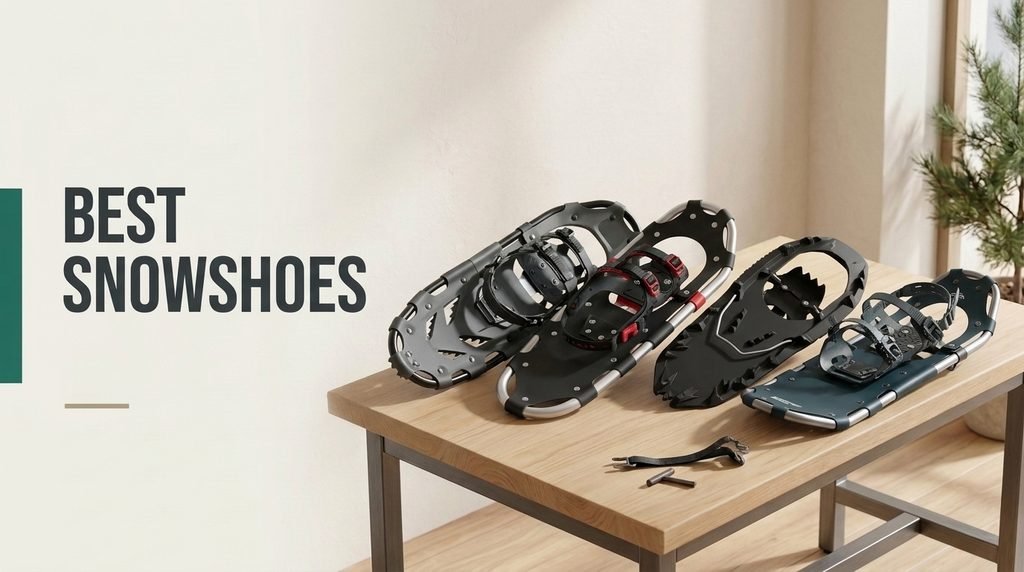
Finding the right snowshoes for 2026 comes down to matching deck size and traction to your local winter terrain. We compared 10 standout options across the details that matter on snow, including frame materials, flotation capacity, crampon bite, binding comfort, heel lifts, bundled accessories, owner feedback, and everyday trail value.
A casual afternoon walk across packed park loops demands very different equipment than climbing icy backcountry ridgelines or breaking trail through deep powder. While recreational bundles focus on lightweight aluminum tubing, simple ratchet straps, and included trekking poles, technical mountaineering models prioritize perimeter steel teeth, freeze-resistant mesh bindings, and uphill efficiency.
Before choosing a pair, calculate your total load including winter boots, heavy layers, and a loaded daypack rather than shopping by height alone. Use the specifications and detailed evaluations below to compare deck dimensions, boot size compatibility, and pivot mechanics so you invest in dependable winter footing from day one.
We compared 10 snowshoes using the details that actually help a winter hiker decide: deck surface area, recommended load limits, crampon and rail configuration, binding adjustment speed with gloves on, heel lift ergonomics, frame durability, bundled accessories, owner feedback, and overall value. The evaluations focus on practical trade-offs between all-in-one recreational kits and specialized alpine frames so each pick connects directly to how people walk, climb, and traverse real winter terrain.


Compare key features, scores, and current prices side by side. A shorter feature list means fewer details were available, not necessarily fewer capabilities.


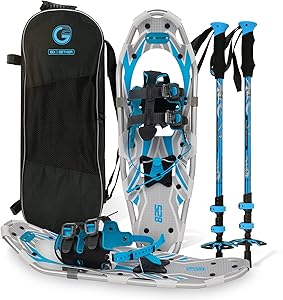


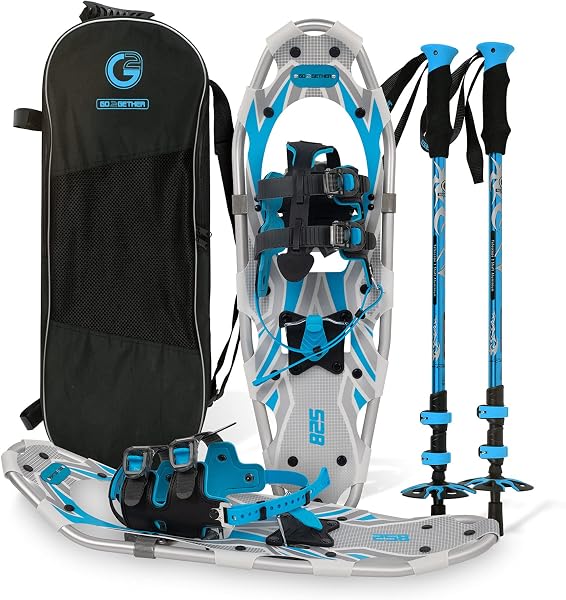
Shoppers looking to outfit themselves or a guest for occasional winter walks without spending much more than fifty dollars will appreciate this Lightweight Aluminum Snowshoes Kit. Available in 21, 25, and 30-inch sizes, it delivers a complete set of snowshoes, adjustable trekking poles, snow baskets, rubber tip covers, storage clips, and a tote bag at the lowest adult price point in our comparison.
We may earn a commission when you buy through this link, at no additional cost to you.
The frame combines tubular aluminum with a polyethylene deck secured by aluminum rivets at key connection points, spreading your combined body and gear weight across the snow to maintain flotation. Underfoot, multi-tooth crampons provide dependable bite on packed snow and gentle hills, while a flexible strap pivot allows the binding to move naturally with your walking stride.
Boot security is handled by an adjustable double-ratchet system that lets you tighten the forefoot and midfoot straps separately around your winter boots. At the rear, a split side-release heel strap clips behind the boot for quick entry and exit once sized, while textured anti-slip pads positioned beneath both the forefoot and heel help keep wet boot soles from sliding around inside the binding.
The included poles use an internal twist-lock mechanism: rotate the lower sections counterclockwise to unlock, set the height so your elbows form a 90-degree angle on flat ground, and twist clockwise firmly to lock. Avoid over-extending past the marked stop line, and attach the included snow baskets before heading into soft drifts.
Because this kit uses a flexible strap pivot and omits a flip-up heel lift bar, it is intended for flat to gently rolling winter trails, golf courses, and park paths rather than steep mountain ascents. Remember to dry all metal and fabric components thoroughly after each outing before storing them in the tote bag. For budget-conscious beginners who want a complete, functional kit for casual snow days, it offers remarkable utility for the price.
Hikers planning steep uphill climbs who need heel lifts and rigid lateral frame control.
We may earn a commission when you buy through this link, at no additional cost to you.
Serious winter hikers, mountaineers, and backcountry travelers who regularly venture off groomed park paths need footing that will not slide out on angled slopes. The MSR Lightning Ascent is purpose-built for demanding alpine routes and uneven off-trail snowpack where tubular aluminum frames tend to roll or lose purchase. Measuring 8 inches wide by 25 inches long, this pair supports combined wearer and gear weights from 120 to 220 pounds while keeping foot placement nimble in tight trees and steep gullies.
We may earn a commission when you buy through this link, at no additional cost to you.
Instead of relying on smooth rounded tubing, the frame uses a vertical 360-degree traction perimeter that turns the entire outer edge of the deck into a continuous serrated rail. Paired with durable steel DTX crampons under the ball of the foot, this architecture delivers exceptional edge-to-edge bite when traversing wind-packed ridges or climbing firm snowfields. When the trail pitches sharply upward, the Ergo Televator heel lift flips up to level your foot angle and conserve calf energy over long vertical gains.
Foot security comes from MSR’s Paragon binding, which replaces bulky plastic ratchets with a single contouring mesh strap that wraps smoothly around winter boots in US men’s sizes 6 through 14. Because the mesh conforms directly to the profile of your toe box, it prevents painful top-of-foot hot spots and maintains reliable alignment without stiffening in sub-freezing air. Once adjusted to your primary hiking boots, stepping in and cinching the heel strap is fast and predictable even in blowing snow.
Traditional recreational snowshoes use round aluminum tubing bent into an oval shape, which floats well on flat snow but offers minimal lateral edge grip when walking across a slope. The vertical walls of the 360-degree Traction Frame cut directly into the snow surface along the full length and width of the deck, preventing downhill side-slipping when traversing steep bowls or icy switchbacks.
The primary trade-off is cost: this is a specialized piece of technical winter equipment rather than an entry-level bundle, and it does not come with trekking poles or a carry bag. Furthermore, if your total weight with a winter overnight pack exceeds 220 pounds or you encounter bottomless mid-winter powder, you will need to buy the compatible 5-inch MSR Lightning Flotation Tails separately. For hikers tackling steep mountain trails who value uncompromising traction and foot control above all else, it stands out as the top overall choice.
Casual flat-trail walkers who only hike packed park loops and prefer an affordable all-in-one kit with poles included.
We may earn a commission when you buy through this link, at no additional cost to you.
Hikers who spend most of their winter outings on forest trails, rolling hills, and packed conservation paths benefit most from a rugged, low-maintenance snowshoe that goes on in seconds. The MSR Evo Trail delivers long-term reliability through a one-piece injection-molded polypropylene UniBody deck that eliminates riveted fabric decking entirely. At 22 inches long by 8 inches wide and weighing 57.8 ounces per pair, it feels compact underfoot and maneuvers easily along narrow packed singletrack.
We may earn a commission when you buy through this link, at no additional cost to you.
Underneath the polypropylene deck, steel traction rails run lengthwise to provide consistent lateral stability and forward braking on hard-packed snow and crusty sections. Combined with the steel toe crampons, the Evo Trail offers noticeably surer footing on frozen boot-pack and moderate grades than smooth-decked entry-level models. The controlled flex of the molded deck also adapts naturally to uneven frozen ruts without feeling overly stiff.
One of the strongest reasons to choose the Evo Trail is its Paraglide stretch-mesh binding system. Using just two adjustment points with glove-friendly straps and large buckle tabs, the stretch mesh hugs almost any winter footwear from light insulated hikers to bulky snowboard boots across US men’s sizes 3 to 13 and women’s sizes 5 to 15. Because there are no hard plastic ratchet straps crossing the instep, your feet stay comfortable over miles of rolling terrain.
Rather than locking you into a bulky 30-inch frame year-round, the 22-inch Evo Trail stays compact and agile for packed trail conditions up to 180 pounds. When a fresh storm dumps unpacked snow or you load up a winter backpack, attaching the optional 6-inch tails extends the deck length and raises the supported weight limit to 250 pounds.
Keep two practical limitations in mind before buying: the Evo Trail does not include an uphill heel lift bar, and the standard 22-inch frame has a recommended maximum load of 180 pounds including clothing and gear. However, if you carry a heavier pack or hike in deeper snow, adding MSR’s 6-inch modular flotation tails (sold separately) expands the load capacity up to 250 pounds. For everyday trail hikers seeking rock-solid construction and exceptional binding comfort, the Evo Trail is a benchmark performer.
Mountaineers tackling steep off-trail ascents who need an integrated heel lift bar, or heavier hikers who do not want to buy add-on tails.
We may earn a commission when you buy through this link, at no additional cost to you.
Recreational winter walkers who want a complete, trail-ready kit without spending hundreds of dollars often struggle to find large enough deck sizes for deep snow or heavier body weights. This G2 snowshoe bundle solves that problem by offering four distinct lengths—21, 25, 30, and a spacious 36-inch option—while bundling adjustable trekking poles and a carry tote bag in the box. It is an appealing all-around choice for weekend trail explorers, cabins, and family winter outings.
We may earn a commission when you buy through this link, at no additional cost to you.
The deck is constructed from lightweight high-density polyethylene that provides broad flotation across soft snowfields so you spend less energy post-holing and more energy moving forward. Underneath, sharp aluminum crampons paired with a flexible pivot bar allow the tail of the snowshoe to drop naturally as you step while maintaining solid bite on packed snow and icy patches. Unlike many entry-level kits, G2 also includes an integrated heel lift bar to support your heels when climbing sustained hills.
Cold-weather usability is another strong point thanks to the fast ratchet binding and dedicated toe box. The interior of the binding is lined with soft EVA foam padding that cushions your footwear and adds a layer of thermal separation against cold plastic straps. When it is time to take the snowshoes off at the trailhead with stiff, cold hands, the one-pull buckle mechanism can be lifted and released using just a single finger.
Most recreational snowshoe lineups stop at 30 inches, which can leave larger hikers or those carrying heavy winter gear sinking deeply in dry, unconsolidated powder. Having a 36-inch size option provides the extra surface area needed to stay on top of deep drifts without paying premium backcountry prices.
Because the crampons are made of aluminum rather than hardened steel, you should avoid walking across bare gravel roads or exposed granite ledges where softer metal teeth can dull more quickly. Similarly, the rounded frame perimeter is best suited to flat to moderately steep trails rather than icy alpine traverses. For shoppers wanting a comfortable, well-equipped snowshoe package with sizing all the way up to 36 inches, G2 delivers standout value.
Technical alpine climbers who traverse steep icy sidehills or regularly cross rocky mixed terrain that requires steel crampons.
We may earn a commission when you buy through this link, at no additional cost to you.
Hikers with a narrower natural gait often find that standard 8-inch-wide snowshoes force them into an awkward, wide-legged waddle or cause the inner frames to clack together with every step. The MSR Women's Lightning Ascent addresses biomechanics directly with a tapered 7.25-inch by 22-inch profile engineered specifically for a narrower stride. Weighing just 3.88 pounds per pair and supporting loads up to 180 pounds, it brings full-strength mountaineering performance in a sleeker, lighter footprint.
We may earn a commission when you buy through this link, at no additional cost to you.
Like its wider counterpart, this model is built around MSR’s 360-degree Traction Frame, giving you continuous serrated metal edges around the entire perimeter of the deck. Combined with rugged steel DTX crampons positioned beneath the forefoot, it bites aggressively into wind-scoured snowpack, frozen switchbacks, and steep sidehill traverses. When ascending sustained mountain grades, flipping up the Ergo Televator heel lift bar reduces calf strain and improves uphill pedaling efficiency.
The Paragon binding uses a single-piece contouring mesh strap scaled to fit women’s footwear sizes 4.5 through 14. By wrapping smoothly over the top of the boot rather than pinching down with multiple rigid ratchet straps, the binding delivers a glove-like feel with precise lateral foot control and zero pressure points. The freeze-resistant materials remain pliable in frigid mountain conditions and pack down flat when strapping the snowshoes to a winter pack.
Walking for hours with your feet forced wider than hip-width places extra stress on your hips and knees while wasting energy on every stride. The tapered rear deck and 7.25-inch width allow your feet to pass closely beside one another naturally, preserving your normal hiking gait over long backcountry days.
Before purchasing, verify that your total weight—including winter layers, boots, food, water, and backpack—stays within the 180-pound rating of this 22-inch deck. It is also a pure technical tool priced at the top of the category, meaning trekking poles and optional modular tails cost extra. For women and narrower-striding hikers who tackle steep mountainous terrain and want maximum edge grip without extra bulk, this is the premier technical option available.
Hikers whose combined body and gear weight exceeds 180 pounds without add-on tails, or casual walkers shopping on a budget.
We may earn a commission when you buy through this link, at no additional cost to you.
Backcountry hikers who bushwhack through dense timber, cross icy boulder fields, and climb steep ridges need a deck that can shrug off hard impacts without tearing. The MSR Evo Ascent pairs the legendary toughness of a one-piece molded composite deck with true mountaineering features like uphill heel lifts and multi-strap boot security. Measuring 22 inches long and weighing 4.1 pounds per pair, it serves as an ultra-durable workhorse for rugged off-trail exploration.
We may earn a commission when you buy through this link, at no additional cost to you.
Traction comes from steel traction rails and molded-in brake bars integrated directly into the underside of the deck, working alongside steel toe crampons to prevent slipping on steep ascents and descents. When the trail turns sharply uphill, the Televator heel lifts can be pulled into place using a glove-friendly tab, propping up your heels to reduce lower-leg fatigue and improve forefoot crampon engagement on steep pitches.
Instead of a stretch mesh pocket, the Evo Ascent utilizes MSR’s classic Tri-Fit binding system, which uses freeze-resistant straps across the forefoot and around the heel to lock down a wide variety of footwear in men’s sizes 4.5 through 15. Because each strap adjusts independently, hikers wearing stiff mountaineering boots, heavy winter pac boots, or snowboard boots can dial in firm clamping security for rocky approaches.
Although both share a 22-inch molded deck with steel traction rails and a 180-pound base load rating, the Evo Ascent upgrades the package for steeper terrain by adding Televator climbing heel lifts and heavy-duty Tri-Fit straps. If your winter hikes involve sustained mountain climbs rather than flat valley trails, the Evo Ascent is well worth the step up.
Out of the box, the 22-inch deck is rated for a maximum recommended load of 180 pounds including user and gear, though clipping on optional MSR Evo Tails (sold separately) boosts that ceiling to 250 pounds for deeper snow or heavier packs. While it weighs a couple of ounces more than the Lightning Ascent and lacks a serrated outer perimeter frame, it costs noticeably less and offers near-indestructible deck durability for rough winter terrain.
Ultralight minimalists who want the lowest possible foot weight, or flat-trail hikers who do not need climbing heel lifts.
We may earn a commission when you buy through this link, at no additional cost to you.
Many three-season hikers already own a reliable pair of adjustable trekking poles and simply want an affordable, well-built pair of snowshoes to stay active once snow blankets local trails. The Retrospec Drifter delivers core all-terrain features—including an aluminum frame, double-ratchet bindings, and uphill heel lifts—at a budget-friendly price without forcing you to pay for redundant accessories you do not need.
We may earn a commission when you buy through this link, at no additional cost to you.
Built around a lightweight aluminum frame with a supportive polyethylene deck, the Drifter is designed to keep your steps buoyant over packed snow and moderate powder. Its full-floating pivot system allows the binding to rotate freely on the climb and let the tail drop as you lift your foot, preventing the awkward snow-flinging motion common with rigid pivot straps while helping the underfoot crampons bite cleanly into the trail.
Getting strapped in on cold mornings is straightforward thanks to the double-ratchet binding system, which secures the forefoot with two notched straps and a heel strap that can be operated without removing your gloves. When your route climbs up steady winter hills, you can flip up the built-in heel lifters to support your heels and keep your calves from burning out prematurely. After your hike, the included mesh carry bag keeps everything contained in the trunk while allowing damp decks to air out.
Unlike fixed-rotation straps that pull the tail of the snowshoe up against your heel with every step, a full-floating pivot allows the front of the boot to dip into the snow and engage the toe teeth while the tail stays on the ground. That natural hinge motion reduces hip flexor fatigue and makes stepping over downed branches much easier.
Because this version is sold as a snowshoe-only package with a carry bag, first-time winter walkers who want poles included should look at Retrospec’s bundled version instead. In addition, like other tubular aluminum snowshoes, the Drifter is happiest on groomed routes, forest roads, and moderate hills rather than sheer icy sidehills. For hikers seeking a capable, no-nonsense aluminum snowshoe at an entry-level price, it hits a practical sweet spot.
Shoppers who want trekking poles included in the box, or mountaineers tackling technical ice and steep sidehill slopes.
We may earn a commission when you buy through this link, at no additional cost to you.
Nothing cuts a winter walk short faster than loose snow kicking up over the tops of your boots and soaking your socks. The Odoland Snowshoes set stands out among recreational bundles by including not just adjustable trekking poles and a carry bag, but also a pair of waterproof snow leg gaiters in the package. Available in 21-inch (80 to 120 pounds), 25-inch (120 to 160 pounds), and 30-inch (160 to 250 pounds) models, it outfits beginners with a complete head-to-toe trail starter kit.
We may earn a commission when you buy through this link, at no additional cost to you.
Each snowshoe uses a lightweight aluminum frame with a broad flat deck surface to maximize flotation across soft snowpack. Underneath, Odoland equips each deck with two sets of reinforced, heavy-duty sawtooth crampons positioned to grip icy patches and hard-packed snow under both the forefoot and heel. A built-in heel lift bar also flips up to support your ankles when climbing steeper grades.
The included accessories make gearing up for a weekend outing remarkably convenient. The telescoping trekking poles adjust from 25.5 inches all the way to 54 inches, accommodating youth and tall adults alike while remaining easy to lock in wet, gloved conditions. Meanwhile, the waterproof leg gaiters are crafted from tear- and puncture-resistant pongee fabric to seal the gap between your snow pants and hiking boots when breaking trail through deeper drifts.
Even the best snowshoe deck kicks up a light spray of snow behind your calves with every step. Wearing waterproof pongee gaiters over your lower legs prevents snow from collecting around your boot cuffs, melting from body heat, and wicking down into your socks during a two-hour hike.
As with any multi-piece value bundle, the included gaiters and poles are built for casual recreational outings rather than extreme alpine expeditions, and the binding straps require careful initial adjustment to stay snug over smaller boots. Still, for gift buyers, beginners, and families who want snowshoes, poles, leg gaiters, and a storage bag in a single purchase, Odoland offers unmatched convenience.
Experienced winter hikers who already own technical gaiters and poles and prefer to invest their entire budget into the snowshoe frame itself.
We may earn a commission when you buy through this link, at no additional cost to you.
For newcomers stepping onto snow-covered trails for the first time, having balanced upper-body support is just as important as underfoot flotation. The Retrospec Drifter Snowshoes with Poles Bundle pairs the brand's dependable aluminum-frame snowshoes with adjustable trekking poles and a carrying case so you can head straight to the trailhead with coordinated gear.
We may earn a commission when you buy through this link, at no additional cost to you.
The snowshoes are built around aircraft-grade alloy frames paired with rugged polyethylene decking designed to keep you floating above deep snow without weighing down your stride. Like the standalone Drifter, this bundle incorporates a full-floating pivot system that articulates smoothly as you walk and climb, reducing leg strain while keeping the front crampons engaged with the snow surface.
On cold trailhead mornings, the double-ratchet bindings let you secure your winter boots quickly and release them effortlessly without taking off your gloves. The bundled lightweight trekking poles feature adjustable height settings for a custom fit and include terrain-specific attachments to keep the pole tips from sinking too deeply into soft snowbanks, significantly improving your balance when crossing uneven drifts or stepping over hidden logs.
Walking on snowshoes widens your stance slightly and places you atop a shifting surface that can compress unevenly over buried rocks or tree roots. Using adjustable poles with snow baskets gives you four points of contact, helping you maintain rhythm on flats and brace yourself safely on downhill sections.
If you already have a set of winter-ready trekking poles with snow baskets in your gear closet, the standalone Retrospec Drifter will give you the exact same underfoot performance for twenty dollars less. For beginners and occasional winter hikers who want a cohesive, durable snowshoe and pole setup from a recognizable outdoor brand, this bundle takes the guesswork out of getting started.
Hikers who already own quality trekking poles with snow baskets, or technical climbers heading into steep avalanche terrain.
We may earn a commission when you buy through this link, at no additional cost to you.
Getting kids excited about winter hiking requires equipment scaled to their shorter stride and lighter body weight—strapping a child into even the smallest 21-inch adult snowshoe quickly leads to tripped feet and frustration. The G2 16-Inch Kids Snowshoes Set provides young explorers with their own properly proportioned high-density polyethylene deck, paired with matching trekking poles, snow baskets, and a storage bag in a bright blue and orange colorway.
We may earn a commission when you buy through this link, at no additional cost to you.
Unlike toy-grade plastic molded snowshoes that lack real metal teeth and slide dangerously on packed snow, this youth model features genuine sharp aluminum crampons underneath to give kids dependable grip on packed trails and icy patches. The lightweight HDPE deck provides plenty of flotation for youth weights so children can keep pace with family members on snowy forest walks without exhausting their legs.
Parents will especially appreciate the cold-weather fast ratchet binding design. The footbed features a specialized non-slip pattern that maximizes contact with children’s winter snow boots to prevent heel slipping, while the one-pull ratchet buckle can be lifted and released with a single finger—making trailhead transitions quick and tear-free even when little hands are wearing thick mittens.
Many inexpensive children’s snowshoes rely entirely on molded plastic ridges for traction, which can act like sleds on packed or crusty snow slopes. Having proper aluminum crampons beneath the forefoot gives kids confident purchase when walking up and down sledding hills or packed park trails.
Because these snowshoes use real aluminum crampons rather than rounded plastic nubs, teach children not to step on each other’s decks or walk across indoor flooring while wearing them, and always store them in the included bag during car rides. Backed by a 1-year warranty, this 16-inch kit is the clear choice for families introducing boys and girls to winter trail adventures.
Older teens or adults whose weight requires a 21-inch or larger snowshoe deck.
We may earn a commission when you buy through this link, at no additional cost to you.
Selecting the right pair of snowshoes requires matching deck area, frame style, and binding mechanics to your total winter load and the steepest terrain you plan to hike.
The most common mistake first-time buyers make is choosing snowshoe length based on their height or shoe size rather than total weight and snow conditions. Snowshoes work by distributing your downward force over a larger surface area—a principle known as flotation—so you stay near the surface rather than post-holing knee-deep with every step. Total load includes your body weight on the scale plus winter boots, heavy insulated clothing, water, food, and everything inside your backpack, which easily adds 15 to 25 pounds on a typical winter day hike.
Across our lineup, youth models start at 16 inches (like the G2 Kids Set), while adult frames typically come in 21 or 22 inches for lighter loads up to roughly 160 to 180 pounds, 25 inches for medium loads up to 200 to 220 pounds, and 30 to 36 inches for heavier hikers or deep, dry powder. Snow density also plays a major role: wet, packed coastal snow or groomed trails support weight easily on a compact 22-inch deck, whereas light, fluffy backcountry powder requires either a longer 30-to-36-inch frame (such as the G2 Lightweight Kit) or modular add-on tails like those compatible with the MSR Evo Trail, Evo Ascent, and Lightning Ascent.
If your total geared weight sits near the top of a size bracket and you regularly hike off-trail in fresh snow, size up to the next deck length; if you stay strictly on packed park trails, a shorter 22-inch model will feel much lighter and easier to maneuver.
Snowshoes fall into three main construction styles, each balancing weight, durability, and edge grip differently. Tubular aluminum frames stretched with polyethylene or HDPE decking—found on the Retrospec Drifter, Odoland, and G2 models—are lightweight, quiet on packed snow, and provide generous surface flotation at an approachable price. However, because the outer tubing is round and smooth, it can slide sideways when traversing hard-packed slopes.
For harsher terrain, composite UniBody decks (like the MSR Evo Trail and Evo Ascent) mold tough polypropylene around steel traction rails, offering exceptional puncture and impact resistance on rocky, root-strewn trails at a modest weight penalty. At the top end of technical performance, vertical perimeter frames (like the MSR Lightning Ascent and Women’s Lightning Ascent) use serrated metal walls around the entire 360-degree edge of the snowshoe, turning the frame itself into a giant crampon that locks into steep traverses.
Choose a tubular aluminum frame with HDPE or polyethylene decking for flat to rolling trails and deep soft snow, a molded composite deck for rugged all-purpose durability, or a 360-degree perimeter frame for steep mountain terrain.
While the deck keeps you floating on soft snow, the crampons and traction rails underneath keep you from sliding backward on climbs or skidding out on ice. Entry-level and mid-range recreational snowshoes typically use stamped aluminum crampons under the ball of the foot and the heel, sometimes paired with dual sawtooth strips as seen on the Odoland kit. Aluminum teeth keep weight and cost down and grip well on packed snow, though they dull more quickly if you frequently walk over bare rocks or frozen gravel.
Technical and trail-focused models step up to tempered steel toe crampons—such as MSR’s DTX crampons—paired with full-length steel traction rails or molded brake bars. Steel holds a sharp edge far longer against abrasive ice and mixed rock, and longitudinal rails prevent your heel from fishtailing sideways when crossing angled slopes or descending hard-packed switchbacks.
If your local winter routes involve wind-scoured ridges, icy crust, or steep hills, prioritize steel crampons and side rails over softer aluminum teeth.
A snowshoe is only as enjoyable as its binding is easy to fasten with cold, gloved hands at a windy trailhead. Double-ratchet and one-pull ratchet bindings—used on the G2, Retrospec, and Lightweight Aluminum kits—work much like snowboard bindings, allowing you to click notched plastic straps tight over the instep and release them quickly with a lever or single-finger buckle. Look for EVA foam padding or textured anti-slip pads inside ratchet bindings to improve comfort and prevent wet boots from shifting.
Stretch-mesh bindings—such as the Paraglide mesh on the MSR Evo Trail and the Paragon contouring strap on the MSR Lightning Ascent—wrap a continuous web of freeze-resistant mesh around the front of your boot. Mesh bindings eliminate rigid plastic pressure points across the top of your foot, pack down completely flat, and conform securely to everything from narrow hiking boots to wide winter pac boots. Multi-strap bindings like the Tri-Fit system on the MSR Evo Ascent offer independent strap tensioning for maximum rugged security in heavy backcountry use.
Prioritize stretch-mesh bindings for multi-hour comfort and pressure-free foot control, or choose one-pull and double-ratchet bindings for fast, budget-friendly convenience.
The pivot is the hinge point where your binding attaches to the snowshoe frame, governing how the deck moves as you lift your foot. A full-floating or rotating pivot system—featured on the Retrospec Drifter, G2, and MSR models—allows the tail of the snowshoe to stay on the ground when you lift your heel, while tipping the front toe crampon downward to bite directly into the snow on climbs. It also lets shed snow fall off the deck rather than flipping up onto the backs of your legs.
Flexible strap pivots, such as the one used on the budget Lightweight Aluminum Snowshoes Kit, suspend the binding on a tensioned band that provides a springy, natural stride on flat ground and helps absorb shock. However, flexible straps allow slightly more lateral twist than solid metal axle pivots, making them better suited to packed flat trails than technical sidehilling or backing up in tight brush.
For climbing hills and navigating uneven forest terrain, a full-floating rotational pivot gives you cleaner crampon engagement and easier obstacle clearance.
Walking straight up a steep winter grade forces your ankles into extreme flexion and puts heavy strain on your calves and Achilles tendons. A heel lift—also called a climbing bar or Televator on MSR models—is a sturdy wire bail tucked behind the binding that flips up under your heel to create a level platform on steep ascents. By keeping your foot horizontal while the snowshoe deck remains angled against the slope, a heel lift dramatically reduces lower-leg fatigue and lets you climb longer without cramping.
Not every snowshoe includes a heel lift: flat-trail models like the MSR Evo Trail and the budget Lightweight Aluminum Kit omit them to save weight and cost, whereas the MSR Lightning Ascent, Women’s Lightning Ascent, Evo Ascent, G2 Adult Kit, Retrospec Drifter, and Odoland all include flip-up heel bars. On premium models like the MSR Ascent series, ergonomic tabs allow you to flip the bar up or down using the basket or grip of your trekking pole without bending over.
If your winter hikes gain more than a few hundred feet of elevation on sustained grades, make sure your chosen snowshoes include built-in heel lifts.
Deck width affects how naturally you walk over several miles. Most adult snowshoes measure 8 to 9 inches wide, which works well for average to broad stances. However, hikers with narrower hips or a closer natural gait benefit greatly from a tapered 7.25-inch frame like the MSR Women’s Lightning Ascent, which prevents the inner edges from clicking together and reduces hip fatigue.
Finally, weigh the value of bundled accessories against standalone frame quality. Recreational kits from G2, Odoland, and Retrospec bundle adjustable trekking poles, snow baskets, carry bags, and even waterproof leg gaiters for under a hundred dollars, making them turnkey solutions for beginners. Conversely, technical MSR snowshoes put every dollar into American-made frame engineering, steel traction, and advanced bindings, leaving you to supply your own poles and storage bag.
Choose an all-in-one bundle if you are starting from scratch for casual weekend hikes, or invest in a standalone technical frame if you already own trekking poles and hike challenging mountain trails.
Before heading to a snowy trailhead, adjust your snowshoe bindings at home in a warm room while wearing the exact insulated winter boots you plan to hike in. Position the ball of your foot directly over the main pivot axle and forefoot crampon, make sure your toe does not hit the front frame when flexing forward, and cinch the heel strap snugly around the back of your boot heel before securing any excess strap ends in their clips. If your kit includes adjustable trekking poles, attach the wide snow baskets first and set the pole length so your elbows rest at a comfortable 90-degree angle—shortening the poles by 2 to 4 inches on steep climbs and lengthening them slightly for long descents.
On the trail, walk with a natural, slightly wider-than-normal stride to keep the inner frames from overlapping, and let the toe crampons do the work when stepping up onto packed drifts. When climbing sustained slopes, flip up your heel lift bars to take the strain off your calves, and flip them back down as soon as the trail flattens or heads downhill. Avoid walking backward in snowshoes whenever possible, as the tails can dig into the snow and trip you; instead, make a wide U-turn or step in a three-point star pattern to change direction. Take extra care not to step across exposed rocks, paved parking lots, or downed logs that can bend frame tubing or dull aluminum crampons.
Proper post-hike care extends the life of your decking, rivets, and metal teeth across many winters. Knock accumulated ice and snow off the frames and crampons before loading them into your vehicle, and never leave damp snowshoes zipped inside a closed tote bag where trapped moisture can corrode fasteners or promote mildew on straps. Once home, wipe down the frames and trekking pole sections with a clean cloth, unlock telescoping poles so internal locks can air out, and let all components dry completely at room temperature away from direct heaters before storing them in a cool, dry closet.
Always size snowshoes according to your combined weight—which includes your body weight, winter boots, heavy layers, and loaded backpack—along with the type of snow you hike in most often. A 21 or 22-inch deck typically supports total loads up to 120 to 180 pounds depending on the frame style and excels on packed trails where maneuverability matters most. Step up to a 25-inch deck for combined loads between 120 and 220 pounds on mixed trails, or choose a 30 to 36-inch deck (or modular add-on tails) when carrying up to 250 pounds or breaking trail in deep, unpacked powder.
Insulated, waterproof winter hiking boots with a sturdy sole and ankle support are ideal for snowshoeing because they keep your feet warm and prevent binding straps from pinching through soft uppers. Both stretch-mesh bindings (like MSR's Paraglide and Paragon systems) and double-ratchet bindings adjust to fit a wide variety of footwear, from light winter hikers to snowboard boots. Pair your boots with wool or synthetic winter hiking socks and consider wearing waterproof leg gaiters—such as those included in the Odoland kit—to stop loose snow from entering the tops of your boots.
While you can walk on flat, packed trails without poles, using trekking poles equipped with wide snow baskets dramatically improves balance, rhythm, and safety on uneven winter terrain. Poles give you four points of contact when crossing buried logs or drifted sidehills, help propel you uphill on steep climbs, and reduce knee impact on descents. If you do not already own trekking poles with removable snow baskets, choosing a bundled kit like the G2, Odoland, or Retrospec Drifter Bundle is an economical way to get both.
A heel lift bar is a flip-up metal wire mounted behind the binding that props your heel up by a couple of inches when climbing steep hills. Instead of your heel dropping all the way down to the angled snowshoe deck on every step, the bar creates a level step that reduces calf fatigue, Achilles strain, and energy expenditure during long ascents. You only engage the heel lift on sustained uphill climbs and fold it flat again for flat trails and descents.
Aluminum crampons are lightweight, rust-resistant, and provide plenty of grip for recreational walking on packed snow and gentle trails, making them common on budget and mid-priced kits. Tempered steel crampons—found on models like the MSR Evo Trail, Evo Ascent, and Lightning Ascent—are harder and far more durable when biting into wind-scoured alpine ice, hard frozen crust, and mixed rocky trails. If you hike mountain trails where ice and rocks are frequent, steel traction will hold its edge much longer.
MSR's 22-inch and 25-inch snowshoes are designed to stay compact and agile for everyday packed trail conditions while accepting optional 5-inch or 6-inch modular tails that slide onto the rear of the frame. Attaching these tails increases the effective deck length and surface area, boosting the recommended load capacity of models like the Evo Trail and Evo Ascent from 180 pounds up to 250 pounds. This modular approach lets you carry one nimble pair of snowshoes for 80 percent of your hikes and add flotation only when deep powder or a heavy pack requires it.
Women's-specific snowshoes like the MSR Women's Lightning Ascent use a narrower, tapered 7.25-inch deck rather than the standard 8-inch width. For anyone with narrower hips or a closer natural stride, that narrower profile prevents the inner edges of the frames from hitting each other and eliminates the tiring wide-legged stance caused by wide decks. The bindings are also proportioned to wrap securely around smaller boot volumes starting at women's size 4.5.
Younger children should use a dedicated 16-inch youth snowshoe—such as the G2 Kids Snowshoes Set—rather than an adult 21-inch model. Even the smallest adult snowshoes are wider and longer than a child's natural stride, which forces kids to walk awkwardly and trip over the tails. Once a older child or teen weighs more than 80 to 90 pounds with winter gear and wears adult-sized boots, they can comfortably transition into a 21-inch adult snowshoe.
Stretch-mesh bindings (such as MSR's Paraglide and Paragon systems) distribute tension evenly across the entire top of the boot, eliminating the localized pressure points and cold-stiffened plastic tongues sometimes felt with ratchet straps. Ratchet bindings, however, are very fast to click tight and release with a single finger and cost significantly less to manufacture. Both hold boots securely when properly adjusted, so choose mesh for all-day backcountry comfort or ratchets for budget-friendly trail convenience.
For hikers who refuse to let steep grades, icy switchbacks, or wind-packed ridges slow them down, the MSR Lightning Ascent earns our top overall recommendation. Its 360-degree serrated perimeter frame, steel DTX crampons, Ergo Televator heel lifts, and pressure-free Paragon mesh bindings deliver a level of sidehill security and uphill efficiency that tubular frames simply cannot match. Hikers with a narrower stride looking for that same elite alpine bite in a lighter 3.88-pound package should choose the tapered MSR Women's Lightning Ascent.
If your winter outings stay primarily on rolling forest trails and packed park paths, the MSR Evo Trail offers unbeatable UniBody durability and effortless Paraglide stretch-mesh bindings, while the MSR Evo Ascent adds climbing heel lifts and Tri-Fit straps for rugged off-trail abuse. Meanwhile, shoppers seeking an affordable turnkey bundle with poles and a tote bag will find exceptional value in the G2 Lightweight Snowshoes Kit—which scales all the way to a 36-inch deck—or the Odoland kit with its included waterproof leg gaiters.
Before finalizing your choice, weigh yourself with your winter boots and packed daypack, then match that total load to the deck size and terrain style you hike most frequently. Investing in the right combination of flotation and crampon grip ensures every winter trail feels stable, comfortable, and rewarding from the first snowfall to spring thaw.