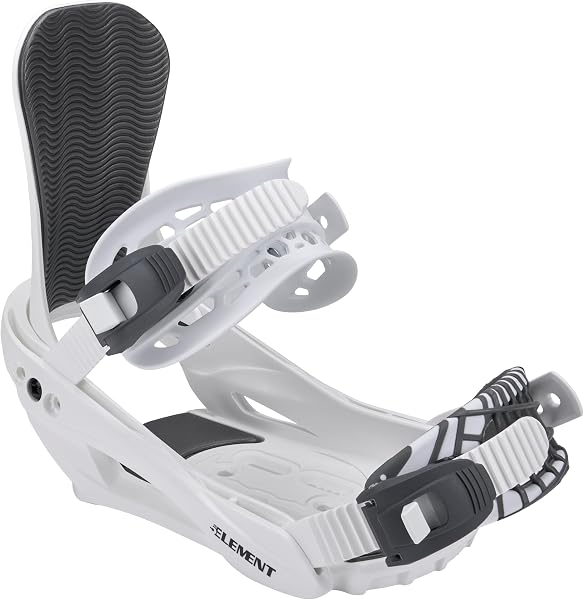
Rossignol Battle
8.8Editor scoreMainFrame rigid highback
Baselight anti-shock buckles
Dual-zone EVA footbeds
3D-molded One Shot straps
Find the right snowboard bindings for 2026. We compare 10 standout options by build quality, useful features, owner feedback, value, and everyday trade-offs.
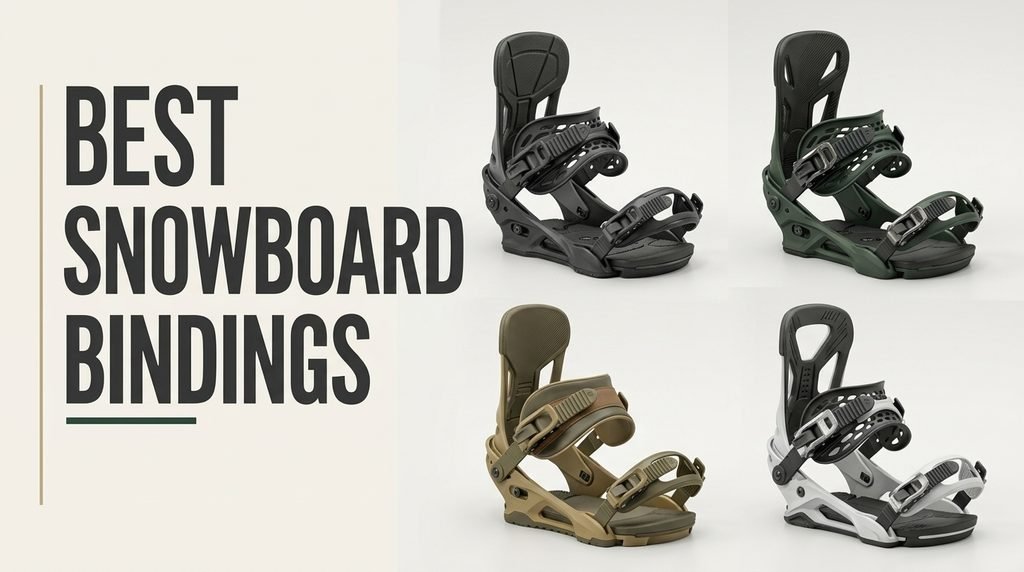
Find snowboard bindings that match how you actually ride in 2026. We compare 10 standout options by the details that change a day on snow: flex and response, boot fit, mounting compatibility, entry style, cushioning, adjustability, durability, owner feedback, and the trade-off between quick laps and locked-in control.
The biggest split is how you get in and how the binding talks to the board. Traditional ratchet straps trade a little time at the top for familiar power. Rear-entry designs speed up chairlift transitions. Step On removes straps, but only with matching boots. Mount pattern, highback stiffness, and cushioning then decide whether the setup feels precise or vague.
Prioritize fit and mounting before graphics or pro endorsements. A binding that misses your boot size, or a disc that misses your board’s insert pattern, will never ride as intended. Use this comparison to match flex, entry style, and budget to resort laps, park days, or mixed all-mountain riding, then confirm size and compatibility before checkout.
We compared 10 snowboard bindings using the details that actually change a purchase: entry style, boot-size range, mounting compatibility, highback and strap construction, cushioning, adjustability, terrain intent, warranty signals, owner feedback, and price. The notes stay practical, so a rear-entry resort binding is not judged by the same standard as a strap binding built for precise all-mountain response or a step-on system that only works with matching boots.


Compare key features, scores, and current prices side by side. A shorter feature list means fewer details were available, not necessarily fewer capabilities.


The OG Supermatic is the highest-rated binding in this group, at 4.8, and it is built for riders who want rear-entry speed without giving up a supportive platform. Nidecker frames it as automated, hands-free engagement that still locks the boot in. That combination is the reason to look at it: faster laps, with a rigid base meant to send energy into carves and jumps rather than feeling like a loose convenience binding.
We may earn a commission when you buy through this link, at no additional cost to you.
The performance details that matter are the rigid platform, plush straps, padded highback, and shock-absorbing footbeds. A rigid base is what keeps a rear-entry binding from feeling vague when you pressure an edge or pop off a side hit. Padding on the highback and straps is there to cut hotspots during long days, which is often the hidden reason riders abandon a fast-entry system after a few weeks. The footbeds are meant to dampen chatter and impacts, useful on firm morning groomers and choppy afternoon snow alike.
Two buying checks matter more than the feature list. First, this is a men’s rear-entry binding, so women and riders outside the intended shell should not assume the fit. Second, the listed price sits far below the other rear-entry and premium strap bindings here. Confirm you are buying the complete pair, in the size you need, before treating that number as a stable deal. Automated entry also has a short learning curve. Practice the engagement and release on carpet so you are not learning the motion on an icy cat track.
Automated and rear-entry bindings save time only after the motion is automatic. Click in and release ten times at home, including with gloves on. Learn where the release sits so a chairlift unload or a flat traverse does not turn into a wrestling match. A supportive binding that you cannot exit calmly is not actually convenient.
Choose the Supermatic if hands-free entry, a locked-in platform, and strong owner feedback are your priorities, and the fit matches your boots. It is the wrong tool if you need a women’s-specific last, a fully documented mount-pattern list, or the familiar micro-adjustability of a traditional two-ratchet strap binding. Riders who already own Step On boots should stay in that system rather than mixing interfaces.
Not for riders who need a women’s-specific fit or who are unwilling to confirm the current offer before buying.
We may earn a commission when you buy through this link, at no additional cost to you.
The Battle is the practical strap binding for riders who want heel-side support and a cushioned footbed without paying Union or Burton flagship money. Rossignol offers it for men and women, which makes it useful for a shared family quiver, a first owned setup, or a replacement pair when gender-specific graphics are not the point. At $115 it undercuts the premium strap bindings in this group by a wide margin, so the real question is whether the highback and straps still give you a connected ride on groomers.
We may earn a commission when you buy through this link, at no additional cost to you.
The MainFrame highback is the performance idea worth understanding. A rigid spine is there to push power into the heel edge, which is what finishes a turn instead of letting your ankle collapse late. Built-in flex zones are meant to keep that support from feeling like a locked hinge when you roll the board laterally or absorb a small side hit. The 3D-molded One Shot straps then wrap the boot rather than sitting as flat webbing, which should spread pressure across the instep and ankle and improve power transfer on mixed terrain.
Comfort comes from dual-zone Puffy Pad footbeds in thermoformed EVA. That matters on long resort days because flat landings and icy chatter travel straight through a thin footbed. Baselight buckles use anti-shock nylon and are aimed at faster entry and exit, a real convenience when gloves are wet and the chair interval is short. What is missing from the product details is a size run and a mount-pattern list. Do not assume a channel board or an unusual boot size will work. Match the binding to your boot shell and confirm the disc before you mount it.
A rigid highback only transfers power if it actually meets the back of the boot. After mounting, strap in on carpet and look for a gap between the highback and the boot spine. Close that gap with the forward-lean adjustment only as far as you can hold a relaxed athletic stance. Too much lean feels powerful for one run and exhausting by lunch.
Choose the Battle if you want an affordable unisex all-mountain binding with obvious cushioning and a highback built around heel-side response. Skip it if you already need a confirmed Channel interface, a named lifetime warranty, or a true step-in system. Park riders who want a very soft, tweakable feel may also find a power-oriented highback firmer than they like. For everyday resort riding on a budget, the price, strap shape, and footbed are the reasons it earns a place on the short list.
Not for riders who need a confirmed Channel mount, a published wide size range, or a strap-free step-in system.
We may earn a commission when you buy through this link, at no additional cost to you.
The MTN is for resort riders who are tired of ratcheting both straps at every chair and do not want to replace their boots. It is a men's rear-entry, step-in-style binding, closer to a Flow-style system than to Burton Step On. You still have a 3D-molded ankle strap, but the rear-entry layout is meant to get you in and out faster once that strap is set. Sizes run Medium for boots 6 to 9, Large for 9 to 11, and XL for 11 to 14.
We may earn a commission when you buy through this link, at no additional cost to you.
Mounting flexibility is the other practical win. The multidisc base is described as compatible with standard four-hole inserts and Burton Channel EST boards, so this is one of the clearer options if your quiver mixes a traditional insert board with a channel board. Full EVA padding on the highback and high-density dampening in the footbed are aimed at comfort and chatter control rather than a stripped race feel. The polyurethane-covered ankle strap is there for durability and a more immediate connection once you are locked in.
Treat the first day as a setup day, not a judgment day. Rear-entry bindings feel different because your heel enters from behind and the highback closes around the boot. Set the ankle strap so the boot is secure without crushing the instep, then check that the highback returns fully upright before you leave the lodge. If you ride mostly groomers and want less fiddling with gloves on, the time saved at the top is the feature you will notice. If you spend the day adjusting stance or swapping boards, the multidisc is the feature that keeps the binding useful.
Shoppers often mix these up. The MTN is a rear-entry binding that still uses an ankle strap and works with standard snowboard boots. Burton Step On deletes the traditional ratchet interface and requires matching Step On boots. If you want to keep the boots you already own, the MTN is the relevant comparison, not the Genesis.
Buy the MTN if you want rear-entry convenience, a wide men’s size run, and stated compatibility with both 4-hole and Channel boards at a mid-level price. It is a weaker choice if you want the strapless simplicity of Step On, or if your riding is mostly presses, butters, and technical park tricks where a traditional strap binding may feel more predictable. Confirm the size at the overlap, especially a size 9 or 11 boot, before you assume Medium, Large, or XL is the right shell.
Not for riders who want a fully strap-free system or a women’s-specific fit.
We may earn a commission when you buy through this link, at no additional cost to you.
The Summit Stealth is the clearest beginner-to-intermediate package in this group. It is a men's traditional binding sold with a universal mounting disc and hardware, which matters if you are putting a first board together or replacing a pair and do not want to hunt for screws. The 4×4 round disc lets you set stance angles for groomers or a mellow park lap instead of being locked to one factory position.
We may earn a commission when you buy through this link, at no additional cost to you.
Fit coverage is broad on paper. The size guide lists Small for men’s boots 5 to 7, Medium/Large for 7 to 10, and Extra Large for 10 to 13, while the overall description also cites men’s sizes 6 through 13. Reinforced toe caps, ratchet straps, and aluminum buckles are there to connect the boot and add support for carving as skills improve. That is the right feature set for a rider moving from rental gear to a personal setup, where consistent strap hold matters more than a featherweight race baseplate.
Compatibility is the limit to respect. The binding is described around a universal 4-hole pattern. Do not buy it for a Burton Channel board unless you have confirmed a separate solution, because Channel is not part of the stated fit. Overlapping sizes at 7 and 10 are another check. If your boot sits on a boundary, use the boot’s stated mondo or size range and, if possible, strap the boot in before a trip. A binding that is one bracket too small will create pressure points long before the highback feels supportive.
New riders often copy an aggressive duck stance from a video and then struggle to pressure an edge. Start near 15 degrees front and 0 to minus 6 rear, with bindings centered over the board’s reference marks. Ride that for a few days, then change one angle at a time. The included disc makes those changes easy, which is only useful if you change one variable at a time.
Choose the Stealth if you are new, returning, or replacing bindings on a standard 4-hole board and want discs, screws, and a wide men’s size map in one box. It is not the pick for expert charging, channel-mounted Burton boards, or riders who want Step On or rear-entry speed. Once your riding outgrows a beginner-to-intermediate flex, a more adjustable all-mountain binding such as the Mission or Force Classic is the logical next step.
Not for Channel-board owners or advanced riders who want a stiffer, more adjustable all-mountain binding.
We may earn a commission when you buy through this link, at no additional cost to you.
The Force Classic is the strongest all-around strap binding in this comparison for riders who care about mounting certainty. Union lists compatibility with 4×2, 4×4, and Channel, which covers the three patterns that cause the most returns. It carries a 4.7 rating, sits at $249.95 rather than the $349.95 of the standard Force, and is identified as a shop-employee favorite ridden by Chris Grenier. That is a more useful buying signal than a vague flagship claim.
We may earn a commission when you buy through this link, at no additional cost to you.
What you are buying is the Force platform in a Classic build, not a beginner binding with a famous name. Traditional strap bindings in this class are chosen when you want predictable power transfer across groomers, chopped resort snow, and occasional park laps. The Classic’s advantage in this group is that the mount story is explicit. If your board uses mini-disc 4×2 inserts, a standard 4×4 pattern, or Burton’s Channel, you do not have to guess whether the disc will land on the inserts.
The product details are thin on highback materials, strap foam, and the exact size run. That is a reason to check the size chart for your boot’s mondo point before ordering, not a reason to invent features the binding may or may not have in this colorway. At this price you should also expect to keep the pair for several seasons, so confirm the highback can be rotated or adjusted enough for your stance and that replacement straps are something you can source later. A shop-favored all-mountain binding is only a good buy if the shell matches your boots.
Look at the board, not the box art. A 4×4 pattern is four holes in a square. A 4×2 pattern uses a closer pair of holes and often a smaller disc. Channel boards have sliding slots rather than a fixed square. The Classic is one of the few bindings here that states all three. Even so, set the disc in the inserts before you tighten anything, and use the board’s reference stance as the starting point.
Choose the Force Classic if you want a men’s all-mountain strap binding with the clearest mount compatibility in the premium tier and a lower price than the standard Force. It is unnecessary if you only ride one 4-hole board and want to spend closer to $115, and it is the wrong interface if you specifically want rear-entry or Step On. Riders who need a stated XL offering should look at the standard Force listing, which calls out XL, and still confirm the full size map.
Not for riders who want rear-entry convenience, Step On boots, or a budget binding under $150.
We may earn a commission when you buy through this link, at no additional cost to you.
The LUX is the women's-specific binding in this group, and it solves a problem the men's rear-entry models do not. Many women end up in a small or medium men's binding that is the right length but the wrong volume through the ankle and calf. This listing is the M/L rear-entry, Flow-style model, with a 4.4 rating and a 3-year warranty. If your boots land in that M/L window, it is the most direct rear-entry option here.
We may earn a commission when you buy through this link, at no additional cost to you.
The construction follows the same useful pattern as the men’s System bindings. A multidisc base is described as mounting to standard four-hole boards and Burton Channel EST boards. Full EVA padding on the highback and high-density dampening in the footbed target comfort and chatter, while the 3D-molded ankle strap is covered in polyurethane for durability and a quicker connection. That is a sensible resort package: faster entry, some vibration control, and a mount pattern that is not limited to one board family.
The warranty is the detail that separates this listing from the MTN on paper. Three years of coverage is meaningful on a binding you will flex, ratchet, and hike in every weekend. Use it as a reason to register the purchase and keep the order record, not as a substitute for a good initial fit. Because only M/L is specified here, riders with very small or larger women’s boots should not force a fit. A highback that misses the boot spine, or a strap that cannot close evenly, will feel worse than a correctly sized men’s binding.
Boot size numbers overlap, but women’s and men’s bindings often differ in highback height, strap shape, and footbed width. If the LUX M/L matches your boot, start there. If it does not, a unisex binding such as the Rossignol Battle or a correctly sized men’s binding can still work, but strap the boot in and check heel hold, toe overhang, and highback contact before you commit.
Choose the LUX if you want a women’s rear-entry binding, ride 4-hole or Channel boards, and your boots match the M/L size. It is not the right pick if you need a tiny or extended size, prefer traditional ratchet feel for park riding, or already own Step On boots. Compare the boot in person if you are between sizes, because rear-entry comfort depends on the highback closing fully around your specific boot.
Not for riders outside the women’s M/L size or anyone who wants a traditional two-strap binding.
We may earn a commission when you buy through this link, at no additional cost to you.
The standard Force is the premium men's strap binding in this comparison, listed at $349.95 with a 4.6 rating. Union positions it as the headline binding in snowboarding, and this version is ridden by Miles Fallon and Benny Milam. The detail that is actually useful for shoppers is the XL size offering. Riders with larger boots often get stuck choosing between a binding that is too short and a model that never publishes an extended size. This listing at least puts XL on the table.
We may earn a commission when you buy through this link, at no additional cost to you.
A flagship strap binding earns its price when you want a consistent, adjustable connection for all-mountain riding and you plan to keep the pair for years. The Force name is associated with that job: resort carving, variable snow, and enough authority for side hits and occasional park laps. This listing does not spell out highback construction, footbed foam, or canting, so those should be confirmed on the size and spec chart rather than assumed from older Force generations. What you can say from the product details is that this is the marketed Force model, not the lower-priced Classic.
The buying trade-off against the Force Classic is straightforward. The Classic costs $100 less, has a slightly higher rating in this group, and explicitly lists 4×2, 4×4, and Channel compatibility. The standard Force lists an XL offering and the pro riders above, but it does not list the mount pattern here. If your board is Channel or 4×2, confirm compatibility before you pay the premium. If you wear a large boot and the Classic size chart does not clearly cover you, the XL offering may be the reason to spend more.
A bigger binding is not more comfortable if your boot rattles inside it. Check the size chart against boot size, not shoe size, and look at strap length as well as baseplate length. If you are at the top of a Large and the bottom of an XL, the better fit is the one that closes the ankle strap in the middle of the ladder, not at the last tooth.
Choose the Force if you want Union’s premium all-mountain strap binding and the XL size is the one that fits. Choose the Classic instead if mount compatibility and price matter more than the flagship listing. Neither Force is a rear-entry or Step On binding, so they are the wrong shortcut if your main complaint is time spent ratcheting straps at the chair.
Not for riders who need a listed Channel or 4×2 mount, or who want rear-entry or Step On convenience.
We may earn a commission when you buy through this link, at no additional cost to you.
The Mission Re:Flex is the comfort-focused strap binding for riders who spend full days on the hill and want the feel to be tunable rather than fixed. Burton centers it on Re:Flex FullBED cushioning, which puts support under the whole foot and uses a trap-door design so you can reach the mounting hardware without tearing the footbed apart. At $249.95 and a 4.6 rating, it sits in the same price band as the Force Classic, with a more explicit comfort and adjustment story.
We may earn a commission when you buy through this link, at no additional cost to you.
Response comes from a single-component baseplate, meaning one material throughout rather than a patchwork that can feel different from heel to toe. The Medium Disc is described as boosting board flex and reducing dead zones, which is the opposite of a thick, isolated mount that mutes the board. That combination, a consistent baseplate plus a disc that lets the board flex, is what you want if your deck is lively and you do not want the bindings to flatten it.
The adjustments are the reason to choose this over a simpler strap binding. DialFLAD lets you fine-tune forward lean. The zero-forward-lean highback stands vertical for a more relaxed ride, which many intermediate riders and anyone with tight calves will prefer. Hinge highback technology is there for independent adjustment and lower weight, so you can shape the fit instead of accepting one factory angle. These are small settings with a large effect. Change lean one click at a time and ride it before you crank the highback forward because a demo binding felt powerful.
Full-length cushioning is only convenient if you can still reach the screws. The trap-door footbed is meant to solve that. When you change stance width or angle, open the access point, adjust the disc, and reseat the cushioning so it lies flat. A wrinkled or shifted footbed will undo the comfort the FullBED system is there to provide.
Choose the Mission if you want a men’s all-mountain strap binding with full-foot cushioning and real forward-lean control. It is slower to enter than the rear-entry models or Step On Genesis, so it is the wrong priority if chairlift speed is your main complaint. It is also a men’s binding, and riders who need a women’s-specific last should compare the LUX or try the boot in the Mission before buying. For long resort days where comfort and a predictable strap feel matter most, this is one of the most complete options here.
Not for riders who want strap-free entry or a women’s-specific binding without checking fit.
We may earn a commission when you buy through this link, at no additional cost to you.
The Step On Genesis is for riders who want to stop managing ratchet ladders and are willing to commit to matching boots. Burton's system connects at two points by the toe, and Toe Hook 2.0 is described as making entry and exit easier while improving the overall ride. This Genesis version adds the comfort pieces that matter on a long day: Re:Flex FullBED cushioning and a Kickback Hammock highback that cradles the heel to cut vibration and increase response.
We may earn a commission when you buy through this link, at no additional cost to you.
The baseplate story is more specific than most bindings in this group. It is a single-component construction for consistent response, using a nylon composite blended with 30 percent short-glass and described as playful rather than harsh. Re:Flex mounting is meant to improve flex and feel while reducing weight, and Burton says it mounts to any board mount system. That is a meaningful compatibility claim if you switch between insert boards and channel boards. FLAD still lets you micro-adjust forward lean, so step-in convenience does not mean you lose stance tuning.
Warranty terms deserve a close read. Baseplates carry a lifetime warranty. Straps and highbacks are covered for one year from purchase. That split is fair to know before you assume the whole binding is covered forever. Also budget for the boots. Step On will not accept a standard snowboard boot, and a standard binding will not accept the system the same way. If you already own boots you like, this is an expensive ecosystem change. If you are buying boots and bindings together, the time saved every lap can justify it quickly.
The binding is only half the interface. Confirm the boots are Step On compatible in the same size you actually wear, and check that the toe connection clicks fully before you look at color. A mismatched boot will not be solved with a tighter strap, because the traditional strap interface is not the primary connection. Factor both purchases into the price before comparing it with a $140 rear-entry binding.
Choose the Genesis if you want the most complete strap-free option here, with full-length cushioning, a vibration-reducing highback, and broad mount compatibility. Skip it if you want to keep conventional boots, prefer the lower price of a Flow-style rear-entry binding, or need coverage beyond a year on the highback and straps. Practice the toe engagement at home so the first chairlift does not become the lesson.
Not for riders who want to keep standard snowboard boots or avoid a boot-and-binding system purchase.
We may earn a commission when you buy through this link, at no additional cost to you.
The Ultra is the System rear-entry binding aimed at riders who want more dampening than the MTN provides. It uses the same general idea, a men's rear-entry step-in-style binding with a multidisc for standard four-hole and Burton Channel EST boards, but the padding story is stronger. Increased full EVA padding covers both the footbed and the highback, with the stated goal of a damper ride and less chatter in harsh conditions.
We may earn a commission when you buy through this link, at no additional cost to you.
The strap upgrade is the other real difference. Injection-molded straps are described as giving immediate response with no stretching and no give, and as more durable than traditional padded straps. That is a double-edged feature. No stretch means less power lost when you pressure an edge, which helps on firm snow and higher-speed groomers. It also means a narrow or low-volume boot has less foam to forgive a tight fit. If your boots are bulky, the solid strap can feel secure. If they are low volume, check for pressure across the ankle before you commit.
Sizing matches the MTN: Medium for 6 to 9, Large for 9 to 11, and XL for 11 to 14. The 4.1 rating is the lowest in this roundup, so read recent owner comments for the size you need and do not treat the Ultra as an automatic upgrade over the MTN. You are paying a little more, $149.95 versus $139.95, for more padding and a stiffer strap construction. That trade is worth it if icy chatter and strap stretch are your complaints. It is not worth it if you simply want the cheapest rear-entry path into a Channel board.
Chatter control matters most on early-morning ice, scraped traverses, and boards with a lot of camber pop. If that is your mountain, the Ultra’s padded footbed and highback are aimed at the right problem. If you ride soft snow and want a more forgiving strap, the no-stretch construction is less important than a comfortable closure. Decide from the snow you ride most, not from the stiffest spec on the page.
Choose the Ultra if you ride firm or choppy snow, want rear-entry convenience with standard boots, and prefer a strap that does not loosen as it stretches. Look at the MTN if you want the same mount flexibility for less and do not need the extra padding. Look at the LUX if you need a women’s fit, and look at Step On only if you are ready to change boots. At the size overlaps, try to match the strap closure to the middle of the ladder rather than guessing between Medium and Large from shoe size alone.
Not for riders who want the highest owner rating, a soft forgiving strap, or a women’s-specific fit.
We may earn a commission when you buy through this link, at no additional cost to you.
A binding is the connection between your boot and the board. Get the interface, size, and flex right, and a modest deck feels precise. Get them wrong, and an expensive setup still feels late, numb, or painful by noon.
Traditional strap bindings use a toe strap and an ankle ratchet. They are the reference point for response because you can tighten each strap independently and feel exactly how the boot is locked to the baseplate. The Rossignol Battle, 5th Element Summit Stealth, Union Force, Union Force Classic, and Burton Mission all live in this category. They take longer at the chair, especially with cold gloves, but they work with standard snowboard boots and give you the most familiar power transfer. If you are learning, returning after years away, or riding a mix of groomers and park, a strap binding is usually the lowest-risk starting point.
Rear-entry bindings, including the System MTN, System LUX, System Ultra, and Nidecker OG Supermatic, change the way you get in. The boot enters from the back and the highback closes around it, which shortens the routine once the fit is dialed. They are not the same as Burton Step On. The System models still use an ankle strap, and they work with ordinary boots. Step On Genesis removes that traditional ratchet interface and connects through the boot, with two toe connection points and Toe Hook 2.0. That is faster again, but only inside Burton’s boot system. Confusing a Flow-style rear-entry binding with Step On is the most expensive mistake in this category, because the boots are not interchangeable.
Pick straps if you want compatibility and familiar control. Pick rear-entry if chairlift speed matters and you want to keep your current boots. Pick Step On only if you are buying, or already own, compatible boots and accept that the highback and straps have a shorter warranty than the baseplate.
The disc has to match the board before flex, color, or pro endorsements matter. Most snowboards use a 4×4 insert pattern, four holes in a square. Some use 4×2, a tighter pattern that needs a compatible disc. Burton Channel boards use sliding slots rather than a fixed square, and EST-style mounting is the channel-specific version of that interface. A binding can be excellent and still be useless on your deck if the disc never reaches the inserts. This is a compatibility check, not a performance preference.
In this group, the Union Force Classic is the clearest premium strap option because it lists 4×2, 4×4, and Channel. The System MTN, LUX, and Ultra explicitly cite standard four-hole mounting and Burton Channel EST. Burton says the Step On Genesis Re:Flex system mounts to any board mount system. The 5th Element Summit Stealth is built around a universal 4×4 disc and included hardware, so treat it as a 4-hole binding unless you confirm otherwise. The Rossignol Battle, standard Union Force, and Nidecker listing do not spell out the pattern here. Do not fill that gap with hope. Look at your board, identify the inserts, and confirm the disc before checkout.
If you own one 4-hole board, a standard disc is enough. If you switch between a channel board and an insert board, limit the search to bindings that state both. The Classic and the System trio are the safest starting filters.
Flex is how quickly the binding passes pressure from your boot to the edge. A stiffer highback and baseplate respond sooner, which helps carving, heavier riders, and faster snow. A softer package forgives late movements, which helps beginners, presses, and a more playful park style. The Battle approaches this with a MainFrame highback: a rigid spine for heel-side response plus flex zones for lateral movement. The Mission uses a single-component baseplate so the response stays consistent, and a Medium Disc intended to let the board flex instead of creating a dead zone underfoot. The Step On Genesis uses a nylon composite with 30 percent short-glass and is described as playful, with a Kickback Hammock to add response at the heel.
Rear-entry bindings need this conversation even more, because a fast-entry hinge can feel loose if the platform is soft. The Supermatic calls out a rigid base meant to channel energy for carving and jumps. The Ultra uses injection-molded straps with no stretch, which is a direct attempt to stop power loss as a soft strap gives way. Those are different routes to the same goal. A rigid base supports the whole boot. A no-stretch strap keeps the ankle from lifting. Neither replaces a boot that fits. If the boot heel lifts inside the liner, no highback will make the turn finish cleanly.
Choose more highback support if you carve hard or feel late on heel edge. Choose a more relaxed, zero-lean setup, as the Mission specifically allows, if your calves fatigue or you are still learning edge changes. Do not buy the stiffest binding by default.
Binding size follows snowboard boot size, not street shoe size. A boot that is a men’s 9 can sit at the top of one bracket and the bottom of the next, and the wrong choice shows up as toe overhang, heel lift, or a strap that only closes on the last tooth. The MTN and Ultra publish the clearest men’s map here: Medium 6 to 9, Large 9 to 11, and XL 11 to 14. The 5th Element guide runs Small 5 to 7, Medium/Large 7 to 10, and Extra Large 10 to 13, alongside a broader claim of sizes 6 through 13. The LUX listing is specifically women’s M/L. The standard Force calls out an XL offering. Several other models, including the Battle and Force Classic, do not publish a size run in these details.
Volume matters as much as length. A 3D-molded strap, used on the Battle and the System ankle straps, is shaped to wrap a boot rather than pinch one spot. Injection-molded straps on the Ultra add durability and immediate response, but they have less give for a low-volume boot. Padding on a highback, as on the System models and the Supermatic, can remove a hotspot at the calf, yet it cannot fix a baseplate that is too wide or too narrow. Women’s boots in a men’s binding, or the reverse, can work when the shell matches, but highback height and strap curve often differ. The LUX exists so women are not forced to guess.
At any overlapping size, choose the binding that closes the ankle strap near the middle of the ladder and lets the highback meet the boot spine. If the chart is missing, check it with the seller before you buy. A return after you have mounted the discs is a wasted weekend.
Cushioning is not a luxury add-on if you ride more than a few runs. Vibration from icy groomers and the impact from flat landings both arrive through the footbed. The Battle uses dual-zone thermoformed EVA Puffy Pads. The Mission and Step On Genesis use Re:Flex FullBED cushioning for full underfoot support, with the Mission adding easy hardware access through a trap door. The System bindings use EVA on the highback and high-density dampening in the footbed. The Ultra increases that EVA across both the footbed and highback specifically to calm chatter in harsh conditions. The Supermatic pairs shock-absorbing footbeds with a padded highback to reduce hotspots and fatigue.
More foam is not automatically better. A thick, soft footbed can feel plush on a cat track and vague when you try to pressure a small edge. The useful versions keep the boot stable while taking the edge off repeated impacts. Full-length cushioning, as in the Burton Re:Flex models, also has to stay put. If the pad shifts or wrinkles over the screws, you get a pressure point in the exact place the system was meant to protect. Rear-entry padding has a second job: it has to remain comfortable when the highback closes from behind, not just when you stand in a shop.
Prioritize cushioning if you ride full days, have sensitive feet, or spend mornings on firm snow. Prioritize a more direct platform if you want maximum board feel and ride shorter, more aggressive sessions. The Mission is the strap binding with the clearest all-day comfort brief. The Ultra is the rear-entry option most explicitly aimed at chatter.
A binding can have a dozen adjustments and still be a poor buy if the ones you need are missing. The settings that change a ride are stance width, stance angle, highback rotation, forward lean, and strap position. The 5th Element universal disc is aimed at customizing stance angles, which is exactly what a beginner or intermediate rider needs while figuring out a comfortable setup. The Mission goes further with DialFLAD for forward lean, a zero-lean vertical highback for a relaxed stance, and a hinge highback for independent adjustment. Step On Genesis keeps FLAD micro-adjustment even though the entry system is different. That matters, because convenience bindings sometimes hide the adjustments experienced riders still want.
Forward lean is the setting most people overdo. A little lean can make heel-side turns feel quicker. Too much lean tires the calves and makes flat-land skating miserable. Start at zero or the first click, ride a full morning, and then add lean only if the heel edge feels late. Highback rotation should follow your stance angle so the highback stays aligned with your calf rather than twisting the knee. Strap ladders should close in the middle of their range. If you are on the last tooth on day one, the binding is too small or the strap is in the wrong slot, and no forward-lean trick will fix it.
If you like to tune feel, the Mission is the most transparent strap option here. If you want simple hardware and a disc you can reset as you learn, the Stealth package is enough. Do not pay for a flagship binding and then leave every adjustment at the factory default without checking highback contact.
All-mountain resort riding is the center of this group. You want enough highback support to carve, enough cushioning for chopped snow, and a mount you can trust. The Force Classic, Mission, and Battle all fit that job at very different prices. The Classic is the compatibility play at $249.95. The Mission is the comfort and adjustment play at the same price. The Battle is the budget unisex play at $115, provided the unpublished mount pattern works with your board. The standard Force is the premium version of that all-mountain strap idea, with an XL offering and a higher price that you should only pay if the fit or the specific model is what you need.
Park and freestyle riding usually favors a lighter, more forgiving feel and traditional straps, because you may adjust stance and you want predictable flex for presses. None of these listings is a dedicated soft park model, so do not force that label onto them. Beginners are better served by the Stealth, which says beginner to intermediate and includes mounting hardware, or by the Battle if they want more cushioning and the size works. Rear-entry bindings shine for riders who lap groomers and care about speed at the chair. The Ultra leans toward harsher snow because of its extra dampening. Step On Genesis suits riders who value fast transitions and are building a boot-and-binding system, including people who want a playful composite baseplate rather than the stiffest possible platform.
Buy for the snow and terrain you ride most days, not the one trip you hope to take. A binding that is perfect for a powder week can feel nervous on icy home-mountain groomers, and a damp, supportive resort binding can feel dull if all you do is press boxes.
Bindings fail in predictable places: ratchet ladders, strap ends, highback hinges, bushings, and stripped discs. A higher price should buy better materials at those points, not just a thinner graphic. The Ultra specifically argues for injection-molded straps because they are more durable than traditional padded straps and do not stretch. The System ankle straps use a polyurethane cover for the same reason. Aluminum buckles on the Stealth are a reasonable durability cue on a beginner binding. None of that replaces checking screws a few days after the first mount, because a new binding settles.
Warranty is uneven and should be read literally. The LUX lists 3 years. Step On Genesis gives baseplates a lifetime warranty and limits straps and highbacks to one year from purchase. The other models in this group do not publish a warranty term in the details used here, so do not assume lifetime coverage because the brand is familiar. Price also needs context. The Battle at $115 is a real value if it fits and mounts. The Stealth at $129.99 adds hardware for a first setup. The MTN, LUX, and Ultra cluster from about $130 to $150 for rear-entry convenience. The Mission, Force Classic, and Step On Genesis sit in the mid-to-upper $200s. The standard Force is $349.95. The Supermatic’s listed price is far below every peer, including other rear-entry models. Confirm that offer is the complete pair in your size before you treat it as the bargain of the group.
Spend more when the extra money buys a confirmed mount, the right size, or an adjustment you will use. Do not spend more only for a pro rider’s name. A $350 binding on the wrong disc is a worse purchase than a $115 binding that fits your board and your boots.
Mount the bindings before the trip, not in the parking lot. Identify whether your board is 4×4, 4×2, or Channel, set the disc on the reference stance, and start with angles you can ride all day rather than an extreme duck stance copied from someone else. Tighten screws in a cross pattern until they are snug, then recheck them after the first day on snow because materials settle. Strap your boots in at home and confirm three things: the ankle strap closes near the middle of the ladder, the toe strap sits where it can hold the boot without crushing the toes, and the highback contacts the boot spine.
On snow, set forward lean conservatively. Zero lean, or the first available click, is a better starting point than the most aggressive setting, especially on the Mission’s DialFLAD or any FLAD-equipped highback. Rear-entry riders should practice closing and releasing the highback with gloves on before the first chair. Step On riders should practice the toe engagement until it clicks fully every time. Do not add straps, lean, and a new stance angle on the same morning. Change one setting, ride it, and then decide. If a foot goes numb, loosen the strap or move it before you assume the binding is defective.
After riding, buckle straps loosely so the ladders are not stored under tension, wipe grit off the disc and hinges, and let the bindings dry before they go into a sealed bag. Do not leave a board lying with bindings full of road salt or parking-lot gravel. Check screws, strap teeth, and highback hinges a few times each season. Replace a chewed ratchet ladder early, because a skipped tooth on a steep traverse is a worse time to discover it. Store the board out of hot car trunks and direct summer heat when you can, since excess heat is hard on plastics, foams, and adhesives even when a warranty covers the baseplate.
Use your snowboard boot size, not your street shoe size, and compare it with the binding's size chart. In this group, the System MTN and Ultra list Medium for 6 to 9, Large for 9 to 11, and XL for 11 to 14. The 5th Element guide uses Small, Medium/Large, and Extra Large across men's boots 5 to 13, with overlaps at 7 and 10. If you are on a boundary, choose the size that lets the ankle strap close in the middle of the ladder and lets the highback meet the boot. When a listing does not publish sizes, confirm the chart before you order.
They can feel different, but a rear-entry binding with a rigid platform and a secure strap is not automatically vague. The Supermatic emphasizes a rigid base for carving and jumps, and the Ultra uses no-stretch injection-molded straps to limit power loss. Traditional strap bindings such as the Force Classic and Mission still give you the most familiar, independently adjustable hold. The right comparison is fit and platform stiffness, not the entry method alone. A loose boot will feel late in either system.
No. The Step On Genesis uses Burton's boot-to-binding system, with two connection points at the toe and Toe Hook 2.0. Standard snowboard boots do not replace that interface. Rear-entry models such as the MTN, LUX, Ultra, and Supermatic are the options to consider if you want faster entry and need to keep conventional boots. If you are buying new boots anyway, price the Step On boots and bindings together before comparing them with a strap binding.
The Union Force Classic lists Channel along with 4×2 and 4×4. The System MTN, LUX, and Ultra say their multidisc mounts to standard four-hole boards and Burton Channel EST boards. Burton says the Step On Genesis Re:Flex system mounts to any board mount system. The 5th Element listing is built around a 4-hole disc, so do not assume it fits Channel. If a product does not state the pattern, confirm it before buying rather than buying a separate adapter on speculation.
Start at zero or the lowest setting and add lean only if your heel-side turns feel late. The Mission is the most explicit about this, with DialFLAD tuning and a vertical zero-lean highback for a relaxed ride. Step On Genesis also includes FLAD micro-adjustment. Too much lean can tire your calves and make skating uncomfortable, even if the first run feels powerful. Set the highback so it supports the boot spine, then make small changes after you have actually ridden the setup.
A beginner needs a binding that fits, mounts easily, and is not so stiff that edge changes feel punishing. The 5th Element Summit Stealth is expressly aimed at beginner to intermediate riders and includes a universal 4×4 disc plus hardware. The Rossignol Battle is another reasonable step if you want more cushioning and a unisex strap binding at $115, after you confirm size and mount pattern. Rear-entry and Step On systems are convenient, but they add a new motion or a special boot while you are still learning to ride. Simple and compatible is usually better at the start.
Sometimes, if the boot shell fits the baseplate and the highback meets the calf without a gap or a painful overhang. Fit is the test, not the label. The LUX is the women's-specific rear-entry option here, listed in M/L with a 3-year warranty. The Battle is sold for men and women. A men's medium can be too wide or too tall for some women's boots even when the size number matches. Strap the boot in and check heel hold, strap closure, and highback contact before you decide the men's model is fine.
They are worth it when the extra money solves a real constraint: mount compatibility, a size you cannot get cheaper, better adjustability, or materials you will use for several seasons. The Force Classic at $249.95 is easier to justify than the $349.95 Force if you mainly need 4×2, 4×4, and Channel compatibility. The Mission earns its price with FullBED cushioning and forward-lean tuning. A beginner who rides a few weeks a year may be better served by the Battle or Stealth. A pro rider's name alone is not a reason to spend more.
A well-fitted pair that is mounted correctly and stored dry commonly lasts several seasons of resort riding. Straps, ratchet ladders, and highback hinges usually wear before the baseplate. Burton's Step On Genesis warranty reflects that split, with lifetime coverage on baseplates and one year on straps and highbacks. The LUX lists 3 years. Check screws after the first rides, replace chewed ladders, and avoid storing wet bindings in a hot, sealed car. A binding that was the wrong size from day one will feel worn out much sooner because the straps and highback are working outside their intended range.
Confirm the disc pattern, the boot size, and which screws and washers the board requires. Use the included hardware when a kit provides it, as the Stealth does, rather than mixing unknown screws that may be too long for the insert. Set the stance on the board's reference marks, snug the screws in a cross pattern, and strap in before you leave home. Check that the highback meets the boot and that no strap covers a buckle in a way you cannot release with gloves. Recheck every screw after the first day on snow.
The Union Force Classic is the strongest overall choice for most riders who want a traditional strap binding and a board that might not use a simple 4×4 pattern. It states 4×2, 4×4, and Channel compatibility, carries a 4.7 rating, and costs less than the standard Force. Pair that mount certainty with a boot-size check and you have a cleaner decision than chasing a flagship name. If all-day cushioning and forward-lean tuning matter more than the Force platform, the Burton Mission Re:Flex is the strap alternative at a similar price.
Different priorities point elsewhere. The Rossignol Battle is the value strap binding if the size and disc work for you. The 5th Element Summit Stealth is the beginner package with hardware included for 4-hole boards. Rear-entry shoppers who want to keep standard boots should compare the System MTN, the more padded Ultra, the women's LUX, and the higher-rated Nidecker OG Supermatic, then confirm the current Supermatic offer before treating the price as settled. The Step On Genesis is the right fast-entry answer only when the boots are part of the purchase.
Decide in this order: boot compatibility, mount pattern, size, then flex and entry style. A binding that cannot close around your boot, or cannot reach your inserts, will not be saved by a better highback or a lower price. Once those two checks are done, choose straps for familiar control, rear-entry for faster laps with standard boots, or Step On for the least fiddling if you are ready to commit to the matching boots.