Garmin vívoactive 5
8.6Editor score11-day battery life
Bright AMOLED display
30+ sport apps
Body Battery monitoring
Find the right smartwatches for 2026. We compare 10 standout options by build quality, useful features, owner feedback, value, and everyday trade-offs.
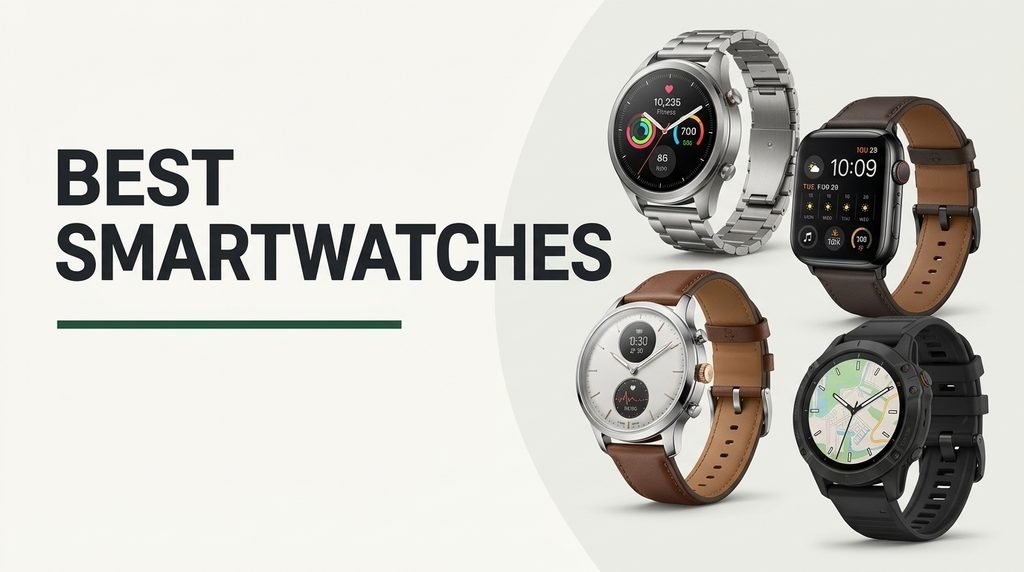
Find the right smartwatch for 2026. We compare 10 standout options by the factors that matter most in this category, such as display quality, battery endurance, health sensors, GPS accuracy, smartphone compatibility, build durability, and everyday convenience.
The smartwatch market spans budget fitness trackers under fifty dollars to premium health-focused wearables costing over five hundred. Knowing which features you actually need versus which ones sound impressive on a spec sheet can save you significant money and frustration.
This guide breaks down each model by real-world strengths and limitations, helping you match a watch to your daily routine, fitness goals, and phone ecosystem. Read on to find the wearable that earns a permanent spot on your wrist.
We compared 10 smartwatches using the details that actually help a buyer decide: display type and brightness, battery longevity, health and fitness sensor accuracy, GPS reliability, smartphone compatibility, build quality, water resistance, smart features, and overall value. The notes focus on practical trade-offs so each pick feels connected to how people actually wear, charge, and rely on a smartwatch throughout their day.
Compare key features, scores, and current prices side by side. A shorter feature list means fewer details were available, not necessarily fewer capabilities.
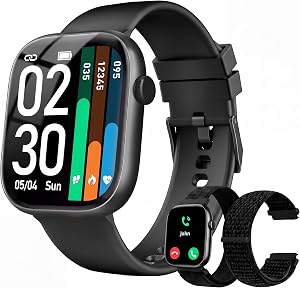


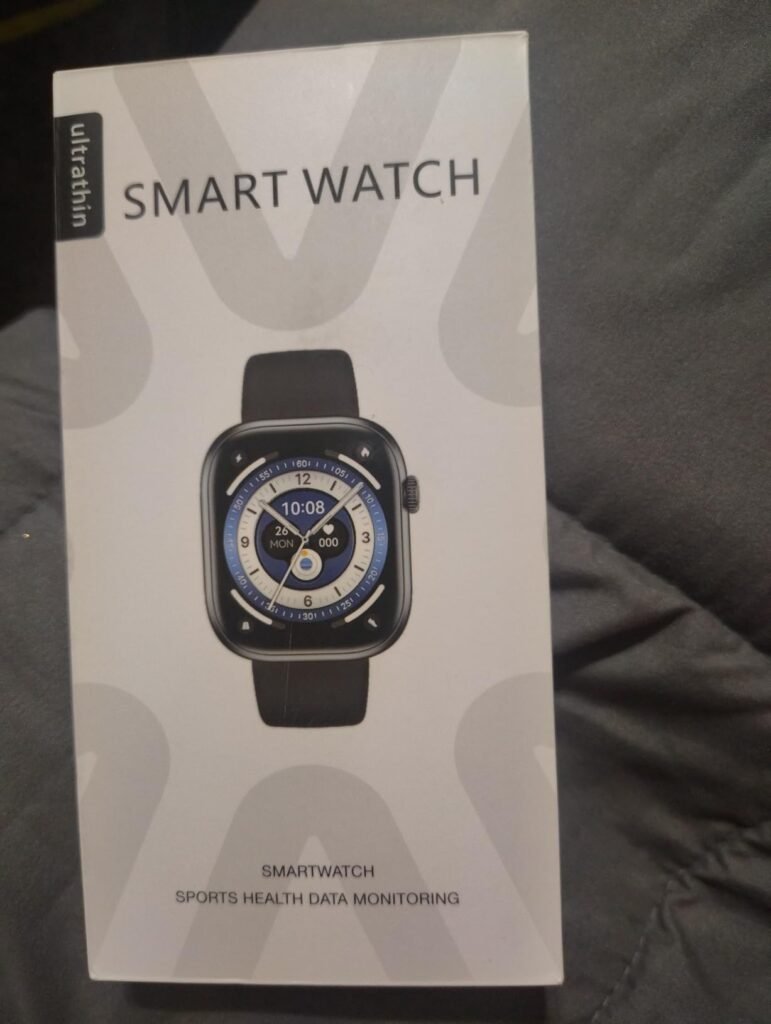
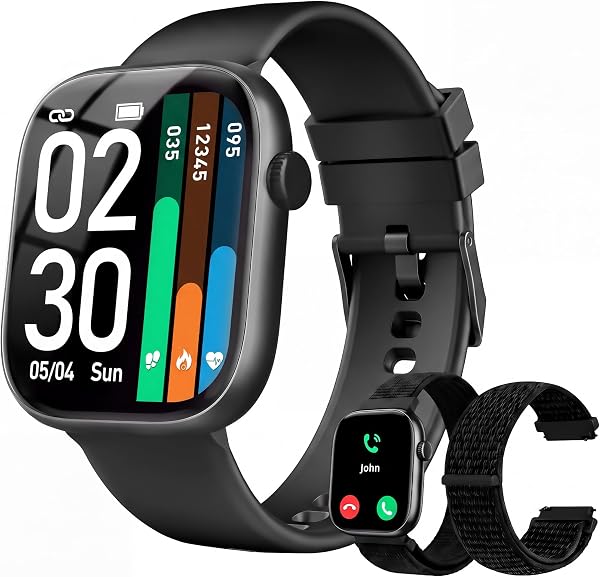
At under forty dollars, the T7 Smart Watch offers a feature set that would have seemed unrealistic in this price range just a couple of years ago. The 1.83-inch HD touchscreen is responsive and bright enough for indoor use, and the inclusion of two bands in the box lets you switch between a sporty and a dressier look without buying accessories separately. For first-time smartwatch buyers or anyone who wants to try wearable tech without a big investment, this is an accessible entry point.
We may earn a commission when you buy through this link, at no additional cost to you.
Bluetooth calling is the standout feature at this price. The built-in speaker and microphone allow you to answer and make calls directly from your wrist, which is genuinely convenient when your phone is buried in a bag or charging across the room. Call quality is adequate for quick conversations, though it will not replace a good pair of earbuds in noisy environments. The AI voice assistant adds hands-free control for reminders, weather checks, and music playback.
Health tracking covers the basics well: continuous heart rate, blood oxygen, sleep staging, and stress monitoring all run in the background. The watch also includes menstrual cycle tracking, which is a thoughtful inclusion at this price point. Battery life reaches up to 10 days with regular use, and the roughly two-hour charge time means you are never tethered to an outlet for long.
The IP67 rating on the T7 means it can survive brief submersion in shallow water and is fully protected against dust. However, it is not designed for swimming, hot showers, or prolonged water exposure. Watches rated 5ATM or 50 meters, like several others on this list, are a better choice if you plan to wear your watch in the pool. For handwashing, rain, and gym sweat, IP67 is perfectly adequate.
The main limitations are the IP67 water resistance rating, which handles sweat and rain but not swimming or showering, and the lack of built-in GPS. If you need to track outdoor runs without your phone, you will want a model with standalone GPS. For everyday wear, casual fitness tracking, and staying connected on a shoestring budget, the T7 punches well above its price.
Swimmers or outdoor runners who need built-in GPS and higher water resistance.
We may earn a commission when you buy through this link, at no additional cost to you.
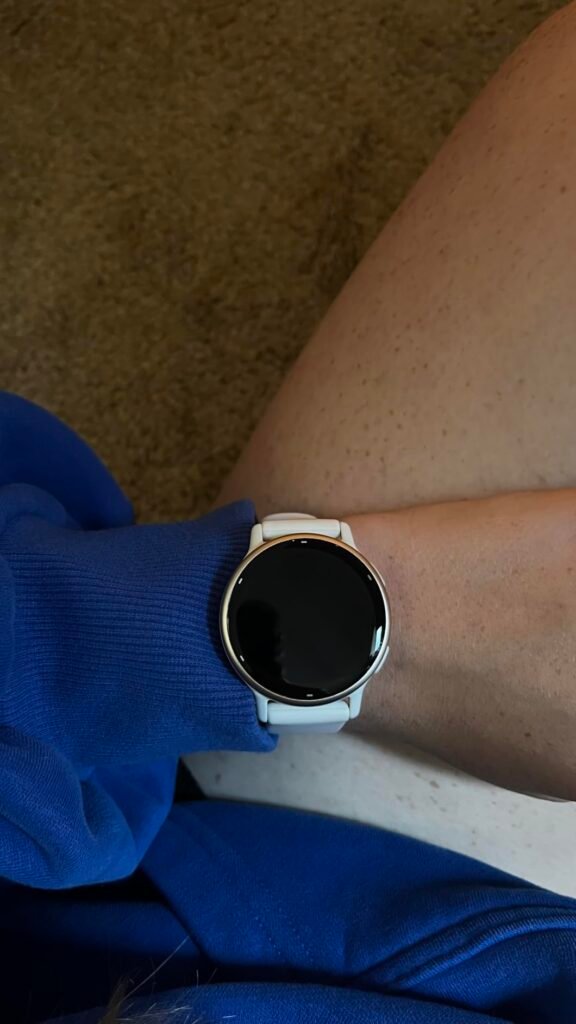
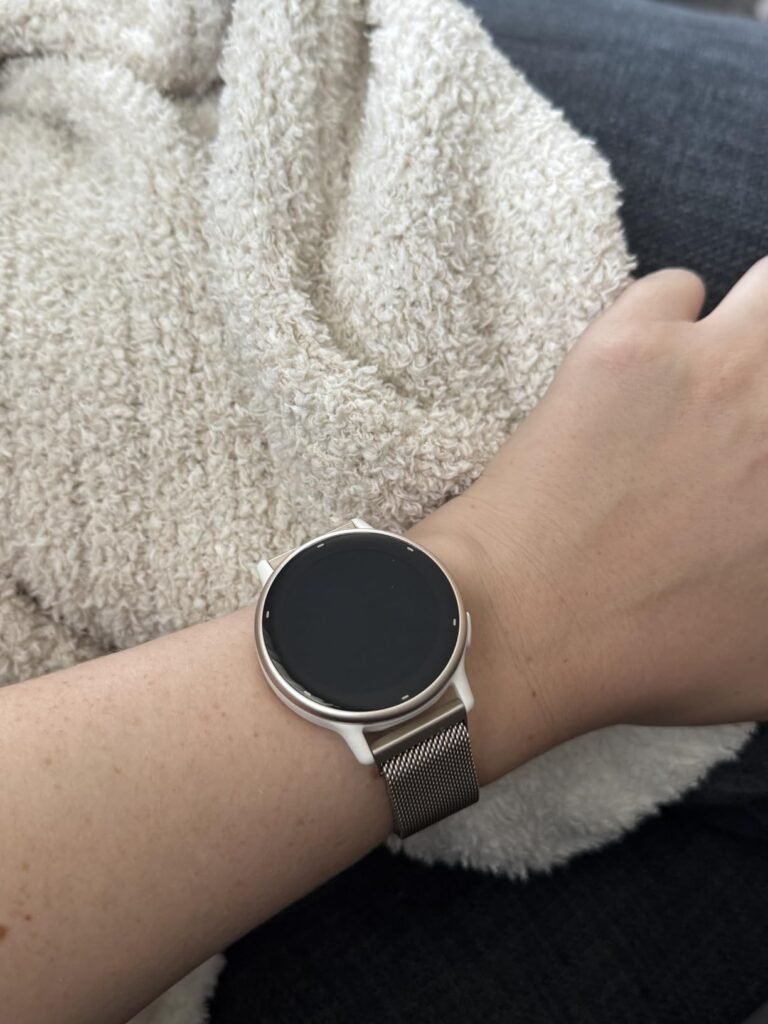
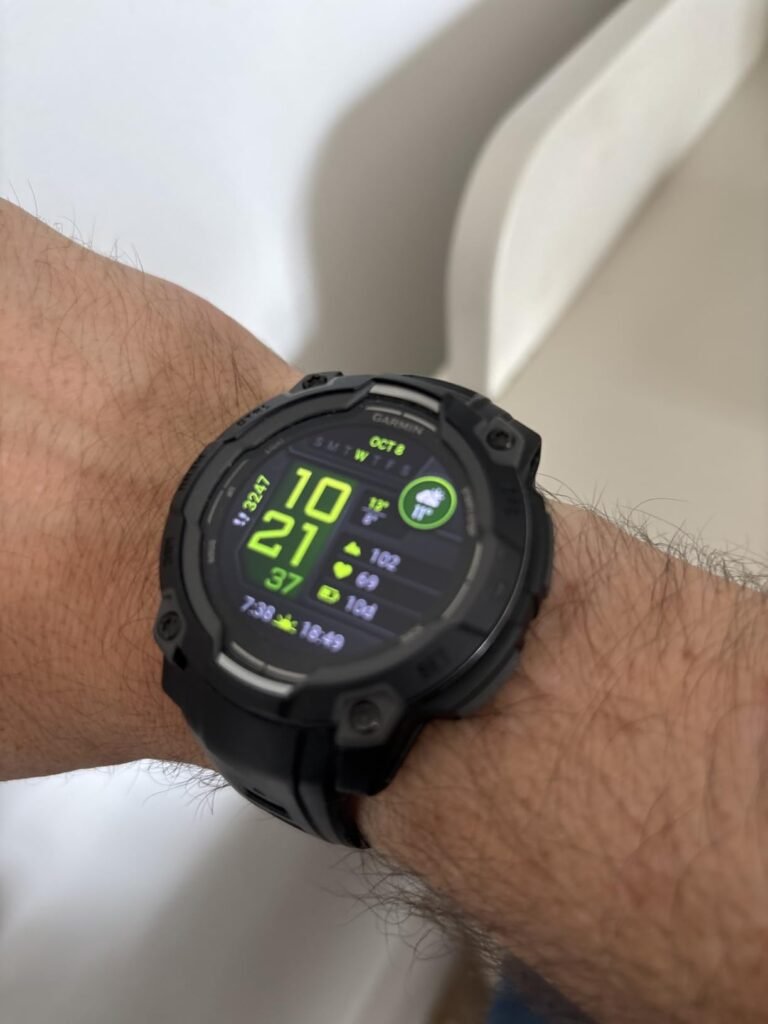
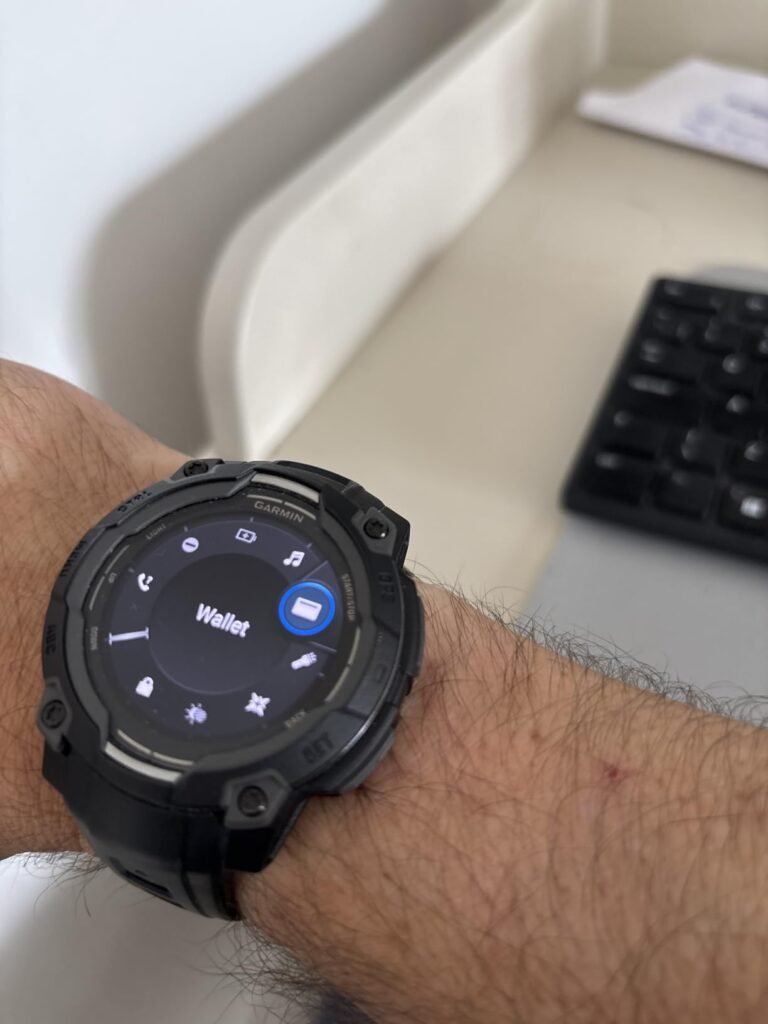
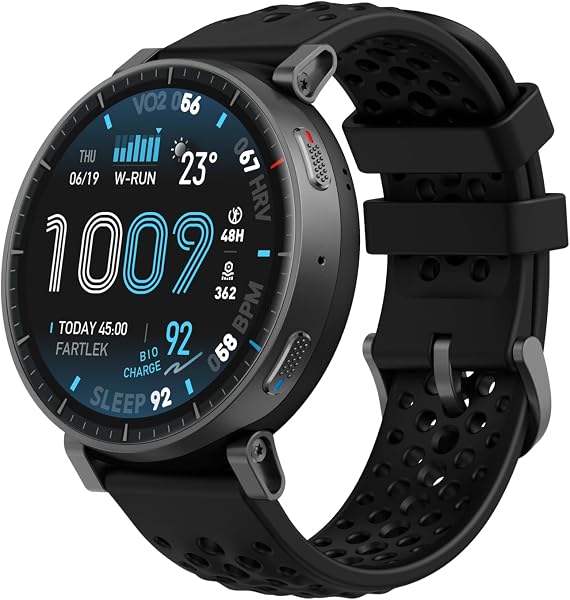
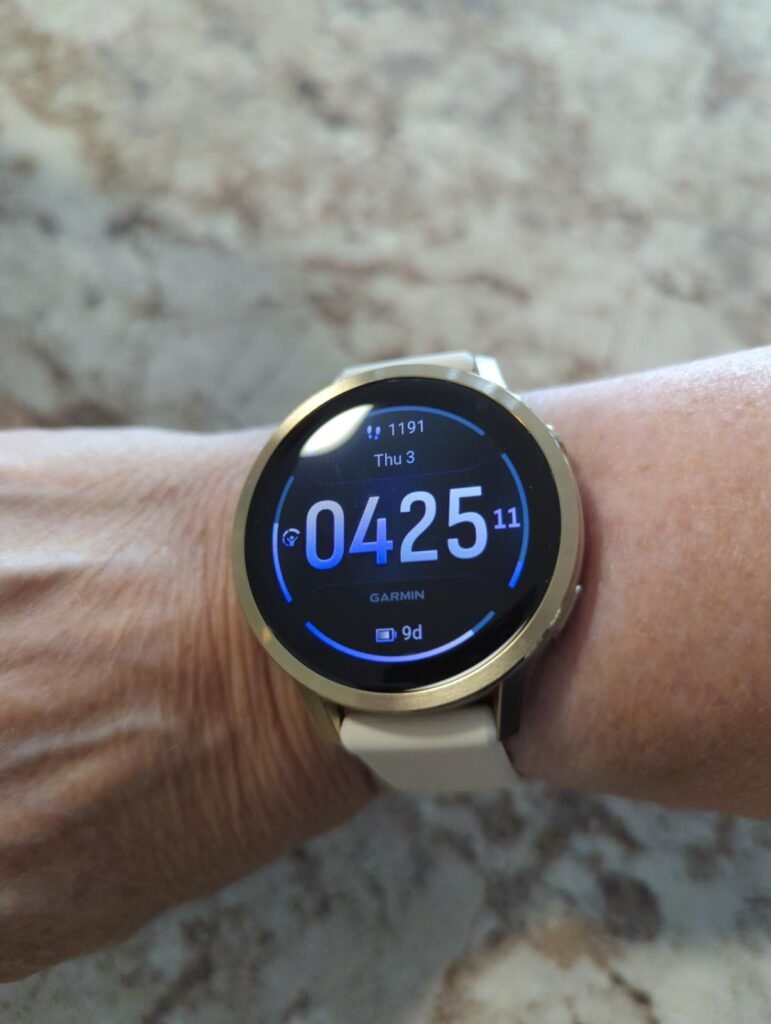
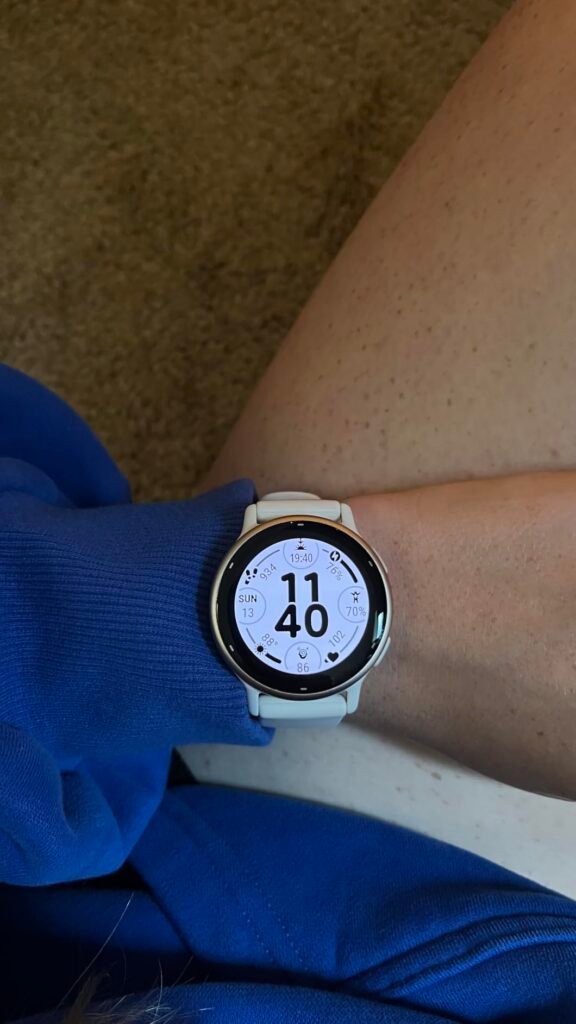
The Garmin vívoactive 5 sits in a sweet spot for buyers who want serious health insights without paying flagship prices. Its 42mm case fits a wide range of wrist sizes, and the ivory colorway gives it a cleaner, more versatile look than many sporty alternatives. If you want a watch that covers running, swimming, cycling, and gym sessions without overwhelming you with data, this is a strong starting point.
We may earn a commission when you buy through this link, at no additional cost to you.
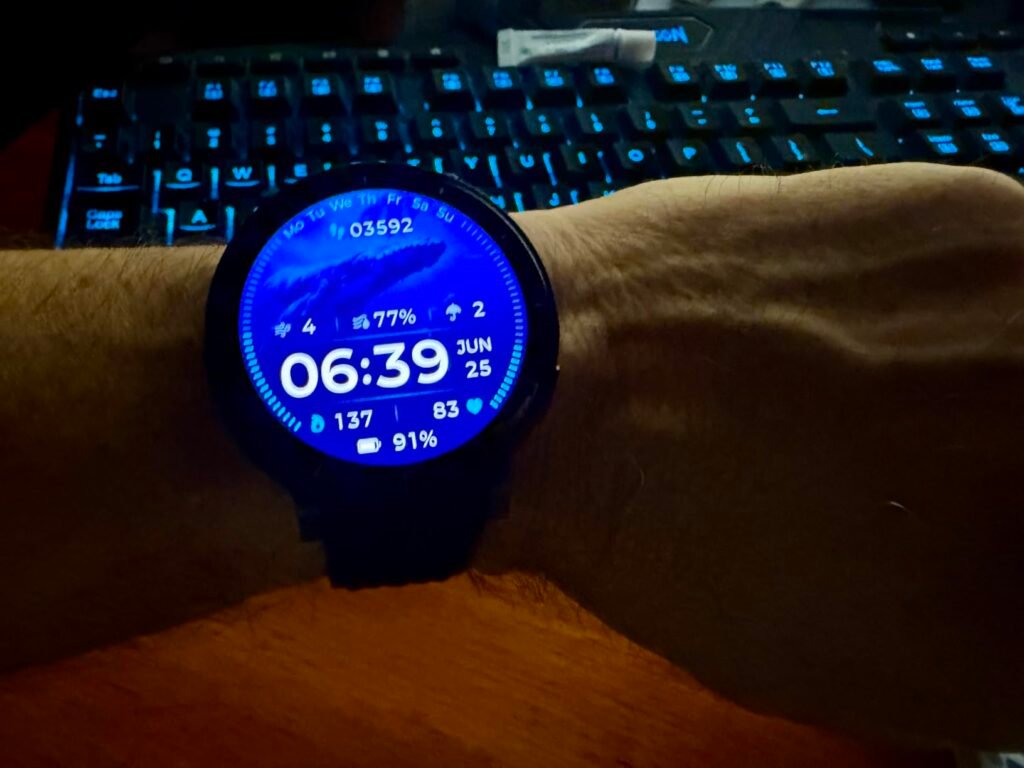
Battery life is the headline feature here. Up to 11 days in smartwatch mode means you can leave the charger at home during a work week and still have power left for a weekend hike. Even with the always-on display enabled, you get roughly five days, which outlasts most competing AMOLED watches. The Body Battery energy monitoring feature pulls together sleep, stress, and activity data to give you a single number that reflects your readiness, and the automatic nap detection adds useful context that many rivals skip entirely.
On the fitness side, more than 30 built-in sport apps cover the activities most people actually do, from walking and HIIT to golf and pool swimming. The watch also supports Garmin Coach adaptive training plans through the companion app, which is a genuine advantage for anyone training toward a specific running goal. Music storage lets you download playlists from Spotify, Amazon Music, or Deezer and listen through Bluetooth headphones without carrying your phone.
Garmin is one of the few brands that includes a dedicated wheelchair mode, which tracks pushes instead of steps and offers handcycle and push-specific workout profiles. This makes the vívoactive 5 a particularly thoughtful choice for wheelchair users who want accurate activity data rather than a step count that does not reflect their movement. The preloaded strength, cardio, and yoga workouts in this mode add further value for adaptive athletes.
The main trade-off is that the vívoactive 5 lacks some of the rugged extras found on Garmin’s higher-end models, such as a built-in flashlight or multi-band GPS. If you need those features, look at the Instinct 3 or Venu 4 instead. For everyone else, this watch delivers a well-rounded mix of health tracking, battery endurance, and everyday convenience at a mid-range price.
Buyers who need multi-band GPS for backcountry navigation or a built-in flashlight for nighttime outdoor use.
We may earn a commission when you buy through this link, at no additional cost to you.
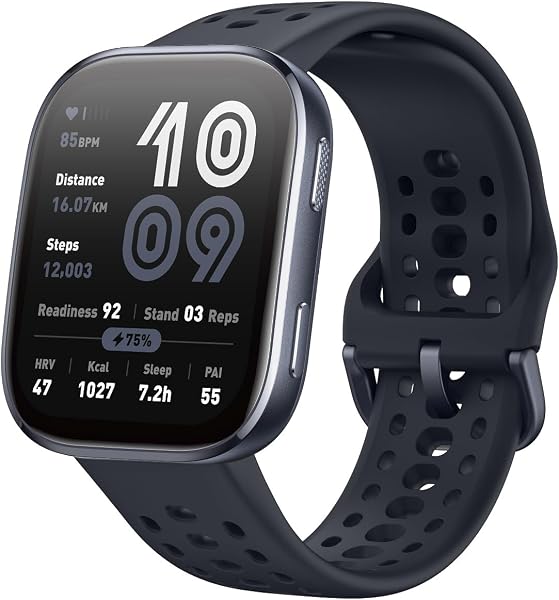
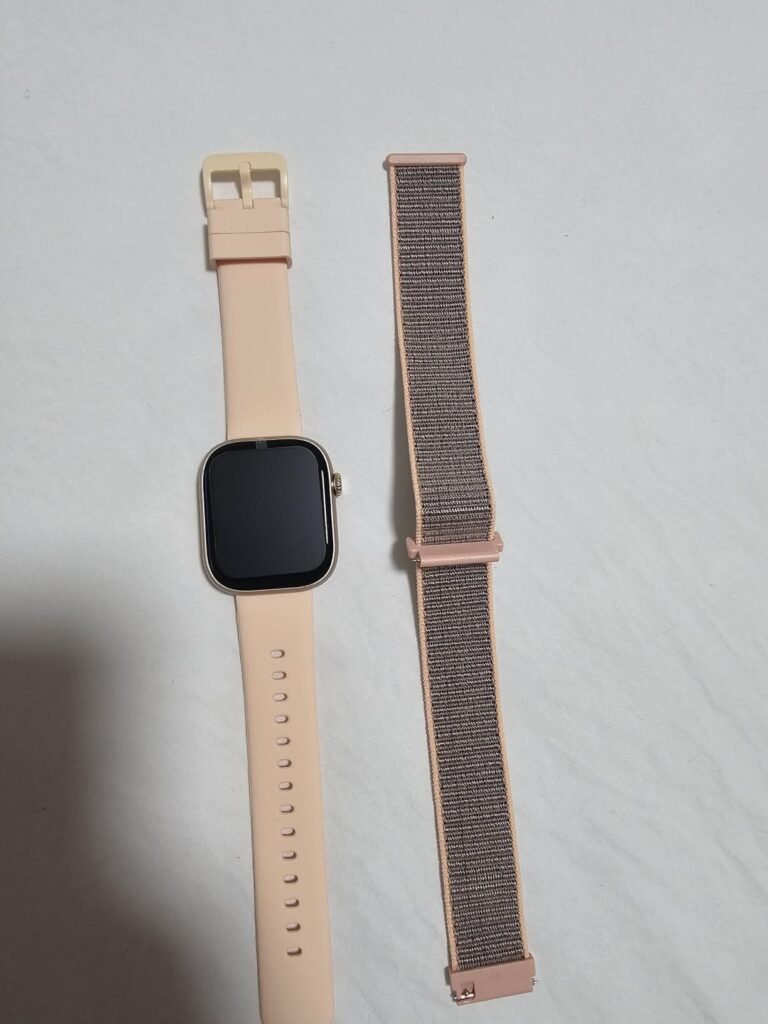
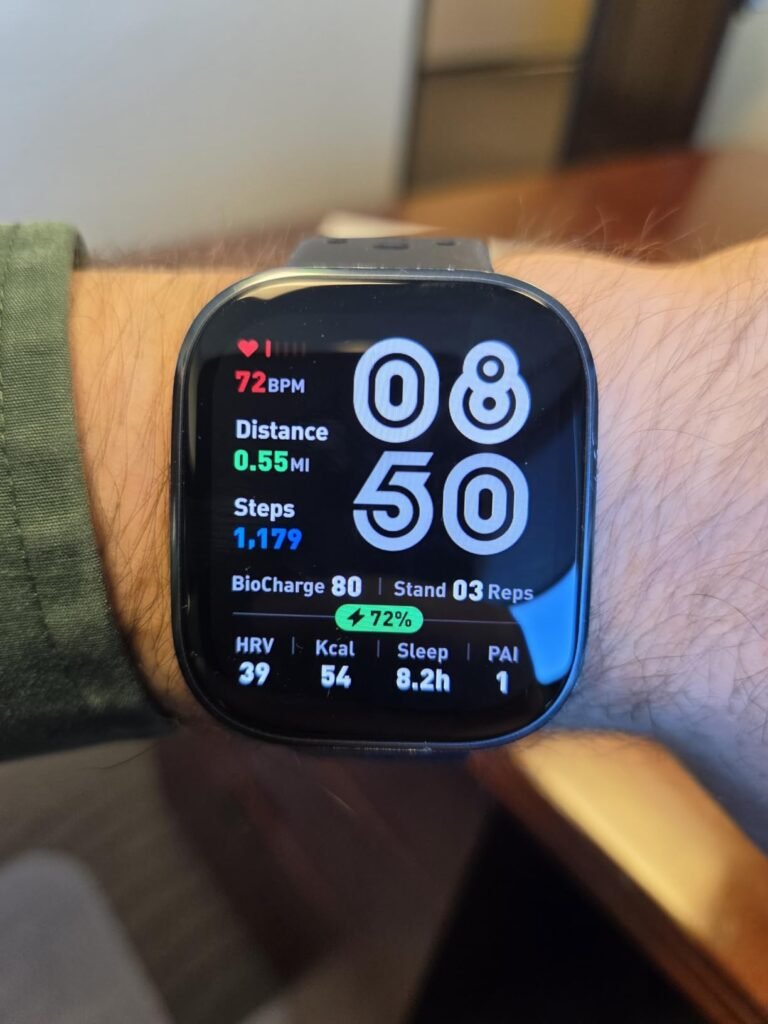
The Amazfit Bip 6 delivers a surprisingly large and vibrant 1.97-inch AMOLED display at a price that undercuts most competitors by a wide margin. If your main frustration with budget wearables has been tiny, dim screens that are hard to read outdoors, this model directly addresses that complaint. The aluminum case keeps weight low while adding a touch of durability that plastic-bodied rivals often lack.
We may earn a commission when you buy through this link, at no additional cost to you.
Battery life stretches to 14 days under typical use, which means you can comfortably go two weeks between charges even with regular GPS workouts and continuous heart rate monitoring. The five-satellite GPS system provides faster lock times and more accurate route tracking than single-band GPS, a meaningful upgrade for runners and cyclists who care about distance accuracy. Turn-by-turn navigation with downloadable maps adds another layer of usefulness for trail use.
With over 140 workout modes, including HYROX Race and strength training, the Bip 6 covers nearly every activity you might log. The 50-meter water resistance rating means swimming is fully supported, and the 24/7 health monitoring suite tracks heart rate, blood oxygen, sleep, and stress around the clock. The Zepp app organizes all of this data into readable summaries without requiring a paid subscription for basic features.
Most budget smartwatches rely on a single GPS constellation, which can struggle in areas with tall buildings or dense tree cover. The Bip 6 connects to five satellite systems simultaneously, improving positional accuracy and reducing the time it takes to get a lock before you start your run. This is a feature you typically find on watches costing two or three times as much, and it makes a noticeable difference on urban routes with lots of signal obstructions.
The trade-off at this price is that smart features remain relatively basic. You will see notifications on your wrist, but replying to messages or interacting with apps is limited compared to Wear OS or watchOS devices. If your priority is fitness tracking and long battery life on a tight budget, the Bip 6 is hard to beat. If you need a true smartphone extension on your wrist, you will want to look higher up this list.
Users who need full smartwatch functionality like app installations, voice assistants, or mobile payments.
We may earn a commission when you buy through this link, at no additional cost to you.
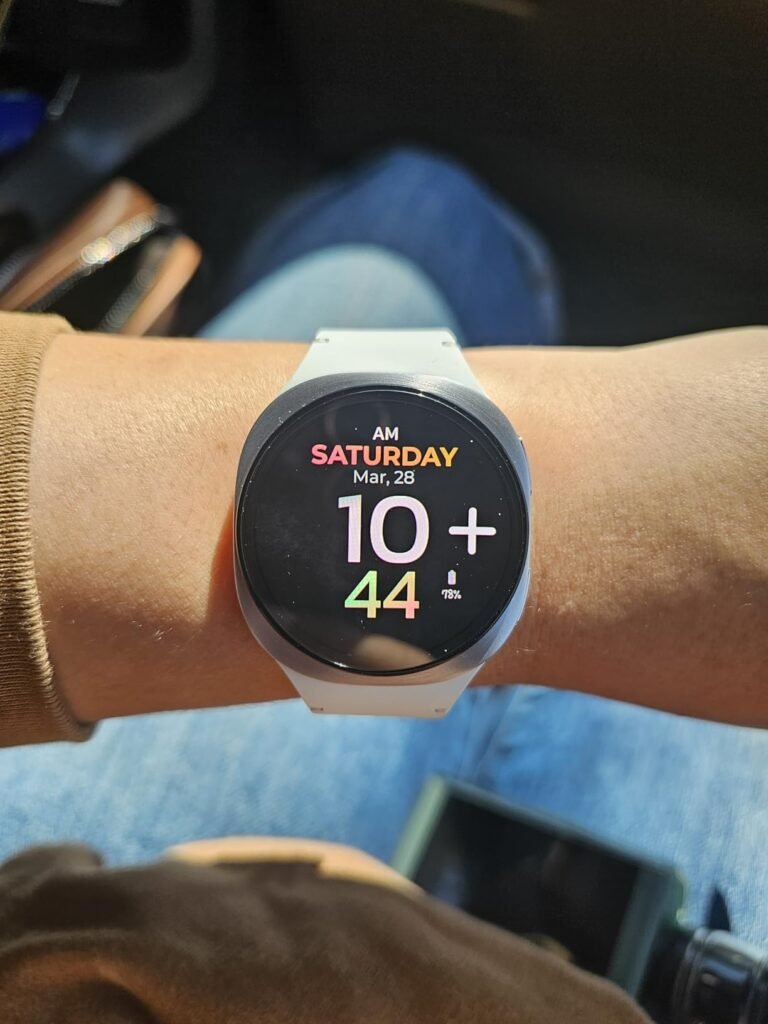
The Samsung Galaxy Watch 8 is the latest iteration of Samsung's flagship wearable, and it leans heavily into AI-driven health insights. The 40mm graphite case is noticeably thinner and lighter than previous generations, making it one of the more comfortable options for all-day and all-night wear. If you are already in the Samsung ecosystem, the integration with Galaxy phones is seamless, from notification mirroring to Samsung Health data syncing.
We may earn a commission when you buy through this link, at no additional cost to you.
The Galaxy AI assistant is the biggest new addition. It acts as a personal helper on your wrist, managing tasks, to-do lists, and contextual information throughout the day. The Energy Score feature analyzes your previous day’s sleep, activity, and heart rate to give you a single morning number that summarizes your overall readiness. Sleep coaching has also been upgraded with Bedtime Guidance, which suggests an optimal sleep window based on your patterns.
Fitness features include a Running Coach that provides real-time performance feedback and structured programs for distances ranging from 5K to marathon. Blood pressure monitoring is available after an initial calibration with a traditional cuff, which is a useful supplement for people who want to track trends between doctor visits. The improved interface makes glancing at sports scores, weather, and news faster than on earlier models.
The Galaxy Watch 8 uses its optical sensors to estimate blood pressure trends, but it must first be calibrated against a traditional upper-arm cuff. After calibration, the watch can provide systolic and diastolic readings from your wrist. Samsung recommends recalibrating every few weeks for accuracy. This feature is best understood as a trend-tracking tool rather than a replacement for clinical-grade measurements.
The Galaxy Watch 8 is strictly an Android companion, and it works best with Samsung phones. iPhone users will need to look elsewhere. The blood pressure feature, while valuable, requires periodic recalibration with a separate cuff, so it is not a fully standalone solution. For Android users who want the most integrated smartwatch experience with cutting-edge AI health tools, this is the top choice.
iPhone users or anyone who needs a standalone blood pressure device without cuff calibration.
We may earn a commission when you buy through this link, at no additional cost to you.
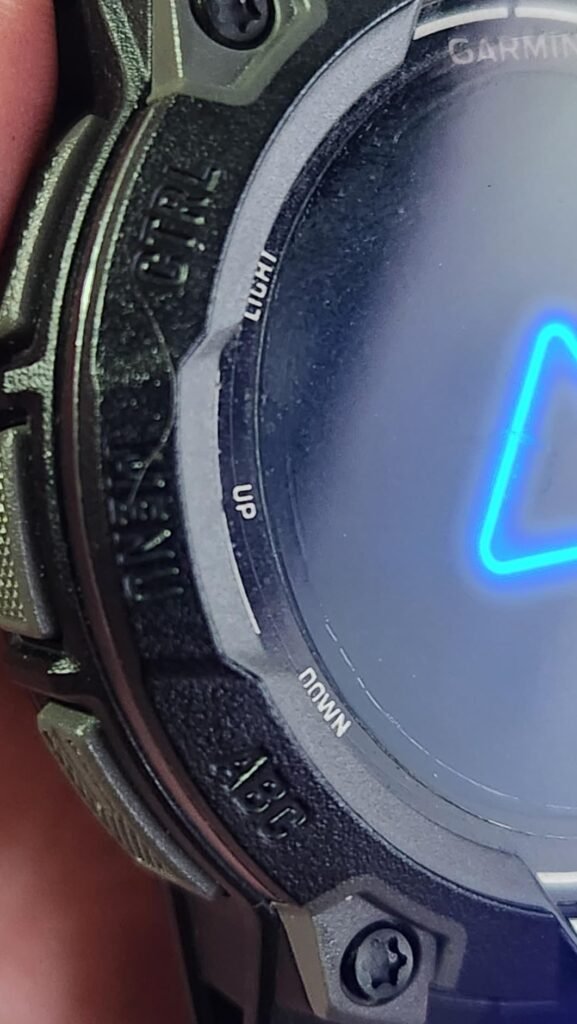
The Garmin Instinct 3 AMOLED is built for people who spend serious time outdoors and need a watch that can take a beating. The 45mm fiber-reinforced polymer case with a metal-reinforced bezel is designed to survive impacts, temperature extremes, and water exposure that would damage a typical lifestyle smartwatch. If you hike, trail run, camp, or work in rugged environments, this is the most durable option on this list.
We may earn a commission when you buy through this link, at no additional cost to you.
Battery life reaches up to 18 days, the longest of any watch in this comparison. The multi-band GPS with SatIQ technology is a significant navigation upgrade: it automatically switches between satellite modes to balance positioning accuracy with power consumption, so you get precise tracking in challenging terrain without draining the battery unnecessarily. The 3-axis compass and barometric altimeter round out a navigation toolkit that serious outdoor enthusiasts will appreciate.
The built-in LED flashlight is a feature that sounds like a gimmick until you actually need it on a dark trail or in a campsite at night. Variable intensities and strobe modes make it genuinely useful for visibility and signaling. Health monitoring includes wrist-based heart rate, advanced sleep tracking, and Pulse Ox, giving you a solid picture of your body’s response to altitude and exertion.
Traditional multi-band GPS keeps all satellite systems active at once, which provides excellent accuracy but drains the battery quickly. Garmin’s SatIQ technology automatically detects your environment and switches to the most efficient satellite mode. In open sky, it may use a single band to conserve power. In dense forest or urban canyons, it activates multi-band for precision. This dynamic switching is why the Instinct 3 can offer both superior positioning and 18-day battery life.
The trade-off is size and weight. The Instinct 3 is chunkier than the lifestyle-oriented watches on this list, and it may feel bulky on smaller wrists or under a dress shirt. If your primary use case is office wear and casual fitness, a slimmer model like the vívoactive 5 or Galaxy Watch 8 will be more comfortable. For outdoor adventures where durability and navigation matter most, the Instinct 3 is the clear winner.
Buyers who want a slim, dressy smartwatch for office and formal settings.
We may earn a commission when you buy through this link, at no additional cost to you.
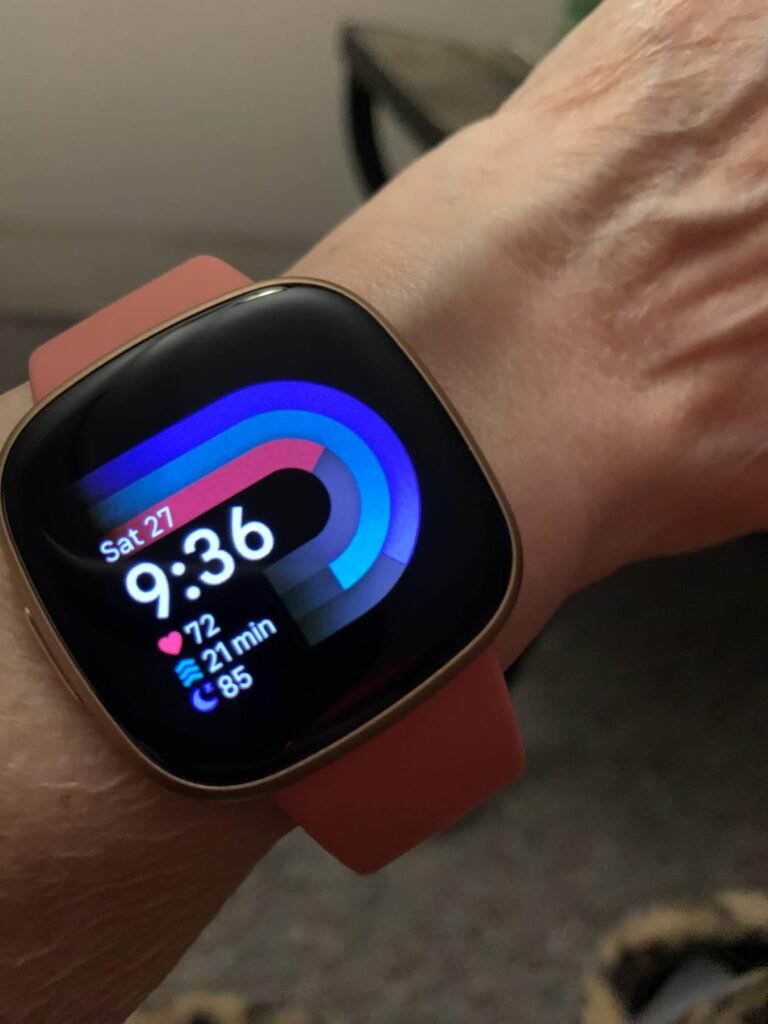
The Fitbit Versa 4 is the natural choice for anyone already invested in the Fitbit ecosystem or transitioning from an older Fitbit device. The familiar interface, community challenges, and health dashboard make the learning curve minimal, and the inclusion of a six-month Premium membership gives new users access to advanced analytics and guided programs right out of the box. The Waterfall Blue colorway is understated and works well in both casual and professional settings.
We may earn a commission when you buy through this link, at no additional cost to you.
The Daily Readiness Score is the Versa 4’s most useful feature for everyday fitness decisions. It analyzes your recent activity, sleep, and heart rate variability to tell you whether your body is ready for an intense workout or would benefit from active recovery. Built-in GPS means you can leave your phone behind on runs and bike rides, and the workout intensity map shows where you pushed hardest during each session, which is helpful for pacing analysis.
Smart features include on-wrist Bluetooth calls, Amazon Alexa for voice commands, Fitbit Pay for contactless payments, and Google Wallet and Maps integration. The 40+ exercise modes cover everything from swimming to weightlifting, and automatic exercise detection means you do not always need to remember to start a workout manually. Sleep tracking includes a personalized Sleep Profile and smart wake alarm that tries to rouse you during a lighter sleep stage.
The Versa 4 includes six months of Fitbit Premium for new and returning users, but after that period, features like the Daily Readiness Score, detailed Sleep Profile, and advanced health metrics dashboard require a paid subscription. Before buying, check the current Premium pricing and decide whether the ongoing cost fits your budget. The watch still tracks basic activity, heart rate, and sleep without Premium, but the deeper insights are gated behind the subscription.
The main consideration is that many of the most insightful features, including the Daily Readiness Score and detailed Sleep Profile, require an ongoing Fitbit Premium subscription after the trial period ends. Battery life of roughly six days is adequate but falls short of the two-week endurance offered by several Amazfit and Garmin models. If you value the Fitbit community and coaching ecosystem, the Versa 4 remains a solid pick.
Buyers who want all advanced health features without an ongoing subscription fee.
We may earn a commission when you buy through this link, at no additional cost to you.
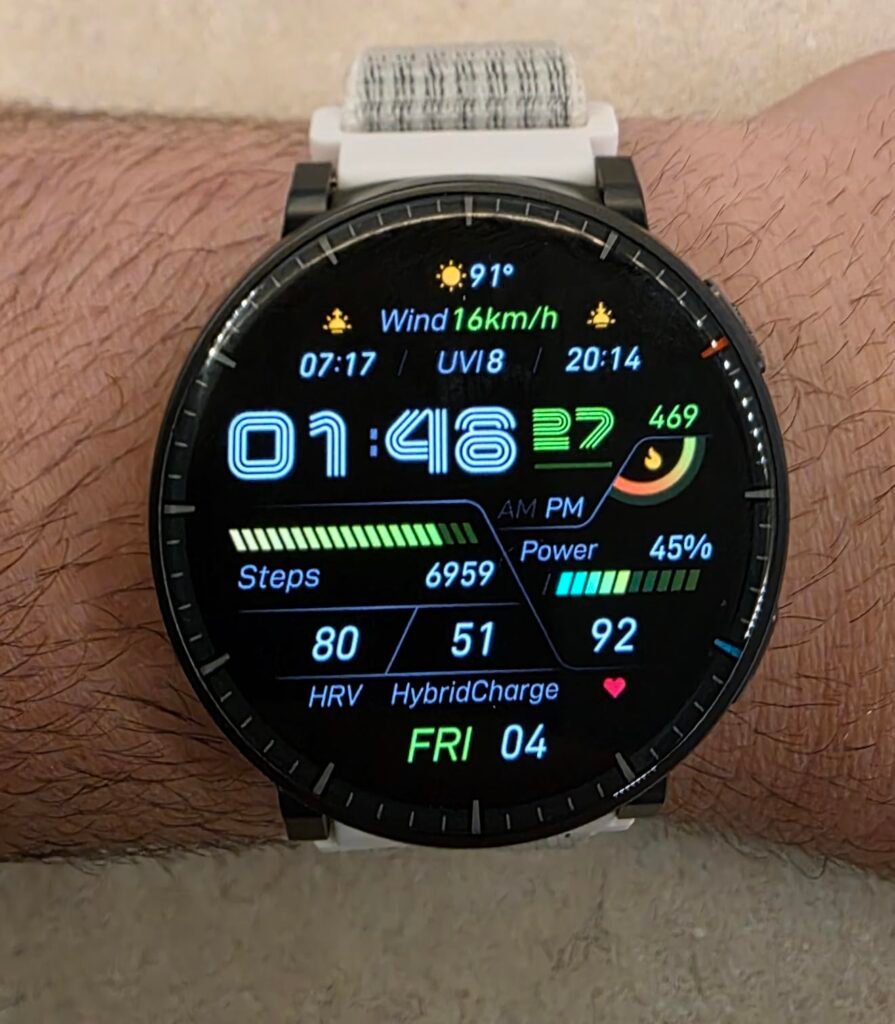
The Amazfit Active Max lives up to its name with the longest battery life of any watch in this guide: up to 25 days on a single charge. That kind of endurance is transformative for travelers, hikers, and anyone who simply hates charging gadgets. Combined with a 3,000-nit AMOLED display that remains readable even in direct desert sunlight, this watch is built for people who spend a lot of time outdoors and need their data to be visible at a glance.
We may earn a commission when you buy through this link, at no additional cost to you.
The 4GB of onboard storage is a meaningful upgrade over budget models. You can download music playlists and offline maps directly to the watch, which means you can navigate trails and listen to tunes without your phone. The five-satellite positioning system ensures fast GPS locks, and the free downloadable terrain and ski maps add genuine utility for backcountry and resort use. Turn-by-turn directions appear on the wrist or through connected Bluetooth headphones.
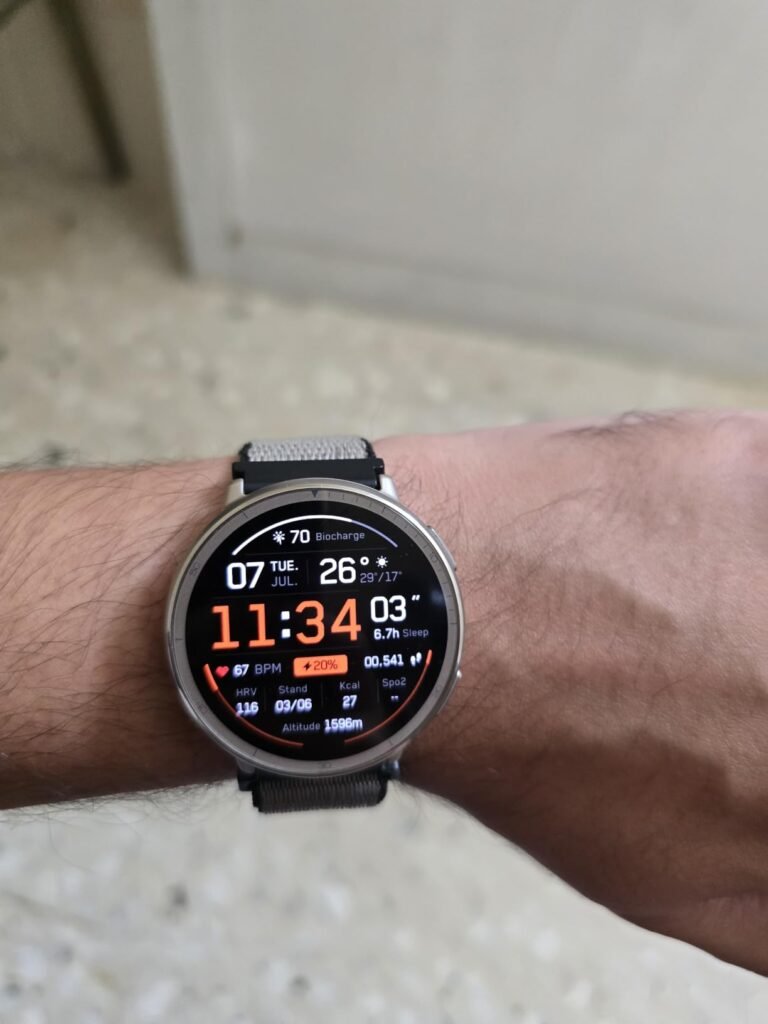
Fitness tracking is comprehensive, with over 170 workout modes and Zepp Coach AI-driven training plans that adapt to your performance and recovery. The BioCharge energy monitoring system works similarly to Garmin’s Body Battery, adjusting your readiness score based on workouts and stress levels. Bluetooth calling and Zepp Flow voice replies let you handle communications from the trail without pulling out your phone.
Most smartwatch displays top out around 1,000 to 2,000 nits, which is fine for indoor use and overcast days. The Active Max’s 3,000-nit peak brightness becomes genuinely useful in high-altitude environments, on snow-covered slopes, or during midday runs in direct sunlight where lower-brightness screens wash out completely. If you frequently struggle to read your watch outdoors, this display is a significant practical upgrade.
The larger case size is the main consideration for buyers with smaller wrists. The Active Max is designed to maximize screen real estate and battery capacity, and that means a bigger footprint than the 40mm or 42mm options on this list. If you prioritize battery life and outdoor readability above all else, the Active Max is the strongest choice available at this price point.
Buyers with very small wrists who prefer a compact, lightweight watch profile.
We may earn a commission when you buy through this link, at no additional cost to you.
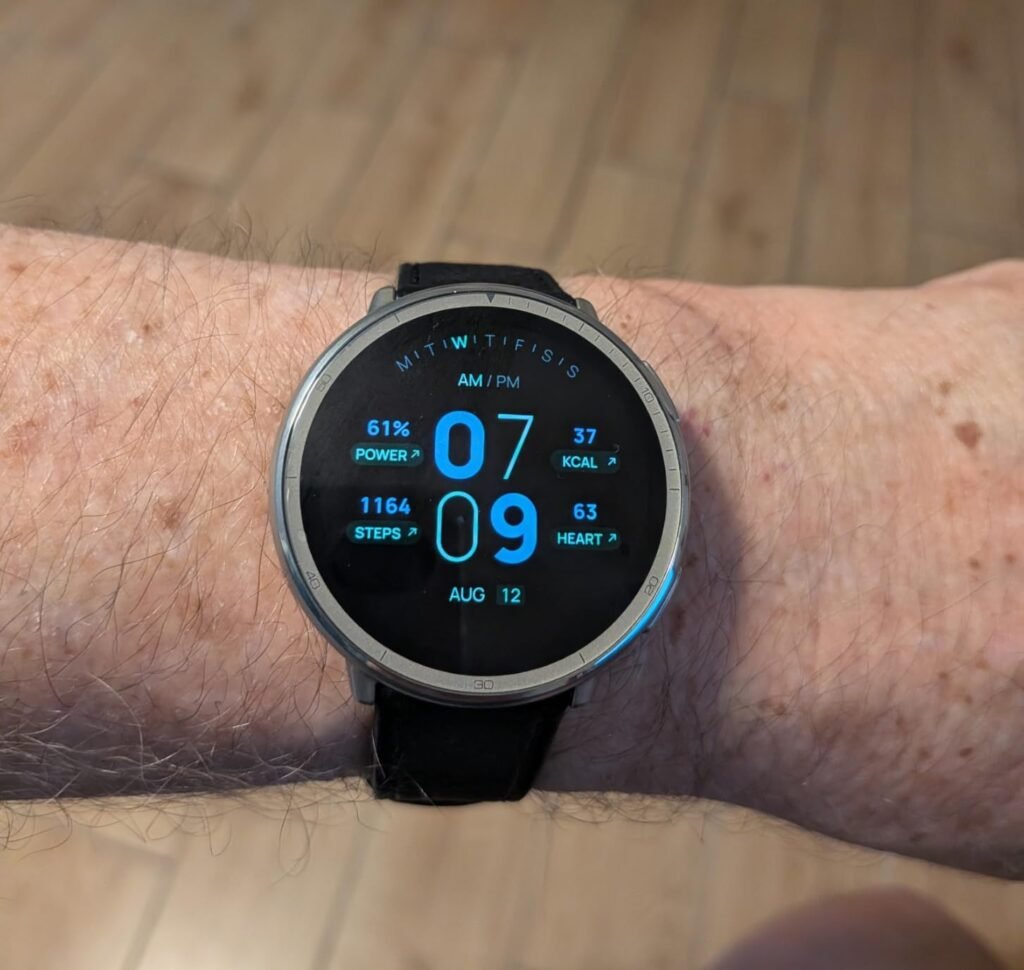
The Amazfit Active 2 Premium stands out for its build quality at a mid-range price. The sapphire glass display is highly resistant to scratches, which is a feature usually reserved for watches costing significantly more. The stainless steel case, leather strap, and included silicone sport band give you two distinct looks in one package: a polished appearance for the office and a practical setup for the gym. If you want a watch that looks more expensive than it is, this is the one.
We may earn a commission when you buy through this link, at no additional cost to you.
The 1.32-inch AMOLED display is smaller than the Active Max or Bip 6, but it is bright enough for outdoor readability and the sapphire crystal keeps it looking new over time. Battery life reaches 10 days with typical use, which is a comfortable middle ground between the ultra-endurance models and the daily-charging Wear OS watches. The five-satellite GPS system provides reliable tracking for runs, rides, and hikes.
With over 160 sport modes, 50-meter water resistance, and a barometer for elevation tracking, the Active 2 handles a wide range of activities including swimming and skiing. The Zepp app is free with no mandatory subscription, and it benefits from AWS-hosted data protection with GDPR compliance, which may matter to privacy-conscious buyers. Zepp Flow enables speech-to-text message replies on Android, adding a layer of smart functionality that many competitors at this price lack.
Standard smartwatch glass, such as Gorilla Glass or mineral crystal, can accumulate fine scratches from everyday contact with door frames, desk edges, and gym equipment. Sapphire crystal is significantly harder and more scratch-resistant, meaning your display stays clear and unmarked for years rather than months. If you plan to keep your watch for a long time or wear it during manual work, sapphire glass is a worthwhile durability upgrade.
The smaller display may feel limiting if you are used to larger screens or want to read detailed maps on your wrist. The lack of onboard music storage also means you will need your phone for audio on the go. For buyers who value premium materials, a classic aesthetic, and a subscription-free ecosystem, the Active 2 Premium offers excellent value.
Buyers who want a large display for map navigation or onboard music storage for phone-free listening.
We may earn a commission when you buy through this link, at no additional cost to you.
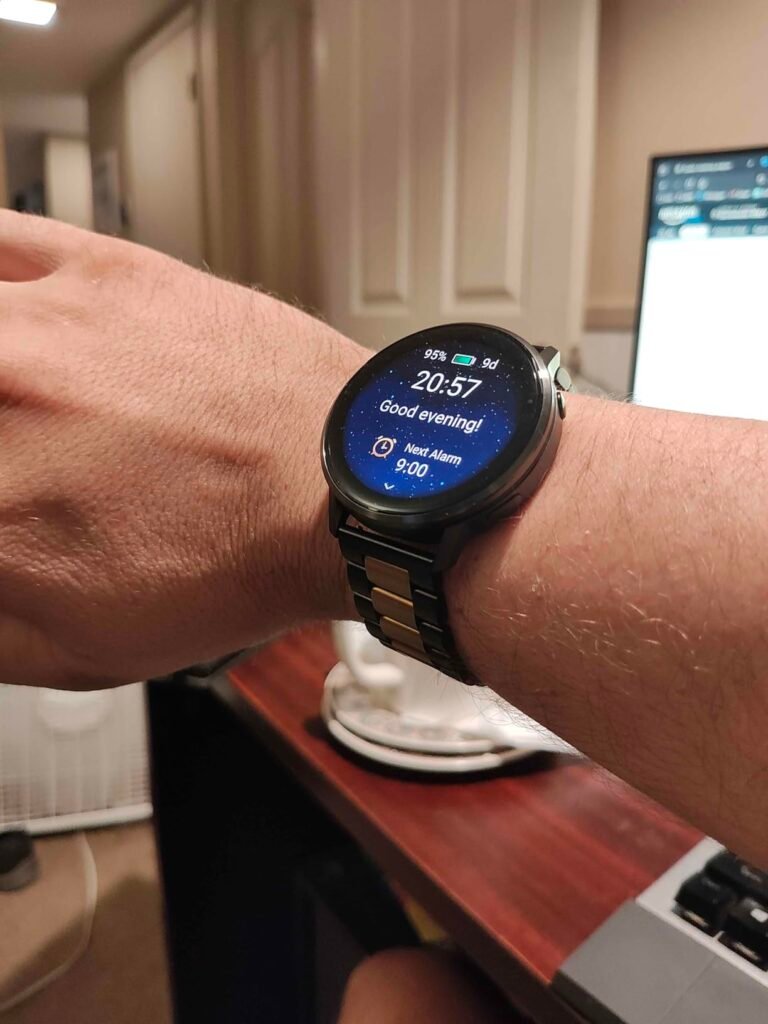
The Garmin Venu 4 is the most expensive watch in this comparison, and it justifies the price with the deepest health monitoring suite available. The health status feature continuously watches for changes in heart rate, HRV, skin temperature, and other key metrics that could indicate illness, overtraining, or unusual stress. This kind of passive monitoring is particularly valuable for athletes and health-conscious users who want early signals that something is off.
We may earn a commission when you buy through this link, at no additional cost to you.
Sleep coaching on the Venu 4 goes beyond basic staging. It includes circadian rhythm alignment analysis and breathing variation monitoring using Pulse Ox, giving you a more nuanced understanding of your sleep quality. The lifestyle behavior logging feature lets you record daily habits like caffeine and alcohol intake, then view reports in Garmin Connect showing how those choices correlate with your sleep, stress, and HRV data over time.
The stainless steel case and bright AMOLED display give the Venu 4 a premium look that works in professional settings, while the built-in LED flashlight and 12-day battery life keep it practical for outdoor use. Body Battery energy monitoring, fitness age estimation, and stress tracking round out a health toolkit that is difficult to match at any price. The 45mm case fits wrists from 135 to 200mm in circumference.
The Venu 4 lets you manually log daily behaviors such as caffeine consumption, alcohol intake, and other habits directly on the watch or through the Garmin Connect app. Over time, the system generates reports showing correlations between these behaviors and your sleep quality, stress levels, and HRV. This is not a medical diagnostic tool, but it can help you identify patterns, such as how a late-afternoon coffee affects your sleep score, and make more informed lifestyle choices.
The price is the obvious barrier. At over five hundred dollars, the Venu 4 is a significant investment, and some buyers may find that the vívoactive 5 covers 80 percent of the same features for a third of the cost. The 45mm case is also on the larger side, which may not suit smaller wrists. If you want the most complete health and fitness picture Garmin offers and are willing to pay for it, the Venu 4 is the top-tier choice.
Budget-conscious buyers or those with smaller wrists who prefer a compact watch profile.
We may earn a commission when you buy through this link, at no additional cost to you.
The Google Pixel Watch 5 brings a genuinely unique safety feature to the smartwatch market: Loss of Pulse Detection. If the watch detects that your pulse has stopped, it can prompt a call to emergency services automatically. This is the only smartwatch currently offering this capability, and it makes the Pixel Watch 5 a compelling choice for older adults, people with certain medical conditions, or anyone who values an extra layer of safety during solo activities.

We may earn a commission when you buy through this link, at no additional cost to you.
The domed Actua 360 display with Gorilla Glass is visually striking and scratch-resistant, and the 41mm olive case has a distinctive look that sets it apart from the more conventional designs on this list. Gemini AI integration provides proactive health insights and personalized assistance throughout the day, leveraging Google’s broader AI ecosystem. The heart rate sensor is described as the most accurate in the Pixel Watch lineup, fine-tuned for different activity types.
Sleep tracking captures detailed data including time spent in each sleep stage and breathing regularity, then summarizes everything into a personalized Sleep Score. The integration with Google Health and the broader Android ecosystem is smooth, with notifications, apps, and Google services all accessible from your wrist. The overall experience feels polished and well-integrated for Android users.
Loss of Pulse Detection uses the watch’s optical sensors to monitor for the absence of a pulse. If the watch identifies a potential loss of pulse, it alerts the wearer and can initiate a call to emergency services if no response is detected. This feature is designed as a safety net rather than a medical monitor, and it may be particularly reassuring for people who live alone, exercise solo, or have known cardiac risk factors. It is not a substitute for professional medical devices but adds a meaningful layer of protection.
The biggest limitation is battery life. At roughly 40 hours, the Pixel Watch 5 needs charging every day or every other day, which is a significant step down from the week-plus endurance of the Garmin and Amazfit models. This means you will need to plan charging around your sleep tracking if you want continuous overnight data. For Android users who prioritize safety features, AI integration, and a premium design, the Pixel Watch 5 is a strong contender despite the shorter battery.
Users who want multi-day battery life or need iOS compatibility.
We may earn a commission when you buy through this link, at no additional cost to you.
A smartwatch is one of the most personal tech purchases you can make. It sits on your wrist all day, tracks your most private health data, and needs to work seamlessly with your phone. The following factors will help you narrow down the options and find a model that fits your lifestyle, budget, and priorities.
The display is the part of the smartwatch you interact with most, and its quality directly affects daily satisfaction. AMOLED panels, found on most of the watches in this guide, offer vibrant colors, deep blacks, and better power efficiency than LCD screens. Brightness matters enormously if you spend time outdoors: a display rated at 1,000 nits may wash out in direct sunlight, while the Amazfit Active Max’s 3,000-nit screen remains clearly readable even in harsh conditions. Size is a matter of both preference and practicality. Larger screens like the 1.97-inch Bip 6 make it easier to read notifications and navigate maps, but they also increase the overall case size, which can feel bulky on smaller wrists.
Always-on display capability is another consideration. Watches like the Garmin vívoactive 5 offer an always-on mode that keeps the time visible without raising your wrist, but this typically cuts battery life roughly in half. If you work in an environment where glancing at your watch discreetly matters, always-on is worth the battery trade-off. If you primarily check your watch during workouts or when notifications arrive, the standard raise-to-wake behavior will serve you fine and preserve battery life.
Choose a display size that matches your wrist circumference and reading preferences. If you plan to use navigation features on your wrist, lean toward a larger screen. If comfort and a low profile matter more, a 40mm or 42mm case with a smaller display will be less obtrusive throughout the day.
Battery life varies dramatically across the smartwatch market, from roughly 40 hours on the Google Pixel Watch 5 to 25 days on the Amazfit Active Max. Your ideal battery life depends on how you plan to use the watch and how willing you are to charge it. If you want continuous sleep tracking, you need enough battery to last through the night without a top-up, which rules out models that barely survive a full day. Watches in the 10-to-18-day range, like the Garmin and Amazfit models, allow you to charge once a week or less, which is convenient for travel and reduces daily routine friction.
Keep in mind that advertised battery life figures are based on typical use, which usually means moderate notifications, a few GPS workouts per week, and continuous heart rate monitoring. Enabling always-on display, frequent GPS tracking, music playback, or LTE connectivity will reduce real-world endurance significantly. The Garmin Instinct 3’s 18-day rating, for example, may drop to around 10 days if you use GPS heavily during long hikes. Always check whether the battery estimate assumes the always-on display is off, since that single setting can halve endurance on AMOLED watches.
If you hate charging gadgets, prioritize watches with two-week or longer battery life. If you are comfortable charging nightly and want the richest smart features, a Wear OS or watchOS device with shorter endurance may be the better trade-off. Consider your travel habits and whether you will have reliable access to a charger during trips.
Every smartwatch on this list tracks heart rate, steps, and sleep, but the depth and accuracy of these measurements vary significantly. Basic models like the T7 provide general trends that are useful for casual awareness, while advanced models like the Garmin Venu 4 and Samsung Galaxy Watch 8 offer detailed metrics such as HRV status, skin temperature variation, blood oxygen trends, and circadian rhythm analysis. If you are training for a specific event or managing a health condition, the more granular data from premium models can provide actionable insights that basic trackers simply cannot.
Sport mode count is a commonly cited spec, but the number alone is less important than whether the watch covers your specific activities well. A watch with 170 modes may include dozens of niche activities you will never use, while a watch with 30 well-developed modes may offer better data accuracy and coaching for the sports you actually do. Look for features like automatic workout detection, real-time coaching feedback, and structured training plans if you want your watch to actively improve your performance rather than just log it.
Identify the three or four health metrics that matter most to you, whether that is sleep quality, heart rate accuracy during intervals, blood oxygen at altitude, or stress management. Then choose a watch that excels in those specific areas rather than chasing the highest spec sheet number across the board.
Built-in GPS is essential if you want to track outdoor runs, rides, or hikes without carrying your phone. The quality of the GPS system varies from single-band receivers on budget models to multi-band systems with five satellite constellations on watches like the Garmin Instinct 3 and Amazfit Active Max. Multi-band GPS provides faster satellite acquisition and more accurate positioning in challenging environments such as dense forests, urban canyons, and mountainous terrain. If you primarily exercise on open roads or treadmills, single-band GPS is adequate and saves battery.
Navigation features go beyond simple route tracking. Some watches offer downloadable offline maps with turn-by-turn directions, which are invaluable for trail running and backcountry hiking. The Amazfit Active Max and Active 2 both support free downloadable terrain and ski maps, while the Garmin Instinct 3 provides breadcrumb navigation with compass and altimeter support. If you venture into areas without cell service, offline maps on your wrist can be a genuine safety tool, not just a convenience.
If you are a road runner or casual cyclist, any watch with built-in GPS will meet your needs. If you trail run, hike, or ski in remote areas, invest in a model with multi-band GPS and offline map support. The battery impact of continuous GPS use is significant, so also consider how long the watch can track with GPS active before needing a recharge.
Smartwatch compatibility is one of the most important and most overlooked buying factors. The Samsung Galaxy Watch 8 and Google Pixel Watch 5 work exclusively with Android phones, and they function best with their respective brand’s devices. The Garmin and Amazfit watches support both iOS and Android, though some features may be limited on one platform. The Fitbit Versa 4 also works with both operating systems but requires specific minimum OS versions. Before buying, verify that the watch is compatible with your phone’s operating system and version.
Beyond basic compatibility, consider the broader ecosystem. If you already use Samsung Health, Google Fit, or Garmin Connect, choosing a watch that integrates with your existing health platform avoids the hassle of migrating years of data. Notification handling, app availability, and voice assistant integration also vary by ecosystem. Wear OS watches like the Pixel Watch 5 offer the richest app selection and deepest Android integration, while Garmin watches prioritize fitness data depth over third-party app variety.
Check compatibility before purchasing, especially if you use an iPhone. Many of the most popular smartwatches are Android-only, and buying one that cannot pair with your phone is an expensive mistake. If you switch between Android and iOS or plan to change phones in the future, a cross-platform watch from Garmin or Amazfit offers more flexibility.
Build quality determines how well your watch survives daily wear, accidental impacts, and exposure to the elements. Cases made from stainless steel or fiber-reinforced polymer, like the Garmin Venu 4 and Instinct 3, offer superior durability compared to lightweight plastic or aluminum. Display protection also varies: sapphire glass on the Amazfit Active 2 Premium resists scratches far better than standard mineral glass, while Gorilla Glass on the Pixel Watch 5 provides a good middle ground between durability and cost.
Water resistance ratings are frequently misunderstood. An IP67 rating, found on the T7 Smart Watch, handles splashes and brief submersion but is not suitable for swimming. A 5ATM or 50-meter rating, found on most other watches in this guide, supports pool swimming and showering. For open-water swimming, diving, or high-pressure water sports, you would need a watch rated to 10ATM or higher, which is not common in the mainstream smartwatch category. Always check the specific rating and understand what activities it actually covers.
Match the build quality to your lifestyle. If you work in an office and wear your watch casually, a lightweight aluminum case with standard glass is perfectly fine. If you work outdoors, do manual labor, or participate in rugged sports, invest in a reinforced case and scratch-resistant display. The extra durability will pay for itself by preventing costly screen replacements or premature upgrades.
Smart features range from basic notification mirroring to full-fledged AI assistants and contactless payments. At the basic end, watches like the Amazfit Bip 6 and T7 display incoming calls, texts, and app alerts but offer limited interaction. At the advanced end, the Samsung Galaxy Watch 8 includes a Galaxy AI assistant that manages tasks and schedules, while the Pixel Watch 5 integrates Gemini AI for proactive health insights. Consider which smart features you will actually use daily rather than which ones sound impressive in marketing materials.
Contactless payments, music storage, and voice assistants are three features that genuinely change how you use a watch. Fitbit Pay on the Versa 4 and Google Wallet on the Pixel Watch 5 let you leave your wallet at home during runs. On-device music storage on the Garmin vívoactive 5 and Amazfit Active Max means you can listen to playlists without your phone. Voice assistants like Alexa or Gemini enable hands-free control of smart home devices, timers, and queries. If these conveniences matter to you, prioritize watches that include them.
Make a list of the three smart features you would use most often, such as notifications, payments, or music control. Then verify that the watch you are considering supports all three before buying. A watch with excellent fitness tracking but no music storage will frustrate you if phone-free listening is a daily priority.
Start by fully charging your new smartwatch before the first use and downloading the companion app on your phone. During initial setup, take the time to configure your health profile accurately, including your age, weight, height, and activity level, since these inputs directly affect the accuracy of calorie estimates, fitness age calculations, and training recommendations. Enable only the notifications you actually want to see on your wrist, as excessive alerts will drain the battery faster and reduce the usefulness of the watch as a focused health tool.
For the best sensor readings, wear the watch snugly but comfortably about one finger width above your wrist bone. A loose fit allows light to leak under the optical heart rate sensor, which causes inaccurate readings during exercise. Clean the sensor area on the back of the watch regularly with a soft, damp cloth to remove sweat, sunscreen, and skin oils that can interfere with measurements. If your watch has a sapphire or Gorilla Glass display, avoid using abrasive cleaners or rough fabrics that could damage the coating over time.
Charge your watch at consistent intervals rather than waiting for the battery to fully deplete, as this practice helps maintain long-term battery health. Most modern smartwatches use lithium-ion batteries that perform best when kept between 20 and 80 percent charge for daily use. If you plan to store the watch for an extended period, charge it to roughly 50 percent and power it off. Keep the watch away from extreme heat, such as direct sunlight on a car dashboard, as high temperatures can permanently reduce battery capacity and damage internal components.
Smartwatch battery life ranges from about 40 hours for feature-rich Wear OS models to 25 days for efficiency-focused fitness watches. Most mid-range models with AMOLED displays last between 6 and 14 days with typical use. Enabling always-on display, frequent GPS tracking, and continuous health monitoring will reduce these figures, so real-world endurance depends heavily on your settings and usage patterns.
Not every smartwatch is suitable for swimming. Look for a water resistance rating of 5ATM or 50 meters, which indicates the watch can handle pool swimming and shallow water activities. Watches with an IP67 rating, like some budget models, are only splash-resistant and should not be submerged. Always check the manufacturer's specific water resistance guidelines before taking your watch into the pool or ocean.
It depends on the brand and model. Garmin and Amazfit watches generally support both iOS and Android, though some advanced features may be limited on one platform. Samsung Galaxy Watches and Google Pixel Watches are designed for Android only and will not pair with iPhones. Always verify compatibility with your specific phone model and operating system version before purchasing.
Modern optical heart rate sensors on quality smartwatches are reasonably accurate for steady-state activities like walking, jogging, and cycling. Accuracy can decrease during high-intensity interval training or activities with rapid wrist movements, such as weightlifting or tennis. For clinical-grade accuracy, a chest strap heart rate monitor remains the gold standard, but wrist-based sensors are sufficient for most fitness and health tracking purposes.
AMOLED displays produce brighter colors, deeper blacks, and better contrast than LCD screens because each pixel emits its own light. They are also more power-efficient when displaying dark content, which is why many watch faces use dark backgrounds. LCD screens are generally less expensive and can be easier to read in certain lighting conditions, but AMOLED has become the standard for mid-range and premium smartwatches due to its superior visual quality.
Some brands require a paid subscription for advanced analytics and coaching features. Fitbit, for example, gates its Daily Readiness Score and detailed Sleep Profile behind the Premium subscription after the initial trial period. Garmin and Amazfit provide most of their health insights and training features for free through their companion apps. Samsung and Google include their core health features without a separate subscription, though some AI-driven insights may evolve over time.
The Samsung Galaxy Watch 8 offers blood pressure monitoring, but it requires initial calibration with a traditional upper-arm blood pressure cuff and periodic recalibration. The readings are trend-based estimates rather than clinical-grade measurements. Most other smartwatches do not measure blood pressure at all. If blood pressure monitoring is a medical priority, consult your doctor about dedicated devices that are validated for clinical accuracy.
Charging frequency depends on the model and your usage. Watches with 10-to-25-day battery life typically need charging once a week or every two weeks. Models with shorter endurance, like the Pixel Watch 5, may need daily or every-other-day charging. For long-term battery health, try to avoid letting the battery drop below 20 percent regularly, and avoid leaving the watch on the charger for extended periods after it reaches full capacity.
Smartwatch sleep trackers are reasonably good at identifying total sleep duration and distinguishing between light and deep sleep stages, though they are not as precise as clinical polysomnography. Models with advanced sensors, like the Garmin Venu 4 and Samsung Galaxy Watch 8, provide more detailed insights including HRV during sleep, breathing regularity, and circadian rhythm alignment. For most users, smartwatch sleep data is useful for identifying trends and making lifestyle adjustments rather than diagnosing sleep disorders.
The Garmin vívoactive 5 earns our top recommendation for most buyers because it balances health tracking depth, battery endurance, and everyday usability at a reasonable price. Its 11-day battery life, AMOLED display, and comprehensive fitness features make it a versatile companion for everything from daily step counting to structured training plans, and the inclusion of wheelchair mode reflects a level of thoughtfulness that many competitors overlook.
For buyers on a tighter budget, the Amazfit Bip 6 delivers an impressively large AMOLED screen, five-satellite GPS, and two-week battery life at under eighty dollars, which is remarkable value. On the premium end, the Garmin Venu 4 offers the most complete health monitoring suite available, including lifestyle behavior logging and circadian rhythm analysis, while the Samsung Galaxy Watch 8 and Google Pixel Watch 5 bring cutting-edge AI features and unique safety capabilities to the Android ecosystem.
Your best choice ultimately depends on three things: your phone's operating system, your battery life expectations, and the specific health or fitness features you will actually use every day. Start with those three priorities, use this guide to narrow the field, and you will end up with a smartwatch that earns a permanent place on your wrist rather than sitting in a drawer after a few weeks.