Skechers Women's Squad
8.8Editor scoreWet dry oily grip
ASTM-F2892 EH tested
Memory foam insole
3M Scotchgard treated
Compare the 10 best slip resistant shoes of 2025. Independent reviews of non-slip work sneakers and boots for kitchens, healthcare, and service jobs.
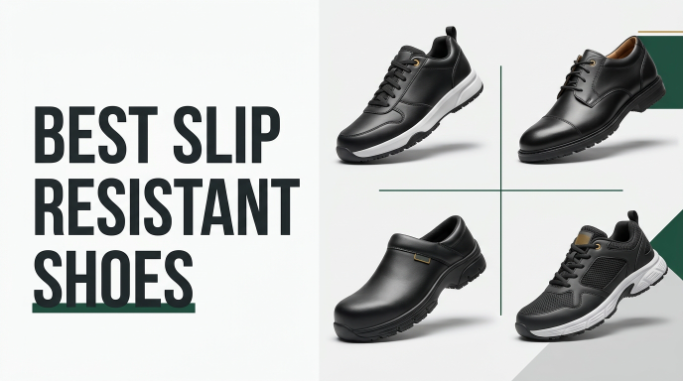
Finding the right slip resistant shoes for 2026 comes down to matching outsole grip, cushioning, water resistance, and safety certifications to the surfaces you actually work on. We compare 10 standout options by outsole traction on wet and oily floors, all-day comfort, upper materials, safety features like electrical hazard protection, weight, easy-care design, owner feedback, and real value.
Non-slip footwear splits into a few clear categories. Slip-on sneakers with stretch laces speed up shift changes and cover most restaurant, healthcare, and retail floors. Traditional lace-up styles offer a more customizable fit for longer shifts on hard surfaces. Steel toe and boot options add impact protection or ankle support for warehouses, workshops, and heavier-duty environments where hazards go beyond wet floors.
This guide highlights the strongest picks across budgets, from sub-$30 lightweight sneakers to mid-priced max-cushion work shoes with electrical hazard certification. You will find honest notes on where each pair excels, where it falls short, and which type of worker benefits most, so you can choose footwear that keeps you safe, comfortable, and steady through every hour of a demanding shift.
We compared 10 slip resistant shoes by the details that actually shape workplace safety and comfort: outsole traction rating on wet, dry, oily, and greasy surfaces, cushioning technology, upper material and water resistance, electrical hazard certification, weight, ease of cleaning, lacing system, arch and heel support, owner feedback, and price. The notes weigh practical trade-offs between slip-on convenience and lace-up security so each pick connects to how people actually work in kitchens, hospitals, warehouses, and service jobs.


Compare key features, scores, and current prices side by side. A shorter feature list means fewer details were available, not necessarily fewer capabilities.




The Cessnock Bungee earns its editor's choice status by combining the strongest ratings, thoughtful design, and genuine daily comfort in a single package. The slip-resistant outsole handles wet, dry, and oily surfaces, and the electrical hazard protection makes it a safe choice for kitchens, workshops, and warehouses where hazards go beyond just slippery floors.

We may earn a commission when you buy through this link, at no additional cost to you.
Underfoot, the Air-Cooled Memory Foam insole delivers responsive cushioning that stays cooler than standard memory foam thanks to airflow perforations. Combined with a flexible, lightweight, shock-absorbing midsole, this shoe manages the impact of hard surfaces well through long shifts. The Skech-Knit mesh upper adds breathability that matters when your feet are enclosed for 10-plus hours at a time.
The bungee lace system is the standout usability feature. Unlike static stretch laces, bungee cords let you dial in a genuinely secure fit while still allowing hands-free slip-on entry. This solves the common complaint that pure slip-ons feel loose during active movement, giving you the security of laced shoes with the convenience of slip-on wear.
Traditional stretch laces provide one fixed tension that cannot be adjusted. Bungee laces let you cinch the fit tighter or looser based on how much your feet have swollen, what socks you are wearing, or whether you need extra security during particularly active work. Set them once and forget them, but adjust when you need to.
For men working front-of-house restaurant, kitchen, retail, healthcare, or warehouse jobs, this is the strongest all-around pick in the lineup. The 100 percent vegan construction is a bonus for buyers who care about material sourcing, and the overall balance of comfort, safety, and value justifies the modest price premium over more basic options.
Not suitable for workers who need waterproof uppers for heavy wet environments.
We may earn a commission when you buy through this link, at no additional cost to you.
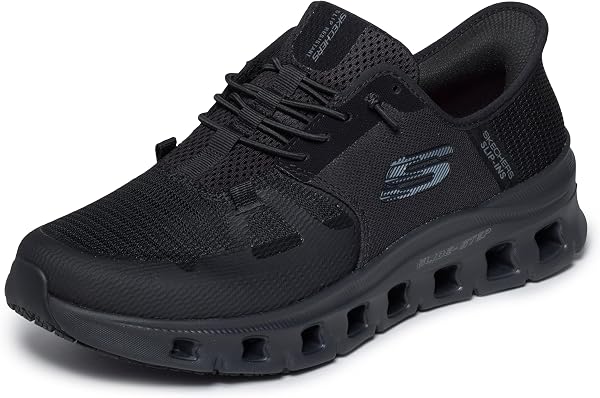
The Squad Slip On is built for women who need dependable workplace footwear without paying premium prices. The slip-resistant outsole is tested on wet, dry, and oily surfaces, which covers the range of conditions found in restaurants, retail floors, and healthcare settings. Add in ASTM-F2892 electrical hazard certification and this shoe punches well above its budget-tier price.

We may earn a commission when you buy through this link, at no additional cost to you.
Comfort comes from a memory foam cushioned insole paired with a relaxed fit design that gives your toes and forefoot room to breathe during long shifts. That extra space matters more than most first-time buyers realize, because feet swell over the course of a 10-hour day and shoes that felt fine at 6 AM can turn painful by afternoon. The roomy last accommodates that natural swelling.
The 3M Scotchgard treatment on the flat knit and synthetic upper repels light water and stains, which extends how long the shoes stay looking presentable between washes. Stretch laces eliminate the mid-shift retying that traditional laces demand, and the slip-on design means quick entry when you are running behind schedule. It is a practical package designed around real workplace friction points.
Electrical Hazard certification under ASTM-F2892 means the shoe is tested to provide secondary protection against accidental contact with live electrical circuits. This matters in commercial kitchens, warehouses, and any workplace where you might contact electrical equipment. It is not a substitute for proper insulated boots in electrician work, but it adds a valuable safety margin for service workers.
Choose this shoe if you want proven Skechers safety features and comfort at the lowest reasonable price. Buyers who need maximum cushioning for standing-heavy healthcare or manufacturing work will want to consider the Max Cushioning Elite, but for the majority of service industry workers, this delivers everything essential without unnecessary extras.
Not the best pick for workers needing maximum cushioning or steel toe protection.
We may earn a commission when you buy through this link, at no additional cost to you.
The Nampa Lace Up serves men who prefer the customizable fit of traditional laces over slip-on convenience. The outsole is rated for wet, dry, oily, and greasy surfaces, with the greasy surface rating being particularly notable for kitchen workers who deal with fryer oil and butter spills that trip up lesser non-slip designs.

We may earn a commission when you buy through this link, at no additional cost to you.
Memory foam insole cushioning and a relaxed fit design keep the shoe comfortable through long shifts. The 1.25-inch heel height gives a slight lift that helps with posture during standing work, and the leather-textured synthetic upper adds a smoother, more polished appearance than most mesh work sneakers. That makes this shoe a better fit for uniform standards that require a leather look.
The traditional lace closure lets you dial in the fit precisely and adjust based on how your feet feel each day. This matters if you have narrow feet that need extra tightening, or if you experience significant foot swelling that requires loosening as the shift progresses. Slip-on and bungee designs cannot match this level of fine-tuning.
Grease behaves differently than water or oil, forming a thicker film that requires more aggressive tread patterns to displace effectively. Outsoles specifically rated for greasy surfaces use denser lug patterns and softer rubber compounds that grip through the grease layer to reach the underlying floor surface.
Choose this shoe if uniform standards require a more traditional look, if you strongly prefer lace-up security, or if you frequently work on particularly greasy surfaces. Workers who value quick entry and exit will prefer bungee or slip-on models, but for lace-up loyalists in demanding kitchen environments, the Nampa is a solid pick.
Not the best fit for workers who need hands-free slip-on convenience.
We may earn a commission when you buy through this link, at no additional cost to you.
The Max Cushioning Elite SR targets women who spend entire shifts on their feet in healthcare, food service, or retail environments where hard floors take a toll on knees, hips, and lower back. The Max Cushioning Elite technology delivers a thicker foam stack than typical work shoes, which absorbs impact more effectively and reduces the cumulative fatigue that builds over months of standing work.

We may earn a commission when you buy through this link, at no additional cost to you.
The slip-resistant outsole is tested on wet, dry, and oily surfaces, providing the workplace safety credentials required for most service industry jobs. Combined with the deep cushioning, this makes it an especially strong choice for nurses, servers, and cashiers who need both traction and impact protection through 8 to 12-hour shifts on hospital or restaurant floors.
Practical touches elevate the everyday experience. The mesh and synthetic upper stays breathable through warm shifts, the Air-Cooled Memory Foam insole reduces heat buildup that plagues standard memory foam, and the machine-washable design lets you keep the shoes fresh even after messy work environments. That washability is a genuinely useful feature for shoes that see kitchen spills or medical settings.
Remove insoles before washing, use a gentle cycle with cold water and mild detergent, and air dry completely away from direct heat. Skip the dryer, since heat can warp the midsole foam and shrink the mesh upper. Washing once every few weeks keeps work shoes hygienic and extends their useful life.
Choose this shoe if joint protection is your top priority and you can accept the slightly higher price. Workers who prefer a lower-profile shoe with more ground feel will find the tall stack height feels less nimble, but for maximum cushioning during standing-heavy work, this is one of the best options in the guide.
Not suitable for workers who prefer a low-profile, minimalist shoe design.
We may earn a commission when you buy through this link, at no additional cost to you.
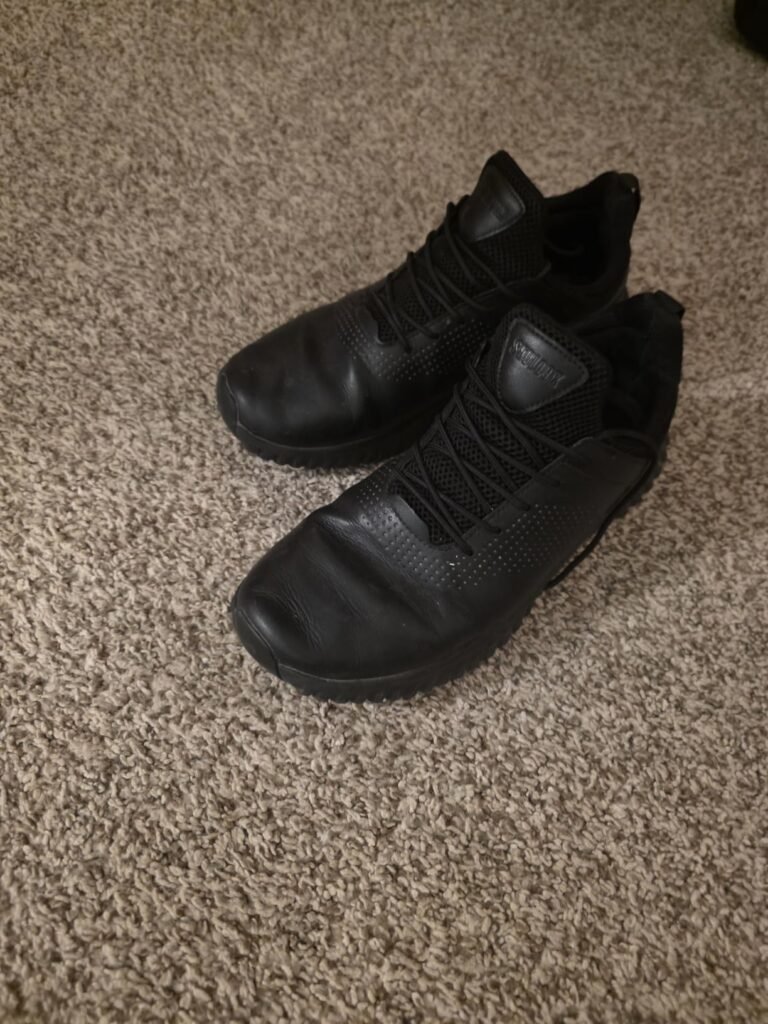
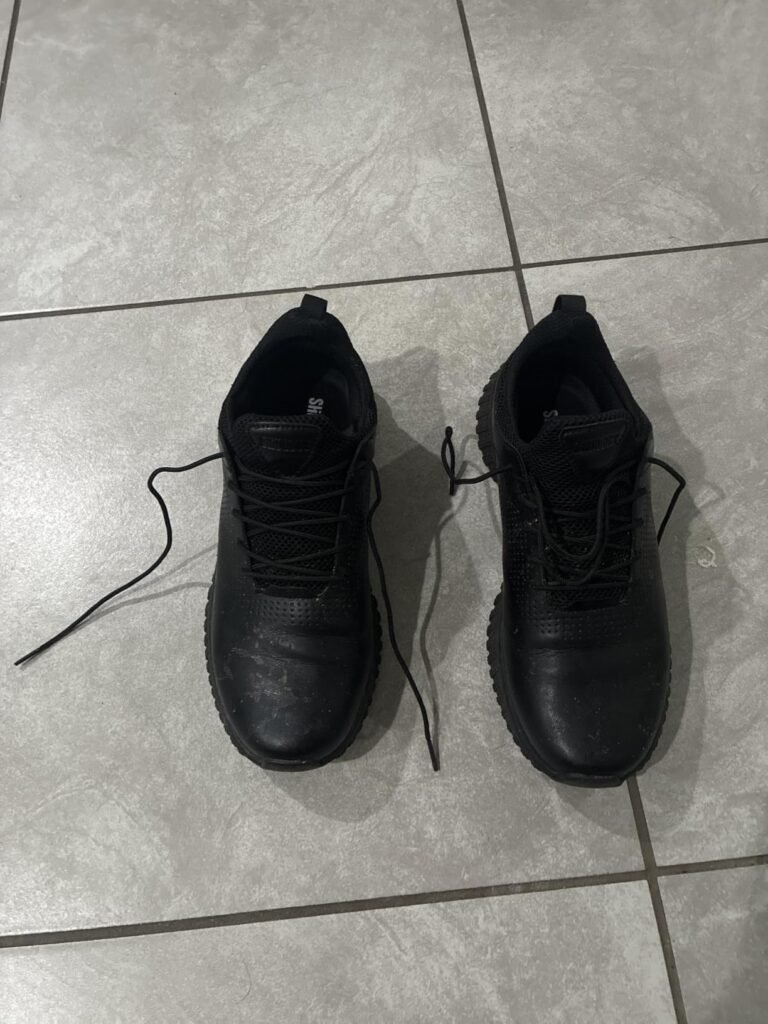
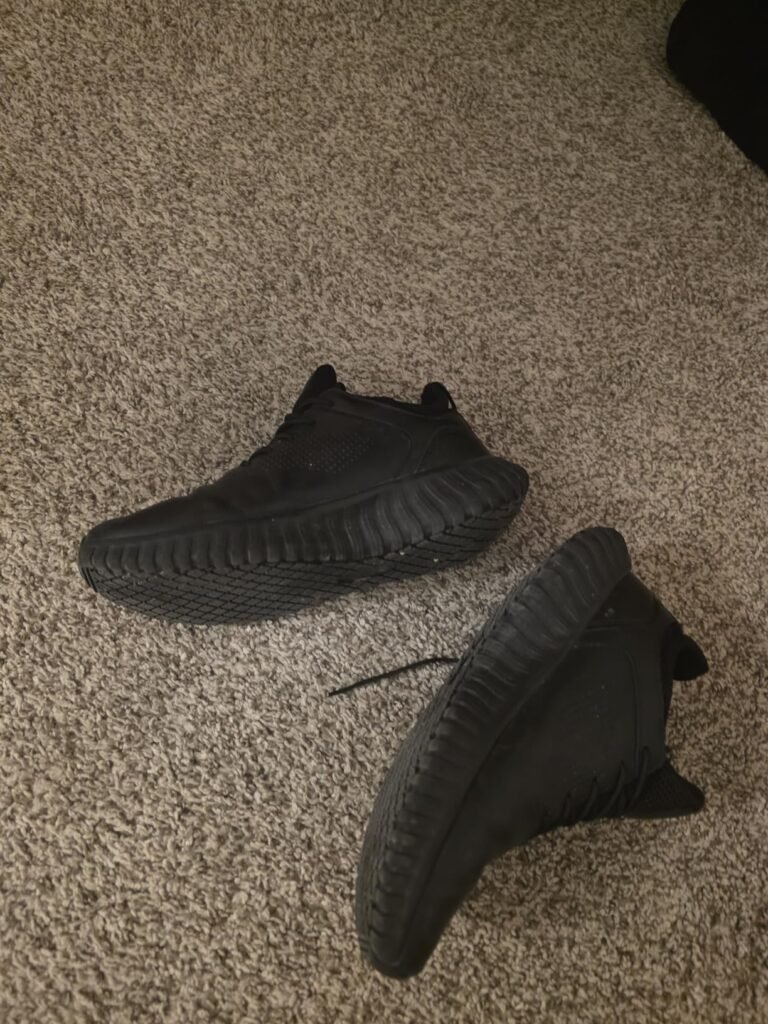
The SHULOOK Chef Sneakers are engineered specifically for food service environments, and the design choices reflect that focus. The outsole features an upgraded slip-resistant patch with a redesigned pattern that provides extra grip on the oily and wet floors common in commercial kitchens. This targeted approach to non-slip design often outperforms generic tread patterns on the specific hazards chefs face daily.
We may earn a commission when you buy through this link, at no additional cost to you.
The leather portion of the upper is treated for water resistance, keeping feet dry when spills happen, and the smooth surface wipes clean easily after grease splatter or food spills. A mesh top panel adds breathability where feet tend to overheat, striking a reasonable balance between water resistance and ventilation that pure leather or pure mesh designs cannot achieve.
Usability is thoughtfully handled with a slip-on design that includes adjustable laces. You get the quick entry of pure slip-ons combined with the customizable fit of laced shoes, which suits workers who want convenience but also need to fine-tune the tightness. Soft insole and lining materials plus a shock-absorbing midsole handle the comfort side well.
Water-resistant leather uppers should be wiped down with a damp cloth after each shift to remove grease, food particles, and cleaning chemical residue that can degrade the leather over time. A quick 30-second wipe extends the life of the shoes significantly compared to letting spills sit until the next wash.
For chefs, kitchen staff, restaurant servers, and anyone working in food service, these purpose-built sneakers deliver strong value at a moderate price. They lack the formal ASTM safety certifications that Skechers provides, so workers in strictly regulated environments should verify their workplace requirements before choosing this brand over certified alternatives.
Not appropriate for workplaces requiring formal ASTM safety certifications.
We may earn a commission when you buy through this link, at no additional cost to you.
The LARNMERN Chef Shoes take a slightly different approach to kitchen and healthcare work with a seamless one-piece upper that reduces weight and eliminates seams where liquids and food particles could collect. This design choice matters more than it might sound in high-hygiene environments where anything that traps contamination is a problem.

We may earn a commission when you buy through this link, at no additional cost to you.
The anti-slip outsole is engineered to channel liquids away from the contact surface, which is how the best non-slip designs actually work. Rather than simply having deep grooves, the outsole geometry moves water, oil, and grease out from under the sole so the rubber stays in direct contact with the floor. This is the same principle used in car tires designed for wet weather driving.
Underfoot, a cushion bladder foam midsole absorbs shock and adds stability, while the anti-fatigue footbed cover addresses the leg soreness that develops during prolonged standing. The lightweight mesh sections improve breathability, and the water-resistant upper keeps feet dry in most kitchen or hospital conditions, though it is not rated for heavy rain or extended wet exposure.
Slip-resistant outsoles use geometric patterns similar to tire treads to displace liquids from under the shoe. Deep channels connect to the sole’s outer edges, so water and oil flow outward as your foot presses down, allowing the rubber to make direct contact with the floor for grip.
Choose this shoe if you want a lightweight, easy-clean slip-on with a proven liquid-channeling outsole design. The lower 4.0 rating compared to other picks suggests some fit or durability inconsistencies, so check reviews for your specific size before ordering, but for the price it remains a reasonable option for kitchen or hospital work.
Not suitable for outdoor use in heavy rain or workplaces requiring formal safety certifications.
We may earn a commission when you buy through this link, at no additional cost to you.
The DRRHINO Steel Toe Sneakers occupy a specific niche: workers who need genuine impact protection at the lowest reasonable price. The ASTM F2413-18 rated steel toe cap withstands accidental impacts up to 200 joules, which is the international standard for protective footwear. This certification matters in warehouses, workshops, and construction settings where dropped objects are a real hazard.

We may earn a commission when you buy through this link, at no additional cost to you.
Beyond the safety cap, the shoe delivers a soft mesh upper and supportive memory foam midsole that keep it comfortable enough for full-shift wear. The air cushioned outsole provides shock absorption and fatigue relief that helps offset the extra weight steel toe caps inevitably add. The slip-resistant tread pattern reduces the risk of falls on wet or slippery surfaces.
The multi-color availability is a nice touch for workers who want steel toe safety without the standard black or brown work boot aesthetic. This makes the DRRHINO a viable choice for warehouse workers, delivery drivers, and light industrial workers who want sneaker styling with genuine protective features at a price well below premium steel toe boots.
ASTM F2413 is the standard for protective footwear in the US, and the 200-joule impact rating means the toe cap protects against a 50-pound weight dropped from 18 inches. This is the standard protection level for construction, warehouse, and light industrial work. Higher-rated boots exist for heavy industrial applications.
Choose this shoe if you need certified steel toe protection on a tight budget. Workers who need additional electrical hazard protection or higher impact ratings should invest in more specialized boots, but for basic steel toe safety in warehouse and light industrial work, the DRRHINO delivers where it counts.
Not appropriate for high-voltage electrical work or heavy industrial environments requiring specialized protection.
We may earn a commission when you buy through this link, at no additional cost to you.
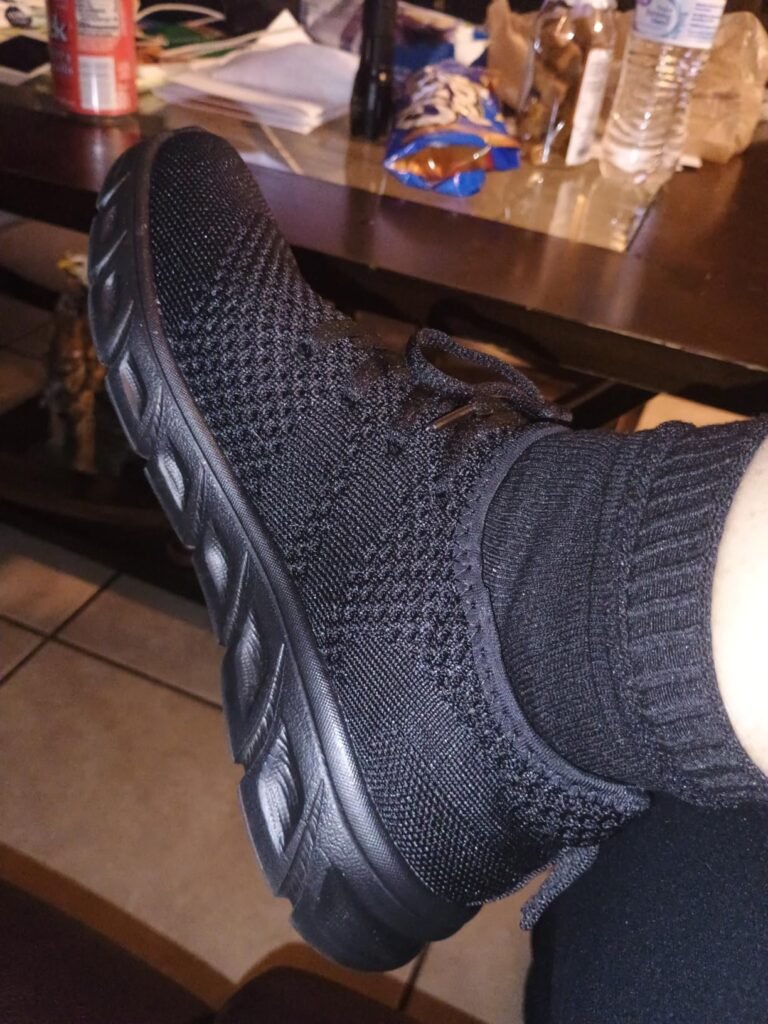
The IQYNAM Running Sneakers are a hybrid option for workers who need basic non-slip performance for lighter-duty environments while also wanting a shoe that transitions into casual wear after the shift ends. The breathable mesh upper wicks moisture rapidly during warm work environments or gym sessions, making these versatile for people who move between work and workout.
We may earn a commission when you buy through this link, at no additional cost to you.
The non-slip EVA sole with enhanced tread provides reasonable grip for retail, office, and light service work, though it lacks the specialized slip-resistant compounds and formal certifications found in dedicated work shoes like the Skechers Cessnock or Nampa. For workers in strictly regulated food service or industrial environments, this shoe is not the right choice.
The lace-up design with soft inner lining allows precise fit adjustment, and the lightweight construction reduces foot fatigue during extended standing. The multi-purpose styling means one pair covers work, errands, gym visits, and casual outings, which appeals to budget-conscious buyers who want maximum versatility per dollar spent.
Not every workplace requires certified slip-resistant footwear. Office workers, light retail staff, and casual service workers can often use standard athletic shoes with reasonable tread patterns. Save the premium certified shoes for environments where slippery surfaces or safety hazards are genuine daily concerns.
Choose this shoe if you work in light-duty retail, office, or casual service settings and want an affordable multi-purpose sneaker. Kitchen workers, healthcare professionals in hospital settings, and industrial workers should invest in dedicated slip-resistant shoes with proper safety certifications instead.
Not suitable for commercial kitchens, industrial work, or environments requiring certified slip-resistant footwear.
We may earn a commission when you buy through this link, at no additional cost to you.
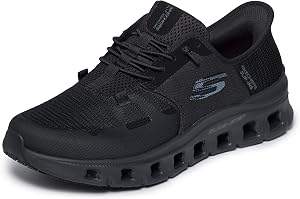
The Summits Sweet Glow brings Skechers' hands-free Slip-in technology to workplace footwear, and the result is a shoe you can genuinely step into without bending over or using your hands. The Heel Pillow design collapses as your foot enters and springs back to lock the heel securely in place, solving the fit-versus-convenience trade-off that plagues traditional slip-ons.

We may earn a commission when you buy through this link, at no additional cost to you.
The slip-resistant outsole is tested on wet, dry, oily, and greasy surfaces, delivering the workplace safety credentials needed for restaurant, kitchen, healthcare, and retail work. Add in Electrical Hazard certification and the water-repellent mesh upper, and this shoe covers multiple hazards in a single package. That comprehensive protection is what elevates it above simpler slip-on designs.
Comfort comes from an Air-Cooled Memory Foam insole paired with the Glide-Step geometric midsole, which is engineered to promote smoother heel-to-toe transitions during walking. That rocker-like geometry reduces the muscular effort your calves and Achilles tendons expend with each step, which matters cumulatively across a long shift on your feet.
Traditional slip-ons often require you to use a finger or shoe horn to get your heel in place. True slip-in designs with reforming heel structures let you step in with no assistance, which matters if you have back pain, limited mobility, or simply need to move fast at the start of a shift.
For workers who value convenience and want the newest slip-in technology combined with certified workplace safety features, this is one of the smartest picks in the guide. The higher price is justified by the technology, but workers on tight budgets can get similar core safety features from simpler slip-on models.
Not the right choice for workers needing customizable lacing tension.
We may earn a commission when you buy through this link, at no additional cost to you.
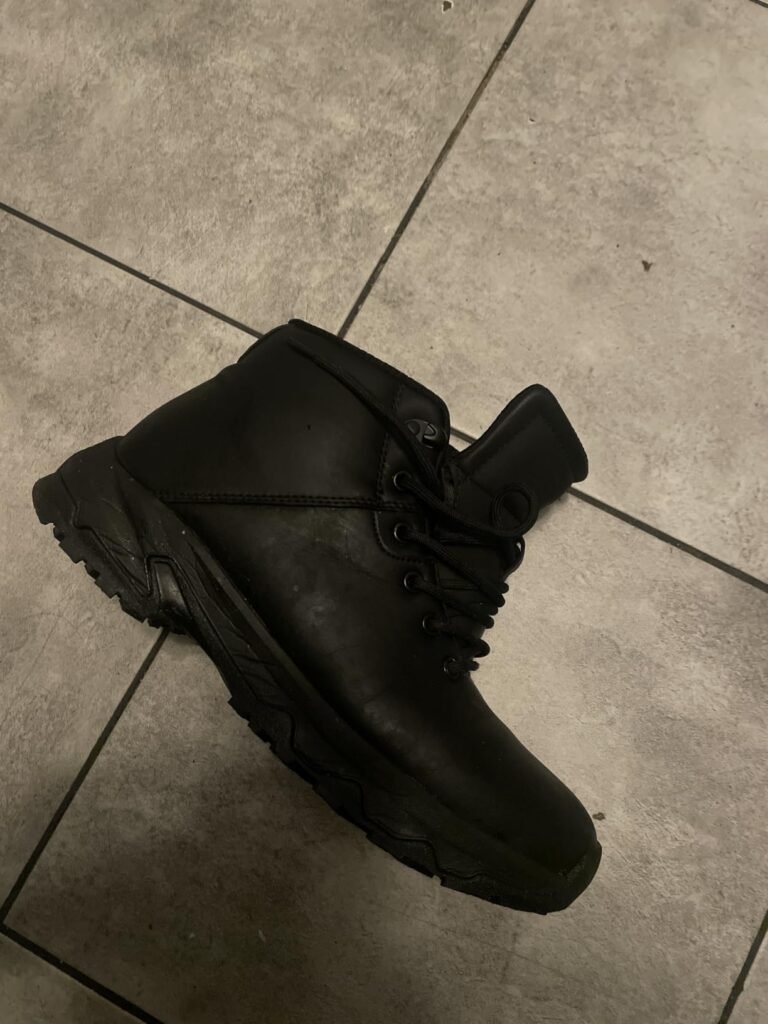
The SHULOOK Non Slip Work Boots occupy the unique middle ground between slip-resistant sneakers and traditional work boots. The mid-cut ankle design provides support and coverage that low-top sneakers cannot match, which matters in workplaces where you handle heavy items, walk on uneven surfaces, or need ankle protection against splashes and debris.
We may earn a commission when you buy through this link, at no additional cost to you.
The outsole features professional non-slip patches with a specifically designed pattern that grips well on slippery or oily floors. Combined with the microfiber leather upper that is treated for water resistance, this boot handles the challenging conditions found in commercial kitchens, warehouses, food processing facilities, and swimming pool areas. The mid-cut also keeps water and debris out better than low-top designs.
Comfort details include a soft lining, cushioned insole, and shock-absorbing midsole, with adjustable laces for a snug custom fit. The microfiber leather is easier to clean than traditional leather, which is a real advantage in food service where wipe-downs happen constantly. The overall lightweight construction keeps the boots from feeling clunky despite their added ankle coverage.
Mid-cut work boots earn their extra weight in environments with splash hazards, uneven surfaces, or heavy lifting where ankle rolls are a real risk. Warehouse workers, kitchen staff handling heavy inventory, and outdoor service workers particularly benefit from the additional coverage and support.
For workers who need more protection than sneakers provide but do not want full-height work boots, this mid-cut design hits a practical sweet spot. Workers in strictly casual dress environments may prefer low-top sneakers, and those needing steel toe protection should look at dedicated safety boots, but for versatile slip-resistant coverage with ankle support, this is a strong pick.
Not appropriate for hot climates or workers who need maximum ventilation.
We may earn a commission when you buy through this link, at no additional cost to you.
The right non-slip footwear depends on your workplace hazards, how long you stand each shift, and what safety certifications your job requires. These factors will help you cut through the marketing claims and find shoes that actually keep you safe and comfortable.
The outsole is the single most important feature in any slip-resistant shoe, and the differences between formulations are significant. Look for outsoles specifically rated for the surfaces you encounter: wet, dry, oily, or greasy. A shoe rated only for wet floors may perform poorly on the grease-heavy floors of a commercial kitchen, while an outsole engineered for oily surfaces uses different rubber compounds and tread geometry.
The tread pattern matters as much as the rubber compound. Effective slip-resistant designs use geometric channels that displace liquids from under the sole, similar to how car tires handle wet roads. Aggressive lug patterns grip better on greasy surfaces but can feel awkward on smooth indoor floors. Flat or lightly textured outsoles work fine on dry surfaces but slip on liquids.
Match your outsole rating to your actual workplace. Restaurant and kitchen workers need wet, oily, and greasy surface ratings. Healthcare workers primarily need wet surface performance. Warehouse workers benefit from dry surface traction with occasional wet floor capability.
Formal safety certifications distinguish workplace-appropriate footwear from casual shoes with non-slip claims. ASTM-F2892 electrical hazard certification means the shoe provides secondary protection against accidental contact with live electrical circuits, which matters in commercial kitchens, workshops, and any environment with electrical equipment. Look for this certification if your job involves any electrical exposure risk.
For steel toe protection, ASTM F2413-18 is the current standard, with 200-joule impact ratings representing the baseline for construction and warehouse work. Some workplaces require specific certifications for compliance with OSHA regulations or company safety policies, so verify your employer’s requirements before purchasing. Buying uncertified shoes for a job that requires certified footwear can result in policy violations or workers’ comp complications.
Choose certified shoes if your workplace requires them or if you work in hazardous environments. For office, retail, and casual service work, uncertified slip-resistant designs are usually acceptable and save money.
Cushioning technology determines how your feet, knees, and back feel at the end of a 10-hour shift. Standard EVA foam is lightweight and affordable but compresses over time, losing effectiveness within months of daily use. Memory foam insoles provide better initial comfort by contouring to your foot shape, and air-cooled variants add ventilation that prevents heat buildup during extended wear.
Max cushioning designs with thicker midsole stacks like the Skechers Max Cushioning Elite absorb more impact from hard surfaces, which reduces the joint fatigue that accumulates during standing-heavy work. The trade-off is added weight and slightly less stability on uneven surfaces. For workers on flat, hard floors like hospitals, restaurants, and retail stores, max cushion is genuinely worth the trade-off.
Prioritize maximum cushioning if you stand for most of your shift. Choose moderate cushioning for jobs with more walking or lifting where a lighter shoe helps.
The upper affects breathability, water resistance, cleanability, and how professional the shoe looks. Mesh uppers breathe best but offer minimal water resistance and can trap food particles or medical contaminants in their weave. Synthetic leather and treated leather uppers provide better water resistance and wipe clean easily, making them ideal for kitchen and healthcare work where spills happen constantly.
Water-resistant treatments and 3M Scotchgard finishes extend the useful life of shoes exposed to daily spills and splashes. Fully waterproof uppers exist but sacrifice breathability, which can cause uncomfortable heat and moisture buildup during long shifts. Hybrid designs with leather panels and mesh top vents strike a reasonable balance for most work environments.
Choose leather or treated synthetic uppers for kitchen, healthcare, and industrial work. Choose mesh uppers for warmer environments where breathability matters more than water resistance.
How you get in and out of your shoes matters more than most first-time buyers appreciate. Traditional lace-up designs like the Skechers Nampa offer the most precise fit adjustment but require tying and occasional retying during shifts. Stretch lace slip-ons like the Squad eliminate tying entirely but offer only one fixed tension level. Bungee lace systems like the Cessnock give you both hands-free entry and adjustable tension.
True slip-in designs like the Skechers Summits Sweet Glow use collapsing heel structures that let you step in without any hand use, which is especially valuable for workers with back pain, limited mobility, or hectic morning routines. The trade-off is a fixed heel structure that cannot be adjusted, so getting the right size matters more than with traditional laced designs.
Match closure type to your priorities. Choose slip-in for maximum convenience, bungee for balanced convenience and adjustability, and traditional laces for the most precise fit.
Work shoes need to accommodate foot swelling that occurs over long shifts. Relaxed fit designs with roomy toe boxes give your forefoot the space it needs as feet swell during the day, preventing the pinching and pressure that develops in shoes fit too closely at 6 AM. Skechers’ Relaxed Fit designs are particularly good at this, though the trade-off is a slightly bulkier appearance.
Wide widths matter for workers with wider feet, and not all brands offer them. If you have wide feet and cannot find your preferred model in wide sizing, consider sizing up by a half size, though this creates its own trade-offs with heel slippage. Always check sizing notes for specific models, as some run small (like the ASICS Gel-Excite line) while others fit true to size.
Buy from retailers with easy return policies for your first pair, since fit is highly personal. Once you find a model and size that works, stick with it for future replacements.
Work shoes take more abuse than casual footwear, so cleanability and durability directly affect their long-term value. Machine-washable designs like the Max Cushioning Elite let you refresh shoes exposed to kitchen spills or medical settings without hand-scrubbing. Wipe-clean synthetic and leather uppers handle daily maintenance more easily than fabric or mesh alternatives.
Rotating between two pairs extends the life of both by giving foam midsoles time to fully decompress between wears, which typically takes 24 to 48 hours. This practice can double the useful life of work shoes and is especially valuable for daily service industry workers whose shoes see heavy use every shift.
Invest in easy-clean materials and consider buying two pairs to rotate. The upfront cost is offset by significantly longer combined shoe life.
Break in new work shoes gradually before wearing them for a full shift. Even shoes designed for step-in comfort benefit from a few short wearings around the house to let the foam midsole adapt to your foot shape and reveal any pressure points before you commit to eight hours on a hard floor. Check the fit while standing, since feet spread out under body weight, and ensure you have about a thumb’s width of space between your longest toe and the front of the shoe.
Clean your work shoes regularly to maintain both hygiene and slip resistance. Grease, food residue, and cleaning chemicals can build up on the outsole and reduce traction, defeating the purpose of buying slip-resistant footwear in the first place. Wipe the outsole with a damp cloth after each shift, and use a soft brush with mild soap to clean the tread channels weekly. For machine-washable models, run a gentle cold cycle every few weeks with insoles removed, and air dry completely away from direct heat.
Rotate between two pairs of work shoes if possible, especially for daily service industry work. Foam midsoles need 24 to 48 hours to fully decompress after being loaded with body weight, and rotating extends the cushioning life of both shoes significantly. This practice also allows moisture from sweat to evaporate fully between wears, reducing odor and bacterial growth. Replace insoles every six months to maintain cushioning even when the shoe itself still has life in the midsole and outsole. Watch for signs of outsole wear or reduced traction, and replace shoes before slip protection degrades.
Slip-resistant shoes use specialized rubber compounds and geometric tread patterns to displace liquids from under the sole, similar to how car tires handle wet roads. The rubber is formulated to maintain grip on wet, oily, or greasy surfaces, and the tread channels move liquid outward so the sole makes direct contact with the floor. This combination provides significantly better traction than standard sneakers on the surfaces found in kitchens, hospitals, and industrial settings.
No, and this is a common source of confusion. Some shoes marketed as non-slip are only rated for wet or dry surfaces, not the oily and greasy floors found in commercial kitchens. Look specifically for outsoles rated on wet, dry, oily, and greasy surfaces if you work in food service. Skechers' work shoes with tested slip-resistant ratings typically cover all four surface types, while cheaper alternatives may only handle wet floors.
Most slip-resistant work shoes last between six and twelve months of daily use before the outsole tread wears down enough to compromise safety. Signs it is time to replace them include visible tread wear, reduced traction on wet floors, worn heel or forefoot areas, and general midsole compression that reduces cushioning. Workers on their feet all day should expect shorter lifespans than office or occasional-use wearers.
Only if the manufacturer specifically states the shoe is machine washable, as with the Skechers Squad, Max Cushioning Elite, and some other models in this guide. For machine-washable shoes, use a gentle cold-water cycle with mild detergent, remove the insoles first, and air dry completely away from direct heat. Never put slip-resistant shoes in the dryer, as heat can warp the midsole and damage the specialized outsole rubber.
Generally no. Slip-resistant shoes are designed for indoor surfaces with liquid hazards like water, oil, and grease. Ice requires different footwear with specialized winter tread patterns, metal cleats, or ice-specific rubber compounds. If you work outdoors in winter conditions, look for winter-specific work boots with ice-rated outsoles or consider add-on traction devices for existing shoes.
Slip-resistant refers specifically to outsole traction on liquid-covered surfaces. Safety shoes typically include additional protective features like steel or composite toe caps, electrical hazard protection, puncture-resistant midsoles, or metatarsal guards. Many shoes combine both features, but you can have slip-resistant shoes without safety features and safety shoes without top-tier slip resistance. Match the features to your specific workplace hazards.
Yes, Skechers has become one of the most trusted brands for restaurant and service industry work. Their shoes with tested slip-resistant outsoles carry ratings for wet, dry, oily, and greasy surfaces, and models like the Cessnock and Nampa also include ASTM-F2892 electrical hazard certification. The relaxed fit designs and memory foam cushioning also make them comfortable for long shifts on hard kitchen floors.
Look for specific outsole ratings that list the surface types the shoe has been tested on. Terms like tested slip-resistant, wet oily greasy rated, or workplace safety certified indicate genuine testing. Vague marketing terms like grippy or non-slip without specific ratings should be treated skeptically. Reputable brands like Skechers list their exact testing standards, which is a strong indicator of genuine slip-resistant performance.
No shoe can prevent all falls, but proper slip-resistant footwear significantly reduces the risk on hazardous surfaces. Falls also depend on floor cleanliness, walking speed, awareness of hazards, and proper spill response protocols. Slip-resistant shoes are one important layer of safety, but they work best combined with good workplace practices like prompt spill cleanup and wet floor signage.
For most work shoes, buy your true measured size unless the manufacturer specifically notes the model runs small. Feet swell during long shifts, so a shoe with a slightly roomy fit at the start of your day will accommodate that swelling comfortably. Skechers' Relaxed Fit designs are built with this in mind, providing extra toe box room without requiring you to size up. Always check specific sizing notes for the model you are considering.
For most workers looking for a single dependable choice, the Skechers Cessnock Bungee stands out as the strongest all-around pick. Its slip-resistant outsole handles wet, dry, and oily surfaces, the Air-Cooled Memory Foam keeps feet comfortable through long shifts, and the electrical hazard certification adds a genuine safety margin. The bungee lace system delivers hands-free convenience with adjustable fit, and the 100 percent vegan construction is a bonus for ethically minded buyers.
If your needs lean differently, several strong alternatives fit specific buyers. The Skechers Max Cushioning Elite is the clear pick for women in healthcare or retail who need maximum joint protection during standing-heavy shifts. The DRRHINO Steel Toe Sneakers deliver certified impact protection at an unbeatable price for warehouse and light industrial workers. The SHULOOK Work Boots add ankle support and coverage for kitchen and industrial environments. Budget-conscious buyers get excellent value from the Skechers Squad slip-on.
Match your footwear to the specific hazards of your workplace rather than chasing the most expensive or feature-loaded option. Kitchen workers need wet, oily, and greasy surface ratings above all else. Healthcare workers benefit most from maximum cushioning combined with easy cleanability. Industrial workers should prioritize steel toe protection and ankle support. Whichever direction fits your job, prioritize proper safety certifications, comfortable cushioning, and a fit that accommodates foot swelling. The right pair keeps you safe, comfortable, and standing steady through every shift.