
Atomic Bent 100
8.6Editor scorePoplar light woodcore
HRZN 3D tip profile
Dura Cap sidewall build
Thick park resist edges
Find the right skis for 2026. We compare 10 standout options by build quality, useful features, owner feedback, value, and everyday trade-offs.
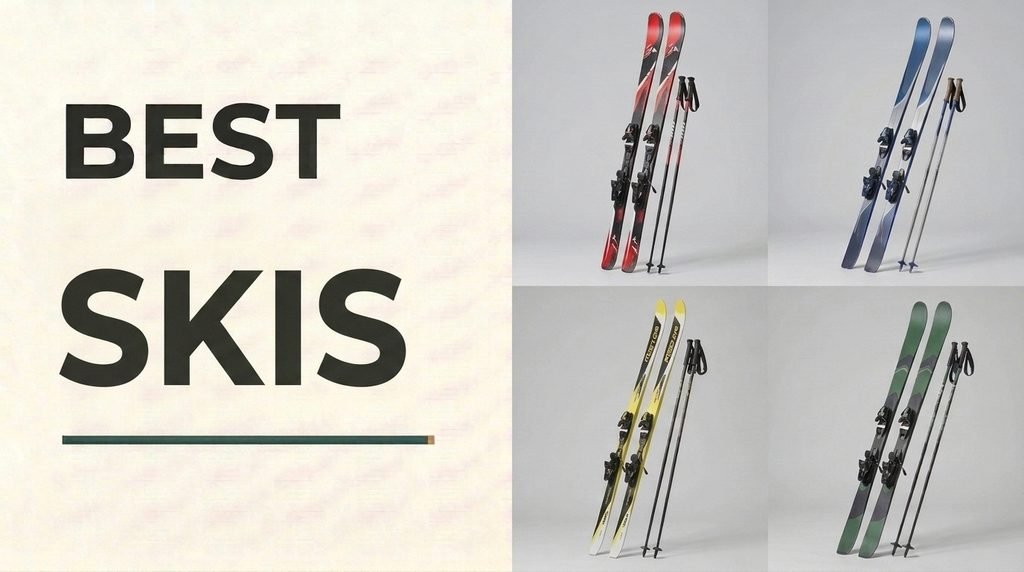
Find the right skis for 2026. We compare 10 standout options and essential alpine companions by the criteria that matter on the mountain, including waist width, wood core construction, metal laminate damping, tip and tail rocker geometry, sidewall durability, binding integration, and cold-weather visibility.
Choosing between a playful freeride twin-tip, a metal-reinforced all-mountain charger, and a dedicated frontside carver comes down to where you spend your resort days. A wider shovel with beveled tips floats effortlessly in deep snow, while a narrower waist with an oversized sidecut locks into hardpack.
Prioritize structural damping, torsional edge grip, and whether your setup arrives with integrated track bindings or requires separate mounting. Pairing the right underfoot platform with reliable anti-fog optics and windproof thermal layers ensures you stay balanced, comfortable, and in command from first chair to last run.
We compared 10 skis and cold-weather mountain essentials by examining the structural details that govern on-snow performance: core wood species, titanal and fiberglass layups, waist geometry, tip and tail rocker profiles, edge thickness, sidewall construction, and binding integration. Our analysis highlights real-world trade-offs between deep-snow flotation, hardpack carving precision, park durability, and all-day weather protection so riders can build a cohesive, confidence-inspiring alpine setup.


Compare key features, scores, and current prices side by side. A shorter feature list means fewer details were available, not necessarily fewer capabilities.




Moving from groomed frontside trails into variable bowls, soft snow piles, and wide tree runs can feel intimidating if your skis are heavy and demanding. The Rossignol Sender Soul Pro Xpress is tailored for men and advancing skiers who want a forgiving, lightweight freeride-inspired platform that pivots on command without punishing tired legs late in the afternoon.
We may earn a commission when you buy through this link, at no additional cost to you.
At the heart of the Sender Soul Pro sits a PEFC-certified poplar wood core, chosen for its natural harmony of vibration absorption, lively elasticity, and low physical weight. Rather than stiffening the chassis with unforgiving metal or brittle carbon fibers, Rossignol wraps the core in customized fiberglass weaves. Because fiberglass offers greater elasticity than carbon, the ski bends into a smooth, progressive arc that stays predictable when navigating uneven snow.
Exterior durability is reinforced through two smart construction choices. First, Cap Sidewalls roll the topsheet material continuously from edge to edge, eliminating heavy vertical ABS sidewalls to keep the ski easy to slide, pivot, and control while resisting edge chipping. Second, a structured 3D topsheet adds physical texture across the upper surface, protecting the graphics against scratches from ski poles and boot buckles.
While carbon fiber reduces weight, it can make a lightweight ski feel nervous, pingy, and prone to deflecting off hard snow chunks. Using multi-weight fiberglass weaves gives the Sender Soul Pro a rounder, more forgiving flex pattern that absorbs terrain variations gently without bucking the rider backward.
This configuration is ideal for progressing intermediate riders and lighter freeride enthusiasts who value effortless handling and all-day comfort over brute-force weight. If you regularly charge steep, wind-scoured chutes at maximum speed, you will want the extra mass of a metal-laminated ski like the Nordica Enforcer 99, but for playful resort exploration, the Sender Soul Pro shines.
Aggressive heavyweight chargers who demand vertical race sidewalls and double-metal damping on bulletproof ice.
We may earn a commission when you buy through this link, at no additional cost to you.
Riders searching for a single freeride platform that transitions effortlessly from morning powder stashes to afternoon side hits and terrain park laps will feel right at home on the Atomic Bent 100. Positioned at the sweet spot of the Bent lineup, its 100mm waist profile delivers enough surface area to stay on top of fresh storm totals without feeling sluggish when rolling from edge to edge on packed resort trails. It favors creative, agile skiers who value low swing weight and nimble pivoting over heavy, locomotive-like straight-line weight.
We may earn a commission when you buy through this link, at no additional cost to you.
The defining engineering feature on this ski is the HRZN 3D Bent geometry at the tip and tail. By integrating a full-wrap three-dimensional beveled profile into the extremities, Atomic expands total surface area and reduces tip deflection in uneven snow without adding dead weight. Beneath the topsheet sits a 100 percent poplar Light Woodcore, which dampens vibrations naturally while keeping the ski responsive for quick tree maneuvers, pillow drops, and spinning off natural wind lips.
Unlike delicate powder skis that suffer edge cracks the first time they clip a submerged rock or metal box, the Bent 100 incorporates Atomic’s Resist Edge Park construction. These thicker steel edges provide substantial structural reinforcement against rail abrasion and hard impacts. Furthermore, the Dura Cap Sidewall runs from the base to the topsheet with a rounded upper contour, delivering dependable torsional bite on firm snow while resisting ugly topsheet gouges when your skis cross in tight chutes.
Traditional flat shovels often hook or dive when crossing tracked-out powder and sun-baked crust. The beveled, boat-hull contour of the HRZN 3D tip and tail allows the Bent 100 to smear, butter, and plane across soft snow smoothly. For riders who enjoy skiing switch or pivoting rapidly through tight glades, that beveled transition prevents unexpected edge catches.
Because the Bent 100 is sold flat without pre-mounted bindings, buyers have complete freedom to mount their preferred alpine freeride binding, hybrid touring setup, or pivot-style heelpiece at their favored mounting point. While hard-charging traditionalists who want double-metal weight for blasting through refrozen icy chop may prefer a heavier chassis like the Nordica Enforcer 99, skiers who treat the entire mountain as a creative playground will find the Bent 100 an exceptionally rewarding daily driver.
Pure frontside hardpack carvers or riders who only want a pre-mounted system binding package out of the box.
We may earn a commission when you buy through this link, at no additional cost to you.
For skiers who split their resort hours equally between lapping the terrain park and carving fast lines down groomed trails and tree runs, the Atomic Bent 90 hits an ideal dimensional balance. Narrower and quicker edge-to-edge than its 100mm sibling, this 90mm waisted all-mountain twin-tip offers immediate response on packed snow while preserving the playful, surfy DNA that makes the Bent series so popular among freestyle-oriented riders.
We may earn a commission when you buy through this link, at no additional cost to you.
Even with a trimmer 90mm waist, the Bent 90 maintains impressive soft-snow versatility thanks to HRZN Tech in the tip and tail. By beveling the edges of the shovel and tail outward, Atomic achieves 10 percent more surface area for flotation without widening the main body of the ski or increasing rotational inertia. Coupled with the poplar Light Woodcore, the ski stays featherweight in the air and absorbs harsh landings without feeling planky or harsh underfoot.
Freestyle durability is baked directly into the chassis. The Resist Edge Park specification uses a thicker gauge of steel along the base perimeter, giving riders confidence to slide metal boxes, urban rails, and rocky natural features without immediately blowing out an edge. The Dura Cap Sidewall further enhances longevity by blending a vertical sidewall under the foot for crisp edge hold with a rounded top corner that deflects impacts from opposing ski edges during spins and grabs.
Dedicated park skis often feel overly soft and squirrelly when you leave the terrain park and try to hold an edge on steep, icy trails. By pairing a full poplar wood core and Dura Cap Sidewall construction with thick park-grade edges, the Bent 90 bridges that gap, offering real carving bite on firm morning corduroy alongside serious rail resilience.
Before buying, consider where you spend the bulk of your winter days. If your home resort experiences frequent, foot-deep powder cycles, stepping up to the Bent 100 makes sense. However, for East Coast, Midwest, or all-conditions park and resort skiers who prioritize snappy edge transitions, low swing weight for rotations, and rugged rail durability, the Atomic Bent 90 provides an energetic, long-lasting foundation.
Deep-powder specialists or cautious beginners who want a narrow frontside ski with pre-installed system bindings.
We may earn a commission when you buy through this link, at no additional cost to you.
Shopping for a complete downhill setup on a sensible budget often forces buyers to choose between used rental gear or expensive flat skis that still need bindings. The Fischer RC Fire Downhill Alpine Skis with RS 9 GW SLR bindings solve that dilemma by delivering a ready-to-ride frontside carving package at an approachable price. Built for developing and recreational resort skiers, this system prioritizes predictable turn initiation and composed edge control on groomed slopes.
We may earn a commission when you buy through this link, at no additional cost to you.
On the snow, the RC Fire focuses on removing the physical strain of linking clean turns. Rather than demanding aggressive, race-level forward shin pressure to bend the ski into an arc, its approachable longitudinal flex responds smoothly to moderate steering inputs. This allows beginners transitioning out of a wedge and intermediates refining their parallel technique to feel the edges engage progressively without sudden, jerky hook-ups on firm snow.
A major practical advantage of this package is the included RS 9 GW SLR binding system. Mounted on Fischer’s lightweight SLR track interface, the bindings adjust easily to fit a wide range of boot sole lengths without requiring permanent holes to be drilled into the core. Because the binding carries GripWalk certification, it works seamlessly with both traditional flat alpine boot soles and modern rockered GripWalk soles, making lodge walking and parking lot treks much easier.
When a binding is bolted rigidly onto a ski, it can create a stiff flat spot underfoot that hinders smooth carving. The SLR plate system allows the RS 9 GW binding to slide slightly as the ski bends, maintaining a uniform, continuous arc from tip to tail so the entire steel edge stays in contact with the snow.
This setup is a smart match for recreational skiers who spend ninety percent of their mountain time cruising green and blue groomers and want to stop paying daily rental shop fees. Keep in mind that the RS 9 binding is engineered for lightweight to moderate-weight skiers cruising at sensible resort speeds; heavy, aggressive experts charging steep black diamonds or hunting deep backcountry powder will need a wider, stiffer ski and a higher-DIN binding.
Heavy, hard-charging experts who require high-DIN bindings or off-piste powder flotation.
We may earn a commission when you buy through this link, at no additional cost to you.
Rossignol designed the Forza series to bring modern, rhythm-focused carving out of the race course and make it accessible to everyday resort skiers. Sitting at the approachable entry point of that lineup, the Forza 20° Xpress is built for beginner to intermediate men and women who want to experience the sensation of rolling their skis onto edge and letting the sidecut carve clean, round arcs across morning corduroy.
We may earn a commission when you buy through this link, at no additional cost to you.
The secret to the Forza 20°’s steering feel lies in its Oversize Sidecut geometry. By pairing generous tip and tail dimensions with a supportive underfoot platform, the ski engages the snow the instant you tip your knees and ankles into the turn, encouraging deeper angulation without requiring high speeds. Inside, a genuine poplar wood core absorbs high-frequency trail vibrations, while tuned fiberglass layers add elasticity and torsional resistance so the ski stays composed through the finish of each turn.
To keep the setup lively and manageable from the first run to late afternoon, Rossignol employs a lightweight cap construction where the topsheet rolls from edge to edge. This reduces overall weight and shrugs off cosmetic chipping when loading chairs or standing in lift lines. The included Xpress system bindings mount cleanly onto the integrated rail for tool-free boot length adjustments, and eco-conscious buyers will appreciate that the ski is built at Rossignol’s Spanish facility powered by renewable green energy.
Rossignol names the Forza models after the target edge angulation angle they are tuned to support. While high-end Forza models target extreme 60- or 70-degree expert lean angles, the 20° model is calibrated specifically for developing skiers leaning gently into turns, providing stable feedback without punishing minor balance shifts.
If your ideal ski day consists of linking smooth, rhythmic turns down manicured pistes and building confidence in your edge control, the Forza 20° Xpress offers an inviting, low-effort platform. Because it is optimized specifically for moderate-angle carving on groomed snow, skiers who frequently venture into bumpy mogul fields, un-groomed trees, or deep powder bowls should look toward an all-mountain model like the Rossignol Arcade 80° or Sender Soul Pro.
Off-trail powder seekers or aggressive high-speed carvers looking for a stiff, metal-reinforced race plank.
We may earn a commission when you buy through this link, at no additional cost to you.
Even the finest alpine skis cannot keep you on the mountain when biting chairlift winds and sub-zero windchill freeze your cheeks and neck. The Fuinloth Ski Mask Balaclava Pro is an essential cold-weather companion designed to seal the vulnerable gap between your ski jacket collar, goggles, and helmet. Whether you are riding exposed high-alpine lifts, snowmobiling, or winter commuting, it provides full-coverage thermal protection without restricting head movement.
We may earn a commission when you buy through this link, at no additional cost to you.
The balaclava relies on a dual-function textile blend made from 95 percent polyester and 5 percent spandex. On the exterior, the tightly knit shell acts as a windproof barrier that deflects blowing snow, ice pellets, dust, and ultraviolet rays. Against the skin, a brushed inner fleece lining traps body heat immediately, delivering soft, irritation-free comfort that avoids the scratchy feel of coarse wool neck gaiters.
One of the most common mistakes skiers make is wearing thick knitted hats or bulky scarves underneath their ski helmet, which ruins the helmet’s safety fit and causes painful pressure points on the forehead. The Fuinloth Balaclava Pro uses a sleek, low-profile cut with flat seams that slides effortlessly under any ski, snowboard, bike, or motorcycle helmet. Its breathable weave allows exhaled vapor to escape efficiently, helping reduce moisture buildup during active runs.
When pairing a full-face balaclava with ski goggles, avoid tucking the upper fabric edge underneath the bottom foam of your goggle frame. Instead, rest the goggle foam directly against the outer bridge of the mask or leave your nose slightly uncovered on steep climbs so warm exhaled air vents outward rather than rising inside your lenses.
Thanks to its four-way spandex stretch, this one-size-fits-all mask contours cleanly across a wide range of adult and teen head shapes. While shoppers browsing strictly for hardgoods should note that this is a protective apparel piece, adding a dependable windproof balaclava to your kit bag is one of the highest-return upgrades you can make for storm-day comfort and endurance.
Shoppers seeking hardgood skis only, or mild spring skiing days above 45 degrees Fahrenheit where full fleece coverage is too warm.
We may earn a commission when you buy through this link, at no additional cost to you.
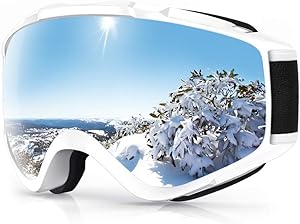
Reading snow textures, spotting icy patches, and judging terrain roll-overs at speed requires crystal-clear vision—a major challenge for skiers who wear prescription eyeglasses. The Findway OTG (Over The Glasses) Ski Goggles are engineered specifically to accommodate eyeglasses underneath a protective snow lens without pressing the temple arms painfully into the sides of your head. Designed for men, women, and youth riders over age twelve, they ensure eyeglass wearers never have to compromise visual acuity on the slopes.
We may earn a commission when you buy through this link, at no additional cost to you.
Optical clarity and fog resistance are handled through a dual-lens thermal barrier system. The outer spherical lens features an impact-resistant, anti-scratch full Revo mirror coating that blocks 100 percent of harmful UV rays and cuts harsh high-altitude glare. Inside, an Italian-made inner lens treated with long-lasting anti-fog materials works in tandem with top and bottom frame vents to circulate fresh air and exhaust warm moisture before it can condense on your glasses.
Comfort and helmet integration are thoughtfully executed. The flexible TPU frame is lined with triple-layer face foam that molds to facial contours while sealing out blowing snow and cold drafts. Around the back, a widened, high-density 3D jacquard strap lined with non-slip silicone beads grips the slick shell of your ski helmet firmly, preventing the strap from sliding upward during bumpy runs. The frameless outer architecture also prevents snow from packing onto the rim.
A dual-pane spherical lens curves both horizontally and vertically, mimicking the natural shape of the human eye to reduce optical distortion at the edges of your field of view. Furthermore, the sealed air pocket between the outer and inner lenses acts like a double-pane window, preventing cold outside snow air from chilling the warm inner lens surface.
Whether you wear prescription frames every day or simply want a roomy, wide-view spherical goggle with dependable ventilation, the Findway OTG delivers impressive optical utility at an accessible cost. Just be sure to check the size of your eyeglass frames before hitting the slopes, and keep in mind that the large frame dimensions are too wide for young children under twelve.
Children under age 12 with small facial profiles, or shoppers looking strictly for alpine ski planks.
We may earn a commission when you buy through this link, at no additional cost to you.
Available in this alternate sizing and listing option, the Rossignol Sender Soul Pro Xpress stands out for skiers who want a resilient, low-maintenance downhill setup capable of handling a wide variety of resort conditions. When you are learning to venture off manicured groomers into bumpy sidecountry and soft afternoon snow, having a ski that releases its tail easily is crucial for controlling your speed in tight spots.
We may earn a commission when you buy through this link, at no additional cost to you.
The combination of a sustainably harvested PEFC poplar wood core and multi-density fiberglass laminates gives this ski a balanced, approachable personality. Poplar wood naturally dampens trail buzz so the tips feel calm on packed snow, while the elastic fiberglass layer provides enough torsional stiffness to hold a reliable line through medium-radius turns without locking you into a track you cannot escape.
Where many modern skis begin looking tattered after half a season of crowded lift lines and roof-rack transport, the Sender Soul Pro Xpress is armored for longevity. The combination of a scratch-resistant 3D topsheet and rounded Cap Sidewall profiling means opposing ski edges deflect cleanly off the side of the ski rather than slicing into the laminate layers. That rugged exterior makes it a smart investment for skiers who log dozens of resort days each winter.
Full vertical sidewalls lock the rear of the ski firmly into a carved track, which can feel catchy when navigating narrow mogul troughs. The rounded cap sidewall on the Sender Soul Pro Xpress allows the skier to smear and pivot the tail smoothly, making speed checks and rapid direction changes far less taxing.
When choosing between sizing configurations of the Sender Soul Pro Xpress, match the length to your height, weight, and preferred terrain: shorter lengths around chin height maximize agility in bumps and trees, while nose-height lengths provide extra stability and float in open bowls. Riders who prioritize carefree handling and long-term structural durability will appreciate everything this package brings to the hill.
Expert racers or high-speed backcountry chargers who need maximum torsional rigidity on steep, icy faces.
We may earn a commission when you buy through this link, at no additional cost to you.
Resort conditions rarely stay static from nine in the morning until four in the afternoon; crisp, firm corduroy often turns into chopped-up crud, slush piles, or windblown drifts by midday. The Rossignol Arcade 80° Xpress is engineered specifically for this reality, offering beginner and intermediate men and women a true all-mountain system ski that carves hardpack with authority while gliding smoothly through mixed afternoon snow.
We may earn a commission when you buy through this link, at no additional cost to you.
What elevates the Arcade 80° above entry-level piste skis is its sophisticated damping and base package. Rossignol integrates its Vibration Absorbing System (VAS) alongside a poplar wood core and fiberglass layup to filter out harsh snow shocks before they reach your knees. Underneath, a genuine sintered running base provides significantly faster glide and superior wax absorption compared to the slower extruded bases found on budget beginner models.
Steering precision comes from pairing a unisex tip and tail rocker profile with Rossignol’s Extended Sidecut geometry. At low speeds, the rockered tips and tails stay slightly elevated off the snow so you can pivot and feather your turns effortlessly. As you pick up speed and tip the ski onto a higher edge angle, more of the extended sidecut engages the snow surface, locking in dependable full-length grip across icy patches.
Many recreational system skis cut costs by using extruded polyethylene bases that feel sticky on cold mornings or wet spring snow. The Arcade 80°’s porous sintered base absorbs hot wax deeply into its molecular structure, allowing you to carry momentum effortlessly across flat cat tracks without constant pole pushing.
Complete with tool-free Xpress bindings that accommodate both men’s and women’s alpine boots, the Arcade 80° Xpress is an outstanding one-ski solution for resort riders who spend most of their time on marked trails. While powder hounds chasing knee-deep storms in the western bowls will want a 99mm or 100mm waist, everyday resort skiers will love the quiet stability and fast sintered glide of the Arcade 80°.
Deep off-piste powder skiers who require a 100mm+ waist width to float in untracked bowls.
We may earn a commission when you buy through this link, at no additional cost to you.
For decades, the Nordica Enforcer series has served as the benchmark for powerful, hard-charging all-mountain skiing, and the revamped Nordica Enforcer 99 refines that legendary formula with greater agility and smoothness. Built for confident intermediate, advanced, and expert skiers, this 99mm waisted powerhouse delivers the damp, unshakable composure needed to blast through tracked-out resort chop while carving steep groomers like a much narrower ski.
We may earn a commission when you buy through this link, at no additional cost to you.
The secret to the Enforcer 99’s composed ride is Nordica’s Energy 2 Ti Pulse Core architecture. Rather than simply sandwiching a wood core between two sheets of titanal metal—which can sometimes feel overly rigid or resonant on hard ice—Nordica embeds a rubberized elastomer Pulse Core layer directly inside the wood-and-metal sandwich. This elastomer layer absorbs high-speed vibrations and terrain impacts, delivering velvet-smooth snow contact at any speed.
Earlier generations of metal all-mountain skis could feel demanding when you wanted to slow down and navigate tight trees or bumps. Nordica addresses this with two key innovations: True Tip Tech trims heavy ABS plastic out of the shovel and extends the tapered lightweight wood core into the tip to cut swing weight, while a newly unlocked tail rocker profile allows riders to release the tail and slash turns effortlessly without feeling locked onto a rail.
By replacing heavy tip plastic with tapered wood core material and adding slightly more progressive rocker in the tail, Nordica made the Enforcer 99 noticeably easier to pivot in tight chutes than classic squared-tail metal skis, giving you the option to either rail high-speed carves or drift playful slash turns on command.
Keep in mind that the Enforcer 99 is sold flat, allowing you to pair it with high-performance alpine bindings that match your DIN requirements. While cautious beginners or ultra-lightweight riders may find dual-metal construction too stiff for slow snowplow turns, ambitious all-mountain skiers looking for uncompromising edge hold, crud-busting authority, and newfound playfulness will find the Enforcer 99 at the top of its class.
First-time beginners learning basic wedge turns or riders seeking an ultra-lightweight park noodle.
We may earn a commission when you buy through this link, at no additional cost to you.
Selecting the right pair of skis requires looking past topsheet graphics to understand how internal laminates, waist dimensions, rocker geometry, and binding interfaces interact with the snow. Whether you spend your winters carving crisp morning corduroy, hunting afternoon powder stashes in the trees, or lapping terrain park features, matching the ski’s structural engineering to your skill level and local mountain conditions is the surest way to elevate your confidence and enjoyment.
The single most influential dimension on any alpine ski is its waist width, measured in millimeters across the narrowest point directly beneath the boot. Narrower frontside and trail-focused skis—typically measuring between 72mm and 82mm underfoot, such as the Fischer RC Fire, Rossignol Forza 20° Xpress, and Rossignol Arcade 80° Xpress—prioritize rapid edge-to-edge quickness on firm, groomed snow. Because your boot sits closer to the steel edges, minimal ankle and knee leverage is required to tip the ski onto a high carving angle, making narrow waists far less taxing on your joints over a full day of hardpack cruising.
As waist widths expand into the 90mm to 100mm all-mountain and freeride range—seen on the Atomic Bent 90, Nordica Enforcer 99, and Atomic Bent 100—the ski gains a broader footprint that resists sinking into soft, un-groomed snow, spring slush, and tracked-out powder. A 90mm waist strikes a nimble balance for riders who split their time between groomed trails and the terrain park, while a 99mm to 100mm waist serves as the quintessential Western resort or storm-day quiver of one. However, going wider than you actually need for your local snow conditions slows down turn transitions and increases lateral torque on your knees when skiing icy slopes.
Base your waist width decision on the conditions you ride seventy percent of the time rather than the one dream powder day of the year: choose 74mm to 82mm for firm groomers and East Coast hardpack, 88mm to 92mm for mixed trail and park versatility, or 98mm to 100mm for soft-snow freeride and deep all-mountain terrain.
What lies beneath the topsheet dictates a ski’s weight, rebound energy, vibration damping, and speed limit. Almost all quality modern skis rely on a laminated wood core—most commonly poplar, as used across the Atomic Bent series and Rossignol’s Forza, Arcade, and Sender Soul Pro models. Poplar wood offers an exceptional natural ratio of lightweight snap, flexural elasticity, and acoustic damping, preventing the hollow, chattery sensation common in cheap synthetic foam rental skis.
To tune how that wood core bends and resists twisting under load, manufacturers wrap it in structural laminates. Fiberglass weaves add forgiving elasticity and medium torsional rigidity, making skis like the Rossignol Sender Soul Pro Xpress accessible and energetic for intermediate riders without feeling overly stiff. At the high-performance end of the spectrum, skis like the Nordica Enforcer 99 sandwich the wood core and an elastomer Pulse Core between two full sheets of titanal metal alloy. Dual titanal layers add substantial mass and torsional backbone, allowing the ski to slice through refrozen afternoon chop and hold an unyielding edge on steep ice without deflecting, though they demand stronger forward shin pressure to bend at slower speeds.
Match the internal layup to your weight and aggressiveness: lighter or developing skiers should favor wood-and-fiberglass constructions for effortless bending and low fatigue, while heavier or fast-charging advanced riders should invest in dual-titanal and elastomer-damped cores for rock-solid composure at high speeds.
A ski’s side profile combines camber (the traditional upward arch underfoot when the ski rests flat) and rocker (the early upward curve of the tip and tail). Traditional camber acts like a leaf spring: when you press your weight into a turn, the cambered midsection flattens and drives pressure outward toward the tip and tail, locking the full length of the steel edge into hard snow for crisp carving grip and lively rebound out of the turn.
Modern all-mountain and freeride skis pair underfoot camber with progressive tip and tail rocker. Tip rocker helps the shovel rise above soft snow and absorbs trail bumps without hooking, while tail rocker—such as the unlocked tail profile on the Nordica Enforcer 99 or the twin-tip rise on the Atomic Bent 100—allows the rider to release the back of the ski easily to drift, pivot, or check speed in tight trees and moguls. Additionally, three-dimensional tip shaping like Atomic’s beveled HRZN 3D and HRZN Tech increases surface area by up to 10 percent for enhanced flotation while preventing the outside edges of the shovel from catching in heavy crust.
Prioritize longer underfoot camber with minimal tail rocker if you want maximum carving bite and tail push on groomed pistes, or select generous tip and tail rocker with beveled shovel geometry if you value easy pivoting, switch riding, and effortless flotation in variable off-piste snow.
How the layers of a ski are sealed along its perimeter directly impacts both torsional edge bite and long-term structural durability. Full cap construction—featured on the Rossignol Forza 20° Xpress, Arcade 80° Xpress, and Sender Soul Pro Xpress—rolls the protective topsheet material continuously from edge to edge down to the steel rim. Cap construction reduces overall weight, creates a rounder and more forgiving flex pattern for easier skidded turns, and deflects impacts when your skis tap together, preventing ugly topsheet delamination.
Conversely, vertical ABS sidewalls transmit downward boot force directly onto the steel edge for superior grip on hardpack, though traditional sharp-cornered sidewalls can chip easily. Hybrid designs like Atomic’s Dura Cap Sidewall combine the best of both worlds by placing a supportive sidewall underfoot for confident edge hold while rounding the upper corner to resist chipping. Furthermore, if you plan to slide terrain park boxes, rails, or rocky natural features, look for reinforced edge specifications such as the thicker Resist Edge Park steel used on the Atomic Bent 90 and Bent 100, which resists cracking and pulling out under direct metal-on-metal impact.
Choose rounded cap sidewalls for lightweight ease of use and chip resistance on recreational resort runs, or look for hybrid Dura Cap sidewalls with thickened park-grade steel edges if your skiing includes terrain park rails, tree stumps, and rugged freeride lines.
Alpine skis are sold in two distinct configurations: integrated system packages that include pre-mounted track bindings, and flat skis sold as planks only. Frontside and all-mountain progression skis—including the Fischer RC Fire with RS 9 GW SLR bindings, Rossignol Forza 20° Xpress, and Rossignol Arcade 80° Xpress—arrive with integrated binding tracks already installed. These systems offer tremendous value and convenience: a certified technician can slide the toe and heel pieces to match your boot sole length in seconds without drilling holes into the wood core, and the free-floating track preserves the ski’s natural flex curve underfoot.
Wider freeride and high-performance all-mountain models—such as the Atomic Bent 90, Atomic Bent 100, and Nordica Enforcer 99—are sold flat without bindings. Selling these skis flat allows experienced riders to choose a binding with the exact DIN release range, elasticity, brake width, and function they require, whether that is a heavy-duty alpine pivot binding for park and cliff drops or a hybrid alpine-touring binding for backcountry skinning. It also lets you select your exact mounting point, such as mounting slightly forward of traditional marks for freestyle balance or on the factory line for directional charging.
Factor binding costs into your total budget before purchasing: opt for an integrated GripWalk-compatible system ski if you want turnkey convenience and maximum value for resort trails, or budget an extra two to three hundred dollars for bindings and professional shop mounting when buying a flat freeride or all-mountain ski.
The polyethylene base material on the bottom of your skis governs how fast you glide across flat cat tracks, how well the ski handles sticky spring slush, and how often you need to wax. Entry-level and recreational skis frequently use extruded bases, which are formed by melting polyethylene pellets into a sheet. Extruded bases are inexpensive to manufacture, non-porous, and easy to repair if gouged, but they hold very little wax and can feel noticeably slow on cold, dry snow or flat run-outs.
Higher-end all-mountain and freeride skis—such as the Rossignol Arcade 80° Xpress—upgrade to high-density sintered bases. Formed by compressing polyethylene powder under extreme heat and pressure without fully melting it, sintered bases contain microscopic pores that soak up hot ski wax like a sponge. A well-waxed sintered base glides significantly faster across all snow temperatures, resists abrasion from icy crystals, and prevents the frustrating suction effect that slows skiers down in wet spring snow.
If you want effortless momentum across flat resort traverses and plan to wax your skis regularly, prioritize models featuring a sintered running base over basic extruded alternatives.
Even the best-engineered skis cannot perform to their potential if you cannot see terrain changes clearly or if freezing wind forces you off the lift early. Flat light, blowing snow, and fogged eyeglasses are major causes of balance errors and falls on the mountain. Skiers who wear prescription glasses should prioritize genuine OTG (Over The Glasses) spherical goggles like the Findway OTG Goggles, which combine temple cutouts in the triple-layer foam with an Italian anti-fog inner lens and flow-through venting to keep both your eyeglasses and goggle lens completely clear.
Similarly, protecting exposed skin around your face, neck, and chin without compromising helmet safety is vital on windy days. Wearing thick knitted scarves or bulky hoodies under a ski helmet alters the helmet’s impact geometry and creates uncomfortable pressure points. A thin, stretchy polyester-spandex balaclava with a brushed thermal fleece interior, such as the Fuinloth Ski Mask Balaclava Pro, fits seamlessly beneath a helmet liner while blocking biting wind, snow, and UV exposure.
Round out your hardgood purchase with helmet-compatible OTG spherical goggles and a low-bulk windproof fleece balaclava so poor visibility and sub-zero windchill never cut your ski day short.
Before taking any new pair of skis onto the mountain—whether they arrived with integrated Xpress or SLR system bindings or as flat planks requiring a shop drill mount—bring both your skis and your ski boots to a certified alpine technician. The technician will measure your boot sole length in millimeters, verify whether your boots use standard Alpine ISO 5355 or GripWalk ISO 23223 soles, set the forward pressure, and calibrate the DIN release values to match your height, weight, age, and skier type. Performing a mechanical release test ensures the bindings will hold firmly during aggressive carving while releasing reliably in a twisting fall.
Daily post-ski care prevents edge corrosion and preserves base speed across seasons. At the end of every outing, brush loose snow off your skis andbindings, then wipe the steel edges and topsheets completely dry with a clean towel before placing them inside a vehicle or travel bag. Never leave wet skis strapped tightly base-to-base overnight, as road salt and trapped moisture will pit the carbon steel edges with rust within hours. Separate the skis in a dry, room-temperature space so air can circulate freely around the bindings and edges.
Maintain your running bases and edges with periodic hot waxing and deburring. Every four to six days on the snow—especially on skis with porous sintered bases—apply a temperature-appropriate hot wax with a dedicated waxing iron and scrape it smooth to keep the polyethylene hydrated and gliding effortlessly. Run a fine diamond stone gently along the steel edges to polish away tiny rock burrs that can make your skis feel catchy or inconsistent when initiating turns on firm morning snow.
System skis—such as the Rossignol Arcade 80° Xpress, Forza 20° Xpress, and Fischer RC Fire—come from the factory with integrated binding rails and matching bindings included in the box, allowing quick, tool-free adjustment to your boot size. Flat skis—such as the Atomic Bent 100, Bent 90, and Nordica Enforcer 99—are sold as bare planks without bindings. Buying flat skis requires purchasing compatible alpine bindings separately and having a ski shop professionally drill and mount them to your specific boots.
Your choice between a 90mm waist like the Atomic Bent 90 and a 99mm to 100mm waist like the Nordica Enforcer 99 or Atomic Bent 100 depends on where you ski most often. A 90mm waist rolls onto edge faster on firm groomed trails and carries less swing weight for terrain park jumps and spins. A 99mm to 100mm waist provides noticeably better flotation in deep powder, chopped-up afternoon crud, and soft off-piste bowls, making it the preferred width for Western resorts and storm days.
As a general rule, standing vertically on its tail, a ski should reach somewhere between your chin and the top of your forehead. Newer or more cautious skiers, as well as riders who spend lots of time in tight trees and moguls, should size closer to chin or nose height for easier pivoting. Advanced, heavier, or fast-skiing riders—and those buying skis with substantial tip and tail rocker like the Atomic Bent series—should size closer to eye or forehead height to maintain adequate effective edge contact on firm snow.
GripWalk (ISO 23223) is a modern ski boot sole standard featuring a curved, rockered rubber toe profile that makes walking on pavement and lodge floors much safer and more natural than flat plastic soles. Bindings marked with GW—like the RS 9 GW SLR binding on the Fischer RC Fire—have self-adjusting or contoured gliding plates under the toe that accept both traditional flat Alpine (ISO 5355) boots and thicker rockered GripWalk boots safely without altering release values.
Metal laminates (titanal) and all-wood constructions serve two very different styles of skiing. The Nordica Enforcer 99 uses two layers of titanal around a wood and elastomer Pulse Core to maximize high-speed stability, torsional edge grip on ice, and momentum to blast straight through heavy, tracked-out crud. The Atomic Bent 100 omits metal in favor of a lightweight poplar wood core, making it much lighter in the air, easier to pivot in tight trees, and more playful for buttering, side hits, and freestyle tricks.
OTG (Over The Glasses) goggles like the Findway model feature deeper internal frame volume and dedicated cutouts in the side foam so your eyeglasses sit comfortably without touching the goggle lens. They combine a dual-layer thermal lens barrier and an anti-fog coated Italian inner lens with top and bottom frame vents that continuously pull cool dry air through the chamber, exhausting warm facial moisture before it can condense on your prescription lenses.
Yes, cap sidewall constructions—used on the Rossignol Sender Soul Pro Xpress, Arcade 80° Xpress, and Forza 20° Xpress—are actually more resistant to cosmetic chipping than traditional vertical sidewalls. Because the topsheet rolls smoothly over the upper edge down to the steel rim, accidental hits from opposing ski edges glance off rather than slicing into the topsheet, while keeping the ski lightweight and comfortable to steer.
Choose a thin, breathable polyester-spandex balaclava like the Fuinloth Balaclava Pro rather than a thick knit mask so your helmet fits properly against your brow. When putting on your goggles, make sure the bottom foam of the goggle rests cleanly over the top edge of the balaclava without fabric bunched inside the goggle chamber, ensuring your warm exhaled breath vents downward instead of rising into the goggle vents.
For skiers seeking a versatile, confidence-inspiring freeride and all-mountain plank that handles everything from deep powder stashes to tree runs and terrain park laps, the Atomic Bent 100 stands out as our top overall choice. Its combination of a lively poplar Light Woodcore, beveled HRZN 3D tips and tails, Dura Cap Sidewalls, and thick Resist Edge Park steel delivers an agile, durable ride that rewards creativity across the entire mountain.
Depending on your preferred terrain and skill level, several other options in this lineup excel in specialized roles. Advanced chargers who want uncompromising high-speed dampness and crud-busting power should look directly at the dual-metal Nordica Enforcer 99, while resort skiers who want a complete, ready-to-mount all-mountain system with a fast sintered base and VAS damping will love the Rossignol Arcade 80° Xpress. For budget-conscious groomer progression, the Fischer RC Fire with RS 9 GW SLR bindings and the Rossignol Forza 20° Xpress provide approachable, turn-hungry carving platforms right out of the box.
Before finalizing your setup, match your ski's waist width and flex profile to the snow conditions you ride most frequently, and remember to budget for bindings and professional shop calibration if you select a flat ski. Pairing the right skis with fog-free OTG spherical goggles and a windproof under-helmet balaclava ensures you stay sharp, warm, and in complete control all winter long.


