Bushnell Tour V6
9.6Editor score1300 yard maximum range
6X optical magnification lens
External tournament slope switch
Integrated BITE magnetic mount
Compare 10 leading golf rangefinders for 2026 by optical clarity, flag-lock speed, slope compensation, tournament legality, and on-course value.
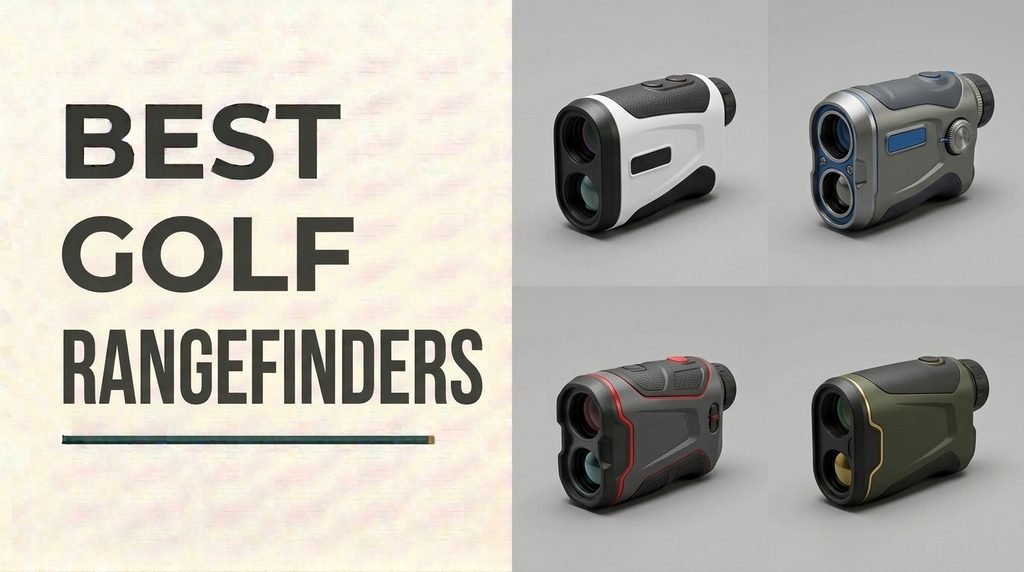
Selecting the right golf rangefinders for 2026 starts with knowing how clearly and quickly a device locks onto the flagstick. We compare 10 standout options across the details that matter on the course, including optical magnification, slope compensation, tournament-legal switches, display visibility, pin-lock feedback, cart magnets, weather protection, and overall value.
Guessing approach yardages or pacing off sprinkler heads often leads to club selection mistakes, especially on hilly layouts or windy afternoons. Modern laser units and GPS hybrids solve that uncertainty, but they differ widely in lens clarity, viewfinder readouts, environmental adjustments, and how easily they handle shaky hands at longer distances.
Prioritizing your typical playing style makes the decision much simpler. Competitive golfers need instant flag acquisition, dual-color displays, and USGA-compliant slope toggles, while casual weekend players may prefer compact USB-C rechargeable lasers or an all-in-one GPS cart speaker that maps entire holes without requiring a monthly subscription.
We compared 10 golf rangefinders using the specifications and on-course details that actually help a golfer decide: optical magnification, flag-lock speed, slope compensation accuracy, external tournament switches, display contrast, battery configuration, magnetic cart mounting, weather resistance, and overall value. Our evaluation focuses on real-world trade-offs—such as dual-color OLED legibility versus basic LCD screens, or replaceable CR2 cells versus USB-C charging—so each recommendation connects directly to how players measure yardages and manage their game.


Compare key features, scores, and current prices side by side. A shorter feature list means fewer details were available, not necessarily fewer capabilities.


Traditional laser rangefinders force you to peer back into the eyepiece every time you want to double-check a measurement or change a setting. This 7X Touchscreen Rangefinder solves that minor frustration by embedding a 0.9-inch external touchscreen right on the body. It is an appealing choice for tech-minded golfers, eyeglasses wearers, and playing partners who like to view the last measured distance, slope-adjusted yardage, and mode settings externally without lifting the unit back up to their eye.
We may earn a commission when you buy through this link, at no additional cost to you.
On the optical side, it steps up to 7X magnification and ranges targets from 5 to 1,200 yards with +/- 1-yard accuracy. Its 6-in-1 measurement suite covers pin-lock with vibration confirmation, slope compensation, horizontal and vertical distance, continuous scan, speed measurement, and a convenient range hold function that keeps your numbers visible on the external screen. When playing casual practice rounds versus competitive matches, you can easily toggle slope compensation on or off as needed.
Usability is where the external touchscreen truly shines. Instead of memorizing long-press button combinations to switch between yards and meters or tweak display brightness, you can adjust settings directly on the screen. Weighing just 0.46 pounds, the compact chassis houses a built-in magnetic mount for golf cart frames and carries an IP54 rating against dust and water splashes. Inside, a high-capacity 1,000mAh USB rechargeable battery is rated for up to 40,000 individual measurements under test conditions, meaning most golfers will only need to charge it a couple of times per season.
Golfers who wear prescription glasses or progressive lenses sometimes find it tedious to align their eye with a small monocular viewfinder repeatedly just to confirm a number or check whether slope mode is active. With the 0.9-inch external touchscreen and range hold function, you only look through the lens once to fire the laser, then read the full breakdown comfortably at arm’s length.
While the external touchscreen is genuinely handy, buyers should note that IP54 protection is meant for dust and light splashes rather than sustained rain, so you should tuck the unit into your bag if a heavy storm rolls through. It also comes from a generic brand rather than a tour household name like Bushnell or Callaway. For golfers under eighty dollars who want 7X magnification, massive rechargeable battery endurance, and an external display that saves trips to the eyepiece, it delivers an impressive feature set.
All-weather golfers who frequently play in soaking rain and require full IPX7 or IP65 waterproofing.
We may earn a commission when you buy through this link, at no additional cost to you.
Golfers who want uncompromising target acquisition without paying for launch-monitor integrations will find the Bushnell Tour V6 Shift hits the sweet spot in the lineup. Designed for serious weekend players and tournament competitors alike, it focuses on the core fundamentals that matter during a four-hour round: optical clarity, immediate distance readouts, and unmistakable confirmation that you have measured the flagstick rather than the pine trees behind the green. Because it avoids overly complex menu systems, you can pull it from the cart, shoot your target, and commit to a club within seconds.
We may earn a commission when you buy through this link, at no additional cost to you.
Performance centers on a 1,300-yard maximum ranging capacity paired with 6X magnification that brings distant hazards, bunker lips, and tucked pins into crisp focus. When aiming at a flagstick, Bushnell’s PinSeeker with Visual JOLT technology eliminates second-guessing by combining short vibrating pulses with a bright flashing red ring around the viewfinder perimeter. The built-in slope algorithm measures the angle of incline or decline and calculates an adjusted yardage, while a physical external switch lets you disable slope compensation whenever you tee it up in handicap-sanctioned or tournament play.
Day-to-day usability on the course is bolstered by the integrated BITE magnetic cart mount built right into the housing, allowing quick one-handed attachment to a golf cart roof pillar. Unlike basic splash-resistant units that need to be stowed away at the first sign of drizzle, the waterproof construction stands up to wet weather conditions. The Patriot Pack configuration also arrives ready for the first tee with a premium carry case, a washable microfiber cloth, a veteran coin, and a pre-supplied CR2 battery so you do not have to hunt for power cells before your tee time.
On courses where dense woods or steep mounds sit directly behind the putting surface, budget lasers frequently grab the background and display a yardage that is 15 to 20 yards too long. By pairing a physical vibration burst with a flashing red optical ring, the Tour V6 Shift gives both tactile and visual verification that the laser beam has isolated the closest target—the flagstick—preventing costly airmailed approach shots.
The primary trade-off is that the Tour V6 Shift relies on traditional CR2 batteries instead of a USB-C port, and it does not include the dual-color green-and-red numeric display or launch-monitor pairing introduced on the more expensive Tour V7 Shift. Even so, keeping a spare CR2 battery in your golf bag is simple, and the savings compared to Bushnell’s flagship tier are substantial. For players who value fast, repeatable flag lock and durable construction above app connectivity, this remains the benchmark choice.
Golfers who want personalized club recommendations synced from a launch monitor or those who strongly prefer USB-C rechargeable batteries over replaceable CR2 cells.
We may earn a commission when you buy through this link, at no additional cost to you.
The Callaway 300 Pro is built for pragmatic golfers who want established name-brand dependability and tournament-ready slope switching without spending three or four hundred dollars. While ultra-premium lasers pack in environmental sensors or launch-monitor Bluetooth links that many players never configure, this model strips away the excess and delivers accurate +/- 1-yard distance measurements from 5 to 1,000 yards. It serves mid-handicappers, high-school competitors, and regular cart riders who simply want reliable yardages to pins, doglegs, and fairway bunkers.
We may earn a commission when you buy through this link, at no additional cost to you.
Through the 6X magnification lens, Callaway’s Pin Acquisition Technology isolates the flagstick from up to 300 yards out—more than enough distance for virtually every par-3 tee shot and par-5 approach in regulation. Once the laser locks onto the pin, the Pulse feature emits a short vibrating burst so you know the displayed number reflects the flag rather than a distant mound. Its slope system measures both incline and decline angles to compute an elevation-adjusted yardage, and the external on/off switch keeps the unit legal for tournament competition.
In everyday play, the Callaway 300 Pro offers thoughtful convenience details that speed up pace of play. Its integrated Magnahold cart mount lets riding golfers stick the rangefinder directly to the steel frame of a golf cart, while walkers will appreciate the molded hard carry case featuring a carabiner clip and an elastic quick-close band. Instead of zipping and unzipping the case twenty times a round, you can loop the elastic band shut for secure, one-handed retrieval on every fairway.
Golfers who walk with a carry or push bag often leave their rangefinder case unzipped for easy access, which risks dropping the device on bumpy terrain. The Callaway 300 Pro’s molded case includes a built-in elastic tension band that hooks closed in a fraction of a second, keeping the unit safe between holes without the hassle of using the full zipper during the round.
Compared with top-tier Bushnell models, the Callaway 300 Pro has a slightly shorter maximum range and a basic monochrome viewfinder that requires a little more care in heavy evening shadows. However, few golfers ever need to lock onto a flagstick beyond 300 yards. If you want a proven, tournament-legal laser rangefinder with a built-in cart magnet and a protective hard case at a fraction of tour-level pricing, the 300 Pro represents outstanding value.
Long-hitting players who want 7X magnification or bright OLED multi-color displays for playing in dim twilight conditions.
We may earn a commission when you buy through this link, at no additional cost to you.
For scratch golfers, tournament amateurs, and gear enthusiasts who leave nothing to chance, the Bushnell Pro X3+ Link is the most technologically advanced laser in this guide. Standard slope rangefinders only account for uphill or downhill angles, ignoring how cold morning air, high-altitude travel, or a stiff headwind alters ball flight. By integrating environmental sensors, mobile app wind tracking, and launch-monitor connectivity into an armored chassis, this flagship device turns raw yardage into a comprehensive caddie recommendation.
We may earn a commission when you buy through this link, at no additional cost to you.
Optically, the Pro X3+ Link steps up to 7X magnification and can lock onto a flagstick from over 600 yards away, providing exceptional stability and clarity on expansive championship layouts. Its patented Slope with Elements system combines incline angle with temperature and altitude readings, and even lets you input your home elevation so compensated distances match the exact altitude where you play most of your golf. When paired with the Bushnell Golf mobile app, the viewfinder also shows real-time wind speed and direction, while LINK-Enabled technology pulls personal carry distances from compatible Foresight Sports or Bushnell launch monitors.
Build quality matches its flagship positioning. The unit is wrapped in a durable rubber-armored metal housing rated to IPX7 waterproof standards, meaning it can survive heavy downpours without flinching. Like its Tour-series siblings, it incorporates an integrated BITE magnetic cart mount and PinSeeker with Visual JOLT for tactile and flashing red-ring target confirmation. The box includes a premium carry case, a washable microfiber cloth, a CR2 battery, and a quick-start guide.
A golfer whose stock 7-iron travels 175 yards in Denver will carry the ball significantly shorter at sea level, and vice versa. By entering your baseline home elevation into the Pro X3+ Link, the internal Elements calculator adjusts its barometric and temperature compensation relative to the yardages you already know, eliminating the mental math required when traveling for golf trips.
Before investing at this level, consider how much data you want to manage during a round. To see real-time wind readings, you must maintain an active connection to the smartphone app, and LINK club suggestions require owning or using a separate compatible launch monitor. Furthermore, the metal body makes it heavier in the pocket than compact mini lasers. Still, if you travel to courses at varying altitudes or practice regularly on a Foresight or Bushnell launch monitor, no other rangefinder offers this depth of environmental precision.
Casual golfers who want a lightweight, pocket-friendly device or who prefer not to connect their rangefinder to a smartphone app.
We may earn a commission when you buy through this link, at no additional cost to you.
The Bushnell Tour V7 Shift refines the traditional tour-style rangefinder by solving one of the most common viewfinder complaints: misreading actual distance versus slope-adjusted distance when playing quickly. By introducing a crisp dual-color OLED display that color-codes the numbers, this model is ideal for low-to-mid handicap golfers who want instantaneous visual clarity in any lighting condition, from bright midday glare to shaded late-afternoon fairways.
We may earn a commission when you buy through this link, at no additional cost to you.
Instead of displaying both numbers in identical black or red text, the Tour V7 Shift’s Slope First layout presents your elevation-compensated plays-like yardage in bright green right at the focal point, while the raw line-of-sight distance appears in red. Backed by a 1,300-yard total range, 6X magnification, and PinSeeker with Visual JOLT, it locks onto flags with effortless speed. It also incorporates LINK-Enabled technology, allowing golfers who train with Bushnell or Foresight launch monitors to receive personalized club suggestions based on their own verified carry data.
A standout addition for practice sessions and cart-path-only rounds is the Yardage Range Recall feature. If you measure the flagstick from the fairway, walk back to your bag, and momentarily forget the exact number while pulling a club, a single press recalls the last measured distance without forcing you to re-aim and shoot the pin again. The Patriot Pack edition rounds out the experience with a metal divot repair tool, a protective carry case, a microfiber cloth, and an included CR2 battery.
When wet course conditions restrict golf carts to the path, players often laser a target, walk across the fairway, or discuss wind with a playing partner, only to second-guess whether the reading was 154 or 164 yards. Pressing the recall button brings the previous measurement right back onto the OLED screen without needing a clear line of sight to the flag again.
Weighing the Tour V7 Shift against the Tour V6 Shift comes down to how much you value the upgraded dual-color OLED viewfinder, single-button yardage recall, and launch-monitor integration. Both share a 1,300-yard range and 6X optics, so budget-conscious buyers can save money with the V6 Shift. However, if you wear sunglasses on the course, play frequently at dusk, or want color-separated plays-like numbers that are impossible to misread under pressure, the Tour V7 Shift easily justifies the step up.
Golfers on a strict budget who are comfortable reading standard single-color LCD displays.
We may earn a commission when you buy through this link, at no additional cost to you.
Beginners, occasional golfers, and multi-sport outdoor enthusiasts often hesitate to spend hundreds of dollars on a single-purpose golf gadget. The Acer Golf Rangefinder removes that barrier by delivering slope compensation, flag-lock vibration, and anti-shake stabilization at an entry-level price. Because it includes six distinct measurement modes, it also appeals to buyers who want one compact laser that can pull double duty on the golf course, in the archery range, or out in the field.
We may earn a commission when you buy through this link, at no additional cost to you.
Despite its budget-friendly cost, the optical system pairs 6X magnification with +/- 0.5-yard precision across an 800-yard effective range. Its anti-shake technology helps counteract minor hand tremors when aiming at narrow flagsticks in breezy conditions, triggering a vibration alert once the flagpole is locked. Pressing the mode button cycles through six functions: slope compensation, vertical distance, horizontal distance, angle measurement, speed tracking, and continuous scanning, while a slope switch lets you disable elevation adjustments when rules require it.
Power management is straightforward thanks to an internal USB-C rechargeable battery that charges with the same cable used for modern smartphones and tablets. That makes it easy to top off the battery in your car on the way to the course rather than worrying about disposable lithium cells running dry mid-round. The bright LCD screen keeps numbers legible against green fairways and wooded backgrounds alike.
When standing on an unfamiliar tee box, holding down the measurement button in continuous scan mode lets you pan slowly across fairway bunkers, water edges, and dogleg trees. The LCD updates yardages in real time as you sweep across the landscape, giving you both carry and layup numbers in a single motion.
There are a couple of practical compromises to keep in mind at this price tier. Unlike most dedicated golf lasers in our lineup, the Acer unit does not advertise an integrated magnetic cart mount, so you will need to store it in the cup holder or carry pouch between shots. In addition, cycling through six different outdoor and speed modes takes a few extra button presses if you accidentally bump the mode selector. Even so, for shoppers seeking maximum versatility and steady flag locking under seventy dollars, it is a standout bargain.
Riding golfers who consider a built-in magnetic cart mount essential for their round routine.
We may earn a commission when you buy through this link, at no additional cost to you.
Golfers shopping under the hundred-dollar mark often have to choose between cart-mounting convenience and walking portability. The REDTIGER 1200-Yard Laser bridges that gap by pairing a built-in magnetic strip on the rangefinder body with an included magnetic belt clip that attaches to your waistband or golf bag strap. Combined with a two-year assurance policy, it is a well-rounded pick for budget-conscious players who split their rounds between riding in a cart and walking the course.
We may earn a commission when you buy through this link, at no additional cost to you.
Equipped with a 7X optical lens and a transflective LCD display, this Class 1 laser measures distances from 5 to 1,200 yards within 0.5 yards of accuracy. A quick press of the mode button lets you choose among six functions: slope compensation, golf flag locking, horizontal ranging, height measurement, speed tracking, and continuous scan. When you tee it up in club tournaments or handicap rounds, the external slope switch cleanly disables elevation adjustments to maintain rule compliance.
Everyday convenience extends to both carrying and charging. On riding days, the integrated magnetic strip sticks directly to metal cart frames or even the back of a steel iron head for quick retrieval around the green. On walking days, the included magnetic belt clip keeps the unit accessible at your hip without swinging around in a bulky pouch. Its USB-C charging port accepts standard 5V/2A power and delivers up to 30,000 measurements per charge, while IP54 water resistance handles morning dew and light mist.
At the practice range or short-game area, there is rarely a metal golf cart frame nearby to hold a magnetic rangefinder, leaving players to set their device on dusty turf or bend down into their bag repeatedly. Clipping the included magnetic mount onto your belt or pocket lets you snap the rangefinder on and off your waist effortlessly as you switch targets.
The main reason to look elsewhere—including within REDTIGER’s own lineup—is size and weather sealing. For roughly forty dollars more, the REDTIGER Mini cuts the weight down to a pocket-sized 0.29 pounds and upgrades the weather seal from IP54 to IP65. However, if you prefer a full-sized grip that feels substantial in larger hands and want the included magnetic belt clip while staying comfortably under $100, this full-sized REDTIGER remains a smart buy.
Golfers with smaller hands who prefer an ultra-compact pocket laser or who need IP65 rain protection.
We may earn a commission when you buy through this link, at no additional cost to you.
Not every golfer wants to peer through a narrow laser viewfinder or worry about shaky hands when trees block the view of the flag. The MILESEEY GeneSonic Pro takes a completely different approach by merging a 40-watt golf cart audio speaker with a detachable 3-inch color touchscreen GPS rangefinder. It is tailor-made for social cart golfers, music lovers, and strategic players who prefer seeing an overhead map of the entire hole—complete with hazards, doglegs, and front-center-back green yardages—alongside spoken distance callouts.
We may earn a commission when you buy through this link, at no additional cost to you.
Because the handheld unit houses its own built-in satellite GPS receiver and comes preloaded with more than 43,000 courses worldwide, it operates independently without requiring a smartphone connection or monthly subscription fees. Automatic course and hole recognition puts detailed Hole View, Green View, movable pin placement, layup targets, hazard distances, and shot tracking right on the 3-inch color touchscreen. If you play a newly opened course that is not yet in the database, MILESEEY’s tech team can add it remotely within one week upon request.
When docked or detached, the hardware is engineered for life on a moving golf cart. Four integrated magnets deliver 126N of force—equivalent to 28 pounds of magnetic pull—keeping the speaker locked onto the cart frame over bumpy terrain, while a recessed screen and reinforced corners guard against accidental drops. You can pop the lightweight GPS handheld off the speaker body to carry it to your ball on cart-path-only holes, tapping it like a remote to trigger audible yardage announcements or skip music tracks through the 40W dual-band crossover speaker.
Standard GPS speakers stay bolted to the golf cart frame, which leaves you guessing yardages whenever you have to walk 40 yards across the fairway to a ball in the rough or play a cart-path-only round. Because the GeneSonic Pro’s 3-inch touchscreen detaches from the speaker dock and includes a carabiner clip, you take your exact satellite yardage and music controls right to the ball.
The crucial distinction for buyers is understanding GPS versus laser technology. A satellite GPS device excels at blind shots, dogleg layups, and front-to-back green depth, whereas a laser rangefinder measures the exact yardage to a specific flagstick on the day’s pin location. If you want pinpoint flagstick lasers for tournament play, stick with a Bushnell or REDTIGER optical unit; if you want subscription-free full-course mapping and rich fairway audio in one magnetic package, the GeneSonic Pro is in a class of its own.
Quiet-course purists who never play music on the links or competitive golfers who demand +/- 1-yard optical laser locks on specific pin positions.
We may earn a commission when you buy through this link, at no additional cost to you.
When shopping for a milestone golf gift or upgrading your own bag with Bushnell's newest Tour-series laser, the Bushnell Tour V7 Shift Signature Series Bundle offers extra on-course utility without increasing the price over the standalone Patriot Pack. By combining the Tour V7 Shift Patriot Pack, protective carry case, and an extra Signature Series golf towel in one coordinated package, it caters to serious players who want tour-trusted distance technology alongside practical bag accessories.
We may earn a commission when you buy through this link, at no additional cost to you.
Inside the housing, you get the exact same high-speed optical engine that defines the Tour V7 Shift. Its 6X magnification lens measures targets from 5 to 1,300 yards with +/- 1-yard accuracy, displaying the yardage the instant you release the fire button. Inside the viewfinder, the Dual-Color OLED screen with Slope First compensation highlights your elevation-adjusted plays-like distance in bright green and the raw straight-line distance in red. When competing in rules-governed events, the external Slope-Switch disables slope calculations to make the device tournament legal.
Out on the course, PinSeeker with Visual JOLT flashes a red ring and vibrates to confirm you have locked onto the flagstick rather than the trees behind the green, while Yardage Recall lets you check your previous measurement at any time. The integrated BITE magnetic mount clings securely to metal golf cart bars, and LINK-Enabled connectivity works with the Bushnell Golf app—offering 3D flyovers and wireless course layouts—as well as Bushnell or Foresight launch monitors for personalized club recommendations right inside the viewfinder.
Many golfers know the exact distance to the pin yet still pull the wrong iron because they overestimate how far their clubs actually carry. By linking a Foresight or Bushnell launch monitor profile to the Tour V7 Shift via the Bushnell Golf app, the viewfinder uses your real recorded carry yardages to suggest the proper club for the slope-adjusted distance.
Because this bundle is priced identically to the standard Tour V7 Shift Patriot Pack in our comparison, choosing between the two is straightforward: the Signature Series Bundle gives you an additional golf towel for keeping clubfaces and balls clean during wet rounds at no extra cost. As with other Bushnell lasers, you will need to keep a spare CR2 battery on hand over the long term, and the $400 price tier sits well above budget lasers, but for gift buyers or players already set on the V7 Shift, this bundle is the smartest way to buy it.
Casual players who will not utilize launch-monitor pairing or who want to spend less than two hundred dollars.
We may earn a commission when you buy through this link, at no additional cost to you.
Golfers who walk 18 holes, juniors, women, and players with smaller hands often find traditional laser rangefinders bulky and awkward to operate one-handed. Weighing a remarkably light 0.29 pounds—less than five ounces—the REDTIGER Mini 1200-Yard Golf Range Finder shrinks full-featured optical performance down to a true pocket-sized footprint. Unlike many mini electronics that sacrifice durability or battery life to trim weight, this model actually upgrades weather protection over its full-sized sibling.
We may earn a commission when you buy through this link, at no additional cost to you.
Through a multilayer tilted-film optical lens system that reduces glare and achieves 80% light transmittance on its high-transparency LCD screen, the REDTIGER Mini provides a bright, high-contrast view at 7X magnification. It measures targets from 5 to 1,200 yards with an impressive +/- 0.5-yard accuracy rating, delivering a tactile vibration alert the moment it locks onto the flagpole. An external slope switch lets you engage elevation-compensated yardages during practice or switch them off for tournament-legal competition.
Built with an IP65 waterproof enclosure, this compact unit can handle rainy tee times that would force IP54 splash-resistant models back into the golf bag. Despite its tiny frame, it still incorporates a built-in magnetic mount for attaching to golf carts when you choose to ride. Its internal 800mAh USB-C rechargeable battery supports up to 14 hours of continuous use per charge and automatically powers down after 15 seconds of inactivity to preserve charge over weeks of play. REDTIGER also backs the unit with a two-year unconditional assurance and lifetime technical support.
Compact rangefinders use smaller objective lenses, which can sometimes make the viewfinder look dim when aiming into tree shadows late in the day. By applying a multilayer tilted-film optical coating that boosts LCD light transmission to 80%, the REDTIGER Mini preserves bright image clarity without adding bulk to the housing.
The only notable trade-off of any 0.29-pound rangefinder is physics: ultra-lightweight optics have less mass to dampen hand movement when you are trying to laser a skinny flagstick from 220 yards away in a stiff breeze. Using two hands to brace the unit against your brow easily solves that issue. If you want a weather-sealed, USB-C rechargeable rangefinder small enough to slip into your pants pocket without interfering with your golf swing, the REDTIGER Mini is the top compact option in our lineup.
Golfers with pronounced hand tremors who benefit from a heavier, full-sized chassis or dedicated anti-shake stabilization.
We may earn a commission when you buy through this link, at no additional cost to you.
Understanding how optical specs, slope rules, display contrast, and power systems work on the course will help you invest in a device that fits your game for years.
The first decision any shopper faces is whether to buy a line-of-sight optical laser rangefinder or a satellite-based GPS system like the MILESEEY GeneSonic Pro. A laser rangefinder projects an invisible, eye-safe infrared beam at whatever target you aim the crosshairs at—whether that is the flagstick, the lip of a fairway bunker, a tree guarding a dogleg, or the group ahead of you on the fairway—and calculates the exact distance within half a yard to one yard. Because it measures the actual flagstick on that specific day, a laser tells you the exact distance to a front-tucked pin versus a back-left championship pin.
A golf GPS device, by contrast, communicates with overhead satellites and uses preloaded course maps to show distances to the front, center, and back of the green, along with hazard carry numbers and full hole layouts. GPS does not require a clear line of sight, making it exceptionally useful on blind tee shots, sharp doglegs, or hilly courses where a mound blocks your view of the flagstick. Hybrid devices like the MILESEEY GeneSonic Pro even combine a detachable 3-inch touchscreen GPS handheld with a 40-watt Bluetooth cart speaker and 43,000+ subscription-free courses.
Choose a dedicated optical laser if you want exact flagstick yardages within one yard and play competitive golf where pin placement dictates club selection. Opt for a GPS speaker hybrid if you primarily ride in a cart, enjoy music on the course, and prefer visual hole maps and audible distance callouts without aiming through an eyepiece.
Every laser rangefinder in our guide features either 6X or 7X optical magnification paired with a maximum total range between 800 and 1,300 yards. Magnification determines how large and clear distant targets appear inside the viewfinder: 6X magnification offers a slightly wider field of view that is easy to hold steady, while 7X magnification—found on the Bushnell Pro X3+ Link, both REDTIGER models, and the 7X Touchscreen unit—brings distant pins 16 percent closer, making it easier to pick out a flagstick against a busy background.
Don’t confuse maximum reflective range with flag-locking range. A rangefinder rated for 1,200 or 1,300 yards can measure a large reflective building or cliff at that distance, but locking onto a narrow fluttering golf flag requires advanced target-filtering software and stable optics. For example, the Callaway 300 Pro ranges reflective objects to 1,000 yards and locks onto pins up to 300 yards away, whereas the Bushnell Pro X3+ Link locks onto flags from more than 600 yards out. Equally important is flag-lock confirmation: tactile vibration pulses and visual indicators like Bushnell’s flashing red Visual JOLT ring confirm you have isolated the pin rather than the woods behind the green.
For most golfers, any laser that reliably locks onto a flagstick from 250 to 300 yards covers every approach shot on the course. However, if you have shaky hands or play courses surrounded by dense trees, prioritize models with visual plus tactile lock confirmation or anti-shake stabilization like the Acer Golf Rangefinder.
Slope compensation is one of the most valuable tools for lowering scores during practice and casual rounds. A shot of 150 yards uphill plays significantly longer than 150 yards on flat ground because the ball hits the rising terrain earlier in its descent arc, while a steep downhill shot plays much shorter. Slope-enabled rangefinders use a built-in inclinometer to measure the degree of incline or decline and display an adjusted ‘plays-like’ yardage so you can pull the proper club with confidence.
Flagship models take compensation even further. The Bushnell Pro X3+ Link incorporates Slope with Elements, which measures ambient temperature and barometric altitude—and even lets you program your home elevation—while displaying real-time wind speed and direction via its companion mobile app. However, under the Rules of Golf, slope and environmental features are prohibited during tournament play and rounds posted for an official USGA handicap unless the elevation mode is disabled. That is why a physical external slope switch—or a clearly visible mode toggle—is essential if you ever compete in club championships, charity scrambles with strict rules, or amateur qualifiers.
Always verify that your rangefinder includes an easy-to-use slope on/off switch so you can train with plays-like distances during practice rounds to learn how elevation affects your clubs, then flick slope off in one second when standing on the first tee of a tournament.
How yardage data is presented makes a major difference in pace of play and eye comfort, especially during early morning rounds or twilight nines when long shadows cross the fairway. Entry-level and mid-range lasers typically use a black or transflective LCD readout inside the eyepiece. High-transparency LCD lenses, such as the 80% light-transmitting optics on the REDTIGER Mini, keep the background bright enough that dark numerals remain easy to read in most daylight conditions.
Premium models like the Bushnell Tour V7 Shift upgrade the internal viewfinder to a dual-color OLED display. By projecting the slope-adjusted plays-like yardage in vivid green and the actual line-of-sight distance in bright red, the Tour V7 Shift eliminates any confusion over which number is which—and glows clearly against dark tree lines at dusk. Meanwhile, the 7X Touchscreen Rangefinder adds a 0.9-inch external touchscreen on the side of the housing, allowing you to check your last measured distance, slope reading, and battery status without raising the monocular back to your eye.
If you wear sunglasses while playing or frequently squeeze in nine holes before sunset, investing in a dual-color OLED display or a high-transmittance lens is well worth the cost. If you dislike peering into a tiny eyepiece repeatedly to check settings, look for an external screen or single-button Yardage Range Recall.
Golf rangefinders split cleanly into two power camps: replaceable CR2 lithium batteries and built-in USB rechargeable lithium-ion packs. Tour-proven models from Bushnell and Callaway rely on standard CR2 batteries. The advantage of a CR2 cell is instant field replacement—if your battery dies on the third hole after six months of play, you simply pop a fresh CR2 from your golf bag pocket into the compartment and resume your round in thirty seconds with zero downtime.
On the other hand, modern value-oriented lasers from Acer, REDTIGER, and the 7X Touchscreen model feature built-in rechargeable batteries rated between 800mAh and 1,000mAh that charge via USB or USB-C. With endurance ratings reaching 14 hours of continuous operation or 30,000 to 40,000 individual shots per charge, a single top-up can last dozens of rounds without ever buying disposable batteries. Automatic power-off timers—such as the 15-second sleep timer on the REDTIGER Mini—further prevent accidental battery drain inside your bag.
Choose a CR2-powered rangefinder if you want the peace of mind of keeping a spare battery in your bag for multi-day golf trips. Choose a USB-C rechargeable model if you prefer plugging your gear into your car or phone charger a few times a year and avoiding recurring battery purchases.
How you get around the golf course should heavily influence the size, weight, and mounting system you select. If you ride in a golf cart for the majority of your rounds, an integrated magnetic cart mount—such as Bushnell’s BITE magnet, Callaway’s Magnahold, or MILESEEY’s 28-pound Quad-Magnet array—is a game-changing convenience. Instead of returning the device to a zippered pouch after every approach shot, you stick it directly to the steel roof support of the cart for instant one-handed access.
If you walk the course with a carry bag or pushcart, weight and pocketability matter far more than cart magnets. Full-sized metal-armored units like the Bushnell Pro X3+ Link feel remarkably solid and steady in the hand, but they are too bulky to carry inside a pants pocket during your swing. By contrast, the REDTIGER Mini weighs just 0.29 pounds and slips easily into a shorts pocket, while the full-sized REDTIGER 1200-Yard model includes a dedicated magnetic belt clip that attaches to your waistband or bag strap.
Before buying, match the form factor to your walking-to-riding ratio, and always remember one golden rule of magnetic mounts: build the habit of placing your rangefinder back inside its hard case before returning a rental golf cart on the 18th hole.
Because golf is played across four-plus hours in unpredictable outdoor elements, a rangefinder’s ingress protection rating determines whether it can stay out on the cart rail when clouds open up. Entry-level and sub-$100 lasers commonly carry an IP54 rating, which protects internal electronics against dust and light water splashes like morning dew or brief mist, but is not designed to withstand sustained downpours.
Stepping up in weather protection gives year-round and coastal golfers much greater security. The REDTIGER Mini upgrades its compact shell to an IP65 waterproof rating that shrugs off rainy days, while Bushnell’s Tour V6 Shift offers waterproof construction and the flagship Pro X3+ Link boasts a full IPX7 waterproof rating inside a rubber-armored metal housing. Protective accessories also extend longevity: molded hard carry cases with carabiner clips and elastic quick-close bands shield precision optical prisms when your golf bag bounces in the trunk of a car.
Fair-weather golfers who head indoors at the first sign of rain will be completely satisfied with an IP54-rated rangefinder. If you play tournament golf rain or shine or take annual golf trips to wet climates, prioritize IP65, IPX7, or fully waterproof housings.
Before your first tee time, calibrate the diopter adjustment ring around the eyepiece so the internal crosshair reticle and yardage numbers appear razor-sharp for your eyesight. Aim at a distant object roughly 150 yards away, press the fire button once to illuminate the display, and slowly rotate the eyepiece ring until the digits snap into crisp focus. When measuring narrow flagsticks on the course—especially past 175 yards or in breezy weather—tuck your elbows against your ribs and use your non-dominant thumb and index finger to brace the front of the rangefinder against the bridge of your brow. With PinSeeker or flag-lock modes active, aim just slightly to one side of the flagstick, hold down the measurement button, and pan smoothly across the pin until you feel the vibration pulse or see the flashing ring confirm target lock.
Protect the optical coatings by cleaning the objective and eyepiece lenses only with the included microfiber cloth rather than a rough cotton golf towel or shirt hem, which can trap sand grains from bunkers and scratch the anti-reflective film. If dust or dried water spots accumulate on the glass, blow away loose grit first and wipe gently in a circular motion. Whenever you use a magnetic cart mount like Bushnell BITE, Callaway Magnahold, or MILESEEY Quad-Magnet, wipe any metallic grit or sand off the magnet pad periodically so it maintains full flush contact with the cart frame—and place your keys or divot tool inside the empty rangefinder case in your bag as a visual reminder not to leave the rangefinder stuck to the golf cart after the round.
Proper battery and storage care will keep your device performing accurately season after season. Avoid leaving any laser rangefinder or GPS speaker inside a hot car trunk during peak summer heat, as extreme cabin temperatures can degrade lithium-ion battery capacity and weaken internal optical adhesives. For CR2-powered models, remove the battery if you plan to store the rangefinder unused through several winter months, and keep one fresh spare CR2 in a sealed zip bag inside your golf bag. For USB-C rechargeable units, top off the battery to roughly 60 to 80 percent before off-season storage rather than leaving it completely depleted.
Yes, a slope-capable rangefinder is legal under USGA Rules of Golf as long as the slope compensation feature is turned off during the stipulated round. Models like the Bushnell Tour V6 Shift, Tour V7 Shift, Callaway 300 Pro, Acer, and REDTIGER include a dedicated external slope switch so you and your playing partners can clearly verify that elevation adjustments are disabled. However, features that calculate wind speed, temperature, or club recommendations must also remain switched off during official tournament or handicap rounds.
A 6X magnification lens enlarges distant targets six times closer than the naked eye, offering a generous field of view that makes it quick to locate the flagstick and easy to hold steady with one hand. A 7X lens brings the target slightly closer, which helps you distinguish the flagstick from surrounding bunker lips or background trees on long par-3s and par-5s. Both magnification levels work well for golf, though players with shaky hands should brace 7X optics with two hands on longer shots.
Without pin-lock software, a laser beam can easily pass right beside a thin flagstick and bounce off large pine trees 25 yards behind the putting surface, giving you a falsely long yardage. Pin-lock systems—such as Bushnell's PinSeeker with Visual JOLT or Callaway's Pin Acquisition Technology—scan multiple distance returns as you pan across the flag and automatically isolate the closest object in the group. Once the unit locks onto that closest target, it triggers a short vibration pulse (and on Bushnell models, a flashing red ring) so you know the reading reflects the pin.
The right choice depends on whether you prioritize exact flagstick yardages or full-hole strategy and convenience. A laser rangefinder measures the precise distance to whatever target you can see—within 0.5 to 1 yard—including the exact day's pin location on the green. A GPS speaker hybrid like the MILESEEY GeneSonic Pro shows the entire hole layout, front-center-back green distances, and hazard yardages on a 3-inch touchscreen while playing music and calling out yardages audibly, even on blind shots where you cannot see the flag.
Both CR2 disposable lithium batteries and built-in USB-C rechargeable packs last dozens of rounds under normal golfing use because the laser only draws power for a few seconds per shot. For instance, the 1,000mAh USB battery in the 7X Touchscreen model is rated for up to 40,000 measurements, the REDTIGER 1200-Yard supports up to 30,000 measurements, and the REDTIGER Mini provides up to 14 hours of continuous runtime. Whether you choose CR2 or USB-C, auto-shutoff timers ensure the screen powers down automatically between shots.
Yes, integrated magnetic mounts on reputable golf devices are engineered specifically to hold firm against steel golf cart pillars over normal turf and paved cart paths. The MILESEEY GeneSonic Pro, for example, uses four magnets generating 28 pounds of pull force, while Bushnell BITE and Callaway Magnahold magnets are contoured to grip square or rounded cart frames securely. Even so, if you are driving across extreme tree roots or steep curbs at high speed, resting a hand on the device or placing it in the cup holder is smart precaution.
Maximum yardage ratings are measured against large, highly reflective surfaces like buildings or signs under ideal atmospheric conditions. A thin, non-reflective cloth flagstick is much harder for a laser sensor to detect than a wide wall. Consequently, a powerful 1,200-yard or 1,300-yard laser engine ensures that the rangefinder can lock onto small flagsticks instantly from 250 to 400+ yards away, even in hazy, foggy, or low-light conditions.
Yes, modern golf rangefinders work comfortably with eyeglasses and sunglasses, and they include an adjustable diopter ring on the eyepiece that lets nearsighted or farsighted golfers focus the display if they prefer lifting their glasses off. If you wear polarized or dark-tinted sunglasses, a dual-color OLED display like the Bushnell Tour V7 Shift or an external readout like the 0.9-inch screen on the 7X Touchscreen Rangefinder makes yardages much easier to see in bright glare.
LINK-Enabled technology connects your Bushnell rangefinder with performance data recorded on any compatible Bushnell Golf or Foresight Sports launch monitor via the Bushnell Golf app. Instead of simply showing you that a pin plays like 168 yards and leaving you to guess your club, the rangefinder cross-references your personal average carry distances from your launch monitor profile and displays a tailored club recommendation right inside the viewfinder.
For the vast majority of golfers, the Bushnell Tour V6 Shift stands out as the most complete all-around choice in our comparison. It combines a 1,300-yard optical engine, 6X magnification, waterproof durability, an integrated BITE cart magnet, and tournament-legal slope switching with PinSeeker and Visual JOLT confirmation that eliminates guesswork on approaches into guarded greens.
Shoppers with specialized priorities have equally strong alternatives across every budget tier. Players who want a dual-color green-and-red OLED display, instant Yardage Range Recall, and launch-monitor integration should step up to the Bushnell Tour V7 Shift or its Signature Series Towel Bundle, while tournament shotmakers seeking wind and barometric altitude adjustments will appreciate the Bushnell Pro X3+ Link. On the value side, the Callaway 300 Pro offers trusted name-brand reliability at a mid-range price, the sub-$70 Acer Golf Rangefinder delivers anti-shake stability on a tight budget, the REDTIGER Mini provides a 0.29-pound IP65 pocket design for walkers, and the MILESEEY GeneSonic Pro gives cart riders a subscription-free 3-inch GPS touchscreen paired with a 40W speaker.
Before making your final selection, weigh how often you walk versus ride, whether you compete in rules-sanctioned tournaments, and whether you prefer the instant swap of a CR2 battery or the convenience of USB-C charging. Matching those practical habits to the right optical or GPS system ensures you step onto every tee box with complete confidence in your yardage.