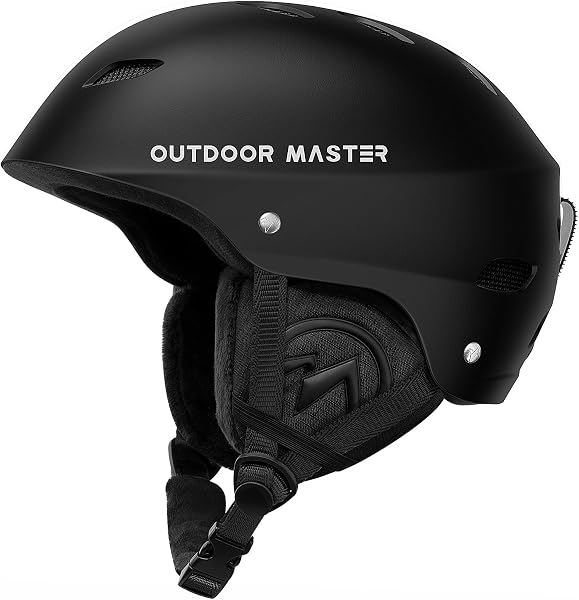
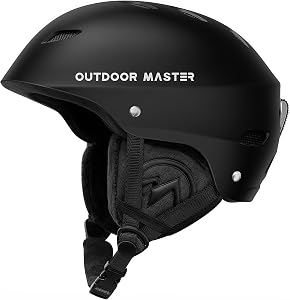
OutdoorMaster Kelvin
9.2Editor scoreReinforced ABS outer shell
EPS impact foam core
Fourteen individual cooling vents
Adjustable rear fit dial
Find the right ski helmets for 2026. We compare 10 standout options by build quality, useful features, owner feedback, value, and everyday trade-offs.
Choosing the right ski helmets for 2026 starts with balancing impact protection, all-day thermal comfort, and seamless goggle integration. We compare 10 standout options across the details that matter on the mountain, including shell architecture, rotational energy systems, active ventilation controls, fit dials, interior liners, and real-world value across resort and terrain park riding.
Snow helmets vary significantly in how they manage crash forces and fluctuating alpine weather. While hardshell ABS designs emphasize dent resistance for freestyle riders and frequent travelers, lightweight in-mold polycarbonate shells reduce neck fatigue during full days on the chairlift. Meanwhile, multi-directional slip planes and crushable cellular cores add critical protection against angled falls.
Beyond safety certifications, practical convenience determines how enjoyable a helmet feels from first chair to last run. Features like one-handed vent sliders, dedicated anti-fog goggle exhaust channels, and washable fleece ear pads prevent overheating and lens fogging. This guide breaks down each model’s strengths and limitations so you can ride with confidence.
We compared 10 ski helmets using the criteria that directly influence safety and comfort on the snow: outer shell construction, linear and rotational impact protection, ventilation adjustability, fit retention mechanics, goggle integration, liner maintenance, audio compatibility, owner feedback, and overall value. Our evaluation focuses on practical mountain trade-offs so every recommendation connects to how skiers and snowboarders actually dress for cold chairlifts, manage exertion on steep runs, and keep their goggles fog-free.


Compare key features, scores, and current prices side by side. A shorter feature list means fewer details were available, not necessarily fewer capabilities.




Derived from one of the most successful and enduring all-mountain snow helmets ever made, the Giro Nine C MIPS delivers high-end pedigree at a remarkably approachable price. Designed for skiers and snowboarders who spend full days exploring groomers, trees, and bowls, it pairs a sleek, low-profile silhouette with industry-leading rotational impact protection.
We may earn a commission when you buy through this link, at no additional cost to you.
Unlike Giro’s heavier hardshell Ledge models, the Nine C MIPS uses In-Mold Construction, fusing a tough polycarbonate outer skin directly to the impact-absorbing foam liner. This fusion process eliminates excess bulk and allows for deeper internal ventilation channels, making the Nine C noticeably lighter and cooler on the mountain. Inside, the integrated Mips Brain Protection System helps redirect rotational energy away from your head during angled falls.
Optical clarity and fit ergonomics are standout strengths. Giro’s research-backed Stack Vent sits at the front brow of the helmet, aligning directly with your goggle’s center top vent to vacuum away warm air before fog can form. Meanwhile, Giro’s Vertical Tuning feature lets you adjust the helmet’s pitch to match different goggle frame heights and skull shapes, ensuring a seamless, draft-free interface with zero gaper gap.
Because in-mold manufacturing molds the EPS foam directly inside the polycarbonate shell under heat and pressure, engineers can carve wider, smoother internal air channels without weakening the structure. This allows air entering the front Stack Vent to flow across the top of your head and exit the rear ports much more efficiently than in thick glue-assembled hardshells.
To hit its sub-seventy-dollar price point, the Nine C omits the sliding Thermostat control button found on higher-tier Giro helmets, relying instead on well-balanced passive ventilation. For riders who want authentic Giro fit ergonomics, featherweight in-mold comfort, and certified MIPS safety without paying over a hundred dollars, the Nine C MIPS is arguably the smartest pound-for-pound value on the mountain.
Freestyle rail riders who prefer a thick ABS hardshell for high-frequency terrain park impacts.
We may earn a commission when you buy through this link, at no additional cost to you.
The OutdoorMaster Kelvin is built for recreational skiers, snowboarders, and growing youth riders who want reliable, straightforward head protection without spending over a hundred dollars. Instead of paying rental shop fees every weekend, buyers get a clean, classic silhouette offered in 22 matte finishes that coordinate easily with any snow jacket or goggle strap.
We may earn a commission when you buy through this link, at no additional cost to you.
From a structural standpoint, the Kelvin pairs an injection-molded ABS outer hardshell with an impact-absorbing expanded polystyrene (EPS) foam core. While ABS construction adds a few ounces compared to fused in-mold helmets, it excels at shrugging off everyday knocks—such as low-hanging chairlift safety bars, tree branches, or being tossed into the back of an SUV after a long day at the resort.
Comfort and hygiene are thoughtfully addressed for multi-day ski trips. A mechanical dial at the rear of the helmet lets you tighten or loosen the cradle even while wearing thick winter gloves. Inside, the plush fleece liner and soft ear pads can be detached and washed between trips, while 14 individual air vents pull warm moisture away from your scalp during high-exertion runs.
Because the Kelvin relies on 14 fixed vents rather than mechanical shutters, airflow remains constant regardless of weather. When skiing in freezing mid-winter conditions, wearing a lightweight moisture-wicking balaclava under the fleece liner blocks wind chill while still allowing excess sweat vapor to escape through the top ports.
The primary trade-off is the absence of active vent sliders and a rotational slip-plane liner. Because the 14 vents remain permanently open, riders facing sub-zero winds will want to wear a thin thermal skullcap underneath. Still, for casual resort laps and budget-conscious families, the Kelvin delivers impressive durability and comfort for the money.
Backcountry or aggressive all-mountain riders who require active vent shutters and rotational impact protection.
We may earn a commission when you buy through this link, at no additional cost to you.
The SMITH Descend Mips is engineered for dedicated resort skiers and all-mountain snowboarders who prioritize top-tier impact engineering and low-profile weight savings. By fusing a tough polycarbonate outer shell directly to the EPS foam liner via in-mold construction, Smith creates a remarkably light one-piece helmet that feels balanced and unobtrusive during bell-to-bell mountain days.
We may earn a commission when you buy through this link, at no additional cost to you.
Where the Descend truly separates itself from the pack is its dual-layered safety architecture. Certified to both ASTM F 2040 and CE EN 1077:2007 standards, it pairs a Mips low-friction liner—designed to reduce rotational forces during angled crashes—with Zonal Koroyd coverage. Koroyd consists of welded polymer tubes that crumple uniformly on impact, absorbing linear energy more efficiently than standard foam alone while remaining breathable.
Temperature management is equally sophisticated. Sixteen vents are governed by a dual regulator climate control system, letting you adjust front and rear airflow independently with one gloved hand. Front AirEvac channels pull warm, moist air directly out of your goggles and exhaust it through the helmet, keeping your lenses clear on humid storm days. Inside, an Ionic+ lining activates with sweat to prevent odor buildup, and the Snapfit SL2 ear pads accept drop-in audio chips.
Unlike single-slider helmets that force all vents open or shut simultaneously, the Descend’s dual regulator lets you customize internal airflow zones. On cold but sunny mornings, you can close the front vents to block icy headwinds while leaving the rear exhaust vents open to vent rising body heat as you carve.
While the Descend Mips commands the highest price in this comparison, the investment directly funds tangible safety and comfort upgrades. Riders who spend dozens of days on the snow each winter—and especially those who already wear Smith goggles—will appreciate the unmatched ventilation tuning and lightweight protection.
Casual once-a-year vacation skiers looking for an inexpensive entry-level helmet.
We may earn a commission when you buy through this link, at no additional cost to you.
For years, skiers shopping on a modest budget had to give up rotational impact protection, which was reserved for premium hundred-dollar-plus helmets. The OutdoorMaster ELK MIPS closes that safety gap, delivering an authentic Multi-directional Impact Protection System inside an accessible, lightweight package suited for men, women, and youth riders.
We may earn a commission when you buy through this link, at no additional cost to you.
Unlike the heavier ABS-shelled Kelvin, the ELK uses in-mold construction that bonds a reinforced polycarbonate outer shell directly to a shock-absorbing EPS core. This structural choice shaves noticeable weight off your head and neck, while the internal MIPS low-friction layer allows the helmet to slide slightly relative to the head during oblique snow impacts, redirecting harmful rotational strain.
Ventilation on the ELK is tailored specifically for cold-weather comfort. Its eight air vent apertures are angled and baffled to let excess heat escape without allowing freezing headwinds to blast directly onto your scalp. The interior features a detachable liner, removable earmuffs, and a cushioned chin band that prevents strap chafing against cold skin. A rear dial fine-tunes the fit, while an elastic retainer keeps goggle straps locked in place.
Open vertical vents can act like wind funnels when riding high-speed alpine chairlifts in January. The ELK’s eight vents are shaped to promote passive convective exhaust while shielding the crown of your head from direct wind penetration, maintaining a stable thermal pocket without mechanical sliders.
Because it has eight fixed vents rather than sixteen adjustable ports, the ELK runs slightly warmer during slushy April spring skiing—though removing the inner liner and earmuffs helps adapt it for mild afternoons. For riders who want genuine MIPS technology and lightweight in-mold comfort at an entry-level price, the ELK is a standout value.
Warm-climate spring skiers who prioritize high-volume, sixteen-port adjustable airflow.
We may earn a commission when you buy through this link, at no additional cost to you.
Buying a helmet and goggles separately often leads to frustrating fit mismatches—either leaving an exposed forehead gap to the freezing wind or pushing the goggle frame painfully down onto the bridge of your nose. The Odoland 14-Vent Ski Helmet & Goggles Set eliminates the guesswork by bundling an ASTM-certified snow helmet with a contour-matched pair of detachable snow goggles.
We may earn a commission when you buy through this link, at no additional cost to you.
The helmet combines a penetration-resistant polycarbonate outer shell with a high-density EPS inner liner, keeping total weight down while meeting recognized snow sports impact standards. Because the helmet and goggles are engineered together, the top rim of the goggle frame sits flush against the brow of the helmet, sealing out wind while aligning the airflow channels.
To combat lens fogging and overheating, the helmet incorporates 14 air vents that work alongside the goggles’ Flow-Tech venting architecture. Fresh air enters the brow and circulates behind the lens to prevent condensation before exhausting out the rear. Inside, a soft chin band, removable earmuffs, and a detachable fleece liner provide cozy insulation, while a rear dial lets you secure the fit in seconds.
Lens fogging frequently occurs when an oversized helmet presses down on the top foam of a mismatched goggle, pinching shut the upper exhaust vents. Because the Odoland set pairs factory-matched profiles, the Flow-Tech goggle vents remain completely unobstructed, allowing warm facial moisture to vent continuously.
Advanced riders who frequently ski in flat light or night conditions may eventually want a dedicated multi-lens goggle system, and aggressive freeriders may prefer a MIPS-equipped shell. However, for beginners, vacationing families, and youth skiers who want a cohesive, ready-to-ride setup with a bonus carry bag included, this combo saves both time and money.
Experienced riders who already own premium spherical or magnetic-lens ski goggles.
We may earn a commission when you buy through this link, at no additional cost to you.
The Giro Ledge Adult snow helmet is a staple in terrain parks, halfpipes, and urban rail setups, prized for its minimalist skate-style profile and tank-like durability. Rather than adding delicate external sliders and complex multi-piece trims, Giro strips the Ledge down to clean lines and rugged Hard Shell construction, bonding a thick molded outer shell to an impact-absorbing EPS foam liner.
We may earn a commission when you buy through this link, at no additional cost to you.
What makes the Ledge especially popular among freestyle skiers and snowboarders is its modular customization. The Auto Loc 2 Fit System uses a supple, self-adjusting elastic band with three circumference settings that automatically cradle your occipital lobe without needing constant dial tweaks. Even better, the entire fit system, ear pads, and rear goggle retainer are completely removable—allowing riders who prefer wearing a beanie and running their goggle strap underneath the shell to configure it cleanly.
Despite its minimalist exterior, the Ledge incorporates smart aerodynamic engineering. Giro’s front Stack Vent aligns directly with the center top vent of your goggles—where the majority of fog-inducing warm air collects—drawing moisture up and out through the top Super Cool Vents. On-the-fly Vertical Tuning also lets you tilt the helmet’s fore-and-aft pitch without taking it off, creating a flush seal with Giro EXV goggles like the Axis, Ella, and Blok.
Many park and freestyle riders prefer wearing their goggle straps directly over a thin beanie underneath the helmet so the goggles never flip backward during a crash. By unclipping the Ledge’s removable goggle retainer, ear pads, and Auto Loc 2 cradle, you create a smooth interior cavity designed specifically for under-shell strap routing.
Buyers who want rotational impact protection should consider stepping up to the MIPS-equipped version of the Ledge, and riders who dislike elastic fit bands may prefer a traditional mechanical click dial. For park riders and all-mountain minimalists seeking a tough, customizable hardshell that pairs effortlessly with modern goggles and aftermarket audio chips, the Ledge is a proven classic.
Riders who demand hand-adjustable sliding vents or a micro-ratcheting mechanical fit dial.
We may earn a commission when you buy through this link, at no additional cost to you.
The SMITH Holt is a battle-tested workhorse designed for skiers and snowboarders who value long-term structural toughness and multi-season versatility. Built around Smith's signature Bombshell construction, it uses a thick injection-molded ABS outer shell that laughs off luggage handlers, terrain park rails, and rocky backcountry scrambles while remaining well under sixty dollars.
We may earn a commission when you buy through this link, at no additional cost to you.
While many entry-level helmets compromise on airflow integration, the Holt features Smith’s proven AirEvac ventilation architecture. Fourteen strategic vents work in tandem with internal Airflow channels to draw warm air up and away from the top of your goggles, exhausting moisture through the crown before it can condense on your lenses. This makes it an exceptional value partner for any pair of Smith snow goggles.
True to its all-season designation, the Holt transitions smoothly from deep winter powder to warm spring slush and off-season skate park sessions. The plush Bombshell ear pads seal out biting alpine winds during January storms, accept aftermarket drop-in audio systems for chairlift tunes, and detach completely when temperatures climb. An adjustable fit system and removable goggle strap lock let you personalize the setup in minutes.
When late-season spring temperatures climb above 45 degrees Fahrenheit, heavy winter insulation quickly causes overheating. Unsnapping the Holt’s Bombshell ear pads and removing the rear goggle lock transforms the half-shell into a breezy, lightweight lid that pairs naturally with sunglasses or lightweight spring goggles.
Because it uses a traditional ABS hardshell without MIPS or Koroyd cellular zones, the Holt carries slightly more weight and offers standard linear EPS impact absorption rather than advanced rotational slip protection. However, for riders seeking brand-name Smith engineering, fog-free goggle integration, and a nearly indestructible exterior at a budget-friendly price, the Holt remains a fan favorite.
Weight-conscious skiers who want an ultralight in-mold shell with active vent shutters.
We may earn a commission when you buy through this link, at no additional cost to you.
Terrain park jumps, halfpipe walls, and off-axis spins frequently result in angled, high-velocity falls where rotational forces pose the greatest risk. The Giro Ledge MIPS takes everything riders love about the standard Ledge hardshell and upgrades the interior with the Multi-Directional Impact Protection System, giving freestyle skiers and snowboarders an extra margin of safety when pushing their progression.
We may earn a commission when you buy through this link, at no additional cost to you.
Externally, the helmet retains Giro’s tough Hard Shell construction, bonding a thick molded outer shell to an EPS foam liner to handle repeated impacts against boxes, rails, and hardpack snow. Inside the shell, the low-friction MIPS slip plane allows 10 to 15 millimeters of omnidirectional movement during milliseconds of angled impact, helping redirect rotational energy away from the brain.
Fit and optical integration are dialed in through Giro’s Dome R&D testing. The removable Auto Loc 2 Fit System offers three circumference presets with a self-adjusting elastic rear band that hugs your head automatically, while On-the-fly Vertical Tuning lets you adjust the helmet’s forward tilt without taking it off. Up front, the integrated Stack Vent aligns with your goggle’s center exhaust port, venting humid air through top Super Cool Vents to prevent fogging.
Every skier has a slightly different brow height, and goggles vary widely in frame depth. The Ledge MIPS features internal vertical anchor adjustments that let you rock the helmet shell forward or backward on your head while wearing it, closing up unsightly forehead gaps without compressing your nose bridge.
Like its non-MIPS sibling, the Ledge MIPS skips mechanical vent sliders in favor of durable simplicity, and its hardshell build weighs a bit more than thin polycarbonate in-mold designs. For freestyle enthusiasts and all-mountain riders who want indestructible hardshell longevity backed by authentic MIPS protection, this is the smarter long-term investment.
Backcountry tourers who prioritize minimum gram weight and adjustable sliding vents.
We may earn a commission when you buy through this link, at no additional cost to you.
Most snow helmets priced around forty dollars force you to live with fixed, permanently open vents—leaving your head freezing on windy morning chairlifts or sweating on sunny afternoon runs. The Odoland Slide-Vent Ski Helmet solves this common budget limitation by incorporating a top-mounted sliding vent adjuster alongside lightweight fused shell construction.
We may earn a commission when you buy through this link, at no additional cost to you.
By fusing a shock-resistant polycarbonate outer shell directly to the high-density EPS foam core, this helmet avoids the top-heavy feel of traditional budget ABS shells. When you are carving hard or hiking a ridge, sliding the top switch open allows fresh air to enter through the front ports and exhaust out the rear across eight vent channels, pulling moisture away from your goggles and scalp. When a snow squall rolls in, sliding the switch shut seals warmth inside.
Day-long wearability is supported by a rear rotational fit dial that cinches the internal headband smoothly around any head shape, eliminating side-to-side wobble without creating temple pinch points. The interior is lined with plush, insulating padding, warm ear cups, and a padded chin strap cover. A rear clip locks goggle straps securely in place, and the included drawstring carry bag protects the matte finish during travel.
The fastest way to get chilled on the mountain is working up a sweat during an intense run and then sitting stationary on an exposed chairlift. Get in the habit of sliding the top vents open at the top of a steep trail to dump excess body heat, then flicking the slider closed right before boarding the lift.
While it lacks a MIPS low-friction layer and does not bundle matching goggles like Odoland’s combo sets, it boasts one of the highest owner satisfaction ratings in the budget tier. For adults and youth riders who already own goggles and want lightweight comfort with controllable ventilation at an unbeatable price, this helmet checks every essential box.
Aggressive off-piste skiers seeking advanced multi-directional impact systems like MIPS or Koroyd.
We may earn a commission when you buy through this link, at no additional cost to you.
For riders who want a coordinated, all-in-one helmet and goggle package with slightly more wind protection than a 14-vent shell, the Odoland 10-Vent Ski Helmet Goggles Set strikes an appealing balance. Designed for adults and youth across skiing, snowboarding, and ice sports, this bundle delivers certified head protection and wide-view optics in a single purchase.
We may earn a commission when you buy through this link, at no additional cost to you.
The helmet features a shockproof, penetration-resistant outer shell paired with an impact-absorbing inner core that keeps the assembly light on your neck. By utilizing a 10-vent layout rather than 14 open ports, the shell retains a bit more warmth in blustery mid-winter conditions while still providing steady all-around airflow. The bundled goggles feature Flow-Tech Venting Design, routing air across the inner lens to stop warm facial vapor from fogging your vision.
Comfort features mirror much pricier standalone helmets. A rear adjustment band lets you dial in a snug, rattle-free fit whether you ride bare-headed or wear a thin liner cap. The inner fleece lining, insulated earmuffs, and soft chin band are all removable, making it easy to toss the fabric components in the wash after a sweaty spring weekend or pack everything neatly inside the included carry bag.
The inner surface of Flow-Tech snow goggles is treated with a hydrophilic anti-fog coating that can be rubbed off if wiped while wet. If snow gets inside your goggles after a fall, gently shake out the loose powder and let the inner lens air-dry or dab it lightly with the carry bag cloth rather than scrubbing it with a glove.
Riders who regularly tackle expert terrain at high speeds will likely prefer upgrading to a MIPS helmet and specialized low-light interchangeable goggles. However, for beginner-to-intermediate resort riders, teen snowboarders, and winter travelers looking for an effortless, stylish helmet-and-goggle combo that fits together right out of the box, this 10-vent set is a dependable pick.
Riders who need interchangeable magnetic goggle lenses for rapidly shifting storm light.
We may earn a commission when you buy through this link, at no additional cost to you.
Finding the right ski helmet requires looking past colorways and brand logos to understand how shell engineering, impact liners, ventilation mechanics, and goggle geometry work together on the mountain. Here are the key factors that determine safety and all-day comfort.
Every snow helmet relies on a two-part defensive strategy: an outer shell to distribute impact forces and prevent sharp object penetration, and an inner expanded polystyrene (EPS) foam liner to crush and absorb deceleration energy. How those two layers are joined defines the helmet’s weight, durability, and price. In-mold helmets—such as the SMITH Descend Mips, Giro Nine C MIPS, and OutdoorMaster ELK MIPS—fuse a thin, tough polycarbonate outer shell directly to the EPS foam liner during the molding process. This one-piece fusion significantly reduces weight, lowers the helmet’s external profile so it looks less bulky on your head, and allows for larger, more sculpted ventilation channels.
Hard shell helmets—including the Giro Ledge series, SMITH Holt, and OutdoorMaster Kelvin—use a thicker, injection-molded acrylonitrile butadiene styrene (ABS) plastic outer shell that is formed separately and then bonded to the EPS liner. While ABS hardshells weigh slightly more and sit a bit higher on the head, they offer superior resistance to everyday dents, dings, and abrasion. If you frequently ride terrain park rails, ski through tight gladed trees with low branches, or toss your gear loosely into car trunks and roof boxes, an ABS hardshell will maintain its structural integrity far better against minor bumps.
Choose an in-mold helmet if you prioritize lightweight comfort, reduced neck fatigue during six-hour resort days, and maximum ventilation. Choose an ABS hardshell if you ride freestyle terrain parks, travel rough with your gear, or want maximum durability on a modest budget.
All legitimate ski helmets sold in North America and Europe must pass standardized linear drop tests, primarily ASTM F2040 and CE EN 1077. In these tests, standard EPS foam compresses on impact to prevent skull fractures during straight-on collisions. However, real-world skiing and snowboarding falls rarely happen at a perpendicular 90-degree angle; instead, riders typically hit the snow at an angle while moving forward, generating rotational energy and shear forces that twist the head rapidly.
To counter angled impacts, helmets like the Giro Nine C MIPS, Giro Ledge MIPS, OutdoorMaster ELK MIPS, and SMITH Descend Mips incorporate the Multi-directional Impact Protection System (MIPS). MIPS adds a thin, low-friction slip plane between the comfort padding and the EPS foam that slides 10 to 15 millimeters upon impact, mimicking the brain’s natural cerebrospinal fluid barrier to redirect rotational forces. Premium models like the SMITH Descend Mips go a step further by combining MIPS with Zonal Koroyd—an array of thermally welded co-polymer tubes that crumple uniformly from any angle, absorbing more force per cubic inch than traditional foam while letting cooling air pass directly through the cellular cores.
While standard EPS helmets meet mandatory safety certifications and protect well against direct impacts, upgrading to a MIPS or Koroyd-equipped model is strongly recommended for intermediate-to-expert riders, high-speed carvers, and terrain park athletes.
Alpine weather is famously unpredictable: you can shiver on a shaded zero-degree chairlift at 9:00 AM and work up a heavy sweat carving sunny moguls by 1:00 PM. How a helmet manages internal heat and moisture dictates whether you stay comfortable or suffer from clammy chills. Passive ventilation helmets—like the OutdoorMaster Kelvin, SMITH Holt, and Giro Ledge—feature fixed open vents engineered to pull fresh air in through the front brow, circulate it through channels carved into the EPS foam, and exhaust warm air out the back via natural aerodynamics.
Active ventilation helmets—such as the SMITH Descend Mips and Odoland Slide-Vent Helmet—add mechanical shutters controlled by exterior sliders. Basic active systems use a single slider to open or close all vents simultaneously, whereas dual-regulator designs like the SMITH Descend let you modulate front and rear vent banks independently with a gloved hand. This allows you to seal off freezing headwinds at the front of your forehead while leaving the rear exhaust vents cracked open so rising body heat can still escape.
If you primarily ski during consistent mid-winter cold or wear a balaclava that blocks drafts anyway, a well-designed passive helmet saves money and eliminates moving parts that can freeze up. If you ski from icy December storms through warm April spring slush, invest in a helmet with active sliding vents.
A ski helmet and snow goggles function as a single integrated optical system. When a helmet and goggle frame do not match curves, two problems happen: either a wide gap opens between the goggle strap and helmet brow (exposing your forehead to painful windburn, often called the gaper gap), or the helmet rim pushes downward on the goggle frame, pinching your nostrils and blocking the upper goggle vents. Once top goggle vents are obstructed, warm humid air from your face stays trapped inside the lens chamber, causing instant fogging.
Leading manufacturers engineer dedicated exhaust pathways to prevent this. Smith’s AirEvac system (found on the Descend Mips and Holt) and Giro’s Stack Vent technology (found on the Ledge and Nine C MIPS) place recessed intake scoops along the front underside of the helmet brow that align directly with the upper foam vents of your goggles. As you ski forward, low pressure draws moist air out of the goggle frame, channels it over the top of your head, and vents it out the back. Alternatively, bundled packages like the Odoland Helmet and Goggle Sets pair factory-matched helmet brims with Flow-Tech vented goggles so buyers never have to worry about curvature mismatches.
For the cleanest fit and best anti-fog performance, either pair your helmet with goggles from the same brand family (such as Giro helmets with Giro EXV goggles, or Smith helmets with Smith eyewear), choose a helmet with vertical pitch tuning, or purchase a matched helmet-and-goggle combo set.
Even the most advanced impact foam cannot protect you properly if the helmet shifts, tilts backward, or rocks side to side during a fall. Furthermore, an ill-fitting helmet creates painful pressure spots on your temples or forehead within an hour on the mountain. Modern snow helmets use two primary retention mechanisms to customize fit around your head circumference. The most common is the rear mechanical adjustment dial—used on the SMITH Descend, OutdoorMaster Kelvin, OutdoorMaster ELK MIPS, and Odoland models—which ratchets an internal 360-degree halo band tighter or looser with a twist of your fingers.
The second approach is the self-adjusting elastic cradle, exemplified by Giro’s Auto Loc 2 Fit System on the Ledge and Ledge MIPS. Instead of a plastic gear dial, it uses a supple elastic rear band with three anchor positions that automatically flexes to hug your skull whenever you pull the helmet on. Beyond circumference, vertical pitch matters enormously: Giro’s On-the-fly Vertical Tuning lets you adjust how high or low the rear cradle sits on the back of your neck, tilting the front brim up or down to match your brow line and goggle frame height.
Before buying, measure your head circumference with a soft tape measure just above your eyebrows and ears. If your measurement falls right on the borderline between two helmet sizes, size up so you have room to wear a thin moisture-wicking skullcap or balaclava on frigid days without constricting blood flow.
Because skiing is an intense aerobic workout practiced in freezing environments, helmet interiors absorb significant sweat, skin oils, and sunscreen over the course of a season. Fixed liners quickly develop stubborn odors unless treated with antimicrobial agents like the Ionic+ sweat-activated lining inside the SMITH Descend Mips. For effortless maintenance, models like the OutdoorMaster Kelvin, OutdoorMaster ELK MIPS, and Odoland helmets feature completely detachable fleece liners and removable ear pads that can be unclipped and hand-washed in mild detergent.
Removable ear pads also add seasonal adaptability and entertainment options. On warm spring days, unclipping the ear pads and goggle retainer transforms a winter helmet into a breezy skate-style lid. Additionally, models like the SMITH Descend Mips, SMITH Holt, and Giro Ledge series feature zippered or Velcro pockets inside their ear pads designed to accept drop-in wireless Bluetooth audio chips, letting you listen to music or take mountain walkie-talkie calls without jamming painful earbuds into your ear canals under tight foam.
Prioritize removable, washable liners if you ski frequently or share gear among family members, and check for audio-compatible ear pockets if you enjoy riding with music or group intercom systems.
Getting a safe, comfortable fit starts before you step into your bindings. Put the helmet on your head with your goggles positioned on your forehead or over your eyes, as goggle frames and thick straps slightly alter how the helmet sits. The front rim of the helmet should sit roughly two finger-widths above your eyebrows—low enough to protect your forehead, but high enough that it never pushes your goggles down onto the bridge of your nose. Turn the rear adjustment dial or set the elastic cradle until the helmet feels uniformly snug all the way around without pinching your temples. When you shake your head left, right, up, and down with the chin strap unbuckled, the helmet should stay firmly in place without sliding. Finally, fasten the chin strap so no more than one or two fingers fit beneath the webbing against your throat.
On the mountain, avoid wearing thick knit beanies with top pom-poms underneath your helmet; heavy hats create dangerous gaps between your skull and the impact liner, cause the helmet to perch too high on your head, and block the internal ventilation channels. Instead, rely on the helmet’s built-in fleece liner and ear pads, adding only a thin, flat-seamed merino wool or synthetic balaclava on sub-zero days. Always thread your goggle strap through the rear goggle retainer clip before riding so your goggles stay anchored if they get knocked loose in a tumble, and never hang your goggles on top of a wet, snowy helmet brow between runs—snow sitting on the helmet brim will melt into the upper goggle foam and cause immediate lens fogging when you pull the goggles back over your eyes.
Proper off-mountain care preserves the integrity of your impact foam and anti-fog coatings for years. After every ski day, bring your helmet indoors and let it air-dry completely at room temperature away from direct radiators, fireplaces, or hair dryers, as excessive heat can warp EPS foam and delaminate polycarbonate shells. Periodically detach the fleece liner and ear pads to hand-wash them in cool water with mild soap, and wipe the outer shell solely with a damp cloth and gentle dish soap—never apply harsh chemical solvents, stickers with aggressive adhesives, or petroleum cleaners to the shell. Store the helmet in its breathable drawstring bag inside a climate-controlled closet, and remember the golden rule of head protection: EPS foam is designed for a single significant crash. If you suffer a hard fall where your head strikes the snow, ice, or an obstacle, replace the helmet immediately even if the outer shell shows no visible cracks.
Wrap a flexible tailor's measuring tape horizontally around the widest part of your head, sitting about half an inch (roughly one finger-width) above your eyebrows and just above the tops of your ears. Note the measurement in centimeters, as almost all ski helmet manufacturers size their shells using the metric centimeter scale (such as Small 51-55 cm, Medium 55-59 cm, and Large 59-63 cm). If you do not have a flexible tape measure, wrap a piece of string or phone charger cord around your head and measure that length against a standard ruler.
Yes, for most skiers and snowboarders, upgrading to MIPS is well worth the modest price increase. Standard helmet foam is engineered to absorb direct, straight-line impacts, whereas most real-world mountain crashes happen at an angle while you are sliding down a slope. The MIPS low-friction layer allows the helmet shell to rotate 10 to 15 millimeters independently of your head during those critical milliseconds of angled impact, significantly reducing rotational strain transferred to the brain. With models like the OutdoorMaster ELK MIPS and Giro Nine C MIPS priced between fifty and seventy dollars, you no longer have to spend a fortune to get rotational protection.
There is no structural or safety certification difference between a ski helmet and a snowboard helmet—both are engineered to meet the exact same ASTM F2040 and CE EN 1077 snow sports impact standards. The distinction is purely aesthetic and feature-driven. Snowboarders and freestyle skiers often gravitate toward skate-style hardshells with removable ear pads and under-helmet goggle compatibility (like the Giro Ledge or SMITH Holt), while traditional alpine skiers frequently prefer lightweight in-mold helmets with active sliding vents (like the SMITH Descend Mips).
No, bicycle and summer skateboard helmets should not be used on the ski slopes. Bike helmets are engineered for warm weather with massive open vents that will leave your head dangerously cold in alpine conditions, lack ear coverage and goggle strap clips, and are tested to different impact standards that do not account for sub-zero temperatures making plastics brittle. Snow helmets are specifically tested to absorb high-velocity impacts at freezing temperatures while keeping your head and ears insulated.
You should replace your ski helmet immediately after any crash in which your head hits the snow, ice, trees, or lift equipment, because the internal EPS foam crushes permanently to absorb impact energy and cannot rebound to protect you a second time. Even if you never experience a crash, helmet manufacturers and safety organizations recommend replacing a snow helmet every three to five years of regular use. Over time, UV sunlight exposure, extreme freeze-thaw temperature cycles, sweat, and minor bumps during transport gradually degrade the resins in the EPS foam and outer shell.
Most snow helmets are designed to be worn without a thick winter beanie underneath because their built-in fleece liners and insulated ear pads already provide substantial warmth. Wearing a bulky knit hat—especially one with a folded cuff or top pom-pom—compromises the fit, creates pressure points, blocks the internal anti-fog airflow channels, and prevents the helmet from sitting low enough on your forehead. If you need extra warmth on sub-zero days, wear a thin, flat-seamed moisture-wicking skullcap or balaclava, or remove the helmet's detachable inner liner if you prefer wearing your own beanie underneath a freestyle shell.
Goggle fogging happens when warm, moist air from your face gets trapped inside the goggle chamber and condenses against the cold lens. First, make sure your helmet's front brim does not press down on the top foam of your goggles, which pinches the upper exhaust vents shut. Second, never tuck a thick neck gaiter or balaclava up under the bottom foam of your goggles, as doing so funnels your warm exhaled breath directly onto the inside of the lens. Finally, keep your goggles over your eyes rather than resting them on a wet, snowy helmet forehead where moisture can soak into the upper ventilation foam.
You can add drop-in wireless audio chips to any ski helmet that features audio-compatible ear pads—such as the SMITH Descend Mips, SMITH Holt, Giro Ledge, and Giro Ledge MIPS. These helmets have small zippered or hook-and-loop slots inside the soft ear pads where thin hockey-puck-style speakers slide right in without pressing directly against your ears. If a helmet has sealed one-piece ear pads without internal pockets, you will need to use flat bone-conduction headphones or low-profile wireless earbuds instead.
Yes, provided the helmet carries recognized safety certifications such as ASTM F2040 or CE EN 1077, which ensures the shell and EPS core have passed mandatory impact and penetration testing. Bundled sets like the Odoland 14-Vent and 10-Vent packages are an excellent choice for beginners, growing youth, and occasional vacation skiers because the goggles and helmet brow are pre-matched at the factory, preventing forehead gaps and simplifying gear shopping.
Selecting the right ski helmet comes down to matching impact protection, shell weight, and ventilation control to how and where you ride. Across our entire lineup, the SMITH Descend Mips earns our top overall recommendation. By combining a featherweight in-mold polycarbonate shell with both Mips rotational protection and Zonal Koroyd impact tubes—plus a 16-vent dual regulator climate system and AirEvac goggle channels—it delivers uncompromising safety and comfort from icy January mornings to warm spring afternoons.
For riders seeking targeted value or specific riding styles, several alternatives stand out. The Giro Nine C MIPS is an exceptional mid-range choice, pairing lightweight in-mold construction, front Stack Vent anti-fog technology, and a genuine Mips liner for well under seventy dollars. Freestyle skiers and terrain park snowboarders who prioritize dent-resistant hardshell toughness should look closely at the Giro Ledge MIPS or the all-season SMITH Holt, while budget shoppers can get authentic rotational safety in the OutdoorMaster ELK MIPS or a complete helmet-and-goggle package with the ASTM-certified Odoland 14-Vent Set.
Before making your final choice, measure your head circumference carefully in centimeters, consider whether your existing goggles match the helmet's brow curvature, and decide whether active vent sliders are worth the investment for your local mountain climate. Whichever model fits your budget and riding style, a properly fitted, modern snow helmet is the single smartest upgrade you can bring to the mountain.