Marker Squire 11
3.0 – 11.0 DIN
Stainless steel AFD
Triple Pivot toe
GripWalk ready design
9.4
Check priceFind the right ski bindings for 2026. We compare 2 standout options by build quality, useful features, owner feedback, value, and everyday trade-offs.
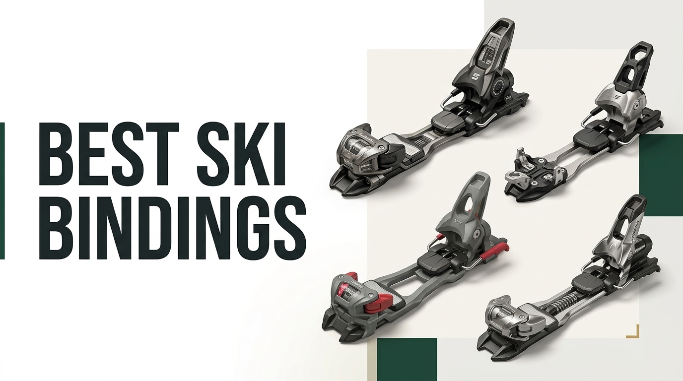
Selecting the right ski bindings in 2026 is the most critical equipment decision you will make for both your on-snow safety and your skiing performance. We compare standout alpine options by the factors that matter most to resort skiers, including DIN settings, boot sole compatibility, construction materials, step-in ease, and long-term release reliability.
Bindings serve as the vital link between your boots and your skis, translating every subtle lower-body movement into an edge change while standing ready to release instantly during a crash to protect your knees. Modern options must accommodate a shifting landscape of boot sole standards, ranging from traditional flat alpine soles to rockered, high-traction GripWalk designs.
This guide cuts through the technical jargon surrounding elastic travel, anti-friction devices, and riser plates to help you make an informed decision. Whether you are an intermediate cruiser looking for a lightweight, easy-to-manage platform or an aggressive freerider demanding high retention values, our spec-first analysis will point you to the right setup.
We compared alpine ski bindings using the details that actually protect an angler of the slopes: DIN range limits, boot sole compatibility profiles, toe and heel construction materials, elastic travel ranges, brake width choices, anti-friction device design, and ease of entry in deep snow. Our analysis focuses on safety and performance trade-offs so you can find a binding that matches your weight, skier type, and boot soles.
Compare key features, scores, and current prices side by side. A shorter feature list means fewer details were available, not necessarily fewer capabilities.

The Marker Squire 11 is engineered specifically for intermediate, lighter-weight, and younger skiers who want high-quality resort performance without the unnecessary weight of a heavy-duty freeride binding. Operating within a DIN range of 3 to 11, it provides the precise retention and safety release that developing skiers need to progress confidently across groomed slopes, light powder, and terrain parks.
We may earn a commission when you buy through this link, at no additional cost to you.
A standout feature of this generation is the Hollow Linkage 2 heel, which reduces the required step-in force by approximately 30 percent. This is a massive practical benefit when you are trying to click back into your skis on soft snow, steep pitches, or after an unexpected release. The Triple Pivot Light 2 toe housing integrates a highly functional Anti Ice Rail, which gives you a solid metal edge to scrape packed snow and ice off boot soles before stepping in.
Boot compatibility is seamless, as the Squire 11 accommodates standard alpine boot soles as well as modern, rockered GripWalk soles without requiring manual height adjustment. The inclusion of a durable stainless steel Anti-Friction Device (AFD) plate ensures low friction and predictable release characteristics under pressure, even when your boot soles are slightly worn or dirty from walking through the resort parking lot.
Snow and ice accumulation on boot soles is a major cause of improper binding engagement and accidental pre-releases. Marker integrated a raised, solid metal edge on top of the toe piece specifically to solve this problem. Before stepping into the binding, you can scrape your boot sole against this rail to remove packed snow and ice instantly, ensuring a clean, safe, and direct interface between the boot and the AFD plate.
This binding is an outstanding choice for teenagers, lighter adults, and intermediate skiers who spend their days exploring resort trails and need a reliable, lightweight interface. Aggressive, heavy, or expert-level skiers who run DIN settings of 9 or higher will find the Squire’s ceiling restrictive and should opt for a higher-tension binding. For its target audience, the Squire 11 delivers a perfect mix of ease-of-use, safety, and light weight.
Aggressive experts, heavy skiers, or anyone requiring a DIN setting above 9.
We may earn a commission when you buy through this link, at no additional cost to you.
The Marker Griffon 13 ID is a benchmark binding in the freeride community, designed specifically for aggressive skiers, heavier athletes, and those who demand uncompromising power transmission on wider skis. With a robust DIN range spanning 4 to 13, this binding handles high-speed turns, drop-offs, and rough chop without the risk of early release, keeping you locked in when backing off is not an option.
We may earn a commission when you buy through this link, at no additional cost to you.
The core advantage of the ID version is Marker’s SoleID technology, which features an adjustable toe height screw. This manual adjustment allows the binding to accept standard alpine soles, GripWalk soles, and rockered alpine touring boots, making it an incredibly versatile choice if you own multiple pairs of boots or plan to upgrade to touring-style footwear in the near future.
Underfoot, a sliding metal Anti-Friction Device (AFD) provides highly consistent lateral release values even when faced with dirt, wear, or modern rubberized walk soles. The toe and heel designs are optimized to limit pre-release by absorbing short-duration shocks and impacts without immediately popping open. This makes the Griffon a favorite for skiers who love navigating steep trees, bumps, and variable off-piste conditions.
Unlike bindings that only accept standard alpine or GripWalk boots, the SoleID toe piece can be adjusted upward or downward using a mechanical screw. This allows it to safely accommodate thicker, rockered touring soles that comply with ISO 9523 standards. This flexibility is essential for skiers who want to use a single pair of high-performance alpine skis with both their resort boots and their rubber-soled hybrid touring boots.
The trade-off for the Griffon’s robust hold is its weight and the physical effort required to step in. The heel piece has a stiff, positive engagement that requires a firm, downward stomp to click home, which can be challenging for lighter skiers or when stepping in on soft powder. If you are a powerful skier who needs a binding that can transfer energy efficiently on wide all-mountain or powder skis, the Griffon 13 ID is a top-tier choice.
Lighter skiers, beginners, or anyone who struggles to step into stiff binding heels.
We may earn a commission when you buy through this link, at no additional cost to you.
Ski bindings are the most critical safety component of your ski setup. Understanding how they work, how they match your skiing style, and how they interface with your boots will ensure you stay safe and perform your best on the mountain.
DIN is an acronym for the Deutsches Institut für Normung (the German Institute for Standardization), which established the industry-standard scale for ski binding release tension. Your personal DIN setting is calculated using a combination of your weight, height, age, boot sole length, and skier type (ranging from Type I cautious beginners to Type III+ aggressive experts). Every ski binding operates within a specific DIN range, such as 3 to 11 or 4 to 13.
It is crucial to choose a binding where your personal DIN setting falls near the middle of the range rather than at the absolute minimum or maximum. For example, if your calculated DIN is an 8, a binding with a 3-11 range is ideal because it allows room for adjustment in either direction if your weight or skiing style changes. Running a binding at its maximum limit can stress the internal spring, while running it at the minimum can lead to inconsistent release performance.
Always have your bindings adjusted, tested, and calibrated annually by a certified ski technician. Never attempt to guess your DIN setting or adjust the tension screws yourself, as improper settings are a primary cause of leg injuries on the slopes.
The ski boot industry has transitioned from a single flat standard to multiple rockered and rubberized sole types designed to make walking easier. The traditional standard is Alpine (ISO 5355), which features a flat plastic toe and heel. The current dominant standard is GripWalk (ISO 23223), which has a rockered toe and ribbed rubber tread for significantly better traction on snow and ice. Hybrid and Alpine Touring (ISO 9523) boots feature even thicker, more rockered rubber soles.
Your bindings must be certified to work with your specific boot sole type. GripWalk-ready bindings like the Marker Squire 11 accept both standard Alpine and GripWalk soles automatically. Multi-norm bindings featuring adjustable toe heights, such as Marker’s SoleID system, can be manually configured to accept Alpine, GripWalk, and rockered Touring soles safely. Using a boot with an incompatible binding can prevent the safety release from functioning, risking severe injury.
Before purchasing bindings, locate the stamps or labels on your ski boots to confirm their standard. Ensure your chosen bindings explicitly list compatibility with that standard, and have a technician verify the interface.
Ski brakes are the metal arms that deploy when your boot releases from the binding, digging into the snow to stop the runaway ski from sliding down the mountain and striking other skiers. Brakes come in specific widths, typically ranging from 85mm to 120mm. The brake width must be wide enough to clear the waist (middle) of your ski, but not so wide that the arms drag in the snow during turns.
The ideal brake width is equal to or up to 15mm wider than the waist width of your skis. For example, if your skis have a waist width of 88mm, a 90mm brake is a perfect fit. If your skis are 98mm wide, a 100mm brake is ideal. If a brake is too narrow, it will jam against the ski edges and fail to deploy; if it is too wide (such as putting a 110mm brake on an 80mm ski), the arms will hang over the sides and can catch on the snow when you are carving hard.
If you fall between sizes, a certified technician can often gently bend brake arms by a few millimeters to clear a slightly wider ski, but you should always buy the closest matching size to ensure reliable deployment.
Elastic travel refers to the distance a binding allows your boot to move out of alignment and return to center without releasing. When you ski fast over rough terrain, bumps, or ice, the skis experience short, violent shocks that can momentarily twist your boot. A binding with good elastic travel absorbs these temporary forces and snaps your boot back into place, preventing frustrating and dangerous pre-releases.
If a binding lacks sufficient elastic travel, it will release the moment the boot experiences a brief shock, causing you to lose a ski mid-turn even though your leg was not in danger. High-performance bindings designed for freeride and aggressive skiing prioritize long elastic travel in both the toe and heel, allowing skiers to charge hard through variable snow with confidence that they will only release during a genuine fall.
Lighter and intermediate skiers do not require as much elastic travel because they experience lower forces, but aggressive skiers should prioritize robust toe and heel designs that emphasize retention over simple lightweight construction.
The Anti-Friction Device (AFD) is the small plate located on the toe piece of the binding directly under the ball of your boot. Its purpose is to allow your boot sole to slide sideways smoothly during a lateral release, preventing the rubber or plastic sole from catching on the binding housing. AFDs can be static Teflon plates, stainless steel plates, or mechanical sliding tracks.
Stainless steel and sliding metal AFDs provide the most consistent release performance because they are highly durable and less affected by dirt, salt, water, or wear on your boot sole. Teflon AFDs are lightweight and cost-effective but can become scratched or worn over multiple seasons, which can slightly increase friction and affect release values if not maintained.
Choose bindings with high-quality stainless steel or sliding metal AFDs if you ski frequently in wet, salty, or muddy conditions, as these materials maintain their low-friction properties with minimal maintenance.
The weight of your bindings directly affects the swing weight of your skis, making them feel either nimble and easy to pivot or damp and stable at high speeds. Lightweight bindings utilize composite plastics and hollowed-out components to keep weight low, which benefits lighter skiers, park riders, and intermediate cruisers. Heavy-duty bindings incorporate steel, aluminum, and dense resins for maximum durability and direct power transfer.
Composite bindings are excellent for reducing leg fatigue during long days on the mountain and make carrying your skis from the parking lot much easier. However, metal-reinforced bindings offer superior energy transmission on wide, stiff skis and handle the extreme leverage forces generated by aggressive, high-speed carving. They also resist wear and tear better when subjected to constant impacts in the terrain park or off-piste chop.
Match the construction weight to your physical build and skiing style. Lighter skiers should prioritize composite models to keep the setup manageable, while heavy or aggressive skiers will benefit from the dampness and durability of metal-reinforced designs.
When stepping into your bindings, always ensure your boot soles are completely free of packed snow, ice, and gravel. Use the ski pole grip or the binding’s anti-ice rail to scrape the bottom of your boots clean before aligning the toe and stepping down firmly with your heel. A clean interface ensures that the boot contacts the AFD plate correctly, which is vital for both precise steering and consistent safety releases.
Store your skis in a dry, climate-controlled environment when not in use to prevent the internal binding springs and metal screws from rusting. Never leave your skis locked on a roof rack overnight, as road salt, moisture, and freezing temperatures can degrade the lubricants inside the toe and heel housings. Rinse bindings with fresh water if they are exposed to road grime during travel, and allow them to dry completely before storage.
Have your bindings inspected, lubricated, and release-tested by a certified ski technician at the beginning of every ski season. Over time, binding springs can lose tension and dirt can contaminate the release mechanisms. A technician will use a specialized calibration machine to verify that your bindings release at the exact forces required for your weight and skier profile, giving you peace of mind before you head up the lift.
Your brake width should be equal to or up to 15mm wider than the waist width of your skis. For example, if your skis have an 88mm waist, choose a 90mm brake. Avoid brakes that are narrower than your ski waist, as they will lock up and fail to deploy, and avoid brakes that are more than 15mm wider, as they can drag in the snow during turns.
No, you should never adjust your own bindings. Adjusting DIN settings, forward pressure, and toe height requires specialized knowledge and testing equipment. Incorrectly adjusted bindings are a primary cause of severe leg and knee injuries. Always have a certified ski technician adjust and test your bindings to ensure they function safely.
GripWalk is a modern boot sole standard featuring a rounded, rockered profile and high-traction rubber tread designed to make walking in ski boots much easier and safer. GripWalk-compatible bindings have a specific toe height and AFD design to accommodate this shape. Always check your binding specs to ensure it is certified GripWalk-ready before using GripWalk boots.
Ski bindings generally last between 5 and 10 seasons depending on usage, maintenance, and storage conditions. However, the international ski industry maintains a 'list of indemnified bindings' every year. Once a binding model becomes too old, manufacturers stop supporting it and shops will no longer service it for liability reasons. Have a shop check if your older bindings are still indemnified.
Forward pressure is the horizontal force the heel piece exerts against the back of your boot to keep it securely locked into the toe piece. Correct forward pressure is essential for both precise power transfer and proper release function. If forward pressure is too low, the boot can slip out prematurely; if it is too high, the binding may fail to release during a fall.
If your DIN is set too low, you may experience a pre-release, where your ski pops off during normal skiing, which can cause a severe fall. If your DIN is set too high, the binding may fail to release when you crash, resulting in fractures or torn ligaments. Certified technicians calculate your DIN precisely using standardized safety charts to avoid these risks.
Not necessarily, but you will need wider brakes to clear the wider waist of powder skis. Additionally, wider skis exert more leverage on bindings, so aggressive powder skiers often choose more robust, metal-reinforced bindings with wider mounting patterns to ensure efficient power transfer and prevent tearing the binding screws out of the ski core.
Yes, as long as the bindings are still on the active indemnified list, are in good working condition, and have brakes that fit the width of your new skis. However, skis can only be drilled and mounted a limited number of times (usually twice) before the structural integrity of the ski core is compromised. A certified shop must evaluate both the binding and ski before remounting.
The Marker Squire 11 stands out as our Editor's Choice and the strongest overall option for intermediate, lighter-weight, and recreational skiers. Its low step-in force, lightweight composite construction, and seamless GripWalk compatibility make it exceptionally user-friendly, while the integrated Anti Ice Rail solves a common real-world frustration before you even slide into the lift line.
For powerful, heavy, and expert freeriders, the Marker Griffon 13 ID remains a benchmark of security and power transmission. Its higher DIN ceiling and adjustable SoleID toe height allow it to handle high-speed leverage and accept a wide variety of boot soles, including rockered touring models, though it requires more physical effort to step in and carries more weight on your feet.
Start by determining your personal DIN range and boot sole standard, as these factors will instantly narrow your choices. Avoid the temptation to buy a heavy, high-DIN binding unless your weight and skiing style genuinely require it, as a lighter setup will keep you fresher and more agile throughout a full day on the mountain. Whichever model you choose, always have a certified technician mount, adjust, and calibrate your setup before hitting the snow.