Primos Trigger Stick
9.4Editor score35 to 65 inches
Trigger height adjustment
Quick-detach yoke system
Monopod bipod tripod modes
Find the right shooting sticks for 2026. We compare 10 standout options by build quality, useful features, owner feedback, value, and everyday trade-offs.
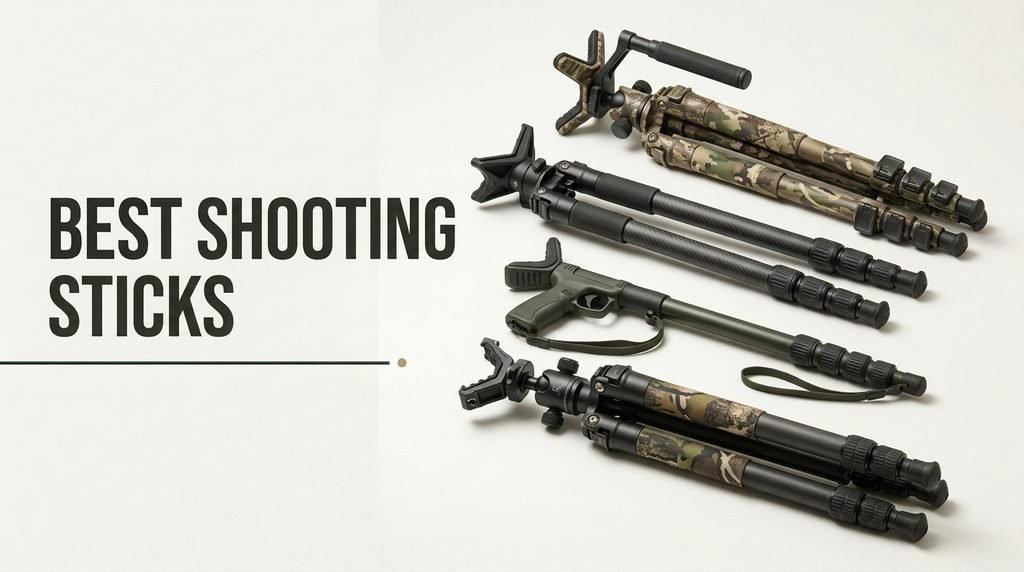
Choosing the right shooting sticks for 2026 comes down to matching the support style to your hunting posture, terrain, and firearm. We compare 10 standout monopods, bipods, and tripods across the factors that genuinely matter: height range, stability, yoke design, weight, locking mechanisms, load capacity, and real-world value for hunters, target shooters, and wildlife photographers.
The difference between a lightweight walking monopod and a full gun-clamp tripod is significant. A monopod excels when you need to move quickly and shoot from a seated or kneeling position, while a tripod offers rock-solid stability for long-range precision work. Understanding which style suits your style of hunting will save you money and frustration.
Beyond the leg count, pay close attention to the yoke, locking system, and extended height. A V-yoke that rotates 360 degrees helps you track moving targets, and smooth height adjustment lets you set up quickly before the shot opportunity disappears. The reviews below break down what each model does well and where it falls short.
We compared 10 shooting sticks using the details that actually help a buyer decide: leg configuration, height range, weight, yoke style, rotation and tilt capability, locking mechanism, load capacity, build materials, included accessories, warranty signals, owner feedback, and overall value. The notes focus on practical trade-offs so each pick connects to how hunters, target shooters, and photographers actually set up, stabilize their firearm, and adapt to varying terrain in the field.


Compare key features, scores, and current prices side by side. A shorter feature list means fewer details were available, not necessarily fewer capabilities.




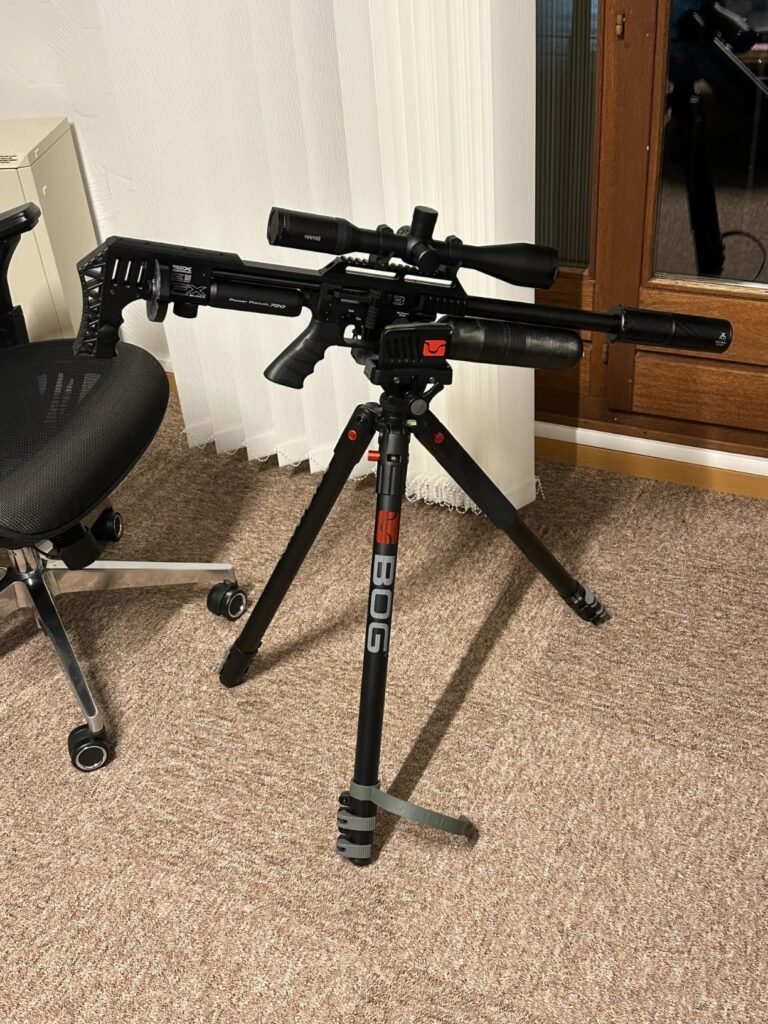
The BOG DeathGrip Tripod is the top-rated shooting rest in this comparison, and the 4.8-star rating reflects the kind of precision stability that long-range hunters and target shooters demand. The signature DeathGrip clamping head physically holds the rifle rather than cradling it in a yoke, which eliminates the small movements that affect even the best monopod or V-yoke designs.
We may earn a commission when you buy through this link, at no additional cost to you.
The clamp accommodates sporting and hunting rifles, shotguns, and crossbows up to 40 pounds, with non-marring rubber inserts that protect the firearm finish while providing additional grip. The height range from 7 to 59 inches is one of the most versatile in this category, dropping low enough for prone shots and extending tall enough for standing positions. Three-position leg angle locks at 20, 45, and 85 degrees adapt the base to any terrain.
The 25-degree tilt range and 360-degree panning head let you track moving targets smoothly or make quick angle adjustments without repositioning the tripod. Large-diameter aluminum legs and quiet lever locks maintain stability while keeping the overall weight manageable for a tripod of this capacity. The high-density foam grip stays secure during transport and setup, even in cold or wet conditions.
A V-yoke cradles the forend of the rifle and relies on the shooter to maintain downward pressure to prevent movement. A clamping head like the DeathGrip actively grips the firearm, locking it into position. The practical result is that recoil is better controlled, shot-to-shot consistency improves, and you can take your hands off the rifle entirely to make scope or range adjustments. For precision work beyond 300 yards, that difference can mean hits versus misses.
The main trade-off is that a full tripod with a gun clamp is heavier and bulkier than a simple monopod, which can be a drawback for spot-and-stalk hunters who cover long distances on foot. If you shoot from a fixed position like a stand, blind, or dedicated shooting lane, the DeathGrip delivers unmatched stability. It is the clear choice for long-range precision work, varmint hunting, and anyone who prioritizes shot consistency over portability.
Spot-and-stalk hunters who need a lightweight, fast-deploying rest for mobile hunting styles.
We may earn a commission when you buy through this link, at no additional cost to you.
The Primos Trigger Stick Gen3 is one of the most recognized names in hunting shooting rests, and it earns that reputation through smart design rather than flashy features. The signature trigger-based height adjustment lets you raise or lower the stick with a single hand squeeze, which is a genuine advantage when you need to transition from a kneeling to a standing shot without taking your eye off the target.
We may earn a commission when you buy through this link, at no additional cost to you.
The 35 to 65 inch height range covers virtually every realistic shooting position from a low chair in a ground blind up to a tall standing shot. The quick-detach yoke system is a meaningful upgrade over earlier Trigger Stick versions because it swaps the V-yoke for a smooth panning head in seconds, converting the rest into a spotting scope or camera support. That versatility makes a single purchase serve multiple roles.
Extreme leg angles let the tripod configuration lock into stable positions on uneven ground, brush, or sloped terrain where a rigid tripod would wobble. The contoured no-slip grip and strengthened rotating joint produce the smooth, quiet tracking that matters when a game animal is moving slowly across your field of view. The ability to switch between monopod, bipod, and tripod modes on a single stick is rare at this price point.
The one-hand trigger height adjustment sounds like a convenience feature until you need it under pressure. When a deer steps into a shooting lane earlier than expected, fumbling with twist locks or lever clamps can cost you the shot. The Primos trigger lets you drop or raise the height while keeping your other hand on the rifle and your eye on the target. For hunters who prioritize speed, this one feature can justify the higher price alone.
The main trade-off is the premium cost compared to simpler monopods, and the trigger mechanism does require occasional cleaning to maintain smooth operation. If you hunt frequently and want a single shooting support that can handle still hunting, stand hunting, and photography without compromise, the Gen3 is worth the investment. Casual shooters who only need a simple rest can find acceptable alternatives for a fraction of the price.
Budget-focused shooters who do not need a convertible monopod, bipod, and tripod system.
We may earn a commission when you buy through this link, at no additional cost to you.
The Allen Company Monopod is a straightforward, no-nonsense shooting stick from a Colorado brand that has been making hunting gear for over 50 years. If you want a reliable monopod from an established manufacturer without paying for premium features, this model delivers a solid combination of adjustability, build quality, and value that has earned it a 4.5-star rating.
We may earn a commission when you buy through this link, at no additional cost to you.
The height adjusts from 21.5 to 61 inches, which comfortably covers seated, kneeling, and standing shooting positions. The quick-release leg clips extend and lock the sections in seconds, and the entire unit weighs just 2 pounds. The removable V-shaped rubber grip cradle holds the rifle securely without damaging the finish, and the yoke detaches to let the stick serve as a camera or spotting scope stand.
The aluminum construction with a black matte finish stands up to typical field conditions, and the padded foam grip combined with a wrist strap makes it comfortable to carry over long distances. The rugged frame also doubles as a trekking pole on steep terrain, which is a practical bonus for hunters who hike into remote spots. Few monopods in this price range offer the same brand reliability.
A monopod is faster to deploy and lighter to carry than a bipod, which matters when you are covering miles of ground on a spot-and-stalk hunt. The trade-off is that a monopod only eliminates vertical movement; you still need to control horizontal wobble with your body. If most of your shots are at closer ranges and you need to move frequently, a monopod is usually the better choice. For longer-range precision shots, a bipod or tripod will deliver more consistent accuracy.
The main limitation is inherent to any monopod design: a single leg provides less lateral stability than a bipod or tripod. For prone or benchrest-style shooting, you will want a dedicated rest. For sitting, kneeling, and standing shots in typical hunting scenarios, the Allen Company monopod gives you steady support without extra weight or complexity. It is an excellent choice for hunters who want a dependable classic design.
Long-range precision shooters who need maximum stability for prone or benchrest shots.
We may earn a commission when you buy through this link, at no additional cost to you.
This lightweight monopod targets hunters who prioritize weight savings on long treks into the backcountry. At just 1.04 pounds, it is roughly half the weight of a typical aluminum monopod, which makes a real difference during multi-mile pack-ins or when weight needs to stay down for mountain hunts. The sub-pound carry weight also makes it practical for all-day photography outings.
We may earn a commission when you buy through this link, at no additional cost to you.
The locking 360-degree V-yoke is the standout feature. Rotating the yoke smoothly to track a moving target is useful, but the integrated locking screw lets you fix the yoke in place once you have the target in view. That lock eliminates the small movements that can throw off a precise shot at longer distances. The extra-thick rubber padding also protects the rifle finish from scratches.
Three quick-release level locks allow fast height adjustment from 22 to 58.7 inches, covering sitting, kneeling, and standing positions. The dual-function foot is a smart touch: a sharp metal spike digs into dirt or mud for a stable anchor, and flips to a non-slip rubber pad for hard surfaces like rock, concrete, or wood decking in a ground blind. The detachable V-yoke reveals both 1/4-inch and 3/8-inch mounting threads for cameras and spotting scopes.
A free-swiveling yoke lets you track moving targets, but it also allows micro-movements that can affect a careful shot. A locking yoke gives you the best of both worlds: smooth rotation when you need to follow a target, and rock-solid lockdown when you are ready to fire. Engaging the lock before a precise shot reduces one more variable from your shot sequence and improves consistency, especially at longer distances where small movements become big misses.
The main caveat is that an ultralight monopod has lower load capacity and less inherent stability than a heavier tripod design. For heavy rifles or long-range precision work, this is not the right tool. For a hunter stalking game across varied terrain who needs a quick, portable rest that will not weigh down a pack, the combination of light weight, dual-terrain foot, and locking yoke is hard to beat at this price.
Shooters who need to support heavy magnum rifles or require the stability of a full tripod base.
We may earn a commission when you buy through this link, at no additional cost to you.
The 4 Stable Sticks Essential is a specialty bipod designed for the kind of tall, offhand standing shots that are common in African plains game hunting and some European driven hunts. The patented four-point design uses two main shafts that spread into four ground-contact points, delivering more lateral stability than a conventional two-leg bipod while remaining lighter than a full tripod.
We may earn a commission when you buy through this link, at no additional cost to you.
The 51 to 79 inch height range is notably taller than most shooting rests, which makes this bipod uniquely suited to tall shooters and standing hunting styles. At 29 ounces, it stays reasonably light despite the extended reach. The French manufacturing and 5-year warranty signal a focus on long-term durability, which matches the premium price point.
The folded profile is compact enough to strap to a pack or carry in hand, and the aluminum construction keeps the overall weight manageable for long days afield. The four-point configuration shines when shooting standing offhand because the wider ground footprint reduces the sway that affects two-leg bipods at full extension. For hunters who regularly take standing shots at medium ranges, this stability advantage is meaningful.
A traditional bipod has two ground contact points, which creates stability on one axis but allows the stick to pivot forward and backward. A four-point design adds two additional contact points, essentially creating a wider base that resists tipping in multiple directions. This matters most for standing offhand shots at full extension, where the longer lever arm amplifies any instability. For prone or kneeling shots, the four-point advantage is less noticeable.
The 3.8-star rating is the lowest in this comparison, and the premium price limits the audience to buyers who specifically need the tall, four-point design. If you hunt from blinds, stands, or in prone positions, a shorter and less expensive rest will serve you better. For dangerous game hunters, driven hunters, and anyone who specifically needs tall standing-shot stability, the specialty design justifies the investment despite the mixed owner reviews.
Shooters who primarily hunt from blinds, stands, or need a shorter rest for seated shooting.
We may earn a commission when you buy through this link, at no additional cost to you.
The CVLIFE Hunting Monopod is designed as a versatile 3-in-1 shooting rest that adapts to multiple terrain types without requiring additional accessories. The foot assembly includes rubber feet for hard surfaces, a metal spike for soft ground, and a small tripod base for added stability on uneven terrain, which makes this monopod unusually adaptable for its price range.
We may earn a commission when you buy through this link, at no additional cost to you.
The aluminum alloy construction supports a 22-pound load capacity, which is sufficient for most hunting rifles including heavier magnum calibers. The height adjusts from 20.5 inches up to 66.1 inches, giving you the full range from a low seated shot to a tall standing shot. The spherical device inside the tripod base allows both horizontal and tilt rotation, which helps you adjust your aim quickly without lifting and repositioning the monopod.
The detachable V-yoke uses standard 1/4 and 3/8 inch universal screws, so you can mount a camera or spotting scope when you want to transition from hunting to glassing. The thickened foam handle reduces fatigue during long carry periods, and the nylon wrist strap keeps the monopod secure when you are moving through brush. The compact folded size fits into most backpacks or dedicated carrying bags.
The spike foot is best for soft dirt, mud, grass, and leaf litter because it digs in and resists sliding. The rubber foot is better for rocks, concrete, wooden stand platforms, and polished floors where a spike would slip. The small tripod base adds stability on loose or uneven surfaces where neither a single spike nor a rubber foot provides enough contact. Being able to switch quickly between these options means you spend less time adjusting your position and more time ready to shoot.
The main limitation is that the small tripod base, while helpful, does not provide the stability of a dedicated full tripod with wide-set legs. The 2-pound weight is average rather than lightweight. For hunters who want a single, affordable rest that can handle changing terrain throughout a hunting day, the three-foot design offers meaningful real-world versatility. It is a smart middle-ground choice between a basic monopod and a larger tripod.
Precision shooters who need the stability of a dedicated full tripod with wide-set legs.
We may earn a commission when you buy through this link, at no additional cost to you.
The RPNB Shooting Tripod packs more features into a mid-priced package than most competitors. The 360-degree V-yoke rotates smoothly to track targets at any angle, and the integrated bubble level helps you confirm the rifle is level before taking a long-range shot where cant can cause meaningful misses. A built-in button compass is a small but useful addition for backcountry hunters.
We may earn a commission when you buy through this link, at no additional cost to you.
The heavy-duty aluminum alloy construction supports a 33-pound load capacity while keeping the tripod weight at 3.09 pounds, which is reasonable for a full three-leg design. The camouflage coating resists rust and corrosion while helping the tripod blend into natural surroundings. The humanized flip-locking system is faster to operate than twist locks, letting you adjust the working height from roughly 20 to 65 inches in seconds.
Independently adjustable legs let you set up on uneven terrain where a fixed-angle tripod would wobble. The V-yoke includes non-marring soft rubber to protect your rifle finish, and the universal 1/4-inch thread bolt lets you swap in a camera or spotting scope when you want to use the tripod for glassing or wildlife photography. Allen wrenches are included for accessory installation.
A rifle canted even a few degrees to one side will cause the bullet to impact low and to that side at longer ranges. At 100 yards the effect is small, but at 400 yards or more it can cause clean misses on game-sized targets. A built-in bubble level gives you a quick visual check that the rifle is truly vertical before you break the shot. For hunters who take occasional long-range shots, this small feature can improve first-shot accuracy noticeably.
The main trade-off is that flip-style leg locks, while fast to operate, can wear out faster than screw-style locks over years of heavy use. The 3-plus pound weight is also noticeable on long hikes. For hunters who want integrated features like a bubble level and compass, a solid load capacity, and camouflage finish in a mid-priced tripod, the RPNB delivers strong value and earns a 4.6-star rating.
Ultralight backcountry hunters who need to minimize every ounce of pack weight.
We may earn a commission when you buy through this link, at no additional cost to you.
The Primos Edge Aluminum Tripod brings the Primos brand into the gun-clamp tripod category, offering a direct alternative to the BOG DeathGrip for buyers who prefer Primos hunting gear. The design emphasizes the five attributes that matter most to real hunters: light weight, stability, versatility, durability, and reasonable pricing, all built into a straightforward tripod package.
We may earn a commission when you buy through this link, at no additional cost to you.
The aluminum construction keeps the carrying weight manageable while the integrated gun clamp provides a secure grip that eliminates the small movements of a traditional V-yoke. For hunters who have already learned to appreciate the stability advantage of a clamping head, this Primos version delivers similar functionality from a company with decades of hunting-industry credibility.
The height adjusts to accommodate your preferred shooting position, and the quick setup design means less time fiddling with legs and more time focused on the target. Primos products are generally designed with practical field use in mind rather than range-only applications, which shows in the thoughtful construction choices. The 4.4-star rating reflects consistent owner satisfaction with the real-world performance.
Primos has built a strong reputation across the hunting industry for calls, decoys, and shooting rests. Buyers who already own and trust other Primos products often prefer sticking with the same brand for a tripod to maintain consistent quality expectations and simplify warranty service. If you have had good experiences with Primos gear, the Edge tripod is an easy addition. If you are brand-neutral, compare it directly against the BOG DeathGrip for your intended use case before deciding.
The main consideration is price point: the Edge sits in the mid-to-upper range of this comparison without quite matching the BOG DeathGrip’s top-tier rating. For buyers who prefer the Primos brand or want a slightly more affordable alternative to the DeathGrip while still getting a tripod with a dedicated gun clamp, the Edge is a solid choice. Shoot-from-position hunters and precision shooters will benefit most from this design.
Buyers seeking the absolute highest-rated gun clamp tripod regardless of brand.
We may earn a commission when you buy through this link, at no additional cost to you.
The AUSCAMOTEK Compact Monopod is purpose-built for buyers who prioritize minimal weight and compact storage over maximum height. At just 0.55 pounds and collapsing to 16 inches folded, it slips into a daypack or ground blind bag with almost no space penalty, which makes it an excellent choice for turkey hunters, ground blind sitters, and photographers who need stable support without extra bulk.
We may earn a commission when you buy through this link, at no additional cost to you.
The four-section telescoping system extends the monopod from 17 to 40 inches, which covers seated and low kneeling positions comfortably but will not reach standing height for most adults. That shorter range is a deliberate design choice: this monopod is meant for ground blind hunting, chair-based shooting, and photography where you are already positioned low to the ground. For those applications, the compact design is a real advantage.
The 360-degree swivel U-yoke features soft rubber grips that cradle a rifle or crossbow without scratching the finish, and the detachable V-yoke reveals a standard 1/4-inch universal screw for mounting cameras or spotting scopes. The dual-purpose foot includes a sharp spike for soft ground and a non-slip cap for hard surfaces, giving you solid stability across varied terrain despite the small overall size.
Most buyers default to tall monopods thinking they need maximum reach, but a shorter monopod is often the better choice for ground blind and chair-based hunting. A 40-inch monopod matches the natural rifle-rest height when you are seated, which means less fiddling to find the right position. The compact folded size also fits inside gear bags and ground blind pockets where a taller monopod would stick out awkwardly. Match the monopod to how you actually hunt, not to a maximum-height number.
The main limitations are the 40-inch maximum height and the 12-pound load capacity, which rule out this monopod for standing shots and heavy magnum rifles. If you need a tall standing rest or support for a heavy rifle, look elsewhere. For ground blind turkey hunting, deer hunting from a chair, youth hunters, or photographers who need a stable but minimal monopod, the AUSCAMOTEK delivers excellent value in a genuinely packable package.
Hunters who need a tall standing rest or support for heavy magnum rifles.
We may earn a commission when you buy through this link, at no additional cost to you.
The SWAGGER Shooting Stick shares the top 4.8-star rating with the BOG DeathGrip, which is remarkable given its budget price point. This monopod proves that a well-designed, straightforward shooting rest can deliver the stability and ease-of-use that hunters actually need without expensive extra features. If you want proven performance without the premium price, this is one of the easiest recommendations in the comparison.
We may earn a commission when you buy through this link, at no additional cost to you.
The 24 to 61 inch adjustment range covers seated, kneeling, and standing positions, making this monopod genuinely versatile across common hunting scenarios. The design is specifically optimized for ground blind use, where quick height changes and compact size matter more than feature count. The collapsible build fits into a backpack or straps to the outside, so it is always accessible when you reach your hunting spot.
SWAGGER emphasizes high-quality materials and rugged construction suited to outdoor use, and the strong owner rating supports those claims. The quick setup design lets you deploy the monopod rapidly, which matters when a shot opportunity develops faster than expected. The stick is built to provide reliable support in a wide range of hunting situations from enclosed ground blinds to open terrain.
Feature-rich shooting rests sound appealing but often introduce extra adjustment points that can loosen, break, or distract you in the field. A simple, well-built monopod with a basic yoke and fast height adjustment eliminates failure points and keeps your focus on the shot. For hunters who want gear that just works without maintenance or learning curve, a minimalist design often outperforms more complex options in the long run.
The main trade-off is that this monopod focuses on core shooting-rest function rather than offering accessory mounts, color filters, or integrated features like a bubble level. For buyers who want extras, other models in this comparison provide them. For hunters who want a dependable, high-rated shooting stick at an entry-level price, the SWAGGER delivers excellent real-world performance and genuine value. It is a smart first monopod or an easy upgrade from a damaged stick.
Buyers who specifically want integrated features like a bubble level, compass, or detachable camera mount.
We may earn a commission when you buy through this link, at no additional cost to you.
Finding the right shooting stick means matching the support style to your hunting method, firearm, and terrain. This guide walks through the factors that make the biggest practical difference so you can choose a rest you will actually use and trust in the field.
The number of legs is the single most important choice when selecting a shooting rest. A monopod uses one leg and primarily eliminates vertical movement, leaving the shooter to control horizontal stability. Monopods are the lightest and fastest to deploy, which makes them ideal for spot-and-stalk hunting where you cover distance and need to set up quickly. A bipod adds a second leg and controls both vertical and lateral movement, offering a significant stability upgrade for medium-range shots.
A tripod uses three legs and provides the most stable platform, especially when paired with a gun clamp like the BOG DeathGrip. Tripods are the heaviest and slowest to deploy but deliver the kind of rock-solid support that long-range precision shooters need. Four-point bipods like the 4 Stable Sticks model offer a middle ground, delivering more stability than a two-leg bipod while remaining lighter than a full tripod. The right choice depends on how far you shoot and how much weight you are willing to carry.
Choose a monopod if you move frequently and shoot inside 200 yards. Choose a bipod or four-point design for medium ranges and standing shots. Choose a tripod with a gun clamp for long-range precision work or any shooting from a fixed position where weight matters less than stability.
The height range of a shooting stick determines which shooting positions it supports. A rest that extends from 20 to 65 inches, like the RPNB tripod or CVLIFE monopod, covers sitting on the ground, sitting in a chair, kneeling, and standing. A short monopod that maxes out at 40 inches, like the AUSCAMOTEK, works well for ground blind and chair-based hunting but cannot support standing shots for most adults. A tall bipod like the 4 Stable Sticks reaching 79 inches is optimized for standing offhand shooting.
The adjustment mechanism matters almost as much as the range itself. Trigger-based adjustments like the Primos Trigger Stick allow one-hand changes without removing your hand from the rifle, which is a real advantage when a game animal appears unexpectedly. Twist locks are typically the most durable but slowest to operate. Flip locks offer a faster compromise but can wear out over years of heavy use. Quick-release clips sit between flip and twist locks in both speed and longevity.
Match the height range to your most common hunting position, and give extra weight to fast adjustment mechanisms if you hunt in environments where shots develop quickly. A rest that is too tall is awkward; a rest that is too short is useless.
The connection between the shooting rest and your firearm has a huge impact on shot consistency. A V-yoke cradles the rifle forend in a padded V-shape, which is fast to use and forgiving but allows some movement during the shot. A 360-degree rotating yoke, like the one on the RPNB tripod or 360 Swivel Monopod, lets you track moving targets smoothly without repositioning the stick. A locking yoke adds the ability to fix the position for precision shots.
A clamping head like the BOG DeathGrip physically grips the rifle, which eliminates almost all shot-to-shot variation but requires a few extra seconds to secure the firearm. For long-range precision work, this stability advantage is meaningful. Platform designs that use quick-release mounting plates offer flexibility to swap between rifles, cameras, and spotting scopes but can introduce small amounts of play at the mounting point. Non-marring rubber inserts protect your firearm finish regardless of which design you choose.
Choose a V-yoke for fast-action hunting where speed matters most. Choose a clamping head for precision shooting and situations where consistency is more important than deployment speed. If you also use the rest for photography, prioritize a detachable yoke with universal threading.
Carry weight becomes increasingly important the farther you walk from the truck. An ultralight monopod like the 360 Swivel at 1.04 pounds or the AUSCAMOTEK at 0.55 pounds disappears in a pack and barely registers after miles of hiking. A full tripod with gun clamp typically weighs 3 to 4 pounds, which is noticeable but acceptable for shorter hunts or stationary setups. Four-point bipods usually fall somewhere between these extremes.
Packed size matters as much as weight for backpack hunters and ground blind users. A shooting stick that collapses to under 20 inches, like the AUSCAMOTEK at 16 inches folded, fits inside most daypacks without strapping to the outside. Longer rests may still work but require external attachment points on your pack. Dedicated carry bags like those included with the 360 Swivel monopod and RPNB tripod protect the rest during transport and keep accessories organized.
If you hunt from stands, blinds, or vehicles, weight matters less and you can prioritize stability features. If you pack several miles into remote spots, aggressive weight savings will keep you fresher at the end of the day and more likely to actually carry the rest when you need it.
The foot that contacts the ground has a surprisingly large impact on real-world stability. A sharp metal spike excels in soft dirt, mud, and grass because it digs in and prevents the rest from sliding under recoil. A rubber pad is better on rocks, concrete, polished wood floors, and metal stand platforms where a spike would skate or scratch the surface. Many modern shooting sticks, including the 360 Swivel monopod and CVLIFE tripod, offer dual-function feet that flip or swap between spike and rubber configurations.
Tripods add another layer of adaptability through independently adjustable legs. Being able to extend each leg to a different length lets you set up on hillsides, boulders, or uneven ground where a fixed-angle tripod would wobble or tip. The BOG DeathGrip offers three preset leg angle positions, which is faster than fully independent legs but still provides significant terrain flexibility. Monopods lack this feature but compensate with lighter weight and simpler setup.
Buyers who hunt varied terrain should prioritize dual-function feet and, for tripods, independently adjustable legs. Buyers who hunt from fixed stands or ground blinds can simplify their choice to a basic single-foot design.
Every shooting rest has a maximum weight it can safely support, and exceeding that limit creates both safety and accuracy problems. Lightweight monopods like the AUSCAMOTEK top out at 12 pounds, which is fine for most hunting rifles and crossbows but may be marginal for heavy magnum setups with large scopes and bipods attached. Mid-range tripods like the CVLIFE support 22 pounds, while the RPNB handles 33 pounds and the BOG DeathGrip accommodates up to 40 pounds.
Aluminum is the dominant material in this category because it offers an excellent strength-to-weight ratio and resists corrosion in wet hunting conditions. Camouflage coatings, like the one on the RPNB tripod, add rust resistance and help the rest blend into natural surroundings. Rubber padding on the yoke protects your firearm finish, and high-density foam grips maintain comfort and control in cold or wet weather. Build quality shows up most in the locking mechanisms, which should operate smoothly after years of use.
Check your rifle weight before buying and leave a comfortable margin above that number. A rest rated at exactly your rifle weight will perform poorly; aim for at least a 50 percent safety margin to ensure stable, long-term performance.
Shooting sticks range from under 20 dollars for basic monopods like the SWAGGER up to over 150 dollars for premium tripods like the BOG DeathGrip. The price gap reflects real differences in build quality, feature set, and long-term durability, but it does not mean the most expensive option is right for every buyer. A 20-dollar monopod from a reputable brand can serve a casual hunter for years, while a 150-dollar tripod would be overkill for occasional ground blind use.
Consider warranty coverage as part of the value equation. The 4 Stable Sticks bipod includes a 5-year manufacturer warranty, which signals confidence in long-term durability. Established brands like Primos, BOG, and Allen Company have decades of track record and typically honor warranty claims reliably. Owner reviews provide another useful data point: products with hundreds of 4-plus-star reviews across years of availability generally represent lower-risk purchases than new products with limited feedback.
Set a budget based on how often you will actually use the shooting stick. For occasional hunts, 25 to 50 dollars buys a dependable monopod. For regular hunting or precision shooting, 100 to 170 dollars gets a premium tripod that will outlast many rifles. Match the investment to the use, not to the marketing.
Setup speed improves dramatically with a bit of practice. Before your first hunt, extend and collapse the rest several times to learn how the locking mechanism feels and to make sure all adjustments move smoothly. Practice setting it to your typical shooting heights so that in the field you can deploy the rest without looking down. If your model has a quick-detach yoke like the Primos Trigger Stick, practice swapping between the yoke and panning head so the motion becomes automatic. Taking shots at a range from the rest before hunting day will build confidence in the system.
In the field, position the rest at the correct height for your shooting posture before you shoulder the rifle, not after. For a seated shot, the rest should hold the rifle at your natural shoulder height when seated so you are not straining up or hunching down. For standing shots with a tall monopod or bipod, pre-set the height to match your natural rifle hold. If you are hunting on uneven terrain, use independently adjustable legs or extend one leg longer than the others to compensate for the slope. Always maintain some downward pressure on a V-yoke to prevent the rifle from drifting during the shot.
After each hunt, wipe the rest clean with a dry cloth to remove dirt, mud, blood, or moisture that could cause corrosion or damage the locking mechanisms. If the rest got wet, extend all sections fully and let them air dry before collapsing and storing. Periodically check locking mechanisms, yoke padding, and foot condition for wear, and tighten any loose screws or hardware. Store the rest in a dry location with the legs partially extended rather than fully compressed to prevent long-term binding. These simple maintenance steps will keep your shooting rest functioning reliably for many hunting seasons.
A shooting stick is a broad term that includes monopods, bipods, and tripods used to steady a firearm. A bipod specifically refers to a two-leg design that attaches either to the rifle itself or stands independently like the 4 Stable Sticks. Standalone shooting sticks are generally more versatile across different shooting positions than rifle-mounted bipods, which excel primarily in prone shooting.
Match the maximum height to your tallest planned shooting position. For ground blind and seated hunting, a 40-inch monopod is sufficient. For versatile use from sitting to standing, choose a rest that extends to 60 inches or more. Tall shooters taking standing offhand shots may want a rest that reaches 70 inches or above, like the 4 Stable Sticks bipod at 79 inches.
A monopod is faster and lighter but requires you to control more of the rifle's movement yourself. A tripod is more stable but heavier and slower to deploy. If you shoot inside 200 yards and move frequently during a hunt, a monopod is usually sufficient. For long-range precision work or extended stationary shooting, a tripod with a gun clamp provides noticeably better accuracy.
A gun clamp, like the one on the BOG DeathGrip, physically grips the rifle rather than cradling it in a yoke. This design eliminates nearly all shot-to-shot movement, which improves consistency at long range. The trade-off is a few extra seconds to secure the firearm and a higher price. For precision shooters and anyone taking shots beyond 300 yards, a gun clamp is usually worth the investment.
Many modern shooting rests include detachable yokes with standard 1/4-inch or 3/8-inch camera threads that let the same rest support a camera, binoculars, or spotting scope. The CVLIFE, 360 Swivel, Allen Company, and AUSCAMOTEK models all offer this flexibility. If you want one piece of gear for both hunting and glassing, prioritize a detachable yoke design.
Load capacity varies widely by design. Ultralight monopods like the AUSCAMOTEK support about 12 pounds, mid-range options handle 20 to 30 pounds, and heavy-duty tripods like the BOG DeathGrip accommodate up to 40 pounds. Check your rifle weight including scope, bipod, and any accessories, then choose a rest with capacity at least 50 percent above that number for safe margin.
Premium rests like the Primos Trigger Stick Gen3 and BOG DeathGrip offer meaningful upgrades in build quality, adjustment speed, and stability that experienced hunters appreciate. For casual hunters or occasional use, affordable options like the SWAGGER monopod or Allen Company stick provide solid performance at a fraction of the price. Match the investment to how often you will use the rest and the type of shooting you do.
Yes, and many are specifically designed for ground blind use. The SWAGGER monopod and AUSCAMOTEK compact monopod are both optimized for the limited space and seated shooting positions typical of ground blinds. Choose a model that collapses compactly and extends to a height matching your blind chair, which is usually between 24 and 48 inches depending on the chair design.
Wipe the rest clean after each use to remove moisture, dirt, and debris. Let wet sticks air dry fully before storing to prevent corrosion in the locking mechanisms. Periodically check and tighten any hardware, inspect yoke padding for wear, and replace worn feet or rubber grips. Store in a dry location with legs partially extended to prevent long-term binding of the locking sections.
The BOG DeathGrip Tripod stands out as the strongest overall choice for serious hunters and precision shooters. Its 4.8-star rating, 40-pound gun clamp capacity, 7 to 59 inch height range, and 360-degree panning head deliver the kind of stability that transforms shot consistency at longer ranges. If you shoot from fixed positions and want the most capable rest in this comparison, the DeathGrip is the clear top pick.
For buyers who want excellent performance at an entry-level price, the SWAGGER Shooting Stick matches the DeathGrip's 4.8-star rating with a far more affordable monopod design that excels in ground blinds and chair-based hunting. The Primos Trigger Stick Gen3 earns a premium pick nod for its one-hand trigger adjustment and ability to convert between monopod, bipod, and tripod modes. Hunters who need ultralight weight should look at the 360 Swivel Monopod at just 1.04 pounds or the AUSCAMOTEK at 0.55 pounds.
Your final decision should come down to three questions: what shooting positions do you use most often, how far do you typically shoot, and how much weight are you willing to carry? Answer those honestly and the right pick from this list will stand out. Any of these 10 shooting sticks will improve your accuracy when matched to the right use case and shooting style.