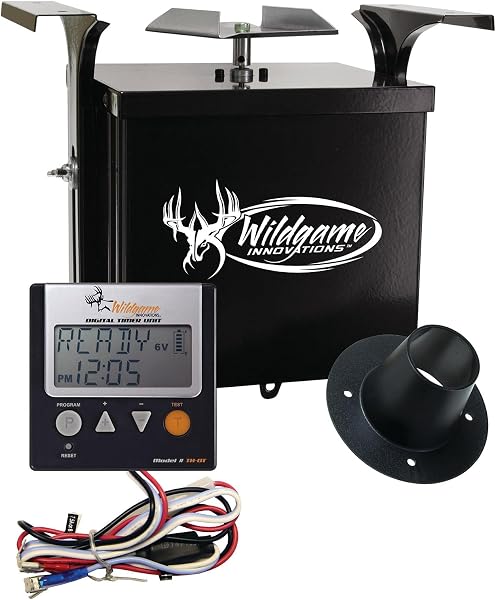
WILDGAME Trophy Hunter
8.8Editor score6V power supply
6 daily feed times
30-foot feed radius
Galvanized steel spinner
Find the right game feeders for 2026. We compare 10 standout options by build quality, useful features, owner feedback, value, and everyday trade-offs.
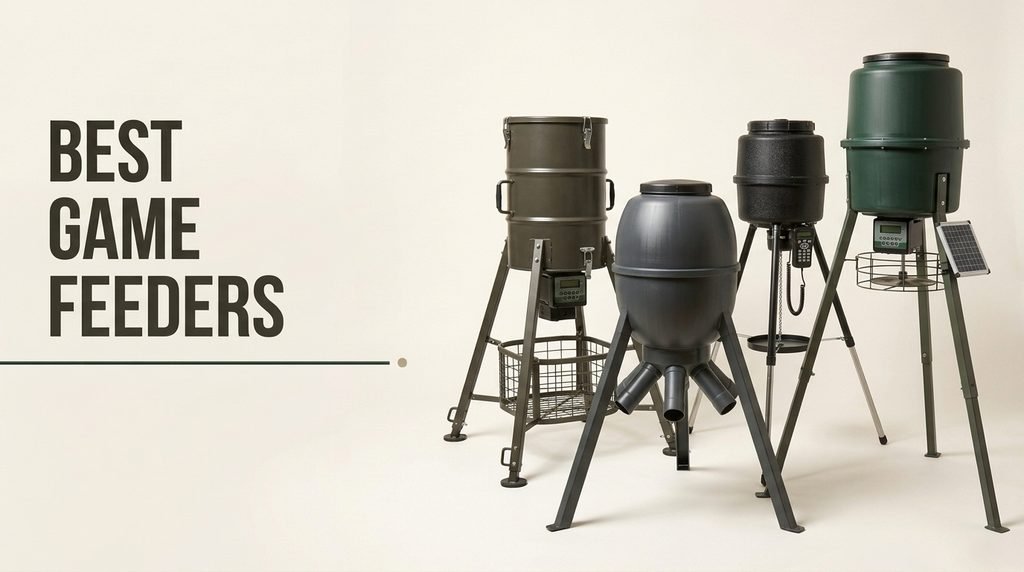
Choosing the right game feeders for 2026 means matching hopper capacity, timer flexibility, feed distribution radius, and varmint protection to your property size and target species. We compare 10 standout options across the factors that matter most: build materials, weather resistance, programmable feed schedules, power source compatibility, and real-world value for hunters and wildlife managers.
The gap between a simple gravity-fed barrel and a Bluetooth-controlled system with cellular connectivity is enormous. A basic hanging bucket feeder works fine for a small food plot, while a 250-pound tripod system with app control suits large properties where frequent refills are impractical. Knowing your acreage and refill schedule will narrow the field fast.
Pay close attention to feed time programming, motor speed settings, and whether the unit includes a varmint guard. Raccoons and squirrels can drain an unprotected feeder in days, and a timer that only offers two daily feed events may not match your hunting strategy. The reviews below break down what each model delivers and where it falls short.
We compared 10 game feeders using the details that actually help a buyer decide: hopper capacity, feed distribution radius, number of daily feed times, motor speed control, varmint protection, weather resistance, power source options, connectivity features, assembly difficulty, owner feedback, and overall value. The notes focus on practical trade-offs so each pick connects to how hunters and land managers actually deploy, maintain, and rely on feeders throughout the season.

Compare key features, scores, and current prices side by side. A shorter feature list means fewer details were available, not necessarily fewer capabilities.
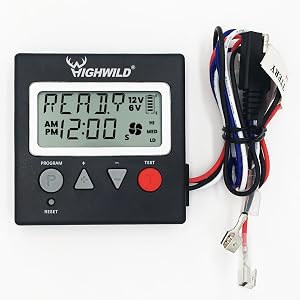


The Highwild Universal Digital Timer targets buyers who need a replacement timer or want to build a custom feeding system from individual components. At under thirty dollars, it is the most affordable option in this comparison, and the 4.5-star rating suggests that buyers find it reliable despite the low price point. The dual-voltage compatibility with both 6V and 12V control units gives it broader application than single-voltage timers.
We may earn a commission when you buy through this link, at no additional cost to you.
Eight programmable feed times per day is more than most competing timers offer, which matters for hunters who want to create complex feeding schedules that match shifting wildlife patterns throughout the season. Each feed event can be set from 1 to 30 seconds, and the three motor speed settings let you control distribution distance. The built-in memory preserves your programmed schedule even if the battery dies, which eliminates the frustrating task of reprogramming after a power interruption.
The dedicated test button is a practical feature that lets you confirm the entire feeder system is working correctly before leaving the property. Rather than waiting until the next scheduled feed time to discover a wiring problem, you can press the test button and watch the spinner operate in real time. The compact 3.5 by 3.5 inch footprint fits inside most standard feeder housings without modification.
Feeder motors and spinner plates often outlast the electronic timers that control them. Sun exposure, moisture intrusion, and battery corrosion can kill a timer long before the mechanical components fail. Rather than replacing an entire feeder system, swapping in a new timer like the Highwild can restore full functionality for a fraction of the cost. Before buying, confirm that your existing control unit is compatible with the timer’s voltage requirements and connector type.
The main trade-off is that this is a timer module only, not a complete feeder kit with motor and spinner plate. You will need a compatible control unit and motor to create a functioning system, which adds to the total cost. For buyers who already have a working motor and just need a more capable timer, or for DIY builders assembling a custom system, the Highwild timer delivers excellent functionality at the lowest price in this comparison.
Buyers who need a complete feeder kit with motor, spinner, and housing included.
We may earn a commission when you buy through this link, at no additional cost to you.
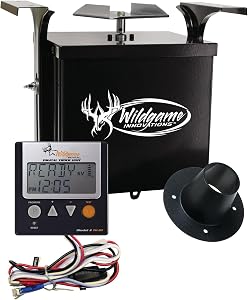
The WILDGAME Innovations Trophy Hunter is a power control unit kit designed for hunters who already have a hopper or barrel and want to upgrade the dispensing mechanism. Rather than selling a complete feeder system, this kit focuses on the motor, timer, and spinner plate that actually control when and how far feed is distributed. For land managers who have multiple existing feeders and want consistent, reliable electronics across all of them, a quality PCU kit is often a smarter investment than buying entirely new units.
We may earn a commission when you buy through this link, at no additional cost to you.
The digital timer allows up to six daily feed times with durations adjustable from 1 to 30 seconds, which provides enough flexibility to match dawn and dusk activity patterns for deer and other game. The 360-degree distribution pattern reaches up to 30 feet, creating a wide feeding zone that prevents dominant animals from monopolizing a single spot. The three-speed motor control lets you dial in the throw distance based on the type of feed you are using, since corn and protein pellets behave differently through the spinner.
The user interface is one of the stronger points of this kit. The large LCD screen and silicone rubber buttons are easy to operate even with gloves on during cold-weather setup, and the battery charge icon provides real-time voltage feedback so you know when it is time to swap batteries before the feeder stops running mid-season. The sliding door with pressure-activated locking latch keeps moisture and insects out of the electronics housing.
Different feed types require different spinner speeds to achieve optimal distribution. Corn kernels are heavier and throw farther at lower speeds, while lightweight protein pellets need higher RPM to reach the same distance. A three-speed motor lets you match the spin rate to your feed type, which prevents clumping, reduces waste, and ensures even coverage across the feeding zone. Without speed control, you may find that one feed type scatters perfectly while another piles up directly under the spinner.
The main trade-off is that this is a PCU kit only, meaning you need to supply your own barrel or hopper and mount the unit yourself. The 2-inch drop funnel simplifies installation on most standard feeders, but buyers who want a complete turnkey system should look at the WILDGAME Quick-Set Pro or Moultrie 250 instead. For anyone upgrading an existing feeder or building a custom setup from a 55-gallon drum, the Trophy Hunter kit delivers proven reliability at a reasonable price.
Buyers who want a complete feeder system with hopper, legs, and electronics in one package.
We may earn a commission when you buy through this link, at no additional cost to you.
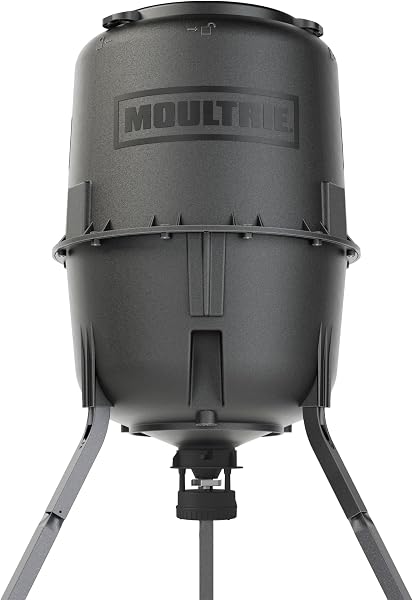
The Moultrie 250 Deer Feeder represents the most technologically advanced option in this comparison, offering Bluetooth app control from up to 300 feet away and optional cellular connectivity through a paired Moultrie Edge 3 Series trail camera. For land managers who oversee multiple properties or hunters who want to adjust feed schedules without physically visiting each feeder, remote control eliminates hours of driving and walking through the woods.
We may earn a commission when you buy through this link, at no additional cost to you.
The 250-pound, 30-gallon UV-resistant polymer hopper holds enough feed to last weeks between refills depending on your schedule, and the 5.5-foot fill height means you can top it off from ground level without a ladder. The metal spin plate distributes feed in all directions, and the Quick-Lock assembly system connects the feeder components without tools, which is a genuine time-saver when you are setting up multiple feeders in a single day.
Power options are flexible and practical. The feeder runs on four AA batteries for a full season or eight for extended use, and you can add a Moultrie solar panel for essentially maintenance-free operation. The app control requires no subscription, which distinguishes it from some competing smart feeder systems that charge monthly fees for remote access. The built-in digital timer also works independently for quick on-site adjustments when you do not want to pull out your phone.
Adjusting a feeder schedule traditionally requires driving to the property, walking to the feeder, opening the housing, and manually reprogramming the timer. On a large property with multiple feeders, this can consume an entire afternoon. Bluetooth control from 300 feet lets you adjust settings from your truck, and cellular connectivity through a paired trail camera lets you make changes from anywhere with a phone signal. For hunters managing lease properties hours from home, this capability can be the difference between a productive season and wasted trips.
The main trade-offs are the limited four feed events per day, which is fewer than several simpler timers offer, and the higher price point that reflects the Bluetooth and ecosystem features. If you do not need remote control and simply want more daily feed times, a less expensive option like the WILDGAME Trophy Hunter or Highwild timer will serve you well. For tech-savvy hunters and property managers who value remote adjustment and the Moultrie ecosystem, this feeder delivers capabilities that no other option in this comparison can match.
Budget-conscious buyers or those who only need a simple timer with many daily feed events.
We may earn a commission when you buy through this link, at no additional cost to you.
The WILDGAME Quick-Set Pro is a complete tripod feeder system that includes the hopper, legs, power control unit, and varmint guard in a single package. The 270-pound capacity and 50-foot feed radius make it one of the most capable complete feeders in this comparison, suited for hunters who want to establish a large feeding zone and keep it stocked for extended periods between refills.
We may earn a commission when you buy through this link, at no additional cost to you.
The rigid varmint guard is the standout feature and the reason this model carries the Pro designation. Unlike add-on varmint guards that flex and allow determined raccoons to reach the spinner, the Quick-Set Pro guard is a solid barrier that physically blocks access to both the feed opening and the PCU electronics. For properties with heavy raccoon, squirrel, or feral hog pressure, this protection can save hundreds of dollars in wasted feed over a season.
The digital timer offers six daily feed times with 1 to 30 second durations, and the powder-coated square tube legs provide more stability than round-leg designs on uneven ground. The box-style hopper includes a handle for easier filling and transport, and the built-in funnel directs feed efficiently to the spinner plate. Assembly takes roughly 15 to 20 minutes according to the product details, which is reasonable for a full tripod system.
A single raccoon can consume several pounds of corn per night, and a family of raccoons can empty a feeder in days. Over a full hunting season, unprotected feeders can lose 30 to 50 percent of their feed to varmints rather than the deer you are trying to attract. A rigid varmint guard like the one on the Quick-Set Pro eliminates most of this waste, which means the guard pays for itself in saved feed costs within the first season on properties with significant varmint pressure.
The main trade-offs are the 4.0-star rating, which suggests some owners have experienced issues with long-term reliability or assembly fit, and the overall weight when loaded that makes repositioning a chore. For hunters who want a complete, varmint-proof tripod feeder with a wide distribution pattern and do not mind the higher price, the Quick-Set Pro delivers a comprehensive package that eliminates the need to source individual components.
Buyers on a tight budget or those who need a lightweight feeder for frequent repositioning.
We may earn a commission when you buy through this link, at no additional cost to you.
This 6V metal feeder kit targets the growing number of hunters who build custom feeders from 55-gallon drums or large buckets rather than buying pre-assembled systems. The all-metal construction, including the housing, spin plate, and funnel, provides better durability than the plastic components found on many budget kits, and the metal housing resists the gnawing and scratching that raccoons and squirrels inflict on plastic units.
We may earn a commission when you buy through this link, at no additional cost to you.
The digital timer offers eight daily feed times with 1 to 30 second durations and three motor speed settings, which matches or exceeds the programming flexibility of kits costing significantly more. The adjustable mounting bracket accommodates various bucket sizes and lets you fine-tune the gap between the drop funnel and spin plate from 1/2 to 5/8 inch, which affects how much feed enters the spinner per revolution.
The solar panel compatibility is a practical feature for remote feeder locations where battery replacement is inconvenient. A port on the metal housing accepts an external 6V solar panel, which can extend battery life indefinitely in sunny locations and reduce the number of maintenance trips required during the season. The test button on the timer confirms that your programming is correct before you leave the site.
A feeder deep in the woods may require a 30-minute hike each way just to check the battery. A small 6V solar panel mounted on a nearby tree or post can keep the feeder battery charged throughout the season, eliminating most maintenance trips. When choosing a solar panel, match the voltage to your feeder kit and ensure the panel receives at least a few hours of direct sunlight daily. Even partial sun can significantly extend battery life compared to running on batteries alone.
The main trade-offs are the DIY installation requirement and the 6V battery that is not included. You will need to drill a hole in your bucket or drum, mount the funnel and PCU, and supply your own power source. For hunters who enjoy building custom setups and want a metal kit that will outlast plastic alternatives, this feeder kit delivers solid functionality at a mid-range price.
Buyers who want a pre-assembled feeder system without any drilling or mounting work.
We may earn a commission when you buy through this link, at no additional cost to you.
The Boss Buck Gravity Deer Feeder takes a fundamentally different approach from every other option in this comparison by eliminating electronics entirely. Instead of a motorized spinner and digital timer, this feeder uses gravity to deliver feed through angled ports at the base of the barrel. For hunters who want zero-maintenance feeding without batteries, timers, or motors to fail, the gravity design offers unmatched simplicity and reliability.
We may earn a commission when you buy through this link, at no additional cost to you.
The 200-pound capacity holds enough corn or protein pellets to sustain a deer herd for weeks, and the 3-way adjustable inner sleeve lets you control the flow rate to match different feed types and sizes. The 10-inch feeder ports are angled at 10 degrees with a 1-inch overhang, which promotes slow, controlled feeding that reduces waste and allows multiple animals to feed simultaneously. This slow-feed design is particularly useful for protein pellet programs where consistent daily intake matters more than timed bursts.
The roto-molded plastic barrel resists cracking, UV degradation, and condensation buildup that can spoil feed in metal barrels. The 75-inch tripod legs provide stable support on uneven ground and position the feed ports at a comfortable height for deer while the 3-inch-deep hatch lid on top helps deter raccoons and other critters from accessing the feed from above.
Timed feeders concentrate feed distribution at specific hours, which trains deer to visit at predictable times and creates better hunting opportunities during legal shooting light. Gravity feeders provide constant access, which supports overall herd nutrition but does not create the predictable patterns that hunters rely on. Many experienced land managers use both types: gravity feeders for year-round protein supplementation and timed feeders near hunting stands for seasonal patterning.
The main trade-off is the complete lack of scheduled feed times. A gravity feeder dispenses feed continuously, which means you cannot concentrate feeding at dawn and dusk when deer are most active and hunting is most productive. Continuous feeding also makes the feeder more attractive to varmints throughout the day and night. For hunters who want timed feeding to pattern deer for specific hunt windows, a motorized feeder is the better choice. For supplemental nutrition programs and low-maintenance feeding, the Boss Buck gravity system is hard to beat.
Hunters who need timed feed events to pattern deer for specific morning or evening hunts.
We may earn a commission when you buy through this link, at no additional cost to you.
This 5-gallon hanging feeder targets hunters and property owners who need a compact feeding solution for small food plots, backyard wildlife observation, or tight spaces where a full tripod feeder would be impractical. The hanging design suspends the feeder from a tree branch, post, or structure, which eliminates the need for ground-level legs and reduces the footprint to essentially zero. For urban-edge properties or small hunting leases, this space-saving approach can be the only practical option.
We may earn a commission when you buy through this link, at no additional cost to you.
The digital timer supports four daily feed times with 1 to 20 second durations, which is fewer events than some competitors but sufficient for basic dawn and dusk feeding schedules. The tilt-down timer screen is a thoughtful design feature that lets you read and adjust settings without removing the unit from its hanging position or straining to see a vertically mounted display. The galvanized steel rotating disc resists wear from abrasive corn and pellets better than plastic spinners.
The engineering plastic housing provides impact and weather resistance, and the 5-gallon capacity reduces refill frequency compared to smaller hanging feeders. The controlled dispensing helps prevent overfeeding that can attract raccoons and feral hogs, and the precise portion control reduces feed waste during rainy periods when excess feed would mold on the ground.
Hanging feeders excel in locations where ground space is limited, where flooding is a concern, or where you want to keep feed away from ground-dwelling varmints. Suspending the feeder several feet off the ground makes it harder for raccoons and feral hogs to access the feed, and the elevated position keeps the hopper above standing water during heavy rains. For small properties, tree stand locations, and areas with heavy varmint pressure, a hanging feeder can be more effective than a ground-level tripod.
The main trade-offs are the limited 5-gallon capacity that requires more frequent refills than larger systems, and the 3.8-star rating that suggests some owners have experienced reliability issues. For a primary feeder on a large property, this capacity is insufficient. For a supplemental feeder in a specific location, a small food plot, or a backyard wildlife setup, the hanging design offers convenient placement that ground-based feeders cannot match.
Hunters who need large hopper capacity for extended periods between refills on big properties.
We may earn a commission when you buy through this link, at no additional cost to you.
The WILDGAME Innovations Evolution 40-Gallon feeder uses a unique Varmint Vault system that recesses the spinner plate underneath a heavy-duty mounting bracket when not actively dispensing feed. During a feed cycle, centrifugal force drops the spinner plate down to release feed, and a spring automatically pulls it back up against the feed container when the cycle ends. This sealed position between feed events prevents raccoons, squirrels, and birds from reaching the feed opening, which is a more sophisticated approach than a simple cage guard.
We may earn a commission when you buy through this link, at no additional cost to you.
The 270-pound capacity and 50-foot feed radius match the Quick-Set Pro, making this one of the largest and widest-distributing feeders in the comparison. Six daily feed times with adjustable durations provide enough scheduling flexibility for most hunting strategies, and the powder-coated legs and galvanized steel spinner plate handle weather exposure well over multiple seasons.
The 40-gallon poly barrel uses a box design that simplifies filling from bags or buckets, and the overall assembly requires minimal effort according to the product details. The combination of large capacity, wide distribution, and active varmint sealing makes this feeder well-suited for properties with heavy wildlife pressure where feed loss is a significant concern.
Passive varmint guards use cages or shields that block physical access to the spinner area at all times. Active sealing systems like the Varmint Vault physically close the feed opening between dispensing cycles, which provides a more complete barrier against small animals that can squeeze through cage openings. The trade-off is mechanical complexity: springs and moving parts can wear out or fail over time, while a simple cage guard has almost nothing to break. Choose active sealing for extreme varmint pressure and passive guards for maximum long-term reliability.
The main trade-off is the 3.9-star rating, which is below the top performers in this comparison and suggests that some owners have experienced issues with the spring mechanism, assembly, or long-term durability. The Varmint Vault concept is innovative, but the execution may not be as refined as simpler varmint guard designs. For hunters willing to accept some risk in exchange for advanced varmint protection and large capacity, the Evolution offers a feature set that is difficult to find elsewhere.
Buyers who prioritize proven long-term reliability over innovative varmint protection features.
We may earn a commission when you buy through this link, at no additional cost to you.
The American Hunter 5-Gallon Hanging Bucket Feeder offers the most granular scheduling control in this comparison with up to 16 daily feed times and the ability to program different schedules for different days of the week. For wildlife researchers, game managers running specific feeding programs, or hunters who want to create complex patterns that shift throughout the week, this level of programming flexibility is unmatched by any other feeder in this guide.
We may earn a commission when you buy through this link, at no additional cost to you.
The 40-pound feed capacity is modest compared to the 200-plus pound tripod systems, but the hanging bucket design keeps the overall weight manageable for a single person to fill and hang. The weather-resistant plastic construction with a waterproof lid protects feed from rain and moisture, and the 6V spring-top lead acid battery provides reliable power through a typical hunting season.
The digital controls allow feed durations from 1 to 30 seconds, which gives you fine control over how much feed is dispensed at each event. The hanging design works well for small properties, food plots near tree stands, and locations where a ground-based feeder would be impractical or too visible.
Most feeders repeat the same schedule every day, which can train deer to expect feed at predictable times but does not account for varying human activity on the property. Day-of-week scheduling lets you reduce or eliminate feeding on days when you are not hunting, which prevents deer from becoming nocturnal at your stand location. You can also increase feed frequency on weekends when you plan to hunt, creating a more natural pattern that keeps deer comfortable visiting during legal shooting hours.
The main trade-off is the 3.4-star rating, which is the lowest in this comparison and suggests significant owner dissatisfaction with reliability, build quality, or performance. The 40-pound capacity also limits this feeder to supplemental use rather than primary feeding on larger properties. For buyers who specifically need day-of-week scheduling and many daily feed events, the American Hunter offers programming capabilities that no other option matches, but be prepared for potential reliability concerns.
Buyers who need high reliability and large capacity for primary feeding on big properties.
We may earn a commission when you buy through this link, at no additional cost to you.
This compact feeder kit is the smallest and most affordable complete kit in the comparison, designed for buyers who want to convert a standard bucket into a functional game feeder with minimal investment and effort. The 5.35 by 4.5 by 4.53 inch footprint fits on virtually any container, and the adjustable mounting arms accommodate a wide range of bucket sizes. For backyard wildlife feeding, small food plots, or introducing young hunters to feeder management, this micro kit lowers the barrier to entry significantly.
We may earn a commission when you buy through this link, at no additional cost to you.
The digital timer offers eight daily feed times with 1 to 30 second durations and three motor speed settings, which is surprisingly capable for a kit at this price point. The 4 AA battery power source eliminates the need for a bulky 6V spring-top battery, making the entire setup lighter and easier to handle. The hand-removable battery slot cover simplifies battery changes in the field without tools.
The solar panel quick-connect port at the bottom of the kit accepts a standard 6V solar panel for extended runtime, which is a valuable feature for a kit that would otherwise consume AA batteries rapidly. The compact spinner plate works well for short-range feeding in confined areas, and the quiet motor operation does not spook wildlife during feed events.
Starting with a compact kit like this one lets you learn feeder placement, timing, and wildlife patterns before investing in a larger system. Once you identify the most productive feeding locations on your property, you can upgrade to a full-size tripod feeder or a larger DIY kit with confidence that the location will produce results. Many experienced land managers keep a few small kits running at experimental locations while their main feeders operate at proven spots.
The main trade-offs are the limited throw distance from the small spinner plate and the relatively short battery life when running on AA cells without solar supplementation. The 3.6-star rating also suggests that some buyers have encountered quality control or durability issues. For a primary deer feeder on a large property, this kit lacks the capacity and distribution range needed. For small-scale feeding, backyard wildlife observation, chicken coops, or as an inexpensive starter kit, the compact size and low price make it a practical entry point.
Hunters who need long-range feed distribution or extended battery life without solar supplementation.
We may earn a commission when you buy through this link, at no additional cost to you.
Selecting the right game feeder depends on your property size, target species, hunting strategy, and how often you can visit the site for refills and maintenance. This section covers the factors that make the biggest practical difference in feeder performance and long-term satisfaction.
Hopper capacity directly determines how often you need to visit the feeder to refill it, which is one of the most important practical considerations for any game feeder setup. A 250-pound hopper like the Moultrie 250 can hold enough corn or protein pellets to last several weeks depending on your feed schedule and local wildlife density. A 5-gallon hanging feeder holding roughly 40 pounds may need refilling every few days during peak activity periods. The right capacity depends on your property size, the number of animals you are feeding, and how frequently you can access the site.
Overestimating capacity is generally better than underestimating, since an empty feeder stops patterning deer and forces you to rebuild their feeding habits from scratch. However, larger hoppers also mean heavier loads to transport and fill, which matters if your feeder is located far from vehicle access. A 270-pound feeder like the WILDGAME Quick-Set Pro requires a truck or ATV to deliver feed, while a 5-gallon hanging bucket can be carried by hand.
Match hopper capacity to your realistic refill schedule. If you visit the property weekly, a 200-plus pound feeder provides a comfortable buffer. If you can only visit monthly, consider the largest capacity you can manage logistically or supplement with a gravity feeder like the Boss Buck that requires less frequent attention.
The feed distribution radius determines how large an area the feeder covers and how many animals can feed simultaneously. A 50-foot radius, offered by the WILDGAME Quick-Set Pro and Evolution 40, creates a wide feeding zone that accommodates multiple deer and reduces competition from dominant animals. A 30-foot radius like the Trophy Hunter kit provides adequate coverage for smaller food plots and tighter hunting setups.
The distribution pattern also matters. Centrifugal spinners throw feed in a 360-degree circle, which works well in open areas but can waste feed in thick brush where half the throw lands in vegetation. Gravity feeders like the Boss Buck dispense feed directly below the ports, creating a concentrated feeding spot that works well for trail camera monitoring but limits the number of animals that can feed at once.
Choose a wider radius for open fields and large food plots where you want to attract and hold more deer. Choose a tighter pattern for small clearings, trail intersections, or locations near your stand where you want deer concentrated in a specific shooting lane.
The number of daily feed times and the flexibility of the scheduling system determine how precisely you can match feeding to wildlife activity patterns. Most hunters concentrate feed events at dawn and dusk when deer are naturally most active, which typically requires two to four daily feed times. More advanced timers like the Highwild and Compact 6V Kit offer eight feed times, while the American Hunter provides 16 events with day-of-week control for highly customized schedules.
Feed duration, typically adjustable from 1 to 30 seconds, controls how much feed is dispensed at each event. A 5-second burst of corn may scatter a few pounds across the feeding zone, while a 20-second run can empty several pounds rapidly. Motor speed settings add another layer of control by adjusting how far the feed is thrown. The combination of duration and speed lets you fine-tune the total daily feed amount to match your nutritional goals and budget.
Start with two feed times at dawn and dusk, then add midday events if you want to encourage daytime activity. Monitor feed consumption by checking how much remains between refills and adjust durations accordingly. Overfeeding wastes money and attracts varmints, while underfeeding fails to hold deer on your property.
Varmints are the single biggest source of feed waste for game feeders, and the level of protection you need depends on the wildlife pressure in your area. Raccoons, squirrels, opossums, feral hogs, and even bears can drain an unprotected feeder rapidly. Basic protection includes a varmint guard cage around the spinner area, which blocks larger animals but may allow small squirrels to reach the feed. Advanced systems like the WILDGAME Evolution Varmint Vault actively seal the feed opening between dispensing cycles.
Gravity feeders present a different varmint challenge because the feed ports are always accessible. The Boss Buck addresses this with angled ports and a 1-inch overhang that slows feed flow and makes it harder for small animals to reach inside, but determined raccoons can still access gravity-fed corn. Hanging feeders like the 5-Gallon Hanging model gain some natural varmint protection from their elevated position, though raccoons are excellent climbers.
If your property has heavy raccoon or feral hog pressure, invest in a feeder with a rigid varmint guard or active sealing system. The additional cost pays for itself in saved feed within the first season. For properties with minimal varmint activity, a basic guard or no guard at all may be sufficient, letting you allocate your budget to capacity or timer features instead.
Most motorized game feeders run on 6V spring-top lead acid batteries, which provide reliable power for a full hunting season under normal use. Some kits, like the Compact 6V Feeder Kit, use standard AA batteries for convenience but sacrifice runtime. The Moultrie 250 runs on four or eight AA batteries, which is unusual for a large feeder but simplifies battery sourcing in remote areas.
Solar panel compatibility is increasingly common and can dramatically extend battery life or eliminate battery replacement entirely. The 6V Metal Feeder Kit and Compact 6V Kit both include solar panel ports that accept standard 6V panels. A small solar panel mounted on a nearby tree can keep the feeder battery charged throughout the season, which is especially valuable for remote locations that require long hikes to access.
Choose a 6V battery system for standard reliability and easy replacement. Add a solar panel if your feeder is in a remote location or if you want to minimize maintenance visits. For short-term or seasonal use, AA-powered feeders offer convenience at the cost of more frequent battery changes.
Game feeders live outdoors year-round and face sun, rain, wind, temperature extremes, and physical abuse from wildlife. The construction materials determine how well the feeder withstands these conditions over multiple seasons. Galvanized steel spinner plates and powder-coated steel legs, found on the WILDGAME models, resist rust and corrosion far better than bare metal or painted steel. UV-resistant polymer hoppers like the Moultrie 250 resist cracking and fading from prolonged sun exposure.
Roto-molded plastic, used on the Boss Buck Gravity feeder, provides excellent impact resistance and does not dent or rust like metal barrels. However, plastic can become brittle in extreme cold and may crack if struck by falling branches or large animals. Metal construction is generally more durable for the mechanical components like spinners and motor housings, while polymer works well for large hopper bodies where weight and corrosion resistance matter.
Prioritize galvanized or powder-coated metal for spinners, legs, and motor housings. UV-resistant polymer is ideal for hopper bodies. Avoid feeders with bare steel components that will rust within a season or two, especially in humid climates.
Before deploying a new feeder, assemble and test the entire system at home where you have good light and easy access to tools. Program the timer with your intended schedule, run the test button to confirm the spinner operates correctly, and check that all connections are secure. For tripod feeders, practice the assembly process so you can set up quickly in the field. Fill the hopper with a small amount of feed and run a few test cycles to verify that the feed flows smoothly through the funnel and distributes evenly from the spinner plate.
Place the feeder in an open area with good visibility for deer and clear lines of sight for your trail cameras or hunting stand. Orient the feeder so the prevailing wind carries the scent toward deer travel corridors rather than away from them. Anchor tripod legs securely in the ground, especially in areas with high winds or feral hog activity, and position the feeder at least 100 yards from your stand to prevent deer from associating the feeding area with human presence. Start with conservative feed durations and increase gradually based on consumption patterns.
Maintain the feeder by checking the battery level and feed supply every two to four weeks during the season. Clean the spinner plate and funnel periodically to remove caked feed, moisture residue, and insect nests that can jam the mechanism. Inspect the rubber gaskets and seals on the PCU housing for cracking or deterioration, and replace them before moisture reaches the electronics. Before the off-season, empty the hopper completely, clean all components, and store the feeder in a dry location to prevent rust and rodent damage. These maintenance steps will extend the life of your feeder and ensure reliable performance when the next season opens.
Most hunters start with two feed times at dawn and dusk to match natural deer activity patterns. Adding a midday event can encourage daytime movement if your property gets limited daylight hunting pressure. Four to six feed times cover most scenarios effectively. More than eight events per day typically wastes feed without providing additional patterning benefits.
Whole corn is the most popular and affordable option for timed spin-cast feeders because it flows well through the mechanism and attracts deer reliably. Protein pellets provide better nutrition for herd management but can clump in humid conditions and may require higher motor speeds to distribute evenly. Avoid fine-grain feeds and mineral mixes in spin-cast feeders, as they tend to clog the funnel and spinner plate.
A distance of 100 to 200 yards is ideal for most hunting situations. This range keeps deer within effective shooting distance while preventing them from associating the stand location with human activity. Place the feeder upwind of your stand so deer approach from downwind, which gives you a scent advantage. Adjust the distance based on your weapon type and the terrain.
If your property has raccoons, squirrels, or feral hogs, a varmint guard is strongly recommended. These animals can consume or scatter a significant portion of your feed, which wastes money and reduces the effectiveness of your patterning program. A rigid varmint guard or active sealing system typically pays for itself in saved feed within the first season on properties with moderate to heavy varmint pressure.
Most 6V game feeder kits can be connected to a standard 6V solar panel, either through a dedicated port like the one on the 6V Metal Feeder Kit or by wiring the panel to the battery terminals. Check the voltage requirements of your specific feeder before connecting a solar panel, as using the wrong voltage can damage the timer electronics. A 5 to 10 watt panel is usually sufficient for a single feeder.
A standard 6V spring-top lead acid battery typically lasts one to three months depending on the number of daily feed events, motor speed, and feed duration. Running two short feed events per day on low speed may stretch a battery through an entire season, while eight long events on high speed can drain it in weeks. Adding a solar panel can extend battery life indefinitely in sunny locations.
A gravity feeder dispenses feed continuously through open ports using gravity, which requires no batteries or electronics but does not allow scheduled feeding. A timed feeder uses a motorized spinner and digital timer to distribute feed at specific intervals, which lets you pattern deer for predictable visit times. Gravity feeders are simpler and more reliable for supplemental nutrition, while timed feeders are better for hunting strategy.
Moisture is the primary cause of feed clumping, especially with protein pellets. Keep the hopper lid sealed tightly and check the gasket regularly for wear. In humid climates, consider adding a desiccant pack inside the hopper or switching to whole corn, which resists clumping better than pellets. Avoid filling the hopper during rain, and clean out any caked feed before adding fresh supply.
Yes, game feeders attract a wide range of wildlife including turkeys, hogs, bears, and various bird species. The feed type and distribution pattern determine which animals visit most frequently. Corn attracts deer, turkeys, and hogs, while protein pellets are more specific to deer and livestock. Be aware that attracting non-target species like bears may create safety concerns and legal issues in some areas.
The WILDGAME Trophy Hunter PCU Kit earns the top overall pick for its combination of reliable galvanized steel construction, 30-foot distribution radius, six daily feed times, and real-time battery monitoring at a reasonable price. For hunters who already have a hopper or barrel and need a dependable power control unit, the Trophy Hunter delivers proven performance that has made it one of the most popular feeder kits on the market.
For buyers who want the most advanced technology available, the Moultrie 250 Bluetooth feeder offers app-based remote control and cellular connectivity that no other option in this comparison can match. The Highwild Digital Timer provides the best value for anyone needing a replacement timer or building a custom system on a budget. The Boss Buck Gravity feeder is the right choice for hunters who want zero-maintenance supplemental feeding without batteries or electronics. For properties with heavy varmint pressure, the WILDGAME Quick-Set Pro and Evolution 40 offer dedicated protection systems that save significant feed costs over a season.
Your final choice should come down to three questions: how large is the area you need to feed, how often can you visit the site for refills, and do you need timed feeding to pattern deer for hunting? Answer those honestly and the right feeder from this comparison will stand out. Any of these 10 game feeders will attract and hold wildlife effectively when matched to your property conditions and management goals.