Little Tikes Turtle
8.0Editor score38 x 34 inches
Holds 100+ lbs sand
Four molded seats
10.6 lb wagon weight
Find the right sandboxes for 2026. We compare 10 standout options by build quality, useful features, owner feedback, value, and everyday trade-offs.
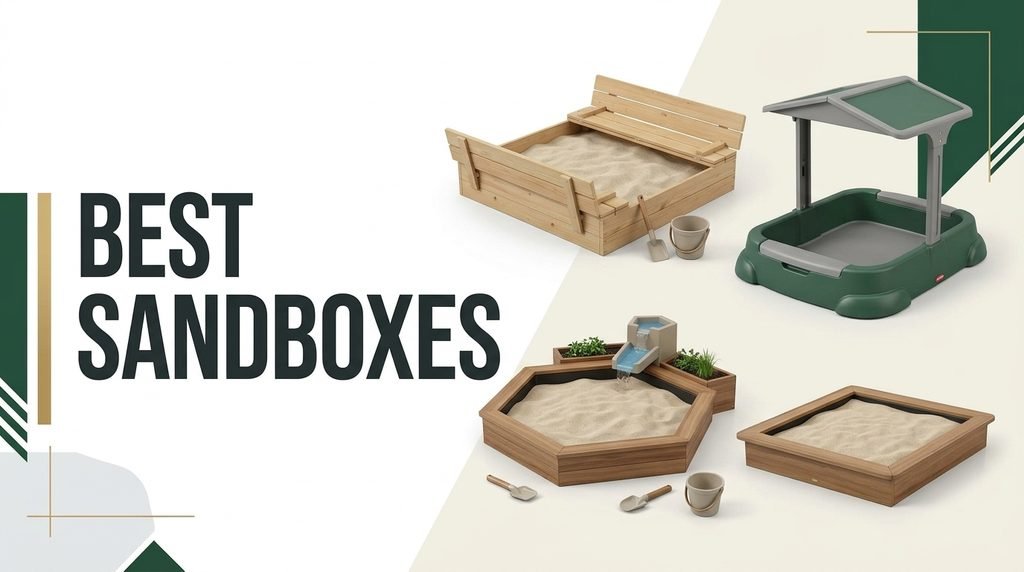
Find the right sandboxes for 2026. We compare 10 standout options by the factors that actually matter for backyard play, including size and capacity, wood or plastic construction, weatherproof covers, UV canopies, built-in seating, drainage design, safety certifications, ease of assembly, and the everyday trade-offs between long-term durability and quick setup.
Sandboxes range from compact molded plastic turtles for toddlers to large octagonal cedar frames that seat six or more kids. The right choice depends on your yard size, your child’s age, whether you need portability, and how much protection from sun, rain, and animals you want built into the design.
This guide covers a broad mix of options, from simple ready-to-play plastic models to premium wooden sand pits with 360-degree canopies and storage benches. Each pick is evaluated on the details parents care about most: safety, weather resistance, seating capacity, and long-term value across multiple seasons of outdoor play.
We compared 10 sandboxes using the details that actually help a parent decide: size and sand capacity, wood or plastic construction, weatherproof covers, UV canopies, seating layout, drainage and liner design, safety certifications, assembly effort, and value. The notes focus on practical trade-offs so each pick feels connected to how families actually set up, use, and maintain a sand play area across changing weather and multiple seasons of backyard use.


Compare key features, scores, and current prices side by side. A shorter feature list means fewer details were available, not necessarily fewer capabilities.


The Step2 Naturally Playful sandbox earns the highest rating in this guide with a 4.7-star average, reflecting years of positive owner feedback. Its double-walled plastic construction is thicker and more rigid than most molded competitors, which helps it survive years of outdoor use without cracking, fading, or peeling. That kind of long-term durability matters when you're buying for a growing toddler.
We may earn a commission when you buy through this link, at no additional cost to you.
The sandbox measures 44 by 32 inches and holds up to 200 pounds of play sand, which is generous for a plastic model. Four built-in seats let multiple kids play together, which naturally encourages sharing, turn-taking, and early social development. The included lid seals the sand from rain, leaves, and animals overnight, and it’s light enough for a parent to remove and replace easily.
One of the biggest practical advantages is that this sandbox ships fully assembled. There’s no hardware to sort, no instructions to follow, and no tools required. Open the box, place it in the yard, add sand, and start playing. Cleaning is equally simple, since the plastic surface wipes down or hoses off quickly without damaging any finish.
Because there’s no assembly, you can experiment with placement before committing. Try the sandbox in a few spots to see where it gets the best mix of morning sun and afternoon shade. Placing it on a level surface, even a patch of flat grass, helps the lid seal properly and keeps water from pooling on top after rain.
The main compromise is aesthetic. A plastic sandbox looks less premium than a natural cedar frame and won’t blend into landscaped yards as gracefully. For families with toddlers who want maximum durability, zero assembly, and easy cleaning, the Step2 remains one of the smartest picks in the category. Older kids may prefer a larger wooden setup as they grow.
Families with older kids who need a larger wooden sandbox designed to handle group play.
We may earn a commission when you buy through this link, at no additional cost to you.
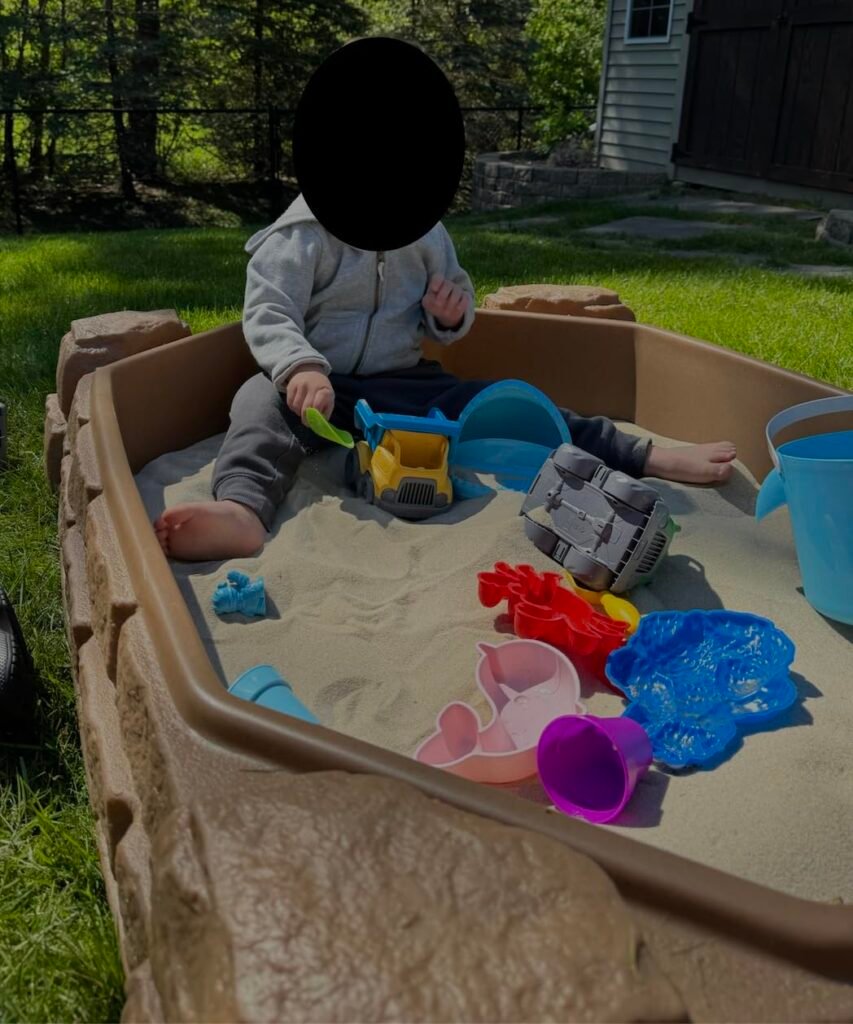
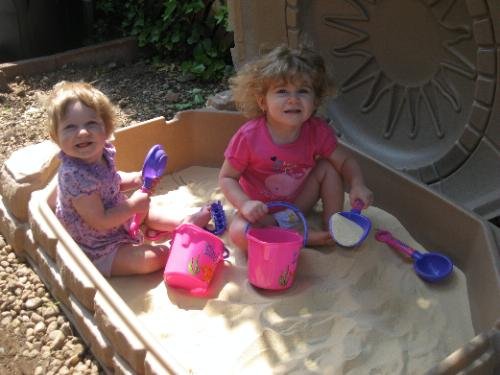
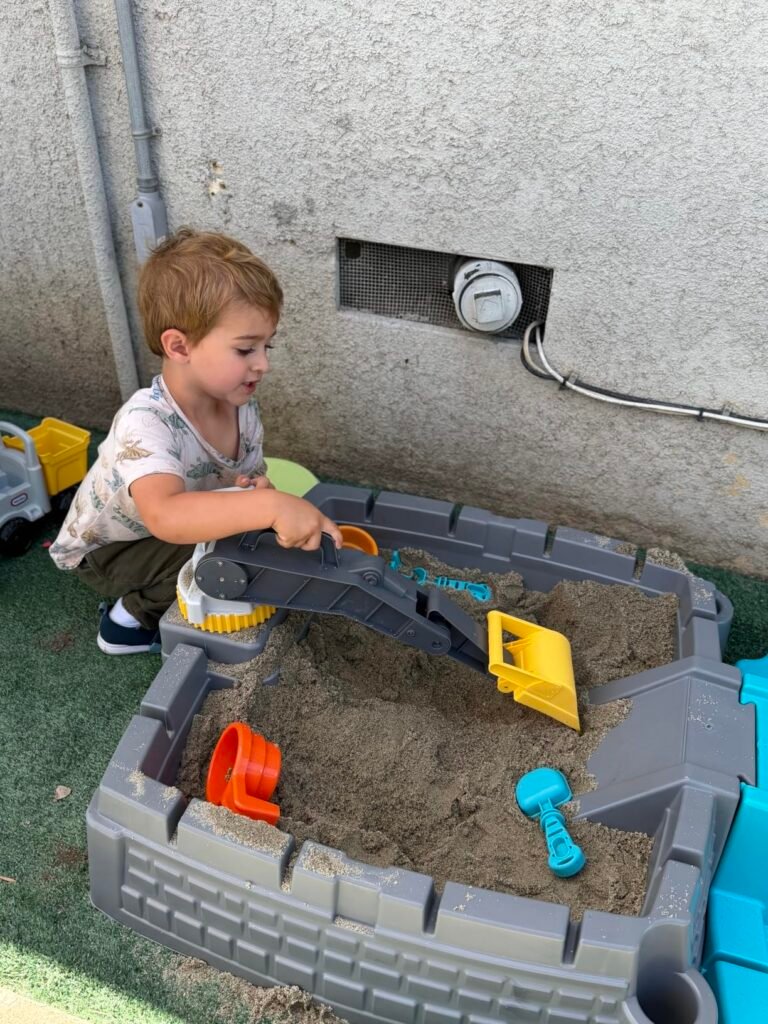
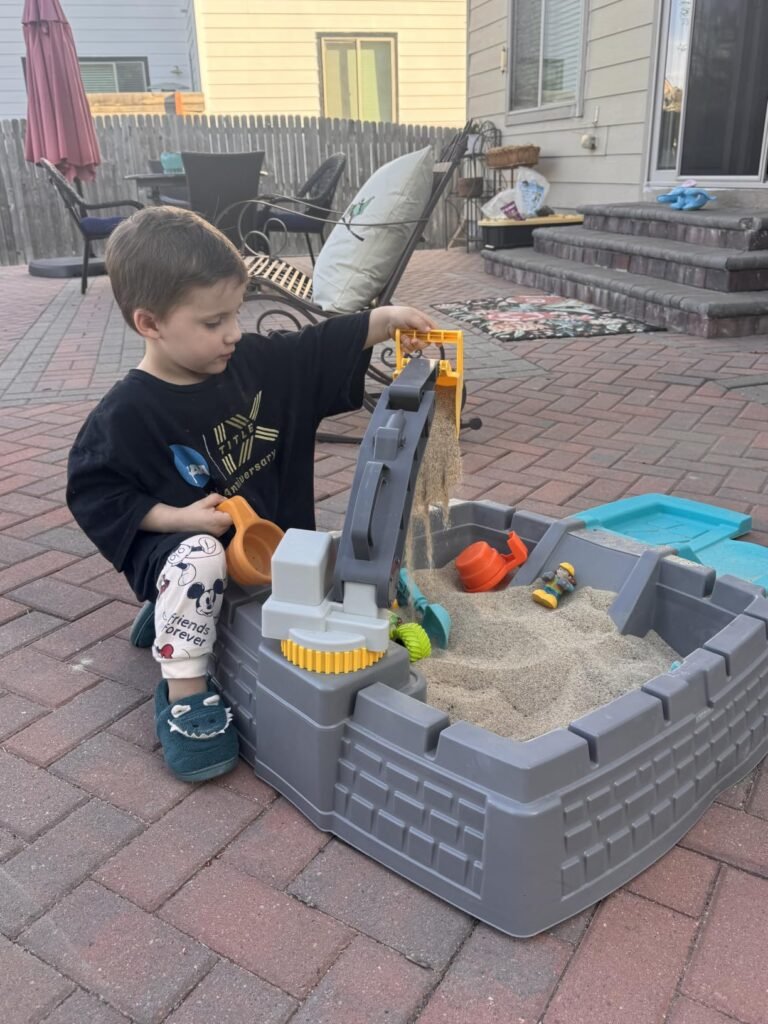
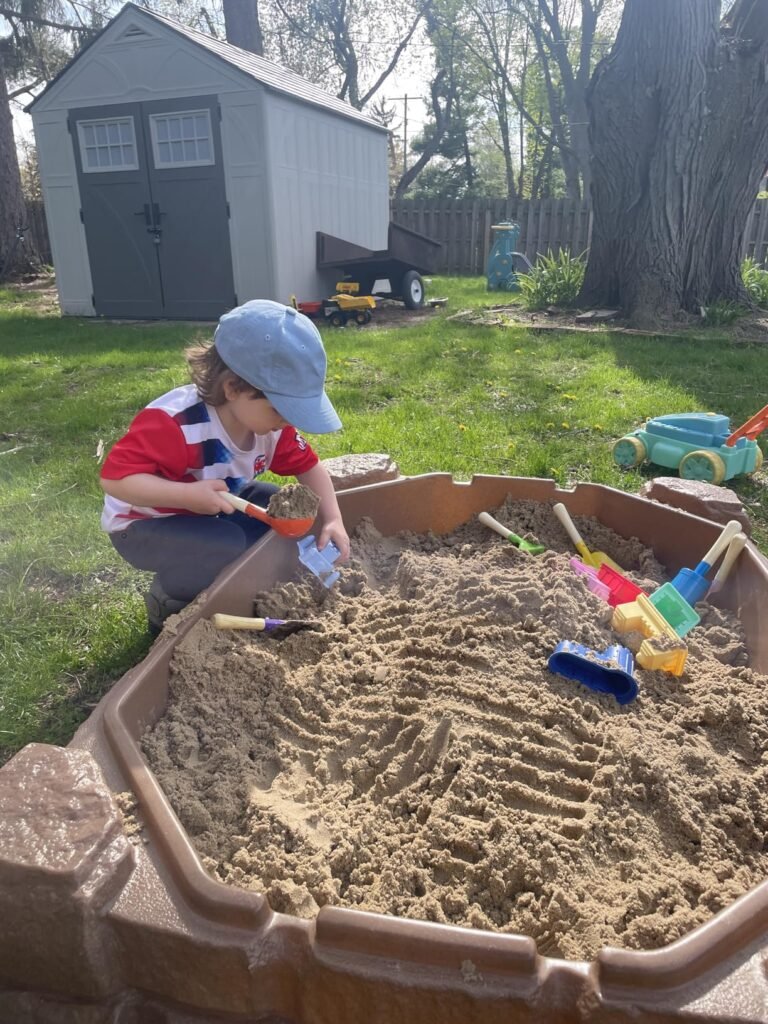
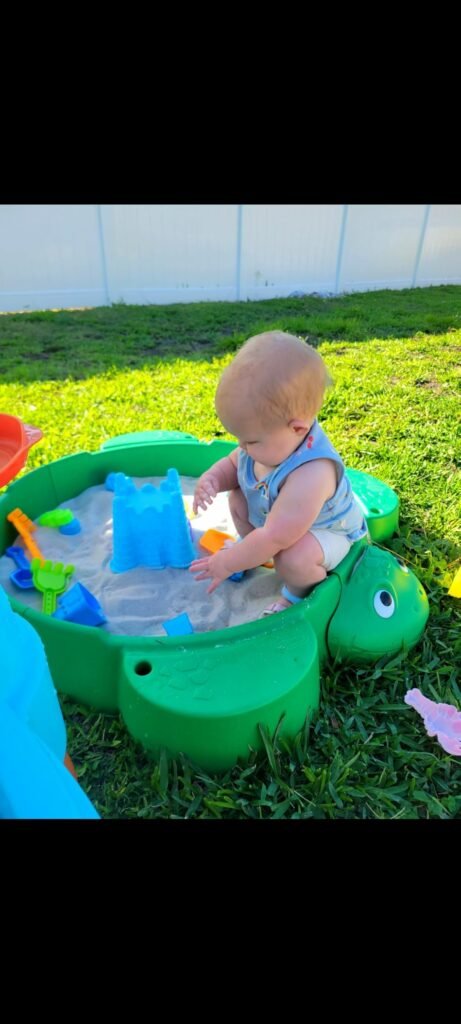
The Little Tikes Turtle is one of the most recognizable sandboxes on the market and remains a smart entry-level pick for families with young children between one and six years old. Its molded plastic construction is lightweight enough to move around the yard as needed, yet the friendly turtle face and rounded shape make it visually appealing to toddlers who are just learning to enjoy sand play.
We may earn a commission when you buy through this link, at no additional cost to you.
Despite the compact 38 by 34 inch footprint, four molded-in seats let multiple kids play at once, and umbrella slots on the outside accept a standard patio umbrella for shade. The internal area holds more than 100 pounds of sand, which is plenty for building castles, digging tunnels, and running trucks through a mini construction site. The removable turtle shell lid snaps into place and tethers to the base so it doesn’t blow away.
Setup is straightforward with a single one-time assembly, and the entire unit weighs just over 10 pounds when empty. That makes it easy to reposition on grass, patio, or deck as the sun moves or as your yard layout changes. The plastic construction wipes clean easily and doesn’t require the annual sealing or refinishing that wooden sandboxes need.
The four umbrella slots let you position a patio umbrella at whichever corner best blocks the current sun angle. A standard 6-foot umbrella works well for most setups. If you don’t own one, look for a lightweight beach umbrella with an angle-adjustable pole so you can fine-tune shade coverage as the sun moves during play sessions.
The main compromise is size. A 38-inch turtle works well for one to three toddlers, but growing children and larger friend groups will outgrow it faster than a 47-inch wooden model. The 4.0-star rating suggests some owners have found the plastic thinner than expected. For younger kids and smaller yards, the Turtle remains a beloved classic that’s hard to beat on price and simplicity.
Families with older kids or those who want a sandbox large enough for extended group play.
We may earn a commission when you buy through this link, at no additional cost to you.
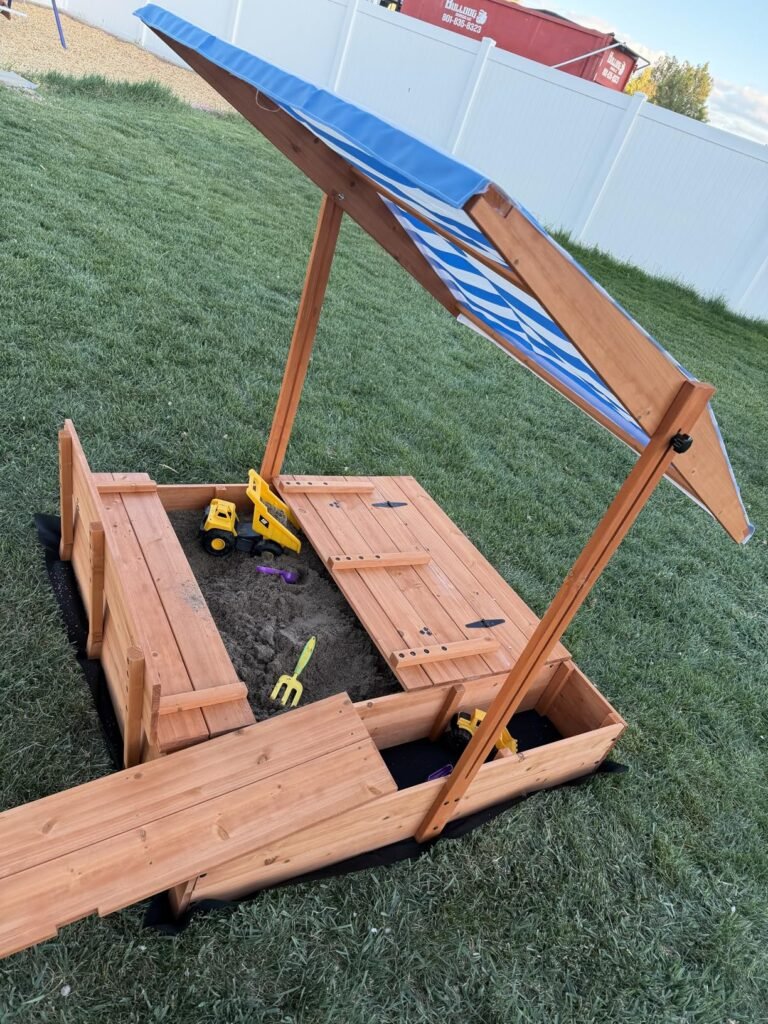
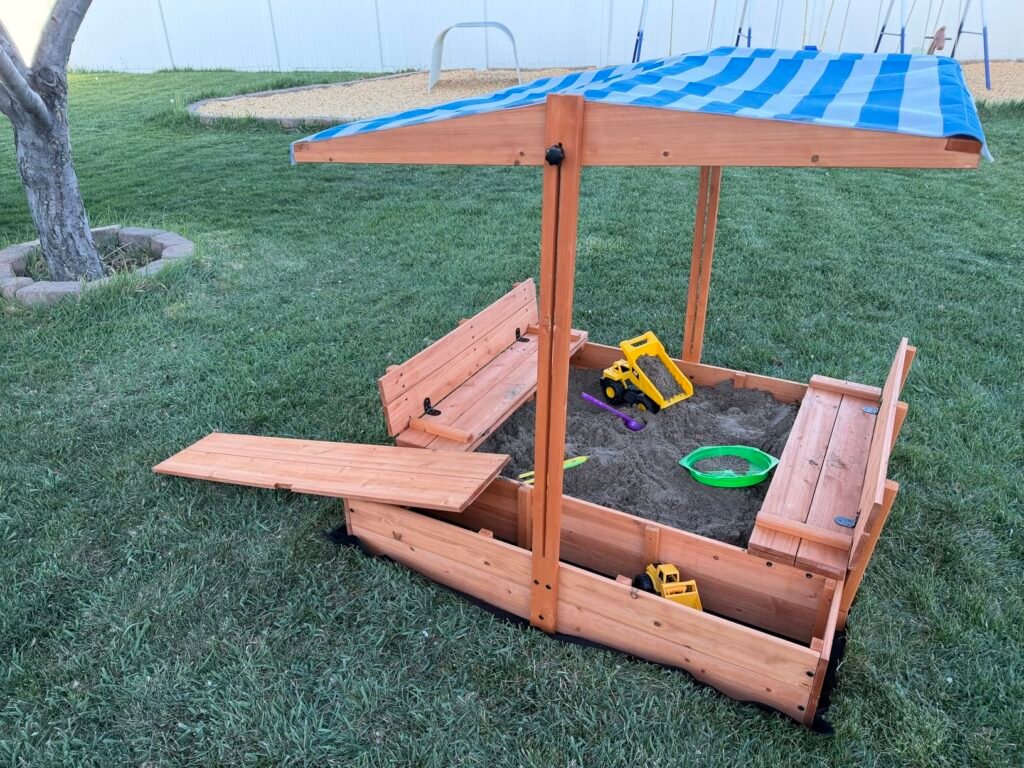
This 47-inch wooden sandbox is a full-featured backyard setup for children between three and eight years old. It combines a spacious play area, storage benches with 200-pound capacity, and a UV-blocking canopy that rotates a full 360 degrees to follow the sun throughout the day. That kind of comprehensive shade control is genuinely useful in yards with limited natural cover.
We may earn a commission when you buy through this link, at no additional cost to you.
The frame uses heat-treated fir wood finished with eco-friendly water-based paint, so it holds up to weather and stays smooth to the touch. The benches include integrated storage compartments underneath for sand toys, buckets, and shovels, which keeps the play area tidy and reduces the number of loose items scattered across the lawn. Fold-down bench panels create a full cover that keeps rain, leaves, and animals out overnight.
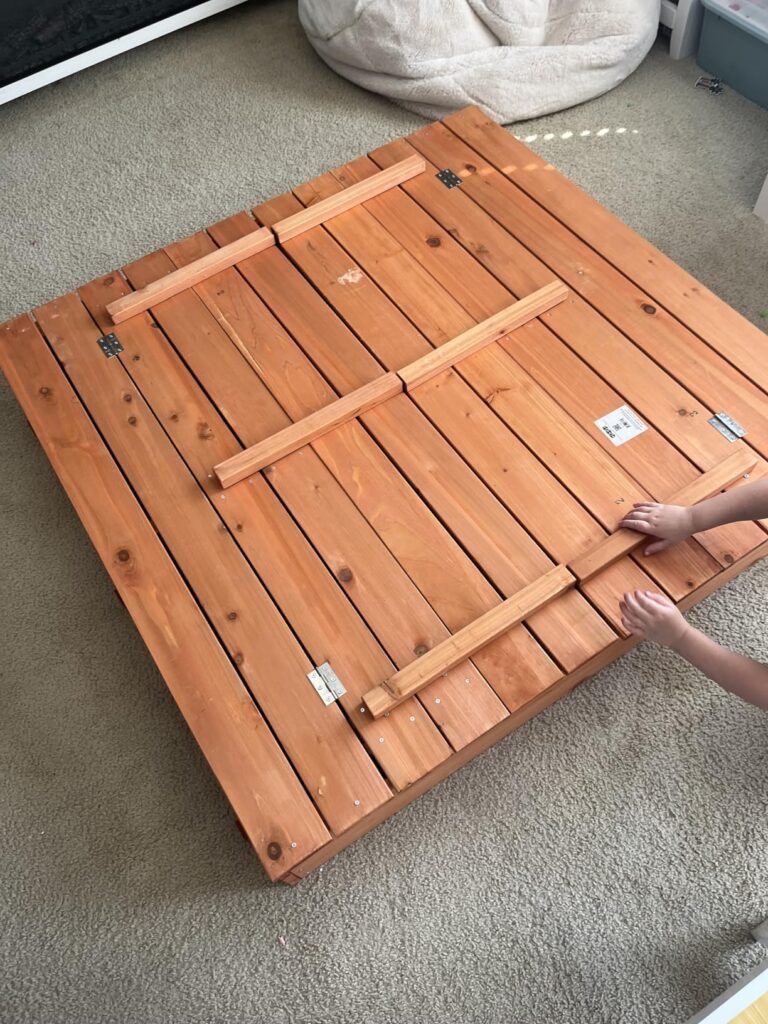
Assembly takes about 30 minutes with the included hardware and instructions. All parts are precut, so no cutting or drilling is required. The bottom liner sits between the sand and the ground, which slows weed growth and helps drainage without letting sand mix with soil below. That extends the useful life of the sand and reduces cleanup between seasons.
Sort sand toys by type before storing them under the benches so kids can find what they want quickly. Keep a mesh bag inside each compartment to make it easier to lift toys out and shake off sand before putting them back. Emptying and wiping down the storage areas every few weeks prevents sand buildup from making the compartments harder to open and close.
The main trade-offs are weight and setup effort compared to a molded plastic model. Once assembled, this sandbox is a semi-permanent yard installation rather than a movable toy. For families who want a proper wooden sand pit with shade, storage, and a proper lid, this model delivers a lot of features at a mid-range price.
Families who prefer a movable plastic sandbox or want something they can assemble in five minutes.
We may earn a commission when you buy through this link, at no additional cost to you.
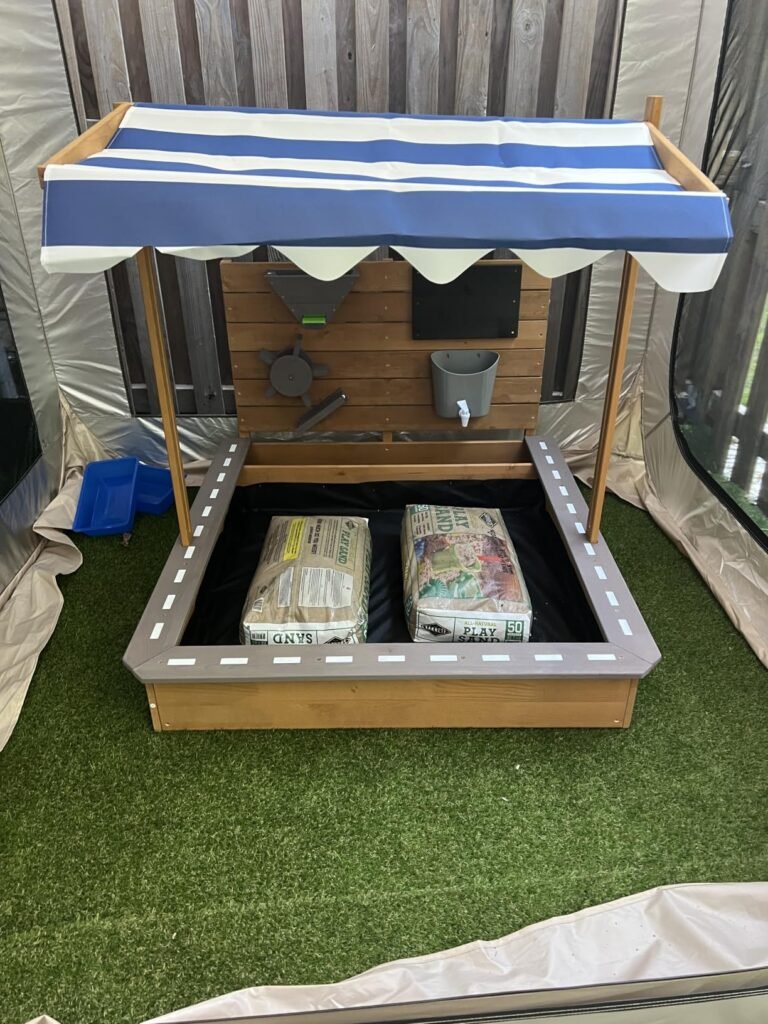
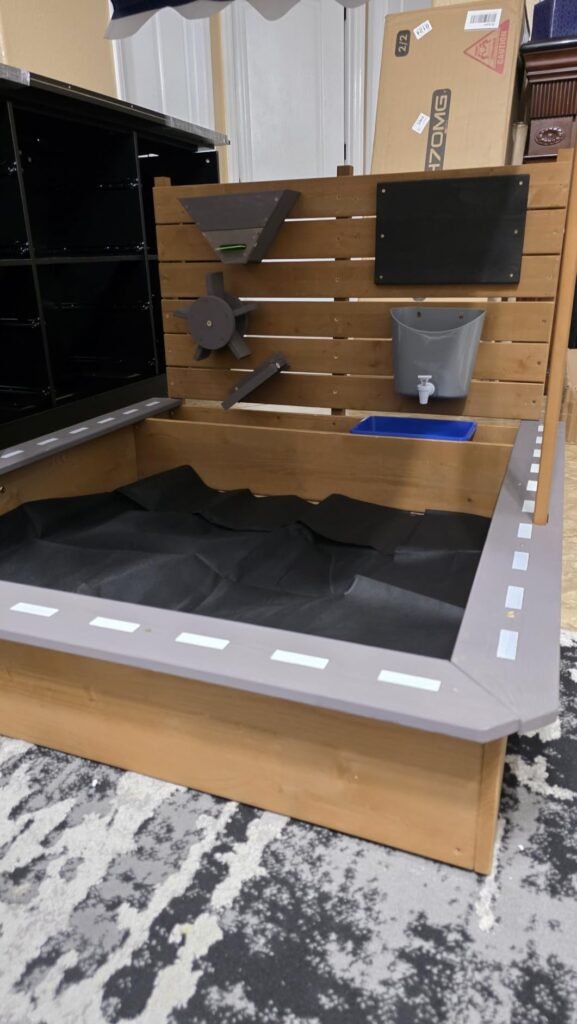
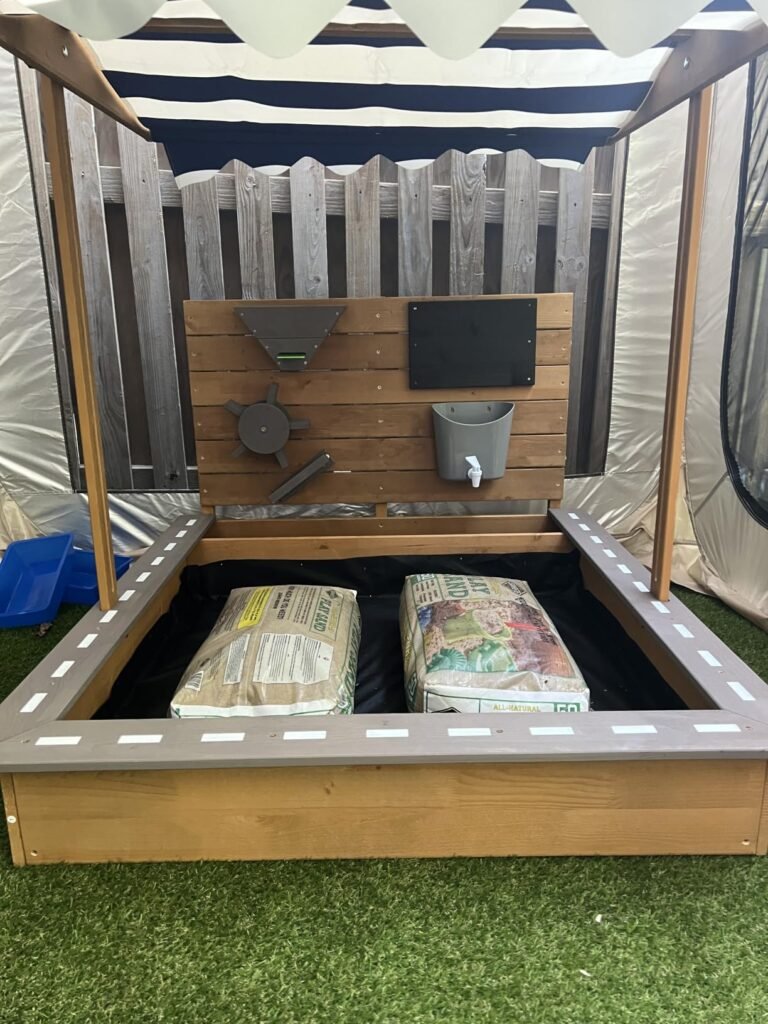
The Pipleo stands out for adding play features most sandboxes leave out entirely. In addition to a spacious sand area, it includes a built-in sand funnel with spiral chute, two corner buckets, and a drawing board where kids can sketch or play tic-tac-toe with parents. That variety keeps children engaged in different ways than plain sand play, and it makes the sandbox feel like a small activity center.
We may earn a commission when you buy through this link, at no additional cost to you.
Construction uses splinter-less natural fir wood finished with non-toxic water-based paint, and each piece is heat treated for outdoor durability. The sandbox holds up to 250 pounds of sand and uses a bottomless design for drainage. An internal black liner keeps sand contained without preventing water flow, and an Oxford fabric cover protects the play area from rain and animals when not in use.
The retractable roof is a real highlight. Made with a thicker wood handle in the updated version, it slides open for sun-loving play sessions and closes to block harsh midday sun or sudden rain showers. Adjustable knobs let you set the roof height based on the sun angle. ASTM and CPSIA certifications provide independent verification of safety standards, which matters for parents who want documented compliance.
The funnel and chute encourage kids to pour, measure, and predict where sand will flow, which develops early physics intuition. Try setting up simple challenges like filling a bucket using only the funnel, or racing to move sand from one corner to another using different tools. These small games extend attention span and make the sandbox feel new each time.
The main trade-off is price and assembly complexity. With more features come more parts and slightly longer setup than a basic four-wall sandbox. For families who want a sand play area that doubles as an activity station and comes with real weather protection, the Pipleo is one of the most thoughtful designs available.
Buyers who want the simplest, cheapest wooden sandbox without extra features.
We may earn a commission when you buy through this link, at no additional cost to you.
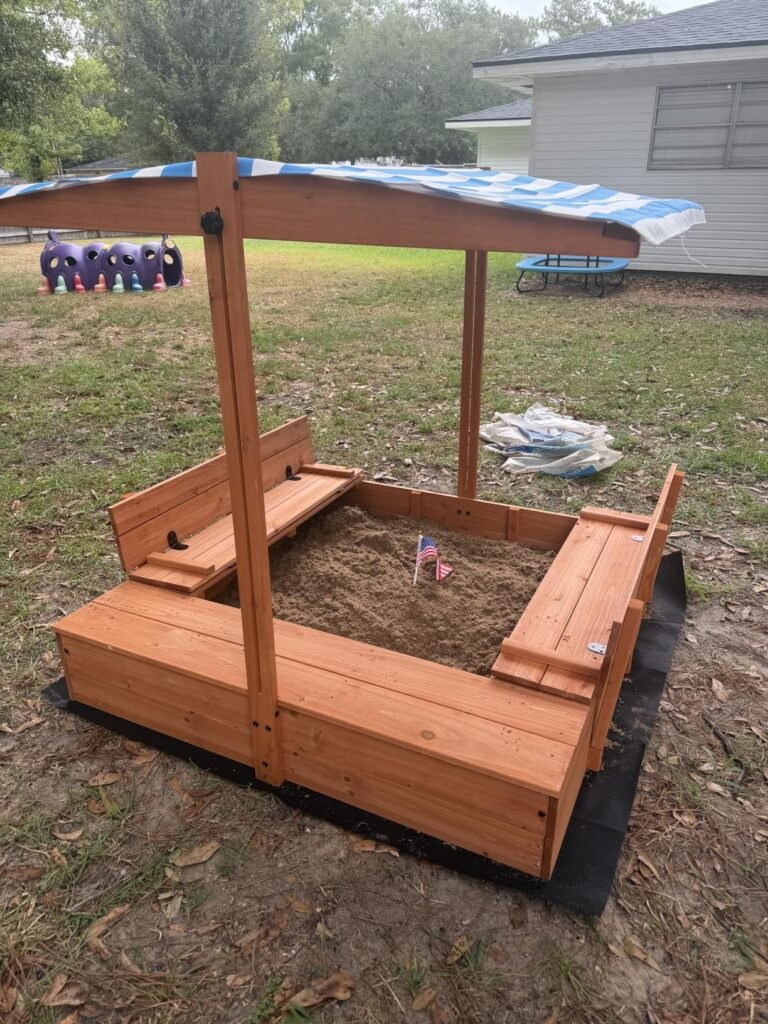
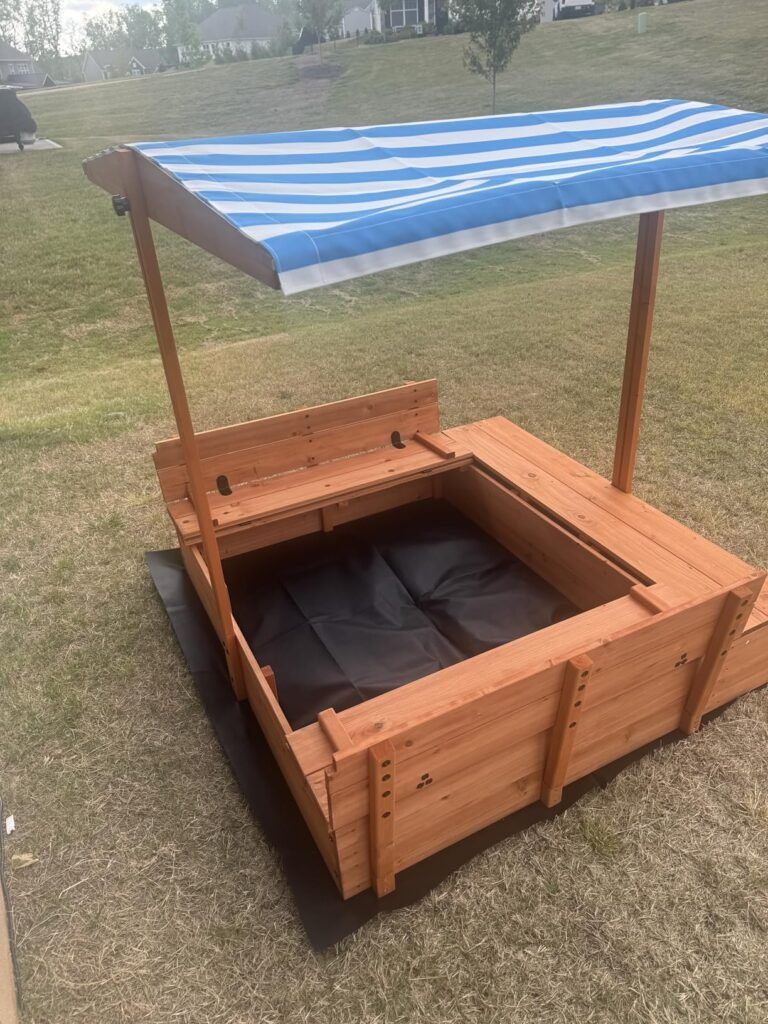
The Agitree is a mid-range wooden sandbox designed for children between three and eight years old. It uses the same core formula as several models in this category, a 47 by 47 inch fir wood frame with two backrest benches and a 360-degree UV canopy, but focuses on getting the fundamentals right rather than adding extra features like drawing boards or funnels.
We may earn a commission when you buy through this link, at no additional cost to you.
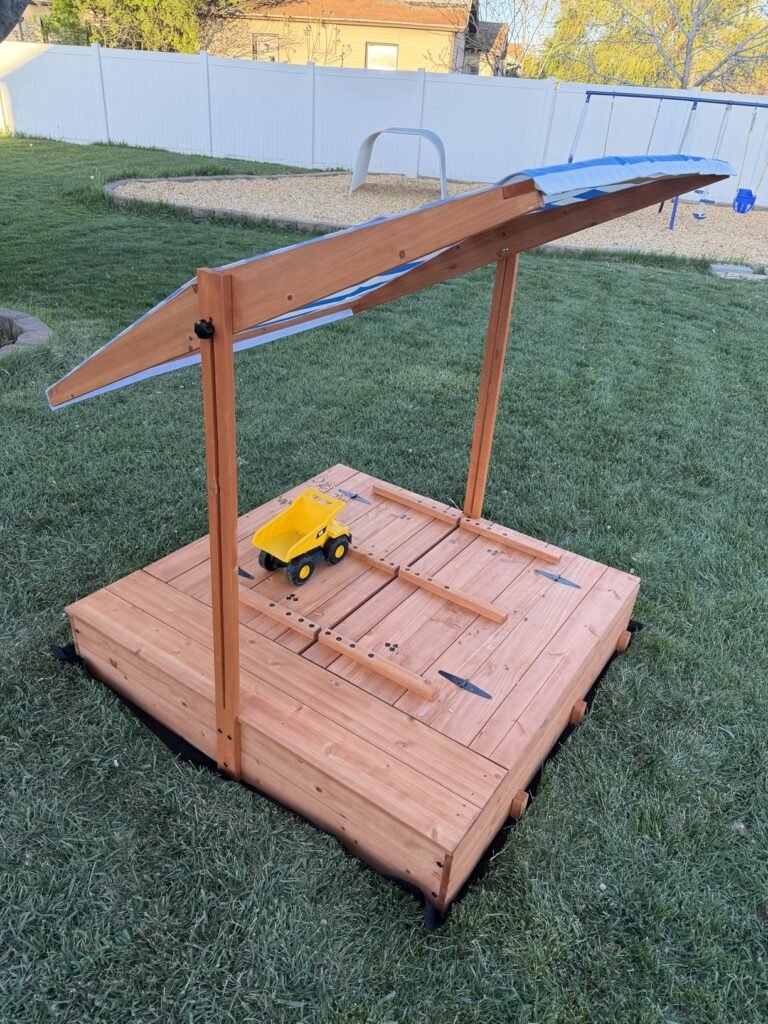
The two benches each support up to 200 pounds and fold down into cover panels that seal off the sand play area when not in use. One bench includes a storage compartment underneath for beach toys, which reduces the clutter that comes with sand play accessories. When the lid is closed, kids can still sit on it, which effectively gives you a small outdoor bench in the yard.
The weather-resistant canopy blocks harsh sun and rain while it’s raised, and lowers all the way to help keep leaves and animals out when playtime ends. Height adjustability lets you match the canopy to the sun angle during different parts of the day. The bottom liner slows weed growth and keeps sand from mixing with the soil below, which extends the life of your play sand.
Fabric canopies last longer if you lower or remove them during storms, high wind, or heavy snow. Brush off leaves and debris regularly, and let the fabric dry fully before folding it down for extended storage. A quick spritz of fabric-safe waterproofing spray at the start of each summer helps maintain water resistance and extends the useful life of the canopy.
The 4.1-star rating suggests some inconsistency in owner experiences, which is worth checking recent reviews before purchasing. Assembly takes about 30 minutes with the included hardware. For families who want a straightforward wooden sandbox with all the essential features and a functional bench-to-cover conversion, the Agitree covers the basics well without extra frills.
Buyers looking for interactive extras like drawing boards, funnels, or sand chutes.
We may earn a commission when you buy through this link, at no additional cost to you.
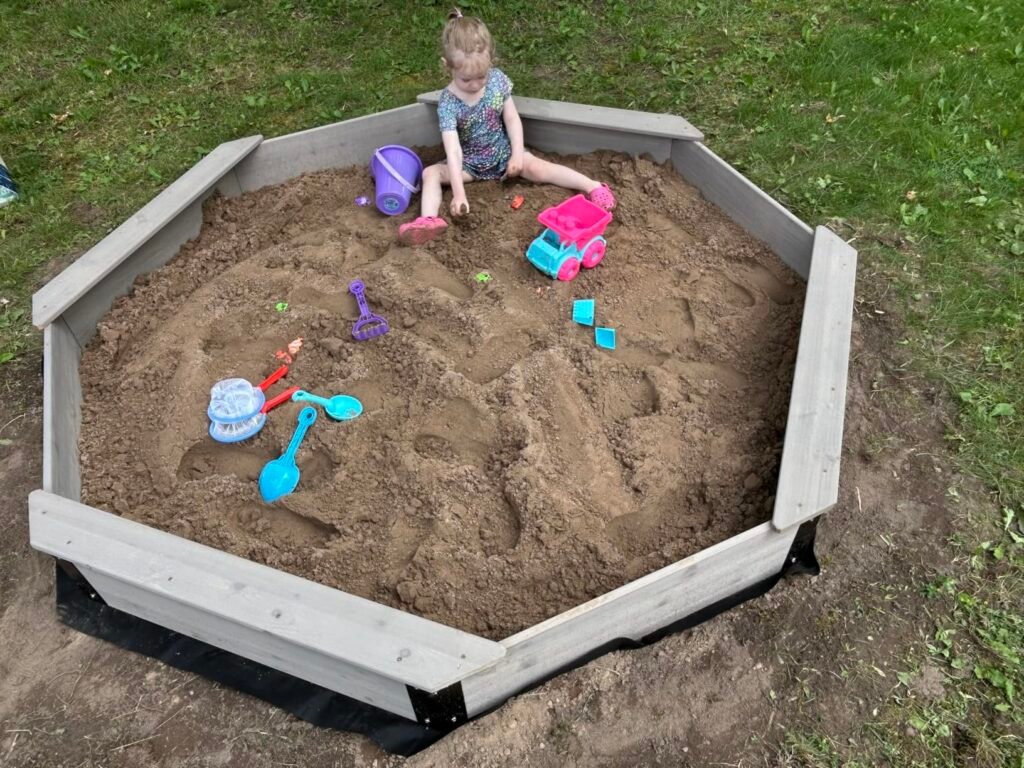
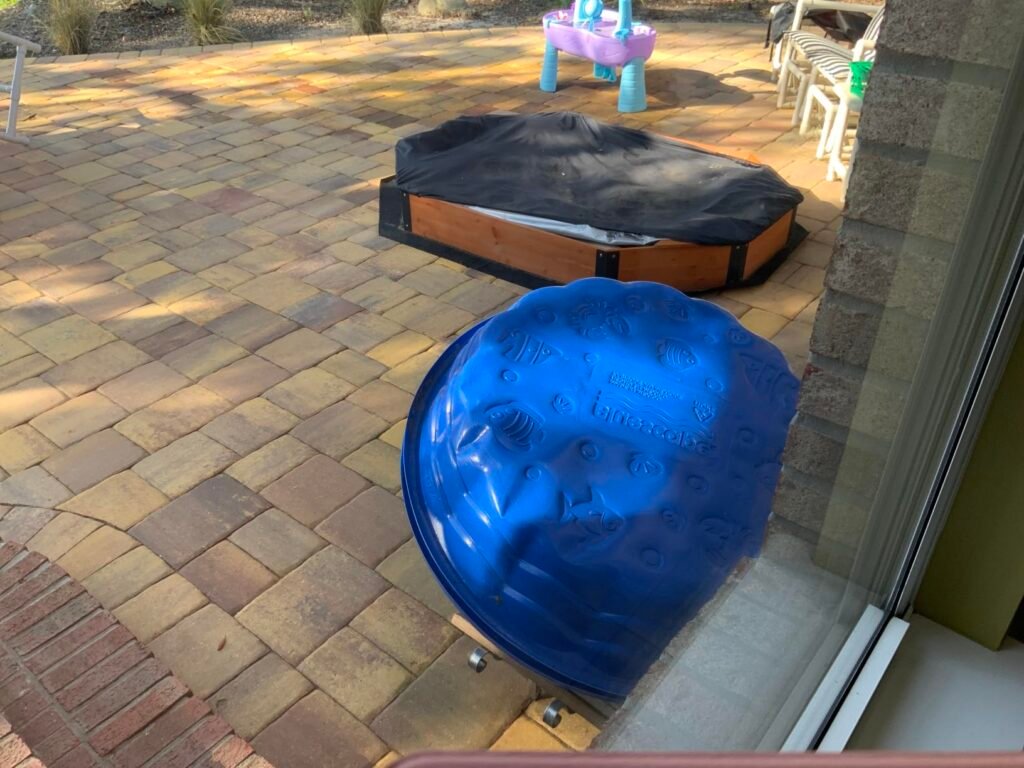
This octagonal cedar sandbox is built for families who want a serious backyard play destination. At 85 by 78 inches with a 9-inch depth, it holds between 800 and 1,000 pounds of sand and comfortably fits six to eight kids at once. That kind of capacity turns your yard into the neighborhood hangout for sand play, imaginative games, and outdoor birthday parties.
We may earn a commission when you buy through this link, at no additional cost to you.
Construction uses 100% cedar wood with a water-resistant finish and angle iron post connectors. Cedar naturally resists decay, insects, and weather damage, so this sandbox holds up well through multiple seasons without heavy maintenance. Four built-in benches around the perimeter give kids and parents comfortable seating during longer play sessions. A US patent covers the octagonal design.
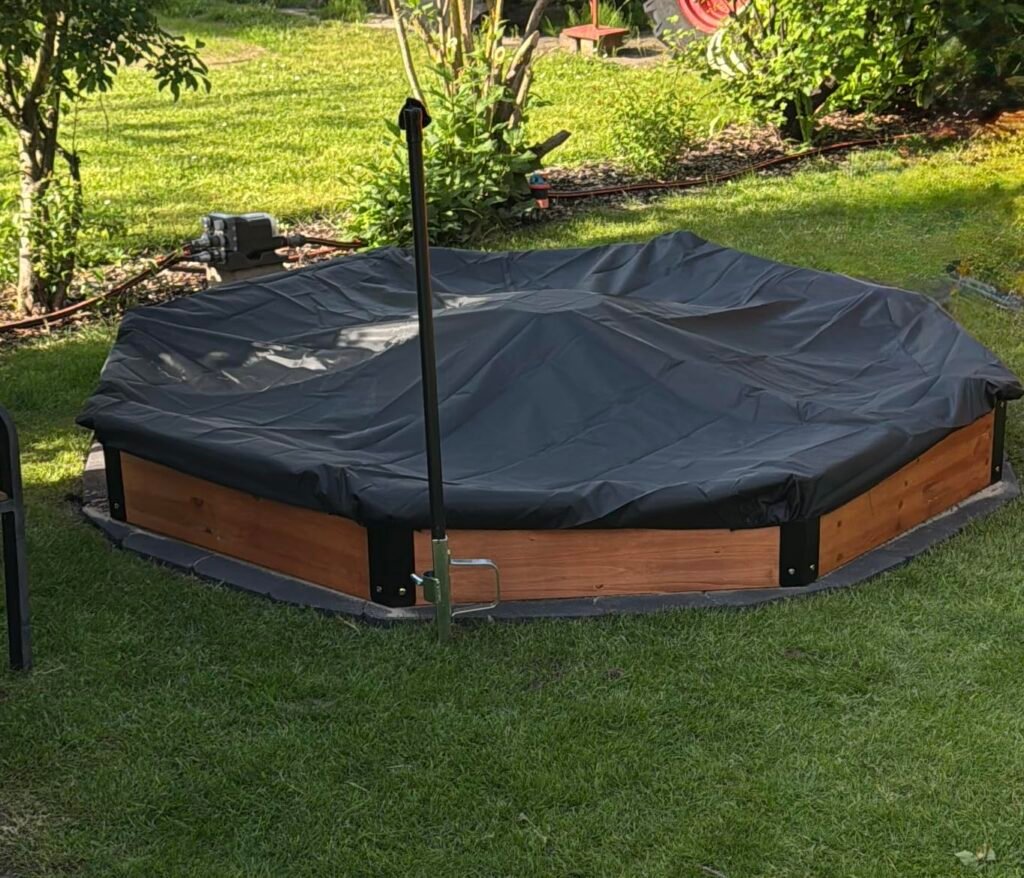
Safety certifications include ASTM, F963, and CPSIA compliance, which is a strong signal for parents who want independently verified standards. A waterproof cover and bottom liner ship in the box, so you can protect the sand from rain, leaves, and animals as soon as assembly is complete. The precut and predrilled parts make setup faster than the size suggests.
Play sand typically sells in 50-pound bags, so filling an 800-pound octagonal sandbox requires about 16 bags. Prices vary by region, but planning for the sand cost upfront helps avoid surprises. Buying from a local landscape supply company in bulk is often cheaper than bagged sand from a big-box store if you have a way to transport it.
The main considerations are yard space and sand cost. This sandbox has a much larger footprint than 47-inch square models and needs 800 pounds or more of play sand to fill properly, which represents a real upfront investment. For families with the yard and budget to support it, the octagon design creates a play space that grows with kids from toddler through elementary years.
Families with small yards or those who don’t want to invest in hundreds of pounds of play sand.
We may earn a commission when you buy through this link, at no additional cost to you.
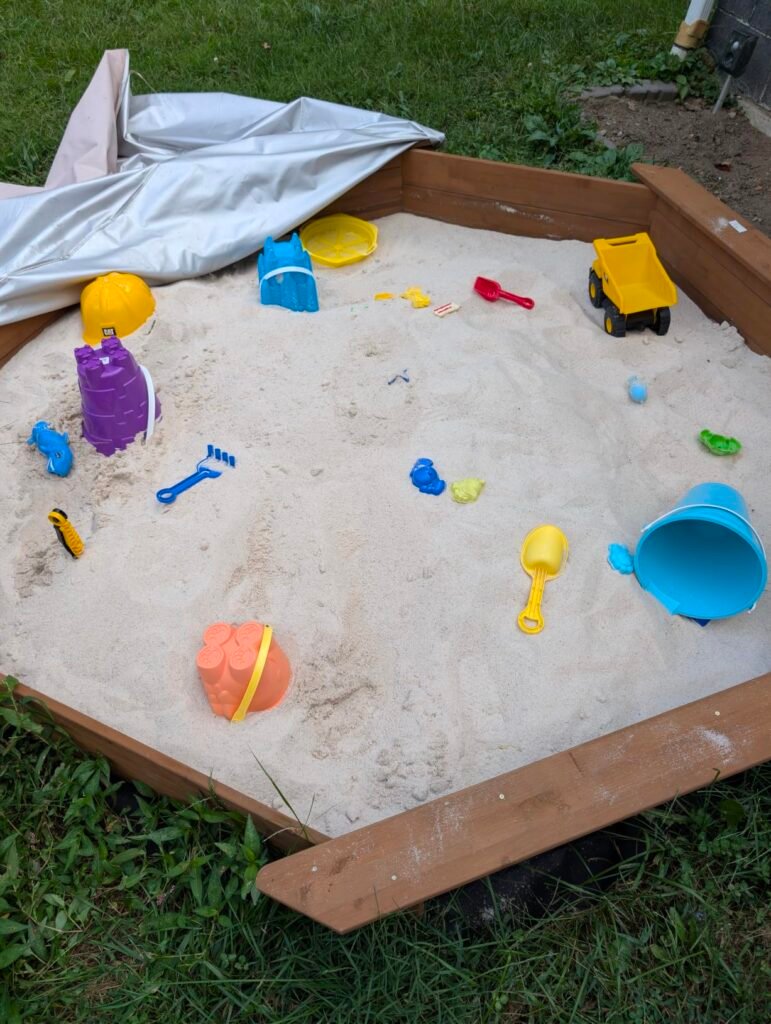
The Best Choice Products Octagon offers similar group-play benefits to the largest wooden sandboxes but at a more approachable price. Its 78 by 78 inch footprint fits up to eight children on the perimeter benches, each of which supports up to 220 pounds. That's enough capacity for parents to sit alongside their kids during longer play sessions or when supervising a group.
We may earn a commission when you buy through this link, at no additional cost to you.
Construction uses heat-treated hemlock wood panels that interlock at the joints for a sturdy assembly that holds its shape over time. Hemlock is naturally durable and weather-resistant, though slightly less rot-resistant than cedar. The wood is finished to help preserve its color and appearance through repeated exposure to sun and rain.
The included UV and water-resistant cover keeps the play area free of debris and moisture when not in use, and the bottom liner facilitates drainage and ventilation while discouraging weeds from growing through. This combination reduces the maintenance load between play sessions and helps the sand stay clean and dry for longer periods.
Lay out all the panels in the correct order before starting assembly so you can see how they fit together. Interlocking joints go together smoothly when aligned correctly but resist forceful assembly if pieces are backwards. Having a second person help hold panels upright during initial connection makes the whole process faster and reduces the risk of dropping or misaligning parts.
The main trade-offs are that play sand is sold separately, which is typical for wooden sandboxes, and the size still requires a large yard space to accommodate the 78-inch octagon plus room for kids to move around it. For families who want octagonal seating and a spacious play area without paying premium cedar pricing, this model offers a well-balanced middle-ground option.
Buyers with limited yard space or those who want the most premium cedar construction available.
We may earn a commission when you buy through this link, at no additional cost to you.
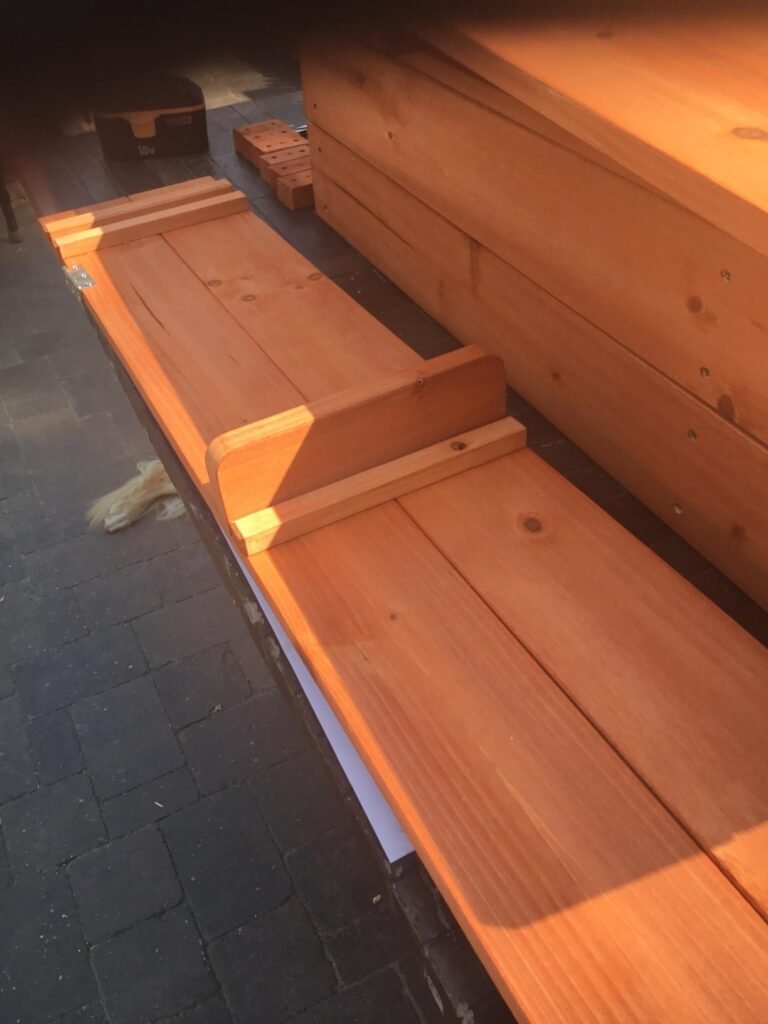
The Best Choice Products 47-inch cedar sandbox focuses on the essentials without extras like canopies or interactive features. It uses cedar wood, which is one of the most weather-resistant options available for outdoor children's furniture, and adds a specialized heat treatment to help the frame retain its shape and strength over multiple seasons.
We may earn a commission when you buy through this link, at no additional cost to you.
Two benches with reinforced backrests provide comfortable seating for kids or adults, each supporting up to 220 pounds. The clever design lets the benches fold down into a split cover that protects the sand from moisture and debris when playtime ends. That dual-purpose feature is more practical than a separate cover you have to store somewhere when the sandbox is in use.
The 47 by 47 inch open bottom sits on top of the included liner, which facilitates drainage and ventilation while adjusting sand depth as needed. The liner also discourages weeds from growing up through the sand area. Cedar naturally resists rot and insects, so this sandbox holds up well without requiring annual sealing or treatment beyond basic maintenance.
If your sandbox doesn’t include a canopy, position it near a tree, tall fence, or the north side of your house so it gets shade during the hottest part of the day. Morning sun is generally safer than afternoon sun for children, so a spot that gets sunshine before noon and shade after tends to work well. Watch the sun pattern in your yard for a full day before committing to a permanent location.
The main compromise is that this model doesn’t include a canopy or roof, so shade must come from surrounding trees, a nearby umbrella, or a separate shade sail. For families who already have a shady yard or who prefer sun-only play, the streamlined design is appealing. Those who want built-in shade should compare against models like the Pipleo or the 47-inch canopy options.
Buyers who want a built-in canopy or shade system without buying separate accessories.
We may earn a commission when you buy through this link, at no additional cost to you.
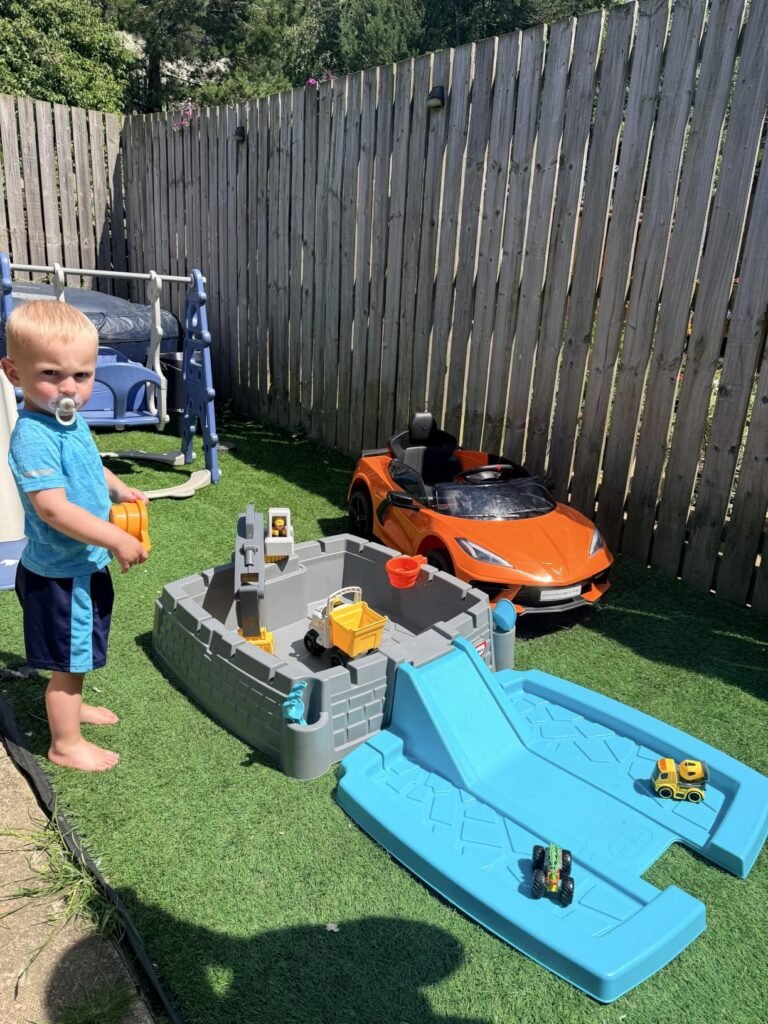
The Little Tikes Bluey table is a smaller, themed alternative to traditional sandboxes and works particularly well for younger fans of the show. The construction theme includes a working excavator that scoops and dumps, six sand accessories, and a lid that doubles as a ramp for toy trucks. Together, these features turn simple sand play into a small construction site with built-in narratives kids can act out.
We may earn a commission when you buy through this link, at no additional cost to you.
The 4.6-star rating reflects strong owner satisfaction, particularly among families with kids who already love Bluey. Little Tikes brings decades of experience making durable molded plastic children’s products, so the build quality is consistent with what parents expect from the brand. The exclusive Dirt Digger toy adds an extra accessory that isn’t available separately.
The lid-as-ramp design is a clever bit of engineering. Rather than being a passive cover, the lid becomes an active play element that extends the construction theme. Trucks can drive up the ramp and dump their loads into the sand area, which encourages more elaborate imaginative play than a plain sandbox alone.
Rotate additional toy trucks, diggers, and figures in and out of the sand table to keep the experience fresh. Small changes like adding rocks, twigs, or plastic animals from around the house give kids new scenarios to explore. If your child loves Bluey specifically, consider adding a few show-themed toys to build on the connection to their favorite characters.
The main consideration is that this is more of a themed sensory table than a full sandbox. It’s smaller than dedicated sand pits and works best for one or two kids rather than group play. The Bluey character theme also carries the risk that a child might lose interest if their tastes shift. For families with young Bluey fans who want interactive sand play at a modest price, it’s a fun and durable choice.
Families with older kids who want a larger, group-friendly sandbox for extended outdoor play.
We may earn a commission when you buy through this link, at no additional cost to you.
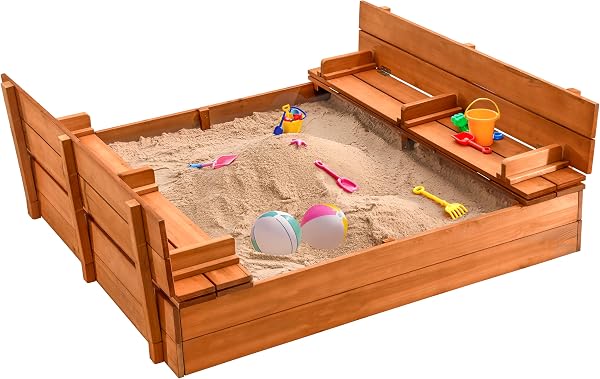
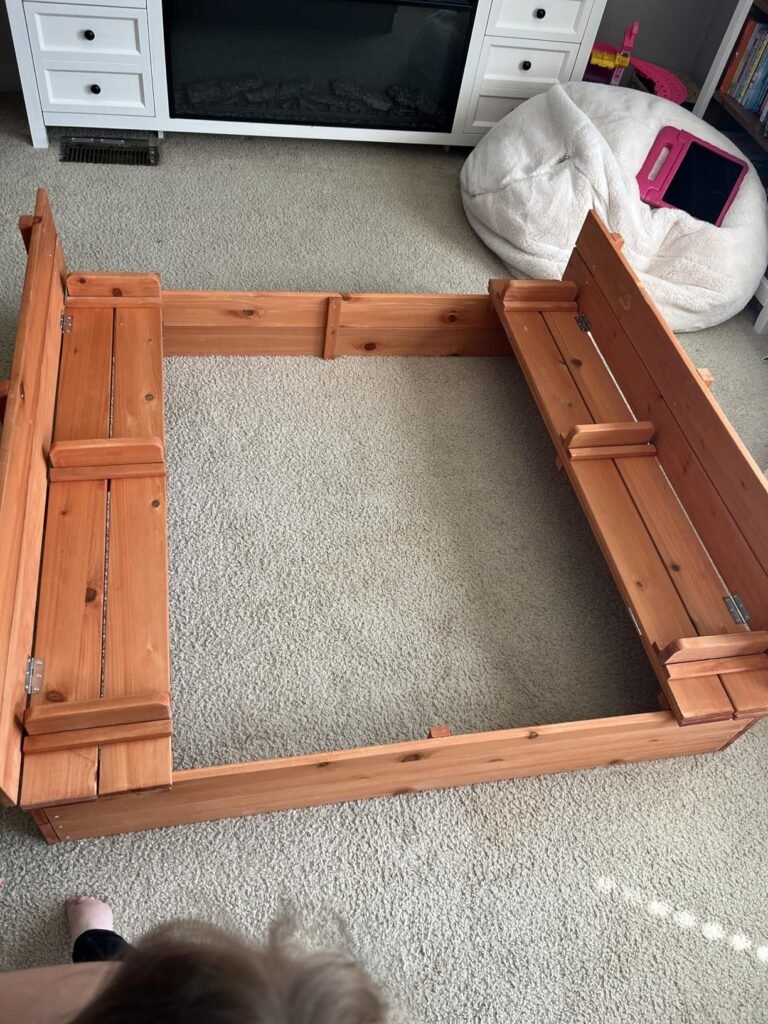
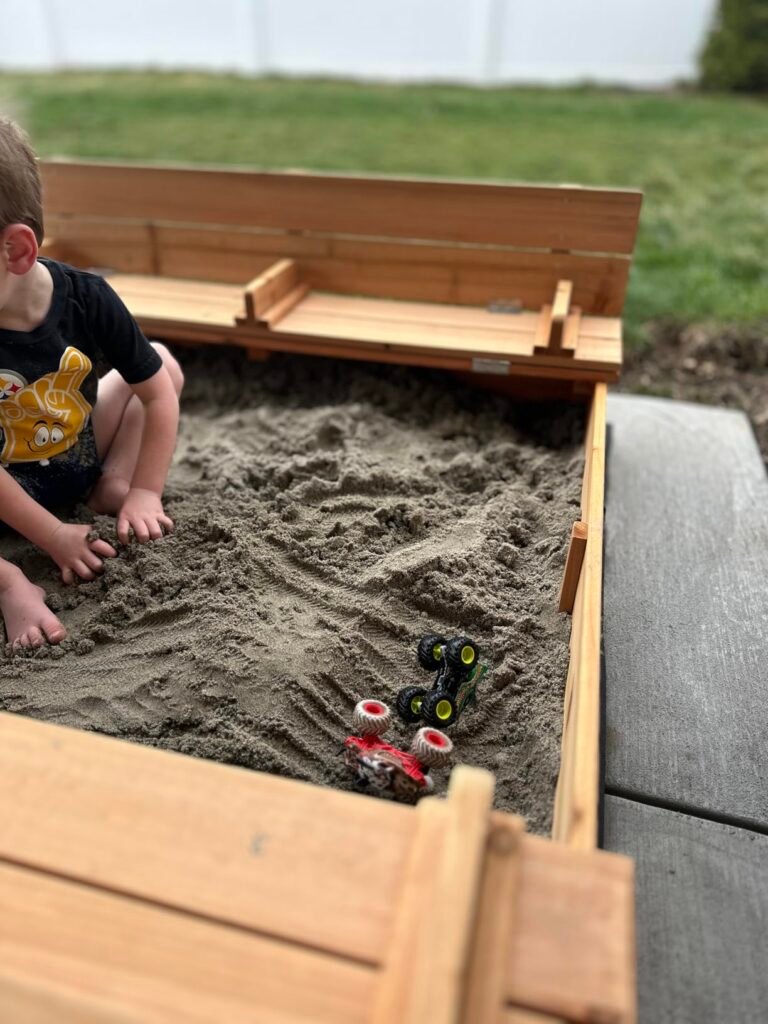
The Play22 is a no-frills cedar sandbox that hits the essentials without overcomplicating the design. It uses naturally durable cedar wood with a convertible lid system that folds down into two benches when kids want to play. When it's time to stop, the benches convert back into a split cover that protects the sand from rain, leaves, and animals overnight.
We may earn a commission when you buy through this link, at no additional cost to you.
The built-in benches each support up to 220 pounds, which is enough capacity for adults to sit comfortably alongside kids during play. This matters more than parents often realize, since supervising sand play is easier and more enjoyable when you have proper seating rather than kneeling on the grass. The reinforced structure means the benches hold up over time.
Cedar is naturally resistant to rot, insects, and weather damage, which reduces long-term maintenance compared to less durable woods. The included bottom liner handles drainage while keeping sand from mixing with soil below, and it slows weed growth to keep the play area cleaner. Assembly is straightforward with precut and predrilled parts.
Cedar naturally weathers to a silvery gray if left untreated, which many families prefer for its natural look. If you want to preserve the warm brown color, apply a UV-resistant clear sealer once per year. Either way, keeping the sandbox covered when not in use and clearing debris from the wood surfaces regularly helps extend the useful life significantly.
The 4.0-star rating is the lowest in this guide, which suggests some owners have encountered fit or durability issues. It’s worth checking recent reviews before purchasing. For families who want a simple cedar sandbox with a convertible cover system at a lower price than premium alternatives, the Play22 is a reasonable option, though the Best Choice Products models offer similar features with slightly higher owner satisfaction.
Buyers who prioritize the highest owner satisfaction ratings or want built-in canopy shade.
We may earn a commission when you buy through this link, at no additional cost to you.
A sandbox is a long-term backyard investment that shapes how much time your kids spend playing outdoors. The factors below will help you match the right size, material, and features to your yard, your children’s ages, and how you plan to use it across the seasons.
Sandbox size determines how many kids can play together comfortably and how much sand you need to buy. Compact plastic models like the Little Tikes Turtle hold around 100 pounds of sand and fit one to three toddlers. Mid-size wooden models at 47 by 47 inches typically hold 250 pounds and fit three or four kids. Large octagonal cedar sandboxes stretch to 78 inches or more and can hold 800 to 1,000 pounds of sand for group play.
Bigger isn’t automatically better. A larger sandbox requires more yard space, more play sand to fill, and more effort to cover, clean, and maintain. Match the size to how many children will use it regularly, not the maximum theoretical capacity. A well-sized sandbox that fits your family gets used more than an oversized one that overwhelms your yard.
For one or two young kids, a 38 to 44-inch plastic or small wooden model is usually plenty. For growing families or backyards that host playdates, a 47-inch square or 78-inch octagon offers more room to spread out.
Plastic sandboxes are lightweight, easy to move, and require essentially no maintenance beyond wiping down and hosing off. They ship ready to use with minimal assembly, and quality models like the Step2 Naturally Playful use double-walled construction that holds up for years without cracking or fading. The trade-off is that plastic looks less premium and may not blend as gracefully into landscaped yards.
Wooden sandboxes look more natural, offer larger sizes, and often include built-in benches, storage, and canopy options. Cedar and heat-treated fir are the most common woods in this category, both of which resist weather and insects reasonably well. However, wooden models require assembly, weigh significantly more when full, and benefit from periodic maintenance like sealing or debris clearing to extend their useful life.
Choose plastic for youngest kids, tight budgets, or when portability matters. Choose wood for larger families, bigger yards, and when you want a semi-permanent backyard feature that grows with your children.
A sandbox without a cover attracts leaves, insects, rain, and animals, all of which contaminate the sand and shorten its useful life. Every sandbox in this guide includes some form of cover, ranging from a simple removable plastic lid to convertible benches that fold down into split covers, to fabric canopies with adjustable heights.
The best cover systems make it easy to close the sandbox at the end of play without requiring separate storage for a bulky lid. Convertible bench designs are particularly clever because the benches serve as seating during play and transform into covers when playtime ends. Fabric roof canopies on models like the Pipleo add UV protection during play and can be lowered to seal the sandbox overnight.
If your yard has heavy tree cover, frequent rain, or curious wildlife like cats and squirrels, prioritize a sealed cover system. If your yard is more protected, a simpler cover may be sufficient.
Sun exposure during play sessions matters for both comfort and skin protection. Some sandboxes include built-in canopies that block UV rays and provide shade throughout the day, while others rely on external shade sources like patio umbrellas or nearby trees. Rotating canopies with 360-degree adjustability follow the sun and keep shade over the play area as the day progresses.
Built-in canopy fabric quality varies. Look for models that specify UV protection and use weather-resistant materials rather than lightweight polyester that fades quickly. Height adjustability is a plus because it lets you match the canopy to your children’s heights and the sun angle throughout the day.
If your yard has natural shade from trees or buildings during peak sun hours, a built-in canopy is less critical. If your sandbox will sit in full sun, prioritize models with proper UV-blocking canopies or plan to add a separate shade sail.
Built-in seats let multiple kids play together comfortably and encourage social interaction. Molded plastic sandboxes typically include integrated bench seats around the perimeter, while wooden models often add separate benches with backrests and higher weight capacities that also accommodate adults during supervision.
Seating weight capacity matters more than you might expect. Benches rated to 200 or 220 pounds support adults comfortably, which makes it easier to sit and interact with kids during play rather than standing or crouching nearby. Reinforced backrests keep young children from tipping backward while they play with sand in front of them.
For families with young toddlers, molded plastic seats built into the sandbox are usually sufficient. For families where parents plan to sit alongside their kids, prioritize wooden models with adult-rated bench capacities.
Sandbox bottom design affects how well the play area drains after rain and how much maintenance you’ll need to do over time. Fully enclosed bottoms trap water and require you to lift the sand out or wait for evaporation. Open-bottom designs with mesh liners let water drain through while keeping sand from mixing with the soil below.
Bottom liners also slow weed growth from underneath and help maintain a cleaner play area over multiple seasons. Most wooden sandboxes in this guide include a liner in the box, while plastic models rely on the molded plastic base itself, which drains through pre-molded holes on some designs and requires occasional emptying on others.
For wooden models placed on grass or bare soil, an included liner is essential. For plastic sandboxes on patios or decks, the fully enclosed bottom is fine but requires more attention to draining standing water after rain.
Safety certifications like ASTM, F963, and CPSIA indicate that the sandbox has passed independent testing for construction safety and material toxicity. Wooden models should use non-toxic water-based paints or stains and should be heat treated to resist rot and insects without chemical treatments that could leach into the sand.
Splinter risk is a real concern with wooden sandboxes. Look for models that specifically describe their wood as sanded smooth or splinter-less. Heat-treated fir and cedar are naturally softer and less prone to splintering than pressure-treated construction lumber, and reputable manufacturers finish the wood carefully to protect small hands.
For families with very young children, prioritize models with explicit safety certifications and non-toxic finishes. For older kids, safety standards are still important but less critical since older children are less likely to put sand or wood chips in their mouths.
Plastic sandboxes typically require little to no assembly. The Step2 Naturally Playful ships fully assembled, and the Little Tikes Turtle takes just a few minutes to snap together. Wooden sandboxes require more setup, generally 30 minutes to an hour with basic tools and the included hardware.
Assembly complexity varies with size. A 47-inch square wooden model with two benches and a canopy takes longer than a simple four-wall design. Look for precut, predrilled parts and clear instructions. Once assembled, wooden sandboxes are essentially permanent yard installations because they’re heavy and awkward to move, especially when filled with sand.
Choose plastic if you want to move the sandbox seasonally or don’t want to deal with tools. Choose wood if you’re comfortable with a one-time assembly project and want a more substantial backyard feature.
Before adding sand, place the sandbox on a level surface with the included bottom liner if applicable. For wooden models, orient the sandbox so its canopy or natural shade covers the play area during the hottest part of the day. Use only clean, washed play-grade sand rather than construction sand, which can contain silica dust that isn’t safe for children. Fill the sandbox to about two-thirds of its depth to leave room for building without overflow.
During the play season, cover the sandbox whenever it’s not in use to keep out rain, leaves, insects, and animals. Rake or stir the sand every few weeks to break up any clumps and check for hidden debris. If sand gets wet, uncover the sandbox on the next sunny day to let it dry fully before covering again. Wooden sandboxes benefit from occasional inspection for splinters, loose hardware, or worn areas, which can be sanded or tightened as needed.
At the end of the outdoor season, empty and store any loose accessories like toys, funnels, and drawing tools indoors to prevent weather damage. Sand can typically stay in place year-round if the sandbox is properly covered, though completely draining and replacing the sand every one to two years keeps the play area fresh. For wooden models, a light coat of UV-resistant sealer applied once per year helps preserve the wood color and extends the useful life of the frame significantly.
Sand needs depend on the size of your sandbox. Compact plastic models like the Little Tikes Turtle hold around 100 pounds of sand, while 47-inch wooden sandboxes typically hold 250 pounds. Large octagonal sandboxes at 78 inches or more can hold 800 to 1,000 pounds of sand. Fill the sandbox to about two-thirds of its depth to leave room for building without overflow during active play.
Use only clean, washed play-grade sand designed specifically for children's sandboxes. Avoid construction sand and mason sand, which can contain silica dust that isn't safe for kids to breathe or handle. Bagged play sand is available at most home improvement stores and specifies its safety on the packaging. Some parents also choose natural beach sand alternatives labeled as safe for children.
Play sand typically lasts one to two years with proper maintenance. Rake it regularly to check for debris, cover the sandbox when not in use to keep animals out, and let wet sand dry completely before covering again. If the sand starts to look dirty, develops an odor, or shows signs of mold or contamination, replace it immediately. Well-maintained sand in a covered sandbox can last significantly longer.
Most modern wooden sandboxes are heat treated and finished with non-toxic water-based paints or stains that provide baseline weather protection. Cedar is naturally resistant to rot and insects without additional treatment. If you want to preserve the wood color and extend the useful life, apply a UV-resistant clear sealer once per year. Skipping this step allows the wood to naturally weather to a silvery gray, which many families prefer.
Most sandboxes in this guide are suitable for children between one and eight years old, with specific models targeting narrower age ranges. Toddler-focused models like the Little Tikes Turtle and Step2 Naturally Playful work for ages one and up, while larger wooden sandboxes with more sophisticated features suit ages three to eight. Always supervise very young children during sand play to prevent them from putting sand in their mouths.
A properly fitted cover is the single most effective way to keep animals out of a sandbox. Convertible bench designs, snap-on lids, and canopy roofs that lower to seal the play area all work well. If animals still access the sandbox, check for gaps around the cover and consider adding weights or ties to secure it better. Motion-activated sprinklers near the sandbox can also discourage cats without direct confrontation.
Yes, most sandboxes in this guide are designed to stay outdoors year-round. Wooden models with heat-treated construction and quality finishes handle winter weather well. Cover the sandbox securely to prevent snow and ice from accumulating on the sand, and inspect the frame in spring for any winter damage. Plastic sandboxes may benefit from being stored indoors during particularly harsh winters to extend their useful life.
Plastic sandboxes like the Step2 Naturally Playful ship fully assembled and require no setup. The Little Tikes Turtle takes just a few minutes to snap together. Wooden sandboxes generally take 30 minutes to an hour with basic tools and the included hardware, depending on size and features. Larger octagonal models with multiple benches and canopies take longer than simple 47-inch square designs.
A built-in canopy is valuable if your yard has limited natural shade during peak sun hours. Rotating canopies with 360-degree adjustability follow the sun and keep shade over the play area throughout the day, which improves comfort and reduces UV exposure. If your yard already has significant shade from trees, buildings, or existing patio structures, a canopy is less critical and you may prefer the simpler design of a sandbox without one.
The Pipleo Wooden Sandbox with Roof stands out as the strongest overall choice for most families. It combines a spacious sand play area with genuinely useful interactive features like a funnel, chute, and drawing board, plus a retractable roof that provides UV protection during play and seals the sandbox from rain and animals when playtime ends. ASTM and CPSIA certifications add independent verification of safety standards.
Families with specific priorities have excellent alternatives. Toddlers and very young children are best served by the Step2 Naturally Playful, which ships fully assembled and earns the highest rating in this guide. Large families or those planning group play should look at the Octagon Cedar Sandbox or the Best Choice Octagon, both of which fit six to eight kids comfortably. Budget-conscious families with small yards will get real value from the Little Tikes Turtle, and Bluey fans will love the themed construction play of the Little Tikes Bluey Water Table.
Start by measuring your yard and thinking honestly about how many kids will use the sandbox regularly. Match the size to your actual needs rather than the maximum theoretical capacity. Then decide between plastic and wood based on how much maintenance you want to handle and how permanent the sandbox should feel in your yard. The right sandbox is the one that fits your space, your kids' ages, and your willingness to maintain it across multiple seasons of outdoor play.