Garmin Instinct 3
9.2Editor score45mm fiber-reinforced case
Multi-band SatIQ GPS
Solar charging lens
Built-in LED flashlight
Find the right rugged smartwatches for 2026. We compare 10 standout options by build quality, useful features, owner feedback, value, and everyday trade-offs.
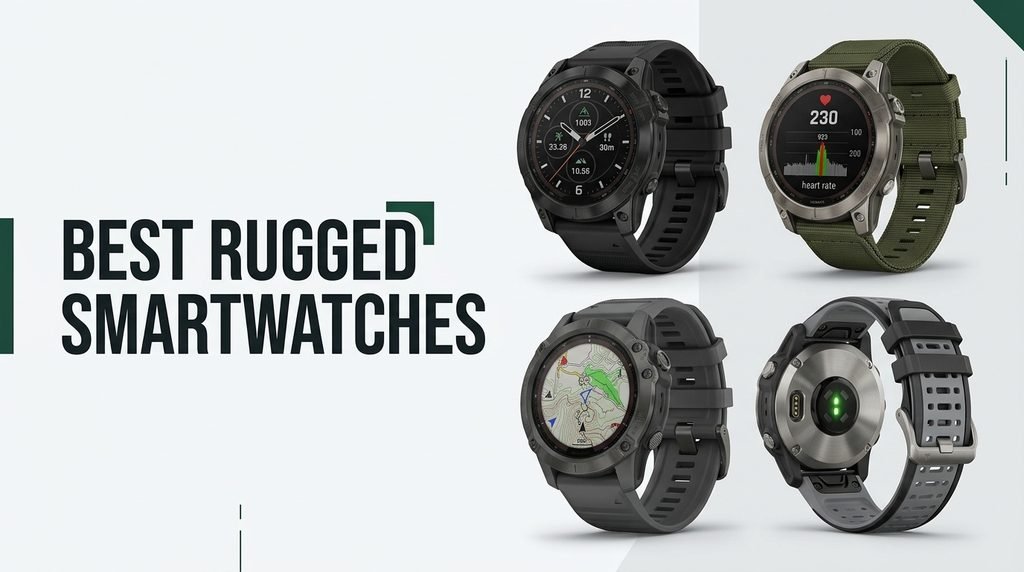
Choosing among rugged smartwatches for 2026 means weighing durability standards, GPS accuracy, battery endurance, health tracking depth, and outdoor tools like flashlights and compasses. We compare 10 standout models across price tiers so you can see how case materials, satellite support, display type, and everyday comfort translate into real trail, training, and jobsite performance.
Rugged watches differ far more than typical fitness bands. Some prioritize weeks of battery through solar charging, others focus on bright AMOLED displays or tactical features like ballistics calculators. Water ratings, MIL-STD-810 testing, screen materials, and app ecosystems all shape the experience, and the right pick depends heavily on where and how often you head outdoors.
Our lineup spans full-featured Garmin Instinct variants, the Amazfit T-Rex 3, and budget-friendly military-style options under $80. Each entry highlights strengths, tradeoffs, and the buyer it suits best, so whether you need multi-band GPS for backcountry navigation or a tough daily wearer with long standby time, you’ll find a clear match here.
We evaluated 10 rugged smartwatches using the criteria that actually influence outdoor and everyday use: case toughness and MIL-STD ratings, water resistance depth, GPS accuracy including multi-band support, battery life under real conditions, display readability, health and training metrics, outdoor tools like flashlights and compasses, smartphone connectivity, owner feedback, and price relative to feature depth. Each note focuses on practical tradeoffs so the picks connect to how people hike, train, work, and travel.


Compare key features, scores, and current prices side by side. A shorter feature list means fewer details were available, not necessarily fewer capabilities.





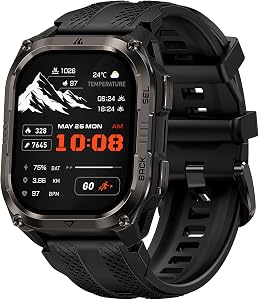

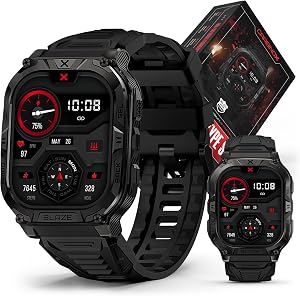
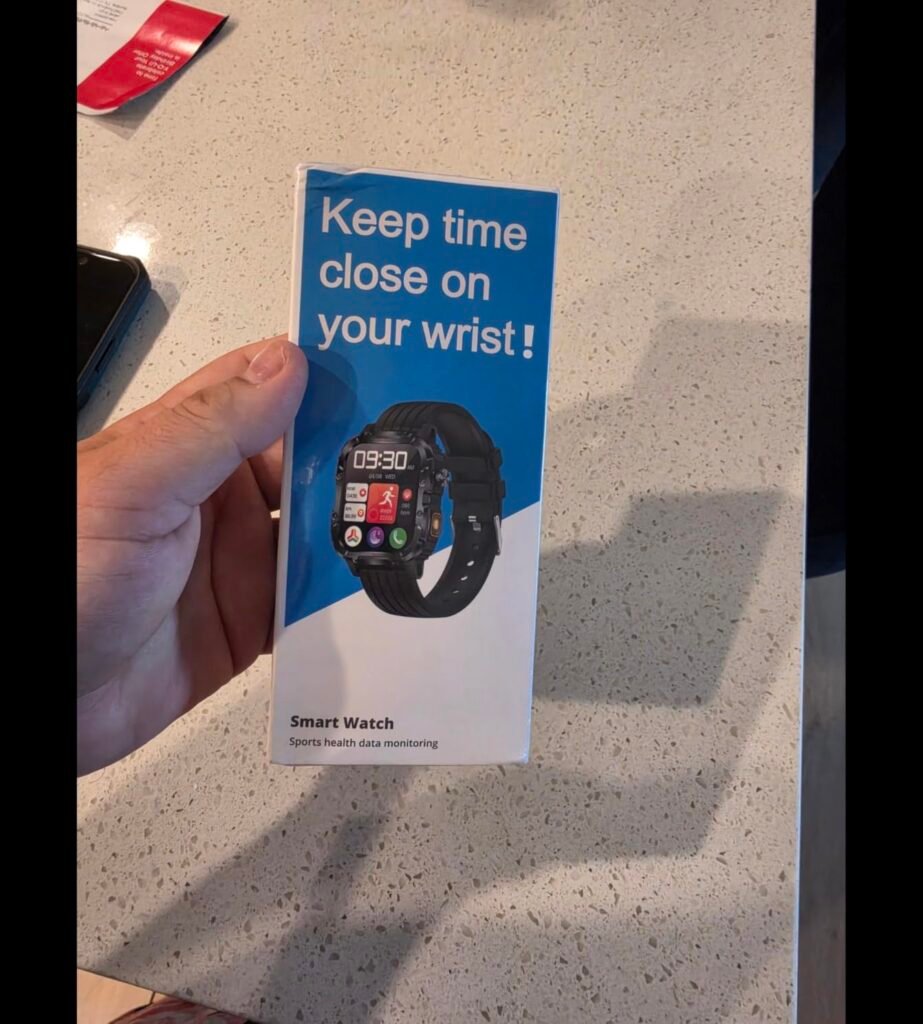
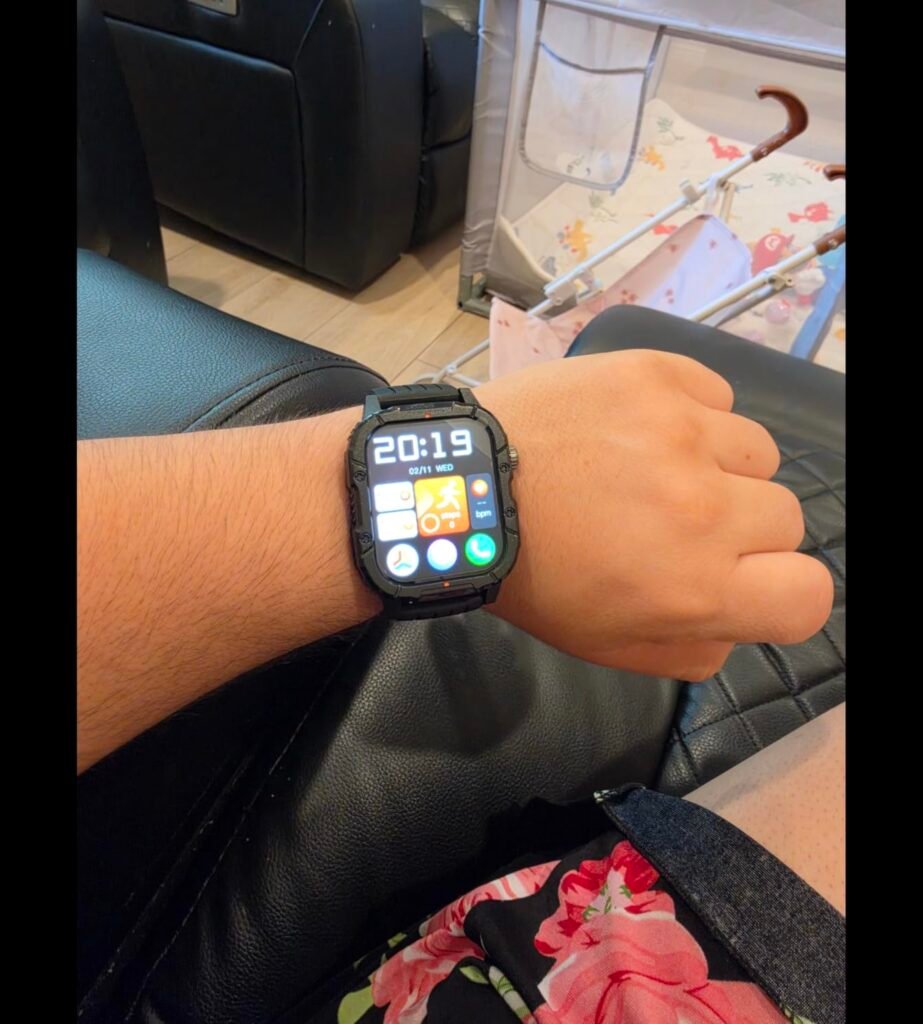
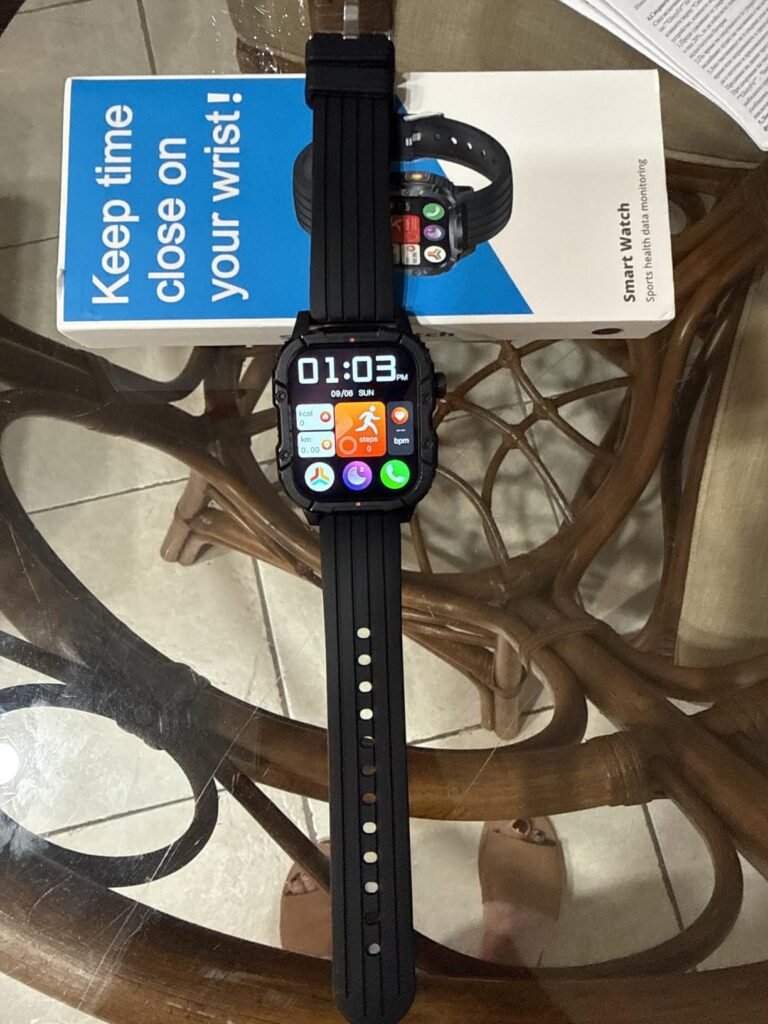
The KIPTUMTEK Y8 targets buyers who want a rugged look, wrist calling, and long battery without spending much. A 1000mAh cell paired with a low-power chip delivers up to 15 days of daily use and more than 30 days of standby, so it can genuinely last through trips without a charger. Magnetic fast charging tops it up in about two hours.
We may earn a commission when you buy through this link, at no additional cost to you.
The 1.95-inch HD touchscreen is generous for the price and makes notifications, weather, and workout data easy to read. Bluetooth 5.4 supports clear calls through the built-in microphone and speaker, and message notifications sync from apps like WhatsApp, Instagram, and Facebook. It’s compatible with iOS 9.0 and Android 9.0 and above via the Da Fit app.
For outdoor use, you get a built-in LED flashlight, a compass, and IP68 water and dust resistance, plus 12 military-grade tests passed. More than 120 sports modes cover most activities, and 24/7 wellness tracking includes heart rate, stress, sleep stages, and menstrual cycle logging. The company is clear that the device is intended for general wellness rather than medical use.
If you always carry your phone on runs, walks, or commutes, connected GPS through the companion app is perfectly workable for maps, pace, and distance. It only becomes a limitation if you regularly leave your phone behind on trails or want to record long backcountry tracks. For most daily users, it’s a non-issue.
The important limitation is that this watch relies on your phone’s GPS through the app rather than an onboard chip, so it isn’t ideal for phone-free navigation. If you mainly want a durable daily wearer with calls, notifications, and long battery for a low price, the Y8 is a smart choice.
Backcountry hikers or trail runners who need onboard GPS without a phone nearby.
We may earn a commission when you buy through this link, at no additional cost to you.
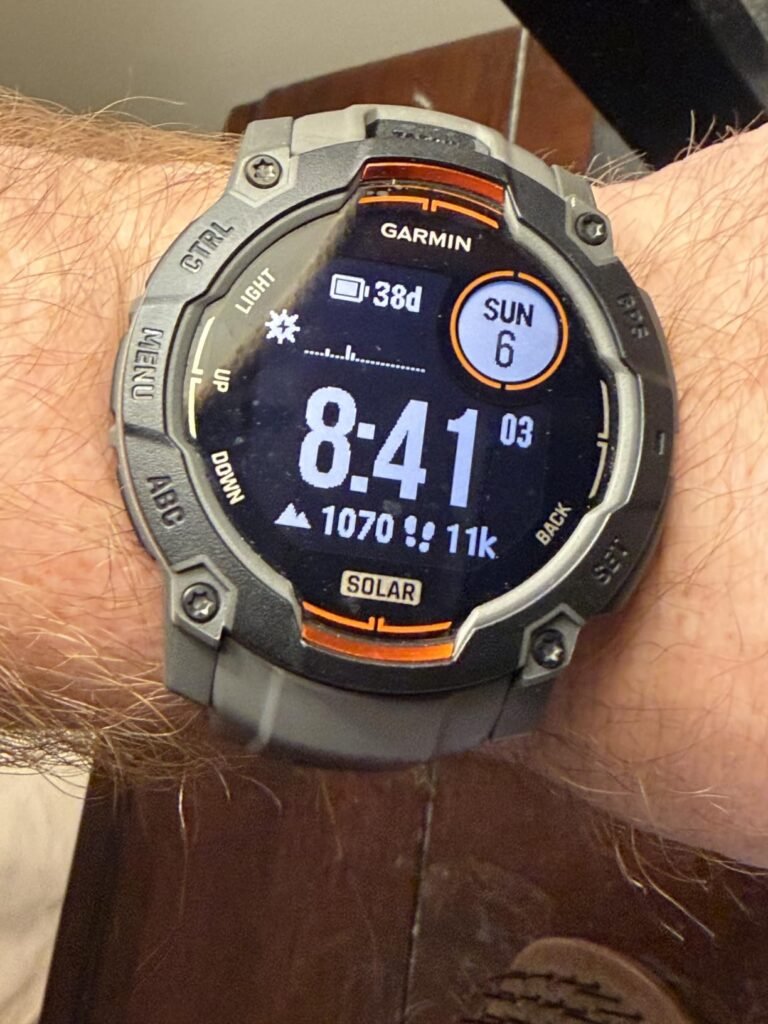
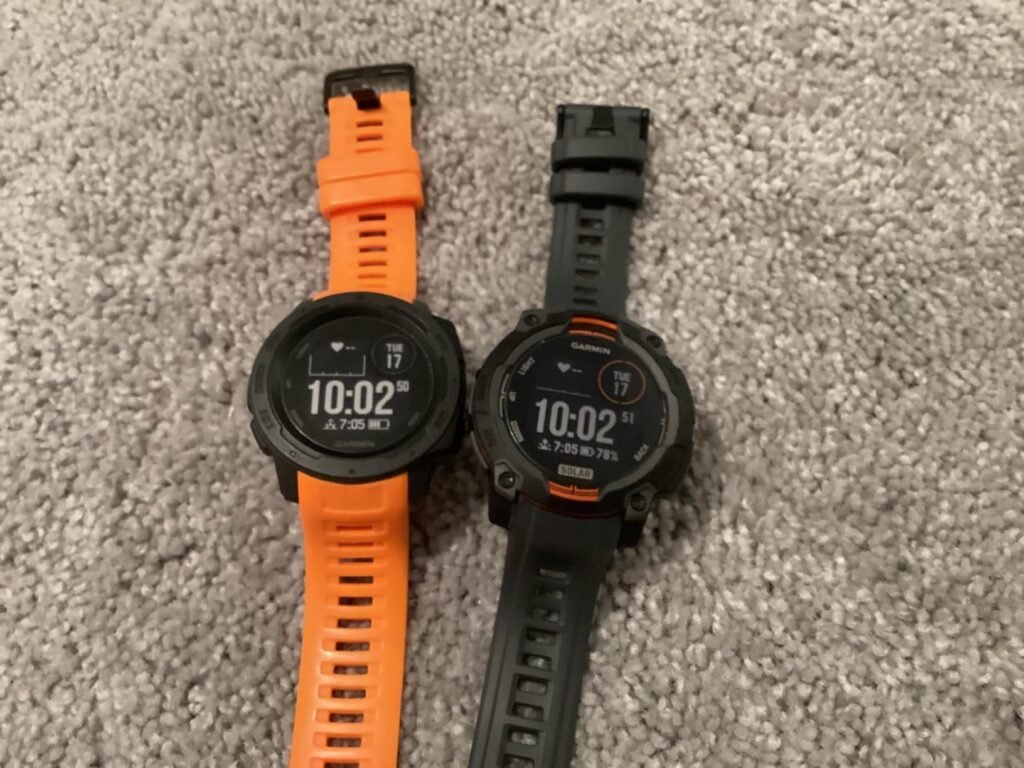
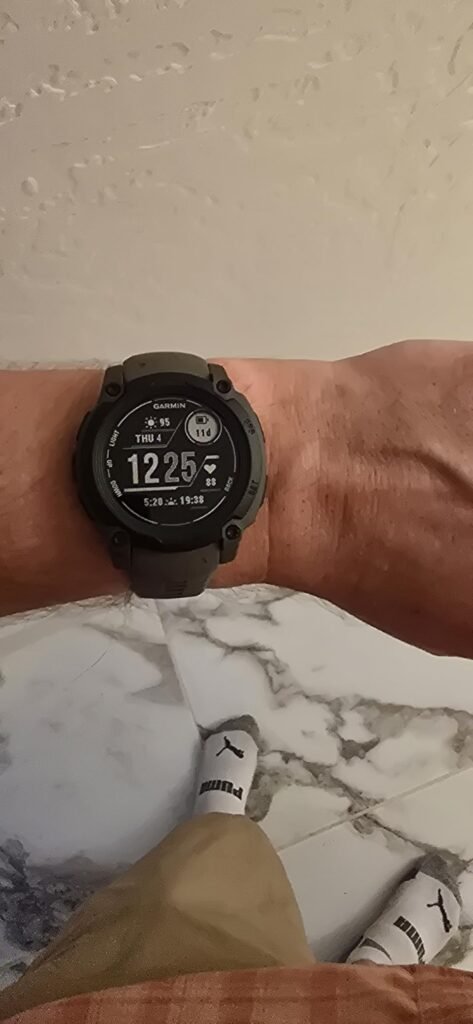
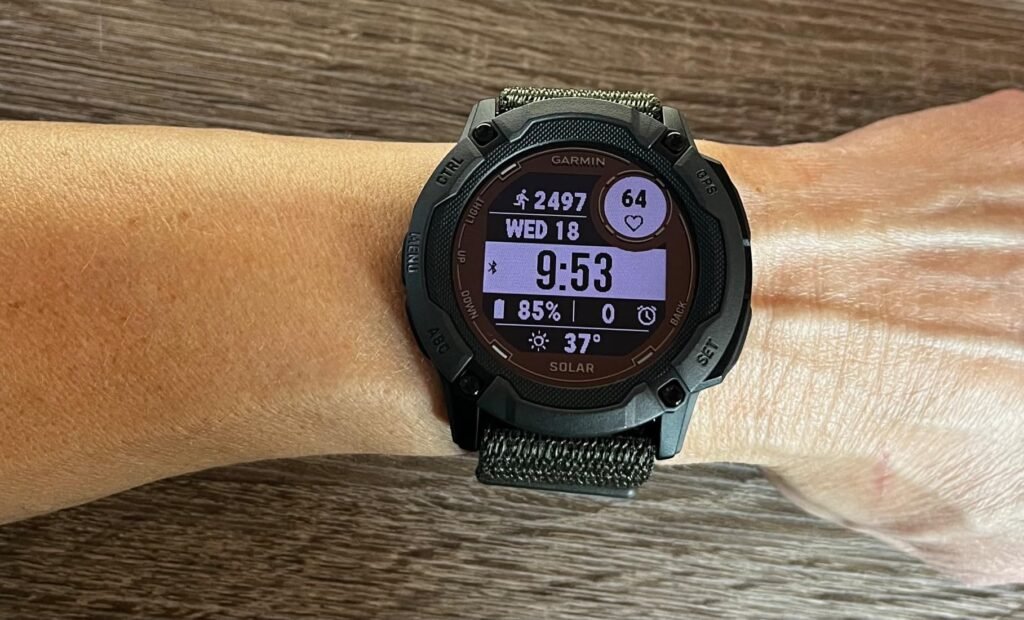
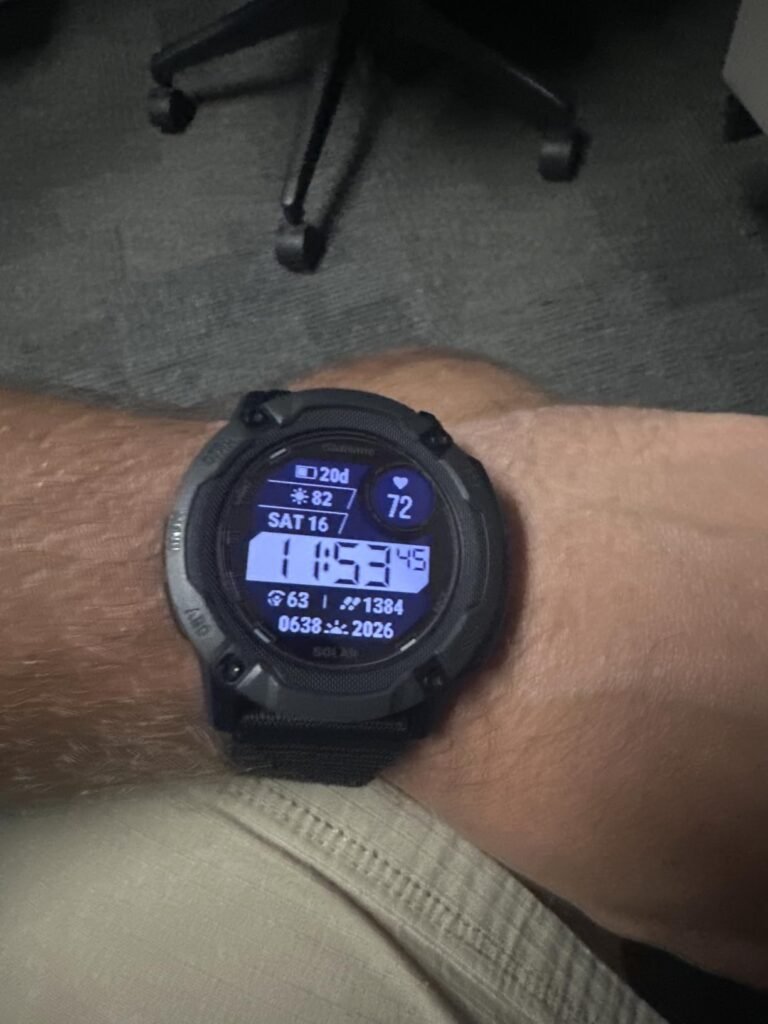
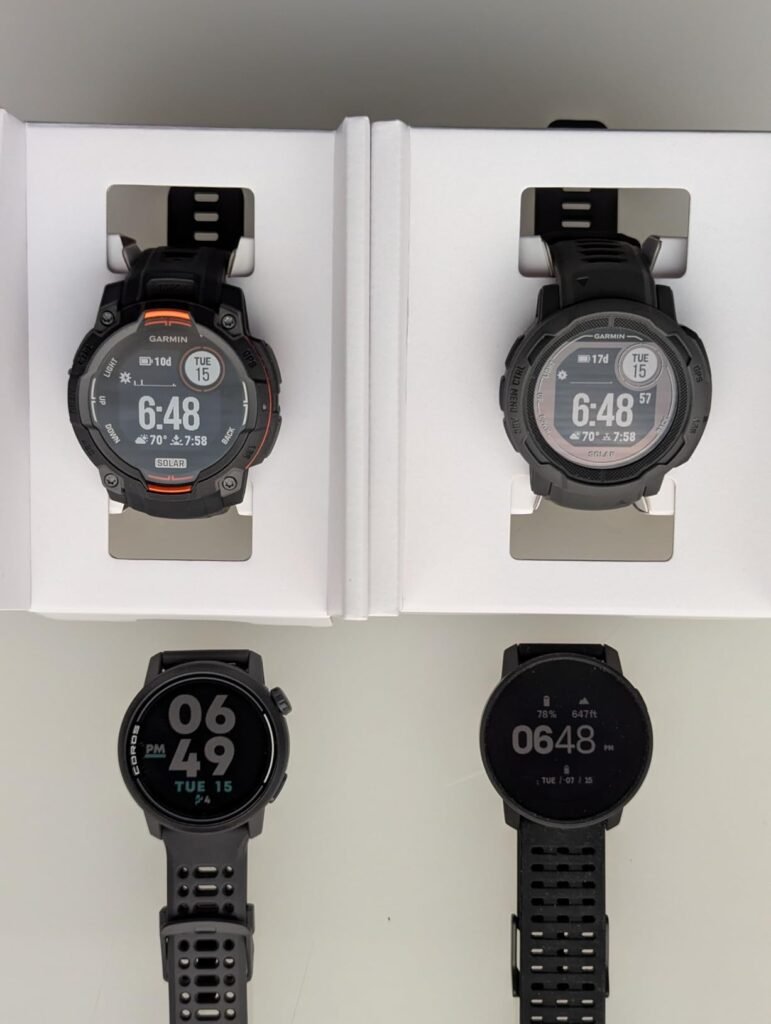
The Instinct 3 Solar is aimed at hikers, backpackers, and multi-day adventurers who don't want to think about charging. Its 0.9-inch memory-in-pixel display sits behind a Power Glass lens that harvests sunlight, and with about three hours of daily sun exposure the watch can run indefinitely in smartwatch mode. That makes it especially attractive for thru-hikers, expedition users, and anyone who spends real time outside.
We may earn a commission when you buy through this link, at no additional cost to you.
Navigation is where this watch earns its keep. Multi-band GPS with SatIQ technology intelligently switches between single- and multi-frequency reception to preserve battery while keeping tracks accurate under tree cover or in canyons. Combined with a barometric altimeter and 3-axis compass, it gives reliable positioning without depending on a phone. The 45mm fiber-reinforced polymer case and metal-reinforced bezel meet MIL-STD-810, and the 10 ATM rating covers swimming and snorkeling.
Everyday use is polished for a rugged model. Smart notifications, Connect IQ apps, Garmin Pay, and incident detection all work when paired with a phone, and the built-in LED flashlight with variable intensity and strobe modes is genuinely useful around camp or during early-morning runs. Health tracking includes wrist heart rate, Pulse Ox, advanced sleep insights, and stress metrics through the Garmin Connect app.
SatIQ shines for users who mix easy urban tracking with demanding trail or mountain routes. It defaults to lower-power single-band reception in the open and switches to multi-band only when it detects signal challenges. That behavior extends battery life without asking you to manually toggle GPS modes on long outings.
The main tradeoff is the display. The transflective screen looks fantastic in direct sunlight but lacks the punch of AMOLED indoors. If you value battery endurance and true outdoor legibility over vivid colors, this is arguably the most complete rugged GPS smartwatch on the list, and a strong fit for buyers who prioritize reliability over flash.
Buyers who want a vivid AMOLED touchscreen and prefer a smartwatch that feels closer to a phone on the wrist.
We may earn a commission when you buy through this link, at no additional cost to you.
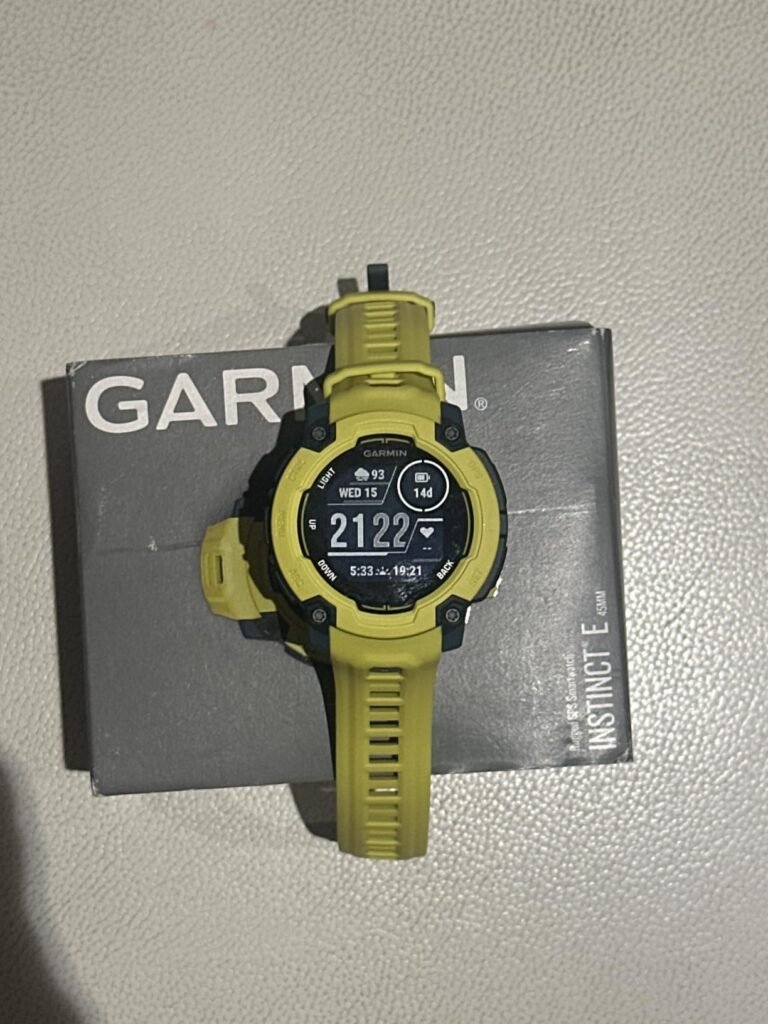
The Instinct E is Garmin's entry point into the Instinct family, and it's the pick to consider if you want the Garmin experience without paying for solar charging or tactical extras. The 45mm case keeps the trademark rugged look while shaving cost, and you still get MIL-STD-810 durability, a 10 ATM water rating, and Garmin's respected activity tracking.
We may earn a commission when you buy through this link, at no additional cost to you.
On the navigation side, multi-GNSS support pulls from multiple satellite constellations for solid accuracy on typical trails and runs. It won’t match the multi-band precision of the higher-end Instinct models in extreme environments like dense forest or slot canyons, but for the vast majority of hikers, runners, and cyclists it’s more than accurate enough. A 3-axis compass and barometric altimeter round out the outdoor toolkit.
Battery life reaches up to 16 days in smartwatch mode, which is impressive for a non-solar Garmin. Wrist heart rate, sleep insights, Pulse Ox, and stress metrics all sync through Garmin Connect, and the watch supports smart notifications and Connect IQ downloads via a paired phone. The interface uses Garmin’s familiar button-driven layout, which is a plus in gloves or wet conditions.
You give up solar charging, the LED flashlight, Garmin Pay, and multi-band SatIQ GPS. What you keep is the durable case, Garmin Connect ecosystem, comfortable fit, and reliable multi-GNSS tracking. For casual to serious outdoor use that doesn’t demand the highest-end features, the E delivers most of what makes an Instinct worthwhile.
Skip the E if you specifically want a flashlight, solar charging, or the advanced navigation features found in pricier Instinct models. But for a buyer who wants dependable Garmin build quality, accurate GPS, and solid battery life at a lower entry price, the Instinct E is the clearest value on this list.
Backcountry navigators who need multi-band GPS or anyone counting on a built-in flashlight.
We may earn a commission when you buy through this link, at no additional cost to you.
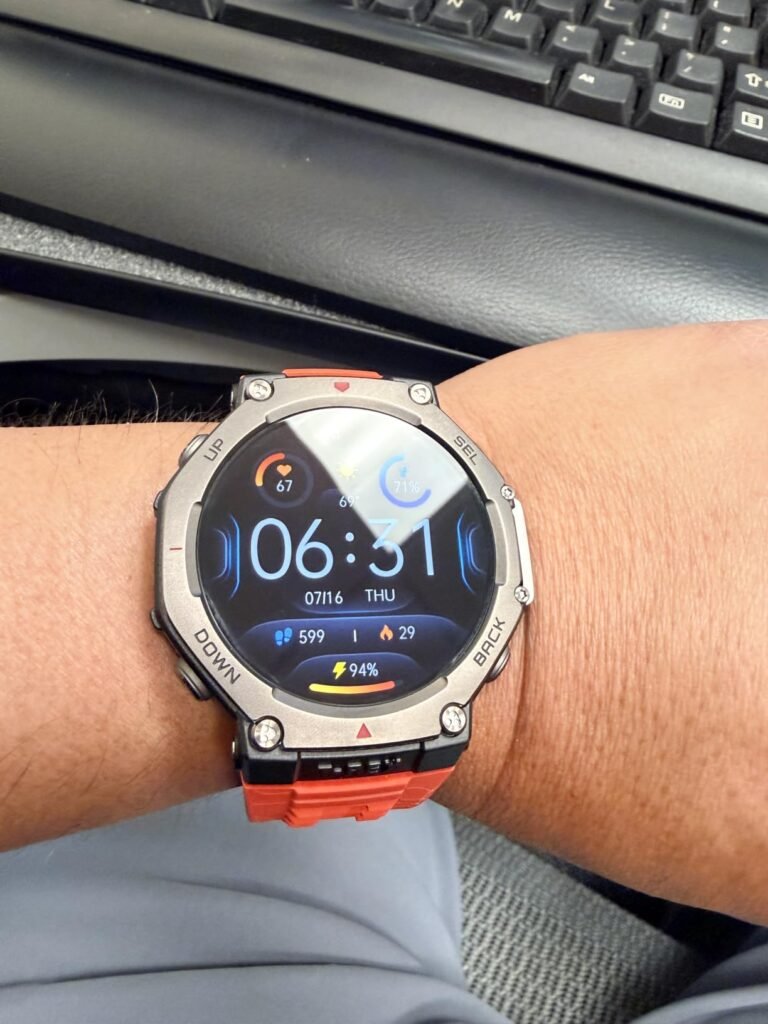
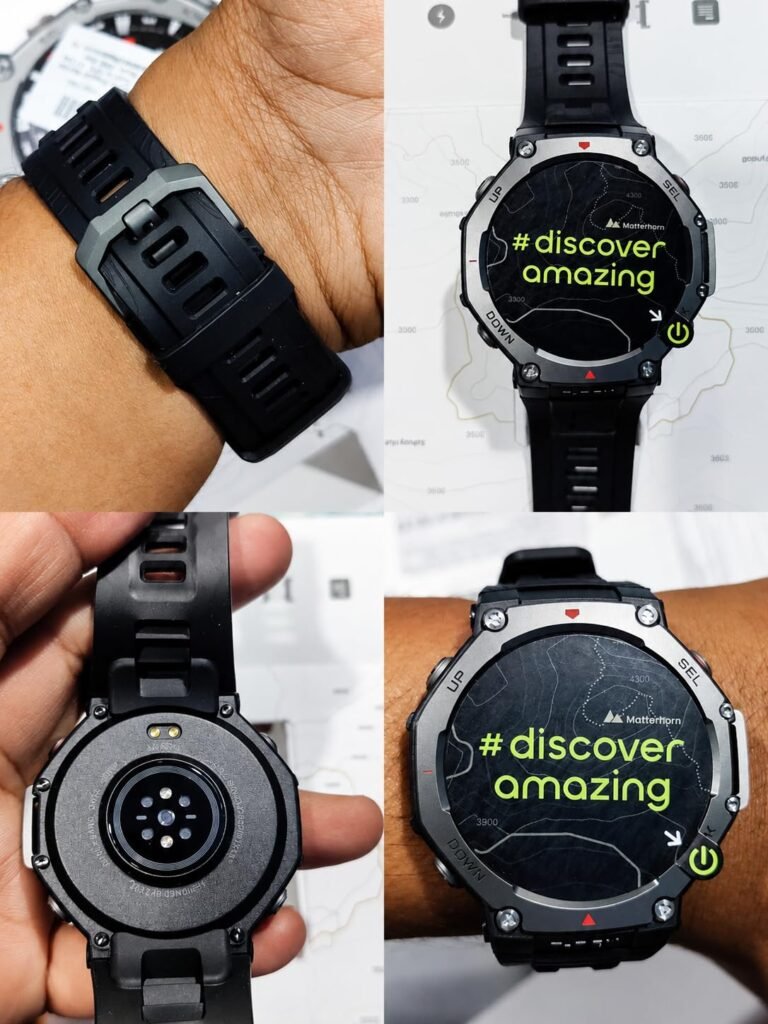
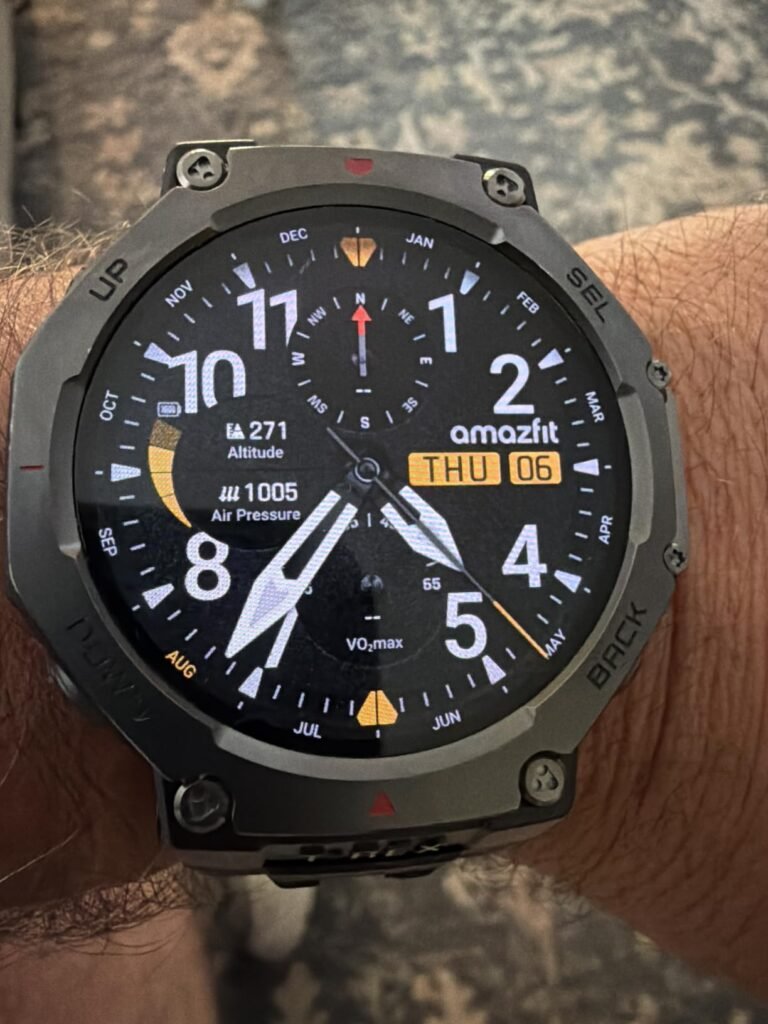
The T-Rex 3 is the pick for buyers who refuse to trade a vivid display for outdoor durability. Its 1.5-inch AMOLED panel hits 2,000 nits of peak brightness, so route maps and workout data remain readable in direct sunlight, and features like Night mode and Glove mode make it practical in tough conditions. The 316L stainless steel bezel gives it a premium feel next to plastic-cased rivals.
We may earn a commission when you buy through this link, at no additional cost to you.
On paper, this watch punches well above its price. It handles temperatures from -22°F to 158°F, is water-resistant to 328 feet, and rated for freediving to 147 feet. Dual-band positioning across six satellite systems delivers fast fixes and accurate turn-by-turn navigation, and free global offline maps mean you don’t need a phone to see where you are on a trail.
Battery life reaches over three weeks in typical use and up to 180 hours in GPS mode, which is competitive with many Garmin models. Fitness tracking spans 170+ workout modes with AI-generated training plans, and the Zepp app handles heart rate, SpO2, sleep, and stress data cleanly. The overall package feels closer to a modern smartwatch than most rugged competitors.
Peak brightness of 2,000 nits isn’t a marketing number you can ignore. Cheaper rugged watches often wash out on bright trails, forcing you to shade the screen with your hand. High-brightness AMOLED keeps split times, elevation charts, and navigation arrows readable even on snow or in midday desert sun, which is a genuine safety and usability advantage.
Consider carefully whether you value display richness over ecosystem depth. Garmin’s training analytics remain more mature, and the T-Rex 3’s larger case may feel bulky on smaller wrists. But if you want an AMOLED-first rugged smartwatch with genuine dive and altitude credentials, this is one of the strongest choices available.
Small-wristed users who prefer a low-profile watch, or Garmin ecosystem loyalists.
We may earn a commission when you buy through this link, at no additional cost to you.
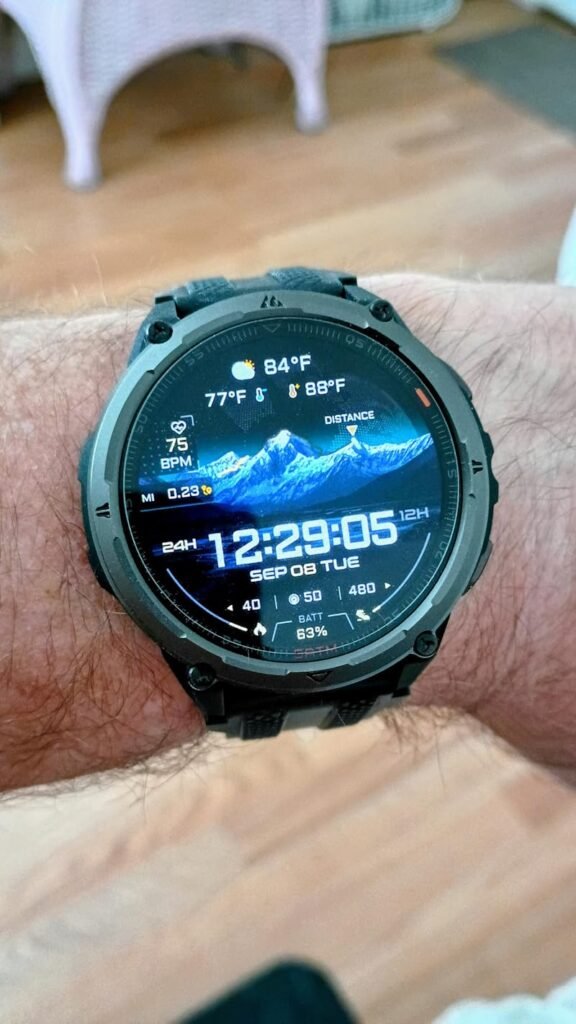
The KOSPET Pulse 2 is the strongest budget-to-midrange pick for buyers who want serious GPS accuracy without spending Garmin money. Dual-band L1+L5 GNSS with support for six satellite systems is unusual at this price point and pays off with faster fixes and better tracks in tough environments like forests and urban canyons.
We may earn a commission when you buy through this link, at no additional cost to you.
Durability holds up well for the money. The watch passed 12 SGS-tested MIL-STD-810H protocols and combines a rugged body with Corning Gorilla Glass, 5 ATM water resistance, and an IP69 dust and pressure rating. It’s ready for hiking, cycling, workouts, and job site wear, and the LED flashlight, digital compass, and outdoor tools like tide forecasts and moon phases add genuine field utility.
Battery life lands around 15 days of typical use, 11 days of heavy use, or five days with the always-on display active. The built-in walkie-talkie is a genuinely unusual feature that can help small groups stay in touch off-grid, and wrist calls plus notifications keep you connected when paired with a phone. Health tracking covers heart rate, SpO2, stress, and sleep through the Apexmove app.
Dual-band L1+L5 reception uses two GPS frequencies at once, which helps the watch reject reflections off buildings, cliffs, or dense canopy. In practice, that means cleaner-looking tracks, better pace accuracy on runs, and more trustworthy distance readings on hikes. It’s a feature usually reserved for pricier watches, so seeing it on a sub-$100 model is notable.
The main caveats are software polish and long-term ecosystem support. Companion apps from smaller brands generally don’t match Garmin or Amazfit in analytics depth. But if raw GPS performance and rugged construction under $100 are what you’re after, the Pulse 2 is hard to beat.
Athletes who rely on advanced training load, recovery analytics, or a large third-party app store.
We may earn a commission when you buy through this link, at no additional cost to you.
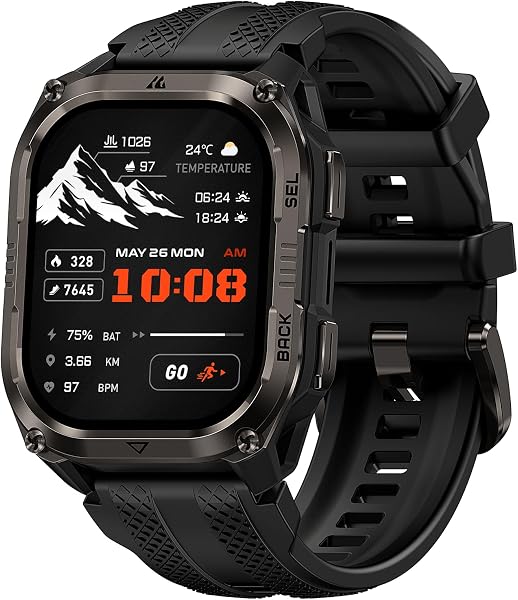
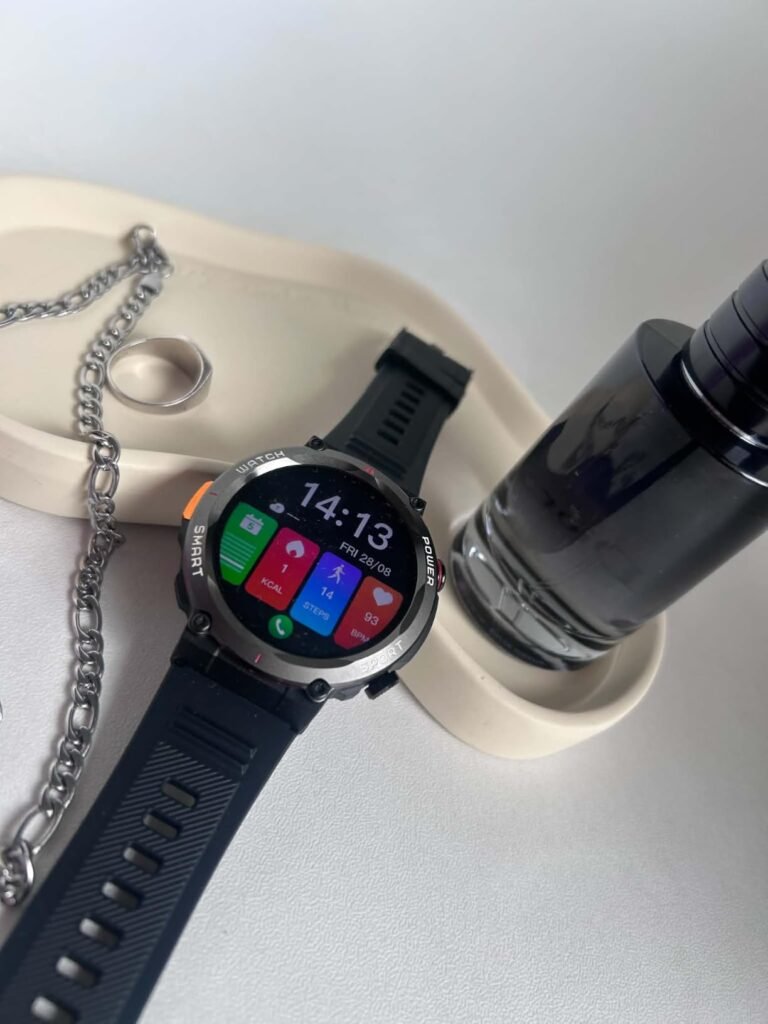
The Blackview military-style smartwatch is built around a 960mAh battery that stretches to more than 100 days of standby and about 30 days of daily use. That's genuinely useful if you take long trips, work in remote environments, or simply hate remembering to charge devices. The plastic case and zinc alloy housing keep weight and cost down while shrugging off bumps and dust.
We may earn a commission when you buy through this link, at no additional cost to you.
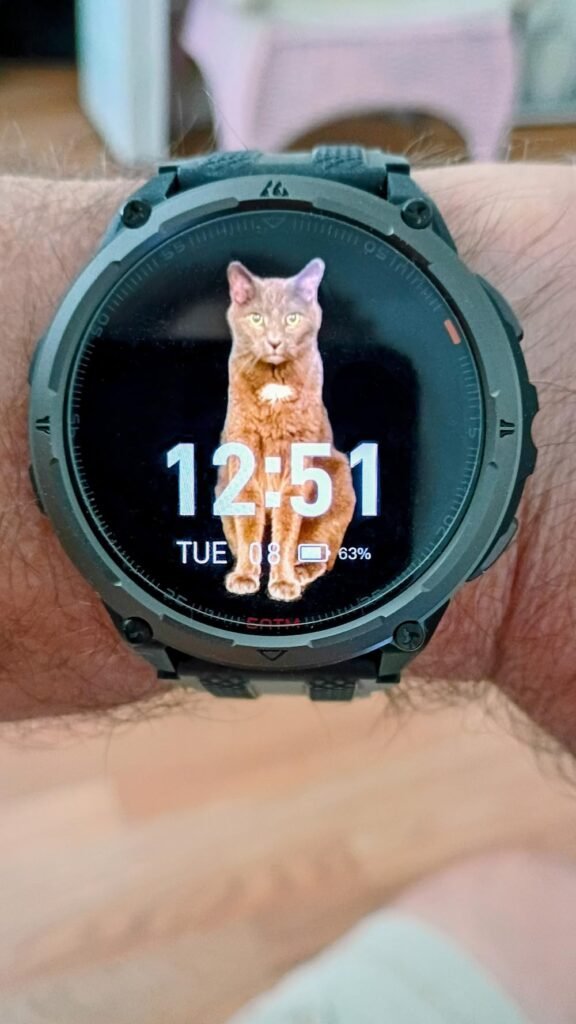
On the wrist, a 1.45-inch TFT HD display with tempered glass and a PET protective film gives you clear time, message, and health readouts. You can install a personal photo as a watch face or pick from a large online library through the Da Fit app. Two straps come in the box, which is handy for swapping between casual and outdoor looks without buying accessories.
Everyday features include LED flashlight, precision compass, Bluetooth calling with stored contacts, message notifications, music and camera control, weather, alarms, and more than 100 sports modes. Health tracking covers 24/7 heart rate, blood oxygen, stress, and sleep stages. The company clearly notes it’s not a medical device and data should be treated as reference only.
To actually hit 30-day daily-use numbers, keep the always-on display off, limit continuous heart rate frequency, and turn off notifications from apps you don’t need. Heavy use of the flashlight, calls, and constant vibration alerts will shorten runtime significantly, so tune the settings to how you actually use the watch.
Two caveats matter most. There’s no onboard GPS, so mapped routes rely on your phone, and while the IP68 rating handles rain and sweat, it isn’t rated for swimming, saunas, or hot tubs. If you want maximum battery life and daily-driver features under $50, this is a solid pick for the right buyer.
Swimmers, divers, or anyone who needs standalone GPS tracking without a phone.
We may earn a commission when you buy through this link, at no additional cost to you.
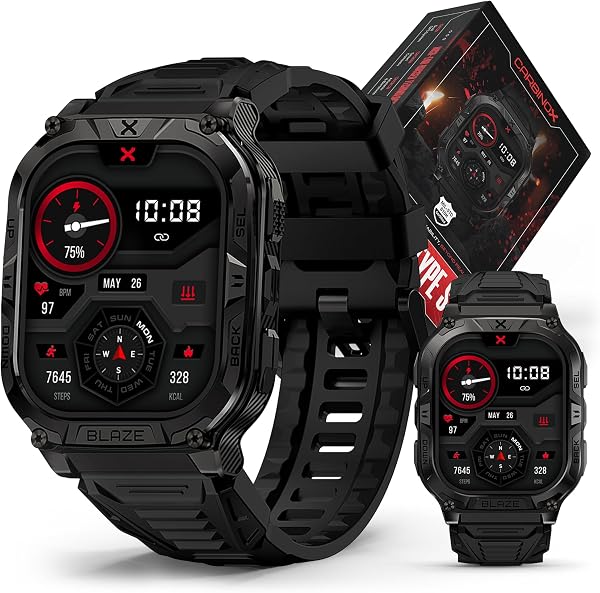
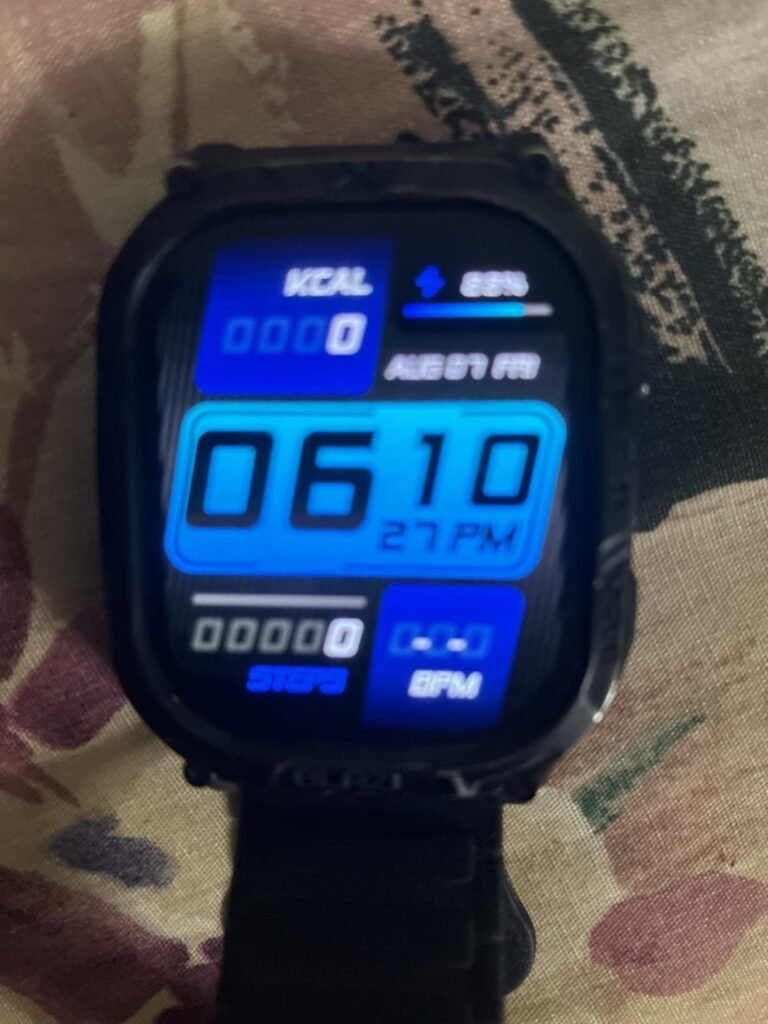
The CARBINOX Blaze offers a rare mix in the rugged category: a square case, AMOLED touchscreen, and Gorilla Glass over a MIL-STD-810H-tested alloy steel body. If you like the look of an Apple Watch-style form factor but need tougher construction and better outdoor tools, it's worth a close look. The IP69K rating is stronger than typical IP68 sealing, especially for high-pressure water exposure.
We may earn a commission when you buy through this link, at no additional cost to you.
For outdoor use, the Blaze includes a dual GPS system, meaning it pulls from multiple satellite constellations, along with a smart compass, altimeter, and barometer. Seven outdoor sport modes let you track routes without a phone, and 170+ total sports modes cover most training activities. Continuous heart rate, SpO2, and stress tracking round out the health picture.
Daily-use features are strong. A built-in speaker and microphone support Bluetooth calls, plus message and app notifications from Android or iPhone, so you can leave the phone in a bag. The 480mAh battery isn’t record-setting but reasonable for an AMOLED-based watch, and the 22mm quick-release strap makes it easy to swap between work, gym, and outdoor bands.
IP69K is a dust and high-pressure water spray rating, which is ideal for jobsite conditions like pressure washing or heavy rain. It’s not the same as a dive rating. 10 ATM ratings on watches like the Instinct series indicate suitability for swimming and snorkeling. Pick based on how you actually get wet: pressurized spray and dust, or true submersion.
The main caution is the lower average star rating relative to established brands, which suggests quality control or software polish may be inconsistent for some buyers. If the square AMOLED design speaks to you and you’re comfortable with a smaller-brand ecosystem, the Blaze is a distinctive option. Otherwise the round Garmins or Amazfit may feel safer.
Buyers who strongly prefer round cases or need proven long-term software support.
We may earn a commission when you buy through this link, at no additional cost to you.
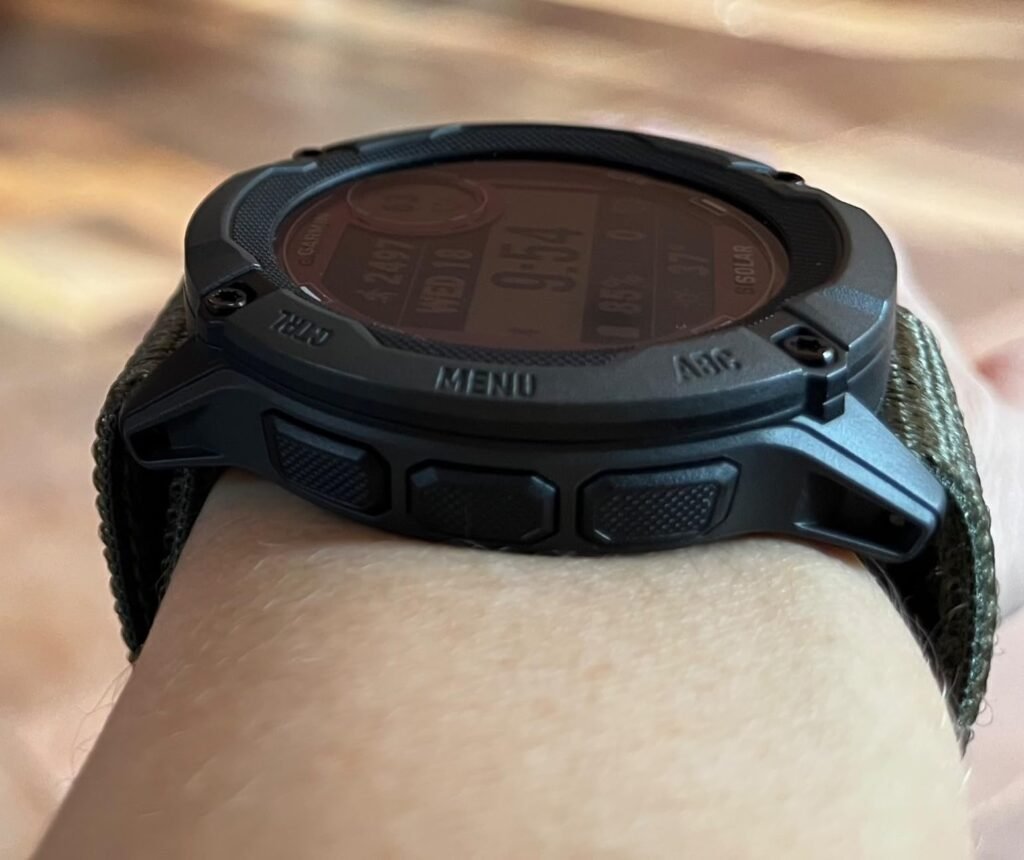
The Instinct 2X Solar Tactical is aimed at buyers who want the largest, longest-lasting Instinct with tactical-focused extras. The 50mm polymer case houses a big solar-charged display, and Garmin's Power Glass lens produces about 50% more energy than the standard Instinct 2 Solar, extending runtime dramatically for people who spend real time outside.
We may earn a commission when you buy through this link, at no additional cost to you.
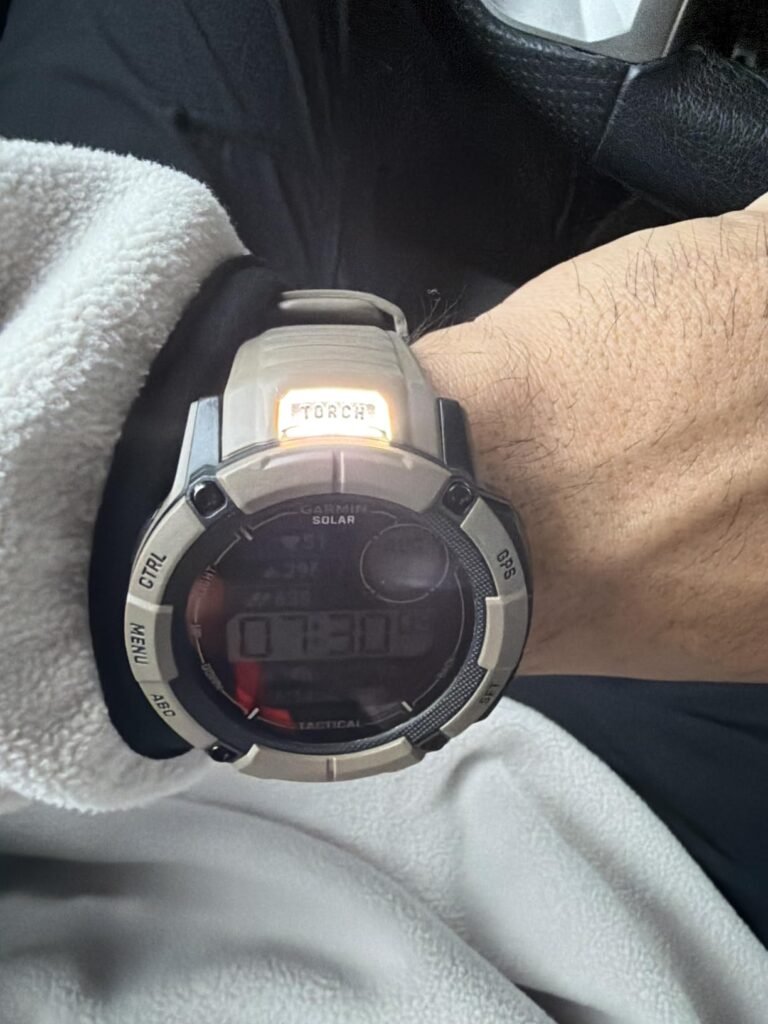
Under the right sun exposure, it can effectively run forever in smartwatch mode. Multi-band signal reception outperforms single-band positioning in tough environments, and the built-in 3-axis compass and barometric altimeter cover fundamental navigation. The integrated LED flashlight with variable intensity and strobe modes has become one of the most-praised features of the 2X line for good reason.
Health and training features run deep. Wrist heart rate, advanced sleep monitoring, respiration, Pulse Ox, and heart rate variability metrics from Firstbeat Analytics offer meaningful insight into recovery and readiness. Built-in sports apps cover running, biking, swimming, strength training, and more, with VO2 max estimates and structured workout support through Garmin Connect.
Before buying, measure your wrist and compare against 50mm case dimensions. Larger cases can catch on jacket cuffs, feel top-heavy during upper-body training, and look awkward on smaller wrists. If you’re between the 45mm Instinct 3 Solar and the 50mm 2X, try both in person if possible; comfort matters as much as features on a watch you’ll wear daily.
The 50mm case will be too large for some wrists, and the price sits well above the Instinct E. If you have the wrist real estate and want a rugged watch that essentially never dies on outdoor trips while still handling training analytics, this is one of the most complete tactical-leaning options Garmin makes.
Smaller-wristed users or anyone who prefers a slim, low-profile smartwatch.
We may earn a commission when you buy through this link, at no additional cost to you.
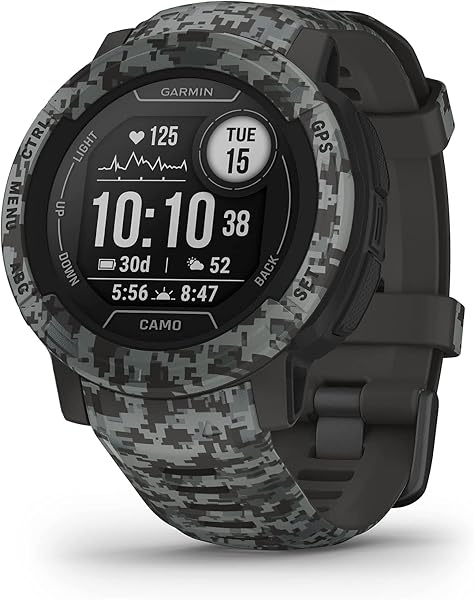
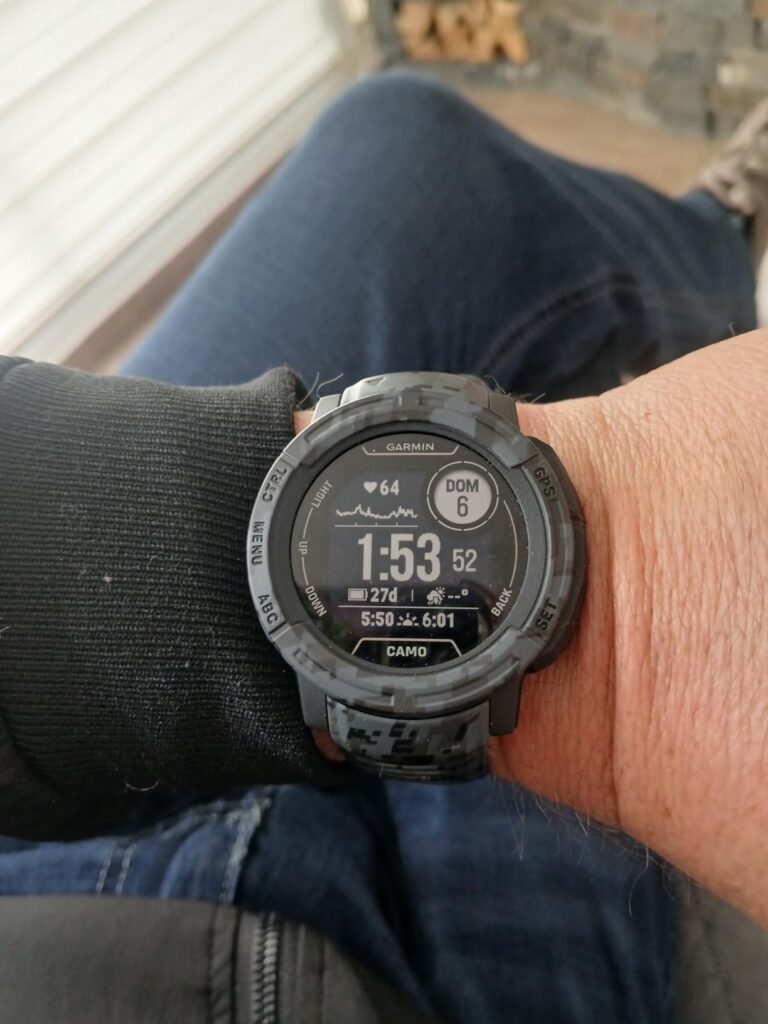
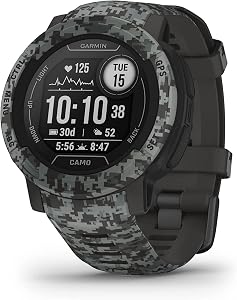
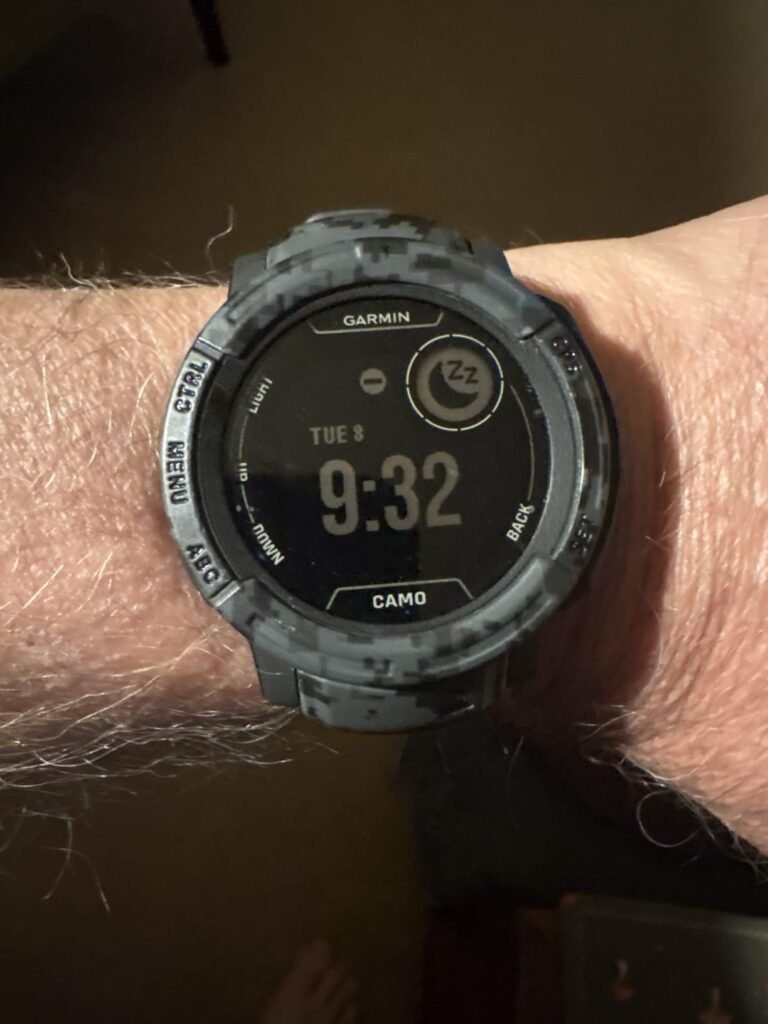
The Instinct 2 Camo edition is a well-balanced pick for buyers drawn to Garmin's rugged lineage but not needing the latest solar-charged models. It uses a fiber-reinforced polymer case with scratch-resistant Corning Gorilla Glass, is water-rated to 100 meters, and meets thermal and shock standards typical of the Instinct family.
We may earn a commission when you buy through this link, at no additional cost to you.
Navigation is handled by multi-GNSS support that includes GPS, GLONASS, and Galileo, along with a 3-axis compass and barometric altimeter. It doesn’t offer multi-band accuracy like the Instinct 3 Solar, but it remains dependable for hiking, trail running, cycling, and general outdoor tracking. Trackback routing is genuinely useful for retracing steps back to a starting point.
Battery life reaches up to 28 days in smartwatch mode and up to 30 hours in GPS mode. Smart notifications and Connect IQ app support arrive when paired with a phone, and Garmin Connect ties together heart rate, sleep, Pulse Ox, respiration, and other health metrics. Sports apps cover the usual mix plus VO2 max estimates.
Trackback lets the watch guide you along the exact route you already walked, in reverse. It’s simple but genuinely useful on unfamiliar trails, in low visibility, or when you’ve explored side paths and want a reliable way home. Pair it with the barometric altimeter and compass, and you have a solid phone-free navigation safety net.
Consider the Instinct 2 Camo when you want a proven, cleanly styled Garmin at a lower price than the newest generation. Skip it if you specifically need a flashlight or the highest-end GPS accuracy for demanding terrain. For steady all-around outdoor performance, it remains a strong option.
Buyers set on the newest features like solar charging, multi-band GPS, or an integrated flashlight.
We may earn a commission when you buy through this link, at no additional cost to you.
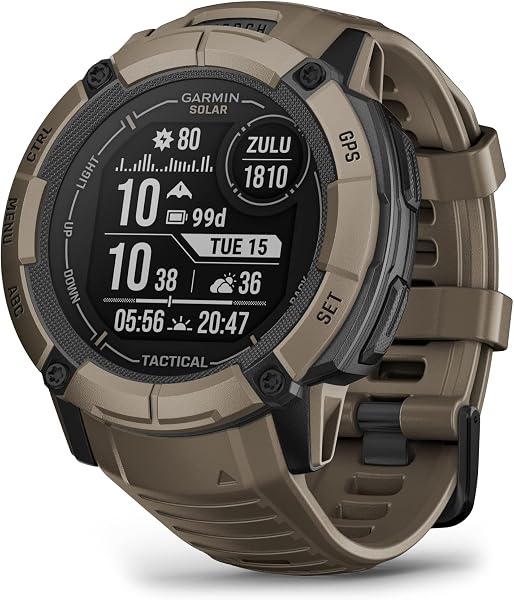
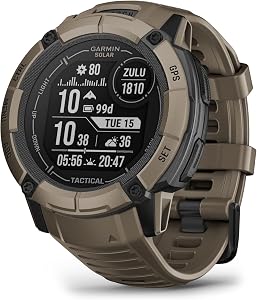
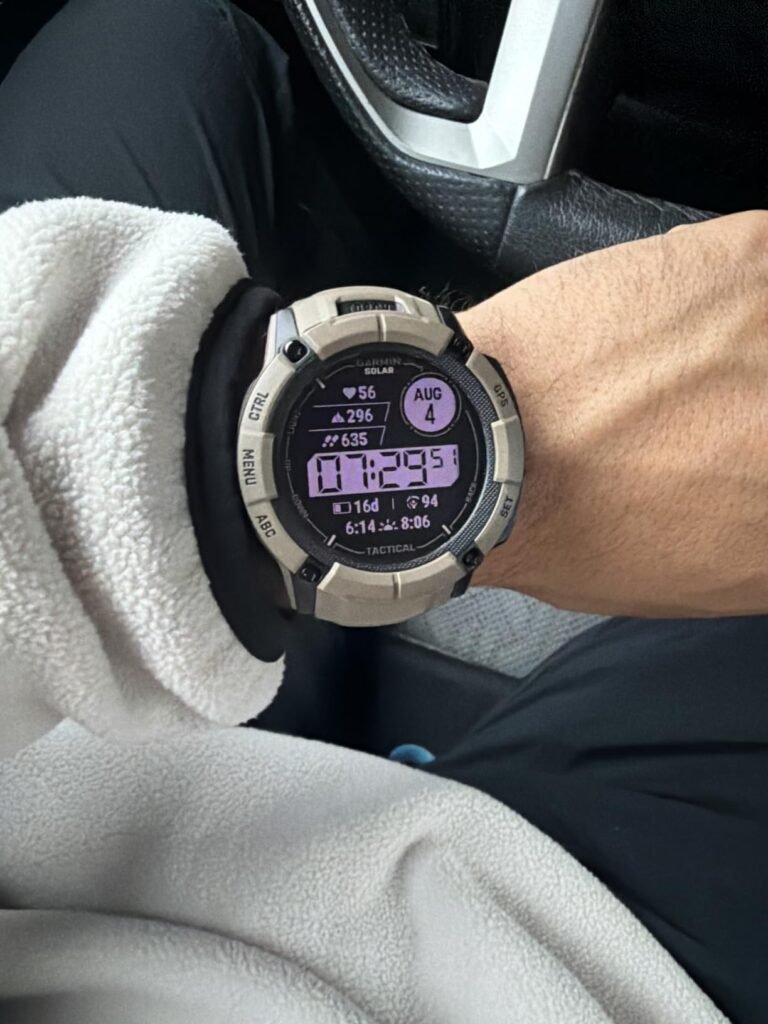
The Instinct 2X Solar Tactical Edition in Coyote Tan is the most specialized watch in this roundup. It layers tactical features like a built-in ballistics calculator and an SOS strobe mode over the same rugged 50mm platform, solar charging, and multi-band GPS found in the standard 2X Solar Tactical. It carries the highest star rating among the models compared here.
We may earn a commission when you buy through this link, at no additional cost to you.
Beyond tactical extras, this watch delivers the same core Garmin outdoor package: 3-axis compass, barometric altimeter, Power Glass solar lens producing 50% more energy than the base Instinct 2 Solar, and effectively infinite battery life in smartwatch mode with three hours of daily sun exposure. The variable-intensity LED flashlight with strobe modes doubles as a navigation aid and safety tool.
Health monitoring includes 24/7 wrist heart rate, advanced sleep tracking, respiration, Pulse Ox, and heart rate variability, all analyzed through Firstbeat Analytics for meaningful recovery insights. Built-in sports apps cover running, biking, swimming, strength training, and more, with VO2 max and other performance features. Multi-band GPS delivers stronger accuracy than single-band watches.
A ballistics calculator is genuinely useful for hunters and precision shooters who want quick wind, range, and holdover reference from the wrist. The SOS strobe mode is meaningful for search and rescue visibility. If neither applies to how you’ll use the watch, save money and pick a standard Instinct instead. Tactical branding without tactical need is just extra spend.
This edition earns its price when you specifically need the ballistics tools, the coyote tan colorway, or the SOS strobe capability for professional or serious hobby use. Casual outdoor buyers will likely get 95% of the benefit from the standard Instinct 2X Solar Tactical or even the Instinct 3 Solar at a lower cost. But when you need the extras, nothing else on this list matches.
Casual users who won’t use the ballistics calculator or SOS strobe features.
We may earn a commission when you buy through this link, at no additional cost to you.
Rugged smartwatches range from ultra-affordable daily wearers to premium multi-band GPS tools. The right pick depends on where you’ll wear it, how you’ll navigate, how often you can charge, and how much analytics depth you actually want. Here are the factors that matter most.
Rugged smartwatches are marketed as tough, but the specifics vary. MIL-STD-810 or MIL-STD-810H testing is the most common standard cited, and it refers to a range of environmental tests covering shock, thermal extremes, vibration, and more. Not every test is applied to every watch. Garmin Instinct models are widely referenced as MIL-STD-810 compliant, while budget military-style watches often note passing 12 or so specific tests.
Case materials matter alongside standards. Fiber-reinforced polymer, as used across the Instinct line, offers strong impact resistance at low weight. Stainless steel bezels like the 316L on the Amazfit T-Rex 3 or alloy steel bodies like the CARBINOX Blaze feel more premium and resist scratches on the frame, though they add weight. Screen protection also varies: Corning Gorilla Glass is common on midrange and premium models, while budget watches often use tempered glass with a PET film.
If you’ll subject the watch to real abuse, prioritize a proven brand plus Gorilla Glass. For everyday wear with occasional outdoor use, most rugged models handle life easily.
Water ratings can be confusing. IP68 covers dust ingress and short-term submersion, while IP69K adds high-pressure hot water spray resistance. Watches like the Blackview note IP68 but explicitly warn against swimming, saunas, and hot tubs. That’s an important distinction: IP ratings are lab tests, not swim certifications.
For serious water use, look for ATM ratings. 5 ATM is generally considered fine for swimming in a pool. 10 ATM, as offered by the Garmin Instinct 3 Solar and Instinct E, is suitable for high-impact water sports and snorkeling. The Amazfit T-Rex 3 goes further with a 328-foot water resistance rating and freediving certification to 147 feet, which is well beyond what most rugged watches offer.
Choose based on your actual water exposure. Casual rain and sweat need only IP68. Regular swimming warrants 5 ATM or higher. Freediving or serious open-water use benefits from the T-Rex 3’s depth rating.
GPS quality varies more than shoppers often realize. Basic smartwatches rely on connected GPS through your phone, which works fine for casual runs but fails when the phone is left behind. Onboard single-band GPS is more independent but can drift in canyons and dense forest. Multi-GNSS support pulls from constellations like GPS, GLONASS, Galileo, and BeiDou for stronger fixes.
Multi-band or dual-band L1+L5 GPS is the current gold standard. It uses two frequencies simultaneously to reject reflected signals, delivering cleaner tracks in tough environments. The Garmin Instinct 3 Solar uses SatIQ technology to switch between single- and multi-band intelligently for battery savings. The KOSPET Pulse 2 delivers similar dual-band capability at a much lower price. The Amazfit T-Rex 3 pairs dual-band GPS with free offline global maps.
If you regularly hike or run in demanding terrain, prioritize multi-band. For urban runs or casual trails, multi-GNSS is plenty.
Battery life is where rugged smartwatches shine relative to typical smartwatches. Garmin’s Instinct E reaches 16 days, the Instinct 2 Camo reaches 28 days in smartwatch mode, and solar-equipped Instinct 3 Solar and Instinct 2X models can run indefinitely with regular sun exposure. Amazfit T-Rex 3 offers about three weeks of typical use and 180 hours in GPS mode.
GPS use drains battery dramatically faster than smartwatch mode. Always-on displays, high-frequency heart rate sampling, notifications, and flashlight use also cut runtime. Budget models like the KIPTUMTEK Y8 and Blackview watch stretch to 30 or more days of daily use partly because their features are simpler and there’s no onboard GPS chip running constantly.
Match battery expectations to your habits. If you charge nightly, any option works. For multi-day trips or job sites without power, prioritize solar or high-capacity models.
Most rugged smartwatches now include heart rate, SpO2, sleep tracking, and stress monitoring. The depth of analysis is where price shows. Garmin’s ecosystem leverages Firstbeat Analytics to interpret heart rate variability, training load, recovery time, and VO2 max estimates, and the Garmin Connect app is widely regarded as one of the best in the category.
Amazfit’s Zepp app offers strong tracking with AI-generated training plans. Smaller brands like KOSPET, KIPTUMTEK, and Blackview cover the basics well but generally lack the deeper training analytics athletes rely on. All non-medical devices produce estimates rather than clinical measurements, and manufacturer disclaimers explicitly note this.
Serious runners, cyclists, and triathletes benefit from Garmin or Amazfit ecosystems. For general wellness tracking and step counting, budget models are perfectly adequate.
An LED flashlight on the wrist sounds gimmicky until you’ve used one. It’s genuinely helpful around camp, on early-morning runs, or in emergencies. The Garmin Instinct 3 Solar and 2X models include variable-intensity flashlights with strobe modes, and even budget military-style watches like the KIPTUMTEK Y8 and Blackview offer basic LED lights. Note that the Instinct E does not include a flashlight.
A 3-axis compass and barometric altimeter are standard on Garmin Instinct models and the Amazfit T-Rex 3, and they matter more than shoppers expect. Elevation trends help with hiking pace, weather changes, and route planning, while an accurate compass supports basic navigation off a phone.
If your use includes real hiking or outdoor work, insist on all three: flashlight, compass, and altimeter. For gym and jogging use, they’re nice bonuses rather than essentials.
There are essentially two display families in rugged smartwatches: transflective memory-in-pixel screens like on Garmin Instinct models, and AMOLED panels like on the Amazfit T-Rex 3, CARBINOX Blaze, and higher-end budget options. Each has real strengths.
Transflective displays use ambient light rather than fighting it, so they look exceptional in direct sunlight and sip battery. They lack color vibrancy indoors and can look flat compared to a phone screen. AMOLED displays deliver bright, colorful visuals with sharp text and rich watch faces. High-brightness AMOLEDs like the T-Rex 3’s 2,000-nit panel remain readable in sun but pull more power.
Choose transflective for maximum battery and outdoor legibility. Choose AMOLED if daily readability, colorful maps, and modern smartwatch feel matter more.
Beyond fitness, rugged smartwatches vary in their smart capabilities. Bluetooth calling via wrist microphone and speaker is now common across price points, from the Instinct 3 Solar down to the KIPTUMTEK Y8. Contactless payments via Garmin Pay are limited to Garmin models with compatible bank support. Third-party app stores like Garmin’s Connect IQ let you install additional watch faces and apps.
Companion app quality varies. Garmin Connect, Zepp, and Apexmove all handle syncing well, but they differ in depth of analysis and long-term software updates. Established brands tend to keep apps updated and supported for years, while lesser-known brands may see less consistent support.
If you value long-term software support and rich features, favor established brands. If price is the priority and you mainly want calls and notifications, budget options work well.
Rugged watches often run larger than typical smartwatches. The Garmin Instinct 3 Solar and Instinct E sit at 45mm, while the Instinct 2X models jump to 50mm. Larger cases hold bigger batteries and displays but can feel bulky, catch on jacket cuffs, and look oversized on smaller wrists. Weight also matters for sleep tracking and long training sessions.
Strap materials range from soft silicone on most models to comfortable multi-strap kits like the Blackview’s two-strap package. Quick-release straps, like the CARBINOX Blaze’s 22mm system, let you swap between casual, athletic, and formal looks. Try the case on if you can, or measure your wrist and compare specifications carefully.
Bigger wrists can handle 50mm cases comfortably. Smaller wrists usually feel better in 45mm or smaller. Comfort trumps features on any watch you’ll wear all day.
Start by pairing the watch with its companion app on your phone and completing initial setup: user profile, health metrics, notification permissions, and preferred sports modes. Take time to configure watch faces and adjust default screens so the information you check most, like heart rate, pace, or navigation, is a single button press away. Set up incident detection and emergency contacts where the watch supports them, and enable contactless payments if you plan to use Garmin Pay.
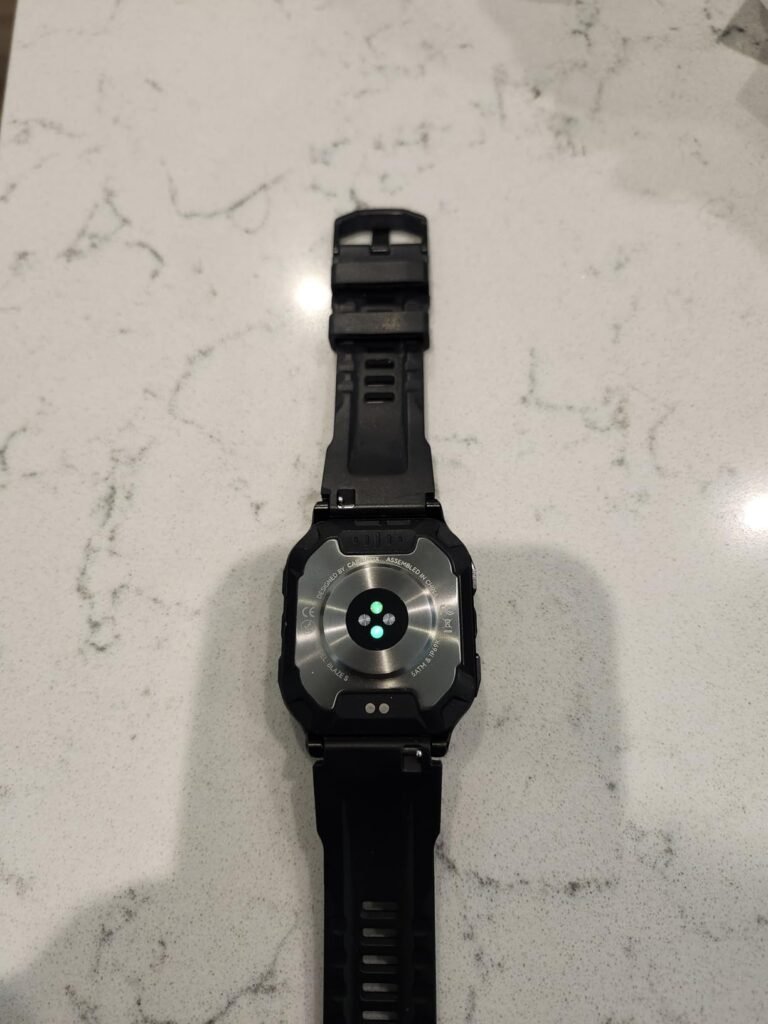
Charging behavior varies by model. Most rugged watches use magnetic charging pucks that snap onto the case back. Keep contacts clean with a dry cloth to prevent slow or interrupted charging. If you own a solar-equipped watch, expose it to natural sunlight regularly for real battery gains; indoor lighting produces minimal energy. To maximize battery life on any model, reduce always-on display use, tune heart rate sampling frequency, and turn off notifications from apps you don’t need.
Care is straightforward but worth doing. Rinse the watch and strap with fresh water after saltwater or heavy sweat exposure to prevent corrosion and skin irritation. Silicone straps benefit from occasional cleaning with mild soap. Avoid using harsh chemicals near sensors or under seals. Store the watch in a cool, dry place when not in use, and update firmware through the companion app periodically to keep GPS performance, security, and features current.
For casual runs, walks, and open-trail hiking, standard multi-GNSS support is accurate enough. Multi-band or dual-band L1+L5 GPS becomes valuable in tough environments like dense forest, deep canyons, or dense urban areas where reflected signals cause drift. If your routes rarely involve those conditions, the extra cost isn't necessary. If they do, multi-band delivers noticeably cleaner tracks and better pace accuracy.
It depends heavily on usage. Garmin Instinct models range from 16 days on the Instinct E to effectively unlimited on solar variants with regular sun exposure. Budget military watches like the KIPTUMTEK Y8 and Blackview can reach 15 to 30 days of daily use with basic feature sets. Using GPS heavily, keeping always-on display active, or maxing notifications will cut those numbers significantly, so tune settings to match your routine.
Budget models like the KOSPET Pulse 2, KIPTUMTEK Y8, and Blackview offer real value for buyers who mainly want durability, notifications, calls, and basic fitness tracking. The tradeoffs are typically smaller app ecosystems, less refined training analytics, and, in some cases, no onboard GPS. If those aren't dealbreakers, a sub-$100 rugged watch can serve daily needs well. Serious athletes usually benefit from investing in Garmin or Amazfit.
Check the water rating carefully. Watches with 5 ATM or 10 ATM ratings, like the Garmin Instinct 3 Solar or Instinct E, are safe for swimming. Watches rated only IP68 or IP69, even if marketed as waterproof, are generally not recommended for swimming. The Amazfit T-Rex 3 goes further with a freediving certification to 147 feet, which is unusual in this category and useful for divers.
MIL-STD-810 covers a battery of environmental tests including shock, vibration, thermal extremes, and humidity, and it speaks to overall durability. IP ratings specifically address dust and water ingress. A watch can meet MIL-STD-810 for shock resistance but still have limited water sealing, or vice versa. For serious outdoor use, look for both a MIL-STD-810 reference and an appropriate water rating like 5 ATM or higher.
It's a feature that sounds like a gimmick until you rely on it. Setting up a tent at dusk, navigating a dark hallway, or finding gear in a bag becomes noticeably easier with a wrist light. Garmin's Instinct 3 Solar and 2X models include variable-intensity flashlights with strobe modes, and budget military-style watches often include basic LEDs too. If you spend real time outdoors or work in low-light environments, a flashlight is worth having.
Both work well outdoors, just differently. Transflective memory-in-pixel displays on Garmin Instinct models use ambient light and look exceptional in direct sun with minimal battery draw. AMOLED displays like the Amazfit T-Rex 3's 2,000-nit panel are extremely bright, colorful, and easy to read but consume more power. If you prioritize battery and pure sunlight legibility, choose transflective. For vivid maps and a modern smartwatch feel, choose AMOLED.
No. Manufacturers including Garmin, Amazfit, KOSPET, and budget brands all clearly state their watches are not medical devices. Heart rate, SpO2, sleep, and stress data are estimates useful for tracking trends and general wellness, not for diagnosis. If you have a medical concern, use a certified device or consult a professional. For fitness and lifestyle tracking, these estimates are still meaningful and useful.
Nearly all rugged smartwatches in this roundup support both iOS and Android through their companion apps. Garmin Connect, Zepp, Apexmove, and Da Fit all work across platforms. Check minimum operating system requirements in the product listing before buying, and note that some features like contactless payments may require specific carrier or bank support. Basic functions like notifications, calls, and syncing work broadly.
Check for updates every few weeks through the companion app. Manufacturers regularly release firmware that improves GPS accuracy, battery efficiency, sensor performance, and security. Updates usually install in the background over Bluetooth and take 10 to 30 minutes. Keeping firmware current is especially important for GPS-heavy models and for watches from newer or smaller brands, where software refinements meaningfully improve the experience over time.
For most buyers, the Garmin Instinct 3 Solar stands out as the strongest overall pick. Its combination of solar-extended battery life, multi-band SatIQ GPS, integrated flashlight, comprehensive health tracking, and MIL-STD-810 durability makes it a genuinely complete rugged smartwatch. The transflective display keeps it legible in bright sun without draining power, and the Garmin Connect ecosystem remains one of the deepest and best-supported in the category.
Different buyers benefit from different picks. The Garmin Instinct E offers the same core Garmin experience at a lower price for those who don't need solar charging or a flashlight. The Amazfit T-Rex 3 is the clearest AMOLED-first option with serious depth ratings and offline maps. The KOSPET Pulse 2 delivers dual-band GPS at a budget-friendly price, while the KIPTUMTEK Y8 and Blackview models suit shoppers who want extreme battery life and calls under $50. The Instinct 2X Tactical editions are worth their premium only if you'll actually use the ballistics calculator or SOS strobe.
Start by defining how you'll actually use the watch. Weigh water rating against your real exposure, GPS depth against where you navigate, and battery life against your charging habits. Consider case size and app ecosystem quality carefully; both affect daily satisfaction more than spec sheets suggest. Any watch in this roundup can be the right choice for the right buyer, and the picks above should help you match features to needs without overspending on capabilities you won't use.