HYPER GO H16BM
8.8Editor score1/16 scale monster
2845 4200KV brushless
27 mph on 2S
45A ESC 2S/3S
Find the right rc buggies for 2026. We compare 10 standout options by build quality, useful features, owner feedback, value, and everyday trade-offs.
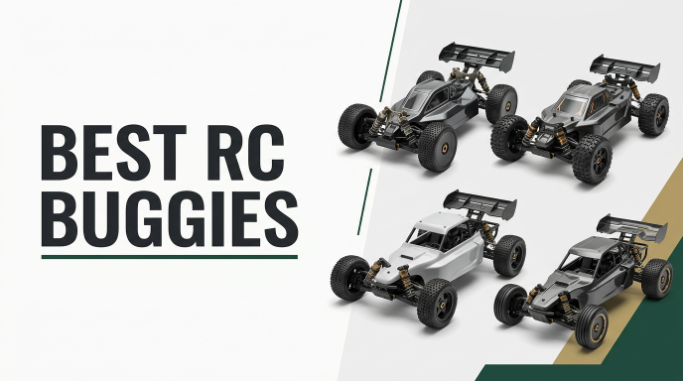
Picking the right RC buggy for 2026 comes down to balancing scale, motor type, drivetrain quality, and terrain capability against your budget and skill level. We compare 10 standout off-road models across brushless racing machines, entry-level rock crawlers, and mid-range monster trucks so you can match the right vehicle to your yard, park, or trail.
Off-road RC vehicles vary widely in scale, from compact 1/18 crawlers that thrive in tight spaces to serious 1/10 bashers that need open outdoor terrain. The most important differences involve motor power, chassis construction, suspension design, and included batteries. Understanding these factors prevents costly mismatches between your driving environment and the vehicle you choose.
This guide covers everything from beginner-friendly rock crawlers under $35 to hobby-grade brushless truggies capable of 50 mph. Each review highlights the drivetrain quality, battery specifications, terrain suitability, and practical tradeoffs so you can identify the buggy or truck that fits your driving goals and long-term plans in the hobby.
We compared 10 off-road RC vehicles using the factors that actually shape purchase decisions: scale, motor type and power, ESC amperage, drivetrain construction, suspension quality, tire selection, top speed, battery configuration, transmitter range, waterproofing, and included spares. The notes focus on practical trade-offs so each pick connects to how drivers actually bash, climb, and race across grass, gravel, dirt, and rocky terrain in real-world backyard and park settings.


Compare key features, scores, and current prices side by side. A shorter feature list means fewer details were available, not necessarily fewer capabilities.


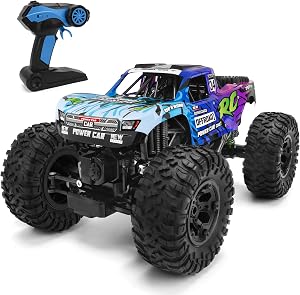
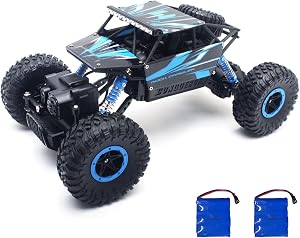
The HAIBOXING Rampage 1/18 earns the highest owner rating in this guide, reflecting its strong balance of performance, durability, and value at a reasonable price. The hobby-grade 4WD system features front and rear independent suspension with quality ball bearings throughout the drivetrain, delivering handling that punches well above the price point. All-terrain high-grip tires round out a genuinely capable off-road package.

We may earn a commission when you buy through this link, at no additional cost to you.
The RC380 race motor pushes the compact 1/18 chassis to 36 kph, which is fast enough for exciting bashing but not so fast that beginners lose control. The truck handles sand, grass, pavement, and general off-road surfaces well, benefiting from the low weight and quick response that smaller scales provide. High-duty PA materials, a compound PVC car body, and glued full-terrain tires reflect quality construction throughout.
The 2.4GHz waterproof electronic system reaches 280 feet with switchable slow and fast speed modes, making the truck approachable for beginners while still fun for experienced drivers. The waterproof rating opens up wet grass, puddles, and light rain driving without electrical damage. This is the kind of practical feature that dramatically extends when and where you can use the vehicle.
Ball bearings reduce friction throughout the drivetrain compared to plain bushings, translating to more efficient power delivery, higher top speeds, and less wear over time. They are a hallmark of hobby-grade construction and one of the clearest quality differentiators between toy-grade and hobby-grade RC vehicles. Trucks with full ball bearing drivetrains generally last longer and perform better than those without.
This is the value pick to consider if you want hobby-grade construction, 4WD capability, and waterproof electronics in a compact package. Buyers wanting larger 1/10 scale or brushless motor performance should look at the higher-tier options in this guide.
Drivers who want a large 1/10 scale platform or brushless motor performance.
We may earn a commission when you buy through this link, at no additional cost to you.
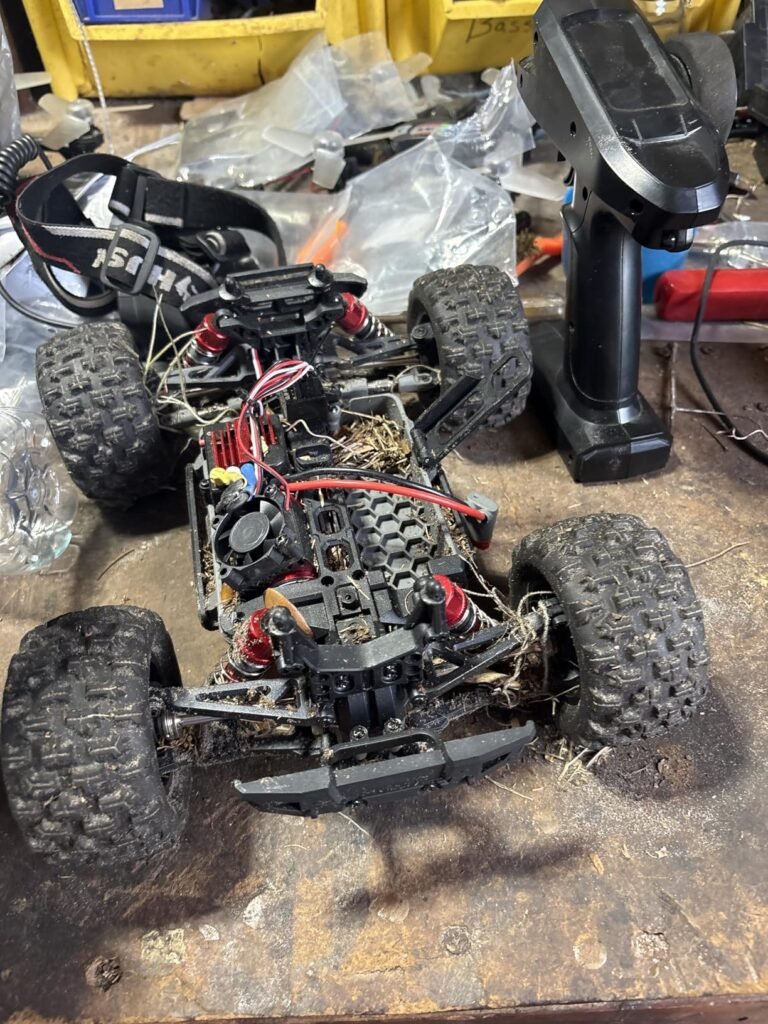
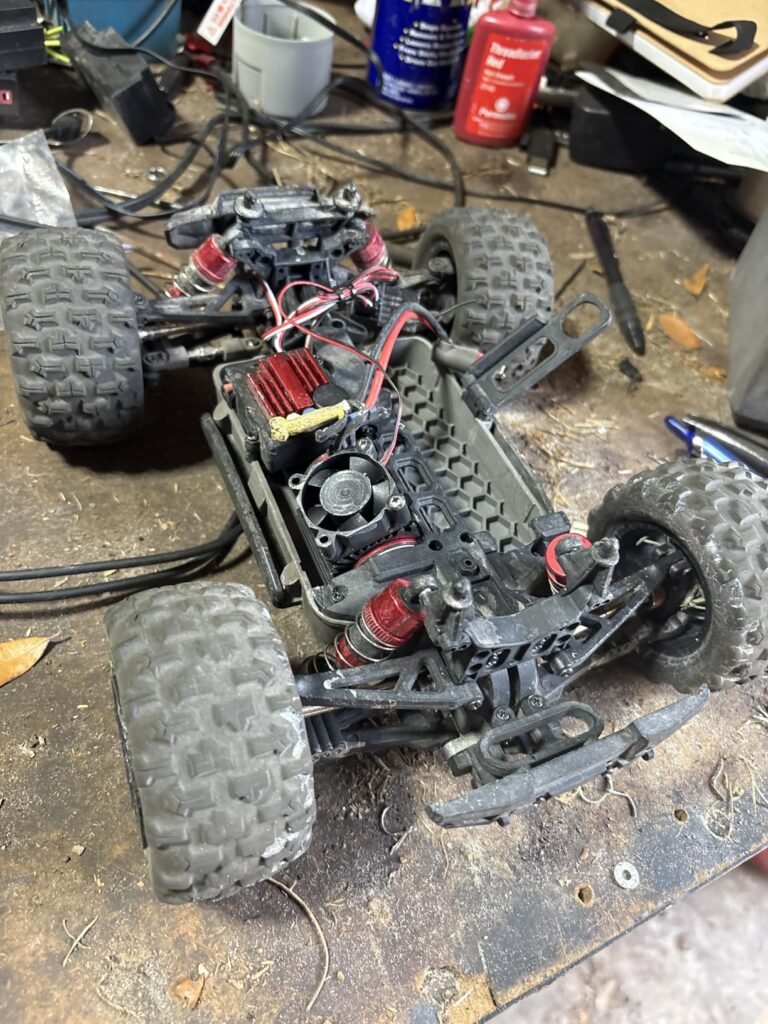
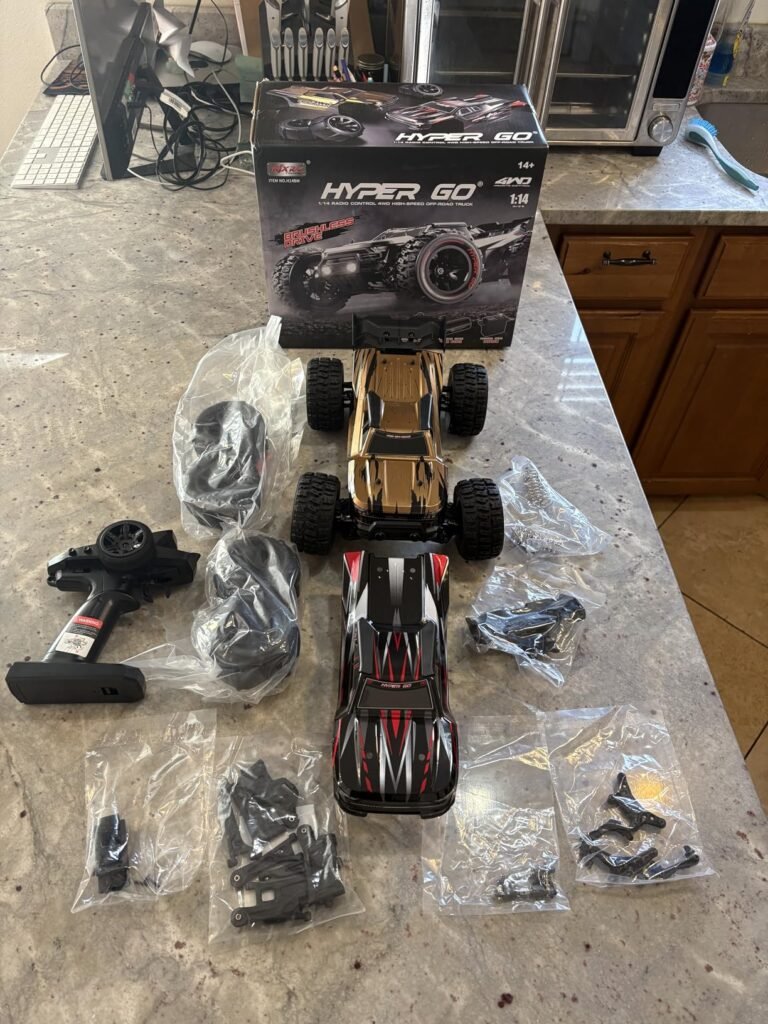
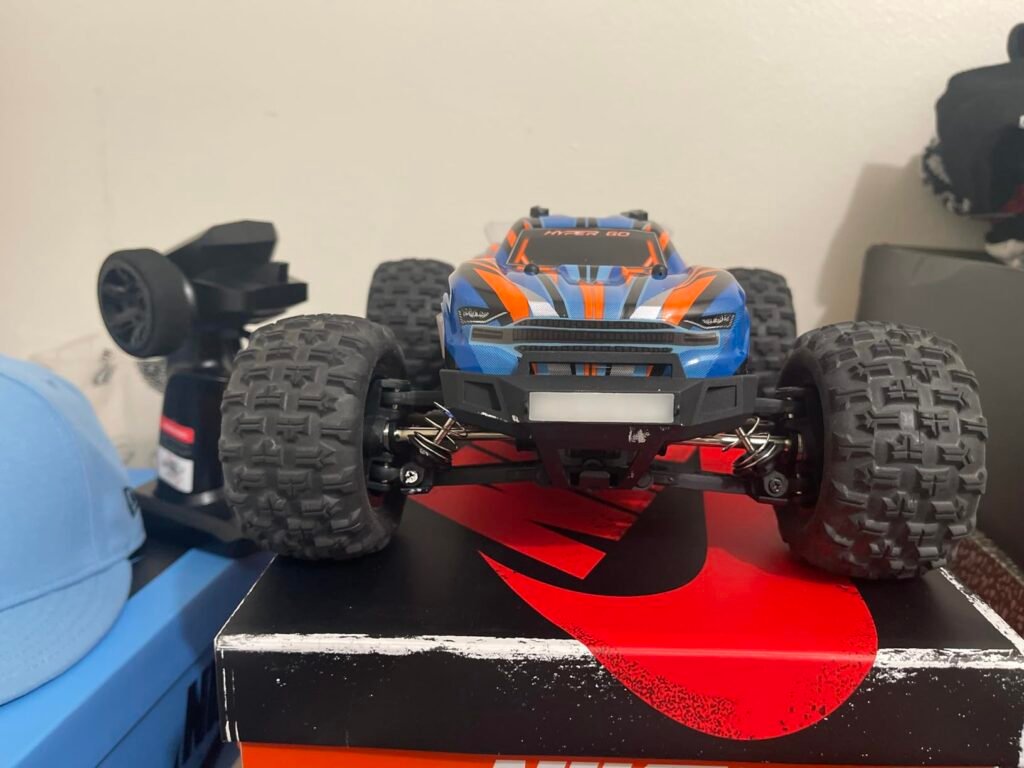
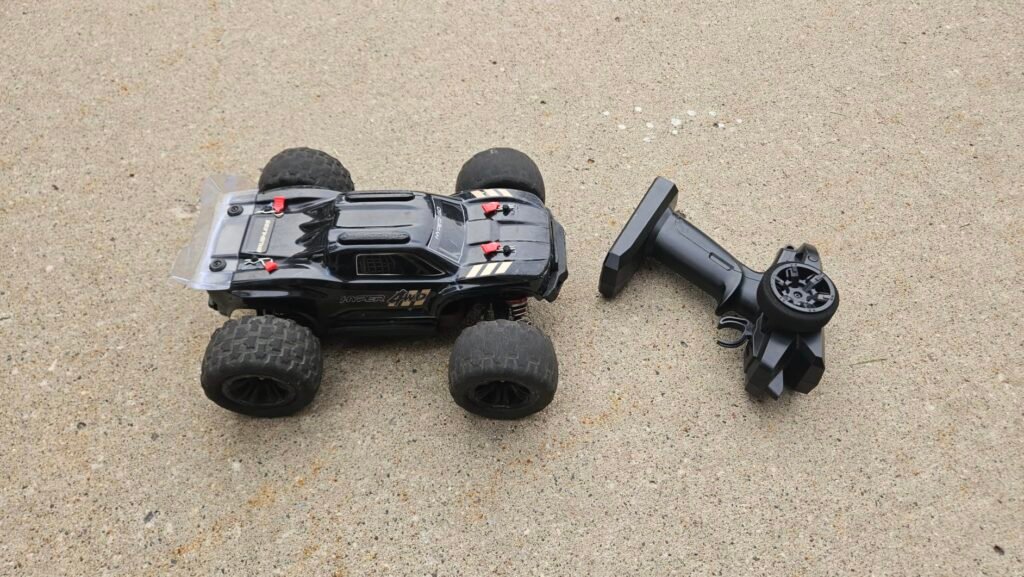
The HYPER GO H16BM is a compact 1/16 scale monster truck aimed at hobbyists who want genuine brushless performance in a manageable footprint. The 2845 4200KV brushless motor paired with a 45A ESC delivers 27 mph on the included 2S LiPo, and unlocks 42 mph when running a 3S 11.1V pack. That upgrade headroom sets it apart from fixed-speed toy-grade competitors at similar prices.
We may earn a commission when you buy through this link, at no additional cost to you.
Metal gears and a metal differential distribute power evenly across all four wheels, while the 5.5mm axle handles the torque without flex under aggressive throttle. The 16 ball bearings throughout the transmission reduce friction and extend service life. The honeycomb chassis material has been designed to absorb repeated impacts, and front and rear zinc reinforcement plates add protection during the inevitable rollovers.
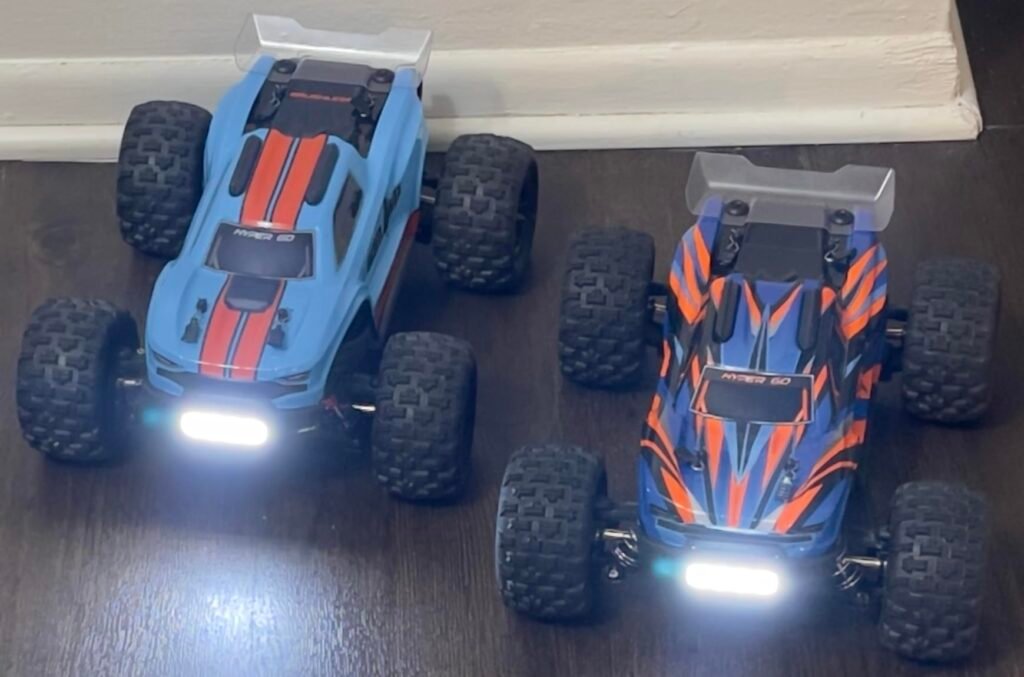
For beginners, the transmitter includes a 70 percent throttle limit switch that keeps the truck manageable while learning. The 2.4GHz 3-channel radio also controls a light bar alongside standard throttle and steering. Oil-filled shocks with pre-mounted foam-insert tires keep the vehicle planted during high-speed runs, which reduces the twitchiness common in smaller off-road platforms at aggressive inputs.
4-pole brushless motors generally deliver smoother torque delivery and better low-end response than 2-pole designs at the same KV rating. This translates to more controllable acceleration and better handling on loose surfaces. The tradeoff is slightly more weight and marginally lower peak RPM, but for most driving styles the smoother power feels more usable.
Pick this truck if you want brushless power in a size that transports and stores easily, with room to grow through a 3S upgrade later. If you need a larger 1/10 scale platform for rougher outdoor terrain or want a ready-to-run 3S setup out of the box, look at bigger options in this guide.
Drivers who want a larger 1/10 platform for rough outdoor bashing terrain.
We may earn a commission when you buy through this link, at no additional cost to you.
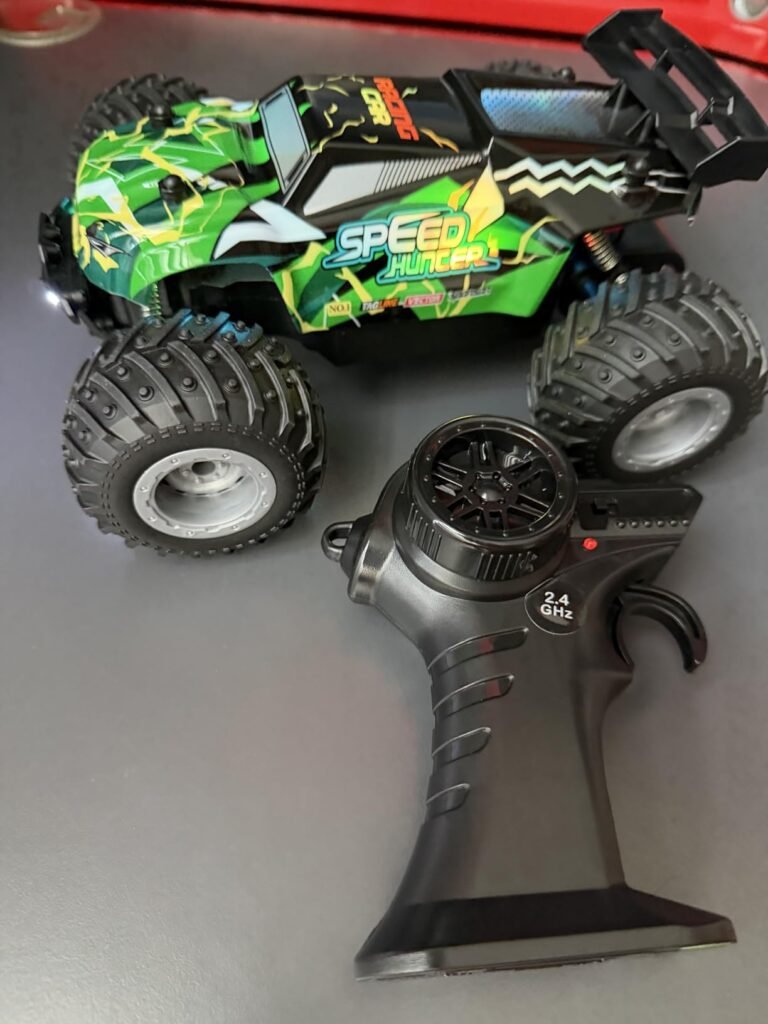
The Vensico 1:18 monster truck targets younger drivers and casual users who want off-road fun without a hobby-grade price tag. At under $30, it delivers surprising value with two rechargeable batteries providing approximately 30 minutes each, giving you a full hour of driving time between charges. That kind of runtime matches or beats vehicles costing three times as much.
We may earn a commission when you buy through this link, at no additional cost to you.
Front and rear independent suspension with individual spring shock absorbers handles bumps, crashes, and rough play better than the typical toy-grade suspension setups in this price range. The 370 strong magnetic motor delivers acceleration and top speeds up to 20 kph, which is plenty for backyard driving with kids. All-terrain tires with an aggressive tread pattern grip gravel, sand, grass, mud, and pavement equally well.
The LED headlights and color-changing body lights turn nighttime driving into an event rather than just an afterthought. The 2.4GHz remote provides stable control across up to 200 feet with anti-interference technology, meaning multiple kids can race their trucks simultaneously without signal conflicts. The durable ABS body shell survives the kind of crashes that come with younger drivers still learning control.
Two-wheel drive systems cost less, weigh less, and handle smoother surfaces well, but struggle with steep climbs, loose sand, and thick mud where all four wheels need to provide traction. For sidewalks, patios, and short grass, 2WD works fine. For anything more challenging, 4WD delivers noticeably better performance and fewer stuck moments.
Buy this truck as a gift for kids ages 8 to 12, as a second vehicle for casual driving, or as a low-risk entry point to the hobby. Serious hobbyists wanting brushless speed, 4WD capability, or hobby-grade drivetrain components should skip to the mid-range and premium options in this guide.
Hobbyists who want brushless motors, 4WD systems, or aggressive off-road capability.
We may earn a commission when you buy through this link, at no additional cost to you.
The HYPER GO H14BM V3 sits in the 1/14 truggy category and targets adult hobbyists who want serious bashing capability in a manageable size. The upgraded sealed steel differential paired with powder metallurgy transmission gears represents a meaningful step up from generic metal gearboxes. The revised chassis layout increases servo torque by 30 percent, which translates to sharper steering response and more confident handling at speed.

We may earn a commission when you buy through this link, at no additional cost to you.
The 2852 4400KV brushless motor with 45A ESC ships with a factory 33 mph throttle limit for safety, but a simple five-press switch unlocks the full 45 mph on 2S and up to 50 mph with an Angry Snail 3S 2000mAh LiPo. The 6061 aluminum laser-etched chassis plate provides an exceptionally rigid foundation, while the composite front bumper and center body support absorb the impacts that come with high-speed bashing.
Multi-terrain airless tires measuring 111mm in diameter handle grass, gravel, and dirt without issue. The included paddle tires open up snow, sand, and mud driving without needing a second vehicle. Oil-filled shocks with adjustable damping keep the truggy planted during jumps and rough landings, which is essential when running at 50 mph across uneven ground. The 300-foot 2.4GHz radio provides plenty of range for open-field driving.
Airless tires cannot puncture on rocks, glass, or thorns, which eliminates the most common trailside failure with foam-insert or hollow tire designs. The tradeoff is slightly harsher ride quality on smooth surfaces and less flex on rocks. For most bashing and backyard driving, the puncture-proof reliability outweighs the minor comfort difference.
This is the truggy to choose if you want serious brushless speed and durability in a mid-scale package that still transports easily. If you prefer a smaller 1/16 platform or need a rock crawler style vehicle for slow technical driving, look at the other options in this guide.
Drivers wanting a slow, technical rock crawler for climbing over obstacles.
We may earn a commission when you buy through this link, at no additional cost to you.
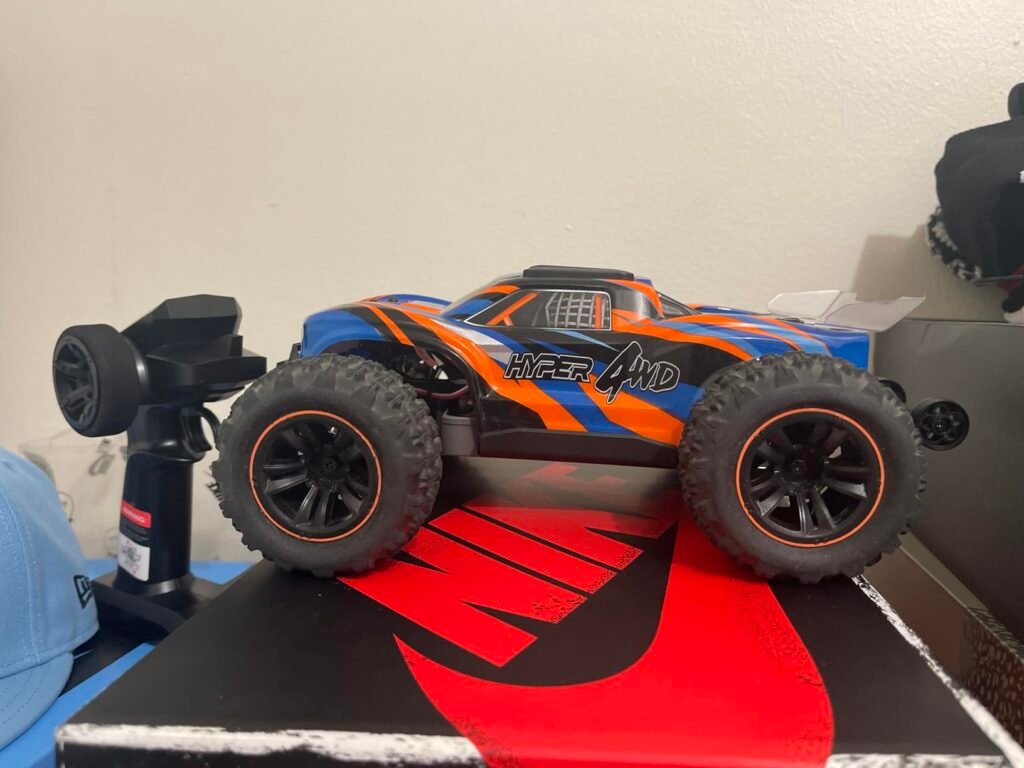
The HYPER GO H16DR fills the gap between toy-grade RC trucks and serious brushless machines, offering hobby-grade construction with a brushed 390 motor that keeps the price accessible. The included 2S 1050mAh LiPo delivers 20+ mph out of the box, and the smart 2S/3S ESC allows a 3S upgrade to unlock 27+ mph without swapping electronics.
We may earn a commission when you buy through this link, at no additional cost to you.
The honeycomb-designed chassis with alloy steel drive shaft, front and rear zinc metal reinforcement plates, and metal ball bearings represents serious construction for a mid-range price point. Front and rear gear differentials distribute power evenly across the 4WD system, while the flame-retardant LiPo shell adds a meaningful safety feature that is uncommon at this price. Aluminum-capped oil-filled shocks reduce vibration and improve stability during jumps.
The 70 percent throttle limit switch on the transmitter makes the truck approachable for beginners and younger drivers while still allowing experienced users to unlock full power. Two LiPo batteries ship in the box, providing enough runtime for a full backyard session without waiting for recharges. The truck handles big jumps, wheelies, and backflip stunts well thanks to the balanced weight distribution and stiff chassis.
The 3S upgrade path preserves your initial investment while unlocking meaningful performance gains. When ready, buy a compatible 3S 11.1V LiPo, verify the connector matches, and monitor motor temperature during the first few runs. The motor may run warmer at 3S voltage, so allow cooldown between packs to protect components.
Choose this truck if you want hobby-grade construction and 3S upgrade potential without paying brushless prices. Buyers who specifically want brushless motor efficiency and higher top speeds should step up to the HYPER GO brushless models in this guide.
Buyers who want brushless motor performance and top speeds above 30 mph out of the box.
We may earn a commission when you buy through this link, at no additional cost to you.
The UDIRC 1611 takes an unusual and smart approach: it ships with an easy-to-drive brushed setup rated for 22 mph, then offers direct upgrade paths to 31 mph or 56 mph brushless systems as your skills grow. This staged approach saves beginners from the frustration of overly fast RC vehicles while preserving their initial investment when they are ready to move up. It is the truck that grows with you.

We may earn a commission when you buy through this link, at no additional cost to you.
Despite the entry-level top speed, the drivetrain is genuine hobby grade with metal gears, reinforced drivetrain components, and durable suspension arms. Full proportional throttle and steering provide the variable control found in racing-grade vehicles, which teaches proper technique rather than the on-off feel of toy-grade RC cars. The 3-wire precision steering servo and adjustable oil-filled shocks deliver responsive handling that experienced drivers will appreciate.
The Newbie Protection Program is a standout support offering. Two rechargeable batteries, 8 spare suspension arms, 2 CVDs, a DIY light kit, and tools all ship in the box, meaning you have everything needed for crashes and repairs during the learning phase. The 365-day warranty with free tech support and parts replacement provides real peace of mind for new hobbyists worried about breakage.
New RC drivers crash frequently while learning, and suspension arms are among the most commonly broken parts. Having 8 spares in the box means you can keep driving after a break rather than waiting days for replacements to ship. This dramatically improves the early learning experience and reduces the frustration that causes many beginners to abandon the hobby prematurely.
This is the smart choice for beginners, kids, teens, or adults who want a genuine hobby-grade experience without paying for brushless power upfront. Experienced drivers who already know they want maximum speed will prefer starting with a full brushless setup rather than upgrading later.
Experienced drivers who want maximum brushless performance from the first drive.
We may earn a commission when you buy through this link, at no additional cost to you.
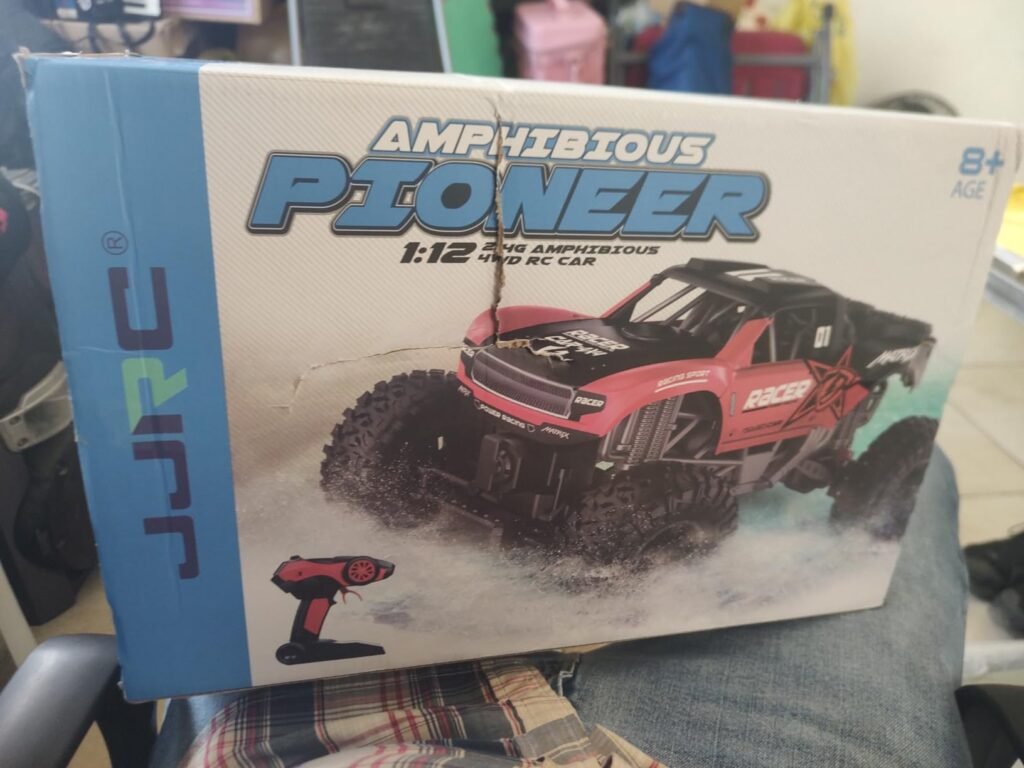
The Q96 remote control truck occupies the simple casual-play segment of the market, designed for buyers who want an affordable, sturdy RC vehicle without the technical complexity of hobby-grade models. Its rugged construction handles the kind of rough treatment kids give toys, and the responsive controls help develop hand-eye coordination alongside providing entertainment.
We may earn a commission when you buy through this link, at no additional cost to you.
The truck is versatile enough for both indoor and outdoor use, working on carpet, hard floors, pavement, dirt, and short grass. That flexibility makes it a practical choice for households where indoor driving during bad weather matters as much as outdoor sessions. The durable design absorbs bumps and impacts from beginner driving mistakes without cracking or breaking.
Powered by rechargeable batteries that are not included in the box, the truck requires you to source compatible batteries separately before first use. This adds a small extra step to the initial setup but also gives you flexibility in choosing battery brands and capacities. Note that specific technical specifications like top speed, motor type, and drivetrain construction are less detailed than the higher-end options in this guide.
Not every RC buyer wants technical complexity. A simple, rugged truck with basic controls can be more fun for casual users than a high-performance machine with steep learning curves. If the primary goal is stress-free playtime rather than performance driving, simpler is often better. Just set realistic expectations about speed and capability compared to hobby-grade vehicles.
Consider this truck for a very casual introduction to remote control vehicles or as a low-cost gift where high performance is not the priority. Buyers who want documented specifications, hobby-grade drivetrain components, or serious off-road capability should look at other options in this guide.
Hobbyists who want detailed performance specifications and hobby-grade components.
We may earn a commission when you buy through this link, at no additional cost to you.
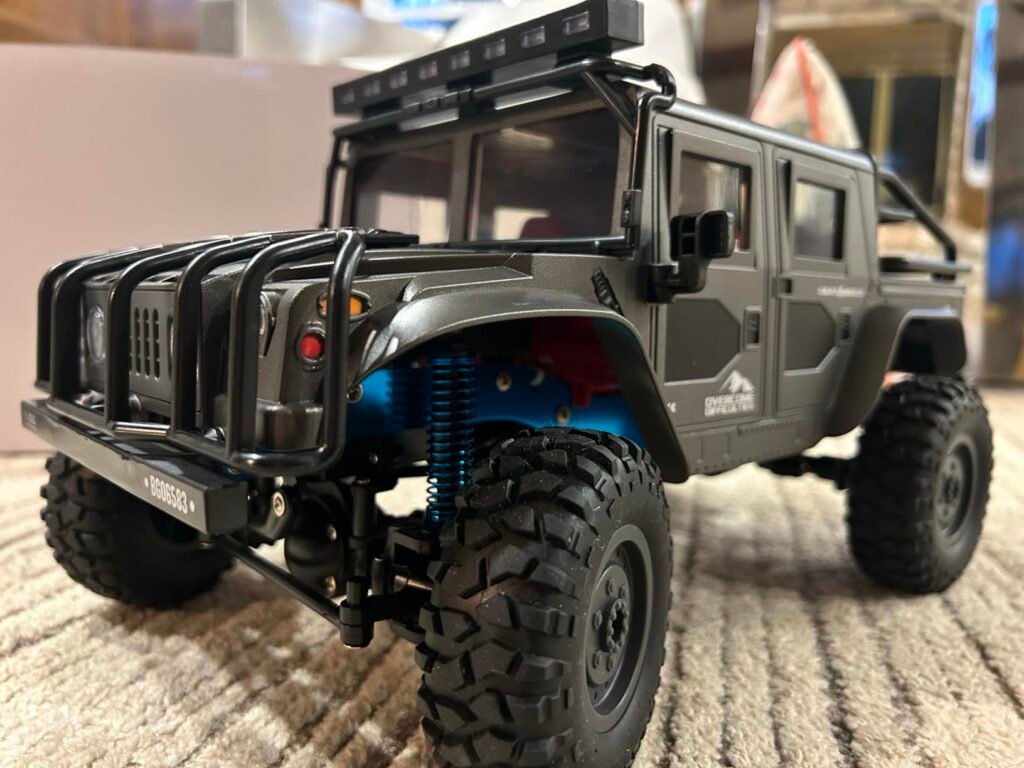
The SIMREX 1:12 targets buyers who prioritize climbing ability and technical off-road driving over raw speed. The alloy steel frame with metal protective plates and all-metal bearings provides serious durability for rock crawling and rough terrain use. High-strength engineering nylon underbody components and protective frames resist wear and impact where the vehicle contacts the ground during climbs.
We may earn a commission when you buy through this link, at no additional cost to you.
The high-torque 370 strong magnet motor delivers enough low-end power to climb 50 to 60 degree slopes, which is impressive capability that few RC vehicles at this price achieve. All four wheels have independent suspension with high-performance coil springs, providing excellent shock absorption on rocks and uneven ground. The 2.4GHz remote extends 328 feet with full-ratio steering adjustment for precise control during technical driving.
The IPX4 waterproof rating lets you drive through wet grass, puddles, and light rain without electrical damage. LED headlights and turn signals synchronize with steering inputs to indicate direction, and double-blinking reverse lights add nighttime safety. Two rechargeable batteries provide 20 to 30 minutes each for extended sessions. Top speed reaches approximately 20 kph with adjustable settings to match driving conditions.
IPX4 rating means the vehicle resists water splashing from any direction, which covers wet grass, puddles, and light rain. It does not mean submersion-safe. Never drive through deep water or leave the vehicle sitting in standing water. After wet driving, dry the exterior and inspect for water intrusion around battery compartments before charging.
Choose this vehicle if rock climbing, technical driving, and durability matter more than top speed. Buyers focused on high-speed bashing or racing across smooth surfaces will find the brushless truggies in this guide more satisfying.
Buyers focused on high-speed bashing rather than technical climbing and off-road driving.
We may earn a commission when you buy through this link, at no additional cost to you.
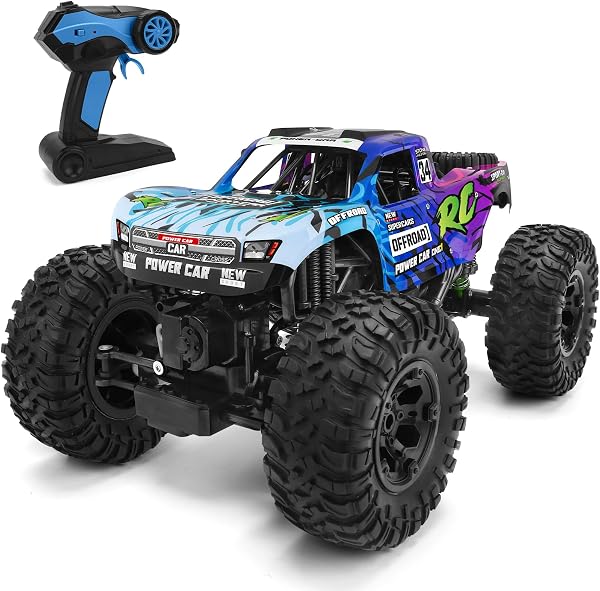
The Hosim 1/10 monster truck offers substantial size at a mid-range price, giving buyers who want a larger vehicle an accessible entry into the 1/10 scale. The 390 brushed motor and 30A ESC produce speeds over 48 kph, which is impressive performance for a brushed setup. The all-wheel drive system and LED lighting round out a well-equipped package for outdoor driving.

We may earn a commission when you buy through this link, at no additional cost to you.
The bathtub-style chassis design protects electronic components from dust and debris, a meaningful advantage for rough off-road driving. Four metal shock absorbers with an off-road suspension system keep the truck controlled across sand, desert terrain, 45-degree slopes, water puddles, and grassy fields. Heavy-duty linkages and functional limit straps keep the solid axle properly positioned during aggressive driving.
The 3KG high-torque steering servo provides precise steering response with faster reaction times than the smaller servos found on cheaper vehicles. The 2.4GHz transmitter reaches 100 meters with responsive steering, braking, and throttle functions. Two 1500mAh batteries deliver over 40 minutes of combined runtime, which is enough for a substantial driving session before recharging.
Larger 1:10 scale vehicles handle rough terrain better than smaller platforms because their bigger tires roll over obstacles that would trip up smaller wheels. They also carry larger batteries for longer runtime and have more room inside the chassis for future upgrades. The tradeoffs are larger transport size, more storage space required, and generally higher purchase prices.
Choose this truck if you want a large 1:10 scale platform for outdoor use at a mid-range price. Buyers who want brushless motor efficiency and higher top speeds should step up to the brushless 1/14 or 1/16 options in this guide.
Drivers who need brushless motor performance or want a compact vehicle for tight spaces.
We may earn a commission when you buy through this link, at no additional cost to you.
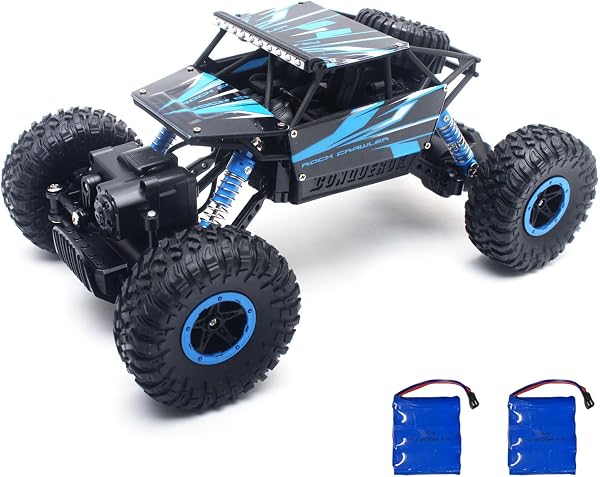
The Cheerwing rock crawler represents the entry-level end of the 4WD off-road market, offering a compact 1:18 scale vehicle with crawling capability at a price accessible for casual buyers and gifts. The 4WD system and oversized off-road tires let it navigate pebbles, rocks, mud, shallow water, grass, and pavement without getting stuck on obstacles that would defeat smaller 2WD toys.

We may earn a commission when you buy through this link, at no additional cost to you.
The anti-collision structure protects the chassis and electronics during the inevitable crashes and rollovers that come with rock crawling. Strong shocks handle rugged surfaces well, and the compact 1:18 size makes the truck easy to store, transport, and use in smaller yards or apartment settings where larger scales would be impractical.
The vehicle uses AA batteries rather than rechargeable LiPo packs, which is a mixed blessing. The advantage is that fresh batteries are always available at any grocery store, and there is no charger to buy or complex battery care to learn. The disadvantage is higher long-term cost and the need to keep spare batteries on hand. Two sets of AA batteries for the truck and three for the transmitter are included in the box.
AA-powered RC vehicles have no charging setup to learn and always work if you have fresh batteries. However, they cost more over time and offer weaker performance than LiPo-powered vehicles. Rechargeable models save money long-term and deliver stronger acceleration and higher top speeds. For casual short-term use, AAs work fine. For regular playing, rechargeable is the better investment.
Buy this crawler for a young driver just starting out or as an affordable gift to test interest in the RC hobby. Serious hobbyists and adults wanting brushless power, rechargeable LiPo batteries, or higher top speeds should look at the more capable options in this guide.
Buyers who want rechargeable LiPo power, brushless motors, or hobby-grade drivetrain components.
We may earn a commission when you buy through this link, at no additional cost to you.
Selecting the right off-road RC vehicle requires matching scale, motor power, drivetrain quality, terrain capability, and battery configuration to your driving environment and skill level. The factors below cover the key decision points that separate a satisfying purchase from an expensive disappointment.
Scale describes the ratio between the model and its full-size counterpart. Common scales for off-road RC vehicles include 1/10 for large hobby-grade bashers, 1/12 for climbers, 1/14 and 1/16 for compact performance vehicles, and 1/18 for smaller entry-level and indoor-friendly platforms. Larger scales handle rough terrain better, offer more upgrade room, and typically cost more, while smaller scales work in tighter spaces and transport more easily.
Match scale to your available driving space and typical terrain. A 1/10 truck like the Hosim monster needs open outdoor areas such as parks, empty lots, or dirt trails to reach its potential. A 1/14 or 1/16 platform works well in medium yards and neighborhood streets. A 1/18 vehicle fits smaller yards and even indoor use where larger trucks would damage furniture or overwhelm the space.
Start with 1/14 or 1/16 for a good balance of performance, portability, and cost. Move to 1/10 if you have serious outdoor space and want maximum durability, or stay with 1/18 for very casual use and gifts.
RC vehicles use either brushed or brushless motors. Brushed motors are simpler, cheaper, and easier to service but produce less power and wear out faster from brush contact. Brushless motors deliver higher efficiency, longer life, better top speeds, and more consistent performance, but cost more upfront and require compatible ESCs. Within brushless, the KV rating tells you how many RPM the motor produces per volt, with higher KV meaning more speed and lower KV meaning more torque.
For beginners and casual users, brushed motors like the 390 or RC380 in several models here provide plenty of fun at reasonable prices. For serious hobbyists and buyers who want long-term performance, brushless motors deliver a noticeably better driving experience. The HYPER GO brushless 2845 and 2852 motors in this guide represent solid entry points to brushless power.
Choose brushed for casual play and lower cost. Choose brushless for serious performance, longer motor life, and future upgrade potential.
The drivetrain includes gears, differentials, drive shafts, and bearings that transfer motor power to the wheels. Metal gears, steel differentials, and quality ball bearings survive aggressive driving and repeated crashes far better than plastic components. Look for terms like alloy steel drive shafts, metal gear differentials, and full ball bearing drivetrains, which indicate hobby-grade parts rather than toy-grade construction.
Chassis material matters equally. Aluminum alloy chassis plates, especially 6061-grade, offer excellent stiffness and impact resistance without excessive weight. Composite polymer chassis can perform well but tend to flex more under load. Reinforcement plates around the front and rear areas protect vulnerable components during crashes, and metal center supports prevent chassis twist during hard cornering and jumps.
Prioritize metal gears and quality bearings for durability. These are the components most likely to fail on cheaper models and the most frustrating to replace.
Suspension components determine how well the vehicle handles rough terrain and absorbs impacts from jumps. Oil-filled shocks with adjustable damping provide smoother, more controllable handling than basic spring-only setups. Four-wheel independent suspension keeps all tires in contact with uneven ground, improving traction and control. Adjustable shock preload lets you tune ride height and stiffness for different terrains.
Tire selection matters more than most beginners realize. All-terrain tires balance grip across surfaces but excel at none. Paddle tires transform performance on sand, snow, and mud but wear quickly on pavement. Rock crawler tires prioritize grip on rocks and steep climbs at the expense of top speed. Trucks that ship with multiple tire sets provide immediate flexibility to match your driving environment.
Look for oil-filled shocks and four-wheel independent suspension. Suspension quality determines whether high speeds feel controlled or chaotic.
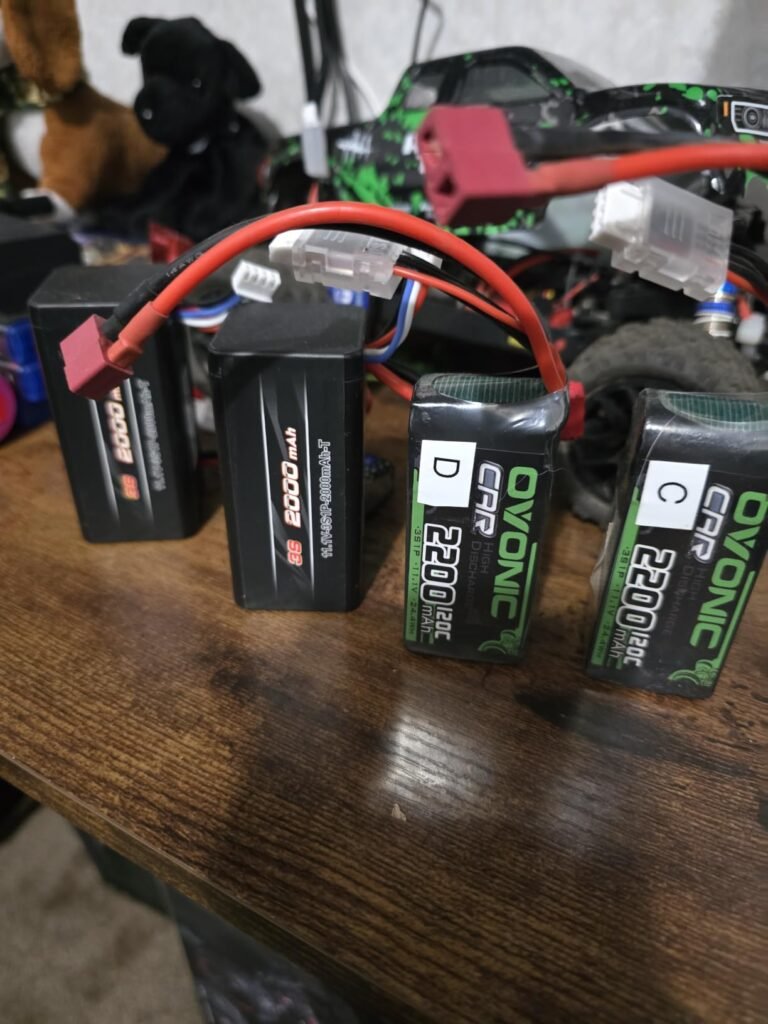
Most hobby-grade RC vehicles run on 2S or 3S LiPo batteries, with 2S delivering 7.4V and 3S delivering 11.1V. Higher voltage produces more speed and power but generates more heat. Toy-grade vehicles often use simpler NiMH battery packs or standard AA batteries. Battery capacity in mAh determines runtime, with 1500mAh to 3000mAh being typical for hobby vehicles.
Check whether extra batteries are included in the box. Multiple packs let you swap and keep driving while others charge, effectively doubling or tripling your session time. Also verify the charging speed. Included USB chargers often take 3 to 4 hours per pack, while dedicated balance chargers can complete a full charge in an hour or less with better cell care.
Buy vehicles that include at least two batteries. Plan to invest in a proper balance charger for hobby-grade LiPo packs within your first few months.
Waterproof or splash-proof electronics open up wet grass, puddles, and light rain driving without electrical damage. This dramatically expands where and when you can run the vehicle, particularly in climates with frequent light precipitation or when driving in yards with morning dew. IPX4-rated vehicles like the SIMREX resist water from any direction, while other waterproof designations vary in exact protection level.
Practical features that add real value include LED headlights for nighttime driving, throttle limit switches for beginners, adjustable speed modes, spare parts included in the box, and long transmitter ranges of 200 feet or more. Support features like warranty coverage, available replacement parts, and manufacturer customer service also matter for long-term ownership satisfaction.
Prioritize waterproof electronics and included spare parts. These features extend the useful life of the vehicle and reduce ownership frustration.
Before your first run, fully charge the included batteries using the provided charger and follow any manufacturer break-in recommendations. Install fresh batteries in the transmitter, bind the transmitter to the receiver if required, and check that steering and throttle respond correctly at low speed on a smooth surface. Begin with the throttle limit engaged, typically 70 percent on models that offer this feature, to build confidence with the controls before unlocking full speed. Check all screws and body clips for tightness before the first run and periodically thereafter.
During each run, monitor motor and ESC temperature by touch after stopping. If either component feels too hot to hold comfortably, stop driving and let the vehicle cool before continuing. Avoid continuous full-throttle running for extended periods, especially on 3S batteries, to protect electronics from thermal damage. Never drive through standing water unless your electronics are specifically rated waterproof. Clean grass, dirt, and debris from the chassis and drivetrain after each session, paying particular attention to the motor cooling fan and gear mesh areas.
For long-term care, always store LiPo batteries at storage voltage, roughly 3.80 volts per cell, in a fireproof bag. Never leave batteries fully charged for more than a day or two. Inspect the drivetrain periodically for worn gears, damaged differentials, or loose fasteners, and address issues before they cause a failure during driving. Keep spare parts on hand for components most likely to break, typically suspension arms and CVDs. After crashes, check for bent shock shafts, cracked chassis mounts, and loose wiring before running again.
RC buggies typically sit lower with smaller wheels optimized for speed and cornering on smoother surfaces. Monster trucks feature larger tires and higher ground clearance for tackling rough terrain and jumps. Truggies combine elements of both with lower stance than monster trucks but bigger tires than pure buggies. All three fall under the off-road RC vehicle umbrella and share similar drivetrain and motor options.
For most beginners, a 1/14 or 1/16 scale vehicle offers the best balance of performance, portability, and cost. These sizes provide enough power and durability for real fun without the intimidation and expense of larger 1/8 or 1/10 platforms. If you have younger drivers or limited space, a 1/18 scale works well. Serious hobbyists with outdoor space often prefer 1/10 for maximum durability.
For learning fundamentals, look for vehicles with adjustable speed limits, ideally around 70 percent throttle restriction. Trucks capable of 20 to 30 mph in beginner mode give you room to grow while remaining manageable. Models like the UDIRC 1611 and HYPER GO H16DR offer this progressive approach. Once comfortable, you can unlock higher speeds or upgrade to more powerful setups.
Many quality RC vehicles now include two batteries in the box, effectively doubling your driving time per session. If your vehicle only ships with one pack, adding a second is one of the best early investments you can make. Match the extra battery to your ESC's voltage rating and choose the same or higher C-rating for consistent performance. Multiple packs let you drive while others charge.
Brushed motors use physical brushes to make electrical contact, which wear out over time and produce less power than brushless designs. Brushless motors use electronic commutation for higher efficiency, longer life, and better performance. Brushless setups cost more upfront but deliver noticeably better driving experience and typically justify the extra cost for serious hobbyists. Beginners often start with brushed for lower cost.
Only if the electronics are specifically rated waterproof or splash-proof. Vehicles like the SIMREX with IPX4 rating or the HAIBOXING with waterproof electronics handle wet grass and puddles without damage. Non-waterproof vehicles can suffer immediate electrical failure from water contact. Always check the specifications before driving in wet conditions. Never submerge any RC vehicle in water, waterproof rating or not.
Typical runtime is 15 to 30 minutes per pack depending on capacity, driving style, and terrain. Aggressive full-throttle driving burns through batteries faster than gentle cruising. Higher-capacity batteries like 2600mAh or 3000mAh extend runtime versus smaller 1050mAh or 1500mAh packs. Owning multiple batteries and rotating them is the standard practice for extended sessions.
Regular maintenance includes cleaning debris from the chassis and drivetrain after each run, checking screws for tightness, and inspecting suspension and driveshafts for wear or damage. Grease driveshafts and gears periodically. Store LiPo batteries at storage voltage in fireproof bags. Replace worn tires, damaged suspension arms, and stripped gears as needed. Compared to full-size vehicles, RC maintenance is quick and inexpensive.
It depends on the model. Beginner-friendly vehicles with speed limits, like the UDIRC 1611 or Vensico 1:18, work well for supervised use by children around age 8 and up. High-performance brushless vehicles capable of 40 to 50 mph are recommended for teens and adults due to the speeds and control required. Always follow the manufacturer's age recommendation and provide adult supervision for younger drivers.
The HYPER GO H14BM V3 stands out as the strongest overall choice for adult hobbyists who want serious brushless performance in a manageable 1/14 truggy footprint. Its 50 mph top speed on 3S, 6061 aluminum chassis, upgraded steel differential, and multi-terrain tire selection deliver a complete package that rewards both new and experienced drivers with genuine hobby-grade capability at a reasonable price.
For different priorities, the UDIRC 1611 offers the smartest entry point for true beginners with its staged upgrade path, generous spare parts, and 365-day warranty support. The HAIBOXING Rampage 1/18 delivers the highest owner satisfaction rating in this guide with waterproof electronics and quality construction at excellent value. The SIMREX 1:12 provides serious climbing ability that no other vehicle here can match for buyers who prioritize technical off-road driving.
Before purchasing, honestly assess your driving space, skill level, and long-term goals in the hobby. Match scale to terrain, choose a motor type that fits your performance expectations, and always plan for at least two batteries and appropriate charging equipment as part of your total investment. The right combination delivers years of satisfying driving from every backyard, park, and trail session.