Sun Joe 24V-X2-DTS15
8.8Editor score48V dual battery
15-inch cutting width
600W brushless motor
10.6-gallon collection bag
Find the right power rakes for 2026. We compare 10 standout options by build quality, useful features, owner feedback, value, and everyday trade-offs.

Choosing the right power rake in 2026 means weighing motor power, working width, depth adjustment range, tine quality, collection capacity, and whether corded, cordless, or skid-steer attachment makes sense for your property. We compare 10 standout dethatchers and scarifiers across these practical factors so you can match the right machine to your lawn size, thatch severity, and seasonal maintenance routine.
The difference between a basic dethatcher and the right power rake for your yard comes down to specifics that specification sheets alone do not reveal. Blade design, depth precision, wheel stability, bag capacity, and dual-mode capability all shape how efficiently you can revive compacted turf and remove the dead material choking healthy grass growth.
This guide breaks down the trade-offs across these lawn renovation tools, from compact 12-inch corded units for small suburban yards to professional 72-inch skid-steer attachments for serious landscaping work. You will find clear guidance on which machine suits a modest lawn, which handles heavy thatch loads, and which offers the best balance of power and convenience for seasonal care.
We compared 10 power rakes and dethatchers using the factors that actually guide a lawn renovation decision: motor power and type, working width, depth adjustment range, tine or blade count, collection bag capacity, power source, weight and maneuverability, dual-function capability, warranty coverage, owner feedback, and real-world value. The notes focus on practical trade-offs so each pick connects to how people actually remove thatch, scarify soil, and prepare lawns for seeding, fertilization, or seasonal recovery.


Compare key features, scores, and current prices side by side. A shorter feature list means fewer details were available, not necessarily fewer capabilities.


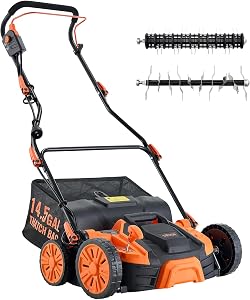


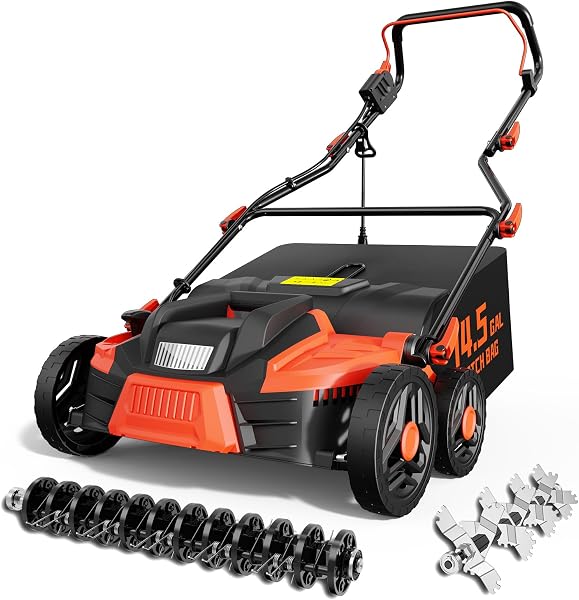
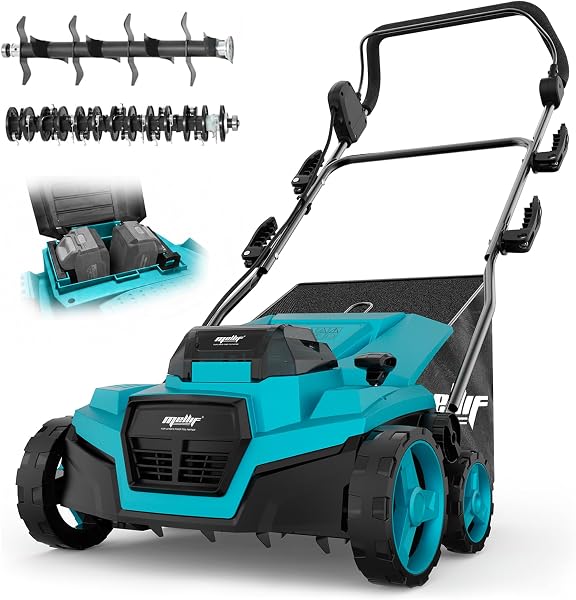
The BILT HARD 16-inch dethatcher and scarifier earns the highest star rating in this comparison by delivering straightforward performance at a mid-range price. For homeowners who want a corded electric machine with full-size capability and no battery concerns, this model combines a genuine 15-amp copper motor with sensibly designed features that address common lawn maintenance frustrations.
We may earn a commission when you buy through this link, at no additional cost to you.
The copper-wound motor generates up to 3,300 RPM across the 16-inch working width, which balances cutting speed against the stability needed for consistent depth control. Lock-off switch and overload protection prevent accidental starts and protect the motor during tough use. The scarifying roller carries 16 blades for soil aeration, while the dethatching roller uses 20 spring steel tines for maximum thatch pickup. Switching between modes happens through a straightforward roller change rather than complex tool-based reconfiguration.
Practical features include flat-free wheels at 7-inch front and 6-inch rear sizes that eliminate the puncture worries common on pneumatic alternatives. The tool-free quick-lock knob simplifies depth changes, and the foldable handle rod shrinks the machine for garage storage. The 14.5-gallon removable grass bag is one of the larger capacities in this guide, which reduces the number of trips to empty debris during larger jobs.
Copper motor windings handle heat better and resist voltage drop more effectively than aluminum alternatives, which translates to longer motor life and more consistent power delivery under load. Cheap electric lawn tools often use aluminum windings to cut costs, resulting in motors that run hotter, lose power faster, and fail earlier. A full-size copper-wound motor like the one in this BILT HARD unit represents genuine engineering investment, not just marketing.
The main trade-off is cord dependency, which requires planning around outdoor outlets and extension cord routing. Weight is also higher than cordless alternatives due to the full-size motor and metal construction. For buyers with reasonable outlet access who want reliable corded power, a top-rated owner satisfaction record, and a sensibly priced machine with full-size capabilities, however, this is one of the strongest overall value picks.
Buyers who want cordless freedom or have properties without convenient outdoor outlets.
We may earn a commission when you buy through this link, at no additional cost to you.
The Sun Joe 24V-X2-DTS15 represents the strongest overall choice in this guide thanks to its combination of cordless convenience, true dual-function capability, and a brushless motor that delivers consistent power without the maintenance headaches of gas engines. For homeowners who want to free themselves from cords and extension cables while tackling serious thatch removal, this is one of the most capable machines currently available in a residential form factor.
We may earn a commission when you buy through this link, at no additional cost to you.
The dual 24V, 4.0Ah batteries deliver 48V of combined power to the 600W brushless motor, which cuts through tough thatch and compacted soil without the voltage sag that plagues brushed motor alternatives. The 15-inch cutting width covers meaningful ground per pass, and the separate 24-tine dethatching cylinder and 7-blade scarifying cylinder let you address different lawn needs without compromise. Many competing 2-in-1 machines use quick-swap heads on a single roller, which can introduce stability issues absent here.
The AirBoost technology on the dethatching cylinder maximizes thatch pickup by generating airflow that lifts debris into the 10.6-gallon collection bag, reducing cleanup time significantly. Five depth positions ranging from -0.375 inches to 0.4 inches let you fine-tune aggressiveness based on grass height, thatch severity, and seasonal timing. The depth control knob is accessible from the operator position, so adjustments happen without stopping and crouching.
Many power rakes advertise 2-in-1 functionality through a single roller with removable blades, which saves cost but can introduce balance and alignment issues as components wear. Separate purpose-built cylinders like those on the Sun Joe maintain consistent cutting geometry over time and typically last longer because each cylinder is engineered specifically for its function rather than compromising to accommodate both roles.
The main consideration is price, which sits at the premium end of the residential category. Battery runtime also limits practical use on very large properties, where you may need to pause for charging between sessions. For buyers with suburban-sized lawns who prioritize cordless freedom, brushless motor longevity, and purpose-built dual cylinders rather than swap-head designs, however, this Sun Joe model is the top choice for serious seasonal lawn renovation.
Buyers with very large properties where battery runtime becomes limiting.
We may earn a commission when you buy through this link, at no additional cost to you.
The 72-inch skid steer power rake sits at an entirely different scale from the walk-behind units elsewhere in this guide. This is a professional attachment designed for landscapers, construction crews, equestrian facility operators, and agricultural users who need to prepare large areas of soil efficiently. If you own or regularly rent a skid steer loader from brands like Bobcat, John Deere, or Kubota, this attachment transforms the machine into a serious soil conditioning tool.
We may earn a commission when you buy through this link, at no additional cost to you.
At 72 inches of working width per pass, this attachment covers more ground in minutes than the walk-behind units cover in hours. The 1,220-pound weight provides the mass needed to maintain consistent tooth engagement with soil, while the ±25-degree adjustable angle lets you handle different terrain conditions and raking patterns. Hydraulic flow compatibility of 18 to 25 GPM matches the output of most standard skid steer loaders, ensuring smooth operation without underpowering.
Applications extend beyond basic lawn preparation. The high-strength alloy teeth handle construction site cleanup, driveway and trail maintenance, turf and sod installation prep, and agricultural seed bed preparation. For professional contractors, this versatility reduces the number of specialized attachments needed to serve diverse client needs. The heavy-duty construction supports continuous commercial use rather than the occasional homeowner sessions that walk-behind units are designed around.
Skid steer attachments make sense for professional landscapers, farm operators, and property managers who prep large areas regularly. The economics work out when you prep more than a few thousand square feet routinely, because the time savings versus walk-behind units pays back quickly on labor costs. For a one-time project, renting both the skid steer and attachment is usually more economical than purchasing.
The main considerations are the obvious ones: you must own or have reliable access to a compatible skid steer, and the lowest rating in this guide at 3.4 stars suggests careful research into quality control and seller support is warranted before purchase. For professional users with the base equipment and serious soil preparation needs, however, no residential walk-behind can match the productivity of this attachment. For homeowners, this is clearly not the right tool.
Residential homeowners without access to compatible skid steer equipment.
We may earn a commission when you buy through this link, at no additional cost to you.
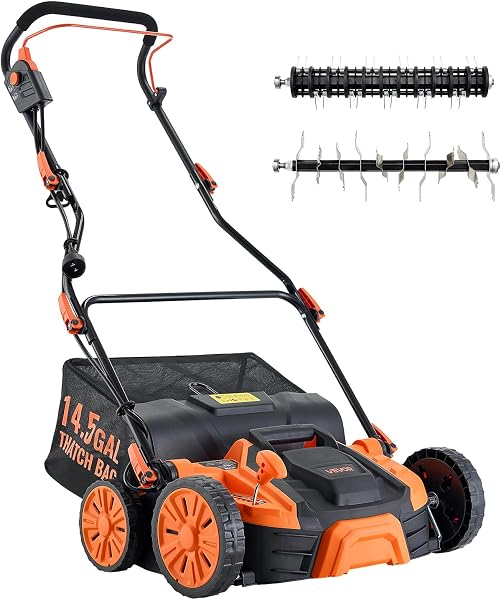
The VEVOR 2-in-1 dethatcher and scarifier targets homeowners who want flexibility between the two primary lawn renovation functions without buying separate machines. The snap-on blade system allows tool-free switching between the 22-tooth dethatching rake and 10-blade scarifier, which saves time compared to models requiring wrenches or specialized tools for mode changes.
We may earn a commission when you buy through this link, at no additional cost to you.
Motor performance comes from a 15-amp design running at 3,600 RPM across the 16-inch working path, which handles typical residential thatch loads efficiently. Dual depth adjustments provide 5-position settings for scarifying from -0.47 to -0.12 inches and dethatching from -0.24 to +0.39 inches, letting you fine-tune aggressiveness for each specific task. The 2-position adjustable handle accommodates users of different heights for better ergonomics during longer sessions.
Practical details include a lightweight 26.68-pound overall weight that eases transport and maneuvering, plus a foldable handle design that reduces storage height for compact garage space. The 14.5-gallon detachable nylon bag matches the capacity of larger premium machines, and safety features include wire clamps for cable control and a waterproof plug that resists moisture ingress during use in damp conditions.
A tool-free blade swap system becomes genuinely useful when you want to alternate between dethatching and scarifying passes during a single lawn renovation session. Machines requiring wrenches or specialized tools often get used in only one mode because the swap friction is too high. The ability to quickly reconfigure extends the practical value of the tool and encourages more complete lawn care.
The main consideration is the 4.0 star rating, which sits below the top performers in this guide. Depth range is also slightly narrower than the Sun Joe cordless alternative. For buyers who prioritize tool-free convenience, lightweight handling, and corded reliability at an accessible price point, however, this machine covers the fundamental dethatching and scarifying needs for most residential lawns without unnecessary complexity.
Buyers who want cordless operation or top-tier owner satisfaction ratings.
We may earn a commission when you buy through this link, at no additional cost to you.
The EWORK 17-inch dethatcher and scarifier offers the widest working path of any walk-behind machine in this guide, which translates directly to fewer passes needed to cover a given area. For homeowners with medium to larger lawns who want to minimize time spent on seasonal renovation, this extra width shortens the overall job meaningfully compared to 13 or 16-inch alternatives.
We may earn a commission when you buy through this link, at no additional cost to you.
The 15-amp motor delivers consistent power across the 17-inch working width, with the overall machine measuring 23 inches wide to accommodate the extended cutting path. The 2-in-1 design combines dethatching and scarifying functions, effectively clearing dead thatch while loosening compacted soil to boost aeration and nutrient absorption. The 5-position height adjustment lever provides precise depth control for different lawn conditions and seasonal needs.
Design choices emphasize ease of use. Smooth-rolling wheels make maneuvering easier despite the larger footprint, and the foldable handle allows compact storage when seasonal work is complete. Tool-free operation covers both setup and mode switching, which reduces the friction of actually using the machine for its full dual-function capability. The 12-gallon detachable collection bag handles typical debris loads before emptying becomes necessary.
A wider working path reduces the number of passes needed to cover a lawn, but larger machines are harder to maneuver around trees, flower beds, and tight corners. For open lawns with few obstacles, wider is almost always better. For yards with many landscape features, a narrower machine often completes the job faster because you spend less time negotiating around obstructions.
The main considerations are the larger overall machine footprint, which can make maneuvering around trees and tight borders slightly more challenging, and the 12-gallon bag that is smaller than the 14.5-gallon alternatives on competing units. For buyers with open lawns who prioritize working width to reduce pass count, however, this EWORK model delivers the broadest residential coverage of any machine in this comparison.
Small or heavily landscaped yards where tight maneuvering matters more than coverage width.
We may earn a commission when you buy through this link, at no additional cost to you.
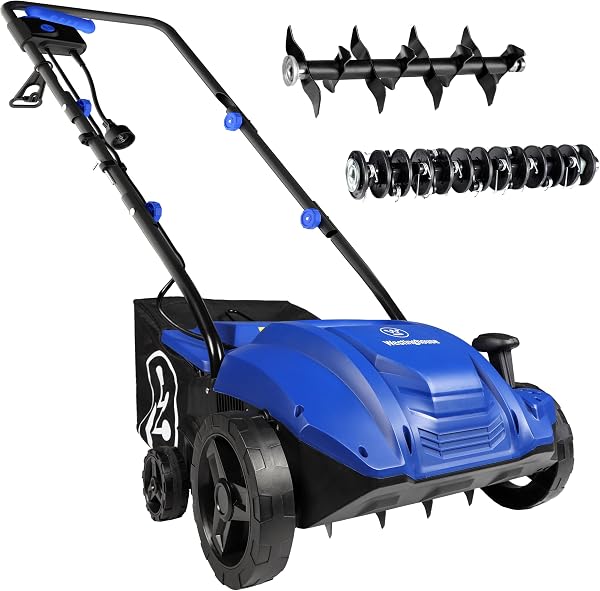
The Westinghouse 13-inch dethatcher targets owners of small lawns, townhomes, and properties with heavy landscaping where larger machines become cumbersome. At just 22.9 pounds, this is one of the lightest full-featured units in the category, making it practical to lift, carry, and store without the strain that heavier machines create.
We may earn a commission when you buy through this link, at no additional cost to you.
The 12-amp corded motor runs up to 3,300 RPM across the 13-inch working width, delivering adequate power for typical residential thatch loads despite being smaller than the 15-amp motors on larger units. 20 spring tines handle dethatching while a 16-blade scarifier head cuts channels into compacted soil, and the head swap takes just seconds for mid-job reconfiguration. 4 depth settings from -0.5 to +0.16 inches cover light raking through deep slicing without becoming overwhelming to adjust.
The compact design pays off in several practical ways. The 13-inch working width maneuvers more easily around trees, beds, and tight corners than wider machines. The folding handle shrinks the machine for storage in smaller garages or sheds. The 8-gallon collection bag is modest but matches the smaller working width, so it does not fill disproportionately fast relative to coverage. Westinghouse backs the unit with a 2-year warranty plus lifetime technical support.
Compact dethatchers make sense when storage space is limited, when you have back or shoulder concerns that make heavier machines impractical, or when your lawn has many obstacles that benefit from easier maneuvering. The modest capacity trade-off is often worthwhile for owners whose actual lawn size does not justify a larger machine.
The main considerations are the smaller motor and bag capacity, which limit this machine’s suitability for large yards or heavy thatch loads. For buyers with lawns under a quarter acre or properties with extensive landscaping that benefits from a nimbler tool, however, this Westinghouse model handles seasonal maintenance effectively without the storage and handling burden of larger alternatives.
Owners of large lawns or heavy-thatch properties where capacity and power matter more.
We may earn a commission when you buy through this link, at no additional cost to you.
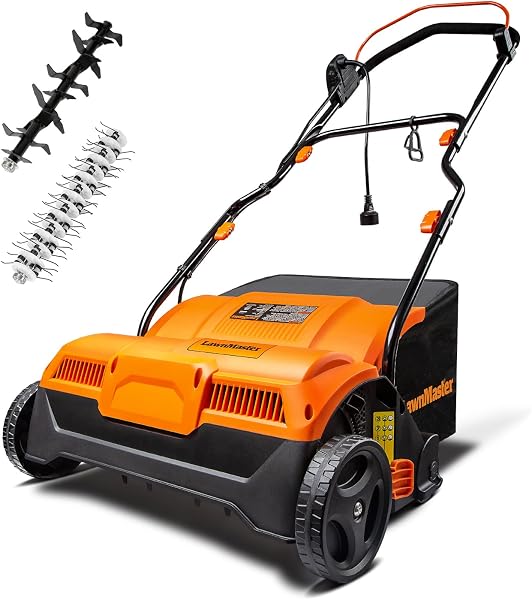
The LawnMaster GVB1316 offers the most granular depth adjustment of any machine in this guide, with 14 positions covering the scarify attachment from -0.35 to 0.19 inches and the dethatcher attachment from -0.19 to 0.35 inches. For owners who want fine control over cutting aggressiveness as lawn conditions change throughout the season, this adjustment range exceeds the typical 5-position systems found on competing units.
We may earn a commission when you buy through this link, at no additional cost to you.
The 13-amp motor delivers up to 3,700 RPM, which is one of the faster speeds in the walk-behind category and translates to efficient cutting through thick thatch and tough grass. The 16-inch working path covers meaningful ground per pass without becoming unwieldy around landscape obstacles. Both the dethatcher and scarifier attachments ship with the unit, so you can address both lawn care functions without purchasing accessories separately.
Practical features include an adjustable handle bar height for operator comfort and a 12-gallon collection bag that handles typical debris loads before emptying. The sturdy construction supports the kind of regular use that seasonal lawn maintenance demands, and the overall design prioritizes operational efficiency over premium feel. For a mid-range electric unit with full feature coverage, this LawnMaster model hits most practical requirements.
Fine depth adjustment lets you match cutting aggressiveness to specific lawn conditions. Light touch depths work for maintenance passes on healthy lawns, while deeper settings tackle heavy thatch or compacted soil preparation for seeding. More adjustment positions mean better matching between your tool and the current needs of your grass, reducing the risk of either under-performing or damaging healthy turf.
The main considerations are the 3.9 star rating that sits below top performers in this guide and the depth range that, while finely adjustable with 14 positions, does not reach the aggressive cutting depths of some alternatives. For buyers who prioritize precision depth control over premium brand recognition and want both attachments included at a reasonable price, however, this machine delivers solid value for seasonal lawn renovation work.
Buyers who want tool-free mode switching or top-tier owner satisfaction scores.
We may earn a commission when you buy through this link, at no additional cost to you.
The TIECTOWN 16-inch dethatcher and scarifier combines one of the strongest motor ratings in its class with practical ergonomic features aimed at homeowners who want serious cutting power without jumping to the Sun Joe cordless premium. The 15-amp motor with 15.5-amp peak output drives the 16-inch rake path at 3,600 RPM, which handles tough lawn conditions efficiently.
We may earn a commission when you buy through this link, at no additional cost to you.
The quick-release blade mechanism allows easy switching between the scarifier for soil loosening and root growth promotion and the dethatcher for thatch removal and grass density improvement. Depth adjustment uses a 5-position control lever with scarifying ranging from -0.47 to 0.24 inches and dethatching from -0.32 to 0.39 inches, covering most seasonal maintenance needs. The 3-position adjustable rod accommodates users of different heights for comfortable long-session use.
At just 30 pounds, this machine is lighter than many competing 16-inch units despite the strong motor. The foldable handle enables compact storage, and the tool-free design covers both initial setup and ongoing mode switching. A waterproof plug protects against moisture during use in damp conditions, a cord clip organizes power routing, and an extension cord holder prevents tangling during work sessions. The 14.5-gallon removable collection bag matches larger premium machines in capacity.
Extension cord gauge directly affects power delivery to high-draw tools like dethatchers. Thinner cords cause voltage drop that reduces motor RPM, cutting ability, and useful tool lifespan. For a 15-amp machine, use 14 AWG cords up to 50 feet or 12 AWG for longer runs. Avoid 16 AWG household extension cords, which will underperform and may overheat during extended use.
The main consideration is that corded operation requires a heavy-duty extension cord: 14 AWG up to 50 feet or 12 AWG up to 100 feet to avoid voltage drop that would reduce motor performance. Light-gauge extension cords will underperform noticeably. For buyers who want maximum motor power in a corded design with sensible ergonomics and comprehensive accessories, however, this TIECTOWN model delivers excellent value in the mid-range category.
Buyers who want cordless freedom or do not have access to heavy-gauge extension cords.
We may earn a commission when you buy through this link, at no additional cost to you.
This cordless dethatcher takes a smart approach to the battery platform problem by using Makita 18V batteries, which are among the most widely owned in the professional and prosumer cordless tool market. For homeowners and contractors already invested in the Makita ecosystem, buying this tool-only unit avoids duplicating battery purchases and extracts more value from existing investments across drills, impact drivers, saws, and other Makita tools.
We may earn a commission when you buy through this link, at no additional cost to you.
The dual-battery design combines two 18V packs for 36V of combined power to the 650W brushless motor, delivering up to 3,000 RPM across the 15-inch working width. The 14.4V low-voltage cutoff helps prevent battery over-discharge that would shorten pack lifespan. Support for batteries up to 5.0Ah means longer runtime per session for owners who already have higher-capacity packs. Spring-loaded dethatcher tines and steel scarifier blades handle both primary lawn renovation functions.
Design details include three handle height options at 37, 40, and 44 inches to accommodate operators of different heights and reduce back fatigue during longer sessions. The machine folds down to 26 inches for storage in garages, sheds, or vehicles. Safety features include a safety pin, safety button, and star lever that prevent accidental starts, while 8-inch front wheels and 6-inch rear wheels improve stability on uneven lawns. Air Boost technology maximizes thatch pickup into the 12-gallon collection bag.
Battery platform compatibility can save hundreds of dollars across a tool collection. A single 5.0Ah Makita 18V battery often costs $100 to $150, so avoiding duplicate battery purchases across your drill, saw, trimmer, and dethatcher adds up quickly. For owners already committed to a specific platform, choosing additional tools from the same ecosystem is almost always more economical than starting a second battery system.
The main considerations are that batteries are not included and the tool requires existing Makita platform investment to make financial sense. For Makita owners, however, this is one of the most practical cordless options available, and the 5-year hassle-free warranty signals genuine manufacturer confidence in long-term reliability. For buyers starting fresh without a battery platform, this becomes less attractive than units that include batteries.
Buyers who do not own Makita 18V batteries and would need to purchase them separately.
We may earn a commission when you buy through this link, at no additional cost to you.
The Sun Joe AJ798E brings the same AirBoost technology found on the premium cordless model to a compact corded design at a much more accessible price point. For owners of small to mid-sized lawns who want proven Sun Joe quality without jumping to the top-tier cordless unit, this machine covers the essential dethatching and scarifying functions in a sensibly sized package.
We may earn a commission when you buy through this link, at no additional cost to you.
The 12-amp corded motor drives the 12.6-inch cutting path through typical residential thatch loads in a single pass. AirBoost technology on the spring steel tines generates airflow that lifts debris efficiently into the 8-gallon collection bag, reducing the manual raking that often follows dethatching work. The 5-position depth adjustment allows precise matching between tool aggressiveness and current lawn conditions, from gentle maintenance passes to deeper seasonal renovation.
The corded electric design eliminates fuel storage, pull-start frustrations, and engine maintenance entirely. There is no oil to change, no spark plug to foul, and no winter fuel stabilization to worry about. Just plug in and go for whichever lawn renovation task is on the schedule. The compact size makes storage straightforward even in smaller garages or garden sheds.
AirBoost refers to the airflow generated by spring steel tines as they rotate at high speed. This airflow lifts loose thatch and debris into the collection bag rather than letting it fall back onto the lawn, which reduces post-job cleanup time significantly. Not all dethatchers include this feature, and the difference becomes obvious when comparing machines with and without the technology.
The main considerations are the smaller motor and bag capacity, which limit this machine’s suitability for larger properties or heavy thatch loads. The 12.6-inch cutting width also means more passes to cover a given area compared to 16 or 17-inch alternatives. For buyers with modest lawns who want reliable Sun Joe engineering, AirBoost thatch pickup, and the simplicity of corded electric operation, however, this AJ798E delivers excellent fundamentals at an affordable price.
Owners of large lawns or heavy-thatch properties who need wider working widths and larger bag capacity.
We may earn a commission when you buy through this link, at no additional cost to you.
Selecting the right power rake means matching motor power, working width, depth adjustment, and power source to your specific lawn and thatch conditions. This section walks through the factors that genuinely affect lawn renovation results so you can prioritize features that match your property size and seasonal maintenance needs rather than paying for capabilities you will not use.
Corded electric dethatchers deliver consistent power without battery concerns and typically cost less than cordless alternatives. They work best for properties where the longest run from an outdoor outlet stays within 50 to 100 feet. Cordless battery units eliminate cord management but limit runtime per charge and require investment in a battery platform. Skid-steer attachments like the 72-inch Harley rake handle professional-scale work but require base equipment ownership.
The practical choice depends on your property layout and existing tool collection. Owners with reasonable outlet access and lawns under half an acre often find corded electric the most sensible option. Owners with larger properties, awkward layouts, or existing battery platforms benefit more from cordless flexibility. Professional landscapers with skid-steer loaders should consider attachments for serious productivity gains.
Match the power source to your property reality rather than the appeal of specifications. A corded unit you actually use beats a cordless one you avoid due to battery charging frustrations.
Working width directly affects how many passes you need to cover your lawn. Compact 12 to 13-inch units suit small yards and tight landscaping. Standard 15 to 16-inch widths balance coverage against maneuverability for most residential properties. Wider 17-inch and larger units reduce pass count on open lawns but become harder to work around trees, flower beds, and corners.
Calculate approximate coverage by multiplying working width in inches by walking speed in feet per minute, then by 60 to get square feet per hour. A 15-inch unit at normal walking pace covers roughly 2,500 to 3,500 square feet per hour depending on overlap and obstacle navigation. Larger widths proportionally reduce the time needed for the same area.
For lawns under 5,000 square feet with heavy landscaping, compact 12 to 13-inch units make sense. For 5,000 to 15,000 square foot lawns with moderate obstacles, 15 to 16-inch widths work well. For larger open lawns, 17-inch units reduce total session time meaningfully.
Motor power determines how effectively the dethatcher cuts through thick thatch and compacted soil. 12-amp motors handle light to moderate thatch loads on healthy lawns. 15-amp motors tackle thicker thatch and tougher conditions without stalling. Brushless designs like those on the Sun Joe cordless and Makita-compatible units deliver more torque per watt than brushed alternatives, extracting better performance from the same input power.
RPM affects cutting speed and finish quality. Faster speeds in the 3,500 to 3,700 RPM range cut more efficiently through tough thatch, while slower 3,000 RPM designs trade some speed for lower noise and gentler action on healthy lawns. The best choice depends on your typical thatch loads and whether you prioritize speed or precision.
For routine seasonal maintenance on healthy lawns, 12-amp or 600W cordless motors are sufficient. For heavy thatch recovery, lawn renovation projects, or tough soil conditions, step up to 15-amp or 650W brushless alternatives.
Depth adjustment controls how aggressively the dethatcher engages with the soil and thatch layer. Most quality units offer 5-position adjustment covering roughly -0.5 to +0.4 inches, which handles light surface raking through deep thatch removal. The LawnMaster GVB1316 offers 14 positions for even finer control, which matters when you want to gradually increase depth across multiple passes.
Precision depth control prevents two common problems: setting too shallow produces inadequate thatch removal that wastes effort, while setting too deep damages healthy grass crowns and can set back lawn recovery by weeks. Starting shallow and progressively increasing depth across multiple passes is almost always safer than going aggressive on the first attempt.
For general residential use, 5-position adjustment covers typical needs. For buyers who want to progressively renovate heavily thatched lawns across a season, more adjustment positions provide welcome precision.
Spring steel tines on dethatching rollers lift and remove dead material without aggressively cutting into healthy grass. Blade count typically ranges from 20 to 24 tines, with higher counts producing more complete thatch pickup per pass. Scarifying blades are different: they cut narrow vertical channels into the soil to improve water, air, and nutrient penetration. Blade count ranges from 7 to 16, with higher counts creating more frequent channels for better aeration coverage.
The best power rakes offer separate dedicated cylinders for each function rather than a single roller with removable attachments, as seen on the Sun Joe 24V-X2-DTS15. This approach maintains optimal geometry for each task over time. Swap-head designs save cost but can introduce balance issues as components wear.
For buyers who use both dethatching and scarifying regularly, dedicated cylinders provide the most consistent long-term performance. For occasional use, swap-head designs offer acceptable results at lower cost.
Bag capacity determines how often you stop to empty debris during a work session. 8-gallon bags work for small lawns but fill quickly on larger properties. 12 to 14.5-gallon bags handle typical residential sessions without constant stops. The AirBoost technology on Sun Joe units actively lifts debris into the bag, maximizing effective capacity by ensuring the bag fills rather than material falling back onto the lawn.
Bag design matters as much as raw capacity. Removable bags with secure latches and clear fill-level indicators simplify emptying and prevent spills. Bags that attach loosely or lack secure latches tend to lose material during transport to disposal piles or compost bins.
For lawns under 5,000 square feet, 8-gallon bags are adequate. For larger properties, prioritize 12-gallon or larger bags to reduce the number of emptying trips during a session.
Overall weight affects both transport convenience and operator fatigue during use. Lighter units in the 22 to 27-pound range reduce strain but may sacrifice motor power or build quality. Heavier units in the 30-plus pound range feel more planted during use but demand more effort to maneuver and transport. Foldable handles reduce storage footprint for garages and sheds where space is tight.
Handle height adjustability matters more than it initially seems. Fixed-height handles work for operators of average height but create back strain for taller or shorter users. The Makita-compatible unit offers three handle heights at 37, 40, and 44 inches, which accommodates most users comfortably. Adjustable handle angle also helps reduce wrist and shoulder strain.
For buyers with physical concerns or anyone planning long sessions, prioritize lightweight units with adjustable handles. For buyers focused on maximum cutting authority who tolerate heavier tools, step up to full-feature units with stronger motors.
Before each use, inspect the tines or blades for damage, loose fasteners, or excessive wear. Mow your lawn to a shorter than normal height before dethatching to help the tines reach the thatch layer efficiently rather than fighting through tall grass blades. Walk your intended path to identify sprinkler heads, buried cables, rocks, and tree roots that could damage the rotating cylinder. Start with the shallowest depth setting on your first pass and progressively increase depth across subsequent passes only if initial results prove inadequate. This approach prevents damage to healthy grass crowns while still achieving thorough thatch removal.
During operation, let the machine do the work rather than forcing it forward at high speed. Walk at a steady, moderate pace that matches the cutting rate of the tines, which varies based on motor power, blade design, and thatch severity. Overlap passes by two to three inches to ensure complete coverage without leaving uncut strips. Empty the collection bag before it reaches full capacity, since overfilling reduces airflow efficiency and leaves more debris on the lawn surface. For large yards, work in sections rather than attempting to complete the entire lawn in a single session to prevent operator fatigue that leads to inconsistent results.
After each use, disconnect the power source before cleaning, which means unplugging corded units or removing batteries from cordless models. Clean the tines and underside of the deck with a stiff brush to remove accumulated grass clippings and soil that can corrode components over time. Store the collection bag empty and dry to prevent mildew formation. For battery-powered units, remove batteries and store them indoors at 50 to 80 degrees Fahrenheit for maximum pack lifespan. Replace worn tines or blades promptly when cutting performance declines, since worn components strain the motor and reduce overall tool life. Spring and fall are the best times for dethatching cool-season grasses, while late spring works best for warm-season varieties.
The terms are often used interchangeably, but power rakes typically use heavier, more aggressive blades or flails designed for deeper soil engagement and professional lawn renovation. Dethatchers use lighter spring steel tines that lift dead material without aggressively cutting into healthy grass. The residential walk-behind units in this guide function primarily as dethatchers, while the 72-inch skid-steer attachment is a true commercial power rake.
Most lawns benefit from dethatching once per year, typically in early spring or early fall when grass is actively growing. Cool-season grasses do best with fall dethatching, while warm-season varieties recover faster from late-spring work. Avoid dethatching during summer heat stress or winter dormancy. Lawns with heavy thatch buildup may need an initial renovation pass plus follow-up work the following season.
For most lawns, start with dethatching to remove the dead material layer, then follow with scarifying only if the soil remains compacted or you plan to overseed. Scarifying is more aggressive and cuts vertical channels into the soil surface, which prepares the ground for new seed and improves air and water penetration. If your lawn has only moderate thatch and good soil structure, dethatching alone may be sufficient.
Yes, if set too aggressively or used at the wrong time of year. Starting with the shallowest depth setting and progressively increasing depth across multiple passes prevents damage to healthy grass crowns. Dethatching during active growing periods allows the lawn to recover quickly, while working during dormancy or heat stress can cause lasting damage. Follow your machine's depth guidelines carefully.
For most residential lawns, dethatching alone handles routine seasonal maintenance adequately. Scarifying becomes valuable when you have compacted soil, plan to overseed, or need serious lawn renovation after years of neglect. If you only expect light annual maintenance, a dedicated dethatcher is sufficient. If you plan comprehensive seasonal renovation work, a 2-in-1 unit provides more flexibility.
Runtime varies significantly based on battery capacity, motor efficiency, thatch severity, and cutting depth. The Sun Joe 24V-X2-DTS15 with dual 4.0Ah batteries typically handles small to medium suburban lawns on a single charge. For lawns over 10,000 square feet or heavy thatch conditions, plan for battery changes or multiple sessions. Corded units eliminate this limitation entirely.
Always start with the shallowest or just-touching-the-soil setting on your first pass to assess how your lawn responds. If thatch pickup is inadequate, increase depth by one position for the next pass. Deep aggressive settings should only be used on lawns with heavy thatch buildup or when preparing for complete renovation and overseeding. Starting conservative protects healthy grass crowns from unnecessary damage.
Dethatching works best on dry or slightly damp lawns. Wet grass clumps on the tines and reduces pickup efficiency, while saturated soil can be damaged by aggressive cutting and may lead to clumping and clogging. If possible, wait until the lawn surface is dry but soil is slightly moist, which provides optimal tine engagement without the problems that come with wet grass.
Spring steel tines typically last several seasons of normal residential use before replacement becomes necessary. Scarifier blades wear faster due to their aggressive soil contact and may need replacement after one to two seasons of regular use. Watch for bent tines, missing teeth, or declining cutting performance as signs that replacement is needed. Keep spare parts available before you need them to avoid delays during your maintenance window.
Yes, with the right extension cord. Corded 15-amp units like the BILT HARD and TIECTOWN models deliver consistent power across unlimited runtime, which actually makes them better suited to large yards than battery alternatives. Use 14 AWG extension cords up to 50 feet or 12 AWG for longer runs to avoid voltage drop that would reduce motor performance. The main limitation is managing cord routing around obstacles.
The Sun Joe 24V-X2-DTS15 stands out as the strongest overall choice in this guide, combining true cordless operation with a 600W brushless motor, dedicated 24-tine dethatching and 7-blade scarifying cylinders, five-position depth control, and AirBoost technology for maximum thatch pickup. For homeowners who want flagship capability in a residential form factor without the extension cord constraints of plug-in alternatives, it delivers the most complete feature set and the strongest long-term engineering investment.
Different priorities point to different models. The BILT HARD 16-inch earns the highest star rating in the guide with reliable corded performance at mid-range pricing. The Makita-compatible 36V cordless unit offers exceptional value for buyers already invested in the Makita 18V battery platform. The EWORK 17-inch provides the widest working path for faster coverage of large lawns, while the Westinghouse 13-inch handles small properties and tight landscaping with minimal storage and handling burden. Professional landscapers with skid-steer equipment should consider the 72-inch Harley rake attachment for commercial-scale soil preparation.
Choose based on your lawn size, thatch severity, and existing tool collection. For small lawns with occasional maintenance needs, compact corded units like the Westinghouse 13-inch or Sun Joe AJ798E cover the basics affordably. For medium suburban properties with annual seasonal renovation, mid-range 15 to 16-inch corded electric units from BILT HARD, TIECTOWN, or VEVOR offer the best balance of power and value. For larger properties or buyers who want cordless freedom, the Sun Joe 24V-X2-DTS15 or Makita-compatible unit provide the most capable residential solutions. In every case, the right machine transforms seasonal lawn renovation from a backbreaking chore into a manageable annual project.