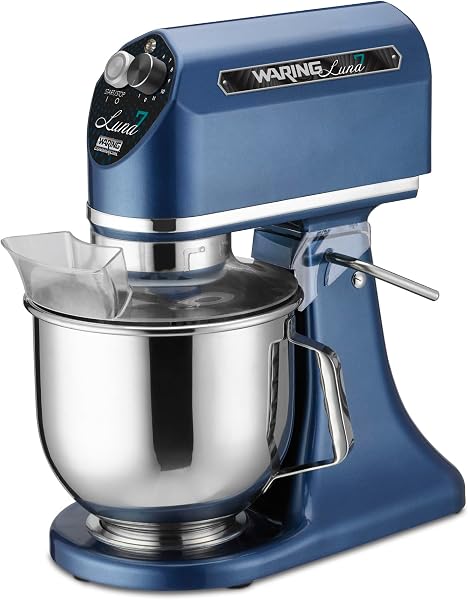
Waring Luna 7-Quart
9.4Editor score7-quart stainless bowl
1/2 HP induction motor
11 variable speeds
350 watts 120V
Find the right planetary mixers for 2026. We compare 10 standout options by build quality, useful features, owner feedback, value, and everyday trade-offs.
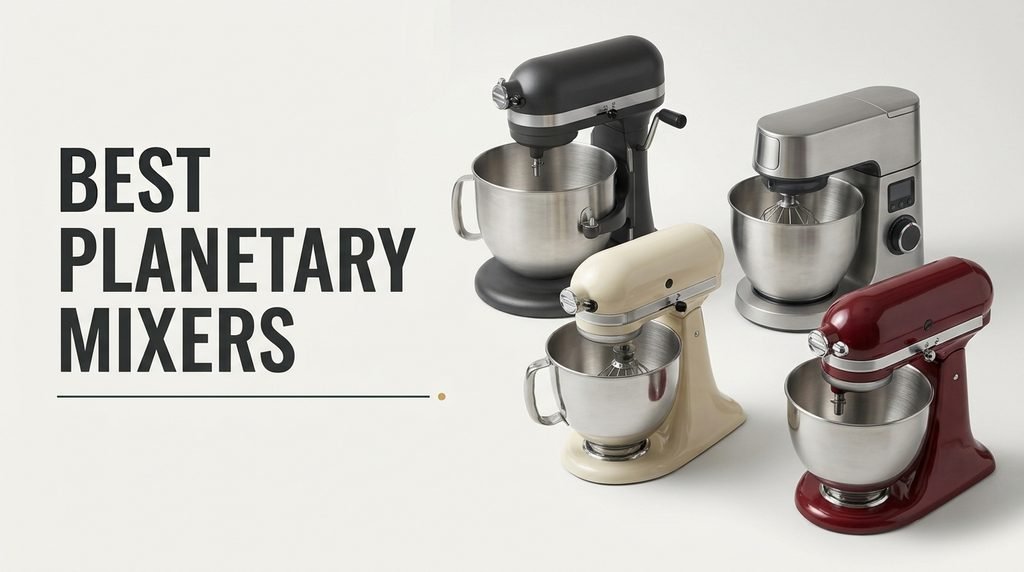
Choosing the right planetary mixer for 2026 means weighing bowl capacity, motor power, build materials, speed range, included attachments, and whether you need a home-friendly tilt-head design or a commercial-grade bench unit. We compare 10 standout models across these factors so you can match a mixer to your baking volume, dough thickness, and kitchen space without overspending.
Planetary mixers vary enormously in scale. A 4-quart home model handles cookies and cake batter beautifully, while a 20-quart commercial unit kneads large pizza-dough batches for a working bakery. Motor horsepower, gear-driven versus direct-drive transmissions, and bowl material all affect how well a mixer stands up to repeated heavy use.
This guide breaks down the practical differences so you can decide whether a sub-$150 home mixer meets your needs or whether a cast-iron commercial unit is worth the investment. Each review highlights real tradeoffs around capacity, noise, countertop footprint, and attachment compatibility to help you make a confident purchase.
We compared 10 planetary mixers using the specifications that genuinely shape baking performance: bowl capacity, motor wattage or horsepower, number of speeds, transmission type, included attachments, construction materials, hub compatibility, safety features, owner feedback, and overall value. The notes focus on practical trade-offs between home and commercial use, countertop footprint, dough-handling capability, and long-term durability so each pick connects to how bakers actually work with these machines day to day.


Compare key features, scores, and current prices side by side. A shorter feature list means fewer details were available, not necessarily fewer capabilities.



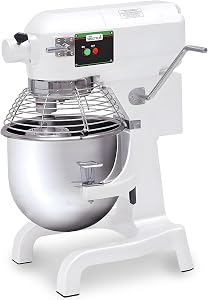

Hobart is the name most commercial bakers mention when they talk about mixers that last for decades. The Centerline 20-quart bench model continues that tradition with a gear-driven transmission, three fixed speeds, and a 1/2 horsepower motor designed to handle continuous commercial duty. For bakeries that depend on their mixer every single day, Hobart's reputation for longevity often justifies the premium price.
We may earn a commission when you buy through this link, at no additional cost to you.
Digital controls with a last-time reminder set this unit apart from more basic commercial mixers. The reminder function keeps track of your previous mix time, which helps maintain batch consistency across shifts and operators. Three fixed speeds follow the standard commercial layout, with gear-driven power delivery that keeps the mixer running at the chosen speed even under the heaviest dough loads.
The stainless steel bowl and bayonet-style accessories (wire whip, flat beater, dough hook) are built to Hobart’s professional specifications. The removable bowl guard provides the safety features expected in a commercial environment, and the overall construction is designed for the kind of continuous use that would quickly destroy a home mixer. The 100-120V single-phase electrical specification means it can plug into standard outlets without requiring special wiring in most settings.
Hobart has been building commercial foodservice equipment for over a century, and their mixers are often found in commercial kitchens still running after 20 or 30 years of service. The brand’s premium pricing reflects robust engineering, proven long-term reliability, and widespread parts availability. For operations where downtime is costly, this reliability often pays for itself over the mixer’s working life.
This mixer is purpose-built for commercial bakeries, restaurants, and institutional kitchens that need equipment to last 10+ years of daily use. The investment is significant, but Hobart equipment is known for its resale value and parts availability. For home bakers, this is far beyond what any residential kitchen needs. For serious commercial operations, it is often the gold standard.
Home kitchens, light commercial users, or anyone whose baking volume does not justify a four-figure investment in a commercial mixer.
We may earn a commission when you buy through this link, at no additional cost to you.
The Waring Luna sits in a sweet spot between serious home baking and light commercial use. Its 7-quart stainless steel bowl handles larger batches than a typical home mixer, which is particularly useful if you regularly bake multiple loaves of bread, large cake batters, or batches of cookie dough for events. The 1/2 horsepower gear-driven induction motor delivers the kind of consistent torque that cheaper mixers struggle to maintain under heavy loads.
We may earn a commission when you buy through this link, at no additional cost to you.
Eleven variable speeds, controlled by a front-mounted dial, give you precise control over everything from gentle folding to high-speed whipping. The permanently lubricated transmission is designed to withstand thick pizza dough and dense batters without overheating, which is a meaningful advantage over belt-driven home mixers that can struggle with heavy workloads. The tilt-back head and lift lever make swapping attachments and clearing the bowl straightforward.
Out of the box, you get a stainless steel bowl, whisk, dough hook, aluminum mixing paddle, and a clear splash guard with a feed chute for adding ingredients mid-mix. The LED power indicator and intuitive dial make operation simple, and the NSF listing plus ETL certification confirm it meets commercial safety standards. The 6-foot cord gives reasonable flexibility for countertop placement.
Gear-driven transmissions deliver power directly from the motor to the attachment, maintaining consistent speed even when the dough resists. Belt-driven designs are quieter and cheaper but tend to slip under heavy loads, which can lead to uneven mixing and shortened motor life. For bakers who regularly work with stiff doughs, a gear-driven mixer like the Luna provides noticeably better long-term performance.
The Luna is a strong choice for ambitious home bakers, small bakeries, or caterers who need commercial-grade durability without stepping up to a 20-quart bench unit. If you only bake occasionally or have a tight kitchen counter, a smaller 4- or 5-quart mixer may be a better fit. For those who want a mixer that will keep up with serious baking projects year after year, the Waring Luna delivers a lot of professional capability in a countertop format.
Casual home bakers with limited counter space or small-batch recipes, where a 4- to 5-quart mixer would be more practical.
We may earn a commission when you buy through this link, at no additional cost to you.
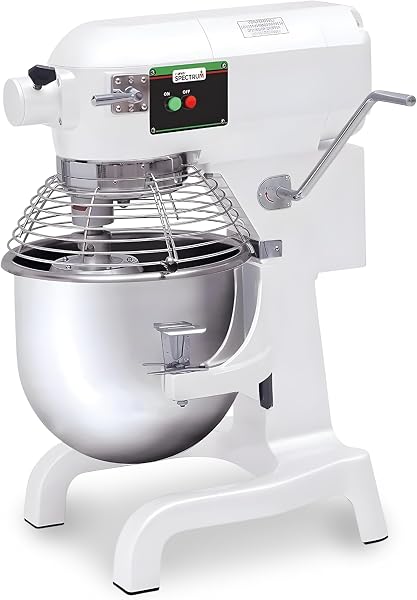
The Winco 10 L commercial mixer is built for the kind of daily grind that overwhelms home-grade machines. Its reinforced cast iron body and gear-driven transmission are designed to handle thick doughs and heavy batters without flexing or losing speed. The 10-liter stainless steel bowl is sized for small bakeries, delis, and cafes that need more capacity than a residential mixer can offer but do not require a full 20-quart commercial unit.
We may earn a commission when you buy through this link, at no additional cost to you.
Three fixed speeds, controlled through a high-torque transmission, keep mixing consistent regardless of load. This is a different philosophy from variable-speed home mixers, which prioritize finesse over sustained power. Commercial bakers often prefer fixed speeds because they are mechanically simpler, more durable, and perfectly adequate for the standard low-medium-high workflow of professional baking.
Safety is handled with a bowl guard and interlocking mechanism that prevents the motor from running when the guard is open. The included hub lets you add compatible attachments such as meat grinders or vegetable slicers, turning the mixer into a more versatile prep station. The included whip, flat beater, and spiral dough hook cover the essential mixing tasks right out of the box.
Commercial mixers typically use three fixed speeds because professional recipes are usually written around those settings. First speed handles kneading and folding, second speed covers general mixing and creaming, and third speed is reserved for whipping. This simplicity reduces mechanical complexity and improves long-term reliability compared to variable-speed home mixers.
This mixer is a strong fit for small foodservice operations that need commercial reliability in a mid-size footprint. If you only bake at home, the three-speed limitation and significantly higher price make it overkill. For a bakery or deli that bakes bread daily, the cast iron durability and gear-driven transmission justify the investment.
Home bakers who want variable speed control and a lighter, more affordable mixer for occasional baking.
We may earn a commission when you buy through this link, at no additional cost to you.
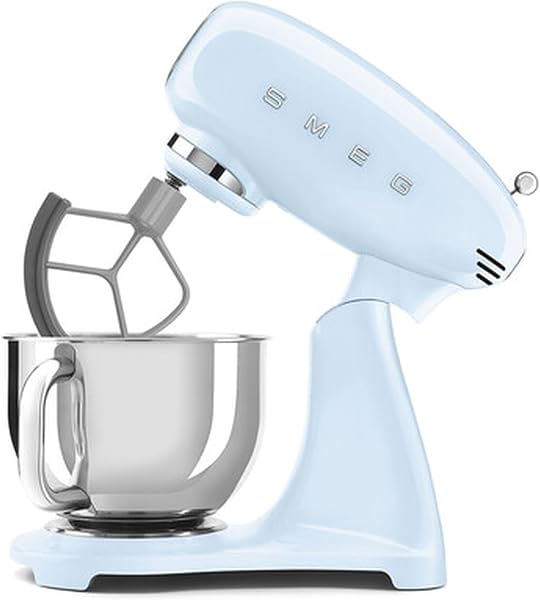
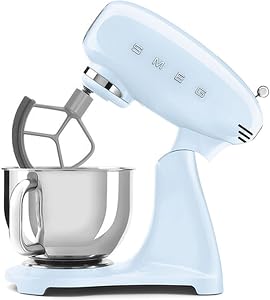
The SMEG SMF05 Forte combines SMEG's instantly recognizable 1950s retro styling with a 750-watt direct-drive motor that delivers higher torque than many comparable 5-quart mixers. The die-cast aluminum body feels substantial and holds its position on the counter during heavy mixing. For bakers who want a mixer that looks as polished as it performs, the Forte is one of the most visually distinctive options available.
We may earn a commission when you buy through this link, at no additional cost to you.
Two features set the Forte apart from standard home mixers: Smooth Start gradually ramps up the speed to minimize flour and liquid splashing when you begin mixing, and SteadyMix electronically maintains consistent power even when dense dough resists. These are the kinds of refinements that make a noticeable difference during real baking sessions, especially with messy ingredients or stiff bread doughs.
The 5-quart stainless steel bowl with a comfortable handle holds enough capacity for most home baking projects, and 10 electronic speed settings cover everything from gentle folding to high-speed whipping. The included accessories are generous: stainless wire whisk, aluminum flat beater, dough hook, flex-edge silicone beater, and a Tritan pouring shield. The front accessory port opens up compatibility with SMEG pasta rollers, grinders, and ice cream makers for buyers who want to expand the mixer’s capabilities over time.
A flex-edge beater has a silicone wiper along the paddle edge that scrapes the bowl’s sides as it rotates. This reduces the need to stop mixing and scrape the bowl manually, which saves time and ensures that all ingredients get fully incorporated. For recipes with butter or cream cheese that tend to stick to the bowl, a flex-edge beater is a meaningful convenience upgrade.
This mixer is a great fit for home bakers who care about both performance and kitchen aesthetics, especially if your style leans toward retro or statement appliances. If you need maximum capacity or commercial durability, a 7-quart or larger mixer may serve you better. For style-conscious buyers who still want serious baking power, the Forte strikes a compelling balance.
Shoppers prioritizing lowest price over design and premium features, since similar-capacity mixers are available for less money.
We may earn a commission when you buy through this link, at no additional cost to you.
The VIVOHOME 6-Quart mixer offers larger-than-average bowl capacity at a price point that undercuts most name-brand competitors. Its 660-watt copper motor is powerful enough to handle thick bread doughs and dense cookie batters, and the 6-quart bowl is sized to hold about 3 loaves of bread or 2.2 pounds of flour per batch. For families of 2-4 who bake regularly, this capacity hits a practical sweet spot.
We may earn a commission when you buy through this link, at no additional cost to you.
Ten speeds plus a pulse function provide more granular control than basic home mixers, and the planetary mixing action ensures that attachments reach every part of the bowl without leaving unmixed pockets. The included flex-edge beater scrapes the bowl as it mixes, reducing the need to stop and scrape by hand. Suction cups on the base help keep the mixer stable during heavy kneading, though they work best on smooth, non-porous countertops.
The tilt-head design makes it easy to add ingredients or change attachments mid-recipe, and the upgraded splash guard lets you pour additions while the mixer is running. The included accessories cover most needs: stainless whisk, aluminum dough hook, beater, and even an egg separator. All attachments are dishwasher safe, which simplifies cleanup after messy baking sessions.
A 4-quart bowl can feel cramped when doubling cookie recipes or making bread dough, often requiring you to work in two batches. A 6-quart bowl provides enough headroom to handle most doubled home recipes in one pass, which saves significant time during holiday baking or batch prep. If you often bake for more than 4 people or make bread regularly, the extra capacity pays off quickly.
This mixer is a good match for home bakers who want more capacity than a 4- or 5-quart machine without stepping up to the premium pricing of SMEG or Waring. It is not NSF certified, so it is not intended for commercial foodservice use. For families, hobby bakers, or those who want extra bowl room without a big price tag, the VIVOHOME is a solid value choice.
Commercial kitchens needing NSF certification, or bakers who want a premium-brand mixer with established long-term support.
We may earn a commission when you buy through this link, at no additional cost to you.
The Winco 20 L steps up to full commercial scale, with a 20-liter stainless steel bowl that handles the kind of large dough and batter batches you would expect in a working bakery, pizzeria, or production kitchen. The reinforced die-cast iron body provides the mass and rigidity needed to stay stable during heavy mixing cycles. For operations that produce bread, pizza dough, or large cake batters daily, this scale of mixer is often necessary.
We may earn a commission when you buy through this link, at no additional cost to you.
The gear-driven high-torque transmission with three fixed speeds is engineered to maintain consistent mixing power regardless of load. Commercial bakers who are used to this type of equipment will find the speed layout intuitive and the construction familiar. The safety guard with interlocking mechanism prevents the mixer from running when the bowl guard is open, which is a critical feature in environments where multiple staff members may be operating the equipment.
The included attachment hub broadens the mixer’s utility beyond baking. Compatible attachments allow it to handle grinding, slicing, or shredding tasks, which can reduce the number of specialized machines a kitchen needs. Standard accessories include a whip, flat beater, and spiral dough hook, covering the primary mixing applications right from unboxing.
A 20-liter mixer typically handles about 15 pounds of dough or around 60 pounds of cake batter per batch, depending on the recipe and attachment. This capacity is well suited to small-to-medium bakeries, pizzerias, and institutional kitchens. If your operation makes more than about 50 loaves of bread per day, you may need to step up to a 30- or 40-quart mixer for efficient production.
This mixer is a strong fit for commercial foodservice operations that need large-batch capability at a lower price point than premium commercial brands. The 3.8-star owner rating suggests reading recent reviews carefully to understand real-world reliability. For home bakers, this is far more mixer than you need, both in capacity and footprint.
Home kitchens or small cafes without the floor space and electrical capacity to support a large commercial mixer.
We may earn a commission when you buy through this link, at no additional cost to you.
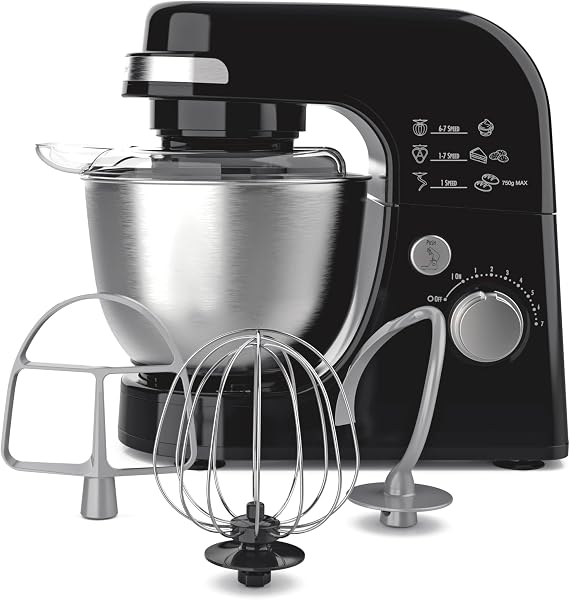
The Hamilton Beach 4-Quart mixer delivers the core planetary mixing action at a price that makes stand mixers accessible to just about any home baker. The 300-watt motor is modest compared to premium mixers, but it maintains constant speed through most everyday baking tasks, including bread dough and cookie batter in standard home-recipe batches. For bakers who are just starting out or who bake occasionally, this is a sensible entry point.
We may earn a commission when you buy through this link, at no additional cost to you.
Seven speeds cover the typical range of mixing tasks, from slow folding on first speed to high-speed whipping for cream and egg whites. The planetary mixing action rotates the attachments around the entire 4-quart stainless bowl, which produces more even results than single-axis mixers. Three included attachments (dough hook, whisk, flat beater) handle most recipes without needing additional purchases.
The removable splatter shield helps keep flour and liquid contained during mixing, and the stainless steel bowl is dishwasher safe for easy cleanup. The 4-quart capacity is on the smaller side, which is fine for standard home recipes but may require splitting into two batches for doubled recipes or large bread batches. For single-batch cookie or cake work, the capacity is well-sized.
A 300-watt motor is adequate for cookie dough, cake batter, pancake batter, and most standard bread recipes in 4-quart batches. It may struggle with very stiff pizza doughs, large bread batches, or back-to-back heavy use. If your baking stays within typical home recipes and you give the motor occasional breaks during long sessions, 300 watts will cover most needs comfortably.
This mixer is a strong fit for occasional bakers, students, or anyone furnishing a first kitchen who wants a real stand mixer without a big investment. If you bake heavily or make bread multiple times per week, stepping up to a more powerful motor and larger bowl is worth considering. For most casual baking needs, the Hamilton Beach handles the job reliably.
Heavy or frequent bread bakers who need more motor power and larger capacity for stiff doughs and doubled recipes.
We may earn a commission when you buy through this link, at no additional cost to you.
The Adcraft BDPM-20 brings commercial 20-quart capacity to kitchens that need the output but want to spend less than premium brands demand. Its 1.5 horsepower motor is actually more powerful than many premium commercial mixers in this capacity range, and the 100% gear-driven transmission delivers consistent speed regardless of how dense the dough or batter becomes.
We may earn a commission when you buy through this link, at no additional cost to you.
Three fixed speeds follow the standard commercial layout familiar to professional bakers. The direct-drive gear transmission eliminates the slippage that can plague belt-driven designs under heavy loads. The included wire whisk, dough hook, and flat beater cover the primary mixing applications, and the stainless steel bowl holds up to commercial cleaning and handling.
A significant practical feature is the #12 attachment hub, which lets the mixer accept meat grinding attachments and other accessories commonly used in commercial kitchens. This versatility can replace a separate meat grinder in smaller operations, saving both counter space and equipment budget. The safety guard protects operators during mixing, and the overall ergonomic design supports repeat-batch workflow.
A #12 hub accepts a wide range of commercial attachments, including meat grinders, vegetable slicers, and cheese shredders. This standardized interface means you can expand the mixer’s role in your kitchen as your needs grow. For small restaurants or bakeries looking to minimize the number of specialized machines, a mixer with a #12 hub often earns its keep by replacing multiple single-purpose devices.
This mixer suits small-to-medium commercial operations, catering businesses, or serious home bread bakers with industrial ambitions who want 20-quart capacity without the premium brand markup. The 3.9-star owner rating suggests mixed experiences, so checking recent reviews for your specific use case is wise. For buyers who want strong motor power at a working commercial price, it is a competitive option.
Buyers who need the proven long-term reliability of a premium brand like Hobart for continuous commercial duty.
We may earn a commission when you buy through this link, at no additional cost to you.
This version of the Hamilton Beach 4-quart mixer adds a built-in carry handle at the top, which turns out to be a surprisingly useful feature. If you store your mixer in a cabinet between uses or share counter space with other appliances, the handle makes it much easier to lift and reposition without awkwardly gripping the motor housing. For small kitchens, this convenience adds up over time.
We may earn a commission when you buy through this link, at no additional cost to you.
Core performance mirrors the standard Hamilton Beach 4-quart model, with a 300-watt motor, 7 speeds, and planetary mixing action that covers the entire 4-quart stainless bowl. A handy on-top mixing guide helps less experienced bakers choose the right speed for each task, which is a thoughtful addition for a mixer at this price point. The slow first speed is particularly useful for kneading bread and reducing splatter when combining dry and wet ingredients.
Included accessories cover the essentials: dough hook, whisk, flat beater, splash guard, and the stainless steel bowl with handles. All attachments are dishwasher safe for straightforward cleanup. The planetary action matches the performance of significantly more expensive mixers, so for standard home recipes you get much of the benefit without the premium cost.
A stand mixer that is easy to lift and move encourages more frequent use, especially in kitchens where counter space is at a premium. If you have to wrestle your mixer out from under a cabinet every time, you may find yourself reaching for a hand mixer instead. A built-in handle removes that friction and makes the mixer more likely to see regular action for everyday baking.
This mixer is a smart choice for small-apartment bakers, people who need to move their mixer frequently, or anyone who wants an upgrade over the base Hamilton Beach without jumping to a premium brand. If you need serious power for heavy doughs or large batches, step up to a more capable model. For portability and everyday baking convenience, the carry handle makes a real difference.
Bakers who need higher capacity, more motor power, or who leave their mixer out permanently and do not need portability features.
We may earn a commission when you buy through this link, at no additional cost to you.
The Globe SP05 is positioned as a compact 5-quart commercial mixer with an 800-watt motor and NSF approval for use in professional kitchens. On paper, the specification sheet is attractive: ten speeds, electronic speed and load control, and a rigid cast aluminum body in a white powder coat finish. The design targets small foodservice operations that need commercial certification in a countertop footprint.
We may earn a commission when you buy through this link, at no additional cost to you.
The 800-watt motor is more powerful than most comparable 5-quart mixers, and electronic load control is designed to maintain consistent speed as resistance changes during mixing. The ten-speed range provides finer control than typical three-speed commercial mixers, which can be useful for operations that need to handle a variety of recipes with different mixing requirements. NSF approval confirms the mixer meets commercial sanitation standards.
The cast aluminum body offers rigidity in a lighter package than cast iron, which can be an advantage if the mixer needs to be moved between stations. The white powder-coated finish is designed to withstand commercial cleaning. However, the 2.1-star owner rating is notably lower than other mixers in this guide, which suggests prospective buyers should carefully research recent reviews and warranty terms before committing.
Commercial equipment is often used in high-stakes environments where downtime directly affects revenue. Low owner ratings on commercial mixers warrant extra scrutiny, including checking the warranty terms, parts availability, and manufacturer support reputation. For any commercial purchase, reading recent reviews that mention specific failure modes or support experiences can be more valuable than overall star ratings alone.
This mixer is a potential fit for small commercial operations that need NSF-certified equipment in a compact format and are willing to investigate current owner experiences before purchase. Given the mixed feedback, home bakers would likely be better served by any of the home-focused mixers in this guide. For commercial buyers, carefully weigh the owner feedback against the specifications before deciding.
Buyers who prioritize strong owner feedback and would prefer a mixer with a more established track record of customer satisfaction.
We may earn a commission when you buy through this link, at no additional cost to you.
Selecting a planetary mixer involves balancing bowl capacity, motor power, construction quality, speed options, and intended use against your baking volume and kitchen space. The factors below cover the most important decision points so you can match a mixer to your real-world needs rather than overbuying or underbuying.
Bowl capacity directly determines how much you can mix in a single batch, and getting this right is one of the most important decisions you will make. Home mixers typically range from 4 to 7 quarts, while commercial mixers start around 10 liters and scale up to 20 quarts and beyond. A 4-quart bowl handles standard home recipes well but requires splitting doubled recipes into two batches, which can be inconvenient for holiday baking or regular bread making.
A 5- to 7-quart bowl is the sweet spot for most serious home bakers, providing enough room for doubled cookie recipes, large bread batches, and family cake projects in a single pass. Commercial mixers from 10 quarts upward are designed for bakeries, pizzerias, and institutional kitchens that need to produce large quantities daily. Buying significantly more capacity than you need wastes counter space and money, while buying too little leads to frustrating batch splitting.
Estimate your typical batch size and add 25-50% headroom for growth and occasional larger projects. If you bake mostly for a household of 2-4 people, a 4- to 5-quart mixer is usually ideal. For regular bread baking or larger families, step up to 6-7 quarts.
Motor power determines how well a mixer handles stiff doughs, large batches, and sustained use. Home mixers typically range from 300 to 800 watts, while commercial mixers use horsepower ratings, with 1/2 HP to 1.5 HP being common in the 10-20 quart range. Higher wattage or horsepower allows the mixer to maintain consistent speed under heavy loads, which produces better mixing results and extends motor life.
The transmission type is equally important. Gear-driven transmissions deliver power directly through metal gears and are the standard in commercial mixers. They handle heavy loads without slipping and last significantly longer under hard use. Belt-driven and direct-drive designs are more common in home mixers; they tend to be quieter but may slip or overheat under repeated heavy loads. For bread bakers who regularly knead stiff doughs, a gear-driven mixer is almost always worth the extra investment.
If you bake mostly cookies, cakes, and lighter batters, a 300-500 watt home mixer handles the job well. For bread bakers or anyone who mixes dense doughs regularly, prioritize 600+ watts with a gear-driven transmission.
The number of speed settings and how they are controlled affects both versatility and ease of use. Home mixers typically offer 7-10 speeds, which provides enough granularity to handle everything from gentle folding to high-speed whipping. Variable-speed dials offer the finest control, while incremental buttons are simpler but less precise. Features like Smooth Start or soft-start ramping prevent splashing when mixing dry ingredients at the start of a recipe.
Commercial mixers usually offer just three fixed speeds (low, medium, high), reflecting the standard workflow of professional baking recipes. This simplicity reduces mechanical complexity and improves durability, which matters more in a professional environment than fine speed control. Electronic load control, found on some premium mixers, automatically adjusts power delivery to maintain selected speed under varying resistance, which produces more consistent mixing results.
For home use, choose a mixer with at least 7 speeds and a slow-start or low first speed for folding and dry-ingredient mixing. For commercial use, three fixed speeds are usually sufficient and more durable than variable-speed systems.
The materials used in a mixer’s body and bowl significantly affect durability and performance. Die-cast aluminum bodies are common in premium home mixers and provide good rigidity at a manageable weight. Cast iron is the gold standard for commercial mixers, offering maximum stability during heavy mixing but adding considerable weight. Plastic bodies, found on budget home mixers, keep costs down but may flex under heavy loads, affecting mixing consistency.
Stainless steel bowls are the standard across all quality tiers, offering durability, easy cleaning, and dishwasher compatibility. Some bowls include handles for easier lifting, which is a meaningful convenience when the bowl is full. The attachments (whisk, flat beater, dough hook) are typically stainless steel or coated aluminum; stainless lasts longer, while coated aluminum is lighter and often less expensive. A splash or pouring shield is a worthwhile feature that keeps ingredients contained during mixing.
For long-term durability, prioritize die-cast aluminum or cast iron construction with a stainless steel bowl. Avoid primarily plastic mixers if you plan to mix heavy doughs regularly.
Home mixers typically use a tilt-head design, where the motor and attachments tilt back to allow easy access to the bowl for adding ingredients or swapping attachments. This design is intuitive and keeps the overall height of the mixer manageable. Commercial mixers often use a bowl-lift design, where the bowl itself raises and lowers while the motor stays fixed. This provides more stability during heavy mixing but requires more vertical clearance and typically takes up more counter space.
Tilt-head mixers are generally more convenient for home use because they are easier to clean, store, and access during mixing. Bowl-lift designs are preferred for commercial use because they handle large, heavy bowls more safely and provide a more stable mixing platform. Some premium home mixers offer bowl-lift designs for serious home bakers who prioritize stability over convenience.
For most home kitchens, a tilt-head design is the practical choice. For commercial use or serious home bakers who regularly handle large, heavy bowls, consider bowl-lift designs for improved stability.
The standard attachment set for any planetary mixer includes a flat beater for general mixing, a wire whisk for whipping, and a dough hook for kneading bread. More premium mixers may include a flex-edge beater (with a silicone edge that scrapes the bowl) and a pouring shield for adding ingredients while mixing. These extras add convenience but are often available as separate purchases if your preferred mixer does not include them.
A hub or power take-off port allows the mixer to accept additional attachments like meat grinders, pasta rollers, vegetable slicers, and ice cream makers. This capability dramatically expands the mixer’s usefulness, essentially turning it into a multi-purpose kitchen platform. Commercial mixers often use standardized #12 hubs that accept a wide range of professional attachments, while home mixers may use proprietary attachment systems specific to the brand.
If you want attachment versatility, choose a mixer with a hub or attachment port and check what accessories are available for that specific brand. For straightforward baking, the standard three-attachment set is usually sufficient.
Safety features are especially important for commercial mixers, where multiple operators may use the equipment and larger loads increase the risk of injury. A bowl guard with an interlocking mechanism prevents the mixer from running when the guard is open, which protects operators from the moving beater. This feature is standard on commercial mixers and increasingly common on premium home models as well.
Certifications like NSF (National Sanitation Foundation) listing and ETL marking indicate that the mixer meets established standards for commercial foodservice use and electrical safety. NSF listing is often required for commercial kitchens by health codes, so if you are buying for a professional environment, verify this certification before purchasing. For home use, UL or ETL certification is sufficient for electrical safety.
For commercial use, verify NSF listing and bowl-guard interlock features are included. For home use, UL or ETL certification covers the essential electrical safety requirements.
Mixer noise can be a significant quality-of-life factor, especially in open-plan kitchens or homes where someone may be sleeping or working nearby. Gear-driven commercial mixers tend to be louder than direct-drive home mixers because of the mechanical complexity of the transmission. Induction motors are generally quieter than universal motors but may offer less raw power. Reading owner feedback about noise levels is often the best way to get a realistic sense of how loud a specific mixer will be in your kitchen.
Daily use features like the ease of swapping attachments, cleaning the bowl, and storing the mixer when not in use all affect how often you will actually reach for the mixer. A mixer with a built-in handle is easier to move; one with dishwasher-safe accessories is easier to clean; one with a reasonable countertop footprint is easier to leave out permanently. These seemingly small details often determine whether a mixer becomes a daily workhorse or lives in a cabinet.
If quiet operation matters, favor home mixers over commercial units and look for induction motors. For daily convenience, prioritize dishwasher-safe accessories, easy attachment changes, and a design that fits your counter or storage space.
Planetary mixers in this guide span from around $100 for entry-level home models to over $4,000 for premium commercial units, and the price difference reflects major variations in motor power, bowl capacity, construction materials, and brand reputation. A budget home mixer is a sensible starting point for occasional baking, while a commercial mixer is a significant investment that should be justified by actual daily use.
When evaluating value, consider not just the sticker price but also the mixer’s expected lifespan, parts availability, warranty terms, and resale value. Commercial brands like Hobart are known for mixers that last decades and retain significant resale value, which can justify their premium pricing for serious users. Home mixers typically have shorter expected lifespans but offer much lower initial costs. For most buyers, matching the mixer’s capability to actual needs produces the best long-term value.
Set a budget based on how often you will use the mixer and the volume you need to produce. For occasional home baking, $100-300 is usually sufficient. For serious home baking, $300-600 opens up premium features. For commercial use, expect to spend $1,000+ for mid-range units and $3,000+ for premium brands.
Before your first use, read the manufacturer’s manual to understand the specific speed recommendations and attachment uses for your model. Start with the slowest speed when adding dry ingredients to prevent splashing, then gradually increase speed as the mixture comes together. For bread doughs, use the dough hook on low-to-medium speed and limit continuous kneading to about 10-15 minutes for most home mixers to avoid overheating the motor. Always secure the bowl properly and ensure the attachment is fully seated before starting the mixer.
Regular cleaning extends the life of your mixer and prevents cross-contamination between recipes. Wipe down the mixer body with a damp cloth after each use, taking care to clean around the attachment hub where flour and batter can accumulate. Stainless steel bowls and most attachments are dishwasher safe, but check your manual for aluminum attachments, which may require hand washing to prevent oxidation. Dry all parts thoroughly before storing to prevent water spots and corrosion over time.
For long-term durability, give your mixer breaks during very long mixing sessions, especially when working with heavy doughs. Overheating is one of the most common causes of motor failure, and most home mixers are not designed for continuous use beyond 15-20 minutes. If you notice the motor becoming hot or slowing down significantly, stop mixing and allow it to cool. Store the mixer in a dry location and keep attachments organized to prevent damage. If your mixer has permanently lubricated gears, no additional maintenance is typically needed; mixers with user-serviceable gears may require periodic lubrication per the manufacturer’s instructions.
A planetary mixer uses a mixing action where the attachment rotates on its own axis while also orbiting around the bowl, similar to how planets move around the sun. This dual motion ensures the attachment reaches every part of the bowl, producing more thorough mixing than single-axis mixers. Almost all modern stand mixers use planetary action, so the terms are often used interchangeably.
For general baking of cookies, cakes, and lighter doughs, a 300-watt mixer is adequate. For regular bread baking or heavy doughs, look for at least 500-600 watts. If you make large bread batches or stiff pizza dough frequently, prioritize 700+ watts with a gear-driven transmission for better durability and consistent performance under load.
Yes, but there are tradeoffs to consider. Commercial mixers are built for durability and large batches, which means they are often heavier, larger, and more expensive than home mixers. They may also offer fewer speed options and be louder in operation. If you have the space, budget, and baking volume to justify it, a commercial mixer can be a lifetime investment for serious home bakers.
A 4-5 quart bowl handles most standard home recipes without issue, including single-batch cookies, cakes, and bread. If you often double recipes, bake for larger families, or make bread regularly, a 6-7 quart bowl provides more flexibility without requiring batch splitting. Larger than 7 quarts is usually overkill for home use unless you have very specific high-volume baking needs.
Premium mixers typically offer more powerful motors, better construction materials, longer warranties, and higher resale value. For bakers who use their mixer frequently or who make bread regularly, the extra durability and performance can justify the higher cost over the long run. For occasional bakers, a budget or mid-range mixer usually provides excellent value without the premium investment.
Tilt-head mixers have a motor that tilts back to provide access to the bowl, which makes adding ingredients and changing attachments easier. Bowl-lift mixers have a stationary motor with a bowl that raises and lowers via a lever, providing better stability for heavy mixing. Tilt-head designs are more common in home mixers and smaller commercial units, while bowl-lift is standard for larger commercial equipment.
Look for mixers with at least 500 watts of power, a gear-driven transmission, and a dedicated dough hook attachment. Check the manufacturer's specifications for maximum dough quantity recommendations, which are usually expressed in pounds of flour. For regular bread baking, prioritize mixers specifically rated for dough handling rather than general-purpose home mixers with modest motors.
The three essential attachments are a flat beater (for general mixing and creaming), a wire whisk (for whipping and aerating), and a dough hook (for kneading bread). A flex-edge beater with a silicone edge is a useful upgrade that scrapes the bowl as it mixes. A pouring shield or splash guard helps keep ingredients contained during mixing. These basics cover virtually all common baking tasks.
A well-made home mixer should last 10-15 years or more with regular care and reasonable use. Commercial mixers are built for continuous duty and often last 20+ years, which is why premium commercial brands like Hobart command such high prices. Longevity depends heavily on matching the mixer's capability to your actual workload; overworking a lightweight mixer dramatically shortens its lifespan.
Yes, planetary mixers with attachment hubs can handle a surprising range of tasks beyond baking. Common attachments include meat grinders, pasta rollers, vegetable slicers, cheese shredders, and ice cream makers. This versatility can replace multiple specialized appliances, making the mixer one of the most useful tools in your kitchen if you invest in the right attachments.
The Waring Luna 7-Quart stands out as the strongest overall choice for serious home bakers and small commercial operations, combining a 1/2 HP induction motor, 11 variable speeds, a generous 7-quart bowl, and NSF certification in a single countertop package. It bridges the gap between home convenience and commercial capability more effectively than any other mixer in this guide, which is why it earns the top spot.
For buyers with different priorities, the Hamilton Beach 4-Quart offers excellent value under $150 for occasional home baking, the SMEG SMF05 Forte brings premium design and features to style-conscious kitchens, and the Hobart 20 Qt sets the standard for commercial bakeries that need equipment to last for decades. The Winco 10 L provides a reasonable midpoint for small bakeries that need commercial capability without a premium brand investment.
The right planetary mixer for your kitchen depends on your baking volume, dough thickness, available counter space, and budget. Use the comparison table and buying guide above to narrow down the capacity and features that match your real-world needs. The most important rule is to match the mixer's capability to your actual workload: an underpowered mixer will burn out quickly, while an oversized commercial unit wastes money and space if your baking stays within home-recipe scale.