PAETA Pilates Combo
8.8Editor scoreSolid oak frame
351 lb capacity
Four spring positions
Resistance bands included
Compare 10 Pilates chairs by spring resistance, frame build, pedal design, weight capacity, and value to find the right studio-quality trainer for your home.
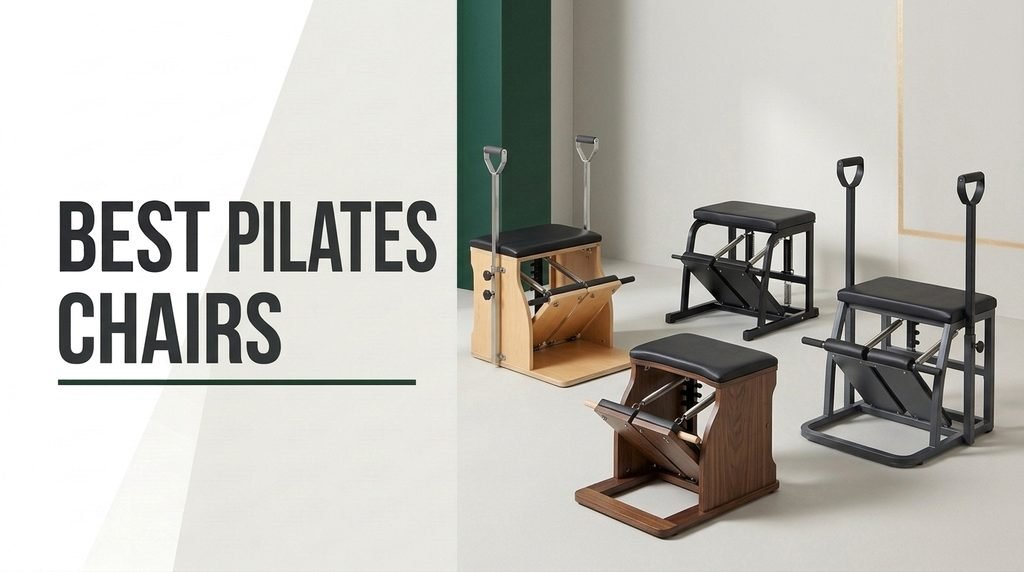
Finding the right Pilates chair for 2026 comes down to matching spring resistance, frame construction, pedal design, and footprint to your training goals. We compare 10 standout options across split-pedal versus single-pedal setups, resistance range, build materials, weight capacity, support handles, portability, and overall value so you can invest with confidence.
A Pilates chair is one of the most versatile pieces of apparatus you can own, but the differences between a $70 yoga prop, a $300 home trainer, and a $2,000 studio chair are significant. Spring quality, pedal mechanics, handle adjustability, and frame rigidity all affect how well the chair performs during real exercises.
This guide breaks down what each chair actually offers so you can decide whether a budget-friendly entry chair, a mid-range combo chair with resistance bands, or a professional-grade studio chair matches your experience level, space, and long-term training plans.
We compared 10 Pilates chairs using the details that actually matter for home and studio training: spring quality and resistance range, pedal configuration, frame materials and stability, weight capacity, handle adjustability, footprint, portability, assembly complexity, warranty, owner feedback, and value. The notes focus on practical trade-offs so each pick connects to how real users build strength, improve posture, and progress their Pilates practice without wasting money on features they will not use.


Compare key features, scores, and current prices side by side. A shorter feature list means fewer details were available, not necessarily fewer capabilities.


This home Pilates chair delivers the essentials of resistance-based Pilates training in a straightforward package that has earned strong early feedback from owners. The two-pedal design supports controlled core, leg, and balance exercises, which covers the majority of the foundational Pilates movements that home practitioners build their routines around. For buyers who want to focus on fundamentals without paying for extensive accessories, this is a sensible choice.
We may earn a commission when you buy through this link, at no additional cost to you.
The four spring positions provide meaningful progression as your strength and technique develop over time. Beginners can start with lighter effective resistance and gradually move to more challenging positions as they build confidence with each movement pattern. The wood base and metal frame combination creates a stable platform that resists the lateral movement that can undermine confidence during standing or asymmetric exercises.
The non-slip support handles give you secure contact points during exercises that require upper-body stabilization, such as triceps dips, pike exercises, and various stretches. The padded seat and pedal surfaces reduce pressure during repetitive work, which matters more than new users often realize until they experience discomfort during longer sessions. The detachable pedal design simplifies both assembly and storage, which is helpful if the chair needs to share space with other equipment or furniture.
A productive beginning routine on this type of chair might include seated pedal pushes for leg strength, mountain climbs for core engagement, and swan dive variations for back extension work. Starting with the lightest spring configuration lets you focus on movement quality and alignment before adding resistance. Short, consistent sessions of 20 to 30 minutes three times per week typically produce better long-term results than occasional longer workouts.
This chair is a strong choice for home practitioners who want a reliable, well-rated entry into Pilates chair training without paying for features they may not use. The relatively limited number of owner reviews means there is less long-term feedback available compared to more established products, but the current rating is encouraging. Serious practitioners who want resistance bands and advanced features should consider the combo chair options on this list.
Not the best fit for practitioners who want resistance bands, split pedals, or extensive accessories out of the box.
We may earn a commission when you buy through this link, at no additional cost to you.
The PAETA Combo Chair earns the editor's choice spot because it delivers the feature set of a professional studio chair at a fraction of the typical cost. The solid oak frame supports up to 351 pounds and provides the kind of rigid, rattle-free platform that serious practitioners expect. For home users who want a chair that will not feel like a compromise compared to the equipment at their Pilates studio, this is one of the strongest options available at this price point.
We may earn a commission when you buy through this link, at no additional cost to you.
The spring system is where this chair really distinguishes itself. Two 60-pound red springs and two 30-pound yellow springs combine with four adjustable mounting positions to give you a wide range of resistance options. That versatility matters because Pilates exercises require different loads depending on the movement, your experience level, and the muscle group being targeted. The springs have been endurance-tested through tens of thousands of cycles, which suggests they will hold their tension over years of regular use.
The split-pedal design is a significant functional upgrade over single-pedal chairs because it allows unilateral training that reveals and corrects left-right imbalances. The included resistance bands with two hook positions expand the exercise library further, bringing in movements traditionally associated with the Reformer. Three-height adjustable support handles accommodate seated, standing, and supine work, and the detachable pedal system makes it quick to reconfigure between exercises.
Single-pedal chairs tie both feet together, which lets the stronger side compensate for the weaker one and reinforces existing asymmetries. Split pedals require each leg to work independently, exposing imbalances in strength, coordination, and range of motion. For anyone recovering from an injury, preparing for a sport, or working on functional symmetry, split pedals are a meaningful upgrade that justifies the extra cost over basic single-pedal designs.
This chair is the right choice for intermediate to advanced home practitioners who want studio-quality training without studio pricing. The 31.5 by 28.5 by 44-inch footprint is manageable in most dedicated workout spaces, and the built-in wheels make it easy to move for storage or cleaning. If you only plan to use the chair for occasional basic exercises, a simpler and less expensive model will meet your needs.
Not ideal for buyers who need a compact chair for very small apartments or who only want basic single-pedal functionality.
We may earn a commission when you buy through this link, at no additional cost to you.
This metal-frame Pilates chair hits a practical middle ground for home users who want genuine resistance-based training without stepping up to the price of a studio chair. The combined wood and metal construction provides a stable training platform for the controlled, deliberate movements that define Pilates practice. For a dedicated home workout corner, it offers the core functionality needed to build strength, balance, and body awareness.
We may earn a commission when you buy through this link, at no additional cost to you.
The four spring attachment positions let you dial in resistance based on the exercise and your current ability. That adjustability is important because the same movement can be made significantly harder or easier simply by changing where the springs connect to the frame. As you progress, you can continue to challenge yourself without needing to upgrade equipment, which extends the useful life of the chair across months and years of training.
The non-slip grips on the support handles provide secure contact during exercises that require you to hold on for stability, such as leg presses, triceps dips, and standing stretches. The padded seat and pedal surfaces add comfort during repetitive work, reducing pressure on the sit bones and the balls of the feet during longer sessions. Assembly is required, including attaching the pedal mechanism, so plan for a modest setup window before your first workout.
The vertical position of the springs relative to the pedal pivot point changes the effective resistance curve of each movement. Higher spring positions typically make the beginning of a pedal push harder and the end lighter, while lower positions reverse that dynamic. Understanding this geometry helps you choose the right position for the exercise you are performing, which is why having four distinct positions provides meaningful versatility across your training routine.
This chair is a solid choice for home practitioners who want reliable Pilates training equipment at a reasonable price. The construction is sturdy enough for regular use, and the feature set covers the fundamentals that most home users need. Serious practitioners who want solid hardwood frames or additional resistance bands may find the more premium options on this list a better long-term fit.
Not the best choice for users who want a premium hardwood frame or additional resistance band attachments.
We may earn a commission when you buy through this link, at no additional cost to you.
The VEVOR foldable Pilates chair offers a generous 350-pound weight capacity on a natural rubberwood frame, making it a practical option for larger users or households where multiple family members of different sizes will share the equipment. The split-pedal design supports unilateral training for both legs and arms, which is important for addressing muscle imbalances and building functional strength that transfers to daily activities.
We may earn a commission when you buy through this link, at no additional cost to you.
The spring system includes two strong red springs and two lighter yellow springs across four adjustable mounting positions, giving you a reasonable range of resistance for different exercises and skill levels. The upgraded metal rods and robust side adjustment bars contribute to overall frame stability, which matters for safety during dynamic movements like standing pike exercises and single-leg press work. The high-end leather and sponge surfaces aim to balance durability with workout comfort.
The 3.7-star rating is worth noting. Lower ratings in this product category often reflect concerns about assembly difficulty, spring consistency, or long-term durability. Buyers should carefully inspect the chair upon arrival, test all spring positions and the pedal mechanism before intensive use, and plan to tighten any hardware that loosens during the first few workouts. The included instructions and specifications should be followed carefully during assembly to ensure proper function.
When unboxing any Pilates chair with multiple springs of the same color, compare the tension of matched pairs by stretching them side by side. The springs should feel visually and tactilely similar at the same extension. If one spring in a pair feels noticeably softer or stretches further at the same load, contact the seller for a replacement before using the chair, because mismatched springs can create uneven pedal action and compromise exercise safety.
This chair makes the most sense for buyers who specifically need the higher weight capacity or the foldable design features, and who are willing to accept the trade-offs that come with a lower-rated product at this price point. For users under 300 pounds who prioritize build quality and consistent reviews, the PAETA or AddWin chairs offer stronger overall value.
Not the strongest value for buyers under 300 pounds who prioritize consistent build quality and higher owner ratings.
We may earn a commission when you buy through this link, at no additional cost to you.
The Balanced Body EXO Chair comes from one of the most established names in Pilates equipment, with a history rooted in the original designs created by Joseph Pilates himself. For practitioners who want authentic studio equipment at home, the EXO Chair delivers the kind of refined mechanics and consistent spring performance that make a tangible difference during practice. The ability to choose between single-pedal and split-pedal configurations lets you match the chair to your specific training goals.
We may earn a commission when you buy through this link, at no additional cost to you.
The two-spring system with eight distinct resistance levels provides remarkable flexibility across exercises and experience levels. That range matters because it eliminates the need to compromise on resistance during movements that fall between the fixed increments offered by chairs with fewer spring positions. For instructors and advanced practitioners who understand the subtle differences between resistance levels, this granularity enables more precise programming.
What sets the EXO apart beyond its spring system is its genuine portability. The compact, lightweight, stackable design makes it practical for studios that need to move or store multiple chairs, and for home users who want professional equipment without a permanent floor commitment. The included streaming workout video provides structured guidance from qualified instructors, which is especially valuable for home practitioners who do not have regular access to in-person Pilates classes.
The single-pedal EXO offers smooth, unified pedal action that works well for symmetrical exercises and traditional Wunda-style movements. The split-pedal version adds the ability to train each side independently, which is valuable for identifying imbalances and performing exercises like single-leg presses with proper mechanics. If you plan to work with an instructor who programs varied routines, the split-pedal version offers more exercise flexibility. For pure classical practice, the single-pedal version keeps things traditional.
This chair makes the most sense for serious practitioners, instructors, and buyers who prioritize brand reputation, consistent quality, and portability. The price reflects the premium construction and the Balanced Body heritage, and the long-term durability tends to justify the investment for anyone who will use the chair regularly over many years. Casual users with occasional training needs should consider the more affordable options on this list.
Not a good match for budget-conscious buyers who want the lowest-cost entry into Pilates chair training.
We may earn a commission when you buy through this link, at no additional cost to you.
The Moxxi Pilates Chair stands out for its swivel seat design, a feature that opens up movement patterns and exercise variations that are difficult or impossible on fixed-seat chairs. Designed by Dorianne Walkama, the chair combines thoughtful ergonomics with a compact footprint, making it a strong fit for apartments, condos, and home workout areas where floor space is limited but training ambitions are not.
We may earn a commission when you buy through this link, at no additional cost to you.
The split pedal design supports unilateral exercises that build symmetrical strength and expose compensations, while the included resistance training kit with fabric-covered tubing adds a layer of versatility beyond pure spring resistance. That combination lets you progress from Pilates fundamentals to standing resistance work and cardio-oriented sequences without needing a second piece of equipment. The 250-pound weight capacity accommodates most users, though buyers over that limit should look at chairs with higher ratings.
The durable steel frame includes integrated floor-protector pads that prevent the chair from marking hardwood, laminate, or tile floors, which is an often-overlooked detail that matters in rental spaces or newly renovated homes. The light chair springs make it particularly suitable for beginners and users focused on controlled, precise movement rather than heavy loading. The minimalist structure makes cleaning quick, which encourages consistent use.
The swivel seat enables rotational exercises that train the obliques and transverse abdominis more directly than linear movements. Think of exercises like seated twists with pedal push combinations or standing side exercises where the seat rotates to accommodate changing body positions. For practitioners interested in sport-specific training or rehabilitation that involves rotational movement patterns, the swivel seat is a meaningful functional advantage.
This chair is ideal for home practitioners in small spaces who want a thoughtfully designed Pilates chair that includes modern features like the swivel seat and fabric-covered resistance bands. The 250-pound capacity and lighter spring resistance mean it is not the best choice for heavier users or advanced practitioners who need high-load options, but for its target audience, it offers a well-balanced combination of features and footprint.
Not suitable for users over 250 pounds or advanced practitioners who need heavier spring resistance.
We may earn a commission when you buy through this link, at no additional cost to you.
The Balanced Body Combo Chair represents the gold standard for Pilates chair design and construction, with a feature set and build quality intended for commercial studio use. For professional instructors, dedicated practitioners who train daily, and buyers who want the finest Pilates chair available regardless of price, this chair justifies its premium positioning through genuine functional and material superiority.
We may earn a commission when you buy through this link, at no additional cost to you.
The two-pedal design with two springs per pedal, one heavy and one light, provides the widest range of incremental resistance choices available in any Pilates chair. That granularity matters enormously for programming precise progressions and for accommodating practitioners of vastly different strength levels on the same equipment. The Cactus Springtree system with easy-grip spring tabs makes resistance changes fast and intuitive, which keeps the flow of a workout or teaching session uninterrupted.
The locking handles adjust quickly to three heights and are both removable and padded, offering comfort and safety across the full range of chair exercises. The maple-faced hardwood laminate construction looks beautiful enough to belong in an upscale living space while delivering the durability expected of commercial studio equipment. The upholstered padded seat adds comfort during longer sessions and extended teaching days.
Professional-grade Pilates equipment makes the most sense when you train five or more times per week, when you teach Pilates professionally, or when you have the budget to buy once rather than upgrade later. The combination of refined mechanics, durable materials, and quick-change spring systems translates to a more productive and enjoyable training experience that casual users may not fully appreciate until they have used equipment of this caliber.
This chair is the right choice for Pilates instructors, serious lifelong practitioners, and buyers for whom price is secondary to performance and craftsmanship. The investment is substantial, but the chair should last decades with reasonable care, and the professional-grade features support training progression indefinitely. Casual users or those just starting their Pilates journey will find significantly more affordable chairs that meet their actual needs.
Not the right choice for casual users or beginners who do not need commercial-grade construction and features.
We may earn a commission when you buy through this link, at no additional cost to you.
The AddWin Wunda Combo Chair combines strong owner feedback with a thoughtful set of features aimed at home practitioners who want full-body training in a compact package. The solid wood frame and durable metal components provide reliable stability, while the reinforced triangle structure minimizes the wobbling that can undermine confidence during balance-focused exercises. For home users who want serious equipment without a studio-sized commitment, this chair hits a well-considered balance.
We may earn a commission when you buy through this link, at no additional cost to you.
The spring system includes two 60-pound red springs and two 30-pound green springs, delivering four resistance levels across soft, medium, reinforced, and pro settings. That progression lets you grow with the chair over time, moving from beginner-friendly resistance to challenging loads as your strength and technique develop. The springs are rated for roughly 19,999 cycles, which supports long-term reliability for consistent home training.
The 32.48 by 27.76 by 50.39-inch footprint is manageable in most home workout spaces, and the 67-pound total weight makes it practical to reposition the chair for cleaning or storage. The 1.18-inch high-density foam cushion with a soft leather surface balances comfort and durability, and the water-resistant finish simplifies cleanup after sweaty sessions. The 330-pound weight capacity accommodates most users comfortably.
The three-height adjustable support bars extend the chair’s exercise library significantly beyond basic pedal work. Lower settings work well for stability during seated and kneeling exercises, mid-height settings support standing work and stretches, and higher settings enable hanging and supine exercises that target different muscle groups. Taking the time to learn when each height is appropriate dramatically expands what you can accomplish with the chair in each session.
This chair is a strong choice for home practitioners who want a combo chair with adjustable support bars and split pedals without paying studio prices. The strong owner rating suggests consistent quality, and the feature set covers the needs of intermediate home training well. Users seeking the absolute highest-rated spring durability or the premium feel of fully commercial-grade equipment may want to consider the Balanced Body options on this list.
Not ideal for buyers who need the absolute highest spring cycle ratings or fully commercial studio build quality.
We may earn a commission when you buy through this link, at no additional cost to you.
The Holymuss Pilates Chair offers an attractive combination of solid oak construction, high weight capacity, and a compact footprint, with built-in wheels that make it easy to reposition for use or storage. The 380-pound weight capacity is one of the highest on this list, which matters for larger users who need equipment rated well above their body weight for safety margin during dynamic movements.
We may earn a commission when you buy through this link, at no additional cost to you.
The spring system includes two 60-pound red springs and two 30-pound yellow springs across four adjustable mounting positions. The high-quality springs are rated through tens of thousands of cycles, suggesting good long-term durability for home training. The dual-position resistance bands expand the exercise library to include Reformer-style movements, and the three-height adjustable support handles accommodate seated, standing, and lying exercises.
The compact 29.9 by 23.9 by 26.1-inch footprint makes this chair notably smaller than most combo chairs, which is a meaningful advantage for apartments and small home gyms. The quick-release pedal system allows smooth attachment and removal between exercises, and the padded seat and pedals support longer practice sessions. The two-year frame warranty and advertised customer support add some confidence to the purchase.
When evaluating a product with a lower rating, focus on the pattern of complaints rather than individual negative reviews. Recurring issues across multiple reviews typically indicate real product concerns, while isolated complaints may reflect shipping damage or user error. Pay particular attention to how the seller responds to problems, as responsive customer service can resolve many issues that would otherwise lead to permanent dissatisfaction.
However, the 3.6-star rating is a notable concern. Buyers should carefully read recent owner feedback to understand the specific issues that have led to lower ratings, whether they relate to assembly, spring consistency, long-term durability, or customer service. This chair may be a reasonable choice for buyers who specifically need the compact size and high weight capacity and who are comfortable accepting the uncertainty that comes with lower ratings. For those prioritizing proven consistency, the AddWin or PAETA options offer stronger overall value.
Not the strongest choice for buyers who prioritize consistently high owner ratings and well-established product feedback.
We may earn a commission when you buy through this link, at no additional cost to you.
The Aozora Backless Yoga Chair occupies a distinct category from the spring-loaded Pilates chairs elsewhere on this list, but it earns a spot here as the most affordable practical tool for shoppers researching Pilates and yoga equipment. Priced well below the other options, it provides a durable platform for inversion work, flexibility training, and supported poses that benefit from a rigid, backless structure.
We may earn a commission when you buy through this link, at no additional cost to you.
The design intentionally omits the front cross bar, which allows a significantly wider range of poses than traditional yoga chairs with full backs. The tubular steel construction is strong and durable, with double-hinged joints that add extra rigidity for safety during supported inversions like shoulder stands and chair-supported backbends. The chair is widely used in yoga studios around the country, which reflects its proven reliability in professional settings.
This chair works well as a complement to Pilates practice rather than as a Pilates chair in the traditional sense. It supports flexibility work, backbend preparation, inversion training, and various assisted stretches that complement spring-based Pilates equipment. For practitioners who already own a Pilates chair or Reformer and want to add a prop for supported work, or for yoga practitioners who want a studio-quality chair at home, this is a cost-effective addition.
A traditional Pilates Wunda or combo chair uses adjustable springs to provide variable resistance for strength and control-based exercises. A yoga chair like the Aozora is a passive prop that supports your body weight in various poses but provides no spring resistance. Both have genuine value in a well-rounded movement practice, but they serve fundamentally different purposes. Make sure you understand which type matches your training goals before buying.
The right buyer for this chair is someone who understands they are purchasing a yoga prop and flexibility training tool rather than a spring-loaded Pilates apparatus. If you want resistance-based Pilates training that targets strength, core, and controlled movement with adjustable springs, you need one of the other chairs on this list. If you want an affordable, well-made supported chair for inversions and flexibility work, this is an excellent choice.
Not a Pilates chair in the resistance-training sense and not suitable for Wunda-style spring-based exercises.
We may earn a commission when you buy through this link, at no additional cost to you.
Choosing a Pilates chair means balancing spring quality, pedal design, frame construction, footprint, weight capacity, and budget against your training goals and experience level. This section walks through the factors that genuinely matter so you can match the right chair to your practice.
The springs are the heart of any Pilates chair because they determine how much resistance you work against during every exercise. Quality springs maintain consistent tension across thousands of cycles, provide smooth pull throughout the full range of motion, and return to their original length without permanent stretching. Lower-quality springs can feel grabby, lose tension over time, or produce uneven resistance between left and right sides, all of which compromise the training experience and can lead to compensations in movement patterns.
The number of resistance levels available depends on both the number of springs and the number of mounting positions. A chair with two pairs of springs at four positions provides significantly more granularity than one with a single pair at two positions. For beginners, two or three resistance options may be sufficient, but intermediate and advanced practitioners benefit from the finer increments that let them progressively load exercises without jumping between dramatically different difficulty levels. Color-coded springs make it easy to identify resistance levels at a glance.
Prioritize spring quality if you train regularly or plan to progress through more challenging exercises over time. For occasional light use, basic spring systems are usually adequate. Look for chairs with endurance-tested springs rated through tens of thousands of cycles for reassurance about long-term durability.
Pilates chairs come in two main pedal configurations: single-pedal and split-pedal. Single-pedal chairs tie both feet or hands together as they press the pedal, which creates a smooth, unified movement that is traditional in classical Pilates practice. This configuration is excellent for symmetrical exercises and for building foundational strength and coordination. Many classical practitioners prefer single-pedal chairs because they match the historical Wunda chair design.
Split-pedal chairs separate the pedal into two independent sections, allowing each foot or hand to move independently. This design reveals and addresses left-right imbalances in strength and coordination that single-pedal chairs can mask. Split pedals also open up exercises like single-leg presses, alternating pedal work, and rotational movements that require independent limb action. For contemporary Pilates practice, cross-training, rehabilitation, and sport-specific training, split pedals offer meaningfully more exercise variety.
Choose single-pedal if you want to follow classical Pilates traditions or if simplicity appeals to you. Choose split-pedal if you want maximum exercise variety, if you are working on symmetry and balance, or if you are using the chair for cross-training or rehabilitation purposes.
The frame is the structural foundation that determines how stable and durable your Pilates chair will be over years of regular use. Solid hardwood frames, particularly oak and maple, provide the most rigid platforms and typically age beautifully with proper care. Hardwood also tends to dampen vibration and noise better than metal, which contributes to a quieter, more focused training environment. The trade-off is that hardwood chairs are usually heavier and more expensive than metal or composite alternatives.
Metal frames, often combined with wood accents, offer excellent strength at lower price points and tend to be lighter and easier to move. Modern powder-coated steel frames resist corrosion and look clean in home gym environments. Rubberwood is a sustainable hardwood option that provides good stability at mid-range price points. Composite laminate construction, such as maple-faced hardwood laminate used in premium chairs, combines the aesthetic warmth of wood with excellent dimensional stability.
Prioritize solid hardwood if you want the longest-lasting investment and the quietest training experience. Choose metal or hybrid construction if you want to minimize cost while still getting a stable platform. Avoid chairs that feel wobbly or produce rattling noises during testing, as these signs often indicate construction quality issues that worsen over time.
Weight capacity ratings on Pilates chairs typically range from 250 to 400 pounds, and choosing a chair with appropriate capacity for your body weight plus a reasonable safety margin is important for both performance and safety. Chairs rated near your actual body weight may feel less stable during dynamic movements and may wear faster than chairs with higher capacity ratings. A good rule of thumb is to select a chair rated at least 50 to 100 pounds above your current body weight.
Beyond static weight capacity, consider the dynamic loading that occurs during exercises involving jumps, pushes, and quick direction changes. These movements temporarily increase the effective load on the chair well beyond body weight alone, which is another reason to select a chair with meaningful capacity headroom. Larger or heavier users should also pay attention to the frame material, as hardwood frames generally handle sustained high loads better than lighter metal constructions.
Choose a chair rated well above your body weight if you plan to perform dynamic exercises, if multiple family members of different sizes will share the chair, or if you prefer the additional confidence that comes from using equipment with substantial capacity reserves.
Support handles dramatically expand the exercise library of a Pilates chair by providing stable contact points for a wide range of movements. Fixed handles work for basic exercises but limit versatility, while adjustable handles with multiple height settings accommodate seated, standing, and supine exercises. Three-height adjustability is a common standard that covers most training needs, and some premium chairs offer locking mechanisms that provide extra confidence during loaded movements.
Handle grip quality matters more than most buyers initially realize. Non-slip coatings, textured surfaces, or padded grips reduce the risk of your hands sliding during exercises that require pulling or pressing with sweaty palms. Removable handles add flexibility by allowing you to perform exercises that require clear space on top of the chair, such as full-body stretches and some advanced inversions. Rattle-free handle construction is also important for maintaining a focused training environment.
Prioritize adjustable handles with three or more height settings if you plan to progress through a comprehensive Pilates program. Consider removable handles if you want maximum versatility, and look for non-slip grips if you train in warm environments or sweat heavily.
Pilates chairs range from compact units with footprints around 24 by 24 inches to larger studio chairs that exceed 30 inches in both dimensions. Measure your available training space carefully, including the clearance needed around the chair for exercises that extend arms and legs beyond the chair itself. A chair that technically fits in your space but leaves no room for full extension will limit your training options and feel cramped during use.
Portability features like built-in wheels and lower overall weight make it practical to reposition the chair for cleaning, storage, or exercise variety. Some chairs are specifically designed to be stackable, which is useful for studios with multiple chairs or for home users who need to share space with other equipment. Weight ranges from under 50 pounds for compact chairs to over 100 pounds for premium studio models, which affects how easily you can move the chair alone.
Choose a compact, lighter chair if you have limited space or need to reposition the chair frequently. Choose a larger, heavier chair if you have a dedicated workout area and prioritize stability and build quality over portability.
Many modern Pilates chairs include accessories that expand their exercise libraries beyond traditional chair work. Resistance bands with chair-mounted attachment points enable Reformer-style exercises that would otherwise require separate equipment, significantly expanding the training possibilities for home users. Fabric-covered tubing is more comfortable and durable than bare rubber bands, especially during exercises where the bands contact skin.
Other useful accessories include spring overlays that modify resistance curves, foot straps for lower-body exercises, and padded cushion attachments that enhance comfort during specific movements. Some chairs come with instructional materials or streaming workout videos, which provide valuable guidance for home practitioners who do not have regular access to in-person Pilates instruction. These resources can be particularly helpful for beginners who want to learn proper form before developing bad habits.
Consider accessories as a factor if you want to maximize training variety with a single purchase. If you plan to work with a Pilates instructor or follow established programs, the included accessories may be less important than core chair quality. Prioritize instructional resources if you are new to Pilates and will be learning the exercises on your own.
Begin each session by inspecting the springs, pedal mechanism, support handles, and any attachment points to confirm that everything is securely fastened and functioning properly. Start with the lightest spring configuration for new exercises until you understand the movement pattern and can execute it with control, then progressively add resistance as your form stabilizes. Working with a qualified Pilates instructor, even for a few introductory sessions, is one of the best investments you can make to ensure you develop proper technique from the beginning.
Clean the chair after each use by wiping down the padded seat, pedal surfaces, and handle grips with a soft cloth and mild cleaner suitable for the specific materials. Leather and faux leather surfaces benefit from occasional conditioning to prevent cracking, while fabric surfaces may need periodic deeper cleaning. Avoid harsh chemicals, abrasive scrubbers, or saturating the cushions with liquid, as these can degrade the materials and shorten the chair’s useful life. Keep the mechanical components free of dust and lint, which can work into the spring attachment points over time.
Store the chair in a stable indoor environment away from direct sunlight, extreme temperature changes, and high humidity, all of which can degrade wood, leather, and spring materials over years of exposure. Periodically check all bolts and fasteners for tightness, as normal use can loosen hardware gradually. Replace springs when they show signs of significant stretching, uneven tension between matched pairs, or visible wear, and contact the manufacturer for genuine replacement parts rather than substituting generic springs that may not match the original specifications.
The Wunda chair is a specific original Pilates chair design created by Joseph Pilates in the early 20th century, originally intended to double as household furniture. Modern Pilates chairs are all descended from this design, and the terms are often used interchangeably. Combo chairs typically add adjustable support handles that the original Wunda did not include, expanding the exercise library significantly. For most practical purposes, a modern combo chair offers everything a classical Wunda chair provides plus additional versatility.
Yes, Pilates chairs are highly effective for building functional strength, particularly in the core, glutes, legs, and stabilizing muscles throughout the body. The spring resistance creates variable loading that challenges muscles throughout the full range of motion, which produces different strength adaptations than fixed-weight exercises. The chair also develops the deep stabilizing muscles that larger strength equipment often misses. Consistent training two to three times per week typically produces noticeable strength and body composition changes within several months.
Plan for the chair footprint plus at least three to four feet of clearance on all sides to accommodate exercises that extend the arms and legs beyond the chair. A chair with a 32 by 28 inch footprint typically needs a dedicated area of roughly 8 by 8 feet for comfortable training. If you plan to use the chair for standing exercises or exercises that involve the resistance bands, you may need additional clearance behind the chair for the bands to extend fully.
Yes, beginners can use Pilates chairs safely when they start with the lightest spring configurations, focus on fundamental movements, and prioritize proper form over resistance or repetitions. Taking a few introductory sessions with a certified Pilates instructor, either in person or through quality video instruction, significantly reduces the risk of developing poor technique. The chair's spring resistance is forgiving compared to free weights, but respect for the equipment and gradual progression are still important for building skills safely.
Look for a Pilates chair rated at least 50 to 100 pounds above your current body weight to provide a reasonable safety margin for dynamic movements. Most Pilates chairs on the market are rated between 250 and 400 pounds, with hardwood frame chairs typically supporting higher capacities than metal-only designs. Larger users should prioritize chairs with higher ratings and solid hardwood construction, while smaller users have more flexibility to choose based on other features.
Quality Pilates chair springs typically last several years of regular home use before showing signs of significant wear. Replace springs when you notice visible permanent stretching, uneven tension between springs that were originally matched, obvious kinks or deformation, or any change in the smoothness of the spring action. Studios that use chairs multiple hours per day typically replace springs annually, while home users training a few times per week can usually expect three to five years of consistent performance.
Many Pilates chair exercises are inspired by Reformer movements and can be adapted to the chair format, especially when the chair includes resistance band attachments. However, the Reformer offers movement patterns and training positions that cannot be fully replicated on a chair, such as exercises performed while lying on a moving carriage. A Pilates chair is an excellent complement to or alternative to a Reformer, but it is not a complete replacement if you want the full Reformer exercise library.
Single-pedal chairs have one solid pedal that both feet or hands press together, which creates a unified movement traditional in classical Pilates practice. Split-pedal chairs separate the pedal into two independent sections, allowing each limb to move independently. Split pedals reveal left-right imbalances, enable unilateral exercises like single-leg presses, and open up alternating and rotational movements. If you want maximum exercise variety and cross-training potential, choose a split-pedal design.
Premium chairs like those from Balanced Body are worth the investment for professional instructors, serious practitioners who train five or more times per week, and buyers who prioritize equipment that will last decades with regular use. The refined mechanics, higher-quality springs, and superior construction translate to a noticeably better training experience that frequent users will appreciate. For casual home users training a few times per week, mid-range chairs offer most of the practical benefits at a fraction of the price.
Yes, Pilates chairs can support cardio-oriented workouts through fast-paced exercise sequences, jumping variations on certain chairs, and combinations of chair movements with standing exercises. The spring resistance adds metabolic demand that elevates heart rate during properly structured sequences. However, Pilates chairs are primarily strength and control tools rather than dedicated cardio equipment, so pair chair training with other cardiovascular activities for well-rounded fitness development.
The PAETA Pilates Combo Chair stands out as the strongest overall choice for most home practitioners who want studio-quality training without studio-level pricing. The solid oak frame, 351-pound capacity, four spring positions with color-coded resistance levels, split pedals, three-height support handles, and included resistance bands combine into a complete training platform that supports fundamentals through advanced work.
For buyers at the premium end, the Balanced Body Combo Chair offers the finest construction and widest resistance range available in any Pilates chair, with professional-grade features that justify its investment-level pricing for instructors and serious lifelong practitioners. The Aozora Backless Yoga Chair serves a different niche entirely, providing an affordable, well-made supported chair for inversions and flexibility work that complements spring-based Pilates training.
Your best choice depends on your training frequency, skill level, available space, and budget. Dedicated practitioners should prioritize spring quality, split pedals, and adjustable handles. Beginners can start with simpler single-pedal designs and still get years of productive training. Buyers in small spaces should prioritize compact footprints and portability features, while larger users should focus on weight capacity and solid frame construction. Use the comparison table and detailed reviews above to match the specifications that matter most to your situation.