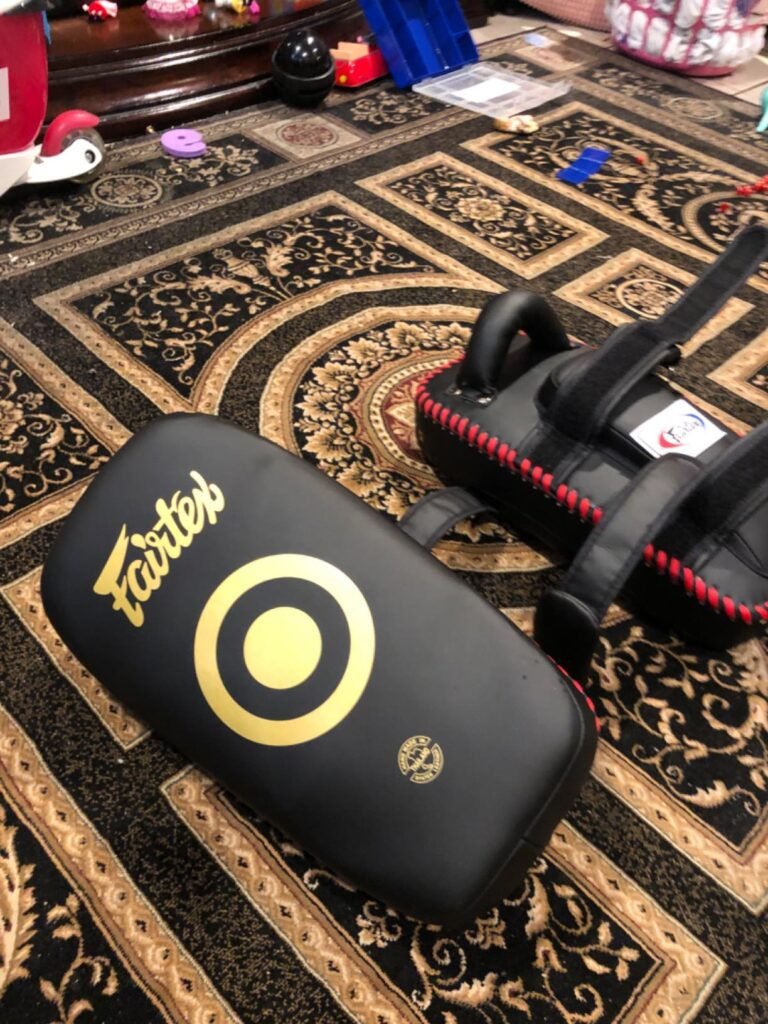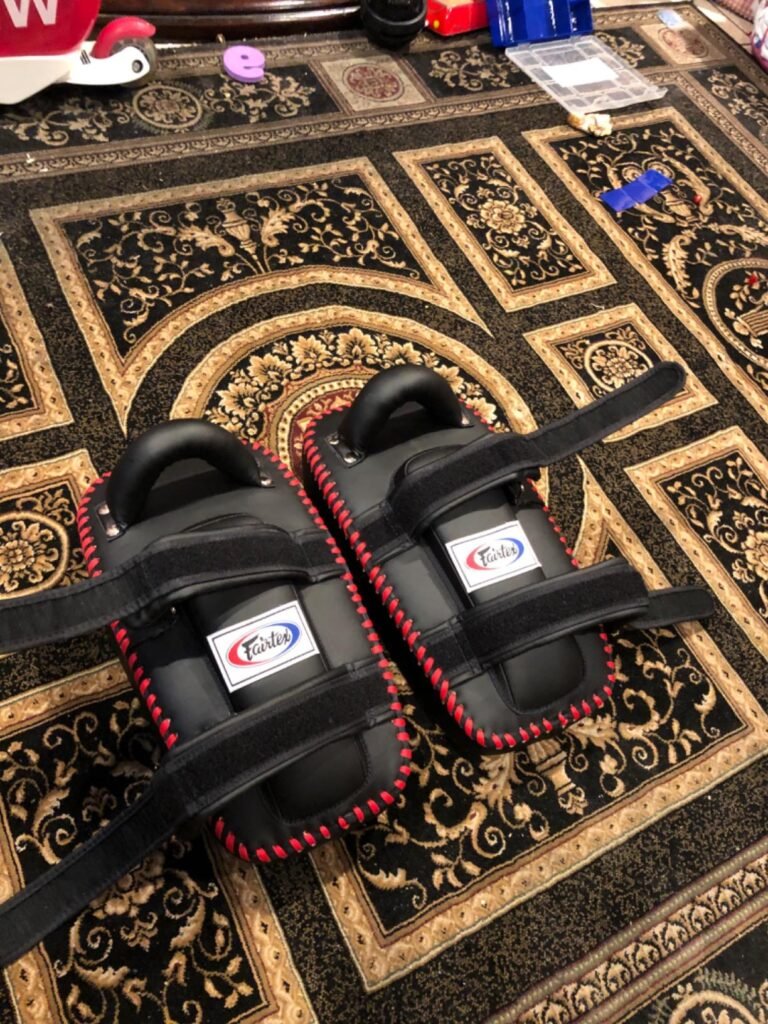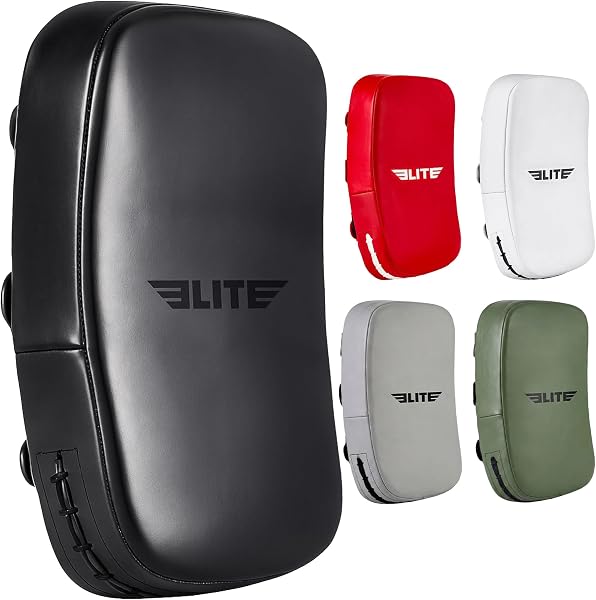
Elite Sports Pre-Curved
9.2Editor scoreQuad-layer Nylex leather
Gel-integrated foam padding
Two hook-and-loop straps
Pre-curved striking shape
Find the right muay thai pads for 2026. We compare 9 standout options by build quality, useful features, owner feedback, value, and everyday trade-offs.
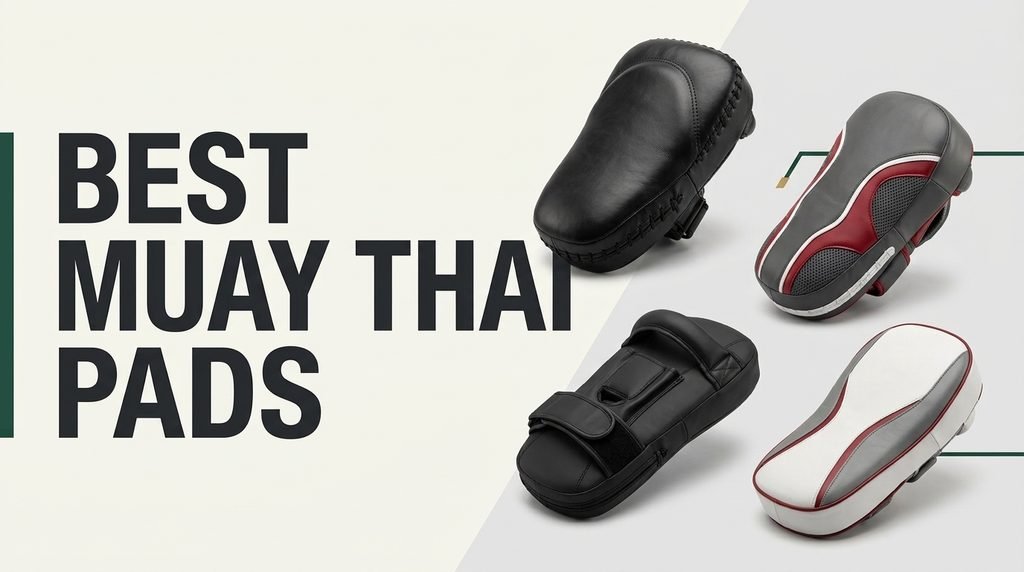
Choosing Muay Thai pads for 2026 comes down to how well the shields balance impact absorption for the holder, curvature for realistic targets, forearm support during long rounds, and durability through thousands of kicks. We compare 10 standout options across padding layers, leather quality, strap systems, weight, target dimensions, and value so you can match a pair to your training partnership and skill level.
The category spans single training pads under $35 to premium Thai-made handmade shields near $200. Padding depth, curvature, and strap design vary in ways that dramatically affect how the pads feel to both the holder catching kicks and the striker landing them. Understanding these differences prevents buying pads that hurt the holder’s arms or fail to withstand serious training volume.
This guide breaks down each pair’s strengths and limitations, from budget dual-packs perfect for beginners to authentic Fairtex shields built for professional coaching. Whether you train at home with a partner, coach fighters, or run classes, the comparisons below clarify which specifications actually matter and which are marketing details you can safely ignore.
We compared 10 Muay Thai pads using the details that shape a holder’s and striker’s real experience: padding layers and foam density, curvature and target shape, forearm and handle grip design, leather versus synthetic construction, strap system security, weight, dimensions, reinforced stitching, brand heritage in the sport, and owner feedback. The notes focus on how each pair performs during real pad rounds, from casual home training to high-volume coaching, so each pick reflects the practical trade-offs that matter to nak muay at every level.


Compare key features, scores, and current prices side by side. A shorter feature list means fewer details were available, not necessarily fewer capabilities.


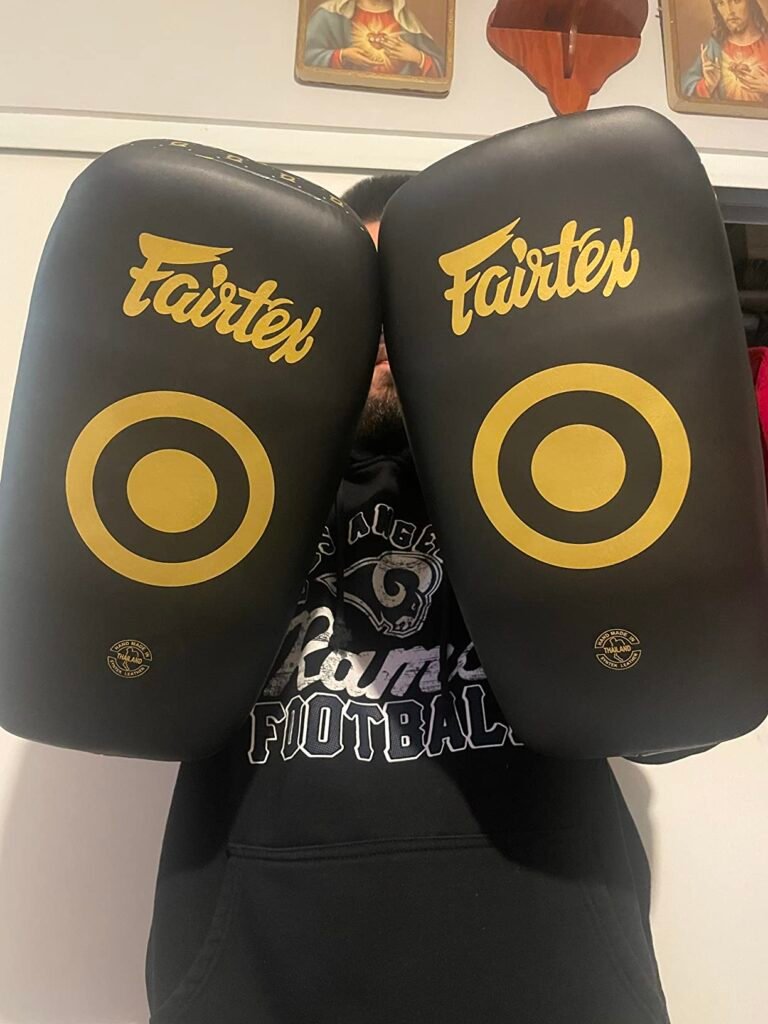
The Fairtex KPLC5 targets serious training partners, coaches, and gyms that need pads capable of handling professional-level daily use. Fairtex is a legendary name in Muay Thai equipment, and the KPLC5 reflects the brand's decades of refinement with construction quality and design details that separate authentic Thai pads from mass-market alternatives.
We may earn a commission when you buy through this link, at no additional cost to you.
The lightweight design is the defining performance feature. Trainers can move pads quickly through combination calls without arm fatigue accumulating over long sessions, which is essential for the fast pad work that develops fighter timing and combinations. Lighter pads let coaches sustain focus and clean pad presentation across the multi-hour training blocks common in serious gyms.
The redesigned curved profile creates a more realistic target for kicks, knees, and punches while making the pads easier to hold at proper angles. Multi-layer impact foam absorbs repeated powerful strikes, and the added forearm support reduces holder fatigue during demanding combinations. Off-edge stitching keeps seams away from the primary striking surface, which improves comfort for kickers because seams under the shin can cause bruising and cuts.
Standard pad stitching runs along the edges of the striking surface, where seams can dig into the shin during hard kicks and cause bruising or cuts over long sessions. Off-edge stitching moves seams away from the primary contact area, letting kickers land clean strikes without stitch pressure points. It is a small detail that noticeably improves the striker’s experience during high-volume pad rounds.
The trade-off is the premium price near $180, which is genuinely excessive for casual home training. For serious gym coaches, professional training partners, and anyone building a lasting personal training kit, these pads deliver top-tier performance from the most respected name in the sport. Casual users should look at mid-range options and reinvest the savings elsewhere.
Casual home training partners who cannot justify the premium price for occasional use.
We may earn a commission when you buy through this link, at no additional cost to you.
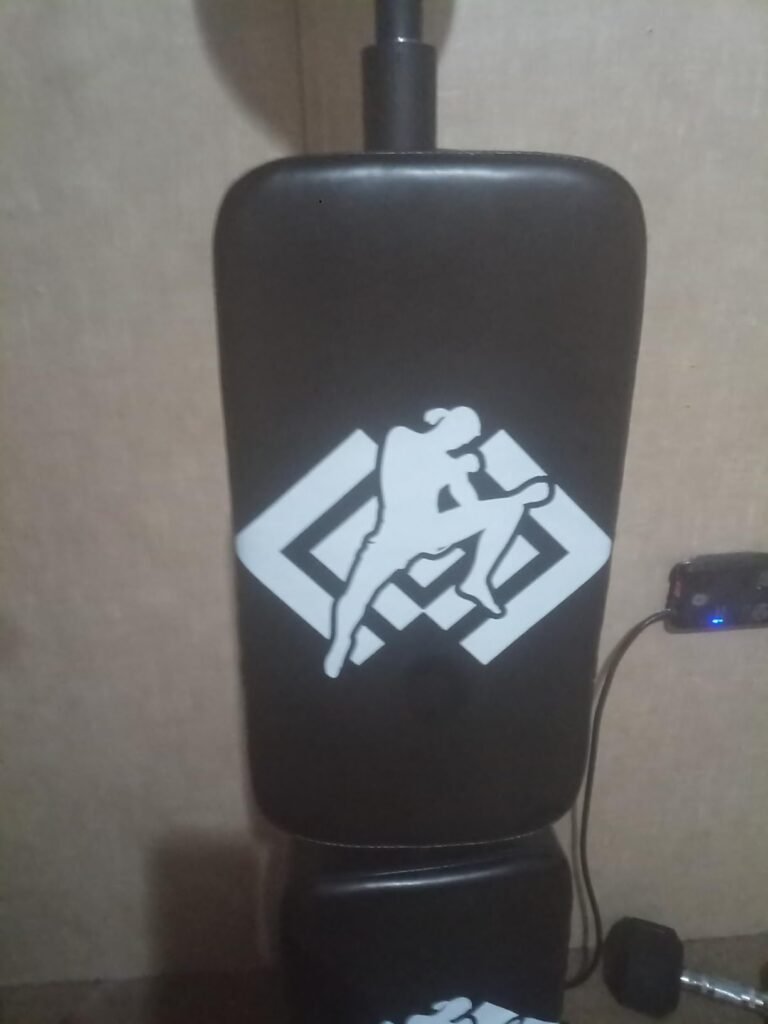
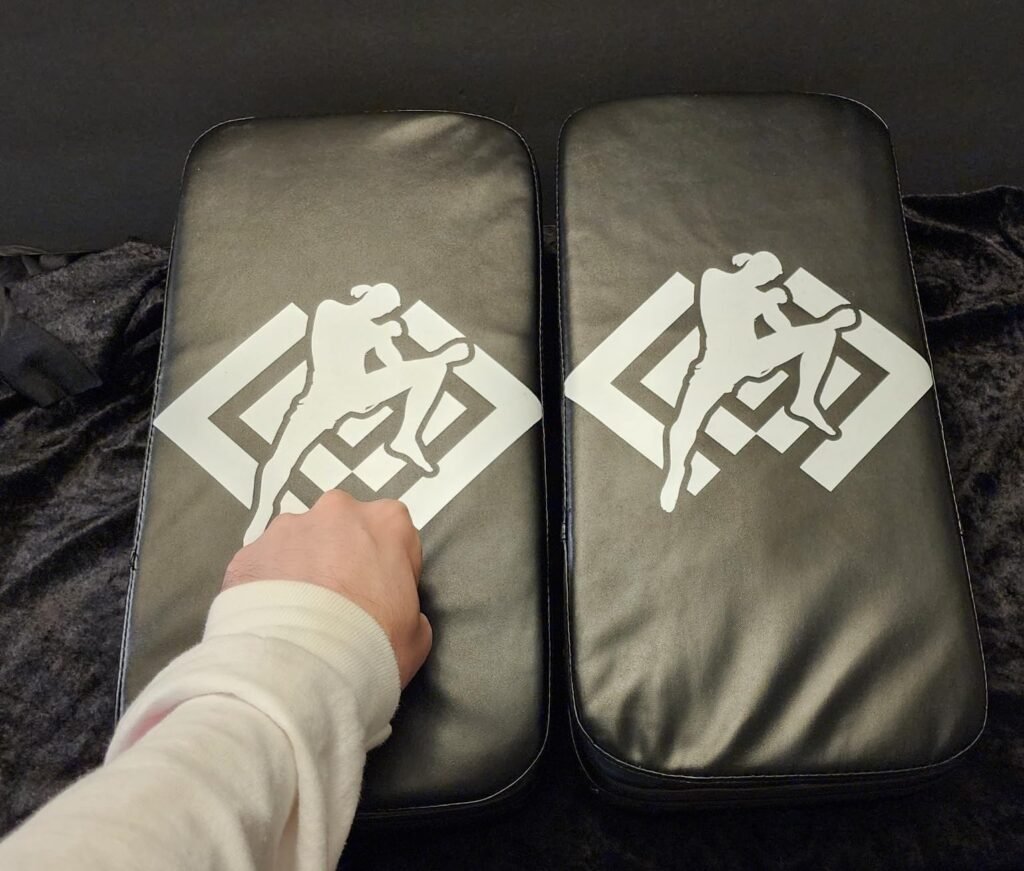
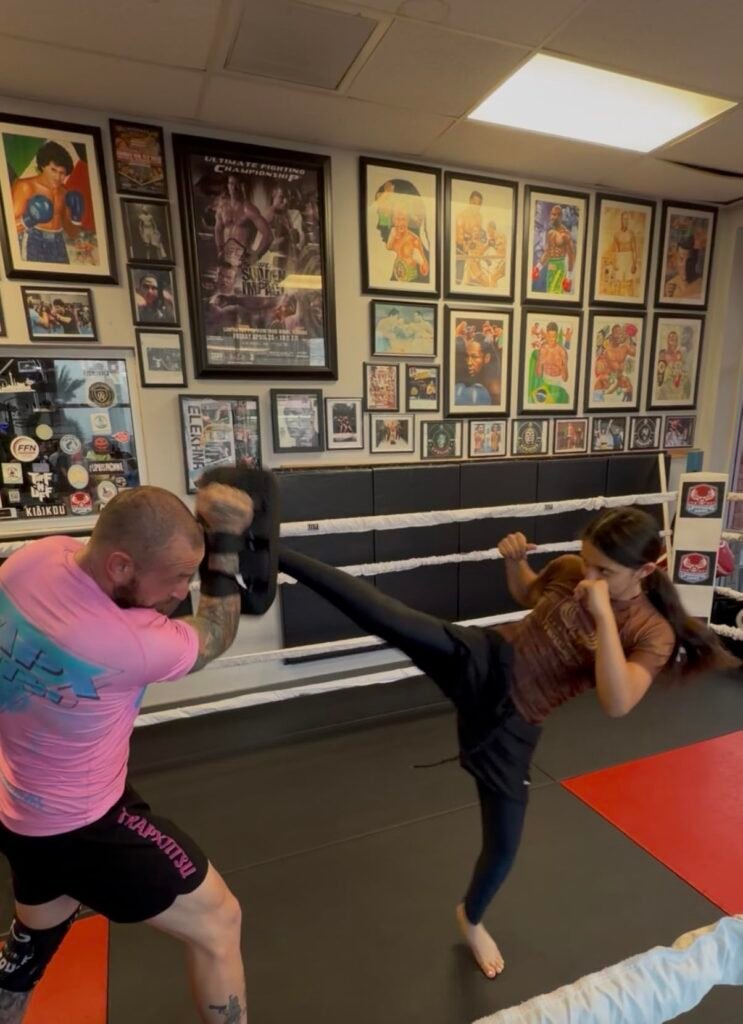
This Elite Sports pad targets home training partners and casual coaches who want a lightweight curved shield that handles kicks, knees, and elbows across multiple martial arts. The pre-curved shape presents a natural target that trains proper technique rather than encouraging the flat awkward angles that straight-fronted pads can create.
We may earn a commission when you buy through this link, at no additional cost to you.
The multi-layered gel-integrated foam padding is the standout performance feature. Gel foam distributes impact more evenly than standard EVA and reduces the peak force reaching the holder’s forearm during heavy kicks. That absorption matters more the longer a session runs because cumulative impact eventually causes even fit holders to flinch or shorten sessions.
The two hook-and-loop straps combined with a handle grip give the holder solid control over pad angle during round kicks, teeps, and knee strikes. Nylex leather keeps weight low so the holder can move pads quickly for combination catching without arm fatigue, and the sublimated graphics resist the peeling and fading that plague printed pads over time.
Single pad purchases work well when you already own one pad and need to replace a damaged partner, or when two people are buying separate pads to hold for different fighters. For standard partner training where both people take turns holding and kicking, you will need two matching pads for proper technique work. Check whether the listing includes one or two pads before ordering.
The trade-off is that this is a single pad rather than a matched pair, so you will need to buy two to hold a proper Muay Thai session. Nylex construction also will not match genuine leather durability for years of daily commercial use. For home training partners and beginners who want a well-designed pad at a reasonable per-unit price, this is a smart pick with practical features.
Buyers who need a complete pair for standard partner training in one purchase.
We may earn a commission when you buy through this link, at no additional cost to you.
This RDX pad targets holders who work with hard hitters and want extra impact absorption without stepping up to premium Thai-made pricing. At 37cm long and 19cm wide, the target area is genuinely generous, giving strikers a forgiving surface for accuracy development while providing the holder with more padding coverage across the forearm.

We may earn a commission when you buy through this link, at no additional cost to you.
The IMT Gel Foam padding combined with the curved shape distributes and absorbs impact evenly across the pad surface, transferring less force back to the holder’s arms. This absorption capability matters most for holders working with heavy kickers or during long coaching sessions where cumulative impact eventually becomes limiting. The Maya Hide leather shell resists the wear that ends the useful life of cheaper synthetic pads.
The reinforced shredded textile handle addresses one of the most common Thai pad complaints: handle failure or slippage during hard training. Combined with the long Quick EZ Hook and Loop straps and padded wrist patch, the closure system keeps the pad firmly positioned even during the most intense sessions. Triple reinforced stitching along the seams plus sturdy rivets extend useful life significantly.
Larger pads provide more forgiving target areas for accuracy development and cover more of the holder’s forearm for impact protection. Smaller compact pads allow faster movement through combinations but demand more striker accuracy. Beginners benefit from larger targets while advanced strikers often prefer compact designs for precision work. Match pad size to the skill level of the fighters you are training.
The trade-off is that the larger size adds some weight compared to compact speed pads, and the pad ships as a single unit rather than a matched pair. For serious training partners and coaches who prioritize impact absorption and durability at a mid-tier price, this RDX model delivers professional-grade features. Speed-focused drilling favors lighter more compact designs.
Coaches who prioritize speed and quick pad movement over impact absorption.
We may earn a commission when you buy through this link, at no additional cost to you.
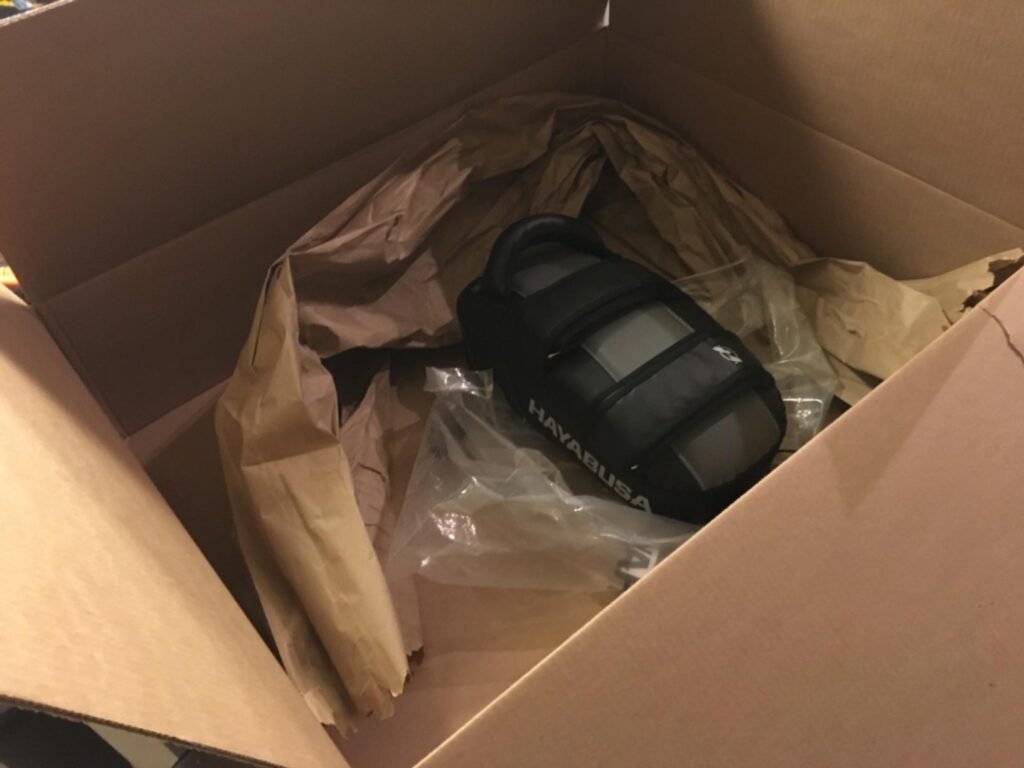
The Hayabusa PTS3 targets Muay Thai coaches and gyms that need pads capable of surviving daily professional use. The 5-layer reinforced spine foam construction is specifically engineered to absorb massive forces without breaking down, addressing the failure mode that ends the life of most cheaper pads: interior foam that collapses after months of hard kicks.

We may earn a commission when you buy through this link, at no additional cost to you.
The high-quality 5-layer foam is what separates coaching-grade pads from consumer-grade alternatives. Multiple foam densities layered together compress at different rates, spreading impact across a longer time window that protects the holder while extending pad life. This construction approach is why Hayabusa can credibly claim these pads will outlast typical alternatives even under hard use.
The non-absorbent shell material addresses one of the biggest practical annoyances of leather pads: they soak up sweat during hard sessions and become progressively heavier and smellier over time. Non-absorbent construction wipes clean easily after training, extending both pad life and gym hygiene. The reinforced handles and dual strap system keep pads firmly positioned through the hardest kicks and punches.
Leather and absorbent synthetic materials soak up sweat during hard sessions, becoming heavier over the course of a workout and developing persistent odors over time. Non-absorbent shell materials repel moisture, keeping pad weight consistent and simplifying cleaning. This construction approach significantly extends pad life for gyms with hot humid conditions or heavy daily use.
The trade-off is the premium price near $170 that is difficult to justify for casual home training. For Muay Thai coaches, serious training partners, and anyone whose pads see daily hard use, the Hayabusa PTS3 delivers coaching-grade construction that pays back through years of professional performance. Casual users should look at mid-range options.
Casual home training partners who hold pads occasionally rather than daily.
We may earn a commission when you buy through this link, at no additional cost to you.
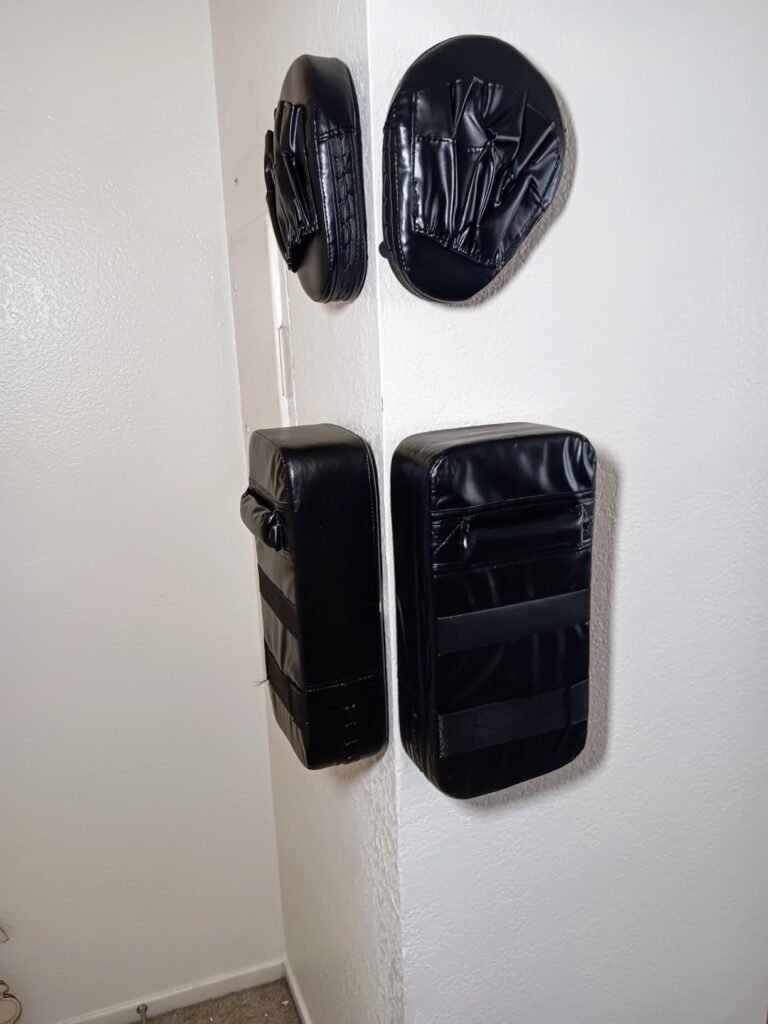
The ZOOFOX 2-pack targets beginners and home training partners who want a complete pair of pads without the significant investment premium options require. Getting two pads for under $30 makes this a genuinely accessible entry point for anyone exploring Muay Thai or kickboxing training without knowing whether they will stick with it long-term.
We may earn a commission when you buy through this link, at no additional cost to you.
The high-density thickened foam material reduces frontal impact reasonably well for its price point, providing the essential protection needed for basic pad rounds. The 15.7 by 8 inch striking area gives beginners a forgiving target for accuracy development, and the firmly built construction handles standard training intensity even if it will not match premium alternatives for daily heavy use.
The adjustable arm band combined with elastic wrist band accommodates different arm sizes, and the reinforced stitched leather handles offer durability that many budget pads skip. The versatile design works across Muay Thai, kickboxing, MMA, boxing, Tae Kwon Do, Krav Maga, and karate training, making these pads a smart flexible choice for anyone exploring multiple disciplines.
Single-pad listings often cost more per pad than complete pairs when you actually need two units for proper training. Buying a pair from the start guarantees matched construction and consistent training experience across both pads. For beginners who need standard partner training, two-pack purchases are almost always the better value than buying single pads twice.
The trade-off is that budget construction means shorter useful life compared to premium leather alternatives, and the 4.2 rating sits below the top-scored options in this guide. For beginners, casual home training, or a backup pair to leave at the gym, these deliver genuine value that punches above the sub-$30 price. Committed training partners should plan to upgrade to more durable options eventually.
Serious training partners who work with hard hitters or hold pads several times per week.
We may earn a commission when you buy through this link, at no additional cost to you.
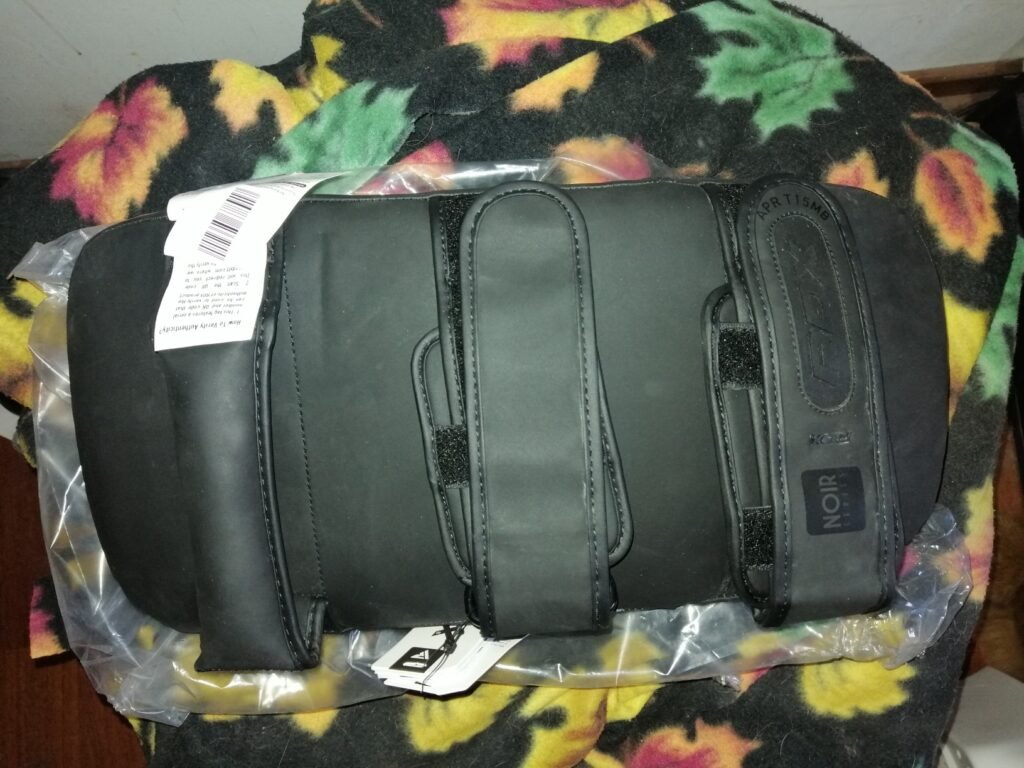
This RDX model represents an older design from the brand's Thai pad lineup, appealing to buyers who trust the RDX name and want a straightforward curved kicking shield. RDX has been in the combat sports market since 1999, giving the brand a long track record that many newer competitors cannot match.
We may earn a commission when you buy through this link, at no additional cost to you.
The convex skin leather shell handles the varied impact of Muay Thai, kickboxing, MMA, karate, taekwondo, and other combat sports training. The curved striking surface presents a natural target that trains proper technique, and the multi-discipline design makes these pads a flexible choice for gyms that train across different martial arts styles.
The straightforward design lacks some of the feature-rich construction found in RDX’s newer Thai pad models, but it delivers the essential functionality that Muay Thai training requires: a curved shield that absorbs kicks and punches at a reasonable price point. For buyers who prioritize brand trust over the latest design features, this model offers proven RDX construction.
Established brands like RDX often have older product lines that sit alongside newer designs with better features. Rating differences between older and newer versions of similar products usually reflect design improvements rather than declining brand quality. Check both current ratings and design details when choosing between generations of pads from the same manufacturer.
The trade-off is that the 4.0 owner rating is the lowest in this guide, suggesting some quality variability or fit issues that potential buyers should research before ordering. For buyers committed to the RDX brand who prefer a simpler design, this pad works. Most buyers will get better value from the newer RDX Curved Muay Thai Pad model or other alternatives in this comparison.
Buyers who prioritize the highest owner ratings over specific brand loyalty.
We may earn a commission when you buy through this link, at no additional cost to you.
The Fairtex Curved Thai Pads represent the pinnacle of authentic Muay Thai equipment, built with the premium cowhide leather and handmade Thai construction that professional coaches rely on for daily use. The 4.8 owner rating ties for the highest in this guide, reflecting the consistent excellence that has made Fairtex a legendary name in Thai combat sports gear.

We may earn a commission when you buy through this link, at no additional cost to you.
The curved shape is specifically designed for maximum endurance and impact absorption, allowing hard hitting and punching with maximum trainer protection. This is what serious pad holders need when working with heavy kickers: shields that can absorb sustained force across long sessions without transmitting damaging impact to the holder’s forearms or degrading in performance over time.
Premium cowhide leather delivers the durability and premium feel that separate professional-grade pads from consumer alternatives. Real leather molds to use over time, developing a personalized feel that synthetic materials cannot match. The two support straps provide trainer comfort during long sessions, and the design keeps dust from being produced when pads are stored on the floor.
Thailand is the home of Muay Thai, and Thai manufacturers have refined pad construction over generations. Handmade construction using traditional patterns produces pads with more consistent quality, better fit, and superior durability compared to mass-produced alternatives. The premium price reflects both the authentic materials and the craftsmanship built into each pair.
The trade-off is the premium price at $190, which is genuinely a significant investment. Genuine leather also requires a brief break-in period as the material softens. For Muay Thai coaches, professional training partners, and anyone building a lasting personal training kit, these Fairtex pads justify the investment through years of professional-grade performance. Casual users should consider mid-range alternatives.
Buyers who cannot justify a $190 investment for occasional casual training.
We may earn a commission when you buy through this link, at no additional cost to you.
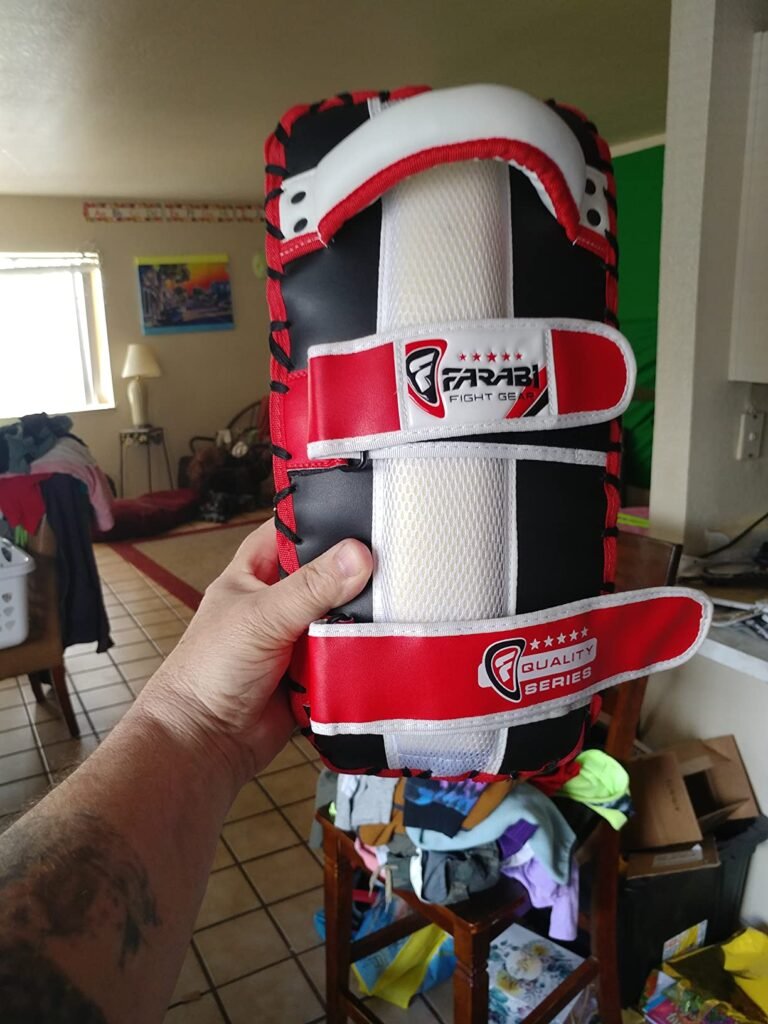
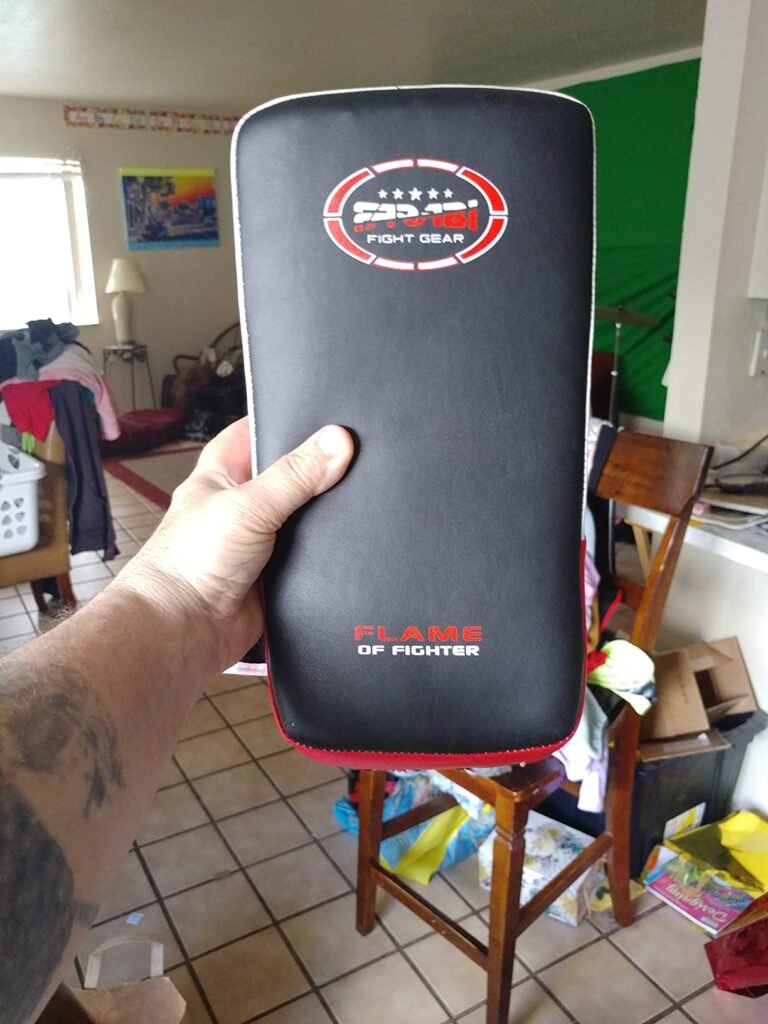
The Farabi Thai pad targets holders who want substantial padding at a price below premium Thai-made options. Six layers of padding is unusually thick construction for this price tier and delivers meaningful impact absorption that many similarly priced pads cannot match. The 3.5-inch overall thickness provides genuine buffer for hard kicks, knees, and elbow strikes.
We may earn a commission when you buy through this link, at no additional cost to you.
The 14 by 7.5 inch pad size gives strikers a solid target for combination work while remaining compact enough that holders can move it quickly through pad calls. The 6-layer padding construction is designed to prevent injury during training and resist the strongest blows, which matters for holders working with kickers who train hard.
The premium quality faux leather shell handles regular training intensity, and the combination of one durable handle grip with two hook-and-loop straps provides better power absorption than single-attachment designs. This closure approach allows more control and stability, letting holders support the pad from different angles during round kicks and teep exchanges.
More padding layers generally provide better impact absorption than fewer layers of the same total thickness. Multiple layers can use different foam densities that compress at different rates, spreading impact across a longer time window. Six-layer construction represents solid mid-tier performance that approaches premium pad protection at a fraction of the price.
The trade-off is that the pad ships as a single unit rather than a matched pair, so you will need to buy two for standard partner training. Faux leather also will not match genuine leather durability for years of daily heavy use. For training partners who want thick multi-layer padding at a mid-tier price, this Farabi model delivers solid value. Coaches with high daily volume should consider premium leather alternatives.
Buyers who need a complete pair delivered in one purchase for standard partner training.
We may earn a commission when you buy through this link, at no additional cost to you.
These RDX focus mitts round out a complete Muay Thai training setup by handling the punching precision work that pairs with full-size Thai pads for kick catching. The 4.7 owner rating reflects consistent user satisfaction, and the Maya Hide leather construction delivers the durability needed for regular coaching use.

We may earn a commission when you buy through this link, at no additional cost to you.
The Palm Dome design in the hand compartment gives the holder passive grip stability that reduces the constant squeezing required by flat-palm mitts. Combined with the EVA-Lution and Polygonal Fusion foam padding, these mitts extend holder comfort through long precision drilling sessions. The anatomically curved design encourages proper punching technique by presenting natural targets rather than flat awkward surfaces.
Sweat management is a real strength here. Strategically placed ventilation holes combined with sweat-wicking material keep the hand compartments dry during long sessions, preventing the slippage that develops as moisture accumulates in enclosed pad interiors. The Quick-EZ Hook-and-Loop closure allows quick between-round adjustments and secure lockdown during hard combinations.
Serious Muay Thai training typically requires both Thai pads for kick catching and focus mitts for punch precision. A complete personal kit often includes one pair of Thai pads plus one pair of focus mitts, giving you the flexibility to train all Muay Thai techniques. Budget accordingly when planning your equipment purchases.
The trade-off is that these are focus mitts rather than full Thai pads, so they cannot substitute for kicking shields in a complete Muay Thai training setup. For coaches and serious training partners who want dedicated hand-strike training pads to pair with their kicking gear, these RDX mitts deliver strong value at an accessible price. Buyers who need one pad type for all training should choose full Thai pads for versatility.
Buyers who only need one pad type and want it to handle both kicks and punches.
We may earn a commission when you buy through this link, at no additional cost to you.
Picking the right Muay Thai pads means matching padding depth, curvature, materials, and strap design to your training partnership and how often you hold pads. The factors below cover the decisions that most influence real training experience and long-term satisfaction with your purchase.
Padding depth is the most important safety feature for the pad holder. Thin single-layer foam transmits more impact to the holder’s forearm, leading to bruising and fatigue that shortens sessions and eventually causes holders to flinch away from hard kicks. Multi-layer construction with different foam densities spreads impact across a longer time window and extends holder comfort through demanding rounds.
Look for pads that specify padding thickness of at least 3 inches for reliable impact absorption during Muay Thai training. Premium designs use five or six layers of different foam types that work together to disperse force across the pad surface rather than concentrating it at the strike point. Gel-integrated foam offers particularly good absorption at premium price points.
For casual home training with light to moderate kickers, three inches of multi-layer foam is adequate. For serious training partners or coaches working with heavy hitters, prioritize five-layer construction with reinforced spine foam or gel integration.
Pad curvature directly affects both technique training and holder wrist safety. Curved pads follow the natural arc of a round kick and provide a realistic target that trains proper form, while flat pads encourage awkward strike angles that do not translate to actual fighting. Modern Muay Thai pads almost universally use curved profiles for this reason.
Curvature also matters for holder protection. Curved shapes distribute impact more evenly across the pad surface and reduce the wrist torque that flat pads transmit during off-center hits. Over long sessions, this difference significantly affects how much holder fatigue accumulates and whether the coach can continue presenting clean targets through the last rounds.
Choose curved pads for authentic Muay Thai training that builds proper technique. Flat pads should generally be avoided for anything beyond basic beginner drills.
Shell material affects both durability and how the pad feels when struck. Genuine cowhide leather is the premium standard, molding to use over time and lasting through years of professional coaching. Microfiber and Maya Hide leathers are durable synthetic-leather hybrids that approach genuine leather performance at lower prices. Standard synthetic and faux leather cost less but show wear faster.
Non-absorbent shell materials repel sweat, which extends pad life and simplifies cleaning compared to absorbent alternatives that soak up moisture during hard sessions. Reinforced stitching and rivets at high-stress points prevent the seam failures that end many pads’ useful lives. Look for triple-stitched seams and reinforced handles as indicators of coaching-grade construction.
For daily coaching or heavy training partner use, invest in genuine leather or Maya Hide construction. For casual home use, quality synthetic shells offer adequate performance at lower cost.
Handle and strap design determines how securely the pad stays positioned during hard kicks and how much active grip effort the holder must expend. Traditional Thai pads use a combination of a fixed handle grip and hook-and-loop straps that wrap around the forearm. This dual-attachment approach distributes pad control across both the hand and the forearm.
Reinforced textile handles resist the tearing that develops on cheaper woven straps under repeated hard use. Padded wrist patches on the closure straps improve comfort during long sessions, and dual strap systems provide more security than single-attachment designs. Quick-release Velcro closures speed setup and adjustment between rounds.
For casual use, standard single-strap designs are adequate. For heavy training or coaching, prioritize reinforced handles and dual strap systems with padded wrist protection.
Pad weight affects how quickly the holder can move through combination calls and how long they can sustain a session. Lightweight pads let the holder present targets rapidly through fast combinations without arm fatigue, which is essential for technical speed drilling. Heavier pads provide more impact absorption but slow pad movement and tire out holder arms sooner.
The right weight depends on training focus. Speed and precision drilling benefit from lighter more compact designs like the Fairtex KPLC5. Power development and heavy hitter training benefit from heavier construction with more padding. Coaches who mix training styles often prefer mid-weight pads that handle both roles adequately.
For pure speed and technical drilling, prioritize lightweight designs. For power development or coaching heavy hitters, choose heavier padded construction.
Pad size affects both training quality and holder protection. Larger pads provide more forgiving target areas for accuracy development and cover more of the holder’s forearm for impact protection. Smaller compact pads allow faster movement through combinations but demand more striker accuracy and provide less forearm coverage.
Standard Thai pads range from about 14 to 15 inches long and 7 to 8 inches wide. Larger versions extend up to 37cm long, providing generous target areas for beginners while still remaining manageable for experienced holders. Match pad size to the skill level of the fighters you train and your own comfort level with catching different types of strikes.
Beginners benefit from larger targets while advanced strikers often prefer compact designs for precision work. Coaches who train fighters at multiple levels may benefit from owning both sizes.
Many Muay Thai pad listings sell single units rather than matched pairs, which can be confusing for buyers expecting a complete set. Standard partner training requires two matching pads so the holder can catch strikes on both arms, so single-pad purchases typically require buying two units of the same product.
Two-pack listings guarantee matched construction and consistent training experience across both pads. Single-pad options work well when you already own a compatible pad and need replacement, or when two people share purchase costs for their combined training kit. Always confirm whether a listing includes one or two pads before ordering.
For beginners needing standard partner training, always choose two-pack listings or purchase two identical single units. Never assume a single-pad price includes a matched pair.
Prices in this category range from about $27 for two-pack budget pads to nearly $200 for premium Thai-made handmade pairs. Spending more generally buys better materials, more sophisticated padding construction, better closure systems, and longer useful life. However, mid-range options often deliver most of the benefit at significantly lower cost, especially for casual home training.
Long-term value depends heavily on use frequency and intensity. A $170 pair used by a coach several times per week for years costs less per session than a $30 pair replaced every six months. Match spending to your realistic use pattern, and remember that premium pads justify their price through years of professional use rather than fundamentally different performance in casual training.
Set a budget that reflects how often you actually hold pads, then within that budget prioritize padding quality, curvature, and shell material over cosmetic features.
Before your first pad round, adjust the forearm strap and wrist closure to a snug fit that keeps the pad stable without cutting off circulation. Practice basic positioning drills before catching hard combinations, focusing on angling the pad to meet the strike at 90 degrees so impact travels straight into the padding rather than torquing your forearm. Beginner holders should start with light kicks and slow combinations while developing the muscle memory for proper pad presentation.
Post-session care extends pad life significantly. Wipe down the exterior after each use with a clean cloth or antibacterial wipe, and open the closure system to allow interior drying between sessions. Never seal damp pads in a gym bag because trapped moisture accelerates material breakdown and creates persistent odor problems that eventually make pads unpleasant to use. Non-absorbent shell materials simplify this process compared to absorbent leather.
Long-term storage matters as much as daily care. Keep pads in a cool, dry space away from direct sunlight, which degrades leather and synthetic materials over time. Check the padding periodically for permanent compression, and replace pads when foam no longer springs back to shape or when the shell shows structural damage at high-stress points. Quality pads with proper care can last several years of regular use, while heavily used commercial pads may need replacement annually.
Thai pads are larger forearm-mounted shields built to absorb both punches and kicks, favoring power development and kick training. Focus mitts are compact hand-mounted pads designed primarily for punch training, offering smaller targets that improve accuracy and speed. Serious Muay Thai training typically uses both types for different training purposes.
Standard Muay Thai partner training requires two matching pads so the holder can catch strikes on both arms. Some listings sell single pads while others include complete pairs, so always confirm the quantity before ordering. For beginners, two-pack listings typically offer better value than buying two single pads separately.
Look for pads with at least 3 inches of total padding thickness for reliable impact absorption during Muay Thai training. Premium pads use 5 or 6 layers of different foam types that work together to disperse force. Thinner pads transmit more impact to the holder and become uncomfortable quickly during hard training.
Yes, curved pads are almost universally preferred for Muay Thai training. Curved shapes follow the natural arc of round kicks, provide realistic targets that train proper technique, and reduce wrist torque on the holder during off-center strikes. Flat pads encourage awkward strike angles and offer less protection for both parties.
Choose pads with thick multi-layer foam construction, angle the pad to meet strikes at 90 degrees so impact travels straight into the padding, and use both the handle and forearm strap to distribute pressure across the whole arm. Take breaks between hard rounds and avoid holding pads for hard hitters until your forearms have adapted to the impact.
Replace pads when the foam no longer springs back to shape, the shell shows visible cracking or peeling, or the strap system stops holding fit reliably. Quality pads with proper care can last two to three years of regular use, while heavily used commercial pads may need replacement annually. Cheaper synthetic pads typically last six to twelve months of active use.
No, focus mitts are designed for hand strikes and will not reliably absorb kicks. Using focus mitts for kicks can injure the holder's wrist and quickly damages the pads. For kick training, use dedicated Thai pads or kick shields that provide the larger surface area and heavier padding needed for leg strikes.
Wipe down the exterior with a clean cloth or antibacterial wipe after each session, and let pads air-dry completely with the closure system opened. Avoid soaking leather pads in water, which damages the shell. For deeper cleaning, use a mild soap solution on synthetic shells and leather conditioner on genuine leather pads. Never machine wash Thai pads.
Fairtex and Hayabusa are widely considered the top brands for Muay Thai pads, with Fairtex offering authentic Thai-made construction and Hayabusa providing advanced multi-layer foam engineering. RDX offers strong mid-range options with Maya Hide leather construction. Premium brands cost more but justify their price through years of professional-grade performance.
Premium pads justify their price through better materials, refined construction, and longer useful life for serious coaches and daily training partners. For casual home training, quality mid-range pads deliver similar training benefits at significantly lower cost. Match your spending to your actual training frequency and intensity rather than aspirational goals or brand appeal alone.
The Fairtex KPLC5 Lightweight Thai Pads earn our top overall recommendation because they deliver the highest owner rating in this guide alongside authentic handmade Thai construction, multi-layer impact foam, and off-edge stitching that improves comfort for both holder and kicker. For serious training partners and coaches who want top-tier performance from the most respected name in Muay Thai equipment, they set the standard the entire category is measured against.
Coaches and gyms needing pads for professional daily use should also consider the Hayabusa PTS3 for its 5-layer reinforced spine foam and non-absorbent shell built to outlast typical alternatives. Budget-conscious beginners will find strong value in the ZOOFOX 2-pack for under $30, while training partners who want thick multi-layer construction at a mid-tier price should look at the Farabi curved kick pad with its 6-layer padding.
Start by identifying your training partnership and how often you actually hold pads, then match those needs to padding depth, shell material, and strap design. Pads that fit your use pattern and get used consistently for years deliver far more value than premium options bought for aspirational reasons. Use the comparisons above to find the model that supports the way you actually train.