Uniden UM385BK Fixed
9.2Editor score25-watt fixed mount
DSC distress button
SAME weather alert
IPX4 waterproof rating
Find the right marine electronics for 2026. We compare 10 standout options by build quality, useful features, owner feedback, value, and everyday trade-offs.
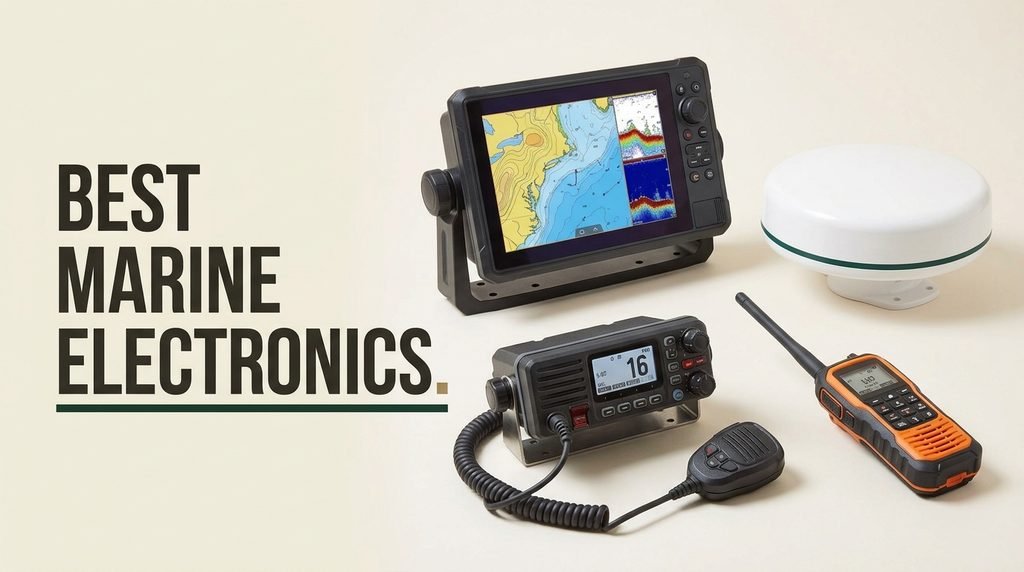
Outfitting a boat with the right marine electronics for 2026 means balancing navigation, communication, fish finding, and entertainment capabilities against your vessel size, typical waters, and budget. We compare 10 standout products by the factors that matter most on the water: display quality, waterproofing ratings, chart coverage, sonar capability, VHF range, DSC safety features, Bluetooth connectivity, power output, and whether each unit genuinely suits inshore, offshore, or coastal use.
Marine electronics span several distinct categories that serve different needs. Chartplotters and fish finders from Garmin and Simrad anchor the navigation and sonar side, while VHF radios from Uniden, Standard Horizon, and Icom handle critical safety communications. Boat stereos add entertainment, and reference books help owners install and maintain everything correctly over the long term.
Whether you need a full-featured 9-inch chartplotter for serious offshore fishing, a floating handheld VHF for safety redundancy, or an affordable fish finder to find structure in freshwater, the picks below cover the most practical options available. Read on to find the marine electronics that match your boat, your typical waters, and the way you actually use your time afloat.
We compared 10 marine electronics products using the details that actually help a boater decide: display size and sunlight readability, chart coverage, sonar capability, VHF transmit power and DSC features, waterproofing ratings, build durability, connectivity options, and value against competing units in each subcategory. The notes focus on practical trade-offs so each pick connects to how boaters actually use these systems, from navigation and fish finding to emergency communication and onboard entertainment in real-world coastal and offshore conditions.


Compare key features, scores, and current prices side by side. A shorter feature list means fewer details were available, not necessarily fewer capabilities.




The Garmin ECHOMAP UHD2 94sv targets serious inshore and coastal anglers who want a comprehensive navigation and fish-finding system without stepping up to the pricing of full glass bridge displays. The 9-inch sunlight-readable touchscreen provides enough screen real estate to run split-screen displays showing chart, sonar, and sidescan simultaneously, which transforms how efficiently you can work a fishing spot or navigate complex waters.
We may earn a commission when you buy through this link, at no additional cost to you.
The included GT56-TM transducer handles traditional, ClearVu, and SideVu scanning sonars from a single transducer, which saves significant money compared to buying the chartplotter and transducer separately. For fish finding, these three sonar views work together to provide a complete picture of what is below and beside the boat. Preloaded Navionics+ coastal charts with integrated Navionics data cover US coastal waters out of the box.
Built-in Wi-Fi enables wireless sharing of sonar data, waypoints, and routes with other ECHOMAP UHD2 chartplotters, which is useful for boats with multiple display stations or when fishing with a buddy on another boat. The system also wirelessly connects to Garmin Force trolling motors, letting you create and follow routes, navigate to waypoints, control speed, and check battery life directly from the chartplotter.
Buying a chartplotter and transducer separately requires research to confirm compatibility, additional time to coordinate installation, and often extra cost compared to bundled packages. The ECHOMAP UHD2 94sv with the included GT56-TM transducer eliminates compatibility concerns and simplifies the buying decision. For first-time chartplotter buyers or anyone upgrading an older system, this bundled approach significantly reduces the complexity of outfitting the boat for serious fishing.
This chartplotter is the right choice for coastal anglers, serious inshore fishermen, and anyone building a comprehensive marine electronics system around the Garmin ecosystem. The main tradeoffs are the premium price and the significant dash space needed for the 9-inch display. For buyers with smaller boats or tighter budgets, Garmin offers smaller ECHOMAP variants with similar features. For dedicated anglers who use electronics as a primary fishing tool, this unit delivers the comprehensive capability that justifies the investment.
Small boat owners with limited dash space or budget-conscious buyers who need basic chartplotter functionality rather than comprehensive sonar capability.
We may earn a commission when you buy through this link, at no additional cost to you.
The Uniden UM385BK is a fixed-mount marine VHF radio designed as the primary communication system for coastal and offshore boats. The full 25-watt transmit power provides maximum legal VHF range, which can mean the difference between reaching distant marinas, bridges, or rescue services during emergencies. For any boat that ventures beyond protected waters, a fixed VHF with full power is a fundamental safety requirement.
We may earn a commission when you buy through this link, at no additional cost to you.
DSC capability with a dedicated distress button lets you call for help with a single press, automatically transmitting your position and vessel identity to all Coast Guard stations and nearby boats within range. The Full Class D DSC implementation provides position send and request functionality, enabling direct communication with specific vessels without broadcasting to all channels. This capability is now standard on quality marine VHFs but remains critical for safety.
Triple watch monitoring tracks three channels simultaneously, which lets you keep ears on channels 9 and 16 for safety plus one working channel. SAME weather alert reception warns you of severe conditions in your specific area through NOAA weather broadcasts, which can be lifesaving when offshore. The rugged handheld microphone with transmit button lets you communicate from the helm without having to reach for the mounted radio.
Fixed-mount VHF radios transmit at 25 watts compared to the typical 6 watts of handheld units, which translates to significantly greater range in both calm and challenging conditions. Fixed radios also connect to external antennas mounted high on the vessel, further extending effective range through improved line-of-sight to distant stations. For primary communication, fixed radios are the clear choice. Handheld VHFs serve best as backup units or for dinghy use rather than as primary vessel communication.
This radio is the right choice for recreational boat owners who need a reliable primary VHF system with modern safety features. The IPX4 rating protects against splashes and rain but is not rated for submersion, so the radio should be mounted in a protected location. For primary helm installation on center consoles, sport boats, and small cruisers, this Uniden delivers the critical communication capability that every boat should have, backed by comprehensive channel coverage and strong safety features.
Dinghy sailors or boats without permanent helm installation space who need portable handheld VHF solutions.
We may earn a commission when you buy through this link, at no additional cost to you.
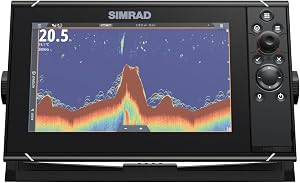
The Simrad GO9 XSE bundle delivers a complete marine electronics system in a single package, combining a 9-inch chartplotter and fish finder with HALO20 solid-state radar and HDI transducer. For boaters who want to outfit their vessel comprehensively from one purchase, this integrated approach eliminates compatibility concerns and typically saves money compared to buying components separately.
We may earn a commission when you buy through this link, at no additional cost to you.
The GO9 XSE serves as a true multifunction display, adding GPS navigation, sonar support, radar capability, and system integration to boats ranging from sport boats to center consoles and coastal cruisers. The included 83/200 kHz HDI transducer supports clear CHIRP sonar and DownScan Imaging that help identify bottom structure and fish targets. Preloaded C-MAP Discover vector charts include custom depth shading, tides and currents, and high-resolution bathymetry covering US and Canada.
The bundled HALO20 solid-state radar provides reliable target detection with pulse compression technology for enhanced situational awareness in all weather conditions. Radar is particularly valuable for coastal navigation at night, in fog, and when transiting high-traffic areas where other vessels may not be visible. The system supports wireless mirroring to compatible smartphones and tablets, and NMEA 2000 connectivity enables broader integration with engines, autopilots, and other onboard systems.
Buying marine electronics as a bundle rather than individual components eliminates the research required to ensure compatibility between brands and generations of equipment. All components are designed to work together, software integration is tested, and installation can proceed as a single project rather than coordinating multiple purchases over time. For buyers outfitting a new boat or doing a complete system upgrade, bundles like the Simrad GO9 XSE often provide better value than assembling comparable capability from separate purchases.
This bundle is the right choice for serious coastal and offshore boaters who want radar capability alongside chartplotting and sonar, outfitting a new boat or completely upgrading an older system. The main tradeoff is the significant investment and the complexity of installing a complete integrated system including transducer, radar scanner, and chartplotter. For boats where comprehensive navigation and safety matter more than piecemeal upgrades, however, this Simrad bundle delivers everything needed to equip a serious vessel.
Budget-conscious buyers who do not need radar capability or those who want to add components gradually over time.
We may earn a commission when you buy through this link, at no additional cost to you.
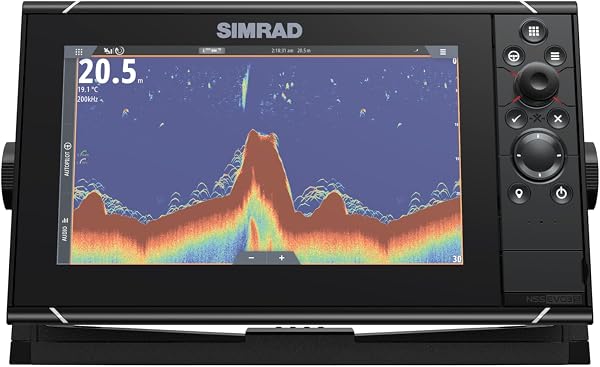
The Simrad NSS Evo3S 12 sits in the premium multifunction display category, built around the new iMX 8 high-performance processor that delivers faster response times and seamless screen transitions compared to older MFD generations. For serious offshore anglers and coastal cruisers who demand responsive performance from their electronics, this processing power transforms the daily user experience with the system.
We may earn a commission when you buy through this link, at no additional cost to you.
The 12-inch SolarMax IPS display provides exceptional visibility in direct sunlight and from wide viewing angles, which matters significantly at helm stations where you may view the screen from various positions. Preloaded C-MAP US Enhanced inland and coastal charts give you comprehensive navigation coverage out of the box, with built-in GPS providing the position fix. The display size is substantial enough to run complex split-screen layouts without feeling cramped.
Beyond basic charting and sonar, the Evo3S supports extensive system expansion including Active Imaging sonar, StructureScan 3D, HALO radar, engine monitoring, fuel efficiency tracking, and sound system control. This makes it the hub of a complete vessel-wide integration rather than just a navigation display. The dual control approach combining all-weather touchscreen with multi-touch gestures and a full-featured keypad with rotary dial lets you choose the best input method for each situation.
Marine environments present real challenges to touchscreen-only displays. Wet screens from spray or rain can register false touches, and heavy gloves prevent touch recognition entirely. Combining touchscreen operation with a full-featured keypad and rotary dial means you always have a reliable input method regardless of conditions. For offshore use where conditions can deteriorate quickly, this redundancy ensures that critical navigation functions remain accessible even when touchscreen operation becomes problematic.
This MFD is the right choice for serious offshore anglers, coastal cruisers, and anyone building a comprehensive electronics system around the Simrad ecosystem. The main tradeoffs are the premium pricing and the fact that transducers and radar components are sold separately, requiring additional investment to realize the full system capability. For buyers who treat marine electronics as a long-term investment and want the latest processing power, the Evo3S delivers reference-class performance that justifies its position.
Casual day boaters or those on tight budgets who do not need the premium processing power and system expansion capability.
We may earn a commission when you buy through this link, at no additional cost to you.
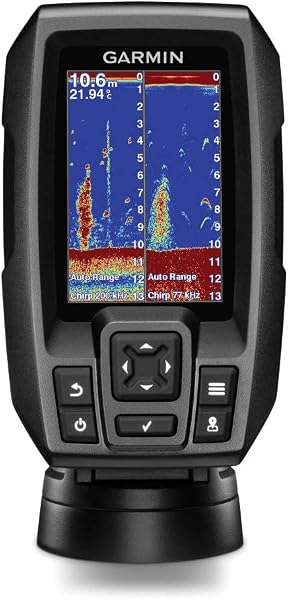
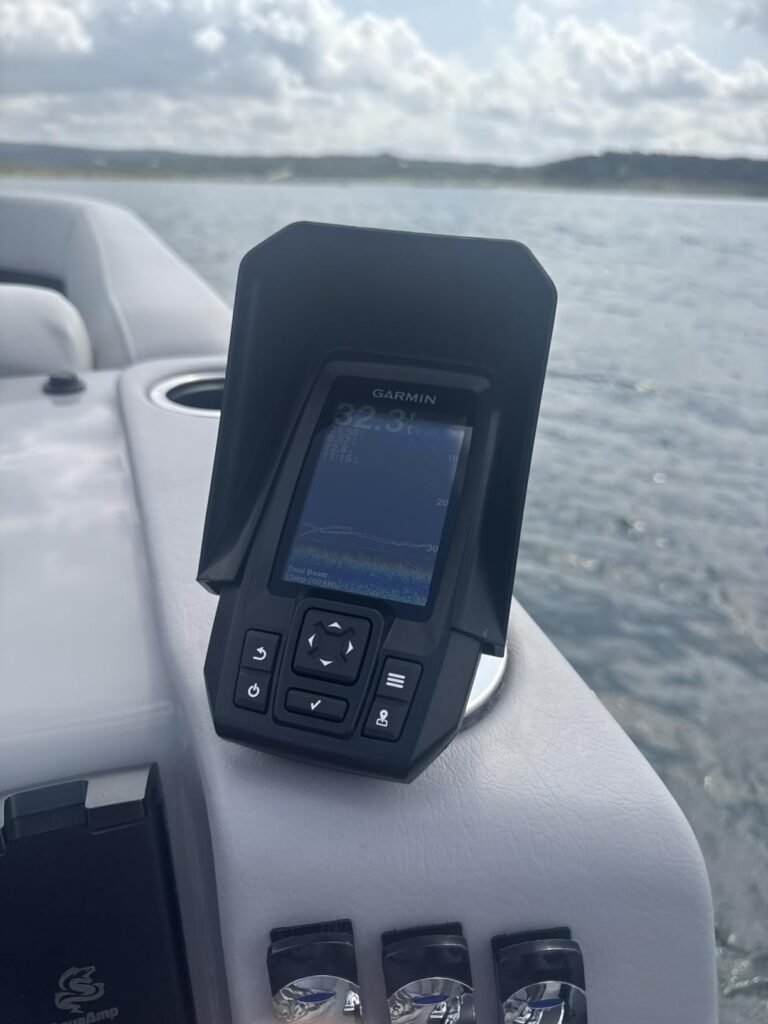
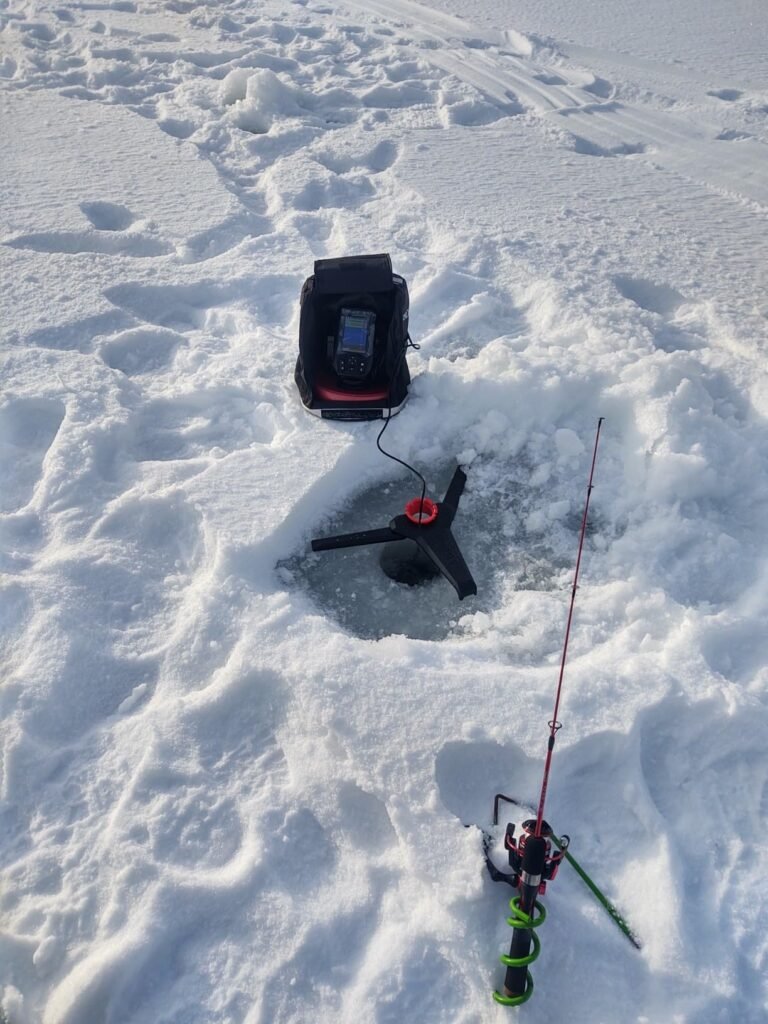
The Garmin Striker 4 is the most affordable way to add quality CHIRP sonar and GPS waypoint capability to a small boat without compromising on Garmin build quality. The 3.5-inch color display is compact enough to fit on nearly any helm, and the straightforward keyed interface with dedicated buttons works reliably with wet hands or in choppy conditions where touchscreens would be problematic.
We may earn a commission when you buy through this link, at no additional cost to you.
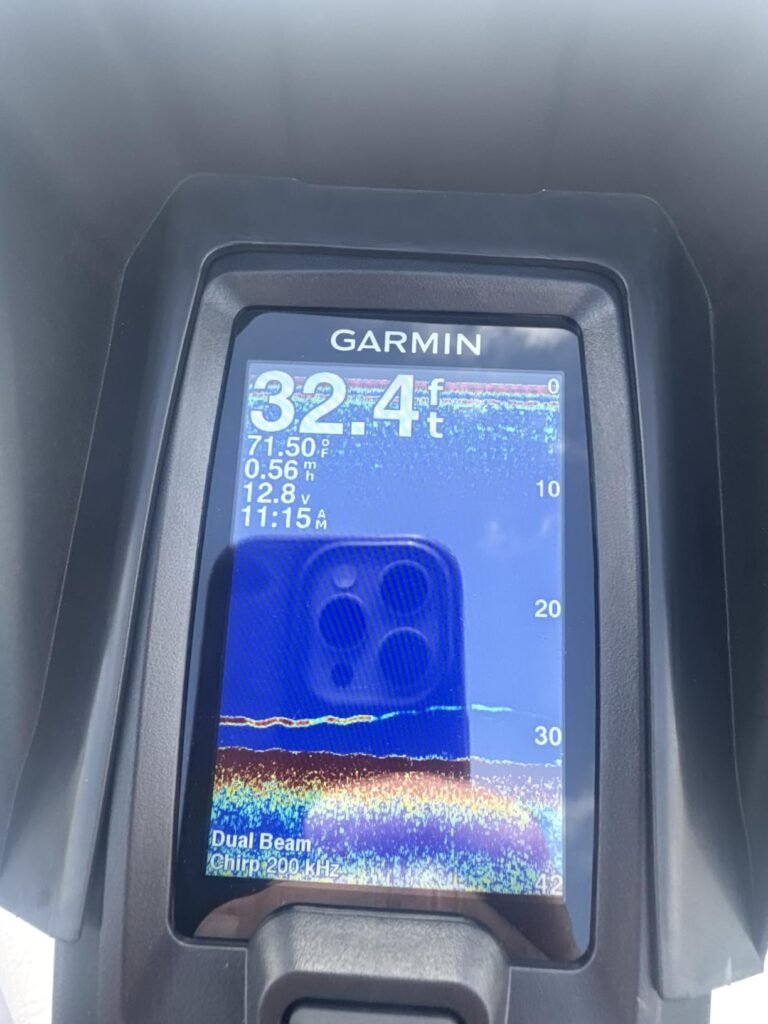
CHIRP sonar represents a significant upgrade over traditional single-frequency fish finders. Rather than transmitting a single frequency, CHIRP sweeps continuously through a range of frequencies, which creates crisper fish arches with better target separation and more detail about bottom structure. Combined with ClearVu scanning sonar for near-photographic images of what is below the boat, the Striker 4 provides fish-finding capability that was premium-only a few years ago.
GPS waypoint mapping lets you mark and navigate to productive fishing spots like brush piles, stumps, docks, and underwater structure. The ability to return precisely to productive locations transforms fishing efficiency and makes the Striker 4 much more than a simple fish finder. The built-in flasher view displays sonar data in the classic flasher format that ice fishermen and vertical jigging enthusiasts prefer for real-time depth and target information.
Traditional fish finders transmit at a single frequency, which limits the detail and target separation they can display. CHIRP sonar continuously varies the transmitted frequency, which gives the receiver much more information to work with. In practical terms, this means you can distinguish individual fish from each other in a school, see fish holding tight to structure that single-frequency sonar would merge together, and get more accurate size estimates. For anglers who use electronics as a primary fishing tool, CHIRP is a meaningful upgrade worth paying for.
This fish finder is the right choice for budget-conscious anglers, small boat owners, and anyone who wants quality CHIRP sonar without the expense of larger chartplotter systems. The main tradeoffs are the small 3.5-inch display that limits split-screen usability and the lack of preloaded navigation charts, since the Striker focuses on fishing rather than coastal navigation. For dedicated fish finding on freshwater lakes and inshore waters, however, the Striker 4 delivers remarkable value.
Coastal boaters who need chart plotting capability or anyone who wants a larger display for split-screen operation.
We may earn a commission when you buy through this link, at no additional cost to you.
The Standard Horizon HX210 is designed for boaters who need a reliable backup VHF or a primary unit for small vessels, kayaks, and dinghies where a fixed-mount radio is impractical. The floating design keeps the radio on the surface if dropped overboard, and the IPX7 submersible rating ensures it will continue to work after being retrieved from the water. For any marine environment, this water-tolerance combination is essential.
We may earn a commission when you buy through this link, at no additional cost to you.
The 6-watt transmit power provides maximum legal handheld VHF range, with selectable 6W, 2.5W, and 1W output power settings for conserving battery when range needs are lower. All USA, Canadian, and International marine channels are included, along with FM broadcast band reception from 76 to 108 MHz, which lets the radio double as an entertainment source during slower moments on the water.
The water-activated emergency strobe light is a safety feature that activates automatically when the radio detects water contact, which can be lifesaving during an unexpected overboard situation. The oversized full dot matrix display provides clear visibility of channel information and status, and the programmable function keys let you customize operation for your most common use patterns. A 3-year waterproof warranty backs the ruggedness claims with meaningful coverage.
A VHF radio that floats represents more than a convenience feature. Dropping a non-floating handheld overboard means losing the device permanently in deep water or spending significant time retrieving it from shallow water. The HX210’s floating design means an accidental drop becomes a minor inconvenience rather than a trip-ending equipment loss. Combined with the water-activated strobe, this safety-focused design pays for itself the first time it saves a dropped radio.
This handheld is the right choice for boaters who want a reliable backup VHF, dinghy sailors, kayak anglers, and small boat operators who need portable communication capability. The main tradeoffs are the smaller 1850 mAh battery that provides shorter talk time than larger handhelds and the lack of DSC capability, which newer safety-focused buyers may prefer. For general handheld use where simplicity and ruggedness matter most, however, the HX210 delivers excellent value.
Buyers who need DSC distress button capability or primary helm radio coverage with 25-watt fixed-mount transmission.
We may earn a commission when you buy through this link, at no additional cost to you.
The Pyle Marine Stereo brings basic Bluetooth audio capability to small boats at a price that makes it practical for pontoon boats, bass boats, and smaller runabouts where premium marine audio would be overkill. The single DIN form factor fits standard dash cutouts, and the included Bluetooth connectivity lets you stream music wirelessly from phones and other devices up to 40 feet away.
We may earn a commission when you buy through this link, at no additional cost to you.
The AM/FM tuner with 30 preset stations provides traditional broadcast reception for local stations, with auto store and scan functions to find available stations quickly. Hands-free calling through the built-in microphone lets you take calls safely while underway, which is particularly useful on larger boats where phone access from the helm would otherwise be difficult.
The 300W peak power rating pairs the stereo with marine speakers for reasonable volume levels on smaller boats, with 75W per channel across four channels. Dual RCA outputs enable connection to an external marine amplifier for bigger systems. The rugged controls with large buttons and knobs work reliably in wet conditions, and the vertical LCD display with RGB lighting adds visual appeal in the helm area.
IPX ratings matter significantly for marine stereo installations. IPX1 protects against vertical dripping water only, which is barely adequate for enclosed dash areas. IPX5 handles water jets from any direction, suitable for most protected marine installations. IPX6 and IPX7 provide protection against powerful water jets and temporary submersion respectively. For open installations exposed to spray and rain, prioritize IPX6 or higher ratings even if the stereo costs more.
This stereo is the right choice for buyers outfitting smaller boats on a budget who want basic Bluetooth capability without premium marine audio pricing. The main tradeoff is the IPX1 water resistance rating, which protects only against light drips and requires the stereo to be mounted in a protected area away from direct spray. For center consoles and open boats with significant water exposure, a higher-rated marine stereo like the BOSS MGR350B is a better choice. For protected installations in cuddy cabins or dash areas on smaller boats, the Pyle offers solid value.
Boats with significant water exposure at the stereo location, since the IPX1 rating does not protect against spray or rain.
We may earn a commission when you buy through this link, at no additional cost to you.
The Icom M94D handheld VHF sets a new standard for portable marine radios by integrating both DSC distress calling and AIS target reception into a handheld form factor. For coastal and offshore boaters who want portable radio capability with the safety features previously limited to fixed-mount units, this capability is genuinely transformative.
We may earn a commission when you buy through this link, at no additional cost to you.
The built-in AIS receiver displays nearby vessel traffic directly on the radio screen, letting you see commercial ships and other AIS-equipped vessels and their course information. The AIS target call feature makes setting up DSC individual calls and distress alerts fast and easy, since you can select other vessels directly from the AIS display rather than entering MMSI numbers manually. For safety awareness in high-traffic coastal areas, this integration is particularly valuable.
The 6W transmit power delivers maximum handheld range, and the 1500 mW speaker provides class-leading audio output that stays intelligible in noisy marinas, engine rooms, and offshore conditions. The 2400 mAh Li-ion battery provides up to 10 hours of typical operating time, which supports extended trips without charging. GPS navigation with up to 50 waypoint storage lets the radio serve as a basic backup navigation tool.
AIS, or Automatic Identification System, is required on most commercial vessels and voluntarily installed on many recreational boats. AIS receivers display these vessels and their course information, which dramatically improves situational awareness in congested waters, poor visibility, and night navigation. Having AIS capability on a handheld VHF means this safety information travels with you between vessels and provides backup if your primary chartplotter fails. For coastal and offshore navigation, this is a significant safety enhancement.
This radio is the right choice for coastal and offshore boaters who want handheld VHF capability with the full safety feature set, including DSC distress, AIS awareness, and float-and-flash recovery. The main tradeoff is the higher price compared to basic handheld VHFs, which may not justify the investment for occasional day boaters. For serious coastal and offshore use where safety features matter most, the M94D delivers capabilities that no basic handheld can match.
Casual day boaters on protected inland waters who do not need DSC and AIS capabilities and would benefit from simpler handheld options.
We may earn a commission when you buy through this link, at no additional cost to you.
The Marine Electrical and Electronics Bible is the resource many boat owners wish they had owned before starting their first major electrical project. The fourth edition of this comprehensive reference covers everything from basic battery and charging systems through modern AIS, GMDSS, and radar installations. For buyers of any of the other marine electronics in this guide, having this reference available can transform the installation experience from guesswork into confident craftsmanship.
We may earn a commission when you buy through this link, at no additional cost to you.
The book is specifically written for cruising sailors and boat owners who do not have professional electrical backgrounds. Chapters are formatted for quick access to technical descriptions and troubleshooting advice, with more than 200 wiring diagrams, tables, and graphs supporting the written explanations. The author’s professional marine electrical background and lived cruising experience show throughout, giving the practical advice credibility that generic references lack.
The marine electrical section incorporates all the latest developments in battery technology and charging, with substantial coverage of renewable energy systems including wind, water, and solar. The marine electronics section is updated for current technology, covering not just chartplotters and radar but also satellite communications, HAM and HF/SSB radio, VHF, NAVTEX, and smartphone-based navigation apps. For boat owners managing complete systems, this breadth of coverage is invaluable.
Online marine electronics information is widely available but often scattered, inconsistent, and difficult to verify. A comprehensive reference book like this one organizes the information systematically, provides reliable technical content from a qualified author, and remains available offline where many boats operate. For installation projects where you need to make decisions correctly the first time, having organized reference material at hand often beats hunting through forum posts and manufacturer websites of varying quality.
This reference is the right choice for any boat owner who does their own electrical and electronics installations, troubleshoots problems themselves, or wants to understand their systems well enough to communicate effectively with marine technicians. The main tradeoff is that this is a book rather than hardware, so it adds knowledge rather than functionality to the boat. For buyers investing in significant marine electronics upgrades, however, the knowledge in this book often prevents costly mistakes and enables more successful installations.
Boat owners who prefer to hire professional installers for all electrical work and do not need technical understanding of their systems.
We may earn a commission when you buy through this link, at no additional cost to you.
The BOSS MGR350B targets a specific installation challenge that single-DIN marine stereos cannot address: open boats where the stereo faces direct water exposure from spray, rain, and wash-downs. The IPX6 rating protects against powerful water jets from any direction, and the UV-coated front panel resists the sun damage that quickly degrades lesser marine stereos on exposed helms.
We may earn a commission when you buy through this link, at no additional cost to you.
The gauge-style mount fits standard round gauge openings on center console helms, letting you install the stereo in locations where single-DIN cutouts would be impractical. The conformal-coated PC board inside the unit provides additional protection against the humid, salt-laden air that destroys internal components of standard automotive stereos installed on boats. These construction details show genuine marine engineering rather than just rebranded automotive hardware.
Audio capability includes 60 watts per channel across four channels, delivering 240 watts total through a built-in amplifier that drives marine speakers without requiring a separate amp. Bluetooth streaming supports music apps like Spotify and Pandora, while the USB port enables both playback and device charging. The auxiliary input accepts wired connections from any audio source with a headphone jack.
Gauge-style stereos like the MGR350B install in round gauge openings common on center console helms, while single-DIN stereos require rectangular cutouts similar to automotive installations. Each form factor suits different helm designs. Measure your available dash space before buying, and consider the amount of weather protection the location provides. For well-protected enclosed helms, single-DIN units often provide more features. For exposed helms with limited dash real estate, gauge-mount stereos solve both installation and water protection challenges together.
This stereo is the right choice for center console boats, open sport boats, and any vessel where the stereo needs to survive direct water exposure. The main tradeoffs are the smaller display compared to full single-DIN units and the requirement for a specific gauge-style cutout rather than the standard DIN rectangle. For open boats where water exposure is unavoidable, however, the MGR350B delivers the weather resistance that extends useful life significantly compared to automotive-grade alternatives.
Boats with protected enclosed helms where single-DIN marine stereos would offer larger displays and more features.
We may earn a commission when you buy through this link, at no additional cost to you.
Selecting marine electronics involves matching navigation, communication, sonar, and entertainment capabilities to your specific boat type, typical waters, and budget. The products in this guide span several categories that serve different purposes. This guide walks through the factors that genuinely matter when assembling the right electronics for your vessel.
Chartplotters serve as the primary navigation and situational awareness tool on most modern boats. Entry-level units like the Garmin Striker 4 provide basic sonar and GPS waypoint capability on compact displays suitable for small boats. Mid-range units like the Garmin ECHOMAP UHD2 94sv add preloaded coastal charts and comprehensive sonar on 9-inch displays. Premium multifunction displays like the Simrad NSS Evo3S 12 offer the largest displays, fastest processors, and most extensive system integration.
Match chartplotter size and capability to your boat and typical use. Small inland boats and bass boats benefit from compact 4 to 5-inch units focused on fish finding. Mid-size coastal boats work well with 7 to 9-inch chartplotters that balance screen area with helm space. Large offshore boats and serious sport fishing vessels justify 12-inch and larger multifunction displays with radar integration. Oversized displays on small boats waste both money and dash space, while undersized displays on larger boats create usability problems.
Start with your actual use case rather than chasing the biggest display available. A properly sized chartplotter you can easily see and operate serves you better than an oversized unit that overwhelms the helm.
VHF radio is the most critical safety communication tool on any boat venturing beyond protected waters. Choose between fixed-mount units like the Uniden UM385BK that transmit at 25 watts for maximum range, and handheld units like the Standard Horizon HX210 or Icom M94D that provide portability and backup. Most boats should have a fixed VHF as the primary radio, with handheld units serving as backup or dinghy use.
DSC capability is now standard on quality marine VHFs and should be considered essential rather than optional. DSC enables one-button distress calling that automatically transmits your position and vessel identity to all nearby Coast Guard stations and other DSC-equipped vessels. Modern safety features like the AIS receiver in the Icom M94D add situational awareness that improves safety in congested waters. SAME weather alerts in units like the Uniden UM385BK warn you of severe conditions in your specific area.
Register your DSC-equipped radio and obtain an MMSI number before taking it on the water. The DSC distress button only works properly when the radio is programmed with your MMSI, and the Coast Guard needs this information to respond effectively to distress calls.
Sonar technology has advanced dramatically in recent years, with CHIRP sonar now considered the baseline standard. CHIRP transmits a continuous sweep of frequencies rather than a single frequency, which creates better target separation and more detailed images of fish and bottom structure. All the chartplotters in this guide support CHIRP, with newer units adding ClearVu or DownScan Imaging for near-photographic images of what is below the boat and SideVu or SideScan for structure beside the boat.
Transducer selection often matters as much as the display unit. Many chartplotters are sold with specific bundled transducers like the GT56-TM included with the ECHOMAP UHD2 94sv, which handles traditional, ClearVu, and SideVu from a single transducer. Transom-mount transducers suit smaller boats, while thru-hull transducers deliver better performance on larger vessels. Match the transducer to your boat’s hull material and construction before buying.
If you fish seriously, invest in quality CHIRP sonar with scanning capabilities. If you primarily use electronics for navigation, basic CHIRP sonar is adequate without the added expense of advanced scanning technologies.
Preloaded charts significantly affect usability out of the box. The ECHOMAP UHD2 94sv includes Garmin Navionics+ coastal charts, while Simrad units include C-MAP Discover or C-MAP US Enhanced charts. Each manufacturer uses its own chart format, which means you cannot easily share waypoints and routes between brands. Choose a brand ecosystem rather than mixing manufacturers if you want seamless integration across multiple displays.
Chart detail varies significantly between products and chart generations. Coastal charts cover shorelines, aids to navigation, depths, and marinas. Enhanced inland charts add lake-specific features like fishing hotspots and bottom contours. Updateable charts receive periodic updates through manufacturer software, which keeps the information current as navigational aids change. Verify that your target chart product covers the waters where you actually boat before buying.
Standardize on one manufacturer’s ecosystem if you plan to add multiple displays or integrate with other onboard systems. The initial cost advantage of mixing brands typically disappears quickly as compatibility problems emerge over time.
Marine stereo selection depends heavily on the installation location and the water exposure the stereo will face. Protected enclosed helms allow use of basic marine stereos like the Pyle unit with IPX1 ratings. Partially protected locations under T-tops or in cuddy cabins benefit from IPX5 or IPX6 ratings. Fully exposed installations on center console helms require IPX6 or higher ratings like the BOSS MGR350B provides.
Form factor affects installation flexibility. Single DIN marine stereos fit standard rectangular dash cutouts and typically offer larger displays with more features. Gauge-style stereos like the MGR350B fit round gauge openings common on center console helms, which can be the only practical option on tight dash layouts. Measure available dash space carefully before buying.
For exposed installations, prioritize weather protection over features. For protected installations, feature set matters more than rugged construction. Match the stereo capabilities to realistic installation conditions.
Marine electronics installations and troubleshooting benefit significantly from quality reference material. The Marine Electrical and Electronics Bible provides comprehensive coverage of installation practices, wiring standards, and troubleshooting approaches that help boat owners manage their systems successfully. For buyers investing in significant electronics upgrades, this kind of reference pays for itself quickly by preventing installation mistakes and enabling confident troubleshooting.
Beyond printed references, build knowledge through manufacturer documentation, online communities focused on specific product lines, and local marine electronics shops that can help with complex installation questions. Understanding your systems well enough to communicate effectively with technicians dramatically improves repair outcomes and reduces service costs over time.
For complex multi-component installations, consider engaging a professional marine electronics installer at least for the planning phase. The hourly cost of professional consultation is small compared to the cost of mistakes on major installations.
Proper installation establishes the foundation for reliable long-term performance. Follow manufacturer wiring recommendations exactly, including recommended wire gauges, fuse ratings, and ground return paths. Use marine-grade tinned copper wire rather than standard automotive wire, since untreated copper corrodes rapidly in marine environments. Apply dielectric grease to all connections to prevent moisture intrusion, and use heat shrink terminals rather than crimp connectors wherever possible. For transducers, pay particular attention to mounting location and angle, since poor placement can defeat even the most advanced sonar technology.
Routine maintenance keeps electronics working reliably across years of service. Rinse units with fresh water after saltwater exposure to prevent salt crystal buildup around buttons, connectors, and ventilation openings. Keep displays clean using soft microfiber cloths and manufacturer-approved cleaners, avoiding harsh solvents that can damage anti-glare coatings. Check wiring and connections annually for corrosion, loose connections, and chafed insulation. Address small issues promptly before they develop into failures that leave you without critical equipment at sea.
Software updates and chart updates are often overlooked but matter significantly for long-term performance. Register your products with manufacturers to receive update notifications, and apply updates during the off-season when you have time to work through any issues that might arise. Chart updates in particular are important for navigation safety, since aids to navigation change and new hazards emerge over time. For units with removable chart cards, consider keeping the original card as backup and updating a secondary card to maintain two chart versions in case of any issues with updates.
A fixed-mount VHF radio with DSC capability is the single most important marine electronic for any boat venturing beyond protected waters. VHF provides emergency communication capability that no other device can replace, and DSC enables one-button distress calling with automatic position reporting. Beyond VHF, a basic GPS and chartplotter for navigation and a fish finder for depth awareness round out the essential equipment. Entertainment stereos and advanced systems can wait until the safety basics are covered.
For most boats venturing offshore or along coastal waters, yes. The fixed VHF provides maximum range and primary communication capability, while the handheld provides backup if the fixed unit fails or the boat loses power. Handheld units also serve for dinghy use and can be carried into a life raft or life jacket pocket during emergencies. Floating handhelds like the Standard Horizon HX210 provide additional safety by remaining usable even if dropped overboard.
Match chartplotter size to boat size and helm space. Small inland boats and bass boats work well with 4 to 5-inch displays like the Garmin Striker 4. Mid-size coastal boats and sport fishing boats benefit from 7 to 9-inch chartplotters like the ECHOMAP UHD2 94sv. Large offshore boats and serious sport fishing vessels justify 12-inch and larger multifunction displays like the Simrad NSS Evo3S 12. Oversized displays on small boats waste money and crowd the helm.
CHIRP sonar transmits a continuous sweep of frequencies rather than a single frequency used by traditional fish finders. This produces crisper fish arches, better target separation, and more detailed bottom imaging. All quality fish finders now include CHIRP capability as a baseline feature. For serious anglers, CHIRP represents a significant improvement over older single-frequency sonar, with the ability to distinguish individual fish in a school and see fish holding tight to structure.
VHF range depends on transmit power and antenna height. Fixed-mount 25-watt units with properly installed mast antennas typically reach 20 to 25 miles over water to other similar stations. Handheld 6-watt units provide 5 to 8 miles range at best, more realistically 3 to 5 miles due to lower antenna height. Range to Coast Guard stations with their high elevated antennas is typically much greater than station-to-station range between recreational boats.
Many marine electronics installations are DIY-friendly, particularly for straightforward chartplotter and VHF radio installations. More complex installations involving radar, autopilots, or integrated systems benefit from professional installation. Reference materials like the Marine Electrical and Electronics Bible can help DIY installers avoid common mistakes. Even if you plan to install yourself, consider engaging a professional marine electronics installer for planning and consultation on complex projects to prevent costly errors.
DSC, or Digital Selective Calling, enables one-button distress calling that automatically transmits your vessel identity and position to Coast Guard stations and nearby DSC-equipped vessels. All modern marine VHF radios should include DSC capability, which has effectively become standard. To use DSC, you must register the radio and obtain an MMSI number, which identifies your specific vessel to responders. DSC significantly improves emergency response times and should be considered essential rather than optional.
AIS, or Automatic Identification System, broadcasts vessel identity, position, course, and speed to other AIS-equipped vessels. Required on commercial vessels, AIS has become increasingly common on recreational boats. AIS receivers like the one built into the Icom M94D display nearby traffic on a chartplotter or dedicated screen, dramatically improving situational awareness in congested waters, fog, and at night. For coastal and offshore boaters, AIS receive capability significantly enhances safety.
Yes, standardizing on one manufacturer's ecosystem provides significant benefits. Waypoints, routes, and other data can share seamlessly between units from the same brand. Transducers typically pair with specific display manufacturers. Software updates and user interface consistency across multiple displays reduces complexity. If you plan to add multiple displays or integrate with other onboard systems, choose a brand ecosystem early and stay within it rather than mixing manufacturers.
Chart updates should typically be applied annually, with more frequent updates for waters you fish or navigate regularly. Aids to navigation change, new hazards are identified, and bottom contours get resurveyed over time. Garmin Navionics+ and C-MAP chart products from Simrad both include chart update services. For boats operating in waters with frequent changes like active commercial harbors or areas with shifting shoals, more frequent updates may be warranted.
The Garmin ECHOMAP UHD2 94sv stands out as the strongest overall chartplotter choice for serious coastal boaters who want comprehensive navigation and fish-finding capability without stepping up to premium glass bridge pricing. The combination of a 9-inch sunlight-readable touchscreen, included GT56-TM transducer supporting traditional, ClearVu, and SideVu sonar, preloaded Navionics+ coastal charts, and built-in Wi-Fi connectivity delivers a complete fishing and navigation solution. For the primary helm display on center consoles, coastal cruisers, and sport fishing boats, this unit represents the sweet spot of capability and value in the Garmin lineup.
For buyers with different needs, several strong alternatives serve specific use cases. The Simrad GO9 XSE bundle provides complete chartplotter, sonar, and radar capability in one purchase for buyers outfitting a new boat. The Icom M94D handheld VHF brings AIS receive and DSC capability to a portable form factor. The Uniden UM385BK serves as the essential fixed-mount VHF for primary vessel communication. The Garmin Striker 4 delivers quality CHIRP sonar at a budget price for small boats. Marine stereo buyers can choose between the budget-friendly Pyle for protected installations and the weatherproof BOSS MGR350B for exposed helms. The Marine Electrical and Electronics Bible provides the reference knowledge that helps owners install and maintain everything correctly.
Choosing the right marine electronics starts with understanding what you actually need rather than what manufacturers want to sell you. Begin with safety basics including a fixed VHF with DSC capability. Add navigation and fish-finding capability sized appropriately to your boat and typical use. Consider entertainment and advanced systems only after safety and navigation needs are covered. Match water protection ratings to your installation conditions. Any of the 10 products in this guide can serve its intended purpose well when matched to the right boat and user, so focus on fit for your specific situation rather than chasing the most impressive specifications on paper.