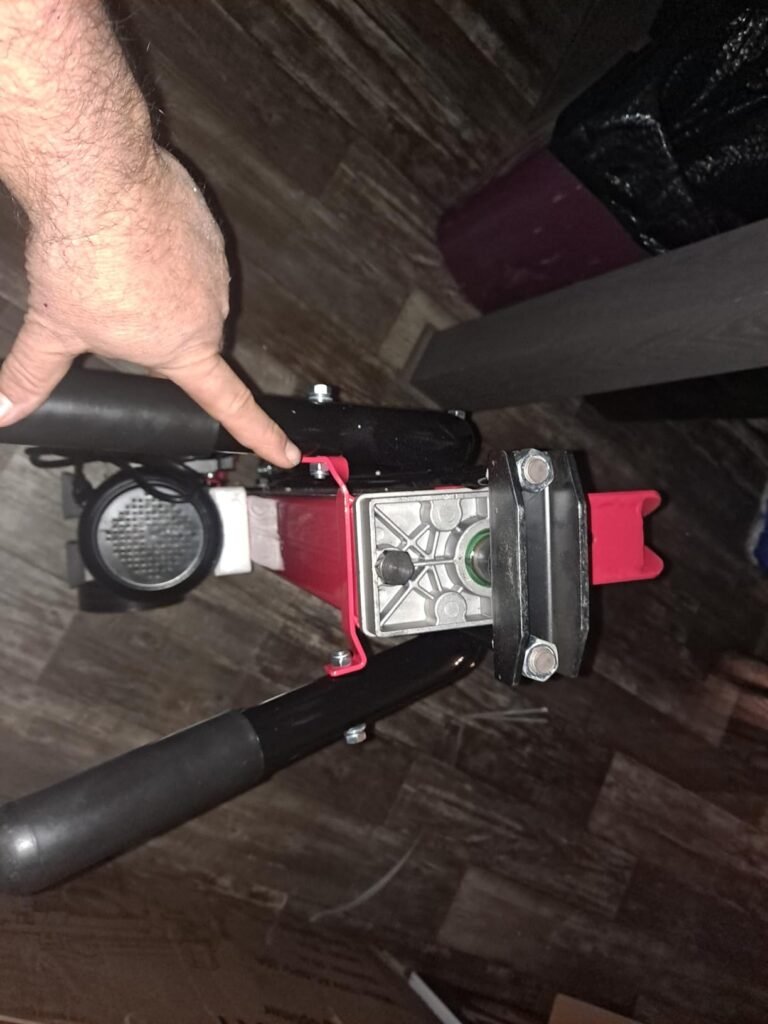
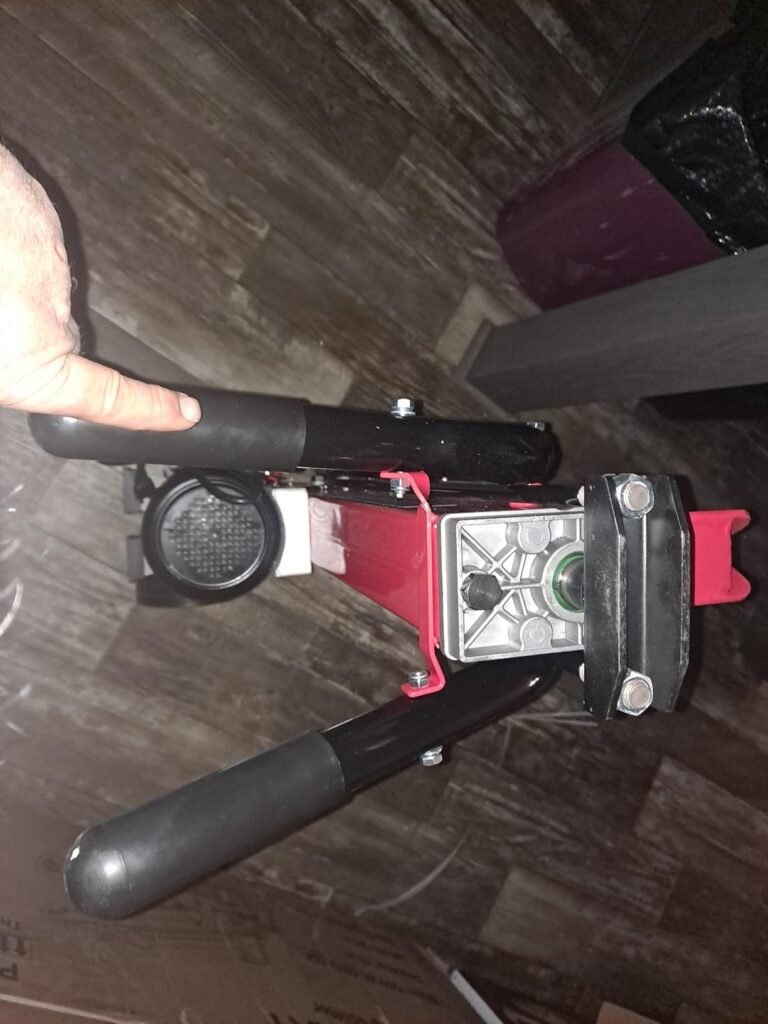
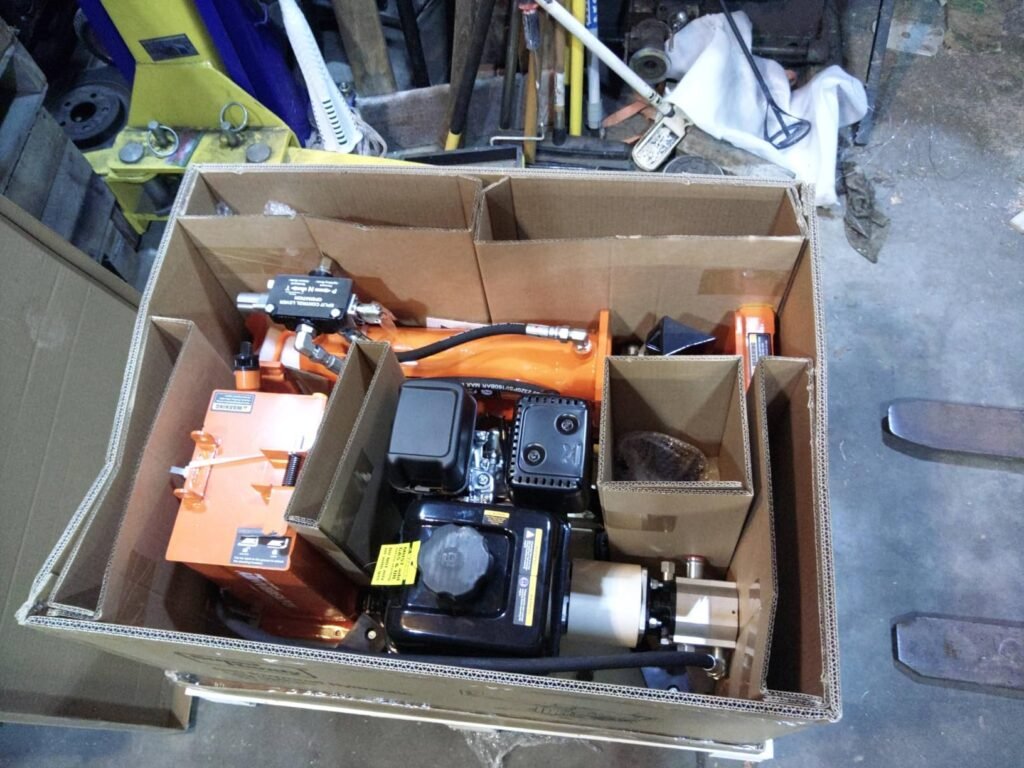
YARDMAX YS0650
9.2Editor score6.5-ton ram force
20.5-inch log length
10-inch log diameter
Electric hydraulic splitter
Find the right log splitters for 2026. We compare 8 standout options by build quality, useful features, owner feedback, value, and everyday trade-offs.
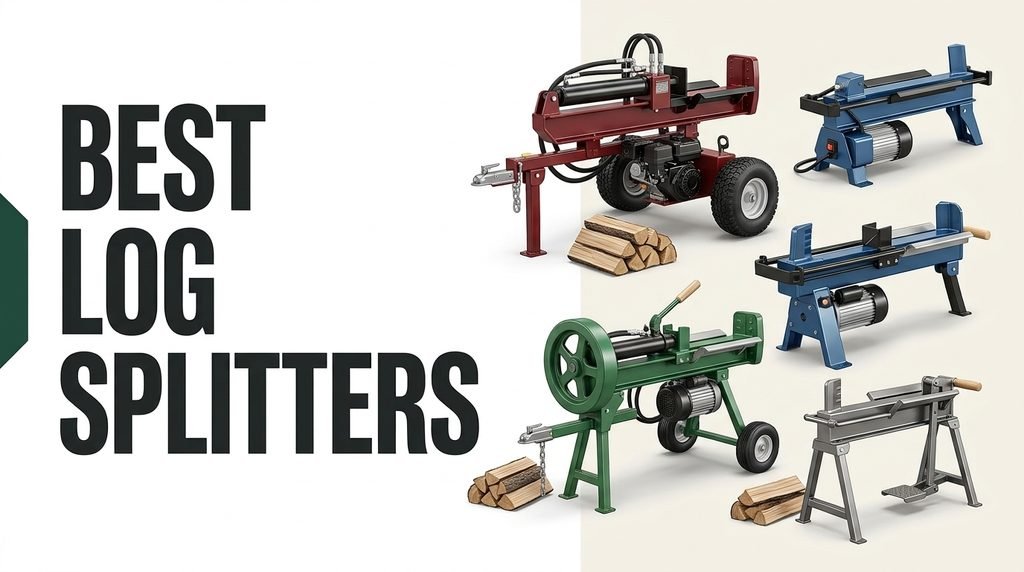
Find the right log splitter for 2026 by matching splitting force, power source, log length, cycle time, and portability to the wood you actually process. This guide compares hydraulic gas machines, compact electric splitters, and manual wedges so you can skip tools that are either too light for hardwood or far larger than a backyard stack requires.
The gap between a 5-pound steel wedge and a 27-ton towable splitter is not subtle. Gas models handle large rounds without an outlet, electric units stay quiet near the house, and manual tools shine for kindling and camping. Choosing the wrong category wastes money and leaves you still swinging an axe on stubborn oak.
Tonnage, wedge design, hydraulic cycle speed, and how you will move the machine matter more than a single headline number. The reviews below focus on who each tool is for, what it cannot do, and the trade-offs that show up once you start stacking firewood for winter.
We compared these log splitters using the details that actually help a buyer decide: splitting force, power source, maximum log length and diameter, cycle time, horizontal versus vertical operation, towability, safety design, maintenance needs, owner feedback, and value. The notes focus on practical trade-offs so each pick connects to real firewood work, from kindling for a cabin stove to processing large rounds at a woodlot.


Compare key features, scores, and current prices side by side. A shorter feature list means fewer details were available, not necessarily fewer capabilities.


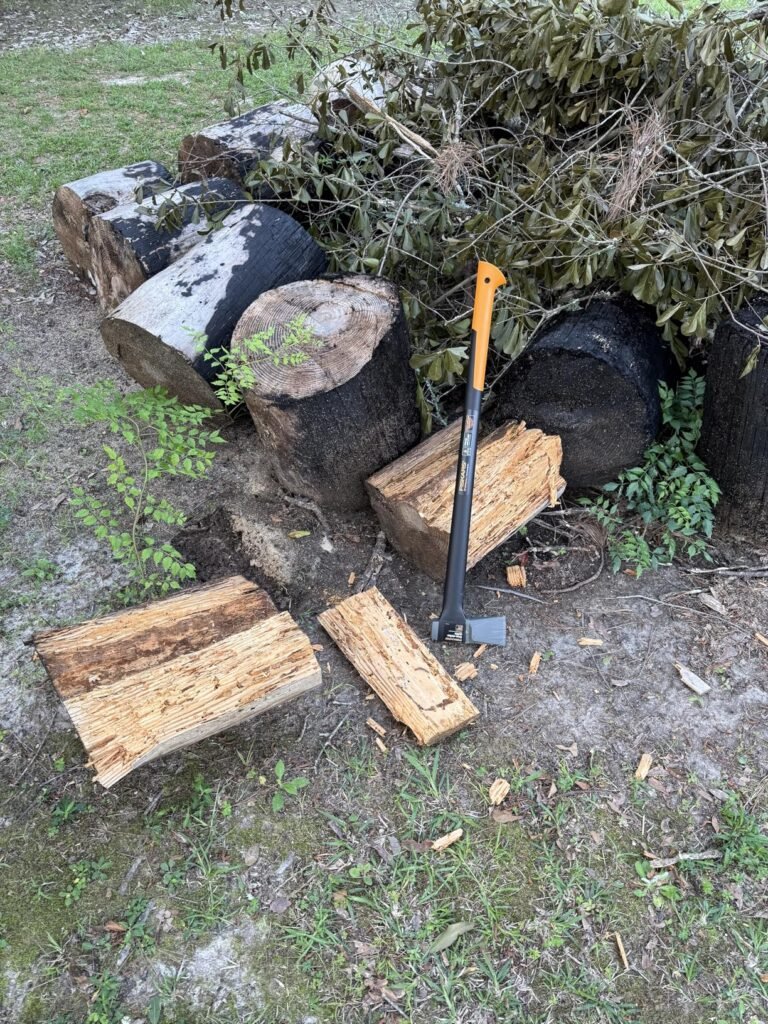
The Fiskars X27 is a splitting axe, not a hydraulic ram, and it belongs in this guide because many buyers still want a manual tool that can process medium to large logs without electricity or gasoline. The 36-inch handle is intended for taller users who can use the extra leverage without the bit striking the ground.
We may earn a commission when you buy through this link, at no additional cost to you.
A hardened forged steel blade with a convex bevel is designed to pop wood apart and release from the cut more easily than a thin felling axe. The shock-absorbing handle and textured grip reduce sting and help prevent overstrike damage to the handle neck. For straight-grained wood, a well-aimed swing still beats waiting on a 20-second electric cycle.
A protective sheath is included, and the axe carries a lifetime warranty, which is rare among the gas machines here. Technique matters more than with a hydraulic splitter. Use a solid chopping block, keep your feet outside the swing line, and stop when fatigue makes your aim sloppy. Pairing the X27 with the ESTWING wedge covers logs that will not open in one blow.
A 36-inch splitting axe gives taller people more arc and force, but it is clumsy if you cannot control the bit at the bottom of the swing. If the blade regularly hits the block before the log, you need a shorter handle or a higher block. Practice with modest pieces before taking on large rounds.
Choose the X27 if you are taller, split occasionally to regularly, and want a tool that stores on a wall hook. Shorter users should look at a shorter Fiskars pattern rather than forcing a 36-inch handle. If your annual volume is measured in cords of large hardwood, a gas hydraulic splitter will be kinder to your joints.
Shorter users, people with shoulder or back limits, or anyone expecting hydraulic speed on a full winter woodpile.
We may earn a commission when you buy through this link, at no additional cost to you.
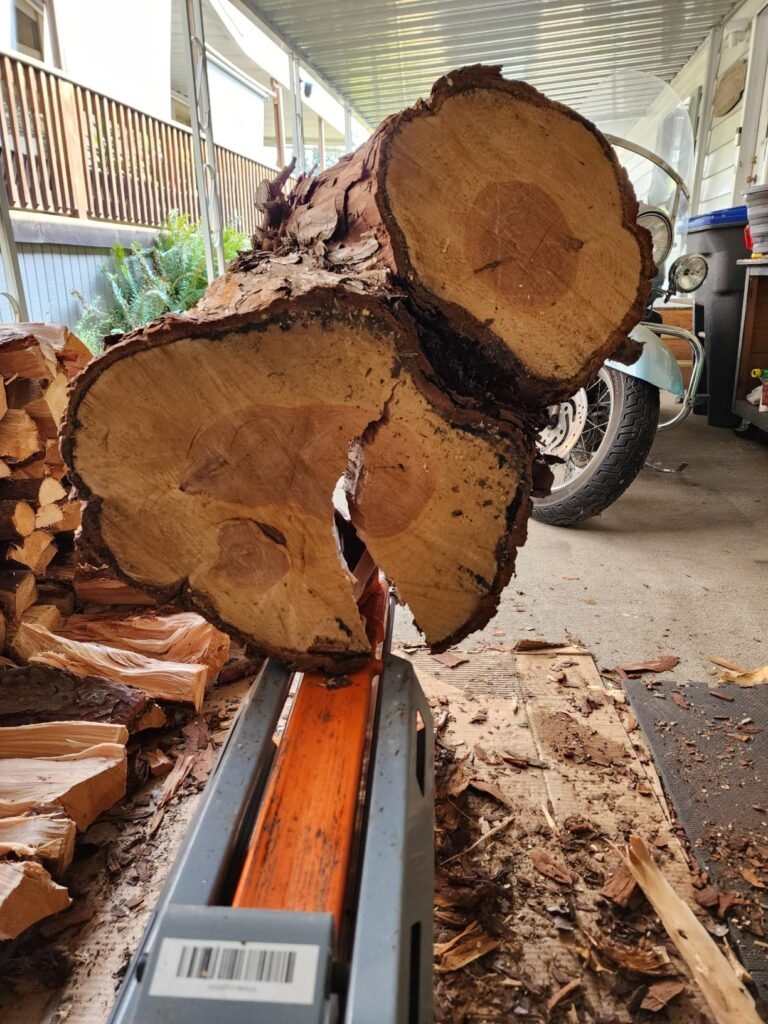
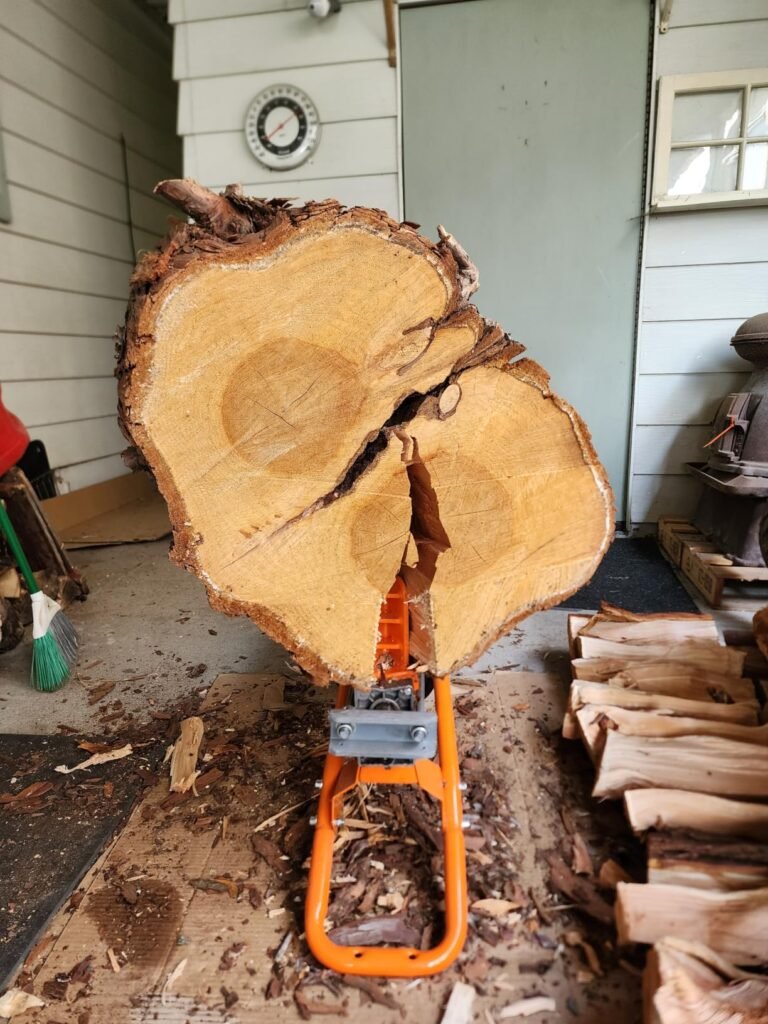
The YARDMAX YS0650 is aimed at homeowners who split a winter’s worth of firewood near the garage or shed and want hydraulic help without storing gas. At 6.5 tons of ram force, it is a light-to-moderate duty machine, which is the right class for straight-grained softwood and modest hardwood pieces rather than massive oak rounds.
We may earn a commission when you buy through this link, at no additional cost to you.
Log capacity is listed at 20.5 inches in length and 10 inches in diameter. That matches common stove and insert lengths, so you can buck wood to size with a saw and finish the splits electrically. If your typical rounds are wider than 10 inches or full of knots, this ram will stall more often than a 20-plus-ton gas splitter.
Electric operation means no oil-gas mixing, no exhaust in a closed carport, and easier neighbor relations on weekend mornings. You do need a proper outdoor-rated extension cord and a circuit that can handle a hydraulic motor under load. Plan the work area so the cord cannot be pinched by the ram or walkway traffic.
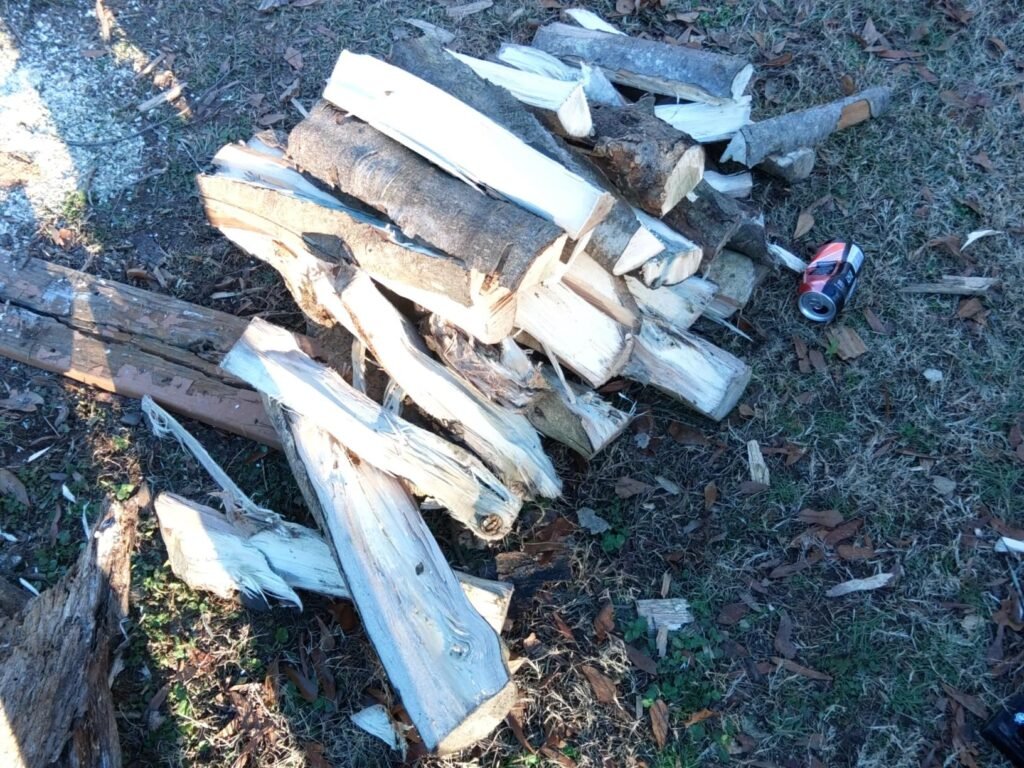
Tonnage is a ceiling, not a guarantee. Straight pine and seasoned ash often split well at 6.5 tons. Green oak, elm, and pieces with large knots may need a second pass or a heavier machine. Split from the outside of a round toward the center, and never stand in line with a log that could kick when it finally opens.
This is a strong buy if you heat with a stove, split mostly well-seasoned pieces under 10 inches, and value quiet, plug-in convenience. It is not a woodlot machine. Buyers who process unseasoned elm, twisted forks, or 16-inch diameter rounds should look at the gas models later in this guide.
Users without reliable outdoor power or anyone regularly splitting logs wider than 10 inches.
We may earn a commission when you buy through this link, at no additional cost to you.
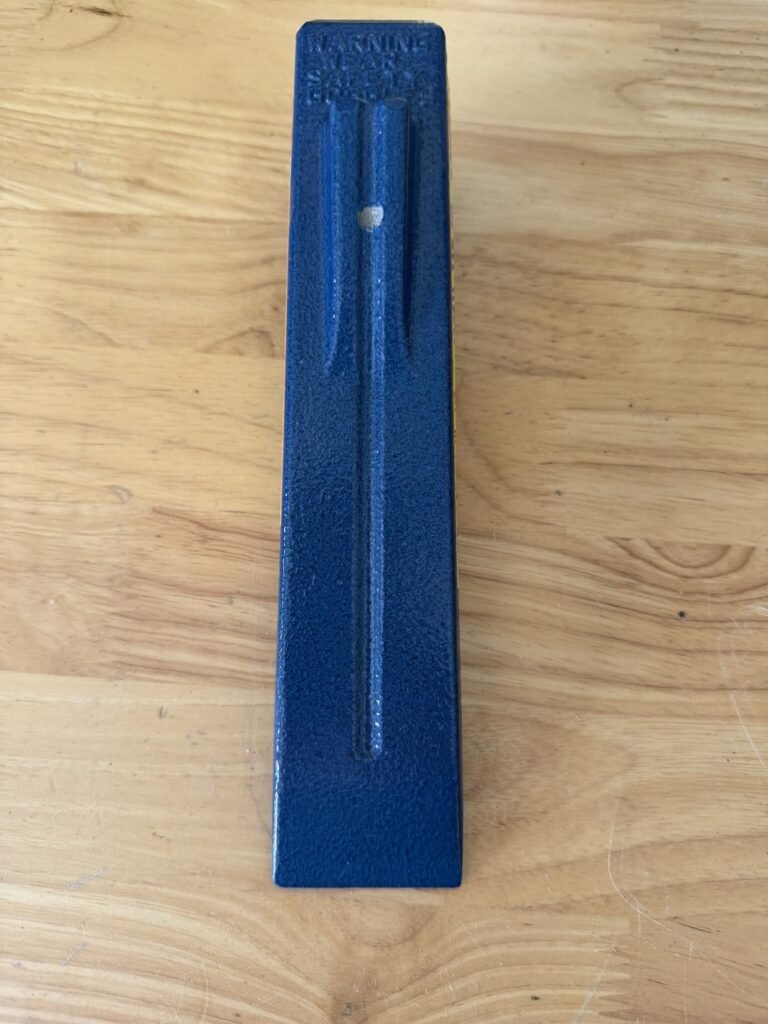
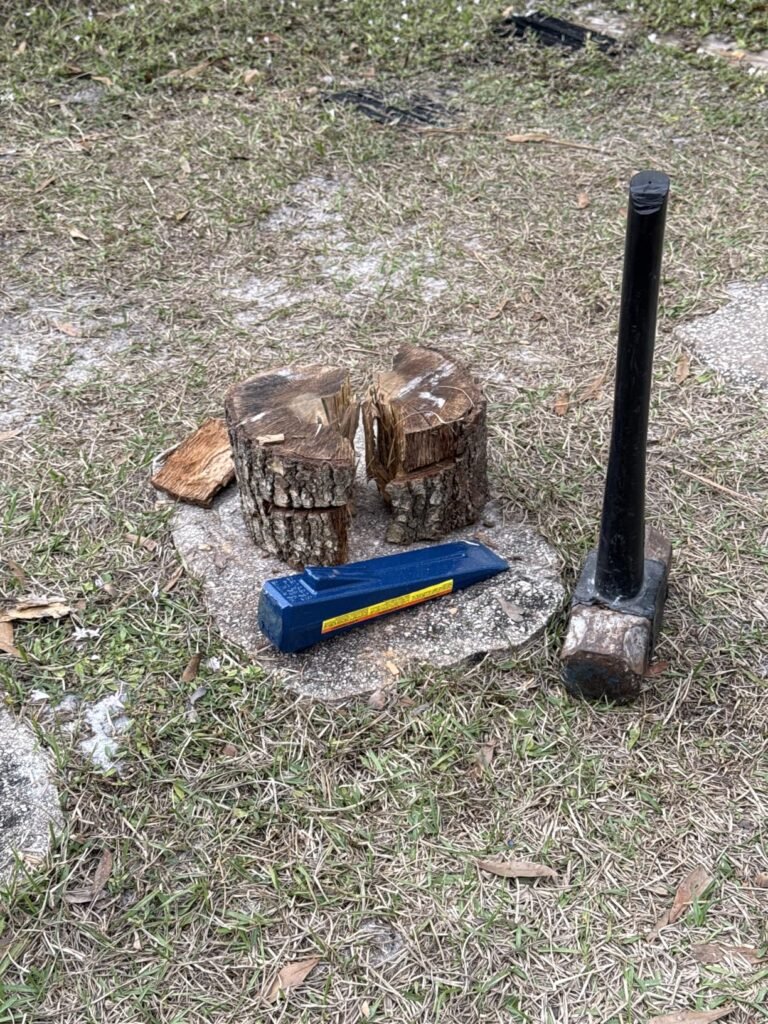
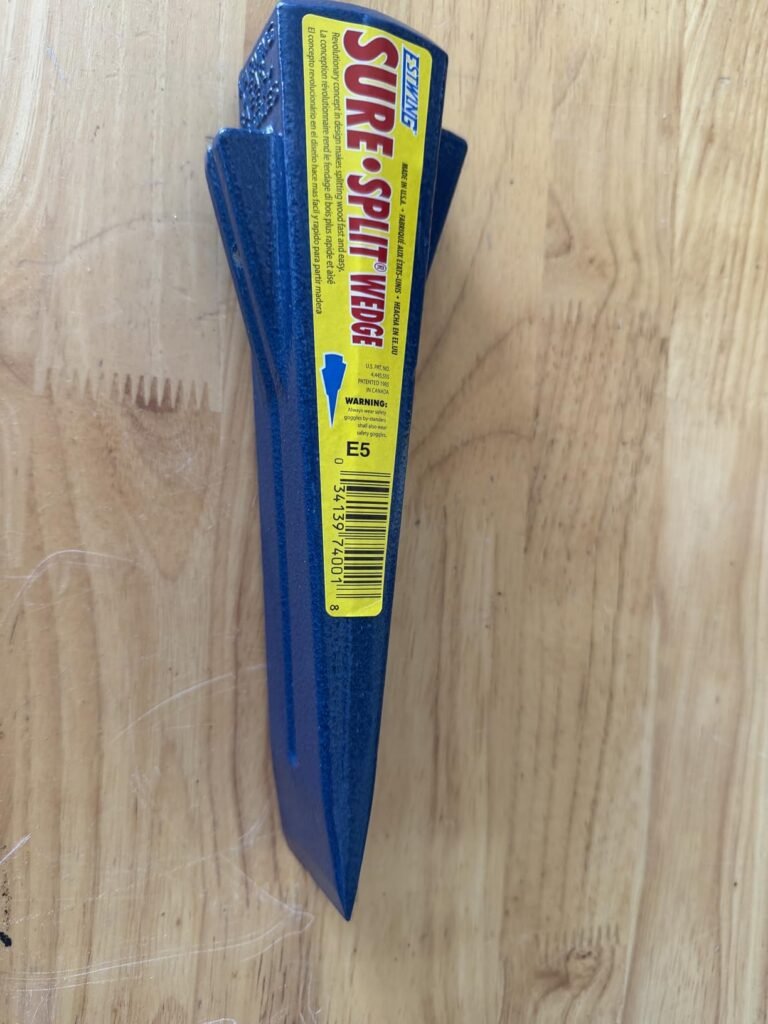
The ESTWING Sure Split is not a hydraulic splitter. It is a 5-pound solid steel wedge for the logs that laugh at a single axe blow. Campers, hunters, and homeowners who already swing a maul use a wedge when a round is too knotty or too wide to open in one strike.
We may earn a commission when you buy through this link, at no additional cost to you.
Side fins are the useful design detail. As you drive the wedge, those fins push outward and help the split run instead of letting the tool bury itself. A hand-sharpened edge at the base seats in a starter groove so the first hits track true. Finish on the tool may be blasted or painted, which is cosmetic and does not change how it cuts.
There is no cycle time, no hydraulic oil, and no storage shed required. You do need a sledge or maul and a stable chopping block. Wear eye protection, because steel on steel and flying chips are part of wedge work. Made in Rockford, Illinois since 1923, it is a tool you can throw in a truck bed without worrying about hoses.
Start a crack with an axe or the edge of a maul, then set the wedge in that groove. Strike the head square so the wedge does not glance. If the split stalls, add a second wedge in the opening rather than pounding a buried tool until the head mushrooms. Keep bystanders well behind the striking arc.
Pick the Sure Split if you already split by hand and want a dedicated wedge for problem logs, or if you need something that travels to a hunting camp. If you process a cord or more each year, a hydraulic machine will save far more time and strain than any wedge.
Buyers who want hydraulic speed or who are not willing to swing a sledgehammer.
We may earn a commission when you buy through this link, at no additional cost to you.
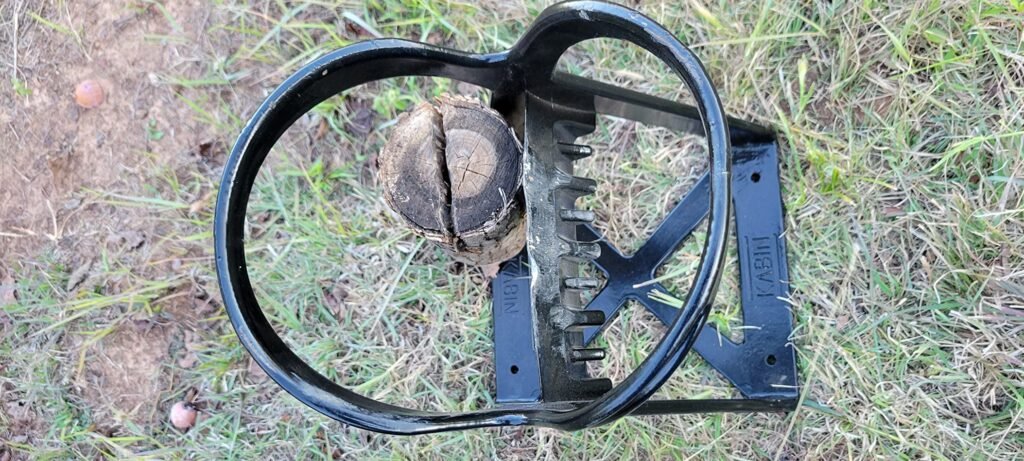
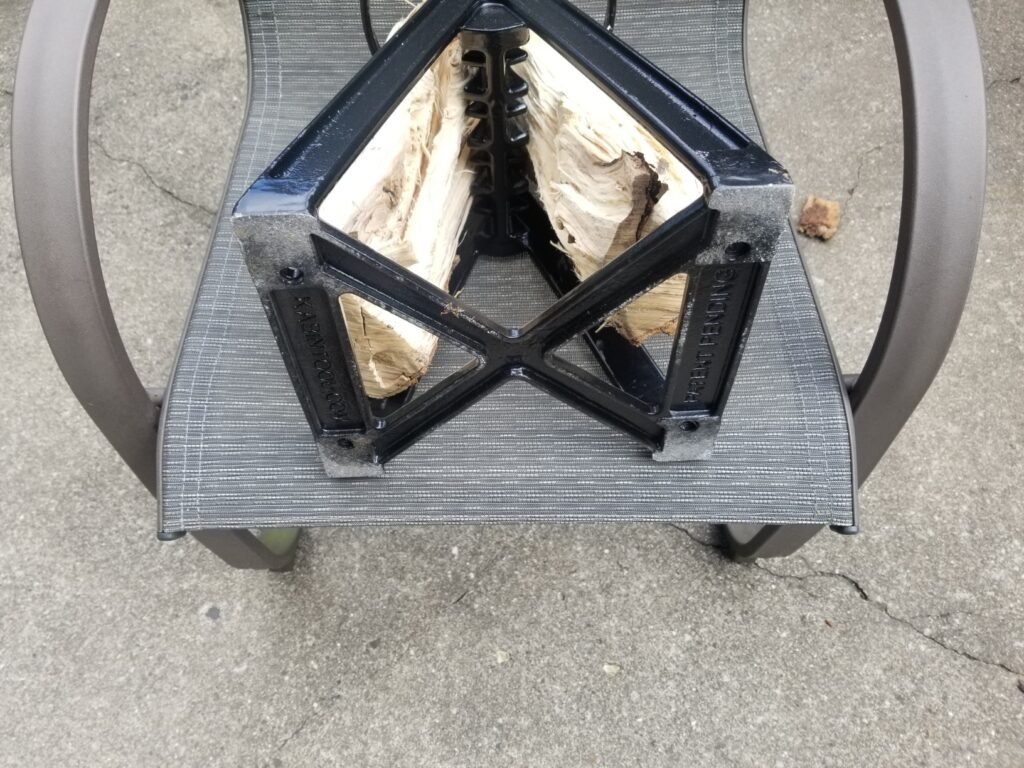
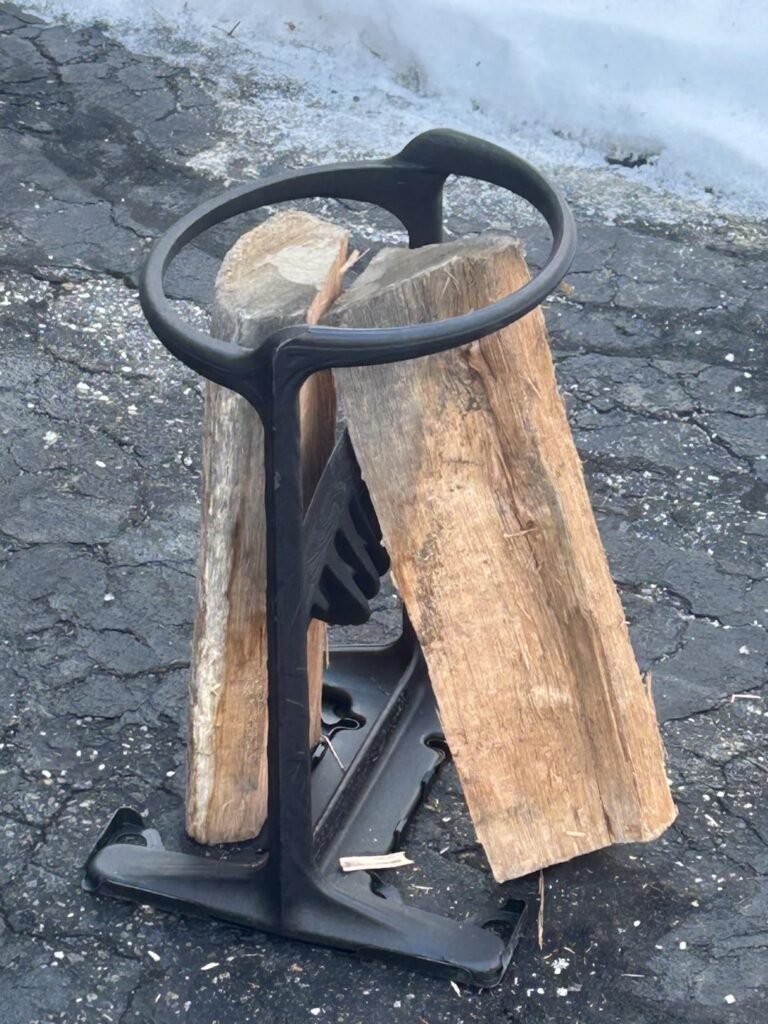
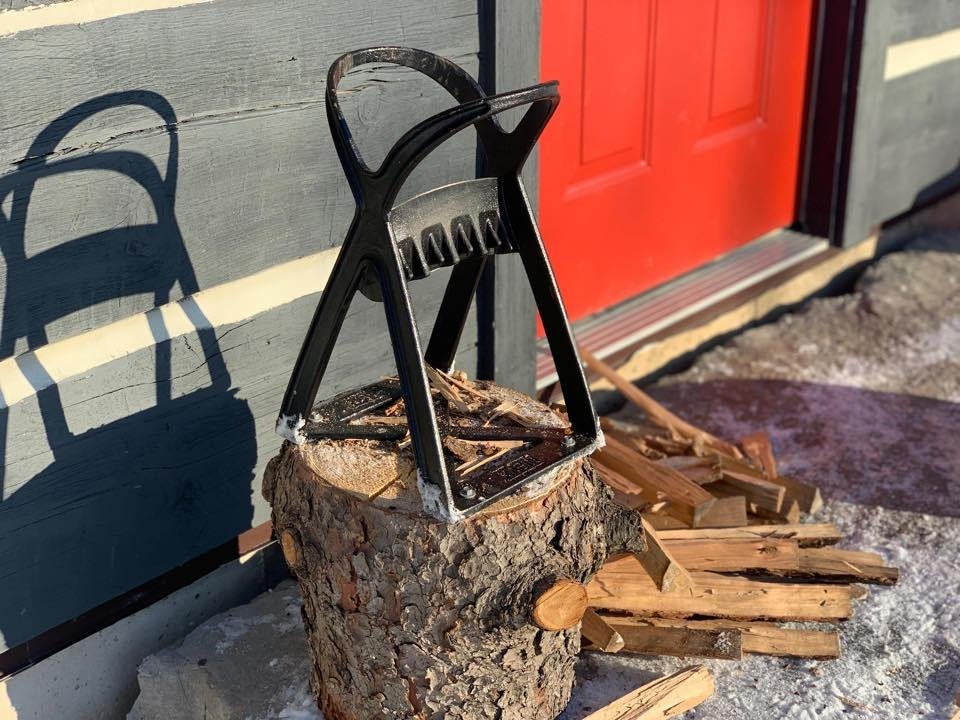
The KABIN Kindle Quick is another ring-style kindling splitter, aimed at people who want a portable cast-steel tool for the cabin, RV, or backyard fire pit. At 5.5 pounds with a black weather coating, it is light enough to carry, and the handles double as a way to tote a small load of splits.
We may earn a commission when you buy through this link, at no additional cost to you.
A wide mouth and tall base are meant to take thicker and longer pieces than compact copies. Slanted alternating teeth split at an angle to reduce jams, which is a common frustration when a stick binds on a straight wedge. Bolt holes in the X-style base let you lag the tool to a stump so it stays put while you strike.
Cast steel is harder and typically less rust-prone than untreated cast iron, which helps if the splitter lives on a porch. You still need a mallet or hammer, and you still should keep hands outside the ring. Compared with the Kindling Cracker King, this model trades some brand pedigree and rating for bolt-down convenience and a carrying handle.
A free-standing kindling splitter can hop on a glancing blow. Lagging the X-base to a stump or a thick timber raises the work height and keeps the ring aligned. Use outdoor-rated bolts, check tightness after the first session, and do not over-torque into a rotting stump that will not hold.
Choose the Kindle Quick if you move between a house and a weekend property and want the splitter to travel. If you want the most established safety-ring design and the highest owner score, the King XL remains the more proven kindling tool in this guide.
Anyone who needs hydraulic splitting of full firewood rounds or who wants the highest-rated kindling ring regardless of portability.
We may earn a commission when you buy through this link, at no additional cost to you.
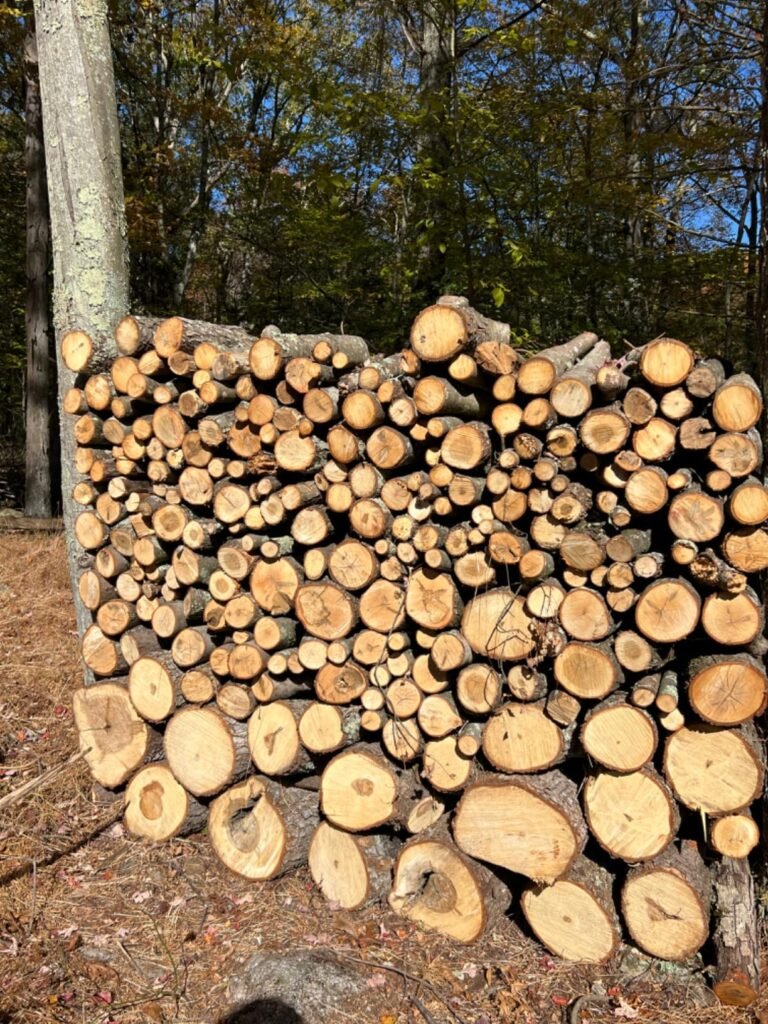
The PowerSmart electric splitter sits in the same 6.5-ton class as the YARDMAX, with a 15 Amp induction motor running at 3450 rpm. It is marketed for light-duty home use, splitting logs up to 20 inches long and 10 inches in diameter. If that matches your typical bucked length, the machine can replace a lot of axe work.
We may earn a commission when you buy through this link, at no additional cost to you.
Cycle time is about 20 seconds, which is slower than the 12- to 13-second gas machines in this guide. For a few dozen splits that extra wait is minor. For a full cord, the difference adds up. Steel construction and a hydraulic ram still beat manual splitting on effort and injury risk when the wood is within capacity.
At 37.4 by 10.6 by 18.1 inches with wide rear wheels and a handle, it is meant to roll across uneven ground rather than sit permanently on a stand. Store it under cover, keep the cord dry, and do not treat the wheels as a substitute for a trailer on long distances. A two-year warranty and 24-hour support window are useful if you are new to hydraulic tools.
Undersized cords cause voltage drop, weak ram force, and overheated motors. Use a heavy-gauge outdoor cord as short as practical, and plug into a circuit that is not already running space heaters or shop tools. If the motor sounds strained or the ram slows dramatically, stop and check both the wood size and the power supply before continuing.
This splitter fits homeowners who want electric convenience, modest storage size, and enough force for typical stove wood. It is a poor match for commercial firewood production or for green, oversized hardwood. If you can choose between this and the YARDMAX, compare current price, warranty, and which unit is easier to service in your area.
Users processing a cord or more of large hardwood, or anyone working far from electrical service.
We may earn a commission when you buy through this link, at no additional cost to you.
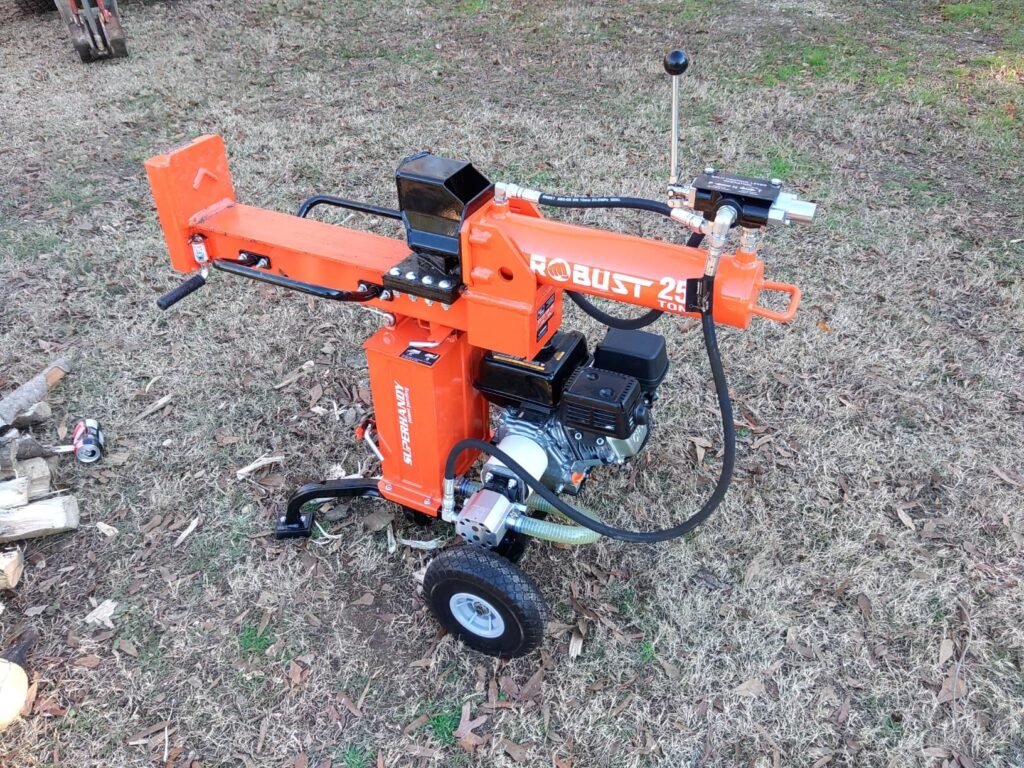
The SuperHandy 25-ton splitter is a gas hydraulic machine for people who need serious force without the full tow-behind package of the BILT HARD. A 7HP AlphaWorks engine and two-stage Bucher gear pump are specified to handle logs up to 20 inches long and 24 inches in diameter, which covers many firewood and small forestry jobs.
We may earn a commission when you buy through this link, at no additional cost to you.
A 12-second cycle is among the quicker times in this guide, so you spend less idle time waiting on the ram. Horizontal and vertical half-beam operation lets you split on the beam or stand heavy rounds on the ground. The steel wedge and half-beam design keep the machine more portable than a full-beam commercial splitter.
Ten-inch polyurethane wheels and an ergonomic folding handle help you roll the unit around a yard or woodlot. These are not DOT highway tires, so plan to transport it in a truck or trailer rather than towing it at road speed. Hydraulic fluid is not included; AW32 is the recommended fill, and you should confirm the reservoir is filled before the first start.
A gas splitter shipped without hydraulic oil will not build pressure until the reservoir is filled to the specified level with the correct viscosity, such as AW32. Running the pump dry can damage it quickly. After filling, cycle the ram several times to purge air, recheck the level, and inspect hoses for leaks before splitting the first log.
This is a smart middle path if you want gas power and high tonnage but do not need 45 MPH towing. It still requires engine maintenance, fuel, and space. Electric 6.5-ton machines remain better for quiet driveway use on smaller wood.
Buyers who need a highway-towable splitter or who refuse to handle fuel, oil, and hydraulic fluid.
We may earn a commission when you buy through this link, at no additional cost to you.
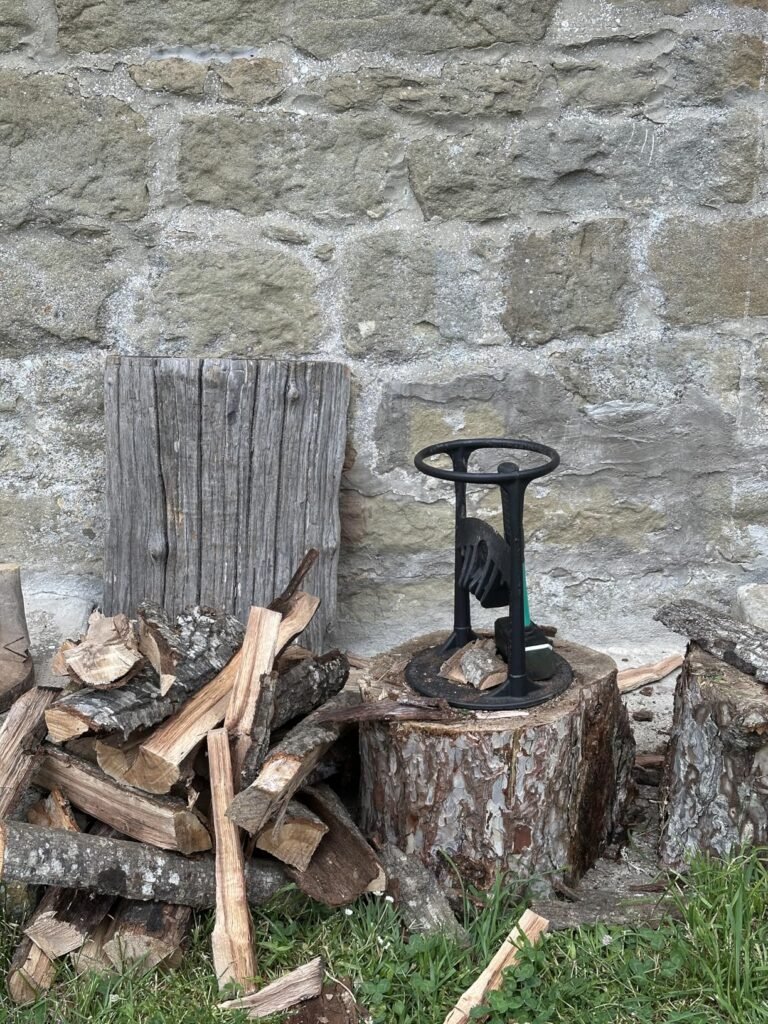
Looked at as a daily stove accessory rather than a novelty, the King XL earns its keep in homes that burn wood every cold night. Kindling quality changes how easily a fire starts, and a dedicated splitter is faster than hunting for scraps with a hatchet. The 9-inch ring is the reason to buy the King size instead of a smaller copy.
We may earn a commission when you buy through this link, at no additional cost to you.
Because the wedge is fixed, edge geometry stays consistent for years. You are not resharpening a hatchet after hitting dirt-embedded bark. Strike with a wooden mallet if you want less noise and less chance of chipping the iron; a steel hammer works but is harsher on the tool and your ears.
Place the splitter on a stump at a comfortable height so you are not bending for every piece. Keep the ring clear of ice so wood sits flat. If you split for both a wood stove and a fire pit, process a bucket at a time and store kindling dry; the tool itself can live outdoors in extreme cold without hydraulic concerns.
Cut parent sticks to a consistent length before they go in the ring so the pile stacks and feeds a stove evenly. Split to the thickness your stove needs rather than pulverizing every piece. Slightly thicker kindling lasts longer in the fire; ultra-thin strips flare and vanish. Wear gloves, because even a safe ring does not protect against splinters.
This second look is for buyers who already know they do not need a 25-ton ram. If kindling is 80 percent of your splitting, spend money here and keep a simple axe for the occasional large round. If kindling is 5 percent of your work, buy a hydraulic splitter first and make starter wood from the leftover splits.
Users whose main task is processing full cords of 16- to 24-inch firewood.
We may earn a commission when you buy through this link, at no additional cost to you.
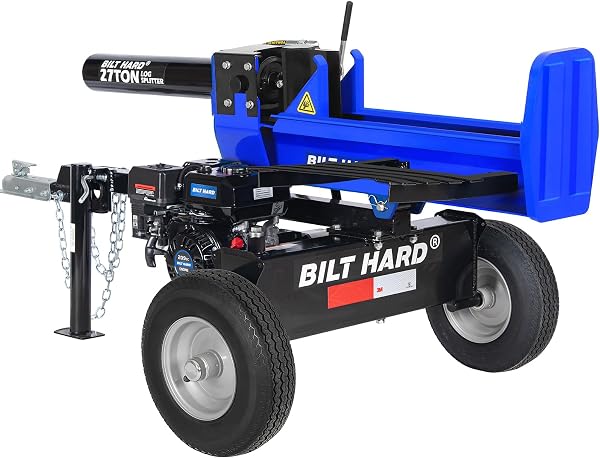
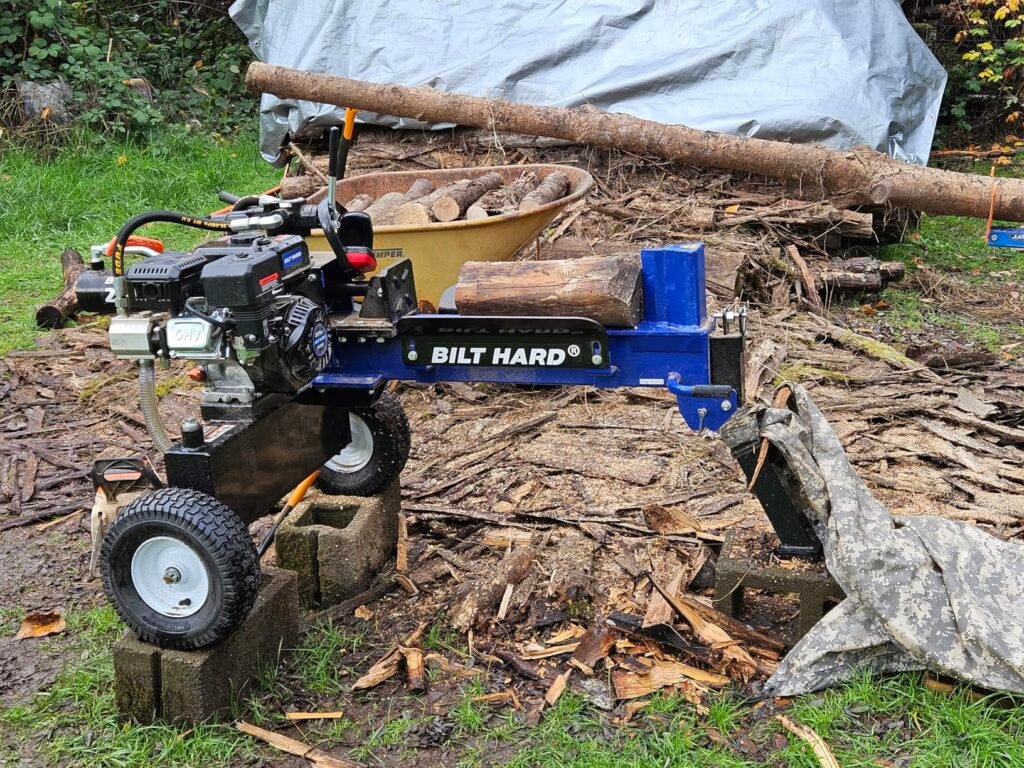
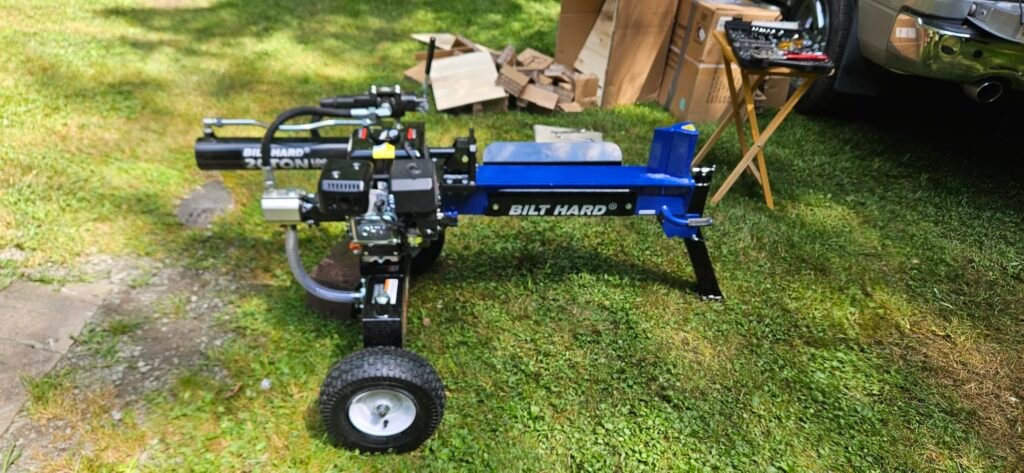
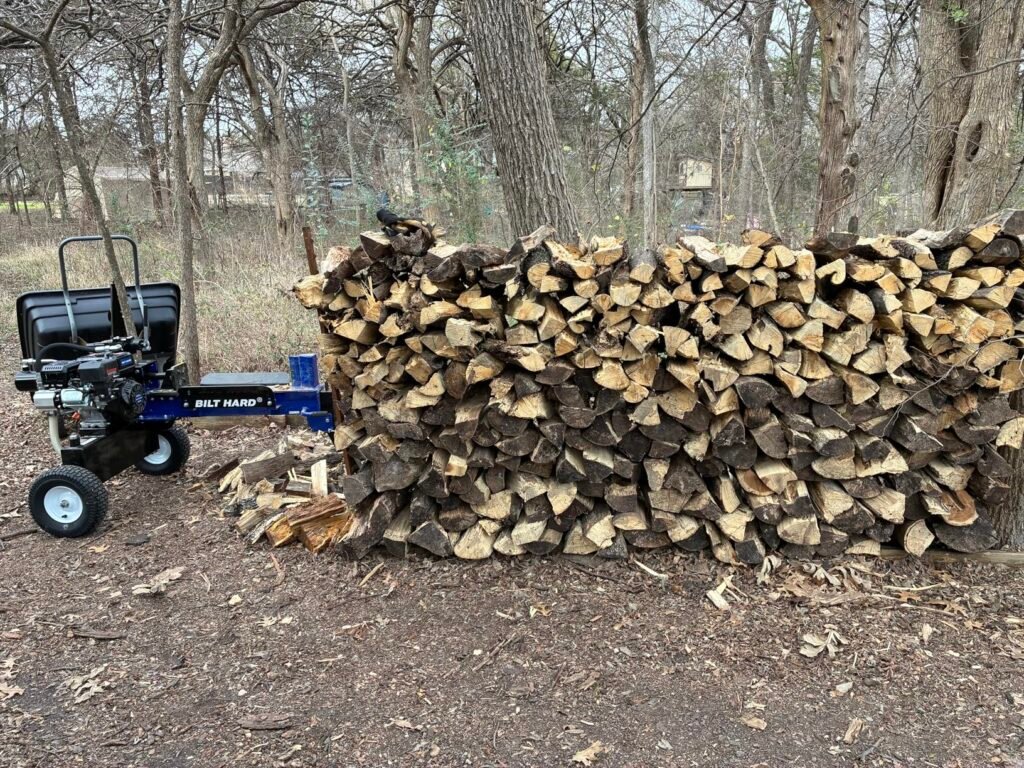
For acreage owners, the BILT HARD’s towing package is as important as its tonnage. Sixteen-inch DOT tires, a 2-inch coupler, and safety chains mean you can take the splitter to downed trees instead of winching every round to a stationary machine. That workflow change is often worth more than a few extra tons of force.
We may earn a commission when you buy through this link, at no additional cost to you.
The 11 GPM two-stage pump moves oil quickly when the ram is unloaded, then builds pressure when the wedge hits resistance. Combined with a 6-gallon reservoir, that design supports longer sessions without cooking the hydraulic oil as fast as an undersized tank. Cycle time of 13 seconds keeps production respectable for a home-scale woodlot.
Assembly follows the included manual and video, and support is available through Amazon messaging. Budget time for first setup, checking torque on the hitch hardware, and learning the horizontal-to-vertical conversion before you are standing over a half-ton round. Keep extra hydraulic oil and a funnel in the same shed as the splitter.
Stay within the 45 MPH rating and confirm the coupler matches your 2-inch ball. Cross the safety chains under the tongue so they can catch the splitter if the coupler fails. Check tire pressure before every road trip, and do not tow with a loose ram or unsecured beam conversion pins. Practice connecting the hitch in the driveway before you do it on a slope in the woods.
If your property is measured in acres and you already tow implements, this is the most complete gas option in the set. If you split next to a garage outlet and never leave the driveway, the extra towing hardware is unused weight. Match the machine to how you move wood, not just how hard it pushes.
Drivers without a 2-inch ball hitch or buyers who cannot store a full-size tow-behind splitter.
We may earn a commission when you buy through this link, at no additional cost to you.
The right splitter depends on wood size, annual volume, power available on site, and how much lifting you want to avoid. Use the factors below to sort hydraulic machines from manual tools before you spend.
Hydraulic splitters are rated in tons of ram force. A 6.5-ton electric unit is intended for home lots and logs around 10 inches in diameter. A 25- or 27-ton gas machine is meant for large, knotty, or partially green rounds that would stall a compact ram. Tonnage is measured at the ram, not as a promise that every species will pop open on the first cycle.
Wood species and grain matter as much as diameter. Straight-grained pine can split below the rated ceiling, while elm, sweetgum, and crotch wood can defeat a machine that looks powerful on paper. Seasoned wood generally splits more easily than green wood, so buying extra tons only to process wet oak may be less effective than letting the pile dry first.
Choose 6.5 tons for typical stove wood near the house. Step up to 25 tons or more if you regularly face 16-inch-plus hardwood or commercial-style volume. Do not buy a 27-ton towable splitter for a few baskets of kindling.
Gas hydraulic splitters work anywhere you can roll or tow them, which is essential in a woodlot without outlets. They need fuel, engine oil, and hydraulic fluid, and they are louder. Electric splitters plug in, start with a switch, and suit driveways and garages, but they are limited by cord length and circuit capacity. Manual tools need only your effort and a solid block.
Kindling crackers, steel wedges, and splitting axes have zero hydraulics to leak and almost no storage footprint. They are slower per log and more physically demanding. For many households, the efficient setup is a hydraulic splitter for rounds and a ring-style kindling tool for starter wood, rather than forcing one tool to do both jobs poorly.
If you split beside the house and have a dedicated outdoor circuit, electric is usually more pleasant. If you split where the trees fall, gas wins. If you split a few armloads a month, a Fiskars axe or ESTWING wedge may be all you need.
Match maximum log length to how you buck firewood. Many stoves want 16- to 20-inch pieces. The YARDMAX lists 20.5 inches, the PowerSmart 20 inches, the SuperHandy 20 inches long with up to 24-inch diameter, and the BILT HARD up to 24 inches long. A machine that is two inches too short for your stove length creates extra saw work.
Cycle time is how long the ram takes to extend and return. Twelve to 13 seconds on the SuperHandy and BILT HARD feels brisk. Twenty seconds on the PowerSmart is fine for small piles and tedious on a full cord. Manual tools have no cycle time, but your rest breaks become the limiting factor.
Measure a few of your typical rounds before buying. If most pieces already fit a 6.5-ton electric splitter, do not pay for 27 tons. If you regularly cut 24-inch lengths, confirm that spec in writing on the model you choose.
Horizontal splitters keep the log on a beam at about table height, which is fast when you can lift the wood. Vertical operation stands the log on the ground so the machine does the positioning. Dual-position designs on the BILT HARD and SuperHandy are worth real money if you process heavy rounds, because lifting those pieces is how backs get hurt.
Electric compact splitters in this guide are typically horizontal-only. That is acceptable for 10-inch diameter home wood. It is a problem if your storm-downed maple is too heavy to hoist. Manual kindling rings avoid the lift issue by using small pieces from the start.
If you are older, working alone, or dealing with large diameter wood, prioritize a vertical mode. If you only split light, already bucked stove wood, horizontal electric is simpler.
Wheels on electric units like the PowerSmart help you roll across a yard. They do not make the machine highway legal. The SuperHandy uses 10-inch polyurethane wheels and a folding handle for local moves. The BILT HARD adds 16-inch DOT tires and a 2-inch coupler for towing up to 45 MPH, which is a different class of portability.
Storage is the hidden cost. A tow-behind splitter needs a shed or tarp and a hitch you will not mind leaving occupied. An electric splitter can live along a garage wall. A kindling cracker can sit on a stump year-round. Axes hang on a peg. Buy the smallest tool that covers your real volume so you are not climbing over unused steel all summer.
Think through the path from woodpile to splitter to stacked rows. The best ram in the catalog is a poor purchase if you cannot move it to the wood or store it legally in your HOA.
Hydraulic splitters still pinch, crush, and throw wood. Two-handed controls, ram guards, and stable footing matter. Kindling tools with a safety ring, such as the Kindling Cracker King, keep fingers away from the wedge, which is a different and valuable safety idea for small splits. Axes and wedges demand a clear swing zone and a solid chopping block.
Wear eye protection on every method. Add hearing protection for gas engines, gloves that still allow control, and steel-toe boots. Never split on the ground with an axe if the log can roll. Never leave a hydraulic ram under pressure unattended. Teach every helper that hands stay off the wedge path until the ram is fully retracted.
If children or inexperienced helpers will be involved, a ring-style kindling splitter is far more appropriate than a hatchet. Hydraulic machines should stay adult-only with a documented briefing on the kill switch and pinch points.
Gas splitters need engine oil, fresh fuel, air filter service, and hydraulic oil at the correct level. The SuperHandy ships without hydraulic fluid, so budget AW32 and fill time. The BILT HARD includes oils, which shortens first-day setup. Electric splitters still have hydraulic systems to inspect for leaks but skip carburetors and spark plugs.
Manual tools win on upkeep. Cast iron and cast steel kindling splitters have no moving parts. ESTWING wedges may need the edge touched up. Fiskars blades stay sharp longer than many traditional axes but still benefit from a dry sheath and a check for handle cracks. Factor your willingness to change oil at least as heavily as the purchase price.
If you dislike engine maintenance, do not buy a 7 HP splitter for occasional use. If you already maintain a mower and generator, a gas splitter fits your existing habits. Keep spare hydraulic fittings and a funnel with the machine so a small leak does not end a Saturday.
Set up on level ground with the woodpile on one side and the stacked splits on the other so you are not walking around a live ram. For hydraulic machines, check engine oil, hydraulic level, and hoses before starting. For kindling rings, mount or set the tool on a stump that will not rock. For axes and wedges, use a wide, stable chopping block and clear the swing radius of people, pets, and vehicles.
Work with the grain when you can, starting splits from the outer edge of a round rather than burying the wedge in the heartwood on the first try. Let the machine or tool finish the stroke; forcing a stalled ram or prying with your hands is how injuries happen. Keep cycle times sustainable. Fatigue causes missed hits with an axe and sloppy loading on a hydraulic beam.
After each session, retract the ram, relieve pressure as the manual directs, and wipe sap off the wedge. Store gas machines with appropriately treated fuel or drain the carburetor for long off-seasons. Keep electric units dry and cords coiled off the floor. Oil exposed steel on wedges lightly to limit rust, and hang axes in their sheaths. Replace damaged hydraulic hoses before the next firewood day rather than hoping they hold.
For most home firewood under 10 inches in diameter, 6.5 tons is a common electric rating and is often enough on straight, seasoned wood. Large hardwood rounds, forks, and green logs are why 25- and 27-ton gas machines exist. Buy enough force for your hardest typical piece, not for a once-a-decade storm tree you could hire out.
Sometimes, if the oak is seasoned, reasonably straight, and within the 10-inch diameter limit listed on compact electric models. Green, wide, or knotty oak often needs a higher-tonnage gas splitter or a manual wedge assist. If oak is your main species, lean toward 25 tons or plan to split smaller-diameter bolts.
A kindling splitter such as the Kindling Cracker King or KABIN Kindle Quick uses a fixed wedge and a safety ring to make small starter pieces. A hydraulic log splitter uses a ram and beam to open full firewood rounds. They solve different jobs. Many wood-heat households eventually own one of each.
Only if it has a proper coupler, safety chains, and DOT-approved tires with a stated speed rating, such as the BILT HARD’s 16-inch tires and 45 MPH limit. Compact gas splitters with small polyurethane wheels are for yard rolling and trailer loading, not open-road towing. Always match the hitch ball size and cross the chains under the tongue.
Check the listing and manual. Some units include hydraulic and engine oil. Others, including the SuperHandy in this guide, do not include hydraulic fluid and recommend AW32. Never run a hydraulic pump dry. Fill to the marked level, cycle the ram to purge air, and recheck before splitting.
Yes, as a backup and for odd pieces that will not sit on the beam, camping trips, and power outages. The Fiskars X27 is a capable large-log axe for taller users. Hydraulic machines still fail, and an axe does not care about extension cords. Keep it sheathed and sharp.
Many hardwoods need six to twelve months of covered, off-the-ground seasoning after splitting, depending on climate and species. Splitting increases surface area so drying goes faster than leaving whole rounds. Stack with airflow, cover the top not the sides, and do not burn wood that still feels heavy and cool in the core.
For kindling, a ring-style tool like the Kindling Cracker King keeps hands away from the wedge and avoids a swinging blade. For full logs, an electric hydraulic splitter with two-hand operation reduces missed axe swings, but it still has crush hazards. Beginners should avoid rushing, wear eye protection, and never split when tired.
The piece may exceed the rated diameter, sit off-center on the wedge, be too green, or contain a knot or fork. Reposition the log, split from the edge, or switch to vertical mode for heavy rounds. Repeated stalling on typical wood is a sign you need more tonnage or smaller bolts from the saw.
Rent if you have a one-time storm cleanup. Buy if you heat with wood every winter or process multiple cords. Electric 6.5-ton units make sense for annual home use. Gas 25- to 27-ton machines make sense when volume and log size stay high. Manual tools are the lowest-cost path for light, occasional splitting.
For serious firewood volume and large rounds, the BILT HARD 27-ton towable splitter is the most complete hydraulic option here, with dual-position splitting, a 13-second cycle, and a road-ready hitch package. It is the tool to choose when the wood is heavy and the work site moves around a property.
Homeowners who split near an outlet should look at the YARDMAX or PowerSmart 6.5-ton electric machines for quieter, simpler sessions on stove-length wood. Kindling-focused buyers are better served by the Kindling Cracker King XL, with the KABIN Kindle Quick as a portable alternative. The Fiskars X27 and ESTWING wedge remain the right manual pair for camping, backup use, and problem logs.
Decide based on wood size, annual volume, and whether you have power, a tow vehicle, or only a chopping block. A safety-ring kindling tool will not replace 27 tons of hydraulic force, and a tow-behind splitter is wasted on a handful of sticks. Match the category first, then the model, and you will spend the next heating season stacking wood instead of fighting the wrong machine.