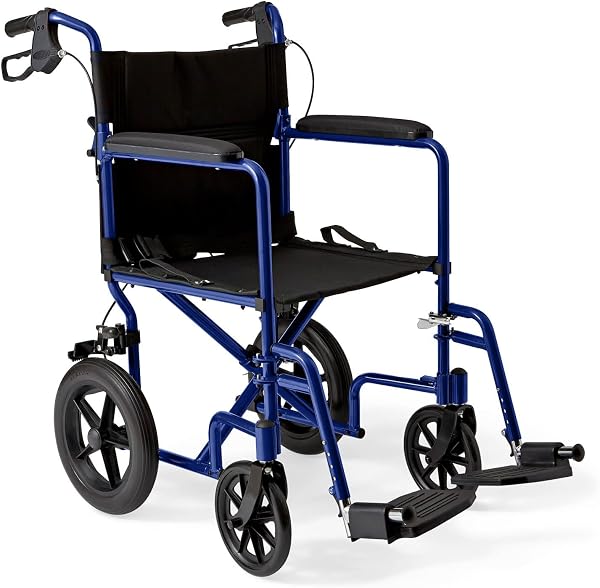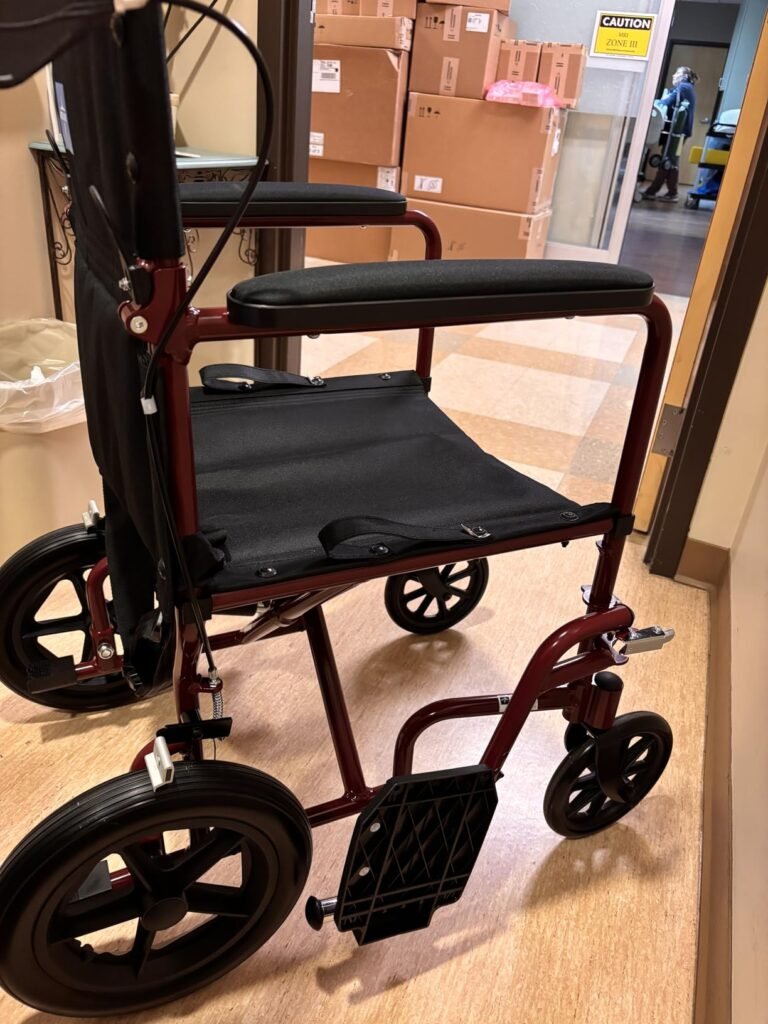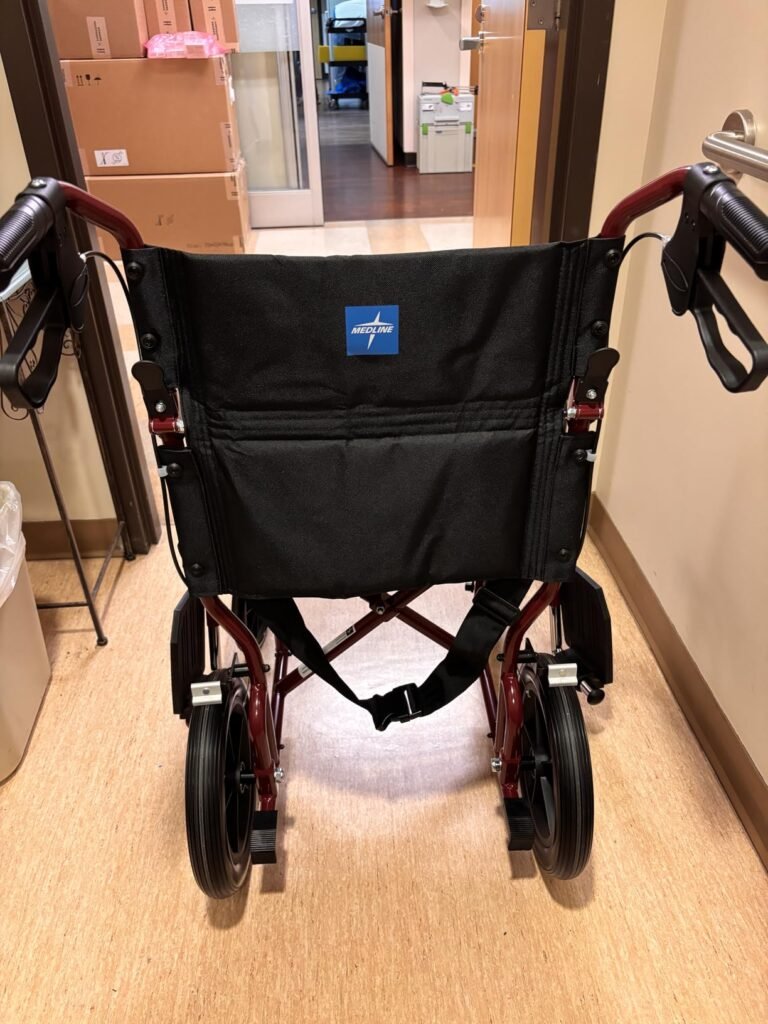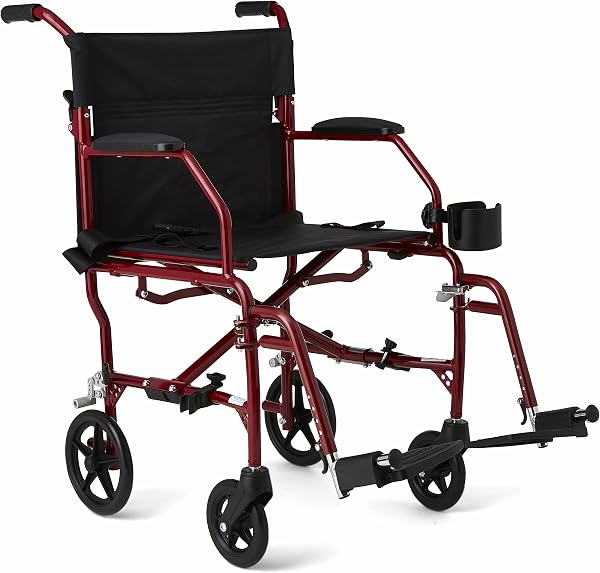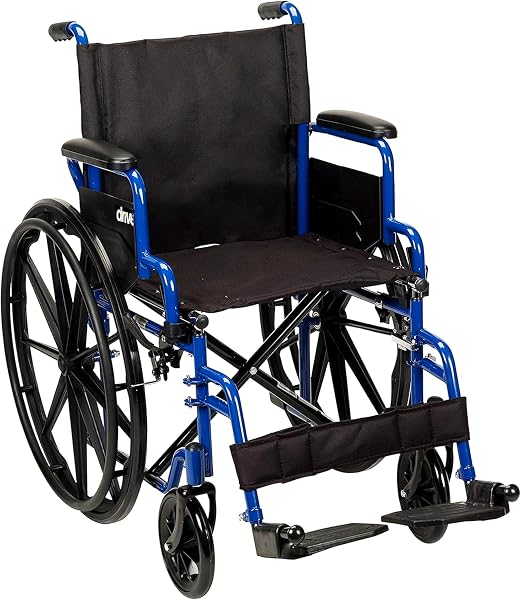
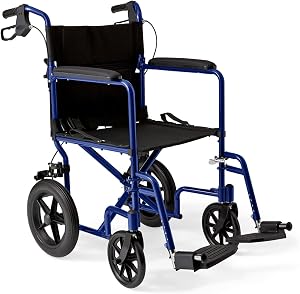
Drive Medical Blue
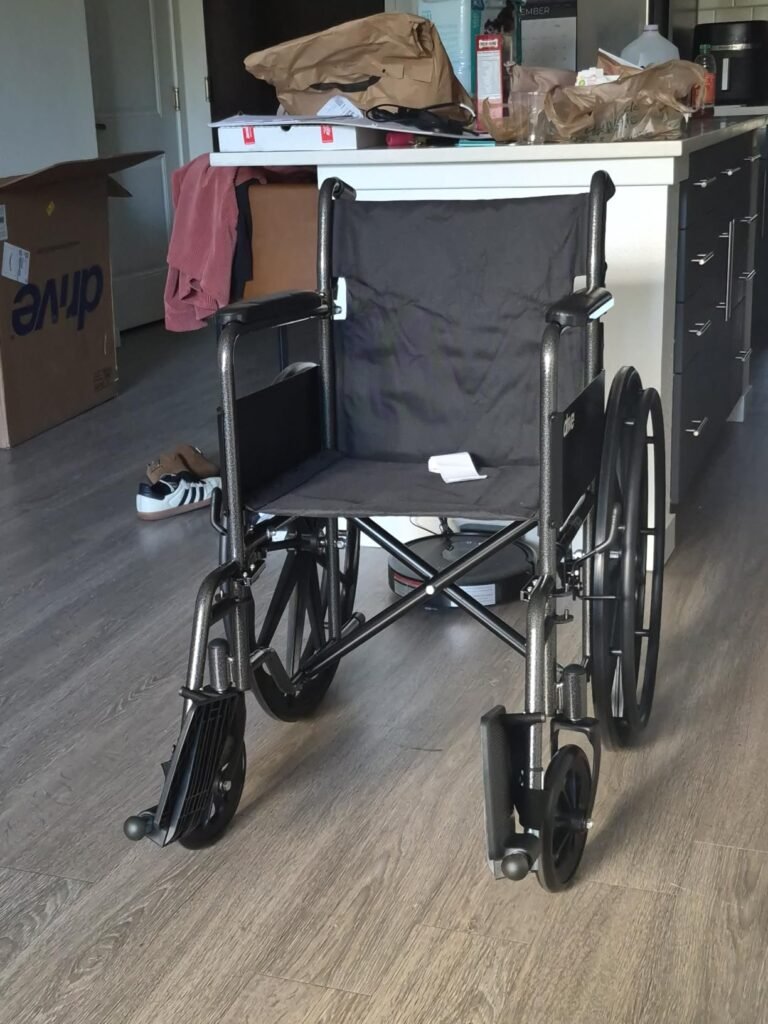
9.0Editor scoreSteel frame construction
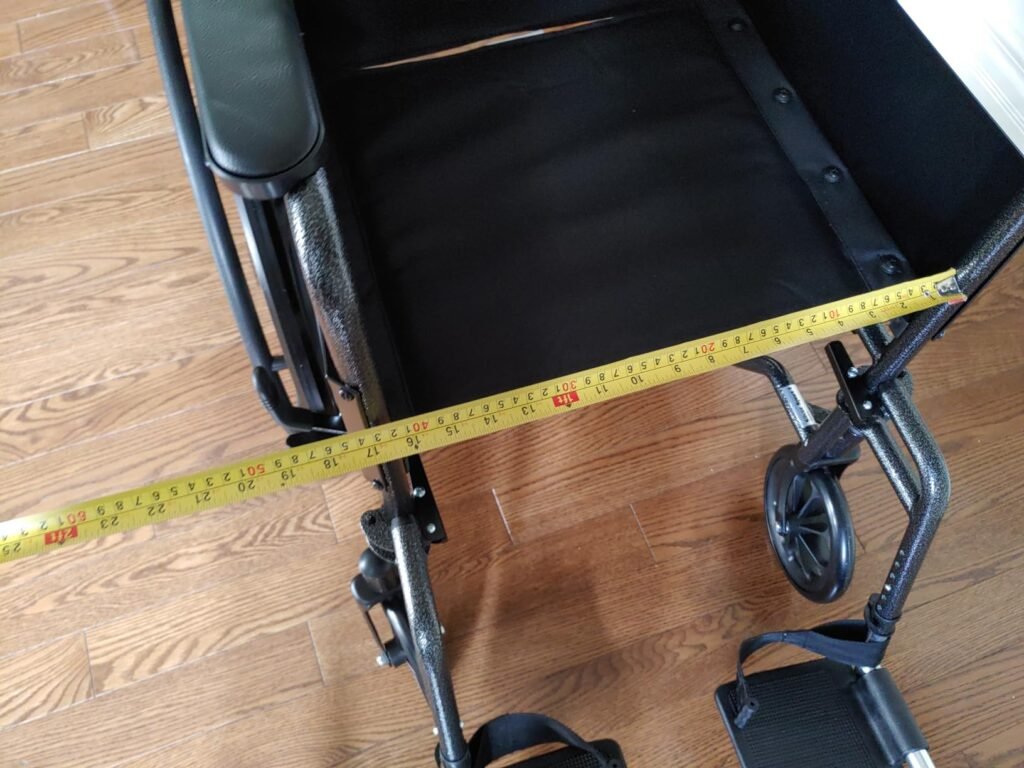
18-inch seat width
Swing-away footrests
Flip-back desk arms
Compare 10 lightweight wheelchairs by frame weight, seat comfort, portability, braking, and durability to find the right mobility aid for everyday use.

Finding the right lightweight wheelchair in 2026 means balancing frame weight, seat comfort, wheel configuration, folding convenience, braking safety, and long-term durability. We compare 10 standout models across these practical factors to help you choose with confidence.
Wheelchair weight varies dramatically across this category, from ultra-portable 15-pound transport chairs to sturdier 37-pound daily models. The best choice depends on whether you need self-propulsion, caregiver assistance, frequent travel, or all-day seated comfort.
This guide breaks down frame materials, seat dimensions, wheel sizes, folding mechanisms, and weight capacities so you can match a chair to your specific mobility needs, living environment, and budget without sorting through confusing spec sheets.
We compared 10 lightweight wheelchairs using the details that matter most for daily mobility decisions: frame weight, material construction, seat width and depth, wheel configuration, folding portability, braking systems, weight capacity, armrest and footrest adjustability, and owner feedback. The notes focus on real-world trade-offs so each recommendation connects to how people actually use, transport, and store a wheelchair at home and on the go.


Compare key features, scores, and current prices side by side. A shorter feature list means fewer details were available, not necessarily fewer capabilities.




The ProTraverse Transport wheelchair supports up to 350 pounds while maintaining a relatively light 24.7-pound frame, making it one of the highest-capacity options in this guide without a dramatic weight penalty. This combination is valuable for larger users who still need a chair that a caregiver can lift and load without excessive strain.

We may earn a commission when you buy through this link, at no additional cost to you.
The S-shaped backrest contours to the natural curve of the spine, which can reduce lower back fatigue during longer sitting sessions. Removable zero-pressure seat and back cushions are machine washable, a practical feature for maintaining hygiene and comfort over months of daily use. The seat cushion can even be removed to convert the chair into a stable shower seat.
Maneuverability benefits from 12-inch polyurethane rear wheels and 7-inch front casters with 360-degree rotation and shock-absorbing springs. The telescopic push handle adjusts to different caregiver heights, reducing back strain during extended pushing. The chair folds down to a compact 20.7 by 12.6 by 27.2 inches for travel.
Standard flat seat cushions can create pressure points on the sit bones during prolonged use, leading to discomfort or skin irritation. Zero-pressure cushions distribute weight more evenly across the seating surface, which is especially important for users who spend several hours a day in their wheelchair. Removable, washable covers add a layer of practical hygiene that is difficult to achieve with fixed upholstery.
This model is best suited for users who need a higher weight capacity without sacrificing portability, and who value ergonomic back support and easy-clean cushions. The 16-inch seat width is on the narrower side, so buyers who need a wider seat should verify fit before purchasing.
Users who need a seat wider than 16 inches should look at models offering 18- or 19-inch seat widths for a more comfortable fit.
We may earn a commission when you buy through this link, at no additional cost to you.
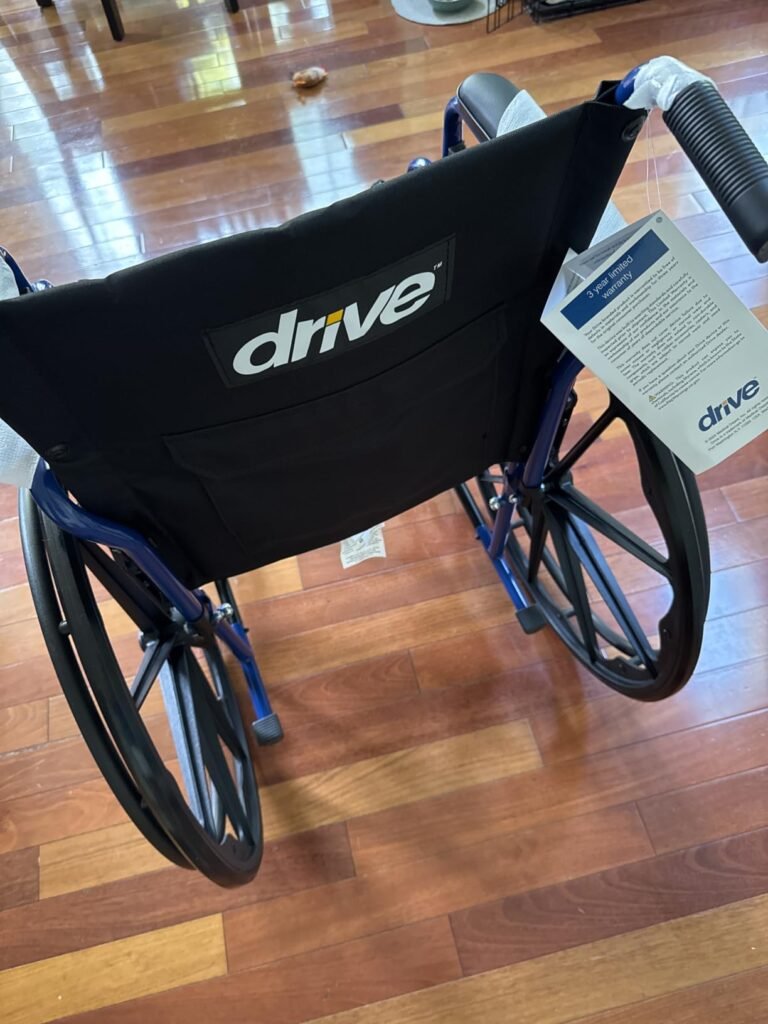
The Drive Medical Blue Streak is a practical starting point for anyone who needs a dependable everyday wheelchair without a large investment. Its 18-inch seat accommodates most average-sized adults, and the overall build quality feels reassuring for routine indoor and outdoor use around the home, clinic, or neighborhood.

We may earn a commission when you buy through this link, at no additional cost to you.
A steel frame gives this chair solid structural integrity, though it does mean the overall weight is higher than aluminum alternatives. The flip-back desk-length arms are a genuine convenience for sliding up to tables or transferring from a bed, and the swing-away footrests clear the path for standing or lateral transfers without requiring tools.
Maneuverability is straightforward thanks to smooth-rolling solid wheels and a stable single-axle design. Caregivers will appreciate the ergonomic hand grips on the push handles, which reduce hand fatigue during longer outings. The low-maintenance tires also mean fewer worries about flats or frequent upkeep.
Flip-back desk arms allow the user or caregiver to swing the armrest out of the way during lateral transfers from a bed, car seat, or toilet. This small feature significantly reduces the effort and risk involved in repositioning, especially for users with limited upper-body strength. If transfers are a frequent part of your daily routine, this design detail is worth prioritizing over fixed-arm models.
This model makes the most sense for buyers who prioritize affordability and straightforward functionality over ultra-low weight. If you need a chair primarily for home use with occasional outings and do not plan to lift it in and out of a car frequently, the Blue Streak delivers dependable performance at a budget-friendly price.
Buyers who need to lift the wheelchair into a vehicle trunk frequently may find the steel frame heavier than ideal.
We may earn a commission when you buy through this link, at no additional cost to you.
At just 24 pounds without the footrest, the Karman LT-980 is one of the lighter full-size wheelchairs in this comparison. That weight difference becomes very noticeable when loading the chair into a car or carrying it up a short flight of stairs, making it a strong option for active users who travel regularly.

We may earn a commission when you buy through this link, at no additional cost to you.
The 22-inch rear wheels with flat-free polyurethane tires roll smoothly across indoor floors and paved outdoor surfaces without the risk of punctures. The braking system is positioned within easy reach of the seated user, which adds a layer of independence for those who self-propel and want reliable stopping power on inclines.
Comfort details include padded nylon upholstery that wipes clean easily and a backrest pouch for storing small personal items. The folding backrest and seat collapse into a compact profile for storage in closets or vehicle trunks. Adjustable-height footplates let you fine-tune leg positioning for longer periods of sitting.
Many transport wheelchairs place brakes only on the push handles, meaning the seated user cannot engage them independently. The LT-980 positions hand brakes within the user’s reach at the wheels, allowing self-propelled riders to lock the chair for safe transfers or parking on slopes. This feature is especially valuable for users who spend time navigating without a caregiver nearby.
The LT-980 is best suited for users who value low weight and self-propelled mobility but do not require swing-away or flip-back armrests for lateral transfers. If your primary concern is keeping the chair light enough to handle solo, this Karman model delivers a compelling balance of portability and everyday function.
Users who need flip-back or swing-away armrests for frequent lateral transfers should look at models with more armrest flexibility.
We may earn a commission when you buy through this link, at no additional cost to you.
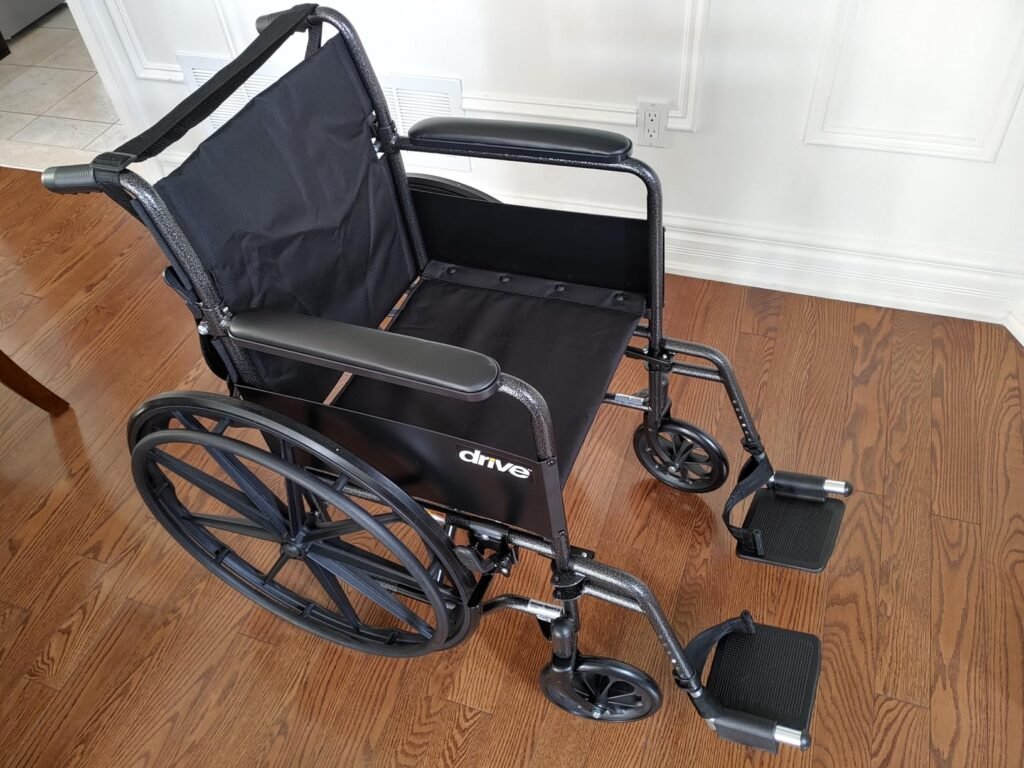
The Drive Silver Sport 1 is designed primarily as a transport wheelchair, meaning a caregiver does the pushing while the user enjoys a comfortable, well-supported ride. Full-length padded armrests and breathable nylon upholstery make it a pleasant option for medical appointments, shopping trips, and other outings where the user will be seated for extended periods.
We may earn a commission when you buy through this link, at no additional cost to you.
The powder-coated steel frame provides sturdy support up to 250 pounds, and the urethane tires on composite wheels roll quietly across hospital corridors, grocery store aisles, and smooth sidewalks. Push-to-lock brakes on the rear wheels give the caregiver quick control when stopping on ramps or loading into a vehicle.
A foldable back reduces the chair’s profile for car trunk storage, and the built-in carry pocket is a small but useful touch for keeping a phone, wallet, or medication within reach. The overall design prioritizes passenger comfort and caregiver convenience over ultra-light portability.
Transport chairs typically have smaller rear wheels that the seated user cannot reach for self-propulsion. This design keeps the overall frame more compact and is ideal when a caregiver or family member will always be available to push. If the user needs to propel themselves independently, a standard wheelchair with larger rear wheels and hand rims is the better choice.
Choose this model if you primarily need a comfortable transport chair for caregiver-assisted outings and do not plan to self-propel. The higher weight is a reasonable trade-off for the padded armrests and stable ride quality, but buyers who need to lift the chair alone should consider lighter aluminum options.
Users who need to self-propel will find the smaller rear wheels limiting and should choose a standard wheelchair with 22- to 24-inch rear wheels.
We may earn a commission when you buy through this link, at no additional cost to you.
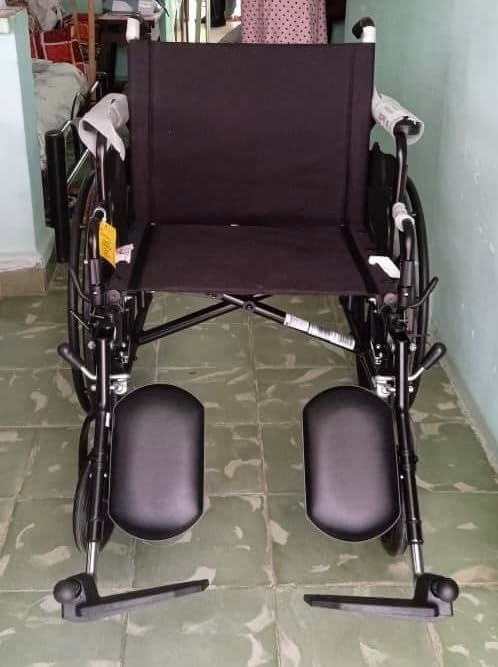
The Medline Swing-Back wheelchair stands out for its elevating leg rests, a feature that can make a significant difference for users who experience leg swelling, circulation issues, or post-surgical recovery needs. Being able to raise the legs while seated helps reduce discomfort during long periods of sitting and supports better overall positioning.
We may earn a commission when you buy through this link, at no additional cost to you.
The seat height adjusts between 18 and 20 inches, which helps match the chair to different desk and table heights or accommodate users of varying leg lengths. Swing-back desk-length arms fold out of the way for lateral transfers, and the 300-pound weight capacity provides a reassuring margin for a wide range of body types.
At 34 pounds, this chair sits in the middle of the weight spectrum. It is lighter than heavy-duty steel models but heavier than the ultra-light aluminum transport chairs in this guide. The durable frame handles both indoor and outdoor surfaces competently, and the breathable nylon upholstery stays comfortable during extended use.
Elevating leg rests allow the user to raise their lower legs to a more horizontal position, which can help reduce edema, improve circulation, and relieve pressure on the lower back. They are particularly useful after knee or hip surgery, for users with chronic venous insufficiency, or for anyone who experiences significant leg swelling by the end of the day. Standard fixed footrests cannot provide this level of positioning adjustment.
This Medline model is a strong fit for users who spend many hours in their wheelchair and need adjustable leg elevation for comfort or medical reasons. If leg support is a priority and you do not need to lift the chair frequently, the added weight is a worthwhile trade-off for the enhanced positioning options.
Buyers who need the lightest possible chair for frequent car loading may prefer a simpler transport model without elevating mechanisms.
We may earn a commission when you buy through this link, at no additional cost to you.
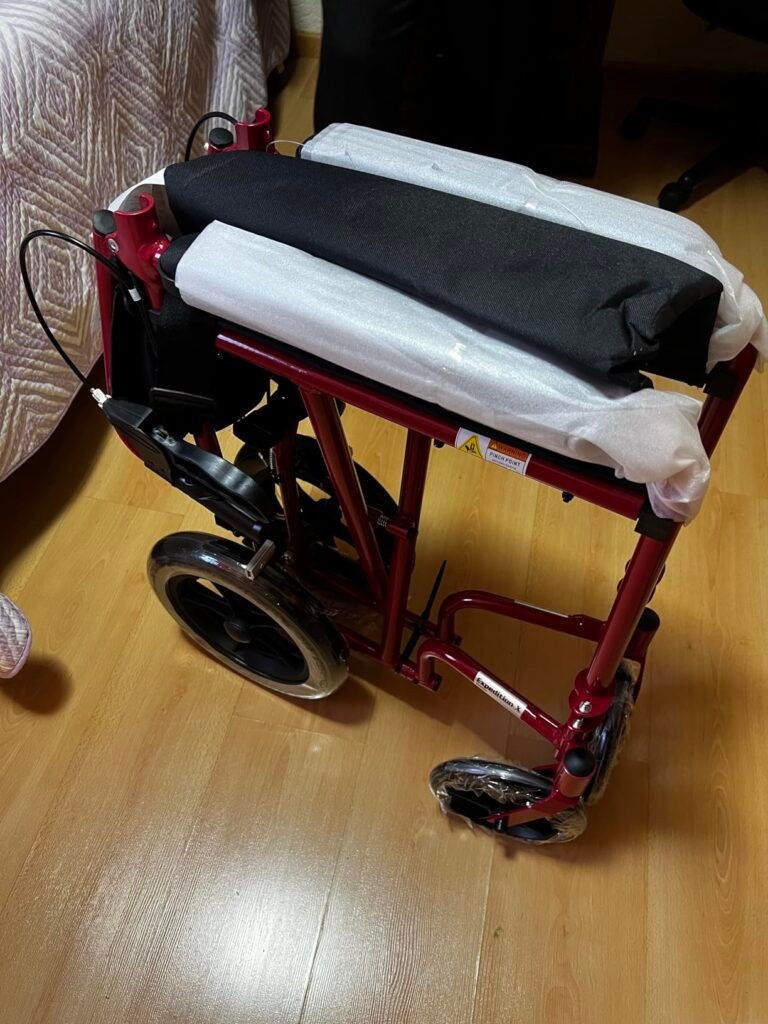
Weighing just 19 pounds, the Drive Expedition is one of the lightest transport chairs in this lineup. That featherweight profile makes it exceptionally easy for a caregiver to lift into a car trunk, carry up steps, or maneuver through crowded spaces like airports and restaurant aisles.

We may earn a commission when you buy through this link, at no additional cost to you.
The 12-inch rear wheels are larger than those on many competing transport chairs, which translates to a smoother ride over cracks, thresholds, and slight bumps. The built-in curb assist technology gives the caregiver extra leverage when tipping the chair over curbs or raised doorways, reducing strain on the wrists and back.
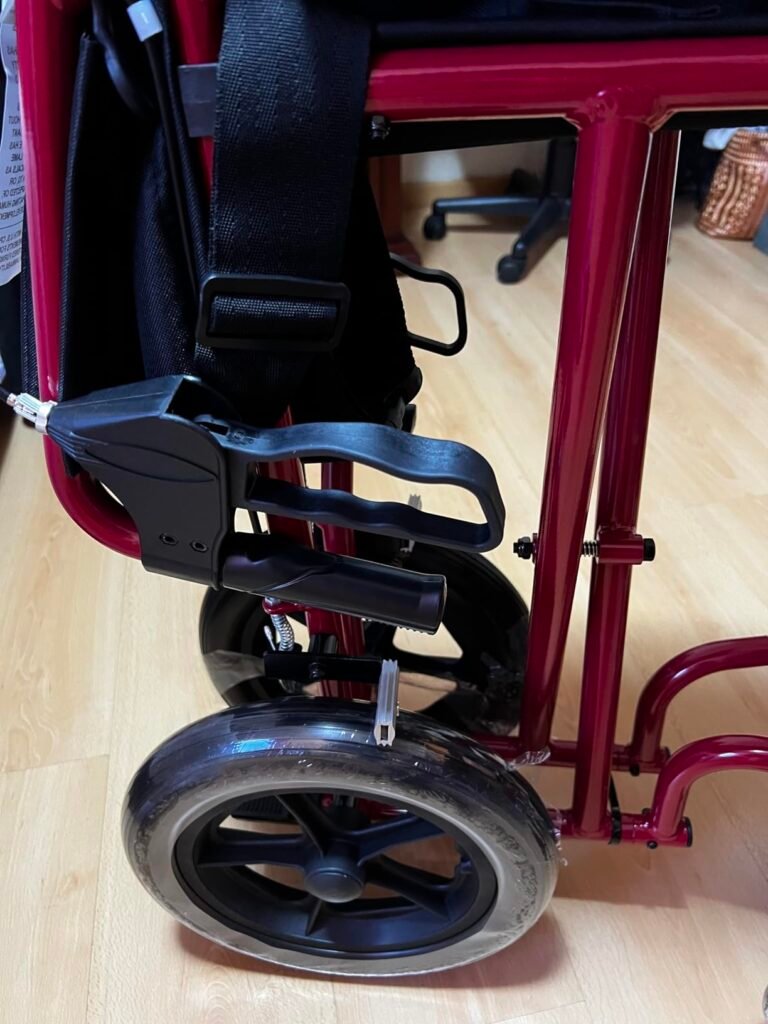
Companion-activated loop-lock hand brakes on the push handles provide reliable stopping power without requiring the caregiver to bend down or reach awkwardly. The rear-lever folding system collapses the frame quickly for storage, and the fold-down footrests tuck neatly out of the way during transport.
Many transport chairs use 8-inch rear wheels that transmit every crack and bump directly to the seated user. Upgrading to 12-inch wheels, as the Expedition does, smooths out the ride significantly on uneven sidewalks and indoor flooring transitions. The difference is especially noticeable during longer outings where vibration fatigue can become uncomfortable.
This chair is ideal for caregivers who need a highly portable transport option for frequent outings. The lightweight aluminum frame and larger rear wheels make it easier to push and lift than many alternatives, but users who need to propel themselves should look at models with full-size rear wheels and hand rims.
Users who need independent self-propulsion should choose a wheelchair with 22- to 24-inch rear wheels and hand rims.
We may earn a commission when you buy through this link, at no additional cost to you.
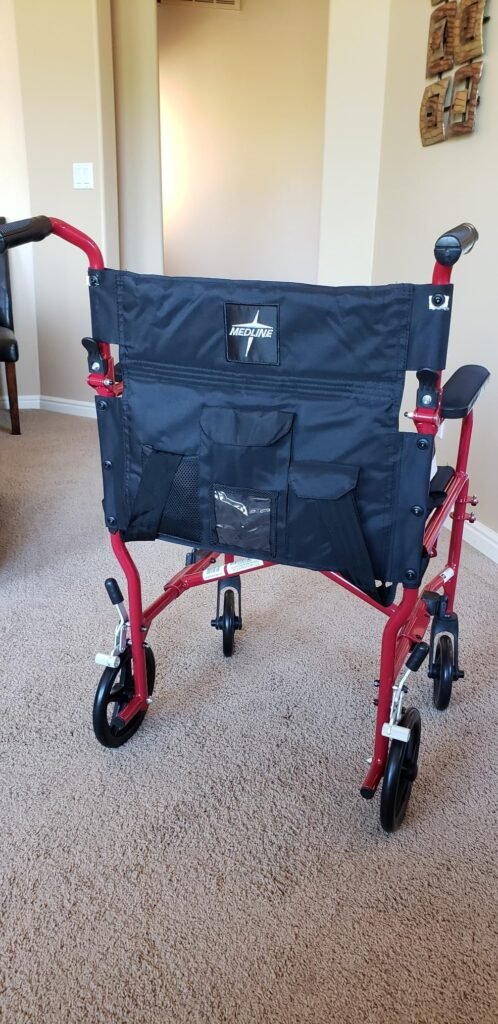
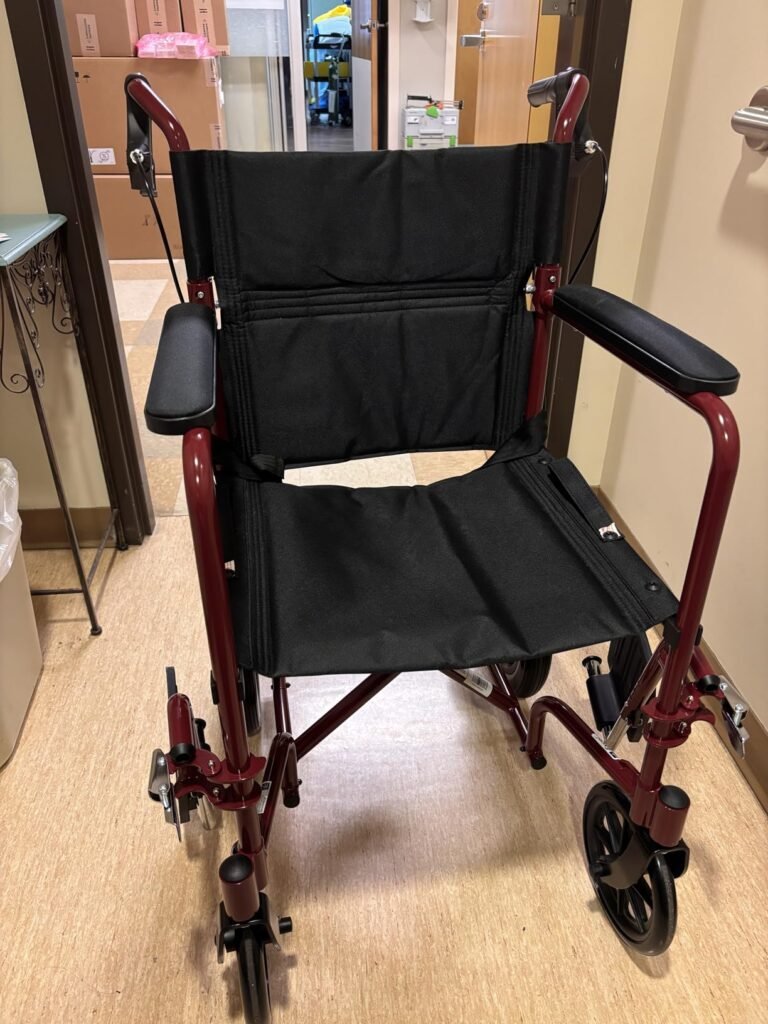
The Medline 12-Inch Transport chair combines easy-squeeze hand brakes on the push handles with manual locking brakes on the rear wheels, giving the caregiver two layers of stopping control. This dual-braking setup is particularly reassuring on slopes, ramps, and during transfers when the chair must remain completely stationary.
We may earn a commission when you buy through this link, at no additional cost to you.
A 19-inch wide seat and full-length cushioned armrests provide a roomy, comfortable ride for users up to 300 pounds. The 12-inch rear wheels and swivel front casters handle tight corners, doorways, and ramps with smooth maneuverability, making this chair versatile for both indoor and outdoor environments.
The swing-away detachable footrest locks securely in place during use and swings out of the way for easier entry and exit. The aluminum frame folds compactly for car trunk storage, and the easy-clean nylon fabric requires no assembly out of the box, which is convenient for buyers who need the chair ready immediately.
A single brake system typically relies on either push-handle hand brakes or wheel-mounted locks, but not both. Dual braking gives the caregiver hand-brake control while pushing and a separate wheel lock for parking, which is safer during transfers and on inclines. If you regularly navigate hills or need rock-solid stability during sit-to-stand transitions, dual braking is a feature worth seeking out.
This model is a strong choice for caregivers who want reliable braking performance and a comfortable, spacious seat for the user. The 26-pound weight is moderate for a transport chair, so it remains manageable for most adults to lift while offering more stability and capacity than the lightest options.
Users who need to perform frequent lateral transfers may find the fixed full-length armrests restrictive compared to swing-back or flip-back designs.
We may earn a commission when you buy through this link, at no additional cost to you.
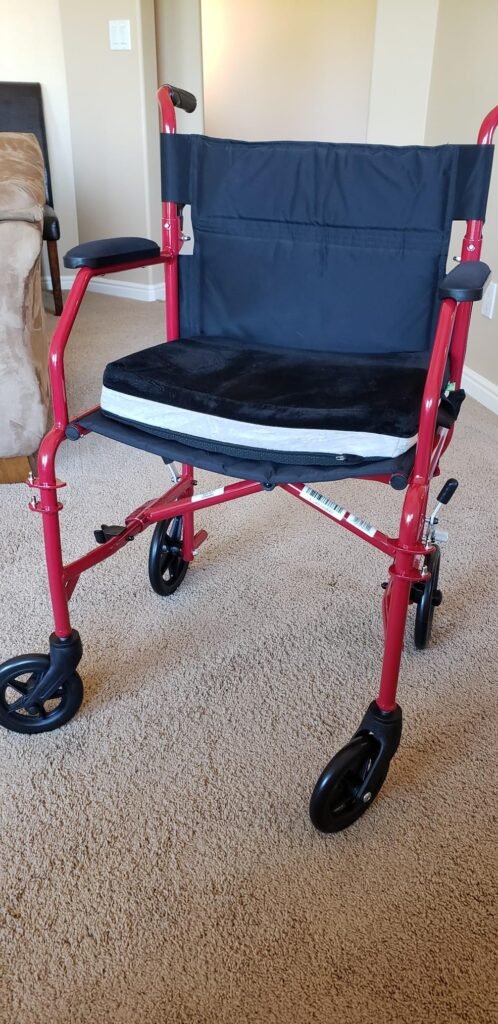
At only 15 pounds, the Medline Ultra Lightweight is the lightest chair in this entire comparison. That remarkable weight makes it almost effortless for a single caregiver to lift, carry, and stow, which is a game-changer for families who frequently load the chair into a car or navigate public transportation.
We may earn a commission when you buy through this link, at no additional cost to you.
Despite its featherweight construction, the aluminum frame supports up to 300 pounds and offers a generous 19-inch seat width that accommodates a broad range of body types comfortably. The desk-length cushioned armrests keep the profile compact, and the swing-away footrests lock securely in place during use.
The 8-inch rear wheels and swivel front casters maneuver smoothly around tight indoor spaces like hallways, bathrooms, and restaurant tables. Rear-wheel locking brakes provide stable parking for safe transfers. The easy-clean nylon fabric requires no assembly, so the chair is ready to use the moment it arrives.
Ultra-light wheelchairs achieve their low weight partly by using smaller wheels and thinner frame tubing. While this makes lifting dramatically easier, smaller wheels transmit more vibration from cracks and thresholds to the seated user. If most of your use is indoors on smooth floors, the trade-off is minimal. If you regularly cross rough parking lots or cobblestone paths, a slightly heavier chair with larger wheels may provide a more comfortable ride.
This is the go-to choice for buyers whose top priority is minimal weight for travel and transport. The smaller rear wheels do mean a slightly rougher ride on uneven outdoor surfaces compared to 12-inch wheel models, so consider your typical terrain before deciding.
Users who frequently travel over rough outdoor terrain may find the 8-inch rear wheels less comfortable than models with 12-inch or larger wheels.
We may earn a commission when you buy through this link, at no additional cost to you.
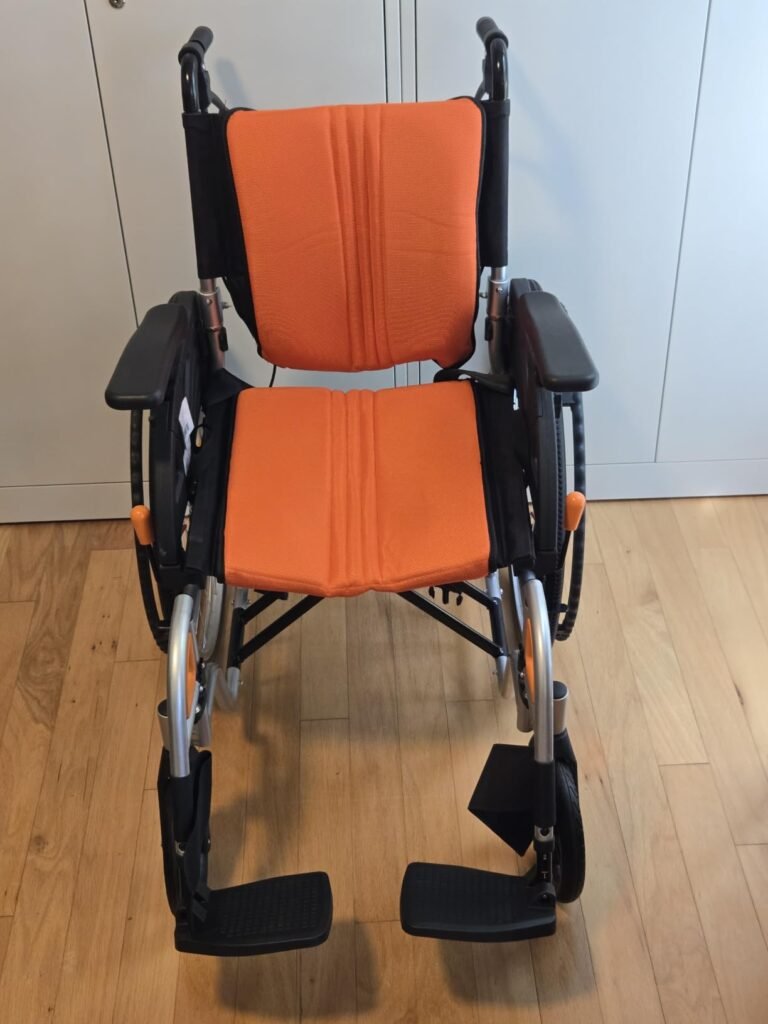
The VOCIC Ultra Lightweight bridges the gap between a compact transport chair and a full-size self-propelled wheelchair. At 23 pounds, it is light enough for one person to lift, yet it features 24-inch puncture-resistant rear tires that allow the seated user to self-propel comfortably across a variety of surfaces.
We may earn a commission when you buy through this link, at no additional cost to you.
The quick-release rear wheels detach in about a second without tools, reducing the folded storage footprint by roughly 30 percent. This is a significant advantage for users who need to fit the chair into a small car trunk or a tight apartment closet. The reinforced dual-X base provides a stable, wobble-free ride supporting up to 300 pounds.
Adjustability is a major strength. The Ergolift armrests offer three height levels, the Flexfit footrests adapt to different leg lengths, and the 270-degree swing-in and swing-out footrest design allows the legrests to fold inward for flush positioning against beds, car seats, and toilets. The flip-back armrests further simplify lateral transfers.
Standard wheelchairs fold flat but still retain their full wheel width, which can make them awkward to slide into narrow trunk spaces or closet corners. Quick-release wheels let you pop off both rear wheels in seconds, dramatically shrinking the chair’s profile. When you are ready to use the chair again, the wheels snap back on without tools. This feature is especially valuable for users who store and transport their wheelchair multiple times per day.
This chair is the strongest all-around option for users who want self-propulsion capability, lightweight portability, and extensive adjustability in a single package. The higher price reflects the breadth of features, but for buyers who will use the chair daily across multiple environments, the investment is well justified.
Buyers on a tight budget who only need occasional caregiver-assisted transport may find the advanced features unnecessary.
We may earn a commission when you buy through this link, at no additional cost to you.
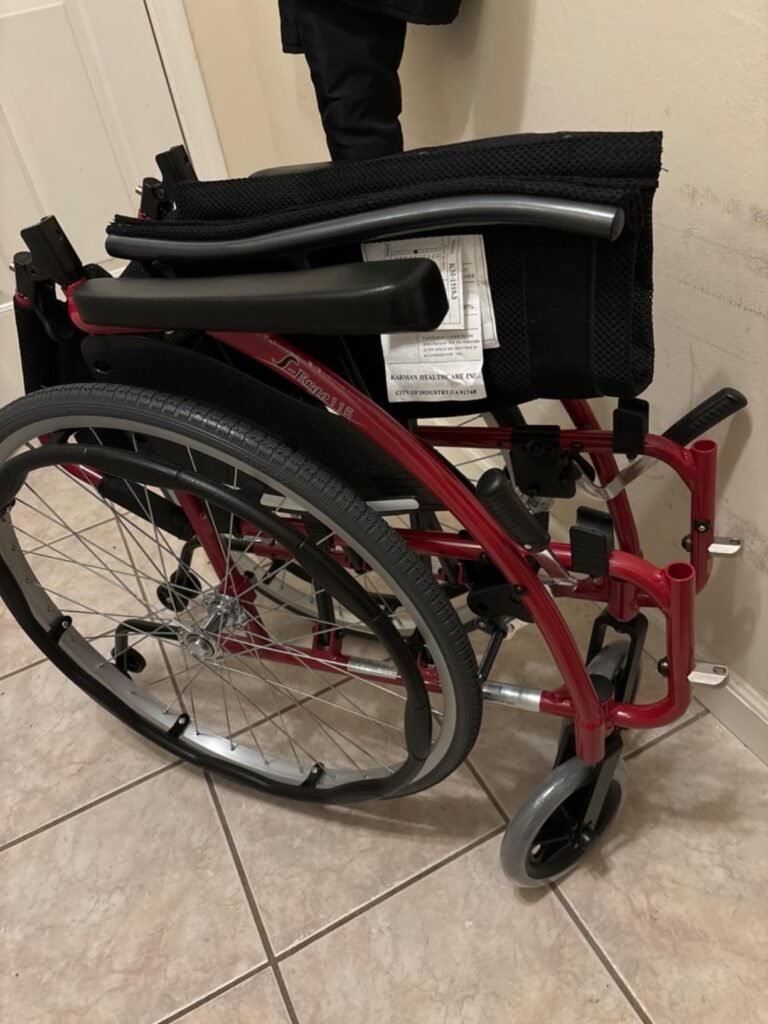
The Karman S-115 uses a patented S-shaped seating frame that contours to the natural curves of the body, distributing weight more evenly across the seat and backrest. This ergonomic approach can reduce pressure points and improve posture during long periods of sitting, which is a meaningful advantage for daily wheelchair users.

We may earn a commission when you buy through this link, at no additional cost to you.
At 25 pounds, the S-115 is impressively light for a full-size self-propelled wheelchair with 24-inch rear wheels. The flat-free tires handle both indoor floors and outdoor pavement without puncture concerns, and the 7-inch front casters provide agile turning in tight spaces. The removable footrest adjusts in height to match different leg lengths.
The 18-inch seat width and 17-inch seat depth suit average-sized adults well, and the overall build quality reflects the premium positioning of this model. The red frame adds a distinctive visual touch that sets it apart from the more utilitarian black and silver options in this category.
Traditional flat wheelchair seats place most of the user’s weight on the sit bones, which can lead to pressure sores and lower back fatigue over time. An S-shaped frame mimics the natural curvature of the spine and pelvis, spreading pressure across a larger surface area. This design can reduce the need for frequent repositioning and may help users stay comfortable for longer stretches without additional cushioning.
The S-115 is best suited for users who prioritize ergonomic seating comfort and self-propelled independence and are willing to invest in a higher-end model. If you spend many hours each day in your wheelchair and have experienced discomfort with flat-seat designs, the S-shaped frame may provide a noticeable improvement in daily comfort.
Budget-conscious buyers who need a wheelchair only for occasional short trips may find the premium price difficult to justify.
We may earn a commission when you buy through this link, at no additional cost to you.
Selecting a lightweight wheelchair involves more than comparing weight numbers. The right chair should match your daily routine, physical needs, living environment, and transportation habits. This section breaks down the most important factors to consider before making your decision.
Frame weight is the single most noticeable difference between wheelchair models, and it directly affects how easy the chair is to lift, carry, and load into a vehicle. Steel frames are the heaviest, often pushing total weight above 35 pounds, but they offer robust durability and a lower purchase price. Aluminum frames can bring the weight down to 15 to 26 pounds depending on the design, making a dramatic difference for caregivers who load the chair into a car multiple times per day.
The lightest chairs in this category, such as the 15-pound Medline Ultra Lightweight, use thin-walled aluminum tubing and smaller wheels to minimize mass. Heavier aluminum models like the 26-pound Medline 12-Inch Transport add features like larger wheels and dual braking that increase weight but improve ride quality and safety. Consider who will be lifting the chair and how often. A difference of 10 pounds may not matter for a strong caregiver loading the chair once a week, but it becomes significant for an older spouse managing daily trips.
If you or your caregiver will lift the chair frequently, prioritize aluminum frames under 25 pounds. If the chair will mostly stay at home and weight is less of a concern, a steel frame can save money without sacrificing structural integrity.
Seat dimensions determine whether the wheelchair will be comfortable for the intended user over extended periods. Most lightweight wheelchairs offer seat widths between 16 and 19 inches. A seat that is too narrow can cause hip discomfort and make it difficult to shift position, while a seat that is too wide may reduce stability and make self-propulsion harder because the user has to reach farther to grip the hand rims.
Seat depth is equally important but often overlooked. A seat that is too deep can press against the back of the knees, restricting circulation and causing discomfort. A seat that is too shallow may not provide adequate thigh support. Some models, like the Medline Swing-Back, offer height-adjustable seats that can also accommodate different leg lengths. Measure the user’s hip width and thigh length before ordering to ensure a proper fit.
Choose a seat width that allows about one inch of clearance on each side of the user’s hips. If the user is between sizes, a slightly wider seat with a cushion insert is generally more comfortable than a seat that is too snug.
Wheel size has a major impact on ride comfort, maneuverability, and whether the user can self-propel. Transport chairs typically use 8- to 12-inch rear wheels that a seated user cannot reach, meaning a caregiver must do all the pushing. Standard wheelchairs use 22- to 24-inch rear wheels with hand rims that allow the user to propel themselves independently.
Larger rear wheels roll more smoothly over cracks, thresholds, and outdoor terrain because they bridge gaps that small wheels drop into. The VOCIC and Karman S-115 both use 24-inch rear wheels for a smooth, self-propelled ride. If you primarily need a chair for indoor use on smooth floors, 8-inch wheels are adequate and keep the overall weight and profile lower. For mixed indoor and outdoor use, 12-inch wheels offer a good middle ground between portability and ride quality.
Match wheel size to your primary use environment. Choose 24-inch wheels for self-propulsion and outdoor terrain, 12-inch wheels for caregiver-assisted outings on mixed surfaces, and 8-inch wheels for lightweight indoor-only transport.
All 10 wheelchairs in this guide fold for storage and transport, but the folding mechanisms and resulting folded dimensions vary considerably. Basic cross-brace folding collapses the chair side to side, reducing width but maintaining the full length and height. More advanced designs, like the VOCIC’s quick-release wheels, allow you to remove the rear wheels entirely for a dramatically smaller storage footprint.
Consider where you will store the chair most often. If it needs to fit in a small car trunk, measure the trunk dimensions and compare them to the folded chair specifications. Some transport chairs fold compactly enough to fit in an overhead airplane compartment or a tight closet corner, while full-size models with large rear wheels require more space even when folded.
If you travel frequently or have limited storage space, prioritize chairs with quick-release wheels and compact folded dimensions. If the chair will remain in a spacious home or garage, a simpler folding mechanism is perfectly adequate.
Braking systems on lightweight wheelchairs range from simple push-to-lock wheel brakes to dual systems that combine caregiver hand brakes with rear-wheel locks. Push-to-lock brakes are the most basic and require the user or caregiver to reach down to the wheel to engage them. Hand brakes on the push handles allow the caregiver to slow and stop the chair without bending, which is safer on slopes and during transfers.
Dual braking systems, like those on the Medline 12-Inch Transport, provide the most comprehensive control by offering both hand brakes for active slowing and wheel locks for secure parking. This redundancy is especially valuable for users with higher weight or for caregivers navigating hilly terrain. Some models also include user-accessible brakes at the wheels, giving the seated person independent stopping control.
Prioritize dual braking if you regularly navigate inclines, ramps, or uneven surfaces. For flat indoor use, simple push-to-lock brakes are usually sufficient and help keep the chair lighter and less expensive.
Weight capacity ranges from 250 pounds on lighter models to 350 pounds on reinforced designs like the ProTraverse Transport. It is important to choose a chair with a capacity that comfortably exceeds the user’s weight, ideally by at least 25 to 50 pounds, to account for clothing, cushions, and any items carried on the chair. Operating a wheelchair near its maximum capacity can accelerate wear on the frame, wheels, and upholstery.
Durability also depends on frame material and construction quality. Aluminum frames resist corrosion and maintain their appearance over time, while steel frames may show surface rust if the powder coating is scratched. Flat-free polyurethane tires eliminate the risk of punctures and reduce long-term maintenance compared to pneumatic tires that require air pressure checks.
Select a weight capacity at least 25 pounds above the user’s actual weight. If the chair will see heavy daily use, invest in a model with a higher capacity rating and flat-free tires to minimize maintenance and extend the chair’s useful life.
Armrest and footrest configurations affect both comfort and the ease of transferring in and out of the chair. Fixed full-length armrests provide the most arm support but can block lateral transfers from beds or car seats. Flip-back or swing-back desk-length arms fold out of the way, creating a clear path for sliding transfers. The VOCIC model takes this further with three-level height-adjustable armrests that can be fine-tuned for shoulder comfort.
Footrest options include fixed, swing-away, detachable, and elevating designs. Swing-away footrests rotate to the side for easier entry and exit. Elevating leg rests, found on the Medline Swing-Back model, allow the user to raise their legs for improved circulation and reduced swelling. Detachable footrests can be removed entirely for a more compact fold or to accommodate different seating positions.
If the user transfers frequently between the wheelchair and other surfaces, prioritize swing-back armrests and swing-away footrests. If leg elevation is medically necessary, choose a model with elevating leg rests even if it adds some weight and complexity.
Before using a new wheelchair for the first time, fully unfold the frame and verify that all locking mechanisms click securely into place. Check that the footrests are attached and locked, the brakes engage and release smoothly, and the wheels spin freely without wobbling. Adjust the seat height, armrest position, and footrest length to match the user’s body proportions for optimal comfort and posture. If the chair includes a seatbelt, familiarize yourself with the buckle mechanism and adjust the strap for a snug but comfortable fit.
Regular maintenance extends the life of your wheelchair and keeps it safe to use. Wipe down the frame and upholstery weekly with a damp cloth and mild soap, paying special attention to areas that accumulate dust and debris around the wheel axles and folding joints. Inspect the tires monthly for signs of wear, cracking, or embedded debris, and check that all bolts and fasteners remain tight. Lubricate the folding mechanism and wheel bearings every few months with a light silicone spray to prevent stiffness and squeaking.
When storing the wheelchair, fold it according to the manufacturer’s instructions and place it in a dry, temperature-controlled area away from direct sunlight, which can degrade nylon upholstery and rubber components over time. If the chair will be stored for an extended period, remove any removable cushions and store them separately to prevent compression. Before each outing, do a quick safety check of the brakes, footrest locks, and wheel alignment to ensure everything is functioning correctly.
The Medline Ultra Lightweight Transport Wheelchair weighs just 15 pounds, making it the lightest option in this guide. Its aluminum frame and compact 8-inch rear wheels keep the weight to a minimum while still supporting up to 300 pounds. This makes it an excellent choice for caregivers who need to lift and load the chair frequently.
Most transport wheelchairs have smaller rear wheels, typically 8 to 12 inches, that the seated user cannot reach for self-propulsion. These chairs are designed for caregiver-assisted use. If the user needs to propel themselves independently, choose a standard wheelchair with 22- to 24-inch rear wheels and hand rims, such as the VOCIC Ultra Lightweight or Karman S-115.
Measure the user's hip width while seated and add approximately one to two inches for comfort and clothing. Most lightweight wheelchairs in this guide offer seat widths between 16 and 19 inches. A seat that is too narrow causes hip pressure, while a seat that is too wide reduces stability and makes self-propulsion more difficult.
Yes, modern aluminum wheelchair frames are engineered to withstand daily use and support weight capacities of 250 to 350 pounds depending on the model. Aluminum resists corrosion and maintains its structural integrity over years of regular use. Many of the chairs in this guide use reinforced aluminum construction that rivals the durability of heavier steel frames.
Most lightweight wheelchairs fold compactly enough to fit in a standard sedan trunk, especially transport models with smaller wheels. Chairs with quick-release rear wheels, like the VOCIC, fold even smaller by allowing you to remove the wheels before loading. Measure your trunk dimensions and compare them to the folded chair specifications before purchasing if space is tight.
Swing-away footrests rotate to the side of the chair to clear the path for standing or transferring. Elevating footrests can be raised to extend the legs into a more horizontal position, which helps reduce swelling and improve circulation. Some chairs offer both features, but elevating footrests add weight and complexity to the frame.
Weight capacities in this guide range from 250 pounds on the Karman LT-980 to 350 pounds on the ProTraverse Transport. Most models support 300 pounds, which accommodates the majority of adult users comfortably. Always choose a chair with a capacity that exceeds the user's weight by at least 25 pounds for safety and longevity.
Most of the wheelchairs in this guide arrive fully assembled or require only minimal setup, such as attaching the footrests or unfolding the frame. The Medline Ultra Lightweight and Medline 12-Inch Transport specifically note no assembly required. Check the product listing for specific setup instructions before ordering if you need the chair ready immediately.
Perform a quick visual inspection of brakes, locks, and wheels before each use. Wipe down the frame and upholstery weekly, and do a more thorough check of bolts, fasteners, and tire condition monthly. Lubricate folding joints and wheel bearings every two to three months to keep the chair operating smoothly and quietly.
Yes, all the wheelchairs in this guide can be used outdoors on paved surfaces and smooth terrain. Models with larger wheels, such as the 24-inch rear wheels on the VOCIC and Karman S-115, handle outdoor surfaces more comfortably than small-wheeled transport chairs. For rough or unpaved terrain, look for puncture-resistant tires and shock-absorbing features.
The VOCIC Ultra Lightweight earns the top spot in this comparison for its impressive combination of a 23-pound aluminum frame, 24-inch self-propel wheels, quick-release storage, and extensive adjustability. It delivers full-size wheelchair performance in a package that one person can lift and load without difficulty, making it the most versatile choice for daily use across multiple environments.
For buyers with different priorities, the Medline Ultra Lightweight at 15 pounds is the clear winner for maximum portability, the Drive Medical Blue Streak offers dependable daily function at the lowest price, and the ProTraverse Transport provides the highest weight capacity with ergonomic back support. Each of these alternatives addresses a specific need that may matter more than all-around versatility for your situation.
Start by identifying your top two or three priorities, whether that is frame weight, seat comfort, self-propulsion capability, braking safety, or budget. Then match those priorities to the models that excel in those specific areas. A well-chosen lightweight wheelchair can significantly improve daily mobility and independence, so take the time to compare the details that will affect your everyday experience.