EGO Power+ TR4204
8.6Editor score42-inch steel deck
Six 56V batteries
1.5-acre runtime
Dual brushless motors
Find the right lawn tractors for 2026. We compare 9 standout options by build quality, useful features, owner feedback, value, and everyday trade-offs.

Find the right lawn tractor for 2026 by matching deck width, power source, runtime, transmission, cutting height, and terrain to the property you actually mow. This guide compares battery riding mowers, a zero-turn, gas walk-behinds, a tow-behind rough-cut, a PTO flail, and even a hose-powered traveling sprinkler so you do not buy a 42-inch rider for a postage-stamp lawn.
A 42-inch electric rider and a 21-inch self-propelled mower are not interchangeable. Battery tractors cut noise and oil changes but need charge planning. Gas walk-behinds cost less and store in a shed corner. Tow-behind and three-point implements only make sense if you already own an ATV or compact tractor.
Deck steel, blade drive, hitch type, and warranty length shape ownership more than a single horsepower number. The reviews below spell out who each machine is for, what it cannot do, and the yard-size and slope habits that should drive your choice before you spend.
We compared these machines using the details that actually help a property owner decide: cutting width, power source, claimed runtime or engine size, drive type, cutting-height range, hitch or walk-behind layout, deck construction, battery platform, warranty length, owner feedback, and value. The notes focus on practical trade-offs so each pick connects to real mowing, from suburban turf to overgrown acreage and irrigation, not just a catalog horsepower figure.

Compare key features, scores, and current prices side by side. A shorter feature list means fewer details were available, not necessarily fewer capabilities.




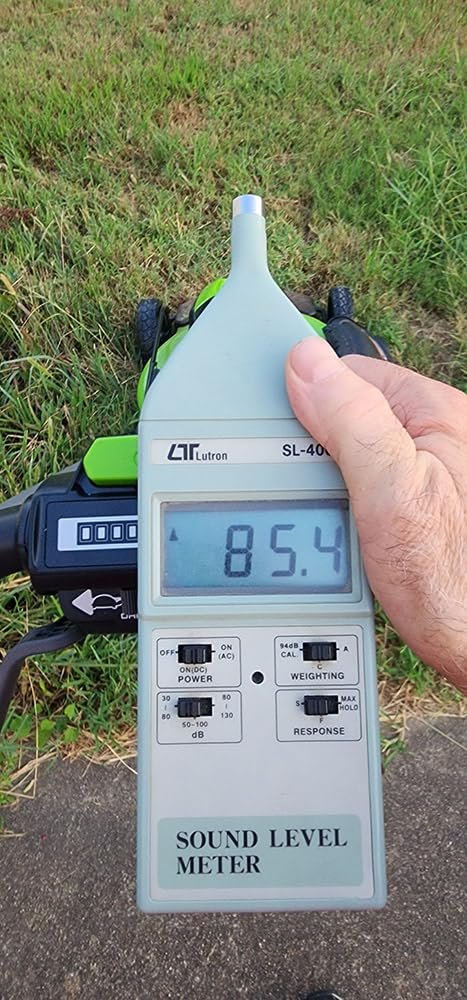
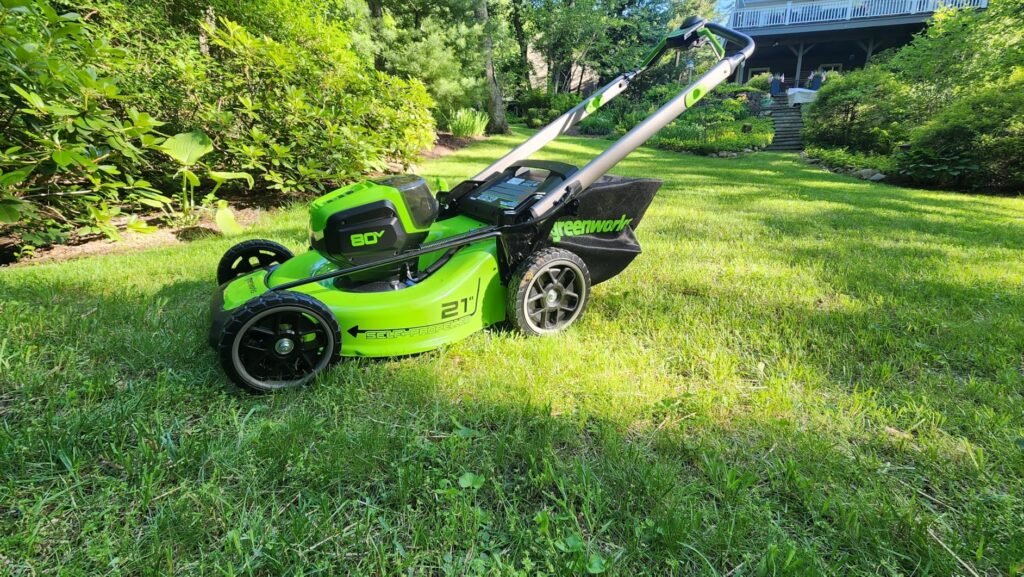
The Greenworks 80V 21-inch self-propelled mower is the highest-rated walk-behind in this comparison and the cordless alternative to gas 21-inch decks. A brushless motor and steel deck aim for more torque, quieter running, and longer motor life than brushed designs. The included 4.0Ah battery is specified to cut up to half an acre, varying with grass and technique.
We may earn a commission when you buy through this link, at no additional cost to you.
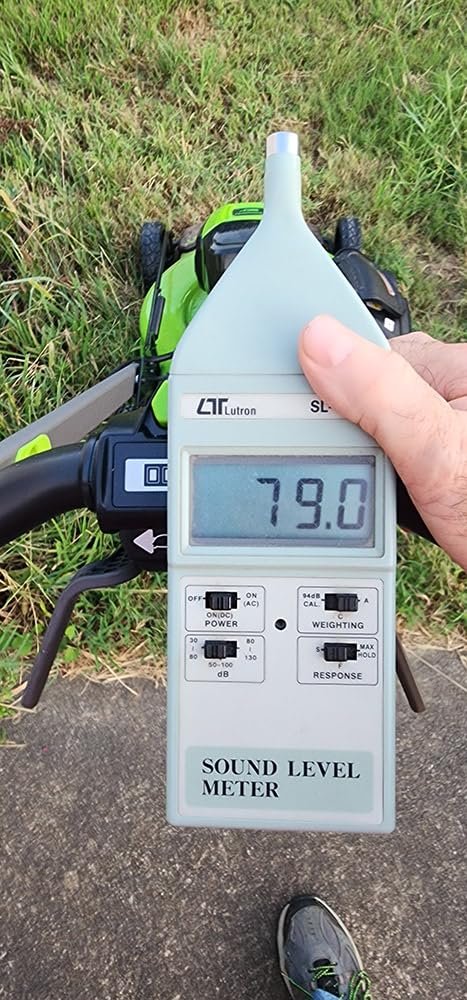
Rear-wheel drive with variable speed control is a comfort feature gas single-speed mowers lack: you can ease the pace in thick grass without fighting a fixed drive. An LED headlight supports early or late mowing. The pitch of being about three times quieter than gas matters on small lots and HOA streets.
A 4-year limited tool and battery warranty is strong in this class. The pack also works across 75-plus Greenworks 80V tools, so a second battery for a blower or trimmer is extra mowing insurance. Charge after each use rather than storing empty. Runtime drops in tall wet grass; a second 4.0Ah pack is the practical upgrade if your lot is near the half-acre claim.
If you already own Greenworks 80V trimmers or blowers, this mower’s battery is more valuable than a one-off pack. Keep at least one battery on the charger during the growing season. Variable speed on the drive lets you slow down so the blade can finish thick patches without dumping the pack in ten minutes. Mulch short clippings to avoid bag drag that also costs runtime.
This is the walk-behind to beat if you want battery convenience and a good owner score without stepping up to EGO’s 42-inch riders. It will not mow 1.5 acres on one 4.0Ah pack. If your property is already in that range, the TR4204 or ZT4204L is the lawn-tractor-scale answer.
Properties well over half an acre per session, or buyers who specifically need a seated 42-inch lawn tractor.
We may earn a commission when you buy through this link, at no additional cost to you.
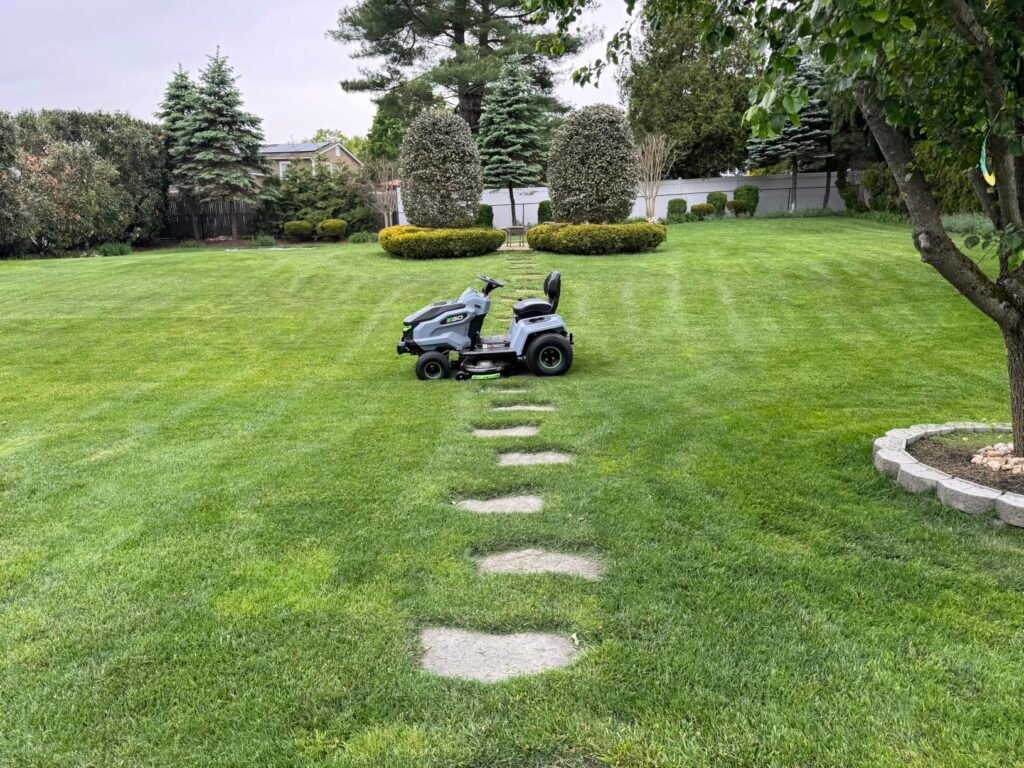
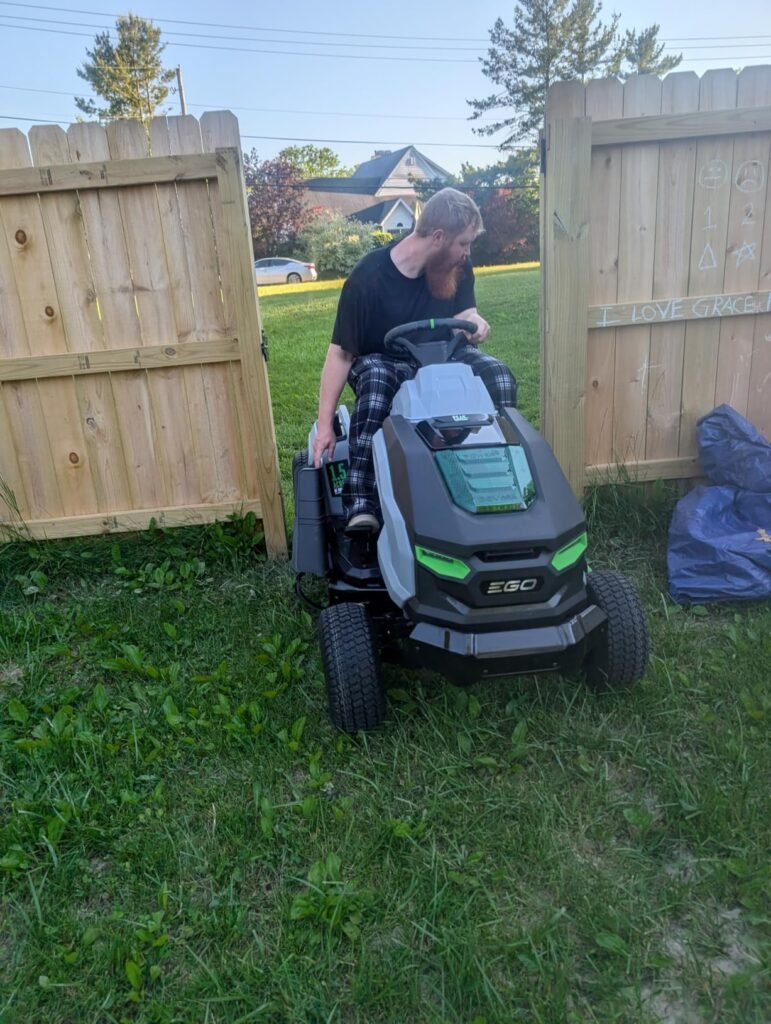
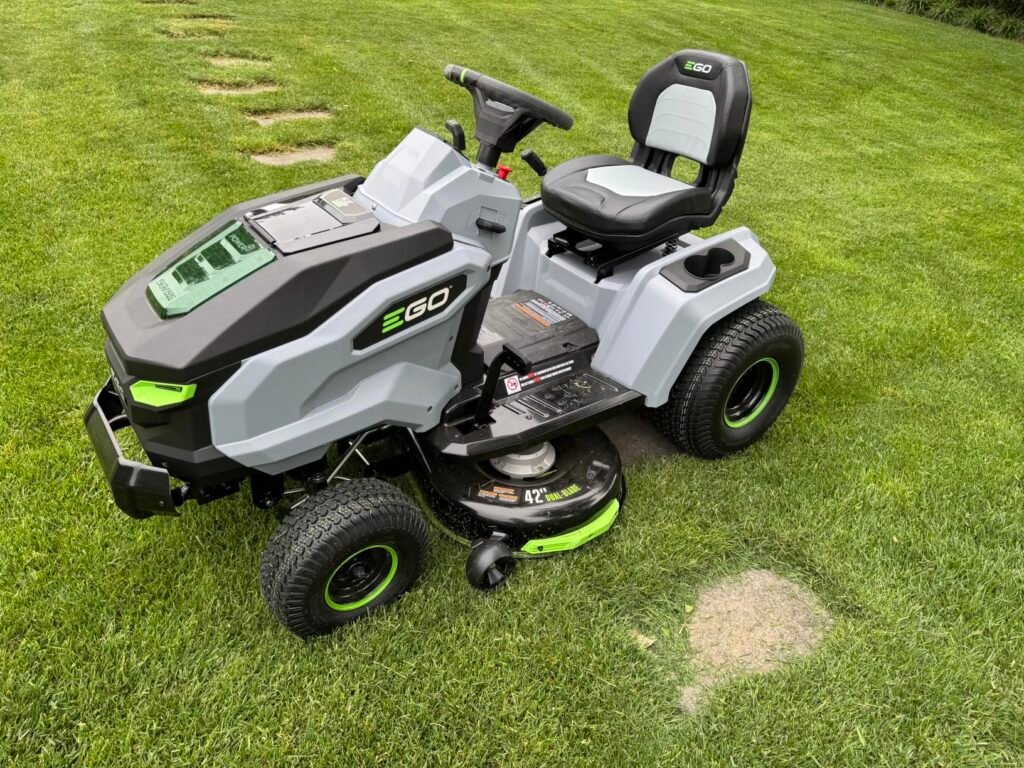
The EGO TR4204 is a true riding lawn tractor for suburban and small-acreage owners who want to leave gasoline, pull-cords, and deck belts behind. Peak Power combines up to six 56V ARC Lithium packs for as much as 20,000 watts, framed as equivalent to a 21-horsepower gas engine, with a 42-inch stamped steel deck that is the right width for many half-acre to acre-and-a-half lawns.
We may earn a commission when you buy through this link, at no additional cost to you.
Dual brushless cutting motors drive the blades without belts, which removes a common wear item on traditional riders. Six included 6.0Ah batteries are specified to cut up to 1.5 acres on a charge. Twelve cutting heights from 1.5 to 4.5 inches cover spring surge and summer dormancy. Drive is customizable through a digital LCD with three blade settings, three drive speeds, cruise control, and travel up to 6 MPH.
LED lights, a USB port, and Bluetooth are standard, which helps early or late mowing and phone charging on long sessions. The tractor works with the broader EGO 56V battery family, so extra packs you already own for handheld tools can extend runtime. A rear hitch supports light towing around the property. The 5-year tool warranty is longer than typical walk-behind coverage in this guide.
Treat the 1.5-acre figure as a planning number, not a guarantee. Tall, wet, or hilly grass draws more current. Keep a charging routine the night before mowing day, and if your property is larger, budget extra 56V packs rather than running the deck until the display dies mid-pass. Cruise control helps keep a steady pace so you are not constantly stabbing the pedal and wasting energy.
Choose the TR4204 if you want a seated 42-inch cut, already like the EGO battery platform, and your typical lawn is at or under about 1.5 acres per session. It is not a zero-turn, and it is not the machine for uncleared brush. If you need tighter turning around dense landscaping, look at the ZT4204L. If you only have a third of an acre, a 21-inch walk-behind will cost far less to own.
Tiny urban lots, properties that need brush cutting, or buyers unwilling to manage multiple lithium batteries.
We may earn a commission when you buy through this link, at no additional cost to you.
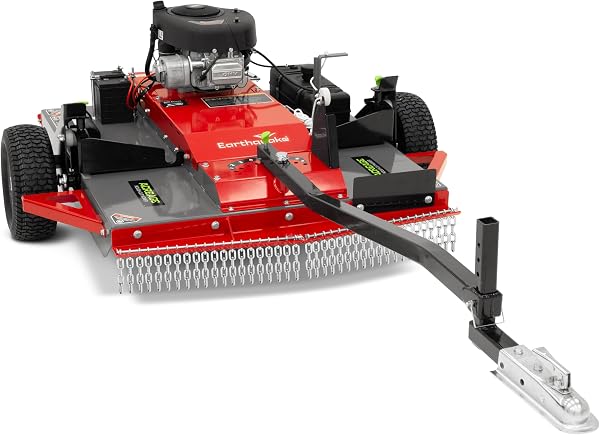
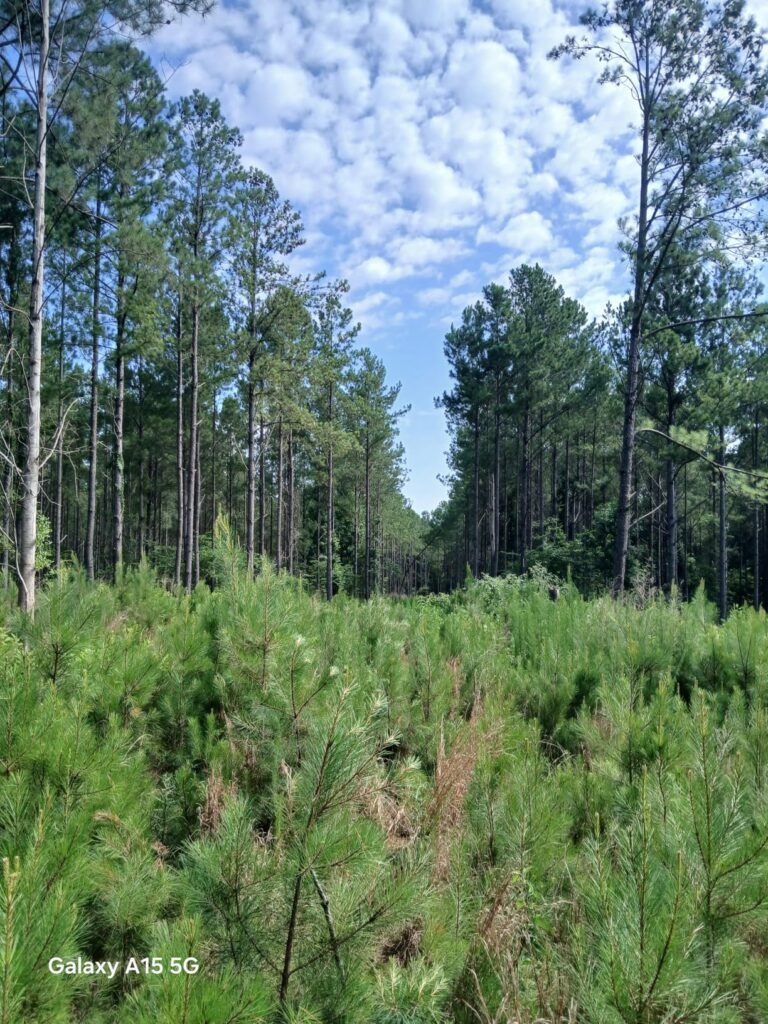
The Earthquake Acreage is not a turf lawn tractor. It is a 44-inch tow-behind rough-cut mower for people who already have an ATV, UTV, or tractor and need to knock down tall grass, thick brush, and saplings up to 3 inches thick. If your “lawn” is a field that has gone wild, this is the category that belongs in the conversation.
We may earn a commission when you buy through this link, at no additional cost to you.
A 17.5 hp Briggs & Stratton engine with electric start and an included battery powers the deck independently of the tow vehicle. Two pivoting break-away blades are meant to swing aside on rocks or stumps to protect the blades and drivetrain. Tool-less height adjustment runs from 3.5 to 7.5 inches, which is a field height range, not a putting-green range. You can offset the mower up to 4 feet either way for ditches, trails, and work under limbs.
The 11-gauge steel deck, chain guards, and steel wheel bumpers are built for abuse. A 2-inch ball coupler on an adjustable tongue with 10 hitch heights tows more smoothly than a pin hitch, and the tongue can come off for storage. Blades engage with a lever; a rope lets you disengage from the tow-vehicle seat. Delivery is a 768-pound steel crate at 64 by 66 by 32 inches that needs fork extensions and a trailer with removable sides.
Offsetting the deck keeps the tow vehicle on firmer ground while the blades reach a slope or under branches. Go slowly until you learn how the offset changes tracking. Keep bystanders far away; rough-cut decks throw debris. Inspect break-away blades after hitting stumps, and never treat 3-inch sapling capacity as a reason to attack hardwood trunks.
Buy this if you maintain trails, pondsides, or neglected acreage and already have a 2-inch ball vehicle. Do not buy it to stripe a suburban Kentucky bluegrass lawn. The 5-year limited product warranty and 2-year engine warranty matter on a machine that lives in brush. Budget for freight receiving, not a porch drop.
Homeowners without a tow vehicle, or anyone who only needs a finished turf cut on a small residential lawn.
We may earn a commission when you buy through this link, at no additional cost to you.
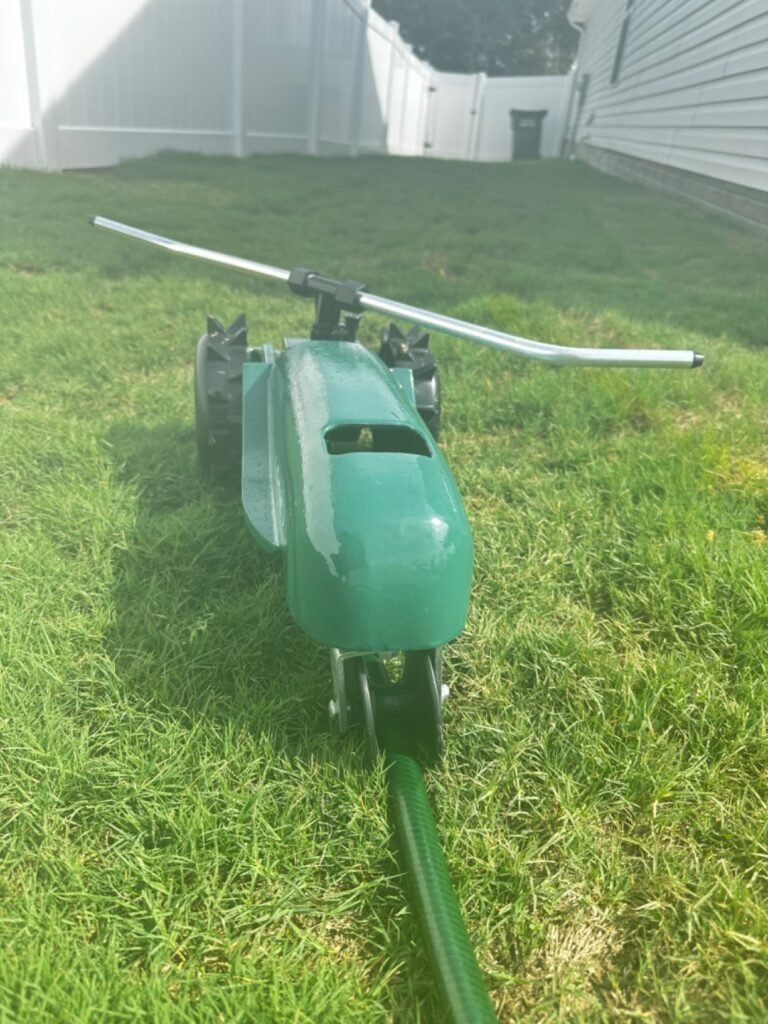
The Orbit 58322 looks like a toy tractor but is a self-propelled traveling sprinkler. Shoppers searching for lawn tractors sometimes land here because of the name and shape. It will not mow. It will walk a hose path and water a wide lawn while you do something else, which is still a legitimate yard job.
We may earn a commission when you buy through this link, at no additional cost to you.
A cast-iron body adds mass so the unit stays planted. Spiked traction wheels help it roll instead of spinning on wet turf. Adjustable spray arms and three speeds let you change how fast it travels and how it patterns water. Automatic shut-off is meant to stop the run when it reaches the end of the laid-out path.
Layout the hose as the track before you turn the faucet on. Kinks, garden furniture, and steep grades will stall a water-powered drive. Pressure at the spigot matters; a weak well pump may crawl or refuse to move. The six-year limited warranty for private use is long for irrigation gadgets.
Use a hose long enough for the full run without stretching tight corners. Stake the far end so the sprinkler shuts off instead of dragging the hose into a flower bed. Slow speed on sandy soil, faster on level turf if coverage still looks even. Drain and store the unit in winter if you live where iron and fittings can freeze.
Buy the Orbit if you want mechanical, electricity-free irrigation on a rectangular lawn and you understand it is not a cutting machine. If your search was strictly for a riding mower, skip this product. Pair it with an actual mower from this guide rather than treating it as a substitute.
Anyone who needs grass cut, bagged, or mulched rather than watered.
We may earn a commission when you buy through this link, at no additional cost to you.
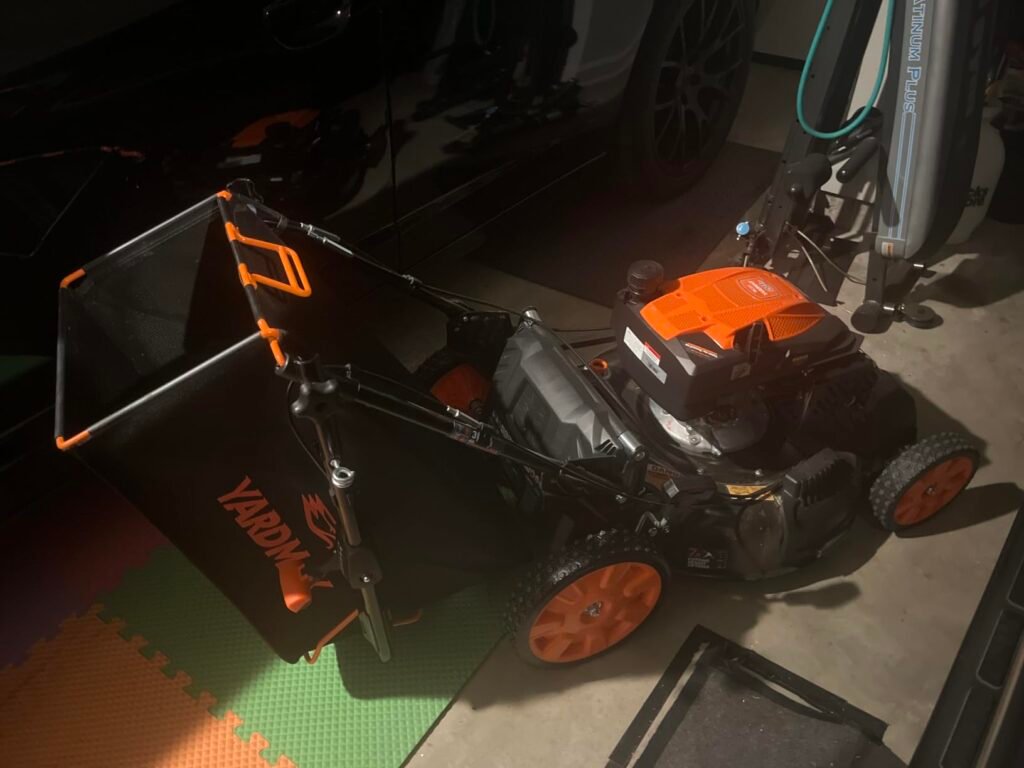
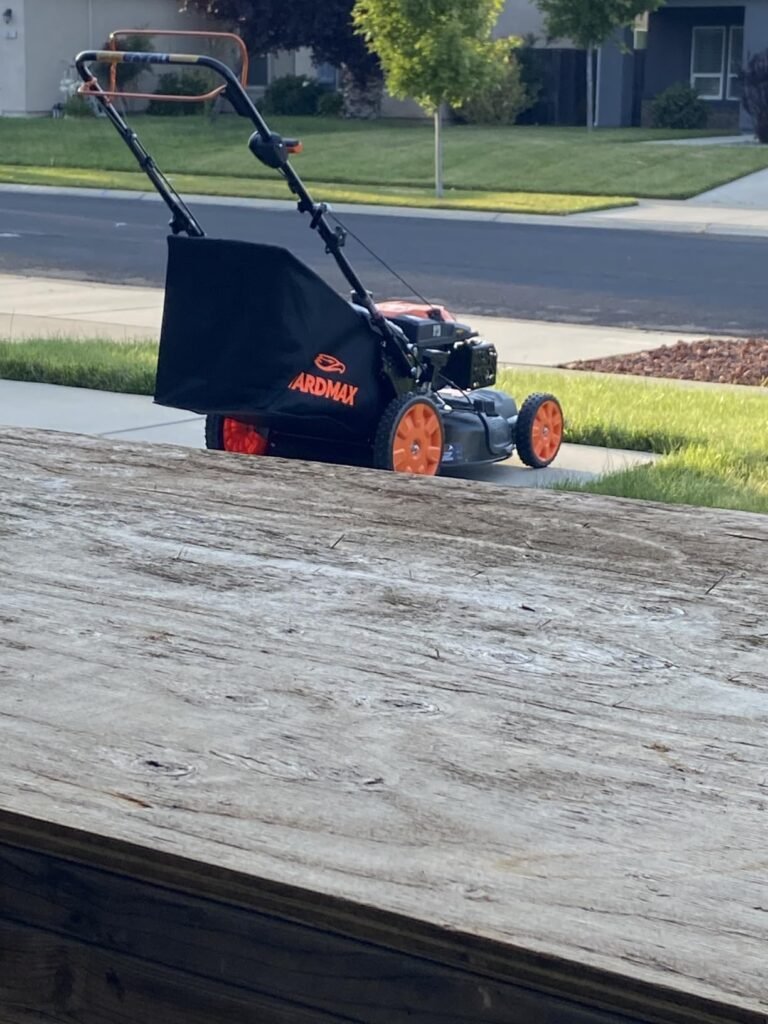
The YARDMAX YG2860 is a 22-inch self-propelled walk-behind for yards that do not justify a 42-inch rider’s price or storage. Front-wheel drive with a 6-speed CVT is the headline: you pick a pace band with the shift lever so the mower’s ground speed can follow a comfortable walk instead of dragging you or leaving you jogging.
We may earn a commission when you buy through this link, at no additional cost to you.
A 201cc engine with automatic choke skips the prime-and-choke routine that frustrates infrequent users. Aggressive spiked tread is meant to help traction and turning versus slick turf tires. The 3-in-1 deck supports the usual bag, mulch, and discharge workflow. A single lever sets cut height, and a washout port makes underside cleaning less of a scraper session.
High wheels and FWD change how the mower behaves on turns; front drive can push through corners more eagerly than rear-wheel drive. On steep slopes, many users still prefer RWD for uphill bite, so walk the grade before assuming FWD is ideal. Store fuel with stabilizer if the mower sits between weekends.
Use a lower speed band in thick spring growth so the blade can keep up without leaving strips. Shift up on short, dry summer grass. Let the transmission pull you; leaning on the handle to force speed usually means you chose too high a setting. Clean the deck port after wet mowing so the next start is not a packed-grass fight.
This is a sensible alternative to a lawn tractor when the lot is modest, the shed is small, or you need to thread trees a rider would scalp. It will not match a tractor on a full acre of open turf. If you want battery quiet, the Greenworks 80V is the cordless walk-behind path.
Buyers who want to sit while mowing or who need a 42-inch pass on a large open lawn.
We may earn a commission when you buy through this link, at no additional cost to you.
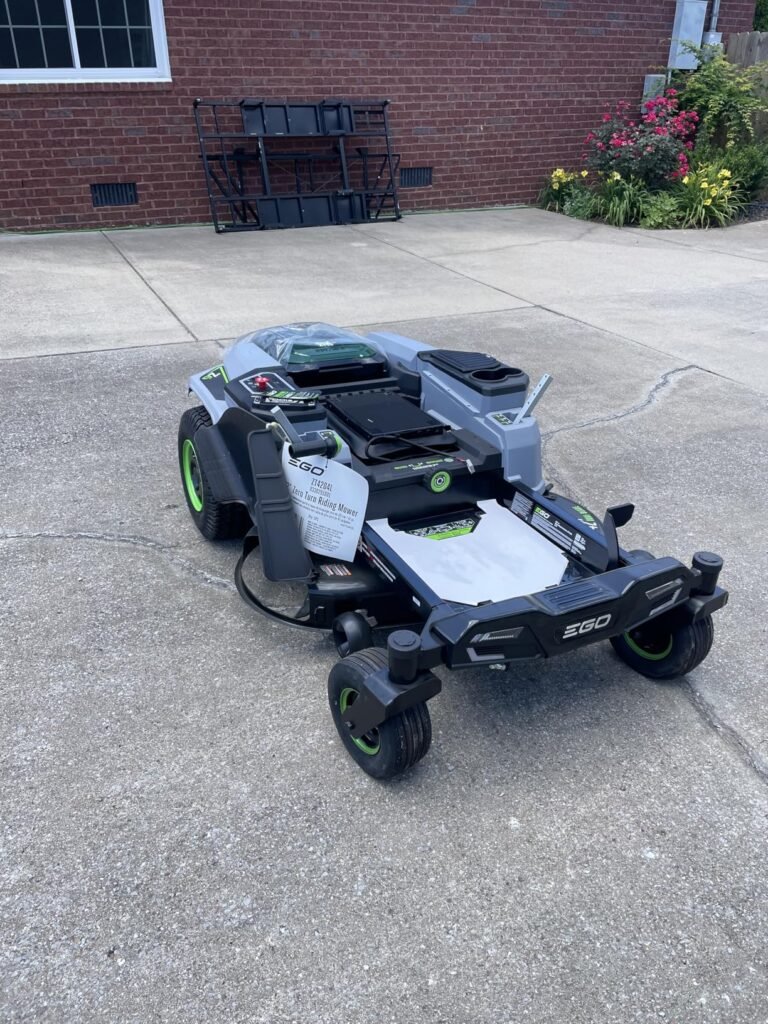
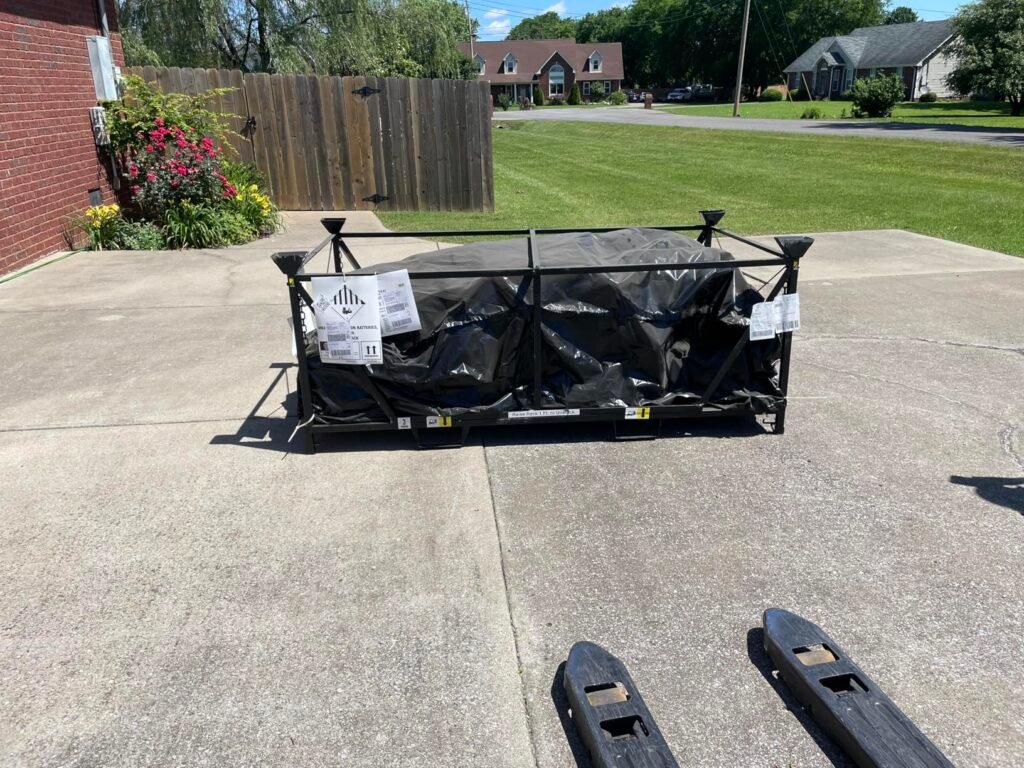
The ZT4204L is EGO’s 42-inch zero-turn riding mower, aimed at people who want seated cutting with tighter turning than the TR4204 tractor layout. It is specified as equivalent to 22 horsepower and can travel up to 8 MPH. Four included 56V 10.0Ah batteries are listed to cut up to 2 acres per charge, with the option to add packs for larger properties.
We may earn a commission when you buy through this link, at no additional cost to you.
An LCD offers Standard, Control, and Sport driving modes so you can calm the steering for tight beds or pick up pace in open grass. Ten height positions from 1.5 to 4.5 inches and 3-in-1 mulching, bagging, and side discharge cover typical turf work on a 42-inch stamped steel deck. The included Z6 wall charger is specified to recharge the four 10.0Ah packs in about two hours.
Zero-turn steering is faster around trees but less forgiving on side hills than a traditional lawn tractor’s steering wheel. Practice in an open area before threading playground equipment. Battery mass is substantial; plan a charging shelf and dry storage. Extra EGO 56V packs can stretch runtime if you already live in that ecosystem.
Use Control while you learn dual-lever steering or when mowing near hardscape. Standard is the everyday turf mode for most owners. Sport is for open, relatively flat lawns where 8 MPH travel saves time. Slow down in wet grass regardless of mode; speed plus a 42-inch deck can leave uncut strips if you outrun the blades.
Choose the ZT4204L if your yard is large enough that turning a tractor around wastes time and you can pay the premium for 10Ah packs and zero-turn speed. Choose the TR4204 if you prefer a steering-wheel tractor feel and a slightly simpler driving model. Neither replaces a rough-cut tow-behind for brush.
Steep, rutted properties where zero-turn stability is a concern, or budgets that cannot absorb a flagship battery rider.
We may earn a commission when you buy through this link, at no additional cost to you.
The MechMaxx EFS48 is a light-duty 48-inch flail mower for people who already own a Category 1 compact tractor between 15 and 35 horsepower. It is an implement, not a ride-on lawn tractor. If your property work is already tractor-based, a flail can leave a finer finish on rough grass than a rotary brush hog while still chewing light debris.
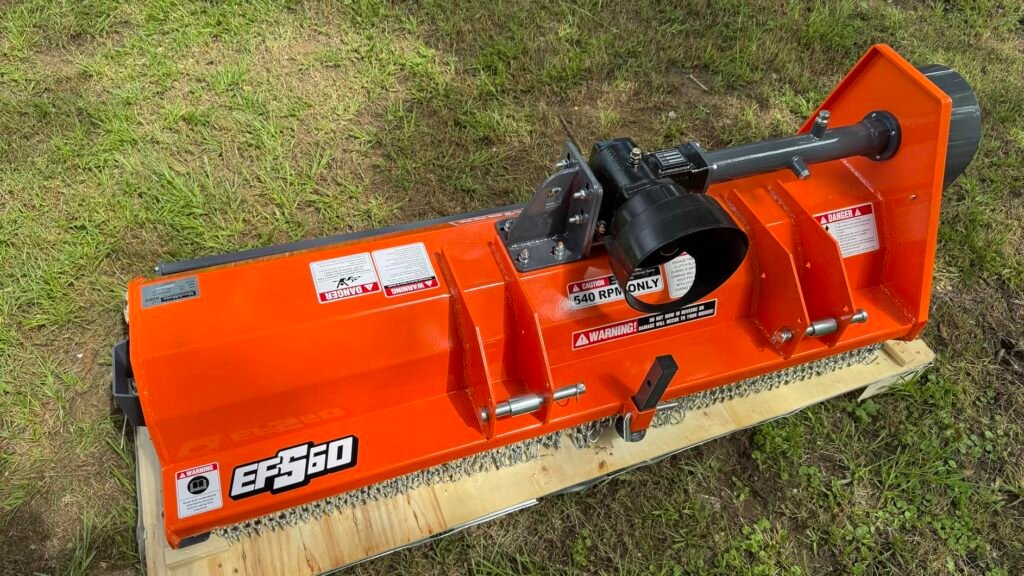
We may earn a commission when you buy through this link, at no additional cost to you.
The included PTO shaft is specified at 540 RPM with belt transmission. Twenty hammers are listed to keep the cut short, with mowing height about 0.6 to 1.8 inches above ground and the ability to mulch material up to 0.75 inches in diameter. Front safety chains, sealed tapered roller bearings, and a kickstand round out the hardware.
The listing is explicit: this mower is not suitable for quick-hitch units. Confirm your three-point geometry before ordering. Shield the PTO, match shaft length, and never exceed the 35 hp recommendation on a light-duty flail. Storage on the kickstand only works on level shop floors.
Keep the shaft fully shielded and clothing tight. Shut off the PTO before leaving the seat. Confirm 540 RPM, not 1000 RPM. Because this unit is light-duty and limited to 0.75-inch material, do not treat it as a forestry mulcher. Walk the field for rocks and wire first.
Buy the EFS48 if a compact tractor is already in the shed and you want a 48-inch finishing-style flail for light material. Do not buy it as a first mower for a suburban lawn. Walk-behinds and EGO riders will be simpler if you do not already live with PTO implements.
Anyone without a 15-35HP Category 1 tractor, or owners whose tractor uses a quick hitch this model does not support.
We may earn a commission when you buy through this link, at no additional cost to you.
The PowerSmart 21-inch mower is a rear-wheel-drive gas walk-behind positioned for medium yards, including slopes where RWD and 10-inch rear wheels are meant to help traction. A 170cc OHV engine is smaller than the 201cc class on the YARDMAX and BILT HARD, which can show up in very thick spring grass.

We may earn a commission when you buy through this link, at no additional cost to you.
The steel deck is 21 inches with 3-in-1 bagging, mulching, and rear discharge. The bag is 1.4 bushels. Six cutting heights from 1.5 to 3.9 inches cover typical residential turf, though the top end is lower than some 4.5-inch rider decks. Self-propel reduces pushing on grades compared with a push-only mower.
The 3.6-star rating is the lowest in this set, so read recent owner comments about assembly, starting, and parts before you commit. Budget mowers can still cut well if you keep oil fresh and the blade sharp. They can also frustrate if you expected tractor-like durability at walk-behind money.
Mow across slopes when possible rather than straight up and down. RWD helps the drive wheels stay planted as you walk. Keep a slower self-propel pace in wet grass so the rear wheels do not spin and scalp. Never mow slopes so steep that the mower feels like it could tip; no 21-inch consumer mower is a hillside specialist.
Consider this mower if the lot is medium, the budget is tight, and slopes make FWD or push mowers unpleasant. If you want stronger owner scores, look at Greenworks or BILT HARD. If you want to sit, neither this nor any 21-inch deck replaces the EGO riders.
Large open acreage, buyers who want a seated tractor, or shoppers who insist on the highest owner ratings in the group.
We may earn a commission when you buy through this link, at no additional cost to you.
The BILT HARD 21-inch mower targets homeowners who want a 201cc 4-cycle OHV engine and simple starting without choke or primer. Rated 9.0 ft-lb of torque, it sits in the same displacement class as the YARDMAX with a more conventional single-speed self-propel system instead of a 6-speed CVT.

We may earn a commission when you buy through this link, at no additional cost to you.
A 3-in-1 steel deck offers mulching, side discharge, and rear bagging. One lever sets all four wheels from 1.2 to 3.75 inches across eight positions, which is a slightly lower maximum than the PowerSmart’s 3.9 inches but with more stops. Rear-wheel drive and a foam-wrapped angled handle are aimed at larger yards and reduced hand fatigue.
Single-speed drive is simpler than CVT but less flexible: you walk at the mower’s pace, not a chosen band. That is fine on level turf and tiring if the speed does not match your stride. Side discharge helps when the bag is full and you still need to finish a pass quickly.
Bag when clippings would smother thin turf or track into the house. Side-discharge when growth is moderate and you need to keep moving. Mulch when clippings are short and dry. Switching modes is faster than fighting a packed bag mid-lawn. Keep the side chute clear of clogs after wet mowing.
Pick BILT HARD if you want 201cc gas, easy starts, and eight height clicks without paying rider money. Pick YARDMAX if matching walk speed matters more. Pick Greenworks if you want to stop buying gasoline. None of these 21-inch machines replace a 42-inch lawn tractor on a wide-open acre.
Users who need variable self-propel speeds or a seated 42-inch cutting deck.
We may earn a commission when you buy through this link, at no additional cost to you.
Start with yard size, slope, and whether you already own batteries, a tow vehicle, or a compact tractor. Then choose a deck width and power source. The machines in this guide span true riders, walk-behinds, implements, and even a traveling sprinkler.
Deck width is time. A 21- or 22-inch walk-behind is a reasonable fit for many lots under about half an acre, especially with trees and beds. A 42-inch rider such as the EGO TR4204 or ZT4204L cuts a much wider strip per pass and is aimed at larger turf, with claimed single-charge areas of 1.5 and 2 acres respectively when fully packed with the included batteries. A 44-inch rough-cut or 48-inch flail is about covering fields, not striping a lawn.
Buyers often overbuy width for a yard full of obstacles. A 42-inch deck that cannot fit a side gate is a driveway ornament. Measure the gate, shed door, and tightest tree gap. Also measure the longest open run: if you can make long passes, width pays off. If you spend the hour turning, a nimble 21-inch self-propel or a zero-turn may finish sooner than a long-wheelbase tractor.
Choose 21-22 inches for compact lots and storage limits. Choose 42-inch battery riders for open suburban acreage. Choose 44-48 inch tow or PTO tools only when the vegetation is rough and you already have the vehicle to pull or power them.
Battery riding mowers eliminate tank mixing, oil changes on the mower engine, and much of the neighborhood noise. The EGO tractor and zero-turn use 56V ARC Lithium packs, with runtime tied to how many amp-hours you install. Gas walk-behinds such as YARDMAX, PowerSmart, and BILT HARD refuel in a minute and do not wait on a charger, but they add exhaust, annual fuel stabilizer chores, and pull or keyed starting.
Cost of ownership splits differently. Riders cost thousands and need indoor charging discipline. Walk-behinds cost hundreds and wear operators’ legs. Greenworks’ 80V 21-inch path sits in the middle: cordless, but still walking, with about a half-acre claim on one 4.0Ah pack. If you already own one battery platform, staying inside it is often smarter than mixing 56V, 80V, and gasoline.
Pick battery riders when lot size and budget support them and you will charge overnight. Pick gas walk-behinds when the yard is modest or you want the lowest machine price. Pick 80V walk-behind if quiet and no gas matter more than sitting down.
A lawn tractor steering wheel, as on the EGO TR4204, feels familiar and is often more confidence-inspiring on gentle slopes than dual-lever zero-turn. Zero-turn, as on the ZT4204L, saves time around islands and can travel up to 8 MPH versus 6 MPH on the tractor model. Walk-behinds give the most control in tight courtyards and need no trailer to unload.
Zero-turn has a learning curve. New operators should use a calmer drive mode if the mower offers one, such as the ZT4204L’s Control setting. Rear-wheel-drive walk-behinds help on slopes; front-wheel-drive CVT units like the YARDMAX can feel eager in turns. There is no single best layout, only a best match to your obstacles and hills.
If your lawn is a simple rectangle, a tractor or even a wide walk-behind is enough. If you mow around dozens of trees, zero-turn or a 21-inch mower will waste less time. If the ground is steep, prioritize RWD walk-behind or a conventional tractor stance over aggressive zero-turn speed.
Turf riders and walk-behinds assume grass you can walk or drive across without hidden saplings. The Earthquake Acreage is built for tall grass, brush, and saplings up to 3 inches, with a 3.5 to 7.5 inch height range that would look sloppy on a golf-green lawn but correct in a field. The MechMaxx flail assumes a 15-35 hp Category 1 tractor and 540 RPM PTO, mulching material up to 0.75 inches.
These tools fail as first mowers for a suburban lot. They succeed when the job is reclamation or farmette maintenance. Freight on the Earthquake crate is a real constraint: 768 pounds and dimensions that will not fit a pickup bed. The flail will not fit quick-hitch systems. Ignoring those constraints is how implements sit unused.
If you do not already own a tow vehicle or compact tractor, buy a rider or walk-behind. If you do, adding a rough-cut or flail can be cheaper than buying a dedicated commercial brush mower.
Height range should match grass type. Cool-season lawns often look better left taller in summer heat. The EGO riders adjust from 1.5 to 4.5 inches. Walk-behinds in this guide top out lower, around 3.75 to 3.9 inches. Rough-cut decks start much higher. Scalping on uneven ground is usually a height and speed problem, not a brand problem.
Bagging, mulching, and side or rear discharge change cleanup time. 3-in-1 decks on the walk-behinds and the ZT4204L let you switch with the season. Mulching returns nutrients if clippings are short. Bagging helps if you want a manicured look or have heavy thatch. Discharge is fastest when you are simply keeping up with growth.
Set height for the grass species and the bumpiness of the yard, not the lowest number on the lever. If you always scalp, raise the deck before blaming the machine. If you always leave windrows, slow down or switch from discharge to bag.
EGO’s TR4204 includes six 6.0Ah batteries for up to 1.5 acres. The ZT4204L includes four 10.0Ah batteries for up to 2 acres and about two hours of recharge on the Z6 charger. Greenworks includes one 4.0Ah 80V pack for up to half an acre. Those figures assume conditions; wet, tall, or hilly grass always costs runtime.
Platform lock-in is real. Extra EGO 56V packs also run handheld tools. Extra Greenworks 80V packs feed 75-plus tools. Mixing brands means mixed chargers. For riders, the number of battery bays is part of the machine; you cannot always add infinite packs if there is nowhere to dock them, even if the brand sells more cells.
Buy extra batteries if your lot sits near the claimed acreage. Do not buy a battery rider if you have no dry, theft-resistant place to charge. Gas remains simpler for remote properties without reliable electricity.
A 42-inch rider needs a garage stall or a wide shed. Walk-behinds hang or stand in a corner. The Earthquake’s removable tongue helps storage after a forklift delivery. PTO flails need three-point space and a shielded shaft parked safely. Traveling sprinklers store on a shelf.
Warranties in this set range from Greenworks’ 4-year limited tool and battery coverage to EGO’s 5-year tool warranty on the TR4204, Earthquake’s 5-year limited product and 2-year engine coverage, and Orbit’s 6-year limited private-use warranty. Longer paper coverage does not replace maintenance. It does matter when a deck motor or battery fails in year three.
Measure storage and delivery access before you click buy. A crate that needs fork extensions cannot come home in a compact SUV. A rider that cannot clear the shed door will live outdoors and rust. Match the machine to the building you have, not the barn you plan to build.
Walk the yard before every mow for branches, toys, hose, and wire. Set cutting height high enough to avoid scalping. For battery riders, start with fully charged packs and use a moderate drive speed in thick grass so the blades can keep up. For gas walk-behinds, check oil, use fresh fuel, and keep the air filter clean. For PTO or tow-behind cutters, inspect shields, hitches, and break-away or flail hardware before the first pass.
Mow dry grass when you can. Overlap each pass slightly. On slopes, follow the machine’s stability limits: walk-behinds generally go across the hill; zero-turns deserve extra caution on sidehills. Never bypass blade-stop or seat-switch safety systems. Keep bystanders and pets away from discharge and flail zones. Disengage blades before you travel over gravel drives.
After mowing, let motors cool, then scrape or wash the deck so packed clippings do not rust steel or unbalance blades. Charge lithium packs in a dry place and avoid storing them empty for months. Fog or stabilize gas engines for winter. Grease implement points as the manual directs, and replace bent blades rather than running them. Cover or garage the machine; UV and rain cost more than a tarp.
There is no hard line, but many owners start considering a 42-inch rider around an acre of relatively open turf, or sooner if heat and time are issues. Lots under about half an acre often finish faster with a 21-inch self-propel, especially with trees. The EGO TR4204 and ZT4204L are specified around 1.5 to 2 acres per charge with their included batteries, which is a useful planning range, not a promise in tall wet grass.
Zero-turns such as the EGO ZT4204L typically turn tighter and can travel faster, which helps open yards with many islands. Traditional tractor steering, as on the TR4204, often feels more familiar and can be easier to trust on gentle slopes. Neither is better in every yard. Practice zero-turn steering in an open area before working near fences.
For turf mowing within the claimed acreage and if you can charge reliably, yes, that is the point of machines like the EGO 42-inch riders. They will not match a gas rough-cut on brush, and runtime depends on grass conditions. If your property is far larger than two acres or lacks electricity, gas or a PTO implement remains more practical.
Need a finished lawn? Buy a rider or walk-behind. Need to reclaim tall grass, brush, and small saplings? A tow-behind rough-cut like the Earthquake Acreage is the matching tool, but only if you have a vehicle with a 2-inch ball and a way to receive a 768-pound crate. They are not substitutes for each other.
Yes, many people mow half-acre lots with 21-inch self-propelled mowers. The Greenworks 80V lists up to half an acre on one 4.0Ah battery, depending on conditions. Gas 21-inch models are limited by your stamina more than the tank. If the lot is open and you dislike walking, a 42-inch rider saves time.
The MechMaxx EFS48 is specified for Category 1, 15-35 hp tractors at 540 RPM PTO and is not suitable for quick-hitch units. Confirm hitch type and PTO speed before buying. It is a light-duty flail for material up to 0.75 inches, not a forestry mulcher.
No. It is a water-powered traveling sprinkler with a cast-iron tractor-shaped body. It waters along a hose path and does not cut grass. Buy it for irrigation, not for replacing a mower.
Rear-wheel drive, used on the PowerSmart, BILT HARD, and Greenworks models here, often helps on slopes because the drive wheels carry more of your pushing force. Front-wheel drive with CVT on the YARDMAX can make turning lively and lets you match walking pace. If your yard is hilly, lean RWD. If it is flat and you want speed choices, CVT FWD is appealing.
A washout port, as on the YARDMAX, makes it easier to rinse clippings off the underside, which helps prevent rust and unbalanced blades. You can scrape any deck with a stick after disconnecting spark or removing the battery. If you mow wet grass often, easier cleaning is worth looking for.
Mulch short, dry clippings to feed the lawn. Bag when you want a clean surface or the grass is too long to mulch well. Side or rear discharge is fastest for routine growth. Several walk-behinds and the EGO zero-turn list 3-in-1 decks so you can change with the season rather than owning three machines.
For a seated, belt-free turf cut on a typical large suburban lawn, the EGO TR4204 is the most complete lawn tractor in this set: a 42-inch stamped deck, dual brushless blade motors, up to 1.5 acres on six included 6.0Ah batteries, and a 5-year tool warranty. It is the default recommendation when you want to sit down and stay on the 56V platform.
If turning time dominates, the EGO ZT4204L adds zero-turn steering, up to 8 MPH, and up to 2 acres on four 10.0Ah batteries at a higher price. Smaller lots are better served by the Greenworks 80V or a 201cc gas walk-behind such as YARDMAX or BILT HARD. Overgrown fields call for the Earthquake tow-behind, and compact-tractor owners can look at the MechMaxx 48-inch flail. The Orbit unit waters; it does not mow.
Measure the gate, the acreage, and the vehicle or battery platform you already own before you spend. A 42-inch rider on a tiny lot is wasted money, and a 21-inch mower on two open acres is wasted Saturday. Match the machine to the grass and the building you have, then keep the deck clean and the blades sharp so whatever you buy still cuts straight next season.