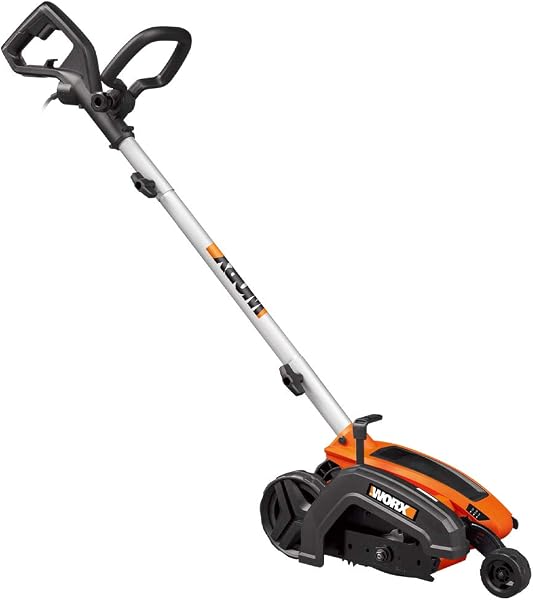
WORX WG896
8.8Editor score12-amp corded motor
7.5-inch cutting blade
4700 RPM speed
Three depth settings
Find the right lawn edgers for 2026. We compare 10 standout options by build quality, useful features, owner feedback, value, and everyday trade-offs.
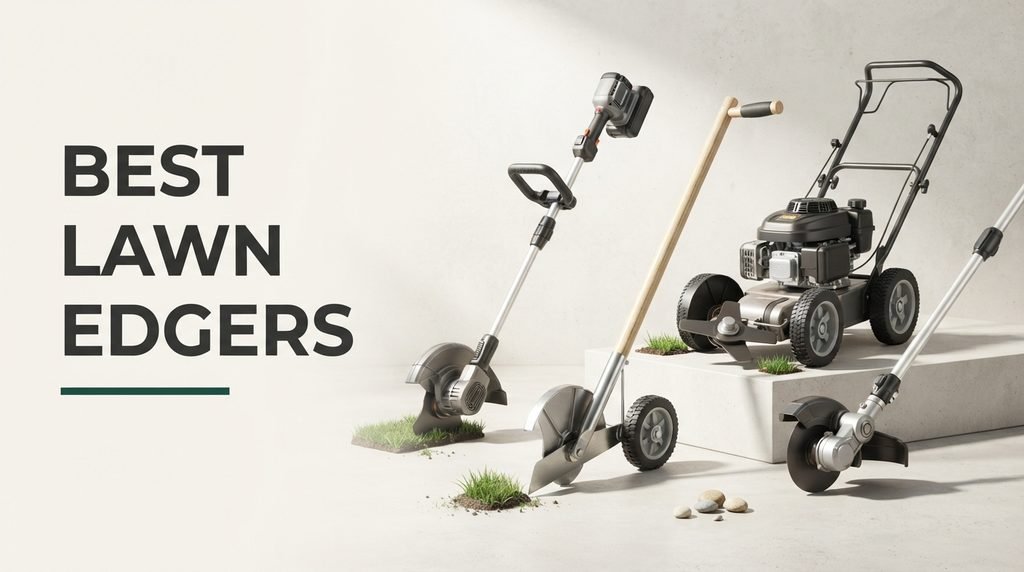
Choosing the right lawn edger in 2026 means balancing power source, blade size, cutting depth, maneuverability, battery runtime, and build quality against the shape and size of your yard. We compare 10 standout options across corded electric, cordless battery, gas-powered, and manual designs so you can match the right edger to your driveway length, border complexity, and physical comfort.
The gap between a basic edger and the right edger for your property comes down to specifics most buyers overlook. Blade material, depth adjustment range, wheel stability, handle ergonomics, and runtime per charge all shape how much time you spend edging versus restarting or fighting the tool through tough soil.
This guide breaks down the trade-offs that separate these edgers, from a $20 manual tool for small flower beds to a 60V cordless brushless system for extensive sidewalks. You will find clear guidance on which option suits a small suburban yard, which handles long driveways, and which fits buyers who already own batteries from a specific platform.
We compared 10 lawn edgers using the factors that genuinely guide a yard-care decision: power source, blade size and material, cutting depth adjustment, motor type, runtime or cord length, wheel stability, handle ergonomics, weight, platform compatibility, warranty coverage, owner feedback, and real-world value. The notes focus on practical trade-offs so each pick connects to how people actually edge driveways, define flower beds, trench for irrigation, and maintain crisp borders across a mowing season.


Compare key features, scores, and current prices side by side. A shorter feature list means fewer details were available, not necessarily fewer capabilities.


The BLACK+DECKER LE760FF earns its top rating by combining dedicated edging performance with a trenching mode that handles irrigation line installation, low-voltage cable burial, and garden bed preparation. For homeowners who want one tool that handles both regular border maintenance and occasional landscaping projects, this dual-mode design eliminates the need for a separate trenching tool.
We may earn a commission when you buy through this link, at no additional cost to you.
The 12-amp motor delivers high torque for cutting through tough overgrowth and digging neat trenches without stalling. The 7.5-inch blade with 3/16-inch thickness handles a wide range of soil conditions, from loose topsoil along flower beds to compacted earth where a sidewalk meets a driveway. Three blade depth positions and a pull-up edge guide give you precise control over cut depth and alignment, which matters for professional-looking results.
Design details show thoughtful ergonomics. Quick conversion between edging and trenching modes requires no tools, and the accessible blade guard simplifies cleaning after muddy work. Right or left-handed assist handles accommodate different user preferences, which is particularly valuable for taller users who find standard handles awkward. The 2-year limited warranty provides reasonable coverage for a corded homeowner tool.
A dedicated trenching mode becomes genuinely useful when installing drip irrigation, low-voltage landscape lighting, or buried cable runs. Renting a trencher costs more than most electric edgers, and hiring out the work costs even more. If you plan any landscaping projects that require cable or pipe burial, a 2-in-1 tool like the LE760FF can pay for itself on a single project.
The trade-off is cord dependency, which limits range to the length of your extension cord and requires planning around outlet locations. For buyers with reasonable outdoor power access who want versatility across edging and trenching tasks at an affordable price, however, the LE760FF is one of the strongest value picks in the category.
Large properties where cord length becomes impractical for complete coverage.
We may earn a commission when you buy through this link, at no additional cost to you.
The WORX WG896 is a workhorse corded edger built for homeowners who want consistent power without worrying about battery life or fuel. The 12-amp motor delivers 4,700 RPM at the blade, which translates to clean cuts through compacted soil and overgrown grass along driveways and sidewalks. For properties with reliable outdoor outlets and moderate edging needs, this corded design removes the uncertainty of charge level mid-task.
We may earn a commission when you buy through this link, at no additional cost to you.
Blade performance centers on a 7.5-inch design that handles standard edging work and shallow trenching. Three depth adjustments at one inch, 1.25 inches, and 1.5 inches let you handle different conditions, from routine touch-ups to deeper initial cuts along neglected borders. The cutting line indicator helps you follow your intended path, which matters when working alongside freshly laid concrete or decorative stone edging.
Comfort features include an adjustable shaft and a D-grip handle that let users of different heights find a working position without stooping. The built-in one-foot power cord connects to a standard extension cord, so cable management becomes a planning consideration before you start. Weight distribution is reasonable for a corded tool, and the wheel design helps the edger track along straight lines.
A 12-amp corded motor delivers continuous power without the voltage sag that affects battery tools as the pack discharges. For properties where the longest run between outlet and edging work is manageable with a 50 or 100-foot extension cord, corded tools cost less upfront and never leave you waiting on a charger. They also last for decades with minimal maintenance beyond blade replacement.
The main trade-off is simply that it is corded. If your property has long runs between outdoor outlets or complex layouts that force cord management around trees and bushes, a cordless model will save frustration. For buyers who prefer the simplicity and consistent power of a plug-in tool, however, the WG896 delivers reliable edging performance at a sensible price.
Large properties where cord management becomes impractical or buyers who want cordless freedom.
We may earn a commission when you buy through this link, at no additional cost to you.
The Greenworks 40V 8-inch edger targets homeowners who want cordless freedom with enough runtime to complete a typical yard without battery swaps. The 4.0Ah battery provides substantial capacity for the 40V platform, and the brushless motor extracts more work per charge than brushed alternatives by reducing internal friction and heat loss. For properties with moderate edging distance, this balance of runtime and power works well.
We may earn a commission when you buy through this link, at no additional cost to you.
Picture quality starts with the 8-inch steel blade, which is larger than the 7 or 7.5-inch blades on many competing models. The extra blade size translates to deeper cuts in a single pass and better performance through compacted soil along established borders. Tool-less depth adjustment lets you shift between light touch-up and more aggressive edging without stopping to find wrenches, which saves time during larger jobs.
The design handles uneven or sloped ground better than many flat-wheeled edgers, which matters for properties with grade changes, root-raised sidewalks, or garden paths that follow natural contours. The 4-year warranty on both tool and battery provides long-term peace of mind, which is important given that battery degradation is often the limiting factor on cordless tool lifespan.
Brushless motors generate less heat and friction than brushed designs, which means more of the battery’s energy reaches the blade rather than being wasted. The result is longer runtime per charge, quieter operation, and a motor that typically outlasts the batteries it runs on. For an edger that cuts through dense soil and tangled grass, this efficiency advantage shows up as more completed yardage per full charge.
The main consideration is that the Greenworks 40V platform is less widely adopted than 20V or 56V systems from other brands, which means fewer tools to share batteries across if you build out a larger collection. For buyers already invested in Greenworks 40V tools or buyers starting fresh with a dedicated edging solution, however, this model offers excellent runtime, comfortable depth adjustment, and strong warranty protection.
Buyers who already own batteries from a competing platform like Ryobi or DeWalt.
We may earn a commission when you buy through this link, at no additional cost to you.
The WORX WG898 targets homeowners with smaller properties who want cordless convenience in a lightweight package. At just 7 pounds without the battery, this edger reduces arm fatigue during longer edging sessions, which matters for seniors, smaller users, or anyone who finds heavier tools uncomfortable. The 20V brushless motor delivers up to 2,800 feet of edging per charge with the included 4.0Ah battery, which is enough for most typical suburban yards.
We may earn a commission when you buy through this link, at no additional cost to you.
Blade performance uses a 7-inch design with three depth positions at 1.5, 1.75, and 2 inches. This depth range handles routine edging and deeper border work, and the step-up as the blade wears means you get usable life beyond initial sharpness. The integrated edge guide and blade indicator help maintain straight lines along sidewalks and driveways, which is particularly helpful for first-time edger users.
The WORX Power Share platform is a major advantage for buyers who already own or plan to buy WORX 20V tools. The battery works across string trimmers, blowers, drills, and select 40V and 80V WORX tools, which spreads the battery investment across your tool collection. The telescopic shaft and adjustable handle accommodate different user heights, and the dual-wheel stabilizing design keeps the edger tracking straight.
Battery platform compatibility is one of the most financially important decisions in cordless yard tools. Each new battery costs $50 to $150 depending on capacity, so sharing batteries across trimmers, blowers, drills, and edgers reduces your total investment significantly. If you anticipate buying more cordless tools, choose an edger from a platform you plan to expand rather than a one-off that locks you into a battery you will only use occasionally.
The main considerations are the smaller 7-inch blade compared to 8 or 9-inch alternatives and the 4.0 star rating that sits below the top performers in this guide. For buyers with smaller properties who prioritize weight, cordless convenience, and platform compatibility, however, the WG898 is a sensible choice. If you need maximum blade size or have a larger yard, step up to a higher-voltage platform.
Large properties exceeding 2,800 feet of edging or buyers who need maximum blade size.
We may earn a commission when you buy through this link, at no additional cost to you.
The WORX WG163 is a hybrid tool that converts between string trimmer and edger modes in seconds, which makes it ideal for buyers who want to minimize the number of tools stored in their garage or shed. The 12-inch cutting diameter handles typical yard trimming, and the edger conversion uses the same string head rotated for vertical cutting along sidewalks and driveways. For small properties or townhomes with limited storage, this combined approach can replace two dedicated tools.
We may earn a commission when you buy through this link, at no additional cost to you.
Performance features include a push-button command feed spool system that advances fresh trimmer line without the bump-feed hassles common on older trimmers, plus free spool replacements for life. The 90-degree head tilt lets you work on sloped terrain and reach tough spots like tree bases and fence corners. Rubberized wheels guide the tool for straighter edging lines, and the adjustable spacer guard protects plants and landscape features from accidental damage.
The two included 20V Power Share batteries let you work longer by swapping fresh power when the first depletes, or share batteries across your other WORX 20V tools. At just 5.5 pounds, this is one of the lightest tools in the category, which reduces fatigue during extended trimming sessions. The 7,600 RPM no-load speed delivers enough cutting power for typical lawn maintenance.
String edging uses rotating monofilament line to cut grass along a border. It works well for weekly touch-up but tends to produce a slightly ragged edge compared to a steel blade. Blade edging produces cleaner, more defined cuts and handles compacted soil better. For buyers who already have sharp borders and want to maintain them, string edging is adequate. For creating new borders or restoring neglected ones, dedicated blade edgers deliver better results.
The main trade-off is that string edging is inherently less precise than blade edging. A dedicated edger with a steel blade produces cleaner, more consistent cuts along hardscapes, while a string trimmer in edge mode produces a slightly rougher line that works well for weekly maintenance but not for creating sharp new borders. For buyers who prioritize versatility and compact storage over premium edging precision, however, this combo offers excellent value.
Buyers who want precision blade edging for creating new borders along hardscapes.
We may earn a commission when you buy through this link, at no additional cost to you.
The CKLT manual edger offers a different approach for buyers who have small borders, prefer quiet tools, or want a backup for when powered tools fail. At its price point, it is one of the most affordable edging solutions available and requires no batteries, fuel, or extension cords. For gardeners with limited border work or homeowners who maintain only a few flower beds, a manual tool often makes more sense than investing in a powered edger.
We may earn a commission when you buy through this link, at no additional cost to you.
The tempered spring steel blade is the key feature here. Spring steel resists deformation and holds its edge even under challenging conditions, which separates this tool from cheaper carbon steel alternatives. The serrated cutting edge bites into turf more effectively than flat-bladed shovels, producing cleaner cuts along flower beds and garden paths. The rust-resistant coating helps the blade survive wet conditions and extended outdoor storage.
The 8-inch wide footplate provides substantial leverage, letting you apply full body weight through the blade without the edge of the footplate digging uncomfortably into your shoe. The 41-inch total length suits users of average and taller heights, reducing back strain compared to shorter manual edgers. The tool works effectively in wet conditions where electric trimmers risk electrical issues, which makes it a reliable choice for spring and fall edging.
Manual edgers have advantages beyond price. They never need batteries, never require maintenance beyond occasional blade sharpening, and never fail from motor burnout. They are silent, which matters in neighborhoods with noise ordinances or early-morning gardening preferences. For small properties where edging takes 10 to 20 minutes, a manual tool can be more efficient than fetching, charging, and storing a powered tool.
The main consideration is simply that manual edging requires physical effort and takes significantly longer than powered tools. For a single flower bed or a small front garden, this is manageable and even enjoyable. For a large property with extensive sidewalks and driveways, a powered edger is a better investment. For buyers who want a quiet, dependable backup tool at an entry-level price, however, this manual edger covers the basics well.
Large properties with extensive borders where manual edging would take hours of work.
We may earn a commission when you buy through this link, at no additional cost to you.
The EGO Power+ Multi-Head System represents the premium end of this guide, combining a brushless power head with an 8-inch edger attachment that becomes part of a modular tool collection. For buyers already invested in the EGO 56V ARC Lithium platform or anyone building a comprehensive cordless yard tool system, this approach makes more sense than buying individual single-purpose tools.
We may earn a commission when you buy through this link, at no additional cost to you.
Performance highlights include a 3-inch cutting depth, which is deeper than most competitors in this guide and handles aggressive edging, trenching, and border redefinition tasks that lesser tools cannot manage. The high-efficiency brushless motor delivers low vibration, long lifespan, and consistent power output across the battery discharge curve. A digital two-speed selector lets you match tool speed to the task, saving battery on light work and delivering full power when needed.
The multi-head approach pays off through the 12 available attachments including pole saw, string trimmer, hedge trimmer, cultivator, snow shovel, dethatcher, brush cutter, and bed redefiner. Each attachment uses the same power head and battery, which dramatically reduces per-tool cost once you own the base system. The carbon fiber shaft resists damage and keeps overall weight manageable, and the IPX4 weather-resistant construction allows use in damp conditions.
Multi-head systems make financial sense when you need multiple yard tools. Instead of buying a separate dedicated edger, trimmer, hedge trimmer, pole saw, and cultivator, you buy one power head and swap attachments. This typically reduces total cost by 30 to 50 percent versus buying separate tools, plus you only need to maintain one battery, one charger, and one motor. The downside is that you can only use one attachment at a time, which can slow mixed-task workflows.
The main trade-off is upfront cost, especially if you need to purchase the battery separately. For buyers building out a full cordless system, however, the modular approach saves money over time and reduces storage requirements. The 5-year tool warranty is one of the longest in the category, which signals EGO’s confidence in long-term durability. For serious yard-care enthusiasts, this is one of the most capable choices available.
Buyers who want a single dedicated edger without investing in a broader tool platform.
We may earn a commission when you buy through this link, at no additional cost to you.
The Greenworks 60V 8-inch edger brings higher-voltage power to the cordless category, which translates to stronger torque for cutting through compacted soil, root-raised borders, and tough overgrowth that would stall lower-voltage tools. For properties with challenging edging conditions or buyers who want gas-like power without gas-engine maintenance, this 60V platform delivers a step up in cutting authority.
We may earn a commission when you buy through this link, at no additional cost to you.
Blade performance uses the same 8-inch steel design as the Greenworks 40V model, which handles precise edging along driveways, sidewalks, and garden beds with clean cuts in a single pass. The brushless motor provides more torque per watt than brushed alternatives, extracting more useful work from the smaller 2.0Ah battery. Tool-free depth adjustment lets you shift between light and aggressive cutting without stopping, which saves time during larger jobs.
The design prioritizes handling comfort with an ergonomic handle and lightweight overall weight that helps reduce fatigue during longer sessions. The 60V battery platform works across Greenworks 60V tools, so if you already own a 60V mower or blower, this edger shares your existing battery investment. No gas, no oil, and no emissions make it a cleaner choice than gas alternatives for environmentally conscious buyers.
Higher voltage typically delivers more torque for the same current draw, which translates to stronger cutting through tough conditions. 60V platforms often match gas-engine performance, while 40V platforms deliver strong performance for most residential work. The trade-off is cost and runtime: 60V batteries are more expensive, and smaller-capacity 60V packs can offer less runtime than larger-capacity 40V packs. Choose 60V for demanding work and 40V for standard yard care.
The main consideration is that the included 2.0Ah battery is smaller than the 4.0Ah battery on the Greenworks 40V model, which means shorter runtime per charge despite the voltage advantage. Buying additional or larger 60V batteries also costs more than smaller-voltage alternatives. For buyers who need maximum torque for demanding conditions, however, this is one of the strongest cordless choices available.
Buyers who prioritize maximum runtime per charge over peak cutting torque.
We may earn a commission when you buy through this link, at no additional cost to you.
The Wild Badger 31cc gas edger is designed for homeowners with long concrete sidewalks, paved driveways, or extensive borders where handheld edgers would require multiple battery swaps or lengthy cord management. The walk-behind design provides stable control along straight runs, and the four-cycle engine eliminates the fuel and oil mixing required by two-stroke alternatives.
We may earn a commission when you buy through this link, at no additional cost to you.
Engine performance comes from a 31cc full-crank design delivering up to 9,800 blade RPM, which is substantially faster than most electric or battery edgers in this guide. The 9.5-inch metal blade with two-tooth design separates turf from hardscape cleanly, producing defined lines along sidewalks, curbs, and driveways. Five cutting depths let you adjust for routine touch-ups or deeper seasonal edging, with shallower starts recommended on hard soil or heavily overgrown borders.
The walk-behind format with three handle-height positions supports a comfortable working posture for different user heights, reducing back fatigue during long edging sessions. Digital ignition simplifies starting compared to older pull-start engines, and tool-free air filter access makes routine maintenance manageable. The 3-year warranty and 24-hour customer support provide reasonable buyer protection for a gas-powered tool.
Gas edgers remain the right choice for commercial landscapers and homeowners with very long borders where battery runtime becomes a limiting factor. A single tank of gas typically supports several hours of continuous work, while even the largest cordless batteries max out at 60 to 90 minutes under heavy load. If your property has over 500 feet of hardscape edging, gas may still make more sense despite the maintenance requirements.
The main considerations are the 3.6 star rating that sits below other picks in this guide and the maintenance commitment that comes with any gas engine, including oil changes, air filter cleaning, spark plug replacement, and fuel stabilization during storage. For buyers with extensive hardscape borders who need maximum cutting speed and all-day runtime without recharging, however, this walk-behind gas edger covers a use case that handheld electric tools cannot match.
Small properties or buyers who prefer low-maintenance electric or cordless tools.
We may earn a commission when you buy through this link, at no additional cost to you.
The goodjob 20V cordless edger stands out for its combination of extremely light 4.5-pound weight and oversized 9-inch steel blade, which is larger than most competitors in this guide. For users who want cordless convenience with minimal arm fatigue and a large cutting surface, this combination is relatively uncommon in the 20V category where tools often use smaller blades to compensate for lower voltage.
We may earn a commission when you buy through this link, at no additional cost to you.
The dual 2.0Ah battery setup provides 40 minutes of total runtime with a 50-minute fast charger, which lets you keep working by swapping batteries as needed. The 400W, 3500 RPM motor cuts through dense grass, turf, and tough underground roots, though it operates at lower RPM than the 60V and gas alternatives. Three adjustable cutting depths at 1.25, 1.5, and 1.75 inches cover light trims, standard borders, and modest trenching.
Design details include a 180-degree rotatable auxiliary handle that reduces body pressure when working around curves and irregular garden borders, large 4-inch dual guide wheels for stability along curbs and walkways, and a reinforced wear-resistant housing. The double safety trigger lock prevents accidental startup during blade changes or storage, and the full blade shield blocks flying debris during cutting.
Including two batteries doubles your effective runtime without waiting on charging, which is particularly useful for medium-sized yards where a single battery might run out mid-task. The included fast charger means you can rotate batteries continuously if you need extended runtime. This dual-battery approach is more valuable than it initially appears, especially for buyers who do not want to invest in additional battery purchases later.
The main considerations are the 3.9 star rating and the 20V platform’s inherent power limitations compared to 40V or 60V alternatives. For buyers who prioritize low weight, large blade size, and the convenience of two included batteries at an accessible price, however, this edger covers reasonable use cases. If you need maximum cutting power for compacted soil or large yards, step up to a higher-voltage platform.
Buyers who need high-torque performance for extremely compacted soil or very large properties.
We may earn a commission when you buy through this link, at no additional cost to you.
Picking the right lawn edger means matching power source, blade design, and ergonomics to your specific yard. This section walks through the factors that genuinely affect daily edging work so you can prioritize features that match your property size, border complexity, and physical comfort rather than paying for capabilities you will not use.
Corded electric edgers deliver consistent power and never run out of charge, but require an outdoor outlet and extension cord management. They work best for properties where the longest border run stays within 50 to 100 feet of an outlet. Cordless battery edgers eliminate cords and work anywhere, but require charging and are limited by battery runtime. Gas edgers deliver the longest continuous runtime and most cutting power, but require fuel, oil, and ongoing maintenance.
Manual edgers have no power source at all. They are quiet, require no maintenance beyond occasional sharpening, and work in any weather. The trade-off is physical effort and significantly slower progress. For small borders, a manual tool often makes more sense than a powered one. For extensive sidewalks or driveways, powered tools save hours of labor.
Match the power source to your property. Small yards benefit from manual or compact cordless tools. Medium yards work well with corded electric or standard cordless tools. Large properties with extensive hardscape may need gas or high-voltage cordless systems.
Blade size directly affects how much material you remove per pass and how quickly you complete a job. Smaller 7 to 7.5-inch blades work well for routine maintenance and tight spaces. Larger 8 to 9.5-inch blades handle heavier initial cuts and reduce the number of passes needed for deeply overgrown borders. The trade-off is that larger blades generally require more powerful motors and heavier tools.
Blade material matters for durability and cutting performance. Steel blades handle compacted soil and occasional contact with hidden rocks better than cheaper alloys. Spring steel, as used in the CKLT manual edger, resists deformation and holds edges longer than standard carbon steel. For powered edgers, replacement blades are a routine maintenance item, so check availability and price before purchase.
For typical residential maintenance, 7.5 to 8-inch steel blades hit the sweet spot of cutting capability and tool weight. For heavy-duty or commercial work, larger blades on more powerful tools make sense.
Cutting depth determines whether an edger handles only surface cleanup or can also perform trenching for cables, irrigation, and new garden beds. Shallow depths of one to 1.5 inches handle routine edge maintenance. Deeper depths of two to three inches handle initial border creation, root cutting, and trenching work. Tools with multiple depth positions give you flexibility across different tasks.
The adjustment mechanism matters as much as the depth range. Tool-less adjustment lets you change depth on the fly without hunting for wrenches, which saves time during larger jobs. Tool-required adjustments are slower but often more secure, which may be preferable for buyers who set one depth and leave it there.
If you plan only routine maintenance, two or three depth positions covering one to two inches is sufficient. If you anticipate trenching or deep border work, prioritize tools with three-inch or deeper capability like the EGO Power+ Multi-Head system.
Edger weight affects fatigue during longer sessions, especially for larger properties where you may edge for 30 minutes or more at a stretch. Lighter tools in the 5 to 7-pound range reduce arm strain but may sacrifice cutting power. Heavier tools in the 10 to 15-pound range feel more planted but demand more physical effort to maneuver, especially around curves and corners.
Ergonomic features like adjustable shafts, D-grip handles, and auxiliary handles let you customize the tool to your height and preferred grip. The WORX WG896 features an adjustable shaft and D-grip handle, while the goodjob 20V includes a 180-degree rotatable auxiliary handle. These adjustments matter more than they seem initially, particularly for taller users or anyone with back or shoulder concerns.
If physical comfort is a priority, choose a lightweight tool with adjustable ergonomics. If you prioritize cutting power and have no mobility concerns, a heavier tool with better torque makes more sense.
For cordless edgers, battery platform compatibility is one of the most financially important decisions. Each battery costs $50 to $150 depending on capacity, so sharing batteries across trimmers, blowers, drills, and edgers dramatically reduces your total investment. The WORX Power Share 20V platform, EGO 56V ARC Lithium, and Greenworks 40V and 60V systems each offer multiple compatible tools.
Runtime per charge varies based on battery capacity measured in amp-hours and tool efficiency. A 4.0Ah battery like the one included with the Greenworks 40V edger delivers significantly longer runtime than a 2.0Ah battery, though it adds weight and cost. For most residential yards, 2.0Ah to 4.0Ah batteries complete typical edging jobs on a single charge.
Match the platform to tools you already own or plan to buy. Match battery capacity to your typical session length, prioritizing larger capacity if you have a large property or want fewer charging interruptions.
Wheel design affects how straight and consistent your edging lines appear. Dual-wheel configurations like those on the WORX WG898 and goodjob 20V keep the tool stable along curbs and driveways, reducing the wavering that produces inconsistent lines. Single-wheel designs can be more agile around tight curves but require more operator skill to maintain straight runs.
Wheel size also matters. Larger wheels roll over gaps, cracks, and expansion joints more smoothly, while smaller wheels can catch on uneven surfaces. For properties with older concrete that has settled or shifted, larger stabilizing wheels produce better results. For buyers working primarily along smooth, new hardscape, wheel size is less critical.
If your borders include long straight runs along driveways and sidewalks, prioritize dual-wheel stability. If your borders are mostly curved around flower beds and tree surrounds, single-wheel or lightweight designs provide better agility.
Warranty coverage signals manufacturer confidence and provides important buyer protection for a tool that experiences significant stress during use. Entry-level edgers typically carry one or two-year warranties, mid-range models offer three or four years, and premium systems like the EGO Power+ offer five-year coverage. The Greenworks 40V and 60V models include four-year warranties on both tool and battery.
Battery warranties matter particularly for cordless tools because batteries typically fail before the motor and often cost 30 to 50 percent of the replacement tool price. A tool with a one-year warranty but a four-year battery warranty offers meaningfully better long-term value than a tool with four-year coverage but only one-year battery protection.
For infrequent use, a two-year warranty is usually sufficient. For frequent commercial-style use or buyers who want maximum long-term protection, prioritize tools with four or five-year warranties and strong battery coverage.
Before each use, inspect the blade for damage, loose fasteners, or excessive wear. A damaged blade can shatter or come loose during operation, creating safety hazards and poor cutting performance. Check the depth setting matches your intended work: shallow for routine maintenance along established borders, deeper for creating new borders or cutting through compacted soil. Walk your edging path first to identify sprinkler heads, buried cables, rocks, and tree roots that could damage the blade or jam the tool.
During operation, let the blade do the work rather than forcing the tool forward. Push too hard and you risk stalling the motor, deflecting off hidden obstructions, or producing wavering cut lines. Keep a steady walking pace that matches the tool’s cutting rate, which varies based on power source, blade size, and soil condition. For long runs, pause periodically to let the motor cool and to check that your line remains straight. Clear accumulated grass clippings and soil from the blade guard before buildup affects performance.
After each use, clean the blade and underside of the tool to remove soil and plant matter that can corrode components and dull cutting edges. For battery tools, remove the battery before cleaning and store it indoors in a dry location between 50 and 80 degrees Fahrenheit for maximum lifespan. For gas tools, follow the manufacturer’s maintenance schedule for oil changes, air filter cleaning, and spark plug replacement. Store the edger in a dry area out of direct sunlight, and sharpen or replace the blade when cutting performance noticeably declines. Most steel blades can be sharpened several times before replacement becomes necessary.
A lawn edger uses a vertical steel blade to cut a clean, defined line between your lawn and a hardscape like a sidewalk or driveway. A string trimmer uses rotating monofilament line to cut grass around obstacles and along borders. Edgers produce sharper, more consistent lines along hardscapes, while trimmers are more versatile for general yard maintenance. Many homeowners use both tools for different purposes.
A string trimmer in edge mode can maintain existing borders adequately, but it produces a rougher cut than a dedicated blade edger. For creating new borders, restoring neglected ones, or working through compacted soil, a dedicated edger delivers significantly better results. If you only have a few short borders and want to maintain existing crisp lines, a 2-in-1 trimmer like the WORX WG163 may be sufficient.
Most homeowners edge every two to four weeks during the active growing season, which typically runs from spring through early fall. Edging more frequently maintains sharper lines with less effort per session because you remove less material each time. Edging less frequently requires more aggressive work to restore defined borders. Match your schedule to how fast your grass grows and how important sharp borders are to your yard's appearance.
For routine maintenance along established borders, a depth of 1 to 1.5 inches works well. For creating new borders or restoring neglected ones, start shallow and gradually increase to 1.5 or 2 inches as you make multiple passes. For trenching work like irrigation line installation, use maximum depth of 2 to 3 inches. Always start shallow in compacted soil to avoid stalling the motor or damaging the blade.
Modern brushless cordless edgers from brands like EGO, Greenworks, and WORX deliver power comparable to corded models for typical residential work. Corded models provide more consistent power for extended sessions and never run out mid-task. Choose cordless for freedom from extension cords and compatibility with other battery tools. Choose corded for lower upfront cost and guaranteed runtime, provided you have reasonable outlet access.
Runtime varies significantly by battery capacity, motor efficiency, and cutting conditions. A 4.0Ah battery on a brushless 20V tool like the WORX WG898 covers up to 2,800 feet of edging per charge, which handles most suburban yards. Smaller batteries or more demanding conditions reduce runtime proportionally. For large properties, buy a second battery or step up to a higher-capacity pack.
Many edgers include a trenching mode or depth setting that handles shallow trenches for low-voltage landscape lighting, drip irrigation, and small-diameter cables. The BLACK+DECKER LE760FF and EGO Power+ Multi-Head system both support trenching depths beyond standard edging. For deeper or wider trenches, rent a dedicated trenching tool, as even heavy-duty edgers have practical depth limitations.
Gas edgers like the Wild Badger 31cc deliver longer continuous runtime and strong cutting power, which benefits commercial landscapers and homeowners with very large properties. For most residential buyers, modern cordless brushless tools now match gas performance for shorter sessions without the fuel, oil, and tune-up requirements. Choose gas only if you consistently edge for hours at a time or need the longest possible session length.
Most steel edger blades can be sharpened several times before replacement. Use a flat file or bench grinder, maintaining the original bevel angle and removing material evenly on both sides. Sharpen when you notice decreased cutting performance, ragged edges, or increased motor strain. Avoid overheating the blade during sharpening, which can soften the steel. When sharpening no longer restores cutting performance, replace the blade with a manufacturer-specified part.
Manual edgers work fine in wet conditions and often perform better in moist soil, which cuts more easily than dry compacted earth. Gas edgers can be used in wet grass, though safety and traction concerns apply. Electric and battery edgers should generally not be used in wet conditions due to electrical safety risks and potential motor damage. If you need all-weather capability, choose a manual or gas tool.
The EGO Power+ Multi-Head System stands out as the strongest overall choice in this guide, combining a brushless power head with an 8-inch edger attachment, 3-inch maximum cutting depth, carbon fiber shaft durability, and compatibility with 12 additional attachments across the EGO ecosystem. For buyers building a comprehensive cordless yard-care system or anyone who wants flagship-level cutting performance with long-term platform value, it delivers an uncompromising package backed by a 5-year warranty.
Different priorities point to different models. The BLACK+DECKER LE760FF offers outstanding value with 2-in-1 edging and trenching at a corded price that undercuts most alternatives. The Greenworks 60V delivers high-torque cordless performance for demanding soil conditions. The WORX WG896 provides reliable corded power at a reasonable price for buyers with convenient outlet access. The CKLT manual edger covers small borders quietly and inexpensively, while the Wild Badger 31cc handles extensive hardscape runs where gas power still earns its place.
Choose based on your yard size, border complexity, and whether you want to build out a battery platform or stick with simpler tools. For small properties with occasional edging needs, a manual tool or compact cordless unit covers the basics. For medium suburban yards, mid-range corded or cordless models from WORX, Greenworks, or BLACK+DECKER offer the best balance of performance and value. For large properties or buyers who want flagship capabilities, step up to the EGO Power+ system or the Greenworks 60V platform. In every case, the right tool makes border maintenance faster and more satisfying.