Manual Hollow Tine
9.0Editor score3 hollow core tines
Non-clogging design
Heat-treated tine construction
Ergonomic non-slip handle
Find the right lawn aerators for 2026. We compare 10 standout options by build quality, useful features, owner feedback, value, and everyday trade-offs.

Find the right lawn aerators for 2026. We compare 10 standout options across the details that shape real turf results, including tine type (spike or hollow core), coverage width, build quality, handle ergonomics, weight capacity for rolling models, storage footprint, and warranty support, so you can match a tool to your yard size, soil type, and physical capability.
The difference between spike aerators and core aerators is genuinely significant. Spike tools push soil aside to open channels quickly, while hollow core aerators pull small plugs of dirt out to relieve compaction more thoroughly. Rolling designs cover ground faster than step-on tools, but require more storage space and often more upfront investment.
This guide walks through 10 popular manual and rolling aerators with a focus on practical use cases, from small suburban lawns and problem patches to medium-sized yards where efficiency matters. Each review highlights the strengths, limitations, and buyer profile that a particular aerator actually fits, so you can invest in the right tool for your specific lawn care routine.
We compared 10 lawn aerators using the details that genuinely help a buyer decide: spike versus core tine design, coverage width per pass, build materials and rust resistance, handle ergonomics, weight capacity on rolling models, ease of assembly and storage, anti-clog features, owner feedback, and value. The notes focus on practical trade-offs so each pick connects to how homeowners actually relieve soil compaction, prepare for overseeding, and improve water and nutrient absorption across different lawn sizes and soil types.


Compare key features, scores, and current prices side by side. A shorter feature list means fewer details were available, not necessarily fewer capabilities.




This alloy steel core aerator earns Editor's Choice for its exceptional 4.6 customer rating and its patented innovation in solving the classic problem of clogged hollow tines. Rather than forcing you to stop and dig soil plugs out of the tines manually, the patented ramp design ejects plugs out the side automatically as you work, keeping the tool operating efficiently across an entire lawn session.

We may earn a commission when you buy through this link, at no additional cost to you.
Three hollow tines loosen soil and reduce compaction by pulling actual soil plugs out of the ground rather than just pushing dirt aside. This is the technically superior aeration method for relieving compaction and creating channels for air, water, and nutrients to reach the root zone. Thousands of design iterations went into determining the final tine shape that allows soil plugs to slide out cleanly through the ramp system.
The knee-friendly footplate design is a genuinely thoughtful touch that many aerators miss. Traditional footplates restrict knee movement when you press down, forcing awkward posture that strains joints over extended sessions. This design allows free knee movement while requiring less downward force, making the tool more comfortable for homeowners with sensitive knees or those doing extended aeration work.
Being able to remove the middle tine on a 3-tine core aerator is genuinely useful for tackling hard ground. Two tines require significantly less downward force to penetrate than three, letting you work through tougher soil sections that would otherwise force you to stop and water more. Once you’ve worked through the difficult spots, replace the middle tine for maximum coverage on easier ground.
The alloy steel construction with integrally formed frame provides exceptional durability for a manual tool at this price. If pressing three tines into hard soil is too difficult, the middle tine can be removed to reduce the required force, letting you work through tougher spots with the outer two tines. Replaceable tine hardware means the tool can be serviced over years of use. For homeowners who want genuine core aeration in a well-engineered manual tool, this is the top choice in this comparison.
Owners of larger lawns over 3,000 square feet who need faster coverage than manual step aeration provides.
We may earn a commission when you buy through this link, at no additional cost to you.
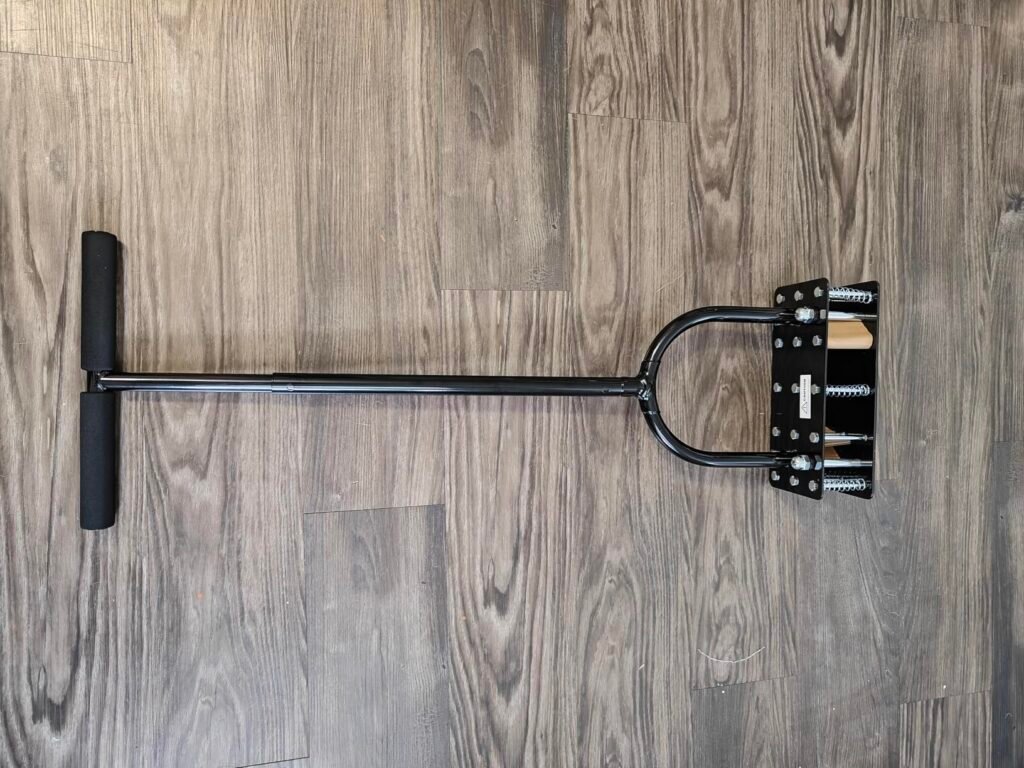
This manual hollow tine aerator targets homeowners with small lawns or specific problem areas who want the real benefits of core aeration without renting a gas-powered machine. Unlike spike aerators that push soil aside, hollow tines actually pull out small plugs of dirt, which is the technically preferred method for relieving compaction and improving deep root health.

We may earn a commission when you buy through this link, at no additional cost to you.
The three heat-treated hollow tines are sharp enough to penetrate typical residential soil when it’s properly moistened, and the design creates larger, deeper openings than most spike alternatives. White plastic inserts inside the tines help push soil plugs out cleanly after each step, preventing the clog buildup that ruins the effectiveness of many entry-level core aerators. Replaceable tine hardware means you can service the tool over years of use rather than replacing the whole unit.
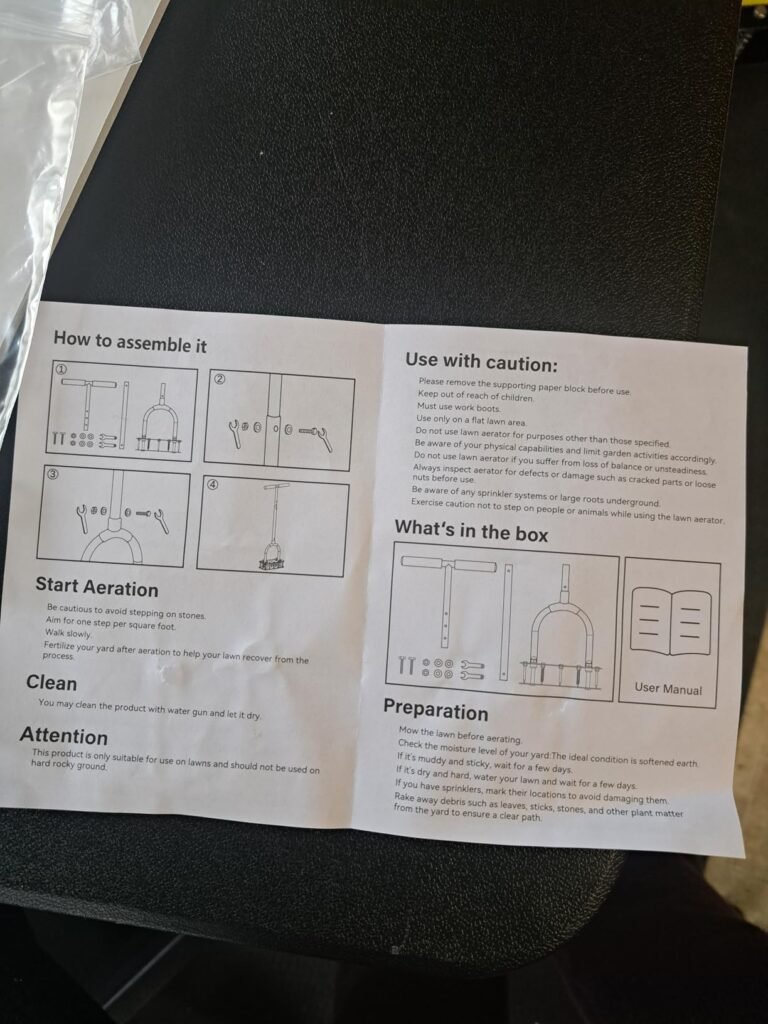
The non-slip ergonomic handle is comfortable enough for extended sessions, and the overall height helps minimize back strain compared to bending over with a shorter tool. Assembly is straightforward with included hardware. Timing matters with this style of aerator: watering dry soil before use makes penetration significantly easier, and avoiding rocking or twisting the tool sideways when it’s stuck in the ground prevents bent tines.
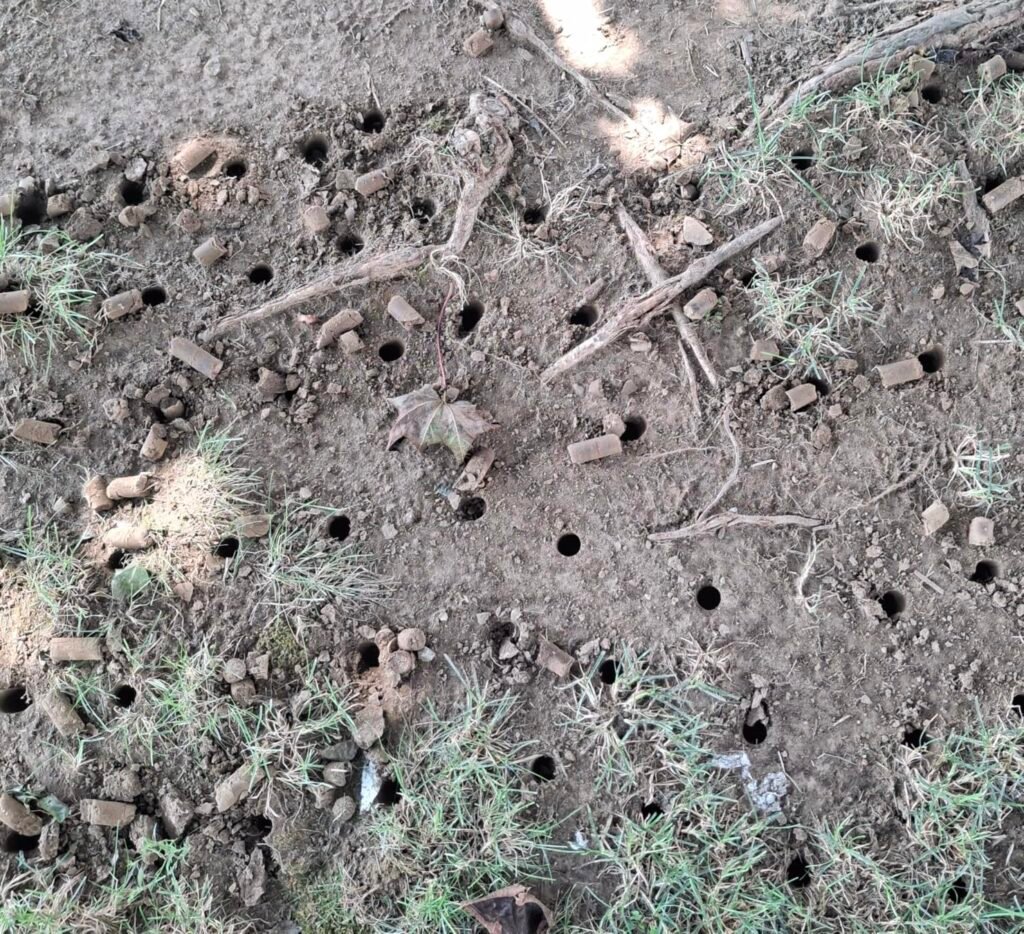
Hollow tine core aerators actually remove small plugs of soil, physically reducing compaction and creating open channels for air, water, and nutrients. Spike aerators just push soil aside temporarily, which can sometimes make compaction worse over time. For heavily compacted lawns or serious lawn renovation projects, true core aeration is the more effective approach even though it requires more effort per square foot.
The trade-off is that you’re covering only three small spots per step, so aerating a full quarter-acre lawn takes real time and effort. For small yards under 1,000 square feet, targeted problem areas, or gardens where core aeration around specific plants matters, this tool delivers genuine results at a low price. For larger lawns, a rolling aerator or rental machine makes more practical sense.
Owners of larger lawns who need to cover significant acreage efficiently in a single session.
We may earn a commission when you buy through this link, at no additional cost to you.
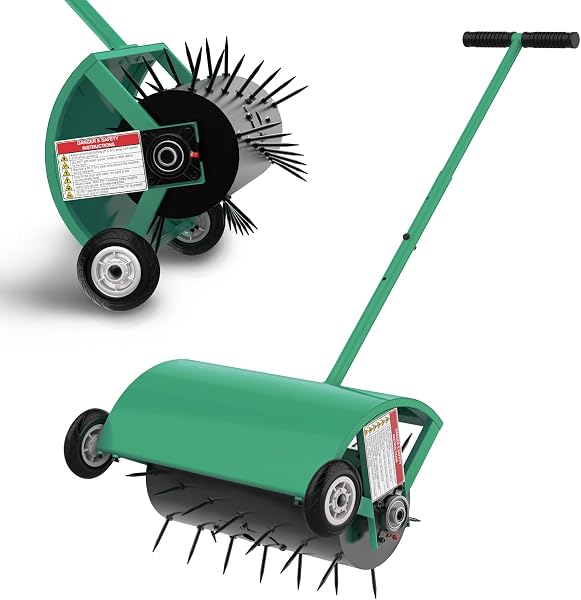
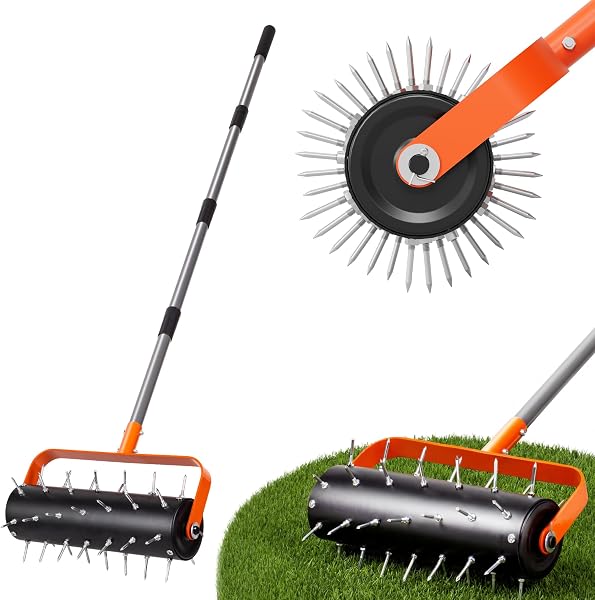
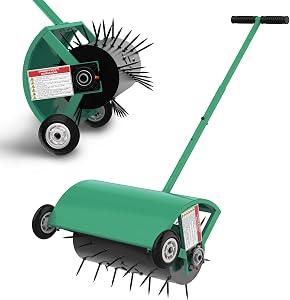
This rolling lawn aerator is a strong pick for homeowners who want efficient coverage of small to medium-sized lawns without the physical strain of step-on aerators. Rather than punching a few holes per step, you push the drum across the yard and its spiral-arranged spikes penetrate the soil continuously. For lawns up to about 5,000 square feet, this cuts working time significantly compared to manual tools.

We may earn a commission when you buy through this link, at no additional cost to you.
The 32-pound base weight is enough to drive the spikes into most typical residential soils. When you need deeper penetration in harder or drier ground, the drum’s covered opening lets you add sand or stones to bring total weight up to 55 pounds. That adjustability is genuinely useful across different soil conditions and seasons. The spiral spike tread pattern helps the roller advance smoothly with consistent penetration rather than jumping or bouncing.
Setup is designed to be fast: the drum body ships fully assembled, so you only need to attach the handle before use. The included auxiliary wheels are a practical detail often missing from budget rolling aerators. Lift the roller onto the transport wheels and you can wheel it across concrete driveways to storage without dragging the spikes across hard surfaces, which damages both the spikes and the pavement.
Rolling aerators without transport wheels force you to drag the spike-covered drum across driveways and walkways to reach the lawn, which damages both the aerator spikes and hard surfaces over time. Auxiliary wheels let you tilt the roller and wheel it easily between storage and work areas. It’s a small design detail that meaningfully extends tool life.
The trade-off versus manual step aerators is the higher price and larger storage footprint, and versus higher-capacity rollers, this model tops out at 55 pounds when the largest yards may benefit from more weight. For most residential properties needing efficient regular aeration, this model hits a strong balance of coverage, weight capacity, and practical usability features.
Buyers with very large lawns over 10,000 square feet who need maximum weight capacity for tough soil.
We may earn a commission when you buy through this link, at no additional cost to you.
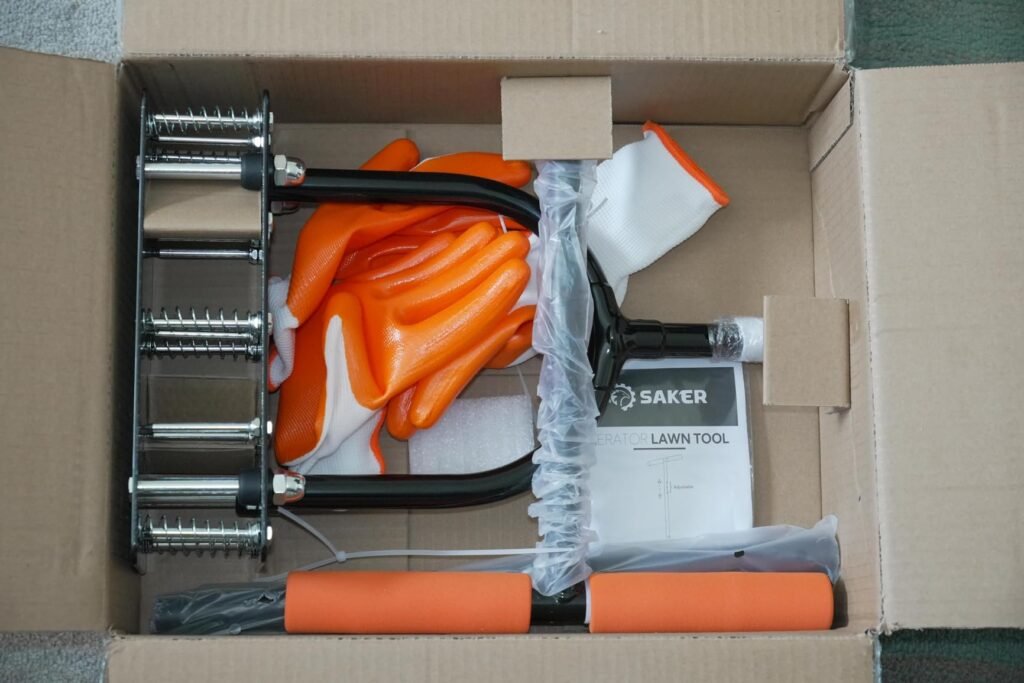
The Saker manual lawn aerator uses 15 sharp iron spikes arranged across a footplate to create multiple holes with every step, dramatically increasing coverage compared to 3-tine tools. For homeowners handling small to medium lawns who want a spike-style aerator with efficient coverage and a step-friendly design, this model delivers strong value at an approachable price.

We may earn a commission when you buy through this link, at no additional cost to you.
The 2.3-inch iron spikes are long enough to penetrate the root zone in typical residential soil, and their sharpness makes penetration easier than dull budget alternatives. A key differentiator is the double-layer spring system that automatically ejects soil and debris from between the spikes during use. This prevents the clogging that forces you to stop and manually clear traditional spike aerators, keeping the tool working efficiently through longer sessions.
The adjustable handle height range of 32.2 to 35.4 inches accommodates users of different heights and helps maintain a comfortable working posture that reduces back strain during extended use. Reinforced high-strength screw connections replace welding in the 2026 design, which improves stability and reduces the risk of failure at stress points. Protective gloves are included, which is a thoughtful addition given the sharp spikes involved.
Traditional spike aerators quickly become caked with soil and grass between the spikes, requiring you to stop and manually clean the tool. Spring-loaded systems flex slightly as you press down, ejecting collected debris as you lift the tool. This keeps the spikes clear and the tool working efficiently across an entire lawn session without constant maintenance stops.
The trade-off is that this is a spike aerator rather than a core aerator, so it opens channels by pushing soil aside rather than removing plugs. For lightly compacted lawns, overseeding prep, and general maintenance, spike aeration works well. For heavily compacted soil, a hollow-tine tool provides more thorough compaction relief. This Saker model suits homeowners who want efficient spike coverage in a well-designed manual tool.
Owners of heavily compacted lawns who need true core aeration to remove soil plugs rather than push soil aside.
We may earn a commission when you buy through this link, at no additional cost to you.
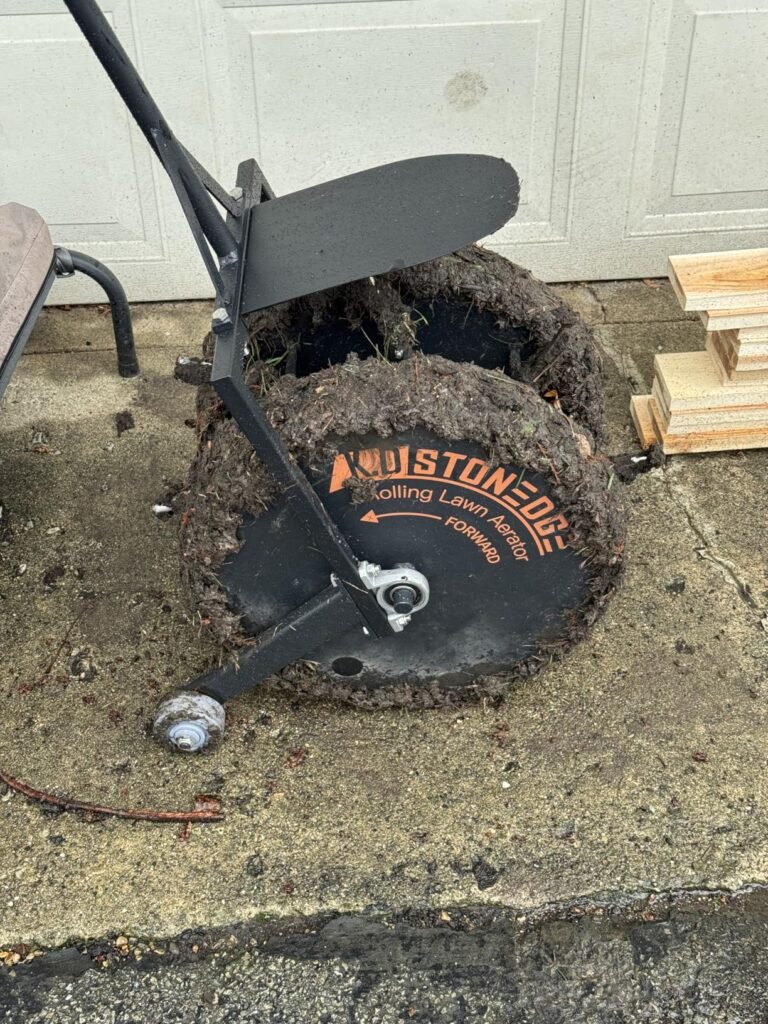
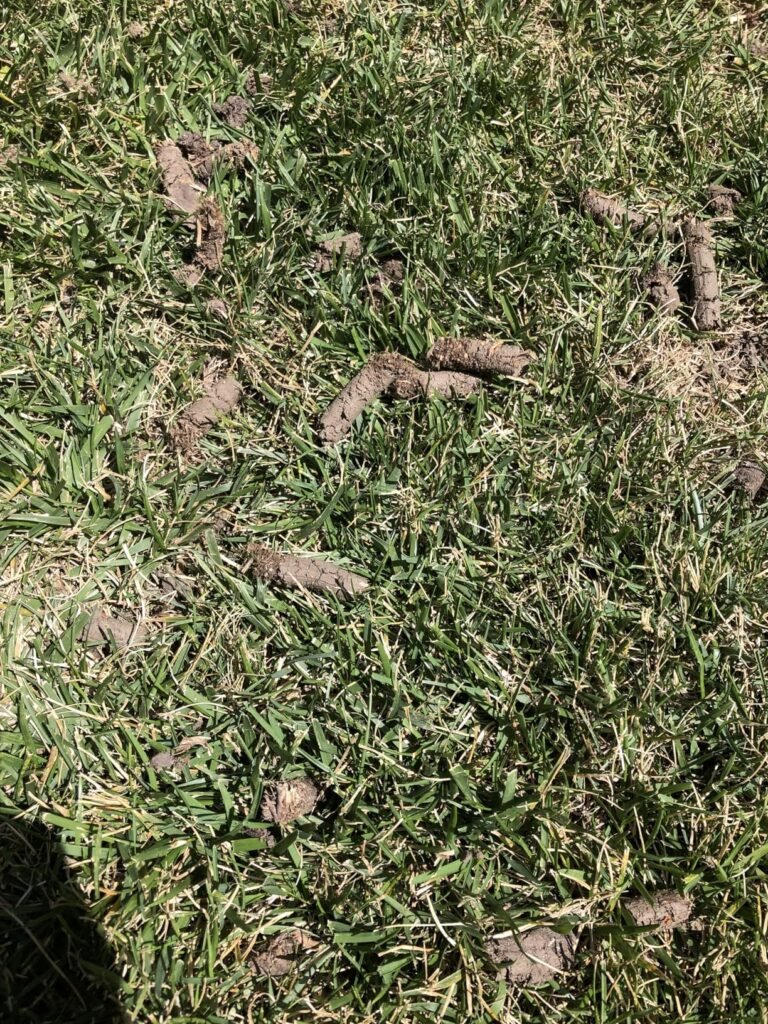
This patented rolling lawn aerator solves an interesting problem in the aerator market by combining the rolling efficiency of drum-style tools with the true core aeration benefits of hollow tine designs. Rather than pushing soil aside like standard spike rollers, the innovative rotary coring mechanism actually extracts small plugs of soil as you push the tool across the lawn.
We may earn a commission when you buy through this link, at no additional cost to you.
The scientifically balanced weight design ensures that plugs are pulled effectively without requiring you to add extra weight or push aggressively. That balance matters because a poorly weighted rolling aerator either fails to penetrate deeply enough or feels unnecessarily heavy to push. This model is designed to deliver effective aeration while remaining physically manageable for a healthy homeowner.
Heavy duty construction with high-quality materials supports the repeated stress of coring action across many uses. Unlike simpler spike rollers where the drum simply rolls with fixed spikes, the coring mechanism has moving parts that must remain aligned and functional. Reviews suggest the build quality holds up under regular residential use across seasons.
Manual step-on core aerators do the same technical job as rolling core aerators, but require far more physical effort to cover the same square footage. A rolling core aerator lets you complete a medium lawn in a fraction of the time while still pulling actual soil plugs. For homeowners who value both aeration quality and efficient use of their time, the higher upfront cost makes practical sense.
The main trade-off is the significant price investment compared to both simpler rolling aerators and manual step aerators. For small to medium lawns where the owner wants true core aeration efficiency without renting a gas-powered machine, this patented tool fills a genuine niche. Buyers who only need occasional aeration on a small yard may find simpler tools sufficient, but for regular users who value the results of true coring, the investment can pay back in lawn health over years.
Budget-conscious buyers who need occasional light aeration on very small yards or specific problem spots.
We may earn a commission when you buy through this link, at no additional cost to you.
The Walensee 15-spike aerator delivers reliable manual aeration at one of the lowest price points in this comparison. For homeowners dealing with small lawns, spot aeration around problem patches, or occasional preparation before overseeding, this tool provides genuine functionality without a significant investment.

We may earn a commission when you buy through this link, at no additional cost to you.
The 15 iron spikes are 2.8 inches long, which is slightly longer than competing 15-spike aerators and helps reach deeper into the root zone. The three-row layout distributes the spikes across the footplate for efficient coverage per step, and the cushioned T-handle plus footplate provides good leverage for pressing the tool into typical residential soil. The 34.6-inch handle length helps reduce bending over during use.
Heavy-duty iron construction with a powder-coated finish supports repeated outdoor use without immediate rust concerns. The detachable design is worth noting: the tool comes apart for easier storage and transport, which matters if you have limited garage or shed space. Assembly and disassembly are straightforward with the included hardware.
Aerating dry, hard soil is exhausting and less effective. Water your lawn thoroughly the day before you plan to aerate, allowing the moisture to soak in and soften the ground without making it muddy. The tool should penetrate the soil with reasonable pressure rather than requiring you to jump on the footplate. If penetration is still difficult, the soil is too dry or too compacted for manual tools.
The trade-offs are that this tool works best on properly moistened soil rather than heavy sticky clay or rocky ground, and it’s designed for smaller area lawn care rather than large-scale aeration jobs. Water the lawn thoroughly before use to soften the ground for easier penetration. For budget-conscious homeowners with small lawns or specific problem areas, this Walensee model provides real value at a genuinely low entry price.
Owners of medium or large lawns who need efficient coverage across significant square footage.
We may earn a commission when you buy through this link, at no additional cost to you.
The RIFPOD lawn aerator addresses the common frustration of manually removing soil and debris from between the spikes of traditional aerators. Its patent-pending dual-layer spring design automatically ejects collected material during operation, keeping the tool working efficiently through extended sessions without the constant cleaning breaks that slow down basic spike aerators.

We may earn a commission when you buy through this link, at no additional cost to you.
Thickened iron construction with precision spraying and arc welding delivers durability that holds up under repeated outdoor use. The rust-resistant surface treatment matters because aerators inevitably encounter wet grass and moist soil, and cheaper finishes fail quickly under those conditions. The reinforced casing has been strengthened compared to earlier versions, addressing a common failure point on lower-quality spike aerators.
The 15 iron spikes measuring 1.74 inches each work through the surface layer of soil to loosen it and create channels for water and nutrients. The adjustable height range from 32 to 35 inches accommodates different users comfortably, reducing knee and lower back strain during extended aeration sessions. Installation requires only screws, washers, and a small wrench, making initial setup straightforward.
Longer spikes reach deeper into the soil, addressing compaction further below the surface where grass roots need room to grow. Shorter 1.5 to 2-inch spikes work well for surface aeration and light compaction, while 2.5-inch or longer spikes reach deeper for more established lawns with significant compaction. Match spike length to your lawn’s specific soil conditions and depth of grass roots.
The trade-offs are that the 1.74-inch spike length is shorter than some competitors, which limits penetration depth to the upper soil layer, and this remains a spike aerator rather than a core aerator. For homeowners with lightly compacted small lawns who want an efficient anti-clog design at a reasonable price, this RIFPOD model provides thoughtful engineering. For deeper aeration needs, a longer-spike or core aerator makes more sense.
Homeowners with heavily compacted soil who need deeper penetration than 1.74-inch spikes provide.
We may earn a commission when you buy through this link, at no additional cost to you.
This dual-layer 15-spike aerator delivers the strongest value in this comparison, combining a low price with a solid 4.4-star customer rating that reflects widespread buyer satisfaction. For homeowners dealing with high-traffic turf areas, overseeding preparation, or tight spaces where a larger tool would be impractical, this simple manual aerator handles the essentials competently.

We may earn a commission when you buy through this link, at no additional cost to you.
The 15 dual-layer spike design creates multiple soil openings with each step, helping air, water, and nutrients move toward the root zone in typical residential turf. It’s particularly well-suited for high-traffic areas packed down by family activity, pets, or daily foot traffic, where the ground feels firm underfoot or water lingers on the surface after watering. Heavy-duty steel construction with a protective finish supports repeated outdoor use.
This tool fits naturally into common lawn care routines like the aerate-then-overseed sequence, helping create openings that support closer seed-to-soil contact when spreading grass seed on thin patches. The compact manual format reaches into tight spaces including fence lines, lawn edges, narrow side yards, walkway borders, and flower-bed perimeters where broader tools cannot maneuver.
Aerate cool-season grasses like Kentucky bluegrass and fescue in early fall when active growth resumes and the lawn can recover quickly. Aerate warm-season grasses like Bermuda and Zoysia in late spring or early summer when growth is strongest. Avoid aerating during dormancy, drought stress, or extreme heat, since the lawn cannot recover effectively from the disruption during these periods.
The trade-off is that this is a straightforward, no-frills tool without premium features like anti-clog springs or removable design elements. It works best when used on properly moistened soil during active grass growth: early fall for cool-season lawns and late spring to early summer for warm-season lawns. For budget-conscious homeowners who need a reliable spot-aeration tool at the lowest reasonable price, this model represents strong practical value.
Buyers who need premium features like anti-clog systems, longer spikes, or coverage of large lawn areas.
We may earn a commission when you buy through this link, at no additional cost to you.
The 24-inch rolling lawn aerator is the widest coverage tool in this comparison, making it the strongest choice for homeowners with medium to larger lawns who want to complete aeration jobs efficiently. The extra 6 inches of coverage per pass compared to standard 18-inch rollers meaningfully reduces the total number of passes needed to finish a larger property.

We may earn a commission when you buy through this link, at no additional cost to you.
The 42 reinforced 3-inch spikes are heat-treated for enhanced hardness and resistance to bending, which matters because longer spikes face more lateral stress when working through soil. The spiral spike arrangement ensures smooth rolling without the bouncing that plagues cheaper rolling aerators. At 32 pounds base weight, the tool penetrates most typical soils effectively, and the built-in weight chamber allows adding sand to bring total weight up to 70 pounds for tougher soil conditions.
The ergonomic tripod handle connection provides stable, wobble-free control during use, with a 3-height adjustable T-grip that accommodates users of different heights comfortably. Silicone anti-slip pads add comfort during longer sessions. Durable silicone auxiliary wheels handle transport across driveways and patios without damaging hard surfaces, and the mounting hardware ships pre-installed to simplify setup.
Rolling aerators can be either pushed or pulled across the lawn. Pushing is more common and offers better visibility of the path ahead, but pulling reduces the strain on your back and lower body, especially when the drum is loaded to maximum weight. For extended sessions or heavier loads, alternating between pushing and pulling can help distribute physical effort more evenly.
The trade-off is the significant storage space required for a 24-inch drum and the higher price investment compared to smaller rolling aerators or manual tools. For homeowners with medium to larger lawns who value efficient coverage and adjustable weight capacity, this tool delivers meaningful time savings and professional-quality results. Tip: after loading extra weight, pulling the aerator can be less strenuous than pushing it, especially across longer runs.
Homeowners with very small lawns where a large 24-inch drum is impractical to store and unnecessary for the coverage area.
We may earn a commission when you buy through this link, at no additional cost to you.
The Walensee rolling lawn aerator provides an accessible entry into rolling-style aeration at a lower price than premium 24-inch models. With 42 spike tines arranged in a spiral pattern, it delivers efficient coverage across small to medium lawns while remaining more manageable in size and price than the wider alternatives.

We may earn a commission when you buy through this link, at no additional cost to you.
The 42 reinforced 2-inch spike tines are heat-treated for enhanced hardness and resistance to deformation. The spiral arrangement forms a smooth continuous rolling motion when viewed from the side, minimizing vertical bouncing and providing better stability compared to straight-row spike patterns. This design detail meaningfully affects how smoothly the tool operates and how consistent the aeration coverage becomes.
The handle consists of four parts and adjusts to different heights to eliminate bending over during use. The ergonomic rubber grip is non-slip and comfortable enough for extended sessions. Spikes ship pre-installed on the drum, so assembly focuses only on the handle components. Two extra cotter pins ship as backup, which is a thoughtful touch given how easily small hardware pieces get misplaced during outdoor projects.
Some rolling aerators specify which materials can be added to increase weight, while others are more flexible. Water is often prohibited because it can cause internal rust or seal failures, and sand may be excluded on some models because its fine particles can leak through seams. Always follow the manufacturer’s specific weight-fill instructions to avoid damaging your tool.
The trade-offs are the shorter 2-inch spike length compared to premium 3-inch alternatives, and the important note that only stones can be added for weight rather than water or sand. For homeowners wanting a well-designed rolling aerator at a middle-ground price point who don’t need the deepest possible penetration or the widest coverage, this Walensee model represents solid value. Water your lawn thoroughly before use to soften soil for best spike penetration.
Owners of heavily compacted soil who need deeper 3-inch spike penetration for better results.
We may earn a commission when you buy through this link, at no additional cost to you.
Choosing the right lawn aerator comes down to matching the tine style, coverage capability, and physical demands to your yard size, soil type, and personal physical capacity. The factors below cover what genuinely matters when making this decision.
The tine type is the single most important decision when buying a lawn aerator. Spike aerators, like the Saker 15-spike or RIFPOD models, use solid metal spikes that push soil aside to create openings. They’re faster and easier to use, and they work well for light compaction, overseeding preparation, and general maintenance on healthy lawns. However, over time, spike aeration can actually increase compaction by compressing the soil at the sides of each hole.
Hollow core aerators, like the featured alloy steel model and the manual hollow tine aerator, physically remove small plugs of soil from the ground. This truly relieves compaction by creating open channels rather than compressing surrounding soil. Core aeration is the technically preferred method for heavily compacted lawns, lawn renovation projects, and any situation where deep aeration benefits matter more than speed.
For lightly used residential lawns and general maintenance, spike aerators work fine and are easier to use. For heavily compacted soil, lawn renovation, or serious lawn health improvement projects, invest in a hollow core aerator despite the additional effort required.
Manual step-on aerators like the Walensee 15-spike or the alloy steel core aerator require you to press the tool into the ground with each step, punching holes one small patch at a time. They’re the most affordable option, require minimal storage space, and work well for small lawns, spot aeration, and problem areas. The downside is real physical effort and slow coverage on larger areas.
Rolling aerators like the 24-inch model and Walensee rolling aerator have spikes mounted on a drum that you push or pull across the lawn. They cover ground much faster and require less repetitive physical effort per square foot, but cost significantly more and require more storage space. Rolling core aerators like the patented rolling model combine efficient coverage with true core aeration at the highest price point.
Choose manual step aerators for small lawns under 2,000 square feet or targeted problem areas. Choose rolling aerators for medium lawns from 2,000 to 8,000 square feet where covering ground efficiently matters. For larger lawns, consider renting a gas-powered core aerator instead.
Coverage width directly affects how quickly you complete an aeration session. Manual step aerators typically create 3 to 15 holes per step, depending on design. Rolling aerators range from about 18 inches to 24 inches of coverage per pass, with the widest models finishing lawns significantly faster than narrower alternatives.
Spike count matters within similar tool categories. A 15-spike manual aerator like the Saker, Walensee, or RIFPOD models creates 15 holes per step versus 3 holes on a hollow core tool. Rolling aerators with 42 spikes create more holes per rotation than models with fewer spikes. However, spike count is only meaningful when comparing similar tool types, since 3 hollow core tines produce more valuable aeration than 15 spike tines in most conditions.
For efficiency alone, choose maximum coverage width and spike count within your budget and tool type. For lawn health results, prioritize tine type over spike count, since 3 hollow tines beat 15 spikes for true compaction relief.
Spike or tine length determines how deeply the aerator penetrates the soil. Shorter 1.5 to 2-inch spikes work well for surface aeration and lightly compacted lawns. Longer 2.5 to 3-inch spikes and tines reach deeper into the root zone, addressing compaction below the immediate surface and creating channels that support deeper root growth.
For deeply established lawns with significant compaction problems, longer tines make a meaningful difference in aeration effectiveness. The 3-inch spikes on the 24-inch rolling aerator or the 2.8-inch spikes on the Walensee 15-spike manual tool reach deeper than the 1.74-inch spikes on some competitors. For new lawns or minimal compaction, shorter spikes are usually sufficient.
Match spike length to your soil condition and lawn maturity. For established lawns with real compaction issues, prioritize longer 2.5-inch or greater tine length. For newer lawns or light maintenance, shorter spikes work fine.
Rolling aerators depend on weight to drive their spikes into the soil. Base weights typically range from 25 to 35 pounds on empty drums, which is enough for typical residential soils in moist conditions. When soil is drier or more compacted, additional weight helps the spikes penetrate deeply enough to be effective. Better rolling aerators include weight chambers where you can add sand or stones to increase total operating weight.
Maximum capacity varies significantly. The 24-inch rolling aerator reaches 70 pounds with weight added, while the heavy duty rolling aerator maxes out at 55 pounds. For homeowners with harder soil or those wanting deeper penetration, higher weight capacity provides more flexibility. Always verify what materials the manufacturer permits for weight-fill, since water and sometimes sand can damage certain models.
For softer soils and typical residential use, 40 to 50 pounds is usually sufficient. For harder soils or when you want maximum aeration depth, prioritize models that can reach 65 to 70 pounds with added weight.
Aerators face significant stress during use, including impact loads when hitting rocks or hard soil, lateral forces when pulled out of the ground, and constant exposure to moisture and grass acids. Quality construction matters for long-term durability and safety. Look for heavy-gauge steel or alloy construction, reinforced weld points or screw connections at stress areas, and rust-resistant finishes like powder coating or precision spraying.
The failure points on cheaper aerators tend to be the connection between the footplate and handle on manual tools, and the spike-mounting hardware on rolling models. Reinforced screw connections instead of welding, like on the updated Saker aerator, tend to provide better long-term reliability. On rolling aerators, integrally formed frames typically outlast bolted-together designs.
For occasional use, budget-tier construction is usually sufficient. For regular seasonal use over many years, invest in stronger materials and reinforced design points that will handle repeated stress without failing.
Aeration is physical work regardless of the tool you choose, but ergonomic design can significantly reduce fatigue and prevent injury. On manual step aerators, look for handle heights that let you stand upright without hunching, cushioned or ergonomic grips that reduce hand fatigue, and knee-friendly footplate designs that don’t restrict natural leg movement. Adjustable-height handles accommodate users of different sizes comfortably.
On rolling aerators, T-grip handle designs with padded or non-slip surfaces reduce hand strain during extended pushing. Adjustable height helps match the tool to your body. Auxiliary transport wheels reduce the physical effort of moving the loaded drum between storage and work areas. For anyone with back, knee, or hand issues, prioritize models that specifically address these concerns.
Test your physical comfort with the tool style before committing. For anyone with joint issues or reduced strength, rolling aerators or tools with knee-friendly designs typically cause less strain than aggressive step aeration.
Aerators are seasonal tools that spend most of the year in storage. Manual step aerators are typically the most storage-friendly, hanging easily on a garage wall or fitting behind other tools. Detachable designs like the Walensee 15-spike further reduce the storage footprint by breaking down into smaller pieces between uses.
Rolling aerators require significant storage space, especially wider 24-inch models. Check your available storage before committing to a large rolling tool. Transport wheels on rolling aerators help move them from storage to work areas without dragging spikes across driveways, which damages both the tool and the pavement over time. For homeowners with limited storage or those needing to transport the tool between properties, these details matter significantly.
Match tool size to your available storage space. A perfectly capable rolling aerator that won’t fit in your shed isn’t practical, no matter how good its performance specs look on paper.
Preparation makes a significant difference in aeration results. Water your lawn thoroughly the day before you plan to aerate, allowing the moisture to penetrate deeply and soften the soil without making it muddy. Aerate during active grass growth periods: early fall for cool-season lawns like Kentucky bluegrass and fescue, and late spring or early summer for warm-season lawns like Bermuda and Zoysia. Mark or flag any sprinkler heads, shallow utility lines, or other hazards before starting. Assemble your tool carefully, following the included instructions and confirming all fasteners are tight before use.
During aeration, use consistent technique for even coverage. For manual step aerators, stand upright, step firmly on the footplate to press the tines fully into the soil, lift the tool straight up without twisting or rocking side to side (which bends tines), advance a foot’s distance, and repeat. For rolling aerators, push or pull the tool in overlapping passes across the lawn, working in different directions on subsequent passes to ensure even coverage. Take breaks as needed to avoid fatigue and injury. Leave the pulled soil plugs from core aerators on the lawn to break down naturally over the following weeks.
Long-term care extends tool life significantly. After each use, clean soil and grass debris from tines using a wire brush or hose, paying particular attention to the interior of hollow tines on core aerators. Dry the tool thoroughly before storage to prevent rust. Store in a dry location like a garage or shed, keeping the tines away from surfaces they could damage. Inspect tines periodically for bending, dulling, or damage, and replace hardware as needed on models with replaceable tine designs. For rolling aerators, keep bearings clean and lubricate any moving parts according to the manufacturer’s recommendations.
Core aeration uses hollow tines to pull small plugs of soil out of the ground, physically removing dirt and truly relieving compaction. Spike aeration uses solid spikes that push soil aside to create openings, which is faster and easier but can sometimes compress surrounding soil and worsen compaction over time. Core aeration is technically superior for heavily compacted lawns and lawn renovation projects, while spike aeration works fine for light maintenance on healthy lawns.
Most residential lawns benefit from aeration once a year, timed to coincide with active grass growth. Cool-season lawns should be aerated in early fall, while warm-season lawns should be aerated in late spring or early summer. Lawns with heavy foot traffic, clay soil, or significant compaction may benefit from twice-yearly aeration. Newly established lawns typically don't need aeration for the first few years.
Water your lawn thoroughly the day before you plan to aerate. This softens the soil enough for tines to penetrate easily without making the ground muddy. After aerating, resume normal watering to help the lawn recover. If you're overseeding after aeration, keep the soil consistently moist during germination. Never aerate saturated soil, which can cause damaging compaction from foot traffic during the process.
For small to medium residential lawns up to about half an acre, DIY aeration with a manual or rolling tool is entirely practical. Larger lawns may benefit from renting a gas-powered core aerator or hiring a professional lawn care service. Consider your physical capacity, available time, and lawn condition when deciding. Professional services often use higher-quality core aerators that produce better results, but the cost adds up over years of use.
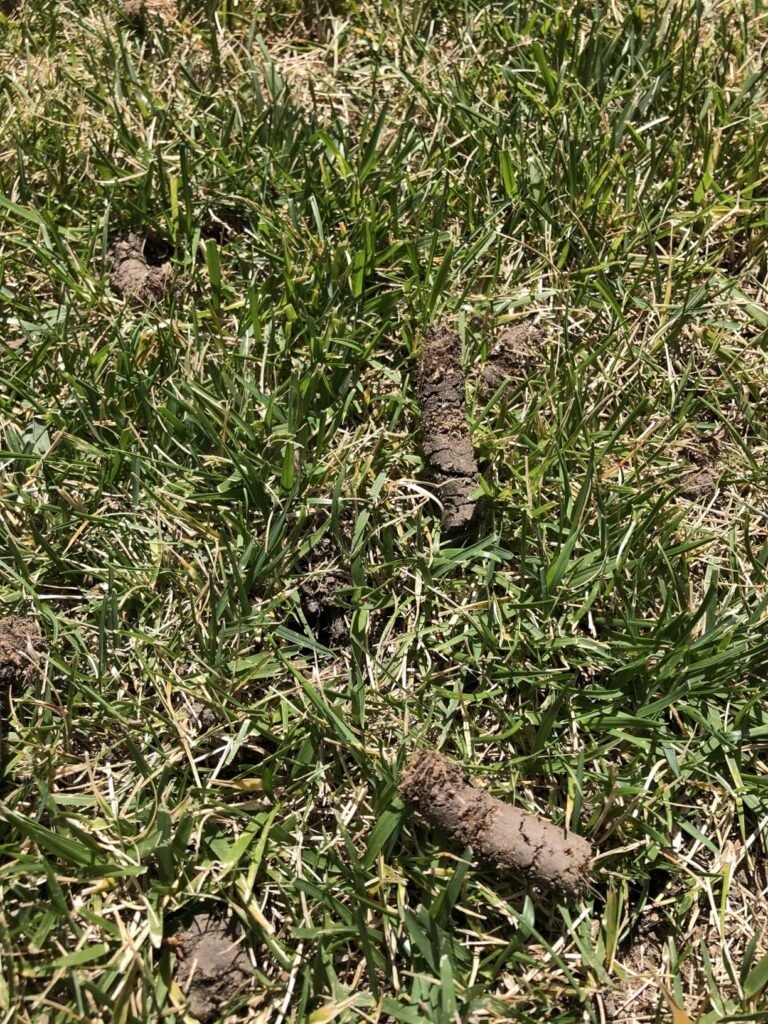
No, leave the soil plugs on the lawn to break down naturally. Over the following one to two weeks, the plugs will crumble apart from watering, foot traffic, and mowing, returning the soil to the lawn as top dressing that improves soil quality. Trying to rake up all the plugs is unnecessary work and removes beneficial soil from the lawn. The temporary appearance of scattered plugs is a small price for the aeration benefits.
Aerate on properly moistened soil but avoid working on saturated or muddy ground. Wet, muddy soil compacts easily under foot traffic, which can worsen the compaction problem you're trying to solve. The ideal condition is soil that's moist enough for easy tine penetration but firm enough to walk on without leaving deep footprints. Wait a day or two after heavy rain before aerating.
Several signs indicate that a lawn would benefit from aeration. Water pooling on the surface rather than absorbing, grass that thins despite proper watering and fertilizing, hard soil that's difficult to push a screwdriver into, and heavy foot traffic areas that struggle to grow all suggest compaction. Clay soil, new construction sites, and lawns over a few years old typically benefit from regular aeration even without obvious problems.
Aerate during cooler parts of the day, ideally morning or late afternoon during active grass growth seasons. Avoid aerating during peak heat when grass is stressed. The temperature affects both your comfort during the physical work and the lawn's ability to recover afterward. Overcast days with mild temperatures are ideal for aeration projects, especially for larger lawns that require extended sessions.
Yes, aerating and overseeding together is one of the most effective lawn improvement combinations. The aeration holes create ideal seed-to-soil contact and provide protected pockets where seeds can germinate without being disturbed by birds or rainfall. Aerate first, then spread grass seed and any starter fertilizer, and keep the soil consistently moist during germination. This approach dramatically improves overseeding success compared to spreading seed on unaerated soil.
The alloy steel core aerator stands out as the strongest overall choice because it combines the technically superior benefits of hollow core aeration with a patented anti-clog design that solves the biggest frustration with manual core tools. Its knee-friendly footplate design and 4.6-star customer rating reflect strong real-world performance, and the removable middle tine adds practical flexibility for working through tougher soil.
For medium to larger lawns where efficient coverage matters, the 24-inch rolling aerator delivers wider path coverage and higher weight capacity than smaller alternatives. Budget-conscious homeowners with small lawns will find strong value in the dual-layer 15-spike aerator, which combines a low price with a solid 4.4-star rating. The heavy duty rolling aerator with adjustable weight up to 55 pounds fills the middle ground between manual tools and premium rolling models, and the patented rolling coring tool offers a unique combination of rolling efficiency and true core aeration for buyers with a larger budget.
Your final decision should start with an honest assessment of your lawn size, soil condition, and physical capacity. Choose core aeration for heavily compacted lawns and lawn renovation projects, spike aeration for light maintenance and overseeding preparation, and rolling designs when covering ground efficiently matters more than the absolute best aeration quality. A well-matched aerator transforms lawn care from a dreaded chore into a satisfying seasonal ritual that produces genuinely healthier, greener grass over the years.