BlessReach All Terrain
8.8Editor score11-inch front tires
300 lb capacity
Foldable with bag
All-terrain wheels
Find the right knee walkers for 2026. We compare 10 standout options by build quality, useful features, owner feedback, value, and everyday trade-offs.
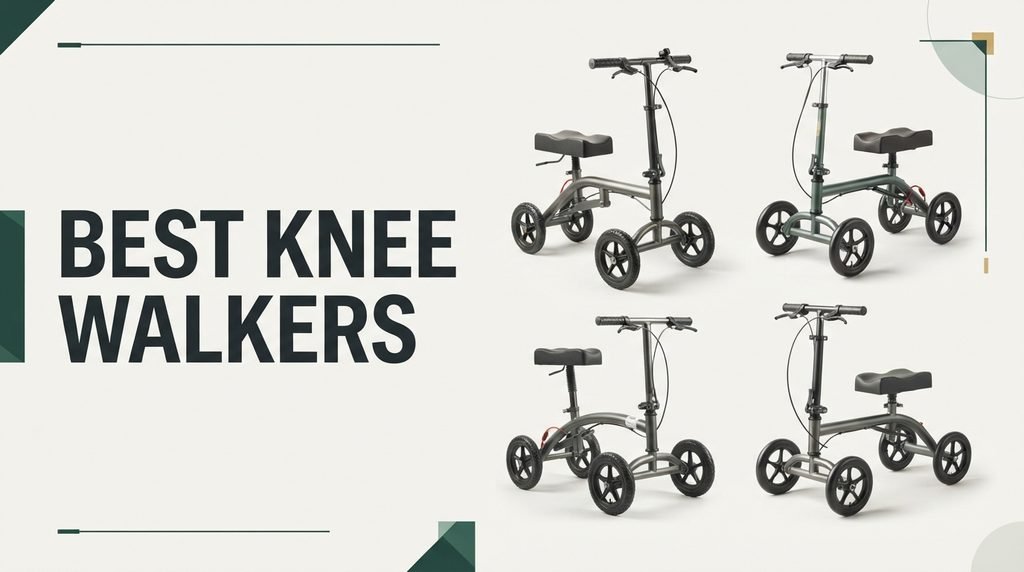
Find the right knee walkers for 2026. We compare 10 standout options by the factors that matter most during recovery, including wheel type, terrain capability, weight capacity, braking systems, adjustability, folding convenience, knee pad comfort, and overall stability for daily mobility.
Recovering from a foot, ankle, or lower leg injury is challenging enough without struggling with uncomfortable crutches. A well-chosen knee walker keeps your injured leg elevated and supported while letting you move freely through your home, workplace, and neighborhood.
The models below range from lightweight indoor scooters to heavy-duty all-terrain options with large pneumatic tires. Understanding the differences in frame construction, wheel size, and adjustability will help you pick the mobility aid that best fits your recovery timeline.
We compared 10 knee walkers using the details that actually help a buyer decide: wheel type and terrain capability, weight capacity, frame durability, braking reliability, height adjustability, knee pad comfort, folding convenience, and overall value. The notes focus on practical trade-offs so each pick feels connected to how people actually navigate daily life during foot, ankle, or lower leg recovery.


Compare key features, scores, and current prices side by side. A shorter feature list means fewer details were available, not necessarily fewer capabilities.


This knee scooter stands out because of its integrated shock-absorbing spring system, which works in conjunction with the reinforced frame to dampen vibrations from thresholds, sidewalk cracks, and uneven pavement. While many knee walkers rely solely on wheel material for impact absorption, the addition of mechanical springs provides a noticeably smoother ride that can make a meaningful difference in comfort during the early stages of recovery when the injury is most sensitive.
We may earn a commission when you buy through this link, at no additional cost to you.
The 8-inch PU wheels complement the suspension system by offering quieter operation and better shock absorption than standard rubber wheels. PU material is also more resistant to flat-spotting and wear over time. The combination of springs and PU wheels makes this model particularly well-suited for environments that mix indoor floors with outdoor sidewalks and parking lots, where surface transitions are frequent.
Adjustability is thorough, with knee pad height ranging from 17.5 to 21.9 inches and handlebar height from 32.1 to 40.1 inches. This range accommodates a broad spectrum of adult body types and allows fine-tuning for proper posture, which reduces upper body fatigue during extended use. The one-click folding mechanism collapses the frame quickly for car trunk storage, and the detachable bag keeps essentials accessible.
In the first weeks after foot or ankle surgery, even small vibrations from rolling over a threshold can cause sharp discomfort. A spring suspension system absorbs much of that energy before it reaches the knee platform, reducing the cumulative impact on your healing injury. This feature is particularly valuable if you live in an older home with uneven floors or frequently transition between indoor and outdoor surfaces.
This is an excellent all-around choice for most adults recovering from foot or ankle injuries. The shock absorption system provides a comfort advantage that is especially valuable during the first few weeks of recovery when jarring impacts are most painful. If your terrain is extremely rough or unpaved, a model with larger pneumatic tires may still be preferable, but for typical suburban and urban environments, this model offers the smoothest ride in its class.
Users who need to traverse deep gravel, sand, or heavily rutted dirt paths will benefit more from large pneumatic tires.
We may earn a commission when you buy through this link, at no additional cost to you.
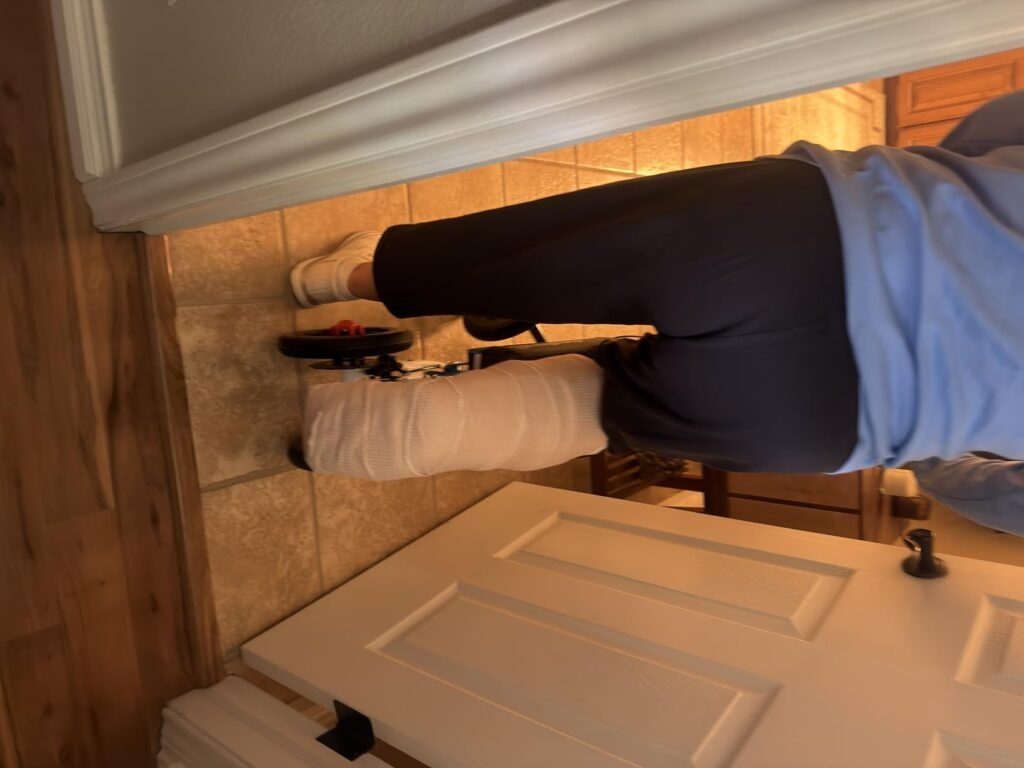
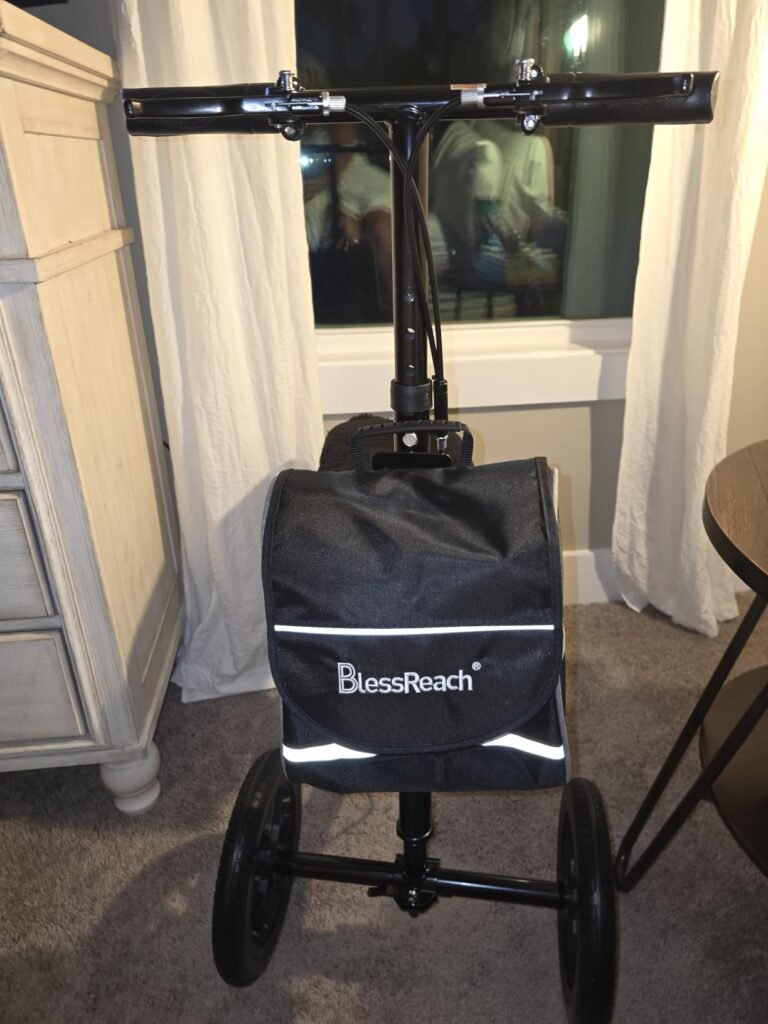
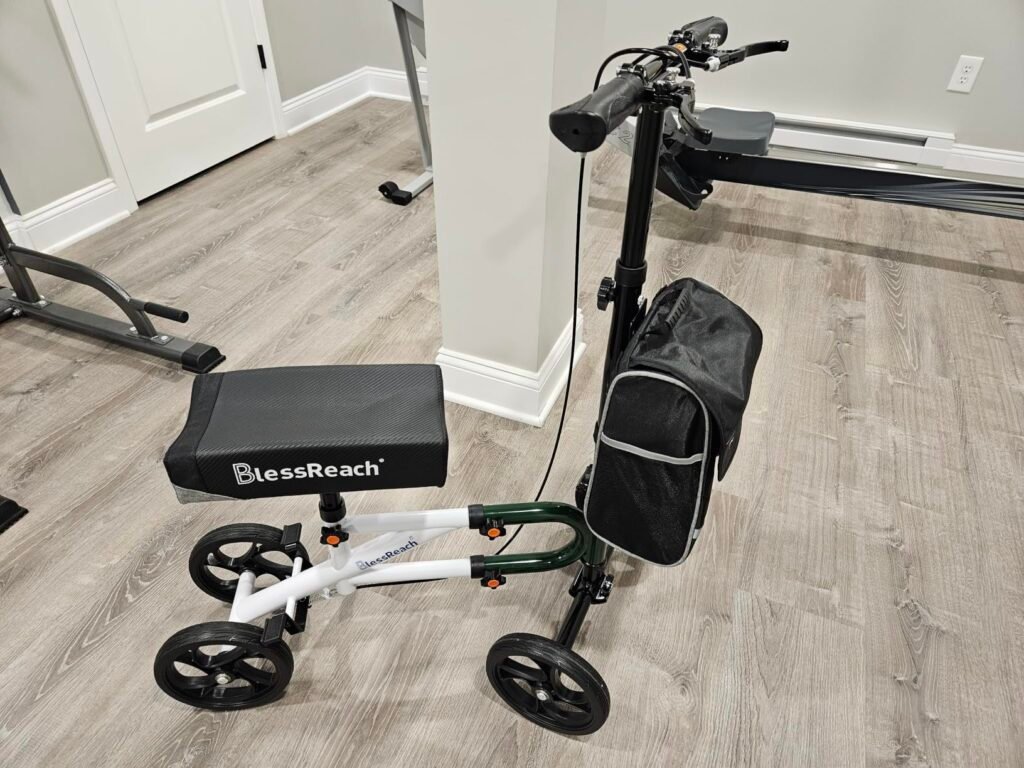
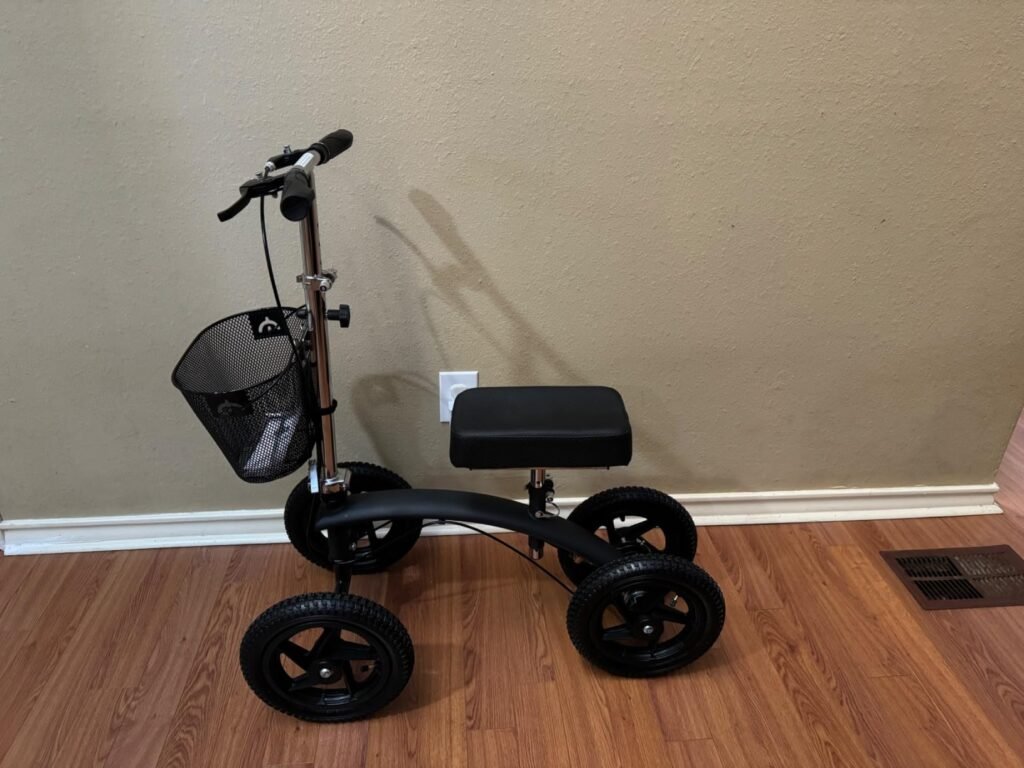
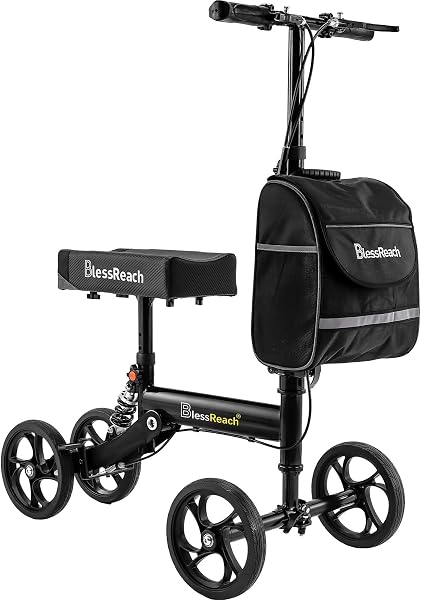
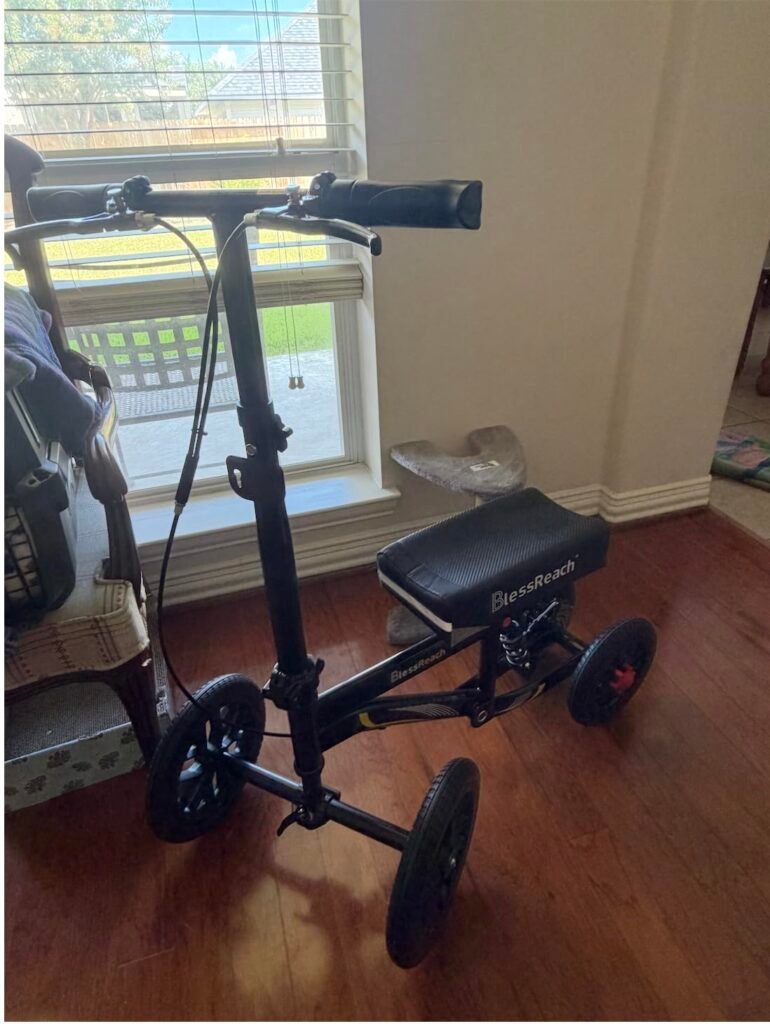
The BlessReach All Terrain knee walker targets people who need to move beyond smooth floors during recovery. Its standout feature is the combination of 11-inch front tires and 9-inch rear tires, which gives it a noticeable advantage on cracked sidewalks, gravel driveways, and grassy yards. If your daily routine involves navigating uneven outdoor surfaces, this wheel configuration provides more stability and a smoother ride than smaller-wheeled alternatives.
We may earn a commission when you buy through this link, at no additional cost to you.
The contoured and padded knee brace is designed to distribute weight across a broader area of the lower leg, which matters during long periods of use. The 300-pound weight capacity covers a wide range of body types, and the overall frame construction feels oriented toward durability rather than ultra-light portability. The steering geometry allows reasonable maneuverability, though the larger wheelbase means tighter turns require a bit more space.
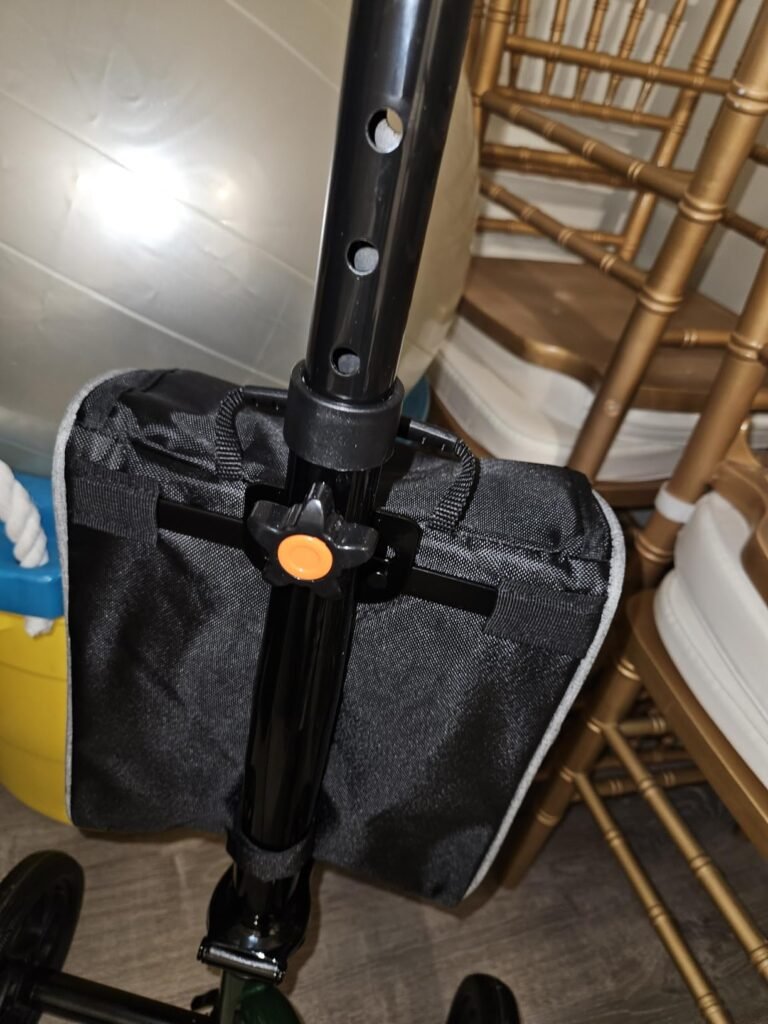
Convenience features include a removable canvas bag for carrying personal items and a folding mechanism that collapses both the wheel bracket and steering lever. This makes it feasible to load into a vehicle for trips to medical appointments or the grocery store. The fold-down size is not the most compact on this list, but it strikes a reasonable balance between outdoor capability and transport convenience.
Tire size directly affects how a knee walker handles transitions between surfaces. The 11-inch front tires on this BlessReach model roll over sidewalk gaps, threshold strips, and small debris more easily than 8-inch wheels. If your recovery coincides with seasons that leave paths uneven or debris-covered, the extra tire diameter reduces the jarring impacts that can aggravate a healing injury.
This model is a strong fit for anyone whose recovery period involves regular outdoor movement on mixed surfaces. If you primarily stay indoors on hardwood or tile, a smaller-wheeled model may be easier to maneuver in hallways and doorways. But for suburban neighborhoods with uneven pavement and curb cuts, the larger tires make a meaningful difference in ride comfort and confidence.
Users who need an ultra-compact walker strictly for small indoor spaces may find the larger wheelbase cumbersome in narrow hallways.
We may earn a commission when you buy through this link, at no additional cost to you.
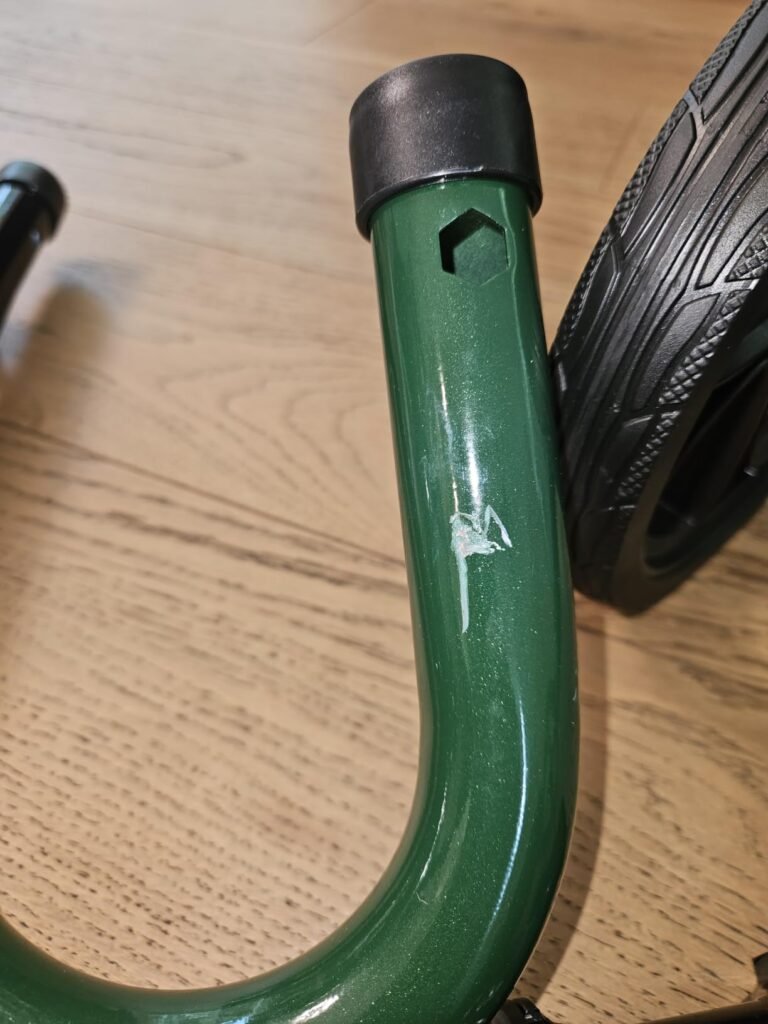
At under $100, the BlessReach Lightweight knee scooter occupies the budget-friendly end of the market without sacrificing core structural integrity. The double tube frame construction provides a sturdier feel than single-tube designs at this price range, which is important because frame flex can undermine confidence when you are putting significant weight on the knee platform.
We may earn a commission when you buy through this link, at no additional cost to you.
The 8-inch wheels are best suited for smooth indoor surfaces and paved outdoor paths. They roll quietly on hardwood, tile, and linoleum, making this model practical for apartment living or single-story homes. The ergonomic locking handbrake adds a useful layer of control, letting you lock the rear wheels when standing still on a slight incline or transferring weight on and off the platform.
The detachable double-layer canvas bag is a practical inclusion at this price. It provides enough room for a phone, keys, wallet, and a small water bottle, which means fewer trips back to a table or counter during daily tasks. The main frame disassembles and the steering lever folds down, so the entire unit fits in a standard car trunk for medical visits.
The key tradeoff at this price is wheel size and terrain range, not structural safety. The double tube frame and locking handbrake address the two areas where budget models most often cut corners. If your recovery timeline is measured in weeks rather than months and your environment is mostly flat and paved, the savings here are genuine rather than illusory.
This knee walker makes the most sense for buyers with a shorter expected recovery period or those who primarily need indoor mobility. If you anticipate navigating gravel paths, grass, or heavily cracked sidewalks, investing in a model with larger or air-filled tires will serve you better. For straightforward indoor and light outdoor use, however, this model delivers reliable performance at a very accessible price.
Users who need to traverse gravel, grass, or significantly uneven outdoor terrain regularly will benefit from larger pneumatic tires.
We may earn a commission when you buy through this link, at no additional cost to you.
The iWALK3.0 takes a fundamentally different approach to non-weight-bearing mobility. Instead of a four-wheeled scooter platform, it functions as a hands-free knee crutch that straps to your upper leg, leaving both arms completely free. This design is ideal for motivated, physically capable adults who want to maintain a normal walking gait and need to navigate stairs, narrow spaces, and environments where a rolling scooter would be impractical.
We may earn a commission when you buy through this link, at no additional cost to you.
The critical caveat is that this device has strict user qualifications. It is designed for individuals between 5’2″ and 6’2″ who are 55 or younger, in good physical condition, with average or better balance. It is explicitly not recommended for elderly users, anyone with balance or strength limitations, or those who are significantly overweight. Meeting these qualifications is essential for safe and effective use.
The learning curve is real but manageable, typically taking one to three days of practice. During the initial adaptation period, you may walk more slowly and experience some discomfort as your body adjusts to the new weight distribution. Once adapted, users report significantly greater freedom than traditional crutches or knee scooters allow, particularly in kitchens, bathrooms, and stairwells where a four-wheeled device simply cannot go.
The iWALK3.0 is one of the few mobility aids that clearly states who should not use it. Pay close attention to the age, height, weight, and balance requirements before ordering. If you fall outside the recommended range, a traditional four-wheeled knee walker will provide a safer and more comfortable recovery experience. The hands-free benefit is significant, but only when the user has the physical capacity to control the device safely.
Choose the iWALK3.0 if you are a younger, active adult with good balance who needs to navigate stairs and tight spaces during recovery. It is a poor match for anyone who does not meet the physical qualifications or who prefers the immediate stability of a four-wheeled platform. The included personalized tech support is a genuine advantage if you run into fitting or adaptation challenges.
Elderly users, anyone with balance or strength limitations, or individuals who do not meet the stated height and physique qualifications.
We may earn a commission when you buy through this link, at no additional cost to you.
The BodyMed All-Terrain knee walker is built for users who need the highest weight capacity and the most capable tire setup on this list. With a 350-pound limit and four 12-inch air-filled pneumatic tires, it handles grass, gravel, dirt paths, and uneven sidewalks with a smoothness that solid rubber wheels cannot match. The tall height range of 5'0" to 6'4" also makes it one of the most accommodating options for taller individuals.

We may earn a commission when you buy through this link, at no additional cost to you.
Pneumatic tires provide genuine shock absorption because the air cushion inside the tire compresses over bumps and cracks, reducing the vibration transmitted to your healing leg. The tradeoff is maintenance: these tires arrive deflated to prevent pressure damage during shipping, and you will need an air pump to inflate them to the recommended 30-35 PSI range. Checking tire pressure periodically is important for consistent ride quality.
The dual rear braking system is operated from the handlebars and provides reliable stopping power on inclines and smooth surfaces. The metal basket is a practical upgrade over fabric bags for carrying heavier items like grocery bags or medical supplies. The overall build quality reflects BodyMed’s positioning as a professional-grade healthcare product brand, with a focus on durability over lightweight portability.
Air-filled pneumatic tires absorb impacts far more effectively than solid rubber or PU wheels, which is why they are standard on outdoor-focused knee walkers. The downside is the possibility of flats and the need to maintain proper inflation. If your recovery environment includes significant outdoor travel on rough surfaces, the comfort advantage of pneumatic tires usually outweighs the minor maintenance requirement.
This model is the strongest choice for heavier users or anyone who needs to cover rough outdoor terrain daily. The 35-pound weight makes it less convenient to lift into a vehicle compared to lighter models, and the pneumatic tire maintenance adds a small ongoing responsibility. If those tradeoffs are acceptable, the ride quality and load capacity are difficult to match at this price point.
Users who need a lightweight, maintenance-free walker primarily for smooth indoor floors may prefer solid-wheel models.
We may earn a commission when you buy through this link, at no additional cost to you.
The defining feature of this BlessReach model is its oversized 13-inch knee pad, which is noticeably larger than the standard pads found on most competing knee walkers. A wider, longer pad distributes body weight across a greater surface area of the shin and knee, reducing the localized pressure that can cause soreness during extended use. If you anticipate spending several hours a day on your knee walker, this extra padding can significantly improve comfort.
We may earn a commission when you buy through this link, at no additional cost to you.
The carbon steel frame uses a widened chassis and low center-of-gravity design to reduce rollover risk, which is a practical safety consideration for users who may be unsteady during the early days of recovery. The 300-pound weight capacity and height range of 4’9″ to 6’3″ make this one of the more inclusive models on the list, accommodating both shorter and taller adults without requiring a separate size variant.
The 8-inch rubber wheels provide reliable traction on smooth surfaces and are equipped with wear-resistant and slip-resistant tread. The one-touch dual handbrakes offer straightforward speed control, and the manufacturer recommends keeping speed under 2.4 mph for safe operation. While this speed limit may feel slow, it reflects a conservative safety approach that is appropriate for a mobility aid used during active injury recovery.
A small knee pad concentrates your body weight on a narrow area of the shin, which can lead to bruising and soreness after a few hours of continuous use. The 13-inch pad on this model spreads that load more evenly, reducing the likelihood of pressure-related discomfort. If you have particularly bony knees or sensitive skin, a larger pad surface is one of the most impactful comfort upgrades you can choose.
This model is a strong match for users who prioritize knee comfort above all other features, particularly those with longer recovery timelines or higher sensitivity to pressure on the lower leg. The rubber wheels are durable but slightly noisier on hard floors than PU alternatives, which is worth noting if you live in a quiet apartment building. Overall, the combination of the oversized pad and stable frame makes this a dependable daily-use option.
Users who need ultra-quiet operation on hard floors may prefer PU wheels over rubber.
We may earn a commission when you buy through this link, at no additional cost to you.
The BodyMed Steerable knee walker is designed with indoor maneuverability as a primary strength. Its compact frame and standard-size wheels make it easy to navigate through doorways, around furniture, and down narrow hallways without the wider turning radius that larger all-terrain models require. If your recovery will be spent primarily at home or in an office environment, this focused design avoids the unnecessary bulk of outdoor-oriented features.
We may earn a commission when you buy through this link, at no additional cost to you.
The dual rear braking system provides reliable stopping control from the handlebars, and the easy-grip handle design reduces hand fatigue during extended use. The cushioned knee pad comes with a removable cover, which is a practical detail for hygiene and comfort over a multi-week recovery period. Being able to wash the pad cover separately helps maintain cleanliness without needing to clean the entire platform.
The detachable fabric basket provides convenient storage for everyday items, and the collapsible frame simplifies transport and storage when the walker is not in use. Assembly is straightforward, which matters when you are dealing with limited mobility and do not want to spend time deciphering complicated instructions. The overall build quality reflects BodyMed’s professional healthcare positioning.
Standard interior doorways are typically 28 to 32 inches wide, and some bathroom doors are even narrower. A knee walker with a wide all-terrain wheelbase may require awkward angling to pass through these openings. The BodyMed Steerable’s more compact footprint reduces this frustration, making it easier to move between rooms without constantly repositioning the device.
Choose this model if your recovery environment is predominantly indoors and you value a compact, easy-to-maneuver design over all-terrain capability. The fabric basket is less rugged than a metal alternative, so it is better suited for lightweight personal items rather than heavy groceries. For indoor-focused recovery with occasional short outdoor trips on paved surfaces, this BodyMed walker delivers reliable, no-fuss performance.
Users who need to cover significant outdoor distances on gravel, grass, or uneven pavement should look at all-terrain models with larger wheels.
We may earn a commission when you buy through this link, at no additional cost to you.
The KneeRover Original distinguishes itself with an advanced tie-rod steering mechanism that provides more precise and responsive directional control than the simpler pivot steering found on many competing knee walkers. Tie-rod steering uses a linkage system similar to automotive steering, translating small handlebar movements into smooth, predictable wheel turns. This matters most when navigating crowded spaces, tight corners, or uneven terrain where sudden directional changes could destabilize a less precise system.
We may earn a commission when you buy through this link, at no additional cost to you.
The inclusion of a stabilizer training wheel is a thoughtful addition for first-time knee walker users who may feel unsteady during the initial adjustment period. The training wheel provides extra lateral stability while you build confidence, and it can be removed or adjusted as your comfort level increases. Combined with the 12-inch pneumatic tires and 350-pound weight capacity, this model offers a reassuring sense of security for heavier or less confident users.
The heavy-duty double bar frame construction provides exceptional rigidity, and the fully adjustable knee platform and handlebars accommodate users from 5’6″ to 6’5″, making it one of the best options for taller individuals. The folding mechanism simplifies transport, though the overall weight and size mean it is not the most compact option when folded. The pneumatic tires deliver excellent ride quality on outdoor surfaces.
Most basic knee walkers use a simple pivot point at the front axle, which can feel vague or twitchy at higher speeds or on uneven ground. Tie-rod steering distributes the turning force across a linkage, resulting in smoother, more linear steering response. This reduces the tendency for the front wheels to jerk or wander, giving you more confidence when navigating slopes, curbs, and crowded environments.
This KneeRover model is ideal for taller, heavier users who prioritize steering precision and outdoor capability. The higher price reflects the more sophisticated steering system and heavy-duty construction. If you are under 5’6″ or primarily need an indoor walker, a smaller and less expensive model may serve you equally well. But for confident outdoor mobility with precise handling, the tie-rod steering system is a genuine performance advantage.
Users under 5’6″ tall will find the minimum height setting too high for comfortable and safe use.
We may earn a commission when you buy through this link, at no additional cost to you.
At just 21.2 pounds, this knee scooter is one of the lightest full-featured models available, making it significantly easier to lift into a car trunk, carry up a step, or reposition in tight spaces compared to heavier all-terrain alternatives. The weight savings come from a streamlined frame design that still supports up to 300 pounds, striking a practical balance between portability and load-bearing capacity for most adult users.
We may earn a commission when you buy through this link, at no additional cost to you.
The dual independent brake levers on each handlebar provide smooth, progressive stopping power, and the built-in parking lock prevents the scooter from rolling when you are stationary on an incline. The cable fixing straps are a small but appreciated detail that prevents brake cables from tangling when the unit is folded. The 8-inch PU wheels feature a high-density foam core and anti-slip tread, delivering quiet operation and reasonable shock absorption on typical indoor and paved outdoor surfaces.
The quick-release folding system uses a spring bolt that lets you collapse the steering column downward in seconds, reducing the overall profile enough to fit in most car trunks and closet spaces. The tool-free assembly is another practical advantage, especially for someone recovering from surgery who may not have the hand strength or dexterity to manage wrenches and Allen keys. The detachable cloth bag provides basic storage for personal items.
A knee walker that weighs 35 pounds versus 21 pounds may not seem like a huge difference on paper, but when you are lifting it into a car trunk while balancing on one leg, every pound counts. The lighter frame reduces strain on your upper body and makes the loading process safer and less fatiguing, which is especially important during the early weeks of recovery when your overall energy levels may be lower.
This model is an excellent choice for users who need to transport their knee walker frequently and value lightweight handling. The 300-pound capacity covers most adults, but heavier users should consider the 350-pound models on this list. If your daily routine involves loading and unloading the walker from a vehicle multiple times a day, the 21.2-pound weight makes a tangible difference in convenience and independence.
Users over 300 pounds or those who need to traverse deep gravel and unpaved trails should choose a heavier-duty model with larger tires.
We may earn a commission when you buy through this link, at no additional cost to you.
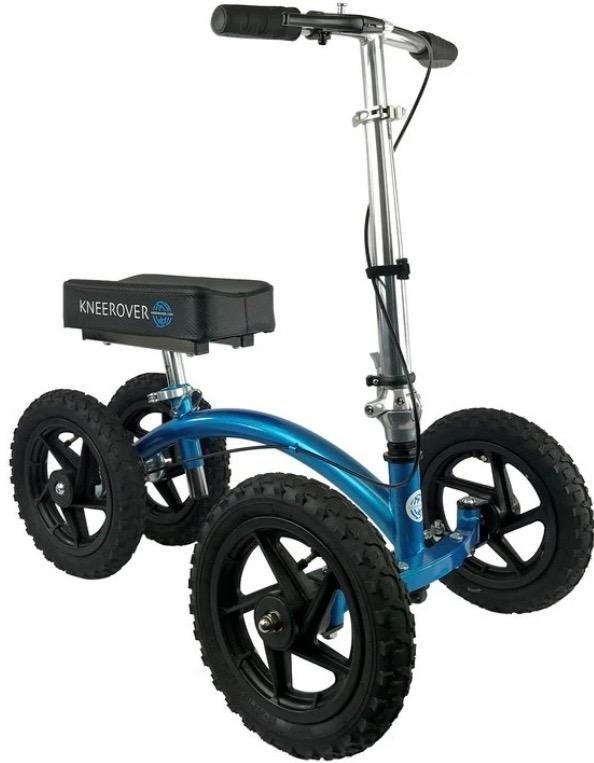
The KneeRover Quad sits at the top of this list in both price and capability, featuring four air-filled tires that provide the most comprehensive terrain coverage of any model reviewed here. The all-pneumatic tire setup absorbs impacts from grass, gravel, dirt, sidewalk gaps, and uneven pavement more effectively than any combination of solid wheels and springs. If your recovery demands regular travel across varied outdoor surfaces, this is the most capable option available.
We may earn a commission when you buy through this link, at no additional cost to you.
The tie-rod steering technology delivers precise, stable directional control that complements the all-terrain tire setup. The rear drum brakes provide strong, consistent stopping power, and the locking hand brake adds security when parked on slopes. The 3-inch thick contoured knee platform measures 7 inches wide by 12.5 inches long, offering generous support for extended use, and the ergonomic rubber hand grips reduce palm fatigue.
Despite its robust construction, the Quad folds down to a surprisingly compact 16.5-inch height using a thumb-release lever, making it feasible to store in the trunk of a compact car. The height adjustment range of 4’9″ to 6’6″ is the broadest on this list, accommodating nearly all adult body types. The 350-pound weight capacity and 26.9-pound overall weight reflect the heavy-duty steel frame construction.
Most knee walkers use solid wheels that transmit every bump and crack directly to the frame and ultimately to your healing leg. Four air-filled tires create a cushion of air at every contact point, dramatically reducing vibration and impact forces. If you live in a rural area with unpaved paths, a neighborhood with poorly maintained sidewalks, or simply want the smoothest possible ride regardless of surface conditions, the Quad’s tire setup provides a comfort and safety advantage that is immediately noticeable.
This model is the right choice for buyers who want the best possible outdoor performance and are willing to invest in a premium mobility aid. The price is significantly higher than budget and mid-range options, but the combination of four pneumatic tires, tie-rod steering, drum brakes, and broad adjustability represents a comprehensive feature set that is difficult to replicate at lower price points. For active adults with long recovery timelines and demanding terrain needs, the investment is well justified.
Budget-conscious buyers with short recovery timelines and primarily indoor needs will find more cost-effective options on this list.
We may earn a commission when you buy through this link, at no additional cost to you.
Selecting a knee walker involves more than picking the cheapest or highest-rated option. The right choice depends on your specific injury, your living environment, your body size, and how long you expect to need the device. This guide breaks down the key factors that will help you make a confident decision.
The wheels on a knee walker are the single most important factor in determining where you can use it comfortably. Solid rubber and polyurethane wheels perform well on smooth indoor floors, tile, and paved sidewalks, but they transmit more vibration to your injured leg when rolling over cracks, thresholds, and uneven surfaces. Polyurethane wheels tend to be quieter and more wear-resistant than rubber, making them a popular choice for mixed indoor and light outdoor use.
Pneumatic air-filled tires provide the best shock absorption because the air cushion inside the tire compresses over bumps, reducing the impact that reaches the knee platform. Models with 12-inch pneumatic tires handle grass, gravel, dirt paths, and cracked sidewalks far more smoothly than any solid wheel alternative. The tradeoff is that pneumatic tires require periodic inflation and carry a small risk of puncture, though flats are relatively uncommon at the low speeds and loads typical of knee walker use.
Match your wheel choice to your actual environment. If you live in a single-story apartment with smooth floors, solid wheels are perfectly adequate and require zero maintenance. If you need to cross gravel driveways, navigate uneven sidewalks, or traverse grassy yards, invest in pneumatic tires or a model with built-in suspension to protect your healing injury from unnecessary jarring.
Knee walkers on this list range from 300-pound to 350-pound weight capacities, and the difference matters more than it might initially appear. A higher weight capacity generally indicates a more robust frame construction, often using double-bar or reinforced steel designs that resist flexing under load. Frame flex can create a feeling of instability that undermines confidence, especially during the early days of recovery when balance may already be compromised.
The overall weight of the knee walker itself is a separate consideration. Heavier frames tend to be more stable and durable but are more difficult to lift into a vehicle or carry up a step. Models in the 21- to 27-pound range offer a reasonable balance between structural integrity and portability, while 35-pound models prioritize maximum load capacity and all-terrain durability at the expense of easy transport.
Choose a weight capacity that exceeds your body weight by a comfortable margin rather than selecting a model rated at your exact weight. This provides a safety buffer and generally results in a more stable, confidence-inspiring ride. If portability is a major concern, look for models under 25 pounds that still meet your capacity requirements.
Proper fit is critical for both comfort and safety when using a knee walker. The knee platform height should position your injured leg so that your thigh is roughly parallel to the ground when your good foot is flat on the floor. If the platform is too high, you will be forced to stand on your toes, which creates calf strain and balance issues. If it is too low, your knee will be excessively bent, causing discomfort and restricting your stride.
Handlebar height is equally important and should allow you to grip the bars with a slight bend in your elbows while maintaining an upright posture. Handlebars that are too low force you to hunch forward, creating back and shoulder strain over time. Most models offer adjustable handlebars with a range of several inches, but the specific range varies significantly between products, so check the measurements against your own height before ordering.
Look for a model whose adjustment range brackets your height comfortably rather than placing you at the extreme top or bottom of the range. Users at the taller or shorter ends of the spectrum should pay particular attention to the stated height recommendations, as some models are designed for a narrower range than others. A proper fit reduces fatigue and makes the entire recovery period more manageable.
A reliable braking system is essential for safe knee walker operation, particularly on inclines, wet surfaces, and smooth indoor floors where momentum can carry you farther than expected. Most knee walkers use a hand-operated brake lever mounted on the handlebar, similar to a bicycle brake, that engages a caliper or drum mechanism on the rear wheels. Dual brake systems with independent levers for each rear wheel provide more balanced stopping power and better control during turns.
Some models include a parking lock feature that keeps the brakes engaged without requiring you to continuously squeeze the lever. This is particularly useful when you need to stop on a ramp or slope to open a door, retrieve an item, or transition to a seated position. The parking lock prevents the walker from rolling away unexpectedly, which is a genuine safety concern on any non-level surface.
Prioritize models with dual rear brakes and a parking lock if your environment includes ramps, sloped driveways, or smooth floors where uncontrolled rolling is a risk. Also pay attention to the manufacturer’s recommended maximum speed, which typically ranges from 2.4 to 3 mph. These limits reflect the stability characteristics of the device and should be respected, especially during the early stages of recovery.
If you plan to transport your knee walker in a vehicle for medical appointments, physical therapy sessions, or errands, the folding mechanism is a practical feature that deserves careful attention. The best folding designs collapse the steering column and wheel assembly quickly using a single release lever or spring bolt, reducing the overall profile enough to fit in a standard car trunk without requiring disassembly of multiple components.
Some models go further by allowing the front axle to be repositioned or the wheels to be tucked sideways, which significantly reduces the folded footprint for compact cars and small storage spaces. The folded height is the most important dimension to check, as a walker that folds to 16.5 inches will fit in spaces where a 24-inch folded height would not. Consider your specific vehicle and storage situation before choosing.
If you rarely need to transport the walker and have adequate storage space at home, a non-folding or partially folding model may be perfectly acceptable and could offer a sturdier frame. But for most users who will need to load and unload the device regularly, a quick-release folding mechanism is a convenience feature that pays dividends throughout the recovery period.
The knee pad is the primary contact point between your body and the walker, and its design has a disproportionate impact on daily comfort. Pads vary in thickness, width, length, and contour shape, and the differences become very apparent after several hours of continuous use. A thin, narrow pad concentrates pressure on a small area of the shin and kneecap, which can lead to bruising, soreness, and skin irritation over time.
Thicker, wider pads with contoured surfaces distribute weight more evenly across the lower leg and reduce the likelihood of pressure-related discomfort. Some models include removable and washable pad covers, which is a practical hygiene feature during a multi-week recovery period when the pad may accumulate sweat and debris. The pad material itself also matters: memory foam and high-density padding conform to the shape of your leg more effectively than flat, firm surfaces.
If you anticipate spending significant time on your knee walker each day, prioritize models with oversized or heavily padded knee platforms. The difference in comfort between a basic pad and a well-designed contoured pad becomes more pronounced as the hours accumulate, and a comfortable pad can make the difference between tolerating your recovery and actually maintaining your independence and daily routine.
When both hands are occupied with steering and braking, having a convenient place to store your phone, keys, wallet, and water bottle becomes surprisingly important. Most knee walkers include some form of storage, ranging from simple fabric pouches to detachable canvas bags and metal baskets. The type and capacity of the storage accessory should match your daily needs and the environments where you will use the walker most frequently.
Fabric and canvas bags are lightweight and easy to remove but are best suited for small personal items. Metal baskets offer greater durability and can handle heavier loads like grocery bags or medical supplies, but they add weight and may rattle on rough surfaces. Some models include both a bag and a basket, providing flexibility for different use cases throughout the day.
Consider what you will realistically need to carry during a typical day of recovery. If you mostly move between rooms at home, a small bag for your phone and medications is sufficient. If you plan to use the walker for shopping, errands, and outdoor activities, a larger basket or bag with secure attachment points will be more practical. The right storage solution eliminates the frustration of making extra trips or juggling items while trying to maintain balance.
Before your first use, adjust the knee platform and handlebar heights to match your body proportions while standing upright on your uninjured leg. Your injured knee should rest comfortably on the pad with your thigh roughly parallel to the ground, and your hands should grip the handlebars with a slight elbow bend. Take your first few steps in a clear, flat area to build confidence with the steering and braking before attempting more complex maneuvers or outdoor surfaces.
Regular maintenance will extend the life of your knee walker and ensure consistent performance throughout your recovery. Check all bolts and fasteners weekly, as vibration from daily use can gradually loosen connections. If your model has pneumatic tires, check the air pressure every one to two weeks and inflate to the manufacturer’s recommended PSI range. Wipe down the frame and knee pad regularly with a damp cloth to remove dirt and debris, and wash any removable pad covers according to the care instructions.
When the walker is not in use, store it in a dry, indoor location away from direct sunlight and extreme temperatures, which can degrade rubber components and padding over time. If you need to store it for an extended period after your recovery is complete, fold it down and keep it in a closet or garage where it will be protected from moisture. Proper storage preserves the device in case you or a family member need it again in the future.
Most people use a knee walker for four to eight weeks following foot or ankle surgery, though the exact duration depends on your specific injury and your doctor's weight-bearing protocol. Some fractures and complex surgical repairs may require non-weight-bearing status for up to 12 weeks. Your orthopedic surgeon or physical therapist will provide a timeline based on your healing progress and follow-up imaging.
Standard four-wheeled knee walkers are not designed for stair use and should not be used on steps. If you need to navigate stairs during your recovery, you will need to use crutches, a stair-capable device like the iWALK3.0 hands-free crutch, or arrange for assistance. Some users keep a pair of crutches specifically for stair transitions while using a knee walker for all other mobility.
The terms knee walker and knee scooter are used interchangeably to describe the same type of mobility device. Both refer to a four-wheeled platform with a padded knee rest and handlebars that allows you to glide while keeping your injured leg elevated. You may also see the term knee crutch used for hands-free alternatives like the iWALK3.0, which is a different category of device.
Coverage varies by insurance provider and plan. Many insurers classify knee walkers as durable medical equipment and may cover part or all of the cost with a prescription from your doctor. Medicare coverage for knee walkers has historically been limited, so it is important to verify your specific benefits before purchasing. Keep your receipt and any prescription documentation in case you need to submit a reimbursement claim.
The most important sizing factor is the height adjustment range of the knee platform and handlebars. Check the manufacturer's recommended user height range and compare it to your own height. You should be able to set the platform so your thigh is parallel to the ground while standing on your good leg. Most models accommodate a broad range of adult heights, but very tall or very short users should verify the specific measurements.
Most knee walkers can handle light rain and damp surfaces, but wet conditions reduce traction and braking effectiveness. Use extra caution on wet pavement, avoid puddles that could hide surface hazards, and dry the frame and brake components after use to prevent rust. Models with pneumatic tires generally maintain better grip on wet surfaces than solid wheels, but no knee walker is designed for heavy rain or standing water.
For most people, a knee walker is more comfortable and less physically demanding than traditional underarm crutches. Knee walkers eliminate the underarm chafing, wrist strain, and upper body fatigue that crutches often cause, and they allow faster, more stable movement on flat surfaces. However, crutches remain necessary for stairs, very tight spaces, and situations where a rolling device is impractical. Many doctors recommend a knee walker as the primary mobility aid with crutches as a backup.
Most knee walkers support between 300 and 350 pounds, which covers the vast majority of adult users. The weight capacity reflects the structural strength of the frame, wheels, and knee platform. Always choose a model whose rated capacity exceeds your body weight by a comfortable margin, and avoid overloading the storage accessories beyond their intended limits.
Yes, many medical supply stores and pharmacies offer knee walker rentals on a weekly or monthly basis. Renting can be cost-effective for shorter recovery periods of four to six weeks, while purchasing may be more economical for longer recoveries or if you anticipate needing the device again. Compare the total rental cost against the purchase price before deciding, and check whether your insurance covers either option.
The All Terrain Knee Scooter with Shock Absorption earns our top recommendation for most buyers because its spring suspension system and PU wheels deliver a noticeably smoother ride on the mixed surfaces that most people encounter during daily recovery. The one-click folding mechanism and broad adjustability range make it practical for a wide variety of living situations and body types, and the 4.5-star rating reflects consistent satisfaction among users.
For budget-conscious shoppers, the BlessReach Lightweight model provides reliable indoor and light outdoor mobility at an accessible price point, while the KneeRover Quad justifies its premium cost with four pneumatic tires, tie-rod steering, and the most comprehensive terrain capability on the list. The iWALK3.0 offers a genuinely unique hands-free alternative for physically capable adults who need to navigate stairs and tight spaces where no four-wheeled scooter can go.
Your best choice ultimately depends on your specific recovery environment, body size, and mobility needs. Prioritize wheel type and terrain capability if you spend significant time outdoors, focus on knee pad comfort and adjustability if your recovery timeline is long, and choose a lightweight folding model if frequent vehicle transport is part of your daily routine. Any of the 10 options reviewed here will serve you well when matched to the right use case.