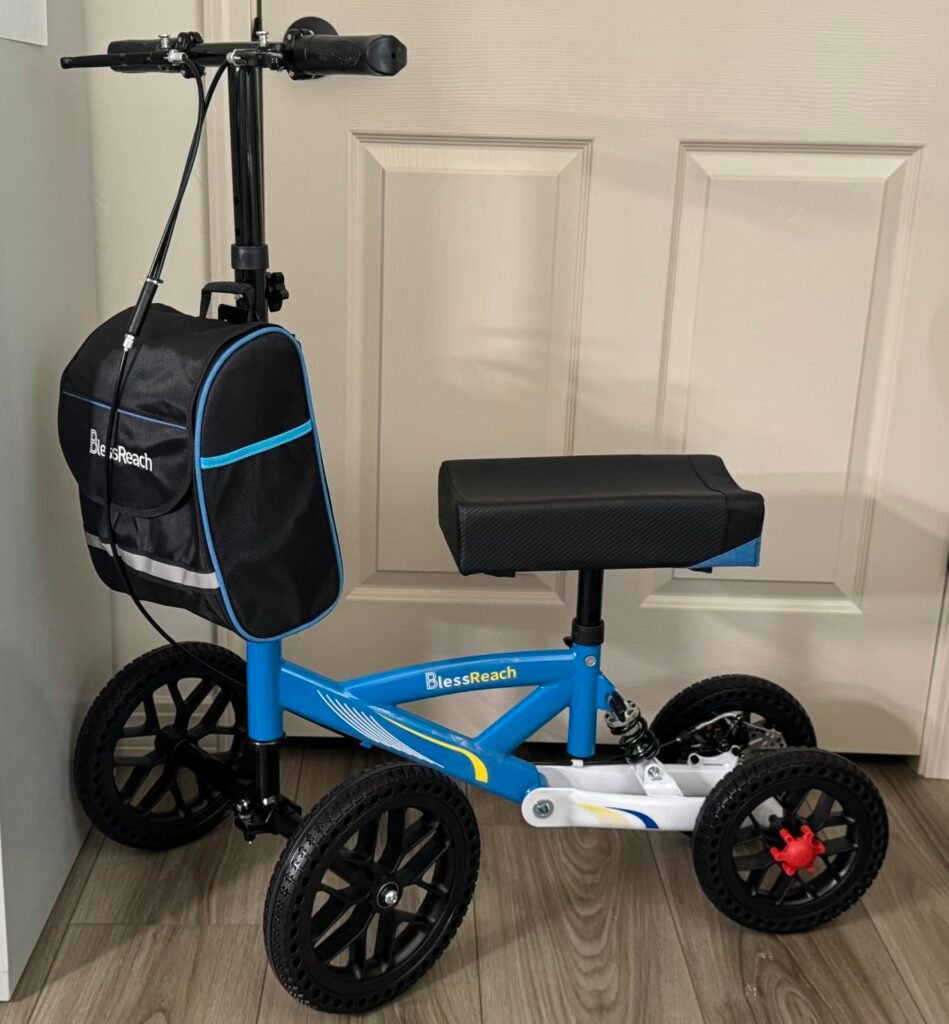
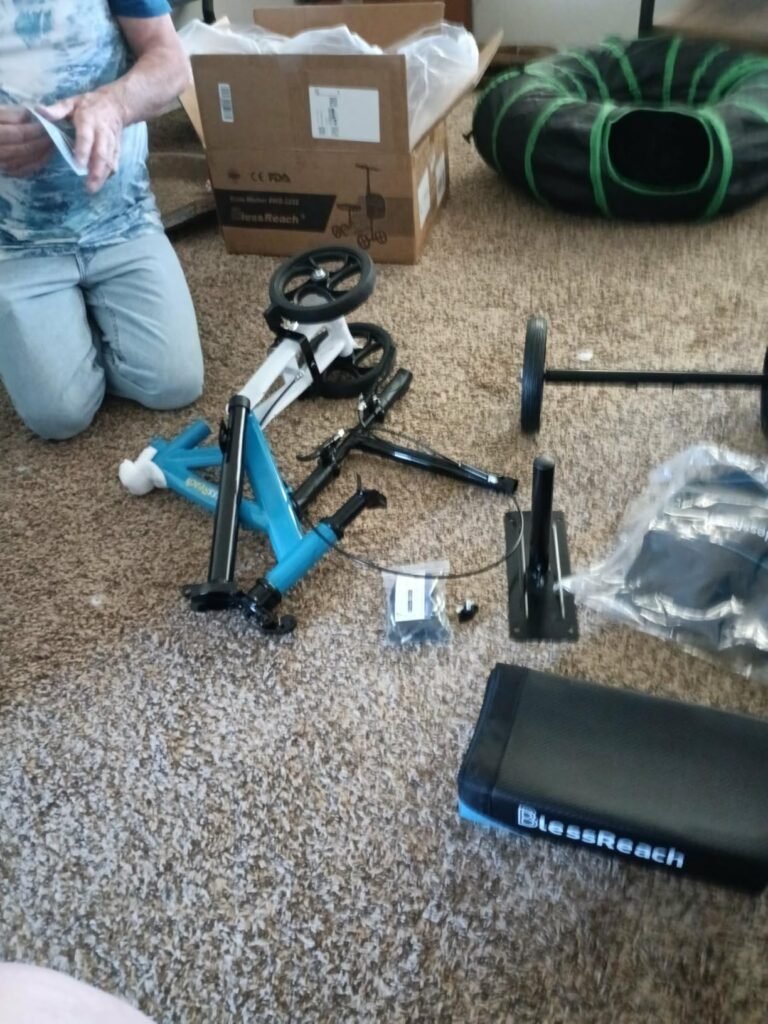
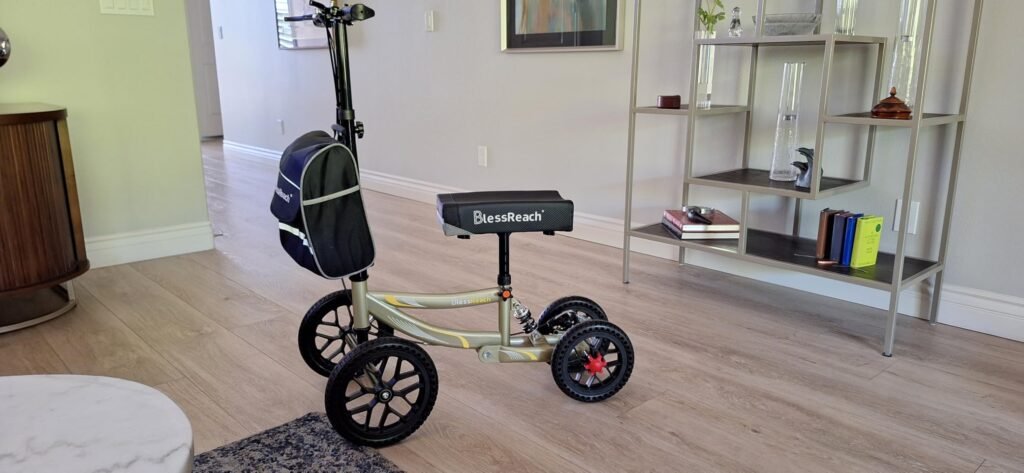
BlessReach Disc Brake
8.6Editor score11-inch front wheels
300-pound capacity
Disc brake system
Foldable steel frame
Find the right knee scooters for 2026. We compare 10 standout options by build quality, useful features, owner feedback, value, and everyday trade-offs.
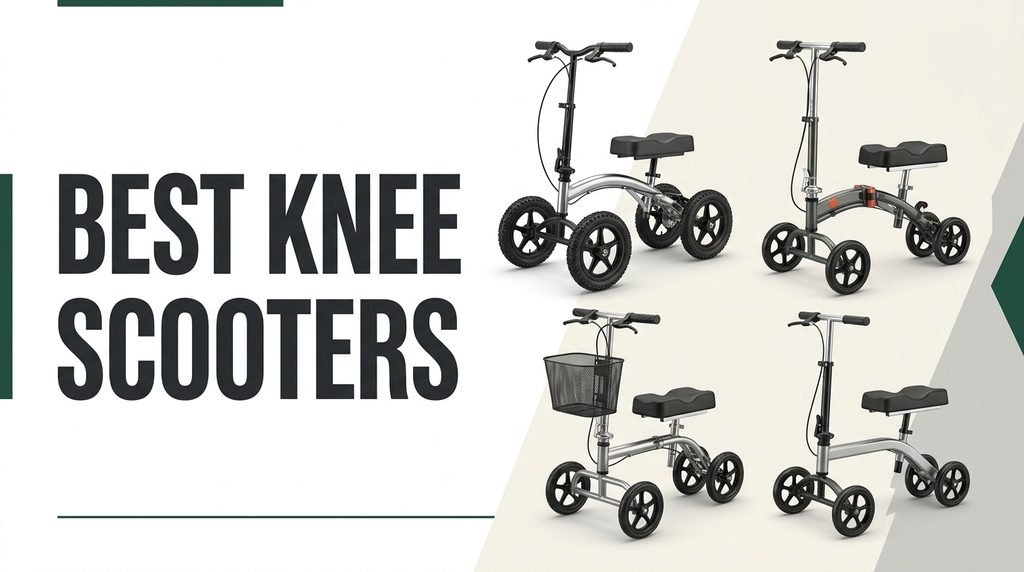
Find the right knee scooter for 2026 whether you are recovering from foot surgery, an ankle injury, or a broken leg. We compare 10 standout mobility aids by the factors that matter most in this category, including wheel size and terrain performance, weight capacity, braking systems, knee pad comfort, adjustability for different heights, folding and storage design, and overall value for your recovery timeline.
Knee scooters offer a far more comfortable alternative to crutches by supporting your weight through a padded knee platform while your good leg propels you forward. The right choice depends on where you will use it most, whether smooth indoor floors, uneven outdoor surfaces, or a mix of both, along with your height, weight, and how long you expect to need the device.
Wheel type, braking design, and frame construction separate a basic indoor scooter from a rugged all-terrain unit. Some models add pneumatic tires, disc brakes, storage baskets, or quick-folding frames for easier transport. Read on to match a knee walker to your recovery needs, home layout, and lifestyle.
We compared 10 knee scooters using the factors that shape a real buying decision: wheel size and terrain capability, weight capacity, braking system type, knee pad comfort and cushioning, height adjustment range, frame material and weight, folding design for transport, included accessories such as storage bags or baskets, warranty coverage, and overall value. The notes focus on practical trade-offs so each pick reflects how people actually navigate homes, workplaces, and outdoor environments while recovering from foot, ankle, or lower-leg injuries.


Compare key features, scores, and current prices side by side. A shorter feature list means fewer details were available, not necessarily fewer capabilities.


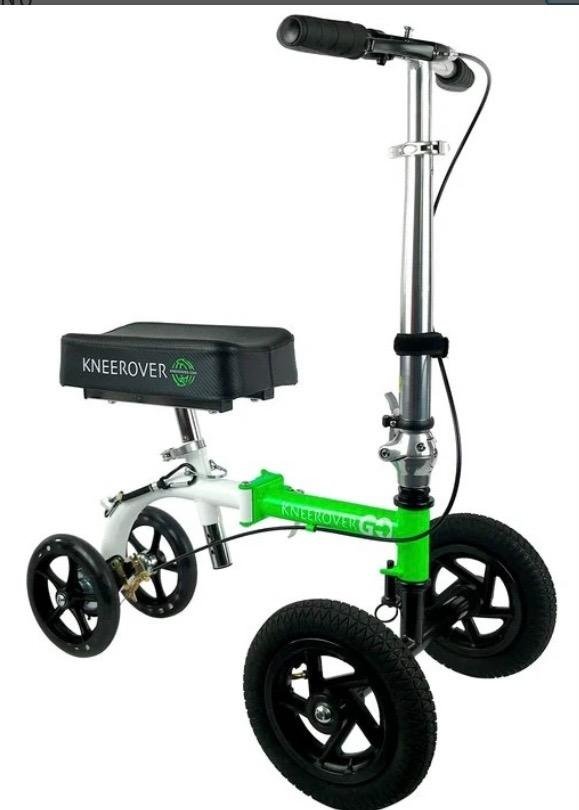
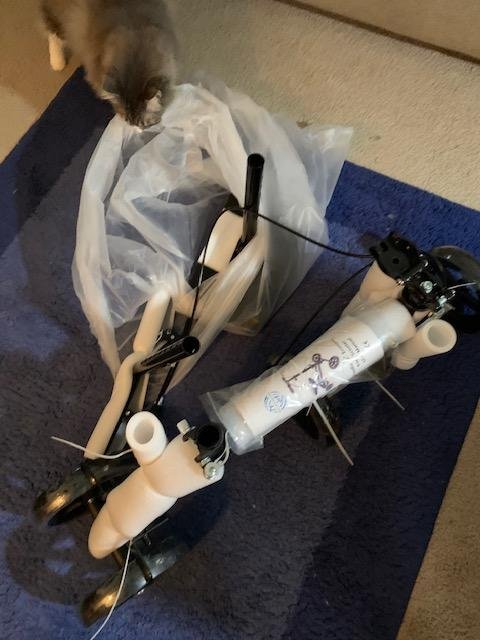
The KneeRover Economy Steerable is a proven, affordable knee walker from an established USA-based brand with more than 15 years of mobility experience. It targets buyers who want a reliable, no-nonsense scooter for indoor use and light outdoor rolling without paying premium prices.
We may earn a commission when you buy through this link, at no additional cost to you.
Four smooth 7.5-inch rubber wheels roll easily on tile, hardwood, laminate, and low-pile carpet, making this an excellent fit for home and office use. Rear on-wheel brakes combined with an adjustable locking handbrake deliver confident stopping and secure parking. The frame is designed to support either the right or left leg, adding versatility for different injury types.
At just 20.3 pounds, this is one of the lightest scooters in the comparison, which makes it noticeably easier to lift into a car or carry up steps between locations. The 300-pound weight capacity covers most adult users, and adjustable handlebars and knee pad accommodate heights from 4’9″ to 6’4″. The quick-release folding mechanism collapses the scooter for storage in tight spaces.
Mobility aids are used daily during recovery, so reliability and customer support matter more than with occasional-use products. Established brands like KneeRover have refined their designs over years of feedback and typically offer better replacement parts availability and customer service. That support is genuinely valuable if you encounter any setup or usage questions.
This scooter is a smart pick for buyers who want proven quality from a trusted brand at a fair price for indoor and light outdoor use. The trade-offs are the smaller wheel size that limits rough-terrain performance and the basic feature set. For serious outdoor use, the KneeRover Quad or BlessReach all-terrain models are better matches.
Not the right pick for users who need all-terrain outdoor capability or pneumatic tires.
We may earn a commission when you buy through this link, at no additional cost to you.
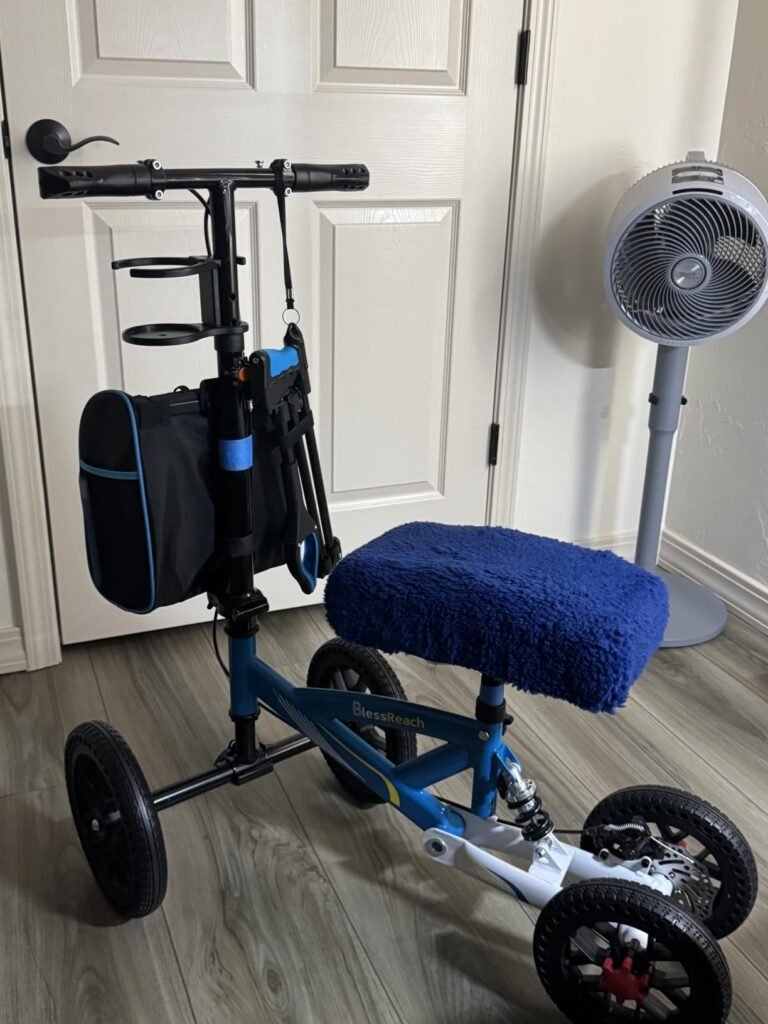
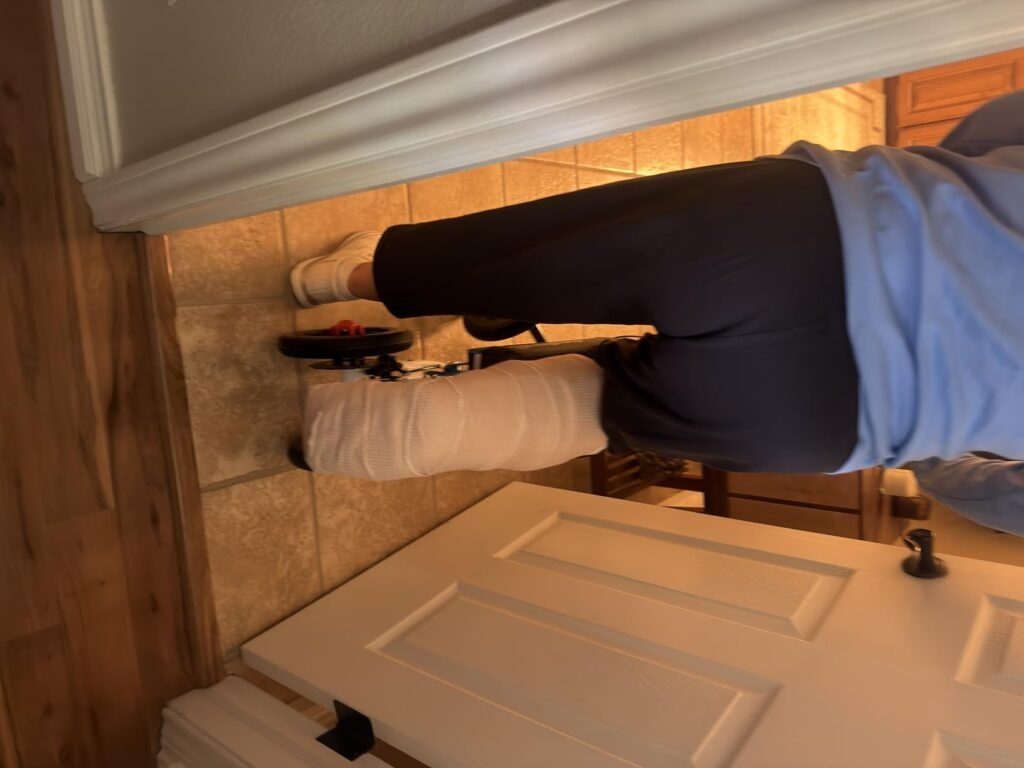
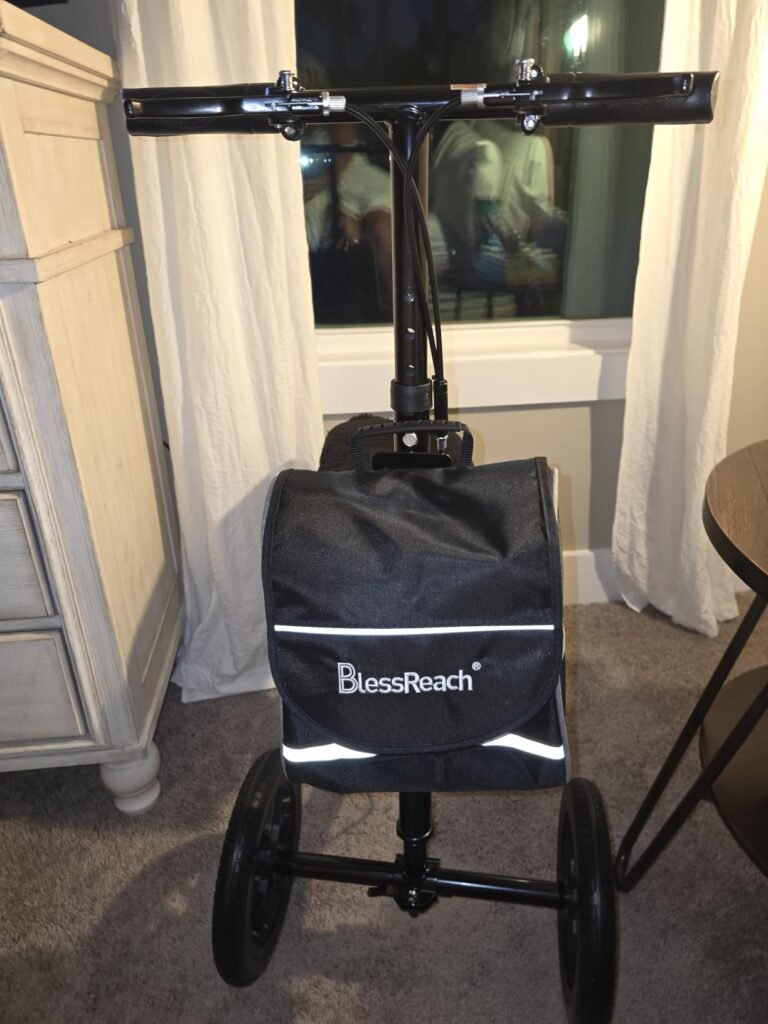
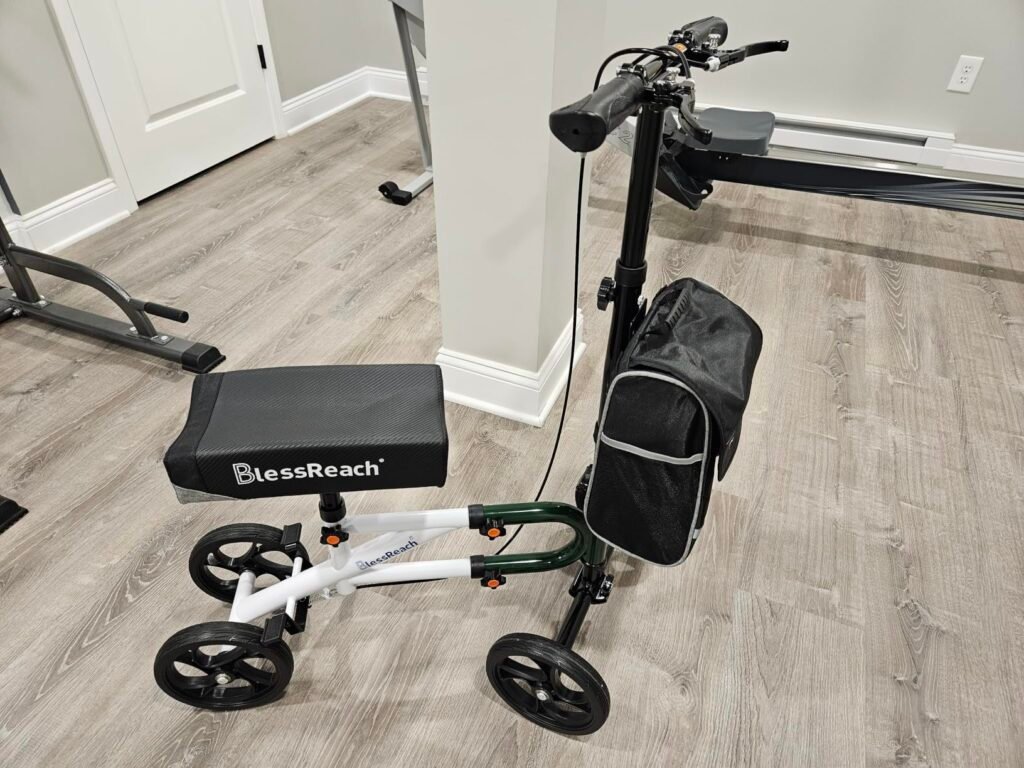
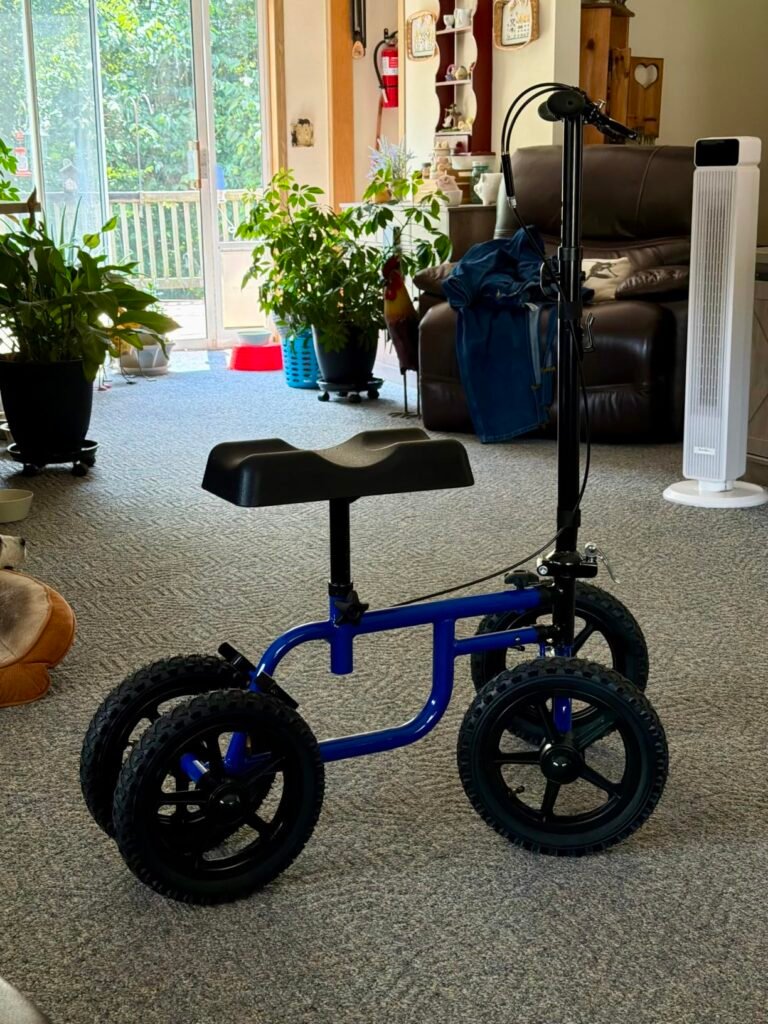
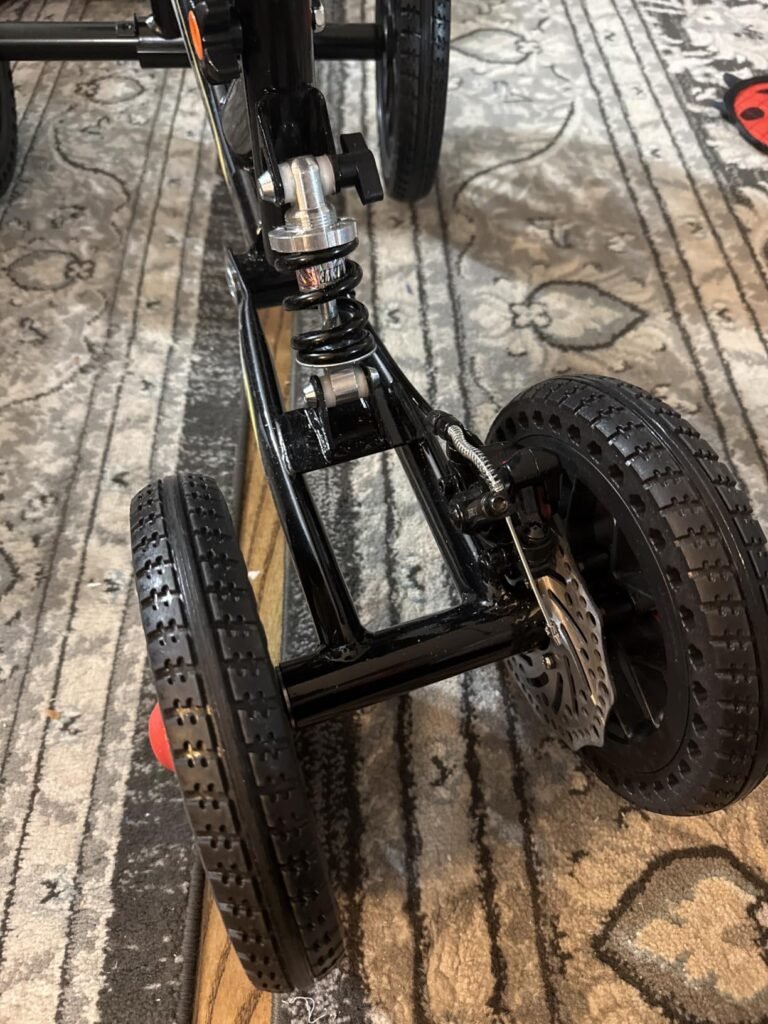
The BlessReach disc brake scooter is designed for users who want a more advanced braking system than the standard cable brakes found on most knee walkers. Disc brakes provide more consistent stopping power, which is especially useful on outdoor surfaces or gentle inclines where a reliable stop matters for safety.
We may earn a commission when you buy through this link, at no additional cost to you.
The 11-inch front wheels and 8-inch rear wheels are solid rather than pneumatic, so you avoid the hassle of checking tire pressure or worrying about punctures. This wheel setup handles grass, gravel, dirt, and sidewalk cracks better than smaller indoor-only wheels while still rolling smoothly on tile and hardwood floors. Shock absorbers help dampen vibration on rougher surfaces.
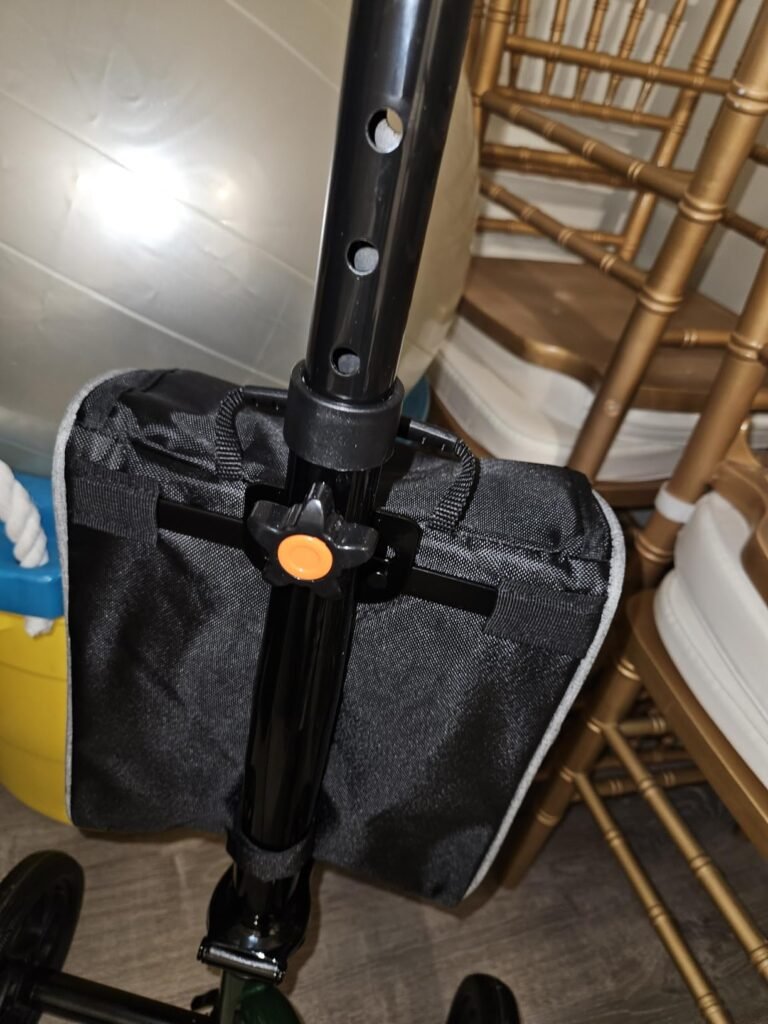
Six levels of height adjustment for both the knee pad and handlebars accommodate users from 5’6″ to 6’6″, making this a good fit for taller adults. The quick-release folding handlebar mechanism makes the scooter easier to fit in a car trunk or store in a closet between uses. A detachable canvas shopping bag adds practical carrying capacity for phones, water bottles, or groceries.
Standard cable brakes can lose responsiveness when wet or dirty, which is a genuine concern for outdoor use on damp mornings or after rain. Disc brakes remain more consistent across weather conditions and typically require less hand force to stop the scooter. That reliability adds real peace of mind on driveways, sidewalks, and uneven terrain.
This scooter suits buyers who spend meaningful time outdoors during recovery and want the added confidence of disc brakes. The trade-offs are a heavier 25.6-pound frame compared to lighter indoor models and a height range that starts at 5’6″, so shorter users should look elsewhere. For medium to tall adults recovering from foot or ankle surgery, it delivers strong all-around performance.
Not the right pick for users shorter than 5’6″ or those who want the lightest possible frame for frequent lifting.
We may earn a commission when you buy through this link, at no additional cost to you.
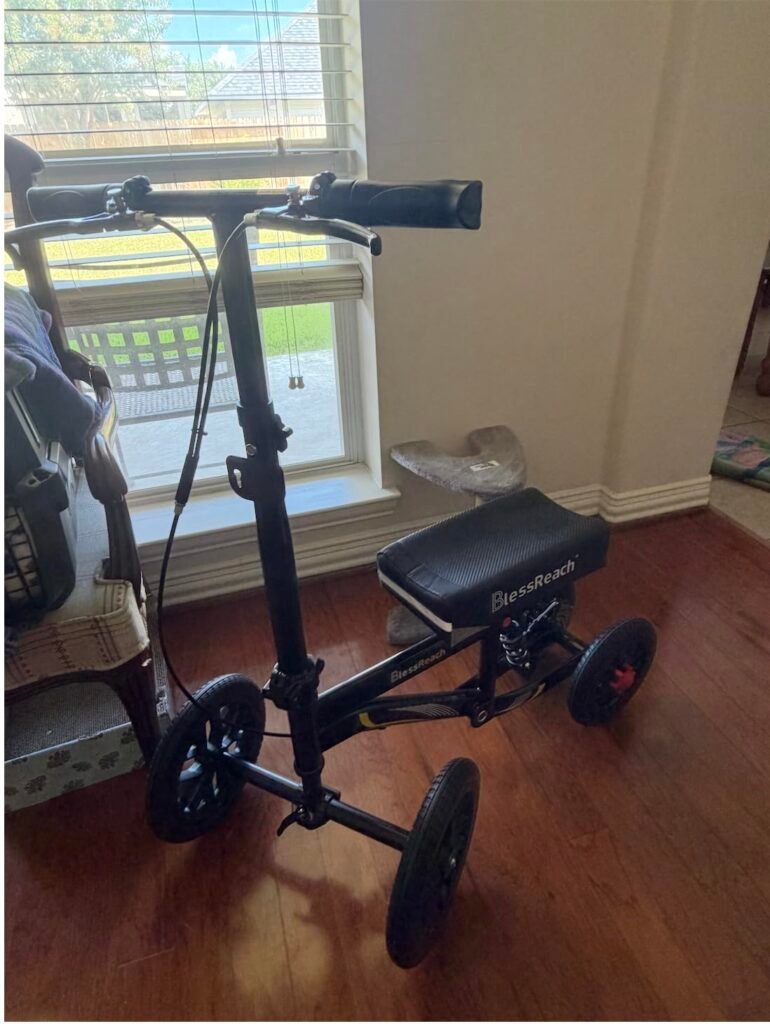
This BlessReach all-terrain walker is aimed at users who want the outdoor capability of big wheels without paying premium pricing. Its combination of 11-inch front tires and 9-inch rear tires gives it stronger performance on grass, gravel, and sidewalk gaps than smaller-wheeled indoor scooters while keeping the price approachable.
We may earn a commission when you buy through this link, at no additional cost to you.
The contoured, padded knee brace is designed to cradle your lower leg and distribute pressure evenly, which reduces the fatigue and soreness that build up over hours of use. Compared to crutches, this design eliminates the underarm chafing and upper body strain that make crutches so tiring for extended recoveries. The 300-pound weight capacity covers most adult users comfortably.
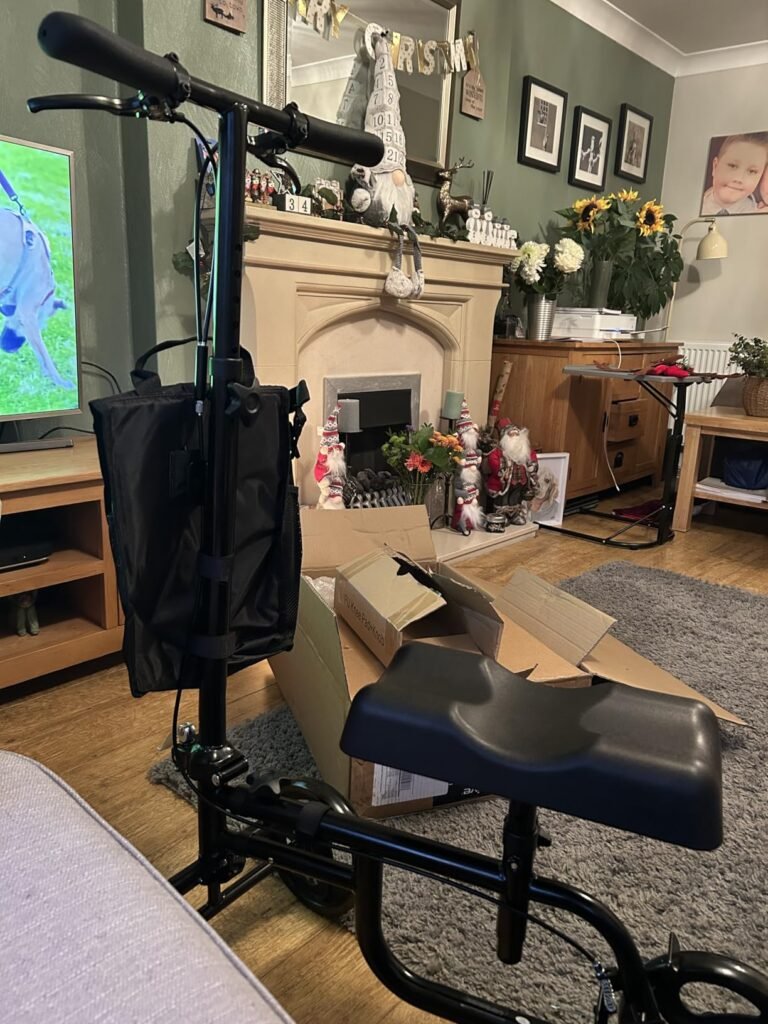
Both the wheel bracket and steering lever fold down to reduce the scooter’s footprint for transport and storage. The detachable canvas bag mounts easily and holds personal items like keys, phones, or small purchases, freeing your hands for steering. BlessReach also provides 24-hour customer service for pre- and post-purchase questions, which adds confidence for first-time buyers.
Solid tires like those on this BlessReach model never go flat and require no maintenance, which is a real convenience during recovery. Pneumatic tires offer a slightly softer ride over bumps but need occasional pressure checks and can puncture. For most users, solid tires are the more practical choice unless you regularly navigate very rough terrain.
This walker is a smart pick for buyers who want reliable outdoor mobility without stepping up to disc brakes or pneumatic tires. The trade-offs are the standard cable braking system and the 300-pound weight limit. For users who need higher capacity or the most advanced braking, look at the Vive Mobility, BodyMed, or KneeRover Quad models.
Not suited for users over 300 pounds or those who need the most advanced disc brake performance.
We may earn a commission when you buy through this link, at no additional cost to you.
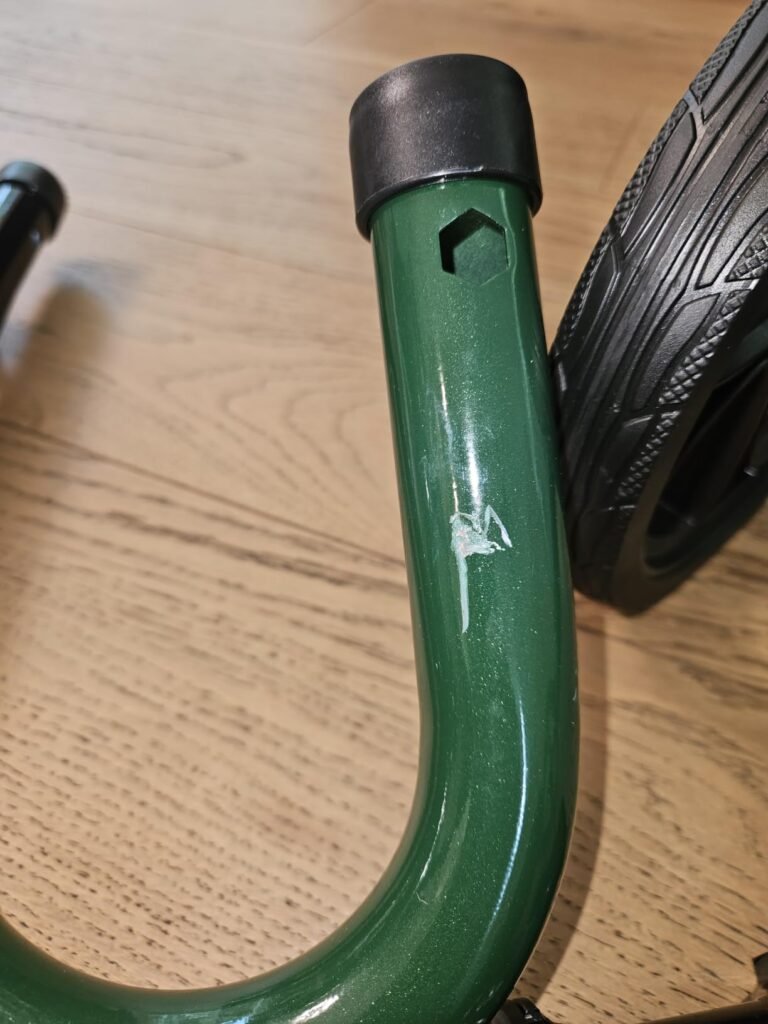
This BlessReach lightweight model is one of the most affordable knee scooters in the lineup, aimed at buyers who need reliable indoor mobility without spending more than necessary. It works well for shorter recoveries or for users whose daily movement stays primarily inside a home, apartment, or workplace.
We may earn a commission when you buy through this link, at no additional cost to you.
The 8-inch wheels roll smoothly on hardwood, tile, laminate, and low-pile carpet, and they are large enough to handle small transitions between rooms and door thresholds. A scientifically designed double tube frame provides more rigidity than single-tube budget models, which translates to better stability under load. The ergonomic locking hand brake gives you controlled stopping.
The removable main frame and folding steering lever help the scooter break down to fit in a car trunk or a hall closet. A detachable double-layer canvas bag adds practical carrying capacity for personal items. Simple assembly and straightforward controls make this an easy pick for users who want quick setup without navigating complex adjustments.
If your recovery keeps you mostly at home and your outings are limited to short walks on driveways or paved paths, a basic indoor knee scooter covers your needs without the expense of all-terrain features. Save money by matching the scooter to your actual environment rather than paying for capabilities you may not use during a short recovery.
This scooter is best suited for indoor use and light outdoor rolling on smooth pavement. The trade-offs are the smaller wheel size, which limits its performance on grass or gravel, and the basic cable braking system. For users who need serious outdoor capability or advanced braking, look at the all-terrain BlessReach or Vive models instead.
Not suitable for users who need to navigate grass, gravel, or rough outdoor terrain regularly.
We may earn a commission when you buy through this link, at no additional cost to you.
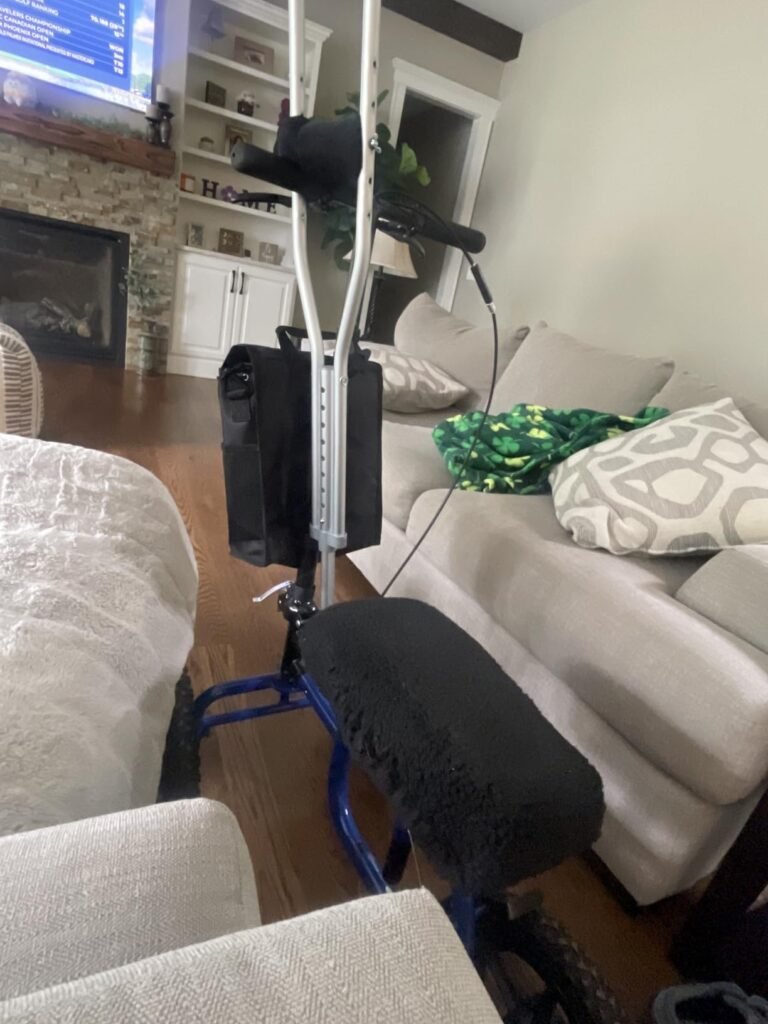
The Vive Mobility all-terrain walker is aimed at buyers who want maximum stability and long-term support during recovery. Its 12-inch pneumatic wheels are among the largest in this comparison, providing a smoother ride over uneven surfaces, gaps, and small obstacles than smaller-wheeled scooters can offer.
We may earn a commission when you buy through this link, at no additional cost to you.
A 350-pound weight capacity gives this scooter more bariatric-friendly headroom than the 300-pound units common in this category. The dual rear friction brake system delivers steady stopping control on inclines and uneven surfaces, and the pneumatic wheels absorb bumps that would otherwise transmit through the frame to your injured leg. The knee pad is height-adjustable from 20 to 26 inches for users from 5’4″ to 6’6″.
The contoured foam knee cushion cradles your lower leg to distribute pressure evenly, which reduces fatigue during extended use. A removable knee platform and folding steering handle make storage more manageable despite the larger overall size. Vive backs the scooter with a lifetime guarantee and confirms HSA and FSA eligibility, both meaningful for buyers using health savings accounts or planning for long-term use.
Pneumatic wheels use air pressure like bicycle tires and typically ship deflated to prevent damage during shipping. You will need to check pressure before first use and inflate to the manufacturer’s recommended range. An occasional pressure check every few weeks keeps the ride smooth and prevents excess wear. Keep a small hand pump nearby for convenience.
This walker is a strong pick for buyers who want premium build quality, higher weight capacity, and long warranty protection. The trade-offs are the need to occasionally check tire pressure on the pneumatic wheels and a higher price point than basic indoor models. For heavy users or anyone recovering from a longer injury, the additional investment often pays off in comfort and durability.
Not the right pick for buyers who want zero maintenance or the lowest possible price.
We may earn a commission when you buy through this link, at no additional cost to you.
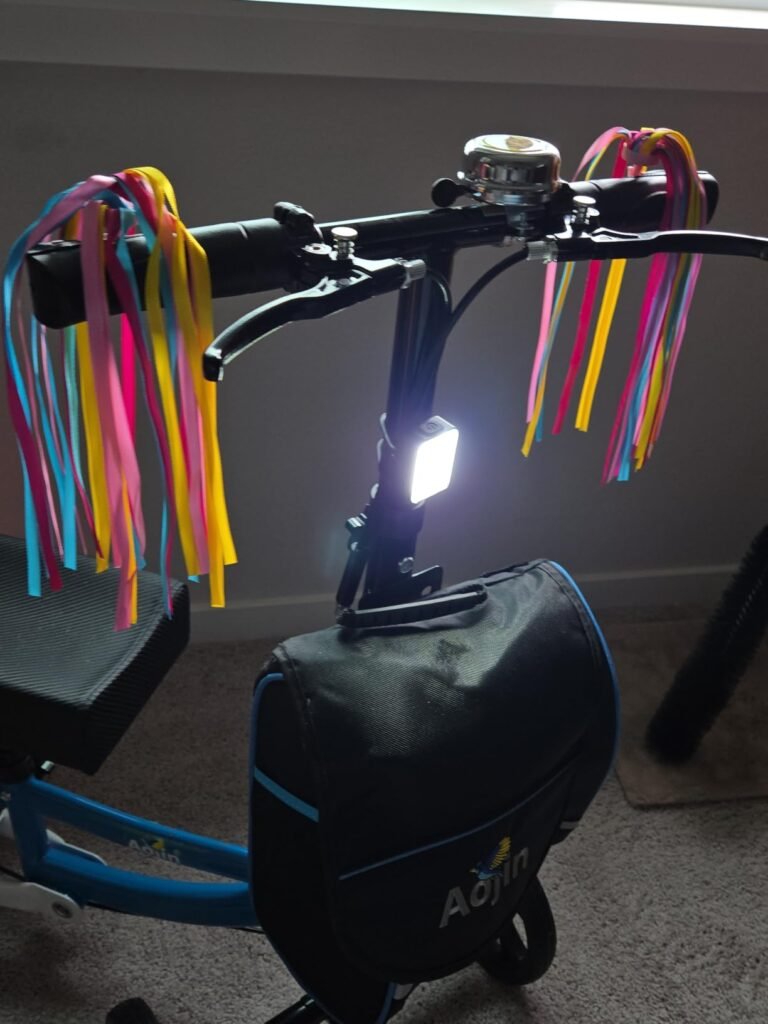
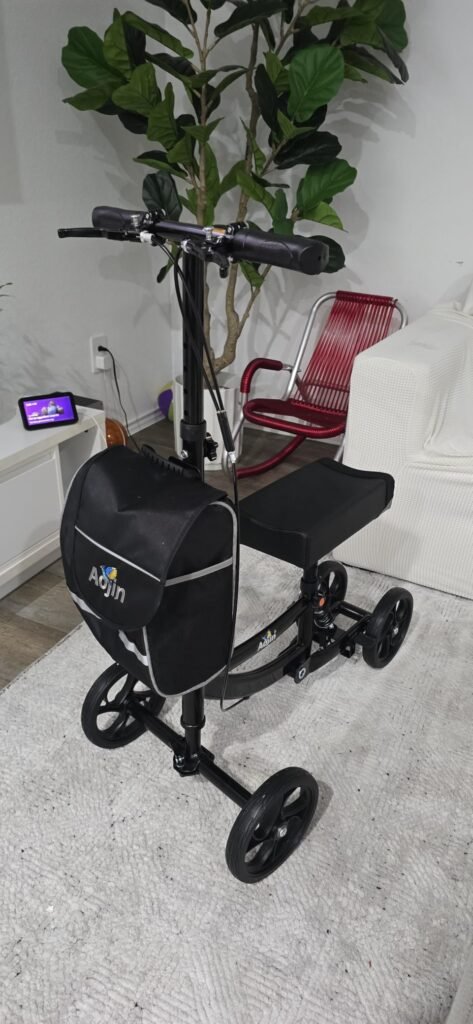
The Aojin foldable scooter stands out for its wide height accommodation, fitting users from 4'7" to 6'1". That range makes it a strong pick for shorter adults or teenagers who often struggle to find a knee scooter that adjusts low enough for a comfortable, safe fit. The dual-adjustment design covers both handle and knee rest independently.
We may earn a commission when you buy through this link, at no additional cost to you.
A widened chassis with a low center of gravity reduces the risk of rollover on uneven surfaces, which is a genuine safety benefit during recovery when quick reactions are harder. The carbon steel frame supports up to 300 pounds and feels stable during typical use. An upgraded thickened knee pad cushions your leg comfortably during long rolling sessions.
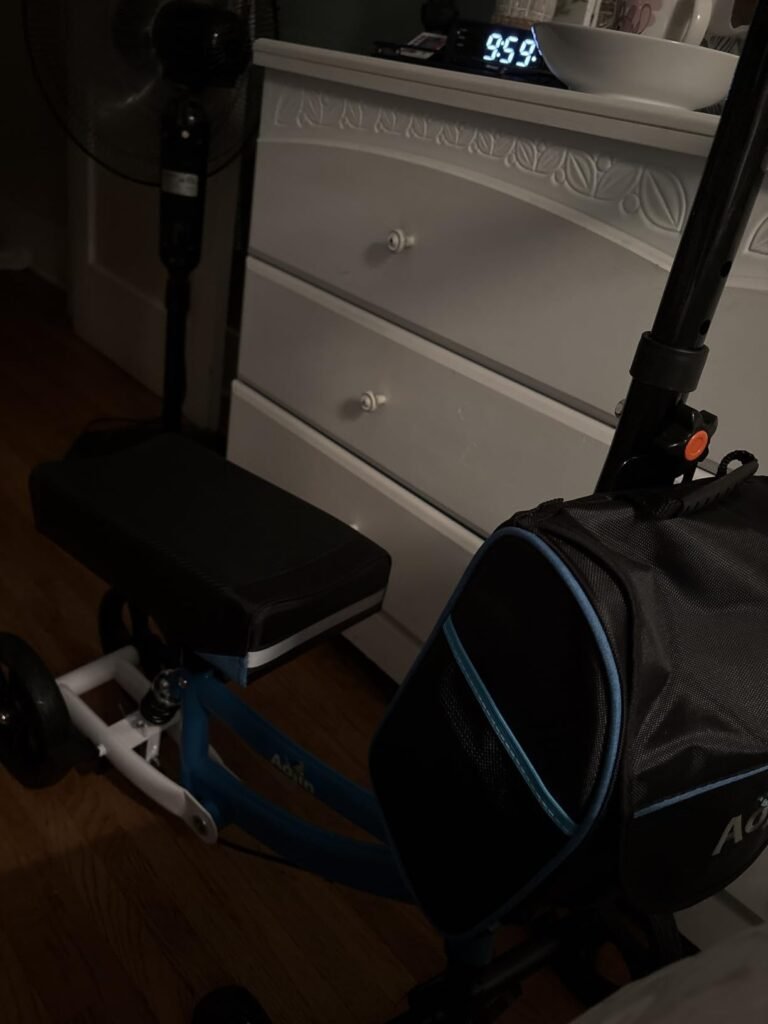
The 8-inch premium rubber wheels prioritize slip resistance and durability for smooth indoor and light outdoor use. One-touch dual handbrakes give you precise control with either hand, and the recommended safe walking speed of under 2.4 mph reflects thoughtful safety guidance for indoor and paved outdoor environments. A removable storage bag adds convenience for daily errands.
A wider wheelbase makes the scooter less likely to tip sideways during turns or on slightly uneven surfaces. That stability matters especially during the early phase of recovery when balance and reaction times can be off. Combined with a low center of gravity, a widened chassis is one of the most useful safety features in this category.
This scooter is a smart pick for shorter users and anyone who values chassis stability. The trade-offs are the limited height range for very tall users and the modest 8-inch wheel size that limits truly rough terrain performance. For taller adults or serious outdoor use, look at the BlessReach 11-inch or Vive Mobility models.
Not suitable for users taller than 6’1″ or those who need extensive rough-terrain capability.
We may earn a commission when you buy through this link, at no additional cost to you.
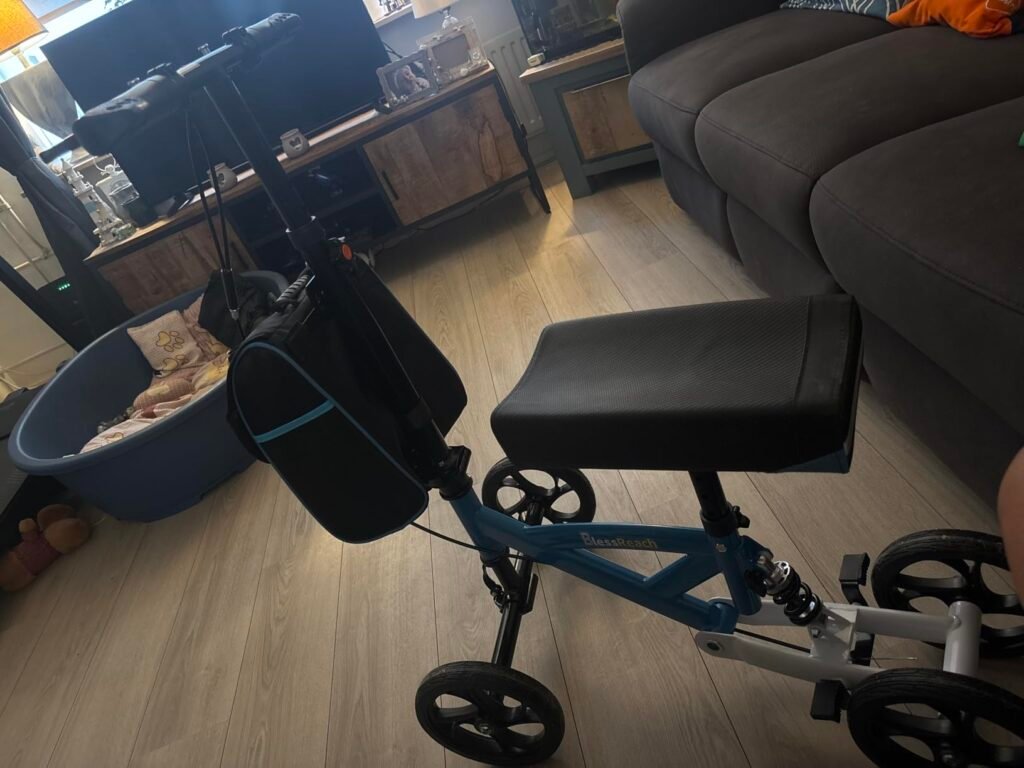
The BlessReach dual-brake scooter is designed for buyers who want the added safety of two braking mechanisms in a lightweight, easy-to-transport frame. At just 24 pounds, it is one of the lighter knee walkers in this comparison, making it noticeably easier to lift into a car trunk or carry up a step.
We may earn a commission when you buy through this link, at no additional cost to you.
An efficient dual braking system provides more consistent stopping power than single-brake designs, which improves safety on slight inclines or during quick stops indoors. Both the 8-inch front and rear wheels roll smoothly on indoor surfaces and provide reasonable performance on smooth pavement. Adjustable handlebars and knee pad accommodate users from 4’9″ to 6’4″, covering a wide range of adult heights.
The compact folding design and detachable features make setup, use, and storage straightforward. Quick-release folding handlebars break down for easy transport, and the removable frame fits into most car trunks. The recommended safe walking speed of about one meter per second reflects the manufacturer’s practical safety guidance for daily use.
A dual braking system engages both rear wheels simultaneously when you squeeze the handbrake, providing more balanced stopping force than single-brake designs. This helps the scooter come to a straight stop rather than pulling to one side, which improves control and reduces the chance of losing balance during a quick brake application.
This scooter suits buyers who want a lightweight, dual-brake indoor scooter at an accessible price. The main trade-offs are the smaller 8-inch wheels that limit true outdoor performance and the basic storage bag. For heavier outdoor use, larger wheels and disc brakes are worth the upgrade.
Not ideal for users who need to navigate grass, gravel, or rough outdoor terrain regularly.
We may earn a commission when you buy through this link, at no additional cost to you.
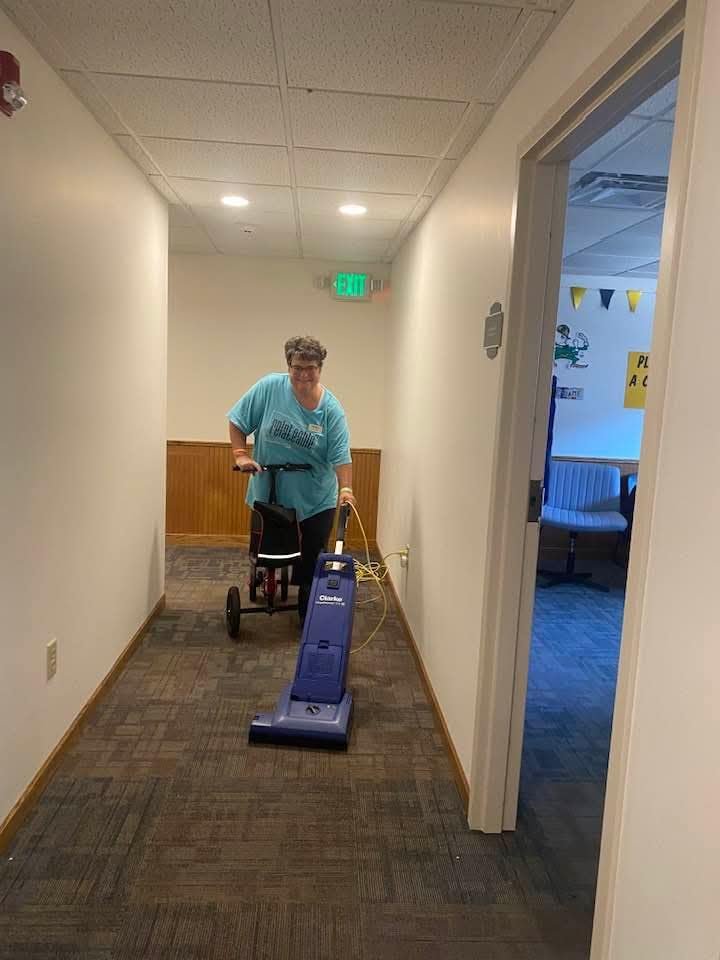
This BlessReach model pairs an all-terrain wheel setup with an aircraft-grade aluminum frame, giving buyers a lighter alternative to steel-framed all-terrain scooters. At just 23 pounds, it is noticeably easier to lift and transport than the 25-pound-plus steel versions while still supporting up to 300 pounds of user weight.
We may earn a commission when you buy through this link, at no additional cost to you.
The industry-first disc brakes deliver noticeably faster stopping response than standard cable brakes, which adds real safety on outdoor slopes and uneven terrain. A precision 120-degree swivel front axle improves maneuverability in tight spaces, and one-touch parking at the handbrake makes it easy to secure the scooter when standing still. Custom shock absorbers help reduce vibration from rough surfaces.
Six levels of adjustment for both handlebars and knee pads accommodate a wide 4′ to 6’6″ height range, making this one of the most flexible fits in the lineup. The quick-release folding mechanism collapses the scooter for transport, and a detachable large front storage bag distributes weight forward for better balance while carrying personal items or small purchases.
Aluminum frames are typically lighter than steel by several pounds, which matters when lifting the scooter in and out of a car or up steps. Steel frames tend to cost less and can feel more rigid under heavy loads. For most users under 300 pounds who transport the scooter regularly, aluminum offers a meaningful practical advantage.
This scooter suits buyers who want the lightest possible all-terrain frame with disc brakes and wide-ranging adjustability. The main trade-off is a higher price than steel-framed alternatives at similar wheel sizes. For users who prioritize easy lifting and premium features in one package, the aluminum build is a worthwhile upgrade.
Not the best pick for users over 300 pounds or those looking for the absolute lowest price.
We may earn a commission when you buy through this link, at no additional cost to you.
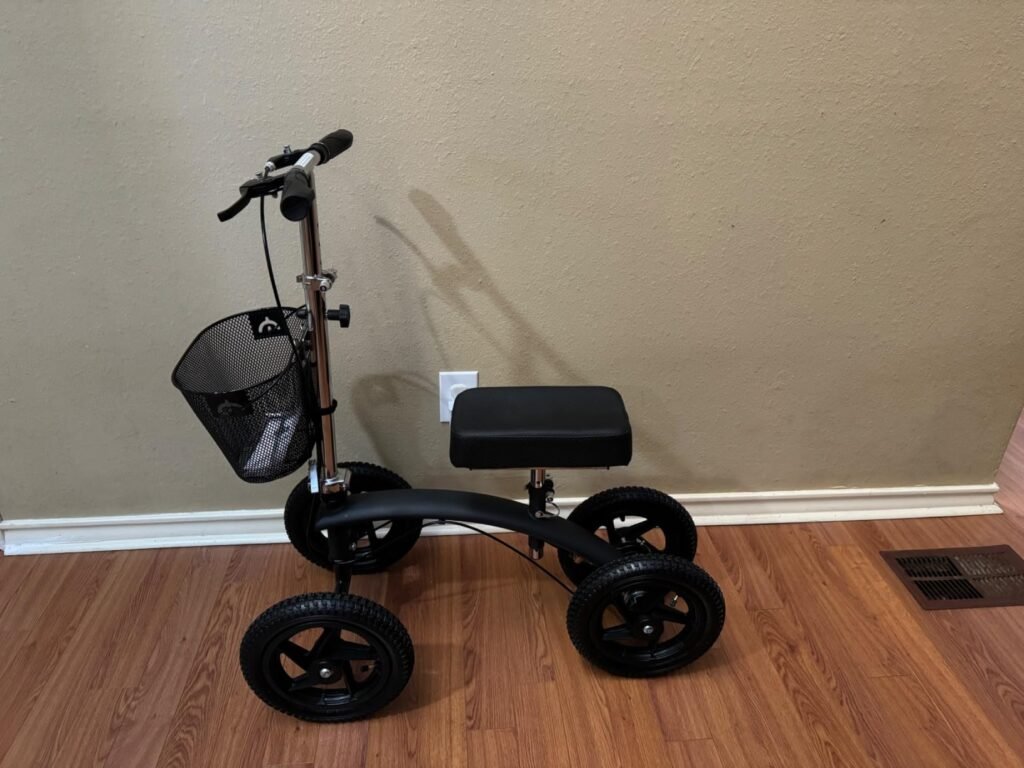
The BodyMed all-terrain walker is aimed at users who want a heavy-duty scooter with a rigid metal storage basket rather than a soft canvas bag. That basket makes it noticeably easier to carry groceries, work materials, or medical supplies during errands, since the shape holds items securely without sagging or shifting.

We may earn a commission when you buy through this link, at no additional cost to you.
Four 12-inch pneumatic tires provide industry-leading stability on uneven surfaces including carpet, gravel, grass, dirt, and pavement. The larger air-filled wheels smooth out vibration from bumps and cracks that would jar smaller-wheeled scooters. A dual rear friction brake system delivers reliable stopping on inclines and rough surfaces, with easy-grip handlebars for confident control.
The 35-pound frame supports up to 350 pounds, giving it more headroom for larger users than 300-pound-rated models. Height adjustment accommodates users from 5’0″ to 6’4″, covering most adult body types. A clever design detail allows the lower bolt on the front axle to be removed so wheels can rotate sideways for compact car storage. Tires ship deflated at 30 to 35 PSI, so you will need a pump to inflate them before first use.
Pneumatic tires typically ship deflated to prevent damage during shipping. Before your first ride, use a bicycle or car tire pump with a pressure gauge to inflate each tire to the manufacturer’s recommended range, usually 30 to 35 PSI. Never exceed the maximum listed pressure. Recheck pressure every few weeks to keep the ride smooth and the tires wearing evenly.
This walker is a smart pick for buyers who prioritize a rigid storage basket, higher weight capacity, and the smoothest possible outdoor ride. The trade-offs are the heavier frame and the need to inflate the tires initially. For lighter transport needs or lower-cost all-terrain performance, other options may fit better.
Not suitable for buyers who want the lightest possible frame or prefer zero tire maintenance.
We may earn a commission when you buy through this link, at no additional cost to you.
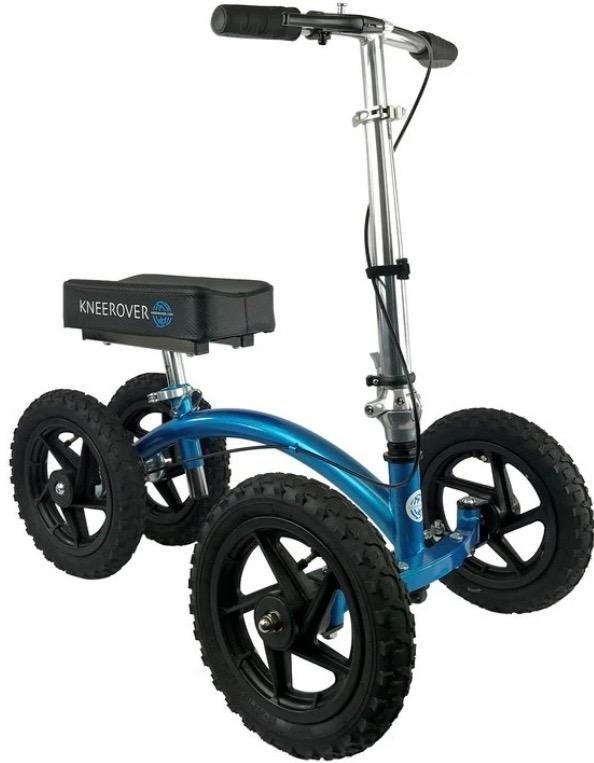
The KneeRover Quad All Terrain is the original all-terrain knee scooter and remains a benchmark for outdoor mobility performance. It targets buyers who need serious off-road capability during recovery, whether navigating grass, gravel, dirt paths, or the gaps and cracks common on older sidewalks.
We may earn a commission when you buy through this link, at no additional cost to you.
Four air-filled pneumatic tires provide maximum ground clearance and vibration absorption, letting you roll confidently over surfaces that would stop smaller-wheeled scooters. Advanced tie-rod steering technology delivers superior stability during turns, and reliable rear drum brakes provide consistent stopping power along with a locking handbrake for parking. This engineering translates to real confidence on challenging outdoor terrain.
The heavy-duty steel frame supports up to 350 pounds while weighing 26.9 pounds itself. A 3-inch thick contoured knee platform measuring 7 by 12.5 inches distributes pressure evenly for extended comfort, and ergonomic rubber hand grips reduce hand fatigue. The scooter folds down to 16.5 inches in height using a simple thumb-release lever, making it possible to fit in the trunk of a compact car.
If your recovery includes work commutes, outdoor errands, walking a dog, or navigating older sidewalks and driveways, all-terrain wheels dramatically expand where you can safely go. That freedom translates directly to better mental health and faster return to normal routines during a long recovery. For extended injuries, the premium features often prove their value quickly.
This scooter is the top pick for buyers who need genuine all-terrain performance, higher weight capacity, and premium build quality backed by a 20-plus-year USA mobility brand. The trade-offs are the highest price in this comparison and a heavier frame than lightweight indoor models. For users facing longer recoveries or outdoor lifestyles, the investment often pays for itself in comfort and independence.
Not the right pick for short-term indoor recoveries or buyers who need the lowest possible price.
We may earn a commission when you buy through this link, at no additional cost to you.
The best knee scooter for you depends on your height, weight, injury type, expected recovery duration, and where you will use it most. Use these factors to narrow down the options and match a walker to your real needs.
Wheel size is one of the most important specifications to consider because it directly determines where you can safely and comfortably use the scooter. Smaller wheels in the 7.5 to 8-inch range work well on smooth indoor surfaces like hardwood, tile, laminate, and low-pile carpet. They handle basic door thresholds and small transitions but struggle with grass, gravel, sidewalk cracks, and uneven pavement. Larger wheels in the 11 to 12-inch range roll over obstacles more easily and provide a noticeably smoother ride over rough surfaces.
Wheel material also matters. Solid rubber wheels never go flat and require no maintenance, which is convenient for daily use. Pneumatic air-filled tires like those on the Vive Mobility, BodyMed, and KneeRover Quad models provide superior shock absorption on uneven ground but need occasional pressure checks and can puncture. For extensive outdoor use over grass, gravel, or older sidewalks, larger pneumatic wheels are usually worth the maintenance trade-off.
Match wheel size to your typical environment. Small wheels are fine for mostly indoor recoveries, while larger all-terrain wheels are worth the extra cost for outdoor lifestyles or longer recoveries.
Every knee scooter has a maximum weight capacity that includes both your body weight and anything you carry in the basket or storage bag. Most standard scooters support up to 300 pounds, which covers the majority of adult users comfortably. Higher-capacity models like the Vive Mobility, BodyMed, and KneeRover Quad support up to 350 pounds, providing more headroom for larger users or anyone who needs to carry significant items during errands.
Frame material affects both weight capacity and how easy the scooter is to transport. Steel frames like those on most BlessReach and KneeRover models are strong and affordable but tend to weigh more. Aluminum frames like the BlessReach 11-inch aluminum model cut several pounds off the total weight, making the scooter easier to lift into a car trunk or carry up steps. For users who transport their scooter frequently, the weight difference can be significant.
Choose a weight capacity that exceeds your actual weight by a comfortable margin, and prioritize aluminum construction if you plan to lift and transport the scooter often.
The braking system is a critical safety component that varies significantly across knee scooters. Basic models use single cable-actuated brakes on the rear wheels, which work well for indoor use at slow speeds. Dual braking systems engage both rear wheels simultaneously for more balanced stopping, which reduces the tendency of the scooter to pull to one side during a quick stop. Higher-end models add disc brakes like those on the BlessReach disc brake and aluminum frame walkers, which provide more consistent stopping power in wet or dirty conditions and require less hand force.
Beyond the primary brakes, look for a locking handbrake that keeps the scooter stationary when parked. This feature is genuinely useful when you need to stand up briefly, take something out of the storage bag, or navigate a doorway. Anti-tip design elements like a widened chassis and low center of gravity, as found on the Aojin scooter, help prevent sideways rollover on uneven surfaces or during turns.
For indoor use, single or dual cable brakes are sufficient. For outdoor use or if you need extra confidence in your braking, choose disc brakes or a dual braking system with a locking handbrake.
Proper fit is essential for both comfort and safety. Knee scooters typically offer adjustable knee pad and handlebar heights, with each model designed for a specific user height range. Standard scooters usually fit users from about 4’9″ to 6’4″, while some models like the Aojin extend down to 4’7″ for shorter users, and others like the BlessReach 11-inch aluminum model extend up to 6’6″ for taller adults. Buying a scooter outside its recommended height range often results in an uncomfortable or unstable setup.
When properly adjusted, your injured leg should rest naturally on the knee pad with your hip and knee both at approximately 90 degrees. Your good leg should be able to stand flat on the floor while your injured leg rests on the pad. The handlebars should be at a comfortable height that allows relaxed shoulders and slightly bent arms, not stretched out or hunched over. A quick check-in with your surgeon or physical therapist can help confirm the correct fit for your specific injury.
Choose a scooter whose recommended height range fits comfortably in the middle rather than at the extreme ends. If you are unusually tall or short, prioritize models that specifically accommodate your height.
The knee pad is where you will spend hours of your recovery, so comfort matters more than most buyers initially realize. Basic knee pads use thin foam that can become uncomfortable after extended use, while premium pads feature contoured shapes and thicker cushioning that distribute pressure more evenly across the leg. The KneeRover Quad’s 3-inch thick contoured platform and the Vive Mobility’s contoured foam cushion are examples of designs built specifically for extended comfort.
Beyond thickness, look for pads that cradle your lower leg rather than simply providing a flat surface. A contoured design reduces the tendency for your leg to shift sideways during turns and improves overall stability. Some users find that adding an extra gel or memory foam pad on top of the built-in cushion provides additional comfort for longer recoveries. Check whether the knee platform can be removed for cleaning or storage.
For short recoveries of a few weeks, a basic padded knee pad is usually fine. For longer recoveries, invest in a scooter with a contoured, thickly cushioned pad to prevent soreness and pressure points.
Being able to fold your knee scooter for transport is essential if you plan to travel by car, need to store it in a small apartment, or want to bring it to medical appointments. Most modern scooters feature quick-release folding handlebars that collapse the vertical column down to make the scooter more compact. Some models like the KneeRover Quad fold down to 16.5 inches in height, which fits easily in the trunk of a compact car.
The scooter’s overall folded dimensions and weight determine whether one person can lift it or whether you will need assistance. Lightweight models like the KneeRover Economy at 20.3 pounds or the BlessReach dual-brake at 24 pounds are noticeably easier to handle than heavier all-terrain scooters that weigh 26 pounds or more. Consider your own strength and mobility when your good leg is doing most of the work.
Prioritize folding design and lightweight construction if you plan to transport the scooter frequently. For home-only use, folding matters less than fit and comfort.
Storage accessories transform a knee scooter from a mobility device into a practical daily companion. Most models include a canvas storage bag that mounts to the handlebars or front of the scooter, providing space for a phone, wallet, water bottle, or small purchases. The size and quality of these bags vary significantly, with some featuring double-layer construction and multiple compartments for better organization.
Rigid storage baskets like the metal basket on the BodyMed all-terrain walker offer a real advantage for carrying groceries, work materials, or larger items that would sag a soft bag. The rigid shape holds items securely and makes them easier to remove. Some buyers add aftermarket cup holders or additional bags to customize their setup based on daily needs. Check that any accessory does not exceed the scooter’s weight capacity when loaded.
Choose a canvas bag for basic personal items or a rigid basket if you plan to carry groceries and larger items regularly. Consider whether the included storage matches your expected daily use.
Warranty coverage and customer support can make a real difference during recovery, when you depend on the scooter every day and cannot afford long delays if something goes wrong. Vive Mobility stands out with a lifetime guarantee on its all-terrain walker, providing exceptional long-term protection. Other manufacturers offer varying warranty terms, so check the coverage details before buying, especially for higher-priced models.
Customer service responsiveness also matters, particularly for pre-purchase questions about fit and post-purchase issues with assembly or parts. Established brands like KneeRover, Vive, and BodyMed typically offer more reliable support networks than generic manufacturers. HSA and FSA eligibility, offered by several models including the Vive Mobility, can also help offset the cost using pre-tax health funds.
For longer recoveries or higher-priced scooters, prioritize brands with strong warranties and responsive customer service. Check HSA and FSA eligibility if you plan to use health savings funds.
Set up your scooter by first adjusting the knee pad height so that when your injured leg rests on it, your hip and knee are both at approximately 90 degrees while your good leg stands flat on the floor. Then adjust the handlebars to a comfortable height that keeps your shoulders relaxed and your arms slightly bent. Practice moving slowly on flat ground before attempting turns, inclines, or outdoor surfaces. Always squeeze both brake levers before moving your good foot, and never exceed a walking pace, typically under 3 miles per hour, for safe control.
For daily use, pay attention to how your leg rests on the pad throughout the day. Shift position slightly every hour or two to prevent pressure points and reduce the risk of pinching or numbness. If you use pneumatic tires, check pressure every few weeks and inflate to the manufacturer’s recommended range using a bicycle or car tire pump. Wipe the frame and knee pad clean with a damp cloth as needed to remove dust and dirt, and check that all bolts and adjustment knobs remain tight during weekly use.
Store your scooter indoors when not in use to protect it from weather damage and rust. If you need to transport it in a vehicle, use the folding mechanism to reduce the footprint, and place it carefully to avoid bending the handlebars or damaging the wheels. For longer-term storage after recovery, clean the frame thoroughly, engage the parking brake, and store in a dry area. Consider donating or reselling the scooter to help another user recover if you no longer need it.
Knee scooters are ideal for recoveries from foot, ankle, or lower-leg injuries and surgeries, including broken bones, sprains, tendon repairs, and below-knee amputations. They work best when your injury allows you to bear weight on your good leg and rest your injured leg comfortably on a padded platform. Always confirm with your surgeon or physical therapist that a knee scooter is appropriate for your specific injury before purchasing.
Choose 7.5 to 8-inch wheels for mostly indoor use on smooth surfaces like hardwood, tile, and low-pile carpet. Move up to 11 to 12-inch wheels if you will spend meaningful time outdoors on grass, gravel, sidewalks with cracks, or other uneven terrain. Larger wheels roll over obstacles more easily and provide a smoother ride, though they add weight and cost. Match wheel size to your typical daily environment.
Most standard knee scooters support up to 300 pounds, which covers the majority of adult users. Higher-capacity models like the Vive Mobility, BodyMed, and KneeRover Quad support up to 350 pounds. Always choose a scooter whose weight capacity exceeds your body weight plus anything you might carry in the storage bag by a comfortable margin for safety and stability.
Knee scooters are not designed for use on stairs and should never be ridden up or down them. To navigate stairs during recovery, dismount the scooter, use crutches or a handrail to move up or down, and have someone carry the scooter to the other level. Some users keep a lightweight scooter on each floor of a multi-story home to avoid this challenge.
Most users adapt to a knee scooter within a few days of regular use. Start slowly on flat indoor surfaces to learn steering, braking, and balance before attempting outdoor terrain or inclines. Practice mounting and dismounting safely, and always squeeze both brake levers before moving your good foot. Confidence typically builds quickly once you understand how the scooter responds to your movements.
Many knee scooters qualify for reimbursement through Flexible Spending Accounts and Health Savings Accounts when used for medical mobility purposes. The Vive Mobility all-terrain walker explicitly confirms HSA and FSA eligibility. Check your plan administrator's guidelines and keep your purchase receipt for documentation. Buying an eligible scooter can help you use pre-tax funds and reduce the out-of-pocket cost.
Most modern knee scooters feature quick-release folding handlebars that collapse the scooter for transport. Fold the handlebars down, engage the parking brake, and lift the scooter into the trunk or back seat. Lightweight models like the KneeRover Economy at 20.3 pounds are easier for one person to handle, while heavier all-terrain models may benefit from assistance. Some scooters like the BodyMed even let you rotate the wheels sideways for more compact storage.
Solid tires never go flat and require no maintenance, making them convenient for daily use on smooth to moderately uneven surfaces. Pneumatic air-filled tires provide superior shock absorption on rough outdoor terrain but need occasional pressure checks and can puncture. For mostly indoor use or short recoveries, solid tires are the practical choice. For extensive outdoor use or longer recoveries, pneumatic tires offer real comfort benefits.
Recovery timelines vary significantly based on the injury, ranging from a few weeks for minor sprains to several months for major surgeries or complex fractures. Consult your surgeon or physical therapist for a specific estimate based on your situation. If you expect a longer recovery, investing in a higher-quality scooter with better comfort features and warranty coverage typically pays off. For short recoveries, a basic budget model may be all you need.
Yes, most modern knee scooters are designed to work with either the right or left leg injured. The knee pad and steering column are symmetrical, so you simply place your injured leg on the pad regardless of which side needs support. Adjust the height to fit your leg comfortably at 90 degrees, and use your good leg to propel and stabilize the scooter.
The KneeRover Quad All Terrain earns the top spot for buyers who want the strongest overall performance, with four pneumatic tires, tie-rod steering, reliable drum brakes, and a 350-pound weight capacity that handles serious outdoor terrain. Backed by more than 20 years of USA-based mobility experience, it delivers the freedom to navigate grass, gravel, and uneven sidewalks with confidence during longer recoveries.
For buyers with different priorities, several alternatives stand out. The KneeRover Economy Steerable delivers proven quality at a lightweight 20.3 pounds for indoor and light outdoor use. The Vive Mobility all-terrain walker adds a lifetime guarantee and 350-pound capacity with 12-inch pneumatic wheels. The BlessReach lightweight scooter offers the most affordable entry point for short indoor recoveries, and the BodyMed model provides a rigid metal storage basket for carrying groceries and errands.
Start by identifying where you will use the scooter most, whether inside a home, outside on paved paths, or over grass and gravel. Then match your height, weight, and recovery timeline to a model that fits your body and lifestyle. Add features like disc brakes, storage baskets, or all-terrain wheels based on your daily routine, and any of the scooters in this comparison can help you maintain independence and comfort during recovery.