BlueWood Pikler Triangle
9.2Editor scoreFSC-certified solid wood
160 lb maximum load
7-in-1 foldable design
Ages 18 months to 7
Find the right kids climbing toys for 2026. We compare 10 standout options by build quality, useful features, owner feedback, value, and everyday trade-offs.

Choosing the right climbing toy for your child in 2026 comes down to more than looks. We compare 10 standout options by the factors that genuinely matter: safety features, materials, weight capacity, age range, indoor or outdoor use, play mode variety, storage, and how well each set grows with a child from toddler years into early elementary.
Climbing toys range from foldable wooden Pikler triangles to soft foam blocks and full outdoor jungle gyms. Each type serves a different age, space, and developmental stage, so understanding the differences is essential before you buy. The right pick can support gross motor skills, balance, and confidence for years.
This guide covers indoor Montessori-style climbing frames, cushioned foam sets for the youngest builders, and durable backyard playsets designed for active preschoolers. We highlight where each product shines, where it falls short, and which type of family or living space it fits best.
We compared 10 kids climbing toys using the details that actually help parents decide: build materials, weight capacity, safety features, age range, number of play modes, indoor or outdoor suitability, foldability and storage, assembly effort, certifications, owner feedback, and value. The notes focus on practical trade-offs so each pick connects to how families actually use climbing toys for daily active play, motor skill development, and long-term use as children grow.

Compare key features, scores, and current prices side by side. A shorter feature list means fewer details were available, not necessarily fewer capabilities.




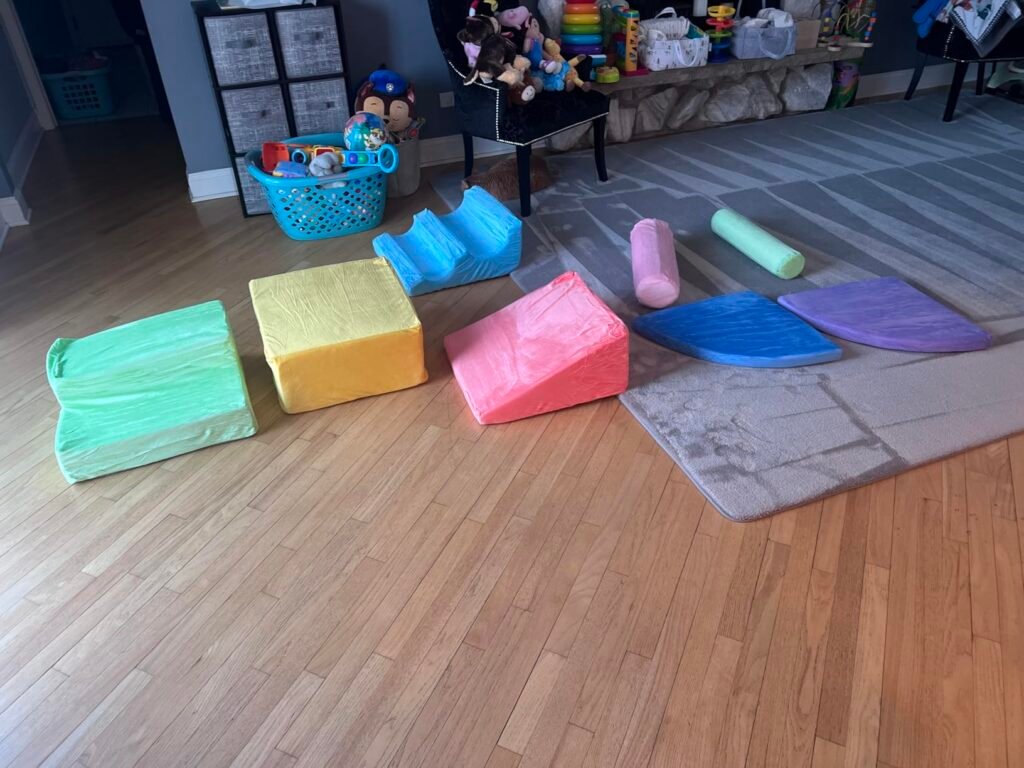
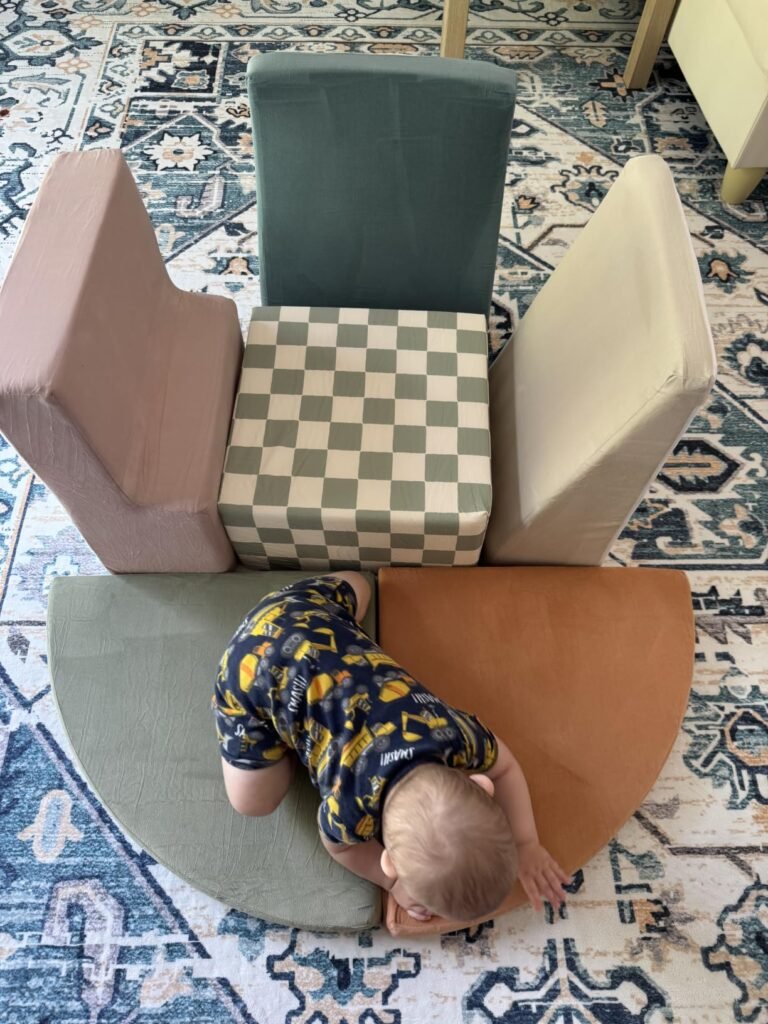
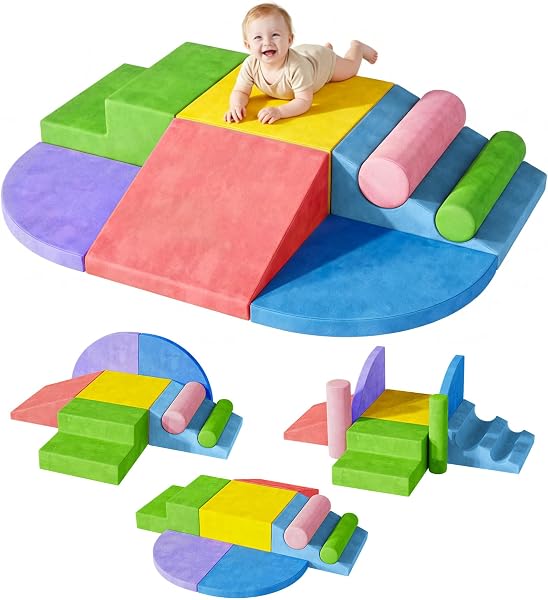
The Teckid 8-Piece Soft Foam Climbing Set earns the highest rating of the ten products in this guide, which reflects strong parent satisfaction. The eight pieces include two stairs, two half-moons, two cylinders, one square, and one triangle slide, giving toddlers more configuration options than most six-piece foam sets. This extra variety translates directly into more play scenarios and longer engagement.

We may earn a commission when you buy through this link, at no additional cost to you.
High-density foam wrapped in velvety fabric provides both cushion and comfort. The rounded edges and non-slip textures reduce the risk of scrapes or slips, and the bright colors help toddlers learn shape and color recognition alongside physical skills. This dual purpose makes the set particularly appealing for parents who want educational value baked into active toys rather than layered on separately.
One practical thing to know before ordering: the foam ships vacuum-packed for efficient shipping, and each piece needs 48 to 72 hours to fully expand to its intended size and firmness after unboxing. Plan accordingly if you are buying as a birthday gift and want everything ready on the day. Once expanded, the pieces are lightweight enough for toddlers to move themselves, which supports independent play.
When your set arrives, unbox the pieces in the room where they will be used and give them the recommended time to expand fully. Trying to arrange or stack pieces before they reach full size can compress the foam unevenly. A little patience during setup pays off with proper firmness and durability over the long run.
This set is ideal for parents of children ages one to three who want a colorful, high-quality soft climbing environment. The educational color and shape elements add value beyond pure physical play, and the eight-piece variety keeps kids engaged longer than smaller sets. Older kids may find it less challenging, so consider it more of a toddler-years investment.
Older preschoolers who need larger, more challenging climbing structures.
We may earn a commission when you buy through this link, at no additional cost to you.
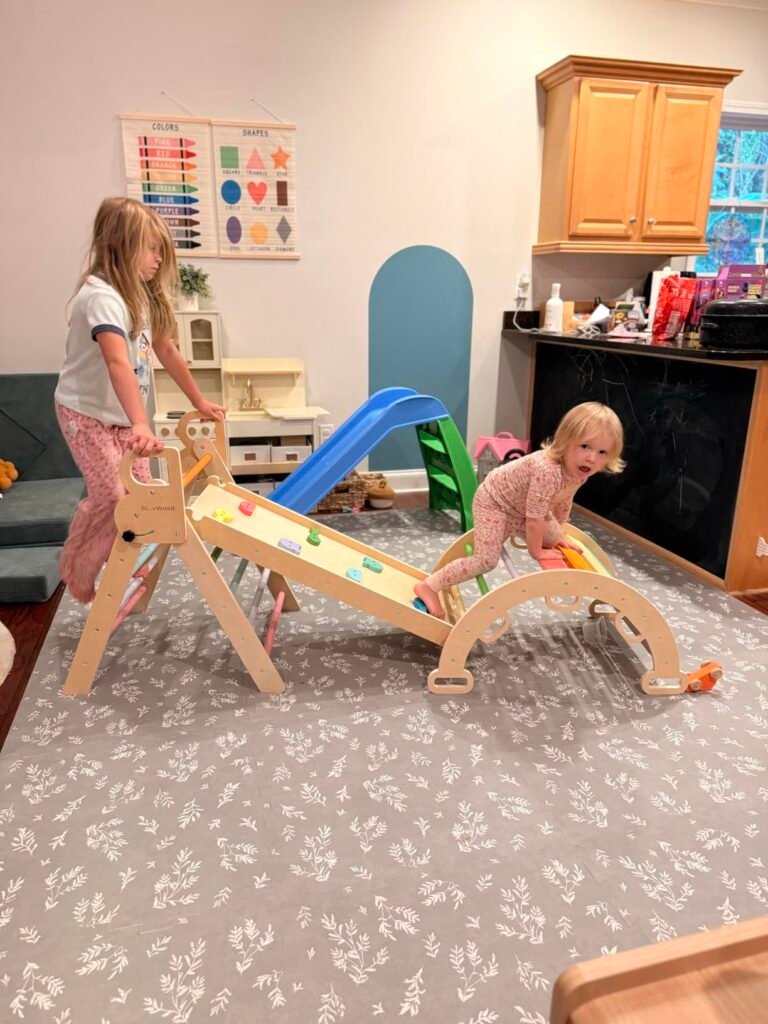
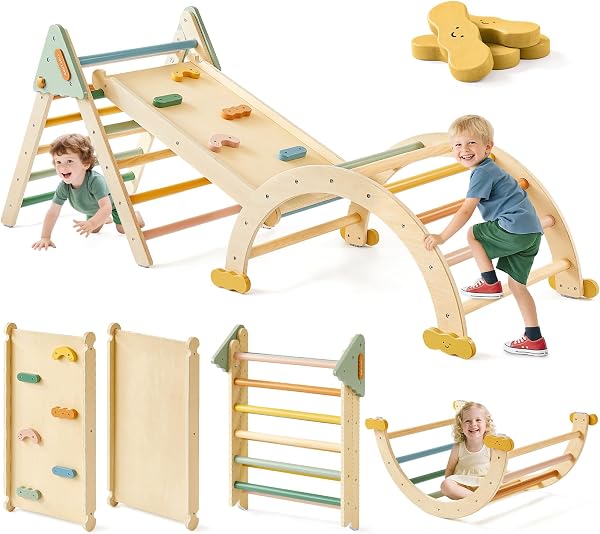
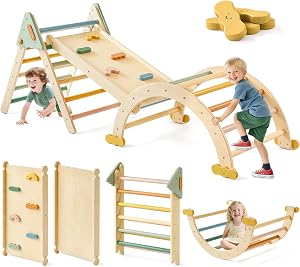
The BlueWood Pikler Triangle Set is a strong pick for parents who want an indoor climbing structure that will remain useful from toddlerhood through the early elementary years. Built from FSC-certified solid wood with a 160-pound load capacity, it easily supports two to three children playing together, which matters for families with multiple kids or frequent playdates. The foldable frame collapses to about a third of its expanded footprint, which makes it far more apartment-friendly than a fixed structure.

We may earn a commission when you buy through this link, at no additional cost to you.
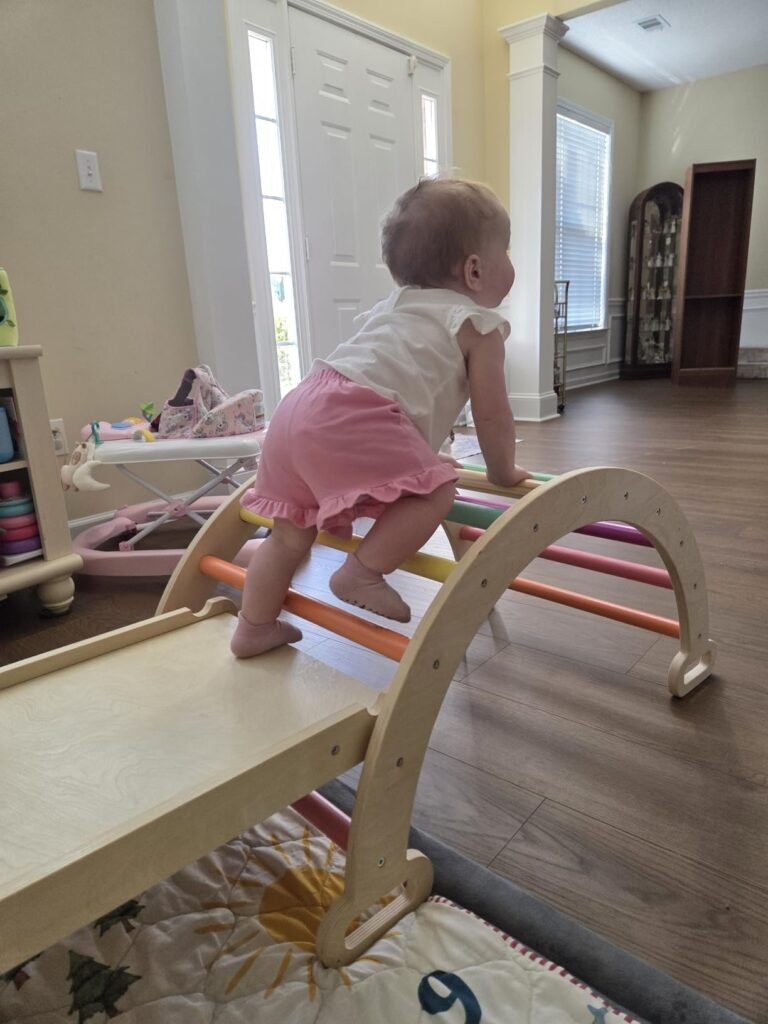
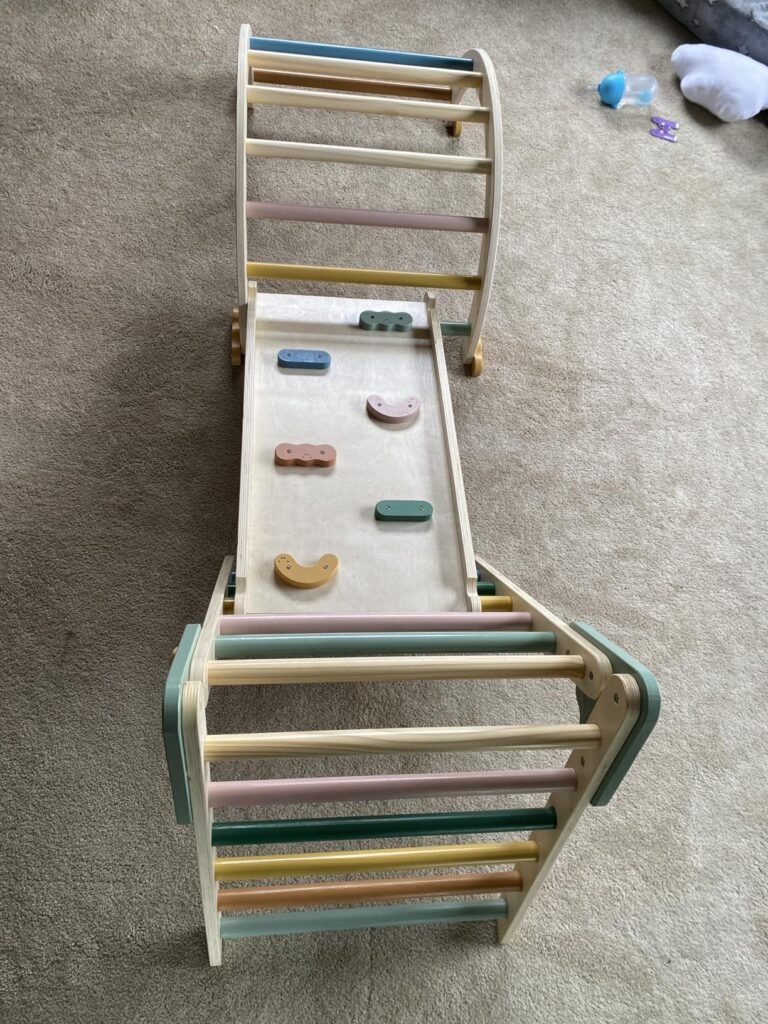
The 7-in-1 configuration includes a triangle ladder, slide board, climbing arch, and wooden car, giving children multiple ways to engage with the set as their skills develop. A young toddler may start by simply pulling up on the arch, while an older child can climb the full triangle, slide down the ramp, or rock on the inverted arch. This kind of long-arc play value helps justify the price when you compare it to single-purpose climbing toys.
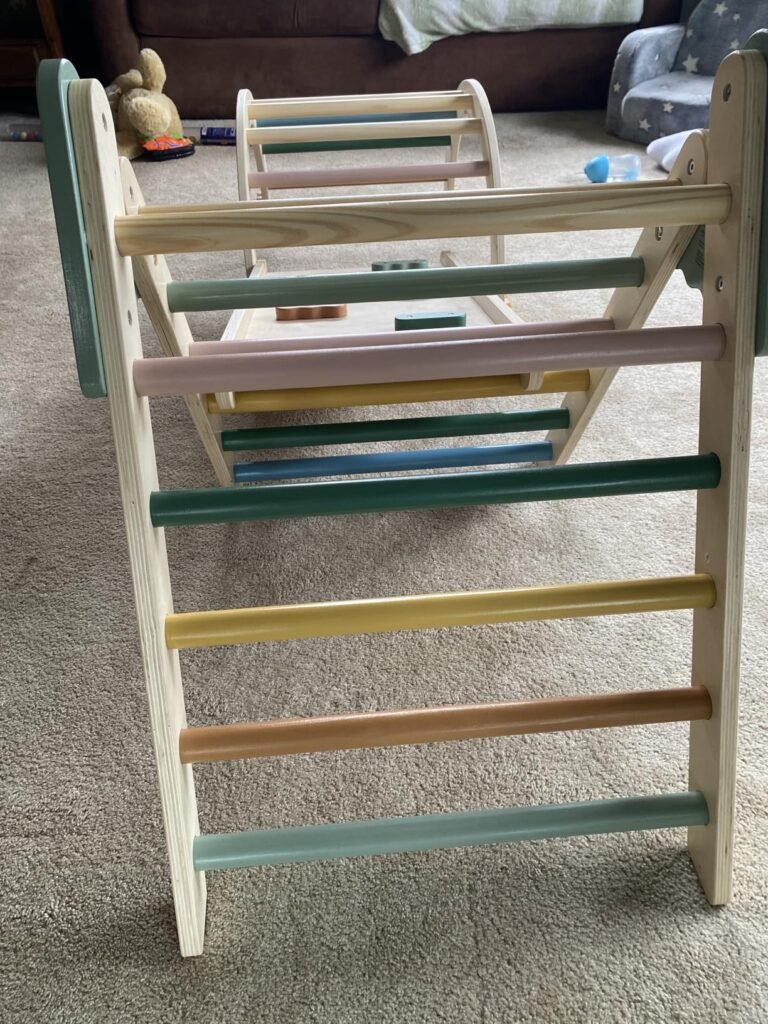
Safety details set this set apart. The board-and-bar arch reduces the risk of small feet slipping through, and the B-shaped top handles give toddlers a confidence-boosting grip when they reach the summit. Assembly is straightforward but takes roughly an hour by hand, with a power drill cutting that time in half. The reinforced screws create a tight fit that prioritizes stability over easy setup, which is the right trade-off for a climbing structure.
A fixed Pikler triangle can dominate a small living room, which often leads to parents putting it away and forgetting about it. A folding design like this one lets you tuck the frame behind a couch or against a wall when guests visit, then set it back up in minutes for active play. This kind of flexibility significantly increases the odds that the toy actually gets used.
This set is ideal for families who want a well-built, long-lasting indoor climbing frame that folds away when needed. If you want something you can assemble in fifteen minutes or plan to move the structure frequently, a lighter foam alternative may suit you better.
Families who want a plug-and-play toy that requires no assembly or tools.
We may earn a commission when you buy through this link, at no additional cost to you.
Tiny Land's 7-in-1 Pikler Triangle Set takes the traditional Montessori climbing frame and gives it more room to grow. The expanded dimensions mean toddlers do not outgrow it quickly, and preschoolers still have space to climb, crawl, and balance without feeling cramped. This is a smart pick for families who plan to keep the set in use for several years rather than replacing it as their child gets bigger.

We may earn a commission when you buy through this link, at no additional cost to you.
The seven play modes come from thoughtful accessory design. The reversible board serves as either a climbing ramp or a slide depending on which side faces up, and the climbing arch flips over to become a rocker. This kind of dual-purpose engineering means kids get more variety without needing additional pieces cluttering the play area, and each configuration challenges different motor skills.
Safety was clearly a design priority. The folding mechanism uses reinforced side screws that adults loosen to collapse the frame, which prevents curious toddlers from accidentally folding the structure themselves. This is a real improvement over simpler folding designs where children can pinch fingers or destabilize the frame during play. The build quality feels substantial and the frame stays stable during energetic climbing sessions.
The reversible board and dual-purpose arch let you refresh the play space simply by flipping components. Rotate the setup every week or so to keep kids engaged, and challenge older children to invent their own configurations. This kind of open-ended play encourages problem-solving and imaginative thinking alongside physical development.
This set fits families who want a Pikler triangle with genuine longevity and a bit more play space than the average model offers. If your child is under two and you have limited floor space, a smaller or more compact set may be a better match, but for growing kids with room to move, this expanded version delivers strong value.
Tight urban apartments where the expanded frame footprint would dominate the room.
We may earn a commission when you buy through this link, at no additional cost to you.
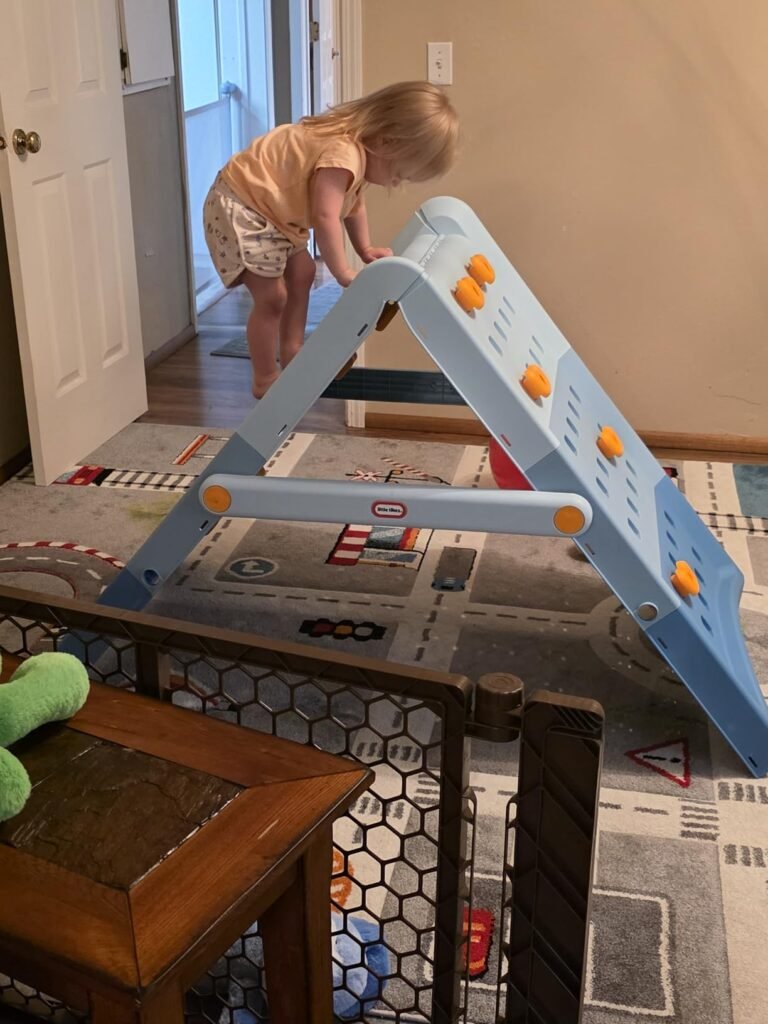
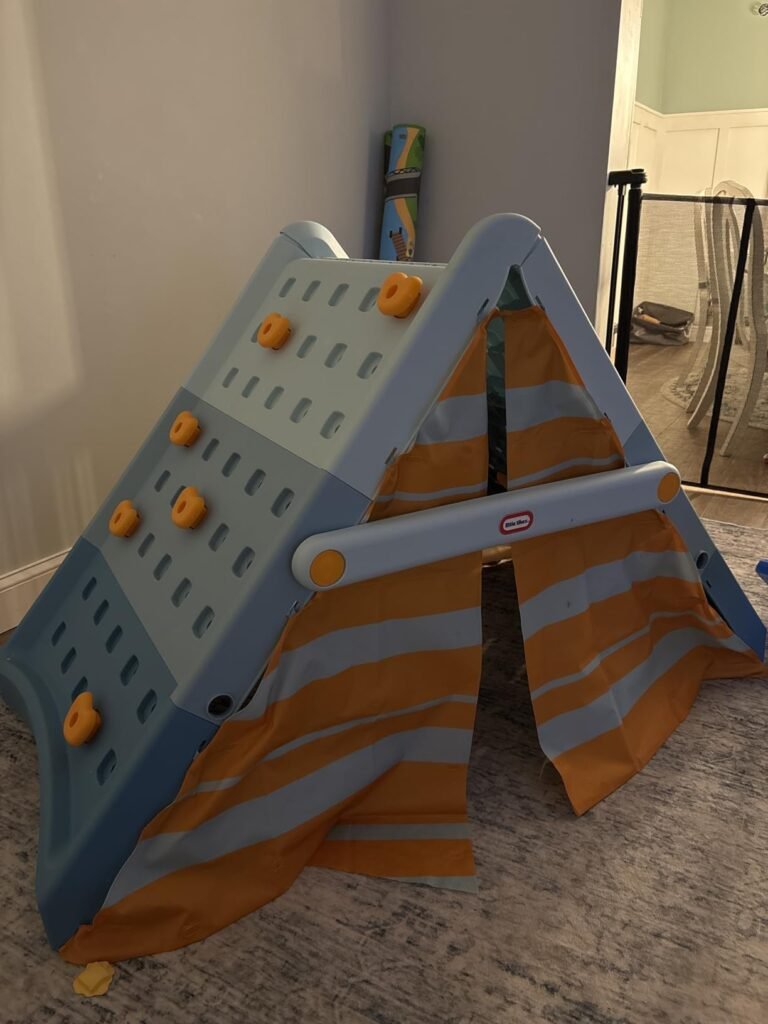
The Little Tikes Campin' & Climb Wall combines two things kids love: an active climbing challenge and a cozy hideaway. The two-in-one design opens up between two climbing walls to reveal a spacious tent area, giving kids a natural transition from energetic climbing to imaginative pretend play. This makes it especially useful for solo children or siblings who want variety without needing multiple toys.
We may earn a commission when you buy through this link, at no additional cost to you.
The adjustable design is a genuinely useful feature. You can position the climbing wall to lean against a house wall for maximum stability or set it to stand freely on its own. This flexibility lets you match the angle to your child’s confidence level, starting steeper for more advanced climbers and gentler for those still building coordination. Ten climbing pegs with stainless steel bolts install on either side of the surface, so you can flip the challenge as skills grow.
The all-weather fabric tent panel is designed to hold up outdoors as well as indoors, which extends the toy’s usefulness across seasons and settings. The climbing surface is durable plastic that resists scratches from repeated peg reconfiguration. Folding it flat for cleaning or storage is straightforward, which is a real plus for families who want to move active toys out of the way when guests come over.
The all-weather fabric means you can move this set to a patio or backyard for warm-weather play, then bring it back inside when the weather turns. When leaving it outdoors for extended periods, still bring it in during heavy rain or storms to preserve the tent panels and prevent moisture from affecting the plastic components over time.
This is a good pick for kids ages three and up who want more than a static climber. The combination of physical challenge and pretend play space adds versatility that pure climbing frames lack. Younger toddlers will get less from it since the climbing pegs are geared toward older children with more developed grip strength.
Toddlers under three who lack the grip strength to safely use the climbing pegs.
We may earn a commission when you buy through this link, at no additional cost to you.
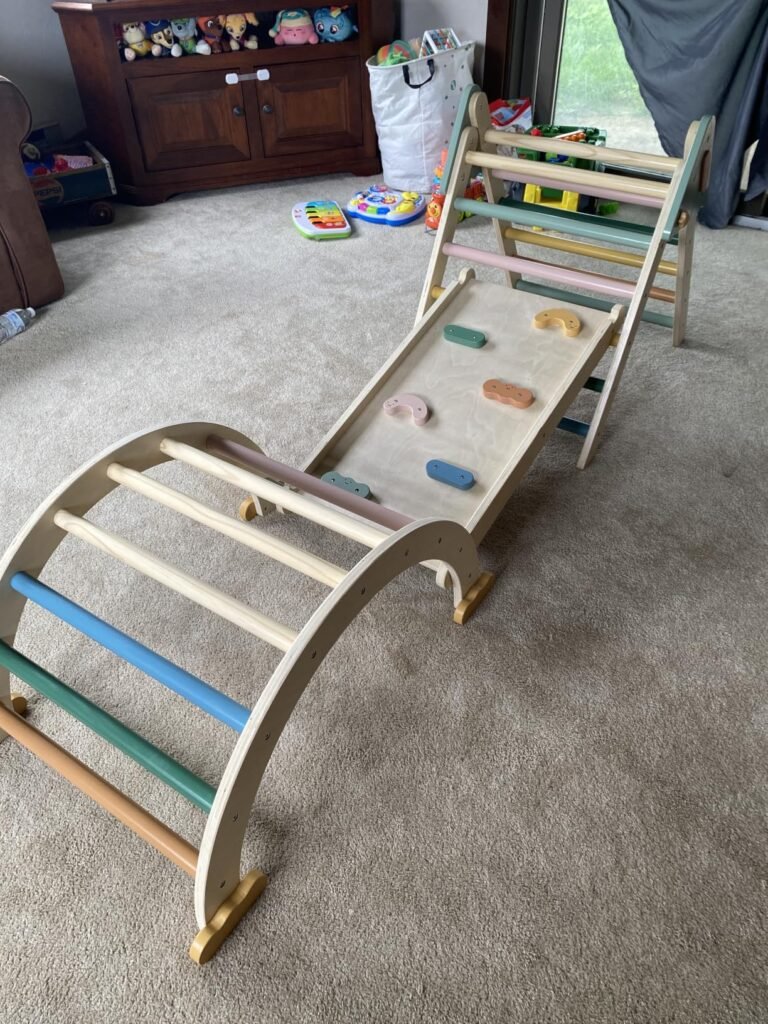
Tiny Land's updated 7-in-1 Pikler set puts extra engineering into stability, which is exactly where many climbing toys fall short. Silicone foot pads on the base grip hard floors and carpet alike, preventing the frame from sliding during energetic play. Reinforced corner blocks keep the structure wobble-free even when a child throws their weight around, which builds the kind of trust that encourages confident climbing.
We may earn a commission when you buy through this link, at no additional cost to you.
The anti-tip rocker design deserves particular attention. Many climbing arches can flip past their intended range when a child leans too far, but this version is engineered to resist that kind of over-rotation. Combined with the reinforced folding mechanism and stable base, the whole set feels reassuringly solid. For parents who worry about their child taking a spill mid-climb, these safety details deliver genuine peace of mind.
Aesthetically, the set is available in soft Morandi tones or a brighter Rainbow finish, so it can either blend into a modern living room or serve as a cheerful playroom centerpiece. The wood quality feels premium, the finish is smooth, and the whole set supports up to 160 pounds so older children can use it without concern. Foldability keeps it apartment-friendly despite the substantial build.
Climbing toys shift subtly during use even when they feel stable. On smooth flooring, a frame without proper grips can migrate several inches during a single play session, which is not just annoying but can also destabilize a child mid-climb. Silicone pads solve this quietly, keeping the frame planted exactly where you set it up.
This model suits families who prioritize safety engineering and design aesthetics equally. If you want a Pikler triangle that looks intentional in a well-decorated home while delivering strong stability, this is a compelling choice. Buyers focused purely on price may find similar functionality in less refined alternatives.
Shoppers seeking the absolute lowest-priced wooden climbing frame available.
We may earn a commission when you buy through this link, at no additional cost to you.
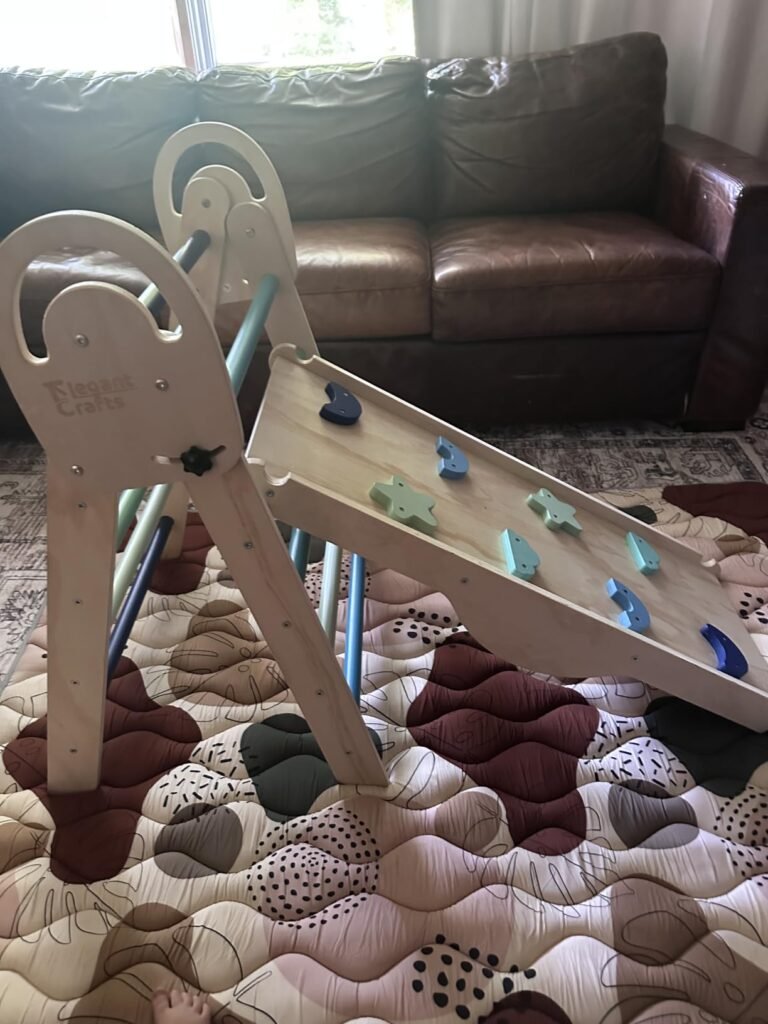
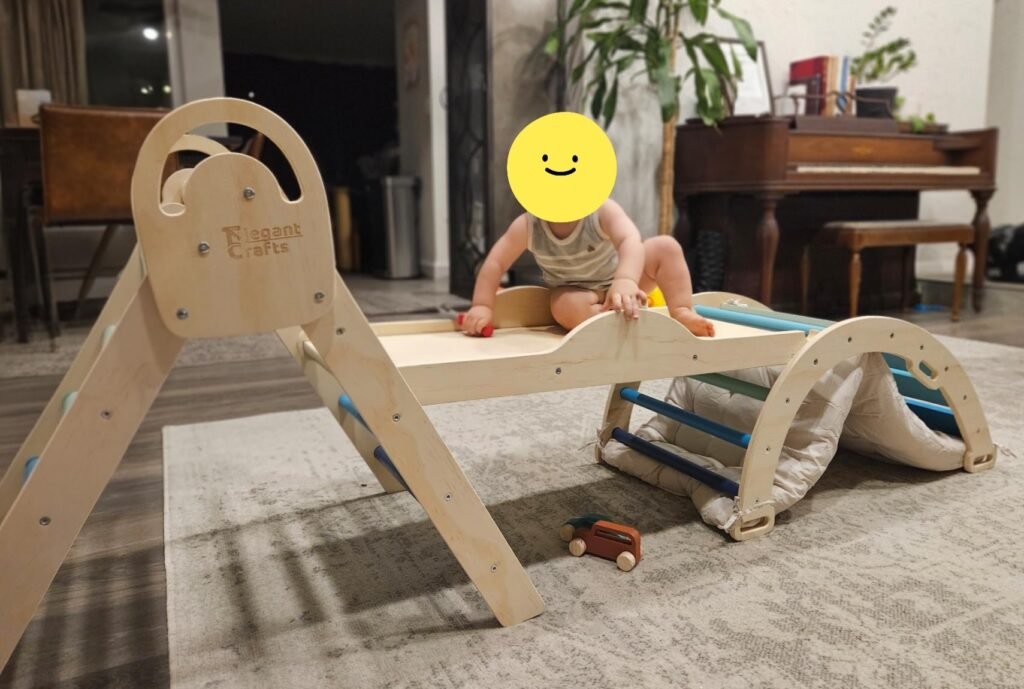
The ElegantCrafts Pikler Triangle Set stands out by including a landing cushion, an arch, a ramp, a triangle ladder, and two wooden cars in one package. That is more accessories than most competing sets, and the nine possible play combinations give kids a genuinely varied experience. The included cushion also softens the space around the slide, adding an extra layer of safety that most Pikler sets leave to parents to source separately.
We may earn a commission when you buy through this link, at no additional cost to you.
Construction uses FSC-certified pine wood with smooth, burr-free surfaces throughout. The set meets ASTM F963-17 and CPSIA safety standards, which are the recognized benchmarks for children’s toy safety in the United States. This is worth noting because not every climbing toy on the market carries these certifications, and the added compliance provides reassurance for parents who take toy safety seriously.
The nine play combinations range from straightforward climbing to more imaginative setups like crawling through the arch, sliding down the ramp, and racing the wooden cars on the incline. This variety keeps kids engaged as they discover new ways to interact with the pieces. The 4.7 star rating suggests that parents find the mix of accessories genuinely useful rather than gimmicky, which is not always the case with feature-heavy sets.
Place the cushion at the base of the slide and around the primary climbing area to soften unexpected tumbles. It also doubles as a soft crawl-through mat or resting spot for the younger side of the age range. Keep the cushion cover clean by spot-washing regularly and following the fabric care instructions to preserve the padding underneath.
This is a smart choice for families with children roughly one to four years old who want a well-rounded Pikler set that includes safety accessories. Older kids who want more physical challenge may outgrow the recommended age range faster than they would with the taller BlueWood or Tiny Land options.
Older kids over five who need a taller, higher-capacity climbing challenge.
We may earn a commission when you buy through this link, at no additional cost to you.
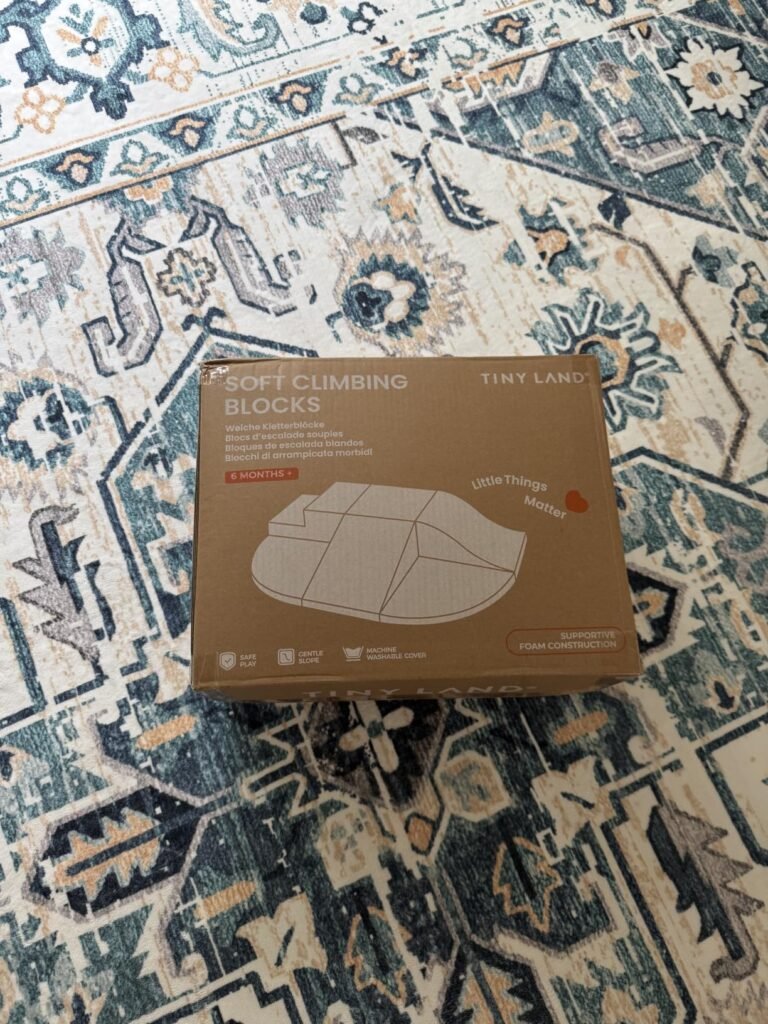
The Tiny Land Soft Foam Climbing Blocks are designed for the youngest active players, roughly the age when babies are transitioning from crawling to walking and starting to test their balance. Six modular pieces including cubes, ramps, wedges, and waves let parents build a soft, forgiving obstacle course that supports gross motor development without the hard edges of wooden alternatives. The scientifically improved 16.7 degree slope and two thick base pads keep everything stable during use.
We may earn a commission when you buy through this link, at no additional cost to you.
The 31A high-resilience foam core is the key ingredient. Cheap foam blocks tend to compress permanently after a few weeks of use, but higher-density foam maintains its shape and support over time. This matters because a squashed foam block becomes both less safe and less engaging. The dense foam here should hold up to daily play for years, which changes the value equation considerably.
Practical details make daily use easier. The fabric covers zip off for machine washing, hidden zippers keep little fingers away from the pulls, and Velcro strips connect the pieces securely so they do not slide apart mid-play. The anti-slip bottom grips both hard floors and carpet. The Morandi color palette suits contemporary home decor better than the primary-colored foam sets you find in daycare centers.
For a young toddler just learning to climb, keep configurations low and gentle with a single ramp and a landing wedge. As balance improves, add stepping cubes and steeper slopes to increase the challenge. Rearranging the pieces every few days keeps the play space fresh and encourages problem-solving as kids figure out new ways to move through the course.
This set is a perfect fit for families with babies and young toddlers who need a soft space to build early climbing confidence. Older preschoolers will still enjoy rearranging the pieces, but they may quickly outgrow the physical challenge. Pair it with a wooden Pikler triangle for a play space that scales as your child grows.
Older preschoolers who need a more physically demanding climbing challenge.
We may earn a commission when you buy through this link, at no additional cost to you.
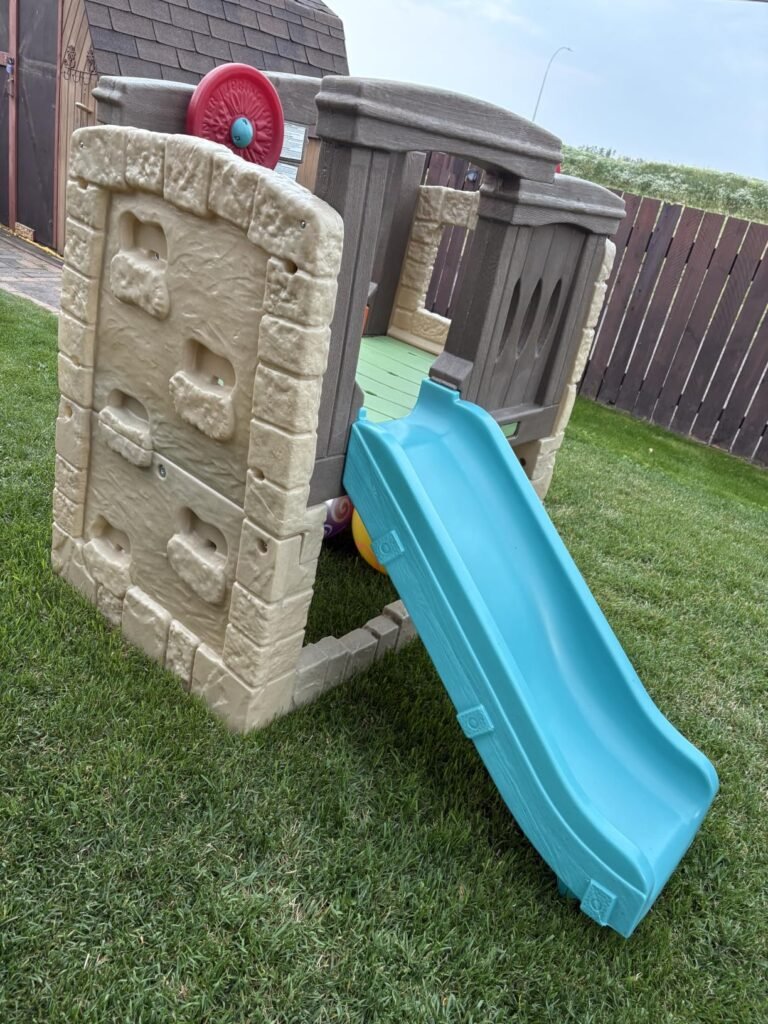
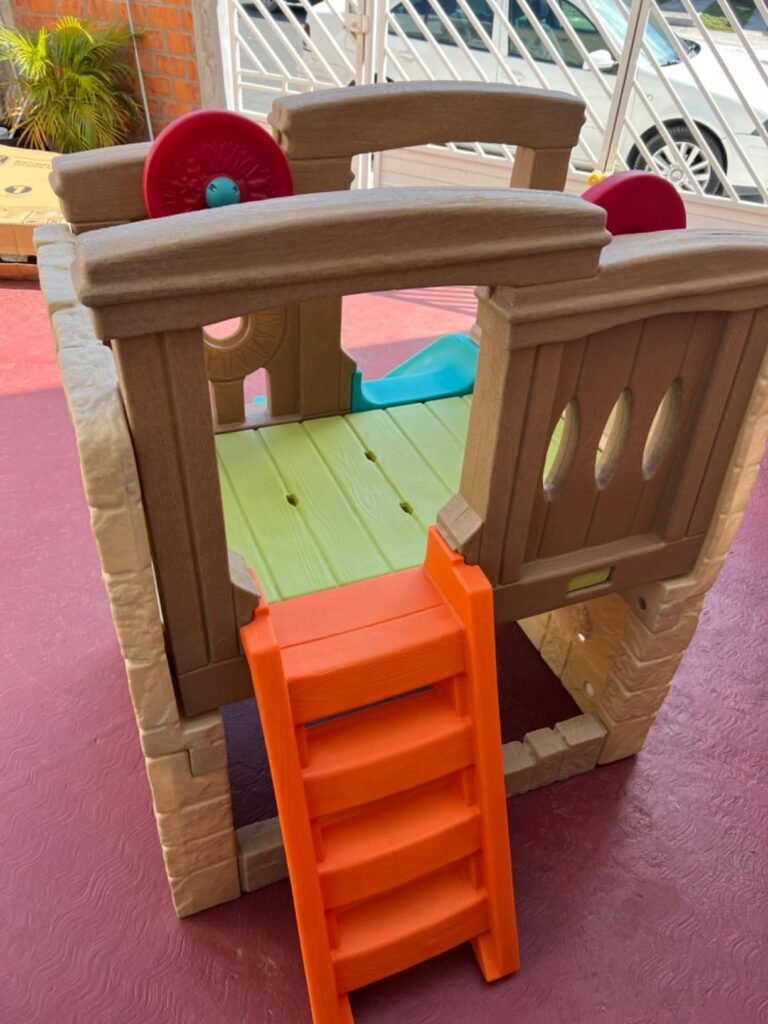
The Step2 Woodland Climber II brings a full backyard play experience to families with the outdoor space to accommodate it. The combination of climbing wall, roomy deck, two steering wheels, slide, ladder, and lower hideout gives kids multiple activities packed into one structure, which is a much better use of yard space than several single-purpose toys scattered around.
We may earn a commission when you buy through this link, at no additional cost to you.
The nature-inspired design is a genuinely nice touch. Earthy colors and realistic textures let the climber blend into a backyard rather than screaming primary colors, which parents who care about landscape aesthetics will appreciate. It looks intentional rather than plopped down, and the visual cohesion often makes the whole yard feel more inviting. The double-walled plastic construction resists chips, fading, cracks, and peeling, so it looks good year after year.
The under-deck area is a smart use of space. It works as a cozy fort for pretend play or as storage for smaller outdoor toys between play sessions, keeping the yard tidier. The two steering wheels invite imaginative role-play scenarios beyond straightforward climbing, adding value for kids who love to invent stories while they play. Cleanup is easy since the plastic rinses clean with a hose.
Set up on level ground with several feet of clearance around the slide and ladder. A layer of mulch, wood chips, or a play mat beneath the structure provides cushioning for the inevitable tumbles. Avoid placing directly against fences or walls, and check bolts periodically to make sure everything remains tight throughout the play season.
This is a strong choice for families with a backyard who want a durable, aesthetically pleasing climber for children ages two to six. If you live in an apartment or lack outdoor space, indoor options like a Pikler triangle will serve you better since this climber’s size makes it impractical for most interior rooms.
Apartment dwellers or families without dedicated outdoor space for a large playset.
We may earn a commission when you buy through this link, at no additional cost to you.
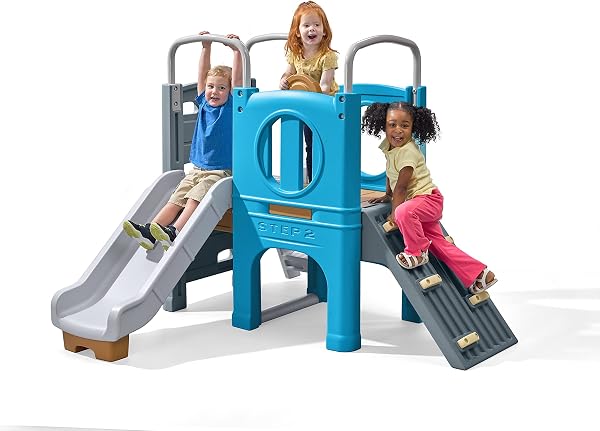
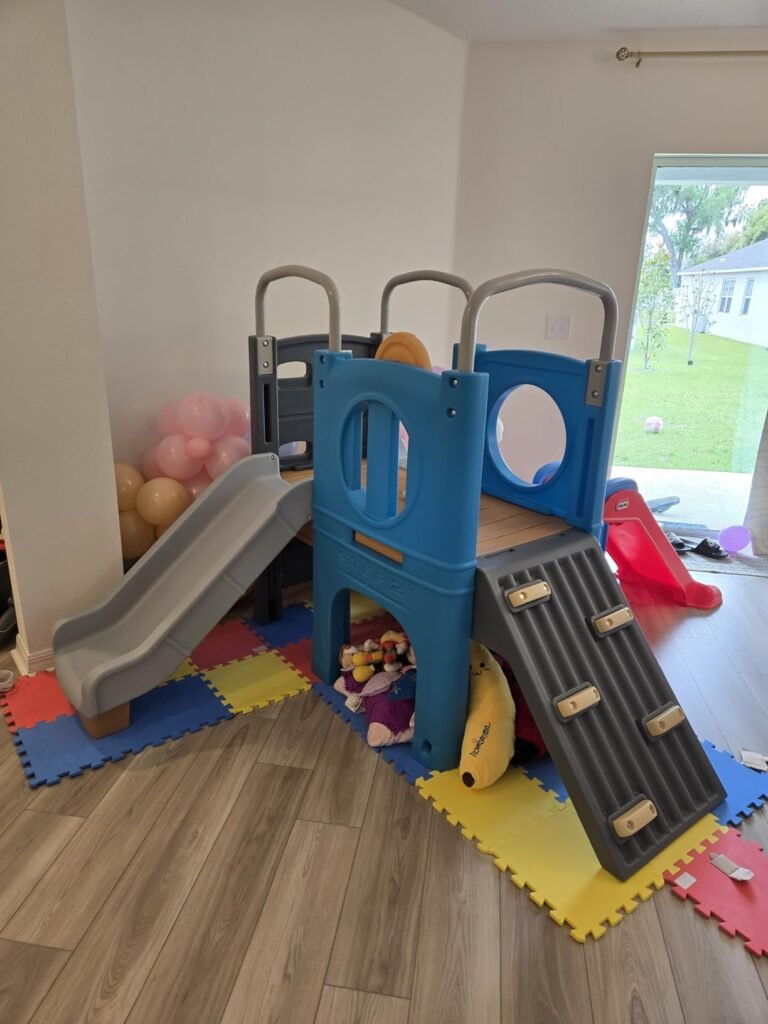
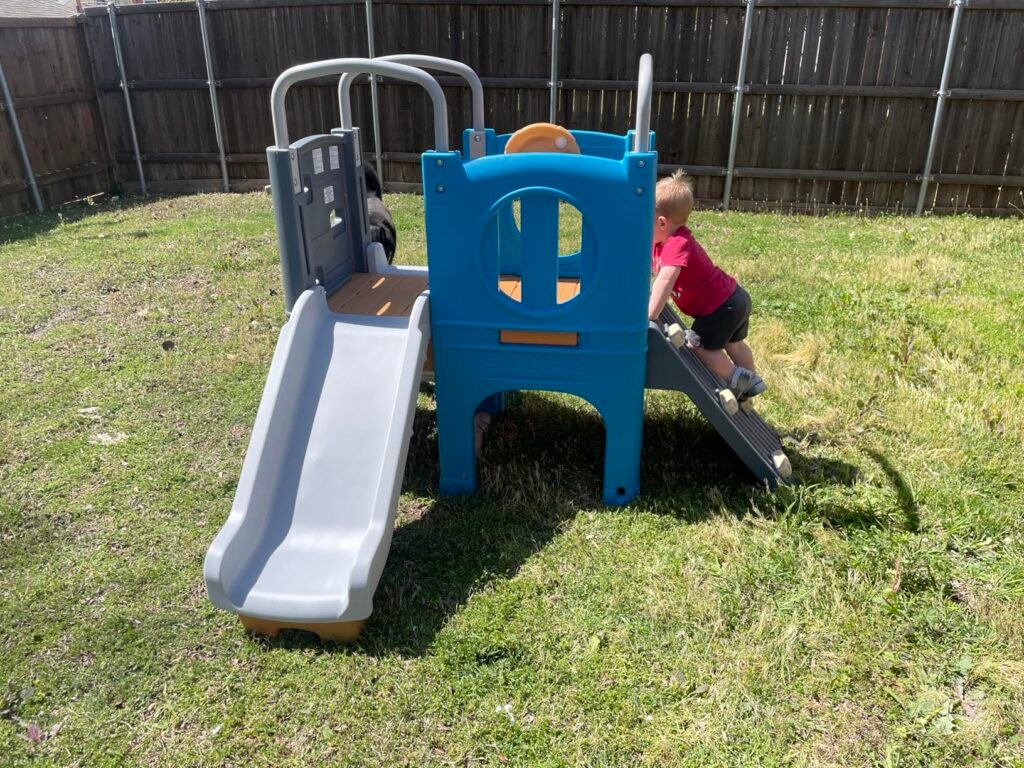
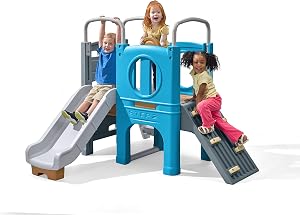
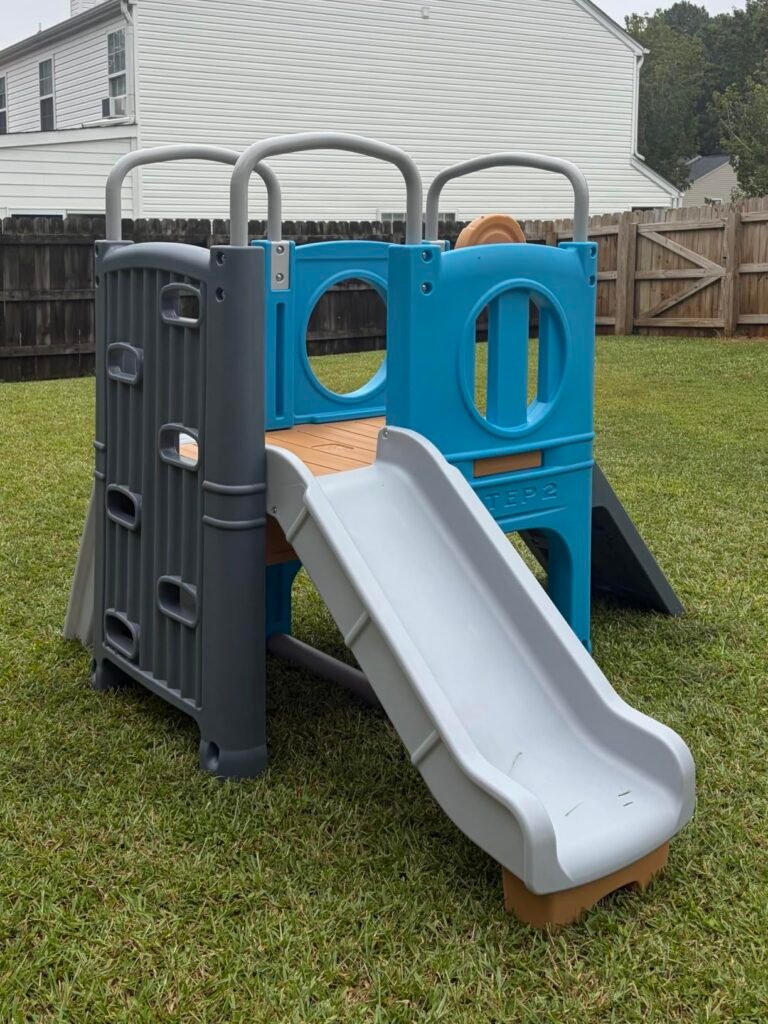
The Step2 Scout & Slide Climber earns strong marks for delivering a park-like play experience in a backyard footprint. The vintage-style jungle gym combines a climbing wall, slide, steering wheel, and crawl-through tunnels into a single structure that supports multiple children playing simultaneously. This social play aspect matters more than most parents initially realize, especially for families with siblings or frequent playdate hosts.
We may earn a commission when you buy through this link, at no additional cost to you.
The crawl-through tunnels deserve special mention. Tunnels engage a different set of motor skills than climbing does, encouraging kids to plan their movements through confined spaces and build spatial awareness. Combined with the climbing wall, easy entry steps, and sure-grip rails, the set covers a wide range of gross motor challenges appropriate for toddlers and preschoolers alike.
At 72.5 inches tall and 70 inches wide, this is a substantial outdoor structure that supports up to 180 pounds. Double-walled plastic construction handles years of weather exposure without chipping, fading, or cracking, and the vintage color palette gives it more personality than typical bright plastic climbers. The under-structure area works as a hideaway or storage spot, and there is enough space nearby to add a sandbox for expanded play.
Set clear traffic patterns during busy playdates. Younger children can start with the tunnels and steering wheel, while older kids tackle the climbing wall and slide. Rotating stations reduces bottlenecks at the slide exit and helps prevent minor bumps when several children want the same feature at once. A little coordination goes a long way toward keeping group play safe and fun.
Choose this set if you have the backyard space and want a climber that keeps multiple children engaged. It is one of the highest-rated outdoor climbers in this guide, which reflects both build quality and play value. If your child mainly plays alone or you have limited outdoor space, a smaller indoor or hybrid option makes more sense.
Solo children in urban apartments where the outdoor footprint is not practical.
We may earn a commission when you buy through this link, at no additional cost to you.
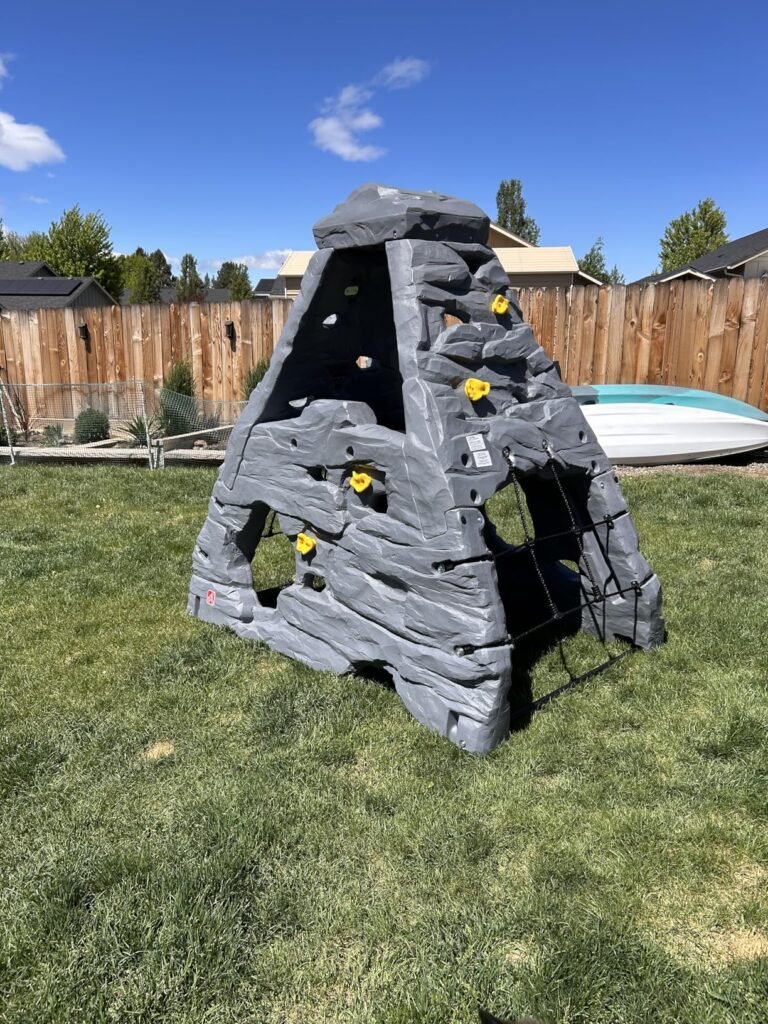
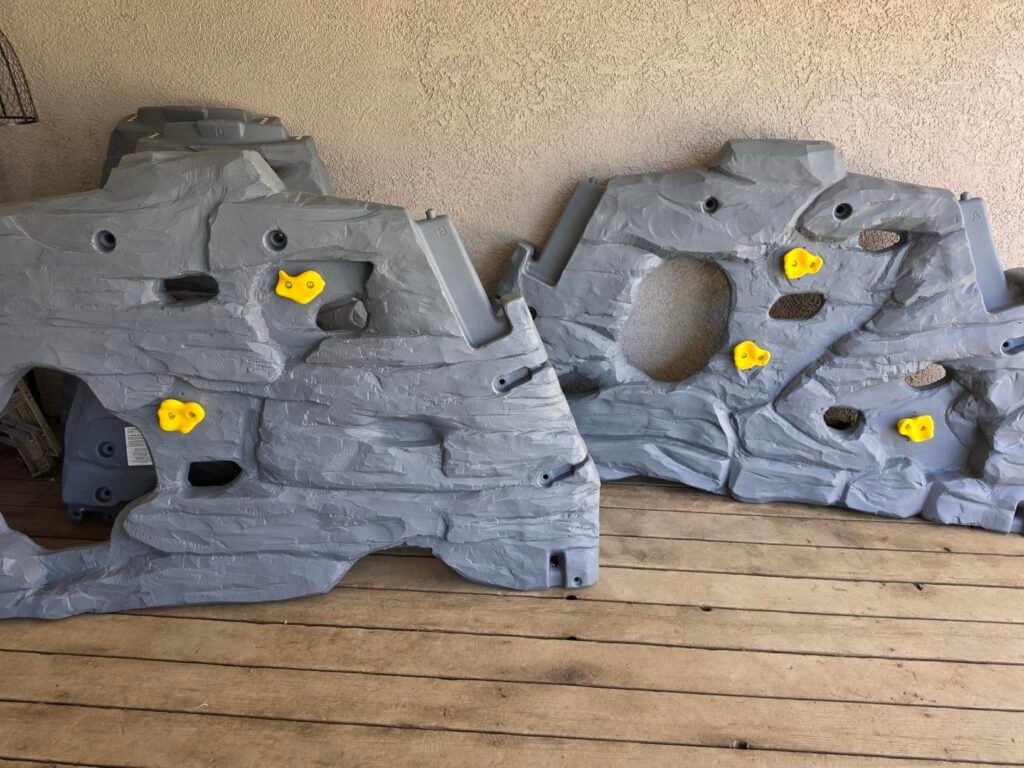
The Step2 Skyward Summit is the ambitious pick on this list, aimed squarely at families whose kids have graduated from starter climbers and need something that offers a real physical challenge. A 6.5-foot tall four-sided rock wall accommodates up to four kids simultaneously, and the 300-pound total weight capacity means older siblings and even parents can safely engage in play. This is a serious backyard investment rather than a passing toy purchase.
We may earn a commission when you buy through this link, at no additional cost to you.
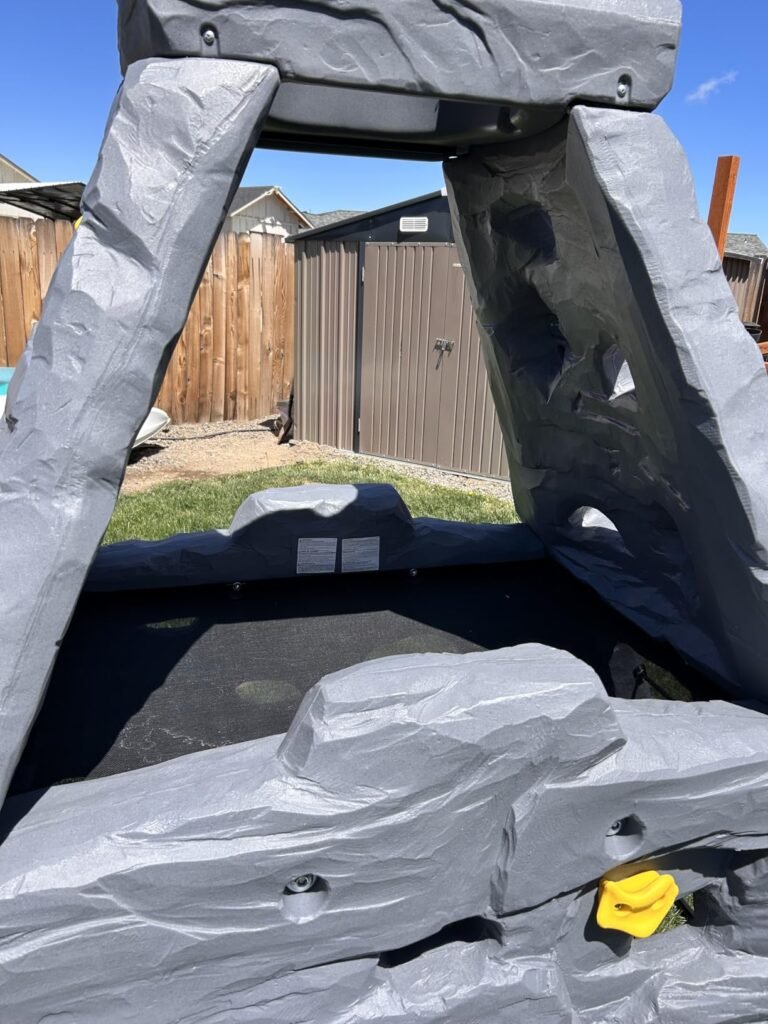
The play features go well beyond simple climbing. Two cargo nets add a different climbing style, a floor net provides an additional obstacle, and nine hand grips scattered across the walls give kids multiple route options as they climb. A top platform and included plastic flag encourage capture-the-flag style games that turn the climber into the centerpiece of active outdoor group play. This is genuinely a jungle gym, not just a climber.
Junior grip sizing helps small hands hold securely, and the natural-looking rock wall design blends with backyards better than bright plastic alternatives. Assembled dimensions of 80 inches tall by 80 inches wide by 52 inches deep make this one of the largest structures in this guide, which is exactly the point for buyers who want a long-term backyard centerpiece. Double-walled plastic construction resists weathering and cleans up easily.
This structure is designed to remain in place for years, so spend time selecting the location carefully. Choose a level spot with adequate clearance on all sides, add appropriate ground cover for safety, and check hardware annually. When kids outgrow the climbing challenges, the top platform can still serve as a fort or observation deck, extending the useful lifespan well beyond the initial climbing years.
This climber makes the most sense for families with older kids ages four through eight who need a durable, challenging outdoor play structure. The price is significantly higher than any other option on this list, and it demands a proper backyard to install. If your kids are younger or your space is limited, one of the smaller climbers will deliver better value.
Families with toddlers under four or without substantial backyard space to accommodate the structure.
We may earn a commission when you buy through this link, at no additional cost to you.
Selecting a climbing toy is about matching the product to your child’s age, your available space, and your family’s activity patterns. This guide breaks down the factors that make the biggest difference between a beloved everyday play centerpiece and a bulky purchase that ends up in storage.
Climbing toys are typically designed with specific age ranges in mind, and matching the toy to your child’s current abilities matters enormously. Soft foam sets like the Tiny Land and Teckid options target babies and young toddlers who are just learning to crawl, pull up, and take their first climbing risks. The cushioned surfaces and gentle slopes give them safe opportunities to build core strength and balance without the risk of hard falls that can shake early confidence.
Wooden Pikler triangles cover a broader age range, often from around 18 months up to age seven, thanks to their adjustable configurations and higher weight capacities. Outdoor climbers like the Step2 lineup generally serve preschoolers and early elementary kids, with the Skyward Summit extending challenge into the eight-year-old range. Buying too far below your child’s ability leads to boredom, while buying too far above can be frustrating or unsafe.
Match the toy to your child’s current stage while giving them a bit of growing room. A slight challenge is engaging, but a huge gap between ability and toy demands leads to frustration.
Where you plan to place the climbing toy dramatically narrows your options. Indoor climbers need to be sized for your available floor space and should ideally fold for storage between play sessions. Wooden Pikler triangles from BlueWood, Tiny Land, and ElegantCrafts are all designed with indoor use in mind, offering foldable frames that tuck away against a wall or behind furniture when not in use. Soft foam sets are also fundamentally indoor products.
Outdoor climbers from Step2 are built with weather resistance in mind, using double-walled plastic that resists fading, cracking, and moisture damage. However, they need permanent or semi-permanent yard placement and cannot easily move indoors. The Little Tikes Campin’ & Climb Wall bridges the gap with all-weather fabric that works in either setting, though it still needs to come inside during severe weather.
Decide where the toy will live before you buy. A great outdoor climber is useless without a yard, and a bulky indoor set can dominate a small living room if you have not planned for its footprint.
The materials in a climbing toy determine both its safety and its longevity. Wooden climbers should use solid wood rather than particle board or MDF, ideally with FSC certification that indicates responsibly sourced materials. Pine and other softwoods are common and perfectly acceptable when properly finished, with smooth surfaces free of burrs or splinters. Look for reinforced hardware, including screws and connecting brackets, that keep the structure stable during energetic play.
Foam climbers should use high-density foam that maintains its shape over time. Cheap foam compresses permanently after weeks of use, becoming both less safe and less engaging. Look for fabric covers that zip off for machine washing, since active toddler play generates plenty of spills and dirt. Plastic outdoor climbers from Step2 use double-walled construction that resists impact and weathering, though even this durable material benefits from being cleaned occasionally.
Prioritize solid construction over aesthetic details. A beautiful climber that wobbles is not worth the risk, while a plainer structure with rock-solid engineering will serve your family for years.
Weight capacity tells you not just how large a child the toy can safely support but also whether multiple kids can play together. A 160-pound capacity like the BlueWood and Tiny Land Pikler sets easily supports two or three toddlers and preschoolers playing simultaneously, which matters for families with siblings or those who host frequent playdates. The Step2 Skyward Summit pushes this to 300 pounds, accommodating older children and even adult supervisors during active play.
Multi-child capacity extends the toy’s usefulness in real family life. A climber that only handles one small child at a time creates arguments and constrains play scenarios. Sets that fit multiple kids enable cooperative games, imaginative role-play, and the natural social learning that comes from sharing physical space during play. This makes higher capacity valuable even for families with a single child, since it accommodates future visitors.
Consider your household’s actual play patterns. Solo children may not need the highest capacity, but factor in future siblings, cousins, and playdates when weighing options.
Safety details separate premium climbing toys from budget alternatives. Look for smooth, burr-free wooden surfaces, rounded edges on foam blocks, and non-slip base pads or feet that keep the structure planted during use. Anti-tip mechanisms on rocker components, patent-protected handle designs, and reinforced screw systems all contribute to safer play. Anti-slip silicone feet, like those on the Tiny Land New Design set, prevent the frame from sliding across hard floors.
Third-party safety certifications add another layer of confidence. Standards like ASTM F963-17 and CPSIA compliance indicate the toy has been tested against recognized safety benchmarks for children’s products. FSC certification on wooden toys confirms sustainable material sourcing. These certifications are not universal across the market, so their presence often signals a manufacturer that takes safety seriously enough to invest in independent testing.
Never assume any climbing toy is completely fall-proof. Even the best safety engineering benefits from adult supervision during active play, especially for younger children still developing coordination.
Toys that offer multiple play modes typically hold children’s interest longer than single-purpose alternatives. A 7-in-1 Pikler set that includes a triangle, arch, slide, and rocker gives kids constant variety and grows with them as new configurations become age-appropriate. Modular foam sets allow endless rearrangement into new climbing courses, keeping play fresh even after months of ownership. Outdoor climbers with multiple integrated features maintain engagement across seasons.
The trade-off is complexity. More components mean more assembly time initially and more pieces to keep organized during daily use. Some parents prefer the simplicity of a straightforward Pikler triangle without accessories, especially in tight living spaces. Consider how much play variety your child actually needs and how willing you are to store extra components when they are not part of the current configuration.
Match variety to your family’s play style. Kids who tire of toys quickly benefit from multi-mode designs, while those who dive deep into simple structures may not need the extra components.
Storage practicality often determines whether a climbing toy actually gets used or ends up gathering dust. Foldable Pikler triangles that collapse to a fraction of their expanded footprint solve one of the biggest challenges with indoor climbers, letting you set up for play and store away for company. Foam sets stack or fit into corners but remain relatively bulky, while outdoor structures typically live in one permanent yard location.
Assembly effort varies widely. Some Pikler sets take about an hour by hand or 30 minutes with a power drill, while foam sets are essentially ready out of the box after expansion time. Large outdoor climbers require significant assembly time and often benefit from having two adults on hand for the process. Read assembly instructions before buying to understand what you are committing to.
Factor storage and setup into your decision. A climber that is too much hassle to fold or move often ends up dominating a room permanently, while an overly complex assembly can delay first use if you underestimate the time required.
Start by placing the climbing toy on a flat, stable surface with adequate clearance on all sides. Indoor climbers benefit from being set up on carpet or a play mat to cushion any tumbles, while outdoor structures should sit on level ground with mulch, wood chips, or a rubber play mat underneath. Check that all screws and connections are fully tightened before the first play session, and re-check periodically since active use can loosen hardware over time. For folding wooden sets, verify that the locking mechanism is fully engaged so the frame cannot collapse during use.
Supervise young children during their first sessions, especially as they learn a new climber’s shape and limits. Encourage them to test their balance slowly and to always keep three points of contact when climbing higher. For soft foam sets, teach kids to reset the configuration if pieces shift so the course stays safe throughout play. Rotate configurations every week or two to keep the play space engaging and to develop different motor skills through varied challenges. Age-appropriate barefoot or grippy-sock play is generally safer than shoes or slick socks on climbing surfaces.
Regular care extends the life of any climbing toy significantly. Wipe wooden surfaces with a damp cloth to remove dust and stains, and inspect them periodically for splinters or loose hardware that may need attention. Foam covers zip off for machine washing, which is worth doing every few weeks for hygiene, especially if the set gets heavy daily use. Outdoor plastic climbers rinse clean with a hose. Store indoor climbers away from direct sunlight and moisture when not in use, and bring outdoor play features into a shed or garage for the harshest winter months if possible to extend their lifespan.
Most children can begin using soft foam climbing sets as early as 9 to 12 months, when they are pulling up and starting to climb on furniture. Wooden Pikler triangles typically suit children from around 18 months upward, and larger outdoor climbers work best from age three and up. Match the toy to your child's current motor skills rather than a strict age chart, since developmental readiness varies widely.
Yes, well-made Pikler triangles are generally safe for toddlers when properly assembled and used with supervision. Look for FSC-certified wood, reinforced hardware, anti-slip base pads, and features like the board-and-bar arch that reduce foot-slip risk. Adult supervision during active play remains important, especially as toddlers first learn the structure's limits and their own climbing abilities.
A standard Pikler triangle typically takes about 40 to 50 square feet of floor space when fully set up with accessories. Foldable models like the BlueWood or Tiny Land sets collapse to roughly a third of that footprint for storage, making them practical for apartments. Leave two to three feet of clearance around the frame during active use for safety during falls or dismounts.
Wooden Pikler triangles are typically designed for indoor use and should not be left outside long-term because moisture damages the wood and finish. Foam sets are strictly indoor products. Step2 outdoor climbers and the Little Tikes Campin' & Climb Wall are built with weather-resistant materials that hold up to sun and rain, making them appropriate for backyard placement year-round in most climates.
A climbing arch is a curved wooden component that kids climb over or crawl through, while a rocker is essentially the same piece flipped upside down so it becomes a gentle rocking motion toy. Many modern Pikler sets include reversible arches that serve both functions, providing variety without needing separate pieces and helping develop different motor skills through each use.
Wooden Pikler triangles usually take 30 minutes to an hour depending on whether you use a power drill or basic hand tools. Foam sets are essentially ready to use once they expand from vacuum packaging, which takes 48 to 72 hours. Large outdoor climbers like the Step2 Skyward Summit can take several hours to assemble and often benefit from having two adults available for the process.
Foam blocks and wooden climbers serve different needs rather than competing directly. Foam is safer for the very youngest climbers just learning to balance, while wooden Pikler triangles offer more challenge and longer age range use. Many families own both, using foam for babies and toddlers and adding a Pikler triangle as their child develops. Foam sets also work well as a landing zone around wooden climbers.
Wipe wooden surfaces with a damp cloth and inspect them periodically for splinters or loose hardware. Foam covers zip off for machine washing every few weeks to keep them hygienic. Outdoor plastic climbers rinse clean with a garden hose. Check all screws and connections seasonally on any climber, since active play can loosen hardware over time even with the best construction.
Yes, climbing toys support gross motor development, balance, coordination, core strength, spatial awareness, and problem-solving skills. Montessori-inspired designs like Pikler triangles also encourage independent play and self-directed challenge, which builds confidence over time. The physical activity supports healthy development in ways that passive toys cannot match, especially during the toddler and preschool years when active movement is critical.
Quality indoor Pikler sets typically run between 100 and 150 dollars, with premium models and larger sets going higher. Soft foam sets fall in a similar range depending on piece count and quality. Large outdoor climbers from Step2 range from around 80 dollars for basic models to over 600 dollars for feature-rich structures like the Skyward Summit. Match your budget to your child's age and expected long-term use.
The BlueWood Pikler Triangle Set takes the top overall spot thanks to its combination of FSC-certified solid wood, 160-pound capacity, foldable frame, and 7-in-1 versatility. It handles the widest range of ages, folds compactly for apartment living, and offers patent-protected safety features that give parents genuine peace of mind. The one-hour assembly is a small price for a climber that can serve a family for several years of active play.
For younger children, the Teckid 8-Piece Soft Foam Set offers an ideal introduction to climbing with its cushioned pieces, bright colors, and educational shapes. Families with backyard space and older kids should look seriously at the Step2 Skyward Summit for its impressive four-sided rock wall and long-term play value, while the Step2 Scout & Slide delivers strong multi-child outdoor fun at a more accessible price point.
Choose based on where the toy will live, how old your child is now, and how much space you can dedicate to active play. Indoor apartment families should prioritize foldable wooden sets or modular foam. Suburban families with a backyard have more freedom to consider Step2's outdoor structures. Whatever you choose, quality construction and appropriate age matching matter more than any single feature or brand name.