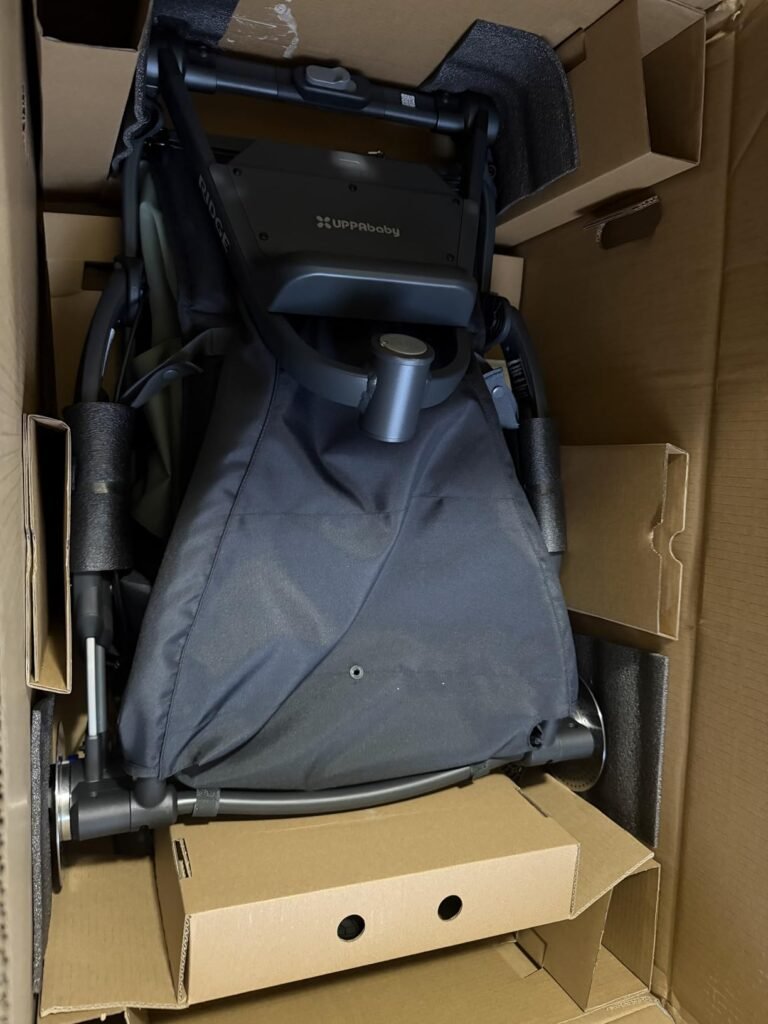
UPPAbaby Ridge V2
9.2Editor scoreTwo-stage suspension system
Never-flat performance tires
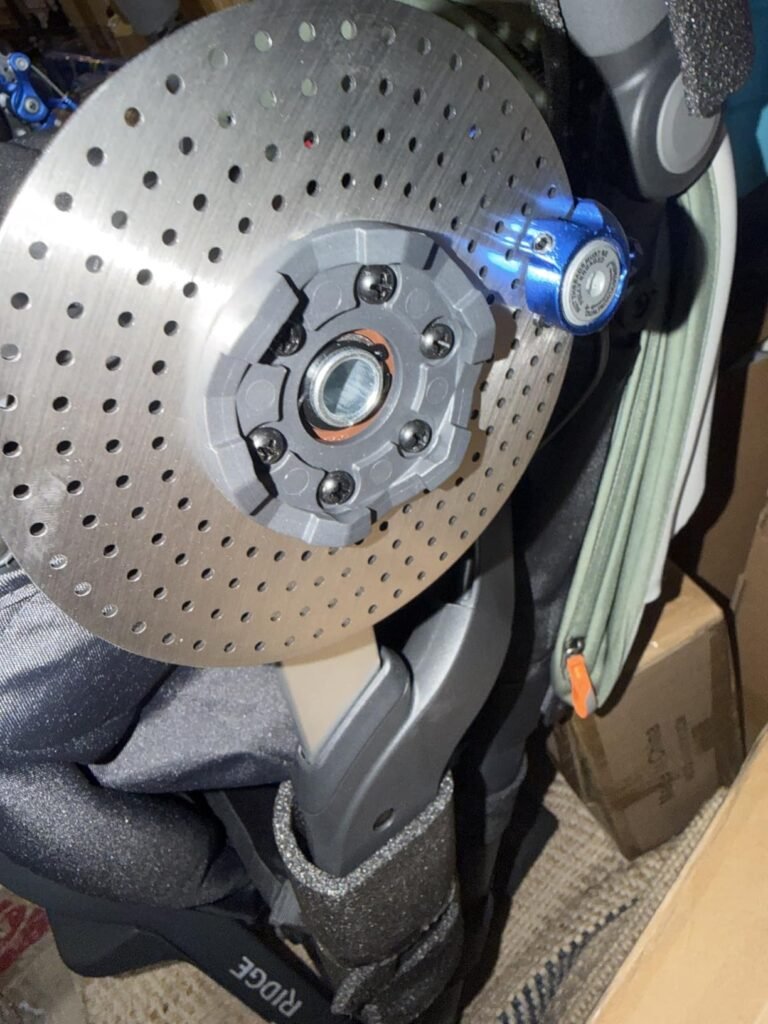
Hand-activated disc brake
55-pound weight capacity
Find the right jogging strollers for 2026. We compare 11 standout options by build quality, useful features, owner feedback, value, and everyday trade-offs.

Choosing a jogging stroller in 2026 means weighing suspension quality, tire type, brake control, fold size, and how the seat grows with your child. This guide compares 10 standout models across price tiers so you can match the right frame, wheels, canopy, and safety features to how you actually run, walk, and travel with your child.
Jogging strollers differ sharply from standard strollers. A locking front swivel wheel, air-filled or foam tires, and shock absorption change how the ride feels on pavement, gravel, or trails. The wrong pick will feel unstable at pace, heavy in the trunk, or awkward on tight sidewalks, so understanding these tradeoffs upfront saves money later.
The picks below span budget joggers under $200, mid-range all-terrain options, and premium running strollers built for serious mileage. Each review focuses on what the specs mean in daily use, who the model suits best, and where it falls short so you can decide with fewer marketing distractions and more practical detail.
We evaluated 10 jogging strollers by the factors that shape real running and walking use: wheel size and tire type, suspension quality, front-wheel lock and hand brake behavior, seat recline and canopy coverage, fold size and weight, car seat compatibility, storage capacity, weight limits, and safety certifications. Owner feedback, warranty signals, and price-to-feature balance helped rank each pick so the guidance connects with how families actually jog, hike, travel, and handle everyday errands.


Compare key features, scores, and current prices side by side. A shorter feature list means fewer details were available, not necessarily fewer capabilities.




The Roam solves the biggest practical complaint about full-size jogging strollers: they're bulky when folded and take up serious trunk or closet space. The patented 3D nesting fold shrinks this jogger to roughly 29 by 15 by 17 inches without removing wheels, which is remarkable for a stroller with real all-terrain capability.

We may earn a commission when you buy through this link, at no additional cost to you.
Performance doesn’t take a back seat to compactness. Independent rear suspension, a durable aluminum frame, and puncture-proof airless rubber tires handle pavement, park paths, and light trails. The handlebar-mounted front wheel lock lets you switch between jogging and walking modes instantly without stopping or reaching down.
Practical details support the compact philosophy. At 28.5 pounds, the stroller stays manageable to lift, the seat accommodates children up to 60 pounds, and the adjustable handlebar fits parents of various heights. GreenGuard Gold, CPSIA, and ASTM certifications provide a strong safety and materials story that concerned parents will appreciate.
Apartment living, small vehicle trunks, and frequent air travel all magnify the value of a truly small fold. If any of those describe your situation, a compact-folding jogger prevents daily storage headaches.
Choose this pick if space is genuinely tight at home, in your vehicle, or during travel, and you don’t want to compromise on jogging capability. The price is premium, but the fold technology and materials justify it for the specific buyers who value portability above almost everything else.
Not the best value for parents with ample storage space who don’t need a compact fold.
We may earn a commission when you buy through this link, at no additional cost to you.
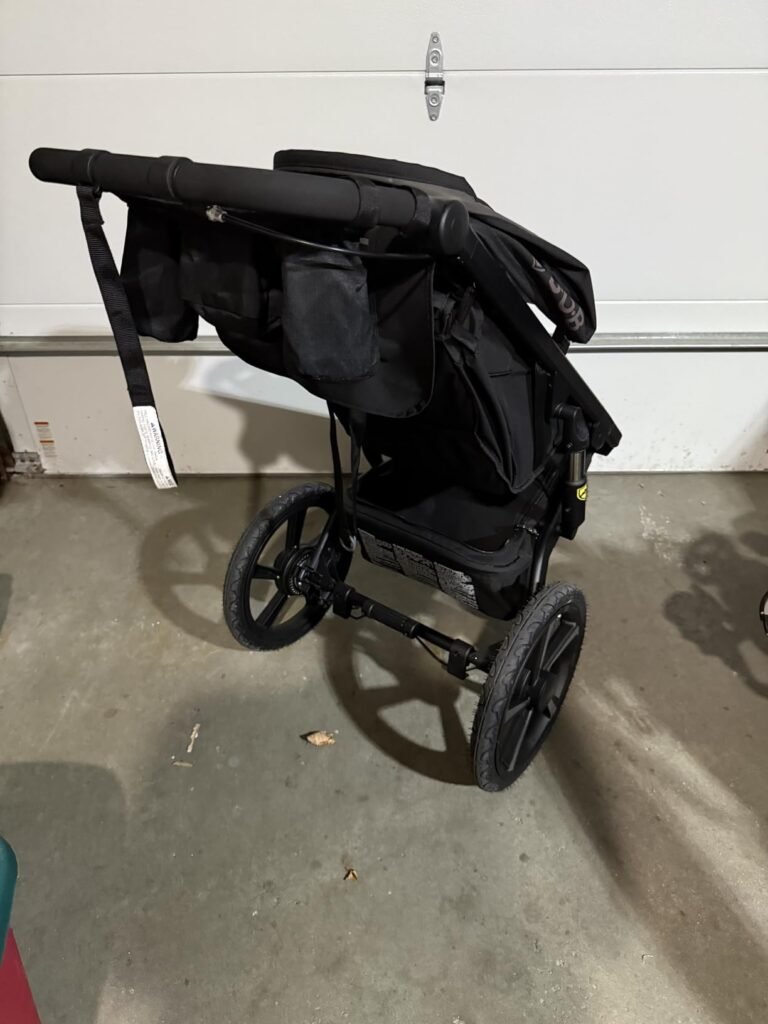
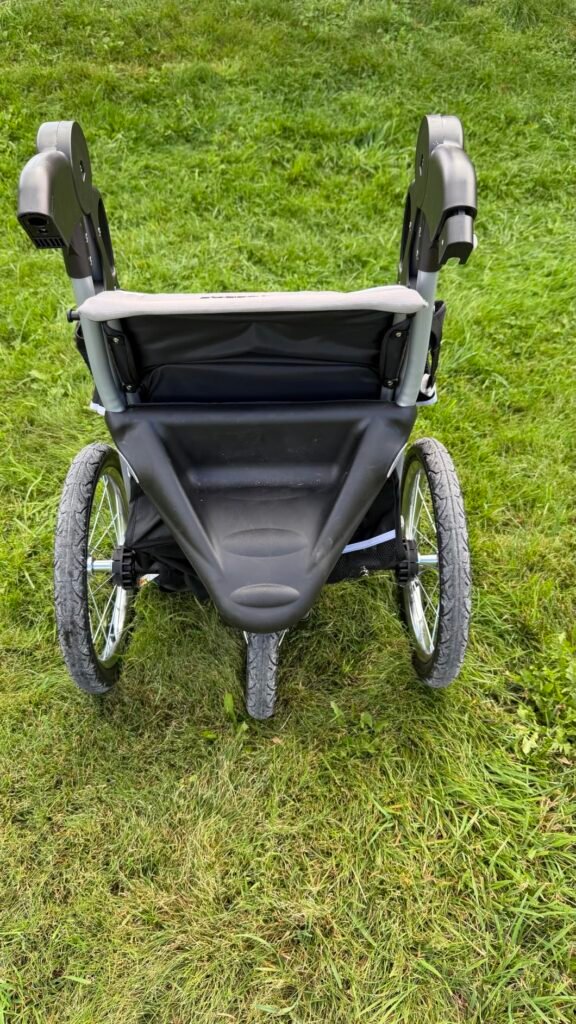
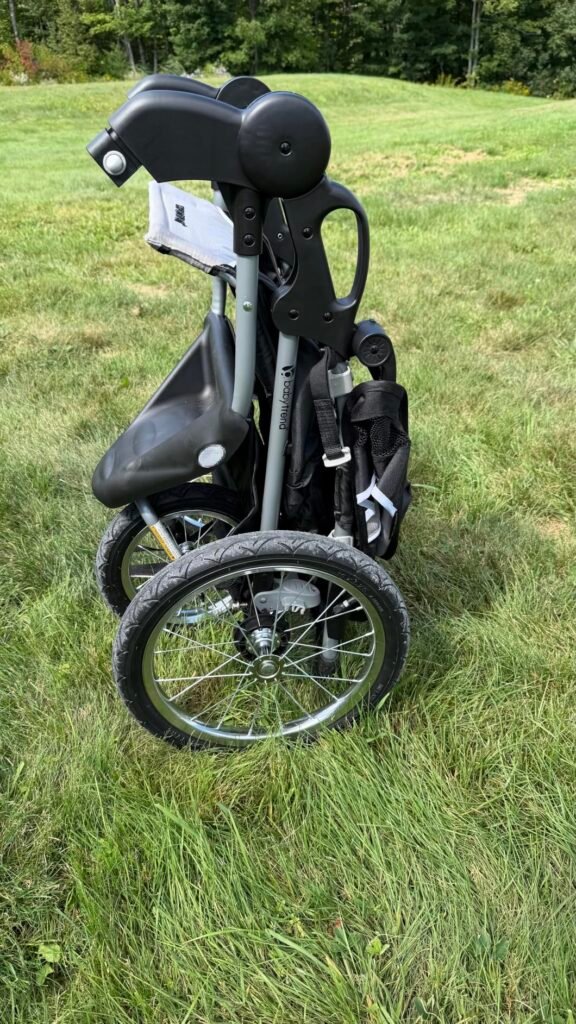
The Ridge V2 targets parents who plan to log real mileage rather than casual walks. Its patented two-stage suspension and airless tires produce a stable ride whether you're on packed dirt, cracked sidewalks, or a park trail, and the swivel-locking front wheel snaps into running mode when you pick up the pace. This is the kind of stroller built to keep up with a training schedule.
We may earn a commission when you buy through this link, at no additional cost to you.
The disc brake system deserves attention because it changes how you handle downhill sections and speed transitions. A hand-activated lever gives fine control on descents, while a one-step foot brake locks the wheels when you stop for a break. Combined with a wrist strap, these features address the real safety concerns runners face when pushing a loaded stroller on varied grades.
Comfort features carry the same premium tuning. The seat has lumbar support, infinite recline, and ventilation panels that help on warm days, while the zip-out extendable canopy with UPF 50+ protects against sun exposure during long outings. Storage is generous, with a 20-pound covered basket, built-in pockets, and an included water bottle holder that mounts to the frame.
Hills change everything with a jogging stroller. A hand-activated disc brake lets you scrub speed gradually rather than relying on drag or awkward foot braking, which reduces strain on your wrists and shoulders and keeps the ride smooth for your child.
Choose this pick if you want one stroller that handles everything from newborn strolls (with the right bassinet or car seat adapter) to serious training runs up to 55 pounds. The tradeoff is price and footprint, but the build quality, safety certifications, and long usable range justify the investment for active families planning years of use.
Not ideal for families with minimal storage space or those who only need occasional walking use.
We may earn a commission when you buy through this link, at no additional cost to you.
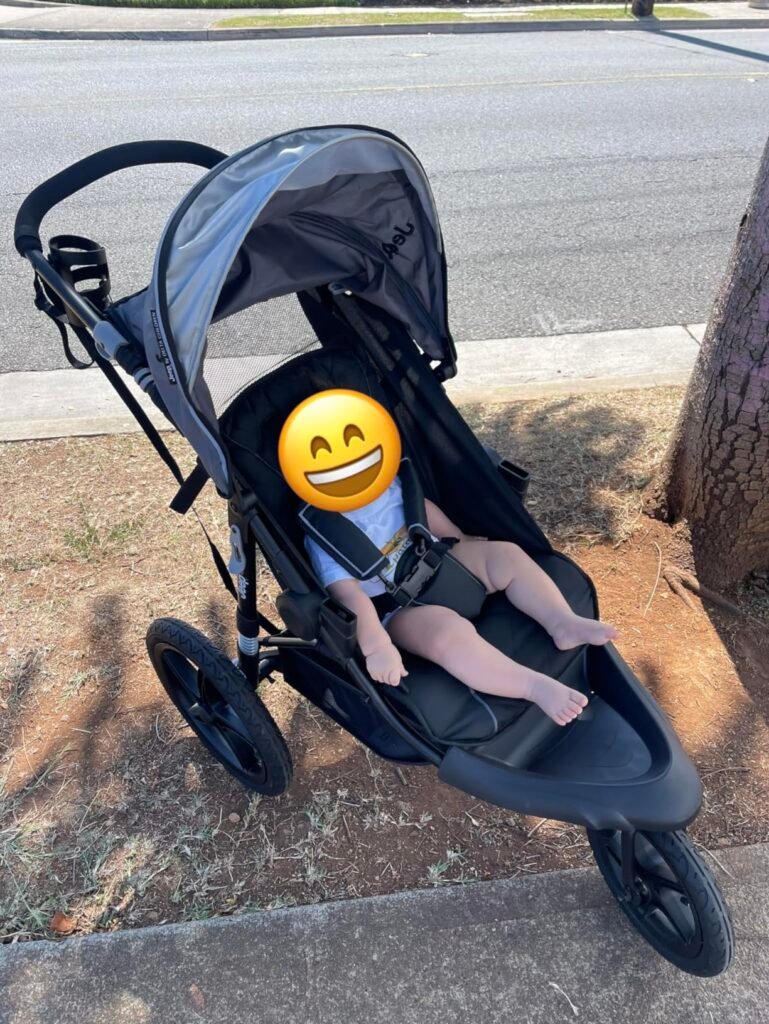
The Jeep Classic sits in a sweet spot for parents who want a jogger-style stroller for walks, errands, and occasional light jogs without paying premium prices. At 26 pounds, it lifts easily into a trunk, and the 12-inch front wheel with swivel lock offers enough versatility for tight sidewalks and open paths alike.
We may earn a commission when you buy through this link, at no additional cost to you.
The shock-absorbing frame with 16-inch rear wheels handles curbs and uneven pavement without jarring your child, and the extendable visor provides real sun protection on brighter days. A safety tether keeps the stroller close if you lose grip on the handle during a jog, which is a small but meaningful reassurance for newer parents.
Practical features round out the package. The swing-away child tray makes buckling in easier, the multi-position reclining seat adjusts for naps, and two parent cup holders plus an under-seat basket cover the essentials. Compatibility with several popular infant car seats (with the right adapter) extends the useful lifespan.
This model works well for suburban families who mix mall trips, park visits, and neighborhood walks. The lighter weight and quick-release rear wheels make trunk loading manageable even on busy mornings.
Pick this stroller if you want jogger styling with strong daily-use practicality and a friendly price. It won’t replace a dedicated running stroller for serious mileage, but for the majority of buyers who walk more than they run, it delivers excellent value with proven safety credentials.
Not the right choice for parents who plan to run several miles multiple times per week.
We may earn a commission when you buy through this link, at no additional cost to you.
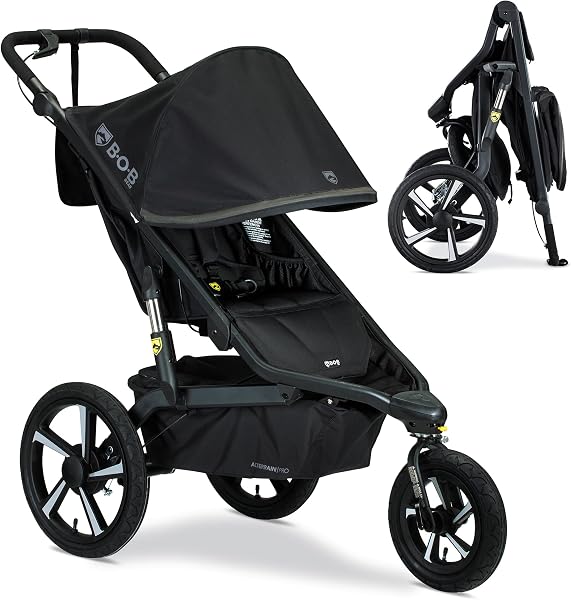
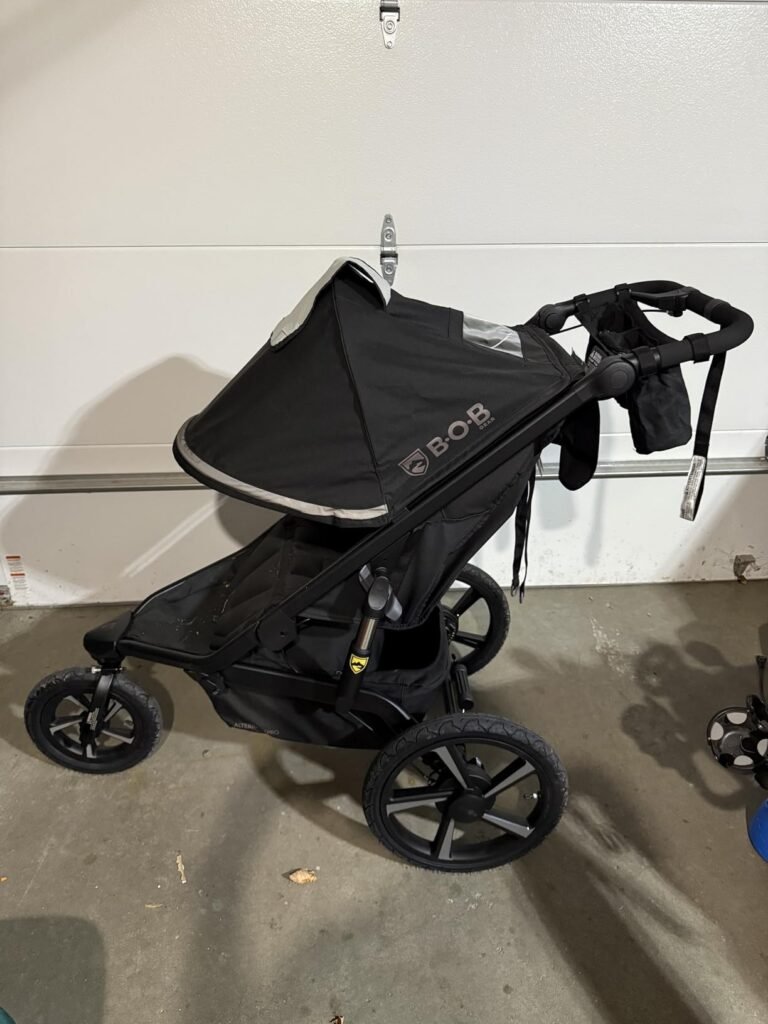
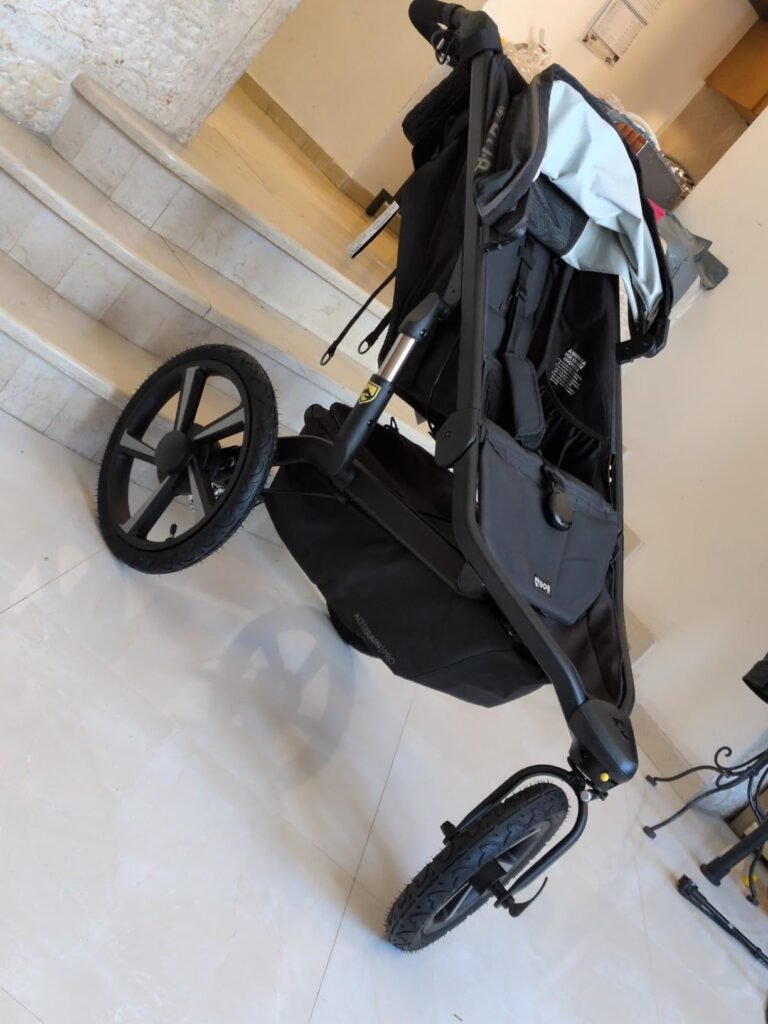
The BOB Alterrain Pro is built for parents who want to take their child everywhere, from paved paths to genuine hiking trails. The aluminum frame stays light, but the SmoothShox suspension and full-size air-filled tires deliver the kind of ride quality you only appreciate after pushing lesser strollers over rocks or gravel.
We may earn a commission when you buy through this link, at no additional cost to you.
Weather protection is a standout. The canopy is fully waterproof and windproof with a UPF 50+ rating, which matters if you routinely walk or run in changing conditions. Combine that with reflective rims and performance fabrics, and the stroller is genuinely equipped for early mornings, evening runs, and unpredictable weekend outings.
Usability features reflect the premium price. The ergonomic hand brake gives real downhill control, the adjustable handlebar suits parents of different heights, and adjustable front wheel tracking helps keep the stroller running straight during longer efforts. The ultra-padded compression seat with infinite recline sits fully upright for engaged babies or reclines nearly flat for naps.
Air-filled rubber tires absorb bumps far better than foam or plastic alternatives, giving your child a smoother ride. The tradeoff is occasional pressure checks and the small chance of a puncture on rough trails.
This is the pick for parents who value ride quality and versatility over saving money. If you regularly hit trails, live somewhere with rough sidewalks, or simply want the smoothest ride available for your child, the Alterrain Pro delivers. Air tires require periodic inflation, but the tradeoff is a genuinely superior ride.
Not the best choice for budget-focused shoppers or those who never leave paved surfaces.
We may earn a commission when you buy through this link, at no additional cost to you.
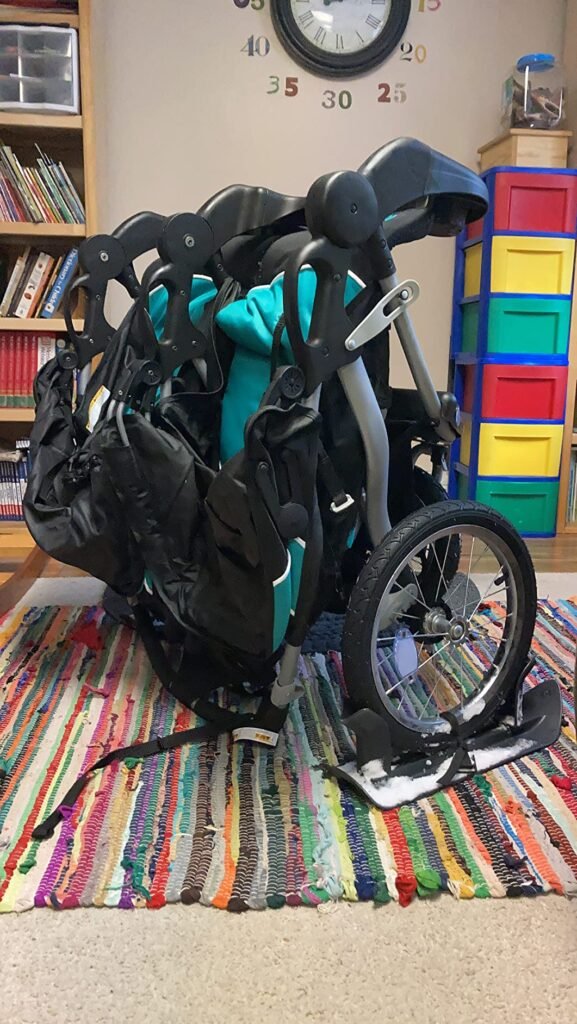
Parents of twins or two young children close in age face a specific problem: most jogging strollers only fit one. The Expedition Double solves it with a side-by-side layout that treats each child equally, giving both riders identical seat features and independent recline control.
We may earn a commission when you buy through this link, at no additional cost to you.
The lockable front swivel wheel is critical on a double because the extra width and mass amplify any tracking issues. When you jog, locking the wheel keeps the stroller running straight, and when you switch to walking mode, you get the maneuverability needed for tight aisles or park paths.
Storage and parent conveniences match the practical intent. The parent tray holds two cup holders and a covered compartment for keys or a phone, while the easy-access basket underneath swallows a diaper bag and groceries. Each seat has its own ratcheting canopy with peek-a-boo window, so one child can nap while the other looks out.
Side-by-side doubles are wider than singles, so measure your typical doorways, shop aisles, and vehicle trunk before buying to avoid frustrating fit surprises.
This is the value-focused pick for families needing double capacity. It won’t glide as effortlessly as premium doubles, but the price, safety features, and thoughtful dual layout make it a reasonable choice for parents who want jogger styling for two kids without paying triple the cost.
Not suitable for parents of only one child or those with very narrow home doorways.
We may earn a commission when you buy through this link, at no additional cost to you.
The Cross-Country Sport Plus targets buyers who want a traditional jogger look with premium fabric touches. Its quilted European canopy and detachable parent organizer signal a step up from entry-level joggers while keeping the price accessible for most families.

We may earn a commission when you buy through this link, at no additional cost to you.
The steel frame with air spoke wheels gives a substantial, planted feel that many parents actually prefer to lighter aluminum designs. The 12-inch swivel-lock front wheel and 16-inch rear wheels with ball bearings roll smoothly on pavement, and the wide foam handle with safety tether stays comfortable during longer outings.
Practicality shows up in the details. The swing-away child tray simplifies loading, the multi-position reclining seat with soft shoulder pads accommodates growing babies, and quick-release rear tires make the folded footprint manageable at 19 by 24 by 36 inches. Meeting Disney size requirements is a nice touch for families planning theme park trips.
Air spoke wheels with ball bearings roll more smoothly than solid plastic wheels and reduce the vibration your child feels on rough sidewalks, giving a more comfortable everyday ride.
Choose this pick if you want a well-equipped mid-priced jogger with a classic feel and genuine build quality. It sits between budget models and premium options, offering enough refinement for daily use without asking for a serious financial commitment.
Not the right pick for parents prioritizing the lightest possible frame.
We may earn a commission when you buy through this link, at no additional cost to you.
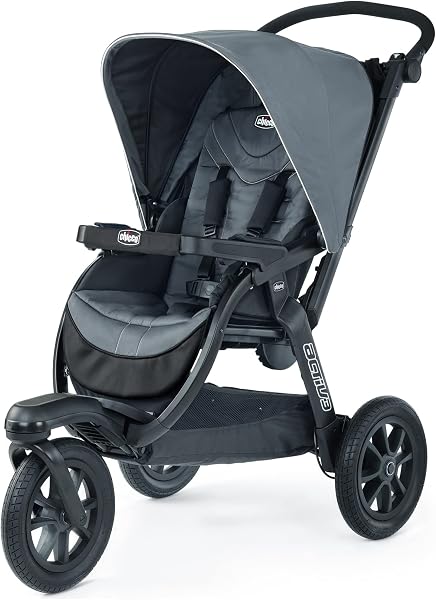
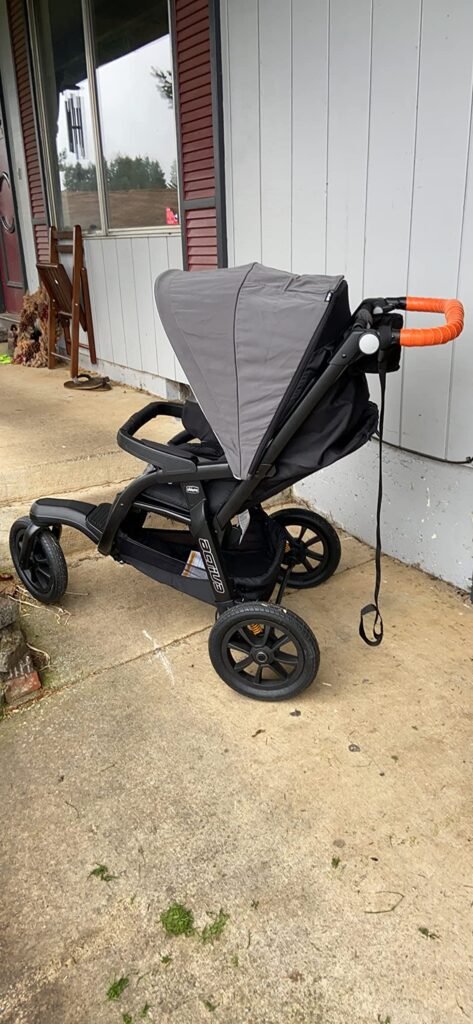
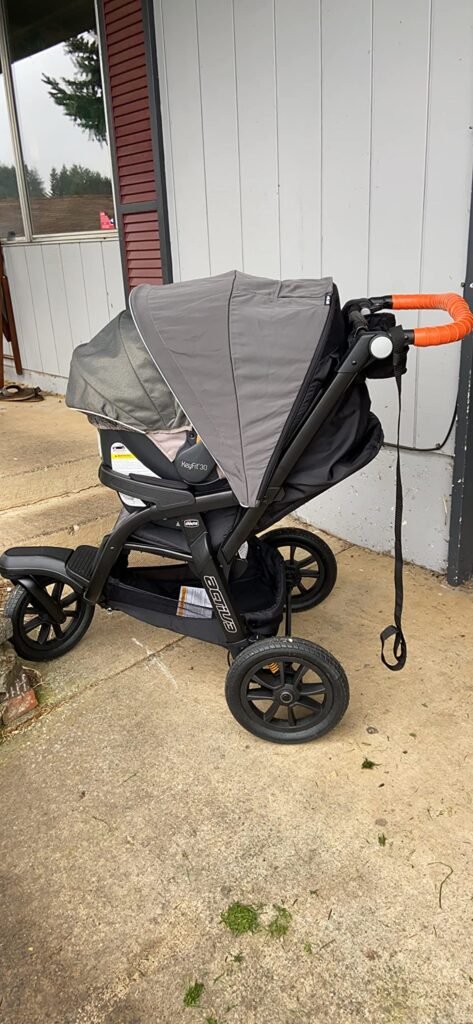
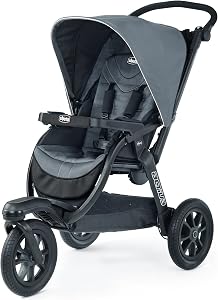
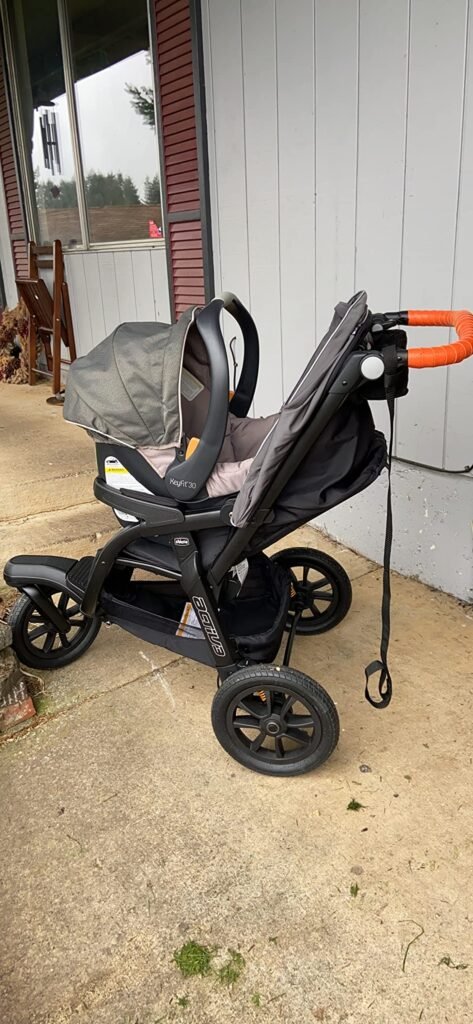
The Activ3 stands out for its adjustable rear suspension, which lets you tune the ride based on the surfaces you cover most. Set it firmer for pavement and softer for uneven paths, and you get a stroller that adapts to your routes instead of forcing a compromise.
We may earn a commission when you buy through this link, at no additional cost to you.
Foam-filled tires eliminate flat worries entirely, which is a genuine convenience for parents who don’t want to think about tire pressure between outings. The three-wheel design plus locking front swivel wheel handles both jogging and walking modes, with a hand-operated lock so you can change modes without stopping.
The exclusive control console is a smart design choice. Moving the parking brake to a hand lever keeps the foot area clear, so you’re not fumbling near the wheels when you need to stop. The four-position handle adjusts for taller and shorter parents, and the detachable padded arm bar makes loading easier as your child grows.
Being able to firm up suspension for smooth sidewalks and soften it for rougher paths means better efficiency when running on pavement and better comfort when handling bumps, without swapping strollers.
This is the pick for Chicco car seat owners who want a seamless travel system without extra adapters, and for parents who value the ability to customize suspension for different surfaces. Three fold configurations, including standing fold and flat fold, cover most storage scenarios.
Not the best option for parents who own a non-Chicco car seat and want plug-and-play compatibility.
We may earn a commission when you buy through this link, at no additional cost to you.
The Expedition Jogger is the entry point for parents who want jogger styling and all-terrain wheels without stretching their budget. It covers the essentials well: a lockable swivel front wheel, bicycle-style tires, a multi-position reclining seat, and enough storage for a diaper bag and errands.

We may earn a commission when you buy through this link, at no additional cost to you.
The trigger-based compact fold is genuinely useful, collapsing the stroller quickly for trunk loading or garage storage. Combined with the ergonomic rubber handle and adjustable canopy that ratchets to block sun and wind, the daily-use experience feels more thoughtful than the price suggests.
Small safety touches add real value. Footrest reflectors improve low-light visibility during early morning or evening walks, and the 5-point harness with tether strap keeps your child secured. The child tray with two cup holders can also accept a compatible infant car seat, extending the stroller into a travel system.
If your usage is mostly neighborhood walks and occasional light jogs on flat surfaces, the difference between a budget and premium jogger is smaller than pricing suggests. Save the difference for other baby gear you actually need.
This is the pick when budget is the primary constraint but you still want jogger-style wheels and a proper reclining seat. Serious runners will outgrow it, but for the many families who walk far more than they run, it’s a smart use of money.
Not suitable for serious runners logging heavy weekly mileage on varied terrain.
We may earn a commission when you buy through this link, at no additional cost to you.
The Zero Flat LED addresses two common frustrations at once: flat tires and low-light visibility. If you walk or jog at dawn or dusk, integrated LED lighting on the parent tray and sides makes you noticeably more visible to drivers and pedestrians, which matters more than most safety features people actually think about.

We may earn a commission when you buy through this link, at no additional cost to you.
The zero-flat tires eliminate maintenance entirely, staying inflated for the life of the stroller. Combined with high-impact wheels and all-terrain bicycle tire tread, this gives you consistent performance without the pressure checks that air tires demand.
Everyday features round out the package. The multi-position reclining seat with adjustable 5-point harness grows with your child, and the dual-tray setup with cup holders keeps both parent and child essentials organized. Covered parent storage protects a phone or wallet from light rain or dust.
Passive reflectors help when headlights hit them directly, but active LED lights make you visible from farther away and in more angles, which is why cyclists and runners increasingly rely on active lighting.
This is the pick for evening walkers, early morning joggers, and anyone who’s worried about visibility in shared roads or bike paths. The LED lights add a genuinely useful safety layer that few competing strollers offer at this price.
Not the right choice for parents who only stroll during daylight hours.
We may earn a commission when you buy through this link, at no additional cost to you.
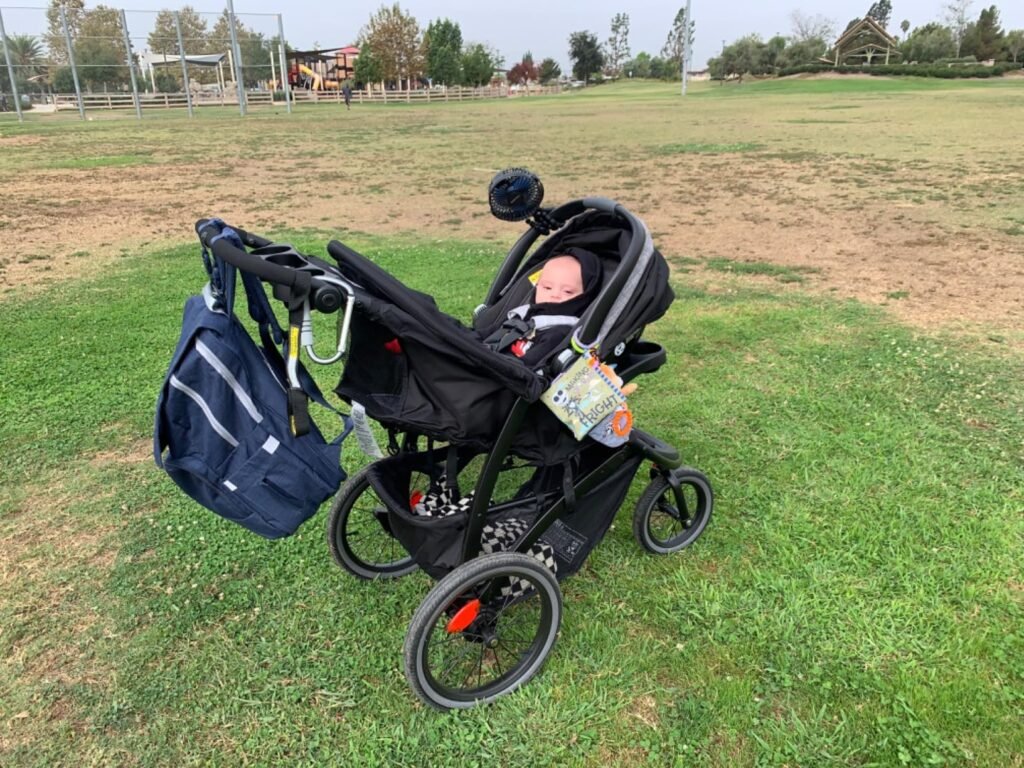
The FastAction LX earns its name with a genuinely fast fold. Graco's signature one-hand mechanism collapses the stroller in about a second, which sounds like a small thing until you're loading a fussy child into the car with groceries and a diaper bag competing for attention.
We may earn a commission when you buy through this link, at no additional cost to you.
ICS compatibility with Graco infant car seats makes this a solid travel system starting point. Click a compatible seat directly onto the frame and skip the extra adapter step, which is convenient for families already invested in the Graco ecosystem.
Everyday touches keep the stroller usable long-term. The child tray with cup holder gives kids somewhere for snacks and small toys, the 3-position adjustable handle accommodates parents of different heights, and the large under-seat basket handles the gear that inevitably comes with any outing.
A slow, awkward fold is one of those small daily frustrations that adds up. Faster fold designs save minutes over the course of a week and reduce the mental load of quick errands with a young child.
This is the pick if fold speed and Graco compatibility are your top priorities. It’s better suited for pavement and lighter terrain than trails, but for suburban families who prioritize convenience over rugged performance, it makes practical sense.
Not the best choice for parents who need serious trail or all-terrain performance.
We may earn a commission when you buy through this link, at no additional cost to you.
The specs that matter most depend on how you plan to use the stroller. This guide breaks down each buying factor so you can weigh tradeoffs based on your actual routine.
The tires on a jogging stroller shape ride quality more than almost any other component. Air-filled rubber tires, found on models like the BOB Alterrain Pro and Baby Jogger Summit X3, absorb bumps beautifully and give the smoothest ride on rough surfaces. They roll efficiently, handle gravel and packed dirt, and feel closer to a bicycle wheel than a stroller wheel. The tradeoff is maintenance: you’ll need to check pressure occasionally and address the rare puncture, especially if you frequent trails with sharp debris.
Foam-filled or airless rubber tires, such as those on the Chicco Activ3, UPPAbaby Ridge V2, and Guava Roam, eliminate flat concerns entirely while approximating much of the ride quality of air tires. They stay consistent for the life of the stroller and are typically the better choice for parents who don’t want to think about tire maintenance. Solid plastic or basic foam tires appear on entry-level models and handle pavement fine but transmit more vibration on uneven surfaces.
For decision-making: if you’re planning serious trail use, prioritize air tires despite the maintenance. For everyday walking and occasional jogging, foam-filled or airless designs offer the best convenience-to-performance ratio.
Suspension quality separates true jogging strollers from stroller-lookalikes with big wheels. A proper suspension system absorbs impacts before they reach your child, which matters both for comfort and for reducing head bobbing when you’re running. Two-stage systems like the UPPAbaby Ridge V2 or the adjustable FlexCore setup on the Chicco Activ3 offer notably better performance than basic single-stage designs.
For most buyers, the practical question is how varied your routes are. If you consistently push over cracked sidewalks, dirt paths, or unpaved trails, invested suspension pays for itself in comfort. If you’re mostly on smooth pavement in a suburban setting, basic shock-absorbing frames like those on the Jeep Classic or Delta Apollo perform well enough without paying for premium suspension.
Match suspension quality to your terrain. Overspending on rough-trail suspension for pavement-only routes wastes money, while underspending for regular trail use produces a rougher ride your child will feel.
Jogging-focused strollers use a fixed front wheel because it tracks straight at running speeds. A swivel front wheel is much easier for tight walking maneuvers but becomes unstable and difficult to control at faster paces. The best joggers, including the Chicco Activ3, BOB Alterrain Pro, and Baby Jogger Summit X3, combine both approaches with a lockable swivel front wheel. Lock it for jogging, unlock it for walking through crowded areas.
The lock mechanism itself matters. Hand-operated locks accessible from the handlebar, like on the Guava Roam and Chicco Activ3, let you switch modes without stopping. Locks near the wheel require you to bend down or use your foot, which is less convenient but still perfectly functional for parents who don’t switch modes frequently.
Prioritize lockable swivel if you’ll actually jog. If you’re honest with yourself and know you’ll only walk, a swivel-only design offers better everyday maneuverability without any real downside.
Basic strollers offer only a foot brake for parking. Serious jogging strollers add a hand brake or deceleration lever that lets you control speed on downhills, which is critical when you’re pushing a loaded stroller with real momentum. The UPPAbaby Ridge V2 uses a hand-activated disc brake for precise speed control, while the BOB Alterrain Pro and Baby Jogger Summit X3 offer ergonomic hand brakes for the same purpose.
For flat-terrain users, a foot parking brake is enough. For anyone routinely running on grades or in areas with any hills, a hand brake transforms the safety profile of the stroller. Combined with a wrist strap or safety tether, it dramatically reduces the risk of a runaway stroller if you lose grip momentarily.
Assess your route topography honestly. If hills are common, treat a hand brake as required equipment, not a nice-to-have.
A jogging stroller you can’t lift into your trunk or store easily is one you’ll use less. Weights in this category range from about 26 pounds for the Jeep Classic to 33 pounds for the Delta Apollo, and premium picks like the UPPAbaby Ridge V2 sit around 30 pounds. Every few pounds matter more than you’d think, especially when combined with the awkwardness of loading a folded stroller into a car.
Fold design shapes real-world convenience. One-hand folds like the FastAction LX and Baby Jogger Summit X3 are dramatically easier when you’re solo with a child than two-step folds. The Guava Roam takes fold compactness to another level with its 3D nesting design, which is a genuine advantage for apartment dwellers or families with small vehicles. Standing folds add convenience by letting the stroller lean against a wall without falling.
Match fold and weight to your storage reality. Measure your trunk and home storage area before buying to avoid a stroller that technically fits but frustrates you daily.
Your child spends the entire outing in the seat, so its features shape their experience more than the wheels do. Look for multi-position recline, ideally with a near-flat setting for infants and naps and a fully upright position for engaged older babies who want to see. Padded seats, ventilation panels, and lumbar support (found on premium models like the UPPAbaby Ridge V2) make longer outings more comfortable in warm weather.
Canopy coverage matters more than most buyers appreciate. UPF 50+ ratings, extendable panels, and peek-a-boo windows all contribute to real sun protection on bright days. Waterproof and windproof options like the BOB Alterrain Pro canopy extend usable weather conditions considerably. A magnetic peek window is quieter than Velcro, which matters if your child naps in the stroller.
For infants, prioritize deep recline and full canopy coverage. For toddlers, an upright seat with a swing-away or removable tray becomes more important than deep recline.
If you have or plan to buy an infant car seat, check compatibility carefully before selecting a stroller. Some models, like the Chicco Activ3, click directly into matching Chicco car seats without an adapter, while others require brand-specific adapters sold separately. The Jeep Classic and Delta Apollo work with several popular seats including Graco SnugRide Click Connect and Evenflo Nurture, but Britax and Chicco fits often require an extra part.
This matters because jogging strollers typically aren’t recommended for infants under 6 months. If you want a single stroller from birth, you’ll rely on car seat compatibility to bridge those early months, then transition to using the stroller seat once your pediatrician clears jogging use. Some premium models like the UPPAbaby Ridge V2 also accept a bassinet for early use.
Confirm exact compatibility before purchase. A mismatch can force you to buy adapters, a second stroller, or both.
Look for a 5-point safety harness with padded straps as a baseline, and check for JPMA certification, which indicates the stroller meets or exceeds ASTM safety standards. Reflective piping or wheel accents improve visibility in low light, and a safety tether or wrist strap prevents the stroller from getting away from you on a downhill or during a stumble. LED lighting, like the Baby Trend Zero Flat LED offers, adds active visibility that’s noticeably better than passive reflectors alone.
For premium models, additional certifications like GREENGUARD Gold (on the UPPAbaby Ridge V2 and Guava Roam) verify low chemical emissions, which some parents prioritize for indoor and long-duration use. These aren’t safety features per se, but they signal a broader commitment to material quality that often correlates with better construction overall.
Prioritize the safety features that match your actual routes. LED lights matter more for dawn or dusk users; disc brakes matter more for hilly areas; a tether matters for anyone actually running.
Read the manual carefully before your first outing, especially the sections on wheel installation, brake operation, and folding. Confirm the age and weight recommendations for your specific model, and consult your pediatrician before jogging with an infant. Most manufacturers recommend waiting until at least 6 months of age for actual jogging use, though earlier walking use is generally fine with appropriate car seat setups or bassinets when the model supports them.
Regular maintenance keeps the stroller performing well for years. Check tire pressure monthly if you have air-filled tires, and inspect the wheels and axles for debris after any trail use. Wipe down the frame with a damp cloth to remove sweat and grime, spot-clean the fabric per manufacturer instructions, and periodically check the brake mechanism and harness for wear. Lubricate the wheel bearings occasionally if squeaking develops.
Store the stroller in a dry space when possible to protect fabrics and prevent rust on metal components. If you’ll leave it in the car regularly, use a stroller cover or park in shade to reduce UV damage to canopies and seat fabrics. For travel, use the compact fold and quick-release wheels where available, and consider a travel bag for airport handling. Following these basic care habits extends the useful life significantly and preserves resale value.
Most pediatricians and stroller manufacturers recommend waiting until your baby is at least 6 months old before jogging. Younger infants lack the neck strength to safely handle the movement, even with a well-cushioned seat. Walking with a compatible car seat attachment is fine earlier, but actual jogging should wait. Always confirm with your pediatrician based on your child's specific development.
Jogging strollers have larger wheels (typically 12-inch front and 16-inch rear), a fixed or lockable front wheel for stability at speed, better suspension, and hand brakes on higher-end models. Regular strollers prioritize maneuverability with smaller swivel wheels and are not designed for running. Trying to jog with a standard stroller is unsafe and hard on the equipment.
Air-filled tires offer the smoothest ride, especially on rough surfaces, but require occasional pressure checks and can puncture. Foam-filled or airless tires never go flat and require no maintenance, making them ideal for most everyday users. If you plan serious trail use, air tires are worth the maintenance. For pavement and light park paths, foam or airless is usually the better choice.
A hand brake is essential if you live in a hilly area or plan to jog on any grades. It lets you control speed on descents without relying on drag or awkward foot braking. On flat terrain, a foot parking brake is usually sufficient. If safety on hills is a concern, prioritize a model with a hand brake and safety tether.
Yes, many families use a jogging stroller as their primary stroller. Look for a model with a swivel-locking front wheel so you can unlock it for tight walking maneuvers and lock it for jogging. Just note that jogging strollers are larger and heavier than umbrella strollers, so they can feel bulky in narrow spaces or crowded stores.
Solid budget joggers start around $115 to $180 and work well for walkers and occasional joggers. Mid-range models from $200 to $400 offer better suspension, tire quality, and features. Premium options from $400 to $750 deliver serious running capability, superior materials, and features like disc brakes. Match spending to how much you'll actually run versus walk.
Measure your trunk depth and width before buying, and consider where the stroller will live at home. Compact folds like the Guava Roam suit small vehicles and apartments, while larger folds are fine for SUVs and homes with garage space. Standing folds add convenience by letting the stroller lean against a wall without falling over.
Side-by-side double jogging strollers like the Baby Trend Expedition Double are designed for two children and include independent harnesses, seat recline, and canopies. Confirm the weight limit for each seat and check that your doorways and vehicle trunk can accommodate the wider frame. Standard singles should never carry two children.
They can work indoors, but the larger footprint makes tight aisles and narrow doorways more challenging than with a compact stroller. Unlocking the swivel front wheel helps considerably. If you shop frequently in tight retail spaces, consider whether a jogger fits your realistic daily routine or if you need a secondary lightweight stroller.
Check tire pressure monthly if you have air-filled tires, and inspect wheels for debris after any trail use. Test the brake mechanism regularly to confirm it engages and releases properly, and check the harness and buckles for wear. A quick monthly inspection catches issues before they become safety problems and extends the stroller's useful life significantly.
The UPPAbaby Ridge V2 stands out as the strongest overall pick for parents who genuinely plan to run. Its two-stage suspension, never-flat tires, hand-activated disc brake, and standing one-hand fold combine into a stroller that performs across pavement, trails, and everyday errands without asking you to compromise. GREENGUARD Gold certification and thoughtful comfort features like lumbar support round out a package built for years of use.
For different budgets and priorities, several alternatives deserve real consideration. The Jeep Classic Jogger delivers strong value for walkers and occasional joggers at a fraction of the premium price. The BOB Alterrain Pro is the pick for serious trail users who want the smoothest possible ride, while the Chicco Activ3 offers tunable suspension and seamless Chicco car seat integration. The Guava Roam solves the storage problem for apartment dwellers and frequent travelers, and the Baby Trend Expedition Double covers families with two young children.
Match your choice to how you'll actually use it. Honest assessment of your routes, hill exposure, storage space, and running frequency matters more than chasing the most feature-packed model. A well-matched budget stroller you use daily beats a premium stroller that stays folded in the garage. Use the specs and tradeoffs above to pick the option that fits your real routine, and you'll get years of reliable use from the choice.