Denon D-M41
8.4Editor scoreTwo 30W channels
Bookshelf speakers included
Bluetooth and CD
Dedicated headphone amplifier
Find the right hi fi systems for 2026. We compare 10 standout options by build quality, useful features, owner feedback, value, and everyday trade-offs.
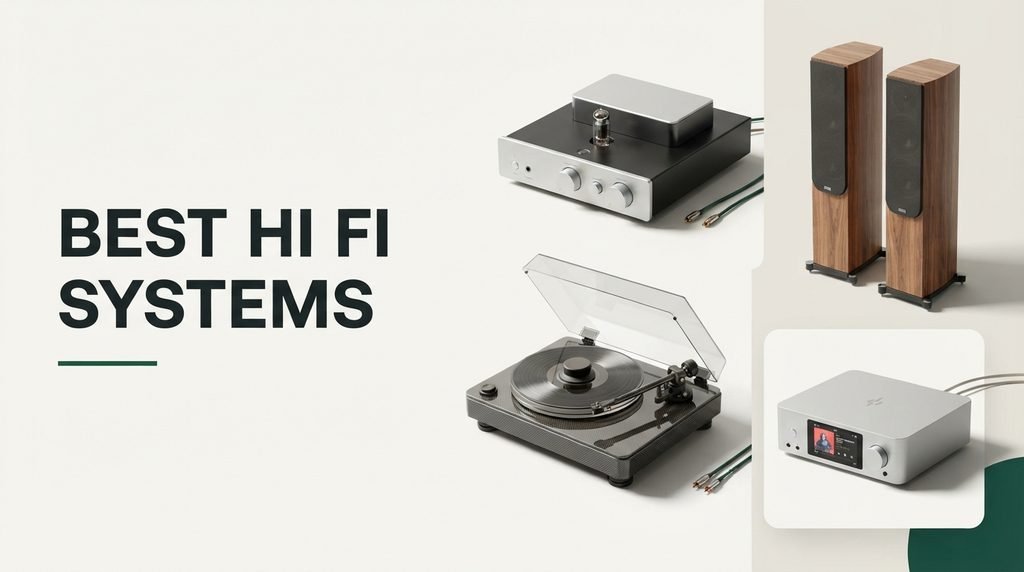
Choosing a hi-fi system in 2026 means balancing streaming support, amplifier power, speaker quality, room size, and the format of music you actually listen to. We compare 10 standout options across all-in-one wireless speakers, integrated amplifiers, network receivers, and complete home theater bundles to help you build the right setup.
The modern hi-fi landscape has expanded well beyond traditional separates. Powered wireless speaker pairs now rival dedicated amplifier-and-speaker setups, while network receivers add streaming, phono, and DAC functions in one box. Understanding where each format excels will save you from overspending or ending up with mismatched components.
Room size, listening habits, and source preferences should drive your decision far more than brand loyalty. Vinyl collectors need phono inputs, streamers benefit from built-in network playback, and home theater fans need multi-channel amplification. This guide breaks down what each system actually delivers so you can match it to your real-world needs.
We compared 10 hi-fi systems using the specifications that matter most when building a serious home audio setup: amplifier power, DAC quality, streaming protocols, phono support, speaker configuration, room-correction features, HDMI and digital connectivity, build quality, and value. The notes focus on practical trade-offs so each pick connects to how people actually listen to music, watch movies, enjoy vinyl, and stream from phones or network sources in real rooms.


Compare key features, scores, and current prices side by side. A shorter feature list means fewer details were available, not necessarily fewer capabilities.



The Klipsch Reference 5.2 bundle is for buyers who want a true home cinema experience rather than a stereo hi-fi setup. The package combines two R-625FA floorstanding speakers, an R-52C center channel, a pair of R-41M bookshelf speakers for surrounds, two R-12SW powered subwoofers, and the Onkyo TX-NR7100 9.2-channel AV receiver. Buying these components separately would require significant research into matching and compatibility, so the bundle removes a lot of guesswork.
We may earn a commission when you buy through this link, at no additional cost to you.
The Onkyo TX-NR7100 is specified at 220 watts per channel at 6 ohms across its 9.2 channels, which provides more than enough amplification for a typical home theater room. Its 8K/4K network AV receiver platform means it will remain relevant as video sources evolve, and the dual-sub outputs let you take advantage of both R-12SW subwoofers for more even bass response across the seating area. The 9.2-channel count also leaves headroom for adding height speakers for Dolby Atmos down the road.
The Klipsch Reference speakers follow the brand’s signature horn-loaded tweeter design, which delivers high sensitivity and dynamic punch that suits movie soundtracks exceptionally well. The dual 12-inch subwoofers provide the kind of low-end impact that makes action films and large-scale music genuinely cinematic, while the R-625FA floorstanders handle the main front channels with authority.
A single subwoofer creates strong peaks and nulls at specific locations in a room based on where sound waves interact with the walls. Adding a second subwoofer in a different position smooths out those variations, giving more consistent bass across the entire seating area. This is particularly valuable in home theater setups where multiple people are watching from different seats, and it is one of the reasons serious home cinema designers almost always recommend at least two subwoofers.
This system is the right pick for anyone building a dedicated home theater or a large living room entertainment setup. It is not the best fit for small rooms, apartments with noise concerns, or buyers who primarily want stereo music listening. The physical footprint is substantial, so measure your room carefully before committing. For the right space, however, this bundle delivers a complete, coordinated surround experience that would be difficult to assemble piece by piece.
Not suitable for small apartments, bedroom setups, or buyers who primarily want a simple two-channel music system.
We may earn a commission when you buy through this link, at no additional cost to you.
The Denon D-M41 is a true all-in-one solution for anyone who wants a legitimate hi-fi setup without piecing together separate components. The box includes the stereo CD receiver and a matched pair of SC-M41 bookshelf speakers with 4-3/4-inch woofers and 1-inch silk dome tweeters, so you can unbox everything, run the speaker cables, and start listening the same afternoon.
We may earn a commission when you buy through this link, at no additional cost to you.
At 2 x 30 watts, the amplifier is sized for small to mid-size rooms rather than large open-plan spaces. The matched speaker and amplifier pairing is one of its real strengths, since Denon has tuned the components to work together rather than leaving you to guess at impedance and sensitivity matching. The triple noise reduction design helps keep the signal path clean, which matters most when you are listening to quieter acoustic or classical material.
Connectivity is more flexible than the compact chassis suggests. Two digital inputs let you connect a TV or set-top box alongside Bluetooth for phone streaming, and the dedicated headphone amplifier is a genuinely useful addition for late-night listening. The CD transport remains relevant for anyone with an existing disc collection, and the FM tuner adds a traditional broadcast option.
Buying a receiver and speakers separately gives you more flexibility, but it also introduces compatibility questions about power matching, impedance, and tonal character. A matched system like the D-M41 removes those variables because the manufacturer has already tuned the components to work together. This is especially valuable for first-time buyers who have not yet developed strong opinions about sound signature or who simply want a system that works correctly out of the box.
This system suits apartment dwellers, bedroom listeners, and anyone building a first serious hi-fi setup. If you have a large living room or want to shake the walls with bass-heavy music, the modest 30-watt per channel rating will feel limiting. For normal listening volumes in a reasonable space, the D-M41 delivers more refined sound than any Bluetooth speaker and costs less than assembling equivalent separates.
Not suitable for large rooms or listeners who want high-resolution network streaming beyond Bluetooth.
We may earn a commission when you buy through this link, at no additional cost to you.
The KEF LSX II represents the modern take on hi-fi, where a complete system fits inside two powered speakers with no separate amplifier, DAC, or streamer required. Each speaker contains 100 watts of amplification and KEF's W2 streaming platform, so you connect them to power and your Wi-Fi network and immediately gain access to AirPlay 2, Chromecast, Spotify Connect, Tidal Connect, Roon, and Bluetooth.
We may earn a commission when you buy through this link, at no additional cost to you.
The 11th-generation Uni-Q driver array places the tweeter at the center of the midbass cone, creating a point source that spreads detailed sound evenly across the room. In practice, this means the sweet spot is wider than with traditional two-way designs where the tweeter and woofer sit stacked above each other. The compact cabinet still delivers surprisingly full sound for its size, though truly deep bass requires adding a subwoofer through the dedicated output.
Connectivity is where the LSX II really earns its versatility. HDMI ARC lets you connect a TV for improved sound over built-in speakers, USB-C handles computers, optical covers legacy sources, and a 3.5mm aux input remains useful for older gear. The KEF Connect app controls EQ, source switching, and streaming services, giving you a single interface for the entire system. Network playback supports up to 24-bit/384kHz for high-resolution files.
Most two-way speakers mount the tweeter above the woofer, which creates slight timing differences between high and low frequencies as they reach your ears. KEF’s Uni-Q design places the tweeter in the acoustic center of the midbass cone, so all frequencies originate from the same physical point. This produces more coherent imaging and a wider usable listening area, which is particularly valuable in rooms where you cannot sit perfectly centered between the speakers.
This is the right system for anyone who wants true hi-fi quality on a desk, in a bedroom, or in a modest living room without the component clutter. The price is higher than entry-level all-in-one systems, but you are paying for genuinely refined sound, serious streaming support, and the convenience of a two-box setup. Buyers who already own a quality amplifier should consider passive speakers instead.
Not the best choice for buyers who already own a high-quality integrated amplifier or who need very deep bass without a subwoofer.
We may earn a commission when you buy through this link, at no additional cost to you.
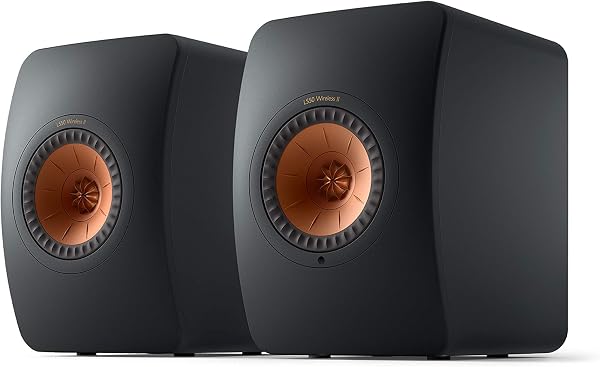
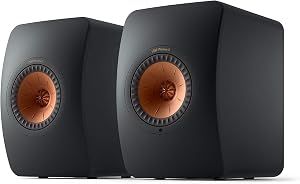
The KEF LS50 Wireless II is the flagship of the brand's active bookshelf speaker lineup and arguably the most complete two-speaker hi-fi system available. Each speaker houses 380 watts of carefully tuned amplification, dedicated DSP, and the 12th-generation Uni-Q driver with Metamaterial Absorption Technology, which KEF says absorbs 99 percent of unwanted sound radiating behind the tweeter.
We may earn a commission when you buy through this link, at no additional cost to you.
The result is a presentation that competes with much more elaborate separates-based systems. The MAT technology addresses a problem that most speaker designers simply accept, which is the backwave energy from the tweeter that can smear detail and reduce clarity. Combined with the point-source Uni-Q geometry, the LS50 Wireless II produces imaging precision and detail retrieval that genuinely rivals audiophile reference setups.
Connectivity covers virtually every modern source. HDMI eARC enables full home theater integration with your TV, while optical, coaxial, and analog inputs handle legacy gear. Streaming support includes AirPlay 2, Chromecast, Spotify Connect, Tidal Connect, Roon, and Bluetooth, all over dual-band Wi-Fi at up to 24-bit/384kHz resolution. The KEF Connect app provides room EQ, source management, and streaming service integration, and the Music Integrity Engine DSP keeps timing precise at any volume.
Every tweeter radiates sound in two directions: forward toward the listener and backward into the speaker cabinet. That backward energy traditionally bounces around inside the enclosure and leaks back out through the tweeter, blurring fine detail. KEF’s MAT is a maze-like structure that traps and absorbs those backward sound waves across a wide frequency range, reducing coloration and improving clarity in a way that is particularly noticeable on complex orchestral and acoustic material.
This system is the right choice for serious listeners who want reference-level sound without a rack full of components. The investment is significant, but you are getting a complete hi-fi system that handles music, movies, vinyl (via an external phono stage), and gaming in one elegant pair of speakers. Buyers on tighter budgets will find the LSX II delivers much of the same experience at roughly half the cost.
Not a sensible choice for shoppers on tight budgets or for buyers who prefer traditional separates with upgrade flexibility.
We may earn a commission when you buy through this link, at no additional cost to you.
The Denon RCD-N12 updates the long-running N-series format with WiFi, ethernet, phono inputs, and audio pre-outs added to the familiar CD player chassis. Unlike the D-M41, this is just the source and amplifier unit without included speakers, which gives you more flexibility to pair it with bookshelf models that match your room and taste.
We may earn a commission when you buy through this link, at no additional cost to you.
Connectivity is the standout here. HDMI ARC provides clean TV integration, while HEOS enables multi-room audio with other HEOS-compatible devices around the house. Amazon Alexa voice control, AirPlay 2, Bluetooth, and streaming services including Spotify, Tidal, Pandora, and internet radio give you virtually every modern listening option. The phono input accommodates a turntable without requiring a separate preamp, and the subwoofer output lets you add low-end extension if your main speakers run out of bass.
Physical controls remain simple, and the CD transport continues to serve anyone who still buys or owns discs. The AM/FM tuner adds broadcast radio, the USB input handles direct file playback, and the headphone jack supports private listening. The compact chassis is sized for small rooms, apartments, and condos where a full-size receiver would be excessive.
Streaming has largely replaced physical media for most listeners, but CDs remain relevant for several reasons. They provide bit-perfect, lossless audio without compression artifacts or streaming service transcoding. Many older or niche recordings are unavailable on streaming platforms. And for anyone with an existing CD collection, a modern receiver with a built-in CD player preserves access to those recordings without needing a separate component.
This unit is best for someone building a modest but versatile hi-fi system with a mix of CDs, vinyl, streaming, and TV sound. The lower user rating is worth noting and may reflect setup complexity for some buyers, so plan to spend time with the HEOS app and network configuration. Pair it with efficient bookshelf speakers for small-room listening and you have a very capable all-in-one source.
Not the right choice for buyers who want speakers included or who have no interest in CD playback.
We may earn a commission when you buy through this link, at no additional cost to you.
The Yamaha A-S501BL is a traditional integrated amplifier built for enthusiasts who want to assemble a hi-fi system from separate components. At 85 watts per channel with 0.019 percent total harmonic distortion across the full 20 Hz to 20 kHz range, it delivers clean, powerful amplification suitable for most bookshelf and floorstanding speakers in rooms up to medium size.
We may earn a commission when you buy through this link, at no additional cost to you.
The input complement is well-chosen for a classic hi-fi system. Gold-plated digital coax and TOSLINK optical inputs handle CD players, TVs, and other digital sources, while gold-plated analog inputs including a dedicated phono stage support turntables and legacy gear without additional preamps. The dual speaker outputs with A, B, and A+B selection make it easy to run speakers in two rooms or compare different pairs during an audition.
Build quality reflects Yamaha’s long heritage in hi-fi amplification. The chassis is substantial, the controls have a satisfying mechanical feel, and the auto-standby function (8 hours with 0.5W standby consumption) keeps energy use reasonable when you forget to turn it off. There is no network streaming, Bluetooth, or app support, which is either a limitation or a feature depending on how you plan to use the system.
Built-in streaming is convenient, but it also ties your amplifier’s lifespan to the streaming technology inside it. If a streaming service changes its protocol or a new format emerges, an amplifier with built-in streaming can become outdated while the amplification itself is still perfect. Keeping streaming in a separate device lets you upgrade the streamer independently of the amp, which is why many serious hi-fi systems still separate these functions.
This amplifier is ideal for buyers who already have a CD player, streamer, or turntable and want a reliable, well-built integrated amp to tie everything together. If you want streaming built in, Yamaha’s R-N series network receivers add that functionality at higher price points. For a traditional separates approach where each component does one job well, the A-S501BL remains a strong value.
Not ideal for buyers who want a single-box solution with network streaming already included.
We may earn a commission when you buy through this link, at no additional cost to you.
The Yamaha R-N2000A sits at the top of the brand's network receiver lineup and brings genuine high-end performance into a single-box solution. The ESS SABRE ES9026PRO Ultra DAC is a reference-grade converter normally found in dedicated audiophile DAC components, and pairing it with Yamaha's amplification creates a receiver that competes with much more elaborate separates-based systems.
We may earn a commission when you buy through this link, at no additional cost to you.
The toroidal power transformer is a signature feature of serious hi-fi amplification, providing clean, stable power delivery with minimal noise coupling into the audio circuits. This translates to a spacious, authoritative sound with real dynamic headroom, particularly on complex orchestral and large-scale material. The USB DAC function supports DSD 11.2 MHz native playback and PCM up to 384 kHz, which covers virtually every high-resolution format currently available.
Streaming is handled through MusicCast, Yamaha’s multi-room ecosystem, which supports lossless and high-resolution services alongside the usual mainstream platforms. The receiver remains fully compatible with traditional sources through its analog inputs, phono stage for turntables, and digital inputs for CD players and other sources. The silver finish gives the chassis a classic audiophile aesthetic that suits traditional listening rooms.
Digital-to-analog converters translate the digital files from your streaming service or local library into the analog signal your amplifier and speakers can use. Entry-level DACs do this adequately, but reference-grade converters like the ESS SABRE ES9026PRO offer measurably lower noise, better linearity, and more accurate reconstruction of complex signals. The audible difference is often subtle on casual listening but becomes clear on high-resolution recordings played through revealing speakers.
This receiver is for serious listeners who want flagship DAC performance, high-current amplification, and comprehensive streaming support in one chassis. The investment is substantial, so it only makes sense if you have speakers worthy of its capabilities and a listening environment that will reveal its strengths. For smaller rooms or casual listening, the lower-tier R-N600A or R-N800A deliver most of the Yamaha network receiver experience at a fraction of the cost.
Not a sensible investment for small rooms, casual listening, or systems with modest speakers that cannot reveal its capabilities.
We may earn a commission when you buy through this link, at no additional cost to you.
The Yamaha R-N800A occupies the sweet spot in the brand's network receiver lineup, pairing a high-quality ESS SABRE ES9080Q DAC with the brand's YPAO room correction system. Room correction is a feature usually found in home theater receivers rather than two-channel hi-fi, and its inclusion here addresses one of the biggest obstacles to great sound in real rooms: the room itself.
We may earn a commission when you buy through this link, at no additional cost to you.
YPAO with Reflected Sound Control analyzes your room’s acoustics using an included microphone and applies precision EQ to compensate for problems like standing waves, reflections, and resonances. The practical result is more accurate bass response and cleaner midrange across your listening area, particularly in rooms that are not acoustically treated. This can transform the performance of good speakers in an untreated space.
Beyond room correction, the R-N800A offers the full Yamaha network receiver feature set: high-resolution streaming via MusicCast, USB DAC capability supporting DSD 11.2 MHz and PCM up to 384 kHz, a phono input for vinyl, and the usual complement of digital and analog inputs. The amplifier section delivers enough power for most speakers in typical rooms, and the ES9080Q DAC provides excellent sound quality for both streaming and local files.
Every room has acoustic problems that affect how your speakers actually sound. Bass frequencies create standing waves that boost some notes and cancel others, hard surfaces create reflections that smear timing cues, and furniture placement affects frequency balance across the seating area. Room correction uses measurement microphones and DSP to compensate for these issues, often producing a more significant improvement in perceived sound quality than any single component upgrade.
This receiver is the right choice for serious music listeners who want flagship-level features without flagship pricing. The addition of room correction is especially valuable if you cannot optimize speaker placement or treat your room acoustically. Vinyl collectors, streaming enthusiasts, and anyone who wants a comprehensive single-box hi-fi solution will find the R-N800A delivers an unusually complete feature set at its price point.
Not suitable for buyers who need HDMI inputs for primary TV connection or who want a simpler plug-and-play system.
We may earn a commission when you buy through this link, at no additional cost to you.
The Yamaha R-N600A brings the brand's network receiver platform to a much more accessible price point without sacrificing the core hi-fi experience. The ESS SABRE ES9010K2M Ultra DAC provides excellent conversion quality, and the amplifier section delivers enough clean power to drive most bookshelf and compact floorstanding speakers in medium-size rooms.
We may earn a commission when you buy through this link, at no additional cost to you.
Feature coverage is remarkably complete for the price. High-resolution streaming is supported through MusicCast, the USB front-panel terminal and network capability handle DSD 11.2 MHz native playback and PCM up to 384 kHz, and a dedicated phono input lets you add a turntable without a separate preamp. The optical input is specifically positioned for TV connection, giving you hi-fi quality for everyday TV viewing without an HDMI switcher.
What you give up compared to the R-N800A is primarily the YPAO room correction system and the step up to the ES9080Q DAC. For buyers in well-arranged rooms or those who are willing to optimize speaker placement manually, the R-N600A delivers substantially the same listening experience at a lower price. The amplifier topology, build quality, and user interface are consistent with the rest of the Yamaha network receiver family.
The R-N600A delivers roughly 80 to 90 percent of what the R-N800A offers at a significantly lower price. Unless you specifically need YPAO room correction or the step up in DAC performance, the extra money is often better spent on improving your speakers, which have a much larger impact on overall sound quality than a modest DAC upgrade. This is a classic hi-fi principle: spend most of your budget on the transducers rather than the electronics.
This receiver is the best overall value in the Yamaha lineup for most buyers. It combines genuine hi-fi performance with modern streaming convenience, supports both vinyl and digital sources, and connects to your TV for upgraded sound. If you can stretch to the R-N800A for room correction, that is worth considering, but the R-N600A will satisfy most buyers who want to assemble a serious two-channel system without overspending on features they will not use.
Not the best choice for buyers who need room correction or who want to future-proof with the highest-tier DAC.
We may earn a commission when you buy through this link, at no additional cost to you.
The Fluance Fi70W takes a different approach to hi-fi, delivering a complete system in a single large cabinet rather than a pair of speakers or a separates-based setup. The three-way configuration with dual 8-inch subwoofers produces genuinely room-filling sound from one piece of furniture, which is appealing for anyone who wants serious audio without multiple components spread across the room.
We may earn a commission when you buy through this link, at no additional cost to you.
The six-speaker configuration includes tweeters, midrange drivers, and the dual 8-inch subwoofers, all driven by an integrated amplifier matched to the drivers. The handcrafted engineered wood cabinet with separate internal enclosures and a thick front baffle is designed to minimize resonance and coloration, which is important in a single-cabinet system where every driver shares the same enclosure. The result is fuller, more defined sound than you would expect from a one-box system.
Wireless streaming uses aptX-enhanced Bluetooth, which delivers better quality than standard Bluetooth and works well with modern smartphones and tablets. The feature list extends well beyond music playback with AM/FM radio, adjustable EQ, touch controls, an audio input for wired sources, digital optical input, an LED display, an alarm clock, and a USB port for charging devices. This makes the Fi70W as much a complete entertainment hub as a hi-fi system.
Traditional stereo relies on separation between left and right speakers to create a soundstage with precise instrument placement. A single-cabinet system cannot replicate this because both channels originate from the same physical location. In exchange, you get simpler setup, a cleaner room, and often more low-end impact than a pair of bookshelf speakers can deliver. The right choice depends on whether you prioritize imaging precision or the convenience and visual simplicity of a single component.
This system is best for buyers who want impressive sound in a single piece of furniture rather than a traditional stereo pair setup. The single-cabinet design inherently limits stereo imaging compared to separated speakers, so if precise stereo soundstage is important to you, a traditional two-speaker setup will serve you better. For bedrooms, living rooms, or dens where a one-box solution makes sense, the Fi70W delivers substantial sound and genuine utility.
Not the right choice for listeners who prioritize precise stereo imaging or who want high-resolution network streaming.
We may earn a commission when you buy through this link, at no additional cost to you.
Picking the right hi-fi system comes down to matching the format and features to your room, your sources, and how you actually listen. This section walks through the factors that genuinely affect your long-term satisfaction with a system.
Modern hi-fi systems come in several formats, each with different strengths. All-in-one systems like the Denon D-M41 or Fluance Fi70W combine source, amplifier, and sometimes speakers in a single purchase, which minimizes decision-making and simplifies setup. Powered wireless speaker pairs like the KEF LSX II and LS50 Wireless II integrate everything except the source into two speakers, offering excellent sound with minimal clutter. Traditional separates let you pair an integrated amplifier like the Yamaha A-S501BL with separately chosen speakers, giving maximum flexibility and upgrade paths.
Network receivers like the Yamaha R-N600A, R-N800A, and R-N2000A sit between these categories, combining amplification, streaming, DAC, and phono input in one chassis while letting you choose your own speakers. For most buyers building a serious system today, network receivers paired with quality bookshelf or floorstanding speakers offer the best balance of convenience, performance, and upgrade potential.
Choose all-in-one for simplicity and small rooms, powered wireless pairs for minimal setup with maximum convenience, and network receivers with separate speakers for the best long-term flexibility and performance.
Amplifier power requirements depend on your speaker sensitivity, room size, and typical listening volume. Sensitive speakers (90 dB or higher) can produce satisfying volume with modest amplifiers in the 30 to 50 watt range, while less sensitive speakers (85 dB or lower) benefit from 85 watts or more per channel. The Yamaha A-S501BL’s 85 watts per channel suits most modern bookshelf speakers in rooms up to medium size, while the Klipsch Reference 5.2 bundle’s 220 watts per channel is sized for large home theater applications.
A common mistake is buying an amplifier that is far more powerful than your speakers need, assuming more watts always means better sound. In practice, matching the amplifier to the speakers and room is more important than raw wattage. An underpowered amplifier driven into clipping is more likely to damage speakers than a powerful amplifier used at moderate volume, so err on the side of adequate rather than minimal power.
Match amplifier power to your speakers and room size. For most bookshelf speakers in typical living rooms, 50 to 100 watts per channel is appropriate. For large rooms or less sensitive speakers, step up to 100 watts or more.
Modern hi-fi systems typically offer some combination of Bluetooth, Wi-Fi streaming, AirPlay 2, Chromecast, and direct integration with services like Spotify, Tidal, and Roon. The depth of streaming support varies significantly between products. Entry-level systems may offer only Bluetooth, while advanced network receivers like the Yamaha R-N series and powered speakers like the KEF LSX II and LS50 Wireless II support virtually every modern streaming protocol at high resolution.
If you primarily use one streaming service, direct integration (such as Spotify Connect or Tidal Connect) delivers better quality and more reliable control than casting from your phone. If you have a NAS with your own music library, look for systems that support network playback over your local Wi-Fi, ideally with high-resolution file support. HEOS, MusicCast, and KEF Connect are proprietary multi-room ecosystems that work best when you commit to a single brand across multiple rooms.
For single-room setups, prioritize the streaming protocols you actually use rather than the longest feature list. For multi-room ambitions, commit to one ecosystem (HEOS, MusicCast, or AirPlay 2) and build around it consistently.
The inputs you need depend entirely on your sources. Vinyl listeners require a phono input, which the Yamaha A-S501BL, R-N600A, R-N800A, R-N2000A, and Denon RCD-N12 all include. TV integration benefits from HDMI ARC or eARC, which is available on the KEF powered speakers, Denon RCD-N12, and Klipsch Reference bundle but notably absent from the Yamaha network receivers (which offer optical input instead). CD players need digital or analog inputs, and legacy sources may require specific connections like coaxial digital or multiple analog pairs.
A common oversight is buying a system that lacks the inputs you will need in a year or two. Even if you do not currently own a turntable, choosing a receiver with a phono input preserves that option without the cost of a separate preamp later. Similarly, HDMI ARC adds significant value if there is any chance you will connect your system to a TV, since it enables both audio pass-through and simple volume control via the TV remote.
Make a list of every source you own or might reasonably buy, then confirm your target system has the right inputs for all of them. The cost of adding external DACs, phono preamps, or HDMI converters later often exceeds the price difference between models with and without those features.
The digital-to-analog converter (DAC) is one of the most important components in any modern hi-fi system because nearly all music now originates in digital form. Entry-level DACs handle standard streaming quality adequately, but higher-end converters like the ESS SABRE ES9080Q (in the Yamaha R-N800A) and ES9026PRO (in the R-N2000A) deliver measurably cleaner reproduction with better detail, lower noise, and more accurate reconstruction of complex signals.
High-resolution file support is another DAC consideration. Many modern DACs support DSD and PCM up to 384 kHz, which future-proofs your system for current and upcoming high-resolution releases. The USB DAC function found on the Yamaha network receivers lets you use the receiver as a DAC for your computer, which can significantly improve the sound quality of computer audio compared to built-in laptop audio.
For streaming-focused systems, prioritize DAC quality and supported formats. For systems where digital playback is secondary to analog sources like vinyl, DAC performance matters less and you can allocate budget elsewhere.
Your room has an enormous effect on how any hi-fi system actually sounds. Small rooms (under 150 square feet) benefit from compact speakers and modest amplification, while large rooms (300 square feet or more) demand bigger speakers, more power, and often multiple subwoofers to maintain even bass response. The Denon D-M41 and KEF LSX II are sized for small rooms, while the Klipsch Reference 5.2 bundle and higher-powered Yamaha receivers suit larger spaces.
Speaker placement affects imaging, bass response, and overall tonality more than most component choices. Speakers placed against a wall produce more bass but less precise imaging, while speakers pulled into the room improve soundstage but may need help with low-end extension. Room correction features like Yamaha’s YPAO (included in the R-N800A) can compensate for placement compromises and acoustic problems that would otherwise require physical room treatment.
Measure your room before buying, consider whether you can optimize speaker placement, and prioritize room correction features if you cannot. In challenging rooms, a modest system with room correction often outperforms a more expensive system without it.
Start by positioning your speakers correctly before worrying about EQ or signal path adjustments. For stereo pairs, place the speakers equidistant from your main listening position, ideally forming an equilateral triangle with the listening seat. Pull them away from the wall by at least 12 to 18 inches when possible, and angle them slightly toward the listening position for improved imaging. If your system includes room correction like Yamaha’s YPAO, run the calibration process after speaker placement is finalized and leave the microphone at your main listening position during measurement.
Keep your components ventilated and clean. Amplifiers and receivers generate heat during normal operation, so avoid stacking components tightly or placing them inside closed cabinets without ventilation. Dust the chassis periodically and keep ports and jacks free of debris, since dirty connections can introduce noise and intermittent signal loss. For speakers, keep grilles clean and check driver surrounds annually for any signs of deterioration, particularly in rooms with high humidity or temperature extremes.
Protect your investment with proper power management. Use a quality surge protector or power conditioner to shield sensitive electronics from voltage spikes, and unplug components during electrical storms if possible. Auto-standby features (like the 8-hour timer on the Yamaha A-S501BL) reduce energy consumption without affecting performance. For streaming systems, keep firmware updated to maintain compatibility with evolving streaming services, and reboot network components periodically if you notice connectivity issues.
Yes, network receivers like the Yamaha R-N600A, R-N800A, and R-N2000A are amplifiers with built-in streaming and DAC functions, but they do not include speakers. You will need to pair them with bookshelf or floorstanding speakers that match your room size and listening preferences. All-in-one systems like the Denon D-M41 include matched speakers, and powered wireless speakers like the KEF LSX II contain their own amplification in each speaker.
A stereo receiver like the Yamaha R-N600A is designed for two-channel music listening and typically offers higher-quality amplification and DAC performance per channel. An AV receiver like the Onkyo TX-NR7100 in the Klipsch bundle supports multi-channel surround sound (5.1, 7.1, or more), HDMI video switching, and features designed for home theater use. Choose a stereo receiver for music-focused listening and an AV receiver if you need surround sound for movies and TV.
Yes, and most modern hi-fi systems include dedicated inputs for TV connection. HDMI ARC (available on the KEF powered speakers and Denon RCD-N12) is the easiest option because it uses one cable and supports TV remote volume control. Optical input (available on most Yamaha network receivers) also works well, though it lacks the remote integration of HDMI ARC. For dedicated home theater, consider a multi-channel system like the Klipsch Reference 5.2 bundle.
High-resolution audio (24-bit files at 96 kHz or higher) can deliver audible improvements over standard CD quality on revealing systems and well-recorded material. However, the differences are often subtle and depend heavily on the quality of your speakers, room acoustics, and the recording itself. Most listeners benefit more from investing in better speakers and room treatment than from pursuing the highest possible file resolution.
A common guideline is to allocate roughly half of your total budget to speakers, since they have the biggest impact on how your system sounds. Modern electronics are generally excellent even at moderate prices, while speakers vary enormously in quality and character. If you are torn between upgrading your amplifier or your speakers, upgrading the speakers typically produces a more noticeable improvement.
A subwoofer is optional for pure music listening with full-range speakers, but it is essential for home theater and highly beneficial for music genres with significant low-end content like electronic, hip-hop, and large orchestral works. Compact systems like the KEF LSX II and bookshelf speakers in general benefit significantly from a subwoofer to extend bass response below their natural rolloff. Many modern receivers include a dedicated subwoofer output for easy integration.
A phono input is a specialized preamp designed to boost and equalize the very low output signal from a turntable's cartridge. Without it, you cannot connect a turntable directly to an amplifier that only has line-level inputs. If you have or plan to buy a turntable, choose a receiver with a built-in phono input like the Yamaha A-S501BL or R-N series. Otherwise, you will need to add a separate phono preamp between the turntable and amplifier.
A quality hi-fi system should provide 15 to 20 years of reliable service with reasonable care, and many classic components remain fully functional after 30 or more years. Speakers often outlast electronics because they have fewer failure points, though driver surrounds and crossover components may need refurbishment eventually. Streaming features and connectivity standards evolve faster than core amplification technology, so systems with external streaming devices often remain current longer than those with built-in streaming.
Yes, mixing brands is completely normal and often preferable to buying everything from one manufacturer. The main concern is matching speaker sensitivity and impedance to your amplifier's capabilities. Beyond that, choose each component based on its individual strengths rather than brand loyalty. The main exception is multi-room streaming ecosystems like HEOS or MusicCast, where staying within one brand ensures seamless integration.
For most buyers building a serious hi-fi system today, the KEF LS50 Wireless II stands out as the strongest overall choice. It combines reference-grade sound, comprehensive streaming support, HDMI eARC for TV integration, and app-based room correction in a two-speaker package that eliminates the need for separate amplification. The price is significant, but the complete feature set and sound quality justify the investment for serious listeners who want modern convenience without compromising on performance.
Buyers with different needs have excellent alternatives throughout this list. The Yamaha R-N600A offers the best value in traditional network receivers, pairing well with any quality bookshelf or floorstanding speakers you choose. The Denon D-M41 remains the most sensible complete all-in-one system for small rooms and apartments. For home theater enthusiasts, the Klipsch Reference 5.2 bundle delivers a coordinated 9.2-channel setup that would be difficult to assemble piece by piece. Vinyl collectors should prioritize the Yamaha A-S501BL or any R-N series receiver with phono input.
Match your choice to how you actually listen rather than to what gets the most hype. Small apartment with mixed streaming and vinyl use? The Yamaha R-N600A with modest bookshelf speakers. Desk-based setup with occasional TV viewing? The KEF LSX II. Dedicated home theater with movies and large-scale music? The Klipsch Reference 5.2 bundle. The best hi-fi system is the one that fits your room, your sources, and your listening habits, not necessarily the most expensive one on the list.