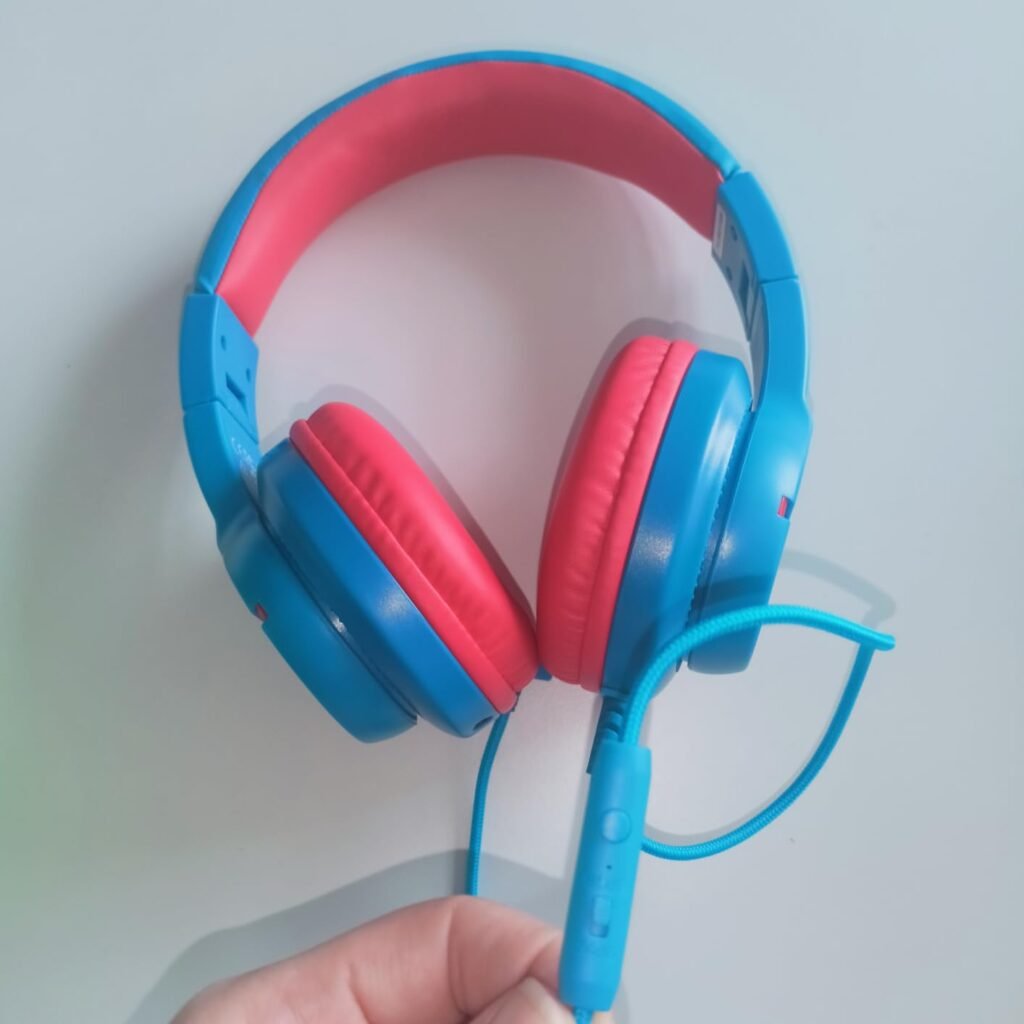
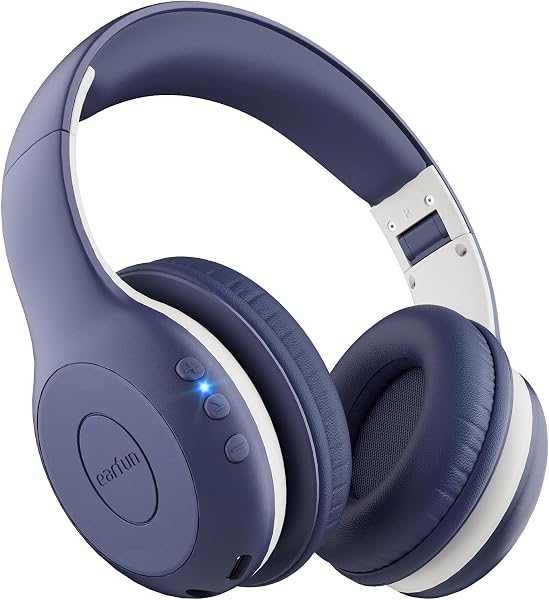
iClever BTH12 Wireless
9.2Editor score85-hour battery life
74/85 dB limits
Bluetooth 5.2 wireless
USB-C fast charging
Compare 10 kids headphones with volume limiters, comfort features, and durability. Options for school, travel, and home use at every budget from $12 to $35.
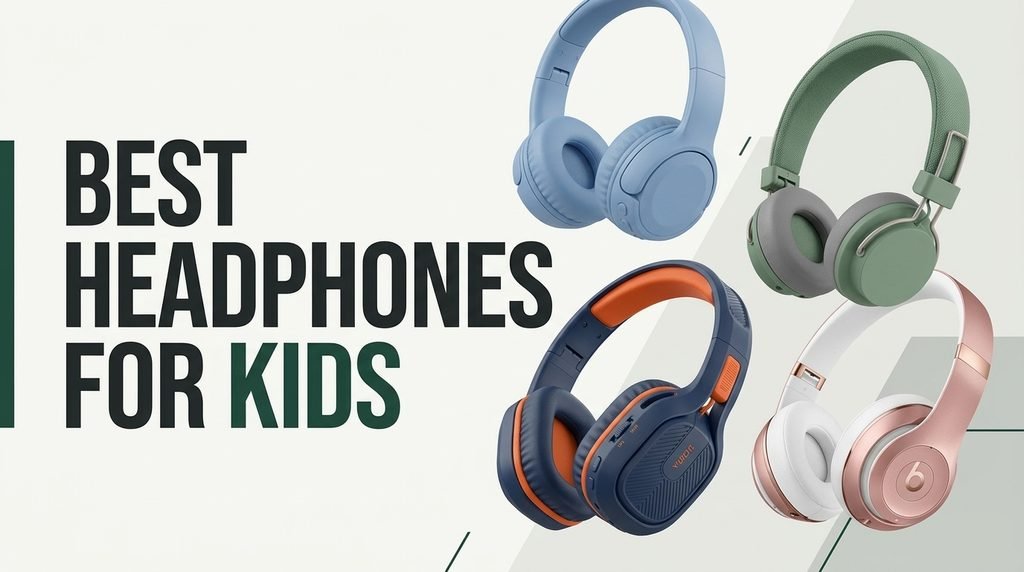
Choosing headphones for kids in 2026 means balancing hearing safety, comfort for small heads, build durability, and connectivity options against your child’s age, activities, and how rough they play. We compare 10 standout options from iClever, JBL, EarFun, noot, Acer, Candy Bila, and JoySpark to help you match the right pair to school, travel, and home entertainment needs.
The category divides into wired models under $20 that suit school and online learning, and wireless Bluetooth options from $14-$35 that add freedom for travel and independent use. Volume-limiting technology at 85 dB is the essential shared feature, with some models adding 74 dB or 94 dB modes for finer control across age groups and listening environments.
Toddlers need different features than tweens who take headphones to school daily, and travel headphones face different demands than home study pairs. This guide breaks down what separates the options so you can pick a durable, hearing-safe set that actually fits your child’s head and survives real-world use through backpacks, drops, and years of daily wear.
We compared 10 kids headphones using the details that genuinely matter for parents and children: volume limiting technology, comfort of ear cushions and headband, adjustability for growing heads, cable or wireless durability, microphone quality for online learning, battery life on wireless models, foldability for storage, safety certifications, warranty coverage, and value at each price point. The notes focus on practical trade-offs so each pick connects to how kids actually use headphones for school, travel, and daily entertainment.

Compare key features, scores, and current prices side by side. A shorter feature list means fewer details were available, not necessarily fewer capabilities.



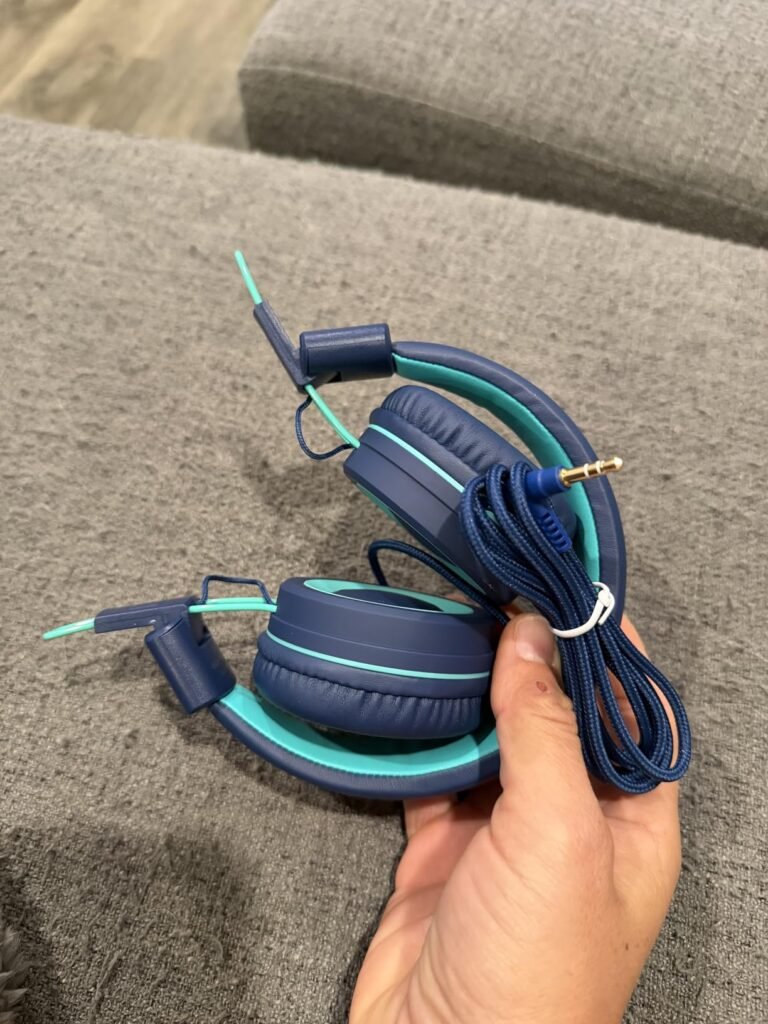
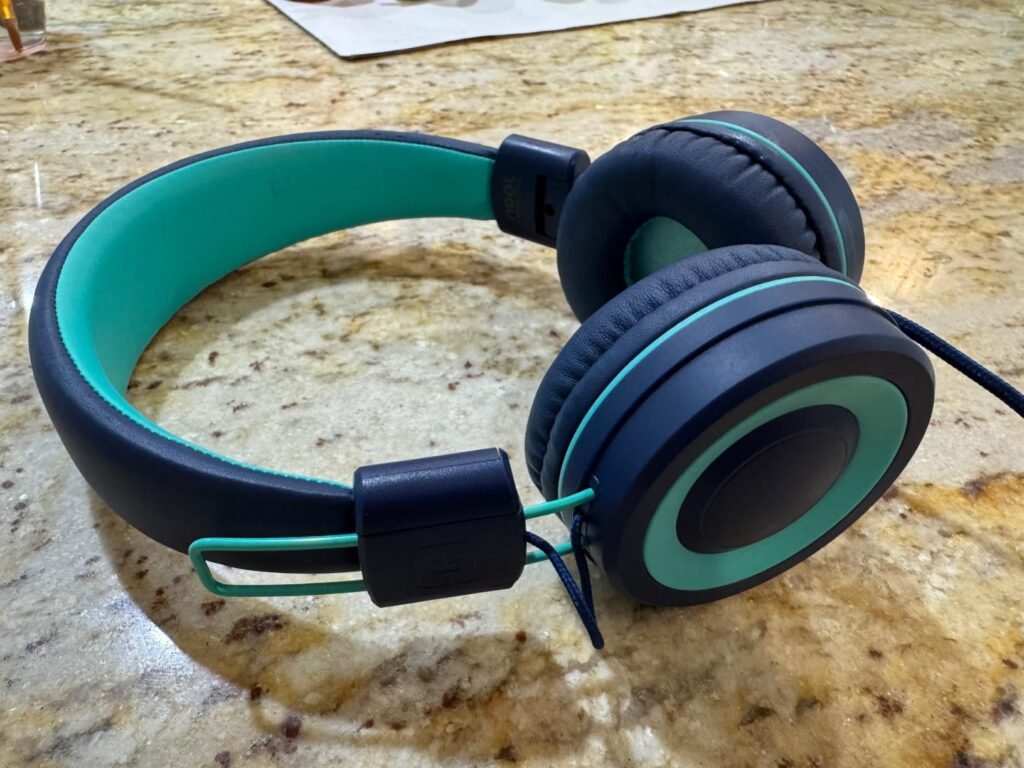
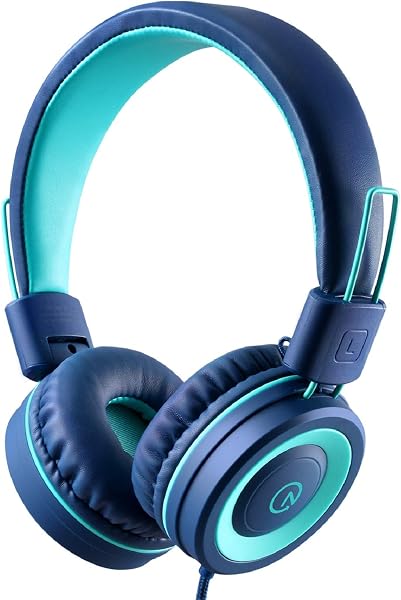
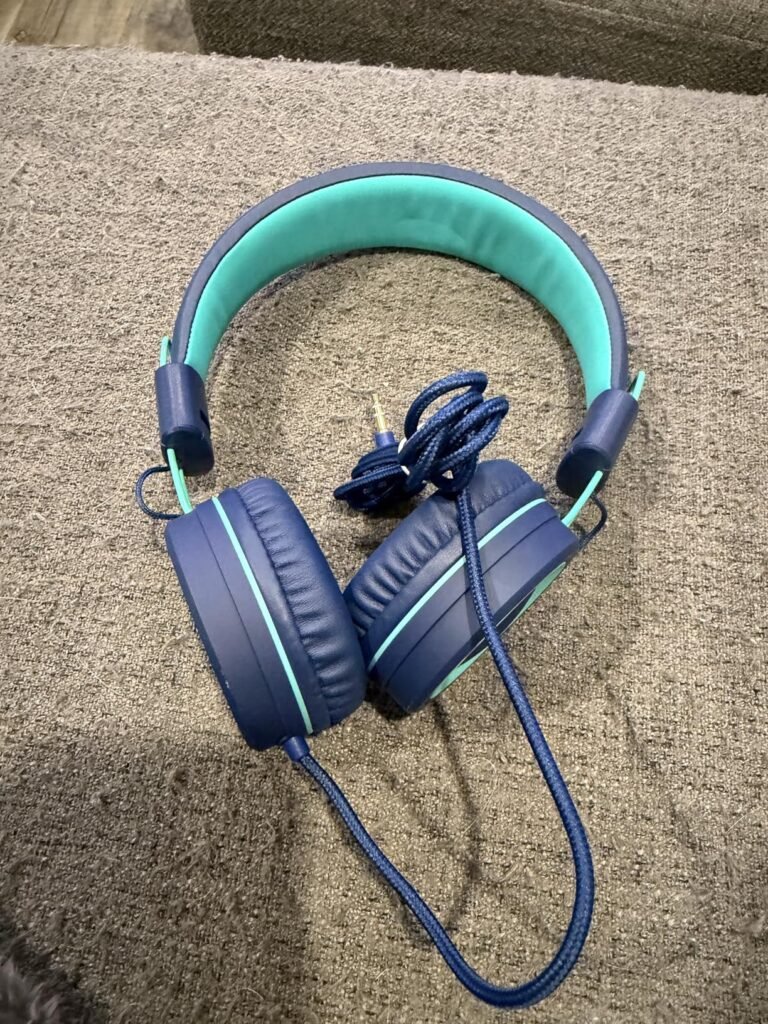
The noot K11 stands out through its 24-month warranty coverage, which is genuinely uncommon for headphones in this price range and reflects manufacturer confidence in build quality. For parents burned by cheap headphones that failed within weeks, that warranty represents real peace of mind and long-term value that offsets the modest upfront price.
We may earn a commission when you buy through this link, at no additional cost to you.
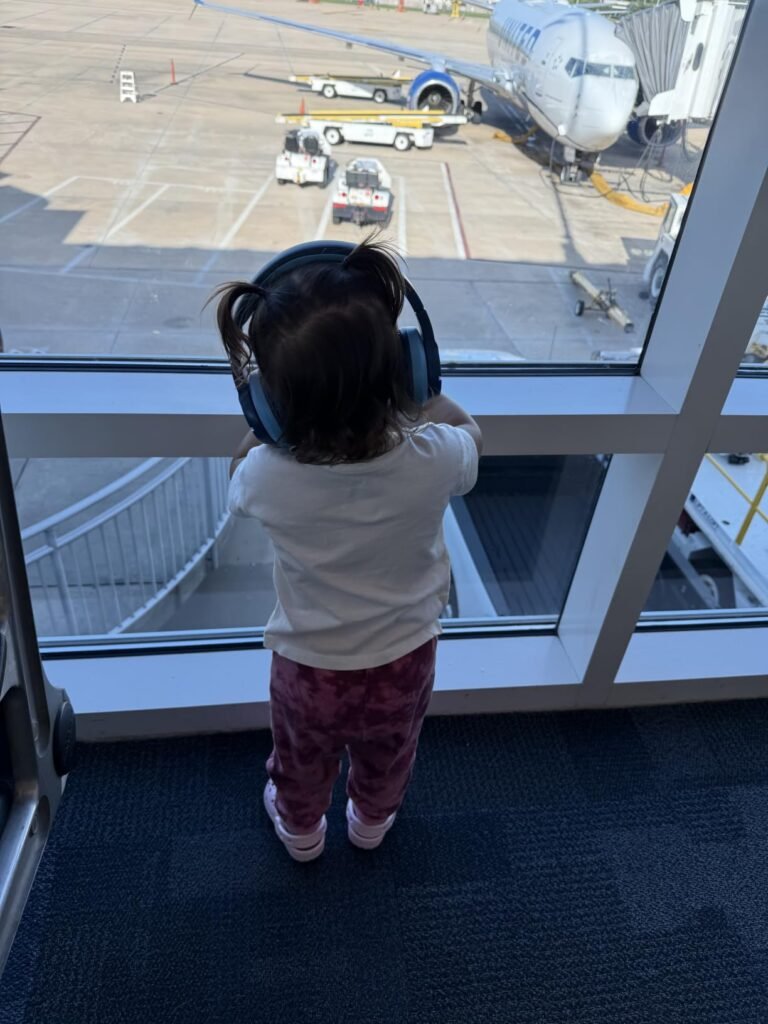
The wide age range from 3 to 16 reflects thoughtful sizing engineering. Adjustable, flexible headband construction accommodates small toddler heads through teen sizes without becoming too tight or too loose at either extreme. Padded soft cushions with a semi-gloss finish provide comfort for extended wear, while the foldable design collapses for compact storage in backpacks and travel bags.
The 5-foot nylon-braided cable resists tangling significantly better than standard rubber cords that inevitably knot up in backpacks. That length also gives kids room to move around while tethered to a laptop or tablet, which reduces accidental yanks that stress headphone connectors. The 3.5mm plug works with virtually any device including Chromebooks, tablets, laptops, and phones with headphone jacks.
Cables are the most common failure point on kids headphones. Rubber cables tangle constantly, and repeated untangling stress can damage internal wires until the audio cuts out in one ear. Nylon-braided cables like the K11’s resist tangling and handle bending better over time, extending the practical lifespan of the headphones. A 5-foot length provides useful mobility while still being manageable for storage and preventing tripping hazards.
This is a solid pick for parents who want a simple, reliable wired pair without wireless complexity or premium features they may not need. The lack of an inline microphone is a genuine limitation for online learning scenarios, so families needing microphone functionality should look at the iClever HS19 or Candy Bila alternatives. Kids doing primarily passive listening will find the K11 more than adequate.
Online learners who need built-in microphone functionality for video calls and virtual class participation.
We may earn a commission when you buy through this link, at no additional cost to you.
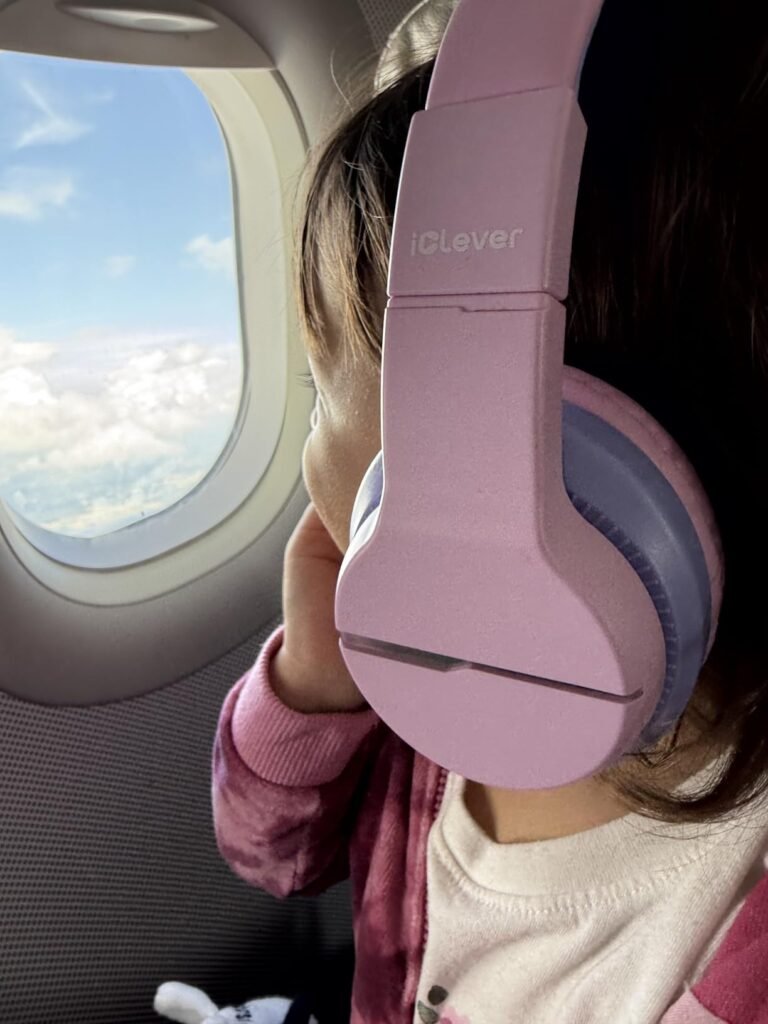
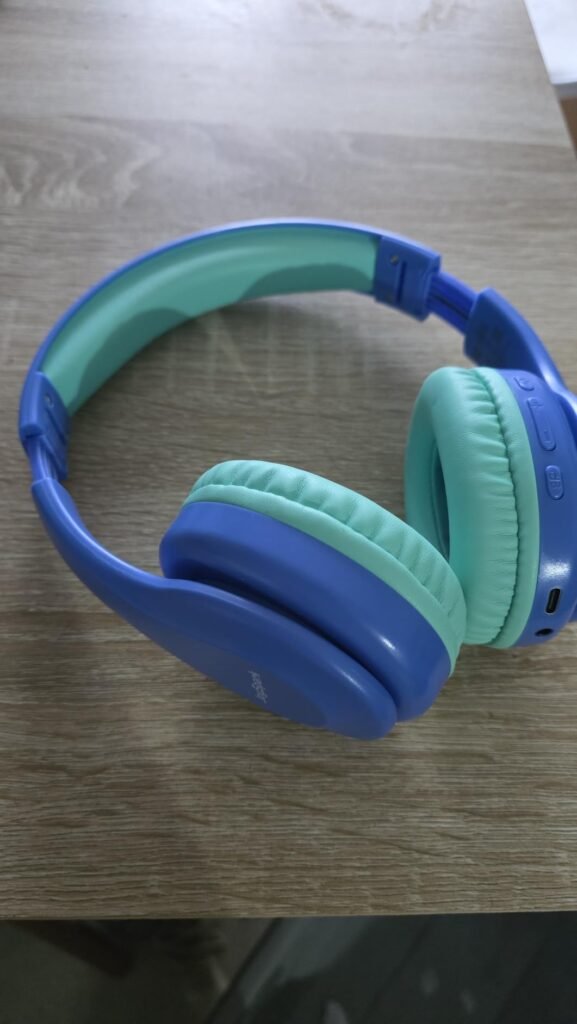
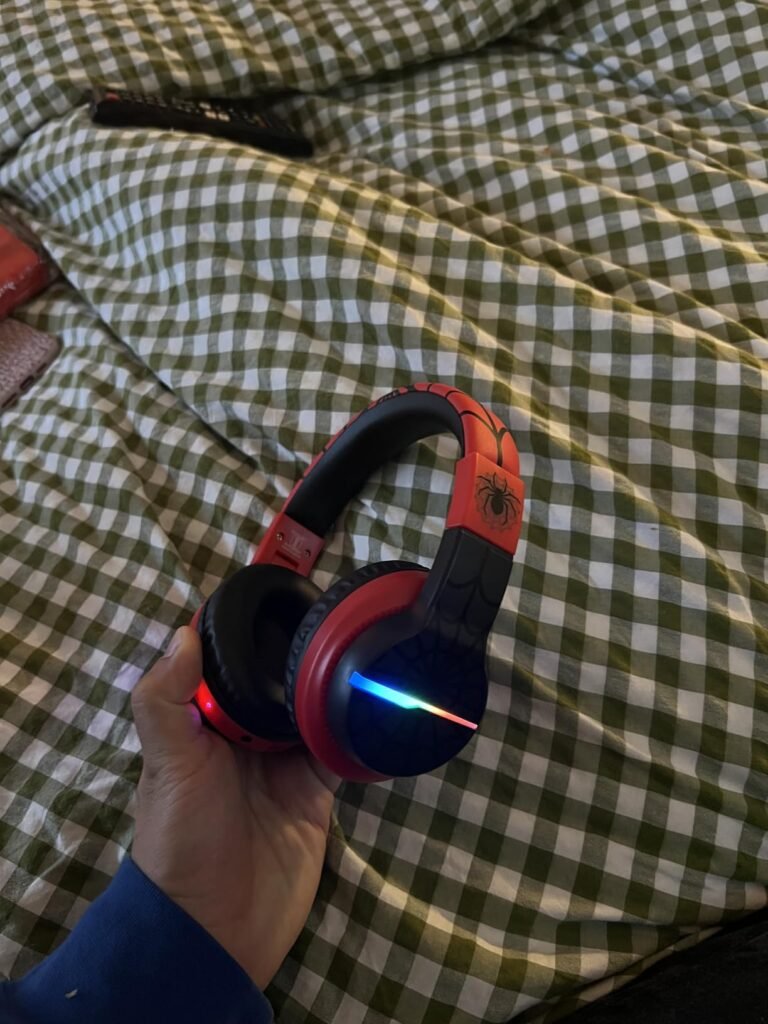
The iClever BTH12 earns the top overall recommendation by combining an exceptional 85-hour battery life with dual volume limiting at 74 or 85 dBA and playful LED lighting that appeals to younger kids. For families who want a versatile wireless pair that handles long trips, daily school use, and home entertainment without constant charging, this offers a rare combination of endurance and kid-friendly features at an accessible price.
We may earn a commission when you buy through this link, at no additional cost to you.
The 40mm speaker drivers deliver rich bass and clear audio quality, which matters because kids should enjoy their music and videos rather than settling for tinny sound just because they’re young. The dual volume limit design lets you choose between the stricter 74 dB setting for younger children and 85 dB for older kids, providing hearing protection that adapts as your child grows without needing to buy new headphones.
USB-C fast charging means dead batteries stop being a source of frustration. A quick 10-minute charge delivers 7 hours of playback, which fits between school and after-school activities easily. Bluetooth 5.2 provides stable wireless connections, while the included AUX cable option means you can still use them wired when needed for airplane entertainment systems or older devices without Bluetooth. The built-in microphone handles video calls and online classes clearly.
Most wireless kids headphones offer 15-30 hours of battery life, which sounds like plenty until you realize kids often forget to charge them. When headphones die mid-flight or during quiet time in a restaurant, the situation becomes stressful for everyone. An 85-hour battery means you can go weeks between charges even with regular daily use, dramatically reducing the chance of a dead battery emergency. This alone can make a wireless pair actually more reliable than a wired alternative kids might lose or damage.
This is the strongest choice for families who want one wireless pair that covers school, travel, and entertainment without compromise. The reinforced construction handles the twisting, folding, and drops that come with real kid use. Parents wanting stricter parental controls with app monitoring should consider the JBL Junior 320BT, and buyers strictly focused on lowest cost should look at simpler wired options.
Parents wanting detailed usage monitoring through a parental control app or the strictest CPSIA safety certifications.
We may earn a commission when you buy through this link, at no additional cost to you.
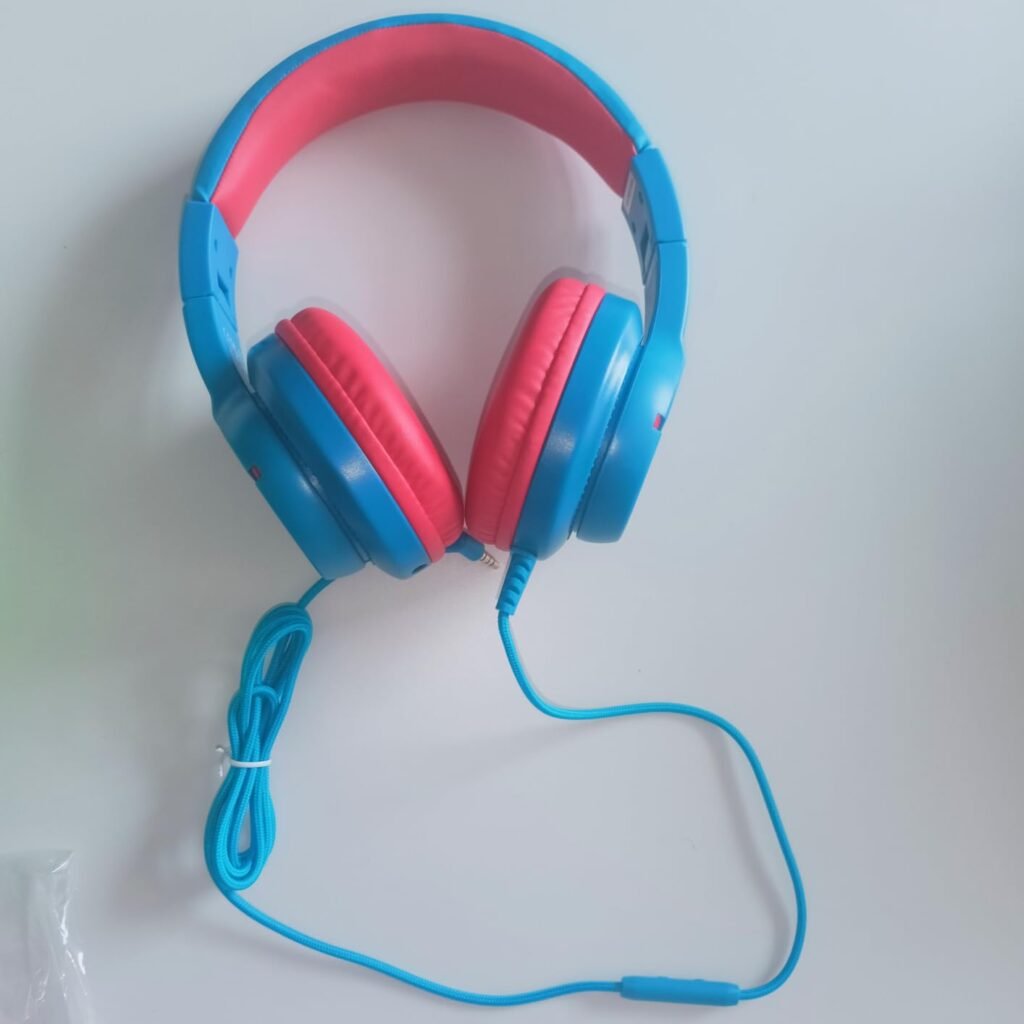
The iClever HS19 solves a common family problem: how to let two kids listen to the same tablet or movie without headphone splitters or extra cables. The built-in audio sharing port lets a second headphone plug directly into the first pair, eliminating adapters that get lost and simplifying situations like long car trips where siblings share content on one device.
We may earn a commission when you buy through this link, at no additional cost to you.
The 85 dB volume limit protects hearing at the WHO-recommended safe level for extended listening, and the 40mm stereo drivers deliver balanced sound quality that makes music, videos, and games genuinely enjoyable rather than merely tolerable. Kids notice audio quality more than parents often realize, and better sound means they’re less likely to try to bypass the volume limiter through workarounds.
The inline microphone works well for online learning, virtual classes, and voice calls, making this a practical choice for hybrid or remote schooling situations. Broad compatibility covers Chromebooks, Kindle Fire tablets, Nintendo Switch, iPads, laptops, and PCs with 3.5mm audio jacks. The foldable design keeps them compact in backpacks, and ultra-soft over-ear earmuffs provide better ambient noise isolation than on-ear alternatives.
Traditional audio sharing requires a 3.5mm splitter, an extra cable, or a Bluetooth transmitter that can complicate simple situations. A built-in sharing port means one child plugs into the tablet, and the second child plugs directly into the first headphone. This eliminates dangling adapters that break connectors when yanked and removes the need to carry extra gear. For road trips, quiet time, and shared entertainment, this small design detail can prevent multiple daily arguments about whose turn it is with the tablet.
This is the pick for families with multiple kids who often share tablets or want dual-listening capability without extra accessories. The single 85 dB volume level suits most kids, but parents wanting quieter options for younger children may prefer models with 74 dB modes. Buyers wanting wireless freedom should consider the iClever BTH12 instead.
Younger children needing 74 dB volume limits or families wanting wireless Bluetooth connectivity.
We may earn a commission when you buy through this link, at no additional cost to you.
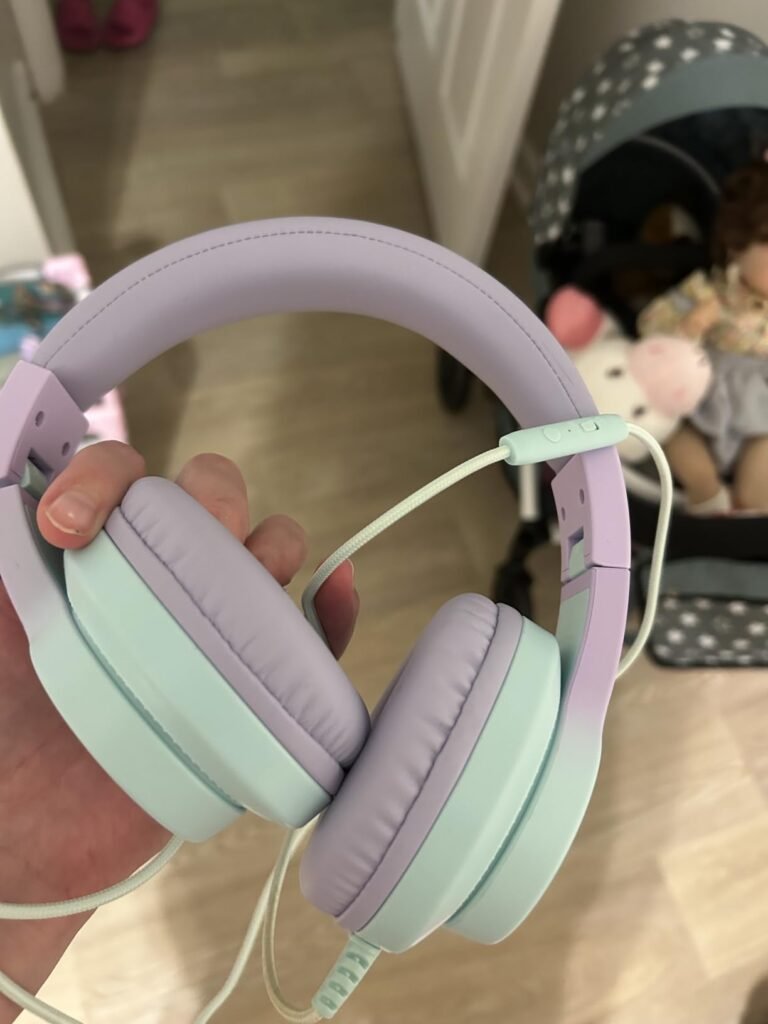
The Candy Bila wired headphones offer dual volume limiting at 85 or 94 dB, giving parents flexibility to choose stricter protection for younger kids or slightly higher volume for noisier environments where quieter settings become inaudible. The in-line remote control adds convenience for one-button play, pause, call handling, and track switching without reaching for the connected device.
We may earn a commission when you buy through this link, at no additional cost to you.
The tear-resistant nylon cord addresses one of the most common failure points on kids headphones. Standard cables get yanked, twisted, and stepped on constantly during real use, and reinforced construction extends the practical lifespan significantly. Combined with the matte-finish headband that resists fingerprints and smudges, this pair looks better after months of use than glossier alternatives that quickly show wear.
The adjustable headband suits ages 3 and up, and the foldable design collapses for storage in backpacks or travel bags. The built-in microphone supports online learning and voice calls, and compatibility extends to Kindle Fire tablets, smartphones, laptops, PCs, and any device with a 3.5mm audio jack. The stereo sound quality is enjoyable for music, videos, and games at kid-appropriate volumes.
The 85 dB level is the World Health Organization’s recommendation for maximum daily exposure over 8 hours without hearing damage risk. At 94 dB, safe exposure time drops to about an hour before risk increases. Dual-limit headphones with a 94 dB option can be useful in noisy environments where 85 dB is inaudible, but the higher setting should never be the default for kids doing extended listening. Teach older kids to switch to the lower setting for regular use and reserve the higher setting only when truly needed.
This is a good pick for parents who want dual volume flexibility, inline controls, and reinforced construction in a straightforward wired package. The 94 dB upper limit exceeds recommended levels for extended listening, so responsible parents should keep the switch on the 85 dB setting for regular use. Families wanting a stricter single 85 dB limit without a switch option should consider the iClever HS19 instead.
Parents who want a locked-in 85 dB limit without the option to switch to a higher volume.
We may earn a commission when you buy through this link, at no additional cost to you.
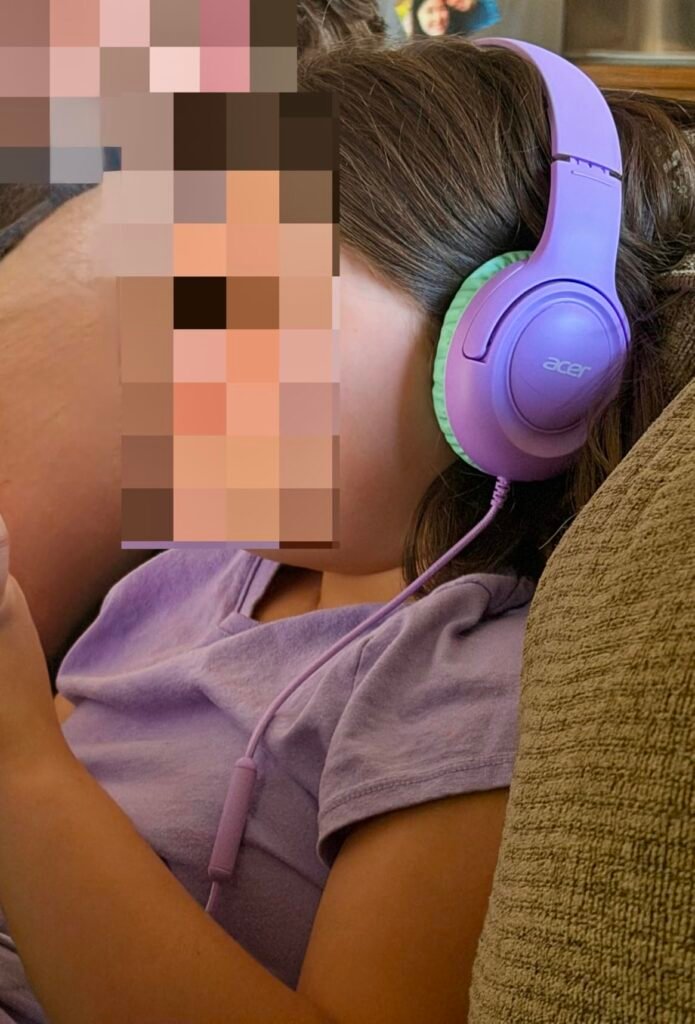
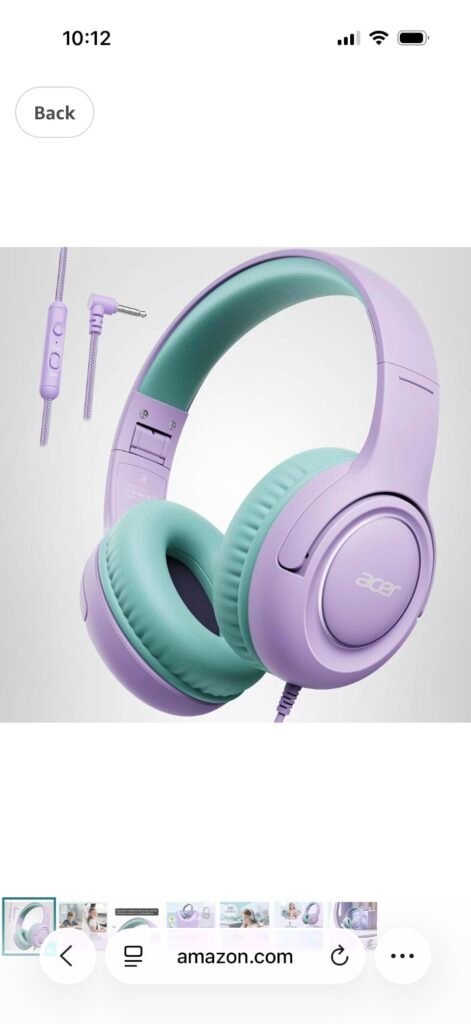
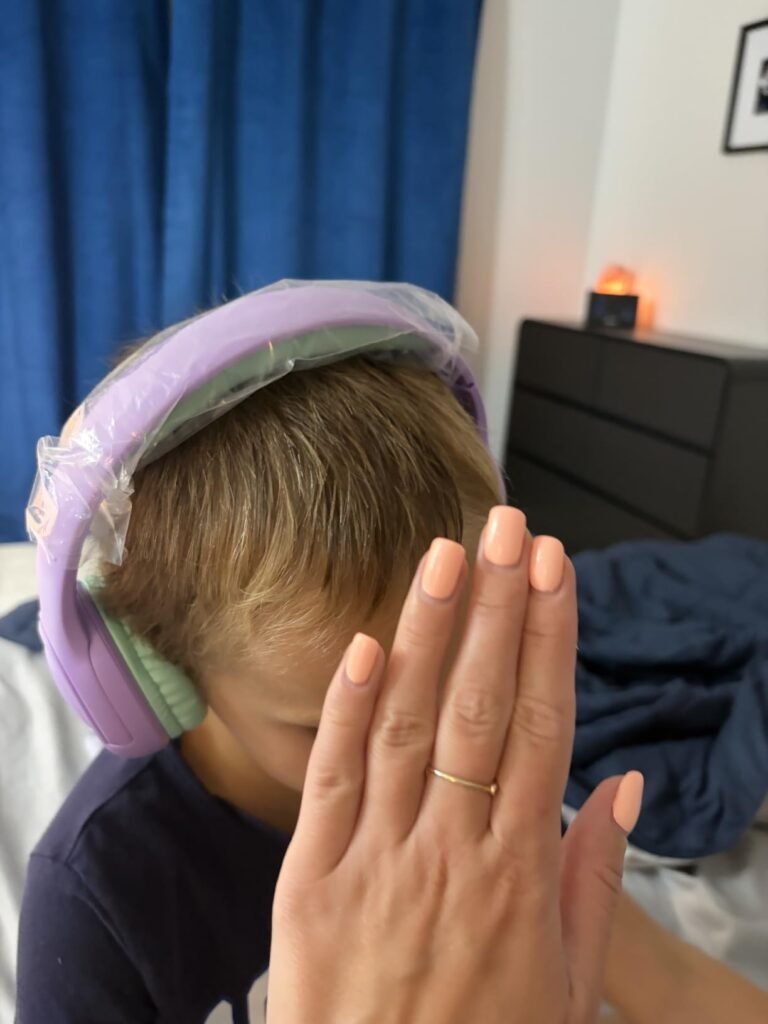
The Acer HK03 delivers surprising value under $12 by leveraging the recognized Acer brand name to offer reliable wired kids headphones with genuine safety certifications. For parents who want a trusted-brand purchase without paying premium prices, this hits the accessible price point without the quality concerns that come with completely unknown budget brands.
We may earn a commission when you buy through this link, at no additional cost to you.
The dual 85/94 dB volume limiter meets strict US market safety regulations, and the CPSIA-approved hypoallergenic materials matter for kids with sensitive skin who react to cheaper synthetic padding. Ultra-soft breathable over-ear cushions and an adjustable headband ensure comfortable fit across different head sizes and shapes, even during extended school day use.
The foldable design collapses neatly into backpacks and school bags, making it practical for the daily commute between home and classroom. Universal 3.5mm compatibility works with phones, tablets, laptops, Kindles, and any device with a headphone jack, eliminating the need for adapters or dongles. The built-in microphone handles online learning and voice communication without requiring separate headset gear.
The Consumer Product Safety Improvement Act (CPSIA) sets US safety standards specifically for products intended for children under 12. CPSIA-approved materials have been tested for lead content, phthalates, and other harmful substances that can affect developing bodies. When you see this certification on kids headphones, you’re getting verified safety compliance rather than assumed suitability. This matters because kids often chew on cables and touch their eyes after handling equipment, making material safety a genuine health consideration.
This is an excellent low-risk pick for parents outfitting kids with school headphones on a budget, or for families needing multiple pairs for siblings without significant investment. The 12-month warranty provides basic coverage, and the Acer brand offers accessible customer service if issues arise. Buyers wanting longer warranties should consider the noot K11 or iClever alternatives with 24-month coverage.
Buyers wanting extended 24-month warranty coverage or wireless Bluetooth connectivity.
We may earn a commission when you buy through this link, at no additional cost to you.
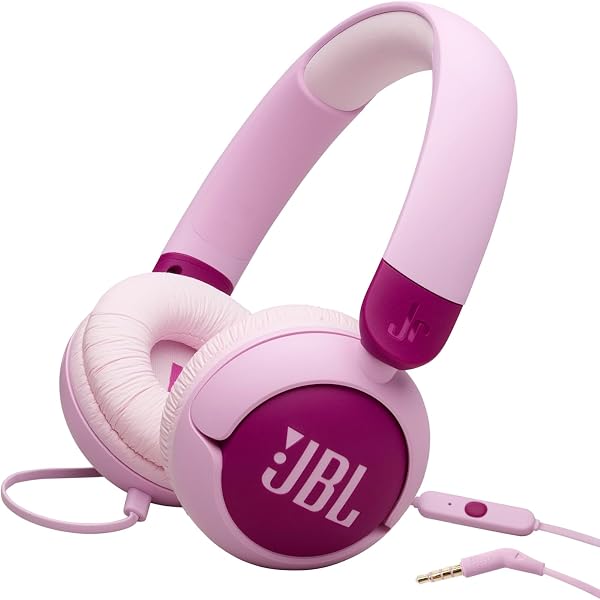
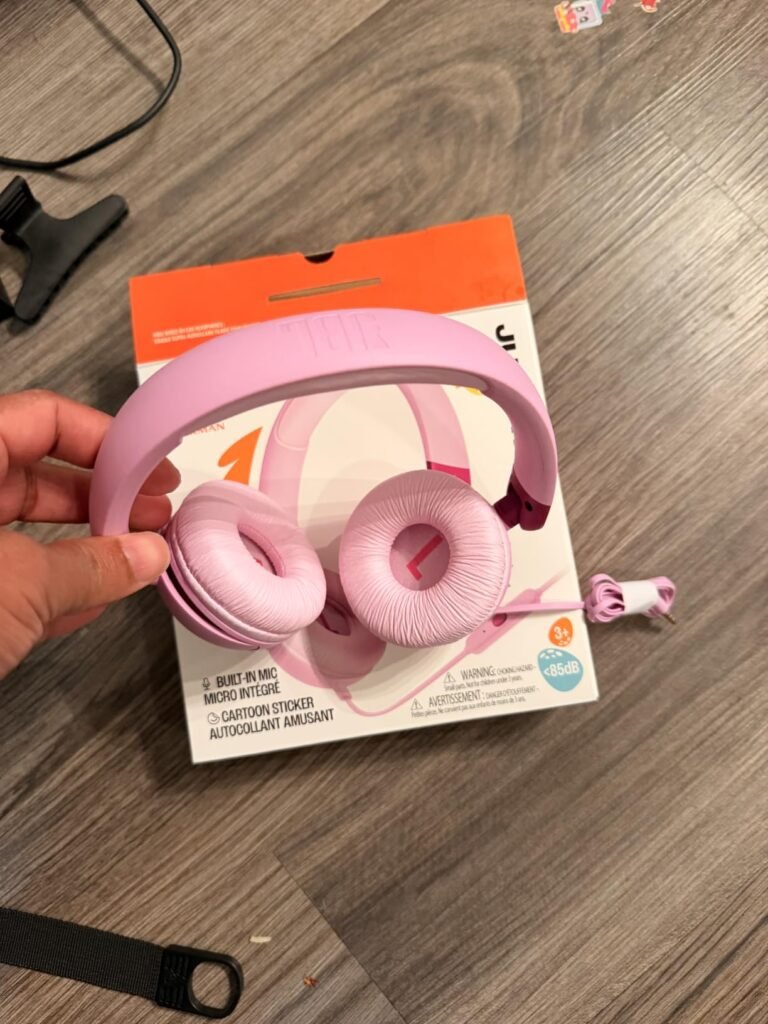
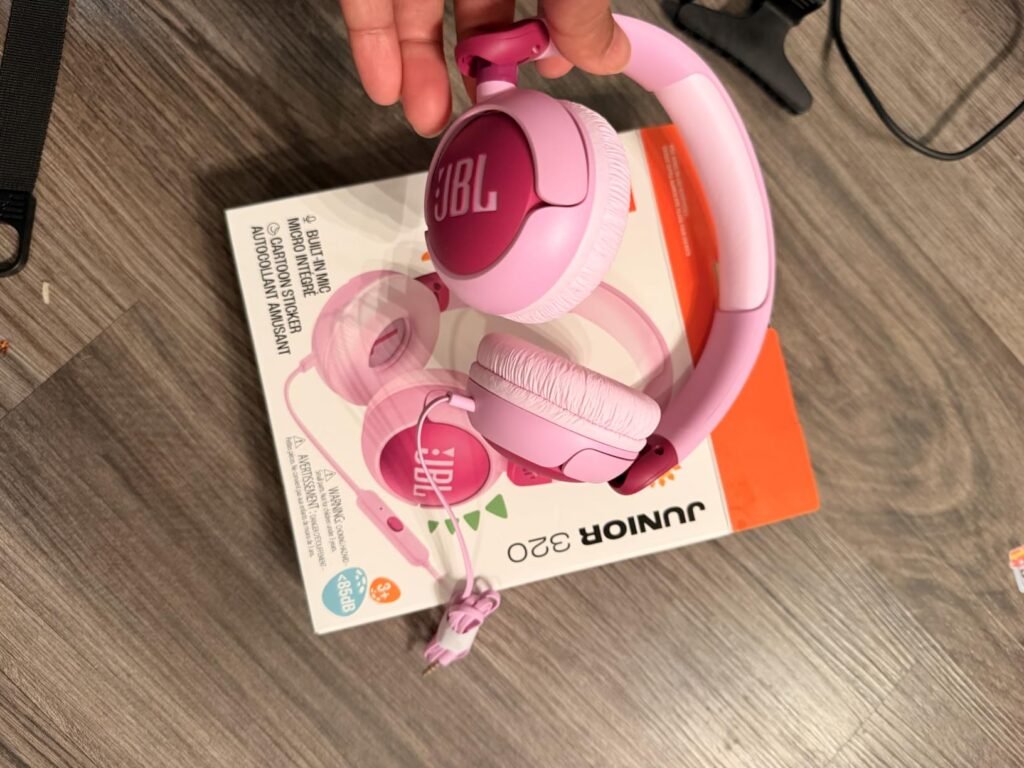
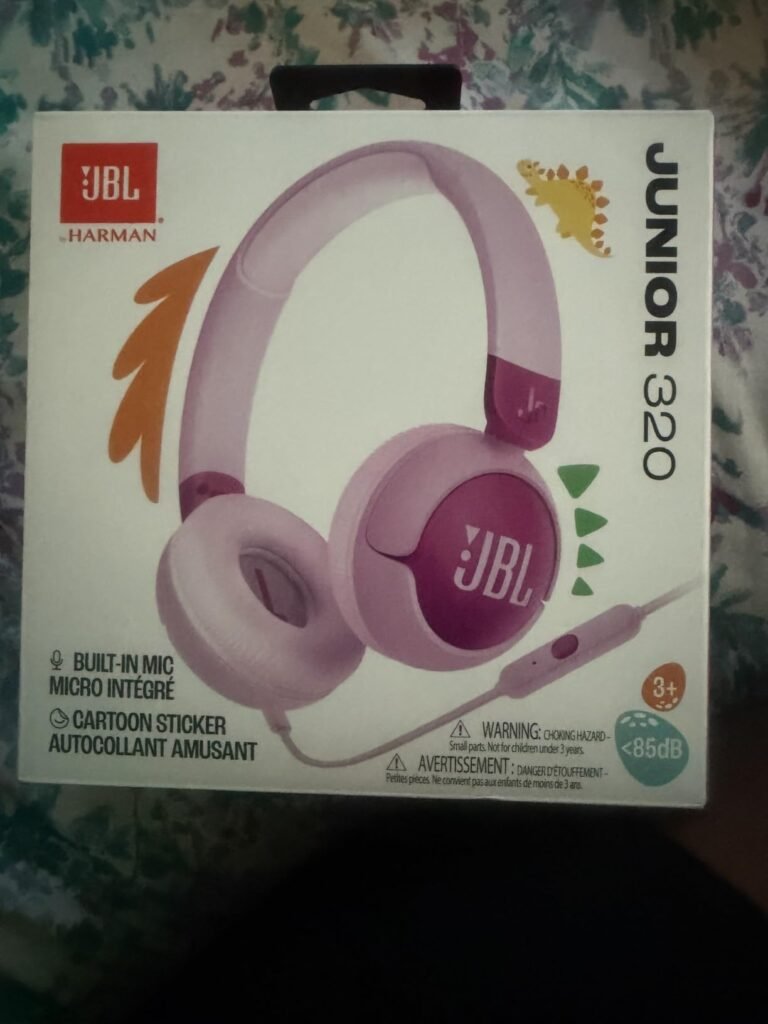
The JBL Junior 320 brings the audio brand's legendary sound quality reputation to kids at a moderate price. For families who value JBL's audio heritage or want kids to experience the same brand quality parents enjoy in adult headphones, this delivers the recognizable JBL character in a safety-focused design engineered specifically for younger listeners.
We may earn a commission when you buy through this link, at no additional cost to you.
The safe sound design locks maximum volume at 85 dB with no user-adjustable higher option, which some parents strongly prefer because it removes the risk of kids switching to unsafe levels. The built-in microphone handles online classes and voice communication without requiring separate equipment, and the round earcup design grips small heads well while reducing sound leakage that could disturb others in shared spaces.
The 12mm thick padded headband distributes weight comfortably across the top of the head, which matters during long school days when kids wear headphones for extended periods. Kid-friendly comfort features combined with the compact foldable design that folds flat make these practical for the daily transition between home, school, and travel. The customizable JBL sticker set lets kids personalize their pair, encouraging ownership and reducing loss.
Dual-limit headphones with a switchable higher volume mode can be useful for older kids in specific situations, but they also create the risk of kids leaving the switch on the higher setting for daily use. A locked 85 dB limit removes this variable entirely, ensuring consistent hearing protection regardless of how the headphones are used. For parents who want to eliminate any temptation to bypass safety limits, locked-volume designs like the JBL Junior 320 provide clearer peace of mind.
This is a good pick for families who prioritize brand trust and audio quality over the lowest possible price. The JBL name provides confidence in build quality and customer service, though the wired-only design limits versatility compared to the wireless JBL 320BT. Kids who need microphone-free listening or wireless freedom should consider other options in this guide.
Families wanting the flexibility of adjustable volume limits or the lowest possible entry price.
We may earn a commission when you buy through this link, at no additional cost to you.
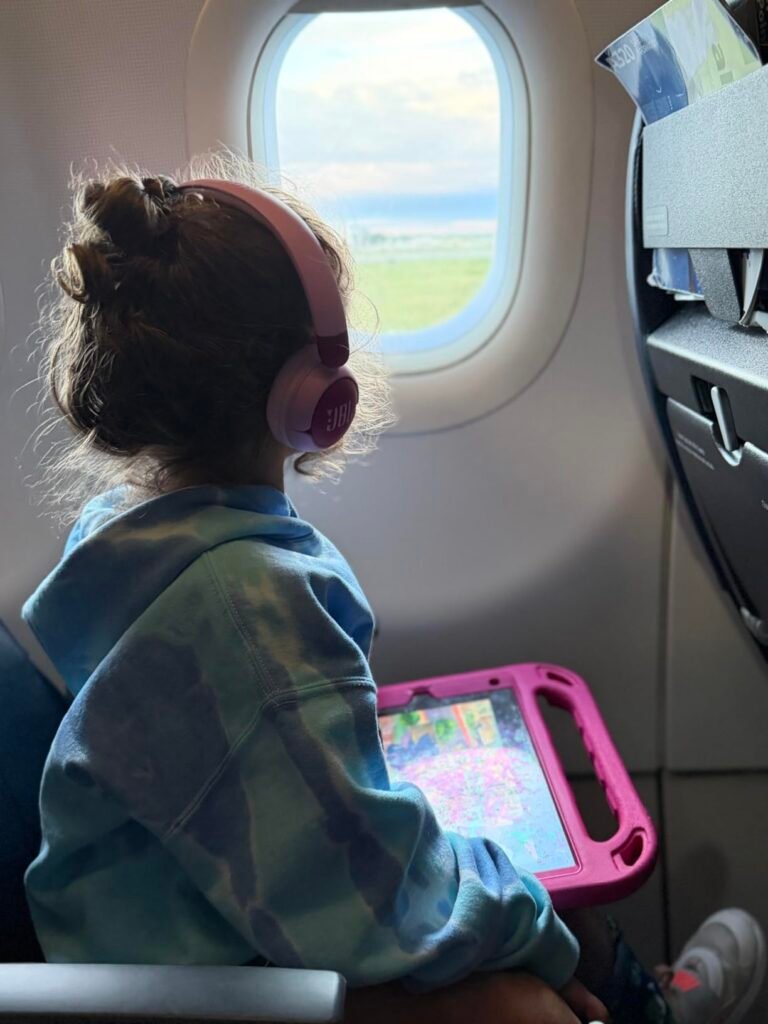
The JBL Junior 320BT stands out through its parental control app that gives adults genuine oversight of how kids use their headphones. Beyond the standard 85 dB automatic maximum, parents can set custom lower volume limits, restrict daily listening time, and view real-time reports showing exactly how long and at what volume kids are listening throughout the day.
We may earn a commission when you buy through this link, at no additional cost to you.
PIN-protected settings mean kids can’t override parental configurations even if they know their way around the app, adding security that matters for tech-savvy older kids. The dedicated JBL Headphones app provides visibility that helps parents identify problematic listening patterns before they cause hearing issues, and the daily and weekly usage reports create data-driven conversations about safe listening habits.
The 50-hour battery life covers weeks of typical use between charges, and USB-C quick charging delivers 3 hours of playback from just 5 minutes of charging when time is short. The built-in microphone handles video calls and online learning, and the 12mm padded headband adjusts to grow with kids over time. Three color options and included personalization stickers let kids make the headphones truly their own.
Traditional volume-limited headphones set a maximum level and trust that’s enough. Modern app-based controls acknowledge that different situations call for different limits, and that visibility into actual usage patterns helps parents make informed decisions. Being able to see that a child spent 3 hours yesterday at high volume can prompt conversations about listening habits that pure hardware limits cannot facilitate. For engaged parents who want data rather than just constraints, this level of insight is genuinely valuable.
This is the premium pick for parents who want detailed control over their child’s headphone use, particularly for families concerned about screen time and hearing protection habits. The app-based monitoring is genuinely unique in this price range. Families satisfied with basic 85 dB protection and simpler operation may find the extra features unnecessary and prefer the less expensive iClever BTH12 or JoySpark alternatives.
Budget-focused buyers or parents who prefer set-and-forget hardware limits without app engagement.
We may earn a commission when you buy through this link, at no additional cost to you.
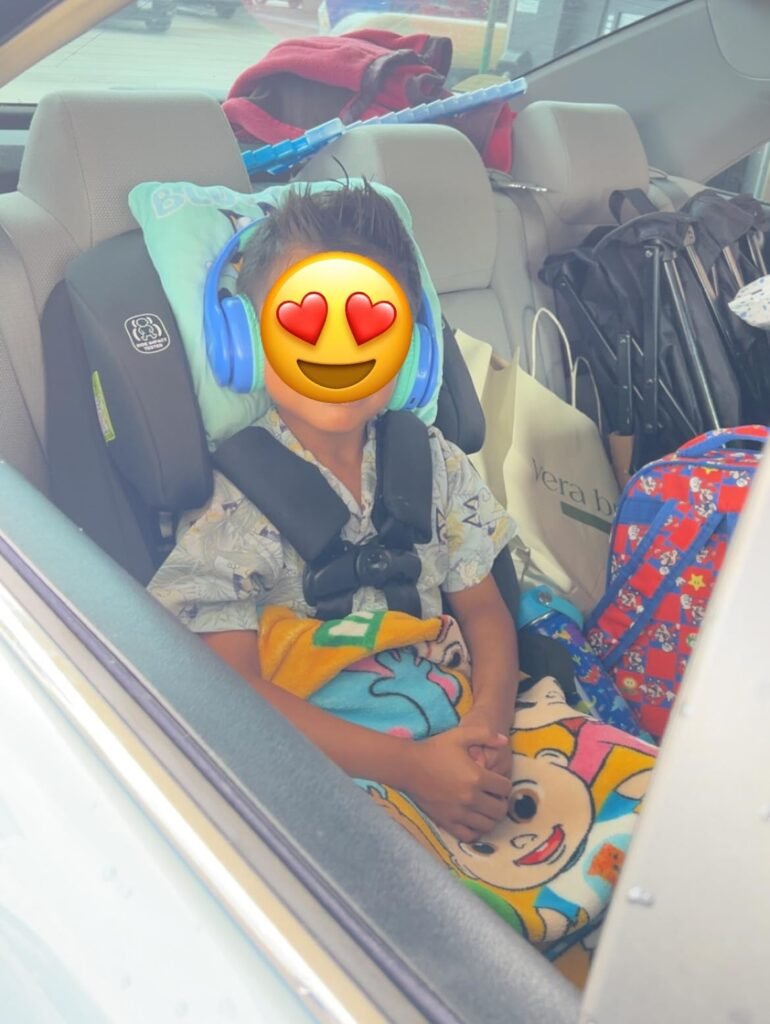
The JoySpark wireless headphones prioritize comfort through memory foam ear cushions that conform to individual head shapes for reduced pressure during extended wear. For kids who wear headphones for hours during school, gaming, or entertainment, this comfort focus matters more than many parents realize since ill-fitting headphones get abandoned regardless of features.
We may earn a commission when you buy through this link, at no additional cost to you.
The dual volume limit at 85 or 94 dB provides flexibility across situations, and the 40mm speaker unit delivers rich bass and lifelike audio quality that makes music and videos genuinely enjoyable. Combination keys prevent accidental volume changes that could bypass the safety limit, and the fully adjustable headband with soft padding ensures a strain-free experience across different head sizes and growth stages.
Bluetooth 5.3 provides stable connections with improved range and battery efficiency compared to older wireless standards. Single-button control makes operation simple for kids to manage independently, and the built-in microphone handles video calls and online learning without requiring separate equipment. The 60-hour battery life covers extensive use between charges, and the 3.5mm backup jack means dead batteries don’t mean silence, since you can plug in and continue listening.
Standard foam padding on kids headphones can create pressure points that become uncomfortable after 30-60 minutes of wear. Memory foam conforms to individual ear and head shapes, distributing pressure more evenly and adapting to different users in shared household situations. This is particularly valuable for kids with sensory sensitivities who may reject headphones that feel uncomfortable, since better cushioning increases the likelihood they’ll actually wear them consistently rather than pulling them off at every opportunity.
This is the sweet spot pick for families wanting comfort-focused wireless capability under $15, which is remarkable value for the feature set. The memory foam cushioning genuinely improves the wearing experience over standard foam padding. Buyers wanting premium audio quality or app-based parental controls should consider the JBL alternatives, and those on tighter budgets can find capable wired options at lower prices.
Audiophiles or buyers wanting premium audio quality and app-based parental monitoring features.
We may earn a commission when you buy through this link, at no additional cost to you.
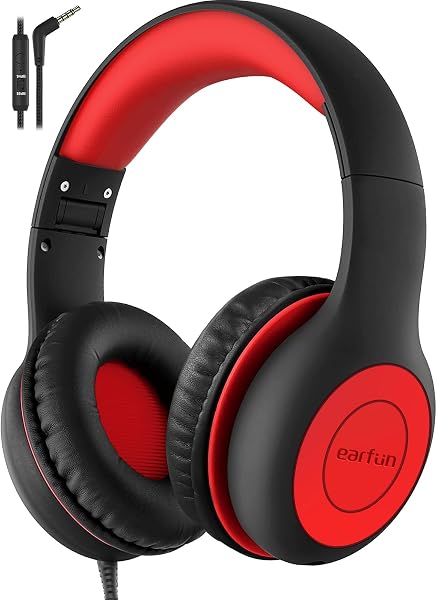
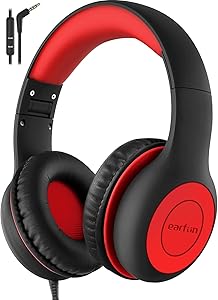
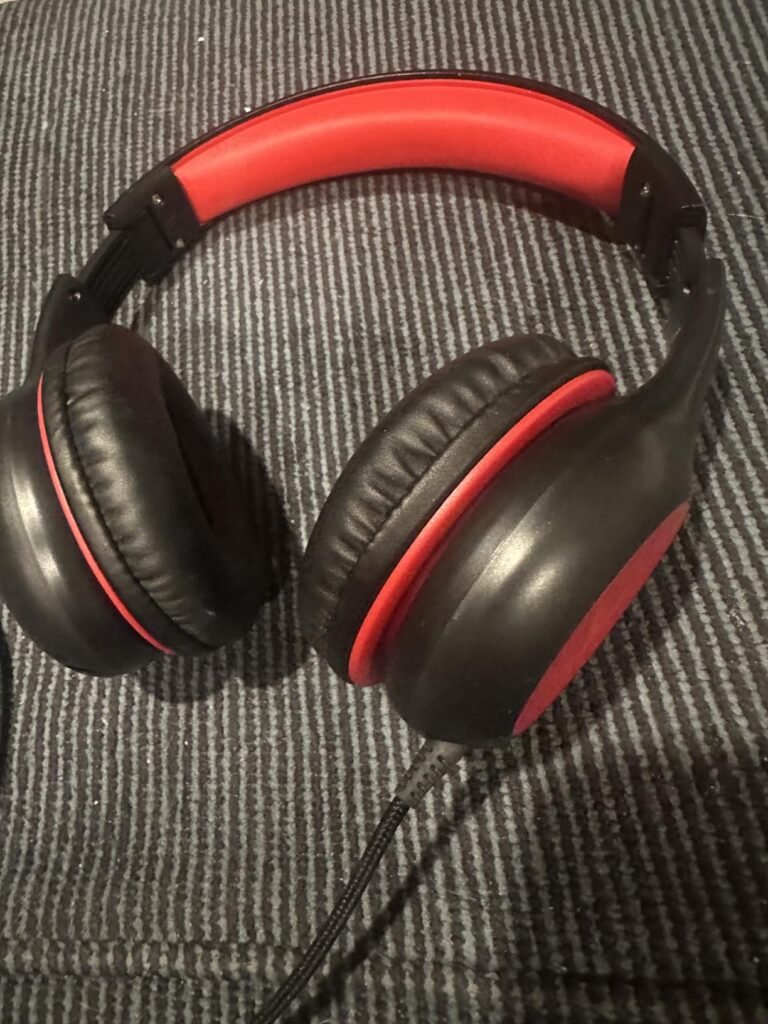
The EarFun K1 stands out by using recycled and sustainable materials that meet CPC and CPSIA safety standards, making them a good choice for environmentally conscious families who want to reduce plastic waste while still providing quality headphones for their kids. The dual 85/94 dB volume limits protect hearing while allowing flexibility for noisier environments when needed.
We may earn a commission when you buy through this link, at no additional cost to you.
The nylon braided cable resists tangling and handles the twisting and pulling that comes with everyday kid use, extending the practical lifespan significantly beyond standard rubber-cord alternatives. The 40mm soundstage drivers deliver balanced stereo sound with rich bass and crisp highs, making these enjoyable for music, videos, and games at safe volumes rather than tinny sound that kids might reject.
The HD microphone on the audio cable makes online learning and voice communication clear, and inline controls handle play/pause, call answering, and track skipping without reaching for the connected device. The 3.5mm audio sharing jack lets a second pair of headphones plug in for dual listening without splitters or extra cables, which is invaluable for road trips and shared entertainment. Compatibility covers Kindle Fire tablets, Chromebooks, Nintendo Switch, PCs, and any 3.5mm audio jack device.
Kids outgrow and lose headphones frequently, which contributes to significant electronic waste over the years of childhood. Headphones made from recycled materials reduce the environmental impact of this natural churn, and durable construction that lasts longer means fewer replacements over time. For environmentally conscious families, choosing sustainable options for frequently replaced items like kids headphones makes more meaningful difference than most single purchases can.
This is a strong pick for families who prioritize sustainability alongside safety and functionality. The recycled materials and safety certifications provide peace of mind, and the audio sharing capability handles common family scenarios well. Buyers wanting wireless capability should consider the EarFun K2 or iClever BTH12 alternatives, and those on the strictest budget can find similar features from other brands at slightly lower prices.
Families wanting wireless Bluetooth freedom or the absolute lowest possible price.
We may earn a commission when you buy through this link, at no additional cost to you.
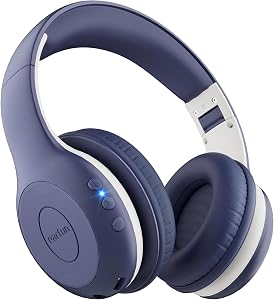
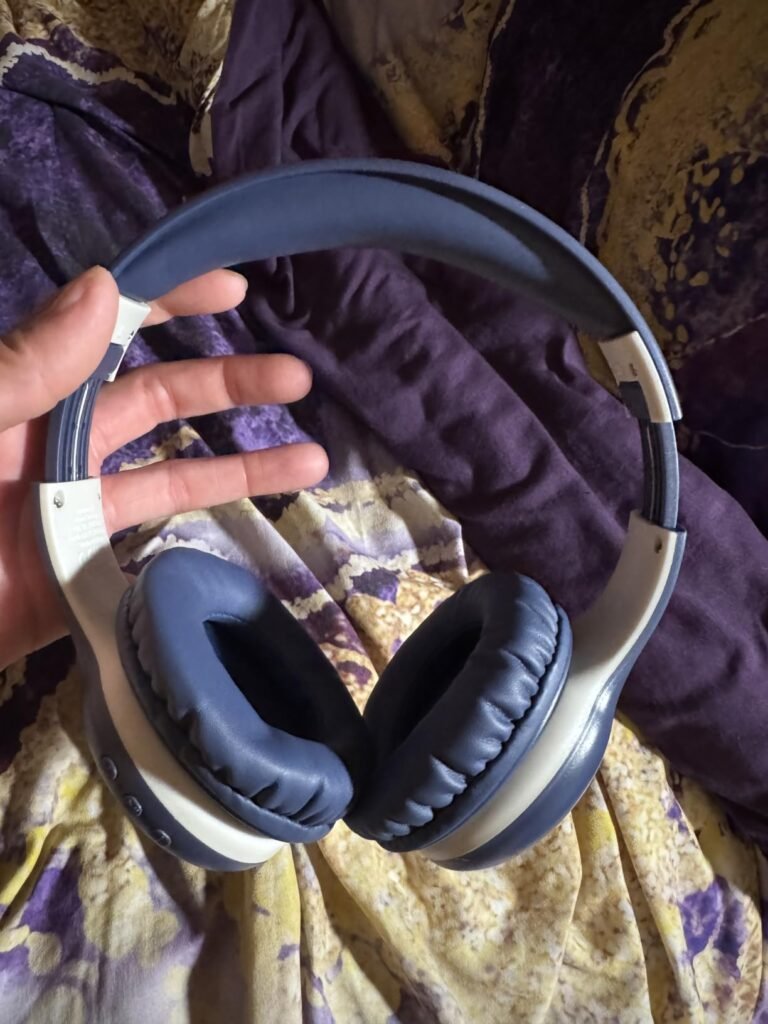
The EarFun K2 offers three volume limit options at 74, 85, or 94 dB, providing exceptional flexibility across different age ranges and listening environments. The 74 dB setting is stricter than typical kids headphones and ideal for toddlers or younger children, while 85 dB meets WHO recommendations for older kids and 94 dB accommodates specific noisy environment situations when needed.
We may earn a commission when you buy through this link, at no additional cost to you.
The kids-friendly materials comply with RoHS 2.0 and FCC standards and pass CPC certification, providing verified safety across multiple regulatory frameworks. Soft memory foam padding on both headband and earpads ensures comfortable wearing during extended school days or travel, and the reliable, foldable construction handles being twisted, turned, and bent without breaking under normal use.
Bluetooth 5.4 represents the latest wireless standard with improved connection stability, reduced latency, and better battery efficiency than older versions. The 40mm drivers deliver balanced stereo sound with clear vocals and dynamic bass, and the built-in microphone provides clear hands-free calling for online courses and communication. The 60-hour battery life covers extensive use between charges, and USB-C charging delivers extra playback quickly when needed.
The 85 dB standard exists as a general safe limit, but different age groups have different sensitivities and tolerance levels. Younger children benefit from stricter 74 dB limits that provide additional safety margin during their developing years. Older kids may need 85 dB in normal environments to hear content clearly at reasonable volumes. Having three options rather than one or two lets you match protection to actual age and situation rather than settling for a compromise that’s either too permissive for young children or too quiet for older ones.
This is an excellent pick for families with multiple kids of different ages, since the triple volume options can adapt to different children rather than needing separate headphones for each. Under $15 for a Bluetooth 5.4 wireless pair with comprehensive safety certifications is remarkable value. Parents who want the very newest wireless standards and safety certifications with wireless freedom will find this offers strong value.
Families wanting the absolute simplest single-volume operation or premium audio features.
We may earn a commission when you buy through this link, at no additional cost to you.
Selecting the right kids headphones means balancing hearing safety, comfort, durability, and features against your child’s age, activities, and how rough they typically play with electronics. This section walks through the decision factors that separate lasting purchases from headphones that break within weeks or get rejected because they’re uncomfortable.
Volume limiting is the single most important feature that separates kids headphones from adult alternatives. The 85 dB level is the World Health Organization’s recommendation for maximum safe daily exposure over 8 hours without hearing damage risk. Every headphone in this guide includes some form of volume limiting, but the implementations vary significantly. Some use fixed hardware caps that cannot be bypassed, while others offer switchable multi-level limits that provide flexibility at the cost of removing safety guarantees.
Multi-level limiters like the EarFun K2’s 74/85/94 dB options provide age-appropriate protection since younger children benefit from stricter limits while older kids may need slightly higher levels for content clarity in noisy environments. Locked-limit designs like the JBL Junior 320 remove the risk of kids switching to unsafe levels but sacrifice the flexibility to accommodate different situations. App-controlled options like the JBL Junior 320BT let parents customize limits precisely and monitor actual usage patterns.
For toddlers and young children, prioritize models with strict 74-85 dB limits or locked-single-level designs. For older kids using headphones in varied environments, multi-level limiters offer useful flexibility. For tech-engaged families, app-based parental controls provide the most granular oversight.
Wired headphones offer simplicity, reliability, and zero battery concerns that make them ideal for school use, online learning, and situations where connection stability matters most. They plug into any 3.5mm audio jack device without pairing complications, work continuously without charging, and typically cost less than wireless alternatives. The downside is cable management: cables tangle in backpacks, snag on chairs, and represent the most common failure point when yanked or twisted repeatedly.
Wireless Bluetooth headphones eliminate cable frustrations and provide freedom of movement that matters for travel, entertainment, and independent kid use. Battery life on modern kids Bluetooth headphones ranges from 15 hours to over 80 hours, dramatically reducing charging burden. The tradeoffs include higher initial cost, occasional pairing issues, dependence on device Bluetooth support, and the need to remember charging routines. Some hybrid models like the JoySpark include 3.5mm backup jacks for the best of both approaches.
For elementary school use with laptops and Chromebooks, wired models like the noot K11 or EarFun K1 provide reliable simplicity. For travel, entertainment, and older kids who value wireless freedom, Bluetooth models like the iClever BTH12 or JBL Junior 320BT offer meaningful convenience benefits.
Adult-sized headphones simply don’t fit small heads properly, resulting in loose cups that don’t seal properly or headbands that slide down constantly. Kid-specific headphones use smaller drivers and adjustable headbands designed for head circumferences from toddler to teen ranges. Look for models with wide adjustment ranges like the noot K11’s 3-16 age span if you want headphones that grow with your child, or age-specific sizing if you want optimal fit for a particular developmental stage.
Padding quality directly affects how long kids can wear headphones comfortably. Cheap foam padding creates pressure points that become uncomfortable within 30-60 minutes, causing kids to reject headphones regardless of features. Memory foam cushioning like the JoySpark and EarFun K2 conforms to individual head shapes for better long-term comfort. Ultra-soft over-ear designs like the iClever HS19 also block ambient noise better than on-ear alternatives, allowing lower volumes for equivalent perceived loudness.
For younger children, prioritize models with narrow age ranges and premium padding since fit and comfort determine whether headphones get used consistently. For older kids and teens, wider adjustment ranges provide better value across growth spurts. Try to have your child wear a few options before deciding when possible.
Kids are hard on electronics. Headphones get thrown into backpacks, dropped on floors, sat on, twisted, and yanked constantly. Quality kids headphones use reinforced materials that survive this abuse rather than cheap plastic that snaps at the first significant stress. Look for models mentioning reinforced construction like the iClever BTH12, matte finishes that resist fingerprint damage like the Candy Bila, and metal or reinforced plastic hinges where the headband meets the ear cups.
Cable design is the single most common failure point on wired kids headphones. Nylon-braided cables like those on the EarFun K1 and noot K11 resist tangling and handle bending better than standard rubber cables that eventually develop internal wire breaks. Foldable designs reduce cable stress by allowing more compact storage, while tangle-free short cables are less prone to snags. For wireless models, quality touch controls and hinges withstand repeated use better than cheap alternatives.
For younger and rougher kids, prioritize reinforced construction, nylon-braided cables, and models with warranty coverage that reflects manufacturer confidence in build quality. For gentler older kids, standard construction with foldable design often provides adequate durability at lower cost.
The shift to online learning has made microphone functionality essential for kids headphones. Built-in microphones let kids participate in video calls, virtual classes, and voice communication without requiring separate headset gear that adds cost and complexity. Most modern kids headphones include microphones as standard, but quality varies significantly. Look for HD microphone designations or noise-canceling technology if your child does frequent voice calls.
Inline microphones on wired models like the EarFun K1 and iClever HS19 place the mic near the mouth for clearer voice pickup than headband-mounted microphones. Wireless models typically use headband-mounted microphones that can pick up more ambient noise but eliminate cable management. If your child’s school or activities require frequent video participation, prioritize models with dedicated microphone quality features rather than treating the mic as an afterthought.
For students in fully in-person schools using headphones only for content consumption, microphone quality matters less and you can prioritize other features. For hybrid or online learners, invest in models with quality inline or noise-canceling microphones that ensure clear voice communication with teachers and classmates.
Battery life on wireless kids headphones ranges dramatically from about 15 hours on basic models to over 85 hours on premium alternatives like the iClever BTH12. Longer battery life matters more for kids than adults because children often forget to charge devices, don’t notice low battery warnings, and become frustrated when headphones die during favorite activities. Marathon battery life essentially eliminates the failure mode of dead-battery disappointment.
Consider how kids will typically use the headphones when evaluating battery specifications. A daily 2-hour school session over a full 5-day week uses only 10 hours, so even 30-hour battery life covers weeks between charges with typical use. Heavy use for gaming, videos, and travel can burn through battery faster, making 50+ hour options more practical for kids who use headphones extensively. Fast charging capabilities like USB-C quick charge help recover from dead batteries quickly when needed.
For typical school and light entertainment use, 25-50 hour battery life is sufficient. For heavy users, travelers, and forgetful chargers, prioritize 60+ hour battery life that essentially eliminates charging concerns. Consider whether backup wired functionality is important for when battery does inevitably die.
Kids products should meet specific safety certifications that verify materials are safe for children. CPSIA (Consumer Product Safety Improvement Act) certification confirms compliance with US safety standards for products intended for children under 12, including testing for lead content, phthalates, and other harmful substances. CPC (Children’s Product Certificate) provides similar verification. Models like the Acer HK03 and EarFun K1 explicitly mention these certifications.
Hypoallergenic materials matter for kids with sensitive skin who react to cheaper synthetic padding. Look for CPSIA-approved hypoallergenic designations or specific materials like memory foam that tend to cause fewer reactions than generic foam alternatives. For kids with known allergies or skin sensitivities, prioritize models with explicit hypoallergenic certifications rather than assuming general safety.
For infants and toddlers, prioritize explicit CPSIA certification and hypoallergenic materials since developing bodies are more sensitive to material exposures. For older kids without known sensitivities, safety certifications remain valuable but material specifics matter less. Always check for specific certifications rather than assuming general kid marketing implies verified safety.
When you first receive kids headphones, adjust the headband to fit your child’s head properly before extended wear. The headband should sit comfortably on top of the head without creating pressure points, and ear cups should fully cover the ears without pinching. Show younger kids how to put on and remove headphones properly, gripping the ear cups rather than pulling on cables or the headband. For wireless models, complete the initial charge fully and pair with your child’s primary device following the manufacturer’s instructions.
Teach kids basic care habits that extend headphone lifespan significantly. Encourage them to fold headphones properly for storage rather than shoving them into backpacks with cables tangled. For wired models, unplug by gripping the connector rather than pulling on the cable. For wireless models, remind kids to charge headphones regularly and to keep them away from water and extreme temperatures. Establish a designated home storage location so headphones don’t get lost or damaged when not in use.
Clean headphones periodically with a slightly damp cloth to remove skin oils, dust, and debris that accumulate during regular use. Avoid submerging any part of the headphones in water or using harsh chemicals that could damage materials. For cushions that become soiled, some models offer replacement ear pads that can extend the usable lifespan significantly. Check periodically that cables aren’t showing wear or that wireless connections remain stable. Address any issues promptly by contacting manufacturer customer service since most brands offer 12-24 month warranties that cover legitimate defects rather than requiring immediate replacement.
Most experts consider volume-limited headphones safe for children age 2 and older when used appropriately. For toddlers and young children, prioritize models with strict 74-85 dB limits and short listening sessions of under 30 minutes at a time. Older kids can handle longer sessions but should still follow the 60/60 rule: no more than 60 percent volume for no more than 60 minutes at a time. Very young infants should generally not use headphones.
Bluetooth headphones emit very low-power radio frequency signals that fall well within safety limits established by regulatory agencies. Current scientific consensus indicates no known health risks from typical Bluetooth exposure at these power levels. Parents concerned about any exposure can choose wired alternatives, but the practical benefits of wireless freedom for kids typically outweigh minimal theoretical concerns. Follow manufacturer usage guidelines for peace of mind.
85 dB is the World Health Organization's recommended maximum for safe daily exposure over 8 hours without hearing damage risk. At 94 dB, safe exposure time drops to about 1 hour before risk increases significantly. Dual-limit headphones with a 94 dB option can be useful in genuinely noisy environments, but the higher setting should never be the default for kids doing extended listening. Keep the switch on the 85 dB setting for regular use.
If you can hear music clearly from your child's headphones when standing an arm's length away, the volume is likely too loud even with limiters engaged. Check that the volume limiter switch is set to the safer position on multi-limit models. Watch for signs of hearing fatigue like your child asking others to repeat themselves or turning device volume up progressively over time. Regular hearing check-ups can identify any developing concerns early.
For school use with laptops and tablets, wired headphones like the noot K11 or EarFun K1 provide reliable simplicity without charging concerns. For travel, entertainment, and older kids who value freedom of movement, wireless models like the iClever BTH12 or JBL Junior 320BT offer meaningful convenience. Consider your child's age, responsibility with electronics, and primary use case when deciding. Hybrid models with both connections offer flexibility.
Well-cared-for kids headphones from reputable brands typically last 2-4 years of regular use before showing significant wear or failing. Rough treatment can shorten this dramatically, while gentle handling can extend it beyond expected lifespan. Cables are the most common failure point on wired models, while battery degradation eventually affects wireless models after 300-500 charge cycles. Warranty coverage from established brands provides protection against premature failures.
Over-ear designs like most models in this guide typically provide better comfort for extended wear and better passive noise isolation, allowing lower volumes for equivalent perceived loudness. On-ear designs are generally lighter and more portable but can create pressure points on the ears during long sessions. For most kids, over-ear designs work better for both comfort and hearing protection through better ambient noise blocking.
Sharing headphones between kids is generally fine with basic hygiene precautions like periodic cleaning of the ear cushions with a slightly damp cloth. However, models with adjustable headbands work better for shared use since fit affects both comfort and hearing protection. For families with multiple kids, consider audio-sharing models like the iClever HS19 or EarFun K1 that let two headphones connect to one device for simultaneous listening without splitters.
Most kids headphones come with everything needed for basic use. Consider adding a hard-shell carrying case for models that will be transported frequently to school or on trips, and replacement ear cushions if the originals wear out. For wireless models, an extra USB-C charging cable at your child's usual location can prevent lost cables from becoming a charging problem. Personalization stickers help kids identify their own pair in shared environments.
Yes, virtually all kids headphones in this guide work with Chromebooks, iPads, and other school devices that have 3.5mm audio jacks. Bluetooth models pair with any device supporting Bluetooth audio, including most modern Chromebooks and iPads. Check your child's specific school-issued device for either a headphone jack or Bluetooth capability before purchasing to ensure compatibility. Newer iPads without headphone jacks require Bluetooth models or a Lightning/USB-C adapter for wired connections.
The iClever BTH12 earns the top overall recommendation by combining an exceptional 85-hour battery life with dual volume limiting at 74 or 85 dB, four LED lighting modes that appeal to younger kids, and USB-C fast charging that delivers 7 hours from just 10 minutes plugged in. The reinforced construction handles real kid use, and the AUX cable option provides backup wired functionality when needed. For families wanting one wireless pair that covers school, travel, and entertainment without compromise, this hits the strongest balance of endurance, safety, and value.
For families focused on school and online learning, the EarFun K1 delivers dual 85/94 dB volume limits, CPC-certified materials, and audio sharing capability at an accessible price. Parents wanting detailed usage monitoring should consider the JBL Junior 320BT with its parental control app and PIN-protected settings. The noot K11 offers the longest 24-month warranty in a simple wired design suitable for ages 3-16, while budget-focused buyers can trust the Acer HK03 at under $12 for reliable brand-backed basics.
Start by identifying whether wired simplicity or wireless freedom better matches your child's age and typical use. Consider volume limit strictness appropriate to your child's age, and prioritize comfort features like memory foam cushioning for kids who wear headphones for extended periods. Use the comparison table and buying guide above to narrow your options, and pick the pair that matches how your child will actually use them rather than aspirational scenarios that add cost without value.