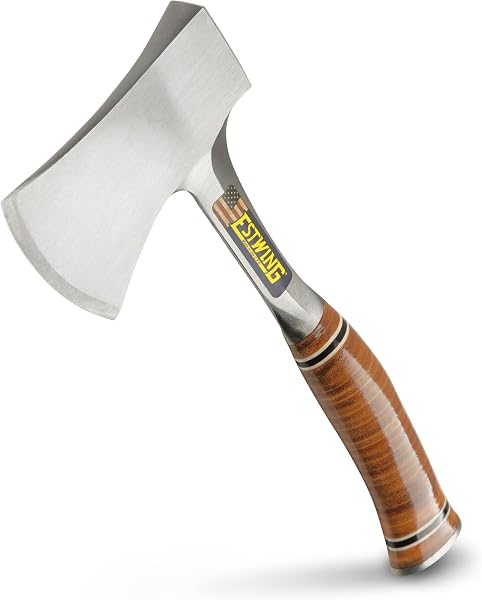
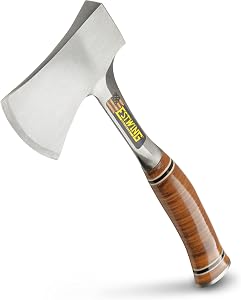
ESTWING Sportsman's Axe
9.6Editor score14-inch single piece
Leather grip handle
4-inch cutting edge
Ballistic nylon sheath
Find the right hatchets for 2026. We compare 10 standout options by build quality, useful features, owner feedback, value, and everyday trade-offs.
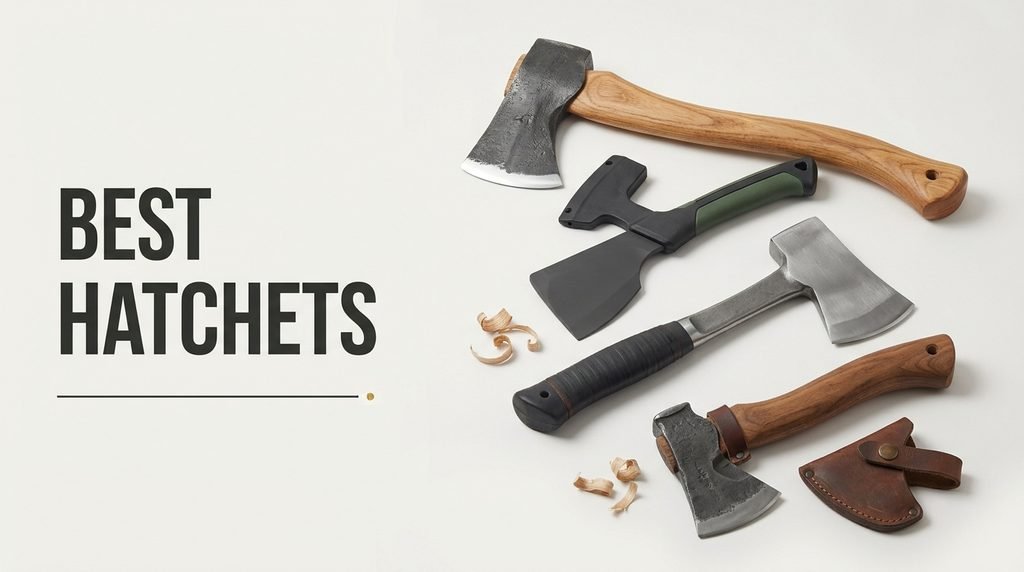
Find the right hatchets for 2026. We compare 10 standout options for camping, bushcraft, and firewood prep, evaluating head weight, handle material, blade geometry, forging quality, sheath protection, grip comfort, and overall value for weekend campers, backpackers, and serious outdoor enthusiasts who need a reliable chopping tool.
Hatchets vary dramatically in construction, from single-piece American forged steel to Swedish hand-forged heads mounted on hickory handles. Some models prioritize splitting power with heavy heads and S-curved grips, while others emphasize backpack-friendly weight for extended trips. Handle material choices also affect shock absorption, durability, and the overall feel in use.
This guide covers budget-friendly options under twenty dollars alongside premium Swedish and American hand-forged axes built for a lifetime of service. Whether you need a basic camping tool or a heirloom-quality bushcraft axe, the comparisons below highlight the practical trade-offs that matter most when choosing a hatchet for your specific outdoor needs.
We compared 10 hatchets using the details that actually help a buyer decide: head weight, overall length, blade geometry, steel quality, handle material, grip ergonomics, sheath construction, head-to-handle attachment method, country of origin, owner feedback, and overall value. The notes focus on practical trade-offs so each pick connects to how campers, backpackers, bushcrafters, and homeowners actually chop limbs, split kindling, and process firewood in the field.


Compare key features, scores, and current prices side by side. A shorter feature list means fewer details were available, not necessarily fewer capabilities.



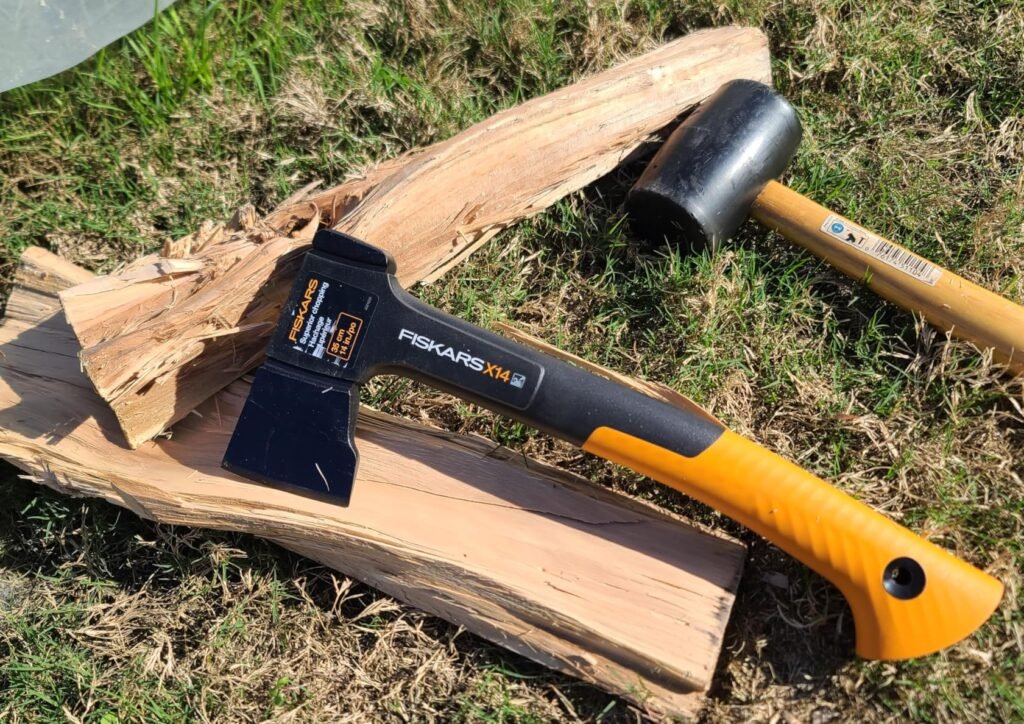
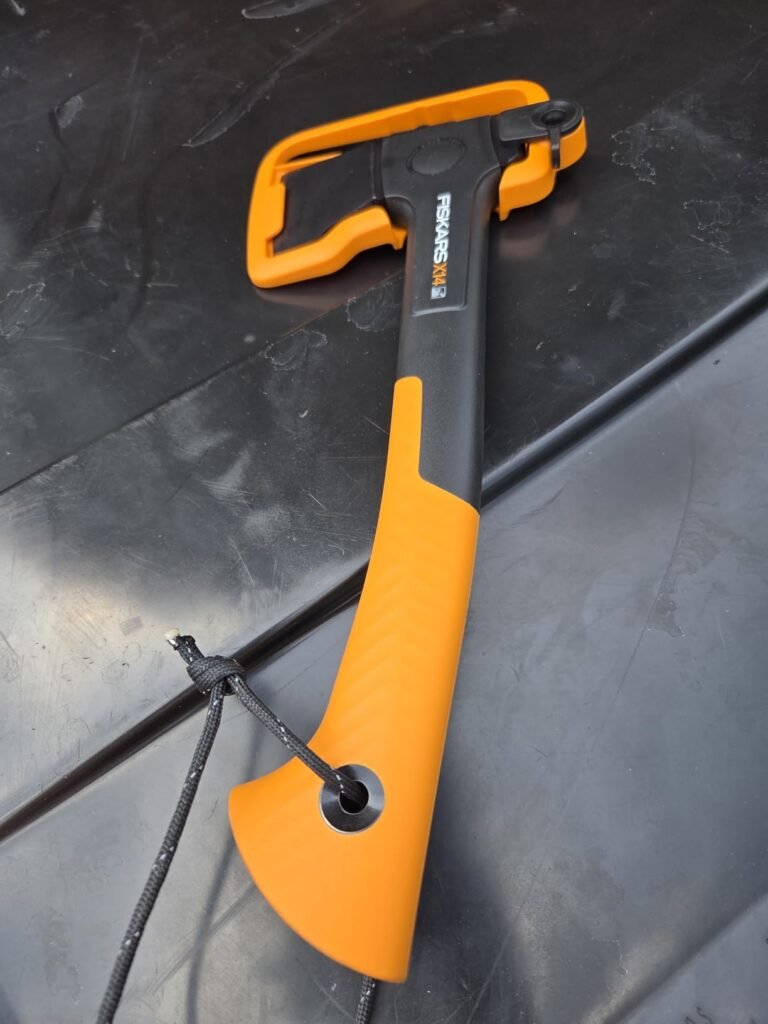
The Fiskars X14 Universal Axe holds the highest owner rating in this comparison at 4.9 stars, which is a remarkable achievement across a large pool of users. The design is specifically tuned for limbing and chopping tasks, with a thin wide blade edge that produces clean cuts in fresh resinous wood like spruce and pine. For general-purpose outdoor chopping and firewood prep, this is one of the most refined options available.
We may earn a commission when you buy through this link, at no additional cost to you.
The double-hardened forged steel blade benefits from Fiskars’s proprietary blade-grinding process, which produces a sharper edge that holds up longer under repeated impacts. The low-friction coating prevents the blade from sticking in wood after a chop, which is one of the most frustrating issues with cheaper hatchets. Combined with the thin blade profile, the X14 slices through soft and medium-density wood with noticeably less effort than wedge-shaped alternatives.
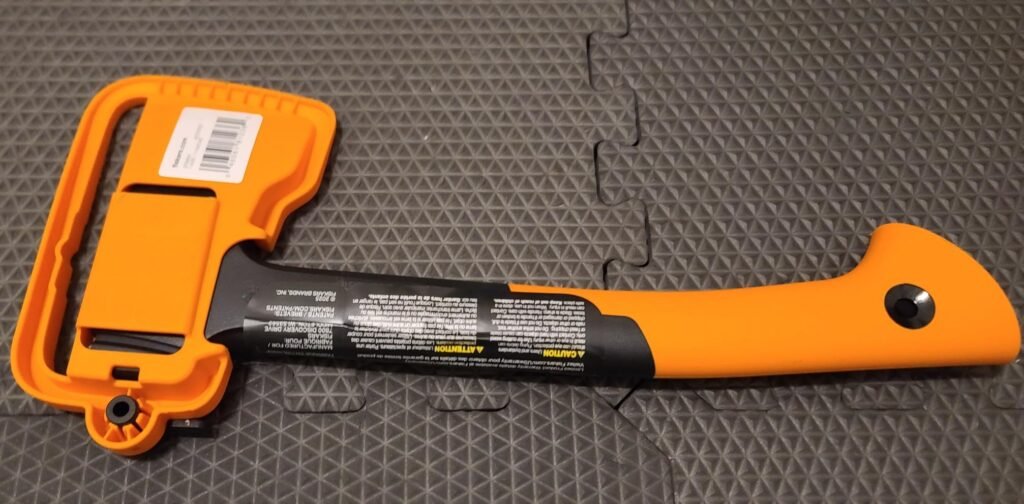
The ergonomic curved handle keeps your wrist in a natural, comfortable position during the swing, which reduces strain during extended use. The textured SoftGrip zone provides a confident, secure hold even when your hands are sweaty or wet from working in rain. The insert-molded head connection resists the loosening that affects traditional wedge-mounted axes, and the FiberComp handle provides superior overstrike protection that resists cracking if you miss your target.
Different blade geometries excel at different tasks. The thin, wide blade on the Fiskars X14 is optimized for chopping across the grain of soft and medium-density woods like spruce, pine, and fir, which are common in camping and firewood scenarios. For splitting dense hardwoods like oak or hickory along the grain, a thicker wedge-shaped blade like the Purple Dragon Splitting Axe will perform better. Matching your hatchet to the wood types you typically work with can dramatically improve your results.
This hatchet is the right choice for buyers who want proven engineering, excellent ergonomics, and the backing of overwhelming positive owner feedback. The thin blade profile excels at chopping and limbing but is less ideal for splitting dense hardwood, where a thicker wedge-shaped blade would perform better. For camping, bushcraft, and general outdoor chopping tasks, the X14 is one of the best values in the category.
Buyers who primarily split dense hardwoods and would benefit more from a dedicated splitting axe with a wedge-shaped blade profile.
We may earn a commission when you buy through this link, at no additional cost to you.
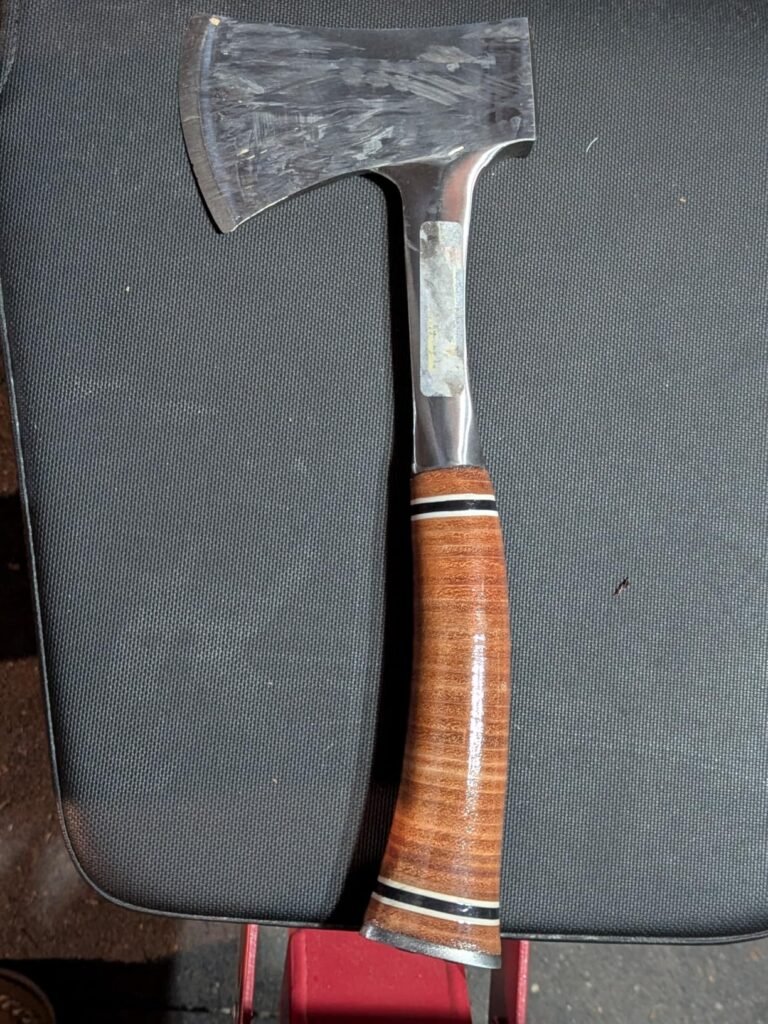
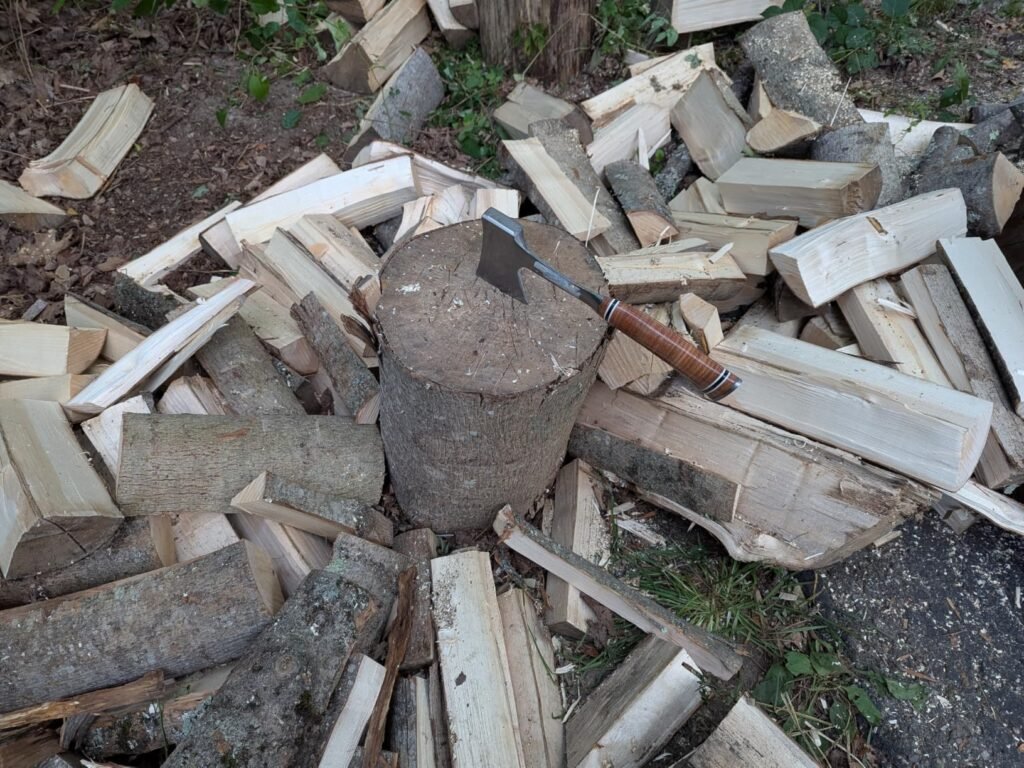
The Estwing Sportsman's Axe is the quintessential American-made hatchet, forged from a single piece of solid steel that eliminates the weak points found in heads that are welded or wedged onto separate handles. This one-piece construction is the defining advantage of the Estwing design: there is no joint that can loosen over time, no handle that can crack and separate from the head, and no risk of the head flying off mid-swing. For buyers who want a hatchet that will outlast them, this is as close to indestructible as camping tools get.
We may earn a commission when you buy through this link, at no additional cost to you.
The 14-inch overall length and 4-inch hand-sharpened cutting edge make it versatile across typical camp chores: splitting kindling, trimming limbs, driving tent stakes, and processing small firewood. The forged steel construction gives the axe a reassuring heft that lets gravity do much of the work during chopping, which reduces the fatigue that comes from forcing lighter hatchets through dense wood. The leather grip is hand-sanded and lacquered to provide both comfort and lasting durability.
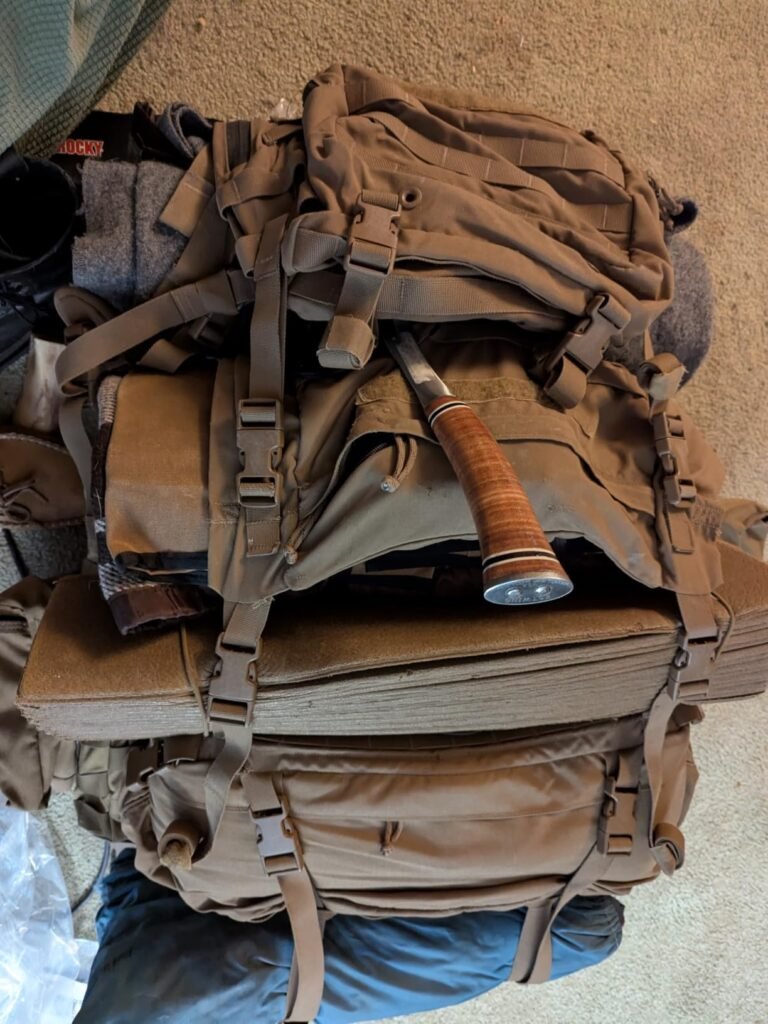
The stacked leather grip is one of the most distinctive features of the Sportsman’s Axe. Made from genuine leather washers stacked and compressed onto the steel handle, it provides a warm, tactile surface that contrasts with the colder feel of all-metal or synthetic grips. The grip breaks in over time, molding slightly to your hand and becoming more comfortable with regular use. The included ballistic nylon sheath has a convenient belt loop for carrying.
Traditional hatchets attach the head to a wooden or synthetic handle using wedges, rivets, or epoxy. Over time, these connections can loosen as the wood dries and shrinks or as repeated impacts stress the joint. A one-piece forged steel hatchet eliminates this entire failure mode because the head and handle are literally the same piece of steel. For buyers who want to avoid ever worrying about head retention during a hard swing, the Estwing design provides unmatched peace of mind.
This hatchet is the right choice for traditionalists, outdoor professionals, and anyone who values American craftsmanship and prefers a tool that will serve reliably for decades. The main trade-off is that the solid steel handle transmits more impact shock to your hand than fiberglass or wood handles do, which can cause fatigue during extended chopping sessions. For moderate use and buyers who appreciate heirloom quality, the Estwing is hard to beat.
Backpackers prioritizing minimum weight or buyers who experience hand fatigue from the greater shock transmission of solid steel handles.
We may earn a commission when you buy through this link, at no additional cost to you.
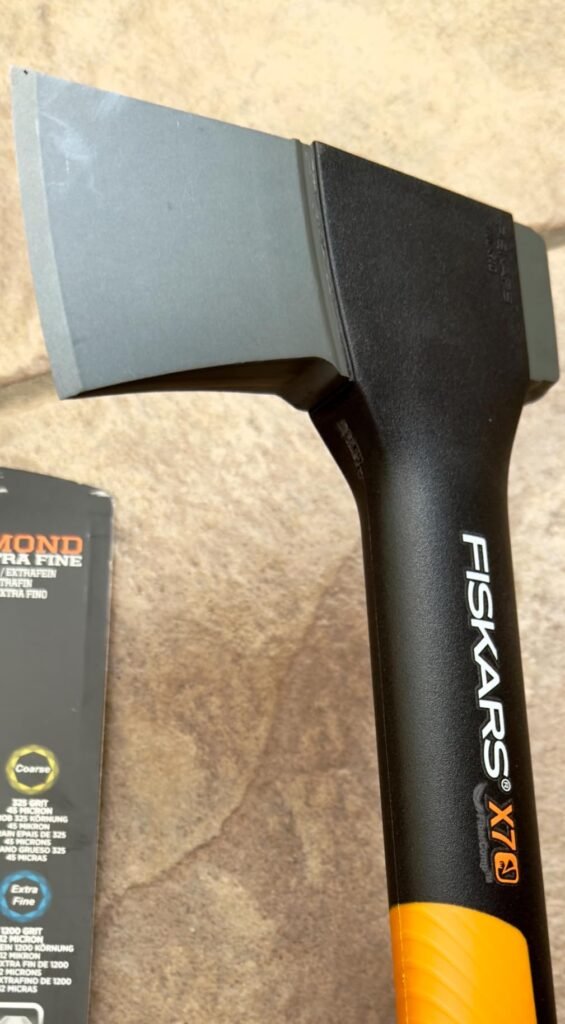
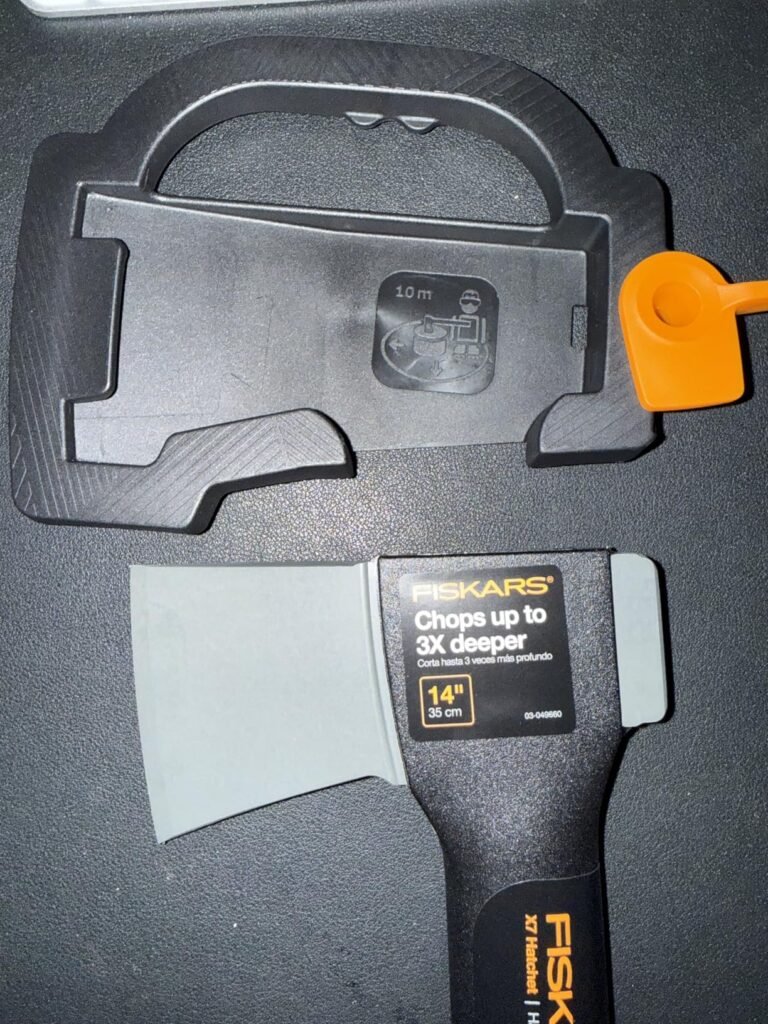
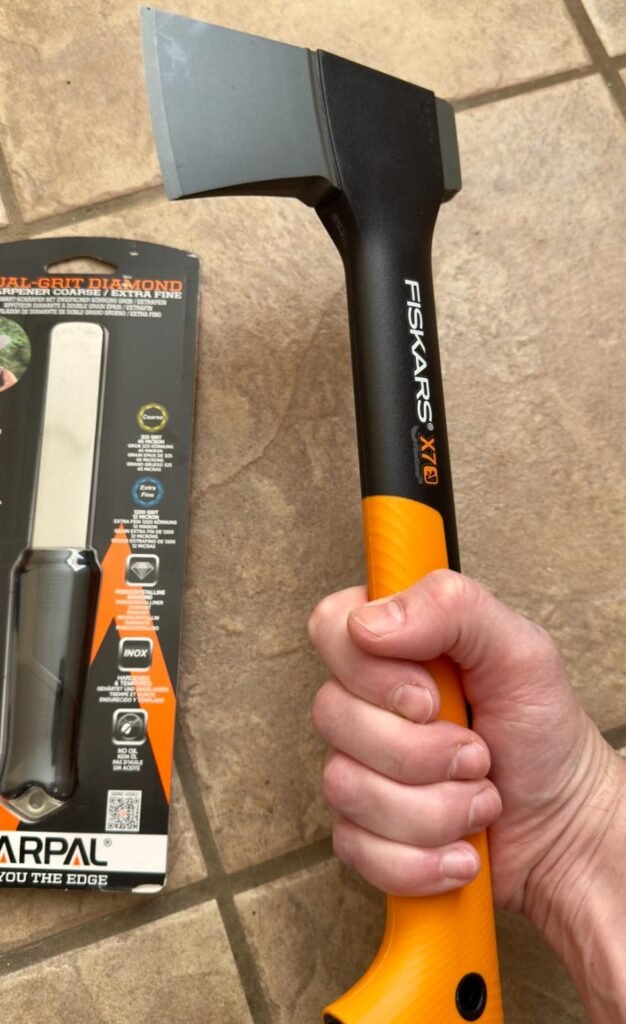
The Fiskars X7 has earned a reputation as one of the most engineered hatchets on the market, with a design philosophy centered on maximizing chopping power while minimizing user fatigue. The FiberComp handle is lighter than steel yet claimed to be stronger, and its hollow synthetic construction absorbs much of the impact shock that would otherwise travel into your hand and arm during repeated swings. This matters enormously during long sessions of splitting kindling or processing firewood.
We may earn a commission when you buy through this link, at no additional cost to you.
The weight distribution is tuned so that the head feels forward-weighted during the swing, which lets the mass of the head drive through the wood with minimal effort from the user. The proprietary blade-grinding process produces a sharper edge that holds up longer than many competing designs, and the insert-molded connection between the head and the FiberComp handle resists the loosening that affects traditional wedge-mounted heads over time.
The low-friction blade coating is a practical touch that reduces the tendency of the blade to stick in wood after a chop, which is one of the most frustrating aspects of using a hatchet with a plain steel head. Combined with the slightly textured handle surface, the X7 feels controlled and efficient in use. The included sheath protects the blade during storage and transport, and Fiskars backs the hatchet with a lifetime warranty against defects.
The physics of effective chopping depends on how much kinetic energy you can deliver to the wood with each swing. A heavier head delivers more energy but tires you faster, while a lighter head is easier to swing but requires more effort to achieve the same cut. The Fiskars X7 strikes a balance by using a lightweight handle paired with a well-weighted head, so the mass is concentrated where it does the most work rather than being distributed throughout the tool. The result is efficient chopping with reduced user fatigue.
This hatchet is the right choice for buyers who want modern engineering, light carry weight, and a shock-absorbing handle that stays comfortable during extended use. The main trade-off is aesthetic: the FiberComp handle lacks the warmth and traditional feel of leather or hickory, and the synthetic construction cannot be rehandled if the handle ever cracks. For practical performance and user comfort, however, the X7 is hard to beat at its price point.
Traditionalists who prefer the look and feel of wood or leather handles, or buyers who want a hatchet they can rehandle themselves over time.
We may earn a commission when you buy through this link, at no additional cost to you.
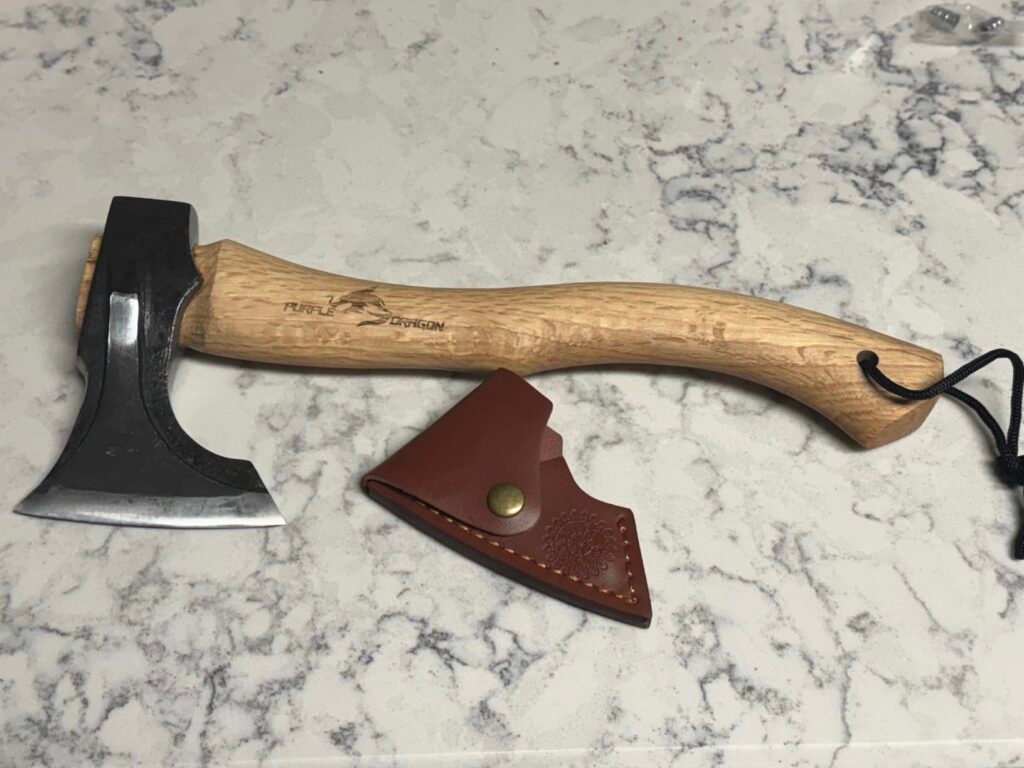
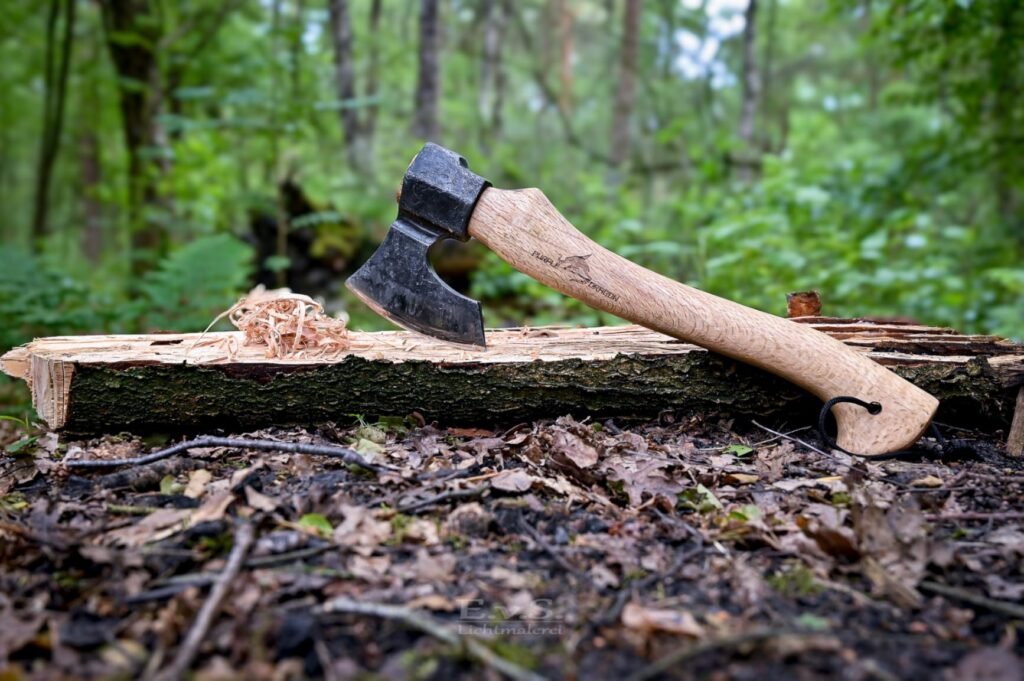
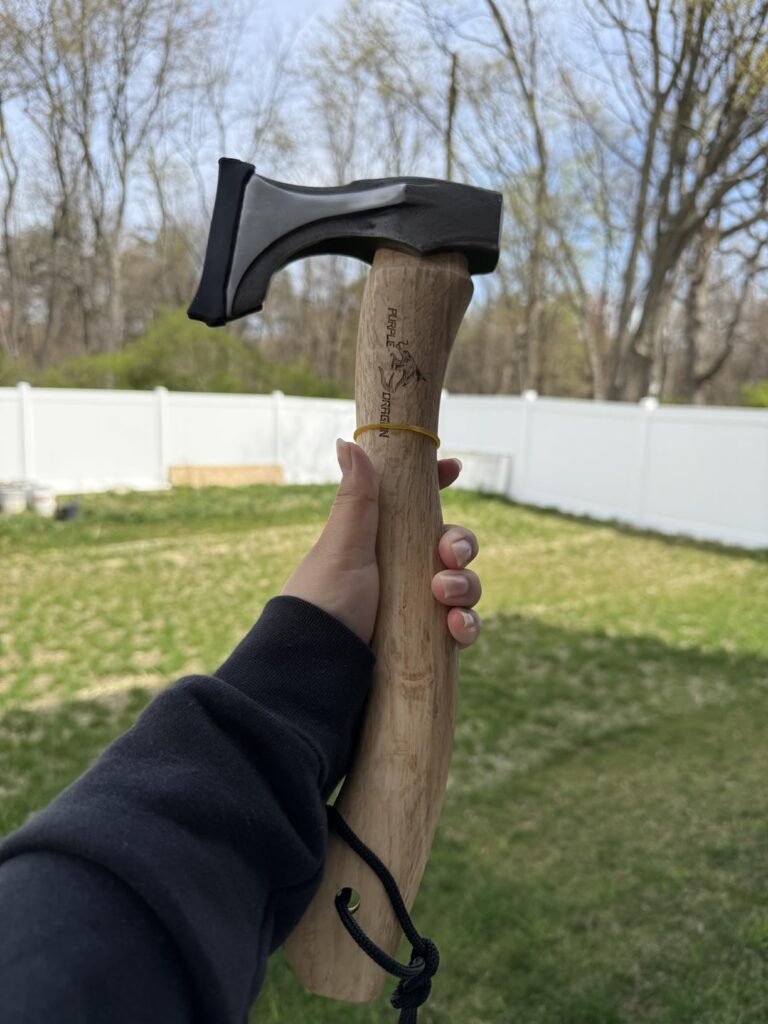
The Purple Dragon Splitting Axe is designed specifically for the task of splitting wood, with a blade geometry optimized to produce clean splits in a single stroke rather than merely slicing through fibers. The polished and lacquered splitting face is forged from carbon-manganese high-strength steel and hardened to 56 to 60 HRC, which is firmly in the professional range for cutting tools. This hardness lets the blade hold a sharp edge through repeated impacts without rolling or chipping.
We may earn a commission when you buy through this link, at no additional cost to you.
The head is attached to the handle using two ring wedges rather than the single wedge found on most mass-produced axes. This dual-wedge system creates a more secure connection that resists loosening even under the heavy impact loads involved in splitting dense wood. The hickory handle is a premium choice for axe construction because the long wood fibers absorb shock effectively while retaining the elastic snap that helps drive the head through the split.
The S-curve handle shape is a thoughtful ergonomic detail that fits the natural curve of the palm during the swing, which improves comfort and control compared to straight-handled designs. The included hand-stitched leather holster has a snap closure that keeps the sharp blade securely covered during transport in a backpack, protecting both the blade and anything stored near it. A rubber protective lip over the splitting face adds another layer of safety.
Standard camping hatchets use a blade geometry optimized for chopping, which means cutting across wood grain. Splitting hatchets use a wider, more wedge-shaped blade that forces wood apart along the grain. This specialized geometry produces cleaner splits with less effort when preparing firewood or kindling, but it is less efficient at chopping branches or limbing trees. If your primary task is splitting, a dedicated splitting hatchet like the Purple Dragon will outperform a general-purpose camping axe significantly.
This hatchet is the right choice for buyers who regularly split firewood or kindling and want a tool specifically engineered for that task. The manufacturer recommends soaking the head in water briefly before first use to swell the wood and tighten the wedges, which is standard practice for premium wooden-handled axes. The main consideration is weight: the dedicated splitting design makes this a bit heavier than lightweight camping hatchets, so it is better suited for base camp or vehicle-based outings than ultralight backpacking.
Backpackers prioritizing minimum weight or buyers who need a general-purpose chopping and limbing tool rather than a dedicated splitter.
We may earn a commission when you buy through this link, at no additional cost to you.
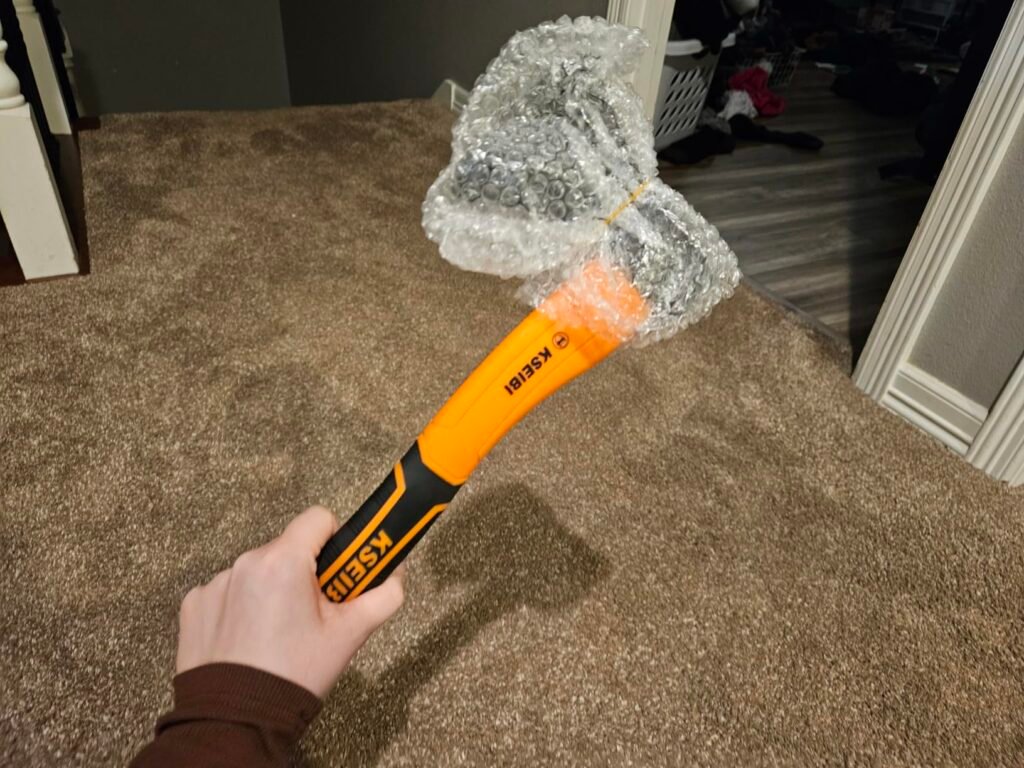
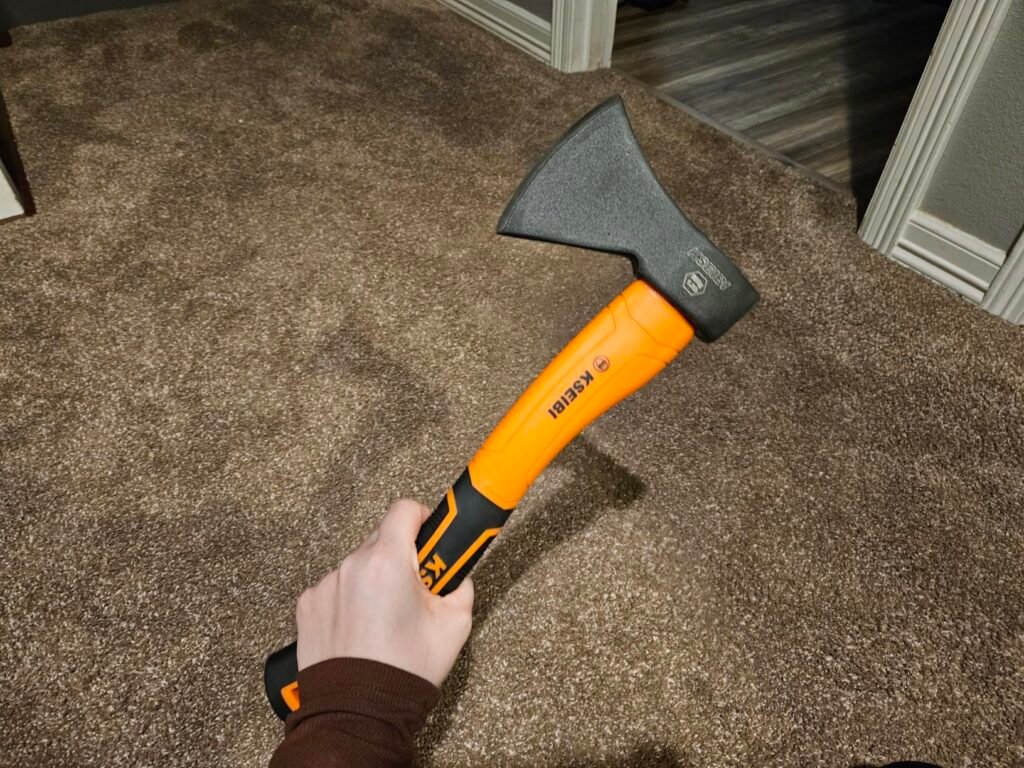
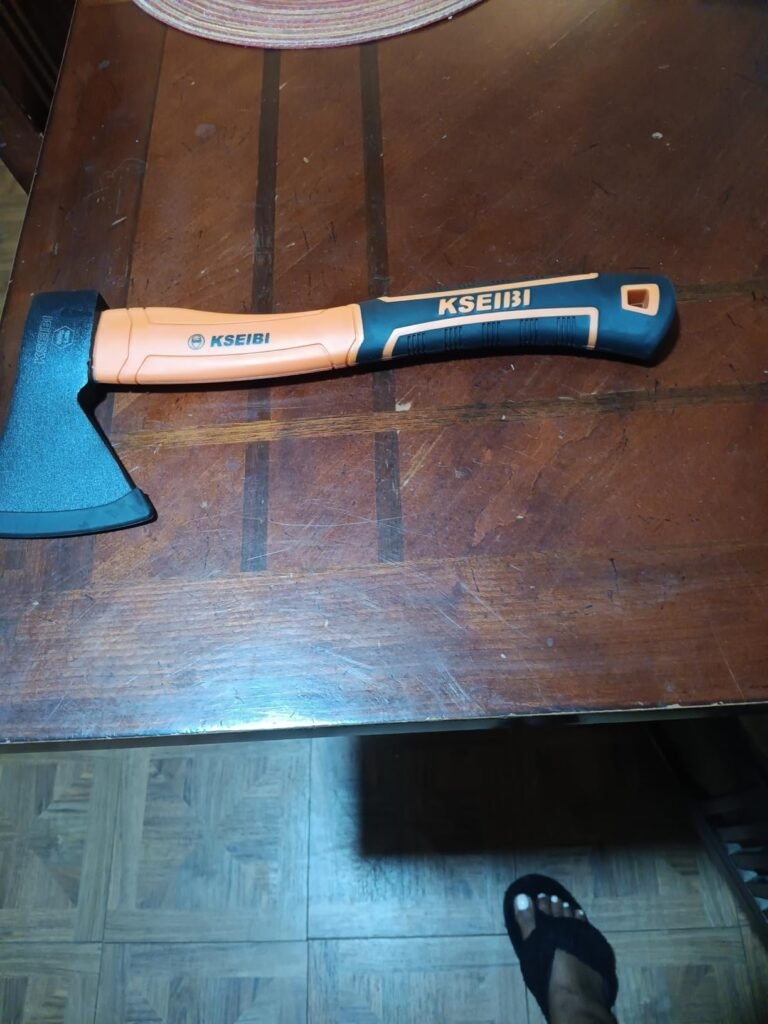
The KSEIBI 274150 occupies the budget end of the hatchet market, delivering reliable basic chopping performance at a price that makes it an easy addition to any camping kit without a serious investment. For buyers who need a functional hatchet for occasional camping trips, kindling splitting, and general outdoor use, this tool covers the essentials without the premium price of hand-forged alternatives.
We may earn a commission when you buy through this link, at no additional cost to you.
The fiberglass handle provides effective shock reduction during use, which is particularly important at this price point where premium shock-absorbing designs are not typical. The anti-slip grip surface maintains traction in wet or cold conditions, which matters for safety when swinging a sharp tool. The lacquered steel finish on the head helps resist rust between uses, extending the practical lifespan of the hatchet with minimal maintenance.
The compact size makes this hatchet easy to pack into a backpack, truck toolbox, or camping bin without taking up significant space. It is well suited to secondary roles like keeping in a vehicle for emergency situations, loaning to guests on group camping trips, or giving as a gift to new campers who may not yet know how often they will use a hatchet. The 4.6-star rating from a large pool of owners suggests consistent satisfaction at this price point.
A budget hatchet like the KSEIBI makes an excellent addition to a vehicle emergency kit or camping gear box because the low price means you will not be devastated if it gets lost, damaged, or stolen. Keep it in a tool bag with your jumper cables, work gloves, and tarp, and you will always have a chopping tool available for unexpected situations like clearing a downed branch from a road or improvising shelter during a breakdown.
This hatchet is the right choice for budget-conscious buyers, occasional campers, or anyone building out a basic outdoor kit without wanting to invest heavily in premium tools before knowing their actual usage patterns. The main consideration is that the build quality and edge retention will not match hand-forged premium hatchets, so for heavy daily use or professional applications, stepping up to an Estwing or Fiskars model will deliver longer-term value. For light to moderate use, this tool punches above its weight.
Serious bushcrafters or professional users who need premium edge retention and lifetime durability from heavy daily use.
We may earn a commission when you buy through this link, at no additional cost to you.
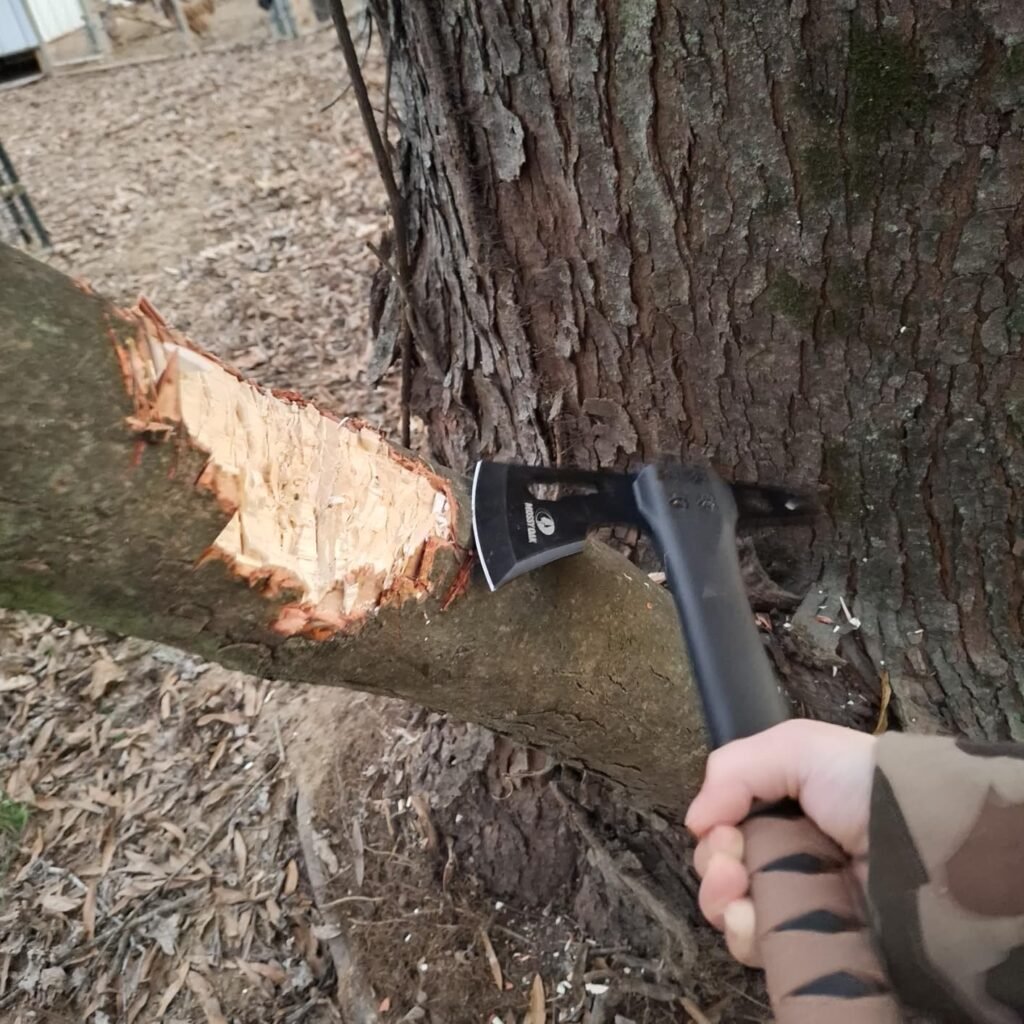
The Mossy Oak 12-inch hatchet takes a different approach from traditional single-purpose chopping axes by integrating multiple survival-oriented features into a single compact tool. The 12-inch length is noticeably shorter than most hatchets in this guide, which trades some chopping power for improved portability and easier packing in a backpack or bug-out bag. For buyers who prioritize versatility over pure chopping performance, this multi-tool approach has real appeal.
We may earn a commission when you buy through this link, at no additional cost to you.
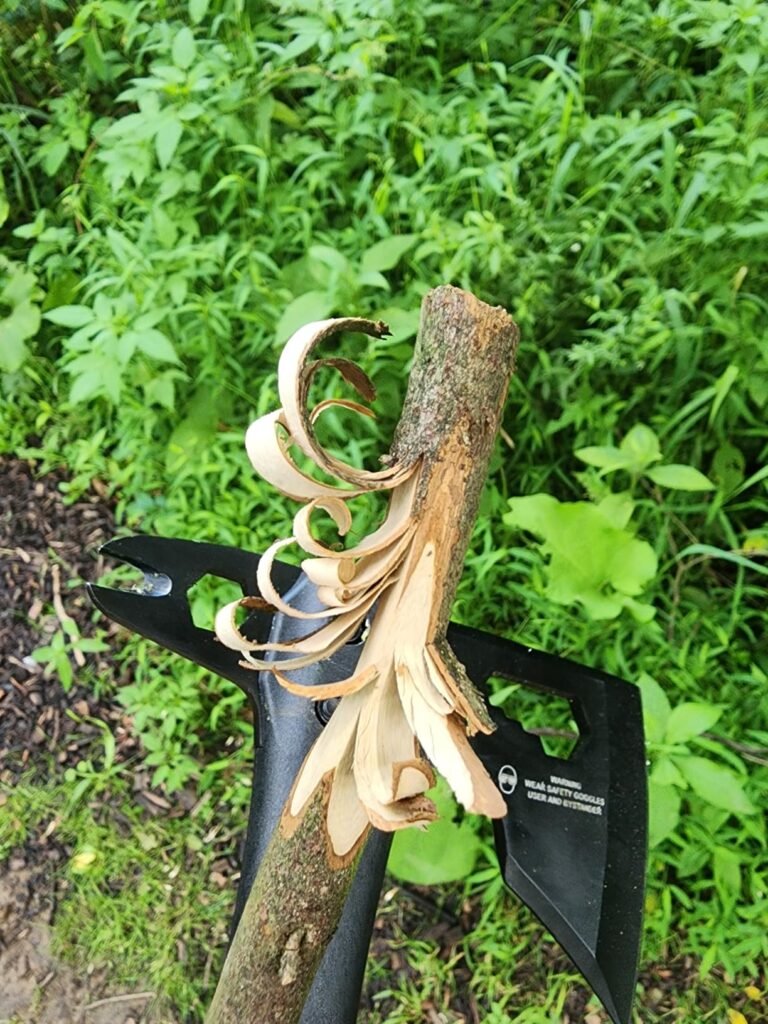
The five integrated hex wrench holes transform the hatchet into a basic field tool for gear adjustments and emergency repairs, which can be genuinely useful on extended trips where carrying a separate wrench set is impractical. The secondary cutting edge on the back of the head provides a dedicated surface for cutting bark, rope, or cordage without dulling the main blade. These multi-function features add utility that pure chopping hatchets lack.
The dual-color rubber-wrapped handle provides a secure, comfortable grip even in wet or cold conditions, with an internal support structure that reinforces the handle against bending or breakage. The axe head is secured with four reinforced screws plus thread-locking adhesive, which prevents the wobbling that can affect budget hatchets with less secure head attachment methods. The included Oxford fabric sheath has belt loops and metal fasteners for safe transport.
Multi-function tools inevitably compromise on each individual function compared to dedicated single-purpose tools. The hex wrench holes and secondary cutting edge on this hatchet add weight and complexity that reduce its pure chopping efficiency, but they also eliminate the need to carry separate tools for those tasks. If your gear strategy prioritizes carrying fewer, more versatile tools, the Mossy Oak is a legitimate choice. If you prefer the best tool for each specific job, a dedicated chopping hatchet will serve you better.
This hatchet is the right choice for survival-focused buyers, bug-out bag builders, and anyone who wants a versatile multi-function tool rather than a traditional single-purpose chopping axe. The main trade-off is the shorter 12-inch length, which reduces leverage and chopping power compared to 14-inch axes. For serious wood processing, a longer traditional hatchet will outperform this one, but for compact survival utility, the Mossy Oak offers more features per inch than most competitors.
Buyers who want maximum chopping power from a longer hatchet or who prefer dedicated single-purpose tools over multi-function designs.
We may earn a commission when you buy through this link, at no additional cost to you.
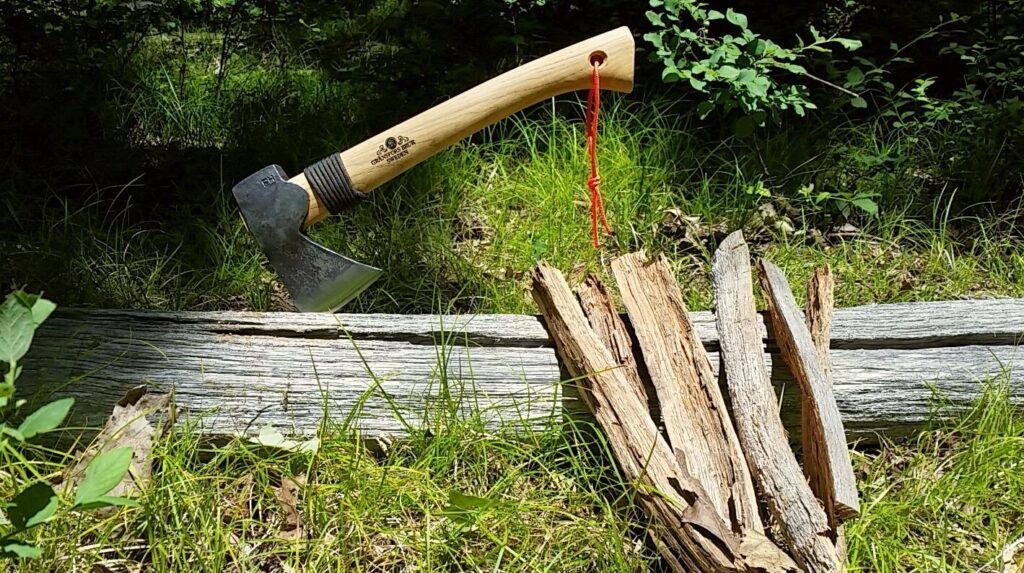
The Gransfors Bruks Wildlife Hatchet represents the pinnacle of traditional Swedish axe-making, with each head hand-forged by individual smiths who stamp their initials on the finished product. This level of craftsmanship is increasingly rare in the hand tool market and justifies the premium price for buyers who view a hatchet as a long-term investment rather than a disposable gadget. The 13.5-inch overall length and 1.3-pound head weight match the traditional Scandinavian scouting axe proportions.
We may earn a commission when you buy through this link, at no additional cost to you.
The hand-forged head geometry is tuned specifically for the needs of bushcraft, woodcraft, and camping rather than brute-force splitting. The thin profile and keen edge excel at precision work like limbing, carving, and preparing kindling, while still handling moderate splitting tasks with ease. Swedish steel is renowned for its purity and the ability to take and hold an exceptionally sharp edge, which is a defining advantage of this hatchet.
The included vegetable-tanned leather sheath is a quality piece in its own right, with hand-stitched construction that will develop a beautiful patina over years of use. The hickory handle is shaped with the traditional American felling axe profile and provides excellent control during precision work. Every Gransfors Bruks axe ships with The Axe Book, a detailed guide to axe use, care, and sharpening written by the company’s craftsmen.
Swedish axe-making traditions date back centuries and emphasize hand-forging by individual smiths who are responsible for the complete head from start to finish. This approach contrasts with mass-produced axes where many workers handle different steps in a production line. The result is a tool with distinctive character, exceptional edge quality, and the kind of long-term durability that comes from careful attention to every forging detail. Each Gransfors Bruks head carries the stamped initials of the smith who made it.
This hatchet is the right choice for serious bushcrafters, traditional woodcraft enthusiasts, and anyone who values heirloom craftsmanship and plans to pass the tool down to future generations. The main consideration is price, which is significantly higher than most alternatives in this guide. For buyers who use their hatchet weekly and appreciate the connection to centuries of Scandinavian craftsmanship, the Gransfors Bruks is worth every dollar. For occasional campers, more affordable options will deliver adequate performance.
Budget-conscious buyers or occasional campers who do not need heirloom craftsmanship and will not use the tool frequently enough to justify the premium.
We may earn a commission when you buy through this link, at no additional cost to you.
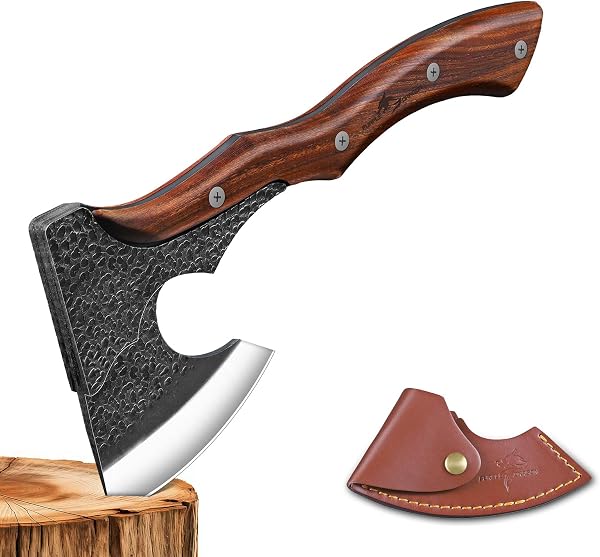
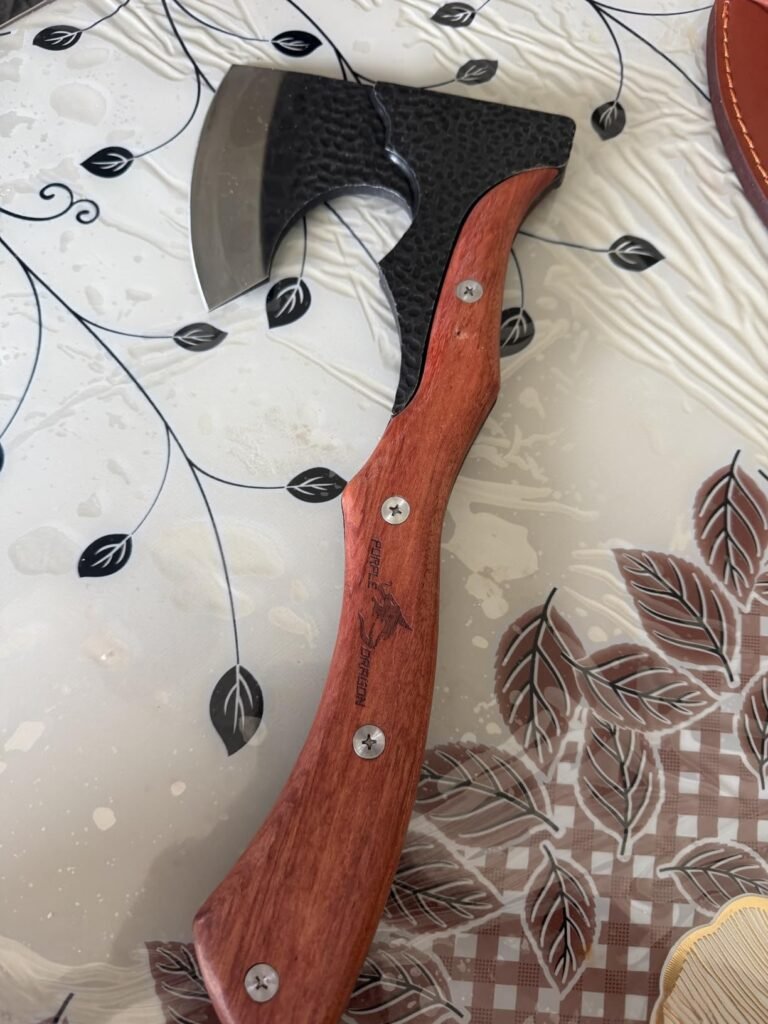
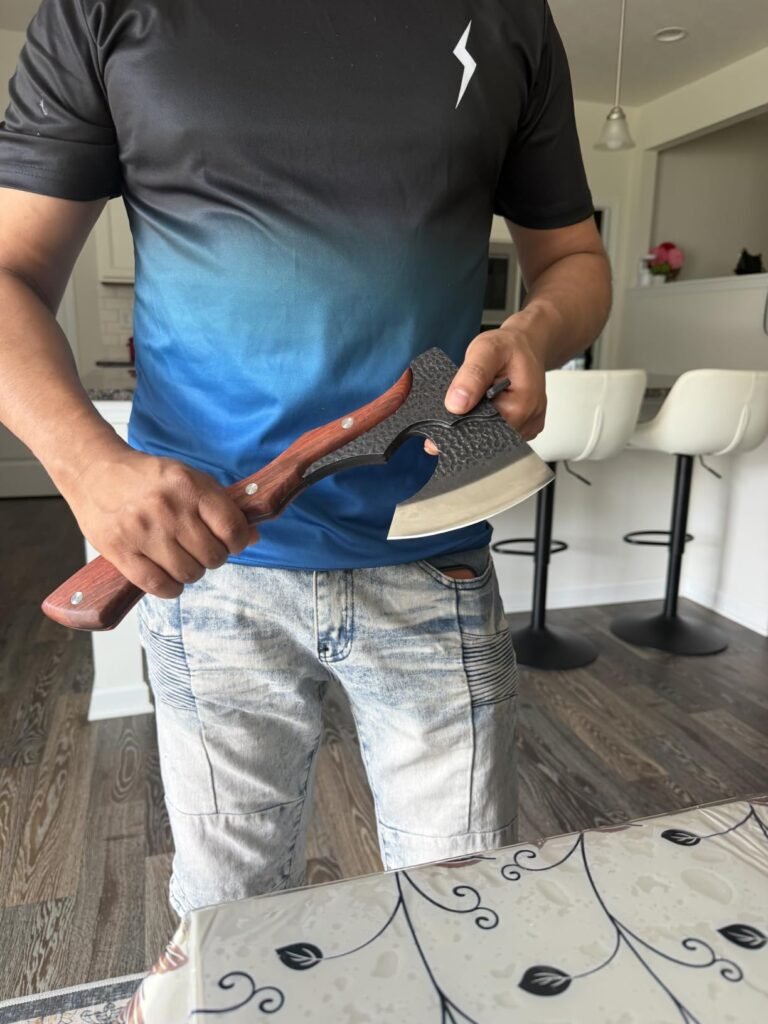
The Purple Dragon Full Tang hatchet uses an unusual construction method where the metal head extends completely through the handle and is secured with four solid rivets. This full tang design is borrowed from knife-making tradition and provides exceptional structural integrity because the head cannot separate from the handle under normal use. For buyers who have experienced head failures on traditional wedge-mounted axes, the full tang approach offers meaningful peace of mind.
We may earn a commission when you buy through this link, at no additional cost to you.
The hand-forged high carbon steel head is the same quality as other Purple Dragon offerings, with the toughness and impact resistance needed for real outdoor chopping work. The 13.9-inch overall length and 5.7-inch head width provide a solid, confident feel in hand without becoming unwieldy for backpack carry. The 4.9-inch cutting edge handles typical camp tasks including trimming branches, splitting firewood, and clearing light brush.
The ergonomic wood handle fits naturally in the hand and reduces fatigue during extended use. The four solid rivets that secure the full tang are visible along the handle, creating a distinctive aesthetic that signals the construction method and reassures the user that the head is not going anywhere. The included sheath protects the blade during transport and storage, keeping it ready for the next outing.
Full tang construction means the metal of the head or blade extends through the entire length of the handle, with the handle material riveted or bonded to both sides of the metal. This approach is standard in high-quality knives and is unusual in axes and hatchets. The main advantage is that the head cannot work loose from the handle because they are mechanically fastened throughout their entire length rather than meeting at a single joint. The main disadvantage is slightly higher weight and reduced shock absorption compared to all-wood handles.
This hatchet is the right choice for buyers who want the maximum possible head retention security and appreciate the distinctive full tang construction. The manufacturer appropriately notes that the tool is designed for wood-related tasks only and should not be used on hard materials like metal, stone, or concrete, which is standard advice for any hatchet. The main trade-off is that the metal tang running through the handle adds some weight compared to pure wood-handled designs.
Weight-conscious backpackers or buyers who prefer traditional wedge-mounted designs with pure wood handles for better shock absorption.
We may earn a commission when you buy through this link, at no additional cost to you.
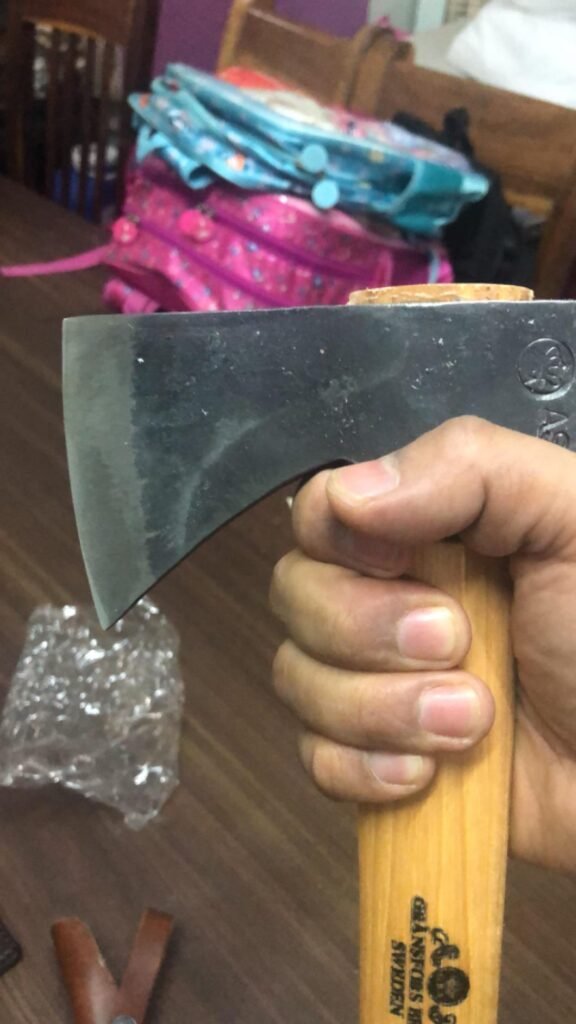
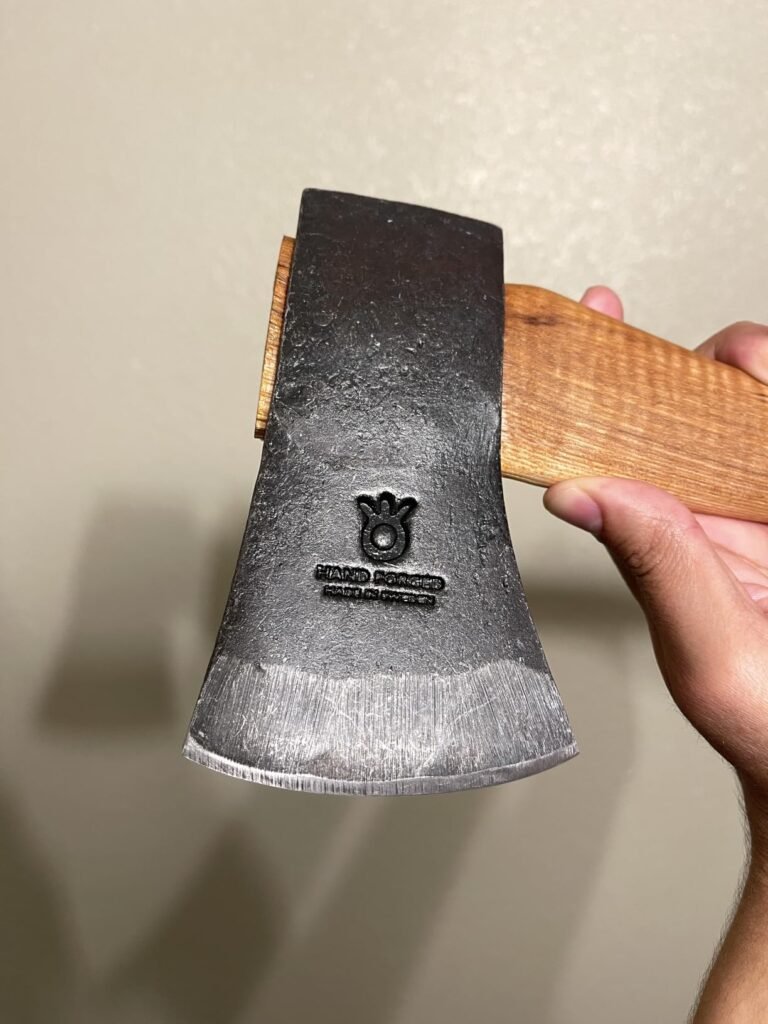
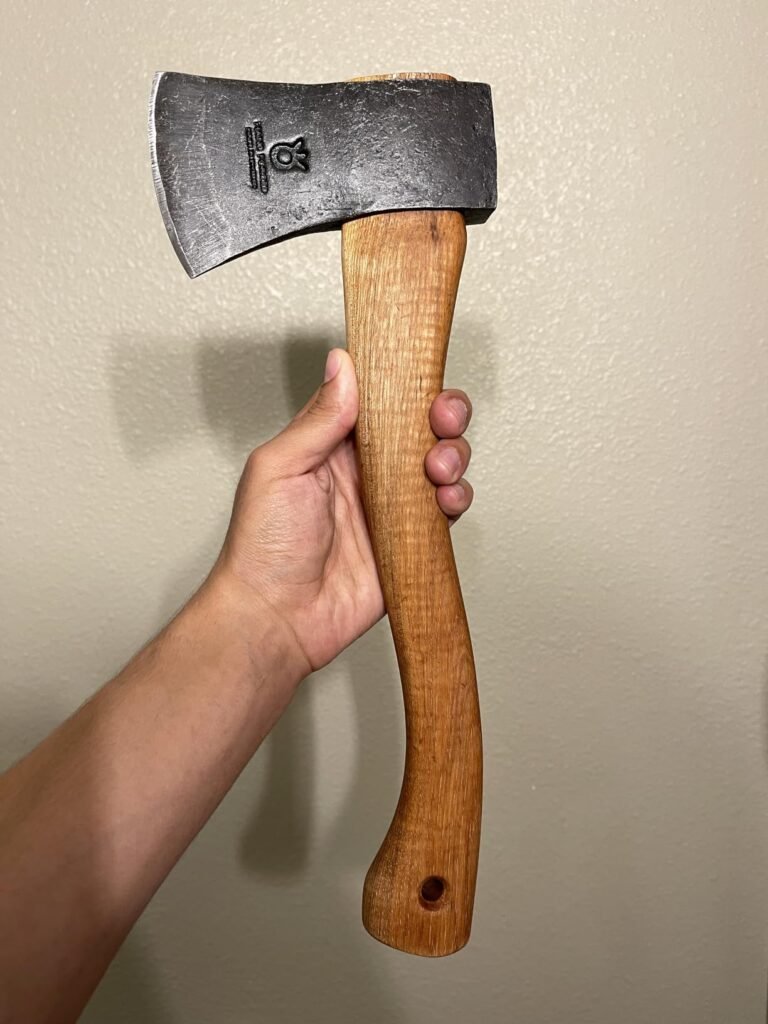
The Husqvarna Hatchet brings together Swedish forging tradition and American hickory handle construction in a tool that occupies the sweet spot between budget alternatives and premium Gransfors Bruks axes. The hand-forged 1.32-pound head is manufactured in Sweden from the same tradition that produced the Gransfors Bruks lineup, and the hickory handle provides the shock absorption and tactile warmth that only natural wood can deliver.
We may earn a commission when you buy through this link, at no additional cost to you.
The one-handed design and compact proportions make this hatchet well-suited for light wood cutting, kindling preparation, and general camping or gardening tasks. The hand-forged head geometry handles typical camp chores efficiently without the specialization of dedicated splitting or carving axes. Swedish steel takes and holds an exceptionally sharp edge, which translates to clean cuts with less effort than cheaper mass-produced alternatives.
The included leather sheath protects the blade during storage and transport, with the quality and craftsmanship appropriate to the hatchet itself. The hickory handle is a premium material choice because the long wood fibers absorb impact shock effectively while retaining the elastic snap that helps drive the head through wood. The traditional profile and natural finish will develop character over years of use as the wood takes on patina from handling.
Hickory has been the preferred axe handle material in North America for over 150 years for good reason: its combination of strength, shock absorption, and natural elasticity is nearly impossible to match with synthetic materials. The long straight grain of properly selected hickory resists breakage even under hard impact, while the slight flex in the fibers absorbs shock before it reaches your hand. Modern synthetic handles can match some of these properties but often lack the tactile warmth that makes a wooden handle feel like an extension of your arm.
This hatchet is the right choice for buyers who want hand-forged Swedish quality and classic hickory handle construction at a more accessible price than premium alternatives. The 4.7-star rating reflects strong owner satisfaction across a broad user base. The main consideration is that hickory handles require occasional care including linseed oil application and inspection for cracks, which is standard maintenance for traditional wooden-handled axes but may feel like extra work compared to synthetic alternatives.
Buyers who prefer synthetic handles that require zero maintenance or who need the ultimate heirloom quality of hand-stamped premium Swedish axes.
We may earn a commission when you buy through this link, at no additional cost to you.
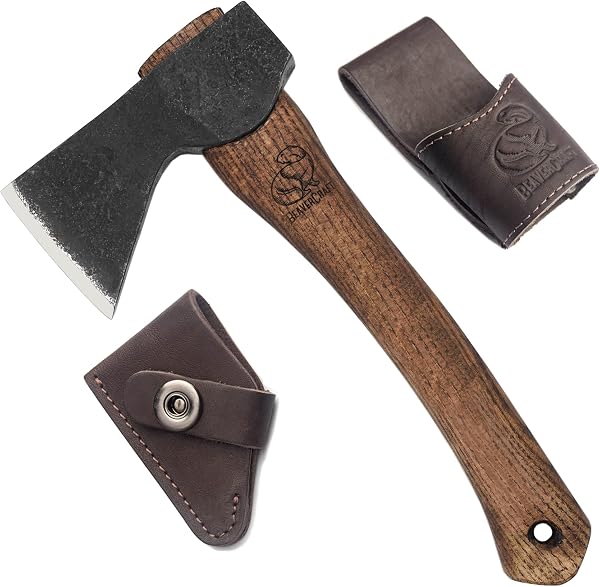
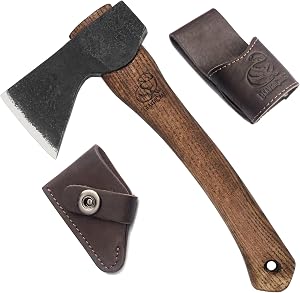
The BeaverCraft AX1 is a specialized carving axe designed for woodworkers who need precision control for shaping wood blanks, roughing out carving projects, and performing fine bushcraft tasks. The Scandi grind blade profile is the defining feature: this grind geometry produces a flat bevel that excels at controlled wood removal during carving, giving you the precision needed for spoon carving, bowl roughing, and other craftwork that general-purpose chopping hatchets cannot handle well.
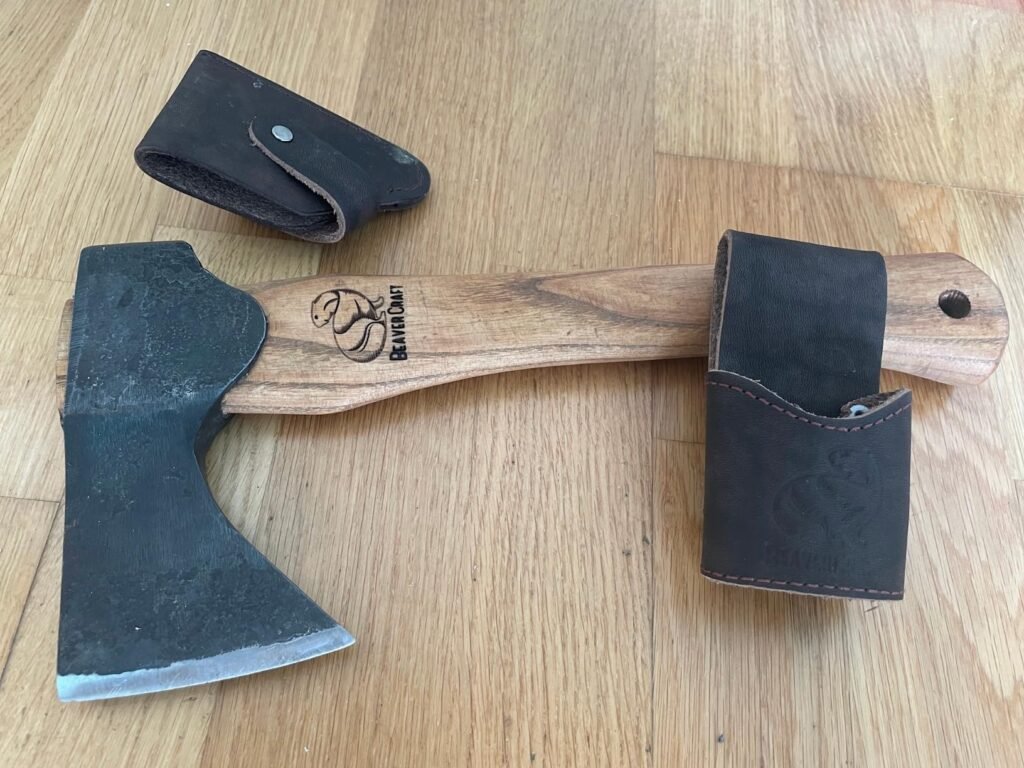
We may earn a commission when you buy through this link, at no additional cost to you.
The hand-forged head is made from hardened high-carbon steel and crafted in Ukraine, where traditional metalworking traditions remain strong. The expert sharpening and Scandi grind produce an exceptionally keen edge that bites into wood cleanly on first contact. The ashwood handle provides a comfortable, ergonomic grip with the natural shock absorption that wooden handles are known for, and the compact size keeps the tool controllable during the delicate work that carving demands.
The included cowhide leather sheath with belt loop provides safe storage and easy carrying during outdoor outings. The combination of hand-forging, premium materials, and specialized geometry puts this axe firmly in the craftsman-tool category rather than the general camping axe category. Owners who have never used a Scandi grind axe often discover a new category of woodworking possibility once they experience the precision this grind geometry provides.
A Scandi grind blade features a single flat bevel from the primary edge to the main body of the blade, without the secondary micro-bevel found on most general-purpose knives and axes. This geometry produces an exceptionally sharp edge that bites into wood on first contact and provides excellent control for precision cuts. The trade-off is that Scandi grinds require more careful sharpening to maintain the flat bevel geometry and are optimized for wood rather than general chopping tasks. For carvers and bushcrafters, this specialized grind is a significant advantage.
This hatchet is the right choice for wood carvers, green woodworkers, spoon carvers, and bushcrafters who need precision control for shaping tasks beyond simple chopping. The specialized Scandi grind is a significant advantage for carving work but makes this axe less versatile than general-purpose designs for brute-force firewood splitting. For dedicated craft work, however, the AX1 offers capabilities that general camping hatchets simply cannot match.
Buyers who need a general-purpose chopping axe for firewood preparation or who do not plan to use the specialized Scandi grind for carving work.
We may earn a commission when you buy through this link, at no additional cost to you.
Selecting a hatchet involves matching head weight, handle material, blade geometry, and construction method to your specific intended use. The following factors cover the most important decision points for choosing a tool that will serve you well across camping trips, firewood preparation, bushcraft projects, and other outdoor work.
The most important question to answer before buying a hatchet is what you actually plan to do with it most of the time. General camping and firewood prep calls for a balanced general-purpose hatchet like the Fiskars X14 or Estwing Sportsman’s Axe. Dedicated firewood splitting benefits from a wedge-profile splitting hatchet like the Purple Dragon Splitting Axe. Precision wood carving and bushcraft work requires a specialized Scandi grind axe like the BeaverCraft AX1. Multi-function survival use may favor an integrated tool like the Mossy Oak 12-inch.
Matching the hatchet to the task matters because different blade geometries, head weights, and handle lengths excel at different jobs. A splitting axe is inefficient for limbing because the wedge-shaped blade does not slice cleanly through perpendicular wood fibers. A thin carving axe is inefficient for splitting because the narrow blade lacks the wedging action needed to force wood apart. Buying the wrong tool for your primary task leads to frustration and poor results even if the tool itself is well-made.
If you are new to axes and uncertain what you will use the tool for most, start with a general-purpose camping hatchet with balanced blade geometry. You can always add specialized tools later as your interests develop.
Head weight directly affects chopping power because the kinetic energy delivered to the wood scales with the mass of the head. Heavier heads deliver more energy per swing but tire you faster, while lighter heads require more swings to accomplish the same work. Most quality camping hatchets have head weights between 1 and 1.5 pounds, which balances chopping efficiency with reasonable carrying weight. The Gransfors Bruks Wildlife at 1.3 pounds and the Husqvarna at 1.32 pounds sit comfortably in this traditional range.
Overall length affects both leverage and portability. Longer handles provide more mechanical advantage during the swing, which increases chopping power with less effort from the user. Shorter handles are easier to pack and more controllable for precision work. Most hatchets fall in the 12 to 15 inch range, with 14 inches being the most common length for general camping use. Backpackers may prefer the Mossy Oak’s 12-inch length for its reduced carry weight, while base campers often appreciate the Purple Dragon Splitting Axe’s 14.7-inch leverage.
For most buyers, a 13 to 14 inch overall length with a 1 to 1.5 pound head represents the best balance of chopping power, portability, and user comfort.
Handle material affects comfort, durability, maintenance requirements, and aesthetic character. Hickory is the traditional American choice for its combination of strength, shock absorption, and natural elasticity. The Husqvarna, Purple Dragon, Gransfors Bruks, and BeaverCraft axes all use natural wood handles that provide excellent shock absorption and tactile warmth. The trade-off is that wood handles require occasional maintenance including oil application and inspection for cracks.
Synthetic handles like the FiberComp used on Fiskars axes offer superior overstrike protection because they resist cracking if you miss your target and strike with the handle instead of the head. Synthetic handles are also maintenance-free and often lighter than wood equivalents. The Estwing Sportsman’s Axe takes a different approach with its one-piece forged steel construction and stacked leather grip, which trades shock absorption for maximum head retention security. Fiberglass handles like the KSEIBI provide reasonable shock absorption at budget prices.
For traditional feel and shock absorption, choose hickory. For maximum durability and low maintenance, choose synthetic FiberComp. For bulletproof head retention and classic American character, choose Estwing’s forged steel with leather grip.
Blade geometry determines what tasks the hatchet excels at. Thin, wide blades like the Fiskars X14 excel at chopping and limbing in soft to medium-density wood by slicing cleanly through fibers. Wedge-shaped blades like the Purple Dragon Splitting Axe excel at splitting by forcing wood apart along the grain. Scandi grind blades like the BeaverCraft AX1 excel at precision carving by providing exceptional edge sharpness and controlled wood removal.
Steel quality affects edge retention, resistance to chipping, and overall durability. Hardness is typically measured in HRC (Rockwell C scale), with cutting tools generally falling between 50 and 60 HRC. The Purple Dragon axes at 56 to 60 HRC are in the premium range for cutting tools. Hand-forged axes from traditional makers like Gransfors Bruks and Husqvarna use proprietary steel formulations developed over generations, which is why these premium axes command higher prices.
For general use, a modern forged steel axe with 50 to 55 HRC provides excellent performance at reasonable cost. For heavy use or professional applications, invest in hand-forged premium steel from Swedish or American traditional makers.
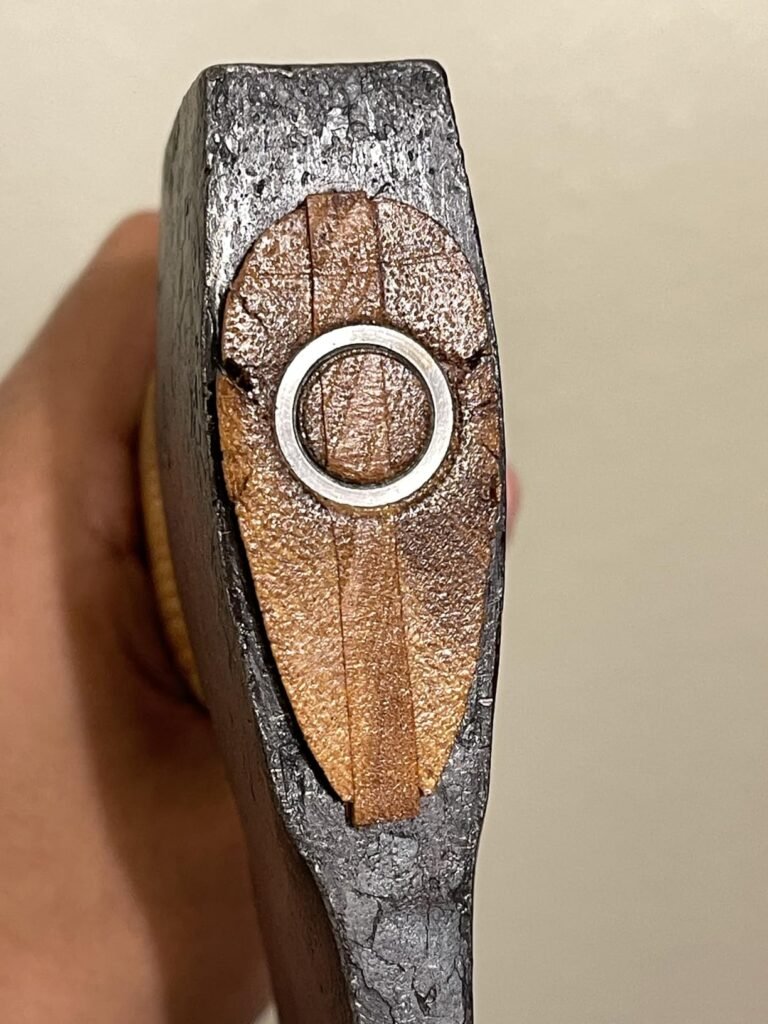
The way the head is attached to the handle determines long-term reliability and the risk of catastrophic failure. Traditional wedge mounting uses a wooden wedge driven into the top of the handle to expand the wood inside the eye of the axe head. This method works well when properly executed but can loosen over time as the wood dries and shrinks. Many premium hatchets use additional ring wedges or epoxy to supplement the wooden wedge for extra security.
One-piece forged construction like the Estwing Sportsman’s Axe eliminates the head-handle joint entirely by making both components from a single piece of steel. This approach provides unmatched head retention but transmits more shock to the user’s hand. Insert-molded designs like the Fiskars axes bond the head to the synthetic handle during manufacturing, creating a connection that resists loosening without the shock transmission of all-steel construction. Full tang designs like the Purple Dragon Full Tang use rivets to secure a metal tang running through the entire handle length.
For maximum head retention security without shock concerns, choose insert-molded Fiskars axes or full tang Purple Dragon designs. For traditional construction with proper maintenance, premium wedge-mounted axes from Swedish makers provide excellent service for generations.
Sheath quality is often overlooked but matters significantly for both safety and convenience. A good sheath protects the blade from damage and prevents the sharp edge from cutting other gear or injuring you while reaching into a pack. Premium hatchets typically ship with leather sheaths that develop character over time and offer excellent long-term durability. The Gransfors Bruks vegetable-tanned leather sheath, Husqvarna leather sheath, and BeaverCraft cowhide sheath all exemplify this traditional approach.
Modern synthetic sheaths like the Fiskars included sheath and the Mossy Oak Oxford sheath offer practical advantages: they are lighter, waterproof, and require no maintenance. Ballistic nylon sheaths like the Estwing’s provide excellent protection at low cost and include belt loops for easy carrying. The best sheath for you depends on whether you prioritize traditional character and longevity (leather) or practical performance and low maintenance (synthetic).
If you plan to carry your hatchet on your belt during outdoor work, prioritize a sheath with a secure belt loop and reliable retention. If you store the hatchet in a toolbox or pack, basic blade protection is sufficient.
Before each use, inspect the head for tightness by trying to wiggle it on the handle. If you detect any movement, do not use the hatchet until the head is properly re-secured. For wooden-handled axes, briefly soaking the head in water can swell the wood and tighten the wedge for a short-term fix, but persistent looseness requires rewedging. Always check that your work area is clear of people, pets, and obstacles that could be struck during your swing, and establish a stable chopping block rather than cutting against the ground where rocks can damage the blade.
When chopping, let the weight of the head do most of the work rather than muscling through each swing. Hold the handle near the end for maximum leverage and use a smooth, controlled motion that follows through the target. For splitting kindling, use a chopping block and strike the wood near the far edge so the force drives the wood apart rather than binding the blade in the center. If the blade sticks in the wood, rock it gently side to side to free it rather than yanking it out, which can loosen the head on wooden-handled axes.
After each use, wipe the blade clean with a dry cloth and apply a light coat of oil to prevent rust, especially on hand-forged carbon steel heads that are more susceptible to corrosion than coated modern blades. For wooden handles, apply boiled linseed oil or a similar wood treatment once or twice a year to prevent drying and cracking. Sharpen the blade using a file or whetstone when it starts to feel dull, maintaining the original bevel angle for best results. Store the hatchet in its sheath in a dry location away from humidity extremes, and check it periodically even during long storage periods to catch any developing issues early.
For general camping, a 13 to 14 inch hatchet with a 1 to 1.5 pound head is the most versatile choice. This size provides enough leverage and chopping power for firewood prep and limbing while remaining light enough to carry comfortably. Shorter 12-inch hatchets are better for backpacking where every ounce matters, while longer 16-inch axes offer more power at the cost of portability.
Hatchets are smaller, single-handed tools typically 12 to 16 inches long, designed for lighter tasks like splitting kindling and trimming branches. Axes are larger, two-handed tools typically 24 to 36 inches long, designed for heavier work like felling trees and splitting large firewood rounds. Hatchets are more portable and versatile for camping, while axes are better for sustained heavy chopping at base camp or at home.
Sharpen your hatchet whenever the edge no longer bites into wood cleanly on contact. For moderate use, this typically means touching up the edge every few outings with a file or whetstone. Hard use that chips or dulls the edge noticeably requires more extensive sharpening or regrinding. A sharp hatchet is safer than a dull one because it requires less force to use and is less likely to glance off the target.
Both have advantages. Wooden handles like hickory provide excellent shock absorption, traditional feel, and the ability to be rehandled if damaged. Synthetic handles like Fiskars FiberComp offer superior overstrike protection, require no maintenance, and often weigh less. For traditional character and shock absorption, choose wood. For maximum durability and low maintenance, choose synthetic.
A hatchet can fell small trees up to about 4 to 6 inches in diameter, though the process is slower and more labor-intensive than using a larger axe or saw. For trees larger than 6 inches, a larger axe or a saw will be significantly more efficient and safer. When felling with a hatchet, make a notch cut on the side you want the tree to fall toward and a back cut on the opposite side to control the direction of the fall.
HRC stands for Rockwell C hardness, a measurement of how hard steel is on a standardized scale. Cutting tools typically fall between 50 and 60 HRC. Higher hardness holds a sharp edge longer but can be more prone to chipping under hard impacts. Lower hardness is tougher but requires more frequent sharpening. Most quality hatchets fall between 54 and 58 HRC, which balances edge retention with impact resistance for typical chopping work.
Wipe the blade dry after each use and apply a light coat of oil, especially on hand-forged carbon steel heads that lack the protective coatings found on modern blades. Mineral oil, 3-in-1 oil, or specialized blade oils all work well. Store the hatchet in a dry location away from humidity extremes, and keep it in its sheath to protect against airborne moisture. Check the blade periodically during long storage and reapply oil as needed.
For buyers who value absolute head retention security and American craftsmanship, yes. The one-piece forged steel construction eliminates the risk of the head loosening or separating from the handle, which is the most common failure mode for traditional hatchets. The trade-off is that solid steel handles transmit more shock to your hand than wood or synthetic handles. For moderate use, the shock is manageable, but for extended chopping sessions, a shock-absorbing handle may be more comfortable.
A good sheath fully covers the blade edge, retains the hatchet securely during carry, and includes a belt loop or similar attachment option for easy transport. Leather sheaths offer traditional character and long-term durability but require occasional maintenance. Synthetic sheaths like ballistic nylon or Oxford fabric are lighter, waterproof, and require no maintenance. Choose based on your priorities for aesthetics, weight, and maintenance tolerance.
The flat poll (back) of a hatchet head can be used as a hammer for driving tent stakes or similar light tasks, which is why many hatchets are marketed with this capability. However, hatchets are not designed for sustained hammering and should not be used to drive nails into hard materials or strike metal objects, which can damage the head or cause dangerous metal chips to fly off. For regular hammering tasks, use a dedicated hammer instead.
The Estwing Sportsman's Axe stands out as the strongest overall choice for most buyers who want a hatchet that will last a lifetime of regular use. The one-piece forged American steel construction eliminates the risk of head failure, the leather grip provides comfortable control, and the heritage of over 100 years of American manufacturing speaks to the quality and reliability of this classic design. At around $36, it delivers heirloom-quality performance at an accessible price.
For buyers who prefer modern engineering, the Fiskars X14 Universal and X7 both offer excellent shock absorption, superior overstrike protection, and the backing of lifetime warranties. For splitting-focused use, the Purple Dragon Splitting Axe excels. For heirloom craftsmanship, the Gransfors Bruks Wildlife and Husqvarna hatchets represent the pinnacle of Swedish traditional axe-making. Specialized tasks like wood carving are best served by the BeaverCraft AX1 with its Scandi grind.
Your best choice ultimately depends on how you plan to use the tool, how much you value traditional craftsmanship versus modern engineering, and how much you want to spend. For general camping and occasional use, an Estwing or Fiskars model will serve you well for decades. For serious bushcraft and lifetime investment, Swedish hand-forged axes are worth the premium. Any of the ten options in this guide will deliver reliable chopping performance when matched to your specific needs.