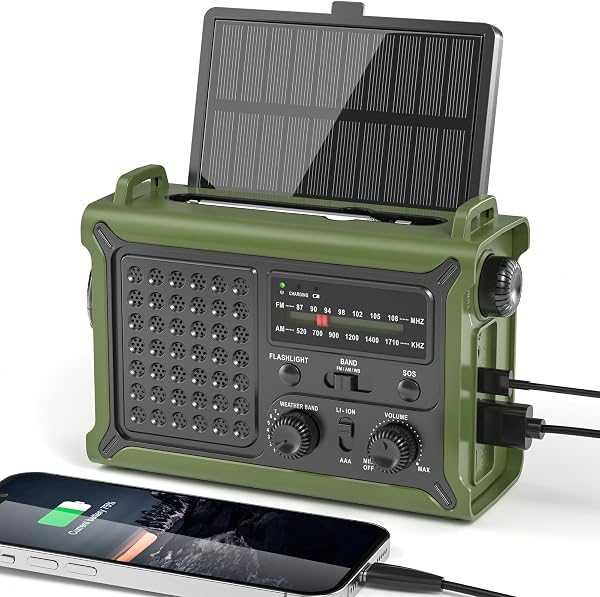
FosPower A1 Radio
9.2Editor score7400mWh power bank
Three power sources
4-LED reading light
AAA battery backup
Find the right hand crank radios for 2026. We compare 10 standout options by build quality, useful features, owner feedback, value, and everyday trade-offs.
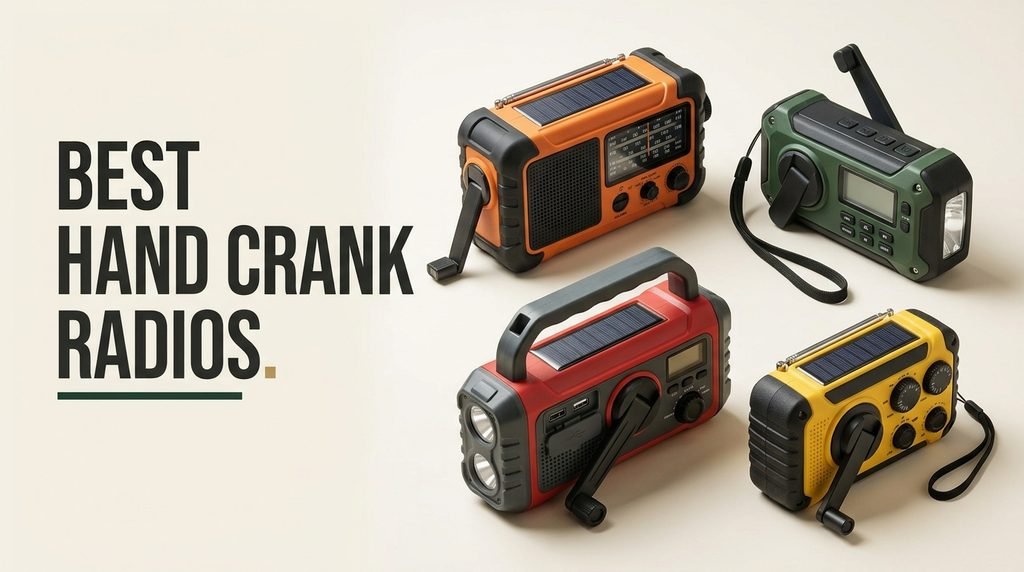
Find the right hand crank radio for 2026. We compare 10 standout emergency models by the factors that genuinely matter when the power goes out, including NOAA weather reception, battery capacity, solar panel size, charging methods, flashlight brightness, SOS alarms, phone-charging capability, and real-world durability for storms, camping, and blackouts.
Emergency crank radios range from pocket-sized 2,000mAh units built for a bug-out bag to full-featured 20,000mAh models that double as backup power banks. Capacity, number of charging paths, and weather band coverage determine whether a radio is a basic storm companion or a multi-day survival tool.
This guide walks through each option by use case, from grab-and-go emergency kits and camping trips to home blackout preparedness. Use the comparison table and detailed reviews to match NOAA alerts, phone charging, lighting, and build quality to the way you actually plan to use the radio.
We compared 10 hand crank radios using the details that genuinely help a buyer decide: NOAA and AM/FM reception quality, battery capacity, number of charging paths, solar panel size, crank efficiency, flashlight brightness, SOS alarm volume, phone-charging output, weatherproofing, portability, and value. The notes focus on practical trade-offs so each pick connects to how people actually use emergency radios during hurricanes, winter storms, extended blackouts, camping trips, and everyday preparedness kits.

Compare key features, scores, and current prices side by side. A shorter feature list means fewer details were available, not necessarily fewer capabilities.


This hand crank radio is built for buyers who want dependable reception, honest battery capacity, and a solar panel that actually contributes to recharging rather than serving as marketing decoration. The 8,500mm monocrystalline panel is roughly four times larger than the small polycrystalline panels common on budget models, giving it a realistic chance of adding useful power during a sunny afternoon. For home preparedness kits and extended outages, that difference matters.
We may earn a commission when you buy through this link, at no additional cost to you.
NOAA, AM, and FM reception benefits from a high-sensitivity signal chip, noise-reduction circuitry, and an extended antenna. Combined, those components produce stable, clear sound even when storms interfere with weaker radios. The upgraded internal generator uses a larger copper coil and reinforced magnet, nearly doubling the charging efficiency compared with typical crank mechanisms. Three minutes of cranking produces meaningful power for the radio or a quick phone top-off.
The 12,000mAh lithium battery is honestly rated rather than inflated, so you get genuine runtime for the radio, lights, and emergency phone charging. A 260-foot flashlight beam handles outdoor navigation, while the frosted reading lamp provides a soft warm glow that is easy on the eyes during long evenings. Both LEDs offer two brightness levels, which conserves battery during extended use.
Many emergency radios include tiny decorative solar panels that struggle to produce meaningful power even in direct sunlight. An 8,500mm monocrystalline panel is large enough to actually contribute to charging during a sunny day, which can extend runtime significantly during multi-day outages. For buyers in sunny regions or anyone building a serious preparedness kit, panel size is one of the most important specifications to compare.
At 6.8 by 2.9 by 4.7 inches, this is not the smallest crank radio available, but the ergonomic shape, large tuning knob, responsive buttons, clear labels, and non-slip grip make it genuinely easy to use in the dark or during stressful situations. For households that want one radio to handle hurricane season, winter storms, camping trips, and long-term emergency preparedness, this is one of the most complete options available.
Not ideal for buyers who want the absolute smallest pocket-sized emergency radio.
We may earn a commission when you buy through this link, at no additional cost to you.
The FosPower A1 has become one of the most familiar emergency radios in the category thanks to its balanced feature set and limited lifetime warranty. The 7,400mWh (2,000mAh) battery is modest by current standards, but it is more than enough to run the radio and lights through multiple days of occasional use or deliver a backup charge to a small phone during an emergency. The bright orange housing is intentional, making the unit easy to spot inside a bug-out bag.
We may earn a commission when you buy through this link, at no additional cost to you.
The three independent power sources are what make this radio genuinely useful during extended outages. The crank lever and solar panel can both regenerate enough power to keep the radio, lights, and SOS alarm ready, while a set of AAA batteries provides a reliable fallback when sun and arm fatigue work against you. That redundancy is particularly valuable during multi-day storms when sunshine is scarce.
On the audio side, the radio pulls in NOAA emergency weather broadcasts along with standard AM and FM stations. A 1W flashlight and 4-LED reading light cover both focused and ambient lighting needs. The combination is enough for navigating a dark hallway, reading inside a tent, or keeping young family members comfortable during a blackout. Controls are straightforward, with no complex menus to learn under stress.
Rechargeable batteries lose capacity over time, especially when stored for years without use. AAA fallback power ensures the radio can still function even if the internal battery has degraded. Keep a sealed pack of fresh AAA batteries alongside the radio in your emergency kit, and rotate them every few years to maintain full emergency readiness.
The main trade-offs are the modest battery capacity and lack of USB-C fast charging. For home preparedness kits that need to power modern devices for days, a larger battery and faster output make more sense. For buyers who want a dependable, affordable, warranty-backed emergency radio from a known brand, however, the FosPower A1 remains one of the most trusted picks available.
Not ideal for buyers who need to charge modern smartphones quickly or run the radio continuously for days.
We may earn a commission when you buy through this link, at no additional cost to you.
This 12,000mAh emergency radio is engineered specifically for use in the kind of weather conditions that create emergencies in the first place. The IPX6 water-resistant rating lets it handle heavy rain, splashes, and outdoor use without the usual worry about moisture ingress. For buyers in hurricane zones, mountainous regions, or coastal areas, that durability is worth prioritizing over size and weight.
We may earn a commission when you buy through this link, at no additional cost to you.
DSP signal processing helps clean up AM, FM, and weather band reception, which matters when thunderstorm interference would otherwise drown out important updates. The radio tunes into all seven NOAA weather channels, giving you access to detailed regional forecasts and emergency alerts. A 57mm speaker delivers clear, balanced audio that fills a room, which is particularly useful for sharing updates with a group during an outage.
Lighting is where this radio pulls ahead of many competitors. A 5W LED flashlight lights up dark rooms, garages, campsites, and roadside emergencies, while the 12-LED reading lamp provides wide ambient illumination. The 120dB SOS alarm is loud enough to attract attention from a meaningful distance if you become stranded or injured outdoors. Combined with phone-charging capability from the 12,000mAh battery, the feature set covers nearly every emergency scenario.
IPX6 means the radio can handle powerful water jets from any direction without damage, which translates well to heavy rain and splashes during real-world emergencies. It is not rated for full submersion, so you should not drop it into a flooded basement or lake. For virtually every realistic emergency scenario including hurricanes and heavy storms, however, IPX6 provides more than enough weather protection.
The main caveat is size. A rugged, water-resistant radio with this much battery capacity is noticeably larger than pocket-sized options. For a bug-out bag, kitchen drawer, or RV emergency kit, that is a reasonable trade-off. For ultralight backpacking, you would want something smaller. Buyers who prioritize durability and strong lighting for storms and outdoor use will find this one of the best-equipped options in the lineup.
Not suitable for buyers who need an ultralight pocket-sized radio for daily carry.
We may earn a commission when you buy through this link, at no additional cost to you.
The Emgykit emergency radio proves that useful preparedness gear does not need to be large or expensive. At 5.1 by 2.1 by 2.4 inches and just over half a pound, this is one of the smallest full-featured emergency radios available. The compact size makes it easy to slip into a jacket pocket, glove box, or small backpack without adding meaningful weight.
We may earn a commission when you buy through this link, at no additional cost to you.
Despite the size, the feature set is more complete than you might expect. The 3W LED flashlight produces 140 lumens of focused light, which is enough for navigating dark hallways, finding your way to a shelter, or signaling for attention. An SOS siren above 80 decibels can attract help in a snowstorm or hurricane, and the built-in 2,000mAh battery handles short emergency phone charges in a pinch.
Three charging paths including hand crank, solar panel, and USB-C input provide the redundancy you want in a real emergency. The USB-C input is particularly useful for everyday top-offs, letting you keep the radio ready between emergencies without hunting for an outdated cable. Access to AM, FM, and NOAA weather bands covers the full range of broadcast sources you might need.
Larger emergency radios make sense for home preparedness, but they are impractical to carry during evacuations, hikes, or roadside emergencies. A small, lightweight unit like this fits easily into a go-bag or car console, which means it is actually with you when something unexpected happens. Many preparedness-minded buyers keep one large radio at home and one small radio in the car or EDC bag.
The clearest trade-off is capacity. A 2,000mAh battery will not sustain the radio or power devices for extended multi-day outages like larger packs can. For buyers who want an affordable, pocketable emergency radio to supplement a larger home kit, however, the Emgykit is an excellent value. It also makes a smart stocking stuffer or starter preparedness gift for family members just beginning to assemble emergency supplies.
Not ideal for extended multi-day outages that require large battery capacity and powerful lights.
We may earn a commission when you buy through this link, at no additional cost to you.
Midland is one of the longest-standing names in two-way radios and emergency weather equipment, and the ER310 is their flagship crank weather radio. For buyers who value brand reputation, consistent build quality, and widespread parts and support availability, choosing a Midland product carries meaningful peace of mind that newer brands cannot match.
We may earn a commission when you buy through this link, at no additional cost to you.
The AM, FM, and weather band tuning provides access to the broadcast sources that matter during emergencies. The rugged red and black housing is intentionally visible, making the radio easy to find quickly in a crowded emergency kit or during a chaotic evacuation. Hand crank operation ensures the radio remains functional even when all other power sources have been exhausted, which is the whole point of this category.
Midland has built the ER310 to be straightforward to operate during stressful situations. Controls are clearly labeled and sized for easy use even in gloves or dim light. The combination of weather alerts, flashlight functionality, and hand crank backup covers the core needs of emergency preparedness without burying critical functions behind complex menus.
During a real emergency, equipment failures are a worst-case scenario. Established brands like Midland have decades of track record, dedicated customer support, and consistent manufacturing quality that newer brands often cannot match. For buyers assembling a serious emergency kit intended to last for years without needing replacement, paying a modest premium for brand reliability is often worth it.
The main consideration is price. The ER310 commands a premium compared with many feature-packed alternatives in this guide, reflecting brand reputation and build consistency rather than a longer feature list. If you prioritize having a well-known emergency brand with strong customer support, the ER310 is an excellent choice. If maximum features per dollar is your priority, newer models offer more raw capability for less money.
Not the best value pick for buyers prioritizing maximum features and modern USB-C charging per dollar.
We may earn a commission when you buy through this link, at no additional cost to you.
This 12,000mAh emergency radio pulls together the features serious preparedness-minded buyers want in a single unit. Battery capacity is honestly rated, delivering roughly 60 hours of FM listening at 50 percent volume. That translates to multiple days of continuous information access during an extended outage, which is far beyond what budget models can sustain.
We may earn a commission when you buy through this link, at no additional cost to you.
Four independent power sources make this radio exceptionally resilient. USB-C input handles fast daily recharging, solar panels provide passive top-offs during the day, the hand crank serves as a true backup when all else fails, and 3 AAA batteries provide a fallback for long-term storage scenarios. That level of redundancy ensures the radio stays functional regardless of how an emergency unfolds.
The lighting system is one of the strongest in this comparison. A 300-lumen flashlight projects a beam up to 70 meters, which is enough for actual outdoor navigation. The 250-lumen reading light provides broad room-filling illumination, useful during blackouts or inside tents and vehicles. A 115dB SOS siren is loud enough to attract attention from meaningful distances, which could be lifesaving during serious outdoor emergencies.
Many emergency radios can only run for a handful of hours before needing a recharge, which creates real problems during extended outages. 60 hours of FM listening means a single full charge covers multiple days of regular information access, giving you buffer time to use solar or hand crank for maintenance rather than scrambling for power. That endurance meaningfully changes how you can rely on the radio during a long emergency.
The main caveats are the absence of a wall adapter in the box and the overall size. You will need to supply a USB-C power source for wall charging, which most households already own. The radio is also larger than ultralight options, placing it firmly in the home and vehicle preparedness category rather than everyday carry. For buyers building a serious emergency kit, however, this is one of the most capable options available.
Not ideal for buyers wanting a pocket-sized radio or an all-in-one unit with included wall adapter.
We may earn a commission when you buy through this link, at no additional cost to you.
RunningSnail has built a reputation on crank radios that get used through real hurricanes, tornadoes, and winter storms. The MD-090 lineage behind this upgraded model has been through storms like Dorian, Harvey, and Irma, which gives it a track record few newer entries can match. For buyers who want gear with proven reliability under actual emergency conditions, that history matters.
We may earn a commission when you buy through this link, at no additional cost to you.
The 14,800mWh (4,000mAh) battery delivers enough power to charge smartphones during sudden outages while running the radio and lights. Four charging paths including Micro USB, solar, hand crank, and the internal battery provide the redundancy you need for extended emergencies. The ergonomic hand crank, sensitive touch switches, external antenna, and power indicator all reflect thoughtful design based on real user feedback.
The lighting system includes an upgraded 3-mode high-brightness flashlight with meaningful reach, plus a smart motion sensor reading lamp that provides automatic soft illumination when movement is detected. That automatic lamp is a genuinely useful feature during nighttime bathroom visits or late-night tent entries, where fumbling for a switch is both annoying and risky. NOAA weather band reception keeps you informed about hurricanes, tornadoes, and heavy snow in real time.
During blackouts, finding light switches or buttons in complete darkness becomes a safety issue, especially for older family members or children. An automatic motion sensor lamp provides immediate illumination the moment someone enters the room, reducing fall risks and making nighttime navigation much safer. It is a small feature that pays off noticeably during real power outages.
The main trade-offs are the smaller battery capacity compared with newer 12,000mAh models and the use of Micro USB instead of modern USB-C. For buyers who prioritize charging modern phones at high speeds or need the maximum possible runtime, newer options may fit better. For buyers who value proven reliability from a brand that has stood up to real storms, however, the RunningSnail remains an excellent choice.
Not ideal for buyers who want modern USB-C fast charging and maximum phone-charging capacity.
We may earn a commission when you buy through this link, at no additional cost to you.
The Raynic emergency radio stands out for its automatic NOAA alert function, which quietly scans for emergency warnings in standby mode and sounds an alarm when a threat is issued. That means you do not need to actively monitor the weather channel to receive critical alerts, which is particularly valuable at night while sleeping. For families in regions prone to tornadoes, hurricanes, or flash floods, that automation can be lifesaving.
We may earn a commission when you buy through this link, at no additional cost to you.
A large HD LCD display shows current battery level and tuning frequency clearly, with digital tuning that makes it easier to accurately find stations than analog dial radios. The display dimmer lets you reduce or turn off backlighting to save battery during extended use. AM, FM, SW, and WB coverage adds shortwave reception, which can be useful for international broadcasts during major disasters.
Six independent charging paths represent the most redundant setup in this comparison, including the built-in 12,000mAh battery, AC adapter, DC 5V USB input, hand crank, solar panel, and 3 AAA batteries. That level of flexibility ensures the radio keeps running regardless of what resources are available. A 3W flashlight and 2.5W reading lamp handle lighting needs, and a dedicated 3.5mm headphone jack lets you listen to weather broadcasts at night without disturbing others.
Most emergency radios require you to be actively tuned to a weather channel to hear alerts, which is impractical during normal daily life. Automatic alert scanning means the radio sits silently in standby mode and only sounds when a real emergency warning is issued. For bedroom use or quiet background monitoring during storm season, this feature meaningfully improves safety without requiring constant attention.
The main caveats are the IPX3 rating, which is lower than the IPX6 ratings on some competitors, and the absence of included AAA batteries. IPX3 handles light rain and splashes but is not suitable for heavy exposure. For buyers who want automatic alert functionality, extensive charging flexibility, and headphone-friendly listening, however, the Raynic remains one of the smartest picks in this guide.
Not ideal for exposure to heavy rain or outdoor conditions requiring IPX6 or higher water resistance.
We may earn a commission when you buy through this link, at no additional cost to you.
The QAUYYW emergency radio brings the largest battery capacity in this comparison at a full 20,000mAh, which translates to roughly 35 hours of playback at medium volume or 50 hours of continuous reading light use. For buyers in regions prone to multi-day power outages or anyone who wants a radio that doubles as a substantial backup power bank, that extra capacity provides real breathing room during extended emergencies.
We may earn a commission when you buy through this link, at no additional cost to you.
The AM, FM, NOAA, and shortwave band coverage provides access to the broadest range of broadcast sources, including international shortwave stations that can be valuable during major disasters. A 52cm extended antenna significantly improves reception compared with the shorter antennas on compact models, which matters when weak signals and interference degrade broadcasts. IPX6 water resistance adds genuine protection for storm conditions.
The 3W integrated flashlight and 3.5W reading lamp handle both focused and ambient lighting needs. An SOS alarm feature improves outdoor safety during hiking and trekking emergencies, and the lightweight compact design is impressive given the massive battery capacity inside. USB Type-C fast charging keeps daily top-offs quick and convenient.
A 20,000mAh battery can realistically keep a radio running continuously for multiple days while still providing meaningful phone-charging capability. That matters most during extended regional disasters, where power may be out for a week or more and you need both information access and the ability to maintain contact with loved ones. For routine short outages, this much capacity is overkill, but for serious preparedness, it is a genuine asset.
The main consideration is physical size. Packing 20,000mAh plus solar panel and radio electronics into one unit makes this noticeably larger than mid-capacity options. The hand crank also provides proportionally less charging benefit at this capacity, since filling a larger battery takes much longer. For buyers who prioritize maximum runtime and multi-day resilience over compactness, however, this is one of the most capable options available.
Not ideal for buyers who want a lightweight pocket-sized radio for everyday carry or hiking.
We may earn a commission when you buy through this link, at no additional cost to you.
This hand crank emergency radio solves one of the most common frustrations in emergency kits: missing charging cables. Three built-in cables including Lightning, USB-C, and Micro USB mean you can charge nearly any device directly without digging through a drawer for the right cord. During a chaotic emergency, that convenience eliminates a surprising amount of stress and wasted time.
We may earn a commission when you buy through this link, at no additional cost to you.
USB-C input for the radio itself ensures fast, safe daily recharging between emergencies. Combined with hand crank, solar, and AAA battery backup options, the four power sources provide genuine redundancy for extended outages. The latest DSP chip and extended antenna deliver reliable NOAA weather and AM/FM reception, which is more dependable than relying on a cell phone that might lose signal during a hurricane.
The 3-mode flashlight provides low, medium, and high brightness options to balance light output against battery conservation. Six LED reading lights offer wide ambient illumination that is particularly helpful during long evenings without power. The SOS alarm is loud enough to attract attention when you need help outdoors, rounding out the emergency feature set.
During an emergency, finding the right charging cable at 2 a.m. in the dark is more challenging than it sounds. Built-in cables eliminate that problem entirely, letting you plug devices directly into the radio without hunting for cords. For emergency kits that may be opened once a year or less, cable integration also means nothing gets lost between uses.
The main trade-off is the modest 7,400mWh (2,000mAh) battery capacity, which is appropriate for a compact radio but will not sustain the kind of multi-day runtime that larger 12,000 or 20,000mAh models deliver. For buyers who prioritize built-in cable convenience and value lifetime technical support, however, this radio hits a sweet spot that larger, cable-free alternatives cannot match.
Not ideal for multi-day outages that require large battery capacity or extended continuous runtime.
We may earn a commission when you buy through this link, at no additional cost to you.
The best emergency crank radio for you depends on how long you expect to be without power, how many devices need charging, and whether the radio will live in a home kit, car console, or bug-out bag. This section breaks down the factors that genuinely matter so you can match a model to your real preparedness goals.
NOAA weather band reception is one of the most important features of any emergency crank radio. The National Oceanic and Atmospheric Administration broadcasts continuous weather updates and emergency alerts across seven channels, covering nearly every region of the United States. Access to these channels during a storm or disaster often provides earlier and more detailed warnings than smartphone apps, which can lose signal when cell towers are overwhelmed or damaged.
Not every emergency radio handles NOAA reception equally well. Models with high-sensitivity signal chips, noise-reduction circuitry, and extended antennas pull in weak signals more reliably, which matters when you are sheltering in a basement, deep inside a building, or in a mountainous area. Some radios, like the Raynic Weather Radio, also offer automatic alert scanning that sounds an alarm whenever an emergency warning is issued, so you do not need to actively monitor the weather channel.
If you live in a region prone to severe weather, prioritize radios with all seven NOAA channels and automatic alert functionality. If your main concern is general preparedness in a milder climate, standard NOAA reception combined with manual channel selection is usually sufficient.
Battery capacity directly determines how long your radio can run between recharges and how much backup phone-charging capability it offers. Compact 2,000mAh radios like the Emgykit and FosPower A1 are suitable for short-term use and emergency kits where size matters most. Larger 12,000mAh and 20,000mAh options like the QAUYYW provide multi-day runtime and meaningful phone-charging capability during extended outages.
Honest capacity rating is important. Some manufacturers overstate battery numbers, so look for models that specify real-rated capacity or that provide clear runtime expectations. A radio advertising 60 hours of FM listening at 50 percent volume gives you a practical baseline for planning, while models that only list raw mAh numbers without usage context are harder to compare. The 12000mAh NOAA Radio and Solar Radio 12000mAh both provide honest capacity ratings that match real-world performance.
For home preparedness kits that need to handle extended outages, prioritize 12,000mAh or larger. For car consoles and smaller bug-out bags where portability matters, 2,000 to 7,400mAh is usually sufficient and keeps weight manageable.
The whole point of an emergency crank radio is that it can keep working when standard power sources fail. The best models offer multiple independent charging paths including USB-C or Micro USB wall charging, solar panels, hand crank generators, and AAA battery backup. More charging options mean more resilience during long emergencies, where sunshine, arm fatigue, and battery availability all become variables.
USB-C fast charging has become the modern standard and is worth prioritizing for daily use between emergencies, since it is faster and more universally compatible with current devices. Solar panels vary dramatically in size and effectiveness, with oversized monocrystalline panels like the 8,500mm panels on the Solar Radio 12000mAh offering realistic power generation during sunny days. Smaller panels are better treated as emergency trickle sources rather than primary power.
If you plan to rely heavily on the radio during multi-day outages, prioritize models with at least three charging paths including meaningful solar capability. If your radio is primarily backup insurance that will be fully charged ahead of storms, modern USB-C input plus hand crank is usually enough.
Flashlight and reading light functionality turns an emergency radio into a genuine survival tool. Powerful flashlights with 140 lumens or more handle meaningful outdoor navigation, while 300-lumen beams like those on the 12000mAh NOAA Radio project useful distance for signaling or finding your way through dark terrain. Reading lamps provide softer ambient illumination that is easier on the eyes during long evenings without power.
SOS alarms vary significantly in volume. A siren at 80 decibels is loud enough for nearby attention, while 115 or 120 decibel sirens can attract help from substantial distances. If you plan to use the radio for hiking, camping, or any outdoor activities where you might become stranded, prioritize the loudest alarm available. For home use, more modest SOS features are usually adequate.
Think about where you expect to use the radio most. Home use benefits from strong reading lamps and bright flashlights for navigating a dark house. Outdoor use demands powerful flashlights and loud SOS sirens that can function in challenging conditions.
Many modern emergency radios double as backup power banks for smartphones and small USB devices. The practical value of this feature depends heavily on battery capacity. A 2,000mAh radio can provide a modest emergency charge that extends phone battery life by maybe 30 to 50 percent, which is enough for a few important calls or texts. A 12,000mAh radio can deliver multiple full phone charges during an extended outage.
Keep expectations realistic about hand crank phone charging. Even efficient crank generators produce relatively modest power, so cranking to fully charge a dead phone would require impractical amounts of time. Hand cranks are best viewed as emergency top-offs that provide enough power for a brief call or text when all other sources have failed, rather than primary charging methods for devices.
If maintaining communication during long outages is a priority, choose a 12,000mAh or larger radio with USB-C output. For buyers who primarily want weather information with occasional phone-charging backup, smaller 2,000 to 7,400mAh models are usually sufficient.
Emergency radios often get used in exactly the conditions that stress electronic equipment: heavy rain, high humidity, cold temperatures, and rough handling during stressful situations. Water resistance ratings matter here. IPX3 handles light rain and splashes but not sustained exposure. IPX6 ratings on models like the QAUYYW 20000mAh Radio and Emergency Radio 12000mAh provide genuine protection against heavy rain and powerful water jets.
Build quality beyond water resistance also matters. Rugged housings, non-slip grips, and reinforced controls hold up better during real emergencies than lightweight plastic designs. Established brands like Midland have decades of track record for consistent build quality, which is particularly valuable for radios intended to sit in emergency kits for years without use before being needed.
If you expect to use the radio outdoors in heavy weather, prioritize IPX6 ratings and rugged construction. For purely indoor home preparedness, standard water resistance is usually adequate, though more durable models tend to last longer in storage without issues.
There is a real trade-off between features and portability. Compact pocket-sized radios like the Emgykit at 0.51 pounds slip easily into jackets and small bags, making them practical for daily carry and quick evacuations. Larger feature-packed radios with 12,000mAh batteries and powerful lights are much bulkier, which makes them less convenient to carry but more capable during extended emergencies.
Think about where the radio will realistically live and how it might be used. A home emergency kit can accommodate a larger unit without issue. A car console, backpack, or desk drawer benefits from a more compact design. Many preparedness-minded buyers end up with multiple radios, keeping a large unit at home and a small unit in the car or bug-out bag for maximum flexibility.
If you want one radio to handle all preparedness needs, a mid-sized model like the Hand Crank Radio 7400mWh or RunningSnail Emergency Radio hits a reasonable balance. If you want maximum capability or minimum size, choose one end of the spectrum deliberately rather than compromising on both.
Fully charge your radio from a wall outlet when you first receive it, and before storing it in your emergency kit. Lithium batteries ship partially charged and perform best when topped off before extended storage. Use the included USB-C or Micro USB cable with a quality power source to minimize charging time. Verify that the radio powers on, receives NOAA stations, and that all lights and the SOS alarm function correctly before relying on it in an actual emergency.
Recharge the radio every three to six months even if you have not used it. Lithium batteries slowly self-discharge during storage, and a radio with a depleted battery is useless when you need it most. If your radio accepts AAA batteries as a backup, keep a sealed pack of fresh batteries alongside it and rotate them annually. Avoid storing the radio in extreme heat such as a hot attic or a parked car during summer, as high temperatures accelerate battery degradation.
During actual use, position the radio where its antenna has clear line of sight for best reception, which usually means near a window rather than deep inside a basement. Use solar charging whenever daylight is available to preserve battery capacity for nighttime use. Reserve the hand crank for genuine emergencies when wall power and sunshine are both unavailable, since crank charging is slower and more effortful than other methods. Clean the solar panel gently with a soft cloth to maintain efficiency, and keep port covers closed when not in use to prevent dust and moisture issues.
Hand cranks are designed as a last-resort power source rather than a primary charging method. Typically, one to three minutes of cranking produces enough power to run the radio for 10 to 30 minutes of listening, or deliver a brief emergency phone charge sufficient for a short call or text. The exact output depends on crank efficiency and the device being powered. Treat hand cranks as insurance for worst-case scenarios rather than a daily charging method.
Only some models offer automatic NOAA alert functionality. Radios like the Raynic Weather Radio scan for alerts in standby mode and sound an alarm when a warning is issued, which is particularly useful at night. Most other emergency radios require you to be actively tuned to a weather channel to hear alerts. If automatic alerts are important to you, check the product specifications before buying.
It depends on the radio's battery capacity. A 2,000mAh radio provides a modest partial charge, enough for a short call or texts. A 12,000mAh or 20,000mAh radio can deliver multiple full phone charges during an extended outage. Keep in mind that hand crank charging alone cannot realistically fully charge a modern smartphone from empty, so plan to rely on the pre-charged battery during emergencies.
Recharge the radio every three to six months even if you have not used it, since lithium batteries slowly self-discharge during storage. Also verify that NOAA reception works, that all lights function, and that the SOS alarm sounds. If your radio accepts AAA batteries as a backup, replace them annually. Regular checks ensure the radio is actually ready when you need it most.
NOAA weather channels broadcast continuous updates and emergency alerts from the National Oceanic and Atmospheric Administration, covering specific regions with detailed forecasts and warnings. AM and FM are standard broadcast bands that carry commercial radio content. During emergencies, NOAA provides more detailed and reliable weather information, while AM and FM remain useful for news updates and local emergency announcements.
It depends heavily on panel size. Small decorative solar panels provide only trickle charging that is largely symbolic. Larger monocrystalline panels like the 8,500mm panels on the Solar Radio 12000mAh and 12000mAh NOAA Radio can meaningfully contribute to recharging during a sunny day. Treat small panels as emergency insurance and larger panels as genuinely useful backup power sources.
IPX3 is adequate for indoor use and light rain exposure. IPX6 ratings handle heavy rain, splashes, and genuine outdoor use during storms, which is better suited to serious outdoor preparedness. For hurricane preparedness or outdoor activities like camping and hiking, prioritize IPX6. For home kits used primarily indoors, IPX3 is usually sufficient.
Yes, if your radio supports AAA backup, keep a sealed pack of fresh batteries with it. Rechargeable lithium batteries can degrade over years of storage, and AAA fallback ensures the radio still works if the internal battery has lost capacity. Rotate the AAA batteries every one to two years to maintain full emergency readiness, and store them in a cool dry place alongside the radio.
Most preparedness experts recommend at least one radio per household, with ideal setups including a larger home radio and a smaller portable radio for the car or evacuation bag. Families spread across multiple floors or in large homes may benefit from a radio on each level. For buyers in high-risk weather regions, redundancy becomes more important, since a single failed device during an emergency can leave you without critical information.
Only some models include shortwave (SW) reception. The Raynic Weather Radio and QAUYYW 20000mAh Radio both offer SW bands, which can be valuable during major international events or regional disasters when standard broadcast infrastructure is disrupted. If international shortwave listening matters to you, specifically check for AM/FM/SW/NOAA band coverage before buying.
The Solar Radio 12000mAh earns the top overall spot for its combination of true 12,000mAh capacity, oversized monocrystalline solar panel, clear NOAA reception, powerful 260-foot flashlight beam, and thoughtful ergonomic design. For households that want one radio capable of handling hurricane season, winter storms, extended blackouts, and camping trips without compromise, it covers the widest range of use cases while delivering honest performance across every category.
Buyers with different priorities have strong alternatives. The Midland ER310 is the clear choice for anyone who values trusted brand reputation and long-term durability. The compact Emgykit Pocket Radio delivers excellent value for grab-and-go kits and car consoles. The QAUYYW 20000mAh Radio provides the longest runtime for multi-day outages, while the Raynic Weather Radio offers automatic NOAA alerts and six charging paths for maximum redundancy. For built-in cable convenience, the Hand Crank Radio 7400mWh stands out.
Match your choice to how and where you will actually use the radio. Home preparedness kits benefit from 12,000mAh or larger capacity with strong lighting and IPX6 water resistance. Car and bug-out bag use favors compact 2,000 to 7,400mAh models that stay portable. For regions prone to severe weather, prioritize automatic NOAA alerts and multiple charging paths. For general preparedness, a mid-sized model with four power sources and solid NOAA reception offers the best balance of capability and practicality.