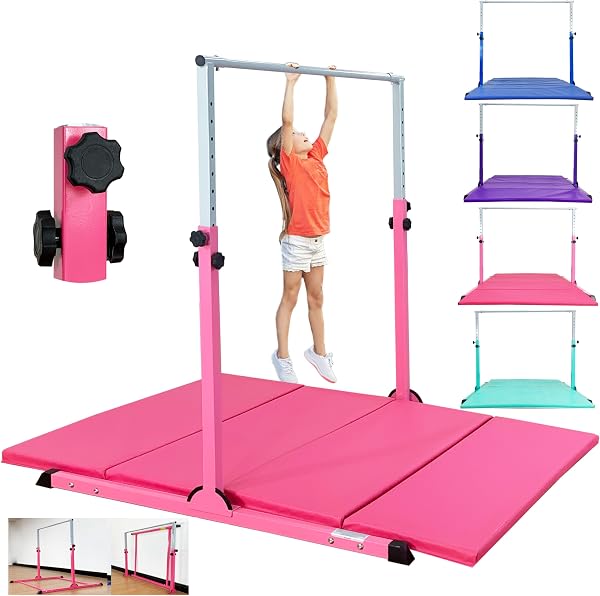
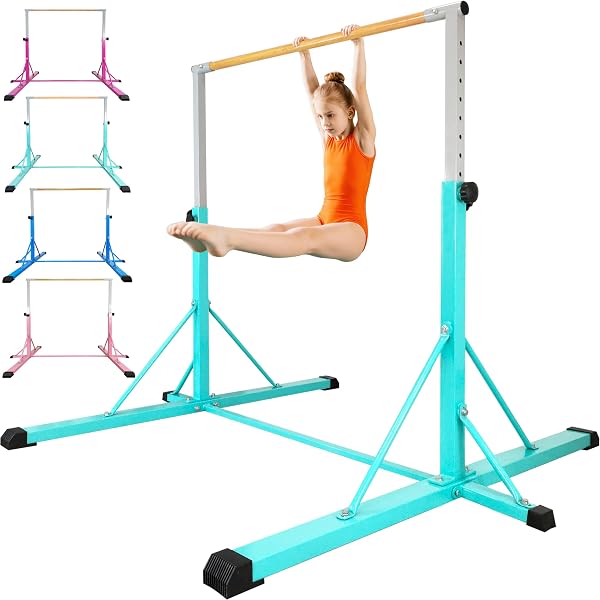
5'10" Base Pro
9.2Editor score500 LB capacity
45" to 71" height
Beech-covered fiberglass
6 FT base length
Find the right gymnastics bars for 2026. We compare 10 standout options by build quality, useful features, owner feedback, value, and everyday trade-offs.
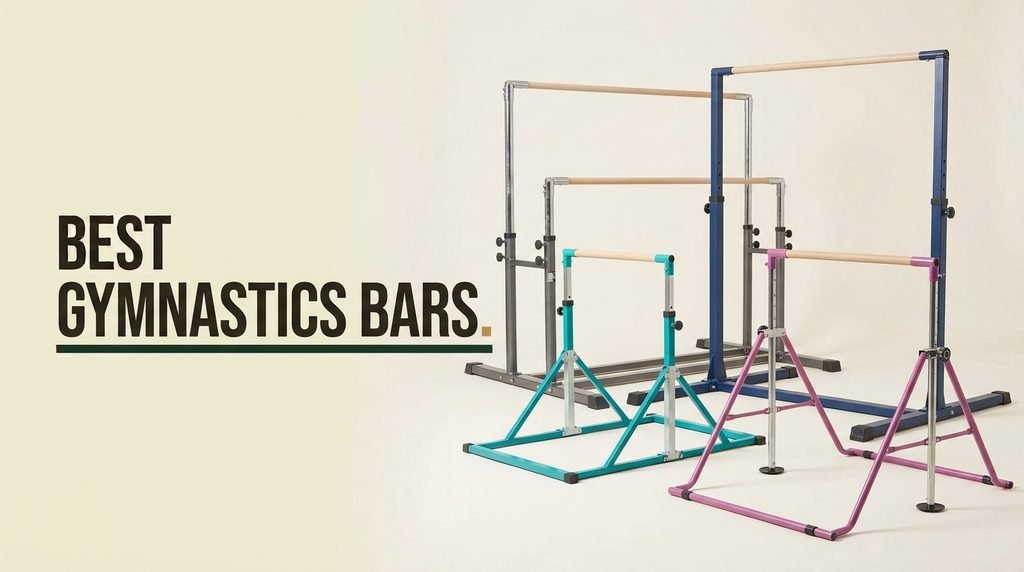
Finding the right gymnastics bars for home practice in 2026 means weighing stability, adjustability, weight capacity, bar material, footprint, and folding convenience. We compare 10 standout options across these factors so you can match a kip bar to your gymnast’s skill level and available space.
Not every horizontal bar suits every athlete. A compact model may work for a preschooler learning pull-ups, while an older gymnast drilling kips and cast handstands needs a wider base and heavier load rating. Understanding these differences prevents costly mismatches.
This guide walks through each option with clear specs, practical trade-offs, and honest limitations. Whether you need a foldable bar for a small living room or a competition-style setup for serious training, you will find a focused recommendation ahead.
We compared 10 gymnastics bars using the details that genuinely help a buyer decide: weight capacity, height range, base dimensions, bar material, folding mechanism, stability design, age suitability, included accessories, owner feedback, and overall value. The notes focus on real trade-offs so each pick connects to how families actually set up, store, and train on a kip bar at home.

Compare key features, scores, and current prices side by side. A shorter feature list means fewer details were available, not necessarily fewer capabilities.




With the highest rating in this comparison, the PreGymnastic 6-foot foldable bar earns its spot by combining competition-quality materials with a frame that actually folds for storage. The 40-millimeter fiberglass rail features a sanded natural wood surface that closely replicates what gymnasts feel on regulation apparatus, giving confident grip without excessive chalk buildup.
We may earn a commission when you buy through this link, at no additional cost to you.
The 500-pound capacity and 6-foot base length provide a stability margin that is hard to find in foldable designs. Three steel tube connectors and a big-triangle support system minimize lateral sway during aggressive kips and cast handstands, which is where many lighter folding bars start to wobble.
Height adjustment runs from 35 to 58 inches across 13 positions, using 304-grade stainless steel arms with laser-etched scale markings. This grade of stainless resists corrosion far better than powder-coated mild steel, so the adjustment mechanism should stay smooth even in humid garages or basements. The steel folding hinges replace the plastic parts that plagued earlier foldable bars.
The 40mm diameter and sanded wood finish on the fiberglass rail match the dimensions and texture of bars used in sanctioned competitions. This matters because muscle memory developed on a properly sized rail transfers directly to the gym, reducing the adjustment period when your gymnast returns to practice. Undersized or overly slick home bars can create grip habits that coaches then have to correct.
The main limitation is the 58-inch maximum height, which may not satisfy gymnasts already training giants or high release moves. For the vast majority of home users working on levels 1 through 6, however, this bar delivers the best combination of build quality, safety, and storage convenience in the lineup.
Elite-level gymnasts who need a bar height above 58 inches for high-bar routines.
We may earn a commission when you buy through this link, at no additional cost to you.
This horizontal bar targets gymnasts who have outgrown entry-level equipment and need a taller setup to practice giants, clear hip circles, and other high-bar skills at home. The 45-to-71-inch height range is the widest in this guide, giving growing athletes room to progress without replacing the bar within a year or two.
We may earn a commission when you buy through this link, at no additional cost to you.
The beech-covered fiberglass crossbar mimics the feel of competition apparatus, which matters when a gymnast is refining grip transitions and release timing. A wood-surface fiberglass rail flexes slightly under load, absorbing shock during swings and reducing hand fatigue compared to a rigid steel pipe. The 500-pound capacity provides a large safety margin even for older teens.
Stability comes from six triangular supports along the base and additional side extension bars. The open landing area keeps steel tubes out of the dismount zone, lowering the chance of shin or ankle contact during flyaways and underswings. Double locking knobs on each upright secure the height setting so the bar does not slip mid-routine.
A bare steel or plastic crossbar can feel slippery when chalk builds up or palms get sweaty. Beech wood wrapping over a fiberglass core delivers the tacky yet smooth surface that competitive gymnasts expect, allowing secure grip changes without excessive hand tearing. The fiberglass core also flexes under dynamic loads, which helps absorb the forces generated during kips and cast handstands and makes the bar feel closer to what your gymnast encounters at the gym.
The trade-off is size. With a 6-foot base length and 5-foot width, this bar demands a generous training area and is not practical for small apartments. If your gymnast is still working on basic pullovers and back hip circles, a more compact model may serve you better until they need the extra height.
Families with limited floor space or younger beginners who do not yet need a bar above 60 inches.
We may earn a commission when you buy through this link, at no additional cost to you.
The FC FUNCHEER kip bar covers a broad age range by offering 12 height positions between 35 and 59 inches. That flexibility means a younger child can start with low pullovers and a teenager can raise the bar for cast handstand drills without needing a second piece of equipment.
We may earn a commission when you buy through this link, at no additional cost to you.
A 500-pound capacity is unusually high for a bar in this footprint, giving parents confidence that the frame will not buckle during dynamic skills like kips and squat-ons. The fiberglass crossbar adds a degree of flex that is gentler on wrists and shoulders than a solid steel rail, which is a welcome feature for lighter gymnasts still building upper-body strength.
The double locking knobs are sized so that even an eight-year-old can loosen and tighten them with minimal help, encouraging independence during practice sessions. Six rubber-tipped base feet and a triangular support layout keep lateral sway to a minimum on hardwood and carpet alike.
One of the most practical details on this bar is the oversized locking knobs that small hands can grip and turn. When a child can change the bar height without calling a parent every time, practice sessions run more smoothly and the gymnast learns to take ownership of their training setup. Just remind younger users to tighten both knobs fully before mounting.
At 5 feet long and 4 feet wide, this bar fits more easily into a bedroom or playroom than the larger competition-style models. The trade-off is that the lower maximum height and shorter base may feel limiting once a gymnast starts working on long swings or high release moves, so plan accordingly if your child is advancing quickly.
Advanced gymnasts who need a bar above 60 inches for high-bar skills.
We may earn a commission when you buy through this link, at no additional cost to you.
MARFULA's 5-foot folding kip bar hits a practical sweet spot for families who want a sturdy training bar without permanently giving up half the living room. The frame folds down in under a minute and leans against a wall, which is a genuine advantage in multi-use spaces.
We may earn a commission when you buy through this link, at no additional cost to you.
The wood-covered fiberglass crossbar provides the flex and grip feel that young gymnasts need for kips, back hip circles, and mill circles. Thirteen height positions between 36 and 60 inches accommodate a wide range of ages, and the stainless steel adjustment arms resist rust far better than painted steel alternatives over years of use.
A standout convenience feature is the single-person height adjustment mechanism. The connector at the crossbar end lets one adult or older teen raise or lower the bar without a second pair of hands, which speeds up transitions between drills. The upgraded steel folding joints also address a common complaint about older plastic hinge designs that could crack under repeated use.
Earlier generations of foldable gymnastics bars used plastic hinges that could snap after months of folding and unfolding. MARFULA switched to steel folding joints on this model, which dramatically improves long-term durability. If you plan to fold the bar daily, this upgrade is one of the most meaningful differences between budget and mid-range options.
The 400-pound capacity is sufficient for most children and lighter teenagers, but heavier or more aggressive gymnasts may want a 500-pound-rated model. If storage flexibility matters more to your household than the absolute highest load rating, this bar offers strong overall value.
Heavier teens or adults who need a weight capacity above 400 pounds.
We may earn a commission when you buy through this link, at no additional cost to you.
The Tepemccu bar is purpose-built for young beginners who are just learning to hang, pull up, and attempt their first pullover. The included foam bar pad wraps around the crossbar to cushion hips and stomachs during those early attempts, which makes the learning process less intimidating for cautious kids.
We may earn a commission when you buy through this link, at no additional cost to you.
Five height settings between roughly 35 and 51 inches let you start the bar low for confidence-building hangs and raise it incrementally as your child grows. The connecting-rod assembly is simple enough that setup takes only a few minutes, and the foldable frame tucks into a closet when practice is over.
A triangular base with rubber floor grips keeps the bar from sliding on tile and hardwood. The 140-pound capacity is appropriate for the target age range of 3 to 8 years, and the ASTM compliance provides an extra layer of assurance for safety-conscious parents.
When a child is learning to cast or do a pullover, their hips and abdomen repeatedly contact the bar. A foam pad absorbs that impact and prevents bruising, which keeps practice sessions positive rather than painful. Buying a pad separately can add cost and sizing guesswork, so having one in the box simplifies the first day of training.
This bar is not designed for older or heavier gymnasts, and the lower weight limit means it will need to be replaced as your child progresses. Think of it as an affordable first step that builds fundamental strength and body awareness before you invest in a full-size kip bar.
Children over 8 years old or any gymnast exceeding 140 pounds.
We may earn a commission when you buy through this link, at no additional cost to you.
This MARFULA package pairs a kip bar with a matching mat, which eliminates the common problem of buying a bar and then searching for a mat that fits the base footprint. Having both pieces arrive together means your gymnast can start training safely on day one without a separate shopping trip.
We may earn a commission when you buy through this link, at no additional cost to you.
The bar itself uses a semicircle T-support design instead of wide outer extensions, which reduces the overall floor footprint while maintaining lateral stability. Two side connections between the uprights and base add rigidity that single-connection designs lack, and three locking knobs per side provide redundant height security.
Height adjusts from 36 to 60 inches, covering the needs of most primary and intermediate gymnasts. The locking bolts at the base allow the entire frame to be disassembled in about a minute, making it practical to clear the training area for other household activities.
Traditional kip bars use wide outer extension feet that spread the base far beyond the uprights, which improves stability but eats up floor space. The semicircle T-support on this model concentrates the stabilizing force closer to the center, giving you a smaller footprint without a major sacrifice in wobble resistance. This design is especially useful in rooms where furniture or walls limit the available training area.
The 350-pound weight capacity sits below the 500-pound models in this guide, so heavier teens or aggressive swingers should look elsewhere. For families with younger or lighter gymnasts who want a complete bar-and-mat solution without piecing together separate purchases, this bundle offers real convenience.
Gymnasts over 350 pounds or those performing high-impact release skills.
We may earn a commission when you buy through this link, at no additional cost to you.
MARFULA markets this bar for ages 3 to 25, which is a wider range than most competitors. The 400-pound capacity and 5-foot length provide enough structural headroom for older teenagers and lighter adults who want to practice basic swings, kips, and conditioning drills at home.
We may earn a commission when you buy through this link, at no additional cost to you.
Stability is the headline feature here. Six large triangular supports and six floor contact points distribute weight more evenly than four-point designs, reducing the side-to-side rocking that can occur during aggressive cast handstands or leg swings. Three middle connections between the uprights further stiffen the frame against lateral forces.
The wood-covered fiberglass crossbar delivers the flex and surface feel that gymnasts need for proper grip technique, and the steel folding hinges are a meaningful upgrade over plastic alternatives that can crack under repeated stress. Thirteen height levels between 36 and 60 inches let you fine-tune the bar to the specific drill being practiced.
Most budget kip bars rest on four rubber feet, which can allow a slight rocking motion when a gymnast swings forward and backward. Adding two extra contact points on the side extensions creates a wider, more balanced footprint that resists both lateral and longitudinal movement. The result is a bar that feels planted during dynamic skills, which builds confidence and reduces the risk of the frame shifting mid-routine.
The main consideration is that the 60-inch ceiling may not satisfy gymnasts training high-bar skills that require more clearance. For the majority of home users working through compulsory and early optional levels, this bar provides a stable, durable platform that can serve the whole family.
Gymnasts who need a bar height above 60 inches for advanced high-bar work.
We may earn a commission when you buy through this link, at no additional cost to you.
The RINREA bar stands out by including a pair of gymnastics rings and a foam bar pad alongside the horizontal bar itself. This combination turns a single piece of equipment into a mini training station where kids can alternate between bar work, ring hangs, and ring rows to build varied upper-body strength.
We may earn a commission when you buy through this link, at no additional cost to you.
The galvanized steel frame resists rust better than standard powder-coated tubing, which is a useful advantage if the bar will spend time in a garage, basement, or outdoor play area. Rounded pedestals on the support tubes let you fine-tune the balance on uneven floors by simply rotating the feet.
Five height settings between 35 and 51 inches cover the preschool and early elementary years well. The folding design keeps storage simple, and the four rubber floor rings provide enough grip to prevent sliding on smooth surfaces during basic hangs and pullovers.
Gymnastics rings introduce an element of instability that a fixed bar cannot replicate. Hanging from rings forces the shoulder stabilizers and core muscles to work harder, which accelerates strength development in young gymnasts. Having rings available on the same frame means your child can switch between bar drills and ring conditioning without needing a separate setup or doorway mount.
With a 140-pound capacity, this bar is strictly for younger and lighter children. It is an excellent first bar for toddlers and preschoolers who are developing coordination and body awareness, but plan to upgrade to a higher-capacity model once your child outgrows the weight limit or starts attempting more dynamic skills.
Children over 8 years old or any user exceeding 140 pounds.
We may earn a commission when you buy through this link, at no additional cost to you.
This kip bar uses a resin crossbar rail instead of fiberglass or wood, which gives it a smooth, consistent surface that is gentle on young hands. For gymnasts in levels 1 through 4 who are still building calluses and grip endurance, the softer resin feel can make longer practice sessions more comfortable.
We may earn a commission when you buy through this link, at no additional cost to you.
The six-point base with rubber end caps and two bottom crossbars provides solid stability for the target weight range. Eleven height positions between 37.5 and 55.5 inches allow incremental adjustments as your child grows, and the strong lock structure keeps the bar from slipping during use.
Assembly is straightforward, with intuitive connectors and clear instructions that most parents can follow in under 15 minutes. The 300-pound capacity is adequate for the intended age group and skill level, and the compact footprint fits well in smaller rooms or shared play areas.
Resin rails are generally smoother and less abrasive than bare fiberglass, which reduces hand irritation for beginners who have not yet developed thick grip calluses. The trade-off is that resin lacks the slight flex and tacky surface texture of fiberglass, so the bar will feel stiffer and less like competition equipment. For early-level skills this difference is minor, but it becomes more noticeable as gymnasts advance to dynamic swings and release moves.
The resin rail will not replicate the flex and grip of a competition fiberglass bar, so gymnasts preparing for higher-level meets may eventually want a wood-covered fiberglass model. For early-stage training focused on basic swings, pullovers, and back hip circles, this bar offers a comfortable and affordable entry point.
Advanced gymnasts who need competition-style fiberglass flex and higher weight capacity.
We may earn a commission when you buy through this link, at no additional cost to you.
The DOBESTS bar uses an upgraded pin-lock mechanism with dedicated lock holes at each height position, which provides a more positive engagement than friction-based knob systems. When the pin clicks into the hole, there is no chance of the bar slowly sliding down during a practice session, giving parents extra peace of mind.
We may earn a commission when you buy through this link, at no additional cost to you.
Five height settings from 35 to 51 inches cover the needs of children roughly ages 3 to 7. The 220-pound capacity is higher than some competing bars in this compact size range, offering a bit more headroom for growing kids who are still within the target age bracket.
The triangular steel frame folds down quickly for storage, and four non-slip rubber floor rings keep the base planted on hardwood, tile, and low-pile carpet. The overall footprint of roughly 58.5 by 40 inches is small enough to set up in a bedroom or playroom without rearranging furniture.
Friction-based locking knobs rely on clamping pressure to hold the bar in place, which can gradually loosen as the frame vibrates during swings. A pin-lock system inserts a metal pin through aligned holes in the upright and adjustment arm, creating a mechanical stop that cannot slip regardless of vibration. This design is especially reassuring for parents of energetic kids who generate a lot of movement on the bar.
This bar is best viewed as a dedicated training tool for younger children. The 51-inch maximum height and compact base will not support the dynamic forces generated by older gymnasts performing kips and cast handstands. For the right age group, however, the pin-lock security and solid build quality make it a reliable choice.
Children over 7 years old or gymnasts practicing advanced dynamic skills.
We may earn a commission when you buy through this link, at no additional cost to you.
Selecting a home gymnastics bar involves more than picking the tallest or cheapest option. The right choice depends on your gymnast’s age, weight, current skill level, available space, and how long you expect the bar to remain useful. This section breaks down the most important decision factors so you can shop with confidence.
Weight capacity is the single most important safety specification on any gymnastics bar. Models in this guide range from 140 pounds for compact beginner bars up to 500 pounds for full-size training setups. A higher rating does not just mean the bar can hold a heavier person; it also indicates a larger safety margin during dynamic skills like kips, cast handstands, and flyaways, where the forces on the frame can briefly exceed the gymnast’s static body weight.
When evaluating capacity, consider both the current weight of your gymnast and their projected growth over the next two to three years. A 70-pound eight-year-old may seem fine on a 140-pound bar today, but a growth spurt could push them past that limit sooner than expected. Choosing a bar with at least double the gymnast’s current weight provides a comfortable buffer for dynamic loading and future growth.
If your gymnast weighs under 100 pounds and is still learning basic skills, a 220-to-350-pound bar is usually sufficient. For older or more advanced athletes, prioritize models rated at 400 pounds or above to ensure the frame can handle the forces generated by aggressive swings and dismounts.
The height range of a gymnastics bar determines which skills your athlete can safely practice. Lower settings around 35 to 40 inches are ideal for beginners learning pullovers, back hip circles, and simple hangs. Intermediate gymnasts working on kips and cast handstands typically need the bar between 45 and 55 inches. Advanced skills such as giants and clear hip circles may require heights above 60 inches.
Look for a bar that offers at least 10 to 13 height positions with increments of roughly 2 inches. Fine adjustment steps let you raise the bar gradually as your gymnast gains confidence, rather than making a sudden jump that could feel intimidating. Also check whether the adjustment mechanism can be operated by a single person, which is a genuine convenience when you are managing practice sessions alone.
Match the maximum height to your gymnast’s current and near-future skill goals. A bar that tops out at 51 inches will serve a preschooler well but will need replacing within a couple of years for a progressing athlete. A model that reaches 60 or 71 inches offers more longevity but requires a taller ceiling and more floor space.
The crossbar is the part your gymnast actually grips, so its material and diameter directly affect comfort, grip security, and skill transfer to competition equipment. The three most common materials are solid steel, fiberglass with a wood covering, and resin. Steel bars are durable but rigid and can feel harsh on young hands. Fiberglass bars with a beech or wood veneer flex slightly under load, absorbing shock and mimicking the feel of regulation competition bars. Resin rails offer a smooth, gentle surface that is kind to beginner hands but lacks the flex and tackiness of fiberglass.
Diameter also matters. Competition bars are typically around 40 millimeters in diameter, which is the size most gymnasts train on at their gym. A home bar with a significantly thinner or thicker rail can alter grip mechanics and create habits that coaches need to correct later. If your gymnast is serious about competition, look for a 40mm fiberglass rail with a wood surface treatment.
For beginners under age 8, a resin or padded steel bar is perfectly adequate and may actually be more comfortable during the early learning phase. Upgrade to a competition-style fiberglass rail once your child reaches level 3 or 4 and starts spending more time on the bar during practice.
A gymnastics bar is only as safe as its base. The base length and width determine how well the frame resists tipping and swaying during dynamic skills. Compact bars with 4-foot bases are easier to fit in small rooms but may rock slightly during aggressive kips. Full-size bars with 5-to-6-foot bases provide a wider stance that anchors the frame more firmly to the floor.
Beyond raw dimensions, pay attention to the support structure. Triangular bracing at the base and uprights is the most effective geometry for resisting lateral forces. Bars with six or more triangular supports and six floor contact points generally outperform simpler four-point designs. Some models also add side extension bars or semicircle T-supports to widen the footprint without dramatically increasing the overall length.
Measure your available training space before ordering. Leave at least 3 to 4 feet of clearance on all sides of the bar for safe dismounts and mat placement. A bar that technically fits in the room but leaves no landing space is a safety hazard, not a training solution.
For most families, a gymnastics bar will share space with everyday living areas. A foldable design lets you collapse the frame and lean it against a wall or slide it into a closet between practice sessions, which is a major advantage in apartments and multi-use rooms. Non-folding bars are generally more rigid but require a dedicated training area.
When comparing folding bars, check the hinge material carefully. Older designs used plastic folding joints that could crack after months of repeated use. Newer models have switched to steel folding hinges, which are far more durable and should last the lifetime of the bar. This is one of the most meaningful quality differences between budget and mid-range foldable bars.
If you plan to fold the bar daily, prioritize a model with steel hinges and a quick-release mechanism that one person can operate. If the bar will stay set up permanently in a garage or basement, a non-folding design may offer slightly better rigidity at a lower price.
Manufacturers often list a recommended age range, but the more useful metric is the combination of weight capacity, height range, and bar material. A bar rated for ages 3 to 8 with a 140-pound limit is fundamentally different from one rated for ages 3 to 18 with a 500-pound limit, even if the age ranges overlap at the lower end.
Match the bar to your gymnast’s current competitive level and the skills they are actively drilling. Levels 1 through 3 typically require basic hangs, pullovers, back hip circles, and cast handstands, which most bars in this guide can handle. Levels 4 through 6 introduce kips, squat-ons, and more dynamic swings that demand higher weight capacity and better stability. Levels 7 and above may require a bar height above 60 inches and a competition-grade rail.
Be honest about where your gymnast is likely to be in two years. Buying a bar that perfectly fits today’s skills but will be outgrown within 18 months is a false economy. Investing in a model with a higher weight limit and taller maximum height often saves money over the long term.
Some gymnastics bars ship as standalone frames, while others include mats, bar pads, gymnastics rings, or swing attachments. Bundled accessories can add real value, especially for first-time buyers who would otherwise need to source compatible items separately. A bar pad, for example, cushions the hips and stomach during pullovers and is almost essential for young beginners.
Gymnastics rings that hang from the crossbar add training variety and help develop shoulder stability and grip strength. Swing attachments can extend the bar’s usefulness for younger children who are not yet ready for structured gymnastics drills. However, verify that any included accessories are appropriately rated for the bar’s weight capacity and will not compromise stability.
When comparing prices, factor in the cost of accessories you would need to buy separately. A bar that costs $20 more but includes a mat and pad may actually be the better deal compared to a cheaper bar that requires $60 in additional purchases.
Before every practice session, inspect the locking knobs, pin mechanisms, and folding hinges to confirm they are fully engaged and secure. Check that all rubber floor caps are in place and that the base sits flat without rocking. Place the bar on a level surface with adequate clearance on all sides, and always use a gymnastics mat underneath and around the landing zone to cushion falls and dismounts.
Keep the crossbar clean and free of excessive chalk buildup, which can create a slippery film over time. Wipe the rail with a slightly damp cloth after each session and dry it thoroughly to prevent moisture from degrading wood or resin surfaces. For fiberglass bars with a wood veneer, avoid harsh chemical cleaners that could strip the finish and reduce grip quality.
When storing a foldable bar, collapse the frame according to the manufacturer’s instructions and lean it against a wall in a dry area. Avoid leaving the bar outdoors or in damp basements for extended periods, as moisture can accelerate rust on steel components even if they are powder-coated or galvanized. Periodically tighten all bolts and connections to compensate for normal vibration loosening over months of use.
Most home gymnastics bars are designed for children ages 3 and up, but the specific age range depends on the bar's weight capacity and height settings. Compact bars with lower weight limits suit toddlers and preschoolers, while full-size models with 400-to-500-pound capacities can accommodate teenagers and even lighter adults. Always match the bar to your child's current weight and skill level rather than relying solely on the age recommendation.
Plan for the bar's base footprint plus at least 3 to 4 feet of clearance on every side for safe dismounts and mat placement. A compact 4-foot-wide bar may fit in a 10-by-10-foot area, while a full-size 6-foot model needs a larger room or garage. Measure your ceiling height as well, especially if you are considering a bar that adjusts above 60 inches.
Yes, a gymnastics mat is strongly recommended under and around the bar for every skill level. Even basic hangs and pullovers carry a fall risk, and a mat cushions landings during dismounts and unexpected slips. Some bars come bundled with a mat, while others require a separate purchase. Choose a mat that extends at least 2 feet beyond the base on all sides.
In home gymnastics, the terms are often used interchangeably. A kip bar is a type of horizontal bar specifically designed to practice kips, pullovers, and related skills. Competition horizontal bars are taller and used for advanced routines. Home kip bars are shorter, adjustable, and built for a wider range of beginner and intermediate drills.
A properly assembled bar on a level surface with the correct weight limit should not tip during normal use. Stability depends on the base design, floor contact points, and whether the gymnast stays within the rated capacity. Bars with six-point bases and triangular bracing are more resistant to tipping than simpler four-point designs. Always supervise young children and ensure all locking mechanisms are fully tightened.
Wipe the crossbar with a damp cloth after each session to remove chalk residue and sweat. For wood-covered fiberglass bars, avoid soaking the surface or using abrasive cleaners that could damage the finish. If the grip starts to feel overly slick, a light application of gymnastics chalk can restore tackiness. Inspect the surface periodically for cracks or splinters that could injure hands.
A well-designed folding bar with steel hinges and a wide base can be nearly as stable as a fixed model for the skills it is rated to support. The key factors are the hinge material, the number of support triangles, and the base footprint. Steel folding joints are significantly more rigid than older plastic hinges. For very advanced dynamic skills, a non-folding competition-style bar may still offer a slight stability advantage.
A good starting point is to set the bar at or slightly above your child's wrist height when they stand with arms raised overhead. This allows them to reach the bar with a small jump and hang comfortably. As skills progress, raise the bar incrementally so the gymnast can practice kips and cast handstands with proper body extension. Always ensure there is enough ceiling clearance above the highest setting.
Yes, as long as each child falls within the bar's weight capacity and the height is adjusted appropriately for each user. A bar with a wide height range and easy adjustment mechanism makes switching between children quick and practical. Just be sure to re-tighten all locking knobs after each height change and verify that the lighter child can safely reach and grip the bar at the lower settings.
The PreGymnastic 6FT foldable bar stands out as the strongest overall choice for most families, combining a competition-grade 40mm fiberglass rail, a 500-pound capacity, and steel folding hinges in a package that earned the highest rating in this comparison. It delivers the build quality and stability that serious young gymnasts need while still folding down for storage between sessions.
For buyers on a tighter budget, the RINREA and Tepemccu bars offer solid entry points for younger children, complete with useful accessories like rings and bar pads. The MARFULA 5FT folding kip bar hits a compelling middle ground with its one-person height adjustment and steel folding joints at a moderate price. Families who want a complete bar-and-mat bundle should consider the MARFULA kip bar with mat package.
Start by measuring your training space and noting your gymnast's current weight, skill level, and realistic growth trajectory over the next two to three years. Use those details to narrow the field to two or three models, then prioritize the bar that offers the best combination of weight capacity, height range, and crossbar material for your specific situation. A well-chosen home bar can accelerate skill development and keep practice consistent between gym sessions.