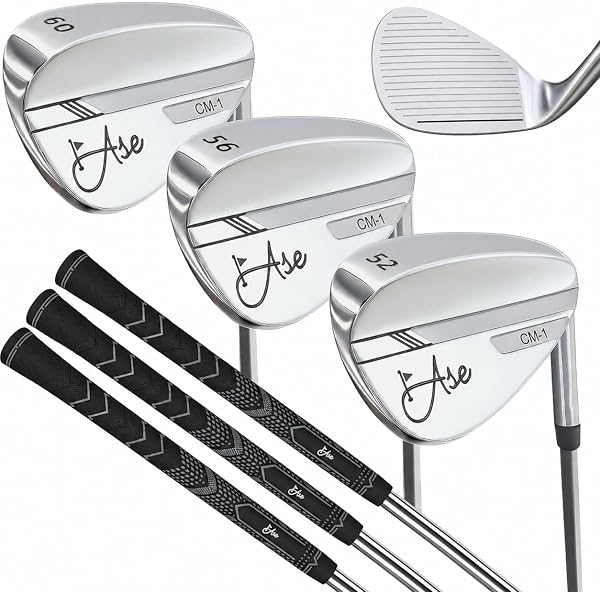
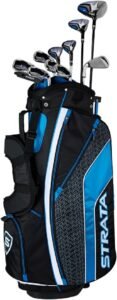
Cobra Tour Trusty
9.2Editor score52/56/60 degree set
Full-face groove design
FST 115-gram steel shaft
Cobra Notch sole relief
Compare 10 top golf wedges by groove tech, loft options, sole design, and forgiveness to build a sharper short game with the right gap, sand, and lob wedges.
Find the right golf wedges for 2026. We compare 10 standout options by the factors that matter most around the greens, including groove milling and spin, loft gapping, sole grind versatility, forged versus cast feel, finish durability, forgiveness on off-center strikes, and the everyday value each club delivers for your short game.
Wedges decide more scoring situations than any other clubs in the bag, yet many players carry mismatched lofts or worn grooves without realizing it. The differences between models come down to face technology, bounce angles, head construction, and how much forgiveness is engineered into the sole design.
Whether you need a high-spinning lob wedge for soft conditions, an anti-dig sand wedge for fluffy bunkers, or a complete three-club gapping set, this guide breaks down each model’s strengths and trade-offs so you can build a wedge setup that matches your swing and home course conditions.
We compared 10 golf wedges using the details that actually help a buyer decide: groove construction and spin potential, loft availability and set gapping, sole design and turf interaction, forged versus cast feel, finish durability, forgiveness on mishits, shaft and grip quality, and price per club. The notes focus on practical trade-offs so each pick connects to how real golfers chip, pitch, blast bunker shots, and attack pins.

Compare key features, scores, and current prices side by side. A shorter feature list means fewer details were available, not necessarily fewer capabilities.




The Cleveland RTX 6 ZipCore carries the highest owner rating in this comparison, and its appeal rests on a clear promise: tour-caliber stopping power with enough built-in stability to keep misses playable. It suits low-to-mid handicappers who know precisely what they want around the greens, along with improving players who want one wedge that rewards a committed, accelerating swing rather than punishing a slightly loose one.
We may earn a commission when you buy through this link, at no additional cost to you.
Three technologies drive the performance. HydraZip combines a dynamic face blast with laser-milled lines that raise surface roughness, so friction and spin hold up from the fairway, the rough, and damp early-morning lies. ZipCore replaces heavier material in the heel and hosel with a lightweight, vibration-dampening core — up to 95% more of it than before — which shifts the center of gravity toward the spot where most players actually strike the ball while lifting MOI by up to 20%. UltiZip grooves are sharper, deeper, and more tightly spaced than earlier designs, and that tighter spacing frees enough real estate to fit two additional grooves on the face.
In everyday use, those additions translate to partial shots that hold their line and carry distance even when contact drifts toward the toe. The face presents as more matte than the previous generation, which trims glare when you address the ball with the sun low behind the green. Bunker escapes benefit from grooves that slice through sand-laden contact instead of glancing off it, and chips check up predictably rather than releasing past the hole.
Most wedge swings during a round are quarter and half efforts, and strike location wanders more on those shortened motions than on full swings. Extra MOI keeps off-center hits closer to the intended carry distance, which is the difference between a slightly long chip that still finds the putting surface and a mis-hit that comes up short of the fringe with the pin cut tight. Forgiveness in a wedge is not about masking skill; it is about protecting your good decisions when execution wobbles.
The honest tradeoff is cost: as a flagship single club, building a full RTX 6 gapping set runs well past the price of the bundled trios in this guide. Players who treat the scoring clubs as precision instruments and buy one loft at a time will find the investment defensible. Shoppers filling three slots at once should compare the per-club math against the set options first.
Shoppers building a complete three-wedge set on a tight budget.
We may earn a commission when you buy through this link, at no additional cost to you.
The Cobra Tour Trusty set answers a question most wedge shoppers eventually face: how do you get three coordinated scoring clubs without mixing brands, lofts, and feel? Buying the 52, 56, and 60 together gives you a matched trio with consistent aesthetics, shafts, and turf behavior — a genuine advantage for players who want a turnkey short-game arsenal from a major manufacturer.
We may earn a commission when you buy through this link, at no additional cost to you.
The gapping logic is straightforward. The 52 bridges the scoring gap between your short irons and the sand wedge, the 56 handles standard pitches and green-side bunkers, and the 60 attacks tight pins from wherever the lie allows. The 56 and 60 both carry full-face grooves, extending spin performance across the entire hitting area so open-faced shots and toe-side contact still grip the ball. Optimized sole grinds let you flight the ball low, open the face, or play it square depending on the shot.
Cobra’s Notch is the signature detail: a refined trailing-edge relief that lowers the leading edge closer to the turf for cleaner contact and improved glide through sand and thick rough. The FST 115-gram wedge-flex steel shafts deliver a stable, repeatable feel across all three clubs, which matters when you are calibrating quarter-swing distances on the practice green. Because all three heads share the same design language, switching between them mid-round involves no visual or feel adjustment.
Four-degree loft steps produce carry distances that typically separate by 10 to 15 yards, which maps cleanly onto the scoring range where most approaches land. Before committing, check the loft stamped on your pitching wedge — modern sets run stronger than older ones — and confirm that a 52 actually fills your gap rather than overlapping it. A matched set only pays off when the lofts complement the irons already in your bag.
The tradeoffs are financial and structural. This is the most expensive purchase in the group, and the fixed 52/56/60 configuration means you accept Cobra’s gapping philosophy rather than your own. If your iron set already includes a strong gap wedge or you prefer a 58 as your top club, a set purchase forces compromise. For players starting from scratch, though, the coordination is worth paying for.
Players who prefer assembling wedges one loft at a time.
We may earn a commission when you buy through this link, at no additional cost to you.
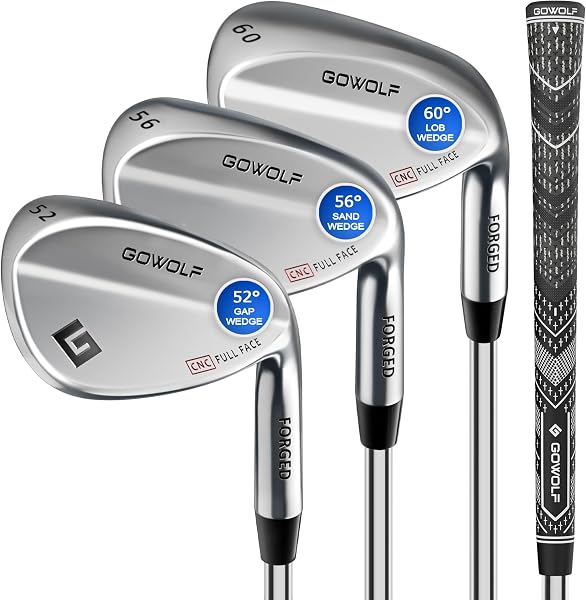
Gowolf's pitch is the one budget-conscious golfers want to hear: forged heads, CNC-milled faces, and full-face groove coverage at a price that undercuts most single flagship wedges. Built for both men and women and offered as singles or coordinated sets, the line is a sensible entry point for anyone upgrading from a worn-out hand-me-down or filling three wedge slots for the first time.
We may earn a commission when you buy through this link, at no additional cost to you.
Spin is the headline. The CNC-milled face carries ultra-sharp, deep grooves that bite harder than standard designs, generating stopping power from the fairway, the rough, and sand. Grooves are spaced more tightly than conventional layouts, and the textured face adds friction for extra check on chips that need to stop quickly. Optimized weight distribution in the head promotes cleaner contact, which quietly matters more than any groove spec when the ball sits down in the rough.
Forgiveness is where the design earns its rating. Full-face grooves extend across the entire clubface, so strikes that wander toward the heel or toe still find groove-to-ball contact and retain usable spin — a genuine advantage for mid-handicappers whose strike patterns move around. The leading edge is shaped to prevent digging, smoothing turf interaction on aggressive attacks, while the anti-glare finish supports cleaner alignment. A moisture-wicking composite grip keeps traction secure in humid conditions, and the chrome finish resists wear through repeated practice sessions.
The 52/56/60 set follows the conventional gapping template and suits most iron sets. The 50/54/58 alternative favors players with stronger-lofted irons who need the gap club to fly farther, or golfers who prefer a slightly lower peak height on their highest wedge. If your pitching wedge measures 44 degrees or less, the 50/54/58 build usually produces cleaner yardage steps than the traditional trio.
Configuration flexibility is generous: singles run from 50 through 69 degrees, and sets come in 52/56/60 or 50/54/58 combinations. The limitations are structural rather than performance-related — right-handed players only, and no path to custom grinds or aftermarket shaft fitting through the brand. For the overwhelming majority of recreational players, neither gap will matter, and the value proposition is difficult to argue with.
Left-handed golfers and players who need custom grind fitting.
We may earn a commission when you buy through this link, at no additional cost to you.
The Cleveland RTZ is the feel-first flagship in this lineup, built around a new steel the brand calls Z-Alloy. It targets the player for whom touch is the whole point of a wedge: the golfer who wants to sense precisely where on the face the ball struck and calibrate the next shot accordingly. If your short game lives on finesse rather than power, this is the club in the group designed around your priorities.
We may earn a commission when you buy through this link, at no additional cost to you.
Z-Alloy is described as softer, lighter, and remarkably durable — a combination usually compromised in wedge steels, where softness and wear resistance trade against each other. On Tour Rack builds, the alloy’s rust-resistant properties extend that like-new performance over more seasons. The familiar Cleveland systems return in evolved form: HydraZip face blasts and laser-milled lines are formulated specifically to maximize spin under wet conditions and configured by loft groupings to balance behavior across the set, while ZipCore again shifts the center of gravity toward the strike zone and adds MOI.
UltiZip grooves do the dirty work. Sharper edges cut through grass and debris at contact, and the deeper channels create space for sand, dirt, and water to clear the impact zone rather than sitting between the face and the ball. The practical result is more consistent spin whether you are attacking from a clean fairway lie, a fluffy bunker, or gnarly rough — the three lies that decide most scrambling pars.
HydraZip’s face blast and laser-line patterns are dynamically configured by loft groupings rather than applied uniformly. A low-lofted gap wedge and a high-lofted lob wedge have different jobs, different impact speeds, and different spin requirements, so tuning the surface treatment by loft band helps each club produce comparable stopping behavior relative to its role. The benefit for the buyer is consistency: your 50 checks in proportion to your 60, which makes the whole set easier to trust.
The tradeoff is straightforward: this is the most expensive single wedge in the comparison, and the gains over the RTX 6 are incremental rather than transformative. Feel-obsessed players will notice the difference on delicate 40-yard pitches; everyone else should weigh whether that refinement justifies the premium. The rust-resistant framing also applies specifically to Tour Rack configurations, so buyers prioritizing longevity should confirm which build they are getting.
Buyers who cannot justify a premium price for marginal feel gains.
We may earn a commission when you buy through this link, at no additional cost to you.
The KVV wedge line is engineered explicitly for beginner to intermediate players — a rare bit of candor in a category where every club claims tour provenance. Available in 52, 56, and 60 degrees as individuals or a three-club set, and built for both men and women, it pairs a forgiving architecture with an unmistakable ionized blue finish that makes it one of the most distinctive clubs in this comparison.
We may earn a commission when you buy through this link, at no additional cost to you.
Performance starts with the face: a precision CNC-milled surface with sharp grooves engineered to maximize friction and generate strong backspin, giving newer players the stopping power that keeps approach shots on the green instead of running through it. The wide sole is the more important design choice for this audience. It provides stability across varied lies and adds a margin of error on shots where a narrower, tour-style sole would either dig or bounce unpredictably.
Durability and grip get equal attention. The stainless steel body delivers a solid, responsive impact feel, while the ionized blue PVD coating — protected by an anti-fingerprint layer — resists stains and corrosion and maintains its appearance with a simple wipe after rounds. The steel shaft carries a rubber grip that absorbs sweat and maintains secure traction, a small detail that matters on humid afternoons when slippery hands turn good swings into fat chips.
Steeper attack angles are common among newer golfers, and a wide sole prevents the leading edge from catching turf and burying the clubhead into the ground. It also glides through sand rather than digging, which turns bunker shots from disasters into manageable escapes. The compromise is slightly blunter performance from very tight, firm lies, where a narrower sole slides cleaner under the ball — a situation developing players encounter far less often than fluffy rough.
The tradeoffs are personal rather than technical. Left-handed golfers have no path into this line, and the blue finish is a statement — players who prefer a classic chrome look at address will find it distracting rather than confidence-inspiring. For newcomers who want a forgiving, low-drama wedge that also happens to look like nothing else in the bag, the KVV earns its strong rating.
Left-handed players and traditionalists who prefer classic chrome looks.
We may earn a commission when you buy through this link, at no additional cost to you.
Yamato's flagship wedge makes no attempt at subtlety. With wave scoring lines milled across the face, a choice of chrome or a patented tarnish finish, and a tour-inspired head shape, it is built for players who want their short game to look as sharp as it plays — while still delivering the forged feel that serious golfers pay a premium for. Lofts run from 50 through 60 degrees, and the clubs are offered for both men and women.
We may earn a commission when you buy through this link, at no additional cost to you.
The face technology is the differentiator. Those wave scoring lines are engineered to create substantial backspin for exceptional stopping power, and a face blast increases friction for greater spin and control. In practical terms, approach shots land and hold rather than bouncing forward, and greenside chips check up on the second bounce instead of releasing past the cup. On firm greens where everything runs out, that grip is the difference between a makable putt and a long lag.
The forged carbon steel body provides the blend of performance and feedback that forged wedges are known for: solid contact transmits clean, informative sensation to the hands, which lets skilled players calibrate strike quality shot after shot. Both finishes were tested for optics and glare reduction across course conditions — chrome for the traditionalist, tarnish for the player who wants a performance look at address. Either way, the head presents cleanly behind the ball, which quietly matters on delicate shots where confidence governs tempo.
Chrome offers the classic, bright look most golfers grew up watching on Sunday broadcasts, while the patented tarnish finish presents a darker, more performance-oriented profile that some players find easier to focus with. Both were developed with glare reduction in mind, so the choice is genuinely about preference rather than performance. If bright reflections bother your eye on short shots, the tarnish option deserves a serious look.
Control extends across the full shot spectrum: chips, pitches, flops, bunker escapes, and full swings into the green all fall within the design brief. The tradeoffs are aesthetic and practical — the styling is a statement that not every golfer wants standing over the ball, and the aggressively textured face collects grit that needs routine cleaning to keep friction high. Players who enjoy the look and will maintain the face get a genuinely competitive spin machine.
Golfers who want a conventional, understated look at address.
We may earn a commission when you buy through this link, at no additional cost to you.
The Yamato Full Face wedge targets the most common miss in amateur golf: the strike that drifts toward the toe. By extending grooves across the entire face rather than concentrating them in the center, the design aims to keep spin and control alive on contact that a traditional wedge would punish. It is a forgiveness-first build for players whose strike patterns move around the face.
We may earn a commission when you buy through this link, at no additional cost to you.
The grooves themselves are described as the most aggressive in golf, running edge to edge so that even a toe-side hit achieves genuine groove-to-ball contact rather than glancing off a smooth patch. The strategic placement of those full-face grooves also supports distance control: consistent spin produces consistent trajectory, letting you dial in a high flop or a low punch with predictable carry. On short-sided pins, that repeatability is worth more than any single technology.
Turf interaction gets equal attention. The leading edge is designed to prevent digging into the ground, which helps eliminate the fat chip that comes up 20 yards short — arguably the most score-destroying miss in the short game. Premium forged construction stands up to rigorous use across seasons and practice sessions, and the complete loft range from 50 to 60 degrees lets you build a set that covers gap, sand, and lob duties from one design family.
Shortened wedge swings change the geometry of the strike, and contact frequently migrates toward the toe as the swing shortens — which is exactly when precision matters most. With grooves running to the edges, that migrated contact still finds scoring lines that grip the ball and impart spin. The result is a toe-struck chip that checks up reasonably rather than releasing hard and running well past the hole.
At its price, the value case is strong, though the 4.4 rating sits below the leaders in this comparison and the full-face look reads busy compared with a traditionally scored face. Players who strike the center consistently gain less from the design than mishit-prone golfers do. If your typical round includes a few toe-ward chips and the occasional chunked pitch, this is precisely the club built to rescue those moments.
Purists who prefer a traditional scored-face appearance.
We may earn a commission when you buy through this link, at no additional cost to you.
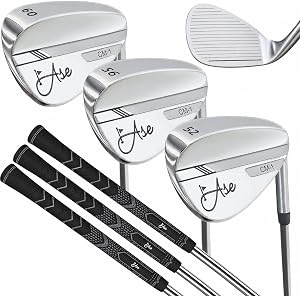
This CNC milled wedge line is unabashedly built for mid-to-high handicappers — golfers who want more consistent results around the green without needing a tour-level swing to get them. Offered as singles from 50 to 69 degrees or in 52/56/60 sets, it comes from a small Utah-based team whose stated goal is delivering premium quality at accessible prices, and that philosophy shows in both the pricing and the warranty.
We may earn a commission when you buy through this link, at no additional cost to you.
The spin story is conventional but well executed: CNC-milled grooves grip the ball for aggressive spin and stopping power, so approaches check up on the green instead of rolling past the pin. What separates the design from cheaper wedges is the forgiveness engineered around that face. The heads are built to be easy to swing and highly forgiving on off-center hits, meaning the mishits that ruin scoring holes stay playable rather than turning into doubles.
Details reinforce the everyman brief. The multi-material grip combines brushed cotton wire for moisture control with firm rubber for tackiness, keeping hands secure in any weather — the kind of grip usually found on pricier clubs. Precision-cast stainless steel construction gives the look and feel of a premium wedge, and the loft range means you can start with the club that fixes your biggest weakness, whether that is a 52 for approach work or a 60 for greenside escapes.
Groove integrity and finish problems reveal themselves early — within the first season of regular play. A no-questions-asked one-year policy means any premature wear or manufacturing defect is resolved without a fight, which is meaningful coverage on a value-priced club. It also signals that the maker expects the product to survive its warranty period, a quiet but genuine statement of confidence in the construction.
The warranty deserves a mention: a full one-year, no-questions-asked policy covering early defects or premature failures, which effectively de-risks the purchase. The tradeoffs are a firmer cast feel compared with the forged options in this group and right-hand-only availability. For high handicappers prioritizing consistency and value over buttery feel, those compromises are easy to accept.
Players who prioritize forged softness over cast durability.
We may earn a commission when you buy through this link, at no additional cost to you.
For shoppers assembling a complete wedge setup without flagship spending, this full-face set prices three clubs below what a single big-brand wedge costs. The 4.6 rating suggests the performance holds up, and the spec sheet — CNC-milled faces, forged construction, and a multi-compound grip — reads like a club costing considerably more.
We may earn a commission when you buy through this link, at no additional cost to you.
The shot-by-shot breakdown follows the classic template. The 52 wedges approach shots with spin that makes the ball stop where it lands, the 56 blasts out of bunkers with the authority of clubs twice its price, and the 60 handles delicate flop plays around the green. Full-face CNC milling means the grooves reach the edges of the face, so the toe strikes that plague weekend players still generate the check needed to hold greens.
The grip deserves specific attention because it is where budget wedges usually cut corners. This one uses a multi-compound construction melding soft feel with responsive control, maintaining its character in rain and humidity — the conditions that expose cheap rubber. Forged construction adds the durability dimension, with heads built to survive seasons of range sessions and course play without the face wear that flattens spin on softer metals.
A 70-degree loft is a specialty instrument for extreme situations: tall bunker lips, tiny margins over hazards, and short-sided pins with almost no green to work with. It launches the ball extraordinarily high with almost no roll, but distance control is difficult, and most recreational players produce better outcomes with a well-played 60. Unless you regularly face those dramatic escapes and practice them, the standard trio covers virtually every real-world shot you will face.
The tradeoffs come down to identity rather than performance. The brand carries no tour presence, specifications are fixed, and only right-handed models exist. Players who care about the name on the hosel or want custom fitting should look elsewhere. Golfers who care about spin, forgiveness, and filling three slots in the bag for the price of one premium club have found their answer.
Players who want an established tour brand name in the bag.
We may earn a commission when you buy through this link, at no additional cost to you.
The TaylorMade Milled Grind wedge is the traditionalist's choice in this group: a classic full-sole design built around manufacturing precision rather than headline technologies. It suits players who predominantly play the face square to the target, who value repeatable turf interaction, and who want a wedge that behaves identically every time it comes out of the bag.
We may earn a commission when you buy through this link, at no additional cost to you.
The core promise is in the name. Milled grind soles are machined to tolerances difficult for a human to repeat by hand, which means every head matches its specification exactly — consistency that matters most on the precise, partial swings wedges demand. Internally, mass is placed higher in the clubhead, raising the center of gravity to produce a controllable launch angle paired with high spin rates. The face and grooves are also machine milled, sharpening spin performance from any lie you encounter.
The sole architecture combines a full design with constant trailing-edge relief and a tour-proven four-way camber, a shape refined across decades of professional play. The result is smooth passage through turf for most swing types, with the leading edge presenting cleanly behind the ball. Players who learned the game on classic wedge designs will find the look and behavior immediately familiar — no adaptation period, no surprises.
Hand-ground soles vary slightly from head to head, which means two nominally identical wedges can interact with turf differently. Milling removes that variance: each sole is cut to the same tight tolerance, so the second wedge you buy behaves exactly like the first. For players calibrating precise carry distances across a wedge set, that head-to-head consistency is a genuine performance advantage rather than a manufacturing detail.
The honest limitation is versatility for the creative shot-maker. A full sole with this architecture favors square-face play, and golfers who aggressively open the face for flop shots will find relief-heavy designs — like the Cobra Notch in this guide — more accommodating to that style. Purchased individually at flagship pricing, a three-club set also accumulates quickly. For the square-face player who wants proven, repeatable precision above all, it remains a benchmark.
Players who heavily open the face for flop shots.
We may earn a commission when you buy through this link, at no additional cost to you.
Wedge performance comes down to loft, grooves, sole design, construction, finish, and the practical math of building a set. These six factors explain what actually changes your scoring — and how to match each one to your swing and home course.
A wedge’s loft, measured in degrees, is the single biggest determinant of carry distance, trajectory, and stopping behavior. Gap wedges typically sit near 50 to 52 degrees and bridge the jump between a modern pitching wedge and the sand wedge. Sand wedges hover around 54 to 56 degrees with sole shapes tuned for bunker play, while lob wedges at 58 to 60 degrees launch the ball high for short-sided pins and delicate carries over trouble. Several options in this guide follow the familiar 52/56/60 trio — the Cobra Tour Trusty set, the Gowolf and KVV configurations, and the CNC milled sets — because even four-degree steps produce predictable carry gaps.
Smart gapping starts with the loft stamped on your pitching wedge, which commonly measures 43 to 46 degrees in modern iron sets. Your next wedge should sit roughly four to six degrees above it so carry distances step in 10 to 15 yard increments rather than clustering or leaving a void. Extreme lofts deserve special caution: the Gowolf 69-degree and the Premium Full Face 70-degree options are specialty tools for tall bunker lips and minuscule margins, but they demand practiced distance control that most recreational players have not developed. A beautifully struck 60 beats a skull-flubbed 70 every time.
Map your yardages before spending money. If one wedge fills your biggest scoring gap, buy one wedge; a complete set only pays off when every loft genuinely fits the irons already in your bag.
Grooves exist to channel grass, sand, and water away from the contact point so the face can grip the ball cleanly. Sharper, deeper, and more tightly spaced grooves bite harder and clear debris more effectively, which is why groove engineering dominates wedge marketing. CNC milling cuts grooves to machine-level tolerance — the approach used by Gowolf, the CNC milled singles, KVV, and the Premium Full Face set — while laser-milled micro-lines and face blasts add surface friction, the strategy behind Cleveland’s HydraZip and Yamato’s blasted faces.
Full-face groove designs represent the current frontier. Yamato’s Full Face model, Gowolf, the Premium Full Face set, and Cobra’s 56 and 60 all extend scoring lines across the entire hitting area, which preserves spin on toe and heel strikes and on open-faced shots where the effective contact point migrates toward the edges. Cleveland’s UltiZip pushes conventional layouts further by tightening spacing enough to fit two additional grooves on the face, and the RTZ’s HydraZip formulation is tuned specifically for wet grass — a meaningful advantage for players in damp climates or anyone who plays early morning rounds.
Honest self-assessment decides this factor. If you consistently strike the center of the face, conventional grooves serve you well; if your strike pattern wanders, full-face coverage returns real, measurable performance.
Bounce is the angle between the sole’s trailing edge and the ground when the club is soled, and it governs how the clubhead interacts with turf and sand. Higher bounce skips off soft sand and fluffy lies instead of digging, while lower bounce lets the leading edge slide under the ball from tight, firm lies. Grind — material removed from the heel, toe, or trailing edge — determines how freely you can manipulate the face without the sole catching. Together, these attributes explain why two wedges of identical loft can behave completely differently.
This comparison showcases the full range. KVV’s wide sole prioritizes stability, suiting developing swings and softer conditions. Yamato’s Full Face model shapes its leading edge specifically to prevent digging, protecting against the chunked chip. Cobra’s Notch relieves the trailing edge to drop the leading edge closer to the turf for cleaner contact and better glide through sand and rough. TaylorMade’s full sole with four-way camber and constant trailing-edge relief suits players who keep the face square. Each design answers a different combination of course conditions and technique.
Match the sole to where you play and how you swing. Soft turf, fluffy sand, and steep attack angles favor bounce and width; firm fairways, tight lies, and shallow approaches favor less bounce and more relief.
Forged wedges — both Yamato models, the Gowolf line, and the Premium Full Face set — shape a carbon steel billet under pressure, producing heads that are generally softer at impact and transmit clearer feedback to the hands. Cast wedges, like the CNC milled stainless steel sets, pour molten steel into molds: the process is less expensive, dimensionally consistent, and highly durable. Neither approach is inherently superior; they optimize for different priorities.
The feel difference matters most to skilled players who use hand feedback to calibrate strike quality shot after shot, particularly on delicate 30-to-50 yard pitches where touch governs the outcome. Cleveland’s Z-Alloy in the RTZ attempts to collapse the tradeoff entirely — a steel described as softer and lighter yet remarkably durable, with rust-resistant properties on Tour Rack builds. Beginners benefit far more from forgiveness features and proper gapping than from forged feel, since the sensory differences are subtle until your strike pattern stabilizes.
Choose forged when feel is a priority and the budget allows; choose cast when durability and value lead the decision. Both constructions spin the ball effectively when the grooves are well made.
A wedge’s finish shapes both optics and longevity. Chrome remains the classic choice and the brightest at address, though it can catch sun on low evening angles. Matte faces — like the RTX 6’s more matte generation — reduce glare and present a modern, tour-influenced look. Yamato offers a patented tarnish finish for players who prefer a non-traditional, performance-oriented appearance, and KVV’s ionized blue PVD coating adds an anti-fingerprint layer that resists stains and corrosion and wipes clean after rounds.
Across seasons, finishes and faces wear together. Groove edges gradually round over from sand and range balls, milled textures collect grit that dulls friction, and coatings scratch from bag chatter — all of which erode the spin that motivated the purchase in the first place. Rust-resistant alloys and PVD treatments extend like-new performance, which is why longevity claims appear throughout the premium tier. Aggressive face textures, like Yamato’s wave scoring lines, deliver excellent friction but demand the most routine cleaning to maintain it.
Pick the finish you will genuinely enjoy looking down at, because confidence at address is worth real strokes. Then maintain whichever you choose with a groove brush and a towel, and it will outlast several handicap revisions.
Wedge-flex steel shafts are the category standard because they stabilize ball flight on the abbreviated swings wedges demand — Cobra’s FST 115-gram steel is the explicit example in this group. Grips vary meaningfully and are worth attention: brushed cotton wire blends manage moisture on the CNC milled singles, multi-compound constructions on the Premium Full Face set meld soft feel with control, Gowolf uses a moisture-wicking composite, and KVV specs a sweat-absorbing rubber that maintains traction through humid rounds.
The value math favors clear thinking. The Cobra Tour Trusty set prices three coordinated clubs at a per-club rate below most flagship singles. Cleveland and TaylorMade wedges sell individually around the $130 mark, the RTZ tops the single-club column at $149.99, and complete budget sets from Premium Full Face, Gowolf, and the CNC milled line land near or under $110 total. Warranty coverage also signals value confidence: the Utah-made CNC milled wedges carry a one-year no-questions-asked policy.
Divide each price by the number of clubs you will actually keep in the bag, and remember that a coordinated set from one brand keeps feel and gapping consistent. The cheapest adequate option beats the most expensive aspirational one every round you actually play.
Start by calibrating your distances rather than guessing on the course. Take each wedge to a practice area and hit quarter, half, and three-quarter swings, recording the average carry distance for each combination. Most short-game decisions happen inside 100 yards, and a simple mental card — this club, this swing, this carry — turns a wedge set from three clubs into nine usable distances. Pay attention to where you typically strike the face as well, because that pattern should guide whether you benefit from full-face grooves and how much bounce suits your attack angle.
Clean the grooves during and after every round. Grit, sand, and grass residue pack into scoring lines and dramatically reduce spin while slowly abrading the face texture that generates friction. Keep a wet towel and a groove brush in your bag, wipe the face after bunker-heavy stretches of holes, and give the club a proper wash with mild soap and water after rounds played in sandy or muddy conditions. Dry the head thoroughly before it goes back into the bag, since trapped moisture is the enemy of every finish from chrome to PVD.
Protect your investment between rounds and watch for wear over time. Store clubs in a dry area rather than a hot car trunk, and consider individual headcovers if bag chatter is scratching the finish. Inspect groove edges at the start of each season: when the sharp lines that once caught your thumbnail start feeling rounded, spin has measurably declined and replacement is worth considering. Regrip whenever the handle feels slick, because a worn grip quietly degrades the strike quality that every other wedge technology depends on.
Check the loft stamped on your pitching wedge, which usually measures between 43 and 46 degrees on modern sets, then choose your next wedge about four to six degrees higher. For most players that means a gap wedge in the 50 to 52 range, which fills the largest scoring distance void. If bunkers are your primary weakness, a 56-degree sand wedge with decent bounce is the smarter first purchase because it rescues more holes than any other single club.
A gap wedge, typically 50 to 52 degrees, bridges the distance between your pitching wedge and sand wedge with a lower, more controlled flight. A sand wedge, around 54 to 56 degrees, carries sole designs with bounce specifically shaped to move through bunker sand without digging. A lob wedge, at 58 to 60 degrees, launches the ball highest for short shots over trouble and for short-sided pins where the ball must stop quickly. Together they cover the scoring zone inside roughly 110 yards.
Most recreational players carry two to three specialized wedges alongside their pitching wedge, staying within the 14-club limit while leaving room for the irons and woods their course demands. Skilled short-game players often run three — typically 52, 56, and 60 — for tight distance control. If you rarely face shots inside 60 yards or your home course is wide open, two wedges may serve you better than three, freeing a slot for a club you actually use.
Bounce is the angle between the sole's trailing edge and the ground when the club is soled, and it controls how the head interacts with turf and sand. Higher bounce prevents digging in soft sand, fluffy lies, and wet conditions, which suits steeper swings and softer courses. Lower bounce lets the leading edge slide cleanly under the ball from tight, firm lies, favoring shallow approaches and players who manipulate the face. Most golfers are well served by moderate bounce unless their conditions or technique push them one direction.
Full-face grooves extend scoring lines across the entire hitting area, so strikes that drift toward the toe or heel still generate usable spin instead of knuckling onto the green. They also help on open-faced shots, where the effective contact point naturally moves toward the edges. If your strike pattern is consistently central, you gain little and might prefer a traditional face at address. If your mishits wander — as they do for most amateur players — the coverage returns genuinely measurable performance.
Forged heads shape carbon steel under pressure, generally producing a softer impact feel and clearer feedback that skilled players use to calibrate touch. Cast heads pour steel into molds, yielding durable, dimensionally consistent clubs at lower cost. Beginners rarely notice the feel difference because their strike patterns have not stabilized enough to exploit it. Choose forged if feel is a priority and budget allows; choose cast for durability and value, since both spin effectively with well-made grooves.
Groove edges wear down with use, and worn grooves lose the spin that justifies the club. Players who practice heavily might consider replacement every one to two seasons, while casual golfers can go several years. A practical test is running a fingertip or thumbnail across the grooves: sharp edges that catch the skin still work, while rounded, smooth lines have surrendered meaningful spin. Cosmetic scratches on the finish matter far less than the condition of the grooves themselves.
Several options in this guide are built explicitly for both men and women, including the Yamato lines, the Gowolf wedges, and the KVV set. Loft, bounce, and sole design affect performance far more than any gender label on the box. Women with smaller hands should pay attention to grip size, and any club can be regripped to a thinner build inexpensively. Focus instead on choosing the lofts and sole shapes that match your swing and home course.
A 60-degree lob wedge excels at short-sided pins, delicate flops over bunkers, and stopping the ball quickly on firm greens, but it demands committed acceleration and practiced distance control. Many amateur players actually score better with a well-struck 56 and more bounce, because the lob wedge punishes deceleration harshly. If you practice the short game regularly and face those tight situations often, the 60 earns its slot. If your rounds feature mostly straightforward pitches, a sand wedge covers the work.
CNC milling cuts grooves to precise machine tolerances, producing sharper edges and more consistent dimensions than grooves formed in casting molds. Sharper edges bite the ball cover harder at impact, while consistent geometry means every groove performs like the last one. Laser-milled micro-textures and face blasts add further friction by roughening the flat surfaces between the grooves. Together these manufacturing choices determine how much the ball checks up, particularly from rough and damp lies where debris interferes with contact.
The Cleveland RTX 6 ZipCore stands as the strongest overall choice in this comparison, pairing the highest owner rating with a technology package that addresses spin, forgiveness, and optics in one head. HydraZip keeps friction high in wet conditions, ZipCore lifts MOI by up to 20% while centering mass at the strike zone, and the extra pair of UltiZip grooves squeezes more edge contact onto the face. For the player buying one wedge at a time and expecting tour-level performance, it is the benchmark here.
Meaningful alternatives depend on your situation. The Cobra Tour Trusty set delivers a coordinated 52/56/60 gapping in a single purchase for players who value consistency across the scoring clubs. Gowolf offers forged feel, full-face grooves, and flexible configurations at the sharpest price in the group, while the Cleveland RTZ serves feel-obsessed players willing to pay for Z-Alloy refinement. Newer golfers get a purpose-built ally in the forgiving KVV, and budget-focused builders can fill three slots with the Premium Full Face set for less than one flagship wedge costs.
Before you buy, map the loft stamped on your pitching wedge, honestly assess where your strikes land on the face, and consider the turf conditions you face most often. A wedge that fits your gapping, your mishits, and your home course will save more strokes than any single headline technology. Choose on those fundamentals, maintain the grooves with a brush and towel, and the short game takes care of the rest.