Yamato Forged Pro
9.0Editor scoreForged carbon steel body
Wave scoring face lines
Chrome and tarnish finishes
50 through 60 lofts
Compare 10 top golf scoring clubs and wedge sets by loft gapping, milled groove spin, sole grinds, forged feel, shaft options, and value for every handicap.
Find the right golf irons and scoring wedges for 2026. We compare 10 standout options by the factors that shape your short game, including loft gapping from 50 to 69 degrees, CNC milled and laser-etched groove spin, sole grind versatility, forged versus cast feel, shaft weight, finish durability, and overall value.
The clubs inside 120 yards decide more scores than any driver. This lineup covers classic tour-inspired blades with precision-milled soles, full-face groove designs built for forgiveness on toe strikes, multi-loft three-wedge sets, and specialty high-loft options up to 69 and 70 degrees for flop shots and tight pins.
Whether you are replacing a worn sand wedge, building a complete 52/56/60 scoring setup, or hunting premium spin technology without a tour-level price tag, matching groove design, bounce, and loft spacing to your swing and course conditions is what actually lowers scores.
We evaluated 10 golf scoring wedges using the details that genuinely change performance around the green: loft and gapping options, groove milling precision, face texture and friction technology, sole grind and leading-edge design, forged or cast construction, shaft and grip quality, finish durability and glare control, set versus single pricing, and warranty support. The focus stays on practical short-game trade-offs so each pick connects to how golfers actually chip, pitch, and escape bunkers.

Compare key features, scores, and current prices side by side. A shorter feature list means fewer details were available, not necessarily fewer capabilities.




Cleveland's wedge lineage has set the category standard for decades, and the RTX 6 ZipCore earns our Editor's Choice by stacking three meaningful technologies—HydraZip, ZipCore, and UltiZip—into one head that performs in the conditions amateurs actually face: morning dew, damp rough, and off-center contact. It is the most complete spin-and-consistency package in this guide.
We may earn a commission when you buy through this link, at no additional cost to you.
HydraZip pairs a dynamic face blast with laser-milled lines to create targeted roughness that enhances friction whether the ball is dry or sitting in wet grass, where spin typically disappears. Underneath, the ZipCore design replaces heavy material in the hosel with a low-density core—up to 95 percent more of it than the previous generation—shifting the center of gravity directly behind the impact zone while raising MOI by up to 20 percent. The practical result is shots that hold their line and distance even when contact drifts slightly off center.
UltiZip rounds out the package with grooves that are sharper, deeper, and more tightly spaced than prior TourZip designs, with two additional grooves fitted onto the face. That tighter spacing lets the edges bite the cover harder while channeling grass, sand, and moisture away from the contact zone, which is exactly what preserves spin from imperfect lies. A matte face treatment reduces glare and frames the ball cleanly at address.
Nearly any modern wedge spins well off a dry, tight range mat. The real scoring separator is the first nine holes on a dewy morning, when water sits between the ball and the face. Face-blast and laser-line systems like HydraZip exist specifically to preserve friction in those damp conditions, which is where strokes are actually saved.
The honest consideration is budget and commitment: buying a 52, 56, and 60 individually adds up to a premium total, and golfers who chunk or blade frequently will benefit less from maximum-spin grooves than from a wider, more forgiving sole. For committed players who want the strongest all-conditions spin and the most refined CG engineering available at retail, the RTX 6 ZipCore is the wedge to beat.
Beginners who need a super-wide, dig-proof sole before investing in premium groove technology.
We may earn a commission when you buy through this link, at no additional cost to you.
Golfers who care about exact yardage gaps often struggle with wedge sets that jump straight from 52 to 56 to 60 degrees, leaving awkward four-degree holes in their scoring distances. The Yamato Forged Pro Wedge lineup solves that problem with six available lofts—50, 52, 54, 56, 58, and 60—sold individually or as sets, so you can build a gap wedge, sand wedge, and lob wedge progression tuned to your actual carry numbers.
We may earn a commission when you buy through this link, at no additional cost to you.
Spin generation comes from a milled face featuring Yamato’s wave scoring lines paired with a new face-blast treatment that raises surface friction at impact. The result is confident stopping power on partial swings and pitch shots that check up rather than releasing past the flag. Because the head is forged from carbon steel rather than cast, impact feel is noticeably softer and more communicative, which matters when you are judging touch on delicate 30-yard shots.
Two finish choices address both style and function: a clean traditional chrome and a patented tarnish finish for players who prefer a darker, performance-oriented look at address. Both were developed to reduce glare in bright sun, helping your eyes settle on the ball instead of fighting reflections off the topline. The tour-inspired shaping sits compactly behind the ball and opens up easily for higher-face shots.
Most amateurs carry a gap of 12 to 15 yards between stock wedges, which forces awkward half-swings from common approach distances. Choosing 50, 54, and 58 degrees instead of 52, 56, and 60 compresses those gaps into manageable full-swing windows and reduces the number of touchy in-between shots you face per round.
The trade-offs are typical of forged players-style wedges. Grooves do not run across the full toe, so heavily opened-face shots caught near the toe lose some spin compared to full-face designs in this guide, and the softer carbon steel will pick up cosmetic bag wear faster than hardened stainless heads. For golfers who want forged feel, precise two-degree gapping options, and a glare-controlled tour shape at a mid-range price, the Yamato Forged Pro is a smart foundation for a short-game rebuild.
Players who routinely open the face wide and strike toward the toe, where full-face groove designs hold an advantage.
We may earn a commission when you buy through this link, at no additional cost to you.
This Utah-based wedge lineup is built around a simple promise: give everyday golfers tour-style spin, real forgiveness, and more loft choices than almost anything else at the price, without requiring a tour-level swing. With lofts stretching from 50 degrees all the way to a specialty 69-degree option, it covers conventional gap, sand, and lob duties plus the ultra-high flop shots that most wedge families never offer.
We may earn a commission when you buy through this link, at no additional cost to you.
The milled face uses CNC-cut grooves designed to grip the ball’s cover at impact, producing the kind of aggressive spin that lets mid-handicappers watch approach shots check near the flag instead of bounding through the green. Just as important for its target audience, the head shaping is deliberately forgiving: off-center contact toward the heel or toe retains playable trajectory and distance, which keeps slight mishits from turning into chunked chips or bladed skulls across the green.
Grip quality is a pleasant surprise at this price. A multi-material design pairs brushed cotton wiring for moisture management with firm tacky rubber, so your hands stay connected in humid summer rounds or light rain. The precision-cast stainless steel heads present a clean, premium look at address, and the company stands behind the clubs with a full one-year no-questions-asked warranty covering early defects or premature failures.
Ultra-high lofts are situational tools rather than everyday clubs. A 69-degree option shines when you regularly face short-sided pins over bunkers, tight lies on firm turf where you cannot slide a 60 under the ball, or downhill greenside shots that need near-vertical launch and instant stopping power.
There are honest trade-offs to weigh. Cast stainless steel feels firmer at impact than the forged heads elsewhere in this guide, which some feel-oriented players will notice on touch shots, and the lineup is right-hand only. For right-handed golfers who want maximum loft flexibility, forgiving CNC spin, and a genuine warranty at roughly half the cost of flagship tour wedges, this set delivers far more than its price suggests.
Left-handed players or feel purists who specifically want forged carbon steel heads.
We may earn a commission when you buy through this link, at no additional cost to you.
Buying wedges one at a time often leaves golfers with mismatched sole grinds, mismatched shafts, and inconsistent feel between their gap, sand, and lob clubs. The Cobra Tour Trusty 3-Pack eliminates that guesswork with a purpose-matched 52/56/60 trio engineered to work as one scoring system, making it the strongest complete-set option in this lineup for players who want cohesive gapping straight out of the box.
We may earn a commission when you buy through this link, at no additional cost to you.
The gapping logic is sound: the 52-degree bridges the distance between your pitching wedge and sand wedge, while the 56 and 60 handle bunkers, rough, and finesse shots. Cobra gives the two higher lofts full-face grooves, extending spin performance across the entire hitting area so opened-face flop shots and toe-side contact still grab the ball. Optimized sole grinds across the set support three distinct techniques—flighting it low, playing it square, or laying the face open—without fighting the club.
The signature Cobra Notch is a refined trailing-edge relief that effectively lowers the leading edge closer to the turf at address. In practice, that geometry helps the sole glide through sand and thicker rough instead of snagging, and it promotes crisper contact on tight fairway lies where a leading edge sitting too high invites thin strikes. FST 115-gram wedge-flex steel shafts match the heads with the heavier, stable feel most fitters recommend for scoring clubs.
Mixing a lightweight stock iron shaft in your gap wedge with heavy aftermarket shafts in your sand and lob wedges forces three different tempos for three similar swings. A matched 115-gram wedge-flex set keeps weight and flex identical, so your 52, 56, and 60 all reward the same smooth, controlled motion.
The main consideration is cost: this matched three-pack carries a premium price relative to budget alternatives, and golfers who only need a single replacement wedge may find better value buying one club elsewhere. But for players rebuilding their entire short game in one purchase—with consistent shafts, grinds, and gapping baked in—the Tour Trusty set is the most complete out-of-box solution here.
Golfers who only need one replacement wedge or who strongly prefer ultra-light graphite scoring shafts.
We may earn a commission when you buy through this link, at no additional cost to you.
Most wedge spin technology assumes you strike the center of the face, but real golfers miss toward the toe and high on the face regularly—especially with the face laid open. The Yamato Full Face Wedge attacks that reality head-on by running its aggressive groove pattern across the entire clubface, so contact that would spin weakly on a traditional wedge still grabs the ball and checks up.
We may earn a commission when you buy through this link, at no additional cost to you.
The forgiveness story extends below the face. A leading edge shaped to resist digging helps the club skim through turf instead of sticking, which directly reduces the fat, heavy contact that leaves chips short in the fringe. Combined with full-face milling, the design targets the two most common short-game misses—heavy strikes and toe strikes—making it a confidence-builder for players whose wedge contact varies shot to shot.
Because the heads are forged from premium materials rather than cast, impact feel stays soft and informative despite the forgiveness-first geometry. The high-quality construction is built to hold up under frequent range work, and the lineup is available as singles or complete sets across 50, 52, 54, 56, 58, and 60 degrees, letting you cover every scoring situation from full gap-wedge approaches to high flop shots with matched feel.
Full-face milling pays the biggest dividends for two player types: golfers who open the face aggressively on flop and bunker shots, which shifts contact high and toward the toe, and developing players whose strike pattern wanders across the face. If you consistently find the center, standard groove coverage performs equally well.
Styling is the subjective trade-off: grooves extending to the toe and high on the face create a busier, more technical look at address that traditionalists may find distracting compared with the clean topline of a classic blade wedge. If your priority is spin insurance on imperfect contact with forged feedback at a fair price, the Yamato Full Face set earns its spot in the bag.
Purists who want a minimal, clean-faced tour blade appearance at address.
We may earn a commission when you buy through this link, at no additional cost to you.
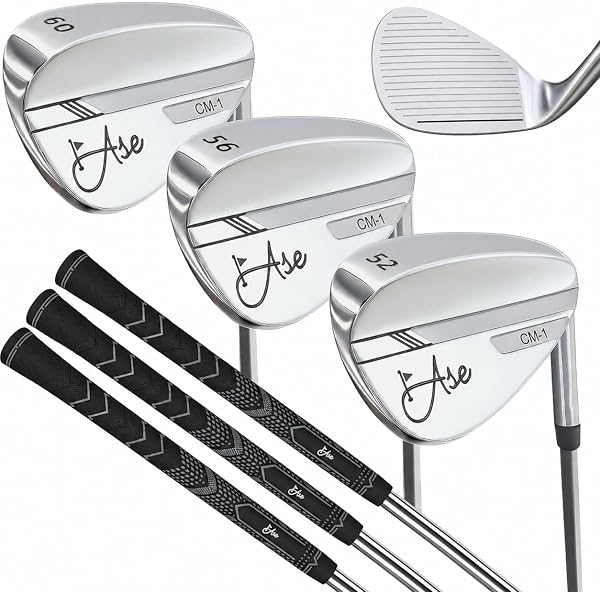
This Premium Full Face lineup targets golfers who want flagship-style spin features—CNC-milled full-face grooves, forged heads, quality grips—at the most accessible price in our guide. Sold as singles or a three-wedge set spanning 52, 56, and 60 degrees, with an unusual 70-degree specialty option, it is squarely aimed at value-conscious players who refuse to give up modern face technology.
We may earn a commission when you buy through this link, at no additional cost to you.
The full-face CNC milling is the headline feature, extending sharp grooves across the entire hitting area so opened-face lob shots and toe-side contact still generate meaningful spin. The 56-degree sand wedge blends that forged precision with enough sole forgiveness to blast out of bunkers confidently, while the 60-degree lob wedge is built for drop-and-stop greenside precision. For golfers coming from worn-out starter wedges, the jump in stopping power is immediate and obvious.
Touch points are better than the price suggests. Multi-compound grips combine a softer lower hand with a firmer, responsive upper section, holding traction in rain or humidity without a death grip. Forged construction gives each head a solid, connected sensation at impact that cast budget wedges typically lack, and the reported 98 percent keeper rate suggests buyers rarely feel the need to return them.
A 70-degree wedge is a scalpel, not an everyday club. Use it for short-sided shots over hazards and steep bunker faces where maximum launch is the only play, and practice it at half speed first—the extreme loft rewards shallow, committed swings and punishes deceleration more than any other club in the bag.
The compromises live around the edges: the lineup is right-hand only, and a smaller brand cannot match the demo-day availability, fitting options, or trade-in value of Cleveland or TaylorMade. If you are a right-handed golfer building a short game on a strict budget and you want full-face spin without a flagship invoice, this set is the value play of the lineup.
Left-handed golfers or buyers who prioritize brand fitting support and future trade-in value.
We may earn a commission when you buy through this link, at no additional cost to you.
TaylorMade's Milled Grind line is built on a manufacturing insight: the sole is where wedges contact the turf, and hand-ground soles vary from club to club in ways players can feel. By machine-milling each sole, TaylorMade holds tolerances that hand finishing struggles to repeat, which means the wedge you buy behaves like the wedge the tour staff plays—and like the replacement you buy three years from now.
We may earn a commission when you buy through this link, at no additional cost to you.
Performance engineering goes deeper than the sole. Mass is positioned higher in the club head, raising the center of gravity to promote a controllable, penetrating launch with elevated spin rates—the flighted wedge trajectory that holds firm greens instead of ballooning. The machine-milled face and grooves produce repeatable friction from virtually any lie, keeping spin predictable whether the ball is on the fairway, sitting down in rough, or in a bunker.
The classic full sole features constant trailing-edge relief and TaylorMade’s tour-proven 4-way camber, a shaping approach designed for players who predominantly set the face square to the target. That geometry keeps the leading edge stable through impact across most swing types and turf conditions, from tight fairway lies to fluffy sand, without demanding perfect technique.
Low-launch, high-spin wedge shots are the hallmark of skilled short games. Positioning mass higher in the head raises the center of gravity, which keeps launch angles down on full swings while groove friction keeps spin up—so approach shots fly flatter, land steeper relative to their flight, and stop faster on firm greens.
The trade-off is specialization: a full sole with modest relief is less cooperative when you lay the face wide open for high flops than aggressive heel-and-toe-relief grinds. Golfers who thrive on face manipulation may prefer more versatile grind options. For square-faced players who value repeatability, a penetrating flighted ball, and tour-level manufacturing consistency, the Milled Grind remains a benchmark choice.
Creative short-game players who constantly open the face and need aggressive sole relief.
We may earn a commission when you buy through this link, at no additional cost to you.
The Cleveland RTZ represents the brand's current flagship thinking: take everything that made the RTX line dominant and rebuild it around a completely new material. Z-Alloy is a proprietary steel engineered to be softer and lighter than conventional wedge steels while remaining remarkably durable, and it forms the foundation of what is simply the most refined wedge in this guide—our Premium Pick for players who want the best regardless of budget.
We may earn a commission when you buy through this link, at no additional cost to you.
Z-Alloy’s properties cascade through the entire design. The softer composition delivers a distinctly plush, dampened impact sensation, while the durability holds groove sharpness longer. On Tour Rack versions, the alloy’s inherent rust resistance maintains like-new performance without the maintenance raw-finish wedges demand. Paired with ZipCore—Cleveland’s low-density core that shifts the center of gravity toward the impact zone while raising MOI—the RTZ produces a rare combination of soft feel, stability on mishits, and tight distance dispersion.
Face technology is intelligently segmented rather than one-size-fits-all. HydraZip’s system of face blasts and laser-milled lines is dynamically configured by loft grouping, so a gap wedge optimized for full swings and a lob wedge built for open-face finesse each get friction patterns matched to their actual use, with emphasis on wet-condition spin. UltiZip’s sharper, deeper grooves cut through grass and clear debris from the contact zone, keeping spin strong from fairway, rough, or sand.
Traditional raw wedges oxidize intentionally to boost surface friction, but they also demand drying and oiling habits to control corrosion. Z-Alloy’s rust-resistant Tour Rack approach targets players who want consistent face texture season after season without babysitting their clubheads after every wet round.
The considerations are price and fit. Outfitting a full scoring set at this level is a serious investment, and golfers still fighting basic contact will extract less value from its precision than a committed ball-striker. For low-to-mid handicappers who play frequently and want the current pinnacle of feel, spin segmentation, and longevity, the RTZ justifies its premium.
Budget-focused buyers or beginners still developing consistent contact.
We may earn a commission when you buy through this link, at no additional cost to you.
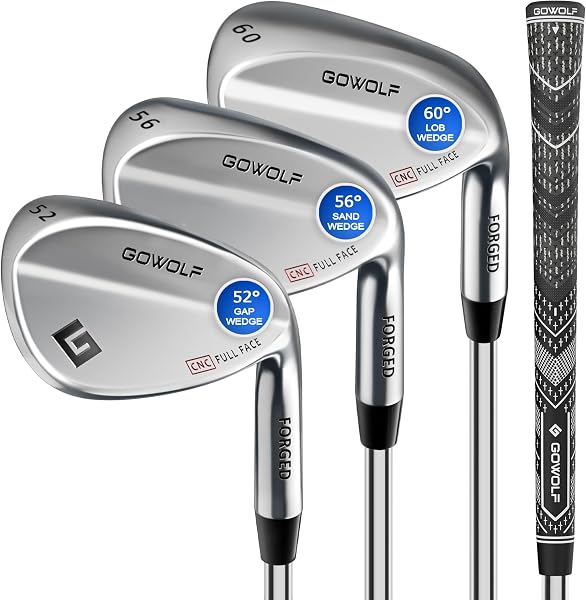
Gowolf's forged wedge family aims to be the complete value package: full-face CNC-milled spin, forged feel, broad loft coverage including a 69-degree specialty club, and two finish choices, all at a price that undercuts the big names. It is an especially popular gift option precisely because it looks and feels like a premium product while staying affordable.
We may earn a commission when you buy through this link, at no additional cost to you.
The face design combines ultra-sharp, tightly spaced grooves with a micro-milled texture that increases friction at impact, generating the kind of bite that stops approach shots quickly from fairway, rough, or sand. Because grooves run across the full face, toe-side and high-face contact retains spin that conventional wedges lose—real insurance for golfers whose strike pattern drifts. A forgiving leading edge helps the club glide rather than dig, smoothing turf interaction on tight lies.
Selection flexibility is a genuine strength. Singles cover 50, 52, 54, 56, 58, 60, and 69 degrees, while curated 50/54/58 and 52/56/60 sets provide instant, evenly spaced gapping. Both black and chrome finishes are available with an anti-glare face treatment, and the moisture-wicking grip keeps hands secure when conditions get humid. Forged heads give each club the solid, connected impact sensation golfers associate with far more expensive equipment.
Base the choice on your pitching wedge loft. If your pitching wedge is a strong-lofted 43 to 44 degrees, the 50/54/58 set transitions smoothly. If you carry a more traditional 46-to-47-degree pitching wedge, the 52/56/60 progression prevents an awkward distance gap at the top of your wedge lineup.
Practical caveats apply. The range is right-hand only, and golfers choosing the black finish should expect cosmetic sole wear to reveal bright metal faster than chrome—purely visual, but worth knowing. For right-handed players wanting forged full-face performance, flexible gapping, and gift-ready presentation at a friendly price, Gowolf delivers impressively.
Left-handed players or golfers who demand major-brand fitting and demo access.
We may earn a commission when you buy through this link, at no additional cost to you.
The KVV wedge set combines the highest owner rating in this guide with one of its friendliest prices, earning our Best Value badge. Beyond performance, its ionized blue PVD finish gives the set a genuinely distinctive look—an elegant deep blue coating protected by an anti-fingerprint layer that wipes clean and resists the staining and corrosion that plague ordinary painted finishes.
We may earn a commission when you buy through this link, at no additional cost to you.
Performance starts with a precision CNC-milled face whose sharp grooves maximize friction and backspin on approach shots. The engineering choice that defines the set, though, is the forgiving wide sole design: a broader sole raises the effective bounce and prevents digging, which stabilizes contact from fluffy rough, soft sand, and imperfect lies. For beginners and intermediate players—the exact golfers this set targets—that forgiveness translates directly into fewer chunked chips and more consistent carry distances.
Component quality exceeds expectations for the category. Heads are crafted from quality stainless steel for solid, responsive impact feel, paired with premium steel shafts and rubber grips engineered to absorb sweat and hold traction across a full round. The 52/56/60 configuration—available individually or as a matched three-club set—covers the standard gap, sand, and lob progression, and the line is explicitly designed for both men and women.
A wide sole effectively increases bounce, keeping the leading edge from knifing into the turf on slightly steep or heavy swings. Since the most common amateur wedge mistake is hitting behind the ball, sole width works like built-in insurance—turning potential chunks into playable contact that still reaches the green.
Trade-offs are honest ones: a wide, forgiving sole is less nimble when better players want to open the face for delicate flop shots, and the right-hand-only lineup tops out at 60 degrees. For new and improving golfers who want a complete, corrosion-resistant, confidence-building wedge set with standout looks and a proven owner rating, the KVV set is the smartest money in this lineup.
Advanced shot-makers who want low-bounce versatility or lofts beyond 60 degrees.
We may earn a commission when you buy through this link, at no additional cost to you.
Scoring clubs reward precision more than power, so the right wedge choice comes down to loft spacing, groove technology, sole geometry, and construction that matches your swing. These seven factors will narrow the field quickly.
The most common wedge mistake is buying lofts without checking how they connect to your pitching wedge. Modern iron sets ship with pitching wedges anywhere from 43 to 47 degrees, and the goal is steady gaps of four to six degrees between every club from pitching wedge through your highest loft. Sets like the Cobra Tour Trusty 52/56/60 pack or the Gowolf 50/54/58 set deliver evenly spaced progressions, while the broad single-loft menus from Yamato and the 50-to-69-degree CNC lineup let you fine-tune gaps to your exact carry distances.
Before choosing, find your pitching wedge loft—stamped on the club or listed by the manufacturer—and carry distance. If your pitching wedge is 46 degrees and flies 120 yards, a 50 or 52-degree gap wedge lands around 105, a 56 covers bunker and 90-yard duty, and a 60 handles short-sided finesse. Specialty ultra-high lofts like 69 or 70 degrees are situational tools for flop shots and steep bunker faces, not replacements for a balanced three-wedge core.
Decide on three wedges as your foundation, then add a specialty loft only if your course regularly demands it.
Grooves do two jobs: their edges grip the ball’s cover to generate backspin, and their channels route grass, sand, and water away from the contact zone. Modern designs layer additional friction technology on top—Cleveland’s HydraZip combines face blasting with laser-milled lines, TaylorMade machine-mills both face and grooves, and Yamato adds wave scoring lines with face blasting. CNC milling, found across the KVV, Gowolf, and budget full-face sets, cuts sharper, more consistent edges than cast grooves.
Pay attention to how spin behaves in moisture, because dew and wet rough are where weaker faces lose performance. Groove systems that are deeper and more tightly spaced—like Cleveland’s UltiZip, which fits extra grooves on the face—clear debris more effectively and preserve spin from imperfect lies. Loft-specific face treatments on premium models balance spin so your gap wedge does not balloon while your lob wedge still bites.
If you play early-morning rounds or lush courses, prioritize laser-milled face texture and debris-channeling groove designs over raw groove count.
Traditional wedges concentrate grooves across the center and heel, leaving the toe smooth. Full-face designs—offered by the Yamato Full Face set, Gowolf lineup, the premium budget set, and the 56 and 60 in Cobra’s Tour Trusty pack—extend grooves across the entire hitting area. When you open the face for a flop or bunker shot, contact naturally migrates high and toward the toe, and full-face milling keeps spin alive on exactly those strikes.
The trade-off is mostly visual and marginal: full-face wedges look busier at address, and golfers who consistently find the center see little performance difference. For players who manipulate the face open regularly or whose strike pattern wanders, full-face coverage is genuine spin insurance.
Choose full-face grooves if you open the face often or fight toe-side contact; choose traditional coverage if you value a clean look and strike the center reliably.
The sole determines how the club interacts with turf and sand, and it matters as much as loft. Wider soles with higher effective bounce—like the KVV set’s forgiving design—resist digging and turn heavy strikes into playable contact, ideal for steep swings and soft conditions. Full soles with trailing-edge relief, such as TaylorMade’s Milled Grind with 4-way camber, favor square-faced, repeatable technique. Cobra’s Notch relief drops the leading edge closer to the turf, cleaning up contact on tight lies while preserving glide through sand.
Anti-dig leading edges on models like the Yamato Full Face target the amateur’s most costly mistake—the fat chip—by helping the club skim rather than stick. Better players who love opened-face creativity should look for heel and toe relief; developing players should lean toward wider, higher-bounce soles that forgive steep angles.
Match sole width and bounce to your swing: steeper swingers and soft-course players benefit from wide soles, while shallow sweepers and firm conditions favor lower bounce and more relief.
Forged carbon steel heads—found on the Yamato lines and the Gowolf set—are pressed from a single billet, producing a dense, soft grain structure that delivers the buttery, communicative impact feel better players use to judge touch shots. Cast stainless steel, used in the 50-to-69-degree lineup and KVV’s stainless heads, enables more complex shapes and wider soles at lower cost, with slightly firmer feedback. Cleveland’s Z-Alloy on the RTZ pushes materials further: softer and lighter than conventional steel, yet durable and, in Tour Rack form, rust-resistant.
Feel differences are real but subtle, and construction also affects longevity. Softer forged carbon steel shows bag chatter and groove wear sooner, while hardened stainless and advanced alloys hold their edges longer under heavy range use. Neither is objectively better—feel preference and maintenance tolerance should drive the choice.
Prioritize forged heads if you rely on touch feedback around the greens; choose stainless or advanced alloys if durability and forgiveness matter more to your game.
Wedge shafts are intentionally heavier than iron shafts because scoring clubs reward controlled tempo over speed. A purpose-built wedge shaft like the FST 115-gram steel in the Cobra Tour Trusty set keeps swing weight consistent and promotes the smooth, accelerating motion that produces predictable carry distances. Pairing one heavy wedge with two light ones forces three different tempos—a common problem when golfers mix brands.
Grips deserve equal attention. Moisture-managing multi-compound grips, featured on the 50-to-69-degree lineup and the premium budget set, and sweat-absorbing rubber designs like KVV’s maintain traction in humidity without requiring a stranglehold. Since the hands are your only connection to the club during delicate touch shots, a secure, slightly softer grip directly improves distance control.
Keep shafts matched across your wedge set, and regrip annually if you play and practice weekly.
Wedge finishes are functional as well as cosmetic. Chrome is durable and classic; matte treatments like the RTX 6 ZipCore’s face finish reduce sun glare at address; darker options—Yamato’s patented tarnish finish, Gowolf’s black variant, KVV’s ionized blue PVD—cut reflections and add personality. KVV’s anti-fingerprint PVD layer adds stain and corrosion resistance that wipes clean after wet rounds.
Understand the maintenance spectrum. Raw finishes oxidize deliberately for extra friction but demand drying and occasional oiling. Dark PVD and black finishes resist glare beautifully but show bright metal on the sole as they wear. Chrome hides wear best of all. None of these changes performance once the ball is airborne—they change how the club looks in month twelve.
Choose matte or dark finishes if glare bothers you at address, and accept cosmetic sole wear as the price of style; choose chrome for the lowest-maintenance appearance.
Start by mapping your actual carry distances before your first round. Hit ten balls with a full, committed swing from each wedge at the range, discard the best and worst, and note the average—then repeat at three-quarter and half swing lengths. Write those numbers on a small card in your bag. Wedges score through repeatable distance windows rather than maximum power, so knowing that your 56-degree flies exactly 85 yards at full swing and 70 at three-quarter swing is worth more than any equipment upgrade. When practicing open-face shots on full-face groove models, check where contact lands on the face using foot spray or impact tape to learn your true strike pattern.
Groove care is the single biggest maintenance habit for preserving spin. After every shot from sand or rough, wipe the face, and after each round scrub the grooves with a soft brush, warm water, and mild dish soap, then dry thoroughly. Packed dirt and dried grass between grooves destroys the debris-channeling designs that keep wet-lie spin alive. Inspect grooves every few months—if the edges feel rounded to the touch or you notice approach shots releasing farther than they used to, the face is wearing and practice wedges should be rotated out of play. Store wedges dry in your bag with headcovers off so moisture evaporates rather than sitting against the face.
Finish and grip care extend the life of the whole club. Dark PVD, tarnish, and black finishes should be wiped with a soft damp cloth and dried after wet rounds; avoid abrasive cleaners that scratch protective coatings like KVV’s anti-fingerprint layer. Chrome heads tolerate more aggressive cleaning but still benefit from drying before storage to prevent pitting. Clean grips monthly with warm soapy water and a rinse to restore tackiness—oils and sunscreen degrade rubber compounds faster than play does—and replace grips yearly if you play weekly. Keep wedges out of hot car trunks in summer, since extreme heat accelerates grip breakdown and epoxy softening.
Most golfers score best with three or four wedges spaced four to six degrees apart, anchored by the pitching wedge loft in their iron set. A 52/56/60 setup like the Cobra Tour Trusty pack covers gap, sand, and lob duties for traditional-lofted sets, while a 50/54/58 progression pairs better with strong-lofted modern pitching wedges. Add a specialty 64-plus or 69-to-70-degree option only if your home course demands frequent flop shots.
Yes. Full-face groove designs from major and value brands alike conform to equipment rules because groove dimensions and spacing—not their coverage area on the face—are what the rules regulate. Extending grooves to the toe simply preserves spin on open-face and toe-side strikes. Models like the Yamato Full Face set and Cobra Tour Trusty 56 and 60 are fully conforming for competition.
Wedge grooves wear faster than any other club because of sand contact and high spin friction. Golfers who play and practice weekly often see measurable spin loss in their most-used wedge after one to two seasons, while occasional players can stretch three years or more. When your approach shots start releasing noticeably farther than they used to, or groove edges feel rounded to a fingernail, it is time to rotate in a fresh face.
Bounce is the angle between the leading edge and the lowest point of the sole, and it controls whether the club digs or glides. Steeper swings and soft, lush conditions call for higher bounce and wider soles, like the KVV set's forgiving design, which prevents the club from knifing into the turf. Shallow sweepers and firm, tight lies pair better with lower bounce and trailing-edge relief like Cobra's Notch or TaylorMade's 4-way camber.
Forged carbon steel delivers a softer, more communicative feel that many players rely on for distance touch around the greens, and it typically costs slightly more while showing cosmetic wear sooner. Cast stainless enables wider soles and complex shaping at lower prices, with firmer feedback. If you struggle to feel where the ball struck the face, forged is worth the premium; if forgiveness and value rank higher, a well-designed cast head performs admirably.
Raw finishes add micro-surface roughness as they oxidize, which can marginally increase friction, but the bigger benefits of modern faces come from laser-milled lines and face blasting. Rust also requires diligent drying and occasional oiling to control corrosion. Rust-resistant approaches like Cleveland's Z-Alloy Tour Rack target golfers who want consistent texture without the maintenance routine.
They can, but a 58 or 60-degree wedge rewards committed, accelerating swings and punishes deceleration more than any other club. Most improving players get better results mastering their 56-degree sand wedge for greenside work and adding the 60 once contact becomes reliable. If you want high soft shots sooner, an ultra-forgiving wide-sole lob wedge or even a specialty 69-degree option can be easier to launch than a traditional low-bounce 60.
Heavier shafts around 115 grams, like the FST wedge-flex steel in the Cobra Tour Trusty set, promote a controlled, consistent tempo and keep swing weight stable across partial swings. Since scoring shots are about distance precision rather than speed, the extra mass helps smooth out the quick, snatched transitions that cause fat and thin contact. Most golfers benefit from matching wedge shafts across all their scoring clubs.
Chunking usually comes from a leading edge that digs, and equipment can genuinely help: wider soles and higher bounce keep the club gliding even when your swing bottoms out slightly early. Beyond gear, set up with weight favoring your front foot and the ball center to back of stance so the club descends into the ball first. Practice brushing turf in the same spot repeatedly to groove low-point control.
Either works, but consistency of feel and shaft matters most. If your gap wedge carries over full-swing approach duty like an extension of your irons, matching your iron set's shaft keeps distances predictable. If you flight shots and play partial swings with it, a wedge-flex shaft matched to your sand and lob wedges—like buying a complete three-wedge set—keeps tempo uniform through your scoring clubs.
The Cleveland RTX 6 ZipCore earns our Editor's Choice because it solves the problem that actually costs golfers strokes: spin that disappears in damp conditions and on slightly off-center contact. HydraZip face technology, a low-density ZipCore that centers the CG behind the strike zone, and UltiZip's sharper, deeper grooves combine into the most complete all-conditions scoring wedge in this lineup.
Different players should look elsewhere in the field. The Cleveland RTZ is the Premium Pick for committed golfers who want softer Z-Alloy feel and rust-resistant longevity; the KVV Ionized Blue set is the Best Value with its top owner rating and corrosion-proof finish; and the Cobra Tour Trusty 3-Pack suits anyone rebuilding a matched 52/56/60 setup in one purchase. Budget-focused shoppers get genuine full-face CNC spin from the Gowolf forged lineup and the premium budget set, the TaylorMade Milled Grind serves square-face players who prize sole precision, and the Yamato families deliver forged feel with flexible loft menus.
Before buying, check your pitching wedge loft and build even four-to-six-degree gaps from there, then match sole width to your swing—wide and forgiving for steeper swings and soft turf, relieved and versatile for square-face precision. Get the gapping and sole right, and any of these ten options will hold greens your old wedges could not.