Higdon Pulsator PRO
9.4Editor scoreSeven hour battery runtime
IPX7 waterproof battery housing
Three hour charge time
Magnetic power switch design
Find the right duck decoys for 2026. We compare 10 standout options by build quality, useful features, owner feedback, value, and everyday trade-offs.

Find the right duck decoys for 2026. We compare 10 standout options by the factors that matter most in waterfowl hunting, including feather carving detail, UV glare control, foam-filled pellet resistance, keel hydrodynamics, posture diversity, packability for walk-in marshes, owner feedback, and season-long paint durability.
Building an effective waterfowl spread requires balancing long-range visual attraction against close-range finishing realism. Whether you are rigging dozens of high-contrast diver blocks across big open water or packing ultralight puddlers into flooded timber, body material, keel design, and plumage contrast determine how convincingly your rig rides the chop.
Modern decoys range from virtually unsinkable foam-filled floaters and silent closed-cell EVA bodies to motorized water-pulsating units that simulate active feeding on glass-calm mornings. By examining construction materials, rigging clips, and posture ratios, this guide helps you assemble a durable, lifelike spread tailored to your flyway and hunting style.
We compared 10 duck decoys across the performance factors that determine real-world success in the blind: anatomical carving accuracy, UV-resistant paint adhesion, hollow versus foam-filled shot durability, keel weight balance in rough current, rigging clip versatility, carry weight for walk-in hunts, and verified owner feedback. Our evaluations focus on practical field trade-offs so waterfowlers can match species profiles, body sizing, and motion capabilities to their specific marsh, river, or open-water hunting conditions.


Compare key features, scores, and current prices side by side. A shorter feature list means fewer details were available, not necessarily fewer capabilities.





The Higdon Outdoors Standard Ringneck Floater set is built for diver and marsh hunters who need crisp long-range visibility paired with rugged, unsinkable construction. Ringnecks frequently fly low and fast across open water, meaning your spread must catch their attention instantly while withstanding accidental low-angle shotgun pellets when finishing birds skim the decoys.
We may earn a commission when you buy through this link, at no additional cost to you.
Every decoy in this pack is injected with closed-cell foam, rendering the bodies virtually unsinkable even if peppered by stray steel or bismuth shot during fast-paced diver shoots. The exterior shell features Higdon’s XHD carving process, which etches deep feather grooves into the mold to scatter harsh sunlight. Paired with proprietary UV-matched paint, the stark black backs, bright white side pockets, and warm earth-tone hen feathers remain vivid without producing unnatural plastic shine when wet.
To create a natural flock dynamic right out of the box, the pack pairs four alert upright drakes with two contented resting hens. Although sized slightly more compact than a live ringneck to save space in slotted bags and boat hulls, each decoy is sculpted with an extra-wide beam. This broad footprint increases visual presence from overhead while helping the decoys ride choppy whitecaps without rolling excessively.
Diver hunting often involves shooting at fast, incoming birds flying just feet above the water surface, where stray pattern pellets inevitably strike your blocks. Hollow plastic decoys quickly take on water and sink after a single direct hit, whereas these foam-filled ringneck bodies stay buoyant and operational season after season regardless of pellet strikes.
Deployment is fast and tangle-free thanks to the weighted, self-righting keel that flips each bird upright the moment it hits the surface. An integrated short-stringing clip at the front of the keel allows hunters to adjust line lengths in seconds when moving from deep open water to shallow marsh flats, making these ringnecks a versatile, long-lasting investment.
Not ideal for ultralight walk-in hunters trekking miles into shallow puddle-duck timber holes where diver species rarely congregate.
We may earn a commission when you buy through this link, at no additional cost to you.
The Higdon Outdoors Pulsator PRO is engineered for waterfowlers who face the ultimate late-season challenge: glass-calm, windless mornings where static decoys sit lifelessly like plastic statues. By combining an upright feeding butt profile with an internal water propulsion pump, this motion decoy injects natural movement and visual flash into your spread while rippling surrounding floaters.
We may earn a commission when you buy through this link, at no additional cost to you.
At the heart of the Pulsator PRO is a custom-designed digital timer linked to an upgraded pump housing and discharge pipe. Instead of emitting a continuous mechanical stream, the timer surges a realistic jet of water that rocks the foam-filled body forward in a convincing dabbling motion. The resulting surface disturbance sends concentric rings of ripples across your entire landing zone, bringing stationary blocks to life without requiring a jerk rig.
Field reliability is reinforced by an internal IPX7-rated waterproof battery compartment and a convenient magnetic on/off switch that eliminates leaky external toggle boots. A full three-hour charge provides up to seven hours of continuous operation, easily lasting through extended morning flights. Furthermore, the corrosion-resistant internals work reliably in freshwater potholes, coastal brackish marshes, and saltwater bays alike, needing only six inches of depth to float and pump freely.
Wary mallards and pintails quickly spot unnatural, constant mechanical motion. By cycling the bilge pump on a randomized surge interval, the Pulsator PRO replicates the natural cadence of a puddle duck tipping up to feed on submerged aquatic seeds. Because the pump assembly and IPX7 battery housing are sealed against salinity, coastal hunters can deploy it in tidal marshes without worrying about rapid terminal corrosion.
While hunters gunning over thick, floating duckweed or ankle-deep mudflats will need to keep the pump intake clear of vegetative debris, the setup simplicity is outstanding. You simply attach a standard decoy cord and anchor weight to the keel Loop and toss it into the hole, making the Pulsator PRO an essential tool for finishing wary, call-shy birds.
Not suitable for dry agricultural field hunting or sheet-water puddles shallower than six inches where the submerged pump intake will rest in bottom silt.
We may earn a commission when you buy through this link, at no additional cost to you.
The Higdon Outdoors Standard Wood Duck Floater 6-Pack is tailored for early-season waterfowlers, creek-bottom stalkers, and flooded-timber hunters targeting America's most colorful puddle duck. Because wood ducks haunt tight canopy openings, beaver ponds, and winding river sloughs, a compact, realistic spread that sets up quickly in shallow water is far more effective than massive open-water rigs.
We may earn a commission when you buy through this link, at no additional cost to you.
This six-pack provides an authentic social grouping by combining three upright drakes, one resting drake, and two resting hens. The deep XHD hyper-feathering carving captures the distinctive crested head profiles and intricate feather patterns that make wood ducks unmistakable on the water. High-contrast paint highlights the drakes’ bold cheek markings and side vermiculation while maintaining soft, natural tones on the hens.
Built with a slightly smaller-than-life standard footprint, these floaters slip effortlessly into a backpack or small mesh sack for arduous walks through flooded tupelo and oak bottoms. Despite their packable dimensions, each decoy is completely foam-filled to prevent cracking in freezing temperatures or sinking if clipped by a close-range shot in tight timber lanes.
Wood ducks frequently loaf in moving river oxbows and flooded creek channels where poorly balanced decoys spin sideways and look unnatural. The forward-weighted keel concentrates mass toward the breast of the decoy, allowing it to pivot smoothly into the current or breeze just like a live swimming bird.
Underneath, a forward-weighted self-righting keel ensures that every bird rights itself immediately when tossed from the bank and noses naturally into moving creek currents without yawing wildly. The built-in short-stringing clip lets you cinch up excess anchor cord in inches of water so decoys swim freely without tangling around submerged cypress knees or sunken branches.
Not designed to serve as the primary high-visibility anchor spread on expansive, wind-swept reservoirs where oversized magnum blocks are needed.
We may earn a commission when you buy through this link, at no additional cost to you.
Higdon's Standard Bluebill Foam-Filled Decoys are built specifically for open-water diver hunters who run multi-dozen spreads on large lakes, rivers, and coastal bays. Scaup—commonly known as bluebills—rely heavily on visual flock density and flashing white drake flanks when committing to a landing zone, requiring hunters to pack substantial numbers of blocks into limited boat storage.
We may earn a commission when you buy through this link, at no additional cost to you.
By sculpting these bluebills in a packable standard size, Higdon allows hunters to fit more decoys into layout tenders and slotted bags without sacrificing the unmistakable silhouette of resting diver rafts. The deep feather carving works in tandem with Higdon’s proprietary UV paint technology to reproduce the brilliant white sides and dark iridescent heads of drake scaup while absorbing harsh ultraviolet glare that can flare sun-Lit flocks.
Because open-water diver hunting is notoriously tough on gear—involving icy spray, rough boat transits, long-line clips, and frequent crippled-bird follow-up shots—the solid foam-filled interior is a major advantage. You never have to retire a decoy mid-hunt due to stray shot punctures or cracked seams caused by tossing frozen blocks onto aluminum boat decks.
Open-water diver spreads have zero overhead tree canopy to break up direct sunlight, causing cheap glossy decoys to flash like mirrors as they rock in the waves. The combination of deeply textured feather grooves and matte UV-balanced paint diffuses sunlight across the body, preserving crisp black-and-white contrast without blinding incoming flocks.
Each decoy rides on a weighted, self-righting keel that allows hunters deploying long-lines or individual drops to simply pitch decoys over the gunwale at speed, confident that every block will land upright and track steadily in stiff open-water winds. For waterfowlers building a durable diver rig, these bluebills offer reliable performance season after season.
Not suited for hunters exclusively targeting shallow-water dabbling ducks in small agricultural potholes or dry cornfields.
We may earn a commission when you buy through this link, at no additional cost to you.
The Final Approach Last Pass Mallard Floaters 12-Pack is designed for value-minded hunters and public-land walk-in enthusiasts who want to put a full dozen lifelike mallards on the water without breaking the bank or overloading their shoulders. When hiking long distances through ankle-deep marsh mud, cutting bulk and weight while maintaining high decoy numbers is a decisive advantage.
We may earn a commission when you buy through this link, at no additional cost to you.
Measuring a compact 12 inches from bill to tail, these floaters take up noticeably less volume than standard or magnum blocks, allowing a single hunter to carry two or three dozen decoys in a standard mesh backpack. Despite their economical price point, the anatomical accuracy is exceptional: the original molds were sculpted by 17-time World Champion wildfowl carver Pat Godin, ensuring realistic head geometry, natural tail curls, and convincing water-line posture.
Durability is anchored by one-piece construction molded from tough high-density polyethylene (HDPE). Because the heads and bodies are cast as a single seamless unit, there are no separate swivel-head joints to snap off when decoys are stuffed tightly into bags or dropped in sub-freezing temperatures. The resilient HDPE resin flexes under impact and bounces back rather than splitting along rigid seams.
Two-piece decoys with removable heads frequently suffer broken neck collars when tossed into truck beds or jammed into crowded mesh sacks. The Last Pass utilizes a seamless one-piece HDPE molding process that eliminates structural weak points while keeping the overall weight light enough for long public-land hikes.
Because these decoys utilize hollow one-piece bodies to keep weight and cost low, hunters must exercise discipline to avoid shooting low into the spread. However, for budget-conscious waterfowlers expanding their flock numbers or trekking into remote walk-in marshes, the Last Pass dozen offers champion-level carving detail at an approachable price.
Not recommended for hunters who prioritize heavy foam-filled pellet protection or oversized magnum dimensions for big-water visibility.
We may earn a commission when you buy through this link, at no additional cost to you.
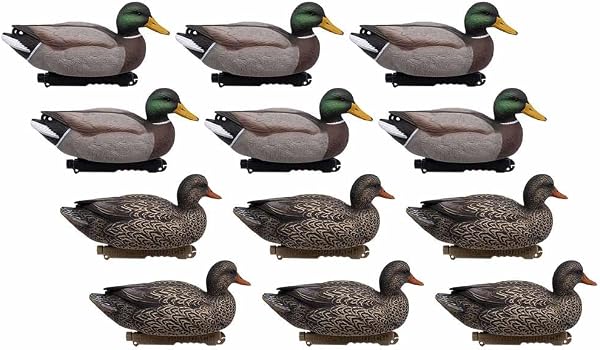
The Avery GHG Essential Series Standard Mallard 12-Pack earns our Editor's Choice badge by delivering the ideal balance of anatomical realism, flock-building quantity, and dependable water stability. Whether you are a beginning waterfowler assembling your very first rig or a seasoned veteran refreshing the core of a multi-dozen spread, this twelve-pack provides immediate, field-ready versatility.
We may earn a commission when you buy through this link, at no additional cost to you.
Unlike many packs that skew heavily toward drakes, the Essential Series features an even split of six drakes and six hens. This balanced ratio accurately mirrors natural pair-bonding and mid-season flock composition, helping calm wary late-season mallards that grow suspicious of unnatural all-drake setups. Each body is meticulously sculpted with high-definition feather etching and painted with a multi-layered color palette that replicates iridescent green heads, rich chestnut breasts, and mottled hen plumage.
On the water, these floaters excel thanks to their weighted, self-righting swim keels. When tossed from a blind or boat, the balanced keels right the decoys instantly and allow them to translate subtle breezes and gentle current into smooth, lifelike swimming movement without erratic tipping in choppy waves.
Having an equal mix of six drakes and six hens gives your spread natural visual texture, combining the bright white tail and dark breast contrast of drakes with the subtle, realistic camouflage of hens. Beneath the waterline, the contoured swim keel stabilizes the body in rough chop while allowing the decoy to skate gently on light wind.
Constructed from rugged, field-tested polymer, the Essential Series stands up to icy water, muddy decoy bags, and repeated rigging without rapid paint flaking. While they are not foam-filled like pricier six-packs, getting twelve realistic, self-righting mallards in a single box makes this set the smartest foundational choice for most duck hunters.
Not ideal for hunters who insist on solid foam-filled interiors or oversized magnum blocks for extreme-distance open-water attraction.
We may earn a commission when you buy through this link, at no additional cost to you.
The Higdon Outdoors Standard Pintail Floater 6-Pack is a strategic weapon for hunters gunning over flooded rice checks, shallow prairie marshes, and open mudflats. Northern pintails are famously cautious, circling high above a spread multiple times before committing; adding the unmistakable crisp white neck stripes and breast profiles of pintail drakes acts both as a long-range visual magnet and a powerful confidence builder for all puddle duck species.
We may earn a commission when you buy through this link, at no additional cost to you.
This six-pack excels in posture diversity, combining three alert upright drakes, one low-head skimmer drake, and two contented resting hens. The inclusion of the skimmer posture adds dynamic feeding energy to the rig, while the deep XHD feather carving and UV-resistant paint accurately capture the sleek, slender elegance of live sprig without producing unnatural glare under bright skies.
Because pintails frequently favor shallow flooded agricultural fields and open sheet water, Higdon’s forward-weighted keel with an integrated short-stringing clip is particularly useful. You can quickly shorten your anchor lines to just a few inches of cord so the decoys float naturally in ankle-deep water without drifting together and tangling.
Seasoned mallard hunters often place six pintail decoys on the outside edge of their spread because the brilliant white breast and neck stripe of a drake pintail is visible from much farther away than earth-toned puddle ducks. The short-stringing keel clip makes it easy to adapt line depth when moving from deeper sloughs to shallow flooded grain fields.
Like other models in Higdon’s foam-filled lineup, these pintails are injected with buoyant closed-cell foam to prevent sinking from stray pellets and sized slightly smaller than live ducks for easier transport. Whether used as a dedicated pintail rig or mixed on the upwind edge of a mallard spread for extra flash, they deliver outstanding realism and durability.
Not needed for dense, closed-canopy flooded timber holes where pintails rarely land and high-visibility open-water flash is unnecessary.
We may earn a commission when you buy through this link, at no additional cost to you.
The Higdon Outdoors Magnum Mallard 6-Pack is engineered for hunters who need maximum visual impact to pull high-flying migrators down from the stratosphere. When hunting expansive river systems, large reservoirs, or wide flooded fields where competing spreads abound, oversized magnum bodies create a larger, bolder footprint on the water that birds can spot from substantially greater distances.
We may earn a commission when you buy through this link, at no additional cost to you.
Beyond sheer size, these magnum floaters elevate close-range realism with fully adjustable swivel heads. Instead of locking every bird into an identical forward-facing stare, you can rotate each head 360 degrees to create unique angles of alertness, preening, and relaxation across the four drakes and two hens. Deep feather carving and high-contrast UV paint ensure the oversized bodies look lifelike rather than blocky when ducks cup their wings inside thirty yards.
Every decoy is completely foam-filled, making them virtually indestructible and unsinkable even in heavy river ice or intense gunning conditions. To help manage their substantial magnum dimensions, this configuration includes a dedicated decoy transport bag, protecting the paint finish and keeping your rig organized in the boat or truck bed.
Static decoys that all face the exact same angle along the wind line can alert educated late-season ducks. The rotating swivel heads on the Higdon Magnums let you angle individual drakes and hens slightly left, right, or straight ahead, creating a dynamic, natural-looking family group that commands attention from afar.
The obvious trade-off with foam-filled magnum decoys is weight and bulk; packing multiple six-packs on your back through deep mud requires serious physical effort. However, for boat blinds, pit blinds, and open-water hunters who prioritize extreme visibility and customizable head positions, these magnum mallards are a premier heavy-duty choice.
Not suited for minimalist backpack hunters who need lightweight, compact decoys for multi-mile hikes into remote walk-in potholes.
We may earn a commission when you buy through this link, at no additional cost to you.
The HEYDAY Mallard Position Pack #2 reimagines modern decoy engineering by replacing rigid, noisy hard plastic with 100% closed-cell EVA HydroFoam—the same resilient, ultralight resin used in premium outdoor footwear. Designed for discerning waterfowlers who hike deep into public marshes and demand lifelike motion in light winds, these decoys solve several longstanding frustrations of traditional blocks.
We may earn a commission when you buy through this link, at no additional cost to you.
Because the HollowCore body is molded entirely from naturally buoyant EVA foam, these decoys cannot sink even if riddled with shotgun pellets, nor will they crack or shatter in sub-zero weather. Equally important for walk-in hunters is acoustic stealth: HydroFoam decoys never produce the loud, hollow plastic clanking noise that echoes across quiet morning marshes when loading or unloading decoy bags in the dark.
On the water, HEYDAY replaces the traditional single straight keel with an innovative circular SmoothMove Dual-Keel system. Traditional single keels create lateral water resistance that requires stiff wind to initiate movement; the dual-keel architecture reduces hydrodynamic drag and allows the ultralight bodies to pivot, glide, and swim naturally in the faintest whisper of a breeze.
When hunting near roosting ducks before legal shooting light, the clatter of hard plastic decoys banging together can flush birds out of the area before dawn. The soft, resilient EVA HydroFoam bodies are whisper-quiet during transport, while the circular dual-keel design lets the decoys skate and weave across the surface in near-calm conditions.
Additionally, the Fool ‘Em Finish utilizes the natural micro-texturing of HydroFoam to scatter light without glare, while the hardware-free self-righting keel weights can be removed entirely when hiking into shallow water to shed even more carry weight. While they carry a premium price tag, their ultralight stealth, unsinkable resilience, and effortless motion make them a standout upgrade.
Not aimed at budget-focused hunters looking to buy bulk multi-dozen spreads at the lowest possible cost per bird.
We may earn a commission when you buy through this link, at no additional cost to you.
The Higdon Outdoors Standard Ringneck Foam-Filled 6-Pack offers an accessible, high-impact way for puddle-duck and diver hunters alike to add crisp black-and-white visibility to their rig. In many transition zones—such as beaver marshes, farm ponds, and river backwaters—ringnecks mix freely with mallards, wood ducks, and gadwalls, making a half-dozen ringneck pack a versatile confidence booster.
We may earn a commission when you buy through this link, at no additional cost to you.
This set includes four upright drakes and two resting hens, intentionally weighted toward drakes so their bold white side pockets and black backs stand out sharply against dark water. Higdon’s XHD carving process creates deep feather channels across the back and scapulars, while the UV paint system prevents peeling, fading, and unnatural wet shine under bright sun.
Designed with a slightly smaller-than-life length paired with an extra-wide body profile, these decoys pack easily into crowded bags while presenting a broad, stable target to passing birds from above. The solid foam-filled core ensures that low-angle shots at skimming divers or crippled birds on the water will never sink your decoys.
Adding a small cluster of four drake and two hen ringnecks just outside the main landing zone gives incoming birds a high-contrast visual reference point to guide their approach. The extra-wide body beam keeps these compact decoys sitting flat on choppy water without rolling onto their sides.
Beneath the hull, the weighted self-righting keel rights each decoy automatically when tossed from the blind, and the integrated short-stringing clip allows rapid line length adjustments when hunting shallow edges. For hunters wanting a tough, affordable six-pack to diversify their spread with high-contrast diver flash, this pack is a top-rated performer.
Not sufficient on its own for big-water layout hunting where several dozen diver blocks are needed to stop large migrating flocks.
We may earn a commission when you buy through this link, at no additional cost to you.
Assembling a deadly waterfowl spread requires matching your decoys to the bird species in your flyway, the water depths you hunt, and how you transport gear to the blind. This buying guide breaks down the essential construction, hydrodynamic, and visual factors that separate effective decoys from lifeless blocks.
The material and internal structure of a duck decoy dictate its weight, longevity, and survivability under gunfire. Traditional hollow decoys are blow-molded or injection-molded from polyethylene (PE) or high-density polyethylene (HDPE), such as the Final Approach Last Pass or Avery GHG Essential Mallards. Hollow plastic decoys are economical to purchase by the dozen and relatively lightweight to carry, making them the standard choice for building large core spreads. However, if a hollow plastic decoy is struck by stray shotgun pellets while shooting at low-skimming birds or dispatching a cripple on the water, it will take on water and sink unless patched with waterproof sealant.
Foam-filled decoys—such as Higdon’s Standard and Magnum lineups—take a durable plastic outer shell and inject the interior cavity with closed-cell expanding polyurethane foam. This solid core makes the decoy completely unsinkable, even if peppered repeatedly by steel shot at close range, and reinforces the outer walls against crushing or cracking in freezing temperatures. The latest innovation in decoy manufacturing is 100% closed-cell EVA resin, exemplified by the HEYDAY HydroFoam series. EVA decoys need no hard plastic shell at all; the flexible, shoe-grade foam is naturally unsinkable, featherlight, impervious to cold-weather splitting, and completely silent when bumped together in a decoy bag.
Choose your construction based on how you hunt and transport gear. If you hunt open water for divers where low-angle shots are common, or if you store decoys loose in an icy boat hull, foam-filled decoys are well worth the extra few ounces of weight. If you want a budget-friendly multi-dozen rig, quality hollow HDPE blocks deliver outstanding value, while walk-in marsh hunters seeking minimum pack weight and silent stealth should prioritize EVA HydroFoam.
Duck decoys are generally categorized into compact/standard, true life-size, and oversized magnum profiles, each serving a distinct tactical purpose. Compact and standard-sized decoys—measuring roughly 11 to 14 inches from bill to tail—are intentionally sculpted slightly smaller than average live birds. This reduced volume allows walk-in hunters and small-boat waterfowlers to pack significantly more decoys into mesh sacks or kayak hulls. Because ducks perceive flock safety through sheer numbers as well as individual bird size, deploying two dozen compact decoys often outperforms deploying eight oversized blocks in tight potholes or timber holes.
Magnum and super-magnum decoys scale the body dimensions up significantly, with lengths exceeding 16 to 18 inches and wider beams across the water line. When hunting vast open reservoirs, wide river channels, or expansive flooded agricultural fields where migrating flocks fly high overhead, magnum decoys create a much larger visual signature and cast deeper shadows on the water. High-contrast magnum blocks, like the Higdon Magnum Mallards, can catch the eye of distant traffic birds long before standard-sized decoys become visible.
Consider your transport capacity and hunting terrain before selecting decoy sizes. If you hike half a mile through gumbo mud on public wildlife management areas, stick with compact or standard-sized blocks to save your back and maximize numbers. If you hunt from a stationary boat blind, pit, or permanent blind on big water, incorporate magnum decoys on the outside edges of your spread to maximize long-range drawing power.
While hunters focus heavily on top-side paint, the keel underneath the waterline controls how a decoy deploys, rides waves, and moves in the wind. Weighted self-righting keels incorporate ballast—either internal steel/lead inserts or sand-filled cavities—positioned along the bottom rail. When you pitch a self-righting decoy out of a boat in the dark, the weighted keel automatically flips the decoy upright upon water contact, saving valuable setup time in frigid water. Forward-weighted keels concentrate that ballast toward the chest, helping the decoy nose naturally into river currents and stiff winds without yawing wildly from side to side.
In light winds, however, heavy single-blade keels can act like a deep sailboat rudder, resisting gentle breezes and leaving decoys sitting static. Innovative designs like HEYDAY’s circular SmoothMove Dual-Keel reduce lateral water drag and allow ultralight bodies to pivot, skate, and weave in the slightest whisper of air movement. Furthermore, hunters who move between deep sloughs and shallow sheet water should look for keels with integrated short-stringing clips, which allow you to wrap excess anchor line around the keel and lock it at the exact depth needed so decoys do not drift into a tangled pile.
Match your keel system to your water depth and wind conditions. For fast boat deployment and choppy open water, weighted self-righting keels with forward ballast are indispensable. For walk-in hunters gunning sheltered potholes with minimal wind, removable-weight keels or dual-keel designs provide superior natural movement and lighter pack weights.
Waterfowl possess tetrachromatic vision that allows them to see into the ultraviolet spectrum and detect unnatural surface reflections far better than the human eye. Cheap decoys coated in glossy, non-UV-balanced paints can reflect harsh sunlight like plastic mirrors when wet, causing circling mallards and pintails to flare at fifty yards. High-performance decoys address this problem through two mechanisms: deep three-dimensional feather carving and specialized matte UV paint formulations.
Deep feather etching—such as Higdon’s XHD Hyper-Feathering or Avery’s high-definition sculpting—creates microscopic ridges and valleys across the back, scapulars, and tertials. When water droplets beads up on the decoy or bright morning sunlight strikes the back, those carved grooves scatter light in multiple directions rather than reflecting a flat sheet of glare. Meanwhile, UV-matched paints replicate the authentic spectral reflectance of live drake and hen feathers, ensuring white patches pop brightly while dark plumage absorbs stray reflection.
When comparing decoys, look for deep textural carving and flat, matte paint finishes that resist peeling when rubbed inside slotted or mesh bags. Investing in decoys with proven UV paint technology pays dividends on sunny, bluebird days when birds have ample light to inspect your spread closely.
Live ducks on the water rarely adopt identical postures; an active, relaxed flock contains a mix of upright lookouts, tucked-head sleepers, low-neck skimmers, and tipping feeders. If every decoy in your spread features a high, erect neck posture, incoming ducks may interpret the rigid posture as an alarm signal indicating nearby danger.packs that blend upright drakes, low-head skimmers, and resting hens—or models with 360-degree swivel heads like the Higdon Magnum Mallards—allow you to create a relaxed, realistic social scene.
Species and gender mixing also play a critical role in both long-range visibility and close-range finishing confidence. While mallards form the backbone of most puddle-duck spreads, mixing in high-contrast species like northern pintails, wood ducks, bluebills, or ringnecks adds brilliant white flashes that catch the eyes of distant flocks. Similarly, maintaining a healthy proportion of earth-toned hens alongside colorful drakes prevents your rig from looking artificially bright as birds drop lower for their final pass.
Build your spread with deliberate variety. Start with a balanced core of mallard drakes and hens in mixed upright and resting postures, then add a six-pack of high-visibility pintails or ringnecks on the upwind or outside wing of your landing zone to draw birds from afar.
Even the most realistically painted static decoys can fail to finish educated ducks on dead-calm mornings when the water surface resembles a pane of glass. Live ducks constantly preen, paddle, and dabble, sending continuous ripples radiating outward across the water. Without wind to move floating decoys, stationary spreads look frozen and unnatural to circling birds overhead.
Water-agitating motion decoys—such as the Higdon Pulsator PRO—solve this problem by using a battery-powered internal bilge pump on a digital timer to shoot periodic surges of water while rocking in a feeding butt posture. Not only does the spraying water mimic an actively feeding puddle duck, but the surface disturbance generates waves that travel outward and rock nearby static floaters, bringing the entire spread to life.
Every serious waterfowler should keep at least one water-moving motion decoy in their kit for calm days. Unlike spinning-wing aerial decoys that can sometimes flare wary late-season birds inside timber or calm potholes, surface-rippling pulsator decoys mimic natural feeding water movement that ducks trust from opening day through the final day of the season.
Deploying your decoys strategically around wind direction and sun angle maximizes shooting opportunities inside ethical range. Always set your spread with the wind at your back or quartering across your blind, as waterfowl almost universally land into the wind to slow their airspeed. Arrange your floaters in a loose J-hook, U-shape, or twin-cluster pattern with an open pocket directly in front of the blind at 20 to 25 yards to serve as an inviting landing zone. Place high-contrast blocks—such as pintails, magnum mallards, or ringnecks—on the outer edges to catch distant eyes, and position motion decoys like the Pulsator PRO right at the head of the landing pocket so ripples propagate through the surrounding static decoys.
Proper rigging and transport habits dramatically extend the life of your decoy paint and keels. Whether you rig with Texas-style sliding mono lines for fast walk-in deployment or traditional PVC decoy cord with strap weights for shallow-water wrapping, always secure loose hooks and weights before tossing decoys into a bag. If using standard mesh bags, avoid dragging the bag across gravel parking lots or boat ramps, which quickly abrades paint off tail curls and bills; for premium painted or flocked decoys, use individual-slot decoy bags to eliminate friction wear entirely.
Routine cleaning and off-season storage keep your spread looking crisp and functioning reliably for years. Mud, dried algae, and brackish salt residue dull vibrant UV paint and create unnatural crust on feather carvings; rinse your decoys with low-pressure fresh water and a soft bristle brush periodically during the season and thoroughly before spring storage. Never use harsh solvents or pressure washers that can strip paint layers. For motorized decoys like the Pulsator PRO, flush the pump channel with clean freshwater after hunting in muddy or salty marshes, charge the internal battery fully before off-season storage, and store all decoys in a cool, dry shed away from rodents and extreme attic heat.
Foam-filled decoys are well worth the slight weight increase if you hunt from a boat, shoot over diver spreads, or hunt with groups where low-angle shots at skimming or crippled birds frequently hit the blocks. Because the interior cavity is filled with solid closed-cell foam, stray shotgun pellets cannot sink them, and the rigid core prevents bodies from cracking in sub-freezing weather. However, if you hike long distances on foot into public marshes, hollow plastic or ultralight EVA foam decoys are much easier to carry in bulk.
The ideal number of decoys depends heavily on the habitat and time of season. For small beaver ponds, creek bends, and tight flooded-timber holes, a compact spread of 6 to 18 decoys—such as a dozen mallards paired with six wood ducks—looks completely natural and avoids crowding the landing zone. For large open lakes, wide rivers, or late-season diver hunting, spreads of 24 to 60 or more decoys provide the visual mass needed to pull high-flying migrating flocks from a distance.
A short-stringing clip is a molded notch or pinch point on the front of the keel that locks your decoy cord at any desired length without tying knots. When you move from waist-deep water to ankle-deep flooded flats, full-length anchor lines allow decoys to drift wide and tangle together in the wind. By wrapping the excess cord around the keel and snapping it into the short-stringing clip, you can shorten the tether to just a few inches so every decoy stays precisely where you place it.
Yes, mixing a small group of six ringneck or bluebill decoys with a puddle-duck spread is a highly effective tactic on lakes, rivers, and large marshes. The stark black-and-white contrast of drake diver decoys is visible from much farther away than brown and gray puddle ducks, acting as an optical beacon for passing flocks. Simply group your diver decoys slightly off to the deeper, downwind edge of your main mallard pocket so both puddle ducks and passing divers have a natural target.
Spinning-wing decoys use rotating magnetic blades above the water to mimic the flash of landing wings from long distances, but educated late-season ducks sometimes flare from their mechanical aerial strobe at close range. A water-pulsating motion decoy like the Higdon Pulsator PRO sits directly on the surface, spraying periodic surges of water and sending natural ripples across your entire spread. Because ripples on the water never alarm incoming birds, water-moving decoys remain effective from opening morning through the final day of the season.
EVA HydroFoam decoys, such as the HEYDAY Mallards, are molded entirely from soft, closed-cell ethylene-vinyl acetate resin rather than rigid polyethylene plastic. This material is significantly lighter than hard plastic, naturally buoyant even if shot with pellets, and completely immune to cracking in bitter cold. Additionally, EVA foam is soft to the touch, meaning the decoys never make loud hollow clanking sounds when carried in a mesh backpack through quiet morning marshes.
Ducks have specialized vision capable of detecting ultraviolet light wavelengths that humans cannot see. Standard commercial paints often reflect unnatural UV glare when wet, making decoys glow unnaturally or shine like plastic mirrors under bright sun. Proprietary UV waterfowl paints are formulated to match the natural ultraviolet reflectance of live duck plumage while diffusing harsh surface glare.
Magnum decoys are best deployed when hunting large expanses of open water, wide river systems, or high-traffic areas where you need to capture the attention of high-flying migrators from hundreds of yards away. Their oversized footprint sits higher in rough waves and creates a much bolder silhouette than standard decoys. Standard and compact decoys are better suited for walk-in hunts, calm potholes, and timber holes where portability and higher decoy counts matter more than individual block size.
Always deploy the Pulsator PRO in at least six inches of water so the submerged pump intake hangs clear of bottom mud and silt. Avoid placing it directly inside dense mats of floating duckweed or filamentous algae that could be sucked into the intake screen. After hunting in muddy, brackish, or saltwater environments, run the decoy in a bucket of clean freshwater for a minute to flush out sediment and salt crystals before recharging the battery.
Building a versatile, productive duck spread comes down to matching decoy durability, visual contrast, and water motion to the specific environments you hunt. For most waterfowlers looking for an all-around foundational rig, the Avery GHG Essential Series Mallard 12-Pack stands out as our Editor's Choice, delivering a balanced six-drake and six-hen flock with realistic feather etching and stable self-righting swim keels at an approachable price.
Hunters facing specialized conditions have standout options across this lineup. To bring lifeless spreads alive on dead-calm mornings, the Higdon Pulsator PRO generates convincing feeding sprays and surface ripples across freshwater and saltwater marshes alike. Meanwhile, walk-in public-land hunters who prioritize ultralight pack weight, silent transport, and effortless dual-keel glide will find a remarkable upgrade in the HEYDAY HydroFoam Mallard 6-Pack.
For hunters gunning big open water, flooded timber, or fast-flying divers, Higdon's foam-filled Standard Ringnecks, Bluebills, Wood Ducks, Pintails, and Magnum Mallards provide virtually unsinkable pellet resistance and glare-free UV paint that endures harsh treatment season after season. Combine a solid core of realistic floaters with high-contrast confidence blocks and dependable surface motion, and your spread will be ready to finish even the wariest birds.