TaylorMade SIM2 MAX
9.0Editor scoreForged ring frame construction
Asymmetric inertia generator shape
Speed injected twist face
Flexible thru slot speed
Discover the top 10 golf drivers for distance, forgiveness, and control. Compare leading models from TaylorMade, Callaway, Cobra, and Cleveland.
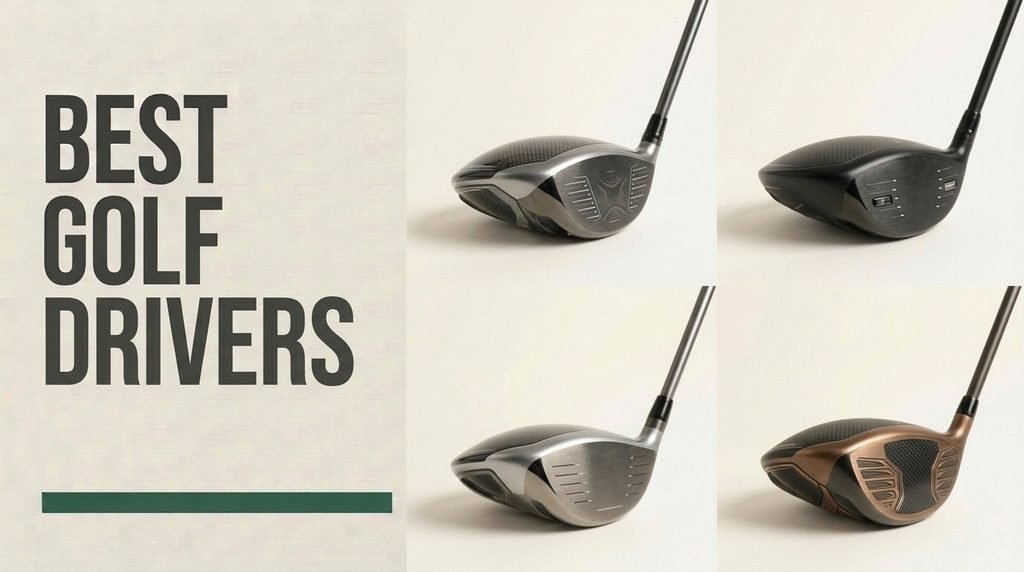
Find the right golf drivers for 2026. We compare 10 standout options by the factors that matter in this category, such as clubhead MOI, face technology, adjustability, shaft flex options, aerodynamics, trajectory control, and overall tee-box value.
Modern drivers leverage artificial intelligence face mapping, multi-material carbon crowns, and intricate perimeter weighting systems to minimize ball speed loss on off-center strikes. Choosing the correct model depends heavily on matching launch angle and spin characteristics to your natural swing speed and rotation rate.
Whether you fight a persistent slice, need to maximize clubhead velocity with lightweight materials, or want tour-level shot shaping, this comprehensive guide clarifies real-world performance differences. Our analysis breaks down engineering trade-offs to help you select a driver head that delivers maximum confidence.
We compared 10 golf drivers using the key technical metrics that influence tee-box performance: moment of inertia (MOI), face flex energy transfer, hosel adjustability ranges, draw-bias weighting, crown aerodynamics, and stock shaft pairings. Our evaluation focuses on practical trade-offs so every golfer can find a head design suited to their swing speed and dispersion goals.


Compare key features, scores, and current prices side by side. A shorter feature list means fewer details were available, not necessarily fewer capabilities.



The TaylorMade Qi4D sits at the pinnacle of modern driver engineering, featuring a refined head profile designed through advanced aerodynamic simulations. The head shape combines a modern profile with clean address optics, instilling confidence while maximizing clubhead speed through the hitting zone.
We may earn a commission when you buy through this link, at no additional cost to you.
Central to its speed generation is the updated 60X Carbon Twist Face, which saves significant weight compared to traditional titanium face designs. This lightweight face transfers impact energy into ball speed far more efficiently while maintaining consistent vertical spin rates across varying strike locations.
Performance customization is comprehensive thanks to the four-weight Trajectory Adjustment System. By swapping weights between designated sole ports, golfers can fine-tune spin rates, launch angles, and shot shapes with extreme precision to match their swing dynamics.
Replacing heavy metal face plates with ultra-light carbon composite allows mass to be placed strategically elsewhere in the head. The lighter face structure returns more energy to the ball, yielding measurable gains in ball speed across the entire face.
Supported by a four-degree adjustable loft sleeve and specialized REAX shaft options, the Qi4D caters to discerning golfers who demand maximum ball speed alongside custom-fit trajectory tuning.
Recreational players on a restricted budget who prefer set-and-forget simplicity over detailed weighting tweaks.
We may earn a commission when you buy through this link, at no additional cost to you.
The TaylorMade SIM2 MAX is engineered specifically for players who demand high-launch trajectories combined with maximum off-center stability. Built around a forged aluminum ring that unites a heavy rear weight, carbon crown, and carbon sole, this design maximizes moment of inertia without sacrificing aerodynamics.
We may earn a commission when you buy through this link, at no additional cost to you.
The asymmetric Inertia Generator angled along the sole reduces aerodynamic drag during the critical downswing phase. This structural geometry allows golfers to generate higher head speeds without altering their swing effort, leading directly to extra total distance off the tee box.
Impact consistency is preserved through the Speed Injected Twist Face, which uses corrective face curvature to straighten shots struck away from the center sweet spot. Additionally, the flexible Thru-Slot Speed Pocket preserves initial ball velocity on low-face impacts, preventing severe distance loss.
By angling the sole weight along the motion vector of the downswing, the Inertia Generator reduces wind resistance right before ball impact. This aerodynamic advantage translates directly to faster swing speeds for players struggling to gain distance.
For golfers who want a balanced, confidence-inspiring driver head that prioritizes high launch and straight ball flights, the SIM2 MAX delivers proven all-around playability. Its fixed perimeter mass distribution makes setup simple and effective for mid to high handicappers.
This model is not ideal for low-handicap players seeking extreme low-spin performance or moveable weight shot shaping.
We may earn a commission when you buy through this link, at no additional cost to you.
The Callaway Paradym AI Smoke Max utilizes advanced artificial intelligence modeling to revolutionize how driver faces mitigate swing flaws. Built using real-world player impact data, the face feature creates multiple sweet spots across the striking surface to keep ball speeds high even when contact drifts toward the toe or heel.
We may earn a commission when you buy through this link, at no additional cost to you.
Featuring a 360-degree carbon chassis, the head saves discretionary mass from the center of the body and redistributes it along the perimeter. This structural efficiency creates high torsional resistance, preventing the clubhead from twisting violently during off-center strikes.
A sliding weight track along the rear perimeter allows players to adjust shot shape bias between neutral, draw, and fade configurations. This practical adjustability helps players dial in their desired dispersion pattern to better fit their course management strategy.
The micro-deflections designed into the face structure act like tiny individual springboard zones. When contact misses center, these zones launch the ball with optimized launch angles and reduced gear spin, narrowing overall left-to-right dispersion.
Golfers looking for modern face technology that compensates for subtle strike inconsistencies will appreciate the blend of launch efficiency and shot-shaping flexibility built into the AI Smoke Max platform.
Golfers who prefer a traditional, non-adjustable static weight setup may find the sliding weight system unnecessary.
We may earn a commission when you buy through this link, at no additional cost to you.
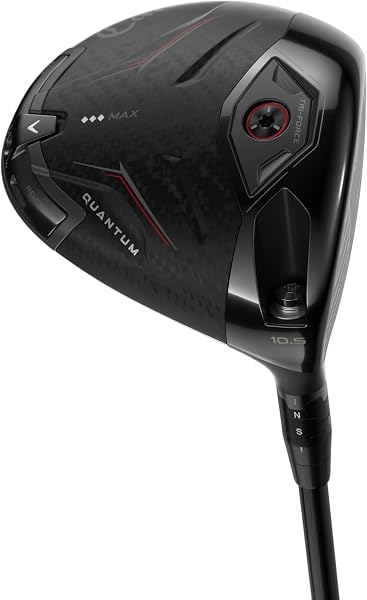
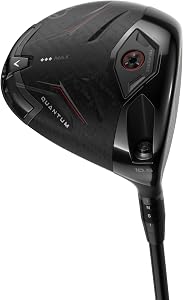
The Callaway Quantum Max introduces a Tri-Force Face design that combines ultra-thin titanium, poly mesh, and carbon fiber into a single integrated system. This complex layering process creates precise face flex properties designed to optimize speed, spin, and launch conditions across all strike zones.
We may earn a commission when you buy through this link, at no additional cost to you.
Artificial intelligence mapping ensures that the three underlying materials work synchronously. By tuning face deflection to match actual player impact patterns, the driver minimizes spin spikes and ball speed drops when contact deviates from the center.
A refined ten-gram moveable weight system enables quick shifting between neutral and draw setups. Paired with an independent hosel sleeve offering eight loft and lie configurations, players can tailor ball flight height and directional bias with ease.
Combining titanium strength with poly mesh dampening and carbon lightness creates a face structure with varied stiffness zones. This prevents excessive gear spin on toe or heel mishits without adding unnecessary head weight.
Designed with a confidence-inspiring address footprint and a neutral center of gravity, the Quantum Max suits golfers seeking moderate spin levels and predictable directional stability off the tee.
Golfers who prefer a soft impact feel or who demand ultra-high consumer rating track records.
We may earn a commission when you buy through this link, at no additional cost to you.
The Intech Behemoth 520cc Driver breaks away from standard equipment constraints by utilizing an oversized head volume that exceeds USGA legal limits by approximately 13 percent. Designed specifically for casual, non-tournament play, this oversized clubhead offers an unusually large target at address.
We may earn a commission when you buy through this link, at no additional cost to you.
Constructed from 6061 aluminum alloy, this club provides a cost-effective alternative to expensive titanium models. While aluminum lacks the extreme elasticity of modern composite faces, its rugged durability makes it well-suited for high handicappers building fundamental swing consistency.
The massive profile creates a broad surface area, effectively broadening the hit zone to preserve direction on severe off-center contact. For beginners struggling to make solid face contact, this extra surface area helps instill tee-box confidence.
Expanding head volume to 520cc pushes weight far outward from the center line. This high-MOI geometry resists twisting when ball contact misses the middle, keeping casual drives straighter in the fairway.
If you play strictly for recreation and want an inexpensive, high-forgiveness driver that maximizes fun during weekend scrambles, the Intech Behemoth presents a budget-friendly choice.
Golfers participating in USGA-sanctioned competitive tournaments or handicap-indexed rounds.
We may earn a commission when you buy through this link, at no additional cost to you.
The Cobra DS-Adapt MAX-K sets a standard for stability by pushing combined moment of inertia up to the 10,000 mark. By pairing an external fixed rear weight with an internal weight pad, center of gravity is positioned deep and low, virtually eliminating head twisting on off-center hits.
We may earn a commission when you buy through this link, at no additional cost to you.
Customization is unlocked through the innovative FutureFit33 hosel system, offering 33 distinct loft and lie configurations. Uniquely, loft and lie can be adjusted independently by up to two degrees, while the SMARTPAD sole design ensures the clubface rests square at address in any setting.
Aerodynamics are improved through a raised crown peak and smoother contours, reducing wind resistance during downswing acceleration. Additionally, a forged H.O.T. Face insert uses variable thickness zones to enhance ball speeds across an expanded hitting area.
Unlike traditional hosels where changing loft alters face angle, FutureFit33 isolates loft and lie shifts. This allows golfers to alter launch angle or upright lie bias while maintaining a square visual alignment at address.
Golfers who battle inconsistent strike patterns and want maximum directional stability without sacrifices in swing speed will find the DS-Adapt MAX-K an ideal solution.
High swing speed golfers seeking ultra-low spin rates and heavy forward center-of-gravity placement.
We may earn a commission when you buy through this link, at no additional cost to you.
The Callaway Quantum Triple Diamond Max combines tour-preferred shape characteristics with added forgiveness in a full 460cc footprint. Tailored for skilled players with higher swing speeds, this model generates low spin rates and piercing launch angles that maximize overall roll and distance.
We may earn a commission when you buy through this link, at no additional cost to you.
Constructed with an advanced 360-degree carbon chassis, the driver body eliminates excess metal weight. This saved mass is strategically positioned to lower the center of gravity and tighten dispersion, giving stronger players complete control over workability.
The Tri-Force Face combines titanium, carbon fiber, and poly mesh to maximize energy transmission at impact. Paired with AI-designed face mapping, the driver maintains directional stability during slight toe or heel strikes without generating excessive backspin.
Shifting mass forward and downward reduces vertical spin rates upon impact. For high swing speed players, this lower spin profile prevents drives from ballooning into high wind and increases total ground roll distance.
Including moveable perimeter weighting configurable for neutral or fade bias, the Triple Diamond Max offers low handicappers a high-performance tool for penetrating, controlled tee shots.
Low swing speed players or golfers who need assistance elevating launch angles off the tee.
We may earn a commission when you buy through this link, at no additional cost to you.
The Cleveland HiBore XL Lite is engineered specifically to help golfers with moderate swing speeds achieve effortless distance and elevated launch angles. Weighing 32 grams lighter than standard models, this head design allows players to swing faster with less physical effort.
We may earn a commission when you buy through this link, at no additional cost to you.
To combat slice tendencies, the club features internal draw-biased weighting that encourages quick face closure through impact. This directional assistance helps turn weak right-bound misses into high, straight, or slight draw trajectories.
Energy transfer is enhanced by the MainFrame XL variable thickness face, which expands the responsive striking zone across the entire head profile. Furthermore, the ActivWing airfoil feature harnesses aerodynamic forces during the downswing, guiding the face into alignment at impact.
The subtle ActivWing ridge molded into the crown uses airflow during the downswing to reduce head flutter. This aerodynamic feature stabilizes impact angle, helping players hit the center sweet spot more frequently.
Complete with a 1.5-degree adjustable hosel for loft and face angle tuning, the HiBore XL Lite is an outstanding choice for seniors, ladies, or casual golfers looking to gain head speed.
Fast-swinging golfers who prefer heavy head feel and aggressive anti-left draw prevention.
We may earn a commission when you buy through this link, at no additional cost to you.
The Cobra OPTM MAX-D is purpose-built for players fighting a slice, incorporating geometric shaping and fixed heel weighting to promote a draw-biased ball flight. An 11-gram fixed weight positioned near the heel pulls the center of gravity closer to the shaft axis, speeding up face closure through impact.
We may earn a commission when you buy through this link, at no additional cost to you.
Engineering focus is centered around reducing Product of Inertia (POI)—a triple-axis measure of twisting resistance. By minimizing rotational instability during downswing transition, the OPTM MAX-D delivers up to 23 percent tighter landing dispersion patterns.
The club features Cobra’s FutureFit33 hosel, allowing up to two degrees of loft and lie adjustment in any direction. The integrated SMARTPAD technology maintains a square face visual alignment regardless of loft settings, keeping setup simple.
Optimizing weight distribution along all three physical axes reduces head deflection prior to contact. This engineering reduction in rotational movement helps keep the clubface square to the target line automatically.
Combined with a forged H.O.T. Face insert for preserved ball speeds on off-center hits, the OPTM MAX-D provides slicers with an effective tool to stay on the fairway.
Golfers whose natural ball flight is a left miss or who require neutral face bias.
We may earn a commission when you buy through this link, at no additional cost to you.
The Callaway Elyte X blends refined aerodynamics with aerospace-grade material technology to optimize swing velocity and off-center forgiveness. Featuring an all-new Thermoforged Carbon crown, the driver lowers mass placement to achieve high-launch, low-spin launch dynamics.
We may earn a commission when you buy through this link, at no additional cost to you.
Key to its dispersion accuracy is the AI 10x Face, incorporating ten times more virtual design control points than prior generations. This intricate face surface neutralizes gear spin on heel and toe strikes, delivering tight landing groups off the tee.
The head geometry features a lowered crown profile and tapered heel section that minimizes drag throughout the entire downswing path, allowing golfers to gain speed without changing swing intensity.
Utilizing heat-molded aerospace carbon composite in the crown reduces upper head mass. Shifting this saved weight into lower sole positions ensures high launch conditions accompanied by stable backspin rates.
Equipped with a discrete weighting system supporting both neutral and draw bias options, the Elyte X is a versatile, high-tech driver suitable for golfers seeking straightforward distance gains.
Players seeking high-frequency metallic impact sound feedback or manual sliding mass tracks.
We may earn a commission when you buy through this link, at no additional cost to you.
Selecting the optimal golf driver requires understanding how head geometry, weight distribution, face construction, and shaft flex interact with your swing. Matching these technical attributes to your delivery angle and swing speed is key to maximizing distance and accuracy.
Moment of Inertia measures a driver head’s resistance to twisting when impact occurs away from the center sweet spot. High MOI drivers distribute weight outward toward the extreme rear, heel, and toe perimeters. When impact strikes the toe or heel, high MOI heads resist twisting, keeping ball speed high and minimizing directional deflection.
Drivers featuring extreme stability levels, such as 10,000 combined MOI designs, offer substantial assistance to golfers with inconsistent strike patterns. However, pushing weight to the far boundaries of the head often increases backspin rates slightly, which can shorten carry distance for fast-swinging players who generate heavy spin naturally.
Golfers with mid-to-high handicaps or unpredictable strike locations should prioritize maximum MOI for tighter dispersion patterns. Fast swingers with centered strike patterns may prefer mid-MOI heads that prioritize low spin over maximum perimeter stability.
Driver face technology has evolved beyond single-piece titanium plates into multi-material composites and variable-thickness structures designed by artificial intelligence. AI-designed faces incorporate variable thickness patterns across the reverse side of the face plate to optimize spring-like deflection regardless of impact location.
Materials like lightweight carbon composite faces save significant weight compared to traditional titanium inserts. Saving weight on the face surface allows manufacturers to allocate mass deeper in the sole or perimeter, improving energy transfer efficiency while boosting forgiveness across the face.
If you regularly miss the center sweet spot, invest in drivers utilizing multi-material layering or AI-mapped faces. Golfers who hit the sweet spot consistently will experience less overall speed variance between standard titanium and carbon-based alternatives.
Center of gravity placement dictates a driver’s native launch angle, spin rate, and directional bias. Placing CG deep and low in the rear sole boosts launch angles and increases backspin, keeping shots airborne longer at moderate swing speeds. Moving CG forward toward the face lowers launch and spin for penetrating trajectories.
Draw-biased drivers place extra mass in the heel portion of the clubhead, near the shaft axis. This mass concentration makes the clubhead easier to rotate closed during downswing acceleration, helping players who slice neutralize their open face at impact and straighten their ball flight.
If your primary miss is a high slice to the right, choosing a driver with fixed or adjustable heel weighting is highly effective. If you fight an unwanted left miss, opt for a driver offering neutral or fade-biased weight configurations.
Adjustable hosel sleeves allow golfers to change static loft, lie angle, and face angle without purchasing a new shaft or head. Increasing loft typically closes the face angle slightly and increases launch height, while lowering loft opens the face angle and lowers launch height.
Modern hosels offer independent loft and lie adjustments, allowing players to adjust lie angle upright for draw assistance without altering loft angle. Hosels engineered with square-address technology maintain a neutral visual appearance at address regardless of selected loft settings.
Golfers who play in varying wind conditions or who are fine-tuning their launch monitor numbers benefit greatly from adjustable hosel systems. If you prefer set-and-forget simplicity, fixed hosels eliminate setup complexity and reduce slight hosel weight overhead.
Clubhead speed directly correlates with total potential distance off the tee. Modern drivers feature raised crown peaks, smoothed trailing edges, and contoured sole geometry to reduce wind drag as the head accelerates through the downswing arc.
Aerodynamic design is particularly beneficial for players looking to gain extra head speed without increasing swing effort. Features like air deflector fins or streamlined carbon crowns manage airflow across the head surface during transition and downswing acceleration.
If you are looking to maximize swing speed with your current physical swing, look for streamlined head shapes with lightweight carbon crowns. Highly aggressive swingers will see less percentage speed gain from aerodynamic tweaks alone.
The shaft functions as the timing engine of the driver, influencing launch angle, spin rate, and impact centering. Shafts are classified by weight in grams and flex stiffness ranging from light and regular to stiff and extra-stiff.
Matching shaft flex to your swing tempo and speed is critical. A shaft that is too stiff produces low, right-leaning shots with a dead impact feel, while a shaft that is too soft leads to erratic launch angles, excessive backspin, and leftward misses.
Always consider total club weight alongside shaft flex. Light swingers benefit from sub-50-gram shafts to increase velocity, while fast, aggressive swingers need heavier 60-to-70-gram shafts to maintain mechanical timing and control dispersion.
To maximize performance and protect your driver, begin by fine-tuning hosel adjustability settings on the driving range before playing. Use a torque wrench supplied by the manufacturer to adjust loft and lie sleeves, tightening until you hear an audible click to ensure the screw is secure without over-tightening.
Keep the driver face and sole grooves clean during play by wiping down the head with a damp microfiber cloth after shots. Avoid using hard metal brushes or abrasive harsh cleaners on carbon composite crowns or delicate face finishes, as these can scratch anti-glare coatings and compromise structural integrity.
Always store your driver in its padded headcover when placed inside your golf bag to prevent chatter damage from iron heads during transit. Avoid leaving clubs in extreme heat environments like automobile trunks during warm summer months, as excessive heat can weaken hosel epoxy bonds over time.
Most average golfers with swing speeds between 85 and 95 mph perform best with driver lofts between 10.5 and 12 degrees. Higher loft helps elevate the ball quickly and adds backspin, which keeps off-center shots airborne longer. Fast swingers over 100 mph usually benefit from 9.0 to 10.0-degree lofts to reduce excess spin.
Draw-biased weighting places extra mass near the heel of the driver head, closer to the shaft axis. This shifts the center of gravity inward, making the head rotate closed faster during downswing acceleration. Closing the face relative to the path helps reduce cut spin and straightens rightward ball flight.
Carbon fiber faces are significantly lighter than traditional titanium face plates. Saving weight on the face allows structural mass to be moved to the deep perimeter or low sole positions, increasing moment of inertia (MOI). Carbon faces also transfer impact energy efficiently, preserving high ball speeds across off-center strike zones.
MOI stands for Moment of Inertia, which measures a driver head's resistance to twisting on impact. High MOI drivers resist rotation when contact misses the center sweet spot, resulting in straighter drives and minimal speed loss. Higher MOI values generally lead to tighter overall ball dispersion.
No, oversized drivers exceeding 460cc volume violate USGA and R&A equipment regulations for sanctioned tournament play or handicap posting. Oversized 520cc heads are meant strictly for casual, recreational play where maximum hitting surface area and fun are prioritized over rule compliance.
Adjust loft settings during practice sessions based on seasonal turf conditions, weather, or swing changes. Increasing loft yields higher launch and control in cold or wet conditions, while lowering loft helps penetrate wind and adds roll out on dry fairways. Avoid changing settings mid-round, as USGA rules prohibit equipment adjustments during play.
Lightweight drivers reduce total static club mass by 20 to 30 grams through light shafts, grips, and head materials. Reducing club weight allows players with moderate swing speeds to accelerate the club faster with less physical effort, directly increasing ball velocity and total carry distance.
Sliding weights move along an integrated sole track, allowing continuous micro-adjustments to shot shape or spin profile. Fixed weights screw into static sole ports, offering high structural stability and maximized MOI, but requiring weight swaps to alter mass placement.
Choosing the ideal golf driver comes down to selecting a head engineering design that complements your individual swing profile. For all-around performance, carbon face innovation, and extensive weighting customization, the TaylorMade Qi4D Driver stands out as a premier top choice.
Golfers prioritizing absolute stability across off-center strikes should consider high-MOI options like the Cobra DS-Adapt MAX-K, while players struggling with slow swing speeds or persistent slices will find dedicated speed and draw assistance in the Cleveland HiBore XL Lite and Cobra OPTM MAX-D models.
Before making your final choice, evaluate your natural impact pattern, swing speed, and directional miss. Matching your driver setup to your swing dynamics will pay immediate dividends in tee-box confidence, fairway accuracy, and overall distance gains.