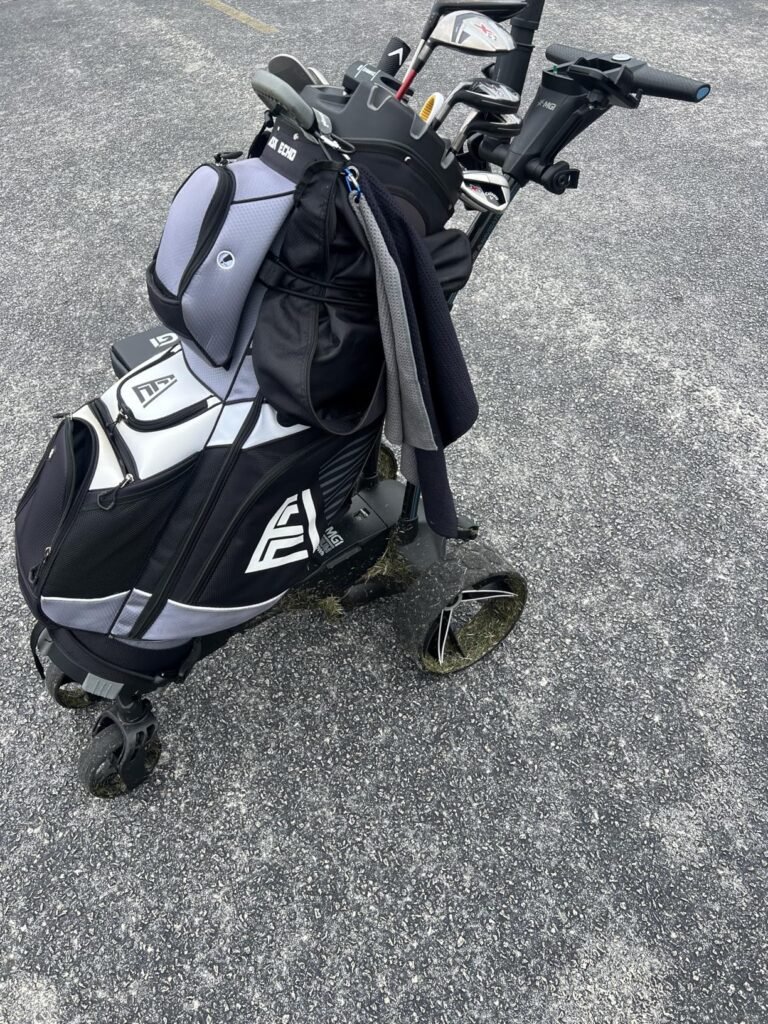
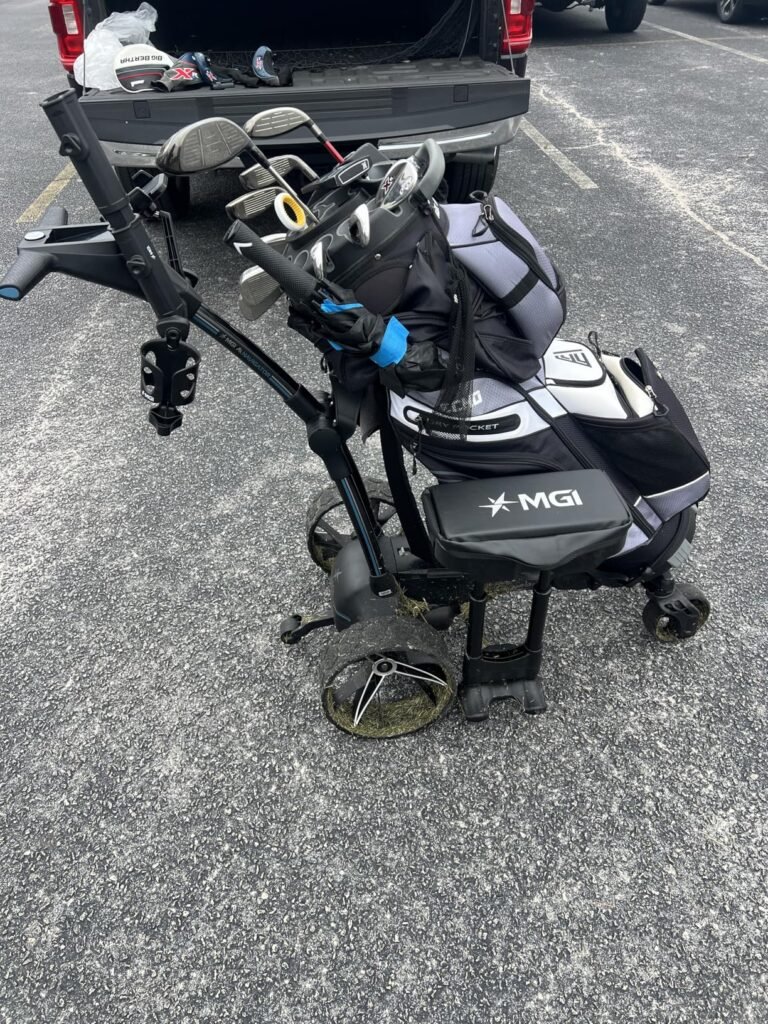
MGI Zip Navigator
8.6Editor scoreTwin 230W motors
36-hole lithium battery
37.31 lb loaded
Variable speed 1-9
Compare top golf carts and electric caddies for 2026. Find the right push cart, electric caddy, or ride-on model for your game and budget.

Choosing the right golf cart for 2026 depends on whether you want to walk the course, let an electric caddy do the pushing, or ride a full-size vehicle between holes. We compare 9 standout options across push carts, electric caddies, and ride-on models, weighing battery range, weight, folding size, terrain handling, remote control features, and overall value.
The category splits into three practical groups. Push carts offer the lightest weight and lowest cost. Electric caddies add motorized assistance for easier walking across 18 or 36 holes. Full ride-on carts transform the course experience entirely but require more storage space, higher investment, and sometimes additional registration or compliance considerations.
This guide breaks down each option with practical trade-offs so you can match the right cart to your typical rounds, physical preferences, and storage situation. Whether you want a lightweight folding push cart for weekend play or a premium electric caddy with GPS and remote control, the picks below cover the main scenarios most golfers face.
We compared 9 golf carts and electric caddies using the details that actually help a buyer decide: battery range, motor power, folding size, total weight, wheel configuration, terrain handling, remote control features, display quality, included accessories, warranty coverage, owner feedback, and overall value. The notes focus on practical trade-offs so each pick feels connected to how golfers actually load, transport, and use a cart across different courses, playing styles, and storage situations.


Compare key features, scores, and current prices side by side. A shorter feature list means fewer details were available, not necessarily fewer capabilities.




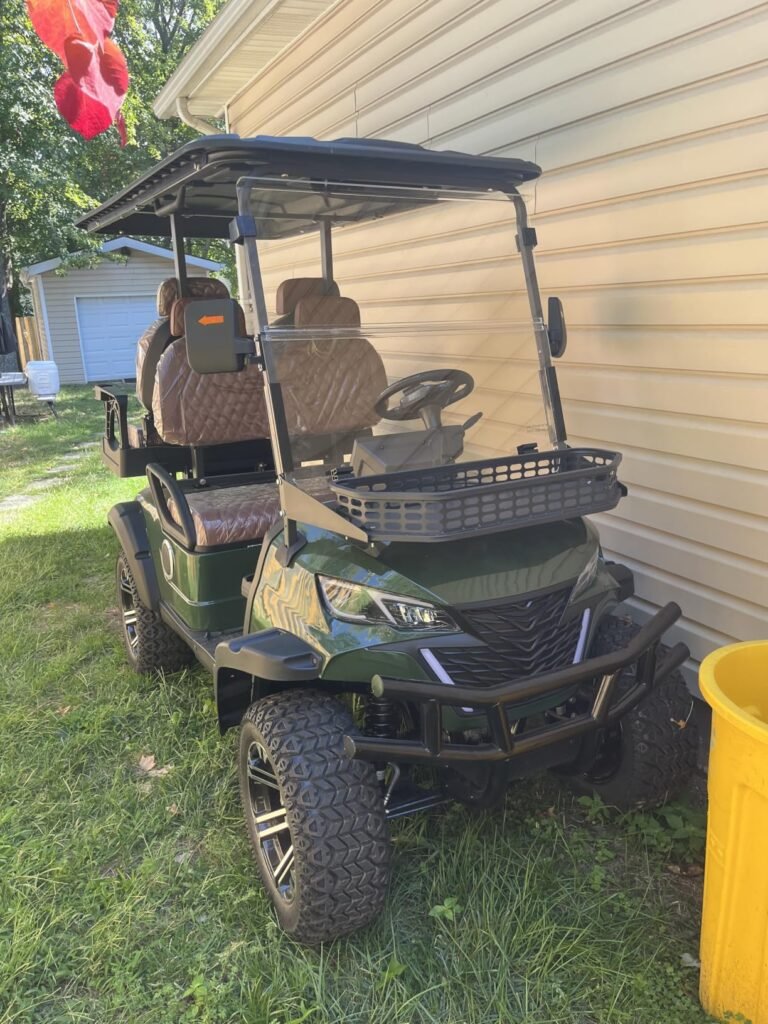
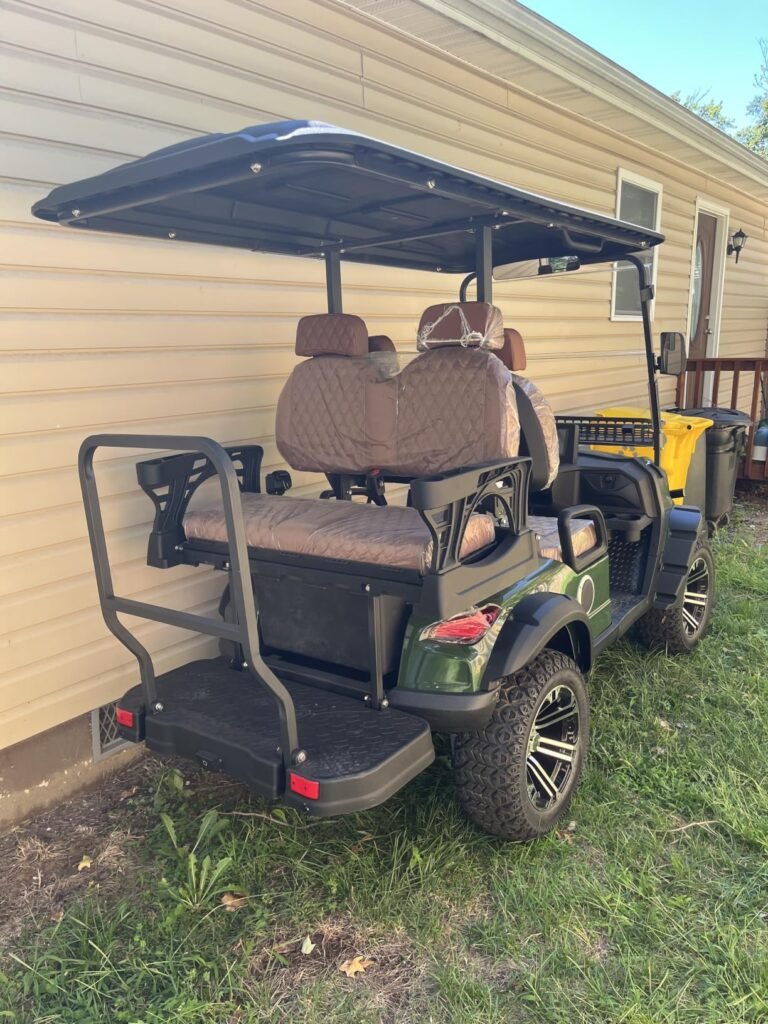
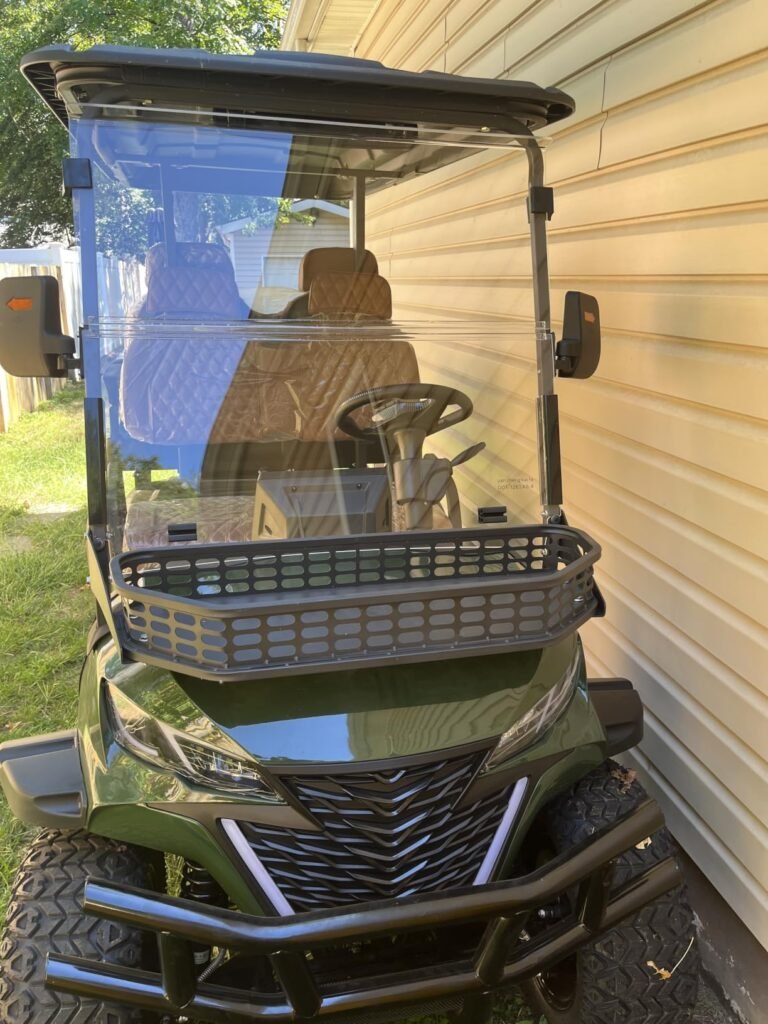
The GIYI 4-Seater Electric Golf Cart is a full-size ride-on vehicle built for private communities, resorts, large properties, and recreational use beyond traditional golf courses. The 5000-watt motor delivers strong acceleration and climbing ability, reaching speeds up to 20 MPH on flat terrain. The 60V 100Ah battery provides approximately 44 miles of range per charge, which covers an entire day of resort shuttle duty or multiple rounds on a large property.
We may earn a commission when you buy through this link, at no additional cost to you.
The MacPherson independent suspension is the standout engineering feature, delivering a far smoother ride than the solid-axle setups found on budget golf carts. Combined with the all-terrain design, this cart handles grass, gravel paths, and mild off-road surfaces without jarring passengers. Safety equipment includes headlights, taillights, turn signals, parking brake, mirrors, horn, canopy, and seat belts, which meet standards for residential and course use in many jurisdictions.
The 9-inch IPS central control display is a modern touch that sets this cart apart from older-generation ride-ons. The screen shows real-time mileage, battery level, and reversing camera feed, which helps with safe maneuvering in tight spaces. Fast charging uses the built-in charger with the included charging gun, and a full charge takes about 8 hours. The cart arrives fully assembled, so you can begin driving immediately upon delivery.
Push carts and electric caddies are excellent for walking golfers, but they do nothing for buyers who need to shuttle multiple people across a large property, haul gear between buildings, or provide transportation for guests at a resort or private community. A full ride-on cart like this GIYI 4-seater fills that role entirely, with real seating capacity, cargo storage, and road-legal safety equipment in many areas. Verify your local regulations before buying, as some jurisdictions require registration or restrict ride-on cart use on public streets.
This ride-on is the right choice for buyers who need genuine four-passenger transport for a large property, retirement community, resort, or private golf setting. The 5.0-star rating reflects strong owner satisfaction. The investment is substantial, so make sure your use case justifies it over a simpler two-passenger cart or a motorized walking caddy. For buyers who need serious hauling and seating capacity, this GIYI delivers premium capability.
Not suitable for golfers who want to walk the course or buyers with limited storage space for a full-size vehicle.
We may earn a commission when you buy through this link, at no additional cost to you.
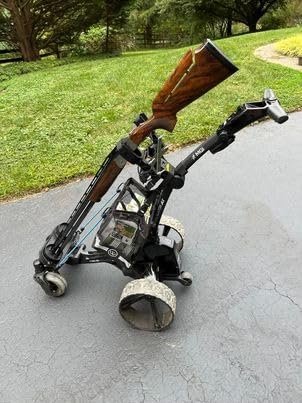
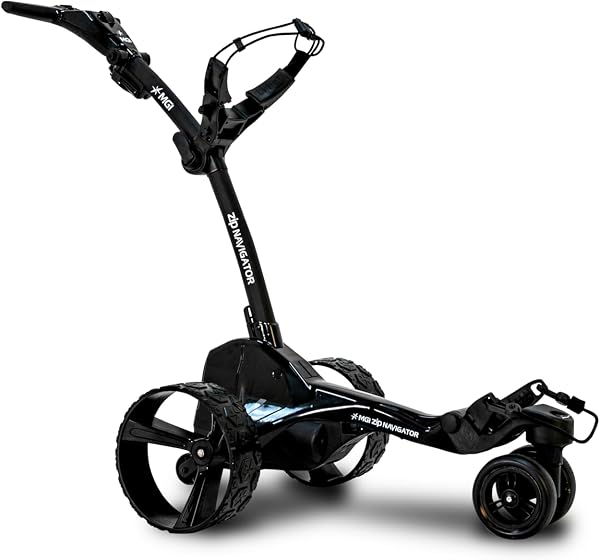
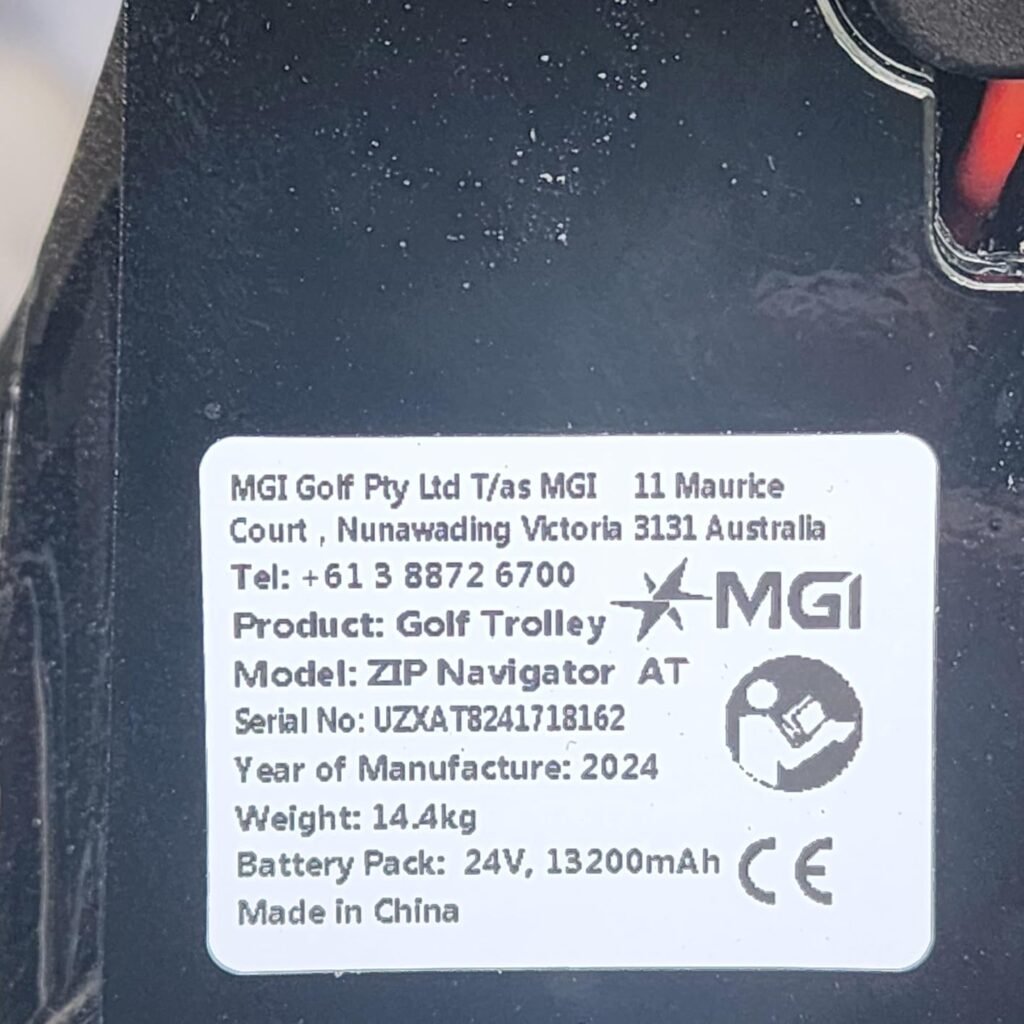
The MGI Zip Navigator All Terrain targets walking golfers who want serious hands-free convenience without wrestling a heavy caddy in and out of the trunk. The twin 230-watt motor design distributes power evenly across both rear wheels, which translates to smooth, quiet operation across fairways, uphill lies, and wet morning grass without the straining sound that single-motor caddies often produce under load.
We may earn a commission when you buy through this link, at no additional cost to you.
The Zip Fold technology is one of the most practical features in the electric caddy category. The one-piece frame collapses into a compact shape measuring just 27.55 by 18.5 by 16.5 inches with the rear wheels inverted, which fits easily into most trunks alongside a golf bag. The 30.91 lb frame weight (37.31 lbs with battery) is manageable for most golfers lifting it in and out of a vehicle.
The Click & Go lithium battery is color-coded for both the charge port and the charger status indicator, which eliminates confusion about charging state. The 36-hole battery life means you can play back-to-back rounds without recharging if your schedule allows. The variable speed control runs from 1 to 9, and two resettable distance modes plus an odometer help track yardage during practice or match play.
Single-motor electric caddies drive one wheel while the other rolls freely, which can cause the caddy to pull to one side on uneven terrain or slip during hill climbs. The twin-motor design on this Zip Navigator drives both rear wheels independently, which keeps the caddy tracking straight across cambered fairways and provides stronger traction on steep slopes. For courses with significant elevation changes, this difference is immediately noticeable in both tracking stability and climbing confidence.
This caddy is the right choice for walking golfers who play 18 to 36 holes regularly and want the convenience of remote-controlled operation without the maintenance of a gas or ride-on vehicle. The USB charging port under the top handle keeps your phone or rangefinder topped off during the round. If you prefer to steer by hand and want to save money, the non-remote MGI Zip X5 covers the basics at a lower price.
Not ideal for golfers who prefer the lower cost and simpler mechanics of a traditional push cart.
We may earn a commission when you buy through this link, at no additional cost to you.
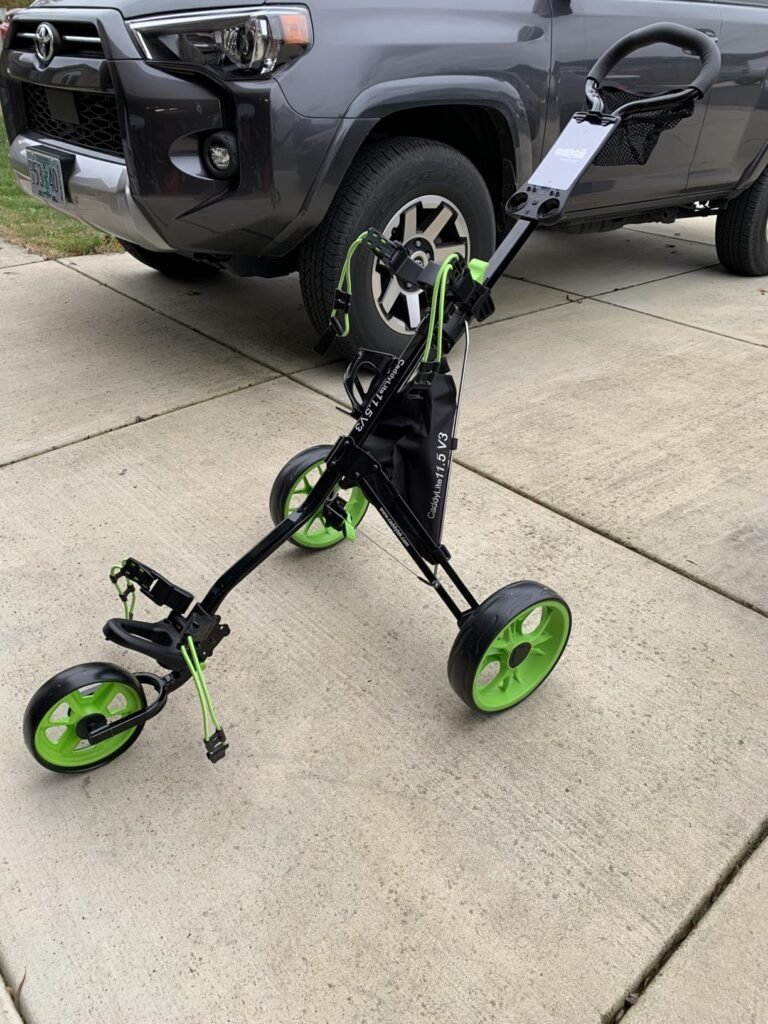
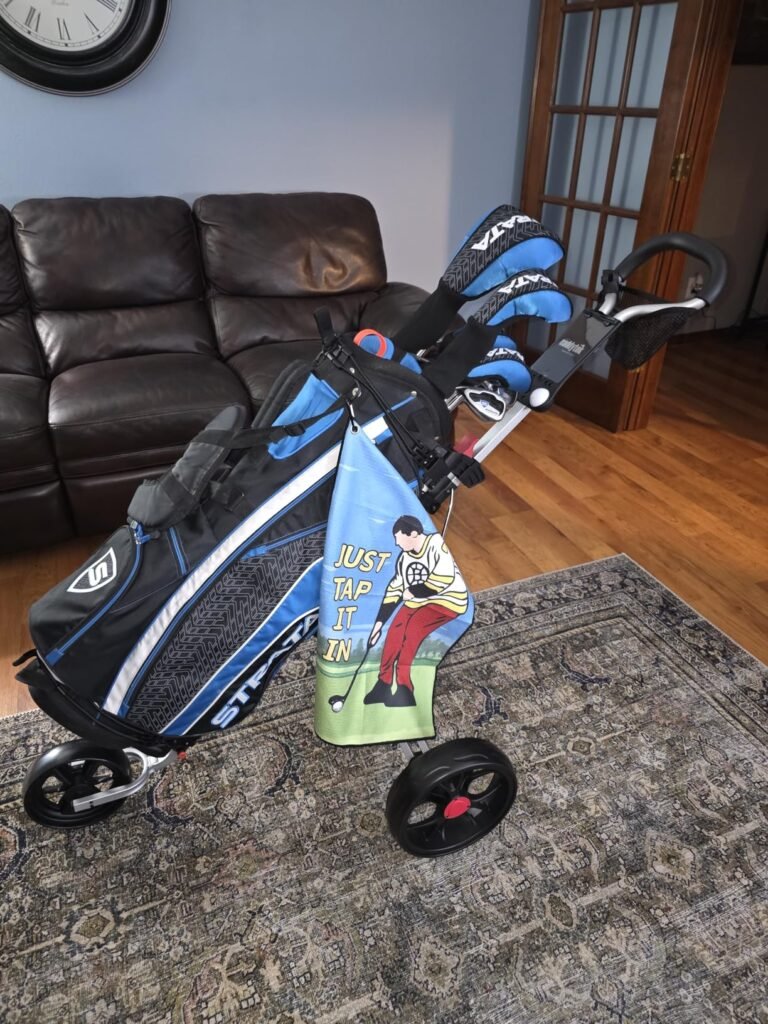
The Caddytek CaddyLite 11.5 V3 is the strongest value pick in the push cart category, delivering a well-rounded feature set at a price that undercuts most competitors. The aluminum frame weighs just 13.75 pounds, which makes it one of the easiest carts in this guide to lift in and out of a trunk, and the 3-step quad-fold system collapses it into a compact shape without complicated hinges or multiple release points.
We may earn a commission when you buy through this link, at no additional cost to you.
The three-wheel configuration pairs dual 11.5-inch rear wheels with a 10.5-inch front wheel for smooth rolling across fairways, rough, and gentle slopes. The wide wheelbase provides good lateral stability, though three-wheel carts are generally less tip-resistant than four-wheel designs on steeply angled lies. The EVA tire material is maintenance-free and resists damage from sun exposure and typical course debris.
Practical accessories include a mesh net storage pocket, magnetic pad for small items, umbrella holder, and drink holder, all integrated into the frame rather than bolted on as afterthoughts. The adjustable TPR handle lets golfers of different heights find a comfortable push position, and the foot-activated brake locks the cart firmly on slopes while you line up shots or step away briefly. Elastic straps secure most stand or cart bags.
Three-wheel push carts like this CaddyLite 11.5 V3 are typically lighter, easier to maneuver around tight corners, and simpler to fold compactly. Four-wheel carts like the CaddyTek Caddycruiser One offer better stability on steep slopes and track straighter on uneven ground, especially with heavier bags. For most golfers playing moderately flat courses with standard cart bags, a three-wheel design offers the better balance of portability and performance. For hilly courses or heavier tour-style bags, a four-wheel cart may feel more secure.
This push cart is the right pick for walking golfers who want a dependable manual cart with modern features at an entry-level price. The one-year warranty provides reasonable long-term confidence, and the lightweight aluminum construction holds up well to regular use. If you want a motorized option, consider the MGI E-Boost or Zip X5, but for pure value in a traditional push cart, this Caddytek is hard to beat.
Not for golfers who want motorized assistance or maximum four-wheel stability on steep terrain.
We may earn a commission when you buy through this link, at no additional cost to you.
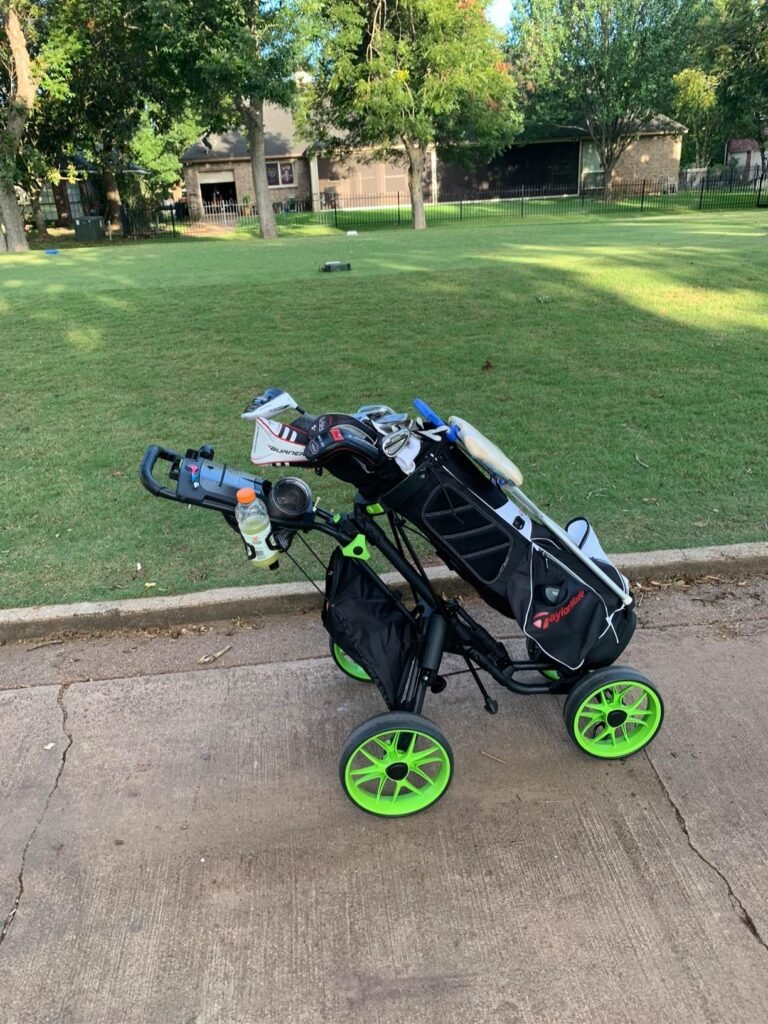
The CaddyTek Caddycruiser One Version 8 gives walking golfers a four-wheel push cart with the stability advantages of a wider platform plus the convenience of a one-click folding mechanism. The aluminum frame weighs 16.9 pounds, which is slightly heavier than three-wheel competitors but still easily manageable for most golfers lifting it in and out of a trunk.
We may earn a commission when you buy through this link, at no additional cost to you.
The four maintenance-free EVA wheels deliver smooth rolling and consistent balance on fairways, rough, and hilly terrain. The large 11.5-inch rear and 10.5-inch front tires provide good traction and help the cart track straight, which reduces the effort required to steer during long walks between shots. The four-wheel design is particularly valuable on steep slopes where three-wheel carts can feel tippy with a heavy bag loaded.
The patented one-click fold mechanism is one of the fastest folding systems available in the push cart category. Press the button and the cart collapses into a compact shape ready for trunk storage. The height-adjustable handle lets golfers find a comfortable push position, and the foot brake locks the wheels firmly on slopes. Thoughtful details include a scorecard console with storage, phone and GPS holder, umbrella and drink holder, magnetic steel pad, mesh net, and an integrated cooler basket for drinks or snacks.
A well-designed push cart does more than just hold your bag. The integrated cooler basket on this Caddycruiser One lets you carry cold drinks and snacks without strapping a separate cooler to the frame, which keeps weight distribution balanced. The scorecard console gives you a flat surface for marking your card, and the magnetic steel pad holds golf tools securely between shots. These integrated features add real value compared to barebones carts where you need to add every accessory as a separate purchase.
This cart is the right pick for walking golfers who want the stability of a four-wheel platform and value fast setup and teardown between rounds. The aluminum frame holds up to regular use, and the one-year warranty provides reasonable long-term confidence. If you want the lightest possible push cart and prefer a three-wheel design, the Caddytek 11.5 V3 saves about three pounds and some folded space.
Not for golfers who prioritize the absolute lightest weight or the most compact folded footprint.
We may earn a commission when you buy through this link, at no additional cost to you.
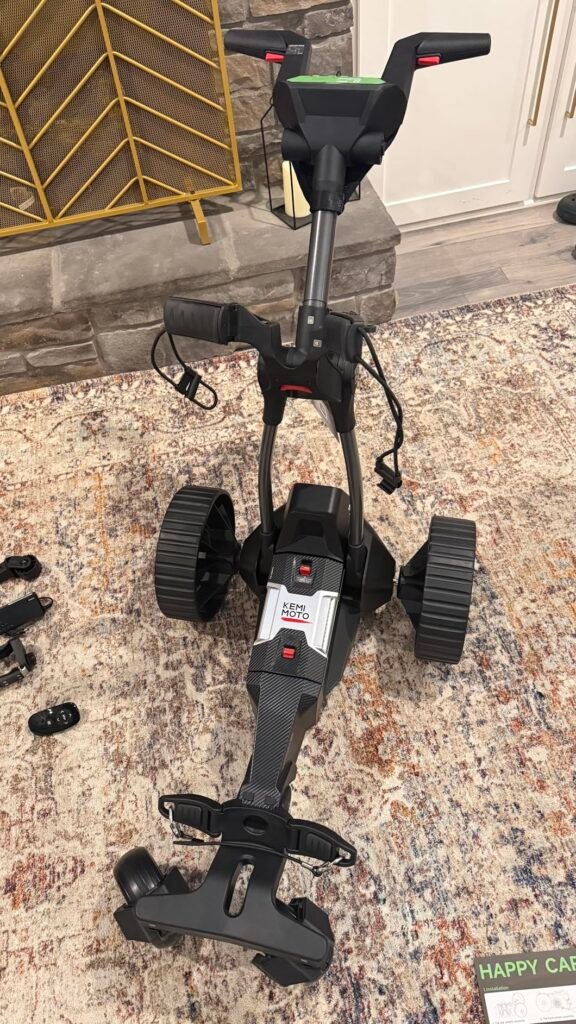
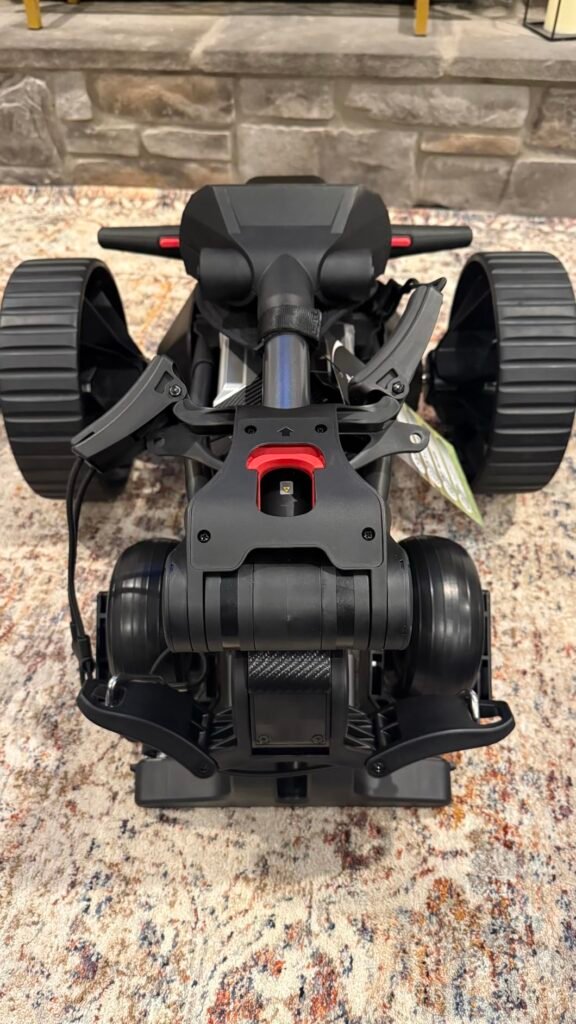
The KEMIMOTO ApexR targets walking golfers who want a modern remote-controlled electric caddy with features that compete directly against premium MGI models at a lower price. The dual 240-watt motors handle slopes up to 25 percent, which is steeper than most courses present, and the intelligent steering system keeps the caddy tracking straight across fairways, inclines, wet grass, and gravel paths.
We may earn a commission when you buy through this link, at no additional cost to you.
The 492-foot remote control range is well beyond what most golfers need in practice, but it gives you flexibility to send the caddy ahead to the next tee while you finish putting out. The sub-100 millisecond response time and 99 percent pairing success rate reduce the frustration of laggy or dropped signals that plague cheaper remote caddies. The removable battery design means you can charge it separately from the caddy frame, which is convenient if your garage outlets are not close to where you store the cart.
Power Assist Mode is a thoughtful addition that lets you push the caddy manually while the motor matches your walking pace, giving you precise control in narrow paths or crowded areas. The 220Wh battery delivers up to 36 holes of use per charge, and the advanced battery management system protects the pack from overcharging and extreme temperatures. The 5.68-inch LED display shows speed level, battery status, and remote connection, and a USB-C port keeps your phone powered during the round.
Golf is often played in less-than-perfect weather, with morning dew, light rain, and wet grass being routine conditions. An IPX5 water resistance rating means the ApexR can handle direct water spray from any angle, which translates to real-world protection against sprinklers, puddles, and moderate rainfall. Caddies without water resistance ratings risk electronic damage from the same conditions, so this specification is worth checking carefully if you play in variable weather.
This caddy makes sense for value-conscious buyers who want full remote-control features without the premium pricing of top-tier MGI models. The IPX5 water resistance handles morning dew and light rain, extending usable weather windows. The lower owner rating is worth noting, with some feedback focused on wheel installation complexity, so follow setup instructions carefully. If you want the proven reputation of MGI, the Zip Navigator All Terrain is the stronger choice at a higher price.
Not for buyers who prioritize the long-term brand reputation and warranty support that established caddy makers offer.
We may earn a commission when you buy through this link, at no additional cost to you.
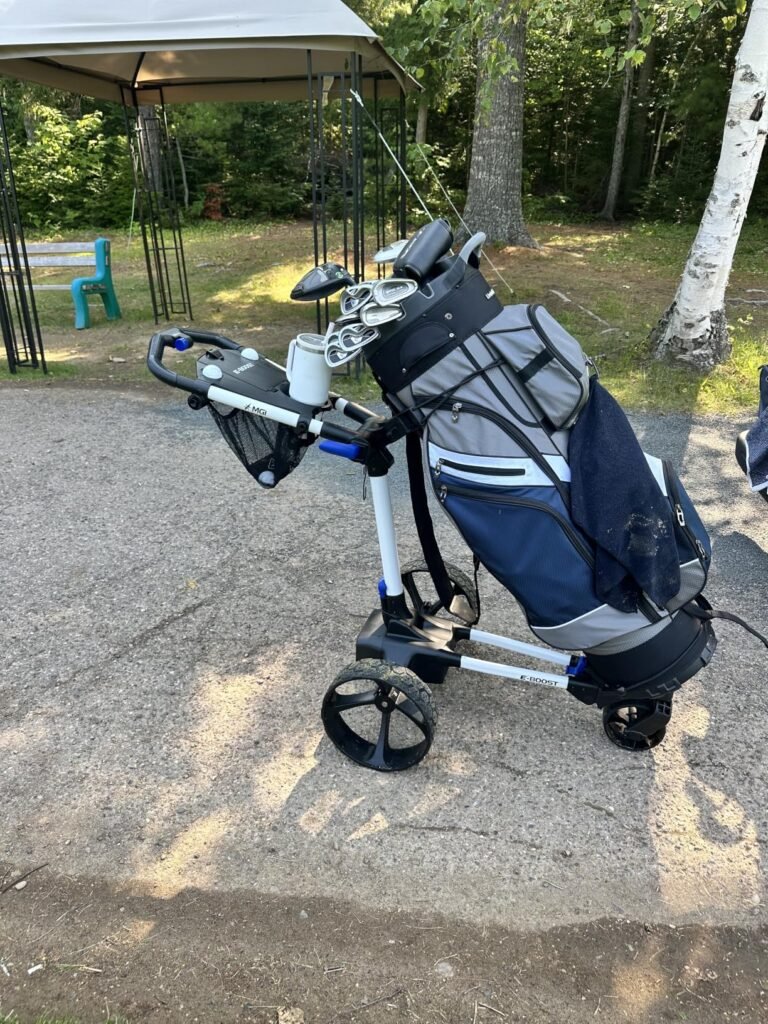
The MGI E-Boost occupies a unique middle ground between traditional push carts and fully autonomous electric caddies. The brushless motor provides on-demand electric assist to reduce the effort of pushing on hills and over long walks, but the golfer still steers the cart from the handle. This hybrid approach gives you the physical connection of walking with your cart while removing the strain of pushing a heavy loaded bag across a hilly course.

We may earn a commission when you buy through this link, at no additional cost to you.
At 25.1 pounds with the battery installed (21.6 lbs without), the E-Boost is noticeably lighter than fully motorized caddies, which makes loading and unloading easier for golfers who struggle with heavier equipment. The compact frame fits in most vehicle trunks without special arrangement. The swiveling front wheel improves maneuverability in tight areas, and the all-terrain tread rear wheels maintain traction across varied course surfaces.
The Click & Go lithium battery system is shared across the MGI product line, which means consistent charging behavior and the possibility of carrying a spare battery across multiple MGI products. The simple assist controls avoid the complexity of fully autonomous caddies with multiple speed settings and remote pairing requirements. MGI backs the E-Boost with a 3-year warranty, which is one of the longest in the walking caddy category.
Fully automated remote-controlled caddies are impressive, but some golfers prefer to maintain physical control over their cart during the round. The E-Boost adds just enough motor assistance to eliminate strain on hills and long walks while preserving the natural rhythm of pushing and steering the cart. This approach also keeps the system simpler mechanically, with fewer potential failure points than fully motorized caddies that must handle steering, braking, and remote communication autonomously.
This cart is the right pick for walking golfers who want electric assistance without going fully hands-free, or those who want a bridge product between a traditional push cart and a remote-controlled caddy. It is particularly appealing for golfers managing physical limitations that make pushing a heavy cart tiring, but who still enjoy the active engagement of guiding the cart themselves. If you want fully autonomous operation, the Zip Navigator or Navigator Ai GPS+ serves that purpose.
Not for golfers who want fully hands-free remote operation or who prefer a basic unpowered push cart.
We may earn a commission when you buy through this link, at no additional cost to you.
The MGI Zip Navigator shares the same twin 230-watt motor platform as the All Terrain version but uses a standard tire tread suited for well-maintained fairways rather than aggressive off-course conditions. The main upgrade over the base MGI lineup is the finer variable speed control, which runs from 1 to 20 steps instead of the 1 to 9 range on simpler models. This allows precise matching of the caddy speed to your natural walking pace.
We may earn a commission when you buy through this link, at no additional cost to you.
The twin-motor design drives both rear wheels independently, which keeps the caddy tracking straight across cambered fairways and provides balanced power on slopes. The 36-hole lithium battery supports back-to-back rounds without recharging. At 28.6 pounds for the frame and 34.96 pounds with the battery installed, the Zip Navigator is one of the lighter remote caddies in this guide, which matters when lifting it in and out of a vehicle.
The Zip Fold technology collapses the frame into a compact 27.55 by 18.5 by 16.5 inch package with the rear wheels inverted, which fits most trunks without displacing other gear. The ergonomic T-bar handle has a premium soft rubber grip, and the independent top bag support adjusts to fit different bag sizes securely. Four color-coded battery level indicators show charge state at a glance.
Nine-step speed control works fine for setting a general pace, but each step represents a significant change in walking speed. Twenty-step control gives you much finer resolution, letting you match the caddy exactly to your natural stride length and preferred walking rhythm. This matters most on remote-controlled caddies, where sending the caddy ahead at precisely the right pace means you arrive at your ball at the same time as the caddy, with minimal waiting.
This caddy is the right pick for walking golfers who play primarily on well-groomed courses and want the refined speed control to dial in exactly the right pace. The non-All Terrain tread saves a small amount of rolling resistance on manicured fairways. If you often play rough terrain, wet rough, or courses with gravel cart paths, the All Terrain version provides better traction. Otherwise, the two models deliver equivalent core capability.
Not ideal for golfers who regularly play on rough terrain or need maximum traction on wet grass.
We may earn a commission when you buy through this link, at no additional cost to you.
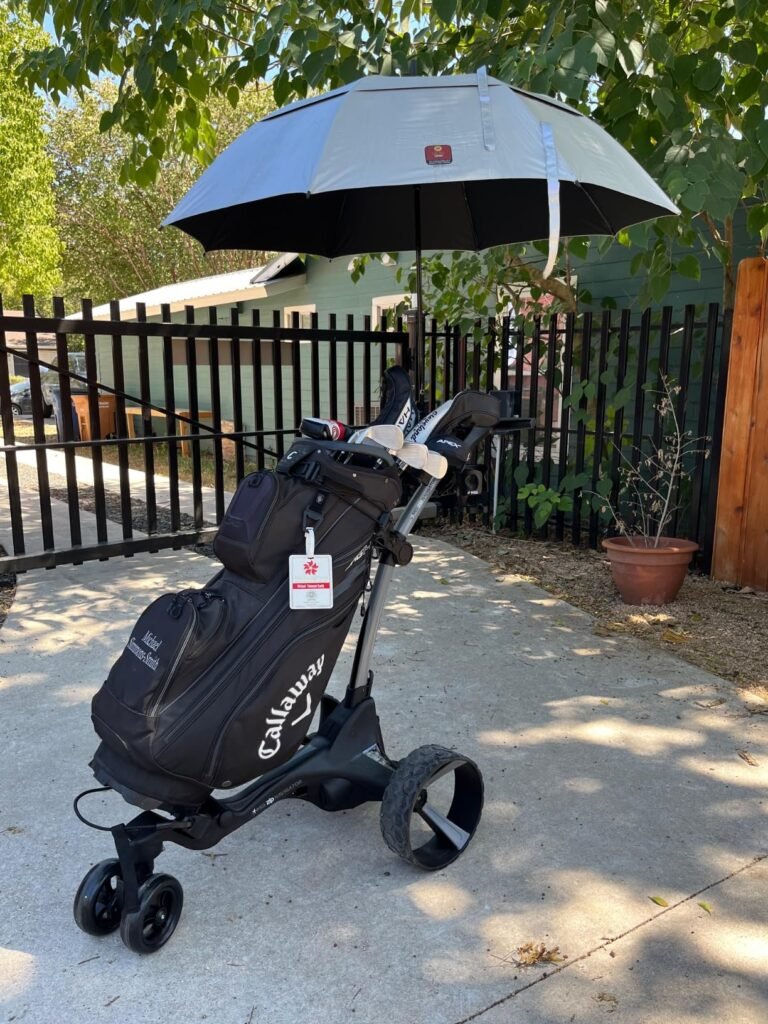
The MGI Zip X5 brings the convenience of a motorized electric caddy to golfers who prefer to steer the cart themselves rather than operate it remotely. The single 230-watt motor provides enough power for typical course conditions, and the start-stop speed dial with 1 to 20 settings lets you fine-tune the exact pace that matches your walking rhythm. At $999, it is significantly less expensive than remote-controlled models.
We may earn a commission when you buy through this link, at no additional cost to you.
The downhill speed control is a thoughtful feature that automatically slows the caddy on descents to prevent it from running ahead of you. The electronic parking brake engages when you stop, holding the caddy in place on slopes without you needing to manually set a brake. The 5th wheel stabilizer helps the caddy track straight across fairways, reducing the fatigue of constantly correcting direction.
At 30.57 pounds with the battery installed and 25.90 pounds without, the Zip X5 is manageable for most golfers to lift in and out of a vehicle. The rear wheels tuck inward for easier lifting and transport, and the compact folded size fits standard trunks without displacing other gear. The 2.5-inch LCD display shows essential information including speed level and color-coded battery status, and the USB port keeps your phone or GPS charged during the round.
Remote-controlled electric caddies are impressive, but they add cost, complexity, and additional failure points like battery pairing and signal reliability. A hands-on electric caddy like the Zip X5 provides the main benefit of removing physical strain from pushing while keeping the system simple and mechanically straightforward. For golfers who always walk alongside their cart anyway, remote control adds little practical value, and the money saved can go toward lessons, equipment, or green fees.
This caddy is the right pick for walking golfers who want electric assistance without the complexity and cost of remote control systems. The hands-on steering preserves the physical engagement of walking with your cart while eliminating the strain of pushing a loaded bag. The 36-hole battery life matches the premium models in this guide, and the 3-year MGI warranty provides long-term confidence. If you want to send the caddy ahead to the next tee, step up to one of the remote-controlled Zip Navigator models.
Not for golfers who want to send the caddy ahead to the next tee or operate it fully hands-free.
We may earn a commission when you buy through this link, at no additional cost to you.
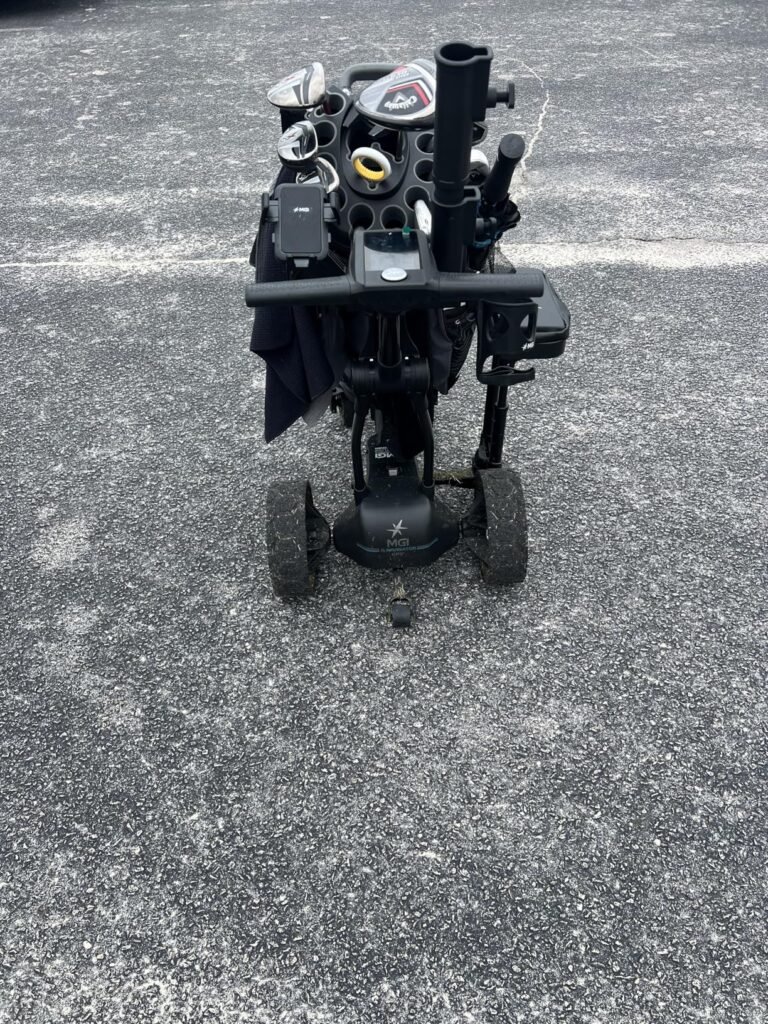
The MGI Navigator Ai GPS+ is the technology flagship of the MGI electric caddy lineup, combining remote-controlled operation with an integrated 4-inch full-color GPS touchscreen that displays Hole View and Green View maps, digital scorecard, and real-time distances. This eliminates the need to carry a separate GPS device or constantly check your phone for yardages during the round.
We may earn a commission when you buy through this link, at no additional cost to you.
The gyroscope tracking system is the technical standout feature. It monitors the caddy orientation in real time and provides directional feedback to the steering system, which improves tracking stability on cambered fairways and reduces the frequency of steering corrections. Combined with the dual oversized all-terrain swiveling front wheels, all-terrain rear tread, and 5th wheel stabilizer, the Navigator Ai GPS+ handles varied course conditions with excellent stability.
The adjustable speed control runs from 1 to 20 for fine pace matching, and you can control the caddy via remote for hands-free operation or switch to the handle for precision in tighter areas. The Click & Go lithium battery provides up to 36 holes per charge, and integrated USB charging ports keep your phone, GPS watch, or other accessories powered throughout the round. The single-action fold mechanism simplifies setup and teardown between the car and the course.
Most golfers already carry a phone with GPS apps or a dedicated GPS watch, which raises the question of whether an integrated GPS display on the caddy adds enough value to justify the premium price. The practical benefits include a larger screen that is easier to read than a phone or watch, hands-free viewing while walking, and the ability to see Hole View maps and track stats without pulling out another device. For technology-focused golfers who value having everything integrated into one platform, the premium is reasonable. For golfers happy with their existing GPS solution, the standard Zip Navigator models deliver equivalent caddy performance at a lower price.
This caddy is the right pick for golfers who want the most advanced technology package available in the walking caddy category. The integrated GPS display provides genuine round-improving information without additional devices to carry or sync. The 38.99-pound weight with battery is the heaviest in this guide, so consider whether the technology benefits outweigh the extra lifting effort compared to the lighter Zip Navigator models. For technology-focused golfers, the Navigator Ai GPS+ delivers a premium package.
Not for budget-conscious buyers or golfers who already have a GPS watch or app they prefer to use.
We may earn a commission when you buy through this link, at no additional cost to you.
Picking the right golf cart or caddy comes down to matching the cart type, power source, and feature set to how you actually play and store your equipment. The factors below cover the most important decision points so you invest in a cart that improves your rounds without wasting money on features you will not use.
Golf carts split into three main categories that address different playing styles. Push carts like the Caddytek CaddyLite are manual and lightweight, ideal for golfers who want the simplest and most affordable way to transport a bag while walking. Electric caddies like the MGI Zip Navigator add motorized assistance that reduces walking strain, with options for hands-on steering or full remote control. Ride-on carts like the GIYI 4-Seater transform the experience entirely by replacing walking with driving.
The best choice depends on how important walking is to your game, how physically demanding your typical course is, and your budget. Walking golfers who enjoy the exercise usually prefer push carts or electric caddies that support rather than replace the walk. Golfers with physical limitations, long or hilly courses, or those who simply want more convenience often choose electric caddies. Ride-on carts suit buyers who need multi-passenger transport or who prefer not to walk at all.
Choose a push cart for maximum simplicity and value, an electric caddy for assistance while walking, and a ride-on cart for full transportation needs on a private property or community.
Electric caddies and ride-on carts live and die by their battery performance. For walking caddies, 36-hole battery capacity is now the common benchmark, meaning you can play two full rounds back-to-back without recharging. This matters less if you only play 18 holes at a time but becomes critical for golf trips, tournaments, or days when you want to play multiple rounds. Lithium batteries have largely replaced older lead-acid designs because they are lighter, charge faster, and maintain capacity better over hundreds of charge cycles.
For ride-on carts, battery range translates directly to how long you can operate before recharging. The GIYI 4-Seater offers 44 miles of range on a single 8-hour charge, which covers a full day of resort shuttle duty or multiple rounds on a large property. The Click & Go lithium battery system used across the MGI product line simplifies battery removal and charging, letting you charge the battery in a convenient location rather than near the stored caddy.
Choose at least 36-hole capacity for walking caddies if you play back-to-back rounds. For ride-on carts, calculate your typical daily driving distance and add 25 percent safety margin when selecting battery capacity.
Cart weight directly affects how easy or difficult it is to lift the cart in and out of your vehicle, which may happen before and after every round. Push carts range from under 14 pounds for the Caddytek CaddyLite to about 17 pounds for the four-wheel CaddyTek Caddycruiser. Electric caddies with batteries typically weigh 30 to 40 pounds, with the MGI E-Boost at the light end at 25.1 pounds and the Navigator Ai GPS+ at the heavy end at 38.99 pounds.
The folded size matters as much as the weight. The MGI Zip Fold technology collapses to 27.55 by 18.5 by 16.5 inches, which fits most trunks alongside a golf bag without displacing other equipment. Larger folded sizes may require you to rearrange trunk contents or leave other items behind. If you drive a smaller car or share trunk space with family gear, prioritize compact folded dimensions.
Measure your trunk and consider your physical ability to lift the loaded weight before buying. If lifting is a concern, prioritize lighter caddies like the E-Boost or push carts rather than full-featured remote caddies.
Course terrain affects which cart configuration will work best. Three-wheel push carts like the Caddytek 11.5 V3 are lighter and more maneuverable, but they can tip on steep side slopes with heavy bags. Four-wheel push carts like the CaddyTek Caddycruiser provide better stability on hills and track straighter on uneven ground. For electric caddies, the terrain also determines how important motor power and traction become.
Tire type matters for traction and rolling smoothness. All-terrain tires with aggressive tread provide better grip on wet grass, rough terrain, and gravel cart paths, which is why the MGI Zip Navigator All Terrain version exists as a separate product. Standard treads roll more smoothly on manicured fairways but can slip in challenging conditions. Dual-motor electric caddies like the Zip Navigator distribute power to both rear wheels for better straight tracking and hill climbing than single-motor designs.
For hilly or rough courses, prioritize four-wheel stability or dual-motor power. For flat, well-maintained courses, three-wheel or single-motor designs work fine and often cost less.
Remote-controlled electric caddies let you send the caddy ahead to the next tee or position it precisely without walking back to adjust its path. This feature adds significant cost compared to hands-on electric caddies but delivers real convenience, particularly on crowded courses where you want to maintain pace of play. The remote range on quality caddies like the KEMIMOTO ApexR extends to 492 feet, well beyond practical course distances.
Automation beyond basic remote control includes features like downhill speed control that prevents the caddy from running ahead on descents, electronic parking brakes that engage automatically when stopped, and gyroscope-assisted steering that improves directional stability on cambered fairways. The MGI Navigator Ai GPS+ represents the current peak of caddy automation with integrated GPS displays and digital scorecards.
Choose remote control if you often play crowded courses, prefer hands-free operation, or value the convenience of sending the caddy ahead. Skip remote control to save money if you always walk alongside your cart anyway.
Modern golf carts include accessory packages that extend their usefulness beyond just carrying a bag. Common inclusions are umbrella holders, drink holders, scorecard consoles, phone and GPS mounts, mesh storage pockets, and magnetic pads for small items. The CaddyTek Caddycruiser One adds an integrated cooler basket, while most MGI electric caddies include USB charging ports that keep your phone or GPS watch powered throughout the round.
GPS integration is the premium smart feature currently available on walking caddies. The MGI Navigator Ai GPS+ includes a 4-inch full-color touchscreen with Hole View maps, Green View details, digital scorecard, and stat tracking. These features eliminate the need for a separate GPS device, though they add significant cost and may duplicate capabilities you already have in a GPS watch or phone app.
Consider which accessories you actually use during rounds. Umbrella and drink holders are near-universal needs. GPS integration is valuable only if you do not already have a dedicated GPS device. Cooler baskets matter for golfers who prefer to carry their own drinks and snacks.
Golf carts take real abuse during their useful lives, including repeated folding and unfolding, loading and unloading from vehicles, exposure to weather, and the physical stress of carrying a loaded bag across miles of terrain. Aluminum frames offer the best combination of strength and light weight, which is why most premium push carts and electric caddies use aluminum construction. Steel frames are heavier but typically more durable for commercial or heavy-duty use.
Warranty coverage varies significantly across the category. Caddytek offers a one-year warranty on their push carts, which is standard for the manual cart segment. MGI provides a 3-year warranty on their electric caddies, which is substantially longer than most competitors and reflects confidence in long-term reliability. For ride-on carts, warranty terms vary widely and should be reviewed carefully before purchase.
Prioritize aluminum frames for the best weight and durability balance. Choose MGI electric caddies if long warranty coverage is important. For push carts, Caddytek offers reliable value with standard warranty terms.
Golf cart pricing spans a wide range, from push carts under $200 to ride-on vehicles over $8,000. Understanding where the price-to-performance curve bends helps you avoid overspending on features you will not use. Push carts offer the best raw value, delivering the core function of transporting a bag at the lowest cost. Mid-range electric caddies like the MGI Zip X5 deliver meaningful motorized assistance for about $1,000. Premium remote-controlled caddies like the Zip Navigator add convenience features for $1,500 and up.
Full ride-on carts occupy an entirely different price tier. The GIYI 4-Seater at $8,199 represents a significant investment that only makes sense for buyers who need genuine multi-passenger transport. Compared to buying a used golf cart locally, new ride-ons offer current technology, warranty coverage, and known provenance, which may justify the higher cost for buyers who want certainty.
Match your spending to actual use patterns. Occasional walking golfers do fine with push carts. Regular walkers who play 36 holes often or play hilly courses benefit from electric caddies. Only buy a ride-on cart if you need genuine transportation beyond typical golf course use.
Before each round, check that the folding mechanism locks fully into position and verify that the handle is adjusted to your preferred height. For electric caddies and ride-on carts, confirm the battery is fully charged and seated properly in its mount. Test the brake, remote control pairing (if applicable), and any accessories like phone holders or umbrella mounts to make sure everything is secure. Load your bag using the included straps and distribute weight evenly to prevent tipping on slopes.
During the round, use the lowest speed setting that keeps the caddy moving at your natural walking pace. Higher speeds consume more battery and can cause the caddy to run ahead of you, which creates safety concerns on crowded courses. Engage the parking brake whenever you stop to hit a shot or move away from the caddy, especially on sloped terrain. For remote-controlled caddies, maintain line of sight to the caddy during operation to catch any directional issues before they become problems.
After each round, wipe down the frame and wheels with a damp cloth to remove grass clippings, dirt, and moisture. For electric caddies, remove the battery before storing the caddy for extended periods and store the battery at approximately 50 percent charge if it will sit for more than a few weeks. Avoid leaving caddies in extreme heat or direct sunlight, which can damage batteries and plastic components. Check tire pressure monthly and inflate as needed to maintain smooth rolling. For ride-on carts, follow the manufacturer’s maintenance schedule for battery care, brake inspection, and tire rotation.
Modern lithium batteries used in walking caddies typically last 500 to 1,000 charge cycles before capacity begins to decline noticeably. With proper care, this translates to 5 to 7 years of regular use for weekend golfers. Ride-on cart batteries vary more widely based on battery type, with lead-acid batteries lasting 4 to 6 years and lithium batteries extending to 8 years or more. Store batteries at moderate temperatures and avoid letting them sit fully discharged to maximize lifespan.
For walking golfers who play regularly, electric caddies deliver meaningful benefits by reducing physical strain and keeping you fresher for the back nine. The $500 to $1,500 price range for mid to premium electric caddies pays off over several seasons through reduced fatigue, longer effective playing careers, and the simple enjoyment of walking without pushing a loaded bag. For occasional golfers who play only a few times per year, a push cart offers better value.
Push carts are manual, requiring the golfer to push the cart across the course using their own effort. Electric caddies include motors that provide propulsion, with some models allowing hands-on steering and others operating via remote control for fully hands-free use. Push carts cost significantly less and have no battery concerns, while electric caddies reduce physical effort and often include additional features like GPS integration and digital displays.
Push carts and walking caddies are accepted at virtually all golf courses as long as they fit the course's cart path rules. Some courses restrict cart use to paths only during certain conditions, while others allow fairway use. Full ride-on carts require specific course permission and typically must be rented from the course or follow private cart policies. Check with your home course about rules for personal ride-on carts before buying one for golf course use.
Push carts typically weigh 13 to 17 pounds without a bag loaded. Electric walking caddies range from 25 to 40 pounds with batteries installed, with the MGI E-Boost at the light end at 25.1 pounds and the Navigator Ai GPS+ at 38.99 pounds at the heavier end. Full ride-on carts weigh several hundred pounds and are not meant to be lifted. Consider lifting weight carefully if you have back concerns or drive a vehicle with a high trunk.
Yes, quality electric caddies handle hilly terrain well, with dual-motor models like the MGI Zip Navigator All Terrain and KEMIMOTO ApexR specifically designed for slopes up to 25 percent grade. For push carts, four-wheel designs like the CaddyTek Caddycruiser provide better stability than three-wheel carts on steep terrain. Both approaches handle most courses, but courses with extreme elevation changes benefit from powered assistance over purely manual carts.
Walking caddy lithium batteries typically charge from empty to full in 4 to 6 hours, with most golfers charging overnight between rounds. Fast-charging ride-on carts like the GIYI 4-Seater require about 8 hours for a full charge from empty. Modern caddies include color-coded indicators that show charging status clearly, and most batteries can be partially charged without harm if you need to top off between rounds.
Yes, most quality electric caddies use removable batteries that can be replaced when they reach the end of their useful life. The MGI Click & Go system is designed specifically for easy battery removal and replacement across the MGI product line. Replacement batteries typically cost $200 to $500 depending on capacity and brand. Buying a spare battery can also extend your range for golf trips or 36-hole days.
Most carts include essential accessories like drink holders and umbrella mounts, which are near-universal needs for walking golfers. Beyond these basics, a scorecard console with storage, phone or GPS mount, and mesh net storage pouch all add real convenience. For electric caddies, a USB charging port keeps your phone or rangefinder powered during the round. Only invest in integrated GPS displays if you do not already have a dedicated GPS watch or app you prefer.
Store push carts folded in a dry location away from extreme temperatures. For electric caddies, remove the battery and store it at approximately 50 percent charge in a cool, dry location that stays above freezing. Charge the battery to about 50 percent every two to three months during long storage to prevent deep discharge damage. Before returning to use in spring, inspect the frame, wheels, and folding mechanism for any corrosion or wear, and fully charge the battery before the first round.
The MGI Zip Navigator All Terrain stands out as the strongest overall choice for walking golfers who want premium remote-controlled convenience without compromise. Its twin 230-watt motors handle hilly courses and wet grass with confidence, the Click & Go lithium battery delivers 36 holes of use per charge, and the Zip Fold technology collapses the frame into a compact size that fits most trunks easily. The 3-year MGI warranty backs the investment with meaningful long-term support.
For buyers with different priorities, several alternatives deliver excellent value. The Caddytek CaddyLite 11.5 V3 at just under $140 is the strongest push cart value, delivering a feature-rich lightweight aluminum frame at an accessible price. The MGI Zip X5 brings motorized assistance without remote control complexity at $999, splitting the difference between push carts and premium caddies. For buyers who need full-size ride-on transportation, the GIYI 4-Seater delivers four-passenger capacity with modern features at an $8,199 investment, while the MGI Navigator Ai GPS+ represents the technology flagship for golfers who want integrated GPS and advanced tracking.
The best choice for you depends on how you play and what you value most. Walking golfers who want simplicity and value should look at push carts first. Regular walkers who struggle with physical strain or play hilly courses benefit significantly from electric caddies, with remote control adding convenience worth the premium for many buyers. Ride-on carts make sense only when you need multi-passenger transportation beyond standard golf course use. Whatever cart you choose, prioritize matching the capabilities to your actual playing patterns rather than paying for features that will go unused.