Bells of Steel
8.8Editor scoreSolid steel frame
25.75 inch length
Built-in band hook
Fully assembled shipping
Find the right glute ham developers for 2026. We compare 9 standout options by build quality, useful features, owner feedback, value, and everyday trade-offs.
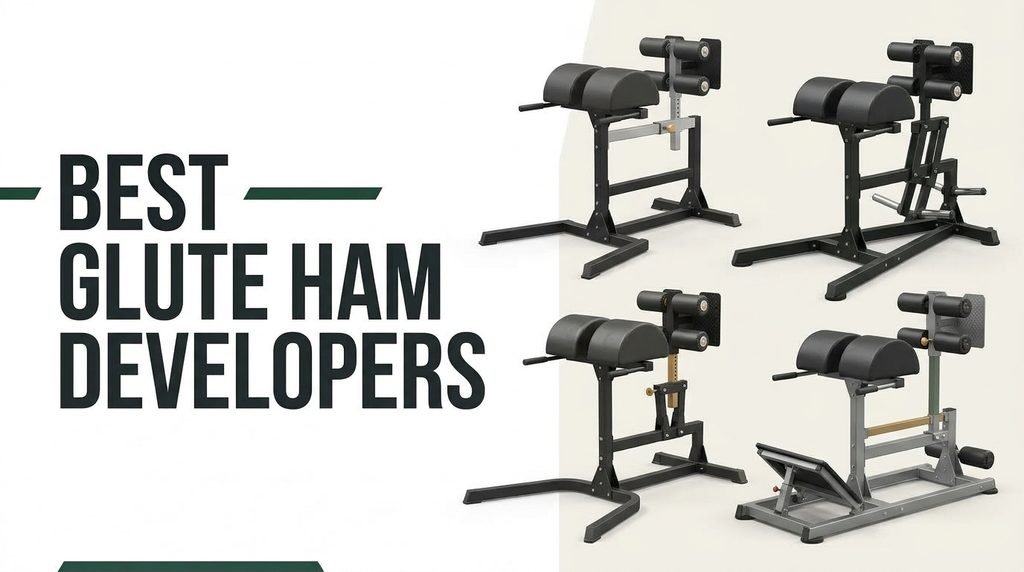
Building a stronger posterior chain at home starts with picking the right glute ham developer for 2026. We compare 10 standout options across weight capacity, frame stability, adjustability, footprint, padding quality, exercise versatility, and value so you can match a machine to your training style and available space.
The category splits into two clear formats: compact ab and hamstring gliders that use rolling wheels, and full-size Roman chairs with hyperextension pads. Each serves different training goals, budgets, and living situations. Understanding which format fits your workouts prevents overspending on features you will not use.
This guide breaks down the strengths and trade-offs of each model, from budget-friendly gliders under $75 to heavy-duty benches rated for 500 lbs. Whether you want hamstring curls, back extensions, or a full posterior chain station, the comparisons below clarify which specifications matter most for your goals.
We compared 10 glute ham developers using the details that shape real training outcomes: weight capacity, frame gauge and stability, wheel or pad quality, adjustability for different heights, exercise range, folding or storage footprint, assembly effort, warranty signals, and owner feedback. The notes focus on practical trade-offs so each pick reflects how home lifters actually use these machines for hamstring curls, hyperextensions, glute bridges, and core work.


Compare key features, scores, and current prices side by side. A shorter feature list means fewer details were available, not necessarily fewer capabilities.




The SELEWARE glider earns a second look here specifically for lifters who want a compact hamstring and glute tool that can handle the daily wear of a commercial gym environment or a busy multi-user home gym. The 600 lb weight capacity and steel construction give it the margin needed for constant use by rotating users of different sizes.

We may earn a commission when you buy through this link, at no additional cost to you.
The versatility of the design pays off in shared training spaces. One glider covers hamstring curls, glute bridges, ab rollouts, single-leg work, push-up variations, and band-resisted movements, which means one small piece of equipment serves multiple training styles across a group of users without becoming a bottleneck.
The V-bar heel lock and smooth urethane wheels hold up well to repeated use because there are no complex adjustment mechanisms to wear out. Simple, well-executed design tends to outlast feature-heavy alternatives in high-use environments, which is why gliders like this remain popular in strength-focused facilities.
Gliders roll on wheels that can leave marks or create wear patterns on hardwood, laminate, or delicate flooring. Placing the glider on a rubber gym mat, an old yoga mat, or a section of interlocking foam flooring protects the surface underneath and also reduces noise during rolling movements. This is a simple step that extends the life of both your floor and the glider itself.
The trade-off is that this is the same physical unit as the top pick, just evaluated through a different lens. For solo home users, the earlier ranking captures its strengths as an editor’s choice. For commercial operators, gym owners, or households with multiple lifters, the same unit deserves recognition as a durable, low-maintenance option that stands up to shared use.
Solo users with light training volume who could save money with a simpler glider.
We may earn a commission when you buy through this link, at no additional cost to you.
The Bells of Steel glider takes the standard glider concept and adds one meaningful feature: a built-in hook for anchoring resistance bands or cables. That hook opens up progressive overload options that a plain glider cannot match, letting you add band tension to hamstring curls, glute bridges, or single-leg work as your strength improves.

We may earn a commission when you buy through this link, at no additional cost to you.
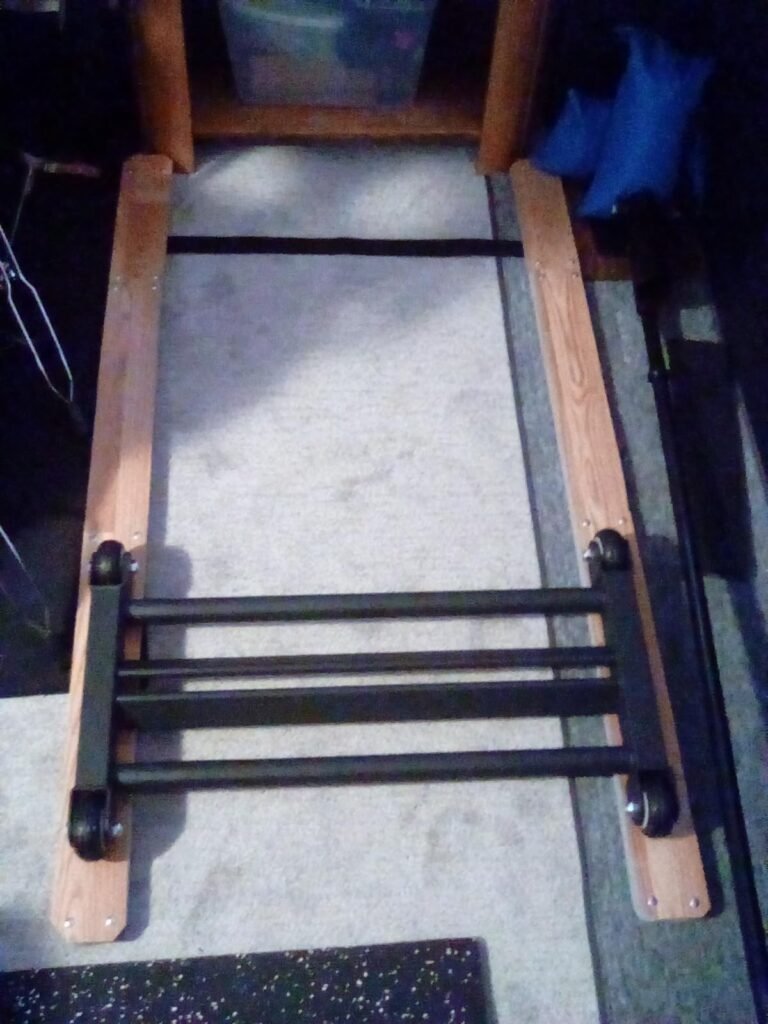
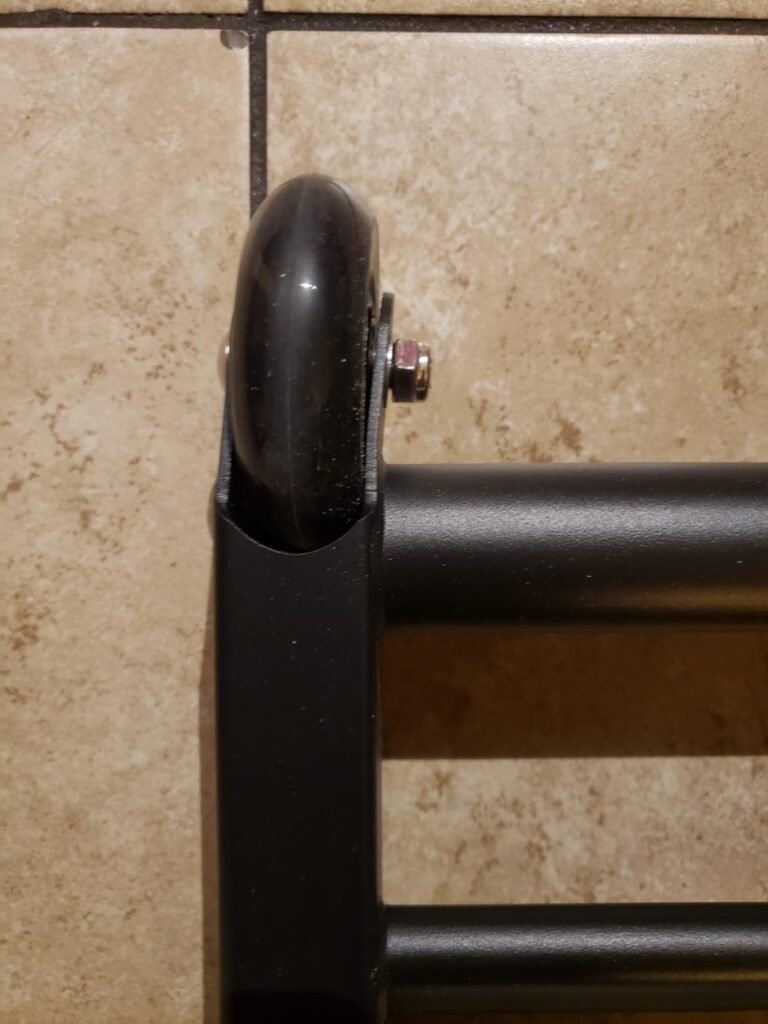
Construction is solid steel, and the unit arrives fully assembled, so you can start training the day it lands on your doorstep. At 25.75 by 11 by 2.5 inches, the footprint is small enough to slide under a bed or against a wall between sessions. The smooth-gliding wheels support either heel or toe placement, which changes the emphasis between hamstrings and quads on split-squat variations.
Functionality extends beyond hamstring work. The built-in handles let you use the frame as a push-up platform for chest and triceps, or as a single-leg glider for lunges and pistol progressions. That multi-purpose design makes it a strong pick for lifters who want one compact tool to cover posterior chain, core, and upper body accessory work.
Bodyweight hamstring curls quickly become too easy for stronger lifters, and adding weight to a glider is awkward. A band hook solves this by letting you anchor variable resistance that increases as you extend, matching the natural strength curve of the hamstring. Start with a light band and progress to heavier tension as your eccentric control improves.
The trade-off is that the compact length may feel short for taller lifters during full nordic curl setups, and Bells of Steel is a mid-tier price point rather than the cheapest option. For lifters who value the band hook and want a ready-to-use tool with a trusted brand behind it, this glider is a well-rounded choice.
Lifters over roughly 6’2″ who want extended glide distance for full nordic curl range.
We may earn a commission when you buy through this link, at no additional cost to you.
The 500 lb capacity on this hyperextension bench puts it well above the typical 250 to 350 lb rating found on most Roman chairs. For heavier lifters or anyone who loads a plate across the chest during back extensions, that headroom translates to noticeably less flex and no wobble under load. The 2mm thickened tubing and triangular stabilized frame explain where the extra strength comes from.

We may earn a commission when you buy through this link, at no additional cost to you.
Adjustability is a major differentiator. The 8 length settings and 5 height settings accommodate users from about 5’1″ to 6’1″, which means the same bench fits multiple family members without compromise. Getting the pad position right is critical for hyperextensions because a poorly fitted pad forces you to hinge from the wrong point and can strain the lower back rather than train it.
Construction details go beyond the standard checklist. Every steel tube is polished and ground after welding, which removes burrs and gives the powder coating a cleaner surface to bond to. That extra step improves rust resistance at the joints, where cheaper benches often start to flake first. The wide curved base tubes with rubber foot covers protect flooring and keep the frame planted during heavy sets.
Body weight plus a loaded plate or dumbbell can easily push a 200 lb lifter into the 300 lb range on a hyperextension bench. A 250 lb rating leaves almost no margin and often results in visible frame flex. A 500 lb rating provides real headroom for progressive overload without stressing the frame, which extends the useful life of the bench considerably.
The trade-off is that this is a full-size bench, not a glider, so it needs about 25 by 45 inches of floor space when in use. It does fold down to roughly 14 by 26 by 45 inches for storage behind a door or in a closet. For lifters who want a serious hyperextension station that will hold up to years of heavy training, this is the strongest pick in the bench category.
Buyers who need a compact glider or those who cannot dedicate 30 minutes to initial assembly.
We may earn a commission when you buy through this link, at no additional cost to you.
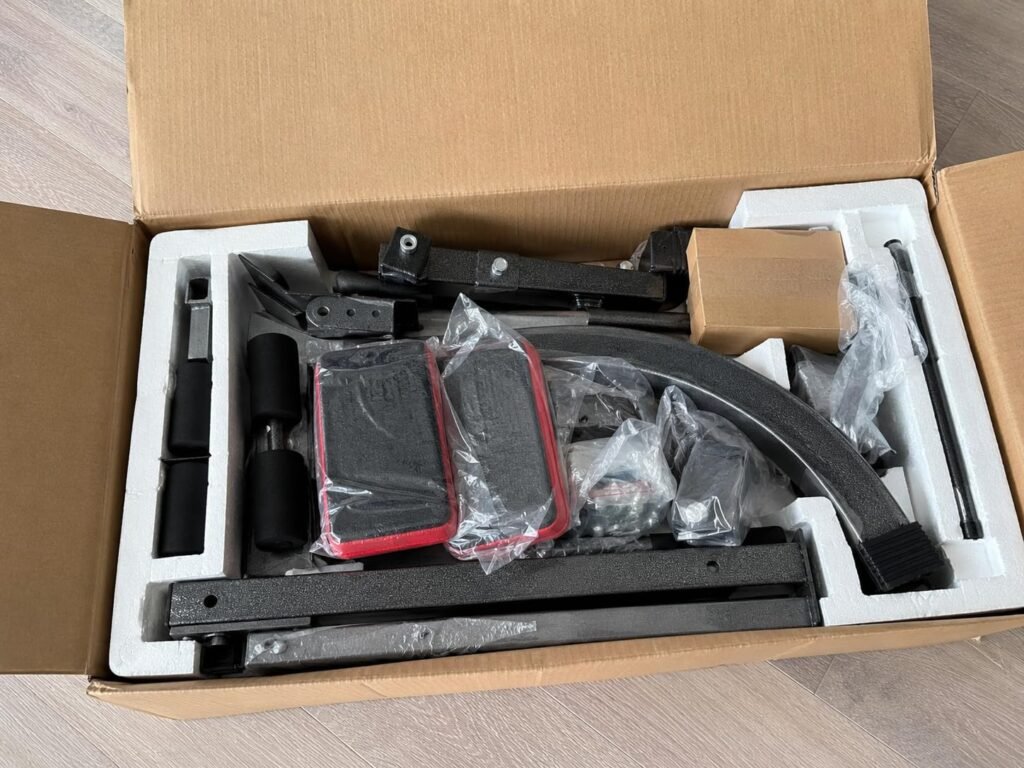
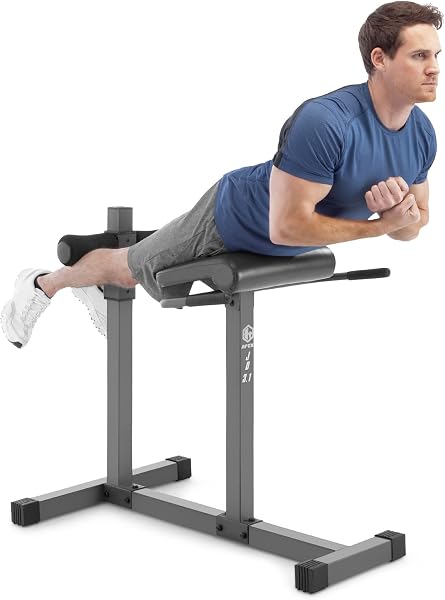
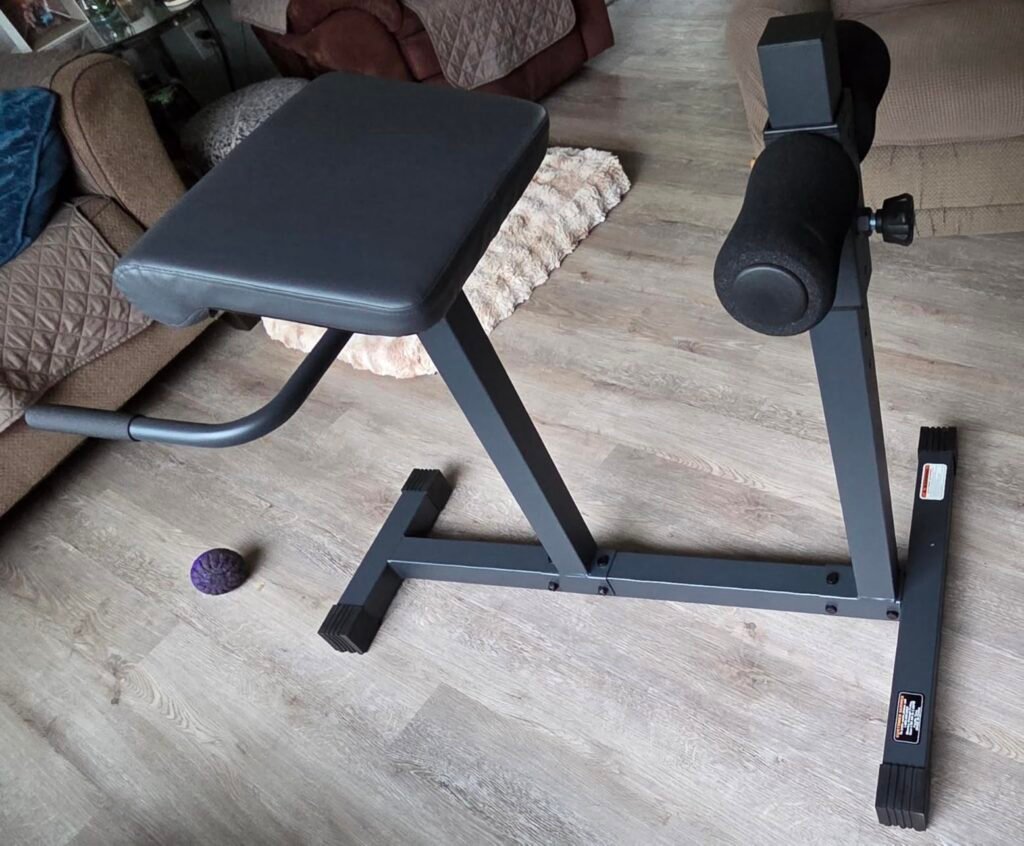
Marcy has been building home fitness equipment for decades, and this hyperextension bench reflects that experience with a straightforward, functional design. The heavy-duty tubing frame with a powder-coated finish is built to resist the corrosion and paint chipping that shortens the life of cheaper benches, and the ergonomic layout makes proper form easier to maintain.
We may earn a commission when you buy through this link, at no additional cost to you.
The padding is where this bench earns its reputation. High-density foam pads and padded handles reduce pressure points on the thighs and hips during longer back extension sets, which matters more than most buyers expect. Thin or hard padding turns a 12-rep set into an endurance test against discomfort rather than a productive training stimulus.
The adjustable two-foam leg holders lock the ankles securely without pinching, and the polymer upholstery wipes clean easily after sweaty sessions. The bench handles the core Roman chair exercises well: back hyperextensions, reverse hyperextensions, glute-focused variations, and decline sit-ups all work on the same frame.
Hip pad density directly influences how long you can train productively. Thin foam compresses quickly and puts pressure on the hip flexors, cutting sets short before the target muscles are fully fatigued. High-density foam distributes body weight more evenly, letting you complete full sets with the focus on the glutes, hamstrings, and lower back rather than on managing discomfort.
The trade-off is that this bench offers fewer discrete adjustment positions than newer competitors, so getting the perfect fit takes a bit more experimentation. For buyers who trust an established brand and value comfortable padding over maximum adjustability, the Marcy is a proven choice that has served home gym users for years.
Lifters who need the highest available weight capacity or the widest range of pad adjustments.
We may earn a commission when you buy through this link, at no additional cost to you.
This foldable Roman chair emphasizes adjustability with 5 angle positions and 8 thigh-support cushion adjustments. That combination lets you dial in the exact hip position for hyperextensions, side bends, sit-ups, and reverse crunches without settling for a compromise fit. For households where multiple people share the bench, that range matters more than any single spec.

We may earn a commission when you buy through this link, at no additional cost to you.
The heavy-gauge steel frame with scratch-resistant powder coating provides stable support up to 300 lbs, which covers most home users comfortably. The thigh pads secure the legs firmly enough that you can focus on the muscle contraction rather than fighting to stay in position, which is exactly how a good hyperextension bench should feel.
The collapsible frame folds flat for storage behind a door or under a bed, making this a practical choice for apartments and small home gyms where every square foot counts. The upgraded manual and pre-installed bolts keep assembly under 45 minutes, which is faster than many benches at this price point.
A steeper hyperextension angle shifts more emphasis onto the glutes and hamstrings, while a shallower angle biases the lower back. Having 5 discrete angle positions lets you rotate training focus across sessions without needing separate equipment. This kind of adjustability is what makes a Roman chair more versatile than a fixed-angle bench.
The main consideration is the 300 lb weight rating, which is lower than the premium 500 lb pick. For lifters who stay well under that limit and prioritize dialed-in fit and easy storage, this bench delivers a strong balance of features. Heavier users or those planning aggressive weighted progressions should size up to a higher-capacity frame.
Lifters approaching or exceeding the 300 lb weight capacity with added plate load.
We may earn a commission when you buy through this link, at no additional cost to you.
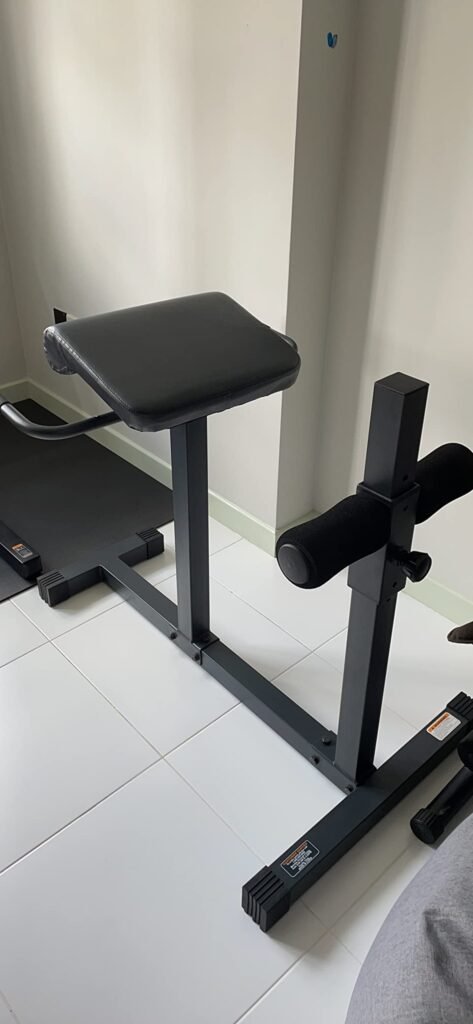
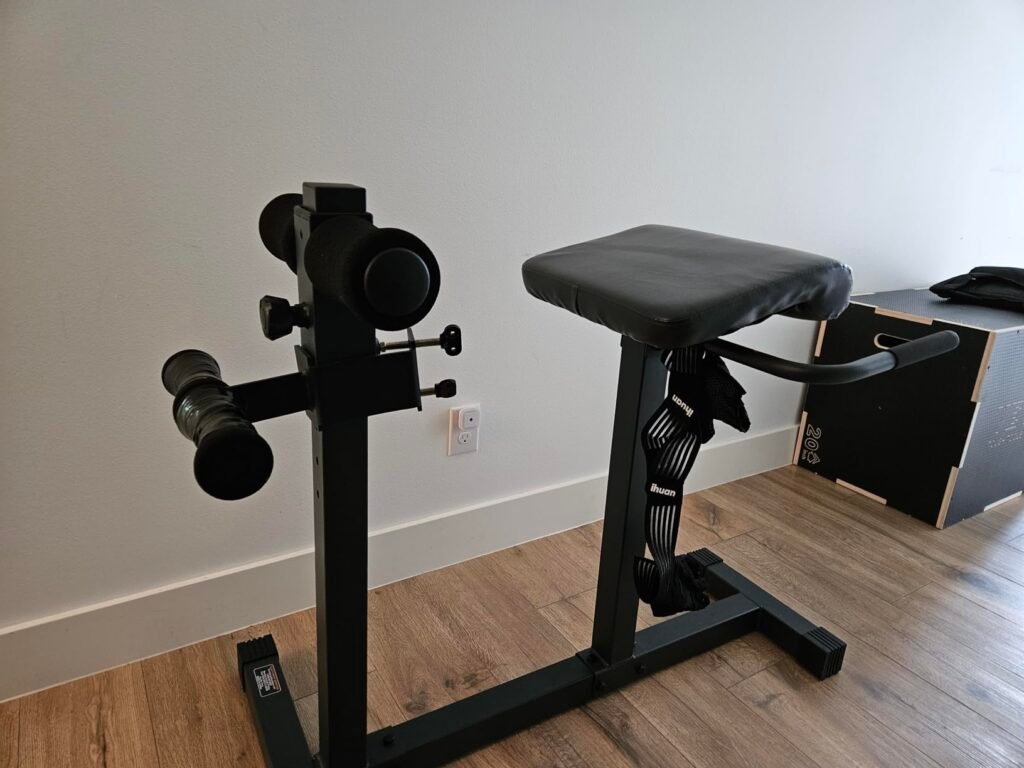
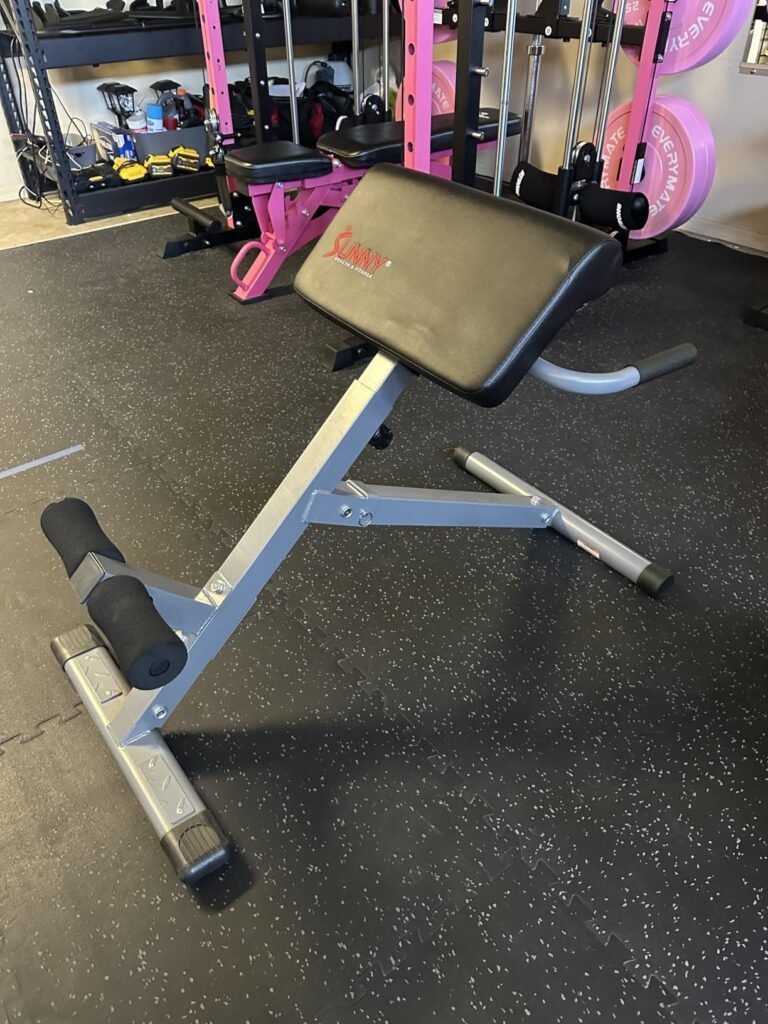
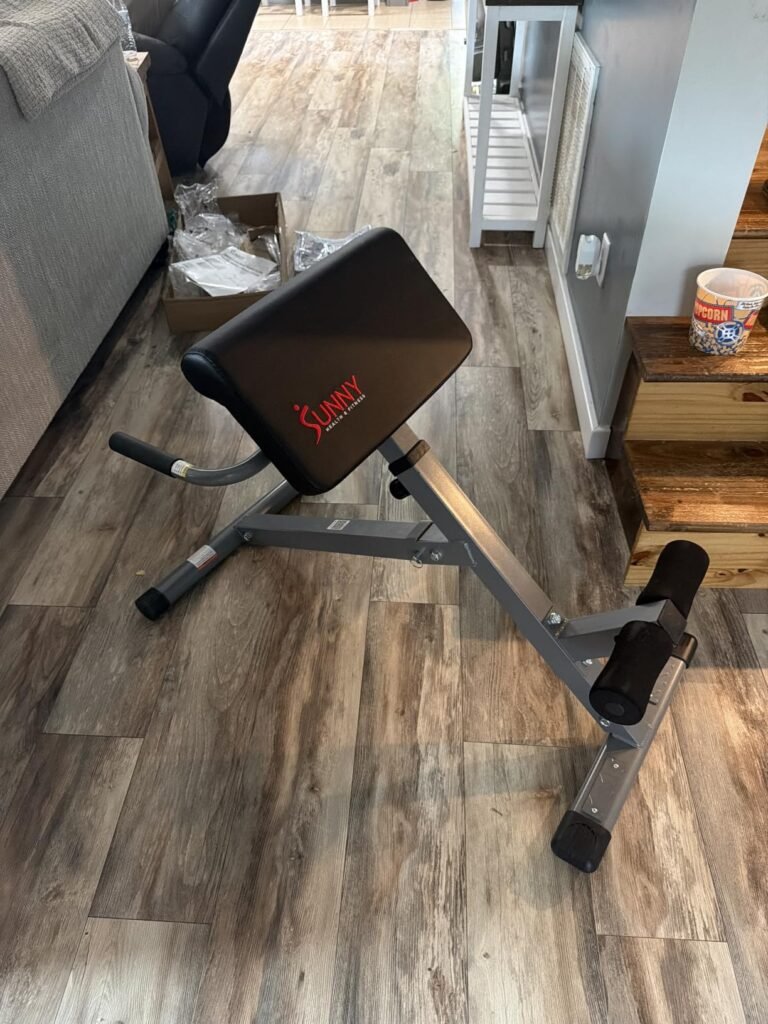
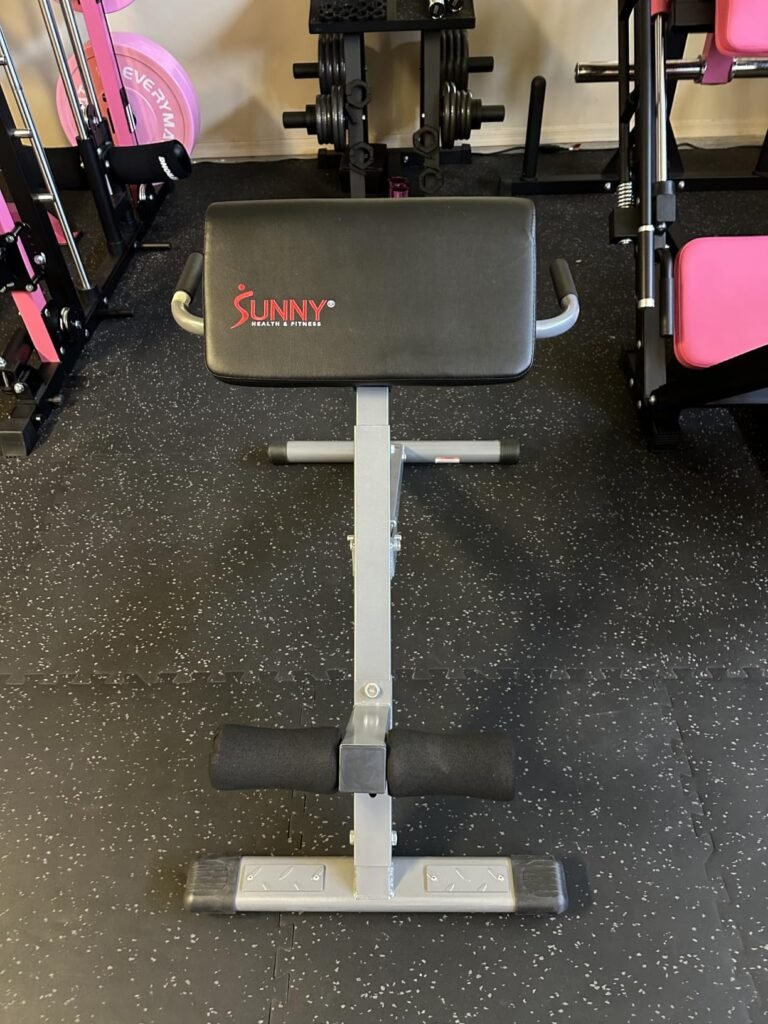
The Sunny Health and Fitness Multi-Function Roman Chair combines four separate training stations into one frame: Roman chair hyperextensions, back extension, decline sit-up bench, and bicep curl. For lifters building a compact home gym, that consolidation replaces several pieces of equipment and reduces both cost and floor space compared to buying each station separately.
We may earn a commission when you buy through this link, at no additional cost to you.
The 330 lb weight capacity is solid for a multi-function unit, and the steel frame with a stable base handles the varied loading angles required across different exercises. The extendable frame and adjustable ankle rollers accommodate different heights, and the flat-to-decline bench positions let you scale ab work intensity from beginner sit-ups to weighted decline crunches.
Exercise variety is the real selling point. Beyond the standard hyperextensions and glute-hamstring work, the preacher curl attachment adds isolated bicep training, and the Russian twist and side bend positions round out core work. That covers most of a full-body accessory routine on a single frame, which is a genuine space and money saver.
Multi-function benches shine when floor space is limited and you want to cover multiple movement patterns without dedicating separate stations to each. If your training program includes back extensions, sit-ups, and arm work, consolidating them onto one frame saves money and space. If you only need one or two of those functions, a simpler bench is usually a better fit.
The trade-off is that combining functions means slightly more complex assembly and a larger footprint than a single-purpose Roman chair. For lifters who want maximum exercise variety from one machine and trust the Sunny brand’s 20-plus years of experience, this is a strong all-in-one choice. Buyers who only need hyperextensions may prefer a simpler bench.
Lifters who only need hyperextensions and prefer a simpler, more focused bench design.
We may earn a commission when you buy through this link, at no additional cost to you.
CAP Barbell has spent more than three decades in the fitness equipment business, and this Roman chair reflects that experience with a straightforward, durable design at an accessible price. The heavy-duty steel tubing frame supports up to 300 lbs and handles the core Roman chair exercises reliably: back extensions, GHD sit-ups, side bends, twists, and hip extensions.

We may earn a commission when you buy through this link, at no additional cost to you.
The bench is genuinely versatile for its price. It doubles as a hyperextension machine for glute and hamstring training, letting you perform reverse hyperextensions and hamstring raises to strengthen the entire posterior chain. Adjustable pads and footrests accommodate different body types, which is useful in households where more than one person uses the equipment.
The compact footprint is a real advantage for small home gyms. Where a full-size commercial GHD would dominate a room, this bench tucks into a corner and comes out only when needed. Color options give you a bit of styling flexibility if your home gym has a particular look.
A 4.1 rating is still positive, but it typically indicates a wider spread of experiences than a 4.5 or higher. On budget-priced fitness equipment, this often reflects occasional quality control issues rather than fundamental design flaws. Reading recent reviews for common complaints helps you decide whether the trade-off is acceptable for your situation.
The 4.1 star rating is the lowest among the benches in this guide and suggests that some units may vary in fit and finish, so checking recent owner feedback before purchasing is wise. For buyers who want a trusted brand at a lower price and can accept some variability, this bench delivers solid function for the money. Lifters seeking the highest quality should consider the premium pick instead.
Buyers who prioritize the highest possible build quality and finish consistency over price.
We may earn a commission when you buy through this link, at no additional cost to you.
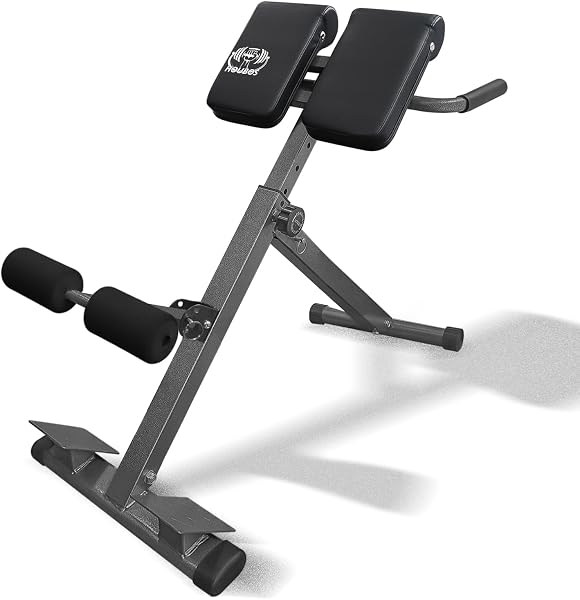
The Houbos foldable Roman chair is designed with apartment dwellers and small-space users in mind. Its fold-and-lean design collapses to a slim profile that fits behind a door, under a bed, or in a closet, so the bench does not occupy floor space between workouts. For anyone training in a bedroom, living room, or shared space, that footprint flexibility is a genuine daily convenience.

We may earn a commission when you buy through this link, at no additional cost to you.
The 3-stage angle adjustment paired with 8 height levels for the footplate and pad creates a dual-adjustment system that fits most users up to about 6 feet tall. That flexibility matters because pad placement dramatically affects how a hyperextension feels: a pad set too high strains the lower back, while one set too low limits range of motion.
The compact powder-coated steel frame supports up to 250 lbs and includes non-slip foot caps to protect flooring and keep the bench planted during back extensions, sit-ups, and dumbbell rows. The 30-minute assembly with pre-installed bolts is refreshingly quick, which matters more than most buyers realize when you are unboxing equipment on a busy weekend.
Marketing photos often show benches from angles that hide their in-use footprint. Before buying, measure the space where you will actually train and confirm you have room for the bench plus at least three feet of clear space around it for safe movement. A foldable design solves the storage problem but does not change the amount of space you need while working out.
The trade-off is the 250 lb capacity, which is the lowest in this guide and rules out heavier lifters or aggressive weighted progressions. For lighter users in tight living situations who prioritize easy storage over maximum load rating, this bench is a smart, space-conscious pick. Larger or stronger users should size up to a higher-capacity frame.
Heavier lifters, users over 6 feet tall, or anyone planning to add significant plate load during hyperextensions.
We may earn a commission when you buy through this link, at no additional cost to you.
This glider hits the essentials that matter most in the category at a genuinely accessible price. The 3-inch black urethane wheels with steel tube supports roll smoothly and quietly, which is important for maintaining tempo during hamstring curls and glute bridges without stutters that break form.

We may earn a commission when you buy through this link, at no additional cost to you.
The V-shaped bar features rounded steel edges rather than the sharp corners found on cheaper alternatives. That detail sounds minor but matters because rounded edges are noticeably more comfortable against the arch of the foot or the back of the heel during extended sets. Uncomfortable contact points shorten your sets before the target muscles are actually fatigued.
Zero assembly is a real advantage. The glider ships ready to use, so you can start training within minutes of opening the box. The high-quality steel tubes with a powder-coated finish resist rust and hold up well against sweaty use over time, which is what separates a piece of gear that lasts from one that starts to look tired after a few months.
Even without accessory features, a good glider supports a surprisingly wide range of exercises. Add a resistance band tied to a stable anchor for progressive overload on hamstring curls. Use it as a foot platform for elevated push-ups or feet-elevated glute bridges. Combining a basic glider with equipment you already own extends its usefulness considerably.
The trade-off is that this glider skips the extras found on premium models: no side handles for upper body work, no band hook for progressive resistance. For lifters who want a simple, reliable, ready-to-use tool for the core hamstring and glute movements at the lowest price, this is a strong pick. Anyone who wants added versatility should consider the SELEWARE or Bells of Steel options.
Lifters who need built-in handles for upper body pushing exercises or a dedicated band anchor point.
We may earn a commission when you buy through this link, at no additional cost to you.
Picking the right glute ham developer means matching the machine format, capacity, and adjustability to your body, your training goals, and your available space. The factors below cover the decisions that most influence long-term satisfaction with your purchase.
The most important early decision is whether you want a compact glider that uses rolling wheels or a full-size Roman chair with hyperextension pads. Gliders excel at hamstring curls, glute bridges, and ab rollouts, and they store easily in small spaces. Roman chairs excel at back extensions, hyperextensions, and decline core work, and they occupy significantly more floor space but offer a wider exercise range.
The two formats target overlapping but different training goals. If your program centers on nordic curl progressions, glute activation work, and core rollouts, a glider covers most of your needs at a lower price point. If you want to load hyperextensions with plates, perform reverse hyperextensions, or use the bench for decline sit-ups, a Roman chair is the better tool. Some serious lifters own both because each excels at movements the other cannot replicate.
Choose based on your primary training goal. Program hamstring curls and rollouts? Start with a glider. Program back extensions and hyperextensions? Choose a Roman chair.
Weight capacity ratings across this category range from 250 lbs on compact folding benches up to 600 lbs on heavy-duty gliders. The rating needs to cover your body weight plus any added load such as a plate held across the chest or a dumbbell during weighted back extensions. Operating close to the maximum rating causes visible frame flex and shortens the useful life of the equipment.
Frame strength is not identical to weight rating. Two benches with the same 300 lb capacity can feel very different in use, with one exhibiting no wobble and another flexing noticeably under load. Wall thickness of the steel tubing, welding quality, and base design all contribute to real-world stability. Thicker 2mm tubing, triangular bracing, and wide curved base tubes are indicators of genuinely stable construction.
Choose a capacity at least 50 lbs above your body weight, and go higher if you plan to add significant plate load during progressions.
A hyperextension bench that does not fit your body correctly can actually cause problems rather than solve them. The hip pad needs to sit just below your hip crease so you can hinge at the hips rather than bending the lower back. Benches with multiple length and height adjustments accommodate a wider range of users, which matters if you share the equipment with family members of different heights.
For gliders, adjustability is less critical because the tool moves with your body rather than requiring a fixed setup position. However, the length of the glide track affects how tall a user can be while still executing full-range nordic curls comfortably. Taller users should look for gliders with longer frames or plan to modify the setup by using a wall or additional support.
Verify the manufacturer’s stated height range covers your height comfortably, and prioritize benches with at least 5 pad positions if multiple people will use the equipment.
Padding quality directly affects how long you can train productively. Thin foam compresses quickly and creates pressure points on the hip flexors during longer sets, which cuts sessions short before the target muscles are fully fatigued. High-density foam maintains its shape and distributes body weight more evenly, letting you complete full sets with focus on the working muscles.
For gliders, the equivalent consideration is the shape and finish of the center bar. Sharp-edged bars dig into the arches of the feet or the backs of the heels during sets. Rounded, V-shaped bars cradle the feet more naturally and stay comfortable even during high-rep hamstring or glute work. Polymer or vinyl upholstery is also worth checking because it should wipe clean easily after sweaty sessions.
If padding quality is not clear from photos, prioritize benches with padded handles and adjustable leg holders, both of which indicate broader attention to contact comfort.
Full-size Roman chairs typically require about 25 by 45 inches of floor space when set up, plus additional clearance for safe movement around the bench. Foldable designs collapse down to a slim profile that fits behind a door, under a bed, or in a closet, which is essential for apartments and small home gyms. Non-folding benches need dedicated floor space and are only practical if you have a garage or spare room to dedicate to training.
Gliders occupy dramatically less space, usually under 30 inches long and about a foot wide. They can slide under a couch or stand against a wall between uses. If floor space is your primary constraint, a glider provides more training value per square foot than any Roman chair. If you have dedicated gym space, a full Roman chair unlocks exercise variety that a glider cannot match.
Measure both your usage space and your storage space before choosing. A bench that will not fit through your training area’s doorway or stow away between sessions will end up unused.
Beyond the core hyperextensions or hamstring curls, most machines in this category support several secondary exercises. Roman chairs often add decline sit-ups, side bends, Russian twists, and sometimes preacher curls when the bench includes an arm pad. Gliders add push-up platforms, single-leg exercises, and band-resisted variations when handles or hooks are included in the design.
Exercise range matters most for lifters building a minimalist home gym who want each piece of equipment to earn its space. A multi-function Roman chair can replace a separate ab bench and a separate curl station, saving both money and floor area. Similarly, a well-designed glider with handles and a band hook covers hamstring, glute, core, and light upper body accessory work on one small tool.
List the exercises you actually program before shopping. Do not pay extra for features you will not use, but do not skimp on versatility if it lets you eliminate other equipment.
Assembly time varies from zero for pre-assembled gliders to about 45 minutes for full Roman chairs with multiple adjustment mechanisms. Benches with pre-installed bolts and clear manuals go together significantly faster than those that ship with hundreds of loose parts. If you dread flat-pack furniture assembly, prioritize models advertised as pre-assembled or with under 30-minute setup times.
Warranty terms provide a useful signal about manufacturer confidence in the product. A 2-year warranty is a strong indicator of quality in this category, while 30-day satisfaction guarantees are more limited but still better than no coverage at all. Established brands with long track records generally offer better customer support when issues arise, which matters if a part needs replacement down the line.
Balance the price against assembly effort, warranty coverage, and brand reputation. Saving $30 on a cheaper model is not worth it if the warranty is shorter and customer support is difficult to reach.
Prices in this category range from about $60 for basic gliders up to $200 for premium hyperextension benches. Spending more generally buys higher weight capacity, thicker steel tubing, better padding, more adjustment points, and longer warranties. However, past a certain price point the returns diminish, and a mid-range bench often delivers most of the benefit for significantly less money.
Long-term value depends heavily on how often you will actually use the equipment. A $150 bench used four times a week for years costs less per session than a $60 glider that sits unused after the first month. Match your spending to your realistic training commitment rather than aspirational goals, and buy the highest-quality version you can justify for the exercises you truly intend to program.
Set a firm budget before shopping, then within that budget prioritize weight capacity, adjustability, and warranty over cosmetic features.
Before your first heavy session, verify all bolts and adjustment locks are fully tightened, as shipping vibration can loosen hardware. Set the hip pad position so it sits just below your hip crease, which allows you to hinge from the hips rather than bending the lower back. Start with unweighted bodyweight sets to confirm the fit is correct before adding any external load, and expect to fine-tune pad position across your first few sessions.
Basic maintenance extends the life of both gliders and Roman chairs considerably. Wipe down padded surfaces after each sweaty session to prevent moisture from breaking down the vinyl or foam. Check bolts and adjustment pins monthly and retighten anything that has worked loose. For gliders, keep the wheels clean of dust and debris that can cause rolling to feel sticky, and periodically check the bearings for smooth rotation.
Store equipment in a dry, temperature-controlled environment when possible. Humidity accelerates rust formation at weld seams and wear points, and extreme cold can make padded surfaces stiff and prone to cracking. If you fold your bench for storage, follow the manufacturer’s sequence to avoid stressing the hinge mechanisms. For gliders used on hardwood or delicate flooring, placing a thin rubber mat underneath protects both the floor and the wheels while reducing noise during use.
A glute ham glider is a compact rolling platform used primarily for hamstring curls, glute bridges, and ab rollouts. A Roman chair is a larger bench with hip and ankle pads used for back extensions, hyperextensions, and decline sit-ups. Gliders take up less space and cost less, while Roman chairs support a wider exercise range including weighted movements.
A dedicated glute ham developer adds movements that a squat rack cannot easily replicate, including nordic hamstring curls, back extensions, and reverse hyperextensions. These exercises train the posterior chain through ranges of motion that squats and deadlifts miss. If you want to strengthen the hamstrings and lower back for injury prevention or hypertrophy, adding one of these machines is worthwhile.
Choose a capacity at least 50 lbs above your body weight to leave room for added load such as a plate held during weighted back extensions. Lighter lifters can use 250 to 300 lb rated equipment safely, while heavier users or those planning aggressive weighted progressions should look for 400 lb or higher ratings. Operating close to the maximum capacity causes frame flex and shortens equipment life.
Gliders work best on smooth, hard surfaces like hardwood, tile, or rubber gym flooring where the wheels can roll freely. Carpet creates too much resistance for smooth rolling and can prevent proper execution of hamstring curls or rollouts. If you only have carpeted space, place a large piece of plywood or a rubber gym mat under the glider to create a rolling surface.
A full-size Roman chair typically requires about 25 by 45 inches of floor space when set up, plus at least three feet of clearance around it for safe movement during exercises. Foldable designs collapse to a slim profile for storage but still need the same working area when in use. Measure your available space carefully before ordering.
Yes, both gliders and Roman chairs work well for beginners who start with bodyweight movements and focus on proper form before adding load. Start with shorter ranges of motion and low reps to build hamstring and lower back strength gradually. Nordic curls in particular are challenging even for advanced lifters, so beginners should use assistance such as a resistance band or partner support initially.
Assembly times vary from zero for pre-assembled gliders to about 45 minutes for full Roman chairs with multiple adjustment mechanisms. Most benches ship with the required tools and instructions, though a second set of hands helps with holding pieces during bolt tightening. Look for models advertised with pre-installed bolts if you want to minimize setup time.
Yes, weighted variations are one of the main progression paths for hyperextensions and back extensions on Roman chairs. Hold a plate across the chest or a dumbbell at the shoulders to increase resistance as bodyweight sets become easy. Confirm your bench's weight capacity covers your body weight plus the added load before increasing plate size.
The hip pad should sit just below your hip crease, allowing your hips to hinge freely while your legs remain locked. If the pad is too high, it restricts the hinge and forces the lower back to bend instead. If it is too low, you lose stability and cannot control the movement. Adjustable benches let you dial this in precisely for your height.
A dedicated GHD provides the most complete range of hamstring exercises, but a compact glider or Roman chair covers most of the same movements at a lower price and smaller footprint. Serious posterior chain training also benefits from Romanian deadlifts and hip thrusts, which do not require any specialized machine. Choose based on your training goals and available space.
The SELEWARE Glute Ham Glider earns our top overall recommendation because it delivers commercial-level durability, a category-leading 600 lb weight capacity, and multi-exercise versatility at a genuinely accessible price. For most home gym owners who want a compact, low-maintenance tool that covers hamstring curls, glute work, and core training, it is the strongest all-around pick in this guide.
Serious lifters who want a full hyperextension bench should consider the 500 lb Roman Chair for its exceptional weight capacity and thoughtful adjustability, while apartment dwellers with tight space constraints will appreciate the Houbos foldable design. Budget-conscious buyers who only need the essential hamstring and glute movements will find strong value in the sub-$60 Glute Ham Glider V-Bar.
Start by deciding whether you need a compact glider or a full Roman chair, then filter by weight capacity, adjustability, and storage footprint to match your training and living situation. The right piece of equipment used consistently for years delivers far more value than the most expensive option that sits unused. Use the comparisons above to find the model that fits your goals and your space.